

Genome-wide CRISPR-cas9 knockout screening identifies GRB7 as a driver for MEK inhibitor resistance in KRAS mutant colon cancer
Open accessThe DOI matches its Crossref record; 46 of the 46 references it cites were found in a registry or an index; 15 of the 42 sources its claims cite were checked for support.
Abstract
Targeting the KRAS pathway is a promising but challenging approach for colorectal cancer therapy. Despite showing potent efficacy in BRAF-mutated melanoma, MEK inhibitors appeared to be tolerated by colorectal cancer cells due to their intrinsic compensatory signaling. Here, we performed genome-wide CRISPR/Cas9 screening in the presence of MEK inhibitor to identify genes that are synthetically lethal with MEK inhibition in CRC models harboring KRAS mutations. Several genes were identified as potential functional drivers, which were significantly enriched in the GRB7-mediated RTK pathway. Loss-of-function and gain-of-function assays validated that GRB7 potently rendered CRC cells primary resistance to MEK inhibitors through the RTK pathway. Mass spectrum analysis of GRB7 immunoprecipitates revealed that PLK1 was the predominant interacting kinase of GRB7. Inhibition of PLK1 suppressed downstream signaling of RTK, including FAK, STAT3, AKT, and 4EBP1. The combination of PLK1 and MEK inhibitors synergistically inhibited CRC cell proliferation and induced apoptosis in vitro and in vivo. In conclusion, we identified GRB7-PLK1 as a pivotal axis mediating RTKs, resulting in MEK inhibitor tolerance. PLK1 is therefore a promising target for synergizing MEK inhibitors in the clinical treatment of CRC patients harboring KRAS mutations.
Overview
CoChat Summary
TL;DR
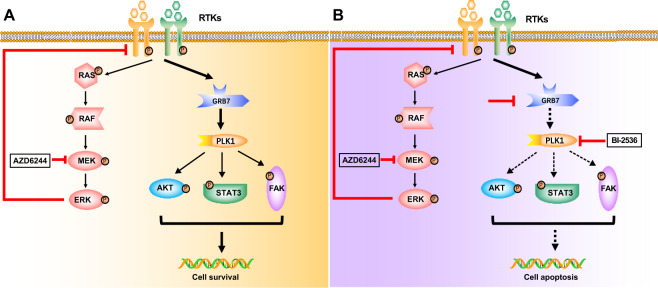
Genome-wide CRISPR/Cas9 knockout screening in KRAS-mutant colorectal cancer cells identified GRB7 as a key RTK-pathway driver of MEK inhibitor resistance. GRB7 acts through PLK1 recruitment to sustain downstream RTK signaling, and combined PLK1/MEK inhibition synergistically suppressed CRC growth in vitro and in an HCT116 xenograft model.
Key findings
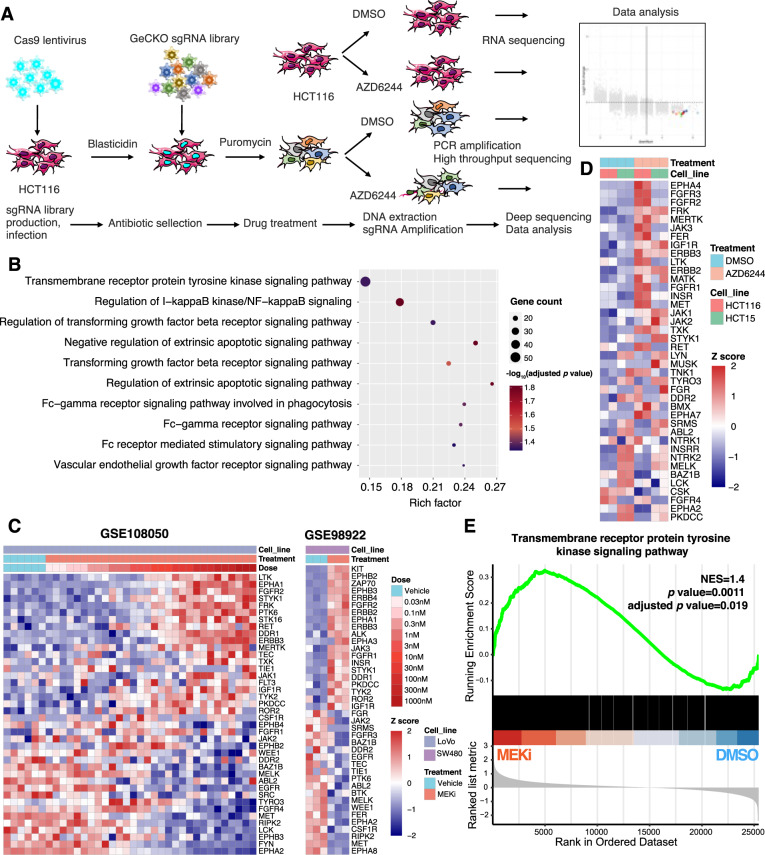
- In HCT116 cells, genome-wide CRISPR/Cas9 screening with AZD6244 identified sgRNAs targeting 1846 genes significantly depleted under MEK inhibition; enriched pathways included transmembrane receptor protein tyrosine kinase signaling, NF-κB, TGF-β, and extrinsic apoptotic regulation.
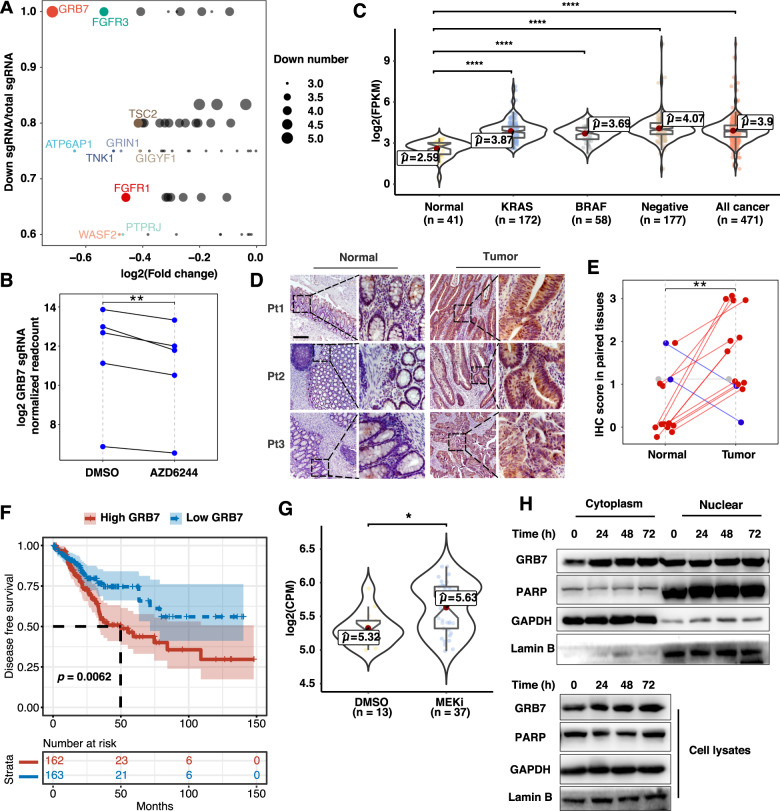
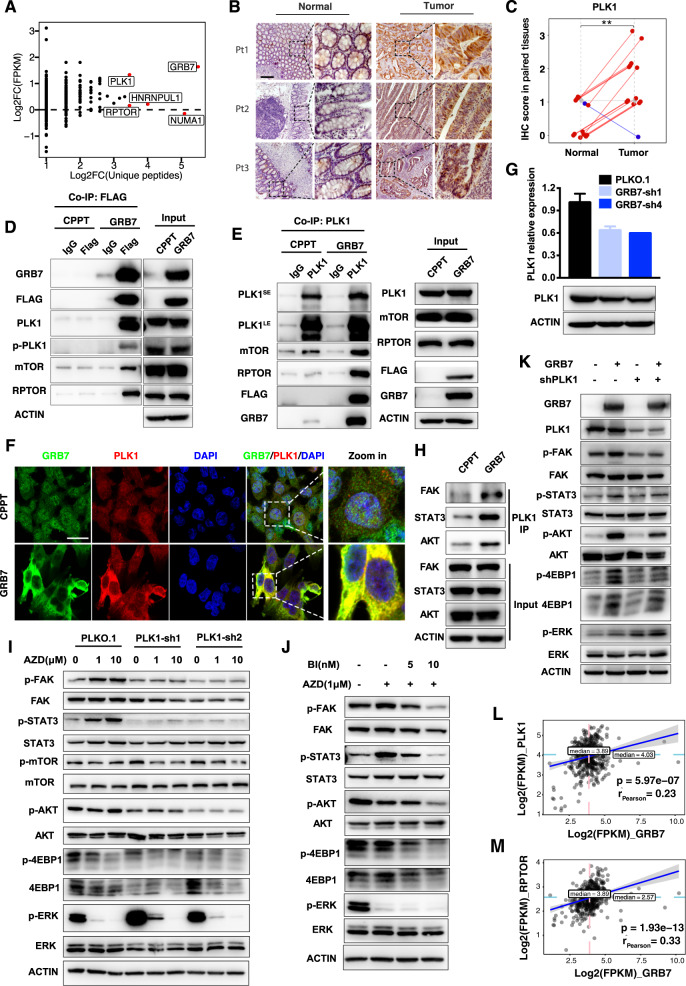
- GRB7 was the most negatively selected RTK-pathway gene: 5 of 6 GRB7-targeting sgRNAs were consistently decreased in AZD6244-treated cells. GRB7 was upregulated in 11 of 14 patient-matched CRC biopsies, and high GRB7 was associated with poor disease-free survival in TCGA colon cancer data.
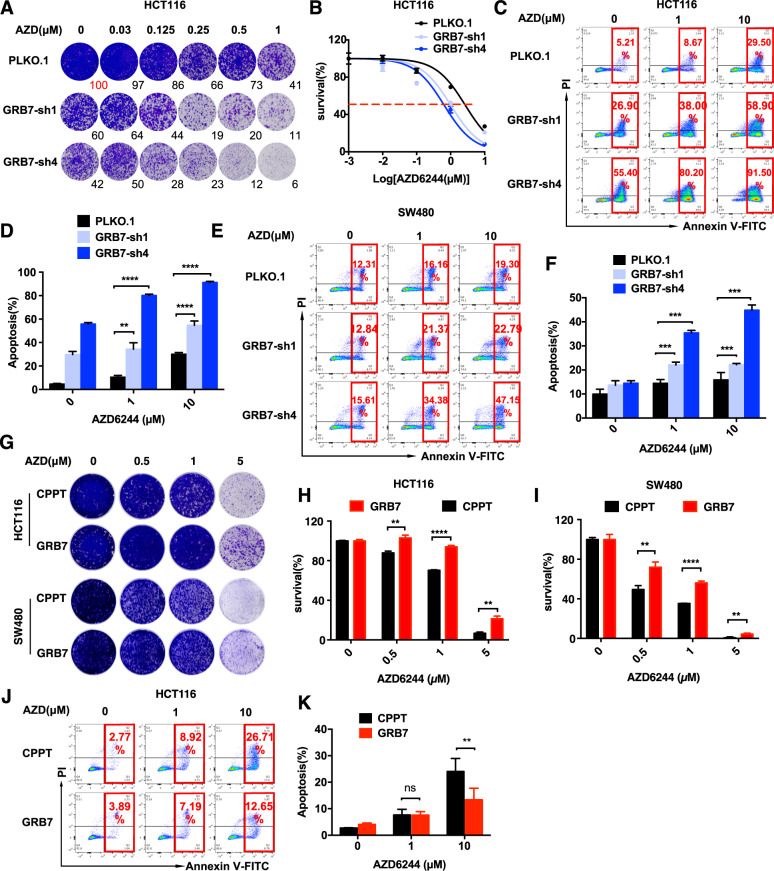
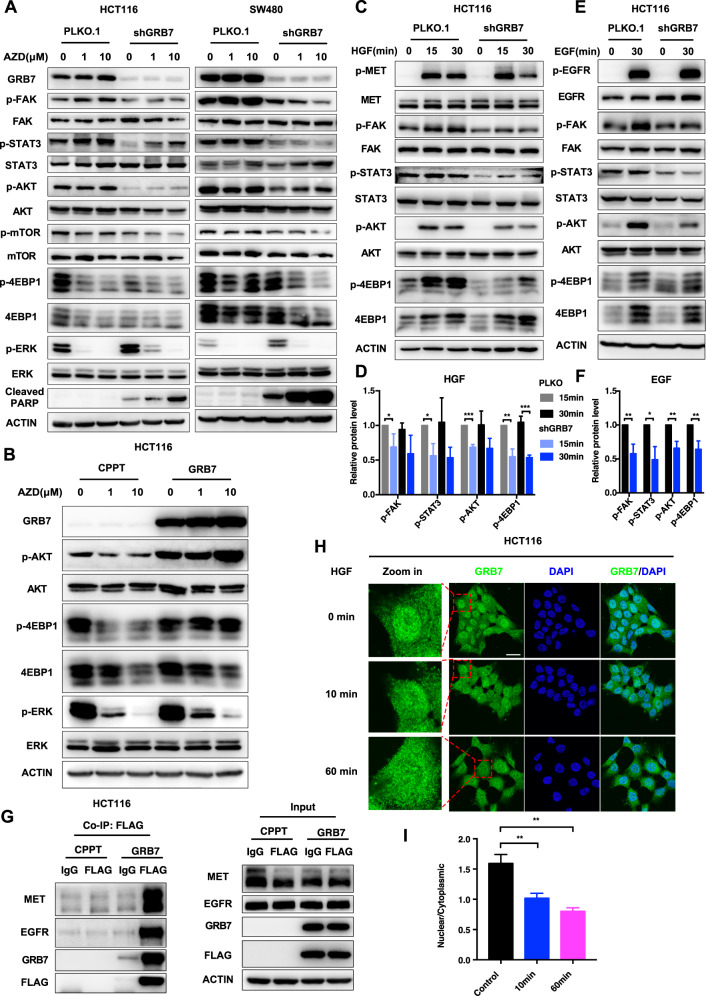
- GRB7 knockdown sensitized HCT116, SW480, and LS174T cells to AZD6244, while GRB7 overexpression conferred resistance; GRB7 knockdown reduced PLK1 by ~40% at both protein and mRNA levels. IP-MS found 57 GRB7-interacting proteins enriched at least threefold, with PLK1 top-ranked.
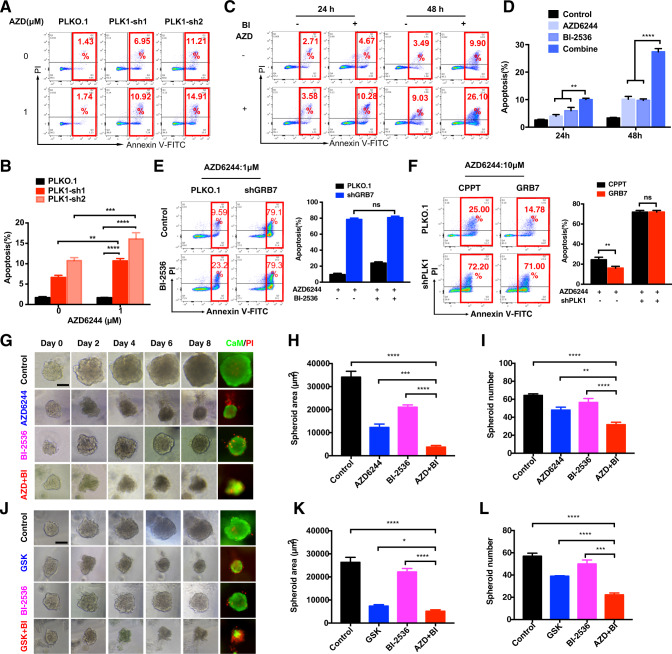
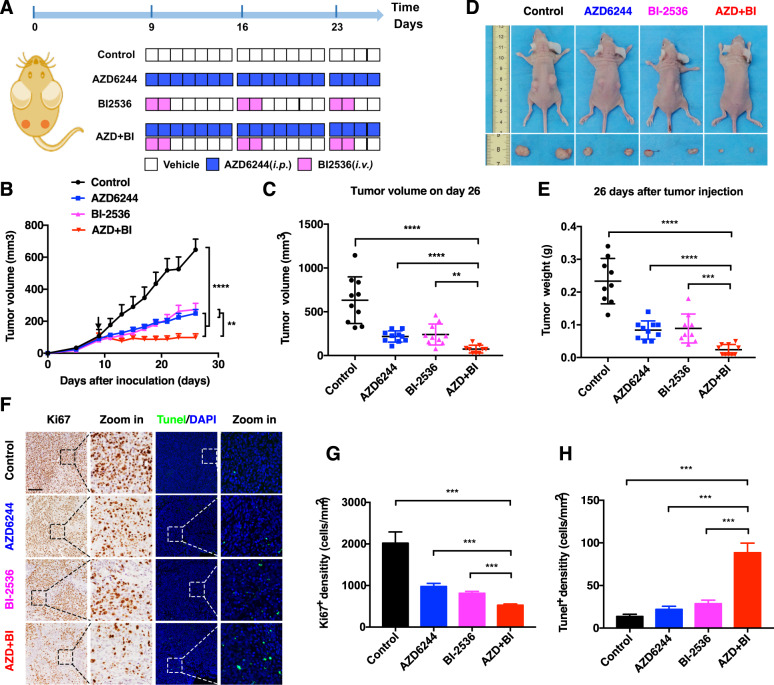
- Combining PLK1 inhibition (BI-2536 or shPLK1) with MEK inhibition synergistically induced apoptosis and suppressed 2D/3D CRC models; in HCT116 xenografts, AZD6244 plus BI-2536 was more potent than either alone, with reduced Ki67 and increased Tunel staining.
Methods
- Genome-wide CRISPR/Cas9 knockout screen using the human GeCKO two-vector lentivirus system in Cas9-expressing HCT116 cells at MOI ~0.3 and ~500× sgRNA coverage; cells were treated with DMSO or AZD6244 for 7 days, followed by sgRNA sequencing.
- Parallel transcriptomic profiling of HCT116 cells ± AZD6244, GO enrichment, GSEA, TCGA analyses, IHC of patient biopsies, and correlation analyses.
- Functional validation used shRNA knockdown, GRB7 overexpression, clonogenic and MTT assays, Annexin V/PI apoptosis assays, western blot, co-immunoprecipitation, immunofluorescence, IP-MS, 3D spheroid culture, and HCT116 xenograft experiments; statistical tests included Student’s t test, Wilcoxon test, log-rank test, Pearson correlation, and Benjamini & Hochberg correction.
Limitations
- Stated in the paper: effective GRB7 inhibitors are unavailable in the clinic, and the detailed regulatory mechanism of GRB7 needs to be illustrated; further research is needed to demonstrate GRB7’s role in regulating DUSPs, and the detailed function of the PLK1 family in MEK inhibitor resistance requires further investigation.
- Evident from the text: the primary CRISPR screen was performed in a single KRAS-mutant CRC cell line (HCT116), with validation in a limited set of CRC lines and one xenograft model; GRB7 was targeted genetically rather than pharmacologically, and the combination strategy relied on the PLK1 inhibitor BI-2536 rather than a direct GRB7 inhibitor.
Model-written summary. Check it against the paper before relying on it.
Integrity signals
Registry
Cites
Statistics
Figures
Verification
Claims the paper makes
11 Valid · 1 Not valid · 14 Not checked · 101 Own results and interpretations
The cited sources support only part of this claim — read each source’s verdict below.
In the paper
“However, the results of clinical trials with MEK inhibitor (MEKi) were disappointing in CRC patients [13, 14].”
§ Genome-wide CRISPR-cas9 knockout screening identifies GRB7 as a driver for MEK inhibitor resistance in KRAS mutant colon cancer > Introduction
What the sources say
- Partly supportedcites [13] Corcoran RB Atreya CE Falchook GS Kwak EL Ryan DP Bendell JC Combined BRAF and MEK inhibition with dabrafenib and trametinib in BRAF V600-mutant colorectal cancer J Clin Oncol 2015 33 4023 31 26392102 PMC4669588 sourceExperimental — accuracy not yet measured
The INTRODUCTION of our copy does state that BRAF V600–mutant mCRC 'has shown a marked lack of sensitivity to BRAF or MEK inhibitor monotherapy in early clinical trials,' and that the phase I/II trametinib-monotherapy trial 'showed no responses in a small number of patients with BRAF-mutant mCRC' — so the direction of the claim (disappointing MEK-inhibitor trials) is present. However, the source bounds this to BRAF V600–mutant metastatic CRC, whereas the citing sentence generalizes to 'CRC patients,' and the trametinib monotherapy result is reported secondhand (cited as reference 23, Corcoran et al., Sci Signal 2010) rather than being this paper's own trial; this paper's own 43-patient cohort is a dabrafenib PLUS trametinib combination that produced 12% response and is presented as a step forward. The unsupported parts are the unselected-CRC population and the attribution of trial results to this source as the reporting study. (LLM, conf=0.72)
- Not checked yetcites [14] Infante JR Fecher LA Falchook GS Nallapareddy S Gordon MS Becerra C Safety, pharmacokinetic, pharmacodynamic, and efficacy data for the oral MEK inhibitor trametinib: a phase 1 dose-escalation trial Lancet Oncol 2012 13 773 81 22805291 source
plain- Asserted: passes — The authors put it forward as true.
- Checkable: passes — It can be checked against evidence.
- Load-bearing: passes — The paper’s conclusions depend on it.
- Based: passes — The paper gives a reason why it holds.
- Partly supported
The sources with a verdict support this claim; the rest weren’t checked yet, have no full text we could read, or their verdicts aren’t rated yet.
In the paper
“In addition, the KRAS G12C mutation accounts for only one to three percent of all CRC patients, which largely limits the potential populations who could benefit [2, 11].”
§ Genome-wide CRISPR-cas9 knockout screening identifies GRB7 as a driver for MEK inhibitor resistance in KRAS mutant colon cancer > Introduction
What the sources say
- Not checked yetcites [2] Neumann J Zeindl-Eberhart E Kirchner T Jung A Frequency and type of KRAS mutations in routine diagnostic analysis of metastatic colorectal cancer Pathol Res Pract 2009 205 858 62 19679400 source
- Supportedcites [11] Hong DS Fakih MG Strickler JH Desai J Durm GA Shapiro GI KRAS(G12C) inhibition with sotorasib in advanced solid tumors N Engl J Med 2020 383 1207 17 32955176 PMC7571518 source
The Background states that the KRAS p.G12C mutation occurs in 1 to 3% of colorectal cancers, directly supporting the attributed prevalence. The discussion of sotorasib as a treatment for tumors harboring that mutation is consistent with the citing sentence’s point about the limited eligible population. (LLM, conf=0.94)
plain- Asserted: passes — The authors put it forward as true.
- Checkable: passes — It can be checked against evidence.
- Load-bearing: passes — The paper’s conclusions depend on it.
- Based: passes — The paper gives a reason why it holds.
Every source the paper cites for this claim was checked and supports it.
In the paper
“an additional MEKi significantly improved the efficiency of the PLK1 inhibitor by diminishing the dose from 50 [42] to 10 mg/kg”
§ Genome-wide CRISPR-cas9 knockout screening identifies GRB7 as a driver for MEK inhibitor resistance in KRAS mutant colon cancer > Discussion
What the sources say
- Supportedcites [42] Luo J Emanuele MJ Li D Creighton CJ Schlabach MR Westbrook TF A genome-wide RNAi screen identifies multiple synthetic lethal interactions with the Ras oncogene Cell. 2009 137 835 48 19490893 PMC2768667 source
The citation [42] is anchored mid-sentence to the number '50', i.e. to the 50 mg/kg PLK1-inhibitor dose, and our copy states exactly that: Experimental Procedures > Mouse xenograft tumor models reports 'The dose of BI-2536 used for DLD-1 xenografts was 50 mg/kg for the first 2 weeks and then increased to 75 mg/kg... The dose of BI-2536 used for HCT116 xenografts was 50 mg/kg,' with RESULTS > Mitotic inhibitors attenuate tumor xenograft growth in vivo confirming significant tumor attenuation at that dose. The MEKi dose-sparing to 10 mg/kg is not what this citation is attached to, and our copy contains no MEK-inhibitor/BI-2536 combination experiment (the only MEK-inhibitor mention is the Introduction crediting Engelman et al., 2008 for MEK plus PI3K/mTOR inhibition in Ras-driven lung cancer). (LLM, conf=0.80)
plainstates a cause- Asserted: passes — The authors put it forward as true.
- Checkable: passes — It can be checked against evidence.
- Load-bearing: unclear — It is unclear whether the paper’s conclusions depend on it.
- Based: passes — The paper gives a reason why it holds.
- Supported
Every source the paper cites for this claim was checked and supports it.
In the paper
“Combination treatment with EGFRi and MEKi produced limited antitumor efficacy in CRC patients [34].”
§ Genome-wide CRISPR-cas9 knockout screening identifies GRB7 as a driver for MEK inhibitor resistance in KRAS mutant colon cancer > Discussion
What the sources say
- Supportedcites [34] Corcoran RB André T Atreya CE Schellens JHM Yoshino T Bendell JC Combined BRAF, EGFR, and MEK inhibition in patients with BRAF(V600E)-mutant colorectal cancer Cancer Discov 2018 8 428 43 29431699 PMC5882509 source
The paper’s Abstract reports a 0% confirmed response rate for trametinib plus panitumumab (MEK and EGFR inhibition), supporting the description of limited antitumor efficacy. The studied patients had BRAF V600E-mutant colorectal cancer. (LLM, conf=0.91)
plain- Asserted: passes — The authors put it forward as true.
- Checkable: passes — It can be checked against evidence.
- Load-bearing: passes — The paper’s conclusions depend on it.
- Based: passes — The paper gives a reason why it holds.
- Supported
A result the paper reports from its own data — it cites no other source for it, so there is none to check. The quote shows it is in the paper.
In the paper
“Consistent with the mRNA expression results, upregulation of GRB7 at the protein level was observed in 11 out of 14 patient-matched CRC biopsies (Fig. 2D, E).”
§ Genome-wide CRISPR-cas9 knockout screening identifies GRB7 as a driver for MEK inhibitor resistance in KRAS mutant colon cancer > Results > GRB7 is the pivotal member of the RTK pathway-mediated MEKi resistance
plainn = 14- Asserted: passes — The authors put it forward as true.
- Checkable: passes — It can be checked against evidence.
- Load-bearing: passes — The paper’s conclusions depend on it.
- Based: passes — The paper gives a reason why it holds.
89 more claims
Create a free account to see all 127 claims and to verify the 27 references still open.
- It may state two separate claims as one. 21
- Probably not a substantial claim. 15
Claims other papers make about this one
Each is checked against this paper’s own text: does it say what the citing paper says it does?
The source backs part of the claim, not all of it — or backs it for a different population, condition or comparison.
In the citing paper
“However, while MEK inhibitors have shown clinical efficacy in several types of KRAS-mutated cancers, preclinical studies in CRC revealed that treatment with MEK inhibitor alone was not very effective in KRAS-mutated CRC cells due to different mechanisms of acquired resistance [123,124,125].”
From Mechanisms and Strategies to Overcome Drug Resistance in Colorectal Cancer (2025) · cites this paper as [125]
Experimental — accuracy not yet measured
Citations
Cites
Colorectal cancer statistics, 2020
Siegel, R. L., Miller, K. D., Goding Sauer, A., Fedewa, S. A., Butterly, L. F., Anderson, J. C., Cercek, A., Smith, R. A., & Jemal, A. (2020) · CA: A Cancer Journal for Clinicians · doi:10.3322/caac.21601 · Cited by 4,880 · cited 2×
“Colorectal cancer (CRC) is one of the most common malignancies, with the third highest incidence and death rate in both women and men in the United States [1].”
BackgroundMAP kinase signalling pathways in cancer
Dhillon, A. S., Hagan, S., Rath, O., & Kolch, W. (2007) · Oncogene · doi:10.1038/sj.onc.1210421 · Cited by 2,995 · cited 1×
“Inspired by these results, we sought to investigate whether GRB7 overexpression could also confer MEKi resistance in CRC cells with the BRAF mutation, another genetic lesion leading to sustained activation of the MAPK pathway [29].”
BackgroundThe Clinical KRAS(G12C) Inhibitor AMG 510 Drives Anti-Tumour Immunity
Canon, J., Rex, K., Saiki, A. Y., Mohr, C., Cooke, K., Bagal, D., Gaida, K., Holt, T., Knutson, C. G., Koppada, N., et al. (2019) · Nature · doi:10.1038/s41586-019-1694-1 · Cited by 2,277
KRAS G12C Inhibition with Sotorasib in Advanced Solid Tumors
Hong, D. S., Fakih, M. G., Strickler, J. H., Desai, J., Durm, G. A., Shapiro, G. I., Falchook, G. S., Price, T. J., Sacher, A., Denlinger, C. S., et al. (2020) · New England Journal of Medicine · doi:10.1056/nejmoa1917239 · Cited by 1,733
High-Resolution CRISPR Screens Reveal Fitness Genes and Genotype-Specific Cancer Liabilities.
Hart, T., Chandrashekhar, M., Aregger, M., Steinhart, Z., Brown, K. R., MacLeod, G., Mis, M., Zimmermann, M., Fradet-Turcotte, A., Sun, S., et al. (2015) · Cell · doi:10.1016/j.cell.2015.11.015 · Cited by 1,571
Hallin, J., Engstrom, L. D., Hargis, L., Calinisan, A., Aranda, R., Briere, D. M., Sudhakar, N., Bowcut, V., Baer, B. R., Ballard, J. A., et al. (2020) · Cancer Discovery · doi:10.1158/2159-8290.cd-19-1167 · Cited by 1,304
Genome-scale CRISPR-Cas9 Knockout and Transcriptional Activation Screening
Joung, J., Konermann, S., Gootenberg, J. S., Abudayyeh, O. O., Platt, R. J., Brigham, M. D., Sanjana, N. E., & Zhang, F. (2017) · Nature Protocols · doi:10.1038/nprot.2017.016 · Cited by 1,243
Targeting KRAS mutant cancers with a covalent G12C-specific inhibitor
Janes, M. R., Zhang, J., Li, L.-S., Hansen, R., Peters, U., Guo, X., Chen, Y., Babbar, A., Firdaus, S. J., Darjania, L., et al. (2018) · Cell · doi:10.1016/j.cell.2018.01.006 · Cited by 1,172
RAS-targeted therapies: is the undruggable drugged?
Moore, A. R., Rosenberg, S. C., McCormick, F., & Malek, S. (2020) · Nature Reviews Drug Discovery · doi:10.1038/s41573-020-0068-6 · Cited by 1,103 · cited 1×
“Given the fact that KRAS mutations are often associated with poor prognosis in CRC patients [4], therapeutic regimens targeting KRAS or its signaling are regarded as one of the most desired strategies in clinics [5].”
BackgroundCorcoran, R. B., Ebi, H., Turke, A. B., Coffee, E. M., Nishino, M., Cogdill, A. P., Brown, R. D., Della Pelle, P., Dias-Santagata, D., Hung, K. E., et al. (2012) · Cancer Discovery · doi:10.1158/2159-8290.cd-11-0341 · Cited by 1,022
A Genome-wide RNAi Screen Identifies Multiple Synthetic Lethal Interactions with the Ras Oncogene
Luo, J., Emanuele, M. J., Li, D., Creighton, C. J., Schlabach, M. R., Westbrook, T. F., Wong, K.-K., & Elledge, S. J. (2009) · Cell · doi:10.1016/j.cell.2009.05.006 · Cited by 1,017 · cited 2×
“PLK1 was identified as a lethal kinase in RAS-mutated CRC, and the potent efficacy of PLK1 inhibitor has been well demonstrated in vitro and in vivo [42].”
BackgroundAscierto, P. A., Schadendorf, D., Berking, C., Agarwala, S. S., van Herpen, C. M., Queirolo, P., Blank, C. U., Hauschild, A., Beck, J. T., St-Pierre, A., et al. (2013) · The Lancet Oncology · doi:10.1016/s1470-2045(13)70024-x · Cited by 640 · cited 1×
“This was consistent with the fact that melanoma with BRAF or NRAS mutations were highly dependent on the MAPK pathway and showed a favorable response to MAPK inhibitors [26, 27].”
BackgroundCombined BRAF, EGFR, and MEK Inhibition in Patients with BRAF V600E-Mutant Colorectal Cancer
Corcoran, R. B., André, T., Atreya, C. E., Schellens, J. H. M., Yoshino, T., Bendell, J. C., Hollebecque, A., McRee, A. J., Siena, S., Middleton, G., et al. (2018) · Cancer Discovery · doi:10.1158/2159-8290.cd-17-1226 · Cited by 592 · cited 1×
“Combination treatment with EGFRi and MEKi produced limited antitumor efficacy in CRC patients [34].”
BackgroundInfante, J. R., Fecher, L. A., Falchook, G. S., Nallapareddy, S., Gordon, M. S., Becerra, C., DeMarini, D. J., Cox, D. S., Xu, Y., Morris, S. R., et al. (2012) · The Lancet Oncology · doi:10.1016/s1470-2045(12)70270-x · Cited by 552 · cited 1×
“However, the results of clinical trials with MEK inhibitor (MEKi) were disappointing in CRC patients [13, 14].”
ResultSelf-citationCorcoran, R. B., Atreya, C. E., Falchook, G. S., Kwak, E. L., Ryan, D. P., Bendell, J. C., Hamid, O., Messersmith, W. A., Daud, A., Kurzrock, R., et al. (2015) · Journal of Clinical Oncology · doi:10.1200/jco.2015.63.2471 · Cited by 507 · cited 1×
“However, the results of clinical trials with MEK inhibitor (MEKi) were disappointing in CRC patients [13, 14].”
ResultEGFR Blockade Reverts Resistance to KRASG12C Inhibition in Colorectal Cancer.
Amodio, V., Yaeger, R., Arcella, P., Cancelliere, C., Lamba, S., Lorenzato, A., Arena, S., Montone, M., Mussolin, B., Bian, Y., et al. (2020) · Cancer Discovery · doi:10.1158/2159-8290.cd-20-0187 · Cited by 504
Vertical Pathway Inhibition Overcomes Adaptive Feedback Resistance to KRASG12C Inhibition
Ryan, M. B., Fece de la Cruz, F., Phat, S., Myers, D. T., Wong, E., Shahzade, H. A., Hong, C. B., & Corcoran, R. B. (2020) · Clinical Cancer Research · doi:10.1158/1078-0432.ccr-19-3523 · Cited by 496 · cited 2×
“Recently, RTK-driven feedback activation also conferred resistance to KRAS G12C inhibitors [8], suggesting that the combination of RTK and MAPK-targeted therapy is a promising regimen.”
BackgroundWei, L., Lee, D., Law, C.-T., Zhang, M. S., Shen, J., Chin, D. W.-C., Zhang, A., Tsang, F. H.-C., Wong, C. L.-S., Ng, I. O.-L., et al. (2019) · Nature Communications · doi:10.1038/s41467-019-12606-7 · Cited by 428
Self-citationA combinatorial strategy for treating KRAS-mutant lung cancer
Manchado, E., Weissmueller, S., Morris, J. P., Chen, C.-C., Wullenkord, R., Lujambio, A., de Stanchina, E., Poirier, J. T., Gainor, J. F., Corcoran, R. B., et al. (2016) · Nature · doi:10.1038/nature18600 · Cited by 403 · cited 1×
“DISCUSSION The feedback activations of redundant signaling mediated by RTKs were considered to confer MEKi resistance in previous studies [17, 28, 31, 32].”
ResultFrequency and type of KRAS mutations in routine diagnostic analysis of metastatic colorectal cancer.
Neumann, J., Zeindl-Eberhart, E., Kirchner, T., & Jung, A. (2009) · Pathology - Research and Practice · doi:10.1016/j.prp.2009.07.010 · Cited by 361 · cited 2×
“Approximately 40% of CRCs harbor oncogenic KRAS mutations, mainly G12D, G12V, and G13D, which can sustainedly activate the MAPK signaling pathway [2, 3].”
BackgroundBiomarker-guided therapy for colorectal cancer: strength in complexity
Sveen, A., Kopetz, S., & Lothe, R. A. (2020) · Nature Reviews Clinical Oncology · doi:10.1038/s41571-019-0241-1 · Cited by 320 · cited 1×
“Approximately 40% of CRCs harbor oncogenic KRAS mutations, mainly G12D, G12V, and G13D, which can sustainedly activate the MAPK signaling pathway [2, 3].”
BackgroundSHP2 inhibition prevents adaptive resistance to MEK inhibitors in multiple cancer models
Fedele, C., Ran, H., Diskin, B., Wei, W., Jen, J., Geer, M. J., Araki, K., Ozerdem, U., Simeone, D. M., Miller, G., et al. (2018) · Cancer Discovery · doi:10.1158/2159-8290.cd-18-0444 · Cited by 315 · cited 1×
“Indeed, the heterogeneity of RTK/RTK ligand activation renders combination therapies with MAPKi and RTKi unfeasible [33].”
BackgroundSun, C., Hobor, S., Bertotti, A., Zecchin, D., Huang, S., Galimi, F., Cottino, F., Prahallad, A., Grernrum, W., Tzani, A., et al. (2014) · Cell Reports · doi:10.1016/j.celrep.2014.02.045 · Cited by 304 · cited 1×
“Previously, RNA interference (RNAi) screening with shRNA library to knockdown targeted genes has been widely used [18, 19].”
BackgroundMisale, S., Arena, S., Lamba, S., Siravegna, G., Lallo, A., Hobor, S., Russo, M., Buscarino, M., Lazzari, L., Sartore-Bianchi, A., et al. (2014) · Science Translational Medicine · doi:10.1126/scitranslmed.3007947 · Cited by 263 · cited 1×
“Since RAS can activate the MAPK pathway, which consists of a linear kinase cascade, blockade of downstream kinases, vertical repression of MEK, has previously been considered a promising strategy [12].”
BackgroundKitai, H., Ebi, H., Tomida, S., Floros, K. V., Kotani, H., Adachi, Y., Oizumi, S., Nishimura, M., Faber, A. C., & Yano, S. (2016) · Cancer Discovery · doi:10.1158/2159-8290.cd-15-1377 · Cited by 162
Combination of Immunotherapy With Targeted Therapy: Theory and Practice in Metastatic Melanoma
Yu, C., Liu, X., Yang, J., Zhang, M., Jin, H., Ma, X., & Shi, H. (2019) · Frontiers in Immunology · doi:10.3389/fimmu.2019.00990 · Cited by 126 · cited 1×
“This was consistent with the fact that melanoma with BRAF or NRAS mutations were highly dependent on the MAPK pathway and showed a favorable response to MAPK inhibitors [26, 27].”
BackgroundSelf-citationH3K4me2 functions as a repressive epigenetic mark in plants
Liu, Y., Liu, K., Yin, L., Yu, Y., Qi, J., Shen, W., Zhu, J., Zhang, Y., & Dong, A. (2019) · Epigenetics & Chromatin · doi:10.1186/s13072-019-0285-6 · Cited by 111 · cited 1×
“Thus, the preliminary identified genes with a TPM value of no less than 10 (moderate expression level) were identified as confident candidate genes [25].”
BackgroundRAF suppression synergizes with MEK inhibition in KRAS mutant cancer cells
Lamba, S., Russo, M., Sun, C., Lazzari, L., Cancelliere, C., Grernrum, W., Lieftink, C., Bernards, R., Di Nicolantonio, F., & Bardelli, A. (2014) · Cell Reports · doi:10.1016/j.celrep.2014.07.033 · Cited by 110 · cited 1×
“Previously, RNA interference (RNAi) screening with shRNA library to knockdown targeted genes has been widely used [18, 19].”
BackgroundVan Schaeybroeck, S., Kalimutho, M., Dunne, P. D., Carson, R., Allen, W., Jithesh, P. V., Redmond, K. L., Sasazuki, T., Shirasawa, S., Blayney, J., et al. (2014) · Cell Reports · doi:10.1016/j.celrep.2014.05.032 · Cited by 106 · cited 2×
“It has previously been reported that c-MET and EGFR were the predominant activated RTKs upon AZD6244 treatment in HCT116 cells [17], therefore we chose their ligands HGF and EGF to stimulate c-MET and EGFR, respectively (Fig.”
BackgroundResultFrequency and Type of KRAS Mutations in Routine Diagnostic Analysis of Metastatic Colorectal Cancer
Neumann, J., Zeindl-Eberhart, E., Kirchner, T., & Jung, A. (2009) · Zeitschrift für Gastroenterologie · doi:10.1055/s-0029-1242277 · Cited by 97
Szlachta, K. A., Kuscu, C., Tufan, T., Adair, S. J., Shang, S., Michaels, A. D., Mullen, M. G., Fischer, N. L., Yang, J., Liu, L., et al. (2018) · Nature Communications · doi:10.1038/s41467-018-06676-2 · Cited by 93 · cited 1×
“Herein, we report that GRB7 plays a pivotal role in MEKi resistance in CRC cells with KRAS mutations by performing unbiased genome-wide CRISPR/Cas9 knockout screening, which is a powerful approach to identifying synergistic drug targets [35].”
BackgroundSynthetic Lethal Interaction of SHOC2 Depletion with MEK Inhibition in RAS-Driven Cancers
Sulahian, R., Kwon, J. J., Walsh, K. H., Pailler, E., Bosse, T. L., Thaker, M., Almanza, D., Dempster, J. M., Pan, J., Piccioni, F., et al. (2019) · Cell Reports · doi:10.1016/j.celrep.2019.08.090 · Cited by 90 · cited 2×
“DISCUSSION The feedback activations of redundant signaling mediated by RTKs were considered to confer MEKi resistance in previous studies [17, 28, 31, 32].”
BackgroundResultChu, P.-Y., Tai, Y.-L., & Shen, T.-L. (2019) · Cells · doi:10.3390/cells8050435 · Cited by 84 · cited 1×
“GRB7 inhibition, either alone, in combination chemotherapy [39, 40], or in combination targeted therapy improves the efficiency of antitumor therapy.”
BackgroundLiang, J., Zhao, H., Diplas, B. H., Liu, S., Liu, J., Wang, D., Lu, Y., Zhu, Q., Wu, J., Wang, W., et al. (2020) · Cancer Research · doi:10.1158/0008-5472.can-18-3374 · Cited by 75
Kirouac, D. C., Schaefer, G., Chan, J., Merchant, M., Orr, C., Huang, S.-M. A., Moffat, J., Liu, L., Gadkar, K., & Ramanujan, S. (2017) · npj Systems Biology and Applications · doi:10.1038/s41540-017-0016-1 · Cited by 60
Comparing CRISPR and RNAi-based screening technologies
Housden, B. E., & Perrimon, N. (2016) · Nature Biotechnology · doi:10.1038/nbt.3599 · Cited by 58 · cited 1×
“However, inefficient gene knockdown and off-target effects limited their applications [20].”
BackgroundFiala, O., Buchler, T., Mohelnikova-Duchonova, B., Melichar, B., Matejka, V. M., Holubec, L., Kulhankova, J., Bortlicek, Z., Bartouskova, M., Liska, V., et al. (2016) · Tumor Biology · doi:10.1007/s13277-015-4523-7 · Cited by 55 · cited 1×
“Given the fact that KRAS mutations are often associated with poor prognosis in CRC patients [4], therapeutic regimens targeting KRAS or its signaling are regarded as one of the most desired strategies in clinics [5].”
BackgroundTargeting GRB7/ERK/FOXM1 Signaling Pathway Impairs Aggressiveness of Ovarian Cancer Cells
Chan, D. W., Hui, W. W. Y., Cai, P. C. H., Liu, M. X., Yung, M. M. H., Mak, C. S. L., Leung, T. H. Y., Chan, K. K. L., & Ngan, H. Y. S. (2012) · PLoS ONE · doi:10.1371/journal.pone.0052578 · Cited by 51 · cited 1×
“GRB7 targeting inhibits ovarian cancer tumor growth through the ERK inhibition [36].”
BackgroundSudhan, D. R., Guerrero-Zotano, A., Won, H., González Ericsson, P., Servetto, A., Huerta-Rosario, M., Ye, D., Lee, K.-M., Formisano, L., Guo, Y., et al. (2020) · Cancer Cell · doi:10.1016/j.ccell.2019.12.013 · Cited by 49 · cited 1×
“Furthermore, we showed that RPTOR, PLK1, and GRB7 formed a complex, and their knockdown synergistically inhibited CRC cell proliferation with MEKi, consistent with the fact that activation of the mTOR pathway plays a pivotal role in RTKi resistance [43].”
BackgroundTsai, N.-P., Lin, Y.-L., Tsui, Y.-C., & Wei, L.-N. (2010) · Journal of Cell Biology · doi:10.1083/jcb.200910083 · Cited by 43 · cited 11×
“The results of the co-IP experiment indicated that GRB7 formed a complex with EGFR and MET in HCT116 cells (Fig.”
BackgroundInfluentialŠuštić, T., van Wageningen, S., Bosdriesz, E., Reid, R. J. D., Dittmar, J., Lieftink, C., Beijersbergen, R. L., Wessels, L. F. A., Rothstein, R., & Bernards, R. (2018) · Genome Medicine · doi:10.1186/s13073-018-0600-z · Cited by 42 · cited 1×
“The inhibition of JNK, which is downstream of GRB7, displays synergy with the MEKi [37, 38].”
BackgroundWang, Y., Chan, D. W., Liu, V. W. S., Chiu, P., & Ngan, H. Y. S. (2010) · Clinical Cancer Research · doi:10.1158/1078-0432.ccr-10-0018 · Cited by 41 · cited 1×
“The inhibition of JNK, which is downstream of GRB7, displays synergy with the MEKi [37, 38].”
BackgroundYu, C., Zhang, M., Song, J., Zheng, X., Xu, G., Bao, Y., Lan, J., Luo, D., Hu, J., Li, J. J., et al. (2020) · Molecular Biomedicine · doi:10.1186/s43556-020-00013-0 · Cited by 30
Li, X., Martinez-Ledesma, E., Zhang, C., Gao, F., Zheng, S., Ding, J., Wu, S., Nguyen, N., Clifford, S. C., Wen, P. Y., et al. (2019) · Cancer Research · doi:10.1158/0008-5472.can-19-0325 · Cited by 27 · cited 1×
“PLK1 signaling has also been reported to confer resistance to PI3K inhibitors by Tie-FGFR1-STAT3 [41].”
BackgroundSparano, J. A., Goldstein, L. J., Childs, B. H., Shak, S., Brassard, D., Badve, S., Baehner, F. L., Bugarini, R., Rowley, S., Perez, E. A., et al. (2011) · Clinical Cancer Research · doi:10.1158/1078-0432.ccr-10-3357 · Cited by 22 · cited 1×
“GRB7 inhibition, either alone, in combination chemotherapy [39, 40], or in combination targeted therapy improves the efficiency of antitumor therapy.”
BackgroundThe role of polo‐like kinase 3 in the response of BRAF‐mutant cells to targeted anticancer therapies
Babagana, M., Kichina, J. V., Slabodkin, H., Johnson, S., Maslov, A., Brown, L., Attwood, K., Nikiforov, M. A., & Kandel, E. S. (2020) · Molecular Carcinogenesis · doi:10.1002/mc.23123 · Cited by 12 · cited 1×
“Recently, PLK3, another member of the PLK1 family, was reported to confer resistance to the MAPK pathway inhibitor in melanoma [44].”
Background
Cited by
Signaling pathways involved in colorectal cancer: pathogenesis and targeted therapy
Li, Q., Geng, S., Luo, H., Wang, W., Mo, Y.-Q., Luo, Q., Wang, L., Song, G.-B., Sheng, J.-P., & Xu, B. (2024) · Signal Transduction and Targeted Therapy · doi:10.1038/s41392-024-01953-7 · Cited by 546
Rational combinations of targeted cancer therapies: background, advances and challenges
Jin, H., Wang, L., & Bernards, R. (2023) · Nature Reviews Drug Discovery · doi:10.1038/s41573-022-00615-z · Cited by 503
Rasul, M. F., Hussen, B. M., Salihi, A., Ismael, B. S., Jalal, P. J., Zanichelli, A., Jamali, E., Baniahmad, A., Ghafouri-Fard, S., Basiri, A., et al. (2022) · Molecular Cancer · doi:10.1186/s12943-021-01487-4 · Cited by 171
Present and Future Perspective on PLK1 Inhibition in Cancer Treatment
Chiappa, M., Petrella, S., Damia, G., Broggini, M., Guffanti, F., & Ricci, F. (2022) · Frontiers in Oncology · doi:10.3389/fonc.2022.903016 · Cited by 120
Roles and inhibitors of FAK in cancer: current advances and future directions
Hu, H.-H., Wang, S., Shang, H.-L., Lv, H., Chen, B., Gao, S., & Chen, X. (2024) · Frontiers in Pharmacology · doi:10.3389/fphar.2024.1274209 · Cited by 123
Metadata
- Authors
- Yu, C., Luo, D., Yu, J., Zhang, M., Zheng, X., Xu, G., Wang, J., Wang, H., Xu, Y., Jiang, K., Xu, J., Ma, X., Jing, J., & Shi, H.
- Affiliations
- Sichuan University (CN)
- Chengdu Medical College (CN)
- Zunyi Medical University (CN)
- Sun Yat-sen University Cancer Center (CN)
- Shanghai Jiao Tong University (CN)
- Corresponding author
- Jing, Jing
- Shi, Hubing
- ORCID
- Venue
- Oncogene
- Published
- 2021-10-30
- Volume
- 41
- Issue
- 2
- Pages
- 191-203
- ISSN
- 0950-9232 (ISSN-L)
- 1476-5594
- PMC
- PMC8732282
- OpenAlex
- W3207988094
- Cited by
- 70
- References
- 45
- Citations by year
- 2026: 6 · 2025: 10 · 2024: 25 · 2023: 16 · 2022: 12 · 2021: 1
- FWCI
- 5.01
- Type
- journal article
- Language
- en
- Open access
- hybrid
- doi.org
- Licence
- cc-by
- creativecommons.org/licenses/by/4.0 (tdm)
- creativecommons.org/licenses/by/4.0 (vor)
- Locations
- Oncogene (publishedVersion, cc-by)
- PubMed Central (publishedVersion, cc-by)
- PubMed (publishedVersion)
- Funders
- National Natural Science Foundation of China (81773752)
- National Science Foundation of China | Key Programme (2016YFC0906000 [2016YFC0906003)
- National Science Foundation of China | Young Scientists Fund (31801143, 81902793, 81803574)
- China Postdoctoral Science Foundation (2019M653430)
- Topics
- Health Sciences › Medicine › Oncology › Colorectal Cancer Treatments and Studies
- Life Sciences › Biochemistry, Genetics and Molecular Biology › Molecular Biology › Melanoma and MAPK Pathways
- Life Sciences › Biochemistry, Genetics and Molecular Biology › Molecular Biology › Protein Kinase Regulation and GTPase Signaling
- Keywords
- Grb7, MEK inhibitor resistance, KRAS mutation, colorectal cancer, PLK1, receptor tyrosine kinase signaling, synthetic lethality, CRISPR-Cas9 screen, drug resistance, combination therapy, STAT3, Akt, focal adhesion kinase, 4E-BP1, apoptosis
- MeSH terms
- Animals, Colonic Neoplasms, Humans, Signal Transduction, Cell Line, Tumor, Cell Proliferation, Mice, Early Detection of Cancer, Genome-Wide Association Study, CRISPR-Cas Systems
About these checks
Registry, retraction, Cites and statistics results are computed, not judged, with one exception: a printed reference that no index lists is read once by a model before it counts as a citation error. Claims are extracted by a model and kept only when their quote appears verbatim in the text; each cited source is then checked, with a model’s help, for whether it says what the claim relies on. Those verdicts can be wrong — read the claim’s quote and the cited source before relying on one.
The claim verdicts this report counts are experimental: their accuracy is not yet measured.
A language model drew the claims from the paper on 2026-10-06, under version 3 of the claim definition (model deepseek-v4.1-flash, prompt extract-v3).
A second model labelled each claim on 2026-10-06 (model jev-1.13-20260917, definition revision gold-guideline-v0.2).
Cited sources are checked with a language model’s help (qwen3.8-omni-flash and gpt-6-sol).
Statistics and arithmetic are recomputed, not judged.
Confidence bands are shown only for fields calibrated on our annotated test set. None is calibrated yet, so no band is shown.
What counts as a claim ›How we measure confidence ›How we check this ›
Are you an author, or do you see a problem with this page? Request a review
Data sources
Bibliographic data: Semantic Scholar, OpenAlex, Crossref.
Contains information from the Semantic Scholar Academic Graph Datasets, made available under the ODC Attribution License (ODC-BY 1.0).
Semantic Scholar’s data is described in: Kinney, R., et al. (2023). The Semantic Scholar Open Data Platform. arXiv:2301.10140.
