

Neonatal encephalopathy and hypoxic-ischemic encephalopathy: the state of the art
Open accessThe DOI matches its Crossref record; 153 of the 153 references it cites were found in a registry or an index.
Abstract
Neonatal Encephalopathy (NE) remains a major cause of death and long-term severe disabilities, including epilepsy and cerebral palsy in term and near-term infants. The single most common cause is hypoxic-ischemic encephalopathy (HIE). However, there are many other potential causes, including infection, intracranial hemorrhage, stroke, brain malformations, metabolic disorders, and genetic causes. The appropriate management depends on both the specific cause and the stage of evolution of injury. Key tools to expand our understanding of the timing and causes of NE include aEEG, or even better, video EEG monitoring, neuro-imaging including cranial ultrasound and MRI, placental investigations, metabolic, biomarker, and genetic studies. This information is critical to better understand the underlying causes of NE. Therapeutic hypothermia improves outcomes after HIE, but there is still considerable potential to do better. Careful clinical and pre-clinical studies are needed to develop novel therapeutics and to help provide the right treatment at the right time for this high-risk population. Impact: Neonatal encephalopathy is complex and multifactorial. This review seeks to expand understanding of the causes, timing, and evolution of encephalopathy in newborns. We highlight key unanswered questions about neonatal encephalopathy.
Overview
The claims and statistics of this paper haven’t been checked yet.
Free: it reads the open-access text and checks the first 5 claims that cite a source we can check. Create a free account to check every claim.
Integrity signals
Registry
Cites
Statistics
Figures
Verification
Claims the paper makes
The claims and statistics of this paper haven’t been checked yet.
Free: it reads the open-access text and checks the first 5 claims that cite a source we can check. Create a free account to check every claim.
Claims other papers make about this one
Each is checked against this paper’s own text: does it say what the citing paper says it does?
The source backs part of the claim, not all of it — or backs it for a different population, condition or comparison.
In the citing paper
“Hypoxic-ischemic encephalopathy (HIE) remains a major cause of death and long-term disabilities including motor, sensory, and cognitive impairment (1).”
From Association of the neonatal sequential organ failure assessment score with neurological outcomes in infants diagnosed with hypoxic-ischemic encephalopathy (2026) · cites this paper as [1]
Experimental — accuracy not yet measured
Self-check
Percentages, sums and reported differences re-computed from the paper’s own numbers.
The self-check needs the paper’s full text.
Citations
Cites
Whole-body hypothermia for neonates with hypoxic-ischemic encephalopathy
Shankaran, S., Laptook, A. R., Ehrenkranz, R. A., Tyson, J. E., McDonald, S. A., Donovan, E. F., Fanaroff, A. A., Poole, W. K., Wright, L. L., Higgins, R. D., et al. (2005) · New England Journal of Medicine · doi:10.1056/nejmcps050929 · Cited by 2,862
Cooling for newborns with hypoxic ischaemic encephalopathy
Jacobs, S. E., Berg, M., Hunt, R., Tarnow-Mordi, W. O., Inder, T. E., & Davis, P. G. (2013) · Cochrane Database of Systematic Reviews · doi:10.1002/14651858.cd003311.pub3 · Cited by 2,328
Gluckman, P. D., Wyatt, J. S., Azzopardi, D., Ballard, R., Edwards, A. D., Ferriero, D. M., Polin, R. A., Robertson, C. M., Thoresen, M., Whitelaw, A., et al. (2005) · The Lancet · doi:10.1016/s0140-6736(05)17946-x · Cited by 2,270
Self-citationModerate Hypothermia to Treat Perinatal Asphyxial Encephalopathy
Azzopardi, D. V., Strohm, B., Edwards, A. D., Dyet, L., Halliday, H. L., Juszczak, E., Kapellou, O., Levene, M., Marlow, N., Porter, E., et al. (2009) · New England Journal of Medicine · doi:10.1056/nejmoa0900854 · Cited by 1,710
Ferriero, D. M., Fullerton, H. J., Bernard, T. J., Billinghurst, L., Daniels, S. R., DeBaun, M. R., deVeber, G., Ichord, R. N., Jordan, L. C., Massicotte, P., et al. (2019) · Stroke · doi:10.1161/str.0000000000000183 · Cited by 797
Self-citationEffects of Hypothermia for Perinatal Asphyxia on Childhood Outcomes
Azzopardi, D., Strohm, B., Marlow, N., Brocklehurst, P., Deierl, A., Eddama, O., Goodwin, J., Halliday, H. L., Juszczak, E., Kapellou, O., et al. (2014) · New England Journal of Medicine · doi:10.1056/nejmoa1315788 · Cited by 690
Lee, A. C., Kozuki, N., Blencowe, H., Vos, T., Bahalim, A., Darmstadt, G. L., Niermeyer, S., Ellis, M., Robertson, N. J., Cousens, S., et al. (2013) · Pediatric Research · doi:10.1038/pr.2013.206 · Cited by 665
Jacobs, S. E. (2011) · Archives of Pediatrics & Adolescent Medicine · doi:10.1001/archpediatrics.2011.43 · Cited by 617
Part 11: Neonatal resuscitation
Wyllie, J., Perlman, J. M., Kattwinkel, J., Atkins, D. L., Chameides, L., Goldsmith, J. P., Guinsburg, R., Hazinski, M. F., Morley, C., Richmond, S., et al. (2010) · Resuscitation · doi:10.1016/j.resuscitation.2010.08.029 · Cited by 601 · cited 1×
“45 Based on this evidence, TH is now part of standard care for HIE in high-income countries, 46 and remains the only proven treatment for HIE.”
Rutherford, M., Ramenghi, L. A., Edwards, A. D., Brocklehurst, P., Halliday, H., Levene, M., Strohm, B., Thoresen, M., Whitelaw, A., & Azzopardi, D. (2010) · The Lancet Neurology · doi:10.1016/s1474-4422(09)70295-9 · Cited by 600
Cited by
Hypoxic-ischemic encephalopathy following intrapartum asphyxia: is it avoidable?
Tarvonen, M. J., Jernman, R. M., Stefanović, V., Tuppurainen, V., Karikoski, R., Haataja, L., & Andersson, S. (2025) · American Journal of Obstetrics and Gynecology · doi:10.1016/j.ajog.2025.04.073 · Cited by 18
Pang, R., MacNeil, A., Wadke, A., Jaami, Y., Marlow, N., Standing, J. F., Dehbi, H., TRANTER, P. R., & Robertson, N. J. (2025) · BMJ Open · doi:10.1136/bmjopen-2025-107083 · Cited by 13
The advantages and limitations of animal models for understanding acute neonatal brain injury
Zhou, K. Q., Pang, R., Robertson, N. J., Dean, J. M., Bennet, L., Davidson, J. O., & Gunn, A. J. (2025) · Seminars in Perinatology · doi:10.1016/j.semperi.2025.152129 · Cited by 9
Self-citationMondal, V., Ross-Munro, E., Balasuriya, G. K., Kumari, R., Hossen, M. M., Ageeli, M., Firipis, K., Nisbet, D. R., King, G. F., Williams, R. J., et al. (2025) · Cells · doi:10.3390/cells14120910 · Cited by 11
“The safety of hypothermia in stroke patients has been determined ‘by accident’ as part of studies of HIE, as distinguishing between infants with HIE and stroke is difficult without imaging [311].”
Neuroprotective therapies for neonatal hypoxic-ischemic brain injury – a contemporary update
Sabir, H. (2025) · Seminars in Perinatology · doi:10.1016/j.semperi.2025.152128 · Cited by 12
Çizmeci, M. N., van Steenis, A., Christensen, R., Steggerda, S. J., & de Vries, L. S. (2025) · Seminars in Perinatology · doi:10.1016/j.semperi.2025.152126 · Cited by 8
Teng, C., Wei, J., Zhu, L., Chen, A., & Chen, X. (2026) · Journal of Translational Medicine · doi:10.1186/s12967-026-08104-2 · Cited by 10
“Neonatal brain injury refers to neurological dysfunc‑ tion arising in the early postnatal period and is caused by diverse prenatal, perinatal, and postnatal pathological factors, including hypoxia, ischemia, infection, and meta‑ bolic disorders [1–3].”
Boller, M., Burkitt, J. M., Byers, C. G., Fletcher, D. J., Farrell, K. S., Davidson, A. P., Fricke, S., Bassu, G., Grundy, S. A., Lopate, C., et al. (2025) · Journal of Veterinary Emergency and Critical Care · doi:10.1111/vec.70012 · Cited by 7
Extending the Branches of Neonatal Neurocritical Care
Petersen, M. A., & Glass, H. C. (2025) · Seminars in Perinatology · doi:10.1016/j.semperi.2025.152131 · Cited by 3
“20 Adjunctive therapies have been explored to extend neuroprotection, but results have been mixed.”
Kalaf, H. A., Martinez, A., Danguecan, A. N., Christensen, R., Tam, E., Chau, V., Wilson, D., Tung, S., Branson, H. M., Ly, L. G., et al. (2025) · The Journal of Pediatrics · doi:10.1016/j.jpeds.2025.114885 · Cited by 7
Medicinal gases for treating central nervous system injuries
Sienel, R. I., & Plesnila, N. (2026) · Advanced Drug Delivery Reviews · doi:10.1016/j.addr.2026.115782 · Cited by 3
F-NEO-BRIGHT: feasibility and safety of intranasal fresh breast milk in neonatal encephalopathy
Tarjanyi, E., Jermendy, Á., Szabo, M., Brandt, F. A., Szasz, B., Nyilas, N., & Méder, Ü. (2026) · Pediatric Research · doi:10.1038/s41390-026-04847-2 · Cited by 3
Helmbrecht, H., Ardalan, M., Kelly, L. A., Robinson, S., Fleiss, B., Doherty, D. G., Gressèns, P., Mallard, C. E., Molloy, E. J., & Jantzie, L. L. (2026) · Journal of Neuroinflammation · doi:10.1186/s12974-026-03900-5 · Cited by 3
“…by observations of infection-associated morbidities and the significant differences in immune regulation recorded in children exposed to opioids [25, 26], with trisomy 21 [27, 28], cerebral palsy [29], severe neurological injury [30] and/or in combination with neonatal encephalopathy [31].”
Neonatal encephalopathy due to birth asphyxia and trauma: global trends and disparities
Du, F., Gu, L., Wang, J., Zhang, C., Li, Q., Zhao, S., Shen, Y., Luo, M., Yan, Y., Zhou, J., et al. (2025) · Frontiers in Public Health · doi:10.3389/fpubh.2025.1583572 · Cited by 2
“…that neonatal encephalopathy encompasses a multifactorial etiology including hypoxic– ischemic encephalopathy, infection, intracranial hemorrhage, stroke, brain malformations, metabolic disorders, and genetic causes, each requiring specific diagnostic approaches and management strategies (16).”
Rose, D. U. D., Piersigilli, F., Auriti, C., Campi, F., Cortazzo, V., Samaey, A., Carkeek, K., Martini, L., Maddaloni, C., Santisi, A., et al. (2025) · European Journal of Pediatrics · doi:10.1007/s00431-025-06652-1 · Cited by 2
Bodrero, E., López, M. C. I., Fiander, M., Greisen, G. O., Gluud, C. N., Bruschettini, M., & Neonatal, S. B. C. S. A. C. (2026) · Cochrane Database of Systematic Reviews · doi:10.1002/14651858.cd011506.pub3 · Cited by 2
Biagioni, T., Forrest, C. D., Bonezzi, L., Webb, L., Ware, R. S., Roberts, J. A., Fripp, J., Colditz, P. B., & Boyd, R. N. (2026) · Archives of Disease in Childhood Fetal & Neonatal · doi:10.1136/archdischild-2025-329684 · Cited by 3
Advancing child health: forecasting the next great research achievements
Cheng, T. L., Daniels, S. R., Snowden, J. A., & Glauser, T. A. (2026) · Pediatric Research · doi:10.1038/s41390-026-05126-w · Cited by 2
Lepski, G., & Arévalo, A. L. (2026) · Frontiers in Cellular Neuroscience · doi:10.3389/fncel.2026.1844360 · Cited by 3
From differential to definitive: diagnosing and treatment of neonatal encephalopathy
Çelik, İ. H., Sarıkabadayı, Y. Ü., & Canpolat, F. E. (2025) · Pediatric Research · doi:10.1038/s41390-025-04712-8 · Cited by 2
“1,27 In clinical practice, there is a trend to initiate TH for late preterm infants and mild HIE but further studies are needed.”
Gover, A., Riskin, A., Sharkansky, L., Hijazi, R., Ghannam, R., & Zaitoon, H. (2025) · Journal of Clinical Medicine · doi:10.3390/jcm14165720 · Cited by 2
“None of the infants in our study had signs of moderate–severe HIE necessitating therapeutic hypothermia, which is consistent with most previous studies reporting that the risk for HIE rises substantially only below pH 7.00 [27].”
InfluentialSafety and feasibility trial protocol of metformin in infants after perinatal brain injury
Hutchinson, A., Pais, R., Endginton, A. N., Pilon, B., MacDonald, J., MacDonald, M., Lewis, T. R., Offringa, M., & Kalish, B. T. (2025) · BMJ Paediatrics Open · doi:10.1136/bmjpo-2024-002784 · Cited by 3
“18 The biological mechanism of neuroprotection of metformin is likely pleiotropic, but likely includes mobilisation of neural stem cell pools, mitigation of mitochondrial dysfunction, immune modulation and promotion of oligodendrogenesis and angiogenesis.”
Exenatide Is Neuroprotective in a New Rabbit Model of Hypoxia-Ischemia
Rocha‐Ferreira, E., Carlsson, M. L., Svedin, P., Ebefors, K., Herrock, O., Leverin, A., & Hagberg, H. (2025) · Cells · doi:10.3390/cells14211715 · Cited by 1
“There has been a significant reduction in hypoxia-ischemia incidence in high-income countries, from 1–5/1000 live births in the early 2000s to 0.5–1.9/1000 by 2010, with a recent study indicating a stable incidence in 2019 of 1.7/1000 live births [1].”
InfluentialMəmmədova, Z. N., & Cəfərova, G. A. (2025) · Azerbajdžanskij medicinskij žurnal · doi:10.34921/amj.2025.3.07 · Cited by 1
Sadoo, S., Wanduru, P., Loucaides, E., Nanyunja, C., Hu, H., Webb, E. L., Blencowe, H. K., Cowan, F. M., Ohuma, E. O., Doaré, K. L., et al. (2025) · Frontiers in Pediatrics · doi:10.3389/fped.2025.1668799 · Cited by 2
“We focused the scope of this review on validated tools applicable in the neonatal and post-neonatal periods up to 6 months of age, based on evidence from HICs (29–31).”
Martinez, A., Çıkman, G., Kalaf, H. A., Wilson, D., Banh, B., Abdelmageed, W., Arango, I. B., Christensen, R., Branson, H. M., & Çizmeci, M. N. (2026) · Pediatric Research · doi:10.1038/s41390-025-04701-x · Cited by 2
Stasi, M. D., Plantulli, A., Varsalone, F. F., Locatelli, G., Paolella, C., Frauenfelder, G., Stasi, M. D., Taglialatela, F., Corbo, M. G., & Romano, D. G. (2026) · Frontiers in Radiology · doi:10.3389/fradi.2026.1722473 · Cited by 1
“For clinical purposes, the MRI protocol should include at least five conventional sequences (30): - 3D gradient-echo (GrE) T1w or 2D axial T1w images: 3D imaging is preferable for obtaining detailed anatomic information, but good-quality 2D axial inversion recovery (IR) T1w is also suitable for…”
Blood lactate kinetics as biomarkers of MRI brain injury in neonatal encephalopathy
Bassani, G., Décaillet, M., Hagmann, P., Ledoux, J., Truttmann, A. C., & Schneider, J. (2026) · Pediatric Research · doi:10.1038/s41390-026-04822-x · Cited by 2
Lin, Y., Hu, L., Xie, L., & Wei, Z. (2026) · Frontiers in Pediatrics · doi:10.3389/fped.2026.1758783 · Cited by 1
“It occurs when the neonatal brain experiences oxygen and blood flow deprivation during the perinatal period, often due to maternal complications like pre-eclampsia or intrapartum issues such as prolonged labor (2).”
Díaz-Urbina, E., Almarza, C., Davidson, H., Cortés, A., Lobos, P., Karahanian, E., Inzunza, J., Ezquer, F. E., Morales, P., Urra, F. A., et al. (2026) · Pharmacological Research · doi:10.1016/j.phrs.2026.108190 · Cited by 1
Cimino, C., Sortino, V., Sapuppo, A., Saporito, M. A. N., Scarlata, F., & Falsaperla, R. (2026) · Frontiers in Medicine · doi:10.3389/fmed.2026.1868036 · Cited by 1
Canepa, M., Prefumo, F., Striano, P., Calandrino, A., & Ramenghi, L. A. (2026) · Current Issues in Molecular Biology · doi:10.3390/cimb48080844 · Cited by 2
“To better understand the neuroprotective role of magnesium sulfate, it is important to describe the molecular pathophysiology of HIE and its links with MgSO 4 pharmacodynamics [3,13,54,55].”
Politi, S., & Ghi, T. (2025) · American Journal of Obstetrics and Gynecology · doi:10.1016/j.ajog.2025.10.030 · Cited by 1
van der Scheer, J. W., Webster, K., Wahedally, M. A. H., O'Hara, J. K., Draycott, T., Demetri, A., Bahl, R., ABC Data Advisory Group, ABC PPI Group, & Dixon‐Woods, M. (2026) · medRxiv · doi:10.64898/2026.05.01.26352206
Lagnese, K., Sheth, S., Vice, S., Rajderkar, D., Roig, J. C., Weiss, M., & Wynn, J. L. (2026) · Frontiers in Pediatrics · doi:10.3389/fped.2026.1844058
Acute Systemic Organ Injury in Term Infants with Perinatal Asphyxia
Hussain, T., Rehman, S. U., Inayatullah, Gul, H., Hussain, S., & Haris, M. (2025) · Pakistan Journal of Health Sciences · doi:10.54393/pjhs.v6i5.3058
Diffusion tensor imaging and MR spectroscopy in the evaluation of neonatal encephalopathies
Mehra, A., Sankaran, P. P., Mathai, S. S., Kadavigere, R., & Prakashini, K. (2025) · Journal of Neonatal-Perinatal Medicine · doi:10.1177/19345798251380181
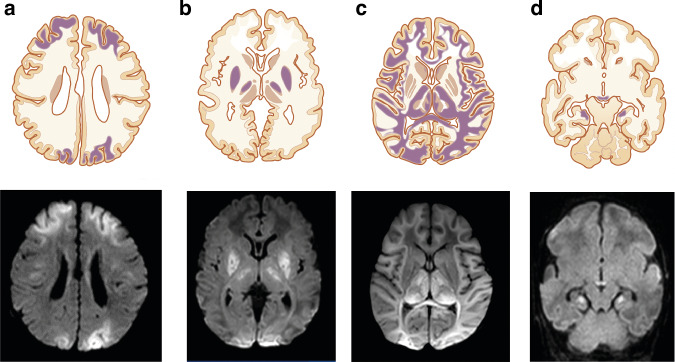
“20 In mild cases, injury is usually seen at the watershed areas of subcortical white matter.”
Beyond brain injury: rethinking neurodevelopment in neonatal encephalopathy
Selvanathan, T. (2025) · Pediatric Research · doi:10.1038/s41390-025-04659-w
“Tworecentreview articles in Pediatric Research by Chakkarapani et al. 1 and Cizmeci et al. 3 provide comprehensive, state-of-the-art overviews of neonatal encephalopathy due to presumed HIE, and outline key priorities for future research aimed at improving outcomes for affected infants.”
InfluentialBordas-Fournel, M., Desseauve, D., Decroisette, E., Forey, P., Hegarat, M. L., Breton, B., Buisson, A., & Riethmuller, D. (2025) · Scientific Reports · doi:10.1038/s41598-025-24347-3
“Although this cutoff is less specific for predicting severe morbidity than stricter thresholds ( 7.10 or 7.00), it remains clinically meaningful as it has been associated with adverse outcomes such as low Apgar scores, NICU admission, and the need for enhanced neonatal monitoring 21,22 .”
InfluentialBrain imaging as a predictor of neurodevelopmental outcomes in neonatal encephalopathy
Anarna, K., Gano, D. L., & Selvanathan, T. (2025) · Pediatric Research · doi:10.1038/s41390-025-04696-5
Aagab-driven SHIP2 degradation rescues mitochondrial dysfunction in hypoxic-ischemic encephalopathy
Han, J., He, L., Chen, L., Wen, B., & Ji, J. (2025) · Mitochondrion · doi:10.1016/j.mito.2025.102109
A Specific Haplotype of the MMP2 Gene Promoter May Increase the Risk of Developing Cerebral Palsy
Djuranovic, A., Cerovac, N., Perović, D., Maksimović, N., Jekic, B., Grk, M., Pjević, M. D., Rasic, M., Stojanovski, N., Pesic, M., et al. (2025) · Diagnostics · doi:10.3390/diagnostics15243178
“HIE was notably more common in the CP group, reinforcing its well-known role as a primary cause of motor disabilities [19,20].”
Long-term disability after neonatal encephalopathy in low-resource settings
Goldsmith, S. C., Gunn, E. R., Gunn, A. J., & Badawi, N. A. (2026) · Pediatric Research · doi:10.1038/s41390-025-04758-8
“12 By contrast, the large Hypothermia for Moderate or Severe Neonatal Encephalopathy in Low-Income and Middle-Income Countries (HELIX) trial, 13 found no effect on the risk of death or disability, and an apparent increase in the risk of death, even in centers with state-of-the-art tertiary neonatal…”
Self-citationThe future of neurodevelopmental disabilities
Molloy, E. J., Bermick, J., Shah, D. K., & Bearer, C. F. (2025) · Pediatric Research · doi:10.1038/s41390-025-04715-5
“Chakkarapani et al. 8 highlight the state of the art overview of the complexity and multifactorial nature of neonatal encephalopathy and crucial unanswered questions.”
Early Prediction of Neonatal Hypoxic-Ischemic Encephalopathy with Interactive GUI Integration
Shetty, A. P., Shetty, S., Hegde, P., Paul, S., Apoorva, & Puthran, R. (2025) · International Conference for Advancement in Technology (ICONAT) · doi:10.1109/iconat66879.2025.11362551
“…estimation in a couple of minutes and allowing breaking the barrier in delay of diagnosing patients because of the subjective nature of human judgments and disparities in access to sophisticated diagnostic techniques, such as magnetic resonance imaging (MRI) or electroencephalography (EEG) [2][3].”
InfluentialPrediction tool for independent walking in children with dyskinetic cerebral palsy: a modeling study
Qiao, L., Chen, G., Wang, Y., Cheng, Z., Hui, Z., Gao, W., Shi, K., Wang, M., Ding, X., Wang, Y., et al. (2026) · BMC Pediatrics · doi:10.1186/s12887-026-06649-1
“…mode, neonatal risk events (hypoxic-ischemic encephalopathy, bilirubin encephalopathy, seizures, cerebral hemorrhage), comorbidities (epilepsy, cognitive impairment, visual and hearing impairment, and number of comorbidities), independent sitting before 2 years, and GMFCS level at 2 years [28].”
Solomenko, M. V. (2026) · CHILD`S HEALTH · doi:10.22141/2224-0551.21.1.2026.1933 · Cited by 1
Hsiao, K. (2026) · Frontiers in Systems Neuroscience · doi:10.3389/fnsys.2026.1753562
Neurodevelopmental outcomes of mild neonatal encephalopathy treated with therapeutic hypothermiaPreprint
Liu, X., Duan, X., Li, T., Deng, Y., Xu, Y., Xu, X., Liu, C., Li, X., Zhan, E., Feng, K., et al. (2026) · Research Square · doi:10.21203/rs.3.rs-8798987/v1
Drugging cold-response networks for neuroprotection
Zhang, M., Liu, C., Cheng, A., & Li, M. (2026) · Trends in Pharmacological Sciences · doi:10.1016/j.tips.2026.02.003 · Cited by 1
Groteklaes, A., Dresbach, T., Demir, S., Müller, A., & Sabir, H. (2026) · Monatsschrift Kinderheilkunde · doi:10.1007/s00112-026-02374-2
Hypoxic Ischemic Encephalopathy
Zamora, E., & Zamora, C. A. (2026) · Neuroimaging Clinics of North America · doi:10.1016/j.nic.2026.02.007
Complement modulation synergizes with therapeutic hypothermia in a rat model of neonatal HIEPreprint
Saadat, A., Pallera, H. K., Lattanzio, F. A., Jacubovich, D., Newman, S., Kunam, M., Necula, A. I., Mohammed, A., & Shah, T. A. (2026) · bioRxiv (Cold Spring Harbor Laboratory) · doi:10.64898/2026.04.07.717097
Bills, H., Danguecan, A. N., Kinoshita, M., Amrit, A., Lo, E., Wilson, D., Tam, E. W. Y., Chau, V., Branson, H. M., Ly, L. G., et al. (2026) · Journal of Perinatology · doi:10.1038/s41372-026-02667-0
“Neonatal encephalopathy (NE) remains a common cause of morbidity, neurodevelopmental disability, and death [1, 2].”
Stem Cell-Based Innovations for Neonatal Hypoxic-Ischemic Encephalopathy
McCredie, H. M., & Gallicchio, V. S. (2026) · Journal of Regenerative Medicine and Biology Research · doi:10.46889/jrmbr.2026.7109
Hypoxic Ischemic Encephalopathy: Hearing Impairment and Related Risk Factors
Serrao, F., Frezza, S., Conti, G., Fattore, S., Corsello, M., Lio, A., Morgia, C. D. S., Concilio, C., Tizio, A., Verdolotti, T., et al. (2026) · Journal of Clinical Medicine · doi:10.3390/jcm15093180
“Chakkarapani et al. [38] suggested that hypoglycemia, hyperglycemia, and glycemic lability are common in infants who undergo TH for HIE.”
Patel, D., Ramanan, A. V., & Chakkarapani, E. (2026) · Archives of Disease in Childhood Fetal & Neonatal · doi:10.1136/archdischild-2025-329808
Self-citationMendes, A. (2026) · Journal of family & child health. · doi:10.12968/jfch.2026.0037
Drlje, M., Trnski, S., Škokić, S., Censo, D. D., Bobić‐Rasonja, M., Kim, E., Kirchbaum, I., Štajduhar, A., Ilić, K., Cash, D., et al. (2026) · Brain Structure and Function · doi:10.64898/2026.05.07.723460
Dresbach, T., Abdelrahman, K., Demir, S., Groteklaes, A., Boeckenhoff, A., Müeller, A., Sabir, H., & the German Hypothermia Registry (2026) · Acta Paediatrica · doi:10.1111/apa.70579
“Hypoxic-ischaemic encephalopathy (HIE) is a prime example of how neonatal and long-term neurodevelopmental outcomes are strictly dependent on rapid and standardised intervention [2].”
Abbasova, Z. N., & Джафарова, Г. А. (2026) · Педиатрия Восточная Европа · doi:10.34883/pi.2026.14.1.021
Li, Y., Qin, C., Miao, C., Mu, R., Zhang, P., Zhang, B., Zhao, X., & Zhang, X. (2026) · Frontiers in Immunology · doi:10.3389/fimmu.2026.1837728
Roy, S., Hartmann, L., Feddahi, N., Lampe, R., Felderhoff‐Müser, U., & Maiti, K. S. (2026) · Spectrochimica Acta Part A Molecular and Biomolecular Spectroscopy · doi:10.1016/j.saa.2026.128422
Kalimumbalo, Y. K., Mubake, M. W., Kambale, W. V., Hamed, M., Kasereka, S. K., & Kyamakya, K. (2026) · Lecture notes in networks and systems · doi:10.1007/978-3-032-26319-3_30
O'Dea, S., Davis, G., Balendran, J., Phipps, H., O’Brien, K., & de Vries, B. S. (2026) · medRxiv · doi:10.64898/2026.07.17.26358359
Hu, L., Ye, J., & Shen, Y. (2026) · Frontiers in Neuroscience · doi:10.3389/fnins.2026.1827015
“In this setting, MRV is not being used as a universal screening test for every infant with HIE (Chakkarapani et al., 2025; Meoded et al., 2012).”
InfluentialColacurci, D., Sarno, L., Fiore, E., Raimondi, F., Martinelli, N., Sirico, A., Carlo, C. D., Bifulco, G., Guida, M., & Maruotti, G. M. (2026) · Genes · doi:10.3390/genes17080862
“Neonatal encephalopathy (NE) is a clinically defined syndrome of disturbed neurological function occurring during the first days of life in term and near-term infants [1,2].”
García‐Sancha, N., Valencia-Ramos, J., Gundin, S., Martín‐Palencia, M., Miranda-Vega, M., Calvo, S., & Arnáez, J. (2026) · Clinical Biochemistry · doi:10.1016/j.clinbiochem.2026.111176
Alshreef, M. N., Alzahrani, M. K., & Awad, A. S. A. (2026) · Cureus · doi:10.7759/cureus.113597
Langer, K. M., Tiemeier, E., Harmon, E., Fineberg, A., Henry, J., Veitch, I., Klopper, T., McVey, T., Dietz, R. M., Dingman, A., et al. (2026) · Pediatric Research · doi:10.1038/s41390-026-05281-0
Accumulation of lipid droplets in microglia following neonatal brain hypoxia-ischemia
Fan, L., Lei, Y., Li, S., Zhang, G., Li, Y., Wu, B., Ferriero, D. M., Pan, P., Guan, Z., & Jiang, X. (2026) · Journal of Neuroinflammation · doi:10.1186/s12974-026-03982-1 · Cited by 1
Self-citationNeto, S., Reis, M. C., & Quaresma, P. (2026) · Research Square · doi:10.21203/rs.3.rs-10460618/v1
Whole-Blood Gene Expression and Hypoxic-Ischemic Encephalopathy at Birth
Montaldo, P., Herberg, J., Uppal, S., Puzone, S., Cirillo, G., del Giudice, E. M., Cirillo, M., Caredda, E., Garegrat, R., Pant, S., et al. (2026) · JAMA Network Open · doi:10.1001/jamanetworkopen.2026.29378
Pan, S., Peng, Y., Hu, J., Cai, Y., Zhang, Y., & Zheng, B. (2026) · Frontiers in Pediatrics · doi:10.3389/fped.2026.1891438
“It remains a major cause of neonatal death and long-term neurodevelopmental impairment worldwide (3, 4).”
InfluentialNothing about us without us: advancing family-centered research and care in neonatal encephalopathy
Charlton, J. K., & Wiebe, T. (2026) · Pediatric Research · doi:10.1038/s41390-026-05433-2
He, S., He, M., & Wu, S. (2026) · Frontiers in Pediatrics · doi:10.3389/fped.2026.1893178
Ntaganzibwa, J. N., Francisca, I. N., Mashukano, B. N., Zigabe, S. M., Zabaday, G. M., Kulimushi, E. R., Ndinaye, S., Bashomeka, D. B., Bavurhe, G. M., Shabani, C. C., et al. (2026) · Tropical Medicine and Health · doi:10.1186/s41182-026-01090-7
“Neonatal encephalopathy describes a syndrome of disturbed neurological function in the newborn and encompasses both hypoxic–ischemic and non-hypoxic etiologies, whereas HIE implies evidence supporting a hypoxic–ischemic cause [3].”
Yang, Y., Cai, D., 于婧文, Zhu, L., Huang, Y., Lin, Y., Teng, C., Wei, J., Lin, Y., Dai, D., et al. (2026) · CNS Neuroscience & Therapeutics · doi:10.1002/cns.71189
Belayhun, E., Estifanos, W., Kercho, T. W., Tewoligne, S. F., & Aseme, A. H. (2026) · International Journal of Scientific Reports · doi:10.18203/issn.2454-2156.intjscirep20263679
Rose, D. U. D., Bersani, I., Salvatori, G., Campi, F., Martini, L., Maddaloni, C., Ronci, S., Santisi, A., Savarese, I., Auriti, C., et al. (2026) · Nutrients · doi:10.3390/nu18193240
Pediatric spasticity in Brazil: insights from a neurosurgical referral center
Beraldo, R. F., da Silva, G. S., Cenatti, L. R. C., Dondalski, M. H. M., Perotti, L. R., Frizon, L. A., Segura, B. C. S., & Liebl, B. (2026) · Child s Nervous System · doi:10.1007/s00381-026-07470-y
“While advanced obstetric and neonatal infrastructure in HICs has successfully reduced HIE incidence to around 1.7 per 1000 live births [12, 13], pre-carious access to emergency obstetric care in various LMIC regions maintains rates up to 20.3 per 1000 [14].”
InfluentialZhar, K. I., Perepichka, M. P., Koloskova, О. К., Vlasova, O. V., Vlasova, K. V., Крецу, Н. М., & Didyk, Y. A. (2026) · CHILD`S HEALTH · doi:10.22141/2224-0551.21.6.2026.1971
Altirkawi, K. A., Sondoqah, M., & Abudouleh, A. (2026) · Journal of Clinical Neonatology · doi:10.4103/jcn.jcn_109_26
Oh, S., Sung, J., Kim, J., & Kwon, J. (2026) · Perinatology · doi:10.14734/pn.2026.37.3.95
González, D. V., & Fontanals, M. E. B. (2026) · International Journal of Neurology · doi:10.62486/ijn2026220
LATE PRETERM INFANTS: CHARACTERISTICS OF NEONATAL ADAPTATION AND LONG-TERM OUTCOMES
Волосовець, О. П., Kryvopustov, S. P., Loginova, I. O., Shevtsova, T. I., Chernii, O. F., & Palii, D. (2026) · Eastern Ukrainian Medical Journal · doi:10.21272/eumj.2026;14(3);643-654
Neurosonographic Findings in Term Newborns with Hypoxic-Ischemic Encephalopathy of Varying Severity
Mammad-zada, G. T., Mammadbayli, A., Mustafayeva, K. A., & Ibrahimova, N. (2026) · NATIONAL JOURNAL OF NEUROLOGY · doi:10.61788/njn.v1i29.03
“Comprehensive assessment of newborns with encephalopathy requires integration of the clinical condition, neurophysiological data, and imaging findings [13–16].”
Controlled‐Release Nanoparticles for the Treatment of Childhood Refractory Epilepsy in Latin America
López-Goerne, T. M., Santamaría, A., González-Bondani, A., Valiente, R., Osuna-Orozco, F., Beltrán-Peña, N., & Gurgua, D. (2026) · BioMed Research International · doi:10.1155/bmri/3576367
“Neonatal hypoxic-ischemic encephalopathy or the presence of structural abnormalities resulting in absence epilepsy with an underlying metabolic pathophysiology is suspected [71].”
Ataş, Y., Soğukpınar, M., Sönmez, B., Soylu, N., Oğuz, M. M., Çelik, M., Ünlü, H. A., Erdem, F., Çınar, Ç., Demir, Ş., et al. (2026) · Children · doi:10.3390/children13111490
Metadata
- Authors
- Chakkarapani, E., de Vries, L. S., Ferriero, D. M., & Gunn, A. J.
- Affiliations
- University of Bristol (GB)
- University of California, San Francisco (US)
- University of Auckland (NZ)
- Corresponding author
- Gunn, Alistair J.
- Venue
- Pediatric Research
- Published
- 2025-03-24
- Volume
- 98
- Issue
- 7
- Pages
- 2444-2458
- ISSN
- 0031-3998 (ISSN-L)
- 1530-0447
- PMC
- PMC12875882
- OpenAlex
- W4408797283
- Cited by
- 90
- References
- 152
- Citations by year
- 2026: 63 · 2025: 27
- FWCI
- 22.56
- Type
- journal article
- Language
- en
- Open access
- hybrid
- doi.org
- Licence
- cc-by
- creativecommons.org/licenses/by/4.0 (tdm)
- creativecommons.org/licenses/by/4.0 (vor)
- Locations
- Pediatric Research (publishedVersion, cc-by)
- Europe PMC (PubMed Central) (publishedVersion, cc-by)
- PubMed (publishedVersion)
- PubMed Central (publishedVersion, cc-by)
- Utrecht University Repository (Utrecht University) (submittedVersion, other-oa)
- eScholarship (California Digital Library) (submittedVersion)
- Bristol Research (University of Bristol) (submittedVersion, cc-by)
- Topics
- Health Sciences › Medicine › Pediatrics, Perinatology and Child Health › Neonatal and fetal brain pathology
- Health Sciences › Medicine › Pediatrics, Perinatology and Child Health › Neonatal Health and Biochemistry
- Health Sciences › Medicine › Pediatrics, Perinatology and Child Health › Fetal and Pediatric Neurological Disorders
- Keywords
- neonatal encephalopathy, hypoxic-ischemic encephalopathy, therapeutic hypothermia, epilepsy, cerebral palsy, neonatal brain injury, amplitude-integrated electroencephalography, video-EEG monitoring, cranial ultrasound, neonatal MRI, biomarkers, genetic factors, intracranial hemorrhage, neonatal stroke, neonatal infection, metabolic disorders, brain malformations, neonatal neuroprotection
- MeSH terms
- Brain, Brain Diseases, Electroencephalography, Humans, Hypothermia, Induced, Infant, Newborn, Infant, Newborn, Diseases, Magnetic Resonance Imaging, Hypoxia-Ischemia, Brain
About these checks
Registry, retraction, Cites and statistics results are computed, not judged, with one exception: a printed reference that no index lists is read once by a model before it counts as a citation error. Claims are extracted by a model and kept only when their quote appears verbatim in the text; each cited source is then checked, with a model’s help, for whether it says what the claim relies on. Those verdicts can be wrong — read the claim’s quote and the cited source before relying on one.
Statistics and arithmetic are recomputed, not judged.
Confidence bands are shown only for fields calibrated on our annotated test set. None is calibrated yet, so no band is shown.
What counts as a claim ›How we measure confidence ›How we check this ›
Are you an author, or do you see a problem with this page? Request a review
Data sources
Bibliographic data: Semantic Scholar, OpenAlex, Crossref.
Contains information from the Semantic Scholar Academic Graph Datasets, made available under the ODC Attribution License (ODC-BY 1.0).
Semantic Scholar’s data is described in: Kinney, R., et al. (2023). The Semantic Scholar Open Data Platform. arXiv:2301.10140.
