

Navigating therapeutic sequencing in the metastatic castration-resistant prostate cancer patient journey
Open accessThe DOI matches its Crossref record; 74 of the 77 references it cites were found in a registry or an index, and 2 are not checked yet; 25 of the 88 sources its claims cite were checked for support.
Abstract
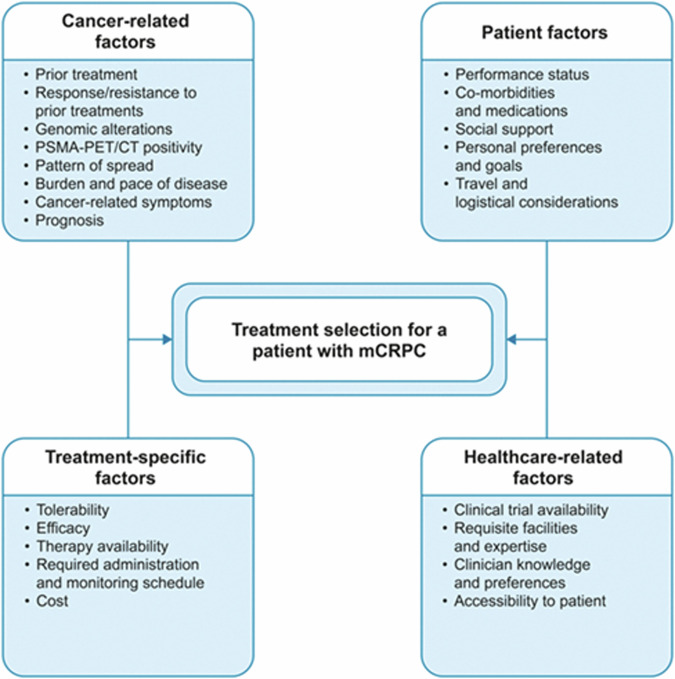
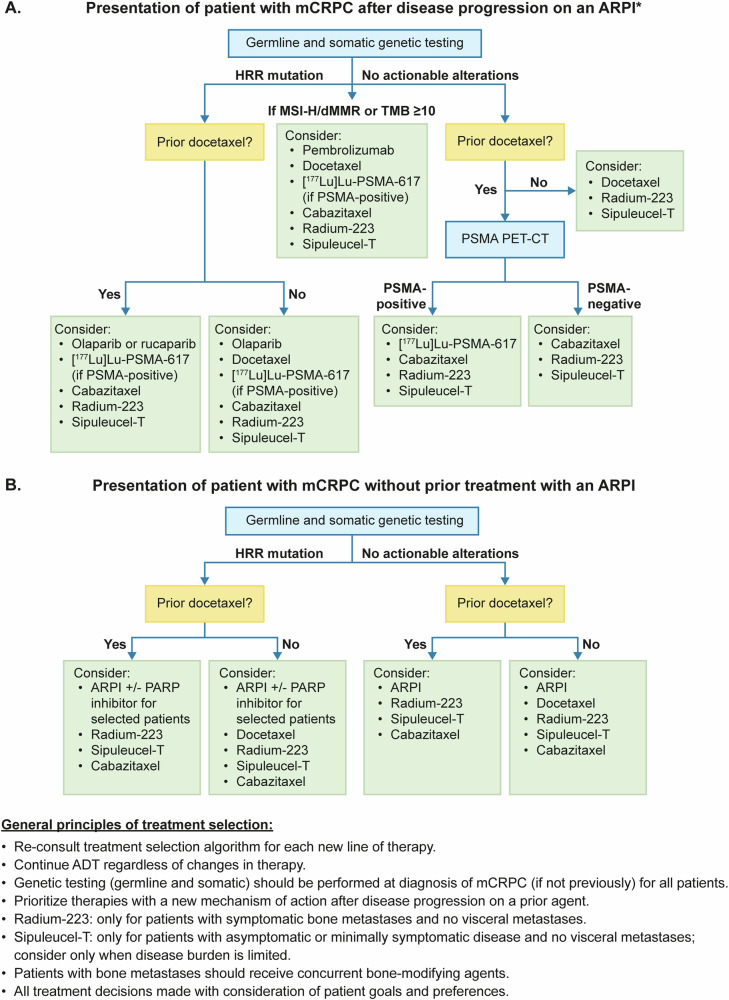
Novel therapies for metastatic castration-resistant prostate cancer (mCRPC) have improved patient outcomes. However, there is uncertainty on the optimal selection of therapeutic agents for subsequent lines of therapy. We conducted a comprehensive review of published evidence from pivotal clinical trials and recent guidelines for the treatment of mCRPC. We further identify gaps in knowledge and areas for future research. Key considerations to help guide treatment selection for patients with mCRPC include personal treatment history, individual clinical characteristics, symptoms, prognosis, availability of clinical trials, and other patient-specific factors. Genetic testing and prostate-specific membrane antigen-targeted imaging are important tools to evaluate candidacy for newer therapeutic options such as poly (ADP-ribose) polymerase inhibitors, alone or in combination with androgen receptor pathway inhibitors, and [ 177 Lu]Lu-PSMA-617. This article provides an overview of the evolving treatment landscape of mCRPC, discussing guideline-recommended treatment options and data from key clinical trials, while highlighting ongoing trials that may impact the future treatment landscape. Recommendations for optimal treatment sequencing based on individual patient factors are provided.
Verified 2026-11-22 · 2 references not checked yet
Overview
CoChat Summary
## TL;DR
This is a narrative review of how to sequence treatments for metastatic castration-resistant prostate cancer (mCRPC), emphasizing individualized decisions based on prior therapy, disease features, genomics, imaging, symptoms, and access. It highlights newer options such as PARP inhibitors and PSMA-targeted radioligand therapy, while noting that optimal sequencing remains uncertain.
## Key findings
- Treatment selection for mCRPC should be individualized using prior treatment history, disease characteristics, prognosis, symptoms, patient preferences, and clinic-level factors.
- Genetic testing is positioned as central to treatment choice: the paper states NCCN v4.2024 recommends both germline and somatic tumor testing for all patients with metastatic PC, yet only 13% (674/5213) of patients with mCRPC had any genetic testing in a 2013–2019 study.
- For PSMA-positive disease, the paper cites VISION showing [177Lu]Lu-PSMA-617 plus best SOC prolonged rPFS and OS, and TheraP showing fewer grade ≥3 adverse events, improved patient-reported outcomes, and similar OS versus cabazitaxel.
- For PARP inhibitor/ARPI combinations in first-line mCRPC, the paper reports trial results including:
- PROpel: median PFS 24.8 vs 16.6 months; HR 0.66; final OS 42.1 vs 34.7 months.
- TALAPRO-2: rPFS not reached vs 21.9 months; HR 0.63.
- MAGNITUDE: HRRm cohort median rPFS 16.5 vs 13.7 months; HR 0.73; no benefit in the non-HRRm cohort (HR 1.09).
- The review states there is benefit in some biomarker-defined subgroups, but also that patients with prior ARPI resistance were not represented in several pivotal PARP inhibitor combination trials, so benefit in that setting is unknown.
## Methods
- Narrative comprehensive review of published evidence from pivotal clinical trials and recent guidelines for mCRPC.
- Sources included guideline documents and key trial reports; no new patient cohort, intervention, or original dataset is described.
- The main analysis is qualitative synthesis to identify treatment-sequencing principles, evidence gaps, and future research directions.
## Limitations
- The paper explicitly states it focuses on practice patterns in the US, and says further work describing different treatment sequences globally is needed.
- The text makes evident that it is not a systematic review or meta-analysis; it synthesizes evidence narratively rather than using a formal search and selection framework.
- Many recommendations are based on trials that may not match current real-world sequencing: the paper notes pivotal studies often included patients who had not received prior ARPI, and often relied on conventional imaging rather than current PSMA PET.
Model-written summary. Check it against the paper before relying on it.
Integrity signals
Registry
Cites
Statistics
Figures
Verification
Claims the paper makes
17 Valid · 0 Not valid · 35 Not checked · 4 Own results and interpretations
Every source the paper cites for this claim was checked and supports it.
In the paper
“Approximately 11% of patients with metastatic PC may harbor a germline mutation in DNA-repair genes [51].”
§ Navigating therapeutic sequencing in the metastatic castration-resistant prostate cancer patient journey > Treatment recommendations and practice > Genotypic and phenotypic testing
What the sources say
- Supportedcites [51] Pritchard CC, Mateo J, Walsh MF, De Sarkar N, Abida W, Beltran H, et al. Inherited DNA-repair gene mutations in men with metastatic prostate cancer. N Engl J Med. 2016;375:443–53. 27433846 PMC4986616 source
The Results section reports that 82 of 692 men with metastatic prostate cancer (11.8%) had a presumed pathogenic germline mutation in a DNA-repair gene. This supports the claim’s approximate figure of 11%. (LLM, conf=0.94)
hedged- Asserted: passes — The authors put it forward as true.
- Checkable: passes — It can be checked against evidence.
- Load-bearing: unclear — It is unclear whether the paper’s conclusions depend on it.
- Based: passes — The paper gives a reason why it holds.
- Supported
The cited sources support only part of this claim — read each source’s verdict below.
In the paper
“In an exploratory analysis of a subgroup of TRITON-3 evaluating patients with BRCA alterations, the median PFS with rucaparib (11.2 months) was longer than with docetaxel (6.4 months; p < 0.001) [57].”
§ Navigating therapeutic sequencing in the metastatic castration-resistant prostate cancer patient journey > Treatment recommendations and practice > Genotypic and phenotypic testing
What the sources say
- Partly supportedcites [57] Fizazi K, Piulats JM, Reaume MN, Ostler P, McDermott R, Gingerich JR, et al. Rucaparib or physician’s choice in metastatic prostate cancer. N Engl J Med. 2023;388:719–32. 36795891 PMC10064172 sourceExperimental — accuracy not yet measured
The Exploratory Outcomes section reports longer imaging-based progression-free survival with rucaparib than with docetaxel in the BRCA subgroup, but the medians were 11.2 and 8.3 months, not 11.2 and 6.4 months. The Primary Outcome section gives 6.4 months and P<0.001 for the comparison with the overall control group, not the exploratory docetaxel comparison. (LLM, conf=0.90)
plainstates an association- Asserted: passes — The authors put it forward as true.
- Checkable: passes — It can be checked against evidence.
- Load-bearing: passes — The paper’s conclusions depend on it.
- Based: passes — The paper gives a reason why it holds.
- Partly supported
The cited sources support only part of this claim — read each source’s verdict below.
In the paper
“In the phase 3 randomized trials PROfound (NCT02987543), and TRITON-3 (NCT02975934), treatment with PARP inhibitors was favored in both chemotherapy-naïve patients and those who had received prior taxane-based chemotherapy [57, 58].”
§ Navigating therapeutic sequencing in the metastatic castration-resistant prostate cancer patient journey > Treatment recommendations and practice > Genotypic and phenotypic testing
What the sources say
- Partly supportedcites [57] Fizazi K, Piulats JM, Reaume MN, Ostler P, McDermott R, Gingerich JR, et al. Rucaparib or physician’s choice in metastatic prostate cancer. N Engl J Med. 2023;388:719–32. 36795891 PMC10064172 sourceExperimental — accuracy not yet measured
The TRITON3 results report longer imaging-based progression-free survival with rucaparib than with control treatment, and the trial enrolled patients without prior chemotherapy for metastatic castration-resistant disease. The Results (Patient Characteristics) note that some participants had received docetaxel earlier for hormone-sensitive disease, but the cited paper does not establish a separate treatment benefit for patients previously treated with taxanes. Its statement about activity after prior taxane chemotherapy concerns the phase 2 TRITON2 study, not TRITON3. (LLM, conf=0.86)
- Supportedcites [58] de Bono J, Mateo J, Fizazi K, Saad F, Shore N, Sandhu S, et al. Olaparib for metastatic castration-resistant prostate cancer. N Engl J Med. 2020;382:2091–102. 32343890 source
The Methods identify PROfound as a randomized phase 3 trial of olaparib. Figure 2’s prespecified subgroup analysis reports progression-free-survival hazard ratios below 1 for patients with and without previous taxane use in cohort A, favoring olaparib in both groups. This paper supports the PROfound portion of the sentence; it is not the citation for TRITON-3. (LLM, conf=0.89)
plainstates a cause- Asserted: passes — The authors put it forward as true.
- Checkable: passes — It can be checked against evidence.
- Load-bearing: passes — The paper’s conclusions depend on it.
- Based: passes — The paper gives a reason why it holds.
- Partly supported
The sources with a verdict support this claim; the rest weren’t checked yet, have no full text we could read, or their verdicts aren’t rated yet.
In the paper
“Several retrospective series have evaluated the outcomes of patients with oligoprogressive CRPC lesions treated with metastasis-directed therapy, demonstrating improved PFS and delays in systemic therapy change [30, 46].”
§ Navigating therapeutic sequencing in the metastatic castration-resistant prostate cancer patient journey > Treatment recommendations and practice > Pattern of disease spread and associated symptoms The pattern of metastatic spread can provide insight into disease behavior, influencing treatment selection [43, 44]. Visceral metastases, specifically liver metastases, can be predictive of more aggressive disease biology and shorter survival observed with ARPIs and chemotherapy, vs patients without liver metastases [43, 44]. Although often classified together as visceral metastases, patients with lung metastases have a more favorable prognosis vs patients with liver metastases [43]. In patients with liver metastases, treatment with microtubule inhibitor chemotherapy, either docetaxel (if not received previously) or cabazitaxel, is generally preferred [3]. A phase 2 trial (NCT02254785) including patients with ARPI-naïve mCRPC and poor prognostic features (including liver metastases) demonstrated a higher clinical benefit rate with cabazitaxel vs physician’s choice of enzalutamide or abiraterone [45]. Radium-223 (a bone-directed alpha emitter) can be considered for patients with symptomatic, bone-predominant metastatic disease without visceral metastases [23]. Of note, except for concurrent ADT and bone-targeting agents, radium-223 is not recommended for use as a combination therapy, given the increased fracture rates seen when administered with abiraterone [3]. Alternatively, the active cellular immunotherapy sipuleucel-T can be considered for patients with asymptomatic to minimally symptomatic disease without visceral metastases [24]. Although the pattern of metastasis may determine patient eligibility [23, 24, 43, 44], decisions on when to incorporate these therapies must consider all available options. In patients with disease oligoprogression on systemic therapy, metastasis-directed therapy (radiotherapy delivery to metastatic lesions) can be considered, but there are limited data on this strategy in mCRPC [19, 30, 46, 47]. In the phase 2 ARTO trial, abiraterone plus SBRT improved prostate-specific antigen (PSA)-based outcomes and progression-free survival (PFS) vs abiraterone alone in patients with oligometastatic CRPC [19]. In the single-arm phase 2 TRAP trial, patients with oligoprogressive CRPC (with ≤2 progressive lesions that developed while on ARPI treatment) received SBRT [47]. The median PFS was 6.4 months (95% confidence interval [CI] 5.9–12.8 months), which exceeded the investigators hypothesized median PFS of 4 months [47]. The investigators commented that over 40% of patients remained progression-free at 12 months, and that treatment did not impact patient quality of life [47]. Several retrospective series have evaluated the outcomes of patients with oligoprogressive CRPC lesions treated with metastasis-directed therapy, demonstrating improved PFS and delays in systemic therapy change [30, 46]. In patients with limited sites of disease progression, treatment with metastasis-directed therapy can be considered to delay the need to switch systemic therapy; however, larger studies are required.
What the sources say
- Not checked — no full text of the sourcecites [30] Triggiani L, Mazzola R, Magrini SM, Ingrosso G, Borghetti P, Trippa F, et al. Metastasis-directed stereotactic radiotherapy for oligoprogressive castration-resistant prostate cancer: a multicenter study. World J Urol. 2019;37:2631–7. 30859273 source
- Supportedcites [46] Deek MP, Taparra K, Phillips R, Velho PI, Gao RW, Deville C, et al. Metastasis-directed therapy prolongs efficacy of systemic therapy and improves clinical outcomes in oligoprogressive castration-resistant prostate cancer. Eur Urol Oncol. 2021;4:447–55. 32536574 PMC7788526 source
The Discussion describes several retrospective series of metastasis-directed therapy in oligoprogressive CRPC and reports their progression-free survival and time-to-next-intervention outcomes. In the Results (Comparison to systemic agents alone), this study found longer distant metastasis-free survival and time to next intervention with MDT. Time to next intervention is broader than a systemic therapy change, but the paper also reports that most MDT patients remained on their current systemic therapy. (LLM, conf=0.88)
boostedstates an association- Asserted: passes — The authors put it forward as true.
- Checkable: passes — It can be checked against evidence.
- Load-bearing: passes — The paper’s conclusions depend on it.
- Based: passes — The paper gives a reason why it holds.
Every source the paper cites for this claim was checked and supports it.
In the paper
“Although often classified together as visceral metastases, patients with lung metastases have a more favorable prognosis vs patients with liver metastases [43].”
§ Navigating therapeutic sequencing in the metastatic castration-resistant prostate cancer patient journey > Treatment recommendations and practice > Pattern of disease spread and associated symptoms The pattern of metastatic spread can provide insight into disease behavior, influencing treatment selection [43, 44]. Visceral metastases, specifically liver metastases, can be predictive of more aggressive disease biology and shorter survival observed with ARPIs and chemotherapy, vs patients without liver metastases [43, 44]. Although often classified together as visceral metastases, patients with lung metastases have a more favorable prognosis vs patients with liver metastases [43]. In patients with liver metastases, treatment with microtubule inhibitor chemotherapy, either docetaxel (if not received previously) or cabazitaxel, is generally preferred [3]. A phase 2 trial (NCT02254785) including patients with ARPI-naïve mCRPC and poor prognostic features (including liver metastases) demonstrated a higher clinical benefit rate with cabazitaxel vs physician’s choice of enzalutamide or abiraterone [45]. Radium-223 (a bone-directed alpha emitter) can be considered for patients with symptomatic, bone-predominant metastatic disease without visceral metastases [23]. Of note, except for concurrent ADT and bone-targeting agents, radium-223 is not recommended for use as a combination therapy, given the increased fracture rates seen when administered with abiraterone [3]. Alternatively, the active cellular immunotherapy sipuleucel-T can be considered for patients with asymptomatic to minimally symptomatic disease without visceral metastases [24]. Although the pattern of metastasis may determine patient eligibility [23, 24, 43, 44], decisions on when to incorporate these therapies must consider all available options. In patients with disease oligoprogression on systemic therapy, metastasis-directed therapy (radiotherapy delivery to metastatic lesions) can be considered, but there are limited data on this strategy in mCRPC [19, 30, 46, 47]. In the phase 2 ARTO trial, abiraterone plus SBRT improved prostate-specific antigen (PSA)-based outcomes and progression-free survival (PFS) vs abiraterone alone in patients with oligometastatic CRPC [19]. In the single-arm phase 2 TRAP trial, patients with oligoprogressive CRPC (with ≤2 progressive lesions that developed while on ARPI treatment) received SBRT [47]. The median PFS was 6.4 months (95% confidence interval [CI] 5.9–12.8 months), which exceeded the investigators hypothesized median PFS of 4 months [47]. The investigators commented that over 40% of patients remained progression-free at 12 months, and that treatment did not impact patient quality of life [47]. Several retrospective series have evaluated the outcomes of patients with oligoprogressive CRPC lesions treated with metastasis-directed therapy, demonstrating improved PFS and delays in systemic therapy change [30, 46]. In patients with limited sites of disease progression, treatment with metastasis-directed therapy can be considered to delay the need to switch systemic therapy; however, larger studies are required.
What the sources say
- Supportedcites [43] Halabi S, Kelly WK, Ma H, Zhou H, Solomon NC, Fizazi K, et al. Meta-analysis evaluating the impact of site of metastasis on overall survival in men with castration-resistant prostate cancer. J Clin Oncol. 2016;34:1652–9. 26951312 PMC4872320 source
The Results report longer median overall survival for men with lung metastases than for men with liver metastases (19.4 versus 13.5 months). The Discussion explicitly concludes that, among men with metastatic castration-resistant prostate cancer treated with docetaxel, those with liver metastases had worse overall survival than those with lung metastases. (LLM, conf=0.95)
plainstates an association- Asserted: passes — The authors put it forward as true.
- Checkable: passes — It can be checked against evidence.
- Load-bearing: passes — The paper’s conclusions depend on it.
- Based: passes — The paper gives a reason why it holds.
- Supported
23 more claims · 7 with their cited sources checked
Create a free account to see all 56 claims and to verify the 19 references still open.
- It may state two separate claims as one. 24
- Probably not a substantial claim. 6
Citations
Cites
Siegel, R. L., Miller, K. D., Fuchs, H. E., & Jemal, A. (2022) · CA: A Cancer Journal for Clinicians · doi:10.3322/caac.21708 · Cited by 17,196 · cited 1×
“Approximately 8% of patients with PC have metastatic disease at diagnosis, and rates of de novo metastatic disease are increasing [2].”
The National Comprehensive Cancer Network: Present and future directions
McGivney, W. T. (1998) · Cancer · doi:10.1002/(sici)1097-0142(19980515)82:10+<2057::aid-cncr14>3.0.co;2-a · Cited by 16,766
Sipuleucel-T Immunotherapy for Castration-Resistant Prostate Cancer
Kantoff, P. W., Higano, C. S., Shore, N. D., Berger, E. R., Small, E. J., Penson, D. F., Redfern, C. H., Ferrari, A. C., Dreicer, R., Sims, R. B., et al. (2010) · New England Journal of Medicine · doi:10.1056/nejmoa1001294 · Cited by 5,572
Self-citationIncreased Survival with Enzalutamide in Prostate Cancer after Chemotherapy
Scher, H. I., Fizazi, K., Saad, F., Taplin, M.-E., Sternberg, C. N., Miller, K., de Wit, R., Mulders, P., Chi, K. N., Shore, N. D., et al. (2012) · New England Journal of Medicine · doi:10.1056/nejmoa1207506 · Cited by 4,586
Self-citationAbiraterone and Increased Survival in Metastatic Prostate Cancer
de Bono, J. S., Logothetis, C. J., Molina, A., Fizazi, K., North, S., Chu, L., Chi, K. N., Jones, R. J., Goodman, O. B., Saad, F., et al. (2011) · New England Journal of Medicine · doi:10.1056/nejmoa1014618 · Cited by 4,407
Integrative Clinical Genomics of Advanced Prostate Cancer
Robinson, D., Van Allen, E. M., Wu, Y.-M., Schultz, N., Lonigro, R. J., Mosquera, J.-M., Montgomery, B., Taplin, M.-E., Pritchard, C. C., Attard, G., et al. (2015) · Cell · doi:10.1016/j.cell.2015.05.001 · Cited by 3,645 · cited 1×
“In addition to visceral metastases, multiple clinical factors have demonstrated an association with varying prognoses, including PSA, alkaline phosphatase, hemoglobin, albumin, and lactate dehydrogenase [48 – 50].”
Alpha Emitter Radium-223 and Survival in Metastatic Prostate Cancer
Parker, C., Nilsson, S., Heinrich, D., Helle, S. I., O'Sullivan, J. M., Fosså, S. D., Chodacki, A., Wiechno, P., Logue, J., Seke, M., et al. (2013) · New England Journal of Medicine · doi:10.1056/nejmoa1213755 · Cited by 3,408
Self-citationde Bono, J. S., Oudard, S., Ozguroglu, M., Hansen, S., Machiels, J.-P., Kocak, I., Gravis, G., Bodrogi, I., Mackenzie, M. J., Shen, L., et al. (2010) · The Lancet · doi:10.1016/s0140-6736(10)61389-x · Cited by 3,318
Enzalutamide in Metastatic Prostate Cancer before Chemotherapy
Beer, T. M., Armstrong, A. J., Rathkopf, D. E., Loriot, Y., Sternberg, C. N., Higano, C. S., Iversen, P., Bhattacharya, S., Carles, J., Chowdhury, S., et al. (2014) · New England Journal of Medicine · doi:10.1056/nejmoa1405095 · Cited by 3,028
Self-citationLutetium-177–PSMA-617 for Metastatic Castration-Resistant Prostate Cancer
Sartor, O., de Bono, J., Chi, K. N., Fizazi, K., Herrmann, K., Rahbar, K., Tagawa, S. T., Nordquist, L. T., Vaishampayan, N., El-Haddad, G., et al. (2021) · New England Journal of Medicine · doi:10.1056/nejmoa2107322 · Cited by 2,864
Self-citationAbiraterone in Metastatic Prostate Cancer without Previous Chemotherapy
Ryan, C. J., Smith, M. R., de Bono, J. S., Molina, A., Logothetis, C. J., de Souza, P., Fizazi, K., Mainwaring, P., Piulats, J. M., Ng, S., et al. (2013) · New England Journal of Medicine · doi:10.1056/nejmoa1209096 · Cited by 2,796
Olaparib for Metastatic Castration-Resistant Prostate Cancer
de Bono, J., Mateo, J., Fizazi, K., Saad, F., Shore, N., Sandhu, S., Chi, K. N., Sartor, O., Agarwal, N., Olmos, D., et al. (2020) · New England Journal of Medicine · doi:10.1056/nejmoa1911440 · Cited by 2,323
Self-citationScher, H. I., Halabi, S., Tannock, I., Morris, M., Sternberg, C. N., Carducci, M. A., Eisenberger, M. A., Higano, C., Bubley, G. J., Dreicer, R., et al. (2008) · Journal of Clinical Oncology · doi:10.1200/jco.2007.12.4487 · Cited by 2,241 · cited 1×
“Despite treatment, patients often experience disease progression while maintaining castrate levels of serum testosterone, either with metastases (metastatic castration-resistant PC [CRPC]; mCRPC) or without metastases (non-metastatic/M0 CRPC) [6].”
Inherited DNA-Repair Gene Mutations in Men with Metastatic Prostate Cancer
Pritchard, C. C., Mateo, J., Walsh, M. F., De Sarkar, N., Abida, W., Beltran, H., Garofalo, A., Gulati, R., Carreira, S., Eeles, R., et al. (2016) · New England Journal of Medicine · doi:10.1056/nejmoa1603144 · Cited by 1,680 · cited 1×
“In addition to visceral metastases, multiple clinical factors have demonstrated an association with varying prognoses, including PSA, alkaline phosphatase, hemoglobin, albumin, and lactate dehydrogenase [48 – 50].”
Fizazi, K., Scher, H. I., Molina, A., Logothetis, C. J., Chi, K. N., Jones, R. J., Staffurth, J. N., North, S., Vogelzang, N. J., Saad, F., et al. (2012) · The Lancet Oncology · doi:10.1016/s1470-2045(12)70379-0 · Cited by 1,384
Ryan, C. J., Smith, M. R., Fizazi, K., Saad, F., Mulders, P. F. A., Sternberg, C. N., Miller, K., Logothetis, C. J., Shore, N. D., Small, E. J., et al. (2015) · The Lancet Oncology · doi:10.1016/s1470-2045(14)71205-7 · Cited by 1,369
Self-citationHofman, M. S., Emmett, L., Sandhu, S., Iravani, A., Joshua, A. M., Goh, J. C., Pattison, D. A., Tan, T. H., Kirkwood, I. D., Ng, S., et al. (2021) · The Lancet · doi:10.1016/s0140-6736(21)00237-3 · Cited by 1,170
Berthold, D. R., Pond, G. R., Soban, F., de Wit, R., Eisenberger, M., & Tannock, I. F. (2008) · Journal of Clinical Oncology · doi:10.1200/jco.2007.12.4008 · Cited by 1,145
Fizazi, K., Foulon, S., Carles, J., Roubaud, G., McDermott, R., Fléchon, A., Tombal, B., Supiot, S., Berthold, D., Ronchin, P., et al. (2022) · The Lancet · doi:10.1016/s0140-6736(22)00367-1 · Cited by 847 · cited 1×
“The further adoption of triplet therapy ( fi rst-line docetaxel plus ARPI plus ADT) as a SOC for patients with mHSPC means that many patients will be exposed to both an ARPI and docetaxel before developing castration-resistant prostate cancer (CRPC) [32].”
Abida, W., Patnaik, A., Campbell, D., Shapiro, J., Bryce, A. H., McDermott, R., Sautois, B., Vogelzang, N. J., Bambury, R. M., Voog, E., et al. (2020) · Journal of Clinical Oncology · doi:10.1200/jco.20.01035 · Cited by 694
Abida, W., Cheng, M. L., Armenia, J., Middha, S., Autio, K. A., Vargas, H. A., Rathkopf, D., Morris, M. J., Danila, D. C., Slovin, S. F., et al. (2019) · JAMA Oncology · doi:10.1001/jamaoncol.2018.5801 · Cited by 667 · cited 6×
“%) demonstrated radiographic responses [68].”
InfluentialCabazitaxel versus Abiraterone or Enzalutamide in Metastatic Prostate Cancer
de Wit, R., de Bono, J., Sternberg, C. N., Fizazi, K., Tombal, B., Wülfing, C., Kramer, G., Eymard, J.-C., Bamias, A., Carles, J., et al. (2019) · New England Journal of Medicine · doi:10.1056/nejmoa1911206 · Cited by 663
Abida, W., Armenia, J., Gopalan, A., Brennan, R., Walsh, M., Barron, D., Danila, D., Rathkopf, D., Morris, M., Slovin, S., et al. (2017) · JCO Precision Oncology · doi:10.1200/po.17.00029 · Cited by 541 · cited 1×
“Several multivariable models are available that incorporate these factors to help inform prognoses for patients with mCRPC [48 – 50], and prognostic knowledge from these models may inform treatment decision-making.”
Agarwal, N., Azad, A. A., Carles, J., Fay, A. P., Matsubara, N., Heinrich, D., Szczylik, C., De Giorgi, U., Young Joung, J., Fong, P. C. C., et al. (2023) · The Lancet · doi:10.1016/s0140-6736(23)01055-3 · Cited by 538
Self-citationHalabi, S., Kelly, W. K., Ma, H., Zhou, H., Solomon, N. C., Fizazi, K., Tangen, C. M., Rosenthal, M., Petrylak, D. P., Hussain, M., et al. (2016) · Journal of Clinical Oncology · doi:10.1200/jco.2015.65.7270 · Cited by 461 · cited 5×
“Although the pattern of metastasis may determine patient eligibility [23, 24, 43, 44], decisions on when to incorporate these therapies must consider all available options.”
InfluentialSelf-citationRucaparib or Physician’s Choice in Metastatic Prostate Cancer
Fizazi, K., Piulats, J. M., Reaume, M. N., Ostler, P., McDermott, R., Gingerich, J. R., Pintus, E., Sridhar, S. S., Bambury, R. M., Emmenegger, U., et al. (2023) · New England Journal of Medicine · doi:10.1056/nejmoa2214676 · Cited by 449 · cited 1×
“Several multivariable models are available that incorporate these factors to help inform prognoses for patients with mCRPC [48 – 50], and prognostic knowledge from these models may inform treatment decision-making.”
Abiraterone and Olaparib for Metastatic Castration-Resistant Prostate Cancer
Clarke, N. W., Armstrong, A. J., Thiery-Vuillemin, A., Oya, M., Shore, N., Loredo, E., Procopio, G., de Menezes, J., Girotto, G., Arslan, C., et al. (2022) · NEJM Evidence · doi:10.1056/evidoa2200043 · Cited by 426
Self-citationThe Role of Lineage Plasticity in Prostate Cancer Therapy Resistance
Beltran, H., Hruszkewycz, A., Scher, H. I., Hildesheim, J., Isaacs, J., Yu, E. Y., Kelly, K., Lin, D., Dicker, A., Arnold, J., et al. (2019) · Clinical Cancer Research · doi:10.1158/1078-0432.ccr-19-1423 · Cited by 405 · cited 1×
“Although [ 177 Lu]Lu-PSMA-617 is currently the only FDA-approved PSMA-targeted RLT, other strategies are under investigation, including [ 177 Lu]Lu-PNT2022, I-131-1095 (small-molecule PSMA-targeted 131 I-based RLT) and strategies utilizing alpha-emitters (e.g., actinium-225; [ 225 Ac]Ac-J591) [86,…”
Niraparib and Abiraterone Acetate for Metastatic Castration-Resistant Prostate Cancer
Chi, K. N., Rathkopf, D., Smith, M. R., Efstathiou, E., Attard, G., Olmos, D., Lee, J. Y., Small, E. J., Pereira de Santana Gomes, A. J., Roubaud, G., et al. (2023) · Journal of Clinical Oncology · doi:10.1200/jco.22.01649 · Cited by 355
Self-citationNoonan, K. L., North, S., Bitting, R. L., Armstrong, A. J., Ellard, S. L., & Chi, K. N. (2013) · Annals of Oncology · doi:10.1093/annonc/mdt138 · Cited by 343 · cited 1×
“To overcome neoplastic biologic resistance and maximize clinical ef fi cacy, therapies with a different MoA from previously utilized treatments should be selected [33, 34].”
Self-citationSaad, F., Clarke, N. W., Oya, M., Shore, N., Procopio, G., Guedes, J. D., Arslan, C., Mehra, N., Parnis, F., Brown, E., et al. (2023) · The Lancet Oncology · doi:10.1016/s1470-2045(23)00382-0 · Cited by 326
Self-citationUpdates to Advanced Prostate Cancer: AUA/SUO Guideline (2023)
Lowrance, W., Dreicer, R., Jarrard, D. F., Scarpato, K. R., Kim, S. K., Kirkby, E., Buckley, D. I., Griffin, J. C., & Cookson, M. S. (2023) · Journal of Urology · doi:10.1097/ju.0000000000003452 · Cited by 321
Li, L., Karanika, S., Yang, G., Wang, J., Park, S., Broom, B. M., Manyam, G. C., Wu, W., Luo, Y., Basourakos, S., et al. (2017) · Science Signaling · doi:10.1126/scisignal.aam7479 · Cited by 295
Ferraldeschi, R., Nava Rodrigues, D., Riisnaes, R., Miranda, S., Figueiredo, I., Rescigno, P., Ravi, P., Pezaro, C., Omlin, A., Lorente, D., et al. (2015) · European Urology · doi:10.1016/j.eururo.2014.10.027 · Cited by 268 · cited 1×
“Biomarkers of poor outcomes and ARPI resistance, including aggressive variant signatures (e.g., PTEN), and biomarkers predictive of improved outcomes with ARPI treatment (e.g., SPOP) are emerging and may soon become actionable [96, 97].”
Fendler, W. P., Weber, M., Iravani, A., Hofman, M. S., Calais, J., Czernin, J., Ilhan, H., Saad, F., Small, E. J., Smith, M. R., et al. (2019) · Clinical Cancer Research · doi:10.1158/1078-0432.ccr-19-1050 · Cited by 266 · cited 1×
“PSMAfore met its primary endpoint, demonstrating signi fi cantly improved rPFS in patients randomized to [ 177 Lu]Lu-PSMA-617 vs an ARPI change (HR 0.41; 95% CI 0.29 – 0.56; p < 0.0001), in addition to improved ORR ([ 177 Lu]Lu-PSMA-617 vs ARPI change: 50.7% vs 14.9”
InfluentialHofman, M. S., Emmett, L., Sandhu, S., Iravani, A., Buteau, J. P., Joshua, A. M., Goh, J. C., Pattison, D. A., Tan, T. H., Kirkwood, I. D., et al. (2024) · The Lancet Oncology · doi:10.1016/s1470-2045(23)00529-6 · Cited by 230 · cited 1×
“Several multivariable models are available that incorporate these factors to help inform prognoses for patients with mCRPC [48 – 50], and prognostic knowledge from these models may inform treatment decision-making.”
Basch, E., Loblaw, D. A., Oliver, T. K., Carducci, M., Chen, R. C., Frame, J. N., Garrels, K., Hotte, S., Kattan, M. W., Raghavan, D., et al. (2014) · Journal of Clinical Oncology · doi:10.1200/jco.2013.54.8404 · Cited by 223
Kellokumpu-Lehtinen, P.-L., Harmenberg, U., Joensuu, T., McDermott, R., Hervonen, P., Ginman, C., Luukkaa, M., Nyandoto, P., Hemminki, A., Nilsson, S., et al. (2013) · The Lancet Oncology · doi:10.1016/s1470-2045(12)70537-5 · Cited by 212 · cited 2×
“In one study, ~50% of somatic mutations in homologous recombination repair (HRR) genes were also identi fi ed on germline testing [53].”
InfluentialNava Rodrigues, D., Rescigno, P., Liu, D., Yuan, W., Carreira, S., Lambros, M. B., Seed, G., Mateo, J., Riisnaes, R., Mullane, S., et al. (2018) · Journal of Clinical Investigation · doi:10.1172/jci121924 · Cited by 203 · cited 1×
“Several multivariable models are available that incorporate these factors to help inform prognoses for patients with mCRPC [48 – 50], and prognostic knowledge from these models may inform treatment decision-making.”
Pond, G. R., Sonpavde, G., de Wit, R., Eisenberger, M. A., Tannock, I. F., & Armstrong, A. J. (2014) · European Urology · doi:10.1016/j.eururo.2013.09.024 · Cited by 193 · cited 3×
“Although the pattern of metastasis may determine patient eligibility [23, 24, 43, 44], decisions on when to incorporate these therapies must consider all available options.”
Self-citationFizazi, K. S., Azad, A., Matsubara, N., Carles, J., Fay, A. P., Giorgi, U. D., Joung, J. Y., Fong, P. C. C., Voog, É., Jones, R. J., et al. (2023) · Nature Medicine · doi:10.1038/s41591-023-02704-x · Cited by 172
Self-citationChi, K. N., Kheoh, T., Ryan, C. J., Molina, A., Bellmunt, J., Vogelzang, N. J., Rathkopf, D. E., Fizazi, K., Kantoff, P. W., Li, J., et al. (2016) · Annals of Oncology · doi:10.1093/annonc/mdv594 · Cited by 167
Jensen, K., Konnick, E. Q., Schweizer, M. T., Sokolova, A. O., Grivas, P., Cheng, H. H., Klemfuss, N. M., Beightol, M., Yu, E. Y., Nelson, P. S., et al. (2021) · JAMA Oncology · doi:10.1001/jamaoncol.2020.5161 · Cited by 167 · cited 1×
“Clonal hematopoiesis of indeterminate potential, the acquisition of somatic mutations in hematopoietic cells and their clonal expansion in the absence of cancer, can be a potential source of false positives when utilizing circulating tumor DNA assays to identify tumor-derived alterations in PC [56].”
FDA grants accelerated approval to pembrolizumab for first tissue/site agnostic indication
Administration, U. S. F. &. D. (2017) · Case Medical Research · doi:10.31525/fda1-ucm560040.htm · Cited by 158
SPOP-Mutated/CHD1-Deleted Lethal Prostate Cancer and Abiraterone Sensitivity
Boysen, G., Rodrigues, D. N., Rescigno, P., Seed, G., Dolling, D., Riisnaes, R., Crespo, M., Zafeiriou, Z., Sumanasuriya, S., Bianchini, D., et al. (2018) · Clinical Cancer Research · doi:10.1158/1078-0432.ccr-18-0937 · Cited by 145 · cited 1×
“The PSMAddition (NCT04720157) trial is assessing the ef fi cacy and safety of [ 177 Lu]Lu-PSMA-617 in combination with ARPI in patients with mHSPC [85].”
Francolini, G., Allegra, A. G., Detti, B., Di Cataldo, V., Caini, S., Bruni, A., Ingrosso, G., D'Angelillo, R. M., Alitto, A. R., Augugliaro, M., et al. (2023) · Journal of Clinical Oncology · doi:10.1200/jco.23.00985 · Cited by 139
Badrising, S., van der Noort, V., van Oort, I. M., van den Berg, H. P., Los, M., Hamberg, P., Coenen, J. L., van den Eertwegh, A. J. M., de Jong, I. J., Kerver, E. D., et al. (2014) · Cancer · doi:10.1002/cncr.28518 · Cited by 136 · cited 1×
“To overcome neoplastic biologic resistance and maximize clinical ef fi cacy, therapies with a different MoA from previously utilized treatments should be selected [33, 34].”
Fizazi, K., & Gillessen, S. (2023) · Annals of Oncology · doi:10.1016/j.annonc.2023.02.015 · Cited by 119
Graham, L. S., Montgomery, B., Cheng, H. H., Yu, E. Y., Nelson, P. S., Pritchard, C., Erickson, S., Alva, A., & Schweizer, M. T. (2020) · PLOS ONE · doi:10.1371/journal.pone.0233260 · Cited by 114
Status of PSMA-targeted radioligand therapy in prostate cancer: current data and future trials
Jang, A., Kendi, A. T., & Sartor, O. A. (2023) · Therapeutic Advances in Medical Oncology · doi:10.1177/17588359231157632 · Cited by 104 · cited 3×
“…[ 177 Lu]Lu-PSMA-617 is currently the only FDA-approved PSMA-targeted RLT, other strategies are under investigation, including [ 177 Lu]Lu-PNT2022, I-131-1095 (small-molecule PSMA-targeted 131 I-based RLT) and strategies utilizing alpha-emitters (e.g., actinium-225; [ 225 Ac]Ac-J591) [86, 87].”
InfluentialSelf-citationShore, N. D., Laliberté, F., Ionescu-Ittu, R., Yang, L., Mahendran, M., Lejeune, D., Yu, L. H., Burgents, J., Duh, M. S., & Ghate, S. R. (2021) · Advances in Therapy · doi:10.1007/s12325-021-01823-6 · Cited by 97
Self-citationTriggiani, L., Mazzola, R., Magrini, S. M., Ingrosso, G., Borghetti, P., Trippa, F., Lancia, A., Detti, B., Francolini, G., Matrone, F., et al. (2019) · World Journal of Urology · doi:10.1007/s00345-019-02717-7 · Cited by 96 · cited 4×
“Additionally, pivotal trials of current treatments utilized conventional imaging to determine metastatic disease [22, 23, 30, 92].”
InfluentialDeek, M. P., Taparra, K., Phillips, R., Velho, P. I., Gao, R. W., Deville, C., Song, D. Y., Greco, S., Carducci, M., Eisenberger, M., et al. (2021) · European Urology Oncology · doi:10.1016/j.euo.2020.05.004 · Cited by 96 · cited 2×
“In patients with disease oligoprogression on systemic therapy, metastasis-directed therapy (radiotherapy delivery to metastatic lesions) can be considered, but there are limited data on this strategy in mCRPC [19, 30, 46, 47].”
Fallah, J., Xu, J., Weinstock, C., Gao, X., Heiss, B. L., Maguire, W. F., Chang, E., Agrawal, S., Tang, S., Amiri-Kordestani, L., et al. (2024) · Journal of Clinical Oncology · doi:10.1200/jco.23.02105 · Cited by 86 · cited 1×
“Several multivariable models are available that incorporate these factors to help inform prognoses for patients with mCRPC [48 – 50], and prognostic knowledge from these models may inform treatment decision-making.”
Kuo, P., Hesterman, J., Rahbar, K., Kendi, A. T., Wei, X. X., Fang, B., Adra, N., Armstrong, A. J., Garje, R., Michalski, J. M., et al. (2022) · Journal of Clinical Oncology · doi:10.1200/jco.2022.40.16_suppl.5002 · Cited by 83
Self-citationAnnala, M., Fu, S., Bacon, J. V. W., Sipola, J., Iqbal, N., Ferrario, C., Ong, M., Wadhwa, D., Hotte, S. J., Lo, G., et al. (2021) · Annals of Oncology · doi:10.1016/j.annonc.2021.03.205 · Cited by 73 · cited 1×
“A phase 2 trial (NCT02254785) including patients with ARPI-naïve mCRPC and poor prognostic features (including liver metastases) demonstrated a higher clinical bene fi t rate with cabazitaxel vs physician ’ s choice of enzalutamide or abiraterone [45].”
Armstrong, A. J., Lin, P., Higano, C. S., Sternberg, C. N., Sonpavde, G., Tombal, B., Templeton, A. J., Fizazi, K., Phung, D., Wong, E. K., et al. (2018) · Annals of Oncology · doi:10.1093/annonc/mdy406 · Cited by 71 · cited 2×
“Several multivariable models are available that incorporate these factors to help inform prognoses for patients with mCRPC [48 – 50], and prognostic knowledge from these models may inform treatment decision-making.”
Self-citationSartor, O., Castellano Gauna, D. E., Herrmann, K., de Bono, J. S., Shore, N. D., Chi, K. N. N., Crosby, M., Piulats Rodriguez, J. M., Flechon, A., Wei, X. X., et al. (2023) · Annals of Oncology · doi:10.1016/j.annonc.2023.10.085 · Cited by 71 · cited 2×
“Earlier use of [ 177 Lu]Lu-PSMA-617 in patients with PSMA-positive mCRPC is being evaluated in the phase 3 PSMAfore (NCT04689828) trial in patients who have not received taxane-based chemotherapy [81, 82].”
InfluentialSelf-citationNovel Redirected T–Cell Immunotherapies for Advanced Prostate Cancer
Dorff, T. B., Narayan, V., Forman, S. J., Zang, P. D., Fraietta, J. A., June, C. H., Haas, N. B., & Priceman, S. J. (2021) · Clinical Cancer Research · doi:10.1158/1078-0432.ccr-21-1483 · Cited by 67 · cited 1×
“%) and time to worsening of health-related quality of life (FACT-P total score, HR 0.59; 95% CI 0.47 – 0.72) [81, 82].”
InfluentialSelf-citationSatapathy, S., Mittal, B. R., Sood, A. K., Das, C. K., Mavuduru, R. S., Goyal, S., Shukla, J., & Singh, S. K. (2021) · European Journal of Nuclear Medicine and Molecular Imaging · doi:10.1007/s00259-021-05618-3 · Cited by 65
Lavaud, P., Gravis, G., Foulon, S., Joly, F., Oudard, S., Priou, F., Latorzeff, I., Mourey, L., Soulié, M., Delva, R., et al. (2018) · European Urology · doi:10.1016/j.eururo.2017.09.022 · Cited by 63
FDA approves larotrectinib for solid tumors with NTRK gene fusions
Administration, U. S. F. &. D. (2018) · Case Medical Research · doi:10.31525/fda1-ucm626720.htm · Cited by 60
Clinical Applications of Liquid Biopsy in Prostate Cancer: From Screening to Predictive Biomarker
Ionescu, F., Zhang, J., & Wang, L. (2022) · Cancers · doi:10.3390/cancers14071728 · Cited by 53 · cited 1×
“When a metastatic biopsy is not feasible, a plasma circulating tumor DNA assay can be utilized [55].”
Messina, C., Giunta, E. F., Signori, A., Rebuzzi, S. E., Banna, G. L., Maniam, A., Buti, S., Cattrini, C., Fornarini, G., Bauckneht, M., et al. (2024) · European Urology Oncology · doi:10.1016/j.euo.2023.07.013 · Cited by 39 · cited 2×
“This suggests a bene fi t from the combination in HRR-unselected mCRPC, as PROpel and TALAPRO-2 assessed rPFS independent of HRR status [4].”
InfluentialReal-World Genetic Testing Patterns in Metastatic Castration-Resistant Prostate Cancer
Shore, N., Ionescu-Ittu, R., Yang, L., Laliberté, F., Mahendran, M., Lejeune, D., Yu, L., Burgents, J., Duh, M. S., & Ghate, S. R. (2021) · Future Oncology · doi:10.2217/fon-2021-0153 · Cited by 36 · cited 2×
“A study assessing data from 2013 to 2019 demonstrated that only 13% (674/5213) of patients with mCRPC had undergone any genetic testing [54].”
Self-citationAkaza, H., Procopio, G., Pripatnanont, C., Facchini, G., Fava, S., Wheatley, D. A., Leung, K. C., Butt, M., Silva, A., Castillo, L., et al. (2018) · Journal of Global Oncology · doi:10.1200/jgo.18.00009 · Cited by 34 · cited 1×
“[ 177 Lu]Lu-PNT2022 is being investigated in two phase 3 trials, SPLASH (NCT04647526) and ECLIPSE (NCT05204927), comparing it with abiraterone or enzaluta-mide in patients with mCRPC who have received one prior ARPI and no prior chemotherapy [88, 89].”
Halabi, S., Yang, Q., Roy, A., Luo, B., Araujo, J. C., Logothetis, C., Sternberg, C. N., Armstrong, A. J., Carducci, M. A., Chi, K. N., et al. (2023) · Journal of Clinical Oncology · doi:10.1200/jco.22.02661 · Cited by 30 · cited 2×
“…(alpha emitter) Radium-223 [11] Symptomatic bone metastases with no visceral metastases ALSYMPCA [23] Cell-based immunotherapy Sipuleucel-T [12] Asymptomatic or minimally symptomatic disease IMPACT [24] Radiopharmaceutical (PSMA-targeted radioligand) [ 177 Lu]Lu-PSMA-617 [13] PSMA-positive…”
Self-citationDodkins, J., Nossiter, J., Cook, A. D., Payne, H. A., Clarke, N. W., van der Meulen, J., & Aggarwal, A. K. (2023) · European Urology Oncology · doi:10.1016/j.euo.2023.05.002 · Cited by 29 · cited 1×
“In real-world practice, many patients with mHSPC still receive ADT monotherapy with rates of treatment intensi fi cation with docetaxel or ARPI ranging from 9.3% to 38.1% in a recent systematic review [35].”
InfluentialChen, J., Ni, Y., Sun, G., Liao, B., Zhang, X., Zhao, J., Zhu, S., Wang, Z., Shen, P., & Zeng, H. (2020) · Frontiers in Oncology · doi:10.3389/fonc.2020.519388 · Cited by 28 · cited 1×
“Initial treatment for metastatic or biochemically recurrent PC typically includes androgen deprivation therapy (ADT), often combined with an androgen receptor pathway inhibitor (ARPI) ± docetaxel [3 – 5].”
Oudard, S. M., Ratta, R., Voog, É., Barthélémy, P., Thiery-Vuillemin, A., Bennamoun, M., Hasbini, A., Aldabbagh, K., Saldana, C., Sevin, E., et al. (2023) · JAMA Oncology · doi:10.1001/jamaoncol.2023.4255 · Cited by 27 · cited 2×
“Alternative dosing strategies, which improve tolerability while preserving ef fi cacy, can be considered for both docetaxel and cabazitaxel in this population [78, 79].”
Fizazi, K., Azad, A., Matsubara, N., Carles, J., Fay, A. P., De Giorgi, U., Joung, J. Y., Fong, P. C. C., Voog, E., Jones, R. J., et al. (2023) · Journal of Clinical Oncology · doi:10.1200/jco.2023.41.16_suppl.5004 · Cited by 17 · cited 1×
“Several multivariable models are available that incorporate these factors to help inform prognoses for patients with mCRPC [48 – 50], and prognostic knowledge from these models may inform treatment decision-making.”
Self-citationMaurice Dror, C., Chi, K. N., & Khalaf, D. J. (2021) · Translational Andrology and Urology · doi:10.21037/tau-20-1341 · Cited by 14
Hansen, A. R., Probst, S., Tutrone, R. F., Osman, M. M., Delpassand, E. S., Nordquist, L. T., Viglianti, B. L., Michalski, J. M., Beauregard, J., Oz, O. K., et al. (2022) · Annals of Oncology · doi:10.1016/j.annonc.2022.07.1886 · Cited by 13 · cited 1×
“Use of PSMA-targeted RLT, such as [ 177 Lu]Lu-PSMA-617, earlier and in combinations, is a key focus of ongoing trials.”
Self-citationChi, K. N. N., Castro, E., Attard, G., Smith, M. R., Sandhu, S. K., Efstathiou, E., Roubaud, G., Small, E. J. J., Gomes, A. J. P. D. S., Rathkopf, D., et al. (2023) · Annals of Oncology · doi:10.1016/j.annonc.2023.10.087 · Cited by 12
Emmett, L., Subramaniam, S., Crumbaker, M., Joshua, A. M., Weickhardt, A. J., Lee, S. T., Ng, S., Francis, R. J., Goh, J. C. H., Pattison, D. A., et al. (2023) · Annals of Oncology · doi:10.1016/j.annonc.2023.10.086 · Cited by 12 · cited 1×
“The value of PSMA-RLT in addition to an ARPI was assessed in the ENZA-p (NCT04419402) trial, which demonstrated signi fi cantly improved PSA-based outcomes in high-risk, fi rst-line mCRPC vs enzaluta-mide alone, suggesting future larger studies should evaluate combination approaches [84].”
Patel, P., Dreibe, S., Attard, G., Cole, A. J., Frew, J., Guevara, J., Mullassery, V., Murray, J., Parker, C., Palaniappan, N., et al. (2024) · Radiotherapy and Oncology · doi:10.1016/s0167-8140(24)03363-2 · Cited by 4 · cited 4×
“In the single-arm phase 2 TRAP trial, patients with oligoprogressive CRPC (with ≤ 2 progressive lesions that developed while on ARPI treatment) Table 1.”
Influential
Research works printed but not linked: 4
- AstraZeneca: Update on FDA Advisory Committee vote on Lynparza plus abiraterone for metastatic castration-resistant prostate cancer. 2023. https://www.astrazeneca.com/media-centre/press-releases/2023/odac-vote-on-lynparza-combo-in-prostate-cancer.html.
- Novartis Pharmaceuticals Corporation: Press Release. Novartis Pluvicto™ shows clinically meaningful and highly statistically significant rPFS benefit in patients with PSMA-positive metastatic castration-resistant prostate cancer in the pre-taxane setting. 2023. https://www.novartis.com/news/media-releases/novartis-pluvictotm-shows-clinically-meaningful-and-highly-statistically-significant-rpfs-benefit-patients-psma-positive-metastatic-castration-resistant-prostate-cancer-pre-taxane-setting.
- UroToday: Press Release. ASCO 2024: PSMAfore: HRQoL and pain in a phase 3 study of 177Lu-PSMA-617 in taxane-naïve patients with mCRPC. 2024. https://www.urotoday.com/conference-highlights/asco-2024/asco-2024-prostate-cancer/152475-asco-2024-psmafore-hrqol-and-pain-in-a-phase-3-study-of-177lu-psma-617-in-taxane-naive-patients-with-mcrpc.html.
- Exelixis I: Press Release. Exelixis and Ipsen announce positive results from phase 3 CONTACT-02 pivotal trial evaluating cabozantinib in combination with atezolizumab in metastatic castration-resistant prostate cancer. 2023. https://ir.exelixis.com/news-releases/news-release-details/exelixis-and-ipsen-announce-positive-results-phase-3-contact-02.
Cited by
Wang, L., Lu, C., Wang, X., & Wu, D. (2025) · European Journal of Medicinal Chemistry · doi:10.1016/j.ejmech.2025.117829 · Cited by 28
Lunan, M., Raval, A. D., Phan, N. T. N., Korn, M. J., Quintero, V., & McKay, R. R. (2025) · European Urology Oncology · doi:10.1016/j.euo.2025.06.002 · Cited by 9
Onozawa, M., Kawai, T., Hinotsu, S., Saito, A., Mitomi, T., Uno, S., Kume, H., & Japan Study Group of Prostate Cancer (J-CaP) (2025) · Japanese Journal of Clinical Oncology · doi:10.1093/jjco/hyaf061 · Cited by 5
Noro, T., Utsumi, T., Ikeda, R., Ishitsuka, N., Suzuki, Y., Iijima, S., Sugizaki, Y., Somoto, T., Oka, R., Endo, T., et al. (2026) · Cancers · doi:10.3390/cancers18040648 · Cited by 3
“…that decision-making in mCRPC should be explicitly conditioned on (i) prior exposure history (which ARPI, whether do-cetaxel was used in mCSPC), (ii) the depth and duration of response to earlier therapy (a surrogate for resistance biology), and (iii) clinical tempo and symptom burden [12,13].”
Farinea, G., Cozzone, L., Butticè, S., Mogavero, A., Stefano, R. F. D., Angusti, T., Parente, A., Tucci, M., & Buttigliero, C. (2025) · Critical Reviews in Oncology/Hematology · doi:10.1016/j.critrevonc.2025.104819 · Cited by 3
Metadata
- Authors
- McManus, H. D., Dorff, T., Morgans, A. K., Sartor, O., Shore, N., & Armstrong, A. J.
- Affiliations
- Duke University (US)
- City Of Hope National Medical Center (US)
- Dana-Farber Cancer Institute (US)
- Mayo Clinic (US)
- Carolina Urologic Research Center (US)
- Corresponding author
- Armstrong, Andrew J.
- Venue
- Prostate Cancer and Prostatic Diseases
- Published
- 2024-10-17
- Volume
- 28
- Issue
- 3
- Pages
- 672-683
- ISSN
- 1365-7852 (ISSN-L)
- 1476-5608
- PMC
- PMC12003708
- OpenAlex
- W4403510167
- Cited by
- 32
- References
- 77
- Citations by year
- 2026: 21 · 2025: 11
- FWCI
- 2.36
- Type
- journal article
- Language
- en
- Open access
- hybrid
- doi.org
- Licence
- cc-by-nc-nd
- creativecommons.org/licenses/by-nc-nd/4.0 (tdm)
- creativecommons.org/licenses/by-nc-nd/4.0 (vor)
- Locations
- Prostate Cancer and Prostatic Diseases (publishedVersion, cc-by-nc-nd)
- PubMed Central (publishedVersion, cc-by-nc-nd)
- Europe PMC (PubMed Central) (publishedVersion, cc-by-nc-nd)
- PubMed (publishedVersion)
- Funders
- Novartis Pharmaceuticals Corporation (N/A)
- Topics
- Life Sciences › Biochemistry, Genetics and Molecular Biology › Cancer Research › Prostate Cancer Treatment and Research
- Health Sciences › Medicine › Urology › Prostate Cancer Diagnosis and Treatment
- Health Sciences › Medicine › Oncology › Bone health and treatments
- Keywords
- metastatic castration-resistant prostate cancer, treatment sequencing, second-line therapy, PARP inhibitors, androgen receptor pathway inhibitors, 177Lu-PSMA-617, genetic testing, treatment selection, inclusion and exclusion criteria, treatment landscape
- MeSH terms
- Humans, Male, Neoplasm Metastasis, Prognosis, Prostatic Neoplasms, Castration-Resistant
About these checks
Registry, retraction, Cites and statistics results are computed, not judged, with one exception: a printed reference that no index lists is read once by a model before it counts as a citation error. Claims are extracted by a model and kept only when their quote appears verbatim in the text; each cited source is then checked, with a model’s help, for whether it says what the claim relies on. Those verdicts can be wrong — read the claim’s quote and the cited source before relying on one.
The claim verdicts this report counts are experimental: their accuracy is not yet measured.
A language model drew the claims from the paper on 2026-10-10, under version 3 of the claim definition (model deepseek-v4.1-flash, prompt extract-v3).
A second model labelled each claim on 2026-10-10 (model jev-1.13-20260917, definition revision gold-guideline-v0.2).
Cited sources are checked with a language model’s help (gpt-6-sol).
Statistics and arithmetic are recomputed, not judged.
Confidence bands are shown only for fields calibrated on our annotated test set. None is calibrated yet, so no band is shown.
What counts as a claim ›How we measure confidence ›How we check this ›
Are you an author, or do you see a problem with this page? Request a review
Data sources
Bibliographic data: Semantic Scholar, OpenAlex, Crossref.
Contains information from the Semantic Scholar Academic Graph Datasets, made available under the ODC Attribution License (ODC-BY 1.0).
Semantic Scholar’s data is described in: Kinney, R., et al. (2023). The Semantic Scholar Open Data Platform. arXiv:2301.10140.
