

Comprehensive review of targeted therapy for colorectal cancer
Open accessThe DOI matches its Crossref record; 521 of the 521 references it cites were found in a registry or an index.
Abstract
Colorectal cancer (CRC) is among the most lethal and prevalent malignancies in the world and was responsible for nearly 881,000 cancer-related deaths in 2018. Surgery and chemotherapy have long been the first choices for cancer patients. However, the prognosis of CRC has never been satisfying, especially for patients with metastatic lesions. Targeted therapy is a new optional approach that has successfully prolonged overall survival for CRC patients. Following successes with the anti-EGFR (epidermal growth factor receptor) agent cetuximab and the anti-angiogenesis agent bevacizumab, new agents blocking different critical pathways as well as immune checkpoints are emerging at an unprecedented rate. Guidelines worldwide are currently updating the recommended targeted drugs on the basis of the increasing number of high-quality clinical trials. This review provides an overview of existing CRC-targeted agents and their underlying mechanisms, as well as a discussion of their limitations and future trends.
Overview
The claims and statistics of this paper haven’t been checked yet.
Free: it reads the open-access text and checks the first 5 claims that cite a source we can check. Create a free account to check every claim.
Integrity signals
Registry
Cites
Statistics
Figures
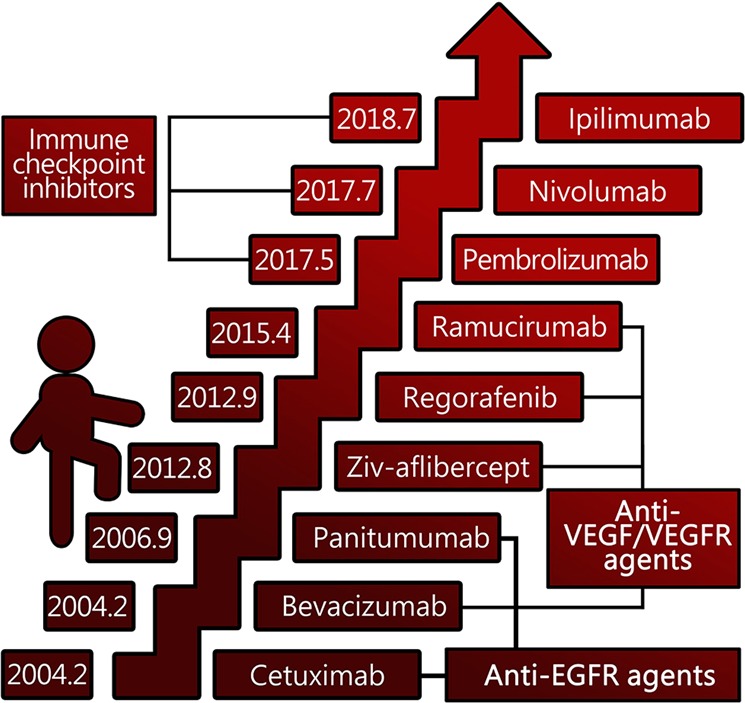
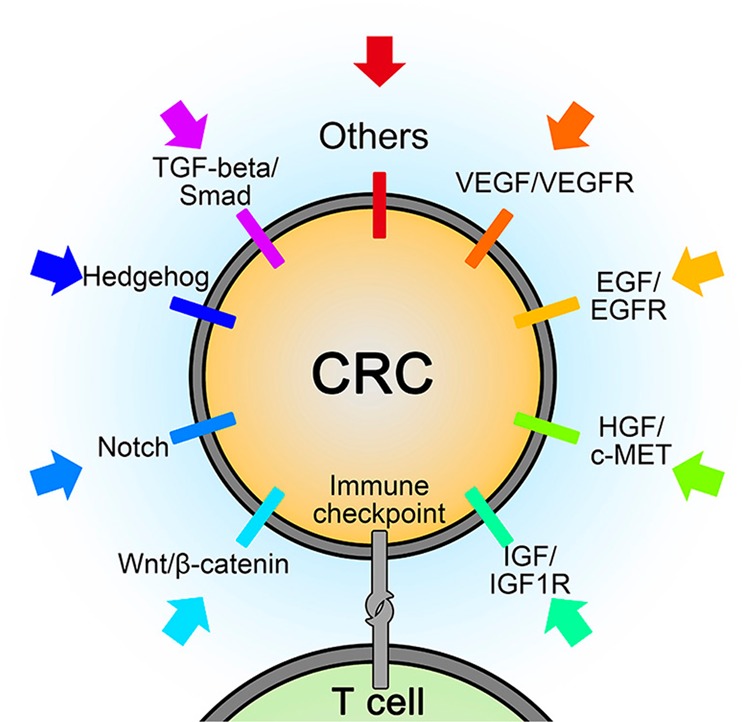
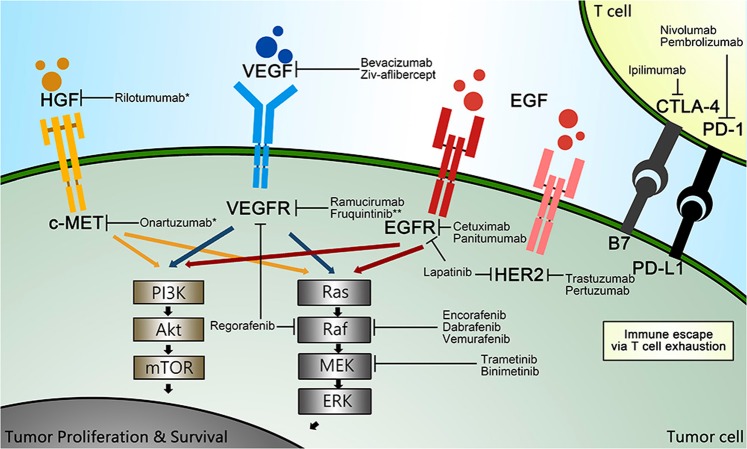
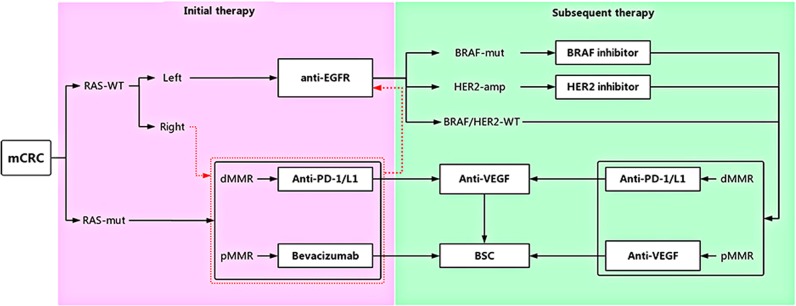
Verification
Claims the paper makes
The claims and statistics of this paper haven’t been checked yet.
Free: it reads the open-access text and checks the first 5 claims that cite a source we can check. Create a free account to check every claim.
Claims other papers make about this one
Each is checked against this paper’s own text: does it say what the citing paper says it does?
The source backs part of the claim, not all of it — or backs it for a different population, condition or comparison.
In the citing paper
“The therapeutic landscape of metastatic colorectal cancer is moving toward biomarker-selected strategies. However, options are limited to agents directed at tumors carrying BRAF V600E mutations and to antibodies against programmed death 1 (PD-1) in patients with high microsatellite instability or mismatch-repair deficiency.13,26,27”
From Adagrasib with or without Cetuximab in Colorectal Cancer with Mutated KRAS G12C (2023) · cites this paper as [13]
Experimental — accuracy not yet measuredThe source backs part of the claim, not all of it — or backs it for a different population, condition or comparison.
In the citing paper
“Current first-line standard of care for KRAS G12C-positive CRC includes 5-FU-based chemotherapy with irinotecan, oxaliplatin and/or capecitabine, but is limited by low tumor-specific selectivity and systemic toxicity21.”
From Divarasib plus cetuximab in KRAS G12C-positive colorectal cancer: a phase 1b trial (2024) · cites this paper as [21]
Experimental — accuracy not yet measuredThe cited source says what the claim attributes to it.
In the citing paper
“Cetuximab is an anti-EGFR monoclonal antibody that is indicated for the treatment of RAS wild-type metastatic colorectal cancer, either as monotherapy or in combination with chemotherapy.13”
From Adagrasib with or without Cetuximab in Colorectal Cancer with Mutated KRAS G12C (2023) · cites this paper as [13]
The check wasn’t confident either way, so it gives no verdict — never disputed.
In the citing paper
“Currently, no therapies that specifically target KRAS G12C protein have been approved for the treatment of colorectal cancer.13,19”
From Adagrasib with or without Cetuximab in Colorectal Cancer with Mutated KRAS G12C (2023) · cites this paper as [13]
Experimental — accuracy not yet measuredIn the citing paper
“ROS-mediated DNA damage induces p53 phosphorylation, which in turn stabilizes p53, indispensable to counter tumorigenic growth and differentiation.68”
Self-check
Percentages, sums and reported differences re-computed from the paper’s own numbers.
The self-check needs the paper’s full text.
Citations
Cites
2 retracted
Items 401–521 of 521
The functional and prognostic implications of regulatory T cells in colorectal carcinoma.
Zhang, X., Kelaria, S., Kerstetter, J. C., & Wang, J. (2015) · PubMed · doi:10.3978/j.issn.2078-6891.2015.017 · Cited by 81 · cited 1×
“Among them, CD4+ T regulatory (Treg) cells, which suppress the activation and function of other immune cells, were found to infiltrate into CRC tissues and related lymph nodes in vitro and in vivo.(363,364) Indeed, in paired patient samples from CRC tissues and normal mucosa, increased numbers of Treg cells were obser…”
BackgroundAranda, E., Alfonso, P. G., Benavides, M., Ruiz, A. C. S., Guillén‐Ponce, C., Safont, M. J., Alcaide, J., Gómez, A., López‐López, R., Manzano, J. L., et al. (2018) · European Journal of Cancer · doi:10.1016/j.ejca.2018.06.024 · Cited by 81
Scagliotti, G. V., Moro‐Sibilot, D., Kollmeier, J., Favaretto, A. G., Cho, E. K., Grosch, H., Kimmich, M., Girard, N., Tsai, C., Hsia, T., et al. (2019) · Journal of Thoracic Oncology · doi:10.1016/j.jtho.2019.10.003 · Cited by 81
Dienstmann, R., Patnaik, A., Garcia-Carbonero, R., Cervantes, A., Benavent, M., Roselló, S., Tops, B. B. J., van der Post, R. S., Argilés, G., Skartved, N. J. Ø., et al. (2015) · Cancer Discovery · doi:10.1158/2159-8290.cd-14-1432 · Cited by 77
Anderson, R., Theron, A. J., & Rapoport, B. L. (2019) · Frontiers in Immunology · doi:10.3389/fimmu.2019.02254 · Cited by 77
Yalçın, Ş., Uslu, R., Dane, F., Yılmaz, U., Zengin, N., Büyükünal, E., Buyukberber, S., Camcı, C., Şencan, O., Kılıçkap, S., et al. (2013) · Oncology · doi:10.1159/000355914 · Cited by 76 · cited 2×
“No inferiority has been found for maintenance of bevacizumab alone over bevacizumab plus 5-FU or continuation of bevacizumab plus CAP over bevacizumab plus XELOX.(200,201)”
BackgroundInfluentialGeyer, C. E., O'Shaughnessy, J., Untch, M., Sikov, W., Rugo, H. S., McKee, M. D., Huober, J. B., Golshan, M., Giranda, V. L., Von Minckwitz, G., et al. (2017) · Journal of Clinical Oncology · doi:10.1200/jco.2017.35.15_suppl.520 · Cited by 75
Cutsem, E. V., Karaszewska, B., Kang, Y., Chung, H. C., Shankaran, V., Siena, S., Go, N. F., Yang, H., Schupp, M., & Cunningham, D. (2018) · Clinical Cancer Research · doi:10.1158/1078-0432.ccr-18-1337 · Cited by 75 · cited 1×
“AMG 337, an oral ATP-competitive TKI specific to MET, caused a strong response in patients with MET-amplified upper gastrointestinal tract cancer in phase I and II trials.(325,326) Savolitinib, a selective MET inhibitor, displayed marked antitumour potential under experimental conditions and appeared to be effective a…”
BackgroundYar Saglam, A., Alp, E., Elmazoglu, Z., & Menevse, S. (2016) · Human & Experimental Toxicology · doi:10.1177/0960327115595686 · Cited by 74
Fibrocyte-like cells mediate acquired resistance to anti-angiogenic therapy with bevacizumab
Mitsuhashi, A., Goto, H., Saijo, A., Trung, V. T., Aono, Y., Ogino, H., Kuramoto, T., Tabata, S., Uehara, H., Izumi, K., et al. (2015) · Nature Communications · doi:10.1038/ncomms9792 · Cited by 74
Exploring the best treatment options for BRAF-mutant metastatic colon cancer
Taieb, J., Lapeyre-Prost, A., Laurent Puig, P., & Zaanan, A. (2019) · British Journal of Cancer · doi:10.1038/s41416-019-0526-2 · Cited by 74
Functional Expression of HGF and Its Receptor in Human Colorectal Cancer
Otte, J.-M., Schmitz, F., Kiehne, K., Stechele, H. U., Banasiewicz, T., Krokowicz, P., Nakamura, T., Fölsch, U. R., & Herzig, K.-H. (2000) · Digestion · doi:10.1159/000007764 · Cited by 73
Lau, D. K., Kalaitzaki, E., Church, D. N., Pandha, H., Tomlinson, I. P. M., Annels, N. E., Gerlinger, M., Sclafani, F., Smith, G. A., Begum, R., et al. (2020) · ESMO Open · doi:10.1136/esmoopen-2019-000638 · Cited by 73
Eng, C., Bessudo, A., Hart, L. L., Severtsev, A., Gladkov, O., Müller, L., Kopp, M. V., Vladimirov, V., Langdon, R., Kotiv, B., et al. (2016) · International Journal of Cancer · doi:10.1002/ijc.30049 · Cited by 72
Friese‐Hamim, M., Bladt, F., Locatelli, G., Stammberger, U. M., & Blaukat, A. (2017) · PubMed Central · doi:10.7892/boris.135350 · Cited by 72
MET receptor tyrosine kinase as a therapeutic anticancer target
Stellrecht, C. M., & Gandhi, V. V. (2008) · Cancer Letters · doi:10.1016/j.canlet.2008.10.045 · Cited by 69
Chiron, M., Bagley, R. G., Pollard, J., Mankoo, P. K., Henry, C., Vincent, L., Geslin, C., Baltes, N., & Bergstrom, D. A. (2014) · Molecular Cancer Therapeutics · doi:10.1158/1535-7163.mct-13-0753 · Cited by 68
Rosen, L. S., Goldman, J. W., Algazi, A. P., Turner, P. K., Moser, B. A., Hu, T., Wang, X. A., TUTTLE, J. L., Wacheck, V., Wooldridge, J. E., et al. (2016) · Clinical Cancer Research · doi:10.1158/1078-0432.ccr-16-1418 · Cited by 68
Metastatic Colorectal Cancer: Role of Target Therapies and Future Perspectives
Nappi, A., Berretta, M., Romano, C., Tafuto, S., Cassata, A., Casaretti, R., Silvestro, L., Divitiis, C. D., Alessandrini, L., Fiorica, F., et al. (2018) · Current Cancer Drug Targets · doi:10.2174/1568009617666170209095143 · Cited by 68
Hasegawa, S., Goto, S., Matsumoto, T., Hida, K., Kawada, K., Matsusue, R., Yamaguchi, T., Nishitai, R., Manaka, D., Kato, S., et al. (2017) · Annals of Surgical Oncology · doi:10.1245/s10434-017-5967-3 · Cited by 68
Bahrami, A., Shahidsales, S., Khazaei, M., Ghayour‐Mobarhan, M., Maftouh, M., Hassanian, S. M., & Avan, A. (2017) · Journal of Cellular Physiology · doi:10.1002/jcp.25794 · Cited by 67
Recent advances in cancer drug discovery targeting RAS
Wilson, C., & Tolias, P. P. (2016) · Drug Discovery Today · doi:10.1016/j.drudis.2016.08.002 · Cited by 66
Targeting VEGF–neuropilin interactions: a promising antitumor strategy
Peng, K., Bai, Y., Zhu, Q., Hu, B., & Xu, Y. (2018) · Drug Discovery Today · doi:10.1016/j.drudis.2018.10.004 · Cited by 66
Gan, H. K., Millward, M., Ye, H., Qi, C., Sai, Y., Su, W., Wang, J., Zhang, L., Frigault, M. M., Morgan, S. R., et al. (2019) · Clinical Cancer Research · doi:10.1158/1078-0432.ccr-18-1189 · Cited by 66
Song, E., Tai, W., Messersmith, W. A., Bagby, S. M., Purkey, A., Quackenbush, K. S., Pitts, T. M., Wang, G., Blatchford, P. J., Yahn, R., et al. (2014) · International Journal of Cancer · doi:10.1002/ijc.29225 · Cited by 65
Tsai, C.-H., Teng, C.-H., Tu, Y.-T., Cheng, T.-S., Wu, S.-R., Ko, C., Shyu, H.-Y., Lan, S.-W., Huang, H.-P., Tzeng, S.-P., et al. (2013) · Oncogene · doi:10.1038/onc.2013.412 · Cited by 65
Parikh, A. R., Lee, F.-C., Yau, L., Koh, H. A., Knost, J. A., Mitchell, E. P., Bosanac, I., Choong, N. W., Scappaticci, F. A., Mancao, C., et al. (2018) · Clinical Cancer Research · doi:10.1158/1078-0432.ccr-18-1221 · Cited by 65
He, A. R., Cohen, R. B., Denlinger, C. S., Sama, A. R., Birnbaum, A. E., Hwang, J. J., Sato, T., Lewis, N. L., Mynderse, M., Niland, M., et al. (2019) · The Oncologist · doi:10.1634/theoncologist.2018-0411 · Cited by 65
Mizukami, T., Izawa, N., Nakajima, T. E., & Sunakawa, Y. (2019) · Drugs · doi:10.1007/s40265-019-01113-0 · Cited by 65
Akt Binds to and Phosphorylates Phospholipase C-γ1 in Response to Epidermal Growth Factor
Wang, Y., Wu, J., & Wang, Z. (2006) · Molecular Biology of the Cell · doi:10.1091/mbc.e05-10-0918 · Cited by 64 · cited 2×
“EGF mediates PLC-γ1 binding to AKT, altering its activity through the SH3 domain.(70) In addition, PI3K enhancer, a nuclear GTPase that activates nuclear PI3K activity,(71) dynamin-1, and Racl, which might enhance EGF-induced cell proliferation and migration, are regulated by the SH3 domain of PLC-γ1, acting as guanin…”
BackgroundAnti-c-Met monoclonal antibody ABT-700 breaks oncogene addiction in tumors with MET amplification
Wang, J., Goetsch, L., Tucker, L. A., Zhang, Q. Y., Gonzalez, A., Vaidya, K. S., Oleksijew, A., Boghaert, E. R., Song, M., Sokolova, I., et al. (2016) · BMC Cancer · doi:10.1186/s12885-016-2138-z · Cited by 64
Prete, A., Lo, A. S., Sadow, P. M., Bhasin, S. S., Antonello, Z. A., Vodopivec, D. M., Ullas, S., Sims, J. N., Clohessy, J. G., Dvořàk, A. M., et al. (2018) · Clinical Cancer Research · doi:10.1158/1078-0432.ccr-18-0693 · Cited by 64
Immunotherapy in colorectal cancer: Available clinical evidence, challenges and novel approaches
Tintelnot, J., & Stein, A. (2019) · World Journal of Gastroenterology · doi:10.3748/wjg.v25.i29.3920 · Cited by 64
Structural and Molecular Insight into Resistance Mechanisms of First Generation cMET Inhibitors
Collie, G. W., Koh, C. M., O’Neill, D. J., Stubbs, C. J., Khurana, P., Eddershaw, A., Snijder, A., Mauritzson, F., Barlind, L., Dale, I. L., et al. (2019) · ACS Medicinal Chemistry Letters · doi:10.1021/acsmedchemlett.9b00276 · Cited by 64
Monoclonal Antibodies as Magic Bullets
Brodsky, F. M. (1988) · Pharmaceutical Research · doi:10.1023/a:1015860525341 · Cited by 63
Bendell, J. C., Hochster, H., Hart, L. L., Firdaus, I., Mace, J. R., McFarlane, J. J., Kozloff, M., Catenacci, D., Hsu, J. J., Hack, S. P., et al. (2017) · The Oncologist · doi:10.1634/theoncologist.2016-0223 · Cited by 63
Van Cutsem, E., Yoshino, T., Lenz, H. J., Lonardi, S., Falcone, A., Limón, M. L., Saunders, M., Sobrero, A., Park, Y. S., Ferreiro, R., et al. (2018) · Annals of Oncology · doi:10.1093/annonc/mdy241 · Cited by 63
The role of HGF/c-MET signaling pathway in lymphoma
Lam, B., Dai, L., & Qin, Z. (2016) · Journal of Hematology & Oncology · doi:10.1186/s13045-016-0366-y · Cited by 63
Takegawa, N., & Yonesaka, K. (2017) · Clinical Colorectal Cancer · doi:10.1016/j.clcc.2017.03.001 · Cited by 62
The c-Met receptor: Implication for targeted therapies in colorectal cancer
Qamsari, E. S., Ghaderi, S. S., Zarei, B., Dorostkar, R., Bagheri, S., Jadidi‐Niaragh, F., Somi, M. H., & Yousefi, M. (2017) · Tumor Biology · doi:10.1177/1010428317699118 · Cited by 62 · cited 3×
“To date, no severe adverse events have been reported for these agents, although some patients complained about fatigue, poor appetite, allergic reactions, edema, skin rash, and neutropenia.(252,266) There are several current clinical trials of HGF/c-METtargeted agents in the context of CRC therapy (Table 5).”
BackgroundInfluentialHong, D. S., LoRusso, P. M., Hamid, O., Jankú, F., Kittaneh, M., Catenacci, D. V. T., Chan, E. W., Bekaii‐Saab, T., Gadgeel, S. M., Loberg, R. D., et al. (2018) · Clinical Cancer Research · doi:10.1158/1078-0432.ccr-18-1341 · Cited by 60
Choi, J. H., Park, J. B., Bae, S. S., Yun, S., Kim, H. S., Hong, W.-P., Kim, I.-S., Kim, J. H., Han, M. Y., Ryu, S. H., et al. (2004) · Journal of Cell Science · doi:10.1242/jcs.01220 · Cited by 59
Bianchi, A. S., Loupakis, F., Argilés, G., & Prager, G. W. (2016) · Annals of Oncology · doi:10.1093/annonc/mdw191 · Cited by 58
Lee, J. J., & Chu, E. (2018) · Clinical Colorectal Cancer · doi:10.1016/j.clcc.2018.06.004 · Cited by 58
TNF‐α promotes invasive growth through the MET signaling pathway
Bigatto, V., Bacco, F. D., Casanova, E., Reato, G., Lanzetti, L., Isella, C., Sarotto, I., Comoglio, P. M., & Boccaccio, C. (2014) · Molecular Oncology · doi:10.1016/j.molonc.2014.09.002 · Cited by 56
Predictive and prognostic biomarkers with therapeutic targets in advanced colorectal cancer
Luo, H., & Xu, R.-H. (2014) · World Journal of Gastroenterology · doi:10.3748/wjg.v20.i14.3858 · Cited by 56
Argilés, G., Saunders, M. P., Rivera, F., Sobrero, A., Benson, A., Guillén Ponce, C., Cascinu, S., Van Cutsem, E., Macpherson, I. R., Strumberg, D., et al. (2015) · European Journal of Cancer · doi:10.1016/j.ejca.2015.02.013 · Cited by 54
Bisschop, K., van Dijk, T. H., Beukema, J. C., Jansen, R. L. H., Gelderblom, H. A. J., de Jong, K. P., Rutten, H. J. T., van de Velde, C. J. �., Wiggers, T., Havenga, K., et al. (2017) · Annals of Surgical Oncology · doi:10.1245/s10434-017-5897-0 · Cited by 54
Huang, J., Nair, S., Mahoney, M. R., Nelson, G. D., Shields, A. F., Chan, E. W., Goldberg, R. M., Gill, S., Kahlenberg, M. S., Quesenberry, J. T., et al. (2014) · Clinical Colorectal Cancer · doi:10.1016/j.clcc.2013.12.002 · Cited by 52
Wang, X., Goldstein, D., Crowe, P., & Yang, J.-L. (2016) · OncoTargets and Therapy · doi:10.2147/ott.s94745 · Cited by 52
Kurzrock, R., & Stewart, D. J. (2016) · Clinical Cancer Research · doi:10.1158/1078-0432.ccr-16-1968 · Cited by 51
Rimassa, L., Bozzarelli, S., Pietrantonio, F., Cordio, S., Lonardi, S., Toppo, L., Zaniboni, A., Bordonaro, R., Di Bartolomeo, M., Tomasello, G., et al. (2019) · Clinical Colorectal Cancer · doi:10.1016/j.clcc.2019.02.004 · Cited by 50
Scott, A. J., Arcaroli, J. J., Bagby, S. M., Yahn, R., Huber, K. M., Serkova, N. J., Nguyen, A., Kim, J., Thorburn, A., Vogel, J., et al. (2018) · Molecular Cancer Therapeutics · doi:10.1158/1535-7163.mct-17-0131 · Cited by 48
Immune Therapy in GI Malignancies: A Review
Wang, J., Reiss, K. A., Khatri, R. G., Jaffee, E. M., & Laheru, D. A. (2015) · Journal of Clinical Oncology · doi:10.1200/jco.2015.60.7879 · Cited by 47
Current advances of targeting HGF/c-Met pathway in gastric cancer
Anestis, A., Zoi, I., & Karamouzis, M. V. (2018) · Annals of Translational Medicine · doi:10.21037/atm.2018.04.42 · Cited by 47
Corcoran, R. B., André, T., Yoshino, T., Bendell, J. C., Atreya, C. E., Schellens, J. H. M., Ducreux, M. P., McRee, A. J., Siena, S., Middleton, G., et al. (2016) · Annals of Oncology · doi:10.1093/annonc/mdw370.04 · Cited by 46
Hahn, A. W., Froerer, C., VanAlstine, S., Rathi, N., Bailey, E. B., Stenehjem, D. D., & Agarwal, N. (2018) · Clinical Genitourinary Cancer · doi:10.1016/j.clgc.2018.05.001 · Cited by 46
Scagliotti, G. V., Shuster, D. E., Орлов, С. В., von Pawel, J., Shepherd, F. A., Ross, J. S., Wang, Q., Schwartz, B. E., & Akerley, W. (2017) · Journal of Thoracic Oncology · doi:10.1016/j.jtho.2017.12.009 · Cited by 44
Xu, R., Shen, L., Wang, K.-M., Wu, G., Shi, C., Ding, K., Lin, L.-Z., Wang, J., Xiong, J., Wu, C., et al. (2017) · 癌症:英文版 · doi:10.1186/s40880-017-0263-y · Cited by 44
Scartozzi, M., Giampieri, R., Maccaroni, E., Mandolesi, A., Giustini, L., Silva, R., Zaniboni, A., Biscotti, T., Biagetti, S., Galizia, E., et al. (2012) · Annals of Oncology · doi:10.1093/annonc/mdr558 · Cited by 43
Koelzer, V. H., Baker, K., Kassahn, D., Baumhoer, D., & Zlobec, I. (2012) · Journal of Clinical Pathology · doi:10.1136/jclinpath-2012-200742 · Cited by 43 · cited 1×
“Some other factors indicating cytotoxic T cell activity, such as the level of granzymes, perforins, and IFN-γ, remain in the theoretical phase,(403) and genetic PD-1 resistance-predicting markers such as β2-microglobulin (B2M), JAK1, and JAK2, which have been validated in other tumors, such as melanoma, have not been…”
BackgroundWakelee, H. A., Zvirbule, Z., de Braud, F., Kingsley, C. D., Mekhail, T. M., Lowe, T., Schütte, W., Léna, H., Lawler, W. E., Braiteh, F., et al. (2016) · Clinical Lung Cancer · doi:10.1016/j.cllc.2016.09.013 · Cited by 43
Anti-Angiogenics: Their Value in Colorectal Cancer Therapy
Seeber, A., Gunsilius, E., Gastl, G. A., & Pircher, A. (2018) · Oncology Research and Treatment · doi:10.1159/000488301 · Cited by 43
High c-Met expression is a negative prognostic marker for colorectal cancer: a meta-analysis
Gao, H., Guan, M., Sun, Z., & Bai, C. (2015) · Tumor Biology · doi:10.1007/s13277-014-2659-5 · Cited by 42
Ozawa, Y., Nakamura, Y., Fujishima, F., Felizola, S. J. A., Takeda, K., Okamoto, H., Ito, K., Ishida, H., Konno, T., Kamei, T., et al. (2015) · BMC Cancer · doi:10.1186/s12885-015-1450-3 · Cited by 41
Nuclear ErbB4 signaling through H3K9me3 is antagonized by EGFR-activated c-Src
Ishibashi, K., Fukumoto, Y., Hasegawa, H., Abe, K., Kubota, S., Aoyama, K., Kubota, S., Nakayama, Y., & Yamaguchi, N. (2012) · Journal of Cell Science · doi:10.1242/jcs.116277 · Cited by 41
Moore, M., Gill, S., Asmis, T. R., Berry, S. R., Burkes, R. L., Zbuk, K. M., Alcindor, T., Jeyakumar, A. S., Chan, T., Rao, S., et al. (2016) · Annals of Oncology · doi:10.1093/annonc/mdw412 · Cited by 41
Cohn, A. L., Shumaker, G., Khandelwal, P., Smith, D. A. B., Neubauer, M., Mehta, N. D., Richards, D., Watkins, D. L., Zhang, K., & Yassine, M. (2011) · Clinical Colorectal Cancer · doi:10.1016/j.clcc.2011.03.022 · Cited by 40
A Phase Ib/II Study of Ramucirumab in Combination with Emibetuzumab in Patients with Advanced Cancer
Harding, J. J., Zhu, A. X., Bauer, T. M., Choueiri, T. K., Drilon, A. E. D. C., Voss, M. H., Fuchs, C. S., Abou‐Alfa, G. K., Wijayawardana, S. R., Wang, X. A., et al. (2019) · Clinical Cancer Research · doi:10.1158/1078-0432.ccr-18-4010 · Cited by 39
Tabernero, J. M., Élez, E., Herranz, M., Rico, I. D., Prudkin, L., Andreu, J., Mateos, J., Carreras, M. J., Han, M., Gifford, J., et al. (2014) · Clinical Cancer Research · doi:10.1158/1078-0432.ccr-13-1837 · Cited by 38
Carbone, C., Tamburrino, A., Piro, G., Boschi, F., Cataldo, I., Zanotto, M., Mina, M. M., Zanini, S., Sbarbati, A., Scarpa, A., et al. (2015) · Anti-Cancer Drugs · doi:10.1097/cad.0000000000000301 · Cited by 37
Cetuximab in Pancreatic Cancer Therapy: A Systematic Review and Meta-Analysis
Förster, T., Huettner, F. J., Springfeld, C., Löhr, M. J., Kalkum, E., Hackbusch, M., Hackert, T., Diener, M. K., & Probst, P. (2019) · Oncology · doi:10.1159/000502844 · Cited by 37
Mendelsohn, J., Prewett, M., Rockwell, P., & Goldstein, N. I. (2015) · Clinical Cancer Research · doi:10.1158/1078-0432.ccr-14-2491 · Cited by 36
Doi, T., Kang, Y., Muro, K., Jiang, Y., Jain, R. K., & Lizambri, R. (2015) · Journal of Clinical Oncology · doi:10.1200/jco.2015.33.3_suppl.tps226 · Cited by 36
Fujimoto, H., Saito, Y., Ohuchida, K., Kawakami, E., Fujiki, S., Watanabe, T., Ono, R., Kaneko, A., Takagi, S., Najima, Y., et al. (2018) · The Journal of Immunology · doi:10.4049/jimmunol.1701222 · Cited by 36
MET-Mediated Resistance to EGFR Inhibitors: An Old Liaison Rooted in Colorectal Cancer Stem Cells
Boccaccio, C., Luraghi, P., & Comoglio, P. M. (2014) · Cancer Research · doi:10.1158/0008-5472.can-14-1088 · Cited by 35
Sinicrope, F. A., Ou, F.-S., Shi, Q., Nixon, A. B., Mody, K., Levasseur, A., Dueck, A. C., Dhanarajan, A. R., Lieu, C. H., Cohen, D. J., et al. (2017) · Journal of Clinical Oncology · doi:10.1200/jco.2017.35.15_suppl.tps3630 · Cited by 35
Wu, P., Wee, P., Jiang, J., Chen, X., & Wang, Z. (2012) · PLoS ONE · doi:10.1371/journal.pone.0041354 · Cited by 34
Neoadjuvant imatinib therapy in rectal gastrointestinal stromal tumors
Kaneko, M., Emoto, S., Murono, K., Sonoda, H., Hiyoshi, M., Sasaki, K., Shuno, Y., Nishikawa, T., Tanaka, T., Hata, K., et al. (2018) · Surgery Today · doi:10.1007/s00595-018-1737-5 · Cited by 34
Modest, D. P., Rivera, F., Bachet, J., de Braud, F., Pietrantonio, F., Koukakis, R., Demonty, G., & Douillard, J.-Y. (2019) · International Journal of Cancer · doi:10.1002/ijc.32110 · Cited by 33
Emerging oral VEGF inhibitors for the treatment of renal cell carcinoma
Stitzlein, L. M., Rao, P., & Dudley, R. W. (2018) · Expert Opinion on Investigational Drugs · doi:10.1080/13543784.2019.1559296 · Cited by 33
Molife, L. R., Dean, E. J., Blanco-Codesido, M., Krebs, M., Brunetto, A. T., Greystoke, A., Daniele, G., Lee, L., Kuznetsov, G., Myint, K. T., et al. (2014) · Clinical Cancer Research · doi:10.1158/1078-0432.ccr-14-0409 · Cited by 32
Dai, L., Zhuang, L., Zhang, B., Wang, F., Chen, X., Xia, C., & Zhang, B. (2015) · International Journal of Molecular Sciences · doi:10.3390/ijms161226116 · Cited by 32 · cited 1×
“IP3 and DAG promote the release of intracellular Ca and activate protein kinase C to promote carcinogenesis.(68,69) Moreover, recent studies stated that the SH3 domain of PLC-γ1 might be of great importance in the interaction with EGFR.”
BackgroundDing, L., Gong, Y., Yang, Z., Zou, B., Liu, X., Zhang, B., & Li, J. (2019) · Digestive Diseases and Sciences · doi:10.1007/s10620-019-05628-0 · Cited by 32
Tariman, J. D. (2017) · Nursing Clinics of North America · doi:10.1016/j.cnur.2016.10.004 · Cited by 31
Sakai, D., Chung, H. C., Oh, D., Park, S. H., Kadowaki, S., Kim, Y. H., Tsuji, A., Komatsu, Y., Kang, Y., Uenaka, K., et al. (2017) · Cancer Chemotherapy and Pharmacology · doi:10.1007/s00280-017-3445-z · Cited by 31
Semrad, T. J., Kim, E. J.-H., Tanaka, M. S., Sands, J. M., Roberts, C., Burich, R. A., Li, Y., Gandara, D. R., Lara, P. N., & Mack, P. C. (2016) · Cancer Treatment and Research Communications · doi:10.1016/j.ctarc.2016.12.002 · Cited by 29
Investigational MET inhibitors to treat Renal cell carcinoma
Nandagopal, L., Sonpavde, G., & Agarwal, N. (2019) · Expert Opinion on Investigational Drugs · doi:10.1080/13543784.2019.1673366 · Cited by 29
The Plexin-B family and its role in cancer progression.
Malik, M. F. A., Ye, L., & Jiang, W. G. (2014) · PubMed · doi:10.14670/hh-29.151 · Cited by 28
Callahan, M. K., Odunsi, K. O., Sznol, M., Nemunaitis, J. J., Ott, P. A., Dillon, P. M., Park, A. J., Schwarzenberger, P. O., Ricciardi, T., Macri, M. J., et al. (2017) · Journal of Clinical Oncology · doi:10.1200/jco.2017.35.15_suppl.3069 · Cited by 28
Yasuno, M., Uetake, H., Ishiguro, M., Mizunuma, N., Komori, T., Miyata, G., Shiomi, A., Kagimura, T., & Sugihara, K. (2019) · International Journal of Clinical Oncology · doi:10.1007/s10147-018-01393-8 · Cited by 28
Mueller, T., Freystein, J., Lucas, H., & Schmoll, H. (2019) · Molecules · doi:10.3390/molecules24162865 · Cited by 28
Enhanced efficacy of sitravatinib in metastatic models of antiangiogenic therapy resistance
Dolan, M., Mastri, M., Tracz, A., Christensen, J. G., Chatta, G. S., & Ebos, J. M. L. (2019) · PLoS ONE · doi:10.1371/journal.pone.0220101 · Cited by 28
Jones, S. F., Cohen, R. B., Bendell, J. C., Denlinger, C. S., Harvey, R. D., Parasuraman, S., Chi, X., Scholz, C. R., Wyant, T., & Kauh, J. S. W. (2010) · Journal of Clinical Oncology · doi:10.1200/jco.2010.28.15_suppl.3081 · Cited by 27
In vitro combined treatment with cetuximab and trastuzumab inhibits growth of colon cancer cells
Luca, T., Barresi, V., Privitera, G., Musso, N., Caruso, M., Condorelli, D. F., & Castorina, S. (2014) · Cell Proliferation · doi:10.1111/cpr.12125 · Cited by 27
Segal, N. H., Saro, J., Melero, I., Ros, W., Argilés, G., Marabelle, A., Ruíz, M. E., Albanell, J., Calvo, E., Moreno, V., et al. (2017) · Annals of Oncology · doi:10.1093/annonc/mdx367.036 · Cited by 27
Pietrantonio, F., Morano, F., Corallo, S., Lonardi, S., Cremolini, C., Rimassa, L., Bianchi, A. S., Tampellini, M., Bustreo, S., Clavarezza, M., et al. (2018) · Journal of Clinical Oncology · doi:10.1200/jco.2018.36.15_suppl.3505 · Cited by 26
Current controversies in the management of metastatic colorectal cancer
Vera, R., Alonso, V., Gallego-Plazas, J., González‐Flores, E., Guillén‐Ponce, C., Pericay, C., Rivera, F., Safont, M. J., & Valladares‐Ayerbes, M. (2015) · Cancer Chemotherapy and Pharmacology · doi:10.1007/s00280-015-2808-6 · Cited by 25
Ishikawa, T., Kimura, Y., Hirano, H., & Higashi, S. (2017) · Journal of Biological Chemistry · doi:10.1074/jbc.m117.796789 · Cited by 25
Lu, L., Zhuang, T., Shao, E., Liu, Y., He, H., Shu, Z., Huang, Y., Yao, Y., Lin, S., Lin, S., et al. (2019) · PLoS ONE · doi:10.1371/journal.pone.0221964 · Cited by 20
Lau, D. K., Cunningham, D., Gillbanks, A., Crux, R., Powell, R., Kalaitzaki, E., Annels, N. E., Sclafani, F., Gerlinger, M., Chau, I., et al. (2019) · Journal of Clinical Oncology · doi:10.1200/jco.2019.37.15_suppl.tps3615 · Cited by 18
Goto, H., & Nishioka, Y. (2017) · International Journal of Molecular Sciences · doi:10.3390/ijms19010098 · Cited by 17
Lev, A., Deihimi, S., Shagisultanova, E. I., Xiu, J., Lulla, A. R., Dicker, D. T., & El‐Deiry, W. S. (2017) · Cancer Biology & Therapy · doi:10.1080/15384047.2017.1364323 · Cited by 16
Brenner, B., Purim, O., Gordon, N., Lago, T. G. G. , Idelevich, E., Kashtan, H., Menasherov, N., Fenig, E., Sulkes, A., & Kundel, Y. (2019) · Radiotherapy and Oncology · doi:10.1016/j.radonc.2019.01.013 · Cited by 16
Resistance to the c-Met inhibitor KRC-108 induces the epithelial transition of gastric cancer cells
Kim, D. C., Park, K. R., JEONG, Y. J., Yoon, H., Ahn, M., Rho, G., Lee, J., Gong, Y., & Han, S. (2015) · Oncology Letters · doi:10.3892/ol.2015.4029 · Cited by 14
Zaman, S., Shentu, S., Yang, J., He, J., Orlowski, R. Z., Stellrecht, C. M., & Gandhi, V. V. (2015) · Neoplasia · doi:10.1016/j.neo.2015.01.006 · Cited by 13
Pietrantonio, F., Cotsoglou, C., Fucà, G., Vullo, S. L., Nichetti, F., Milione, M., Coppa, J. C., Vaiani, M., Alessi, A., Prisciandaro, M., et al. (2018) · Clinical Colorectal Cancer · doi:10.1016/j.clcc.2018.11.004 · Cited by 13
Baldus, S. E., Kort, E. J., Schirmacher, P., Dienes, H. P., & Resau, J. H. (2007) · International Journal of Oncology · doi:10.3892/ijo.31.1.199 · Cited by 12
Fakih, M. (2018) · The Oncologist · doi:10.1634/theoncologist.2017-0436 · Cited by 12
Zhong, X. Z., Wu, Z., Gao, P., Shi, J., Sun, J., Guo, Z., Wang, Z., & Song, Y. (2018) · Cancer Medicine · doi:10.1002/cam4.1298 · Cited by 12
Hu, C., Jiang, N., Wang, G., Zheng, J., Yang, W., & Yang, J. (2014) · PubMed · Cited by 11
Mahmood, M. Q., Shukla, S. D., Dua, K., & Shastri, M. D. (2017) · Current Pharmaceutical Design · doi:10.2174/1381612823666170124115159 · Cited by 10
Reid, J. C., Bennett, N. J., Stephens, C. R., Carroll, M. L., Magdolen, V., Clements, J. A., & Hooper, J. D. (2016) · Biological Chemistry · doi:10.1515/hsz-2016-0163 · Cited by 9
Chen, H., Lin, J., Chen, J., Chuang, C., Liu, M., Wang, J. Y., & Changchien, C. (2017) · Asia-Pacific Journal of Clinical Oncology · doi:10.1111/ajco.12692 · Cited by 9
3‐Cl‐ AHPC inhibits pro‐ HGF maturation by inducing matriptase/ HAI ‐1 complex formation
Ye, F., Chen, S., Liu, X., Ye, X., Wang, K., Zeng, Z., Su, Y., Zhang, X., & Zhou, H. (2018) · Journal of Cellular and Molecular Medicine · doi:10.1111/jcmm.13900 · Cited by 9
Qin, Q., & Wang, L. (2018) · Journal of the Anus Rectum and Colon · doi:10.23922/jarc.2017-049 · Cited by 8
Ju, M., Cheng, H., Qu, K., & Lu, X. (2020) · Medicine · doi:10.1097/md.0000000000020618 · Cited by 8
PKCε acts as negative allosteric modulator of EGF receptor signalling
Weisheit, S., Schäfer, C., Mertens, C., Berndt, A., & Liebmann, C. (2010) · Cellular Signalling · doi:10.1016/j.cellsig.2010.10.018 · Cited by 7
Loss of tyrosine phosphatase SHP2 activity promotes growth of colorectal carcinoma HCT-116 cells
Chen, X., Fu, X., Zhao, W., Ho, W., Xing, S., & Zhao, Z. J. (2020) · Signal Transduction and Targeted Therapy · doi:10.1038/s41392-020-0192-0 · Cited by 6
Ngeow, J. Y. Y., & Eng, C. (2016) · Journal of Clinical Oncology · doi:10.1200/jco.2016.66.7766 · Cited by 5
Hori, A., Kitahara, O., Ito, Y., Nishizawa, S., Misumi, Y., & Inaoka, T. (2009) · Cancer Research · Cited by 5
Cited by
Hossain, M. S., Karuniawati, H., Jairoun, A. A., Urbi, Z., Ooi, D. J., John, A., Lim, Y. C., Kibria, K. M. K., Mohiuddin, A. K. M., Ming, L. C., et al. (2022) · Cancers · doi:10.3390/cancers14071732 · Cited by 920
“Because of the increasing effectiveness of treatments such as the anti-EGFR (epidermal growth factor receptor) agent cetuximab and the anti-angiogenesis agent bevacizumab are innovative medications that inhibit numerous immunological pathways checkpoints are being developed at an unprecedented rate [106].”
BackgroundInfluentialSingh, V., Lee, G., Son, H., Koh, H., Kim, E. S., Unno, T., & Shin, J.-H. (2023) · Frontiers in Microbiology · doi:10.3389/fmicb.2022.1103836 · Cited by 705
“Evidence has shown that alterations in the gut microbiota are closely associated with CRC progression (Xie et al., 2020).”
BackgroundMetastatic colorectal cancer: mechanisms and emerging therapeutics
Shin, A. E., Giancotti, F. G., & Rustgi, A. K. (2023) · Trends in Pharmacological Sciences · doi:10.1016/j.tips.2023.01.003 · Cited by 669
Genetic and biological hallmarks of colorectal cancer
Li, J., Ma, X., Chakravarti, D., Shalapour, S., & DePinho, R. A. (2021) · Genes & Development · doi:10.1101/gad.348226.120 · Cited by 573
Adagrasib with or without Cetuximab in Colorectal Cancer with Mutated KRAS G12C
Yaeger, R., Weiss, J., Pelster, M. S., Spira, A. I., Barve, M., Ou, S.-H. I., Leal, T. A., Bekaii-Saab, T. S., Paweletz, C. P., Heavey, G. A., et al. (2023) · New England Journal of Medicine · doi:10.1056/nejmoa2212419 · Cited by 527
Metadata
- Authors
- Xie, Y.-H., Chen, Y.-X., & Fang, J.-Y.
- Affiliations
- Shanghai Jiao Tong University (CN)
- Corresponding author
- Fang, Jing-Yuan
- ORCID
- Fang, Jing-Yuan
- Venue
- Signal Transduction and Targeted Therapy
- Published
- 2020-03-20
- Volume
- 5
- Issue
- 1
- Pages
- 22-22
- ISSN
- 2059-3635 (ISSN-L)
- PMC
- PMC7082344
- OpenAlex
- W3011481749
- Semantic Scholar
- 4980bbd78186d8dcd72cea78c224da6b545d763a
- Cited by
- 1,687
- References
- 521
- Citations by year
- 2026: 153 · 2025: 285 · 2024: 348 · 2023: 346 · 2022: 300 · 2021: 202 · 2020: 51
- FWCI
- 24.09
- Type
- journal article
- Language
- en
- Open access
- gold
- doi.org
- Licence
- cc-by
- creativecommons.org/licenses/by/4.0 (tdm)
- creativecommons.org/licenses/by/4.0 (vor)
- Locations
- Signal Transduction and Targeted Therapy (publishedVersion, cc-by)
- PubMed Central (publishedVersion, cc-by)
- PubMed (publishedVersion)
- Funders
- National Natural Science Foundation of China (81421001, 81530072)
- Topics
- Health Sciences › Medicine › Oncology › Colorectal Cancer Treatments and Studies
- Health Sciences › Medicine › Oncology › Colorectal Cancer Surgical Treatments
- Health Sciences › Medicine › Oncology › Pancreatic and Hepatic Oncology Research
- Keywords
- colorectal cancer, targeted therapy, metastatic colorectal cancer, anti-EGFR therapy, cetuximab, bevacizumab, angiogenesis inhibitors, immune checkpoint inhibitors, molecular pathways, drug mechanisms, treatment guidelines
- MeSH terms
- Bevacizumab, Cetuximab, Humans, Neoplasm Metastasis, Neovascularization, Pathologic, Colorectal Neoplasms, Molecular Targeted Therapy, ErbB Receptors
About these checks
Registry, retraction, Cites and statistics results are computed, not judged, with one exception: a printed reference that no index lists is read once by a model before it counts as a citation error. Claims are extracted by a model and kept only when their quote appears verbatim in the text; each cited source is then checked, with a model’s help, for whether it says what the claim relies on. Those verdicts can be wrong — read the claim’s quote and the cited source before relying on one.
Statistics and arithmetic are recomputed, not judged.
Confidence bands are shown only for fields calibrated on our annotated test set. None is calibrated yet, so no band is shown.
What counts as a claim ›How we measure confidence ›How we check this ›
Are you an author, or do you see a problem with this page? Request a review
Data sources
Bibliographic data: Semantic Scholar, OpenAlex, Crossref.
Contains information from the Semantic Scholar Academic Graph Datasets, made available under the ODC Attribution License (ODC-BY 1.0).
Semantic Scholar’s data is described in: Kinney, R., et al. (2023). The Semantic Scholar Open Data Platform. arXiv:2301.10140.
