

Comprehensive review of targeted therapy for colorectal cancer
Open accessThe DOI matches its Crossref record; 521 of the 521 references it cites were found in a registry or an index.
Abstract
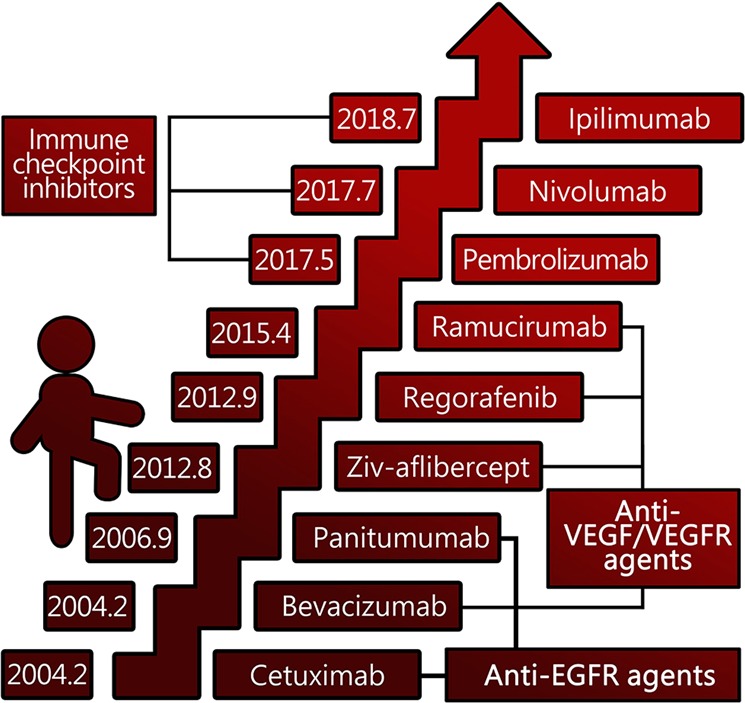
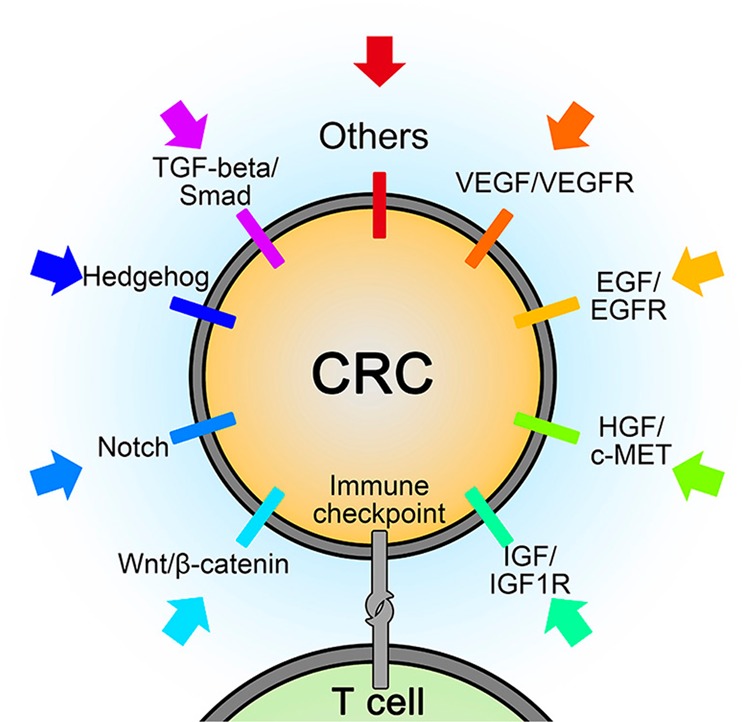
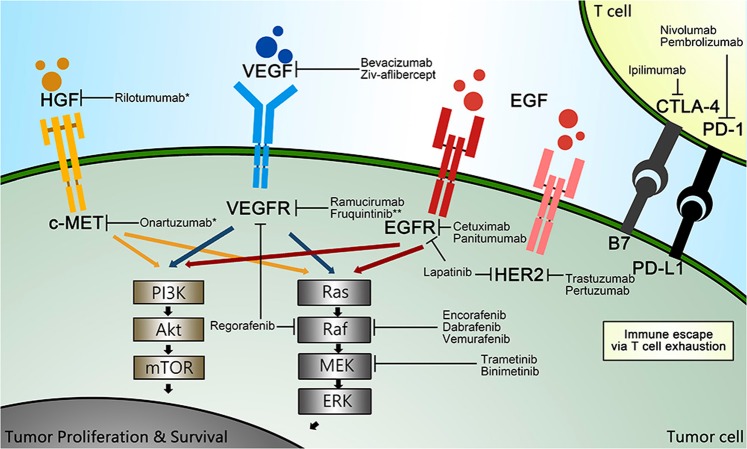
Colorectal cancer (CRC) is among the most lethal and prevalent malignancies in the world and was responsible for nearly 881,000 cancer-related deaths in 2018. Surgery and chemotherapy have long been the first choices for cancer patients. However, the prognosis of CRC has never been satisfying, especially for patients with metastatic lesions. Targeted therapy is a new optional approach that has successfully prolonged overall survival for CRC patients. Following successes with the anti-EGFR (epidermal growth factor receptor) agent cetuximab and the anti-angiogenesis agent bevacizumab, new agents blocking different critical pathways as well as immune checkpoints are emerging at an unprecedented rate. Guidelines worldwide are currently updating the recommended targeted drugs on the basis of the increasing number of high-quality clinical trials. This review provides an overview of existing CRC-targeted agents and their underlying mechanisms, as well as a discussion of their limitations and future trends.
Overview
The claims and statistics of this paper haven’t been checked yet.
Free: it reads the open-access text and checks the first 5 claims that cite a source we can check. Create a free account to check every claim.
Integrity signals
Registry
Cites
Statistics
Figures
Verification
Claims the paper makes
The claims and statistics of this paper haven’t been checked yet.
Free: it reads the open-access text and checks the first 5 claims that cite a source we can check. Create a free account to check every claim.
Claims other papers make about this one
Each is checked against this paper’s own text: does it say what the citing paper says it does?
The source backs part of the claim, not all of it — or backs it for a different population, condition or comparison.
In the citing paper
“The therapeutic landscape of metastatic colorectal cancer is moving toward biomarker-selected strategies. However, options are limited to agents directed at tumors carrying BRAF V600E mutations and to antibodies against programmed death 1 (PD-1) in patients with high microsatellite instability or mismatch-repair deficiency.13,26,27”
From Adagrasib with or without Cetuximab in Colorectal Cancer with Mutated KRAS G12C (2023) · cites this paper as [13]
Experimental — accuracy not yet measuredThe source backs part of the claim, not all of it — or backs it for a different population, condition or comparison.
In the citing paper
“Current first-line standard of care for KRAS G12C-positive CRC includes 5-FU-based chemotherapy with irinotecan, oxaliplatin and/or capecitabine, but is limited by low tumor-specific selectivity and systemic toxicity21.”
From Divarasib plus cetuximab in KRAS G12C-positive colorectal cancer: a phase 1b trial (2024) · cites this paper as [21]
Experimental — accuracy not yet measuredThe cited source says what the claim attributes to it.
In the citing paper
“Cetuximab is an anti-EGFR monoclonal antibody that is indicated for the treatment of RAS wild-type metastatic colorectal cancer, either as monotherapy or in combination with chemotherapy.13”
From Adagrasib with or without Cetuximab in Colorectal Cancer with Mutated KRAS G12C (2023) · cites this paper as [13]
The check wasn’t confident either way, so it gives no verdict — never disputed.
In the citing paper
“Currently, no therapies that specifically target KRAS G12C protein have been approved for the treatment of colorectal cancer.13,19”
From Adagrasib with or without Cetuximab in Colorectal Cancer with Mutated KRAS G12C (2023) · cites this paper as [13]
Experimental — accuracy not yet measuredIn the citing paper
“ROS-mediated DNA damage induces p53 phosphorylation, which in turn stabilizes p53, indispensable to counter tumorigenic growth and differentiation.68”
Self-check
Percentages, sums and reported differences re-computed from the paper’s own numbers.
The self-check needs the paper’s full text.
Citations
Cites
2 retracted
Items 201–400 of 521
Li, J., Qin, S., Xu, R.-H., Shen, L., Xu, J., Bai, Y., Yang, L., Deng, Y., Chen, Z.-D., Zhong, H., et al. (2018) · JAMA · doi:10.1001/jama.2018.7855 · Cited by 425
Stintzing, S., Modest, D. P., Rossius, L., Lerch, M. M., von Weikersthal, L. F., Decker, T., Kiani, A., Vehling-Kaiser, U., Al-Batran, S.-E., Heintges, T., et al. (2016) · The Lancet Oncology · doi:10.1016/s1470-2045(16)30269-8 · Cited by 420
The role of VEGF receptors in angiogenesis; complex partnerships
Cébe-Suarez, S., Zehnder-Fjällman, A., & Ballmer-Hofer, K. (2006) · Cellular and Molecular Life Sciences · doi:10.1007/s00018-005-5426-3 · Cited by 405
Souglakos, J., Androulakis, N., Syrigos, K., Polyzos, A., Ziras, N., Athanasiadis, A., Kakolyris, S., Tsousis, S., Kouroussis, C., Vamvakas, L., et al. (2006) · British Journal of Cancer · doi:10.1038/sj.bjc.6603011 · Cited by 400 · cited 1×
“Emerging evidence does not support stronger efficacy in the multiple-agent regimen FOLOXIRI (5-FU+OX+IRI), which is infrequently applied because of its potential increased toxicity.(18,19) Nonetheless, data from research performed in recent decades show that using chemotherapy in patients with CRC, especially those wi…”
BackgroundYe, L.-C., Liu, T.-S., Ren, L., Wei, Y., Zhu, D.-X., Zai, S.-Y., Ye, Q.-H., Yu, Y., Xu, B., Qin, X.-Y., et al. (2013) · Journal of Clinical Oncology · doi:10.1200/jco.2012.44.8308 · Cited by 394
Targeting MET in Lung Cancer: Will Expectations Finally Be MET?
Drilon, A., Cappuzzo, F., Ou, S.-H. I., & Camidge, D. R. (2017) · Journal of Thoracic Oncology · doi:10.1016/j.jtho.2016.10.014 · Cited by 389
Kopetz, S., Guthrie, K. A., Morris, V. K., Lenz, H.-J., Magliocco, A. M., Maru, D., Yan, Y., Lanman, R., Manyam, G., Hong, D. S., et al. (2021) · Journal of Clinical Oncology · doi:10.1200/jco.20.01994 · Cited by 389
Seymour, M. T., Brown, S. R., Middleton, G., Maughan, T., Richman, S., Gwyther, S., Lowe, C., Seligmann, J. F., Wadsley, J., Maisey, N., et al. (2013) · The Lancet Oncology · doi:10.1016/s1470-2045(13)70163-3 · Cited by 388
Immune activation and response to pembrolizumab in POLE-mutant endometrial cancer
Mehnert, J. M., Panda, A., Zhong, H., Hirshfield, K., Damare, S., Lane, K., Sokol, L., Stein, M. N., Rodriguez-Rodriquez, L., Kaufman, H. L., et al. (2016) · Journal of Clinical Investigation · doi:10.1172/jci84940 · Cited by 380
The Immunoscore: Colon Cancer and Beyond
Angell, H. K., Bruni, D., Barrett, J. C., Herbst, R., & Galon, J. (2020) · Clinical Cancer Research · doi:10.1158/1078-0432.ccr-18-1851 · Cited by 380
Jacobs, B., De Roock, W., Piessevaux, H., Van Oirbeek, R., Biesmans, B., De Schutter, J., Fieuws, S., Vandesompele, J., Peeters, M., Van Laethem, J.-L., et al. (2009) · Journal of Clinical Oncology · doi:10.1200/jco.2008.21.3744 · Cited by 368
Liu, Y., Cheng, Y., Xu, Y., Wang, Z., Du, X., Li, C., Peng, J., Gao, L., Liang, X., & Ma, C. (2017) · Oncogene · doi:10.1038/onc.2017.209 · Cited by 366
Boku, N. (2014) · Gastric Cancer · doi:10.1007/s10120-013-0252-z · Cited by 351
Rimassa, L., Assenat, E., Peck-Radosavljevic, M., Pracht, M., Zagonel, V., Mathurin, P., Rota Caremoli, E., Porta, C., Daniele, B., Bolondi, L., et al. (2018) · The Lancet Oncology · doi:10.1016/s1470-2045(18)30146-3 · Cited by 351 · cited 5×
“Although high EGFR levels might correlate slightly with stronger efficacy of anti-EGFR therapy, patients with low EGFR gene expression may benefit less from EGFR blockers than patients with high EGFR gene expression.139,140 Clinical studies also found that low AREG/EREG levels identified a low cetuximab response rate…”
BackgroundInfluentialCatenacci, D. V. T., Tebbutt, N. C., Davidenko, I., Murad, A. M., Al-Batran, S.-E., Ilson, D. H., Tjulandin, S., Gotovkin, E., Karaszewska, B., Bondarenko, I., et al. (2017) · The Lancet Oncology · doi:10.1016/s1470-2045(17)30566-1 · Cited by 348
Bacac, M., Fauti, T., Sam, J., Colombetti, S., Weinzierl, T., Ouaret, D., Bodmer, W., Lehmann, S., Hofer, T., Hosse, R. J., et al. (2016) · Clinical Cancer Research · doi:10.1158/1078-0432.ccr-15-1696 · Cited by 345
Tabernero, J., Van Cutsem, E., Díaz-Rubio, E., Cervantes, A., Humblet, Y., André, T., Van Laethem, J.-L., Soulié, P., Casado, E., Verslype, C., et al. (2007) · Journal of Clinical Oncology · doi:10.1200/jco.2007.13.2183 · Cited by 337
Vascular endothelial growth factor signaling in development and disease
Karaman, S., Leppänen, V.-M., & Alitalo, K. (2018) · Development · doi:10.1242/dev.151019 · Cited by 335
Targeted Therapy for Advanced Thyroid Cancer: Kinase Inhibitors and Beyond
Cabanillas, M. E., Ryder, M., & Jimenez, C. (2019) · Endocrine Reviews · doi:10.1210/er.2019-00007 · Cited by 335
Sartore-Bianchi, A., Moroni, M., Veronese, S., Carnaghi, C., Bajetta, E., Luppi, G., Sobrero, A., Barone, C., Cascinu, S., Colucci, G., et al. (2007) · Journal of Clinical Oncology · doi:10.1200/jco.2007.11.5956 · Cited by 333
Spigel, D. R., Edelman, M. J., O’Byrne, K., Paz-Ares, L., Mocci, S., Phan, S., Shames, D. S., Smith, D., Yu, W., Paton, V. E., et al. (2017) · Journal of Clinical Oncology · doi:10.1200/jco.2016.69.2160 · Cited by 333
Wu, Y.-L., Zhang, L., Kim, D.-W., Liu, X., Lee, D. H., Yang, J. C.-H., Ahn, M.-J., Vansteenkiste, J. F., Su, W.-C., Felip, E., et al. (2018) · Journal of Clinical Oncology · doi:10.1200/jco.2018.77.7326 · Cited by 333 · cited 5×
“Although high EGFR levels might correlate slightly with stronger efficacy of anti-EGFR therapy, patients with low EGFR gene expression may benefit less from EGFR blockers than patients with high EGFR gene expression.139,140 Clinical studies also found that low AREG/EREG levels identified a low cetuximab response rate…”
BackgroundInfluentialExploring the emerging role of the microbiome in cancer immunotherapy
Fessler, J., Matson, V., & Gajewski, T. F. (2019) · Journal for ImmunoTherapy of Cancer · doi:10.1186/s40425-019-0574-4 · Cited by 319
Antiphosphotyrosine Recovery of Phospholipase C Activity After EGF Treatment of A-431 Cells
Wahl, M. I., Daniel, T. O., & Carpenter, G. (1988) · Science · doi:10.1126/science.2457254 · Cited by 318
Domingo, E., Freeman-Mills, L., Rayner, E., Glaire, M., Briggs, S., Vermeulen, L., Fessler, E., Medema, J. P., Boot, A., Morreau, H., et al. (2016) · The Lancet Gastroenterology & Hepatology · doi:10.1016/s2468-1253(16)30014-0 · Cited by 308
Shah, M. A., Bang, Y.-J., Lordick, F., Alsina, M., Chen, M., Hack, S. P., Bruey, J. M., Smith, D., McCaffery, I., Shames, D. S., et al. (2017) · JAMA Oncology · doi:10.1001/jamaoncol.2016.5580 · Cited by 303
O’Neil, B. H., Wallmark, J. M., Lorente, D., Elez, E., Raimbourg, J., Gomez-Roca, C., Ejadi, S., Piha-Paul, S. A., Stein, M. N., Abdul Razak, A. R., et al. (2017) · PLOS ONE · doi:10.1371/journal.pone.0189848 · Cited by 296
Taieb, J., Tabernero, J., Mini, E., Subtil, F., Folprecht, G., Van Laethem, J.-L., Thaler, J., Bridgewater, J., Petersen, L. N., Blons, H., et al. (2014) · The Lancet Oncology · doi:10.1016/s1470-2045(14)70227-x · Cited by 291
Schmoll, H.-J., Tabernero, J., Maroun, J., de Braud, F., Price, T., Van Cutsem, E., Hill, M., Hoersch, S., Rittweger, K., & Haller, D. G. (2015) · Journal of Clinical Oncology · doi:10.1200/jco.2015.60.9107 · Cited by 291
Wallace, B. D., Roberts, A. B., Pollet, R. M., Ingle, J. D., Biernat, K. A., Pellock, S. J., Venkatesh, M. K., Guthrie, L., O’Neal, S. K., Robinson, S. J., et al. (2015) · Chemistry & Biology · doi:10.1016/j.chembiol.2015.08.005 · Cited by 285 · cited 3×
“In addition, other gut residents might aggravate chemotherapy-related adverse reactions via microbial metabolism of chemotherapy agents such as IRI.(472) There is limited evidence showing that the gut microbiota might interfere with targeted therapy; however, host–microbiome interactions in experimental settings might…”
BackgroundInfluentialTargeting the Hepatocyte Growth Factor–cMET Axis in Cancer Therapy
Blumenschein, G. R., Mills, G. B., & Gonzalez-Angulo, A. M. (2012) · Journal of Clinical Oncology · doi:10.1200/jco.2011.40.3774 · Cited by 273
Surveillance after curative treatment for colorectal cancer
van der Stok, E. P., Spaander, M. C. W., Grünhagen, D. J., Verhoef, C., & Kuipers, E. J. (2017) · Nature Reviews Clinical Oncology · doi:10.1038/nrclinonc.2016.199 · Cited by 272
Recent insights into the role of the PD-1/PD-L1 pathway in immunological tolerance and autoimmunity
Gianchecchi, E., Delfino, D. V., & Fierabracci, A. (2013) · Autoimmunity Reviews · doi:10.1016/j.autrev.2013.05.003 · Cited by 270
Claus, C., Ferrara, C., Xu, W., Sam, J., Lang, S., Uhlenbrock, F., Albrecht, R., Herter, S., Schlenker, R., Hüsser, T., et al. (2019) · Science Translational Medicine · doi:10.1126/scitranslmed.aav5989 · Cited by 270
Yamazaki, K., Nagase, M., Tamagawa, H., Ueda, S., Tamura, T., Murata, K., Eguchi Nakajima, T., Baba, E., Tsuda, M., Moriwaki, T., et al. (2016) · Annals of Oncology · doi:10.1093/annonc/mdw206 · Cited by 268
Iveson, T., Donehower, R. C., Davidenko, I., Tjulandin, S., Deptala, A., Harrison, M., Nirni, S., Lakshmaiah, K., Thomas, A., Jiang, Y., et al. (2014) · The Lancet Oncology · doi:10.1016/s1470-2045(14)70023-3 · Cited by 265
Scagliotti, G., von Pawel, J., Novello, S., Ramlau, R., Favaretto, A., Barlesi, F., Akerley, W., Orlov, S., Santoro, A., Spigel, D., et al. (2015) · Journal of Clinical Oncology · doi:10.1200/jco.2014.60.7317 · Cited by 265
Folprecht, G., Gruenberger, T., Bechstein, W., Raab, H.-R., Weitz, J., Lordick, F., Hartmann, J. T., Stoehlmacher-Williams, J., Lang, H., Trarbach, T., et al. (2014) · Annals of Oncology · doi:10.1093/annonc/mdu088 · Cited by 264
MET inhibitors for targeted therapy of EGFR TKI-resistant lung cancer
Wang, Q., Yang, S., Wang, K., & Sun, S.-Y. (2019) · Journal of Hematology & Oncology · doi:10.1186/s13045-019-0759-9 · Cited by 263
Recent developments of c‐Met as a therapeutic target in hepatocellular carcinoma
Bouattour, M., Raymond, E., Qin, S., Cheng, A., Stammberger, U., Locatelli, G., & Faivre, S. (2018) · Hepatology · doi:10.1002/hep.29496 · Cited by 257
Prognostic impact of tumour‐infiltrating B cells and plasma cells in colorectal cancer
Berntsson, J., Nodin, B., Eberhard, J., Micke, P., & Jirström, K. (2016) · International Journal of Cancer · doi:10.1002/ijc.30138 · Cited by 253
Hegewisch-Becker, S., Graeven, U., Lerchenmüller, C. A., Killing, B., Depenbusch, R., Steffens, C.-C., Al-Batran, S.-E., Lange, T., Dietrich, G., Stoehlmacher, J., et al. (2015) · The Lancet Oncology · doi:10.1016/s1470-2045(15)00042-x · Cited by 251
Comprehensive Intrametastatic Immune Quantification and Major Impact of Immunoscore on Survival
Mlecnik, B., Van den Eynde, M., Bindea, G., Church, S. E., Vasaturo, A., Fredriksen, T., Lafontaine, L., Haicheur, N., Marliot, F., Debetancourt, D., et al. (2018) · JNCI: Journal of the National Cancer Institute · doi:10.1093/jnci/djx123 · Cited by 250
Role of Angiopoietin-2 in Adaptive Tumor Resistance to VEGF Signaling Blockade
Rigamonti, N., Kadioglu, E., Keklikoglou, I., Wyser Rmili, C., Leow, C. C., & De Palma, M. (2014) · Cell Reports · doi:10.1016/j.celrep.2014.06.059 · Cited by 247
Lenz, H.-J., Ou, F.-S., Venook, A. P., Hochster, H. S., Niedzwiecki, D., Goldberg, R. M., Mayer, R. J., Bertagnolli, M. M., Blanke, C. D., Zemla, T., et al. (2019) · Journal of Clinical Oncology · doi:10.1200/jco.18.02258 · Cited by 246
Long, G. V., Atkinson, V., Cebon, J. S., Jameson, M. B., Fitzharris, B. M., McNeil, C. M., Hill, A. G., Ribas, A., Atkins, M. B., Thompson, J. A., et al. (2017) · The Lancet Oncology · doi:10.1016/s1470-2045(17)30428-x · Cited by 245 · cited 1×
“Combined therapy with pembrolizumab and ipilimumab showed comparable efficacy in melanoma patients, but there is insufficient evidence in CRC.(397) Nivolumab, another humanized monoclonal IgG4-based PD-1 antibody, gained FDA approval for dMMR or MSI-H metastatic CRC in 2017 based on the CheckMate-142 trial, in which 5…”
MethodBacterial metabolism affects the C. elegans response to cancer chemotherapeutics
García-González, A. P., Ritter, A. D., Shrestha, S., Andersen, E. C., Yilmaz, L. S., & Walhout, A. J. M. (2017) · Cell · doi:10.1016/j.cell.2017.03.046 · Cited by 243
Development of Ipilimumab: Contribution to a New Paradigm for Cancer Immunotherapy
Hoos, A., Ibrahim, R., Korman, A., Abdallah, K., Berman, D., Shahabi, V., Chin, K., Canetta, R., & Humphrey, R. (2010) · Seminars in Oncology · doi:10.1053/j.seminoncol.2010.09.015 · Cited by 242
Richman, S. D., Southward, K., Chambers, P., Cross, D., Barrett, J., Hemmings, G., Taylor, M., Wood, H., Hutchins, G., Foster, J. M., et al. (2016) · The Journal of Pathology · doi:10.1002/path.4679 · Cited by 241
Hepatocyte growth factor/MET in cancer progression and biomarker discovery
Matsumoto, K., Umitsu, M., De Silva, D. M., Roy, A., & Bottaro, D. P. (2017) · Cancer Science · doi:10.1111/cas.13156 · Cited by 239
Qin, S., Li, J., Wang, L., Xu, J., Cheng, Y., Bai, Y., Li, W., Xu, N., Lin, L.-Z., Wu, Q., et al. (2018) · Journal of Clinical Oncology · doi:10.1200/jco.2018.78.3183 · Cited by 237
Merchant, M., Ma, X., Maun, H. R., Zheng, Z., Peng, J., Romero, M., Huang, A., Yang, N.-Y., Nishimura, M., Greve, J., et al. (2013) · Proceedings of the National Academy of Sciences · doi:10.1073/pnas.1302725110 · Cited by 236
Hurwitz, H. I., Tebbutt, N. C., Kabbinavar, F., Giantonio, B. J., Guan, Z.-Z., Mitchell, L., Waterkamp, D., & Tabernero, J. (2013) · The Oncologist · doi:10.1634/theoncologist.2013-0107 · Cited by 236
Peeters, M., Douillard, J.-Y., Van Cutsem, E., Siena, S., Zhang, K., Williams, R., & Wiezorek, J. (2013) · Journal of Clinical Oncology · doi:10.1200/jco.2012.45.1492 · Cited by 232
van Geel, R. M. J. M., Tabernero, J., Elez, E., Bendell, J. C., Spreafico, A., Schuler, M., Yoshino, T., Delord, J.-P., Yamada, Y., Lolkema, M. P., et al. (2017) · Cancer Discovery · doi:10.1158/2159-8290.cd-16-0795 · Cited by 232
Murtuza, A., Bulbul, A., Shen, J. P., Keshavarzian, P., Woodward, B. D., Lopez-Diaz, F. J., Lippman, S. M., & Husain, H. (2019) · Cancer Research · doi:10.1158/0008-5472.can-18-1281 · Cited by 226
Targeting c-MET in gastrointestinal tumours: rationale, opportunities and challenges
on behalf of the MErCuRIC consortium, Bradley, C. A., Salto-Tellez, M., Laurent-Puig, P., Bardelli, A., Rolfo, C., Tabernero, J., Khawaja, H. A., Lawler, M., Johnston, P. G., et al. (2017) · Nature Reviews Clinical Oncology · doi:10.1038/nrclinonc.2017.40 · Cited by 225
Incio, J., Ligibel, J. A., McManus, D. T., Suboj, P., Jung, K., Kawaguchi, K., Pinter, M., Babykutty, S., Chin, S. M., Vardam, T. D., et al. (2018) · Science Translational Medicine · doi:10.1126/scitranslmed.aag0945 · Cited by 222
Hong, D. S., Morris, V. K., El Osta, B., Sorokin, A. V., Janku, F., Fu, S., Overman, M. J., Piha-Paul, S., Subbiah, V., Kee, B., et al. (2016) · Cancer Discovery · doi:10.1158/2159-8290.cd-16-0050 · Cited by 219
Boeckx, N., Koukakis, R., Op de Beeck, K., Rolfo, C., Van Camp, G., Siena, S., Tabernero, J., Douillard, J.-Y., André, T., & Peeters, M. (2017) · Annals of Oncology · doi:10.1093/annonc/mdx119 · Cited by 217
Yang, H., Higgins, B., Kolinsky, K., Packman, K., Bradley, W. D., Lee, R. J., Schostack, K., Simcox, M. E., Kopetz, S., Heimbrook, D., et al. (2012) · Cancer Research · doi:10.1158/0008-5472.can-11-2941 · Cited by 216
Qi, J., McTigue, M. A., Rogers, A., Lifshits, E., Christensen, J. G., Jänne, P. A., & Engelman, J. A. (2011) · Cancer Research · doi:10.1158/0008-5472.can-10-1623 · Cited by 216
Punt, C. J., Nagy, A., Douillard, J.-Y., Figer, A., Skovsgaard, T., Monson, J., Barone, C., Fountzilas, G., Riess, H., Moylan, E., et al. (2002) · The Lancet · doi:10.1016/s0140-6736(02)09836-7 · Cited by 213
Akt/Protein Kinase B Isoforms Are Differentially Regulated by Epidermal Growth Factor Stimulation
Okano, J.-I., Gaslightwala, I., Birnbaum, M. J., Rustgi, A. K., & Nakagawa, H. (2000) · Journal of Biological Chemistry · doi:10.1074/jbc.m004112200 · Cited by 213
Schmoll, H.-J., Cunningham, D., Sobrero, A., Karapetis, C. S., Rougier, P., Koski, S. L., Kocakova, I., Bondarenko, I., Bodoky, G., Mainwaring, P., et al. (2012) · Journal of Clinical Oncology · doi:10.1200/jco.2012.42.5355 · Cited by 213
Díaz-Rubio, E., Gómez-España, A., Massutí, B., Sastre, J., Abad, A., Valladares, M., Rivera, F., Safont, M. J., Martínez de Prado, P., Gallén, M., et al. (2012) · The Oncologist · doi:10.1634/theoncologist.2011-0249 · Cited by 210
Shah, M. A., Wainberg, Z. A., Catenacci, D. V. T., Hochster, H. S., Ford, J., Kunz, P., Lee, F.-C., Kallender, H., Cecchi, F., Rabe, D. C., et al. (2013) · PLoS ONE · doi:10.1371/journal.pone.0054014 · Cited by 208
Elkrief, A., El Raichani, L., Richard, C., Messaoudene, M., Belkaid, W., Malo, J., Belanger, K., Miller, W., Jamal, R., Letarte, N., et al. (2019) · OncoImmunology · doi:10.1080/2162402x.2019.1568812 · Cited by 208
Gong, J., Wang, C., Lee, P. P., Chu, P., & Fakih, M. (2017) · Journal of the National Comprehensive Cancer Network · doi:10.6004/jnccn.2017.0016 · Cited by 207
Jahangiri, A., De Lay, M., Miller, L. M., Carbonell, W. S., Hu, Y.-L., Lu, K., Tom, M. W., Paquette, J., Tokuyasu, T. A., Tsao, S., et al. (2013) · Clinical Cancer Research · doi:10.1158/1078-0432.ccr-12-1281 · Cited by 202
Kienast, Y., Klein, C., Scheuer, W., Raemsch, R., Lorenzon, E., Bernicke, D., Herting, F., Yu, S., The, H. H., Martarello, L., et al. (2013) · Clinical Cancer Research · doi:10.1158/1078-0432.ccr-13-0081 · Cited by 201
Mast Cells, Angiogenesis and Lymphangiogenesis in Human Gastric Cancer
Sammarco, G., Varricchi, G., Ferraro, V., Ammendola, M., De Fazio, M., Altomare, D. F., Luposella, M., Maltese, L., Currò, G., Marone, G., et al. (2019) · International Journal of Molecular Sciences · doi:10.3390/ijms20092106 · Cited by 198
Xie, Y.-H., Gao, Q.-Y., Cai, G.-X., Sun, X.-M., Zou, T.-H., Chen, H.-M., Yu, S.-Y., Qiu, Y.-W., Gu, W.-Q., Chen, X.-Y., et al. (2017) · EBioMedicine · doi:10.1016/j.ebiom.2017.10.005 · Cited by 194
Self-citationThe STAT3 pathway as a therapeutic target in head and neck cancer: barriers and innovations
Geiger, J. L., Grandis, J. R., & Bauman, J. E. (2016) · Oral Oncology · doi:10.1016/j.oraloncology.2015.11.022 · Cited by 193
Gut Microbiota Shapes the Efficiency of Cancer Therapy
Ma, W., Mao, Q., Xia, W., Dong, G., Yu, C., & Jiang, F. (2019) · Frontiers in Microbiology · doi:10.3389/fmicb.2019.01050 · Cited by 192
Impact of the immune system and immunotherapy in colorectal cancer.
Markman, J. L., & Shiao, S. L. (2015) · PubMed · doi:10.3978/j.issn.2078-6891.2014.077 · Cited by 190 · cited 1×
“Immune escape, which refers to cancer cells escaping from host immunorecognition and response, has been frequently identified in various cancers.(350) Secretion of immunosuppressive factors, such as TGF-β and IL-6, recruitment of immunosuppressive cells, such as regulatory cells, or loss of immunogenicity via downregu…”
BackgroundTargeted antibody and cytokine cancer immunotherapies through collagen affinity
Ishihara, J., Ishihara, A., Sasaki, K., Lee, S. S.-Y., Williford, J.-M., Yasui, M., Abe, H., Potin, L., Hosseinchi, P., Fukunaga, K., et al. (2019) · Science Translational Medicine · doi:10.1126/scitranslmed.aau3259 · Cited by 190
Mao, C., Yang, Z. Y., Hu, X. F., Chen, Q., & Tang, J. L. (2012) · Annals of Oncology · doi:10.1093/annonc/mdr464 · Cited by 188
Cleavable ErbB4 Isoform in Estrogen Receptor–Regulated Growth of Breast Cancer Cells
Junttila, T. T., Sundvall, M., Lundin, M., Lundin, J., Tanner, M., Härkönen, P., Joensuu, H., Isola, J., & Elenius, K. (2005) · Cancer Research · doi:10.1158/0008-5472.can-04-3150 · Cited by 187
Goede, V, Coutelle, O., Neuneier, J., Reinacher-Schick, A., Schnell, R., Koslowsky, T. C., Weihrauch, M. R., Cremer, B., Kashkar, H., Odenthal, M., et al. (2010) · British Journal of Cancer · doi:10.1038/sj.bjc.6605925 · Cited by 186
NCCN Guidelines Updates: Management of Metastatic Colorectal Cancer.
Messersmith, W. A. (2019) · PubMed · doi:10.6004/jnccn.2019.5014 · Cited by 182
MET Inhibitors Promote Liver Tumor Evasion of the Immune Response by Stabilizing PDL1
Li, H., Li, C.-W., Li, X., Ding, Q., Guo, L., Liu, S., Liu, C., Lai, C.-C., Hsu, J.-M., Dong, Q., et al. (2019) · Gastroenterology · doi:10.1053/j.gastro.2019.01.252 · Cited by 182
Berlin, J., Bendell, J. C., Hart, L. L., Firdaus, I., Gore, I., Hermann, R. C., Mulcahy, M. F., Zalupski, M. M., Mackey, H. M., Yauch, R. L., et al. (2013) · Clinical Cancer Research · doi:10.1158/1078-0432.ccr-12-1800 · Cited by 181
Autocrine activation of the MET receptor tyrosine kinase in acute myeloid leukemia
Kentsis, A., Reed, C., Rice, K. L., Sanda, T., Rodig, S. J., Tholouli, E., Christie, A., Valk, P. J. M., Delwel, R., Ngo, V., et al. (2012) · Nature Medicine · doi:10.1038/nm.2819 · Cited by 179
Updates on immunotherapy for colorectal cancer
Kalyan, A., Kircher, S., Shah, H., Mulcahy, M., & Benson, A. (2018) · Journal of Gastrointestinal Oncology · doi:10.21037/jgo.2018.01.17 · Cited by 178
Mohan, S., Heitzer, E., Ulz, P., Lafer, I., Lax, S., Auer, M., Pichler, M., Gerger, A., Eisner, F., Hoefler, G., et al. (2014) · PLoS Genetics · doi:10.1371/journal.pgen.1004271 · Cited by 177
Passardi, A., Nanni, O., Tassinari, D., Turci, D., Cavanna, L., Fontana, A., Ruscelli, S., Mucciarini, C., Lorusso, V., Ragazzini, A., et al. (2015) · Annals of Oncology · doi:10.1093/annonc/mdv130 · Cited by 177
Lymphangiogenesis guidance by paracrine and pericellular factors
Vaahtomeri, K., Karaman, S., Mäkinen, T., & Alitalo, K. (2017) · Genes & Development · doi:10.1101/gad.303776.117 · Cited by 176
Phase Ib study of atezolizumab combined with cobimetinib in patients with solid tumors.
Hellmann, M. D., Kim, T.-W., Lee, C. B., Goh, B.-C., Miller, W. H., Oh, D.-Y., Jamal, R., Chee, C.-E., Chow, L. Q. M., Gainor, J. F., et al. (2019) · Annals of Oncology · doi:10.1093/annonc/mdz113 · Cited by 174 · cited 2×
“Trials have been conducted for combined blocking of MEK and immune checkpoints inspired by the phase I and III studies focused on atezolizumab and cobimetinib (a MEK inhibitor), which found that this regimen was well tolerated yet offered no significant survival improvement over single drugs such as regorafenib or TAS…”
MethodImmune Checkpoints as a Target for Colorectal Cancer Treatment
Passardi, A., Canale, M., Valgiusti, M., & Ulivi, P. (2017) · International Journal of Molecular Sciences · doi:10.3390/ijms18061324 · Cited by 174
Tabernero, J., Melero, I., Ros, W., Argiles, G., Marabelle, A., Rodriguez-Ruiz, M. E., Albanell, J., Calvo, E., Moreno, V., Cleary, J. M., et al. (2017) · Journal of Clinical Oncology · doi:10.1200/jco.2017.35.15_suppl.3002 · Cited by 170
Effect of Phospholipase C-γ Overexpression on PDGF-induced Second Messengers and Mitogenesis
Margolis, B., Zilberstein, A., Franks, C., Felder, S., Kremer, S., Ullrich, A., Rhee, S. G., Skorecki, K., & Schlessinger, J. (1990) · Science · doi:10.1126/science.2333512 · Cited by 169
Scholz, A., Harter, P. N., Cremer, S., Yalcin, B. H., Gurnik, S., Yamaji, M., Di Tacchio, M., Sommer, K., Baumgarten, P., Bähr, O., et al. (2016) · EMBO Molecular Medicine · doi:10.15252/emmm.201505505 · Cited by 169
Kerr, R. S., Love, S., Segelov, E., Johnstone, E. C., Falcón, B. L., Hewett, P. J., Weaver, A., Church, D. N., Scudder, C. L., Pearson, S. R., et al. (2016) · The Lancet Oncology · doi:10.1016/s1470-2045(16)30172-3 · Cited by 168
Zhao, S., Gao, G., Li, W., Li, X., Zhao, C., Jiang, T., Jia, Y., He, Y., Li, A., Su, C., et al. (2019) · Lung Cancer · doi:10.1016/j.lungcan.2019.01.017 · Cited by 164
MET in glioma: signaling pathways and targeted therapies
Cheng, F., & Guo, D. (2019) · Journal of Experimental & Clinical Cancer Research · doi:10.1186/s13046-019-1269-x · Cited by 163
HER2 and Breast Cancer — A Phenomenal Success Story
Hayes, D. F. (2019) · New England Journal of Medicine · doi:10.1056/nejmcibr1909386 · Cited by 163
Targeting MET in cancer therapy
Mo, H., & Liu, P. (2017) · Chronic Diseases and Translational Medicine · doi:10.1016/j.cdtm.2017.06.002 · Cited by 162
c-Met as a Target for Personalized Therapy
Garajová, I., Giovannetti, E., Biasco, G., & Peters, G. J. (2015) · Translational Oncogenomics · doi:10.4137/tog.s30534 · Cited by 161 · cited 1×
“The HAI protein family seems to be an attractive target to control HGF activation; however, no artificial compound or analog has been made so far, and thus, clinical testing is a long way off, although experimental data imply a potential role in an antimetastatic strategy for CRC.(295,296) Instead of blocking HGF acti…”
BackgroundBoccaccio, C., Gaudino, G., Gambarotta, G., Galimi, F., & Comoglio, P. M. (1994) · Journal of Biological Chemistry · doi:10.1016/s0021-9258(18)99953-9 · Cited by 160
Kammula, U. S., Kuntz, E. J., Francone, T. D., Zeng, Z., Shia, J., Landmann, R. G., Paty, P. B., & Weiser, M. R. (2007) · Cancer Letters · doi:10.1016/j.canlet.2006.07.007 · Cited by 160
Acquired resistance to EGFR‐targeted therapies in colorectal cancer
Van Emburgh, B. O., Sartore-Bianchi, A., Di Nicolantonio, F., Siena, S., & Bardelli, A. (2014) · Molecular Oncology · doi:10.1016/j.molonc.2014.05.003 · Cited by 160
VEGF and PlGF: two pleiotropic growth factors with distinct roles in development and homeostasis
Tjwa, M., Luttun, A., Autiero, M., & Carmeliet, P. (2003) · Cell and Tissue Research · doi:10.1007/s00441-003-0776-3 · Cited by 158
Phospholipase Cγ1 is a physiological guanine nucleotide exchange factor for the nuclear GTPase PIKE
Ye, K., Aghdasi, B., Luo, H. R., Moriarity, J. L., Wu, F. Y., Hong, J. J., Hurt, K. J., Bae, S. S., Suh, P.-G., & Snyder, S. H. (2002) · Nature · doi:10.1038/415541a · Cited by 158
Koeberle, D., Betticher, D. C., von Moos, R., Dietrich, D., Brauchli, P., Baertschi, D., Matter-Walstra, K. W., Winterhalder, R., Borner, M., Anchisi, S., et al. (2015) · Annals of Oncology · doi:10.1093/annonc/mdv011 · Cited by 157 · cited 1×
“bevacizumab alone in the MACRO trial(198) and for maintaining single-agent bevacizumab therapy compared with no treatment in the SAKK trial.(199) No inferiority has been found for maintenance of bevacizumab alone over bevacizumab plus 5-FU or continuation of bevacizumab plus CAP over bevacizumab plus XELOX.”
MethodHoff, P. M., Hochhaus, A., Pestalozzi, B. C., Tebbutt, N. C., Li, J., Kim, T. W., Koynov, K. D., Kurteva, G., Pintér, T., Cheng, Y., et al. (2012) · Journal of Clinical Oncology · doi:10.1200/jco.2012.42.6031 · Cited by 155
Randomised trials of HIV prevention
Gray, R. H., & Wawer, M. J. (2007) · The Lancet · doi:10.1016/s0140-6736(07)61058-7 · Cited by 154
Immunogenomic Classification of Colorectal Cancer and Therapeutic Implications
Roelands, J. P., Kuppen, P. J. K., Vermeulen, L., Maccalli, C., Decock, J. V., Wang, E., Marincola, F. M., Bedognetti, D., & Hendrickx, W. (2017) · International Journal of Molecular Sciences · doi:10.3390/ijms18102229 · Cited by 154
Falcón, B. L., Chintharlapalli, S. R., Uhlik, M. T., & Pytowski, B. (2016) · Pharmacology & Therapeutics · doi:10.1016/j.pharmthera.2016.06.001 · Cited by 151
Liu, T., Ma, W., Xu, H., Huang, M., Zhang, D., He, Z., Zhang, L., Brem, S., O’Rourke, D. M., Gong, Y., et al. (2018) · Nature Communications · doi:10.1038/s41467-018-05982-z · Cited by 151
The p53 family and the hypoxia-inducible factors (HIFs): determinants of cancer progression
Amelio, I., & Melino, G. (2015) · Trends in Biochemical Sciences · doi:10.1016/j.tibs.2015.04.007 · Cited by 150
A phase II study of RO4929097 in metastatic colorectal cancer
Strosberg, J. R., Yeatman, T., Weber, J., Coppola, D., Schell, M. J., Han, G., Almhanna, K., Kim, R., Valone, T., Jump, H., et al. (2012) · European Journal of Cancer · doi:10.1016/j.ejca.2012.02.056 · Cited by 146
MET signaling in colon cancer stem-like cells blunts the therapeutic response to EGFR inhibitors.
Luraghi, P., Reato, G., Cipriano, E., Sassi, F., Orzan, F., Bigatto, V., De Bacco, F., Menietti, E., Han, M., Rideout, W. M., et al. (2014) · Cancer Research · doi:10.1158/0008-5472.can-13-2340-t · Cited by 146
Cloughesy, T., Finocchiaro, G., Belda-Iniesta, C., Recht, L., Brandes, A. A., Pineda, E., Mikkelsen, T., Chinot, O. L., Balana, C., Macdonald, D. R., et al. (2017) · Journal of Clinical Oncology · doi:10.1200/jco.2015.64.7685 · Cited by 146
Wang, J., Anderson, M. G., Oleksijew, A., Vaidya, K. S., Boghaert, E. R., Tucker, L., Zhang, Q., Han, E. K., Palma, J. P., Naumovski, L., et al. (2017) · Clinical Cancer Research · doi:10.1158/1078-0432.ccr-16-1568 · Cited by 145
Engstrom, L. D., Aranda, R., Lee, M., Tovar, E. A., Essenburg, C. J., Madaj, Z., Chiang, H., Briere, D., Hallin, J., Lopez-Casas, P. P., et al. (2017) · Clinical Cancer Research · doi:10.1158/1078-0432.ccr-17-1192 · Cited by 145
Mooi, J. K., Wirapati, P., Asher, R., Lee, C. K., Savas, P., Price, T. J., Townsend, A., Hardingham, J., Buchanan, D., Williams, D., et al. (2018) · Annals of Oncology · doi:10.1093/annonc/mdy410 · Cited by 145
Strickler, J. H., Weekes, C. D., Nemunaitis, J. J., Ramanathan, R. K., Heist, R. S., Morgensztern, D., Angevin, E., Bauer, T. M., Yue, H., Motwani, M., et al. (2018) · Journal of Clinical Oncology · doi:10.1200/jco.2018.78.7697 · Cited by 144
Xing, F., Liu, Y., Sharma, S., Wu, K., Chan, M. D., Lo, H., Carpenter, R. L., Metheny‐Barlow, L. J., Zhou, X., Qasem, S. A., et al. (2016) · Cancer Research · doi:10.1158/0008-5472.can-15-3541 · Cited by 143
Gut microbiota regulates lacteal integrity by inducing VEGF‐C in intestinal villus macrophages
Suh, S. H., Choe, K., Hong, S. P., Jeong, S., Mäkinen, T., Kim, K. S., Alitalo, K. K., Surh, C. D., Koh, G. Y., & Song, J. (2019) · EMBO Reports · doi:10.15252/embr.201846927 · Cited by 142 · cited 1×
“An angiogenesis-mediated function for the gut microbiota was reported previously, by which the cancer microenvironment was formed and shaped.(475,476) Probiotics might help to control local inflammation by downregulating the VEGF/VEGFR pathway in the liver and intestinal cells.”
BackgroundThe intimate relationship between gut microbiota and cancer immunotherapy
Elkrief, A., Derosa, L., Zitvogel, L., Kroemer, G., & Routy, B. (2019) · Gut Microbes · doi:10.1080/19490976.2018.1527167 · Cited by 141
Cabanillas, M. E., de Souza, J. A., Geyer, S. M., Wirth, L. J., Menefee, M. E., Liu, S. V., Shah, K. B., Wright, J., & Shah, M. H. (2017) · Journal of Clinical Oncology · doi:10.1200/jco.2017.73.0226 · Cited by 139
Reidy, D. L., Vakiani, E., Fakih, M. G., Saif, M. W., Hecht, J. R., Goodman-Davis, N., Hollywood, E., Shia, J., Schwartz, J., Chandrawansa, K., et al. (2010) · Journal of Clinical Oncology · doi:10.1200/jco.2010.30.4154 · Cited by 138
Castro, B. A., Flanigan, P., Jahangiri, A., Hoffman, D., Chen, W., Kuang, R., De Lay, M., Yagnik, G., Wagner, J. R., Mascharak, S., et al. (2017) · Oncogene · doi:10.1038/onc.2017.1 · Cited by 138
Schirbel, A., Kessler, S., Rieder, F., West, G., Rebert, N., Asosingh, K., McDonald, C., & Fiocchi, C. (2013) · Gastroenterology · doi:10.1053/j.gastro.2012.11.005 · Cited by 137
Ramanathan, R. K., Hwang, J. J., Zamboni, W. C., Sinicrope, F. A., Safran, H., Wong, M. K., Earle, M., Brufsky, A., Evans, T., Troetschel, M., et al. (2004) · Cancer Investigation · doi:10.1081/cnv-200039645 · Cited by 136 · cited 1×
“with or without chemotherapy, were terminated early because of a low patient response rate or insignificant patient survival benefits.(121,122) By contrast, dual-targeted HER2 therapy was found to be promising in preclinical research.”
BackgroundMontagut, C., Argilés, G., Ciardiello, F., Poulsen, T. T., Dienstmann, R., Kragh, M., Kopetz, S., Lindsted, T., Ding, C., Vidal, J., et al. (2018) · JAMA Oncology · doi:10.1001/jamaoncol.2017.5245 · Cited by 135
Van Cutsem, E., Tejpar, S., Vanbeckevoort, D., Peeters, M., Humblet, Y., Gelderblom, H., Vermorken, J. B., Viret, F., Glimelius, B., Gallerani, E., et al. (2012) · Journal of Clinical Oncology · doi:10.1200/jco.2011.40.9243 · Cited by 132 · cited 1×
“Escalating to the maximal dose of cetuximab based on the intensity of skin rash in the EVEREST trial suggested that an overall response might be achieved but without OS improvement.(86) Murine-human chimeric antibodies might cause immunogenic reactions; therefore, the fully humanized antibody panitumumab has been deve…”
BackgroundRecent advances in non-small cell lung cancer biology and clinical management.
Saintigny, P., & Burger, J. A. (2012) · PubMed · Cited by 129
Hecht, J. R., Cohn, A. L., Dakhil, S. R., Saleh, M. N., Piperdi, B., Cline-Burkhardt, M., Tian, Y., & Go, W. Y. (2015) · Clinical Colorectal Cancer · doi:10.1016/j.clcc.2014.12.009 · Cited by 128
PKB/Akt-dependent regulation of inflammation in cancer
Tang, F., Wang, Y., Hemmings, B. A., Rüegg, C., & Xue, G. (2017) · Seminars in Cancer Biology · doi:10.1016/j.semcancer.2017.04.018 · Cited by 127
Siu, L. L., Shapiro, J. D., Jonker, D. J., Karapetis, C. S., Zalcberg, J. R., Simes, J., Couture, F., Moore, M. J., Price, T. J., Siddiqui, J., et al. (2013) · Journal of Clinical Oncology · doi:10.1200/jco.2012.46.0543 · Cited by 126
Yoshioka, H., Azuma, K., Yamamoto, N., Takahashi, T., Nishio, M., Katakami, N., Ahn, M., Hirashima, T., Maemondo, M., Kim, S. W., et al. (2015) · Annals of Oncology · doi:10.1093/annonc/mdv288 · Cited by 124
Tanizaki, J., Okamoto, I., Sakai, K., & Nakagawa, K. (2011) · British Journal of Cancer · doi:10.1038/bjc.2011.322 · Cited by 123 · cited 2×
“Activated MET and EGFR might form different heterodimers, resulting in various tumor biological behaviors, such as cell growth and survival for MET-EGFR and MET-HER3 or migration for METHER2.(288) In addition, MET activation has been observed occasionally in VEGF-targeted therapy, resulting in VEGF resistance; however…”
BackgroundThe Wnt signaling pathway: a potential therapeutic target against cancer
Ghosh, N., Hossain, U., Mandal, A., & Sil, P. C. (2019) · Annals of the New York Academy of Sciences · doi:10.1111/nyas.14027 · Cited by 123
PD‐1/PD‐L1 inhibitors in haematological malignancies: update 2017
Jelinek, T., Mihalyova, J., Kascak, M., Duras, J., & Hajek, R. (2017) · Immunology · doi:10.1111/imm.12788 · Cited by 122
ERBB3 mutations in cancer: biological aspects, prevalence and therapeutics
Kiavué, N., Cabel, L., Melaabi, S., Bataillon, G., Callens, C., Lerebours, F., Pierga, J., & Bidard, F. (2019) · Oncogene · doi:10.1038/s41388-019-1001-5 · Cited by 122
Refining adjuvant therapy for non-metastatic colon cancer, new standards and perspectives
Taïeb, J., André, T., & Auclin, É. (2019) · Cancer Treatment Reviews · doi:10.1016/j.ctrv.2019.02.002 · Cited by 122
Parseghian, C. M., Napolitano, S., Loree, J. M., & Kopetz, S. (2019) · Clinical Cancer Research · doi:10.1158/1078-0432.ccr-19-0823 · Cited by 121
Vecchione, L., Jacobs, B., Normanno, N., Ciardiello, F., & Tejpar, S. (2011) · Experimental Cell Research · doi:10.1016/j.yexcr.2011.08.021 · Cited by 120
Phosphatidylinositol 3 kinase (PI3K) inhibitors as new weapon to combat cancer
Elmenier, F. M., Lasheen, D. S., & Abouzid, K. A. M. (2019) · European Journal of Medicinal Chemistry · doi:10.1016/j.ejmech.2019.111718 · Cited by 120
Tumor-Associated Lymphatic Vessel Features and Immunomodulatory Functions
Garnier, L., Gkountidi, A.-O., & Hugues, S. (2019) · Frontiers in Immunology · doi:10.3389/fimmu.2019.00720 · Cited by 120
Bile acids regulate intestinal cell proliferation by modulating EGFR and FXR signaling
Dossa, A. Y., Escobar, O., Golden, J., Frey, M. R., Ford, H. R., & Gayer, C. P. (2016) · American Journal of Physiology-Gastrointestinal and Liver Physiology · doi:10.1152/ajpgi.00065.2015 · Cited by 119
Context matters—consensus molecular subtypes of colorectal cancer as biomarkers for clinical trials
Fontana, E., Eason, K., Cervantes, A., Salazar, R., & Sadanandam, A. (2019) · Annals of Oncology · doi:10.1093/annonc/mdz052 · Cited by 117
Khattak, M. A., Martin, H. L., Davidson, A., & Phillips, M. R. (2015) · Clinical Colorectal Cancer · doi:10.1016/j.clcc.2014.12.011 · Cited by 116 · cited 1×
“A recommendation that anti-EGFR over antiVEGF is favored in RAS-wild-type patients has also been proposed via a meta-analysis that included the FIRE-3, CALGB, and PEAK trials.(235) In addition, sidedness has been a critical factor that has marked impact on prognosis.”
MethodVEGFR signaling during lymphatic vascular development: From progenitor cells to functional vessels
Secker, G. A., & Harvey, N. L. (2015) · Developmental Dynamics · doi:10.1002/dvdy.24227 · Cited by 115
Dysfunction of phospholipase Cγ in immune disorders and cancer
Koss, H., Bunney, T. D., Behjati, S., & Katan, M. (2014) · Trends in Biochemical Sciences · doi:10.1016/j.tibs.2014.09.004 · Cited by 115
Li, Q., Zhang, D., Chen, X., He, L., Li, T., Xu, X., & Li, M. (2015) · Scientific Reports · doi:10.1038/srep16082 · Cited by 114
Function of ERBB4 is determined by alternative splicing
Veikkolainen, V., Vaparanta, K., Halkilahti, K., Iljin, K., Sundvall, M., & Elenius, K. (2011) · Cell Cycle · doi:10.4161/cc.10.16.17194 · Cited by 113
Morse, M. A., Overman, M. J., Hartman, L., Khoukaz, T., Brutcher, E., Lenz, H.-J., Atasoy, A., Shangguan, T., Zhao, H., & El-Rayes, B. (2019) · The Oncologist · doi:10.1634/theoncologist.2019-0129 · Cited by 112
Role of TGF-β in metastatic colon cancer: it is finally time for targeted therapy
Villalba-Esparza, M., Evans, S. R., Vidal‐Vanaclocha, F., & Calvo, A. (2017) · Cell and Tissue Research · doi:10.1007/s00441-017-2633-9 · Cited by 111 · cited 1×
“The limited progress of anti-TGF-β and anti-Wnt therapy against CRC has also been reviewed.(500,501) Agents such as COX-2 inhibitors were found to be helpful in CRC prevention in terms of Wnt inhibition; however, the development of other agents that might enhance chemotherapy sensitivity, yet direct CRC-control-target…”
BackgroundYarom, N., & Jonker, D. J. (2011) · PubMed · Cited by 110
Van Cutsem, E., Eng, C., Nowara, E., Świeboda-Sadlej, A., Tebbutt, N. C., Mitchell, E., Davidenko, I., Stephenson, J., Elez, E., Prenen, H., et al. (2014) · Clinical Cancer Research · doi:10.1158/1078-0432.ccr-13-2752 · Cited by 110
Adverse Events Associated with Anti-EGFR Therapies for the Treatment of Metastatic Colorectal Cancer
Fakih, M., & Vincent, M. (2010) · Current Oncology · doi:10.3747/co.v17is1.615 · Cited by 109 · cited 1×
“5% for cetuximab).(88) The efficacy of panitumumab against CRC was evaluated in the PRIME trial when FOLFOX plus panitumumab was compared with FOLFOX alone, and the combination regimen achieved a better PFS (10 vs.”
MethodRuhstaller, T., Thuss-Patience, P. C., Hayoz, S., Schacher, S., Knorrenschild, J. R., Schnider, A., Plaßwilm, L., Budach, W., Eisterer, W., Hawle, H., et al. (2018) · Annals of Oncology · doi:10.1093/annonc/mdy105 · Cited by 109
Novel targeting approaches and signaling pathways of colorectal cancer: An insight
Tiwari, A., Saraf, S., Verma, A., Panda, P. K., & Jain, S. K. (2018) · World Journal of Gastroenterology · doi:10.3748/wjg.v24.i39.4428 · Cited by 108
Bekaii-Saab, T. S., Roda, J. M., Guenterberg, K. D., Ramaswamy, B., Young, D. C., Ferketich, A. K., Lamb, T. A., Grever, M. R., Shapiro, C. L., & Carson, W. E. (2009) · Molecular Cancer Therapeutics · doi:10.1158/1535-7163.mct-09-0820 · Cited by 107
The JAK/STAT signaling cascade in gastric carcinoma (Review)
KHANNA, P., CHUA, P. J., BAY, B. H., & BAEG, G. H. (2015) · International Journal of Oncology · doi:10.3892/ijo.2015.3160 · Cited by 105
Leto, S. M., Sassi, F., Catalano, I., Torri, V., Migliardi, G., Zanella, E. R., Throsby, M., Bertotti, A., & Trusolino, L. (2015) · Clinical Cancer Research · doi:10.1158/1078-0432.ccr-14-3066 · Cited by 104
c-Met and Other Cell Surface Molecules: Interaction, Activation and Functional Consequences
Viticchiè, G., & Muller, P. A. J. (2015) · Biomedicines · doi:10.3390/biomedicines3010046 · Cited by 103
Creasy, J. M., Sadot, E., Koerkamp, B. G., Chou, J. F., Gönen, M., Kemeny, N. E., Saltz, L. B., Balachandran, V. P., Kingham, T. P., DeMatteo, R. P., et al. (2017) · Annals of Surgical Oncology · doi:10.1245/s10434-017-6264-x · Cited by 102
Hidalgo, M., Martinez-Garcia, M., Le Tourneau, C., Massard, C., Garralda, E., Boni, V., Taus, A., Albanell, J., Sablin, M.-P., Alt, M., et al. (2018) · Clinical Cancer Research · doi:10.1158/1078-0432.ccr-17-1588 · Cited by 102
Kopetz, S., McDonough, S. L., Morris, V. K., Lenz, H.-J., Magliocco, A. M., Atreya, C. E., Diaz, L. A., Allegra, C. J., Wang, S. E., Lieu, C. H., et al. (2017) · Journal of Clinical Oncology · doi:10.1200/jco.2017.35.4_suppl.520 · Cited by 102
Targeting Epidermal Growth Factor Receptor and Src Pathways in Head and Neck Cancer
Egloff, A. M., & Grandis, J. R. (2008) · Seminars in Oncology · doi:10.1053/j.seminoncol.2008.03.008 · Cited by 101
Combination Strategy Targeting VEGF and HGF/c-met in Human Renal Cell Carcinoma Models
Ciamporcero, E. S., Miles, K. M., Adelaiye-Ogala, R. M., Ramakrishnan, S., Shen, L., Ku, S., Pizzimenti, S., Sennino, B., Barrera, G., & Пили, Р. (2015) · Molecular Cancer Therapeutics · doi:10.1158/1535-7163.mct-14-0094 · Cited by 101
Yu, X., Huang, X., Chen, X., Liu, J., Wu, C., Pu, Q., Wang, Y., Kang, X., & Zhou, L. (2019) · mAbs · doi:10.1080/19420862.2019.1629239 · Cited by 101
New Trends in the Therapeutic Approach to Metastatic Colorectal Cancer
Sánchez-Gundín, J., Fernández-Carballido, A. M., Valdivieso, L. M., Barreda-Hernández, D., & Torres‐Suárez, A. I. (2018) · International Journal of Medical Sciences · doi:10.7150/ijms.24453 · Cited by 101
Up-regulation of Tim-3 is associated with poor prognosis of patients with colon cancer.
Zhou, E., Huang, Q. B., Wang, J., Fang, C., Yang, L., Zhu, M., Chen, J., Chen, L., & Dong, M. (2015) · PubMed Central · Cited by 100
Rise of PD-L1 expression during metastasis of colorectal cancer: Implications for immunotherapy
Wang, H. B., Yao, H., Li, C. S., Liang, L. X., Zhang, Y., Chen, Y. X., Fang, J., & Xu, J. (2017) · Journal of Digestive Diseases · doi:10.1111/1751-2980.12538 · Cited by 100
Self-citationMolecular targeted therapy of BRAF-mutant colorectal cancer
Ducreux, M., Chamseddine, A., Laurent-Puig, P., Smolenschi, C., Hollebecque, A., Dartigues, P., Samallin, E., Boige, V., Malka, D., & Gelli, M. (2019) · Therapeutic Advances in Medical Oncology · doi:10.1177/1758835919856494 · Cited by 100
Effect of Antibiotic Use on Outcomes with Systemic Therapies in Metastatic Renal Cell Carcinoma
Lalani, A.-K. A., Xie, W., Braun, D. A., Kaymakcalan, M., Bossé, D., Steinharter, J. A., Martini, D. J., Simantov, R., Lin, X., Wei, X. X., et al. (2020) · European Urology Oncology · doi:10.1016/j.euo.2019.09.001 · Cited by 100
Tabernero, J., Geel, R. V., Guren, T. K., Yaeger, R. D., Spreafico, A., Faris, J. E., Yoshino, T., Yamada, Y., Kim, T. W., Bendell, J. C., et al. (2016) · Journal of Clinical Oncology · doi:10.1200/jco.2016.34.15_suppl.3544 · Cited by 99
GSK3 Alpha and Beta Are New Functionally Relevant Targets of Tivantinib in Lung Cancer Cells
Rix, L. L. R., Kuenzi, B. M., Luo, Y., Remily-Wood, E. R., Kinose, F., Wright, G. M., Li, J., Koomen, J. M., Haura, E. B., Lawrence, H. R., et al. (2013) · ACS Chemical Biology · doi:10.1021/cb400660a · Cited by 97
Management of colorectal cancer
Brown, K. G. M., Solomon, M. J., Mahon, K., & O’Shannassy, S. (2019) · BMJ · doi:10.1136/bmj.l4561 · Cited by 97
PLC-γ1 and Rac1 Coregulate EGF-Induced Cytoskeleton Remodeling and Cell Migration
Li, S., Wang, Q., Wang, Y., Chen, X., & Wang, Z. (2009) · Molecular Endocrinology · doi:10.1210/me.2008-0368 · Cited by 94 · cited 1×
“In addition, PI3K enhancer, a nuclear GTPase that activates nuclear PI3K activity,(71) dynamin-1, and Racl, which might enhance EGF-induced cell proliferation and migration, are regulated by the SH3 domain of PLC-γ1, acting as guanine nucleotide exchange factors.(70,72) EGFR might directly bind to and phosphorylate ST…”
BackgroundTang, P. A., Cohen, S. J., Kollmannsberger, C., Bjarnason, G. A., Virik, K., MacKenzie, M. J., Lourenço, L., Wang, L. E., Chen, A. P., & Moore, M. J. (2012) · Clinical Cancer Research · doi:10.1158/1078-0432.ccr-11-3252 · Cited by 93
Arena, S., Siravegna, G., Mussolin, B., Kearns, J. D., Wolf, B. B., Misale, S., Lazzari, L., Bertotti, A., Trusolino, L., Adjei, A. A., et al. (2016) · Science Translational Medicine · doi:10.1126/scitranslmed.aad5640 · Cited by 93
Carrato, A., Abad, A., Massutí, B., Grávalos, C., Escudero, P., Longo-Muñoz, F., Manzano, J.-L., Gómez, A., Safont, M. J., Gallego-Plazas, J., et al. (2017) · European Journal of Cancer · doi:10.1016/j.ejca.2017.04.024 · Cited by 93
ErbB-2 signals through Plexin-B1 to promote breast cancer metastasis
Worzfeld, T., Swiercz, J. M., Looso, M., Straub, B. K., Sivaraj, K. K., & Offermanns, S. (2012) · Journal of Clinical Investigation · doi:10.1172/jci60568 · Cited by 92
Sclafani, F., Kim, T. Y., Cunningham, D., Kim, T. W., Tabernero, J., Schmoll, H. J., Roh, J. K., Kim, S. Y., Park, Y. S., Guren, T. K., et al. (2015) · Journal of the National Cancer Institute · doi:10.1093/jnci/djv258 · Cited by 92
Yu, H., Chen, Z., Ballman, K. V., Watson, M. A., Govindan, R., Lanc, I., Beer, D. G., Bueno, R., Chirieac, L. R., Chui, M. H., et al. (2018) · Journal of Thoracic Oncology · doi:10.1016/j.jtho.2018.09.006 · Cited by 92
El-Deiry, W. S., Vijayvergia, N., Xiu, J., Scicchitano, A., Lim, B., Yee, N. S., Harvey, H. A., Gatalica, Z., & Reddy, S. (2015) · Cancer Biology & Therapy · doi:10.1080/15384047.2015.1113356 · Cited by 91
Folprecht, G., Pericay, C., Saunders, M. P., Thomas, A., López‐López, R., Roh, J. K., Chistyakov, V., Höhler, T., Js, K., Hofheinz, R., et al. (2016) · Annals of Oncology · doi:10.1093/annonc/mdw176 · Cited by 91
Fields, A. L. A., Keller, A. M., Schwartzberg, L. S., Bernard, S. A., Kardinal, C. G., Cohen, A., Schulz, J., Eisenberg, P. D., Forster, J. K., & Wissel, P. S. (2009) · Journal of Clinical Oncology · doi:10.1200/jco.2008.18.5710 · Cited by 89
EGFR family and Src family kinase interactions: mechanics matters?
Chen, Z., Oh, D., Dubey, A. K., Yao, M., Yang, B., Groves, J. T., & Sheetz, M. P. (2017) · Current Opinion in Cell Biology · doi:10.1016/j.ceb.2017.12.003 · Cited by 89
Targeting Insulin and Insulin-Like Growth Factor Signaling in Breast Cancer
Yang, Y., & Yee, D. (2012) · Journal of Mammary Gland Biology and Neoplasia · doi:10.1007/s10911-012-9268-y · Cited by 88
Goey, K. K. H., Elias, S. G., van Tinteren, H., Laclé, M. M., Willems, S. M., Offerhaus, G. J. A., de Leng, W. W. J., Strengman, E., ten Tije, A. J., Creemers, G. J. M., et al. (2017) · Annals of Oncology · doi:10.1093/annonc/mdx322 · Cited by 88
Lenz, H.-J. J., Van Cutsem, E., Limon, M. L., Wong, K. Y., Hendlisz, A., Aglietta, M., Garcia-Alfonso, P., Neyns, B., Luppi, G., Cardin, D., et al. (2018) · Annals of Oncology · doi:10.1093/annonc/mdy424.019 · Cited by 88
Vascular endothelial growth factor in colorectal cancer
Guba, M. O., Seeliger, H., Kleespies, A., Jauch, K., & Bruns, C. J. (2004) · International Journal of Colorectal Disease · doi:10.1007/s00384-003-0576-y · Cited by 87
Role of the HGF/c-MET tyrosine kinase inhibitors in metastasic melanoma
Demková, L., & Kučerová, L. (2018) · Molecular Cancer · doi:10.1186/s12943-018-0795-z · Cited by 86
Le, D. T., Kavan, P., Kim, T. W., Burge, M. E., Van Cutsem, E., Hara, H., Boland, P. M., Van Laethem, J.-L., Geva, R., Taniguchi, H., et al. (2018) · Journal of Clinical Oncology · doi:10.1200/jco.2018.36.15_suppl.3514 · Cited by 85
Monovalency Unleashes the Full Therapeutic Potential of the DN-30 Anti-Met Antibody
Pacchiana, G., Chiriaco, C., Stella, M. C., Petronzelli, F., Santis, R. D., Galluzzo, M., Carminati, P., Comoglio, P. M., Michieli, P., & Vigna, E. (2010) · Journal of Biological Chemistry · doi:10.1074/jbc.m110.134031 · Cited by 84
Targeting Angiogenesis in Colorectal Carcinoma
Lopez, A., Harada, K., Vassilakopoulou, M., Shanbhag, N. D., & Ajani, J. A. (2019) · Drugs · doi:10.1007/s40265-018-1037-9 · Cited by 84
Cerebral Hemorrhage, Warfarin, and Intravenous tPA
Alberts, M. J. (2012) · JAMA · doi:10.1001/jama.2012.7265 · Cited by 83
Okamoto, W., Okamoto, I., Tanaka, K., Hatashita, E., Yamada, Y., Kuwata, K., Yamaguchi, H., Arao, T., Nishio, K., Fukuoka, M., et al. (2010) · Molecular Cancer Therapeutics · doi:10.1158/1535-7163.mct-10-0481 · Cited by 83
Randomized Trial of Adjuvant Therapy in Colon Carcinoma: 10-Year Results of NSABP Protocol C-01
Smith, R. E., Colangelo, L. H., Wieand, H. S., Begovič, M., & Wolmark, N. (2004) · JNCI Journal of the National Cancer Institute · doi:10.1093/jnci/djh220 · Cited by 83
SEMA3C drives cancer growth by transactivating multiple receptor tyrosine kinases via Plexin B1
Peacock, J. W., Takeuchi, A., Hayashi, N., Liu, L., Tam, K. J., Nakouzi, N. A., Khazamipour, N., Tombe, T., Dejima, T., Lee, K. C. K., et al. (2018) · EMBO Molecular Medicine · doi:10.15252/emmm.201707689 · Cited by 83
Probiotic Yeast Inhibits VEGFR Signaling and Angiogenesis in Intestinal Inflammation
Chen, X., Yang, G., Song, J.-H., Xu, H., Li, D., Goldsmith, J., Zeng, H., Parsons-Wingerter, P. A., Reinecker, H.-C., & Kelly, C. P. (2013) · PLoS ONE · doi:10.1371/journal.pone.0064227 · Cited by 82
Tarnawski, A. S., Ahluwalia, A., & Jones, M. K. (2014) · Journal of Gastroenterology and Hepatology · doi:10.1111/jgh.12734 · Cited by 81
Cited by
Hossain, M. S., Karuniawati, H., Jairoun, A. A., Urbi, Z., Ooi, D. J., John, A., Lim, Y. C., Kibria, K. M. K., Mohiuddin, A. K. M., Ming, L. C., et al. (2022) · Cancers · doi:10.3390/cancers14071732 · Cited by 920
“Because of the increasing effectiveness of treatments such as the anti-EGFR (epidermal growth factor receptor) agent cetuximab and the anti-angiogenesis agent bevacizumab are innovative medications that inhibit numerous immunological pathways checkpoints are being developed at an unprecedented rate [106].”
BackgroundInfluentialSingh, V., Lee, G., Son, H., Koh, H., Kim, E. S., Unno, T., & Shin, J.-H. (2023) · Frontiers in Microbiology · doi:10.3389/fmicb.2022.1103836 · Cited by 705
“Evidence has shown that alterations in the gut microbiota are closely associated with CRC progression (Xie et al., 2020).”
BackgroundMetastatic colorectal cancer: mechanisms and emerging therapeutics
Shin, A. E., Giancotti, F. G., & Rustgi, A. K. (2023) · Trends in Pharmacological Sciences · doi:10.1016/j.tips.2023.01.003 · Cited by 669
Genetic and biological hallmarks of colorectal cancer
Li, J., Ma, X., Chakravarti, D., Shalapour, S., & DePinho, R. A. (2021) · Genes & Development · doi:10.1101/gad.348226.120 · Cited by 573
Adagrasib with or without Cetuximab in Colorectal Cancer with Mutated KRAS G12C
Yaeger, R., Weiss, J., Pelster, M. S., Spira, A. I., Barve, M., Ou, S.-H. I., Leal, T. A., Bekaii-Saab, T. S., Paweletz, C. P., Heavey, G. A., et al. (2023) · New England Journal of Medicine · doi:10.1056/nejmoa2212419 · Cited by 527
Metadata
- Authors
- Xie, Y.-H., Chen, Y.-X., & Fang, J.-Y.
- Affiliations
- Shanghai Jiao Tong University (CN)
- Corresponding author
- Fang, Jing-Yuan
- ORCID
- Fang, Jing-Yuan
- Venue
- Signal Transduction and Targeted Therapy
- Published
- 2020-03-20
- Volume
- 5
- Issue
- 1
- Pages
- 22-22
- ISSN
- 2059-3635 (ISSN-L)
- PMC
- PMC7082344
- OpenAlex
- W3011481749
- Semantic Scholar
- 4980bbd78186d8dcd72cea78c224da6b545d763a
- Cited by
- 1,687
- References
- 521
- Citations by year
- 2026: 153 · 2025: 285 · 2024: 348 · 2023: 346 · 2022: 300 · 2021: 202 · 2020: 51
- FWCI
- 24.09
- Type
- journal article
- Language
- en
- Open access
- gold
- doi.org
- Licence
- cc-by
- creativecommons.org/licenses/by/4.0 (tdm)
- creativecommons.org/licenses/by/4.0 (vor)
- Locations
- Signal Transduction and Targeted Therapy (publishedVersion, cc-by)
- PubMed Central (publishedVersion, cc-by)
- PubMed (publishedVersion)
- Funders
- National Natural Science Foundation of China (81421001, 81530072)
- Topics
- Health Sciences › Medicine › Oncology › Colorectal Cancer Treatments and Studies
- Health Sciences › Medicine › Oncology › Colorectal Cancer Surgical Treatments
- Health Sciences › Medicine › Oncology › Pancreatic and Hepatic Oncology Research
- Keywords
- colorectal cancer, targeted therapy, metastatic colorectal cancer, anti-EGFR therapy, cetuximab, bevacizumab, angiogenesis inhibitors, immune checkpoint inhibitors, molecular pathways, drug mechanisms, treatment guidelines
- MeSH terms
- Bevacizumab, Cetuximab, Humans, Neoplasm Metastasis, Neovascularization, Pathologic, Colorectal Neoplasms, Molecular Targeted Therapy, ErbB Receptors
About these checks
Registry, retraction, Cites and statistics results are computed, not judged, with one exception: a printed reference that no index lists is read once by a model before it counts as a citation error. Claims are extracted by a model and kept only when their quote appears verbatim in the text; each cited source is then checked, with a model’s help, for whether it says what the claim relies on. Those verdicts can be wrong — read the claim’s quote and the cited source before relying on one.
Statistics and arithmetic are recomputed, not judged.
Confidence bands are shown only for fields calibrated on our annotated test set. None is calibrated yet, so no band is shown.
What counts as a claim ›How we measure confidence ›How we check this ›
Are you an author, or do you see a problem with this page? Request a review
Data sources
Bibliographic data: Semantic Scholar, OpenAlex, Crossref.
Contains information from the Semantic Scholar Academic Graph Datasets, made available under the ODC Attribution License (ODC-BY 1.0).
Semantic Scholar’s data is described in: Kinney, R., et al. (2023). The Semantic Scholar Open Data Platform. arXiv:2301.10140.
