

Comprehensive review of targeted therapy for colorectal cancer
Open accessThe DOI matches its Crossref record; 521 of the 521 references it cites were found in a registry or an index.
Abstract
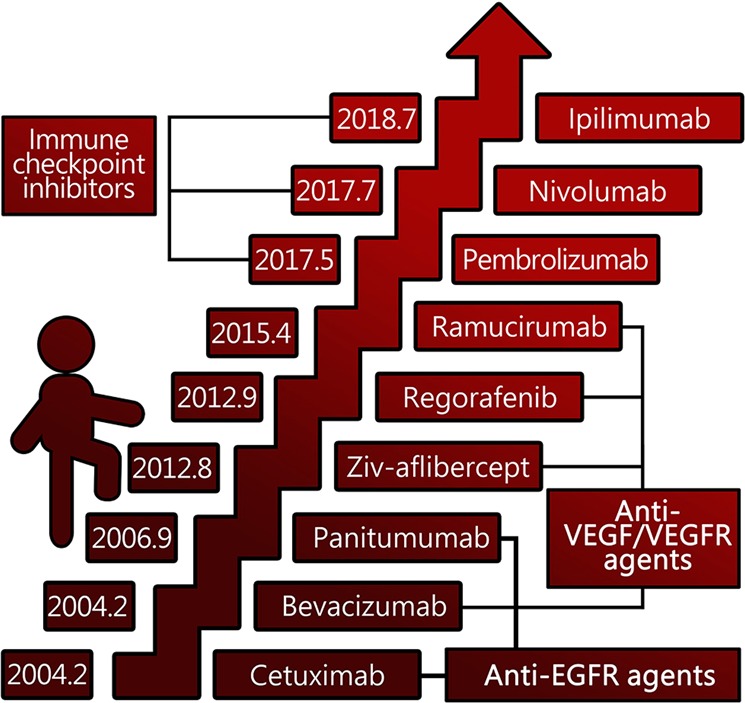
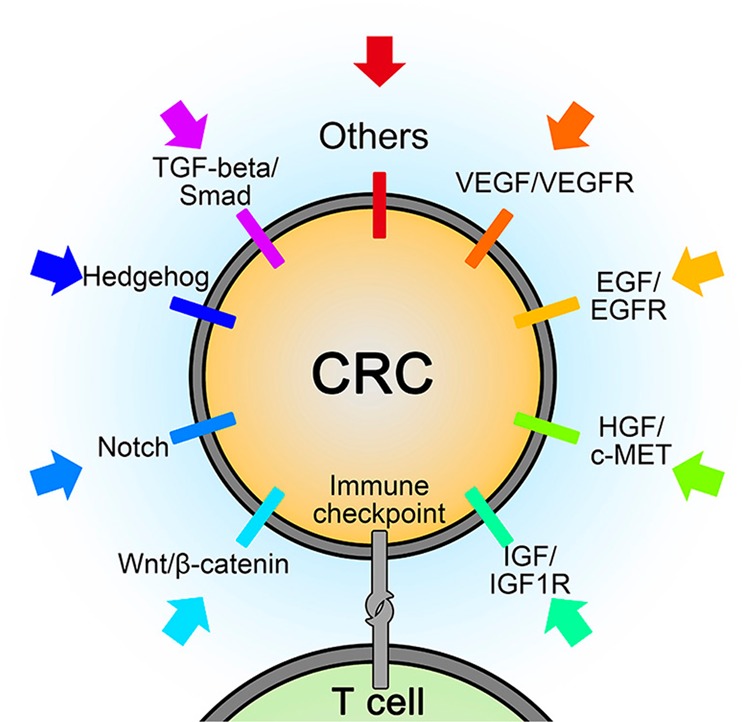
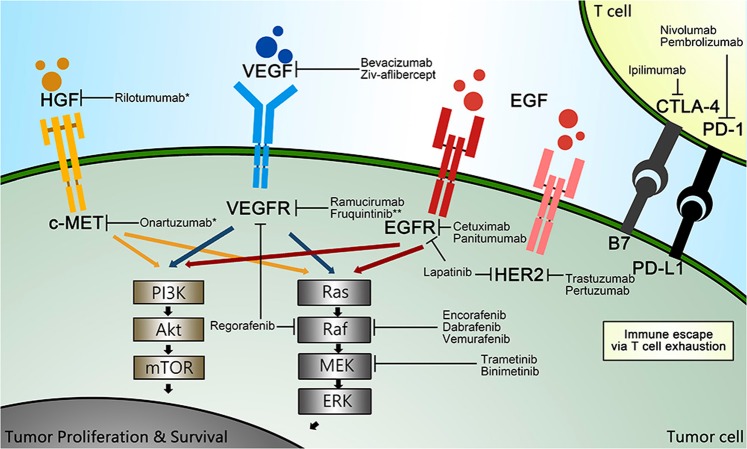
Colorectal cancer (CRC) is among the most lethal and prevalent malignancies in the world and was responsible for nearly 881,000 cancer-related deaths in 2018. Surgery and chemotherapy have long been the first choices for cancer patients. However, the prognosis of CRC has never been satisfying, especially for patients with metastatic lesions. Targeted therapy is a new optional approach that has successfully prolonged overall survival for CRC patients. Following successes with the anti-EGFR (epidermal growth factor receptor) agent cetuximab and the anti-angiogenesis agent bevacizumab, new agents blocking different critical pathways as well as immune checkpoints are emerging at an unprecedented rate. Guidelines worldwide are currently updating the recommended targeted drugs on the basis of the increasing number of high-quality clinical trials. This review provides an overview of existing CRC-targeted agents and their underlying mechanisms, as well as a discussion of their limitations and future trends.
Overview
The claims and statistics of this paper haven’t been checked yet.
Free: it reads the open-access text and checks the first 5 claims that cite a source we can check. Create a free account to check every claim.
Integrity signals
Registry
Cites
Statistics
Figures
Verification
Claims the paper makes
The claims and statistics of this paper haven’t been checked yet.
Free: it reads the open-access text and checks the first 5 claims that cite a source we can check. Create a free account to check every claim.
Claims other papers make about this one
Each is checked against this paper’s own text: does it say what the citing paper says it does?
The source backs part of the claim, not all of it — or backs it for a different population, condition or comparison.
In the citing paper
“The therapeutic landscape of metastatic colorectal cancer is moving toward biomarker-selected strategies. However, options are limited to agents directed at tumors carrying BRAF V600E mutations and to antibodies against programmed death 1 (PD-1) in patients with high microsatellite instability or mismatch-repair deficiency.13,26,27”
From Adagrasib with or without Cetuximab in Colorectal Cancer with Mutated KRAS G12C (2023) · cites this paper as [13]
Experimental — accuracy not yet measuredThe source backs part of the claim, not all of it — or backs it for a different population, condition or comparison.
In the citing paper
“Current first-line standard of care for KRAS G12C-positive CRC includes 5-FU-based chemotherapy with irinotecan, oxaliplatin and/or capecitabine, but is limited by low tumor-specific selectivity and systemic toxicity21.”
From Divarasib plus cetuximab in KRAS G12C-positive colorectal cancer: a phase 1b trial (2024) · cites this paper as [21]
Experimental — accuracy not yet measuredThe cited source says what the claim attributes to it.
In the citing paper
“Cetuximab is an anti-EGFR monoclonal antibody that is indicated for the treatment of RAS wild-type metastatic colorectal cancer, either as monotherapy or in combination with chemotherapy.13”
From Adagrasib with or without Cetuximab in Colorectal Cancer with Mutated KRAS G12C (2023) · cites this paper as [13]
The check wasn’t confident either way, so it gives no verdict — never disputed.
In the citing paper
“Currently, no therapies that specifically target KRAS G12C protein have been approved for the treatment of colorectal cancer.13,19”
From Adagrasib with or without Cetuximab in Colorectal Cancer with Mutated KRAS G12C (2023) · cites this paper as [13]
Experimental — accuracy not yet measuredIn the citing paper
“ROS-mediated DNA damage induces p53 phosphorylation, which in turn stabilizes p53, indispensable to counter tumorigenic growth and differentiation.68”
Self-check
Percentages, sums and reported differences re-computed from the paper’s own numbers.
The self-check needs the paper’s full text.
Citations
Cites
2 retracted
Lee, Y.-J., Karl, D. L., Maduekwe, U. N., Rothrock, C., Ryeom, S., D'Amore, P. A., & Yoon, S. S. (2010) · Cancer Research · doi:10.1158/0008-5472.can-10-1138 · Cited by 61
RetractedYang, S., Zhang, X., Qu, H., Qu, B., Yin, X., & Zhao, H. (2019) · Cancer Gene Therapy · doi:10.1038/s41417-019-0098-6 · Cited by 16 · cited 1×
“Similarly, an exciting antitumor performance of cabozantinib was observed in research based on CRC xenograft models and cell lines, while the results from CRC-focused clinical trials are awaited.(289,336,337) Merestinib, an inhibitor of MET, AXL (Axl receptor tyrosine kinase), TEK (tunica interna endothelial cell kina…”
BackgroundRetractedBray, F., Ferlay, J., Soerjomataram, I., Siegel, R. L., Torre, L. A., & Jemal, A. (2018) · CA: A Cancer Journal for Clinicians · doi:10.3322/caac.21492 · Cited by 84,109
PD-1 and PD-L1 Immune Checkpoint Blockade to Treat Breast Cancer
Hartkopf, A. D., Taran, F.-A., Wallwiener, M., Walter, C. B., Krämer, B., Grischke, E.-M., & Brucker, S. Y. (2016) · Breast Care · doi:10.1159/000453569 · Cited by 30,845
Siegel, R. L., Miller, K. D., & Jemal, A. (2019) · CA: A Cancer Journal for Clinicians · doi:10.3322/caac.21551 · Cited by 20,160
Adverse Renal Effects of Immune Checkpoint Inhibitors: A Narrative Review
Wanchoo, R., Karam, S., Uppal, N. N., Barta, V. S., Deray, G., Devoe, C., Launay-Vacher, V., Jhaveri, K. D., & on behalf of Cancer and Kidney International Network Workgroup on Immune Checkpoint Inhibitors (2017) · American Journal of Nephrology · doi:10.1159/000455014 · Cited by 15,256
Improved Survival with Ipilimumab in Patients with Metastatic Melanoma
Hodi, F. S., O'Day, S. J., McDermott, D. F., Weber, R. W., Sosman, J. A., Haanen, J. B., Gonzalez, R., Robert, C., Schadendorf, D., Hassel, J. C., et al. (2010) · New England Journal of Medicine · doi:10.1056/nejmoa1003466 · Cited by 15,155
Bevacizumab plus Irinotecan, Fluorouracil, and Leucovorin for Metastatic Colorectal Cancer
Hurwitz, H., Fehrenbacher, L., Novotny, W., Cartwright, T., Hainsworth, J., Heim, W., Berlin, J., Baron, A., Griffing, S., Holmgren, E., et al. (2004) · New England Journal of Medicine · doi:10.1056/nejmoa032691 · Cited by 10,968
Immunity, Inflammation, and Cancer
Grivennikov, S. I., Greten, F. R., & Karin, M. (2010) · Cell · doi:10.1016/j.cell.2010.01.025 · Cited by 10,755
Mutations of the BRAF gene in human cancer
Davies, H., Bignell, G. R., Cox, C., Stephens, P., Edkins, S., Clegg, S., Teague, J., Woffendin, H., Garnett, M. J., Bottomley, W., et al. (2002) · Nature · doi:10.1038/nature00766 · Cited by 10,674
Cited by
Hossain, M. S., Karuniawati, H., Jairoun, A. A., Urbi, Z., Ooi, D. J., John, A., Lim, Y. C., Kibria, K. M. K., Mohiuddin, A. K. M., Ming, L. C., et al. (2022) · Cancers · doi:10.3390/cancers14071732 · Cited by 920
“Because of the increasing effectiveness of treatments such as the anti-EGFR (epidermal growth factor receptor) agent cetuximab and the anti-angiogenesis agent bevacizumab are innovative medications that inhibit numerous immunological pathways checkpoints are being developed at an unprecedented rate [106].”
BackgroundInfluentialSingh, V., Lee, G., Son, H., Koh, H., Kim, E. S., Unno, T., & Shin, J.-H. (2023) · Frontiers in Microbiology · doi:10.3389/fmicb.2022.1103836 · Cited by 705
“Evidence has shown that alterations in the gut microbiota are closely associated with CRC progression (Xie et al., 2020).”
BackgroundMetastatic colorectal cancer: mechanisms and emerging therapeutics
Shin, A. E., Giancotti, F. G., & Rustgi, A. K. (2023) · Trends in Pharmacological Sciences · doi:10.1016/j.tips.2023.01.003 · Cited by 669
Genetic and biological hallmarks of colorectal cancer
Li, J., Ma, X., Chakravarti, D., Shalapour, S., & DePinho, R. A. (2021) · Genes & Development · doi:10.1101/gad.348226.120 · Cited by 573
Adagrasib with or without Cetuximab in Colorectal Cancer with Mutated KRAS G12C
Yaeger, R., Weiss, J., Pelster, M. S., Spira, A. I., Barve, M., Ou, S.-H. I., Leal, T. A., Bekaii-Saab, T. S., Paweletz, C. P., Heavey, G. A., et al. (2023) · New England Journal of Medicine · doi:10.1056/nejmoa2212419 · Cited by 527
Advances in targeted therapy for esophageal cancer
Yang, Y.-M., Hong, P., Xu, W. W., He, Q.-Y., & Li, B. (2020) · Signal Transduction and Targeted Therapy · doi:10.1038/s41392-020-00323-3 · Cited by 508
“This series of signal pathways play a vital role in the process of tumor immunity.(84) Immunotherapy has also been well developed in the treatment of esophageal cancer, such as immune checkpoint inhibitors, which can bind to protein receptors on the surface of T cells or tumor cells to prevent tumor cells from immune…”
BackgroundSiena, S., Di Bartolomeo, M., Raghav, K., Masuishi, T., Loupakis, F., Kawakami, H., Yamaguchi, K., Nishina, T., Fakih, M., Elez, E., et al. (2021) · The Lancet Oncology · doi:10.1016/s1470-2045(21)00086-3 · Cited by 422
Molecular Mechanisms of Colon Cancer Progression and Metastasis: Recent Insights and Advancements
Malki, A., ElRuz, R. A., Gupta, I., Allouch, A., Vranic, S., & Al Moustafa, A.-E. (2020) · International Journal of Molecular Sciences · doi:10.3390/ijms22010130 · Cited by 398
“Other plausible candidate PD-1/PD-L1 inhibitors (atezolizumab, avelumab, and durvalumab) are under phase I trials for several tumors including CRC [198].”
BackgroundAbuzeid, H. M., Julien, C. M., Zhu, L., & Hashem, A. M. (2023) · Crystals · doi:10.3390/cryst13111576 · Cited by 344
Dasari, A., Lonardi, S., Garcia-Carbonero, R., Elez, E., Yoshino, T., Sobrero, A., Yao, J., García-Alfonso, P., Kocsis, J., Cubillo Gracian, A., et al. (2023) · The Lancet · doi:10.1016/s0140-6736(23)00772-9 · Cited by 368
Zhong, X., He, X., Wang, Y., Hu, Z., Huang, H., Zhao, S., Wei, P., & Li, D. (2022) · Journal of Hematology & Oncology · doi:10.1186/s13045-022-01358-5 · Cited by 329
Therapeutic advances of targeting receptor tyrosine kinases in cancer
Tomuleasa, C., Tigu, A.-B., Munteanu, R., Moldovan, C.-S., Kegyes, D., Onaciu, A., Gulei, D., Ghiaur, G., Einsele, H., & Croce, C. M. (2024) · Signal Transduction and Targeted Therapy · doi:10.1038/s41392-024-01899-w · Cited by 260
Current and emerging therapeutic approaches for colorectal cancer: A comprehensive review
Kumar, A., Gautam, V., Sandhu, A., Rawat, K., Sharma, A., & Saha, L. (2023) · World Journal of Gastrointestinal Surgery · doi:10.4240/wjgs.v15.i4.495 · Cited by 272
Emerging trends in colorectal cancer: Dysregulated signaling pathways (Review)
Ahmad, R., Singh, J., Wunnava, A., Al‑Obeed, O., Abdulla, M., & Srivastava, S. (2021) · International Journal of Molecular Medicine · doi:10.3892/ijmm.2021.4847 · Cited by 189
Biomarkers in Colorectal Cancer: Current Research and Future Prospects
Ogunwobi, O. O., Mahmood, F., & Akingboye, A. (2020) · International Journal of Molecular Sciences · doi:10.3390/ijms21155311 · Cited by 250
The Role of EREG/EGFR Pathway in Tumor Progression
Cheng, W.-L., Feng, P.-H., Lee, K.-Y., Chen, K.-Y., Sun, W.-L., Van Hiep, N., Luo, C.-S., & Wu, S.-M. (2021) · International Journal of Molecular Sciences · doi:10.3390/ijms222312828 · Cited by 239
Overview of current targeted therapy in gallbladder cancer
Song, X., Hu, Y., Li, Y., Shao, R., Liu, F., & Liu, Y. (2020) · Signal Transduction and Targeted Therapy · doi:10.1038/s41392-020-00324-2 · Cited by 202
Application of Green Gold Nanoparticles in Cancer Therapy and Diagnosis
Sargazi, S., Laraib, U., Er, S., Rahdar, A., Hassanisaadi, M., Zafar, M. N., Díez-Pascual, A. M., & Bilal, M. (2022) · Nanomaterials · doi:10.3390/nano12071102 · Cited by 191
“Surgical techniques and chemotherapy have been the initial treatment choices for cancer patients [10].”
BackgroundPI3K/Akt/mTOR Signaling Pathway as a Target for Colorectal Cancer Treatment
Leiphrakpam, P., & Are, C. (2024) · International Journal of Molecular Sciences · doi:10.3390/ijms25063178 · Cited by 193
“In particular, acquired therapeutic resistance to anti-EGFR monoclonal antibody treatment in patients with mCRC has been attributed to the various tumor-promoting mutations in rat sarcoma ( KRAS ), v-raf murine sarcoma viral oncogene homolog B1 ( BRAF ), and phosphatidylinositol 3-kinase catalytic…”
BackgroundHu, Q., Wei, W., Wu, D., Huang, F., Li, M., Li, W., Yin, J., Peng, Y., Lu, Y., Zhao, Q., et al. (2022) · Frontiers in Cell and Developmental Biology · doi:10.3389/fcell.2022.810327 · Cited by 187
“Although immunotherapy and molecular-targeted therapy are developing, chemotherapy is still a critical and conventional treatment for CRC (Benson et al., 2018; Parseghian et al., 2019; Xie et al., 2020).”
BackgroundRecent Advances in Oligonucleotide Therapeutics in Oncology
Xiong, H., Veedu, R. N., & Diermeier, S. D. (2021) · International Journal of Molecular Sciences · doi:10.3390/ijms22073295 · Cited by 189
“Many targeted drugs such as anti-EGFR agents and anti-VEGF/VEGFR agents have been approved for cancer treatments, but limitations include rapidly developing resistance and serious adverse effects [14,15].”
BackgroundWang, S., Gao, S., Zeng, Y., Zhu, L., Mo, Y., Wong, C. C., Bao, Y., Su, P., Zhai, J., Wang, L., et al. (2022) · Gastroenterology · doi:10.1053/j.gastro.2021.12.269 · Cited by 185
Yoshino, T., Di Bartolomeo, M., Raghav, K., Masuishi, T., Loupakis, F., Kawakami, H., Yamaguchi, K., Nishina, T., Wainberg, Z., Elez, E., et al. (2023) · Nature Communications · doi:10.1038/s41467-023-38032-4 · Cited by 178
Targeted Delivery of Drugs and Genes Using Polymer Nanocarriers for Cancer Therapy
Xia, W., Tao, Z., Zhu, B., Zhang, W., Liu, C., Chen, S., & Song, M. (2021) · International Journal of Molecular Sciences · doi:10.3390/ijms22179118 · Cited by 173
“Further research into the pathogenesis of cancer has led to new treatment options, including targeted therapy [47,48] and immunotherapy [49,50].”
BackgroundAzwar, S., Seow, H. F., Abdullah, M., Faisal Jabar, M., & Mohtarrudin, N. (2021) · Biology · doi:10.3390/biology10090854 · Cited by 173
“To further minimize the risk of disease relapse, targeted therapy with the use of agents such as anti-EGFR cetuximab and anti-angiogenesis bevacizumab may be additionally prescribed for patients in advanced stages [6].”
BackgroundThe Colorectal Cancer Tumor Microenvironment and Its Impact on Liver and Lung Metastasis
Chandra, R., Karalis, J. D., Liu, C., Murimwa, G. Z., Voth Park, J., Heid, C. A., Reznik, S. I., Huang, E., Minna, J. D., & Brekken, R. A. (2021) · Cancers · doi:10.3390/cancers13246206 · Cited by 167
“This underlies the importance of neoadjuvant and adjuvant systemic therapies, as well as continued research into novel therapeutics [17,22].”
BackgroundPrognostic genome and transcriptome signatures in colorectal cancers
Nunes, L., Li, F., Wu, M., Luo, T., Hammarström, K., Torell, E., Ljuslinder, I., Mezheyeuski, A., Edqvist, P.-H., Löfgren-Burström, A., et al. (2024) · Nature · doi:10.1038/s41586-024-07769-3 · Cited by 159
“…RH G AP 5 [ 8 ] A N K RD 40 [ 3 ] F BX W 7 [ 108 ] T AP 2 [ 6 ] R F X 5 [ 6 ] P I G R [ 12 ] H L A − B [ 24 ] H L A − A [ 22 ] C S F 3 [ 3 ] CDH 1 [ 13 ] CD 58 [ 2 ] ZF P 36L2 [ 66 ] T R PS 1 [ 46 ] T C F 12 [ 13 ] T BP [ 8 ] S R EK 1 I P 1 [ 4 ] S I N 3 A [ 19 ] RUN X 1 [ 5 ] R B M 10 [ 27 ] N O…”
InfluentialMulti drug resistance in Colorectal Cancer- approaches to overcome, advancements and future success
Ashique, S., Bhowmick, M., Pal, R., Khatoon, H., Kumar, P., Sharma, H., Garg, A., Kumar, S., & Das, U. (2024) · Advances in Cancer Biology - Metastasis · doi:10.1016/j.adcanc.2024.100114 · Cited by 139
MicroRNAs and Apoptosis in Colorectal Cancer
Wang, H. (2020) · International Journal of Molecular Sciences · doi:10.3390/ijms21155353 · Cited by 159
“Targeted therapy is a new option that has successfully prolonged the overall survival for CRC patients [7].”
BackgroundPromising Therapeutic Strategies for Colorectal Cancer Treatment Based on Nanomaterials
Krasteva, N. A., & Georgieva, M. (2022) · Pharmaceutics · doi:10.3390/pharmaceutics14061213 · Cited by 164
Divarasib plus cetuximab in KRAS G12C-positive colorectal cancer: a phase 1b trial
Desai, J., Alonso, G., Kim, S. H., Cervantes, A., Karasic, T., Medina, L., Shacham-Shmueli, E., Cosman, R., Falcon, A., Gort, E., et al. (2024) · Nature Medicine · doi:10.1038/s41591-023-02696-8 · Cited by 144
“Current first-line standard of care for KRAS G12C -positive CRC includes 5-FU-based chemotherapy with irinotecan, oxaliplatin and/or capecitabine, but is limited by low tumor-specific selectivity and systemic toxicity 21 .”
BackgroundIn vitro anticancer activity of Eclipta alba whole plant extract on colon cancer cell HCT-116
Nelson, V. K., Sahoo, N. K., Sahu, M., Sudhan, H. H., Pullaiah, C. P., & Muralikrishna, K. S. (2020) · BMC Complementary Medicine and Therapies · doi:10.1186/s12906-020-03118-9 · Cited by 150
Rumpold, H. F., Niedersüß‐Beke, D., Heiler, C., Falch, D., Wundsam, H., Metz-Gercek, S., Piringer, G., & Thaler, J. (2020) · BMC Cancer · doi:10.1186/s12885-020-07656-w · Cited by 133
“Along with the advent of these modern markers, systemic treatment options targeting angiogenesis, the epidermal growth factor pathway (EGFR) or the BRAF-pathway have been developed that enable the use of individual treatments [18].”
BackgroundWang, Y., Zhong, X., He, X., Hu, Z., Huang, H., Chen, J., Chen, K., Zhao, S., Wei, P., & Li, D. (2023) · Journal of Experimental & Clinical Cancer Research · doi:10.1186/s13046-023-02729-7 · Cited by 112
Tumorigenic bacteria in colorectal cancer: mechanisms and treatments
Li, S., Liu, J., Zheng, X., Ren, L., Yang, Y., Li, W., Fu, W., Wang, J., & Du, G. (2021) · Cancer Biology and Medicine · doi:10.20892/j.issn.2095-3941.2020.0651 · Cited by 147
Perineural invasion in colorectal cancer: mechanisms of action and clinical relevance
Wang, H., Huo, R., He, K., Li, C., Zhang, S., Yu, M., Zhao, W., Li, H., & Xue, J. (2023) · Cellular Oncology · doi:10.1007/s13402-023-00857-y · Cited by 120
“Despite advances in surgical techniques and adjuvant chemora - diotherapy, the long-term survival rates for CRC patients remain unsatisfactory [ 2, 3 ].”
BackgroundTargeting STAT3 Signaling Pathway in Colorectal Cancer
Gargalionis, A. N., Papavassiliou, K. A., & Papavassiliou, A. G. (2021) · Biomedicines · doi:10.3390/biomedicines9081016 · Cited by 128
“Specifically, targeted therapy and immunotherapy have aided in the configuration of more efficient patient selection criteria, regarding CRC treatment options, therefore offering prolonged survival and increased progression-free survival for certain patient groups with distinct molecular characteristics [4].”
BackgroundFerroptosis in colorectal cancer: a future target?
Yan, H. Y., Talty, R., Aladelokun, O. B., Bosenberg, M., & Johnson, C. H. (2023) · British Journal of Cancer · doi:10.1038/s41416-023-02149-6 · Cited by 122
“Present chemotherapies used to treat CRC include (1) bevacizumab, an anti-vascular endothelial growth factor-A (anti-VEGF-A) antibody, (2) aflibercept, a VEGF-A, VEGF-B, and placental growth factor inhibitor, (3) regorafenib, a multikinase inhibitor and (4) cetuximab and panitumumab, antiepidermal growth factor recept…”
BackgroundPicco, G., Cattaneo, C. M., van Vliet, E. J., Crisafulli, G., Rospo, G., Consonni, S., Vieira, S. F., Sánchez-Rodríguez, I., Cancelliere, C., Banerjee, R., et al. (2021) · Cancer Discovery · doi:10.1158/2159-8290.cd-20-1508 · Cited by 124
“Molecularly targeted therapies and chemotherapy agents are used to treat patients with dMMR CRC. Tumor evolution and resistance are major causes of treatment failure and mortality in CRC patients (3,4).”
Menyhárt, O., Fekete, J. T., & Győrffy, B. (2024) · International Journal of Molecular Sciences · doi:10.3390/ijms25158441 · Cited by 134
“…5-FU/LV combined with oxaliplatin (FOLFOX), irinotecan (FOLFIRI), or both (FOLFOXIRI) significantly improves survival in the metastatic setting, and numerous clinical trials are investigating the neoadjuvant efficacy of various approaches, including systemic, immune, and targeted therapies [11,12].”
BackgroundEGFR-Based Targeted Therapy for Colorectal Cancer—Promises and Challenges
Janani, B., Vijayakumar, M., Priya, K., Kim, J. H., Prabakaran, D. S., Shahid, M., Al-Ghamdi, S. H., Alsaidan, M. S., Bahakim, N. O., Abdelzaher, M. H., et al. (2022) · Vaccines · doi:10.3390/vaccines10040499 · Cited by 126
“It was responsible for almost 881,000 deaths from cancer [1].”
BackgroundZhou, X., Han, J., Zuo, A., Ba, Y., Liu, S., Xu, H., Zhang, Y., Weng, S., Zhou, Z., Liu, L., et al. (2024) · Molecular Cancer · doi:10.1186/s12943-024-02180-y · Cited by 127
Self-citationMyeloid-Derived Suppressor Cells in Colorectal Cancer
Siemińska, I., & Baran, J. (2020) · Frontiers in Immunology · doi:10.3389/fimmu.2020.01526 · Cited by 125
Emerging agents that target signaling pathways to eradicate colorectal cancer stem cells
Silva, V. R., Santos, L. D. S., Dias, R. B., Quadros, C. A., & Bezerra, D. P. (2021) · 癌症:英文版 · doi:10.1002/cac2.12235 · Cited by 111
“Email: danielpbezerra@gmail.com; daniel.bezerra@fiocruz.br Abbreviations: 4-AAQB, 4-acetyl-antroquinonol B; 5-FU, 5-fluorouracil; ABCG2, ATP binding cassette subfamily G member 2; ABL, ABL proto-oncogene 1, non-receptor tyrosine kinase; AC, adenylyl cyclase; AF2, activation function 2; ALDH1, aldehyde dehydrogenase 1;…”
BackgroundChen, J., Sun, H.-W., Yang, Y., Chen, H., Yu, X.-J., Wu, W., Xu, Y.-T., Jin, L.-L., Wu, X., Xu, J., et al. (2021) · Signal Transduction and Targeted Therapy · doi:10.1038/s41392-020-00377-3 · Cited by 115
Advances in Biomimetic Nanoparticles for Targeted Cancer Therapy and Diagnosis
Beh, C. Y., Prajnamitra, R. P., Chen, L.-L., & Hsieh, P. C. H. (2021) · Molecules · doi:10.3390/molecules26165052 · Cited by 119
“Several anti-EGFR monoclonal antibodies have been developed and approved by the Food and Drug Administration such as cetuximab, panitumumab and bevacizumab, among others, for the purpose of targeted therapy [67,69,70].”
BackgroundNanotechnology in Colorectal Cancer for Precision Diagnosis and Therapy
Brar, B., Ranjan, K., Palria, A., Kumar, R., Ghosh, M., Sihag, S., & Minakshi, P. (2021) · Frontiers in Nanotechnology · doi:10.3389/fnano.2021.699266 · Cited by 117
Ferreira, A., Pereira, F., Reis, C., Oliveira, M., Sousa, M. J., & Preto, A. (2022) · Cells · doi:10.3390/cells11142183 · Cited by 100
Zhao, G., Wang, Q., Zhang, Y., Gu, R. C., Liu, M., Li, Q., Zhang, J., Yuan, H., Feng, T., Ou, D., et al. (2023) · Cell Death and Disease · doi:10.1038/s41419-022-05508-y · Cited by 115
“Advances in surgical techniques and innovative targeted therapeutic combinations over the past two decades have effectively prolonged the median survival of patients with metastatic CRC [3, 4].”
BackgroundKGANCDA: predicting circRNA-disease associations based on knowledge graph attention network
Lan, W., Dong, Y., Chen, Q., Zheng, R., Liu, J., Pan, Y. F., & Chen, Y. P. (2021) · Briefings in Bioinformatics · doi:10.1093/bib/bbab494 · Cited by 112
Self-citationAhmed, M. B., Islam, S. U., Alghamdi, A. A. A., Kamran, M., Ahsan, H., & Lee, Y. S. (2022) · International Journal of Molecular Sciences · doi:10.3390/ijms232415765 · Cited by 111
Li, J., Zhang, A., Wu, F., & Wang, X. (2022) · Frontiers in Oncology · doi:10.3389/fonc.2022.841552 · Cited by 113
“Cytotoxic chemotherapeutics, which work by destroying rapidly reproducing cancer cells, are still oneof themostpreferred techniques for treatingvarious tumors (154).”
BackgroundFeng, J., Hu, Z., Xia, X., Liu, X., Lian, Z., Wang, H., Wang, L., Wang, C., Zhang, X., & Pang, X. (2023) · Oncogene · doi:10.1038/s41388-023-02676-9 · Cited by 95
“EGFR inhibition sensitizes MRTX1133 treatment in vitro Given that KRAS inhibition reactivated EGFR/wild-type RAS signaling, we sought to test whether the current EGFR-specific monoclonal antibodies (cetuximab and panitumumab) [6] or kinase inhibitors (gefitinib) [42] were capable of eliminating reactivated RAS effecto…”
BackgroundTumor Microenvironment Shapes Colorectal Cancer Progression, Metastasis, and Treatment Responses
Li, J., Chen, D., & Shen, M. (2022) · Frontiers in Medicine · doi:10.3389/fmed.2022.869010 · Cited by 132
“Encouraged by these pre-clinical findings, a few clinical trials on manipulating gut microbiota in CRC patients are ongoing (123).”
BackgroundNano-enabled colorectal cancer therapy
Pan, Q., Xi, F., Xie, L. W., Wu, D., Liu, R., Gao, W., Luo, K., He, B., & Pu, Y. (2023) · Journal of Controlled Release · doi:10.1016/j.jconrel.2023.09.014 · Cited by 95
Qian, C., Liu, C., Liu, W., Zhou, R., & Zhao, L. (2023) · Frontiers in Immunology · doi:10.3389/fimmu.2023.1291530 · Cited by 103
Lv, Q., Zhang, Y., Gao, W., Wang, J., Hu, Y., Yang, H., Xie, Y., Lv, Y., Zhang, H., Wu, D., et al. (2024) · Pharmacological Research · doi:10.1016/j.phrs.2024.107126 · Cited by 110
Self-citationNarayana, S., Gowda, B. H. J., Hani, U., Shimu, S. S., Paul, K., Das, A., Ashique, S., Ahmed, M. G., Tarighat, M. A., & Abdi, G. (2024) · Journal of Nanobiotechnology · doi:10.1186/s12951-024-02701-3 · Cited by 94
“Although chemotherapy presents a notable reduction in treatment expenses, its efficacy is significantly compromised by factors such as tumor resistance, poor solubility, and permeability, limited bioavailability, lack of target specificity, and associated severe side effects [11].”
BackgroundPerillo, F., Amoroso, C., Strati, F., Giuffrè, M. R., Díaz‐Basabe, A., Lattanzi, G., & Facciotti, F. (2020) · International Journal of Molecular Sciences · doi:10.3390/ijms21155389 · Cited by 93
Filip, S., Vymetalkova, V. P., Petera, J., Vodičková, Ľ., Kubeček, O., John, S., Čečka, F., Krupova, M., Manethová, M., Červená, K., et al. (2020) · International Journal of Molecular Sciences · doi:10.3390/ijms21155255 · Cited by 98
“The monoclonal antibody (mAb) against vascular endothelial growth factor (VEGF) bevacizumab, VEGF-trap aflibercept and mAbs against epidermal growth factor receptor (EGFR) cetuximab and panitumumab represent the widely used targeted agents combined with the first- or second-line chemotherapy [100].”
BackgroundImmunotherapy and immunoevasion of colorectal cancer
Zein, M. A., Boukhdoud, M., Shammaa, H., Mouslem, H., Ayoubi, L. M. E., Iratni, R., Issa, K., Khachab, M. Y., Assi, H. I., Sahebkar, A., et al. (2023) · Drug Discovery Today · doi:10.1016/j.drudis.2023.103669 · Cited by 94
New Insights Into the Anticancer Effects of p -Coumaric Acid: Focus on Colorectal Cancer
Tehami, W., Nani, A., Khan, N. A., & Hichami, A. (2023) · Dose-Response · doi:10.1177/15593258221150704 · Cited by 95
Yang, Y., Yuan, H., Zhao, L., Guo, S., Hu, S., Tian, M., Nie, Y., Yu, J., Zhou, C., Niu, J., et al. (2022) · Cell Death & Differentiation · doi:10.1038/s41418-022-01007-x · Cited by 81
“Chemotherapy based on 5-fluorouracil (5FU) is the main treatment for CRC [2].”
BackgroundSignaling pathways in liver cancer: pathogenesis and targeted therapy
Xue, Y., Ruan, Y., Wang, Y., Xiao, P., & Xu, J. (2024) · Molecular Biomedicine · doi:10.1186/s43556-024-00184-0 · Cited by 98
Molecular Network of Colorectal Cancer and Current Therapeutic Options
Huang, Z., & Yang, M. (2022) · Frontiers in Oncology · doi:10.3389/fonc.2022.852927 · Cited by 97
“There are also several novel MET antibodies, like ABT-700 and Emibetuzumab, that have been used in clinical trials (121).”
BackgroundHuang, P., Ji, F., Cheung, A. H. K., Fu, K., Zhou, Q., Ding, X. Q., Chen, D., Lin, Y., Wang, L., Jiao, Y., et al. (2024) · Cell Host & Microbe · doi:10.1016/j.chom.2024.07.001 · Cited by 91
Ferroptosis: A Double-Edged Sword in Gastrointestinal Disease
Xu, C., Liu, Z., & Xiao, J. (2021) · International Journal of Molecular Sciences · doi:10.3390/ijms222212403 · Cited by 82
Hassan, M. A., Basha, A. A., Eraky, M. T., Abbas, E., & El‐Samad, L. M. (2024) · International Journal of Pharmaceutics · doi:10.1016/j.ijpharm.2024.124494 · Cited by 81
Green Metallic Nanoparticles for Cancer Therapy: Evaluation Models and Cancer Applications
Tinajero‐Díaz, E., Leza, D. S., González, C., Martínez‐Velázquez, M., López, Z., Madrigal, J. B., Knauth, P., Hernández, F., Herrera-Rodríguez, S. E., Navarro, R. E., et al. (2021) · Pharmaceutics · doi:10.3390/pharmaceutics13101719 · Cited by 84
Nanotechnology for colorectal cancer detection and treatment
Gogoi, P., Kaur, G., & Singh, N. K. (2022) · World Journal of Gastroenterology · doi:10.3748/wjg.v28.i46.6497 · Cited by 82
A metabolic perspective of the neutrophil life cycle: new avenues in immunometabolism
Thind, M. K., Uhlig, H. H., Glogauer, M., Palaniyar, N., Bourdon, C., Gwela, A., Lancioni, C., Berkley, J. A., Bandsma, R., & Farooqui, A. (2024) · Frontiers in Immunology · doi:10.3389/fimmu.2023.1334205 · Cited by 95
Wnt/β-catenin signaling in colorectal cancer: Is therapeutic targeting even possible?
Disoma, C., Zhou, Y., Li, S., Peng, J., & Xia, Z. (2022) · Biochimie · doi:10.1016/j.biochi.2022.01.009 · Cited by 92
Antibody variable region engineering for improving cancer immunotherapy
Lou, H., & Cao, X. (2022) · 癌症:英文版 · doi:10.1002/cac2.12330 · Cited by 80
“EGFR is considered one of themain antigens for therapeutic intervention of cancer as it is overexpressed in various epithelial cell tumors, including breast cancer, non-small cell lung cancer (NSCLC) and colorectal cancer (CRC), and is associated with poor prognosis [48].”
BackgroundKRAS as a Modulator of the Inflammatory Tumor Microenvironment: Therapeutic Implications
Pereira, F. D. S., Ferreira, A. I., Reis, C. A., Sousa, M. J., Oliveira, M. J., & Preto, A. (2022) · Cells · doi:10.3390/cells11030398 · Cited by 86
“In addition, Nivolumab, another PD-1 blocking antibody, was also FDA approved for MMR and MSI-H metastatic CRC treatment [65].”
BackgroundResultGinghină, O., Hudiță, A., Zamfir, M., Spânu, A., Mardare, M., Bondoc, I., Buburuzan, L., Georgescu, S. E., Costache, M., Negrei, C., et al. (2022) · Frontiers in Oncology · doi:10.3389/fonc.2022.856575 · Cited by 80
Role of Nanotechnology in Overcoming the Multidrug Resistance in Cancer Therapy: A Review
Mir, S. A., Hamid, L., Bader, G. N., Shoaib, A., Rahamathulla, M., Alshahrani, M. Y., Alam, P., & Shakeel, F. (2022) · Molecules · doi:10.3390/molecules27196608 · Cited by 78
“Precision therapy has greatly advanced thanks to the development of targeted therapy, but there are still numerous unavoidable side effects, and drug resistance has long been an issue [6].”
BackgroundYin, H., Xie, J., Xing, S., Lu, X., Yu, Y., Ren, Y., Tao, J., He, G., Zhang, L., Yuan, X., et al. (2024) · Cell Reports Medicine · doi:10.1016/j.xcrm.2024.101689 · Cited by 85
“17 Non-invasive approaches with accurate and repeatable characteristic are in high demand for early detection to improve patient outcome.”
Gomes, S., Rodrigues, A., Pazienza, V., & Preto, A. (2023) · International Journal of Molecular Sciences · doi:10.3390/ijms24065069 · Cited by 83
“Considering all the available chemotherapeutic drugs, the combined therapy regimens FOLFOX (5-FU+OX), FOLFIRI (5-FU+IRI), XELOX or CAPOX (CAP+OX), and CAPIRI (CAP+IRI) constitute the mainstream approaches in first-line treatment [6].”
BackgroundInfluential(2023) · doi:10.1016/j.mtbio.2023.100612 · Cited by 71
Liu, X., Yan, C., Chang, C., Meng, F., Shen, W., Wang, S., & Zhang, Y. (2023) · Advanced Science · doi:10.1002/advs.202304521 · Cited by 83
Pun, N. T., & Jeong, C. (2021) · Pharmaceuticals · doi:10.3390/ph14050470 · Cited by 82
“Cancer resistance, which is characterized by tumor relapse or spread, remains a major challenge in clinical oncology; its occurrence is attributed to unsuccessful adaptation and evaluation of the treatment modality [3,5].”
BackgroundDe, S., Paul, S., Manna, A., Majumder, C., Pal, K., Casarcia, N., Mondal, A., Banerjee, S., Nelson, V. K., Ghosh, S., et al. (2023) · Cancers · doi:10.3390/cancers15030993 · Cited by 76
Artificial intelligence-based biomarkers for treatment decisions in oncology
Ligero, M., Nahhas, O. S. M. E., Aldea, M. D., & Kather, J. N. (2025) · Trends in cancer · doi:10.1016/j.trecan.2024.12.001 · Cited by 84
Ribosome Biogenesis Alterations in Colorectal Cancer
Nait-Slimane, S., Marcel, V., Fenouil, T., Catez, F., Saurin, J., Bouvet, P., Diaz, J., & Mertani, H. C. (2020) · Cells · doi:10.3390/cells9112361 · Cited by 85
“Targeted therapies with relative efficacy are also used to treat CRC tumors with specific molecular alterations [15].”
BackgroundPrecision medicine: Ray of hope in overcoming cancer multidrug resistance
Musyuni, P., Bai, J., Sheikh, A., Vasanthan, K. S., Jain, G. K., Abourehab, M. A. S., Lather, V., Aggarwal, G., Kesharwani, P., & Pandita, D. (2022) · Drug Resistance Updates · doi:10.1016/j.drup.2022.100889 · Cited by 70
Research progress on natural β-glucan in intestinal diseases
Han, X., Luo, R., Ye, N., Hu, Y., Fu, C., Gao, R., Fu, S., & Gao, F. (2022) · International Journal of Biological Macromolecules · doi:10.1016/j.ijbiomac.2022.08.173 · Cited by 71
Bitar, S. A., El-Sabban, M. E., Doughan, S., & Abou-Kheir, W. G. (2023) · World Journal of Gastroenterology · doi:10.3748/wjg.v29.i9.1395 · Cited by 74
Chu, Y., Cheng, L.-C., Lim, S., Lai, M., Yeh, C., & Lin, W. (2023) · Cell Death and Disease · doi:10.1038/s41419-023-06187-z · Cited by 75
“To address these challenges, combination therapies may be employed alone or in conjunction with surgery to shrink tumors and prevent relapse or metastasis in early-stage patients [2].”
Angiogenesis-Related Functions of Wnt Signaling in Colorectal Carcinogenesis
Kasprzak, A. (2020) · Cancers · doi:10.3390/cancers12123601 · Cited by 67
“The basic drawbacks of anti-angiogenic and anti-Wnt signaling targeted therapies have been presented in several reviews [54,165].”
BackgroundInfluentialInflammatory bowel disease, colitis, and cancer: unmasking the chronic inflammation link
Khaze, V., Noorolyai, S., Youshanlui, M. A., Hossein, S., Nasiri, H., Mansoori, B., Holmskov, U., & Baradaran, B. (2024) · International Journal of Colorectal Disease · doi:10.1007/s00384-024-04748-y · Cited by 76
Immunotherapy in microsatellite-stable colorectal cancer: Strategies to overcome resistance
Chen, E., & Zhou, W. (2025) · Critical Reviews in Oncology/Hematology · doi:10.1016/j.critrevonc.2025.104775 · Cited by 74
Stopfer, L. E., Flower, C. T., Gajadhar, A. S., Patel, B., Gallien, S., Lopez-Ferrer, D., & White, F. M. (2021) · Cancer Research · doi:10.1158/0008-5472.can-20-3804 · Cited by 66
“These sites include EGFR and T cell signaling pathway peptides, as EGFR inhibitors and immune checkpoint blockade (ICB) are two common therapies within CRC and other cancer types (26, 27).”
BackgroundStrategies for the Improvement of Metal-Based Chemotherapeutic Treatments
Cirri, D., Bartoli, F., Pratesi, A., Baglini, E., Barresi, E., & Marzo, T. (2021) · Biomedicines · doi:10.3390/biomedicines9050504 · Cited by 71
“Overall, attention is now being also directed to combined target therapy, allowing the selective inhibition of critical pathways [73].”
BackgroundImmunotherapy for Colorectal Cancer: Mechanisms and Predictive Biomarkers
Carlsen, L., Huntington, K. E., & El‐Deiry, W. S. (2022) · Cancers · doi:10.3390/cancers14041028 · Cited by 74
“IT is a promising candidate for treatment of mCRC, especially for patients with MSI-H tumors [2].”
BackgroundResultInfluentialTailoring renal-clearable zwitterionic cyclodextrin for colorectal cancer-selective drug delivery
Baek, M., Nguyen, D.-T., Kim, D., Yoo, S., Lee, J., Lee, J., & Kim, D. (2023) · Nature Nanotechnology · doi:10.1038/s41565-023-01381-8 · Cited by 69
Mishra, S., das, K., Chatterjee, S., Sahoo, P., Kundu, S., Pal, M., Bhaumik, A., & Ghosh, C. K. (2023) · ACS Omega · doi:10.1021/acsomega.2c04964 · Cited by 65
Artificial Intelligence in Colorectal Cancer Surgery: Present and Future Perspectives
Quero, G., Mascagni, P., Kolbinger, F. R., Fiorillo, C., Sio, D. D., Longo, F., Schena, C. A., Laterza, V., Rosa, F., Menghi, R., et al. (2022) · Cancers · doi:10.3390/cancers14153803 · Cited by 70
“…novel diagnostic and pharmacological multimodal approaches significantly improved the quality of CRC screening, diagnosis, and perioperative care [5], several challenges remain to be overcome in the surgical treatment of CRC. Surgery currently represents the gold standard of treatment of CRC,…”
New Approaches in Oncology for Repositioning Drugs: The Case of PDE5 Inhibitor Sildenafil
Cruz-Burgos, M., Losada-García, A., Cruz-Hernández, C. D., Cortés-Ramírez, S. A., Camacho‐Arroyo, I., González-Covarrubias, V., Morales-Pacheco, M., Trujillo-Bornios, S. I., & Rodríguez‐Dorantes, M. (2021) · Frontiers in Oncology · doi:10.3389/fonc.2021.627229 · Cited by 71
“Nonetheless, this surgical procedure has a high mortality rate and it is of vital importance to develop effective therapeutic strategies for the CRC treatment to ensure a positive prognosis (69, 70).”
BackgroundPrognostic and Predictive Molecular Biomarkers in Advanced Colorectal Cancer
Martelli, V., Pastorino, A., & Sobrero, A. F. (2022) · Pharmacology & Therapeutics · doi:10.1016/j.pharmthera.2022.108239 · Cited by 73
Cancer stem cells in colorectal cancer and the association with chemotherapy resistance
Lei, X., He, Q., Li, Z., Zou, Q., Xu, P., Yu, H., Ding, Y., & Zhu, W. (2021) · Medical Oncology · doi:10.1007/s12032-021-01488-9 · Cited by 71
Metadata
- Authors
- Xie, Y.-H., Chen, Y.-X., & Fang, J.-Y.
- Affiliations
- Shanghai Jiao Tong University (CN)
- Corresponding author
- Fang, Jing-Yuan
- ORCID
- Fang, Jing-Yuan
- Venue
- Signal Transduction and Targeted Therapy
- Published
- 2020-03-20
- Volume
- 5
- Issue
- 1
- Pages
- 22-22
- ISSN
- 2059-3635 (ISSN-L)
- PMC
- PMC7082344
- OpenAlex
- W3011481749
- Semantic Scholar
- 4980bbd78186d8dcd72cea78c224da6b545d763a
- Cited by
- 1,687
- References
- 521
- Citations by year
- 2026: 153 · 2025: 285 · 2024: 348 · 2023: 346 · 2022: 300 · 2021: 202 · 2020: 51
- FWCI
- 24.09
- Type
- journal article
- Language
- en
- Open access
- gold
- doi.org
- Licence
- cc-by
- creativecommons.org/licenses/by/4.0 (tdm)
- creativecommons.org/licenses/by/4.0 (vor)
- Locations
- Signal Transduction and Targeted Therapy (publishedVersion, cc-by)
- PubMed Central (publishedVersion, cc-by)
- PubMed (publishedVersion)
- Funders
- National Natural Science Foundation of China (81421001, 81530072)
- Topics
- Health Sciences › Medicine › Oncology › Colorectal Cancer Treatments and Studies
- Health Sciences › Medicine › Oncology › Colorectal Cancer Surgical Treatments
- Health Sciences › Medicine › Oncology › Pancreatic and Hepatic Oncology Research
- Keywords
- colorectal cancer, targeted therapy, metastatic colorectal cancer, anti-EGFR therapy, cetuximab, bevacizumab, angiogenesis inhibitors, immune checkpoint inhibitors, molecular pathways, drug mechanisms, treatment guidelines
- MeSH terms
- Bevacizumab, Cetuximab, Humans, Neoplasm Metastasis, Neovascularization, Pathologic, Colorectal Neoplasms, Molecular Targeted Therapy, ErbB Receptors
About these checks
Registry, retraction, Cites and statistics results are computed, not judged, with one exception: a printed reference that no index lists is read once by a model before it counts as a citation error. Claims are extracted by a model and kept only when their quote appears verbatim in the text; each cited source is then checked, with a model’s help, for whether it says what the claim relies on. Those verdicts can be wrong — read the claim’s quote and the cited source before relying on one.
Statistics and arithmetic are recomputed, not judged.
Confidence bands are shown only for fields calibrated on our annotated test set. None is calibrated yet, so no band is shown.
What counts as a claim ›How we measure confidence ›How we check this ›
Are you an author, or do you see a problem with this page? Request a review
Data sources
Bibliographic data: Semantic Scholar, OpenAlex, Crossref.
Contains information from the Semantic Scholar Academic Graph Datasets, made available under the ODC Attribution License (ODC-BY 1.0).
Semantic Scholar’s data is described in: Kinney, R., et al. (2023). The Semantic Scholar Open Data Platform. arXiv:2301.10140.
