

Antibody drug conjugate: the “biological missile” for targeted cancer therapy
Open accessThe DOI matches its Crossref record; 275 of the 275 references it cites were found in a registry or an index.
Abstract
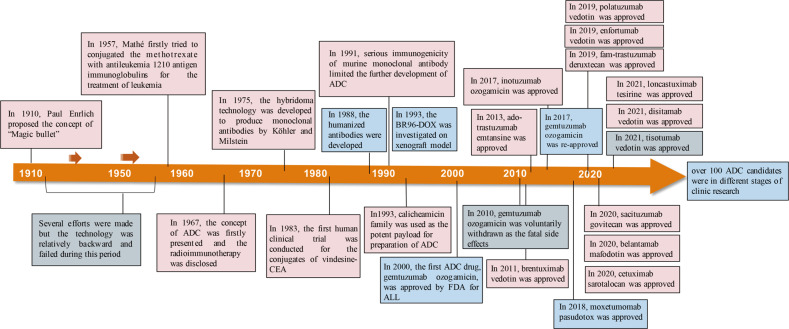
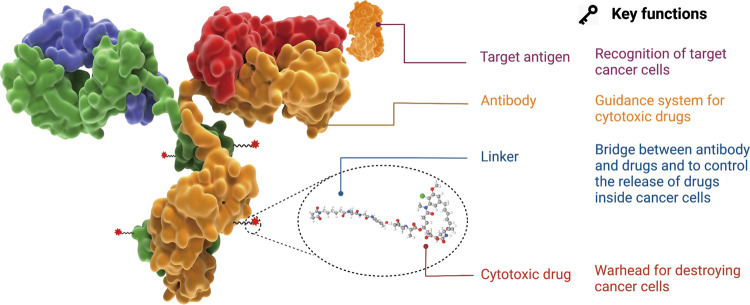
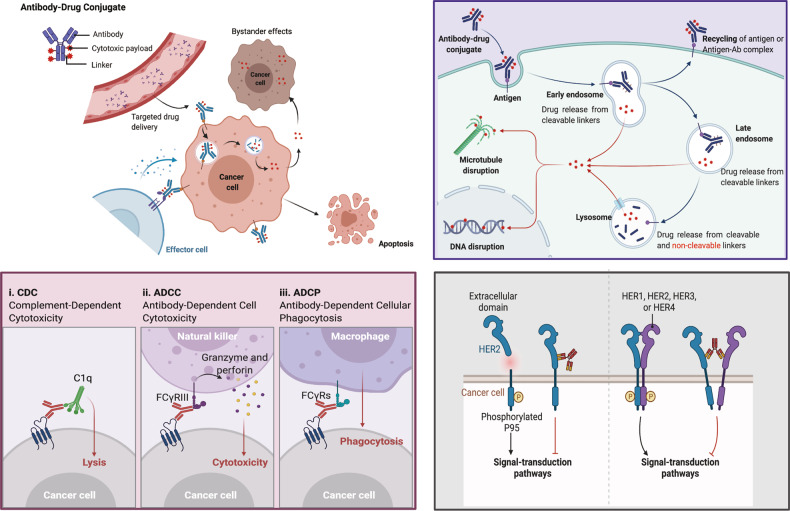
Antibody–drug conjugate (ADC) is typically composed of a monoclonal antibody (mAbs) covalently attached to a cytotoxic drug via a chemical linker. It combines both the advantages of highly specific targeting ability and highly potent killing effect to achieve accurate and efficient elimination of cancer cells, which has become one of the hotspots for the research and development of anticancer drugs. Since the first ADC, Mylotarg ® (gemtuzumab ozogamicin), was approved in 2000 by the US Food and Drug Administration (FDA), there have been 14 ADCs received market approval so far worldwide. Moreover, over 100 ADC candidates have been investigated in clinical stages at present. This kind of new anti-cancer drugs, known as “biological missiles”, is leading a new era of targeted cancer therapy. Herein, we conducted a review of the history and general mechanism of action of ADCs, and then briefly discussed the molecular aspects of key components of ADCs and the mechanisms by which these key factors influence the activities of ADCs. Moreover, we also reviewed the approved ADCs and other promising candidates in phase-3 clinical trials and discuss the current challenges and future perspectives for the development of next generations, which provide insights for the research and development of novel cancer therapeutics using ADCs.
Overview
The claims and statistics of this paper haven’t been checked yet.
Free: it reads the open-access text and checks the first 5 claims that cite a source we can check. Create a free account to check every claim.
Integrity signals
Registry
Cites
Statistics
Figures
Verification
Claims the paper makes
The claims and statistics of this paper haven’t been checked yet.
Free: it reads the open-access text and checks the first 5 claims that cite a source we can check. Create a free account to check every claim.
Claims other papers make about this one
Each is checked against this paper’s own text: does it say what the citing paper says it does?
The source backs part of the claim, not all of it — or backs it for a different population, condition or comparison.
In the citing paper
“However, hydrazone (t1/2 = 24 h) and carbonate (t1/2 = 36 h) linkers both suffer from instability in the plasma, with hydrolysis also occurring at physiological pH and contributing to off-target toxicity due to premature drug release54,58,59.”
From The evolving landscape of antibody-drug conjugates (ADCs) for treatment of prostate cancer (2025) · cites this paper as [54]
Experimental — accuracy not yet measuredThe source backs part of the claim, not all of it — or backs it for a different population, condition or comparison.
In the citing paper
“Enzyme-based linkers are utilized most commonly in ADCs: 8 out of 13 FDA-approved ADCs use a protease-cleavable linker, including the ADCs enfortumab vedotin and trastuzumab deruxtecan that have transformed the standard of care for metastatic urothelial and breast carcinomas54.”
From The evolving landscape of antibody-drug conjugates (ADCs) for treatment of prostate cancer (2025) · cites this paper as [54]
Experimental — accuracy not yet measuredThe source backs part of the claim, not all of it — or backs it for a different population, condition or comparison.
In the citing paper
“Hydrazone, carbonate, and silyl ether linkers are pH-sensitive, hydrolyzed in the acidic pH of lysosomes and endosomes upon target cell internalization54.”
From The evolving landscape of antibody-drug conjugates (ADCs) for treatment of prostate cancer (2025) · cites this paper as [54]
Experimental — accuracy not yet measured
Self-check
Percentages, sums and reported differences re-computed from the paper’s own numbers.
The self-check needs the paper’s full text.
Citations
Cites
Items 201–275 of 275
McGavin, J. K., & Spencer, C. M. (2001) · Drugs · doi:10.2165/00003495-200161090-00007 · Cited by 60
Minor groove binder antibody conjugates employing a water soluble β-glucuronide linker
Jeffrey, S. C., Nguyen, M. T., Moser, R. F., Meyer, D. L., Miyamoto, J. B., & Senter, P. D. (2007) · Bioorganic & Medicinal Chemistry Letters · doi:10.1016/j.bmcl.2007.01.071 · Cited by 59 · cited 1×
“It can be cleaved for payloads release in cells by beta-glucuronidase, the levels of which are often found higher in tumor regions.(50) In contrast, non-cleavable linkers (e.”
BackgroundJain, N., Stock, W., Zeidan, A., Atallah, E., McCloskey, J., Heffner, L., Tomlinson, B., Bhatnagar, B., Feingold, J., Ungar, D., et al. (2020) · Blood Advances · doi:10.1182/bloodadvances.2019000767 · Cited by 56
Pharmacokinetic Considerations for Antibody-Drug Conjugates against Cancer
Malik, P. R. V., Phipps, C. J., Edginton, A. N., & Blay, J. (2017) · Pharmaceutical Research · doi:10.1007/s11095-017-2259-3 · Cited by 52
Hamblett, K. J., Le, T., Rock, B. M., Rock, D. A., Siu, S., Huard, J. N., Conner, K. P., Milburn, R. R., O’Neill, J. W., Tometsko, M. E., et al. (2016) · Molecular Pharmaceutics · doi:10.1021/acs.molpharmaceut.6b00153 · Cited by 50
Bartlett, N. L., Sharman, J. P., Oki, Y., Advani, R. H., Bello, C. M., Winter, J. N., Yang, Y., Kennedy, D. A., & Jacobsen, E. D. (2013) · Blood · doi:10.1182/blood.v122.21.848.848 · Cited by 49
A Brief Introduction to Antibody–Drug Conjugates for Toxicologic Pathologists
Mecklenburg, L. (2018) · Toxicologic Pathology · doi:10.1177/0192623318803059 · Cited by 49
Catalytic Cleavage of Disulfide Bonds in Small Molecules and Linkers of Antibody–Drug Conjugates
Zhang, D., Fourie-O’Donohue, A., Dragovich, P. S., Pillow, T. H., Sadowsky, J., Kozak, K. R., Cass, R. T., Liu, L., Deng, Y., Liu, Y., et al. (2019) · Drug Metabolism and Disposition · doi:10.1124/dmd.118.086132 · Cited by 49
Perrone, E., Manara, P., Lopez, S., Bellone, S., Bonazzoli, E., Manzano, A., Zammataro, L. A., Bianchi, A., Zeybek, B., Buza, N., et al. (2019) · Molecular Oncology · doi:10.1002/1878-0261.12627 · Cited by 49
Protocols for Lysine Conjugation
Brun, M., & Gauzy, L. (2013) · Methods in molecular biology · doi:10.1007/978-1-62703-541-5_10 · Cited by 48
Modulating huntingtin half‐life alters polyglutamine‐dependent aggregate formation and cell toxicity
Kaytor, M. D., Wilkinson, K. D., & Warren, S. T. (2004) · Journal of Neurochemistry · doi:10.1111/j.1471-4159.2004.02376.x · Cited by 48
Monoclonal Antibodies and Antibody Drug Conjugates in Multiple Myeloma
Radocha, J., van de Donk, N. W. C. J., & Weisel, K. C. (2021) · Cancers · doi:10.3390/cancers13071571 · Cited by 48
Moore, K. N., Oza, A. M., Colombo, N., Oaknin, A., Scambia, G., Lorusso, D., Farias‐Eisner, R., Banerjee, S. N., Murphy, C. G., Tanyi, J. L., et al. (2019) · Annals of Oncology · doi:10.1093/annonc/mdz250 · Cited by 47
Shi, F., Su, J., Wang, J., Liu, Z., & Wang, T. (2020) · Molecular and Cellular Biochemistry · doi:10.1007/s11010-020-03967-5 · Cited by 46
Spira, A. I., Lisberg, A. E., Sands, J. M., Greenberg, J., Phillips, P., Guevara, F., Tajima, N., Kawasaki, Y., Gu, J., Kobayashi, F., et al. (2021) · Journal of Thoracic Oncology · doi:10.1016/j.jtho.2021.01.280 · Cited by 46
Synthesis of precision antibody conjugates using proximity-induced chemistry
Cao, Y. J., Yu, C., Wu, K., Wang, X., Liu, D., Tian, Z., Zhao, L., Qi, X., Loredo, A., Chung, A., et al. (2021) · Theranostics · doi:10.7150/thno.62444 · Cited by 46
Preclinical safety profile of disitamab vedotin:a novel anti-HER2 antibody conjugated with MMAE
Jiang, J., Li, S., Shan, X., Wang, L., Ma, J., Huang, M., Dong, L., & Chen, F. (2020) · Toxicology Letters · doi:10.1016/j.toxlet.2019.12.027 · Cited by 45
Self-citationShao, T., Chen, T., Chen, Y., Liu, X., Chen, Y.-L., Wang, Q., Zhu, T., Guo, M., Li, H., Ju, D., et al. (2020) · Signal Transduction and Targeted Therapy · doi:10.1038/s41392-020-00247-y · Cited by 45
Unnatural Amino Acids in Novel Antibody Conjugates
Hallam, T. J., & Smider, V. V. (2014) · Future Medicinal Chemistry · doi:10.4155/fmc.14.79 · Cited by 43
Blackwell, K., Miles, D. W., Gianni, L., Krop, I. E., Welslau, M., Baselga, J. M., Pegram, M. D., Oh, D., Dieras, V. C., Olsen, S. R., et al. (2012) · Journal of Clinical Oncology · doi:10.1200/jco.2012.30.18_suppl.lba1 · Cited by 43
Chen, R. W., Gopal, A. K., Smith, S. E., Ansell, S. M., Rosenblatt, J. D., Savage, K. J. J., Connors, J. M., Engert, A., Larsen, E. K. M., Kennedy, D. A., et al. (2011) · Journal of Clinical Oncology · doi:10.1200/jco.2011.29.15_suppl.8031 · Cited by 41
Gazzah, A., Ricordel, C., Cousin, S., Cho, B. C., Calvo, E., Kim, T. M., Hélissey, C., Kim, J.-S., Vieito, M., Boni, V., et al. (2020) · Journal of Clinical Oncology · doi:10.1200/jco.2020.38.15_suppl.9505 · Cited by 41
Loadman, P. M. (2002) · British Journal of Cancer · doi:10.1038/sj.bjc.6600309 · Cited by 40
Gregson, S. J., Masterson, L. A., Wei, B. Q., Pillow, T. H., Spencer, S. D., Kang, G., Yu, S., Raab, H. E., Lau, J., Li, G., et al. (2017) · Journal of Medicinal Chemistry · doi:10.1021/acs.jmedchem.7b00736 · Cited by 39
FDA new drug approvals in Q2 2019
Urquhart, L. (2019) · Nature Reviews Drug Discovery · doi:10.1038/d41573-019-00121-9 · Cited by 39
Structural Changes and Aggregation Mechanisms of Two Different Dimers of an IgG2 Monoclonal Antibody
Zhang, J., Woods, C., He, F., Han, M., Treuheit, M. J., & Volkin, D. B. (2018) · Biochemistry · doi:10.1021/acs.biochem.8b00575 · Cited by 37
Tolcher, A. W., Carneiro, B. A., Dowlati, A., Razak, A. R. A., Chae, Y. K., Villella, J., Coppola, S., Englert, S., Phillips, A. C., Souers, A. J., et al. (2021) · Journal of Clinical Oncology · doi:10.1200/jco.2021.39.15_suppl.3015 · Cited by 37
Irie, H., Kawabata, R., Fujioka, Y., Nakagawa, F., Itadani, H., Nagase, H., Ito, K., Uchida, J., Ohkubo, S., & Matsuo, K. (2020) · Cancer Science · doi:10.1111/cas.14407 · Cited by 36
Sacituzumab govitecan: an antibody–drug conjugate
Sahota, S., & Vahdat, L. T. (2017) · Expert Opinion on Biological Therapy · doi:10.1080/14712598.2017.1331214 · Cited by 35
Fukunaga, A., Maeta, S., Reema, B., Nakakido, M., & Tsumoto, K. (2018) · Biochemistry and Biophysics Reports · doi:10.1016/j.bbrep.2018.07.005 · Cited by 35
Novel anticancer drugs approved in 2020
Li, J., Wang, R., & Gao, J. (2021) · Drug Discoveries & Therapeutics · doi:10.5582/ddt.2021.01013 · Cited by 34
Buongervino, S. N., Lane, M. V., Garrigan, E., Zhelev, D. V., Dimitrov, D. S., & Bosse, K. R. (2021) · Molecular Cancer Therapeutics · doi:10.1158/1535-7163.mct-20-1034 · Cited by 34
Metz, H. E., Childs, M. M., Brevik, J., Winship, D., Brender, T., Comeau, M. R., Moyes, K. W., Chang, J., Adamo, J., Setter, B., et al. (2020) · Journal of Clinical Oncology · doi:10.1200/jco.2020.38.15_suppl.3110 · Cited by 33
A “Dual” Cell-Level Systems PK-PD Model to Characterize the Bystander Effect of ADC
Singh, A. P., & Shah, D. K. (2019) · Journal of Pharmaceutical Sciences · doi:10.1016/j.xphs.2019.01.034 · Cited by 32
An Overview of the Current ADC Discovery Landscape
Tumey, L. N. (2019) · Methods in molecular biology · doi:10.1007/978-1-4939-9929-3_1 · Cited by 30
Pro, B., Advani, R. H., Brice, P., Bartlett, N. L., Rosenblatt, J. D., Illidge, T., Matous, J., Ramchandren, R., Fanale, M. A., Connors, J. M., et al. (2013) · Blood · doi:10.1182/blood.v122.21.1809.1809 · Cited by 29
Moxetumomab pasudotox for the treatment of hairy cell leukemia
Januś, A., & Robak, T. (2019) · Expert Opinion on Biological Therapy · doi:10.1080/14712598.2019.1614558 · Cited by 29
Peng, Z., Liu, T., Wei, J., Wang, A., He, Y., Yang, L., Zhang, X., Fan, N., Luo, S., Gong, J., et al. (2020) · Journal of Clinical Oncology · doi:10.1200/jco.2020.38.15_suppl.4560 · Cited by 29
Sheng, X., He, Z., Han, W., Zhou, A., Luo, H., Shi, Y., Hu, C.-L., Liu, Z., Guo, H., Yao, X., et al. (2021) · Journal of Clinical Oncology · doi:10.1200/jco.2021.39.15_suppl.4584 · Cited by 29
Tolaney, S. M., Barroso‐Sousa, R., Jiang, Z., Park, Y. H., Rimawi, M. F., Saura, C., Schneeweiß, A., Toi, M., Yu, T., Shetty, J., et al. (2021) · Annals of Oncology · doi:10.1016/j.annonc.2021.08.611 · Cited by 29
Pro, B., Advani, R. H., Brice, P., Bartlett, N. L., Rosenblatt, J. D., Illidge, T., Matouš, J., Ramchandren, R., Fanale, M. A., Connors, J. M., et al. (2011) · Journal of Clinical Oncology · doi:10.1200/jco.2011.29.15_suppl.8032 · Cited by 28
Gillenwater, A. M., Cognetti, D. M., Johnson, J. M., Curry, J., Kochuparambil, S. T., McDonald, D., Fidler, M. J., Stenson, K. M., Vasan, N. R., Razaq, M., et al. (2018) · Journal of Clinical Oncology · doi:10.1200/jco.2018.36.15_suppl.6039 · Cited by 28
Dose-related efficacy and toxicity of gemtuzumab ozogamicin in pediatric acute myeloid leukemia
Parigger, J., Zwaan, C. M., Reinhardt, D., & Kaspers, G. J. L. (2016) · Expert Review of Anticancer Therapy · doi:10.1586/14737140.2016.1129903 · Cited by 27
Cognetti, D. M., Johnson, J. M., Curry, J., Mott, F. E., Kochuparambil, S. T., McDonald, D., Fidler, M. J., Stenson, K. M., Vasan, N. R., Razaq, M., et al. (2019) · Journal of Clinical Oncology · doi:10.1200/jco.2019.37.15_suppl.6014 · Cited by 27
Alley, S. C., Harris, J. R., Cao, A., den Heuvel, E. G.-V., Velayudhan, J., Satijn, D. P. E., Verploegen, S. A. B. W., Dominguez, T., & Breij, E. C. W. (2019) · Cancer Research · doi:10.1158/1538-7445.am2019-221 · Cited by 27
O’Malley, D. M., Oaknin, A., Matulonis, U. A., Mantia-Smaldone, G. M., Lim, P., Castro, C. M., Provencher, D. M., Memarzadeh, S., Zweidler‐McKay, P. A., Wang, J., et al. (2021) · Journal of Clinical Oncology · doi:10.1200/jco.2021.39.15_suppl.5504 · Cited by 27
Genomic (In)stability of the Breast Tumor Microenvironment
Rummel, S. K., Valente, A. L., Kane, J. L., Shriver, C. D., & Ellsworth, R. E. (2012) · Molecular Cancer Research · doi:10.1158/1541-7786.mcr-12-0425 · Cited by 26
Bukhalid, R. A., Duvall, J. R., Cetinbas, N. M., Catcott, K. C., Avocetien, K., Bentley, K. W., Bradley, S. P., Carter, T., Chin, C., Clardy, S. M., et al. (2020) · Cancer Research · doi:10.1158/1538-7445.am2020-6706 · Cited by 26
Diagnostic relevance of peripheral blood immunocytochemistry in hairy cell leukaemia.
Cordone, I., Annino, L., Masi, S., Pescarmona, E. O., Rahimi, S., Ferrari, A., Giubilei, E., Pignoloni, P., Faraggiana, T., & Mandelli, F. (1995) · Journal of Clinical Pathology · doi:10.1136/jcp.48.10.955 · Cited by 25
Clinical potency of methotrexate, aminopterin, talotrexin and pemetrexed in childhood leukemias
Norris, R. E., & Adamson, P. C. (2009) · Cancer Chemotherapy and Pharmacology · doi:10.1007/s00280-009-1120-8 · Cited by 25
Conjugations to Endogenous Cysteine Residues
Nadkarni, D. V. (2019) · Methods in molecular biology · doi:10.1007/978-1-4939-9929-3_3 · Cited by 25
Duvall, J. R., Bukhalid, R. A., Cetinbas, N. M., Catcott, K. C., Slocum, K. L., Avocetien, K., Bentley, K. W., Bradley, S. P., Clardy, S. M., Collins, S. D., et al. (2021) · Cancer Research · doi:10.1158/1538-7445.am2021-1738 · Cited by 25
Challenges in Antibody–Drug Conjugate Discovery: A Bioconjugation and Analytical Perspective
Rao, C. M., Rangan, V. S., & Deshpande, S. V. (2015) · Bioanalysis · doi:10.4155/bio.15.81 · Cited by 22
Petrylak, D. P., Rosenberg, J. E., Durán, I., Loriot, Y., Sonpavde, G., Wu, C., Gartner, E. M., Melhem‐Bertrandt, A., & Powles, T. B. (2019) · Journal of Clinical Oncology · doi:10.1200/jco.2019.37.7_suppl.tps497 · Cited by 22
Staben, L. R., Chen, J., Cruz-Chuh, J. D., Rosario, G. D., Go, M. A. T., Guo, J., Khojasteh, S. C., Kozak, K. R., Li, G., Ng, C., et al. (2020) · Journal of Medicinal Chemistry · doi:10.1021/acs.jmedchem.0c00691 · Cited by 22
Powell, C. A., Camidge, D. R., Modi, S., Qin, A., Taitt, C. C., Lee, C., Hackshaw, M. D., Singh, J. C., & Iwata, H. (2020) · Annals of Oncology · doi:10.1016/j.annonc.2020.08.391 · Cited by 22
Sehn, L. H., Hertzberg, M., Opat, S., Herrera, A. F., Assouline, S. E., Flowers, C. R., Kim, T. M., McMillan, A., Özcan, M., Safar, V., et al. (2020) · Blood · doi:10.1182/blood-2020-137078 · Cited by 22
Jäger, S., Wagner, T. R., Rasche, N., Kolmar, H., Hecht, S., & Schröter, C. (2021) · Bioconjugate Chemistry · doi:10.1021/acs.bioconjchem.1c00240 · Cited by 22
Dumbrava, E. I., Sharma, M. R., Carvajal, R. D., Catenacci, D. V. T., Emens, L. A., Gadgeel, S. M., Hanna, G. J., Juric, D., Kang, Y., Lee, J., et al. (2021) · Cancer Research · doi:10.1158/1538-7445.sabcs20-ot-03-02 · Cited by 18
Hamblett, K. J., Barton, J. E., Cerveny, C. G., Andreyka, J. B., Kissler, K. M., Okeley, N. M., Stone, I. J., Sutherland, M. K., Sun, M. M. C., Senter, P. D., et al. (2005) · Blood · doi:10.1182/blood.v106.11.610.610 · Cited by 17
Powles, T. B., Rosenberg, J. E., Sonpavde, G., Loriot, Y., Durán, I., Lee, J., Matsubara, N., Vulsteke, C., Wu, C., Campbell, M. S., et al. (2021) · Journal of Clinical Oncology · doi:10.1200/jco.2021.39.6_suppl.393 · Cited by 17
Yoh, K., Goto, Y., Thomas, M., Spira, A. I., Sands, J. M., Johnson, M. L., Greenberg, J., Petrich, A. M., Guevara, F., Phillips, P., et al. (2021) · Journal of Clinical Oncology · doi:10.1200/jco.2021.39.15_suppl.tps9127 · Cited by 14
Self-citationApplication of Next-Generation Maleimides (NGMs) to Site-Selective Antibody Conjugation
Morais, M., Forte, N., Chudasama, V., & Baker, J. R. (2019) · Methods in molecular biology · doi:10.1007/978-1-4939-9654-4_2 · Cited by 13
Babušíková, O., Tomová, A., Kusenda, J., & Gyarfás, J. (2001) · PubMed · Cited by 12
FDA new drug approvals in Q3 2018
Urquhart, L. (2018) · Nature Reviews Drug Discovery · doi:10.1038/nrd.2018.194 · Cited by 12
Sharma, M., Carvajal, R. D., Hanna, G. J., Kang, Y., Lee, J., Lee, K.-W., Li, B. T., Moore, K. N., Pegram, M. D., Rasco, D. W., et al. (2021) · Annals of Oncology · doi:10.1016/j.annonc.2021.10.183 · Cited by 12
Morris, M. J., Vogelzang, N. J., Sartor, O. A., Armour, A. A., Groaning, M. D., Messmann, R. A., Robarts, A., Petrylak, D. P., Tolcher, A. W., Gordon, M. S., et al. (2017) · Annals of Oncology · doi:10.1093/annonc/mdx370.010 · Cited by 11
Kreitman, R. J., Dearden, C. E., Zinzani, P. L., Delgado, J., Robak, T., le Coutre, P. D., Gjertsen, B. T., Troussard, X., Roboz, G. J., Karlin, L., et al. (2019) · Blood · doi:10.1182/blood-2019-122307 · Cited by 10
O’Shaughnessy, J., Punie, K., Oliveira, M., Lynce, F. C., Tolaney, S. M., Dalenc, F., Sharma, P., Tsai, M. L., Bardia, A., Cortés, J., et al. (2021) · Journal of Clinical Oncology · doi:10.1200/jco.2021.39.15_suppl.1077 · Cited by 10
Gene therapy of cancer: induction of anti-tumor immunity.
ChengQian, & JesusPrieto (2004) · PubMed · Cited by 8
Janjigian, Y. Y., Viglianti, N., Liu, F., Mendoza‐Naranjo, A., & Puvvada, S. D. (2020) · Annals of Oncology · doi:10.1016/j.annonc.2020.08.2006 · Cited by 8
Bodyak, N. D., Yurkovetskiy, A., Park, P. U., Gumerov, D. R., DeVit, M. J., Yin, M., Thomas, J. D., Qin, L., Lowinger, T. B., & Bergstrom, D. A. (2015) · Cancer Research · doi:10.1158/1538-7445.am2015-641 · Cited by 7
Shimizu, T., Lisberg, A. E., Sands, J. M., Greenberg, J., Phillips, P., Tajima, N., Kawasaki, Y., Gu, J., Kobayashi, F., Yamamoto, N., et al. (2021) · Annals of Oncology · doi:10.1016/j.annonc.2021.05.524 · Cited by 7
Mallet, W. G., Gadkari, R. K., Pearson, C. I., Dulgeroff, L. B. T., Luo, A., Luo, A. L., Melrose, J. E., Nolin, J. L., Lee, A. M., Zhou, M. N., et al. (2021) · Journal for ImmunoTherapy of Cancer · doi:10.1136/jitc-2021-sitc2021.784 · Cited by 7
Moore, K. N., Vergote, I. B., Oaknin, A., Colombo, N., Banerjee, S. N., Oza, A. M., Pautier, P., Kelly, C. M., Malek, K. S., Ruiz‐Soto, R., et al. (2017) · Journal of Clinical Oncology · doi:10.1200/jco.2017.35.15_suppl.tps5607 · Cited by 3
Research works printed but not linked: 2
- Cortés, J. et al. LBA1 Trastuzumab deruxtecan (T-DXd) vs trastuzumab emtansine (T-DM1) in patients (Pts) with HER2+ metastatic breast cancer (mBC): Results of the randomized phase III DESTINY-Breast03 study. Ann. Oncol. 32, S1287–S1288 (2021). · DOI
- Spira, A. et al. OA03.03 Datopotamab deruxtecan (Dato-DXd; DS-1062), a TROP2 ADC, in patients with advanced NSCLC: updated results of TROPION-PanTumor01 phase 1 study. J. Thorac. Oncol. 16, S106–S107 (2021). · DOI
Cited by
Targeting HER2-positive breast cancer: advances and future directions
Swain, S. M., Shastry, M., & Hamilton, E. (2023) · Nature Reviews Drug Discovery · doi:10.1038/s41573-022-00579-0 · Cited by 1,160
Multifunctional nanoparticle-mediated combining therapy for human diseases
Li, X., Peng, X., Zoulikha, M., Boafo, G. F., Magar, K. T., Ju, Y., & He, W. (2024) · Signal Transduction and Targeted Therapy · doi:10.1038/s41392-023-01668-1 · Cited by 521
Myeloid-derived suppressor cells: an emerging target for anticancer immunotherapy
Wu, Y., Yi, M., Niu, M., Mei, Q., & Wu, K. (2022) · Molecular Cancer · doi:10.1186/s12943-022-01657-y · Cited by 458
New promises and challenges in the treatment of advanced non-small-cell lung cancer
Meyer, M.-L., Fitzgerald, B. G., Paz-Ares, L., Cappuzzo, F., Jänne, P. A., Peters, S., & Hirsch, F. R. (2024) · The Lancet · doi:10.1016/s0140-6736(24)01029-8 · Cited by 453
Advance in peptide-based drug development: delivery platforms, therapeutics and vaccines
Xiao, W., Jiang, W., Chen, Z., Huang, Y., Mao, J., Zheng, W., Hu, Y., & Shi, J. (2025) · Signal Transduction and Targeted Therapy · doi:10.1038/s41392-024-02107-5 · Cited by 449
Metadata
- Authors
- Fu, Z., Li, S., Han, S., Shi, C., & Zhang, Y.
- Affiliations
- Huazhong University of Science and Technology (CN)
- China Pharmaceutical University (CN)
- Wuhan Union Hospital (CN)
- Corresponding author
- Zhang, Yu
- Venue
- Signal Transduction and Targeted Therapy
- Published
- 2022-03-22
- Volume
- 7
- Issue
- 1
- Pages
- 93-93
- ISSN
- 2059-3635 (ISSN-L)
- PMC
- PMC8941077
- OpenAlex
- W4220847494
- Cited by
- 1,643
- References
- 274
- Citations by year
- 2026: 374 · 2025: 510 · 2024: 433 · 2023: 283 · 2022: 43
- FWCI
- 54.06
- Type
- journal article
- Language
- en
- Open access
- gold
- doi.org
- Licence
- cc-by
- creativecommons.org/licenses/by/4.0 (tdm)
- creativecommons.org/licenses/by/4.0 (vor)
- Locations
- Signal Transduction and Targeted Therapy (publishedVersion, cc-by)
- PubMed Central (publishedVersion, cc-by)
- PubMed (publishedVersion)
- DOAJ (DOAJ: Directory of Open Access Journals) (submittedVersion, cc-by-sa)
- Funders
- National Natural Science Foundation of China (82073402)
- Topics
- Life Sciences › Immunology and Microbiology › Immunology › Monoclonal and Polyclonal Antibodies Research
- Life Sciences › Immunology and Microbiology › Immunology › Toxin Mechanisms and Immunotoxins
- Life Sciences › Biochemistry, Genetics and Molecular Biology › Molecular Biology › Protein Degradation and Inhibitors
- Keywords
- antibody-drug conjugates, targeted cancer therapy, monoclonal antibodies, cytotoxic drugs, chemical linkers, mechanism of action, gemtuzumab ozogamicin
- MeSH terms
- Antibodies, Monoclonal, Antineoplastic Agents, Humans, Neoplasms, United States, United States Food and Drug Administration, Immunoconjugates
About these checks
Registry, retraction, Cites and statistics results are computed, not judged, with one exception: a printed reference that no index lists is read once by a model before it counts as a citation error. Claims are extracted by a model and kept only when their quote appears verbatim in the text; each cited source is then checked, with a model’s help, for whether it says what the claim relies on. Those verdicts can be wrong — read the claim’s quote and the cited source before relying on one.
Statistics and arithmetic are recomputed, not judged.
Confidence bands are shown only for fields calibrated on our annotated test set. None is calibrated yet, so no band is shown.
What counts as a claim ›How we measure confidence ›How we check this ›
Are you an author, or do you see a problem with this page? Request a review
Data sources
Bibliographic data: Semantic Scholar, OpenAlex, Crossref.
Contains information from the Semantic Scholar Academic Graph Datasets, made available under the ODC Attribution License (ODC-BY 1.0).
Semantic Scholar’s data is described in: Kinney, R., et al. (2023). The Semantic Scholar Open Data Platform. arXiv:2301.10140.
