

Antibody drug conjugate: the “biological missile” for targeted cancer therapy
Open accessThe DOI matches its Crossref record; 275 of the 275 references it cites were found in a registry or an index.
Abstract
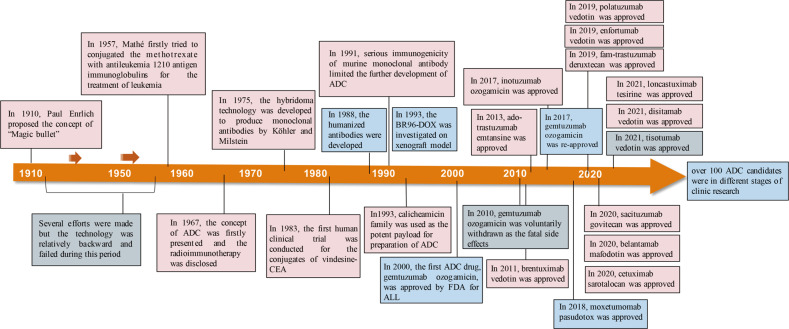
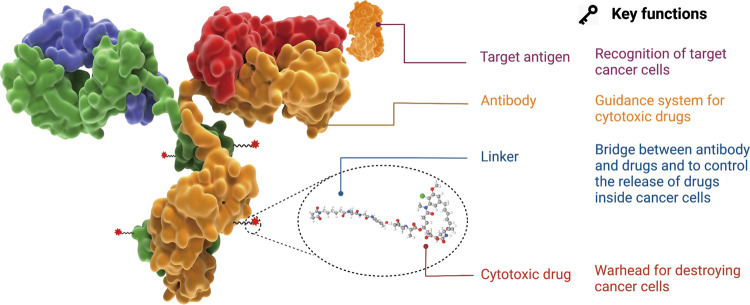
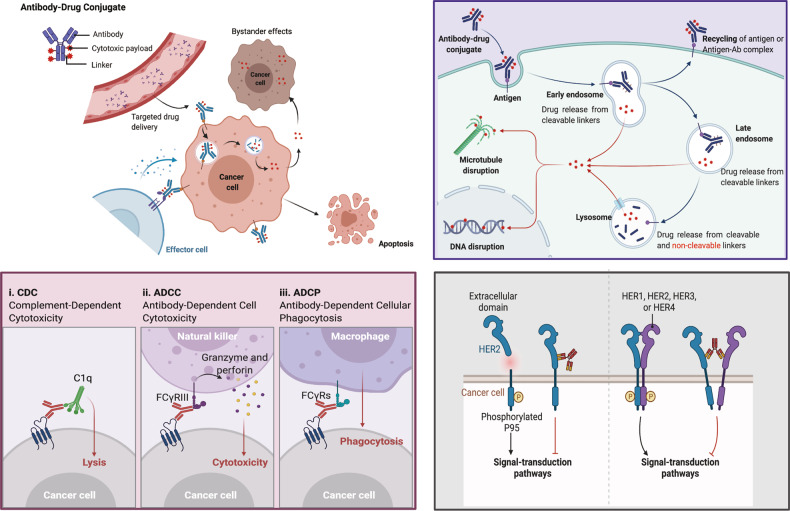
Antibody–drug conjugate (ADC) is typically composed of a monoclonal antibody (mAbs) covalently attached to a cytotoxic drug via a chemical linker. It combines both the advantages of highly specific targeting ability and highly potent killing effect to achieve accurate and efficient elimination of cancer cells, which has become one of the hotspots for the research and development of anticancer drugs. Since the first ADC, Mylotarg ® (gemtuzumab ozogamicin), was approved in 2000 by the US Food and Drug Administration (FDA), there have been 14 ADCs received market approval so far worldwide. Moreover, over 100 ADC candidates have been investigated in clinical stages at present. This kind of new anti-cancer drugs, known as “biological missiles”, is leading a new era of targeted cancer therapy. Herein, we conducted a review of the history and general mechanism of action of ADCs, and then briefly discussed the molecular aspects of key components of ADCs and the mechanisms by which these key factors influence the activities of ADCs. Moreover, we also reviewed the approved ADCs and other promising candidates in phase-3 clinical trials and discuss the current challenges and future perspectives for the development of next generations, which provide insights for the research and development of novel cancer therapeutics using ADCs.
Overview
The claims and statistics of this paper haven’t been checked yet.
Free: it reads the open-access text and checks the first 5 claims that cite a source we can check. Create a free account to check every claim.
Integrity signals
Registry
Cites
Statistics
Figures
Verification
Claims the paper makes
The claims and statistics of this paper haven’t been checked yet.
Free: it reads the open-access text and checks the first 5 claims that cite a source we can check. Create a free account to check every claim.
Claims other papers make about this one
Each is checked against this paper’s own text: does it say what the citing paper says it does?
The source backs part of the claim, not all of it — or backs it for a different population, condition or comparison.
In the citing paper
“However, hydrazone (t1/2 = 24 h) and carbonate (t1/2 = 36 h) linkers both suffer from instability in the plasma, with hydrolysis also occurring at physiological pH and contributing to off-target toxicity due to premature drug release54,58,59.”
From The evolving landscape of antibody-drug conjugates (ADCs) for treatment of prostate cancer (2025) · cites this paper as [54]
Experimental — accuracy not yet measuredThe source backs part of the claim, not all of it — or backs it for a different population, condition or comparison.
In the citing paper
“Enzyme-based linkers are utilized most commonly in ADCs: 8 out of 13 FDA-approved ADCs use a protease-cleavable linker, including the ADCs enfortumab vedotin and trastuzumab deruxtecan that have transformed the standard of care for metastatic urothelial and breast carcinomas54.”
From The evolving landscape of antibody-drug conjugates (ADCs) for treatment of prostate cancer (2025) · cites this paper as [54]
Experimental — accuracy not yet measuredThe source backs part of the claim, not all of it — or backs it for a different population, condition or comparison.
In the citing paper
“Hydrazone, carbonate, and silyl ether linkers are pH-sensitive, hydrolyzed in the acidic pH of lysosomes and endosomes upon target cell internalization54.”
From The evolving landscape of antibody-drug conjugates (ADCs) for treatment of prostate cancer (2025) · cites this paper as [54]
Experimental — accuracy not yet measured
Self-check
Percentages, sums and reported differences re-computed from the paper’s own numbers.
The self-check needs the paper’s full text.
Citations
Cites
Sung, H., Ferlay, J., Siegel, R. L., Laversanne, M., Soerjomataram, I., Jemal, A., & Bray, F. (2021) · CA: A Cancer Journal for Clinicians · doi:10.3322/caac.21660 · Cited by 108,699
Continuous cultures of fused cells secreting antibody of predefined specificity
KÖHLER, G., & MILSTEIN, C. (1975) · Nature · doi:10.1038/256495a0 · Cited by 17,229
Slamon, D. J., Clark, G. M., Wong, S. G., Levin, W. J., Ullrich, A., & McGuire, W. L. (1987) · Science · doi:10.1126/science.3798106 · Cited by 11,760 · cited 1×
“Solid tumors Ado-trastuzumab emtansine (Kadcyla, Roche): About 15%-20% of breast cancer patients show human epidermal growth factor receptor 2 (HER2) positive overexpression with a higher invasiveness.(191,192) Ado-trastuzumab emtansine, also known as T-DM1, is an ADC drug targeting HER2 and the first ADC to be approv…”
BackgroundToll-like receptors and innate immunity
Medzhitov, R. (2001) · Nature Reviews Immunology · doi:10.1038/35100529 · Cited by 4,308
Inhibition of Cell Division in Escherichia coli by Electrolysis Products from a Platinum Electrode
ROSENBERG, B., VAN CAMP, L., & KRIGAS, T. (1965) · Nature · doi:10.1038/205698a0 · Cited by 3,049
Strategies and challenges for the next generation of antibody–drug conjugates
Beck, A., Goetsch, L., Dumontet, C., & Corvaïa, N. (2017) · Nature Reviews Drug Discovery · doi:10.1038/nrd.2016.268 · Cited by 2,271
Trastuzumab deruxtecan in previously treated HER2-positive breast cancer
Modi, S., Saura, C., Yamashita, T., Park, Y. H., Kim, S.-B., Tamura, K., Andre, F., Iwata, H., Ito, Y., Tsurutani, J., et al. (2020) · New England Journal of Medicine · doi:10.1056/nejmoa1914510 · Cited by 2,006 · cited 3×
“0%).(207) Moreover, The recently updated data of DESTINY-Breast03, a global, head-to-head, randomized, open-label, pivotal phase 3 trial, demonstrated that DS-8201 had an significant superiority over T-DM1.”
BackgroundInfluentialTumor microenvironment as a therapeutic target in cancer
Xiao, Y., & Yu, D. (2021) · Pharmacology & Therapeutics · doi:10.1016/j.pharmthera.2020.107753 · Cited by 1,957
Rowinsky, E. K., & Donehower, R. C. (1995) · New England Journal of Medicine · doi:10.1056/nejm199504133321507 · Cited by 1,924
Sacituzumab Govitecan in Metastatic Triple-Negative Breast Cancer
Bardia, A., Hurvitz, S. A., Tolaney, S. M., Loirat, D., Punie, K., Oliveira, M., Brufsky, A., Sardesai, S. D., Kalinsky, K., Zelnak, A. B., et al. (2021) · New England Journal of Medicine · doi:10.1056/nejmoa2028485 · Cited by 1,711 · cited 1×
“The ASCENT study was performed in 529 patients with unresectable locally advanced or mTNBC who had relapsed after at least two prior chemotherapies, one of which could be in the neoadjuvant or adjuvant setting, if progression occurred within 12 months.(221) The enrolled patients were randomized into two groups, receiv…”
MethodTargeting HER2-Positive Breast Cancer with Trastuzumab-DM1, an Antibody–Cytotoxic Drug Conjugate
Lewis Phillips, G. D., Li, G., Dugger, D. L., Crocker, L. M., Parsons, K. L., Mai, E., Blättler, W. A., Lambert, J. M., Chari, R. V. J., Lutz, R. J., et al. (2008) · Cancer Research · doi:10.1158/0008-5472.can-08-1776 · Cited by 1,676
Fluorinated pyrimidines, a new class of tumour-inhibitory compounds
HEIDELBERGER, C., CHAUDHURI, N. K., DANNEBERG, P., MOOREN, D., GRIESBACH, L., DUSCHINSKY, R., SCHNITZER, R. J., PLEVEN, E., & SCHEINER, J. (1957) · Nature · doi:10.1038/179663a0 · Cited by 1,603
Younes, A., Gopal, A. K., Smith, S. E., Ansell, S. M., Rosenblatt, J. D., Savage, K. J., Ramchandren, R., Bartlett, N. L., Cheson, B. D., de Vos, S., et al. (2012) · Journal of Clinical Oncology · doi:10.1200/jco.2011.38.0410 · Cited by 1,529
Paul Ehrlich's magic bullet concept: 100 years of progress
Strebhardt, K., & Ullrich, A. (2008) · Nature Reviews Cancer · doi:10.1038/nrc2394 · Cited by 1,457
Inotuzumab Ozogamicin versus Standard Therapy for Acute Lymphoblastic Leukemia
Kantarjian, H. M., DeAngelo, D. J., Stelljes, M., Martinelli, G., Liedtke, M., Stock, W., Gökbuget, N., O’Brien, S., Wang, K., Wang, T., et al. (2016) · New England Journal of Medicine · doi:10.1056/nejmoa1509277 · Cited by 1,413
Site-specific conjugation of a cytotoxic drug to an antibody improves the therapeutic index
Junutula, J. R., Raab, H., Clark, S., Bhakta, S., Leipold, D. D., Weir, S., Chen, Y., Simpson, M., Tsai, S. P., Dennis, M. S., et al. (2008) · Nature Biotechnology · doi:10.1038/nbt.1480 · Cited by 1,382
Iqbal, N., & Iqbal, N. (2014) · Molecular Biology International · doi:10.1155/2014/852748 · Cited by 1,381
Molecular targeted therapy: Treating cancer with specificity
Lee, Y. T., Tan, Y. J., & Oon, C. E. (2018) · European Journal of Pharmacology · doi:10.1016/j.ejphar.2018.07.034 · Cited by 1,067
Glutathione in Cancer Biology and Therapy
Estrela, J. M., Ortega, A., & Obrador, E. (2006) · Critical Reviews in Clinical Laboratory Sciences · doi:10.1080/10408360500523878 · Cited by 1,041
Trastuzumab Deruxtecan in HER2 -Mutant Non–Small-Cell Lung Cancer
Li, B. T., Smit, E. F., Goto, Y., Nakagawa, K., Udagawa, H., Mazières, J., Nagasaka, M., Bazhenova, L., Saltos, A. N., Felip, E., et al. (2022) · New England Journal of Medicine · doi:10.1056/nejmoa2112431 · Cited by 1,021
Castaigne, S., Pautas, C., Terré, C., Raffoux, E., Bordessoule, D., Bastie, J.-N., Legrand, O., Thomas, X., Turlure, P., Reman, O., et al. (2012) · The Lancet · doi:10.1016/s0140-6736(12)60485-1 · Cited by 1,015
Shen, B.-Q., Xu, K., Liu, L., Raab, H., Bhakta, S., Kenrick, M., Parsons-Reponte, K. L., Tien, J., Yu, S.-F., Mai, E., et al. (2012) · Nature Biotechnology · doi:10.1038/nbt.2108 · Cited by 1,008
Pro, B., Advani, R., Brice, P., Bartlett, N. L., Rosenblatt, J. D., Illidge, T., Matous, J., Ramchandren, R., Fanale, M., Connors, J. M., et al. (2012) · Journal of Clinical Oncology · doi:10.1200/jco.2011.38.0402 · Cited by 997
Bevacizumab (Avastin), a humanized anti-VEGF monoclonal antibody for cancer therapy
Ferrara, N., Hillan, K. J., & Novotny, W. (2005) · Biochemical and Biophysical Research Communications · doi:10.1016/j.bbrc.2005.05.132 · Cited by 977
Kawato, Y., Aonuma, M., Hirota, Y., Kuga, H., & Sato, K. (1991) · PubMed · Cited by 865
Approval summary: gemtuzumab ozogamicin in relapsed acute myeloid leukemia.
Bross, P. F., Beitz, J. G., Chen, G., Chen, X., Duffy, E. J., Kieffer, L. V., Roy, S., Sridhara, R. N., Rahman, A., Williams, G., et al. (2001) · PubMed · Cited by 855
Lonial, S., Lee, H. C., Badros, A., Trudel, S., Nooka, A. K., Chari, A., Abdallah, A.-O., Callander, N., Lendvai, N., Sborov, D., et al. (2020) · The Lancet Oncology · doi:10.1016/s1470-2045(19)30788-0 · Cited by 812 · cited 2×
“4 mg/kg cohort), thrombocytopenia (20% and 33%), and anemia (20% and 25%).(184)”
BackgroundMethodAntibody-drug conjugates: recent advances in conjugation and linker chemistries
Tsuchikama, K., & An, Z. (2018) · Protein & Cell · doi:10.1007/s13238-016-0323-0 · Cited by 786
Wu, S.-G., & Shih, J.-Y. (2018) · Molecular Cancer · doi:10.1186/s12943-018-0777-1 · Cited by 778
Antibody-Drug Conjugates in Cancer Therapy
Sievers, E. L., & Senter, P. D. (2013) · Annual Review of Medicine · doi:10.1146/annurev-med-050311-201823 · Cited by 770
The Biological Actions and Therapeutic Applications of the B-Chloroethyl Amines and Sulfides
Gilman, A., & Philips, F. S. (1946) · Science · doi:10.1126/science.103.2675.409 · Cited by 732
Challita-Eid, P. M., Satpayev, D., Yang, P., An, Z., Morrison, K., Shostak, Y., Raitano, A., Nadell, R., Liu, W., Lortie, D. R., et al. (2016) · Cancer Research · doi:10.1158/0008-5472.can-15-1313 · Cited by 724
Hills, R. K., Castaigne, S., Appelbaum, F. R., Delaunay, J., Petersdorf, S., Othus, M., Estey, E. H., Dombret, H., Chevret, S., Ifrah, N., et al. (2014) · The Lancet Oncology · doi:10.1016/s1470-2045(14)70281-5 · Cited by 721
DNA Topoisomerase I Inhibitors: Chemistry, Biology, and Interfacial Inhibition
Pommier, Y. (2009) · Chemical Reviews · doi:10.1021/cr900097c · Cited by 707
Diéras, V., Miles, D., Verma, S., Pegram, M., Welslau, M., Baselga, J., Krop, I. E., Blackwell, K., Hoersch, S., Xu, J., et al. (2017) · The Lancet Oncology · doi:10.1016/s1470-2045(17)30312-1 · Cited by 667
Burnett, A. K., Hills, R. K., Milligan, D., Kjeldsen, L., Kell, J., Russell, N. H., Yin, J. A. L., Hunter, A., Goldstone, A. H., & Wheatley, K. (2011) · Journal of Clinical Oncology · doi:10.1200/jco.2010.31.4310 · Cited by 657
Cleavable linkers in antibody–drug conjugates
Bargh, J. D., Isidro-Llobet, A., Parker, J. S., & Spring, D. R. (2019) · Chemical Society Reviews · doi:10.1039/c8cs00676h · Cited by 652
Agarwal, P., & Bertozzi, C. R. (2015) · Bioconjugate Chemistry · doi:10.1021/bc5004982 · Cited by 605
DNA-Damaging Agents in Cancer Chemotherapy: Serendipity and Chemical Biology
Cheung-Ong, K., Giaever, G., & Nislow, C. (2013) · Chemistry & Biology · doi:10.1016/j.chembiol.2013.04.007 · Cited by 591
Calicheamicin γ 1 I : an Antitumor Antibiotic That Cleaves Double-Stranded DNA Site Specifically
Zein, N., Sinha, A. M., McGahren, W. J., & Ellestad, G. A. (1988) · Science · doi:10.1126/science.3240341 · Cited by 565
Lyon, R. P., Bovee, T. D., Doronina, S. O., Burke, P. J., Hunter, J. H., Neff-LaFord, H. D., Jonas, M., Anderson, M. E., Setter, J. R., & Senter, P. D. (2015) · Nature Biotechnology · doi:10.1038/nbt.3212 · Cited by 557
Dubowchik, G. M., Firestone, R. A., Padilla, L., Willner, D., Hofstead, S. J., Mosure, K., Knipe, J. O., Lasch, S. J., & Trail, P. A. (2002) · Bioconjugate Chemistry · doi:10.1021/bc025536j · Cited by 555
Ado-trastuzumab Emtansine (T-DM1): An Antibody–Drug Conjugate (ADC) for HER2-Positive Breast Cancer
Lambert, J. M., & Chari, R. V. J. (2014) · Journal of Medicinal Chemistry · doi:10.1021/jm500766w · Cited by 545
Junttila, T. T., Li, G., Parsons, K., Phillips, G. L., & Sliwkowski, M. X. (2011) · Breast Cancer Research and Treatment · doi:10.1007/s10549-010-1090-x · Cited by 541
Antibody drug conjugates and bystander killing: is antigen-dependent internalisation required?
Staudacher, A. H., & Brown, M. P. (2017) · British Journal of Cancer · doi:10.1038/bjc.2017.367 · Cited by 540
Antibody-drug conjugates—an emerging class of cancer treatment
Diamantis, N., & Banerji, U. (2016) · British Journal of Cancer · doi:10.1038/bjc.2015.435 · Cited by 525
Strop, P., Liu, S.-H., Dorywalska, M., Delaria, K., Dushin, R. G., Tran, T.-T., Ho, W.-H., Farias, S., Casas, M. G., Abdiche, Y., et al. (2013) · Chemistry & Biology · doi:10.1016/j.chembiol.2013.01.010 · Cited by 505
Donaghy, H. (2016) · mAbs · doi:10.1080/19420862.2016.1156829 · Cited by 495
Tai, Y.-T., Mayes, P. A., Acharya, C., Zhong, M. Y., Cea, M., Cagnetta, A., Craigen, J., Yates, J., Gliddon, L., Fieles, W., et al. (2014) · Blood · doi:10.1182/blood-2013-10-535088 · Cited by 484
Kovtun, Y. V., Audette, C. A., Ye, Y., Xie, H., Ruberti, M. F., Phinney, S. J., Leece, B. A., Chittenden, T., Blättler, W. A., & Goldmacher, V. S. (2006) · Cancer Research · doi:10.1158/0008-5472.can-05-3973 · Cited by 479
Rituximab: A Review of its Use in Non-Hodgkin??s Lymphoma and Chronic Lymphocytic Leukaemia
Plosker, G. L., & Figgitt, D. P. (2003) · Drugs · doi:10.2165/00003495-200363080-00005 · Cited by 471
Site-selective modification strategies in antibody–drug conjugates
Walsh, S. J., Bargh, J. D., Dannheim, F. M., Hanby, A. R., Seki, H., Counsell, A. J., Ou, X., Fowler, E., Ashman, N., Takada, Y., et al. (2021) · Chemical Society Reviews · doi:10.1039/d0cs00310g · Cited by 461
Caimi, P. F., Ai, W., Alderuccio, J. P., Ardeshna, K. M., Hamadani, M., Hess, B., Kahl, B. S., Radford, J., Solh, M., Stathis, A., et al. (2021) · The Lancet Oncology · doi:10.1016/s1470-2045(21)00139-x · Cited by 441
Antibody-Drug Conjugate-Based Therapeutics: State of the Science
Birrer, M. J., Moore, K. N., Betella, I., & Bates, R. C. (2019) · JNCI: Journal of the National Cancer Institute · doi:10.1093/jnci/djz035 · Cited by 439
Coleman, R. L., Lorusso, D., Gennigens, C., González-Martín, A., Randall, L., Cibula, D., Lund, B., Woelber, L., Pignata, S., Forget, F., et al. (2021) · The Lancet Oncology · doi:10.1016/s1470-2045(21)00056-5 · Cited by 410
Cathepsin B as a cancer target
Gondi, C. S., & Rao, J. S. (2013) · Expert Opinion on Therapeutic Targets · doi:10.1517/14728222.2013.740461 · Cited by 399
STING Agonists as Cancer Therapeutics
Amouzegar, A., Chelvanambi, M., Filderman, J., Storkus, W., & Luke, J. (2021) · Cancers · doi:10.3390/cancers13112695 · Cited by 395
Kung Sutherland, M. S., Walter, R. B., Jeffrey, S. C., Burke, P. J., Yu, C., Kostner, H., Stone, I., Ryan, M. C., Sussman, D., Lyon, R. P., et al. (2013) · Blood · doi:10.1182/blood-2013-03-491506 · Cited by 391
Protein Modification, Bioconjugation, and Disulfide Bridging Using Bromomaleimides
Smith, M. E. B., Schumacher, F. F., Ryan, C. P., Tedaldi, L. M., Papaioannou, D., Waksman, G., Caddick, S., & Baker, J. R. (2010) · Journal of the American Chemical Society · doi:10.1021/ja908610s · Cited by 377
Katz, J., Janik, J. E., & Younes, A. (2011) · Clinical Cancer Research · doi:10.1158/1078-0432.ccr-11-0488 · Cited by 368
Amadori, S., Suciu, S., Selleslag, D., Aversa, F., Gaidano, G., Musso, M., Annino, L., Venditti, A., Voso, M. T., Mazzone, C., et al. (2016) · Journal of Clinical Oncology · doi:10.1200/jco.2015.64.0060 · Cited by 362
Recent developments in tubulin polymerization inhibitors: An overview
Kaur, R., Kaur, G., Gill, R. K., Soni, R., & Bariwal, J. (2014) · European Journal of Medicinal Chemistry · doi:10.1016/j.ejmech.2014.09.051 · Cited by 344
Kantarjian, H. M., DeAngelo, D. J., Stelljes, M., Liedtke, M., Stock, W., Gökbuget, N., O’Brien, S. M., Jabbour, E., Wang, T., Liang White, J., et al. (2019) · Cancer · doi:10.1002/cncr.32116 · Cited by 343
Okajima, D., Yasuda, S., Maejima, T., Karibe, T., Sakurai, K., Aida, T., Toki, T., Yamaguchi, J., Kitamura, M., Kamei, R., et al. (2021) · Molecular Cancer Therapeutics · doi:10.1158/1535-7163.mct-21-0206 · Cited by 339
Conceptual Approaches to Modulating Antibody Effector Functions and Circulation Half-Life
Saunders, K. O. (2019) · Frontiers in Immunology · doi:10.3389/fimmu.2019.01296 · Cited by 316
Antibody–Drug Conjugates for Cancer Treatment
Lambert, J. M., & Berkenblit, A. (2018) · Annual Review of Medicine · doi:10.1146/annurev-med-061516-121357 · Cited by 314
Ritchie, M., Tchistiakova, L., & Scott, N. (2013) · mAbs · doi:10.4161/mabs.22854 · Cited by 312
Seckinger, A., Delgado, J. A., Moser, S., Moreno, L., Neuber, B., Grab, A., Lipp, S., Merino, J., Prosper, F., Emde, M., et al. (2017) · Cancer Cell · doi:10.1016/j.ccell.2017.02.002 · Cited by 312
Yamazaki, C. M., Yamaguchi, A., Anami, Y., Xiong, W., Otani, Y., Lee, J., Ueno, N. T., Zhang, N., An, Z., & Tsuchikama, K. (2021) · Nature Communications · doi:10.1038/s41467-021-23793-7 · Cited by 309
Human trophoblast cell-surface antigens defined by monoclonal antibodies.
Lipinski, M., Parks, D. R., Rouse, R. V., & Herzenberg, L. A. (1981) · Proceedings of the National Academy of Sciences · doi:10.1073/pnas.78.8.5147 · Cited by 306
Junutula, J. R., Flagella, K. M., Graham, R. A., Parsons, K. L., Ha, E., Raab, H., Bhakta, S., Nguyen, T., Dugger, D. L., Li, G., et al. (2010) · Clinical Cancer Research · doi:10.1158/1078-0432.ccr-10-0987 · Cited by 292
Kaplon, H., & Reichert, J. M. (2021) · mAbs · doi:10.1080/19420862.2020.1860476 · Cited by 292
Trastuzumab: A Review of its Use in the Treatment of Metastatic Breast Cancer Overexpressing HER2
McKeage, K., & Perry, C. M. (2002) · Drugs · doi:10.2165/00003495-200262010-00008 · Cited by 289
Yu, E. Y., Petrylak, D. P., O'Donnell, P. H., Lee, J.-L., van der Heijden, M. S., Loriot, Y., Stein, M. N., Necchi, A., Kojima, T., Harrison, M. R., et al. (2021) · The Lancet Oncology · doi:10.1016/s1470-2045(21)00094-2 · Cited by 287
Stapleton, N. M., Andersen, J. T., Stemerding, A. M., Bjarnarson, S. P., Verheul, R. C., Gerritsen, J., Zhao, Y., Kleijer, M., Sandlie, I., de Haas, M., et al. (2011) · Nature Communications · doi:10.1038/ncomms1608 · Cited by 286 · cited 1×
“Unlike the other three subtypes with half-lives of approximately 21 days, the half-life of IgG3 is only approximately 7 days in serum.(33) IgG2 often shows tendency to form dimers and aggregations in vivo, which leads to a decrease of the concentration of ADC drugs.”
BackgroundPotential mechanisms of target-independent uptake and toxicity of antibody-drug conjugates
Mahalingaiah, P. K., Ciurlionis, R., Durbin, K. R., Yeager, R. L., Philip, B. K., Bawa, B., Mantena, S. R., Enright, B. P., Liguori, M. J., & Van Vleet, T. R. (2019) · Pharmacology & Therapeutics · doi:10.1016/j.pharmthera.2019.04.008 · Cited by 286
Sun, X., Ponte, J. F., Yoder, N. C., Laleau, R., Coccia, J., Lanieri, L., Qiu, Q., Wu, R., Hong, E., Bogalhas, M., et al. (2017) · Bioconjugate Chemistry · doi:10.1021/acs.bioconjchem.7b00062 · Cited by 277
Norsworthy, K. J., Ko, C.-W., Lee, J. E., Liu, J., John, C. S., Przepiorka, D., Farrell, A. T., & Pazdur, R. (2018) · The Oncologist · doi:10.1634/theoncologist.2017-0604 · Cited by 269
Girish, S., Gupta, M., Wang, B., Lu, D., Krop, I. E., Vogel, C. L., Burris III, H. A., LoRusso, P. M., Yi, J.-H., Saad, O., et al. (2012) · Cancer Chemotherapy and Pharmacology · doi:10.1007/s00280-011-1817-3 · Cited by 262
Kitamura, N., Sento, S., Yoshizawa, Y., Sasabe, E., Kudo, Y., & Yamamoto, T. (2020) · International Journal of Molecular Sciences · doi:10.3390/ijms22010240 · Cited by 256
Antibody–drug conjugates (ADCs) for cancer therapy: Strategies, challenges, and successes
Abdollahpour‐Alitappeh, M., Lotfinia, M., Gharibi, T., Mardaneh, J., Farhadihosseinabadi, B., Larki, P., Faghfourian, B., Sepehr, K. S., Abbaszadeh‐Goudarzi, K., Abbaszadeh‐Goudarzi, G., et al. (2019) · Journal of Cellular Physiology · doi:10.1002/jcp.27419 · Cited by 249
Erickson, H. K., Widdison, W. C., Mayo, M. F., Whiteman, K., Audette, C., Wilhelm, S. D., & Singh, R. (2010) · Bioconjugate Chemistry · doi:10.1021/bc900315y · Cited by 246 · cited 2×
“The non-cleavable linker depends on the enzymatic hydrolysis of the antibody component of ADC by protease, and finally releases the payload “complex”, which is drug connected with the amino acid residue in an antibody degradation product.(53) Only small molecules that tolerate chemical modifications (e.”
BackgroundPro, B., Advani, R., Brice, P., Bartlett, N. L., Rosenblatt, J. D., Illidge, T., Matous, J., Ramchandren, R., Fanale, M., Connors, J. M., et al. (2017) · Blood · doi:10.1182/blood-2017-05-780049 · Cited by 246
The Mammalian Target of Rapamycin Signaling Pathway: Twists and Turns in the Road to Cancer Therapy
Abraham, R. T., & Gibbons, J. J. (2007) · Clinical Cancer Research · doi:10.1158/1078-0432.ccr-06-2798 · Cited by 241
Ab, O., Whiteman, K. R., Bartle, L. M., Sun, X., Singh, R., Tavares, D., LaBelle, A., Payne, G., Lutz, R. J., Pinkas, J., et al. (2015) · Molecular Cancer Therapeutics · doi:10.1158/1535-7163.mct-14-1095 · Cited by 237
de Bono, J. S., Concin, N., Hong, D. S., Thistlethwaite, F. C., Machiels, J.-P., Arkenau, H.-T., Plummer, R., Jones, R. H., Nielsen, D., Windfeld, K., et al. (2019) · The Lancet Oncology · doi:10.1016/s1470-2045(18)30859-3 · Cited by 237
Hinman, L. M., Hamann, P. R., Wallace, R., Menendez, A. T., Durr, F. E., & Upeslacis, J. (1993) · PubMed · Cited by 236
Targeted delivery of chemotherapeutics: tumor-activated prodrug therapy
Chari, R. V. J. (1998) · Advanced Drug Delivery Reviews · doi:10.1016/s0169-409x(97)00095-1 · Cited by 235
Antibody‐Drug Conjugates for the Treatment of Cancer
Flygare, J. A., Pillow, T. H., & Aristoff, P. (2013) · Chemical Biology & Drug Design · doi:10.1111/cbdd.12085 · Cited by 232
Antibody Fusion Proteins: Anti-CD22 Recombinant Immunotoxin Moxetumomab Pasudotox
Kreitman, R. J., & Pastan, I. (2011) · Clinical Cancer Research · doi:10.1158/1078-0432.ccr-11-0487 · Cited by 231
Mechanisms of Resistance to Antibody–Drug Conjugates
Loganzo, F., Sung, M., & Gerber, H.-P. (2016) · Molecular Cancer Therapeutics · doi:10.1158/1535-7163.mct-16-0408 · Cited by 231
Moore, K. N., Martin, L. P., O’Malley, D. M., Matulonis, U. A., Konner, J. A., Perez, R. P., Bauer, T. M., Ruiz-Soto, R., & Birrer, M. J. (2017) · Journal of Clinical Oncology · doi:10.1200/jco.2016.69.9538 · Cited by 226
Polatuzumab Vedotin: First Global Approval
Deeks, E. D. (2019) · Drugs · doi:10.1007/s40265-019-01175-0 · Cited by 221
Human TROP-2 is a tumor-associated calcium signal transducer
Rapani, E., Sacchetti, A., Corda, D., & Alberti, S. (1998) · International Journal of Cancer · doi:10.1002/(sici)1097-0215(19980529)76:5<671::aid-ijc10>3.0.co;2-7 · Cited by 220
The Structural Role of Antibody N-Glycosylation in Receptor Interactions
Subedi, G. P., & Barb, A. W. (2015) · Structure · doi:10.1016/j.str.2015.06.015 · Cited by 216
Perception of Chemotherapy Side Effects Cancer versus Noncancer Patients
Lindley, C., McCune, J. S., Thomason, T. E., Lauder, D., Sauls, A., Adkins, S., & Sawyer, W. T. (1999) · Cancer Practice · doi:10.1046/j.1523-5394.1999.07205.x · Cited by 214
Ackerman, S. E., Pearson, C. I., Gregorio, J. D., Gonzalez, J. C., Kenkel, J. A., Hartmann, F. J., Luo, A., Ho, P. Y., LeBlanc, H., Blum, L. K., et al. (2020) · Nature Cancer · doi:10.1038/s43018-020-00136-x · Cited by 213
Peng, Z., Liu, T., Wei, J., Wang, A., He, Y., Yang, L., Zhang, X., Fan, N., Luo, S., Li, Z., et al. (2021) · Cancer Communications · doi:10.1002/cac2.12214 · Cited by 210
Self-citationThe biology and rationale of targeting nectin-4 in urothelial carcinoma
Heath, E. I., & Rosenberg, J. E. (2021) · Nature Reviews Urology · doi:10.1038/s41585-020-00394-5 · Cited by 204
Gregson, S. J., Howard, P. W., Hartley, J. A., Brooks, N. A., Adams, L. J., Jenkins, T. C., Kelland, L. R., & Thurston, D. E. (2001) · Journal of Medicinal Chemistry · doi:10.1021/jm001064n · Cited by 202 · cited 1×
“The detailed mechanisms involved in DNA damaging agents mainly include: (i) DNA double strand break, such as calicheamicins;(67) (ii) DNA alkylation, such as duocarmycins;(68) (iii) DNA intercalation, such as topoisomerase I inhibitors;(69) (iv) DNA crosslink, such as pyrrolobenzodiazepines (PBD).(70) Calicheamicin is…”
BackgroundGuglielmi, C., Paola Martelli, M., Diverio, D., Fenu, S., Luce Vegna, M., CantÙ‐Rajnoldi, A., Biondi, A., Grazia Cocito, M., Del Vecchio, L., Tabilio, A., et al. (1998) · British Journal of Haematology · doi:10.1046/j.1365-2141.1998.00871.x · Cited by 198
Inotuzumab Ozogamicin: First Global Approval
Lamb, Y. N. (2017) · Drugs · doi:10.1007/s40265-017-0802-5 · Cited by 198
Duocarmycin A, a new antitumor antibiotic from Streptomyces.
TAKAHASHI, I., TAKAHASHI, K.-I., ICHIMURA, M., MORIMOTO, M., ASANO, K., KAWAMOTO, I., TOMITA, F., & NAKANO, H. (1988) · The Journal of Antibiotics · doi:10.7164/antibiotics.41.1915 · Cited by 194
Role of nuclear glutathione as a key regulator of cell proliferation
Pallardó, F. V., Markovic, J., García, J. L., & Viña, J. (2009) · Molecular Aspects of Medicine · doi:10.1016/j.mam.2009.01.001 · Cited by 191
FDA Approval Summary: Enfortumab Vedotin for Locally Advanced or Metastatic Urothelial Carcinoma
Chang, E., Weinstock, C., Zhang, L., Charlab, R., Dorff, S. E., Gong, Y., Hsu, V., Li, F., Ricks, T. K., Song, P., et al. (2021) · Clinical Cancer Research · doi:10.1158/1078-0432.ccr-20-2275 · Cited by 189
Hoffmann, R. M., Coumbe, B. G. T., Josephs, D. H., Mele, S., Ilieva, K. M., Cheung, A., Tutt, A. N., Spicer, J. F., Thurston, D. E., Crescioli, S., et al. (2018) · OncoImmunology · doi:10.1080/2162402x.2017.1395127 · Cited by 188
Stepping forward in antibody-drug conjugate development
Jin, Y., Schladetsch, M. A., Huang, X., Balunas, M. J., & Wiemer, A. J. (2022) · Pharmacology & Therapeutics · doi:10.1016/j.pharmthera.2021.107917 · Cited by 186
Mechanism of Immunoglobulin G4 Fab-arm Exchange
Rispens, T., Ooijevaar-de Heer, P., Bende, O., & Aalberse, R. C. (2011) · Journal of the American Chemical Society · doi:10.1021/ja203638y · Cited by 184
Petersdorf, S., Kopecky, K., Stuart, R. K., Larson, R. A., Nevill, T. J., Stenke, L., Slovak, M. L., Tallman, M. S., Willman, C. L., Erba, H., et al. (2009) · Blood · doi:10.1182/blood.v114.22.790.790 · Cited by 184
Strop, P., Delaria, K., Foletti, D., Witt, J. M., Hasa-Moreno, A., Poulsen, K., Casas, M. G., Dorywalska, M., Farias, S., Pios, A., et al. (2015) · Nature Biotechnology · doi:10.1038/nbt.3274 · Cited by 182
ADCT-402, a PBD dimer–containing antibody drug conjugate targeting CD19-expressing malignancies
Zammarchi, F., Corbett, S., Adams, L., Tyrer, P. C., Kiakos, K., Janghra, N., Marafioti, T., Britten, C. E., Havenith, C. E. G., Chivers, S., et al. (2018) · Blood · doi:10.1182/blood-2017-10-813493 · Cited by 181
Characterization of CD22 expression in acute lymphoblastic leukemia
Shah, N. N., Stevenson, M. S., Yuan, C. M., Richards, K., Delbrook, C., Kreitman, R. J., Pastan, I., & Wayne, A. S. (2015) · Pediatric Blood & Cancer · doi:10.1002/pbc.25410 · Cited by 179
Novel Peptide Linkers for Highly Potent Antibody−Auristatin Conjugate
Doronina, S. O., Bovee, T. D., Meyer, D. W., Miyamoto, J. B., Anderson, M. E., Morris-Tilden, C. A., & Senter, P. D. (2008) · Bioconjugate Chemistry · doi:10.1021/bc800289a · Cited by 179
Yang, H., Ganguly, A., & Cabral, F. (2010) · Journal of Biological Chemistry · doi:10.1074/jbc.m110.160820 · Cited by 178
Recent advances of antibody drug conjugates for clinical applications
Zhao, P., Zhang, Y., Li, W., Jeanty, C., Xiang, G., & Dong, Y. (2020) · Acta Pharmaceutica Sinica B · doi:10.1016/j.apsb.2020.04.012 · Cited by 176
Self-citationThe development of pyrrolobenzodiazepines as antitumour agents
Hartley, J. A. (2011) · Expert Opinion on Investigational Drugs · doi:10.1517/13543784.2011.573477 · Cited by 175
Schumacher, F. F., Nunes, J. P. M., Maruani, A., Chudasama, V., Smith, M. E. B., Chester, K. A., Baker, J. R., & Caddick, S. (2014) · Org. Biomol. Chem. · doi:10.1039/c4ob01550a · Cited by 175
Antibody-targeted drugs and drug resistance—Challenges and solutions
Shefet-Carasso, L., & Benhar, I. (2014) · Drug Resistance Updates · doi:10.1016/j.drup.2014.11.001 · Cited by 173
Interstitial Lung Disease Induced by Anti-ERBB2 Antibody-Drug Conjugates: A Review
Tarantino, P., Modi, S., Tolaney, S. M., Cortés, J., Hamilton, E. P., Kim, S.-B., Toi, M., Andrè, F., & Curigliano, G. (2021) · JAMA Oncology · doi:10.1001/jamaoncol.2021.3595 · Cited by 172
Evolving Strategies for Target Selection for Antibody-Drug Conjugates
Damelin, M. I., Zhong, W., Myers, J. S., & Sapra, P. (2015) · Pharmaceutical Research · doi:10.1007/s11095-015-1624-3 · Cited by 171
Younes, A., Yasothan, U., & Kirkpatrick, P. (2012) · Nature Reviews Drug Discovery · doi:10.1038/nrd3629 · Cited by 170
Microtubule dynamics and tubulin interacting proteins
Walczak, C. E. (2000) · Current Opinion in Cell Biology · doi:10.1016/s0955-0674(99)00056-3 · Cited by 169
Immunotoxins and Anticancer Drug Conjugate Assemblies: The Role of the Linkage between Components
Dosio, F., Brusa, P., & Cattel, L. (2011) · Toxins · doi:10.3390/toxins3070848 · Cited by 166
Andreev, J., Thambi, N., Perez Bay, A. E., Delfino, F., Martin, J., Kelly, M. P., Kirshner, J. R., Rafique, A., Kunz, A., Nittoli, T., et al. (2017) · Molecular Cancer Therapeutics · doi:10.1158/1535-7163.mct-16-0658 · Cited by 166
Improving effector functions of antibodies for cancer treatment: Enhancing ADCC and CDC.
Natsume, A., Niwa, R., & Satoh, M. (2009) · PubMed Central · Cited by 165
Strategies and Advancement in Antibody-Drug Conjugate Optimization for Targeted Cancer Therapeutics
Kim, E. G., & Kim, K. M. (2015) · Biomolecules & Therapeutics · doi:10.4062/biomolther.2015.116 · Cited by 165
Impact of TROP2 expression on prognosis in solid tumors: A Systematic Review and Meta-analysis
Zeng, P., Chen, M.-B., Zhou, L.-N., Tang, M., Liu, C.-Y., & Lu, P.-H. (2016) · Scientific Reports · doi:10.1038/srep33658 · Cited by 163
Straus, D. J., Długosz-Danecka, M., Connors, J. M., Alekseev, S., Illés, Á., Picardi, M., Lech-Maranda, E., Feldman, T., Smolewski, P., Savage, K. J., et al. (2021) · The Lancet Haematology · doi:10.1016/s2352-3026(21)00102-2 · Cited by 163
Pfeifer, M., Zheng, B., Erdmann, T., Koeppen, H., McCord, R., Grau, M., Staiger, A. M., Chai, A., Sandmann, T., Madle, H., et al. (2015) · Leukemia · doi:10.1038/leu.2015.48 · Cited by 160
Lamba, J. K., Chauhan, L., Shin, M., Loken, M. R., Pollard, J. A., Wang, Y.-C., Ries, R. E., Aplenc, R., Hirsch, B. A., Raimondi, S. C., et al. (2017) · Journal of Clinical Oncology · doi:10.1200/jco.2016.71.2513 · Cited by 156
Optimization of a PEGylated Glucuronide-Monomethylauristatin E Linker for Antibody–Drug Conjugates
Burke, P. J., Hamilton, J. Z., Jeffrey, S. C., Hunter, J. H., Doronina, S. O., Okeley, N. M., Miyamoto, J. B., Anderson, M. E., Stone, I. J., Ulrich, M. L., et al. (2017) · Molecular Cancer Therapeutics · doi:10.1158/1535-7163.mct-16-0343 · Cited by 155
English, D. R., Armstrong, B. K., Kricker, A., Winter, M. G., Heenan, P. J., & Randell, P. L. (1998) · International Journal of Cancer · doi:10.1002/(sici)1097-0215(19980529)76:5<628::aid-ijc3>3.0.co;2-s · Cited by 154
Xu, Y., Wang, Y., Gong, J., Zhang, X., Peng, Z., Sheng, X., Mao, C., Fan, Q., Bai, Y., Ba, Y., et al. (2021) · Gastric Cancer · doi:10.1007/s10120-021-01168-7 · Cited by 153
Mamounas, E. P., Untch, M., Mano, M. S., Huang, C., Geyer, C. E., von Minckwitz, G., Wolmark, N., Pivot, X. B., Küemmel, S., DiGiovanna, M. P., et al. (2021) · Annals of Oncology · doi:10.1016/j.annonc.2021.04.011 · Cited by 150
O'Malley, D. M., Matulonis, U. A., Birrer, M. J., Castro, C. M., Gilbert, L., Vergote, I., Martin, L. P., Mantia-Smaldone, G. M., Martin, A. G., Bratos, R., et al. (2020) · Gynecologic Oncology · doi:10.1016/j.ygyno.2020.01.037 · Cited by 148
Identification of Trop-2 as an oncogene and an attractive therapeutic target in colon cancers
Wang, J., Day, R., Dong, Y., Weintraub, S. J., & Michel, L. (2008) · Molecular Cancer Therapeutics · doi:10.1158/1535-7163.mct-07-2003 · Cited by 145
Orthogonal Cysteine Protection Enables Homogeneous Multi‐Drug Antibody–Drug Conjugates
Levengood, M. R., Zhang, X., Hunter, J. H., Emmerton, K. K., Miyamoto, J. B., Lewis, T. S., & Senter, P. D. (2017) · Angewandte Chemie International Edition · doi:10.1002/anie.201608292 · Cited by 144
Antibody Conjugates with Unnatural Amino Acids
Hallam, T. J., Wold, E. D., Wahl, A. F., & Smider, V. V. (2015) · Molecular Pharmaceutics · doi:10.1021/acs.molpharmaceut.5b00082 · Cited by 140
Efficient Payload Delivery by a Bispecific Antibody–Drug Conjugate Targeting HER2 and CD63
de Goeij, B. E. C. G., Vink, T., ten Napel, H., Breij, E. C. W., Satijn, D., Wubbolts, R., Miao, D., & Parren, P. W. H. I. (2016) · Molecular Cancer Therapeutics · doi:10.1158/1535-7163.mct-16-0364 · Cited by 138
Impact of Payload Hydrophobicity on the Stability of Antibody–Drug Conjugates
Buecheler, J. W., Winzer, M., Tonillo, J., Weber, C., & Gieseler, H. (2018) · Molecular Pharmaceutics · doi:10.1021/acs.molpharmaceut.8b00177 · Cited by 128
Best, R. L., LaPointe, N. E., Azarenko, O., Miller, H. P., Genualdi, C., Chih, S. Y., Shen, B., Jordan, M. A., Wilson, L., Feinstein, S. C., et al. (2021) · Toxicology and Applied Pharmacology · doi:10.1016/j.taap.2021.115534 · Cited by 128
Linker Technologies for Antibody–Drug Conjugates
Nolting, B. (2013) · Methods in Molecular Biology · doi:10.1007/978-1-62703-541-5_5 · Cited by 126
Blick, S. K. A., & Scott, L. J. (2007) · Drugs · doi:10.2165/00003495-200767170-00008 · Cited by 126
Fungal ATP-Binding Cassette (ABC) Transporters in Drug Resistance & Detoxification
Sipos, G., & Kuchler, K. (2006) · Current Drug Targets · doi:10.2174/138945006776359403 · Cited by 123
Horwitz, S. M., Scarisbrick, J. J., Dummer, R., Whittaker, S. J., Duvic, M. A., Kim, Y. H., Quaglino, P., Zinzani, P. L., Bechter, O. E., Eradat, H. A., et al. (2021) · Blood Advances · doi:10.1182/bloodadvances.2021004710 · Cited by 123
Internalization, Trafficking, Intracellular Processing and Actions of Antibody-Drug Conjugates
Xu, S. (2015) · Pharmaceutical Research · doi:10.1007/s11095-015-1729-8 · Cited by 120
Factors Affecting the Pharmacology of Antibody–Drug Conjugates
Lucas, A., Price, L., Schorzman, A., Storrie, M., Piscitelli, J., Razo, J., & Zamboni, W. (2018) · Antibodies · doi:10.3390/antib7010010 · Cited by 120
Antibody–drug conjugates – a perfect synergy
Adair, J. R., Howard, P. W., Hartley, J. A., Williams, D. G., & Chester, K. A. (2012) · Expert Opinion on Biological Therapy · doi:10.1517/14712598.2012.693473 · Cited by 119
Field Guide to Challenges and Opportunities in Antibody–Drug Conjugates for Chemists
Gordon, M. R., Canakci, M., Li, L., Zhuang, J., Osborne, B., & Thayumanavan, S. (2015) · Bioconjugate Chemistry · doi:10.1021/acs.bioconjchem.5b00399 · Cited by 118
Preclinical Pharmacokinetic Considerations for the Development of Antibody Drug Conjugates
Kamath, A. V., & Iyer, S. (2015) · Pharmaceutical Research · doi:10.1007/s11095-014-1584-z · Cited by 118
Sandmann, A., Sasse, F., & Müller, R. (2004) · Chemistry & Biology · doi:10.1016/j.chembiol.2004.05.014 · Cited by 118
Loncastuximab Tesirine: First Approval
Lee, A. (2021) · Drugs · doi:10.1007/s40265-021-01550-w · Cited by 117
Turner, A., & Kjeldsberg, C. R. (1978) · Medicine · doi:10.1097/00005792-197811000-00001 · Cited by 115
Bromopyridazinedione-mediated protein and peptide bioconjugation
Chudasama, V., Smith, M. E. B., Schumacher, F. F., Papaioannou, D., Waksman, G., Baker, J. R., & Caddick, S. (2011) · Chemical Communications · doi:10.1039/c1cc12807h · Cited by 115
Oflazoglu, E., Stone, I. J., Gordon, K. A., Wood, C. G., Repasky, E. A., Grewal, I. S., Law, C., & Gerber, H. P. (2008) · Clinical Cancer Research · doi:10.1158/1078-0432.ccr-08-0916 · Cited by 114
Tang, F., Yang, Y., Tang, Y., Tang, S., Yang, L., Sun, B., Jiang, B., Dong, J., Liu, H., Huang, M., et al. (2016) · Organic & Biomolecular Chemistry · doi:10.1039/c6ob01751g · Cited by 114
The Duocarmycins: Synthetic and Mechanistic Studies
Boger, D. L. (1995) · Accounts of Chemical Research · doi:10.1021/ar00049a004 · Cited by 112
Antibody-drug conjugates (ADCs) delivering pyrrolobenzodiazepine (PBD) dimers for cancer therapy
Hartley, J. A. (2021) · Expert Opinion on Biological Therapy · doi:10.1080/14712598.2020.1776255 · Cited by 109 · cited 1×
“PBD dimer is a new generation cytotoxic payload for the ADC development.(187) It irreversibly binds to DNA and cause strong inter strand cross-linking that prevents DNA strand separation, thus destroying necessary DNA metabolic processes and finally leading to cell death.”
BackgroundA novel humanized anti-HER2 antibody conjugated with MMAE exerts potent anti-tumor activity
Yao, X., Jiang, J., Wang, X., Huang, C., Li, D., Xie, K., Xu, Q., Li, H., Li, Z., Lou, L., et al. (2015) · Breast Cancer Research and Treatment · doi:10.1007/s10549-015-3503-3 · Cited by 108
Cleavage of cellular DNA by calicheamicin γ1
Elmroth, K., Nygren, J., Mårtensson, S., Ismail, I. H., & Hammarsten, O. (2003) · DNA repair · doi:10.1016/s1568-7864(02)00235-5 · Cited by 107
Site-Specific Antibody Conjugation for ADC and Beyond
Zhou, Q. (2017) · Biomedicines · doi:10.3390/biomedicines5040064 · Cited by 107
Hock, M. B., Thudium, K. E., Carrasco‐Triguero, M., & Schwabe, N. F. (2014) · The AAPS Journal · doi:10.1208/s12248-014-9684-6 · Cited by 106
A Polymer-Based Antibody–Vinca Drug Conjugate Platform: Characterization and Preclinical Efficacy
Yurkovetskiy, A. V., Yin, M., Bodyak, N., Stevenson, C. A., Thomas, J. D., Hammond, C. E., Qin, L., Zhu, B., Gumerov, D. R., Ter-Ovanesyan, E., et al. (2015) · Cancer Research · doi:10.1158/0008-5472.can-15-0129 · Cited by 105
Hackshaw, M. D., Danysh, H. E., Singh, J., Ritchey, M. E., Ladner, A., Taitt, C., Camidge, D. R., Iwata, H., & Powell, C. A. (2020) · Breast Cancer Research and Treatment · doi:10.1007/s10549-020-05754-8 · Cited by 104
Wedam, S. B., Fashoyin‐Aje, L. A., Gao, X., Bloomquist, E. W., Tang, S. W., Sridhara, R., Goldberg, K. B., King‐Kallimanis, B. L., Theoret, M. R., Ibrahim, A., et al. (2020) · Clinical Cancer Research · doi:10.1158/1078-0432.ccr-19-3980 · Cited by 101
The predictive significance of CD20 expression in B-cell lymphomas
Prevodnik, V. K., Lavrenčak, J., Horvat, M., & Novaković, B. J. (2011) · Diagnostic Pathology · doi:10.1186/1746-1596-6-33 · Cited by 100
Ponde, N. F., Ameye, L., Lambertini, M., Paesmans, M., Piccart, M. J., & de Azambuja, E. (2020) · European Journal of Cancer · doi:10.1016/j.ejca.2019.11.023 · Cited by 98
Liu, Y., Jiang, P., Capkova, K., Xue, D., Ye, L., Sinha, S. C., Mackman, N., Janda, K. D., & Liu, C. (2011) · Cancer Research · doi:10.1158/0008-5472.can-11-1145 · Cited by 95
Cortés, J., Kim, S.-B., Chung, W.-P., Im, S., Park, Y. H., Hegg, R., Kim, M., Tseng, L.-M., Petry, V., Chung, C.-F., et al. (2021) · Annals of Oncology · doi:10.1016/j.annonc.2021.08.2087 · Cited by 95
Decary, S., Berne, P., Nicolazzi, C., Lefebvre, A., Dabdoubi, T., Cameron, B., Rival, P., Devaud, C., Prades, C., Bouchard, H., et al. (2020) · Clinical Cancer Research · doi:10.1158/1078-0432.ccr-19-4051 · Cited by 92
Guo, J., Kumar, S., Chipley, M., Marcq, O., Gupta, D. R., Jin, Z., Tomar, D. S., Swabowski, C., Smith, J., Starkey, J. A., et al. (2016) · Bioconjugate Chemistry · doi:10.1021/acs.bioconjchem.5b00603 · Cited by 91
Kamal, A., Ramesh, G., Laxman, N., Ramulu, P., Srinivas, O., Neelima, K., Kondapi, A. K., Sreenu, V. B., & Nagarajaram, H. A. (2002) · Journal of Medicinal Chemistry · doi:10.1021/jm020124h · Cited by 89
the Study 1053 investigators, Kreitman, R. J., Dearden, C. E., Zinzani, P. L., Delgado, J., Robak, T., le Coutre, P. D., Gjertsen, B. T., Troussard, X., Roboz, G. J., et al. (2021) · Journal of Hematology & Oncology · doi:10.1186/s13045-020-01004-y · Cited by 86
Engineering disulfide bonds within an antibody
Hagihara, Y., & Saerens, D. (2014) · Biochimica et Biophysica Acta (BBA) - Proteins and Proteomics · doi:10.1016/j.bbapap.2014.07.005 · Cited by 85
Tsumura, R., Manabe, S., Takashima, H., Koga, Y., Yasunaga, M., & Matsumura, Y. (2018) · Journal of Controlled Release · doi:10.1016/j.jconrel.2018.06.016 · Cited by 85
FDA Approval Summary: Brentuximab Vedotin in First-Line Treatment of Peripheral T-Cell Lymphoma
Richardson, N. C., Kasamon, Y. L., Chen, H., de Claro, R. A., Ye, J., Blumenthal, G. M., Farrell, A. T., & Pazdur, R. (2019) · The Oncologist · doi:10.1634/theoncologist.2019-0098 · Cited by 84
Lanza, F., Maffini, E., Rondoni, M., Massari, E., Faini, A. C., & Malavasi, F. (2020) · Cancers · doi:10.3390/cancers12020303 · Cited by 84
Whalen, K. A., White, B. H., Quinn, J. M., Kriksciukaite, K., Alargova, R. G., Yeung, T. P. A., Bazinet, P., Brockman, A. H., DuPont, M. M., Oller, H. R., et al. (2019) · Molecular Cancer Therapeutics · doi:10.1158/1535-7163.mct-19-0022 · Cited by 81
Simmons, J. K., Burke, P. J., Cochran, J. H., Pittman, P. G., & Lyon, R. P. (2020) · Toxicology and Applied Pharmacology · doi:10.1016/j.taap.2020.114932 · Cited by 81
Khera, E., & Thurber, G. M. (2018) · BioDrugs · doi:10.1007/s40259-018-0302-5 · Cited by 80
Immune Modulating Antibody–Drug Conjugate (IM-ADC) for Cancer Immunotherapy
He, L., Wang, L., Wang, Z., Li, T., Chen, H., Zhang, Y., Hu, Z., Dimitrov, D. S., Du, J., & Liao, X. (2021) · Journal of Medicinal Chemistry · doi:10.1021/acs.jmedchem.1c00961 · Cited by 80
Self-citationAntibody-DM1 conjugates as cancer therapeutics
Lopus, M. (2011) · Cancer Letters · doi:10.1016/j.canlet.2011.03.017 · Cited by 75
Dal Corso, A., Gébleux, R., Murer, P., Soltermann, A., & Neri, D. (2017) · Journal of Controlled Release · doi:10.1016/j.jconrel.2017.08.040 · Cited by 75
Zhang, X., Han, X., Zuo, P., Zhang, X., & Xu, H. (2020) · Journal of International Medical Research · doi:10.1177/0300060520959478 · Cited by 75
Shitara, K., Baba, E., Fujitani, K., Oki, E., Fujii, S., & Yamaguchi, K. (2021) · Gastric Cancer · doi:10.1007/s10120-021-01196-3 · Cited by 75
Role of Nectin‑4 protein in cancer (Review)
Liu, Y., Han, X., Li, L., Zhang, Y.-T. Y., Huang, X., Li, G., Xu, C., Yin, M., Zhou, P., Shi, F., et al. (2021) · International Journal of Oncology · doi:10.3892/ijo.2021.5273 · Cited by 74
Self-citationMeddahi‐Pellé, A., Lemdjabar, H., Caruelle, J. P., Barritault, D., & Hornebeck, W. (1996) · International Journal of Biological Macromolecules · doi:10.1016/0141-8130(95)01074-2 · Cited by 73
Singh, A. P., Guo, L., Verma, A., Wong, G. G.-L., Thurber, G. M., & Shah, D. K. (2020) · The AAPS Journal · doi:10.1208/s12248-019-0387-x · Cited by 73
Matsuda, Y., & Mendelsohn, B. A. (2021) · Expert Opinion on Biological Therapy · doi:10.1080/14712598.2021.1846714 · Cited by 73
Spiess, C., Bevers, J., Jackman, J., Chiang, N., Nakamura, G., Dillon, M., Liu, H., Molina, P., Elliott, J. M., Shatz, W., et al. (2013) · Journal of Biological Chemistry · doi:10.1074/jbc.m113.480483 · Cited by 71
Self-citationAntitumor effect of antitissue factor antibody‐MMAE conjugate in human pancreatic tumor xenografts
Koga, Y., Manabe, S., Aihara, Y., Sato, R., Tsumura, R., Iwafuji, H., Furuya, F., Fuchigami, H., Fujiwara, Y., Hisada, Y., et al. (2015) · International Journal of Cancer · doi:10.1002/ijc.29492 · Cited by 69
Cottin, V. (2013) · European Respiratory Review · doi:10.1183/09059180.00006812 · Cited by 69
Siegel, M. M., Tabei, K., Kunz, A., Hollander, I. J., Hamann, P. R., Bell, D. H., Berkenkamp, S., & Hillenkamp, F. (1997) · Analytical Chemistry · doi:10.1021/ac970035q · Cited by 67
Homogeneous antibody-drug conjugates via site-selective disulfide bridging
Forte, N., Chudasama, V., & Baker, J. R. (2018) · Drug Discovery Today: Technologies · doi:10.1016/j.ddtec.2018.09.004 · Cited by 66
Bardia, A., Tolaney, S. M., Loirat, D., Punie, K., Oliveira, M., Rugo, H. S., Brufsky, A., Kalinsky, K. M., Cortés, J., O’Shaughnessy, J., et al. (2020) · Annals of Oncology · doi:10.1016/j.annonc.2020.08.2245 · Cited by 66
Liberatore, F. A., Comeau, R. D., McKearin, J. M., Pearson, D. A., Belonga, B. Q., Brocchini, S., Kath, J. C., Phillips, T., Oswell, K. D., & Lawton, R. G. (1990) · Bioconjugate Chemistry · doi:10.1021/bc00001a005 · Cited by 64
Modi, S., Saura, C., Yamashita, T., Park, Y. H., Kim, S., Tamura, K., André, F., Iwata, H., Ito, Y., Tsurutani, J., et al. (2021) · Cancer Research · doi:10.1158/1538-7445.sabcs20-pd3-06 · Cited by 63
What makes a good antibody–drug conjugate?
Cecco, M. D., Galbraith, D. N., & McDermott, L. L. (2021) · Expert Opinion on Biological Therapy · doi:10.1080/14712598.2021.1880562 · Cited by 62
McGavin, J. K., & Spencer, C. M. (2001) · Drugs · doi:10.2165/00003495-200161090-00007 · Cited by 60
Minor groove binder antibody conjugates employing a water soluble β-glucuronide linker
Jeffrey, S. C., Nguyen, M. T., Moser, R. F., Meyer, D. L., Miyamoto, J. B., & Senter, P. D. (2007) · Bioorganic & Medicinal Chemistry Letters · doi:10.1016/j.bmcl.2007.01.071 · Cited by 59
Research works printed but not linked: 2
- Cortés, J. et al. LBA1 Trastuzumab deruxtecan (T-DXd) vs trastuzumab emtansine (T-DM1) in patients (Pts) with HER2+ metastatic breast cancer (mBC): Results of the randomized phase III DESTINY-Breast03 study. Ann. Oncol. 32, S1287–S1288 (2021). · DOI
- Spira, A. et al. OA03.03 Datopotamab deruxtecan (Dato-DXd; DS-1062), a TROP2 ADC, in patients with advanced NSCLC: updated results of TROPION-PanTumor01 phase 1 study. J. Thorac. Oncol. 16, S106–S107 (2021). · DOI
Cited by
Targeting HER2-positive breast cancer: advances and future directions
Swain, S. M., Shastry, M., & Hamilton, E. (2023) · Nature Reviews Drug Discovery · doi:10.1038/s41573-022-00579-0 · Cited by 1,160
Multifunctional nanoparticle-mediated combining therapy for human diseases
Li, X., Peng, X., Zoulikha, M., Boafo, G. F., Magar, K. T., Ju, Y., & He, W. (2024) · Signal Transduction and Targeted Therapy · doi:10.1038/s41392-023-01668-1 · Cited by 521
Myeloid-derived suppressor cells: an emerging target for anticancer immunotherapy
Wu, Y., Yi, M., Niu, M., Mei, Q., & Wu, K. (2022) · Molecular Cancer · doi:10.1186/s12943-022-01657-y · Cited by 458
New promises and challenges in the treatment of advanced non-small-cell lung cancer
Meyer, M.-L., Fitzgerald, B. G., Paz-Ares, L., Cappuzzo, F., Jänne, P. A., Peters, S., & Hirsch, F. R. (2024) · The Lancet · doi:10.1016/s0140-6736(24)01029-8 · Cited by 453
Advance in peptide-based drug development: delivery platforms, therapeutics and vaccines
Xiao, W., Jiang, W., Chen, Z., Huang, Y., Mao, J., Zheng, W., Hu, Y., & Shi, J. (2025) · Signal Transduction and Targeted Therapy · doi:10.1038/s41392-024-02107-5 · Cited by 449
Metadata
- Authors
- Fu, Z., Li, S., Han, S., Shi, C., & Zhang, Y.
- Affiliations
- Huazhong University of Science and Technology (CN)
- China Pharmaceutical University (CN)
- Wuhan Union Hospital (CN)
- Corresponding author
- Zhang, Yu
- Venue
- Signal Transduction and Targeted Therapy
- Published
- 2022-03-22
- Volume
- 7
- Issue
- 1
- Pages
- 93-93
- ISSN
- 2059-3635 (ISSN-L)
- PMC
- PMC8941077
- OpenAlex
- W4220847494
- Cited by
- 1,643
- References
- 274
- Citations by year
- 2026: 374 · 2025: 510 · 2024: 433 · 2023: 283 · 2022: 43
- FWCI
- 54.06
- Type
- journal article
- Language
- en
- Open access
- gold
- doi.org
- Licence
- cc-by
- creativecommons.org/licenses/by/4.0 (tdm)
- creativecommons.org/licenses/by/4.0 (vor)
- Locations
- Signal Transduction and Targeted Therapy (publishedVersion, cc-by)
- PubMed Central (publishedVersion, cc-by)
- PubMed (publishedVersion)
- DOAJ (DOAJ: Directory of Open Access Journals) (submittedVersion, cc-by-sa)
- Funders
- National Natural Science Foundation of China (82073402)
- Topics
- Life Sciences › Immunology and Microbiology › Immunology › Monoclonal and Polyclonal Antibodies Research
- Life Sciences › Immunology and Microbiology › Immunology › Toxin Mechanisms and Immunotoxins
- Life Sciences › Biochemistry, Genetics and Molecular Biology › Molecular Biology › Protein Degradation and Inhibitors
- Keywords
- antibody-drug conjugates, targeted cancer therapy, monoclonal antibodies, cytotoxic drugs, chemical linkers, mechanism of action, gemtuzumab ozogamicin
- MeSH terms
- Antibodies, Monoclonal, Antineoplastic Agents, Humans, Neoplasms, United States, United States Food and Drug Administration, Immunoconjugates
About these checks
Registry, retraction, Cites and statistics results are computed, not judged, with one exception: a printed reference that no index lists is read once by a model before it counts as a citation error. Claims are extracted by a model and kept only when their quote appears verbatim in the text; each cited source is then checked, with a model’s help, for whether it says what the claim relies on. Those verdicts can be wrong — read the claim’s quote and the cited source before relying on one.
Statistics and arithmetic are recomputed, not judged.
Confidence bands are shown only for fields calibrated on our annotated test set. None is calibrated yet, so no band is shown.
What counts as a claim ›How we measure confidence ›How we check this ›
Are you an author, or do you see a problem with this page? Request a review
Data sources
Bibliographic data: Semantic Scholar, OpenAlex, Crossref.
Contains information from the Semantic Scholar Academic Graph Datasets, made available under the ODC Attribution License (ODC-BY 1.0).
Semantic Scholar’s data is described in: Kinney, R., et al. (2023). The Semantic Scholar Open Data Platform. arXiv:2301.10140.
