

Antibody drug conjugate: the “biological missile” for targeted cancer therapy
Open accessThe DOI matches its Crossref record; 275 of the 275 references it cites were found in a registry or an index.
Abstract
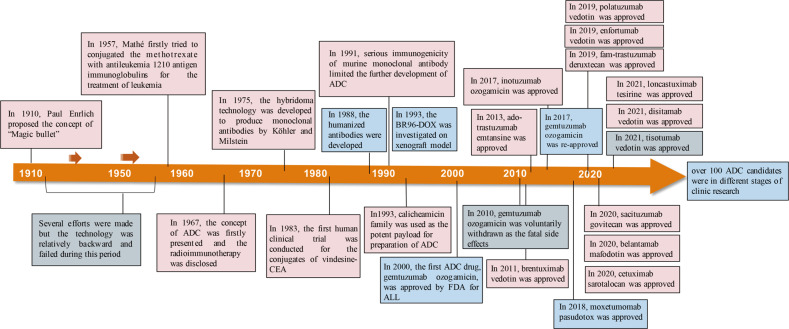
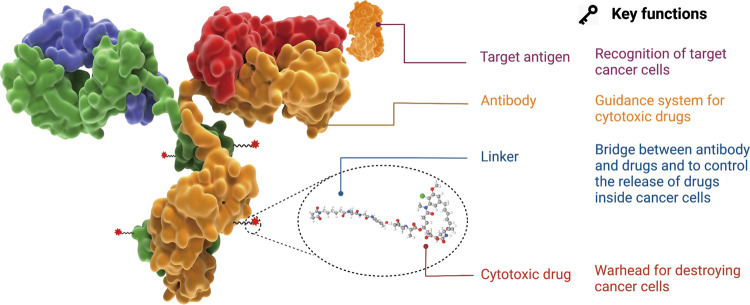
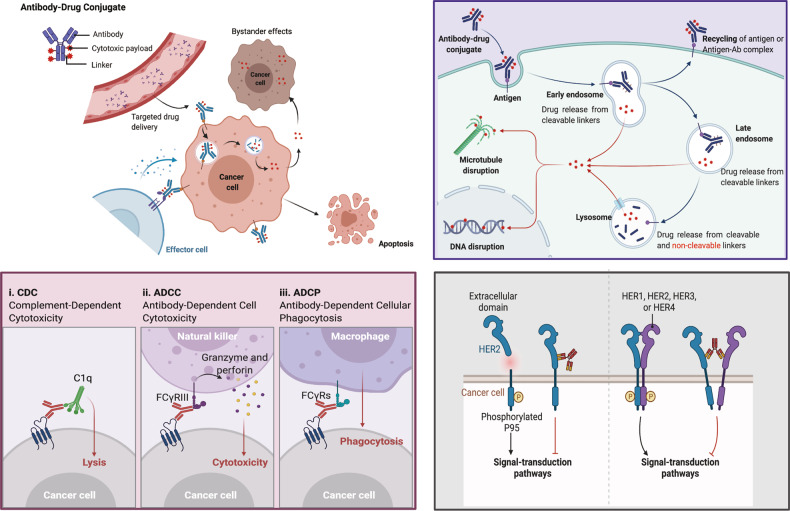
Antibody–drug conjugate (ADC) is typically composed of a monoclonal antibody (mAbs) covalently attached to a cytotoxic drug via a chemical linker. It combines both the advantages of highly specific targeting ability and highly potent killing effect to achieve accurate and efficient elimination of cancer cells, which has become one of the hotspots for the research and development of anticancer drugs. Since the first ADC, Mylotarg ® (gemtuzumab ozogamicin), was approved in 2000 by the US Food and Drug Administration (FDA), there have been 14 ADCs received market approval so far worldwide. Moreover, over 100 ADC candidates have been investigated in clinical stages at present. This kind of new anti-cancer drugs, known as “biological missiles”, is leading a new era of targeted cancer therapy. Herein, we conducted a review of the history and general mechanism of action of ADCs, and then briefly discussed the molecular aspects of key components of ADCs and the mechanisms by which these key factors influence the activities of ADCs. Moreover, we also reviewed the approved ADCs and other promising candidates in phase-3 clinical trials and discuss the current challenges and future perspectives for the development of next generations, which provide insights for the research and development of novel cancer therapeutics using ADCs.
Overview
The claims and statistics of this paper haven’t been checked yet.
Free: it reads the open-access text and checks the first 5 claims that cite a source we can check. Create a free account to check every claim.
Integrity signals
Registry
Cites
Statistics
Figures
Verification
Claims the paper makes
The claims and statistics of this paper haven’t been checked yet.
Free: it reads the open-access text and checks the first 5 claims that cite a source we can check. Create a free account to check every claim.
Claims other papers make about this one
Each is checked against this paper’s own text: does it say what the citing paper says it does?
The source backs part of the claim, not all of it — or backs it for a different population, condition or comparison.
In the citing paper
“However, hydrazone (t1/2 = 24 h) and carbonate (t1/2 = 36 h) linkers both suffer from instability in the plasma, with hydrolysis also occurring at physiological pH and contributing to off-target toxicity due to premature drug release54,58,59.”
From The evolving landscape of antibody-drug conjugates (ADCs) for treatment of prostate cancer (2025) · cites this paper as [54]
Experimental — accuracy not yet measuredThe source backs part of the claim, not all of it — or backs it for a different population, condition or comparison.
In the citing paper
“Enzyme-based linkers are utilized most commonly in ADCs: 8 out of 13 FDA-approved ADCs use a protease-cleavable linker, including the ADCs enfortumab vedotin and trastuzumab deruxtecan that have transformed the standard of care for metastatic urothelial and breast carcinomas54.”
From The evolving landscape of antibody-drug conjugates (ADCs) for treatment of prostate cancer (2025) · cites this paper as [54]
Experimental — accuracy not yet measuredThe source backs part of the claim, not all of it — or backs it for a different population, condition or comparison.
In the citing paper
“Hydrazone, carbonate, and silyl ether linkers are pH-sensitive, hydrolyzed in the acidic pH of lysosomes and endosomes upon target cell internalization54.”
From The evolving landscape of antibody-drug conjugates (ADCs) for treatment of prostate cancer (2025) · cites this paper as [54]
Experimental — accuracy not yet measured
Self-check
Percentages, sums and reported differences re-computed from the paper’s own numbers.
The self-check needs the paper’s full text.
Citations
Cites
Sung, H., Ferlay, J., Siegel, R. L., Laversanne, M., Soerjomataram, I., Jemal, A., & Bray, F. (2021) · CA: A Cancer Journal for Clinicians · doi:10.3322/caac.21660 · Cited by 108,699
Continuous cultures of fused cells secreting antibody of predefined specificity
KÖHLER, G., & MILSTEIN, C. (1975) · Nature · doi:10.1038/256495a0 · Cited by 17,229
Slamon, D. J., Clark, G. M., Wong, S. G., Levin, W. J., Ullrich, A., & McGuire, W. L. (1987) · Science · doi:10.1126/science.3798106 · Cited by 11,760 · cited 1×
“Solid tumors Ado-trastuzumab emtansine (Kadcyla, Roche): About 15%-20% of breast cancer patients show human epidermal growth factor receptor 2 (HER2) positive overexpression with a higher invasiveness.(191,192) Ado-trastuzumab emtansine, also known as T-DM1, is an ADC drug targeting HER2 and the first ADC to be approv…”
BackgroundToll-like receptors and innate immunity
Medzhitov, R. (2001) · Nature Reviews Immunology · doi:10.1038/35100529 · Cited by 4,308
Inhibition of Cell Division in Escherichia coli by Electrolysis Products from a Platinum Electrode
ROSENBERG, B., VAN CAMP, L., & KRIGAS, T. (1965) · Nature · doi:10.1038/205698a0 · Cited by 3,049
Strategies and challenges for the next generation of antibody–drug conjugates
Beck, A., Goetsch, L., Dumontet, C., & Corvaïa, N. (2017) · Nature Reviews Drug Discovery · doi:10.1038/nrd.2016.268 · Cited by 2,271
Trastuzumab deruxtecan in previously treated HER2-positive breast cancer
Modi, S., Saura, C., Yamashita, T., Park, Y. H., Kim, S.-B., Tamura, K., Andre, F., Iwata, H., Ito, Y., Tsurutani, J., et al. (2020) · New England Journal of Medicine · doi:10.1056/nejmoa1914510 · Cited by 2,006 · cited 3×
“0%).(207) Moreover, The recently updated data of DESTINY-Breast03, a global, head-to-head, randomized, open-label, pivotal phase 3 trial, demonstrated that DS-8201 had an significant superiority over T-DM1.”
BackgroundInfluentialTumor microenvironment as a therapeutic target in cancer
Xiao, Y., & Yu, D. (2021) · Pharmacology & Therapeutics · doi:10.1016/j.pharmthera.2020.107753 · Cited by 1,957
Rowinsky, E. K., & Donehower, R. C. (1995) · New England Journal of Medicine · doi:10.1056/nejm199504133321507 · Cited by 1,924
Sacituzumab Govitecan in Metastatic Triple-Negative Breast Cancer
Bardia, A., Hurvitz, S. A., Tolaney, S. M., Loirat, D., Punie, K., Oliveira, M., Brufsky, A., Sardesai, S. D., Kalinsky, K., Zelnak, A. B., et al. (2021) · New England Journal of Medicine · doi:10.1056/nejmoa2028485 · Cited by 1,711 · cited 1×
“The ASCENT study was performed in 529 patients with unresectable locally advanced or mTNBC who had relapsed after at least two prior chemotherapies, one of which could be in the neoadjuvant or adjuvant setting, if progression occurred within 12 months.(221) The enrolled patients were randomized into two groups, receiv…”
Method
Research works printed but not linked: 2
- Cortés, J. et al. LBA1 Trastuzumab deruxtecan (T-DXd) vs trastuzumab emtansine (T-DM1) in patients (Pts) with HER2+ metastatic breast cancer (mBC): Results of the randomized phase III DESTINY-Breast03 study. Ann. Oncol. 32, S1287–S1288 (2021). · DOI
- Spira, A. et al. OA03.03 Datopotamab deruxtecan (Dato-DXd; DS-1062), a TROP2 ADC, in patients with advanced NSCLC: updated results of TROPION-PanTumor01 phase 1 study. J. Thorac. Oncol. 16, S106–S107 (2021). · DOI
Cited by
Targeting HER2-positive breast cancer: advances and future directions
Swain, S. M., Shastry, M., & Hamilton, E. (2023) · Nature Reviews Drug Discovery · doi:10.1038/s41573-022-00579-0 · Cited by 1,160
Multifunctional nanoparticle-mediated combining therapy for human diseases
Li, X., Peng, X., Zoulikha, M., Boafo, G. F., Magar, K. T., Ju, Y., & He, W. (2024) · Signal Transduction and Targeted Therapy · doi:10.1038/s41392-023-01668-1 · Cited by 521
Myeloid-derived suppressor cells: an emerging target for anticancer immunotherapy
Wu, Y., Yi, M., Niu, M., Mei, Q., & Wu, K. (2022) · Molecular Cancer · doi:10.1186/s12943-022-01657-y · Cited by 458
New promises and challenges in the treatment of advanced non-small-cell lung cancer
Meyer, M.-L., Fitzgerald, B. G., Paz-Ares, L., Cappuzzo, F., Jänne, P. A., Peters, S., & Hirsch, F. R. (2024) · The Lancet · doi:10.1016/s0140-6736(24)01029-8 · Cited by 453
Advance in peptide-based drug development: delivery platforms, therapeutics and vaccines
Xiao, W., Jiang, W., Chen, Z., Huang, Y., Mao, J., Zheng, W., Hu, Y., & Shi, J. (2025) · Signal Transduction and Targeted Therapy · doi:10.1038/s41392-024-02107-5 · Cited by 449
Fu, K., Xie, F., Wang, F., & Fu, L. (2022) · Journal of Hematology & Oncology · doi:10.1186/s13045-022-01391-4 · Cited by 397
Precision Medicine: Disease Subtyping and Tailored Treatment
Wang, R. C., & Wang, Z. (2023) · Cancers · doi:10.3390/cancers15153837 · Cited by 315
Antibody–Drug Conjugates (ADCs): current and future biopharmaceuticals
Wang, R., Hu, B., Pan, Z., Mo, C., Zhao, X., Liu, G., Hou, P., Cui, Q., Xu, Z., Wang, W., et al. (2025) · Journal of Hematology & Oncology · doi:10.1186/s13045-025-01704-3 · Cited by 285
Optimizing the safety of antibody–drug conjugates for patients with solid tumours
Tarantino, P., Ricciuti, B., Pradhan, S. M., & Tolaney, S. M. (2023) · Nature Reviews Clinical Oncology · doi:10.1038/s41571-023-00783-w · Cited by 269
Cancer therapy with antibodies
Paul, S., Konig, M. F., Pardoll, D. M., Bettegowda, C., Papadopoulos, N., Wright, K. M., Gabelli, S. B., Ho, M., van Elsas, A., & Zhou, S. (2024) · Nature Reviews Cancer · doi:10.1038/s41568-024-00690-x · Cited by 248
Tsao, L.-C., Wang, J. S., Ma, X., Sodhi, S. S., Ragusa, J. V., Liu, B., McBane, J., Wang, T., Wei, J.-P., Liu, C.-X., et al. (2025) · Nature Communications · doi:10.1038/s41467-025-58266-8 · Cited by 218
Colorimetric sensing for translational applications: from colorants to mechanisms
Jin, Z., Yim, W., Retout, M., Housel, E., Zhong, W., Zhou, J., Strano, M. S., & Jokerst, J. V. (2024) · Chemical Society Reviews · doi:10.1039/d4cs00328d · Cited by 206
Tumor-targeted delivery of a STING agonist improves cancer immunotherapy
Wu, Y.-T., Fang, Y., Wei, Q., Shi, H., Tan, H., Deng, Y., Zeng, Z., Qiu, J., Chen, C., Sun, L., et al. (2022) · Proceedings of the National Academy of Sciences · doi:10.1073/pnas.2214278119 · Cited by 201
Advances in molecular pathology and therapy of non-small cell lung cancer
Huang, Q., Li, Y., Huang, Y., Wu, J., Bao, W., Xue, C., Li, X., Dong, S., Dong, Z., & Hu, S. (2025) · Signal Transduction and Targeted Therapy · doi:10.1038/s41392-025-02243-6 · Cited by 197
A review of the clinical efficacy of FDA-approved antibody‒drug conjugates in human cancers
Liu, K., Li, M., Li, Y., Li, Y., Chen, Z., Tang, Y., Yang, M., Deng, G., & Liu, H. (2024) · Molecular Cancer · doi:10.1186/s12943-024-01963-7 · Cited by 196
FGFR-targeted therapeutics: clinical activity, mechanisms of resistance and new directions
Katoh, M., Loriot, Y., Brandi, G., Tavolari, S., Wainberg, Z. A., & Katoh, M. (2024) · Nature Reviews Clinical Oncology · doi:10.1038/s41571-024-00869-z · Cited by 195
Emerging Targeted Therapies for HER2-Positive Breast Cancer
Mercogliano, M. F., Bruni, S., Mauro, F. L., & Schillaci, R. (2023) · Cancers · doi:10.3390/cancers15071987 · Cited by 194
Zhao, L. B., Chen, J., Bai, B., Song, G., Zhang, J., Han, Y., Huang, S., Wang, Z., & Lu, G. (2024) · Frontiers in Pharmacology · doi:10.3389/fphar.2023.1333986 · Cited by 193
Fröhlich, K., Fahrner, M., Brombacher, E., Seredynska, A., Maldacker, M., Kreutz, C., Schmidt, A., & Schilling, O. (2024) · Molecular & Cellular Proteomics · doi:10.1016/j.mcpro.2024.100800 · Cited by 191
A comprehensive overview on antibody-drug conjugates: from the conceptualization to cancer therapy
Riccardi, F., Dal Bo, M., Macor, P., & Toffoli, G. (2023) · Frontiers in Pharmacology · doi:10.3389/fphar.2023.1274088 · Cited by 188
New-generation advanced PROTACs as potential therapeutic agents in cancer therapy
Wang, C., Zhang, Y., Chen, W., Wu, Y., & Xing, D. (2024) · Molecular Cancer · doi:10.1186/s12943-024-02024-9 · Cited by 188
Self-citationEnhancing immunotherapy with tumour-responsive nanomaterials
Linderman, S. W., DeRidder, L. B., Sanjurjo, L., Foote, M. B., Alonso, M. J., Kirtane, A. R., Langer, R., & Traverso, G. (2025) · Nature Reviews Clinical Oncology · doi:10.1038/s41571-025-01000-6 · Cited by 184
Emerging therapies targeting the delta-like ligand 3 (DLL3) in small cell lung cancer
Rudin, C. M., Reck, M., Johnson, M. L., Blackhall, F., Hann, C. L., Yang, J. C.-H., Bailis, J. M., Bebb, G., Goldrick, A., Umejiego, J., et al. (2023) · Journal of Hematology & Oncology · doi:10.1186/s13045-023-01464-y · Cited by 181
Antibody–Drug Conjugates: A Review of Approved Drugs and Their Clinical Level of Evidence
Gogia, P., Ashraf, H., Bhasin, S., & Xu, Y. (2023) · Cancers · doi:10.3390/cancers15153886 · Cited by 181
The Evolving Landscape of Antibody–Drug Conjugates: In Depth Analysis of Recent Research Progress
Sasso, J. M., Tenchov, R., Bird, R. E., Iyer, K. A., Ralhan, K., Rodríguez, Y., & Zhou, Q. A. (2023) · Bioconjugate Chemistry · doi:10.1021/acs.bioconjchem.3c00374 · Cited by 175
Natural products and drug discovery
Newman, D. J. (2022) · National Science Review · doi:10.1093/nsr/nwac206 · Cited by 169
Mechanisms of Resistance to Antibody-Drug Conjugates
Khoury, R., Saleh, K., Khalife, N., Saleh, M., Chahine, C., Ibrahim, R., & Lecesne, A. (2023) · International Journal of Molecular Sciences · doi:10.3390/ijms24119674 · Cited by 159
Bispecific antibody drug conjugates: Making 1+1>2
Gu, Y., Wang, Z., & Wang, Y. (2024) · Acta Pharmaceutica Sinica B · doi:10.1016/j.apsb.2024.01.009 · Cited by 159
The Dawn of a New Era: Targeting the “Undruggables” with Antibody-Based Therapeutics
Qian, L., Lin, X., Gao, X., Khan, R. U., Liao, J.-Y., Du, S., Ge, J., Zeng, S., & Yao, S. Q. (2023) · Chemical Reviews · doi:10.1021/acs.chemrev.2c00915 · Cited by 155
Antibody-drug conjugates in lung cancer: dawn of a new era?
Coleman, N., Yap, T. A., Heymach, J. V., Meric‐Bernstam, F., & Le, X. (2023) · npj Precision Oncology · doi:10.1038/s41698-022-00338-9 · Cited by 155
A comprehensive review of key factors affecting the efficacy of antibody drug conjugate
Samantasinghar, A., Sunildutt, N. P., Ahmed, F., Soomro, A. M., Salih, A. R. C., Parihar, P., Memon, F. H., Kim, K. H., Kang, I. S., & Choi, K. H. (2023) · Biomedicine & Pharmacotherapy · doi:10.1016/j.biopha.2023.114408 · Cited by 149
The role of cell‐penetrating peptides in potential anti‐cancer therapy
Zhou, M., Zou, X., Cheng, K., Zhong, S., Su, Y., Wu, T., Tao, Y., Cong, L., Yan, B., & Jiang, Y. (2022) · Clinical and Translational Medicine · doi:10.1002/ctm2.822 · Cited by 148
Lysosomal-Cleavable Peptide Linkers in Antibody–Drug Conjugates
Balamkundu, S., & Liu, C. (2023) · Biomedicines · doi:10.3390/biomedicines11113080 · Cited by 137
Rise of Antibody-Drug Conjugates: The Present and Future
Shastry, M., Gupta, A., Chandarlapaty, S., Young, M. R., Powles, T. B., & Hamilton, E. P. (2023) · American Society of Clinical Oncology Educational Book · doi:10.1200/edbk_390094 · Cited by 135
Antibody–drug conjugates in cancer therapy: current landscape, challenges, and future directions
Chen, B., Zheng, X., Wu, J., Chen, G., Yu, J. Q., Xu, Y. X., Wu, W. K. K., Tse, G. M.-K., To, K. F., & Kang, W. (2025) · Molecular Cancer · doi:10.1186/s12943-025-02489-2 · Cited by 133
Targeting Trop-2 in cancer: Recent research progress and clinical application
Qiu, S., Zhang, J., Wang, Z., Lan, H., Hou, J., Zhang, N., Wang, X., & Lu, H. (2023) · Biochimica et Biophysica Acta (BBA) - Reviews on Cancer · doi:10.1016/j.bbcan.2023.188902 · Cited by 128
Araki, T., Kanda, S., Horinouchi, H., & Ohe, Y. (2023) · Japanese Journal of Clinical Oncology · doi:10.1093/jjco/hyad052 · Cited by 117
“Smart” drug delivery: A window to future of translational medicine
Rana, A., Adhikary, M., Singh, P. K., Das, B. C., & Bhatnagar, S. (2023) · Frontiers in Chemistry · doi:10.3389/fchem.2022.1095598 · Cited by 117
Microtubule‐targeting agents for cancer treatment: Seven binding sites and three strategies
Wang, X., Gigant, B., Zheng, X., & Chen, Q. (2023) · MedComm – Oncology · doi:10.1002/mog2.46 · Cited by 111
Synthetic Biology in Natural Product Biosynthesis
Seshadri, K., Abad, A. N. D., Nagasawa, K. K., Yost, K. M., Johnson, C. W., Dror, M. J., & Tang, Y. (2025) · Chemical Reviews · doi:10.1021/acs.chemrev.4c00567 · Cited by 108
Revolutionizing cancer treatment: comprehensive insights into immunotherapeutic strategies
Raghani, N. R., Chorawala, M. R., Mahadik, M., Patel, R. B., Prajapati, B. G., & Parekh, P. S. (2024) · Medical Oncology · doi:10.1007/s12032-023-02280-7 · Cited by 108
Resistance to antibody–drug conjugates: A review
Li, S., Zhao, X., Fu, K., Zhu, S., Pan, C., Yang, C., Wang, F., To, K. K. W., & Fu, L. (2024) · Acta Pharmaceutica Sinica B · doi:10.1016/j.apsb.2024.12.036 · Cited by 108
Self-citationLim, S. H., Yee, G. T., & Khang, D. (2024) · International Journal of Nanomedicine · doi:10.2147/ijn.s450853 · Cited by 106
Rodríguez-Nava, C., Ortuño‐Pineda, C., Illades‐Aguiar, B., Flores‐Alfaro, E., Leyva‐Vázquez, M. A., Parra‐Rojas, I., Moral-Hernández, Ó. D., Vences-Velázquez, A., Cortés-Sarabia, K., & Alarcón‐Romero, L. D. C. (2023) · Biomedicines · doi:10.3390/biomedicines11061610 · Cited by 103
Feng, X., Li, Z. Y., Liu, Y., Chen, D., & Zhou, Z. (2024) · Experimental Hematology and Oncology · doi:10.1186/s40164-024-00570-y · Cited by 102
TROP2-directed nanobody-drug conjugate elicited potent antitumor effect in pancreatic cancer
Xu, C., Zhu, M., Wang, Q., Cui, J., Huang, Y., Huang, X., Huang, J., Gai, J., Li, G., Qiao, P., et al. (2023) · Journal of Nanobiotechnology · doi:10.1186/s12951-023-02183-9 · Cited by 101
Esapa, B., Jiang, J., Cheung, A., Chenoweth, A. M., Thurston, D. E., & Karagiannis, S. N. (2023) · Cancers · doi:10.3390/cancers15061845 · Cited by 97
Glaviano, A., Wander, S. A., Baird, R. D., Yap, K. C.-Y., Lam, H. Y., Toi, M., Carbone, D., Geoerger, B., Serra, V., Jones, R. H., et al. (2024) · Drug Resistance Updates · doi:10.1016/j.drup.2024.101103 · Cited by 96
Degrader–Antibody Conjugates: Emerging New Modality
Hong, K. B., & An, H. (2022) · Journal of Medicinal Chemistry · doi:10.1021/acs.jmedchem.2c01791 · Cited by 96
Antibody–Drug Conjugates: The Dynamic Evolution from Conventional to Next-Generation Constructs
Metrangolo, V., & Engelholm, L. H. (2024) · Cancers · doi:10.3390/cancers16020447 · Cited by 92
Development of antibody‐drug conjugates in cancer: Overview and prospects
Ruan, D., Wu, H., Meng, Q., & Xu, R. (2023) · 癌症:英文版 · doi:10.1002/cac2.12517 · Cited by 91
Drug resistance in breast cancer: Mechanisms and strategies for management
Wu, G., Xiao, M., Hao, W.-C., Yang, Z., Liu, X., Xu, D., Peng, Z.-X., & Zhang, L. (2025) · Drug Resistance Updates · doi:10.1016/j.drup.2025.101288 · Cited by 90
Emerging Trends in Immunotherapy for Cancer
Mishra, A. K., Ali, A., Dutta, S., Banday, S., & Malonia, S. K. (2022) · Diseases · doi:10.3390/diseases10030060 · Cited by 88
Cancer Biomarkers and Precision Oncology: A Review of Recent Trends and Innovations
AlDoughaim, M., Alsuhebany, N., Alzahrani, M., Alqahtani, T., Alghamdi, S. S., Badreldin, H. A., & Alshaykh, H. A. (2024) · Clinical Medicine Insights Oncology · doi:10.1177/11795549241298541 · Cited by 87
From cell-SELEX to tissue-SELEX for targeted drug delivery and aptamer nanomedicine
Wong, K., Wong, M., Lee, J. H., & Liu, J. (2025) · Advanced Drug Delivery Reviews · doi:10.1016/j.addr.2025.115646 · Cited by 87
Advances in siRNA delivery approaches in cancer therapy: challenges and opportunities
Isazadeh, H., Oruji, F., Shabani, S., Behroozi, J., Nasiri, H., Isazadeh, A., & Akbari, M. (2023) · Molecular Biology Reports · doi:10.1007/s11033-023-08749-y · Cited by 86
ADCdb: the database of antibody–drug conjugates
Shen, L., Sun, X., Chen, Z., Guo, Y., Shen, Z., Song, Y., Xin, W., Ding, H., Ma, X., Xu, W., et al. (2023) · Nucleic Acids Research · doi:10.1093/nar/gkad831 · Cited by 86
Dietary factors and their influence on immunotherapy strategies in oncology: a comprehensive review
Golonko, A., Pienkowski, T., Świsłocka, R., Orzechowska, S., Marszałek, K., Szczerbiński, Ł., Swiergiel, A. H., & Lewandowski, W. (2024) · Cell Death and Disease · doi:10.1038/s41419-024-06641-6 · Cited by 85
Wang, D., Yin, F., Li, Z., Zhang, Y., & Chen, S. (2025) · Journal of Nanobiotechnology · doi:10.1186/s12951-025-03277-2 · Cited by 84
Self-citationSelective drug delivery to the retinal cells: Biological barriers and avenues
Ramsay, E., Lajunen, T., Bhattacharya, M., Reinisalo, M., Rilla, K. J., Kidron, H., Terasaki, T., & Urtti, A. O. (2023) · Journal of Controlled Release · doi:10.1016/j.jconrel.2023.07.028 · Cited by 83
Biology of GD2 ganglioside: implications for cancer immunotherapy
Machy, P., Mortier, E., & Birklé, S. (2023) · Frontiers in Pharmacology · doi:10.3389/fphar.2023.1249929 · Cited by 83
Liu, J., Yang, J., Sun, Y., Gong, J., Yue, J., Pan, Y., Sun, M., Song, R., Xiao, X., Tazbirkova, A., et al. (2025) · Nature Medicine · doi:10.1038/s41591-025-03783-8 · Cited by 82
Self-citationAntibody drug conjugates targeting HER2: Clinical development in metastatic breast cancer
Rassy, E., Rached, L., & Pistilli, B. (2022) · The Breast · doi:10.1016/j.breast.2022.10.016 · Cited by 81
Chemical technology principles for selective bioconjugation of proteins and antibodies
Chauhan, P. S., Ragendu, V., Kumar, M., Molla, R., Mishra, S. D., Basa, S., & Rai, V. (2024) · Chemical Society Reviews · doi:10.1039/d3cs00715d · Cited by 81
Hong, Y., Nam, S.-M., & Moon, A. (2023) · Archives of Pharmacal Research · doi:10.1007/s12272-023-01433-6 · Cited by 80
Current Landscape of Cancer Immunotherapy: Harnessing the Immune Arsenal to Overcome Immune Evasion
Mitra, A., Kumar, A., Amdare, N. P., & Pathak, R. (2024) · Biology · doi:10.3390/biology13050307 · Cited by 80
Antibody-drug conjugates: the paradigm shifts in the targeted cancer therapy
Aggarwal, D., Yang, J., Salam, M. A., Sengupta, S., Al-Amin, M. Y., Mustafa, S., Khan, M. A., Huang, X., & Pawar, J. S. (2023) · Frontiers in Immunology · doi:10.3389/fimmu.2023.1203073 · Cited by 78
Nanoparticle-Based Approaches for Treatment of Hematological Malignancies: a Comprehensive Review
Hani, U., Gowda, B. H. J., Haider, N., Ramesh, K. V., Paul, K., Ashique, S., Ahmed, M. G., Narayana, S., Mohanto, S., & Kesharwani, P. (2023) · AAPS PharmSciTech · doi:10.1208/s12249-023-02670-0 · Cited by 77
Li, X., Zhou, S., Abrahams, C. L., Krimm, S., Smith, J., Bajjuri, K. M., Stephenson, H. T., Henningsen, R. A., Hanson, J., Heibeck, T. H., et al. (2022) · Molecular Cancer Therapeutics · doi:10.1158/1535-7163.mct-22-0322 · Cited by 77
Antibody–drug conjugates in cancer therapy: mechanisms and clinical studies
He, J., Zeng, X., Wang, C., Wang, E., & Li, Y. (2024) · MedComm · doi:10.1002/mco2.671 · Cited by 76
Strategies for prevention and management of ocular events occurring with mirvetuximab soravtansine
Hendershot, A. J., Slabaugh, M. A., Riaz, K. M., Moore, K. N., O’Malley, D. M., Matulonis, U. A., & Konecny, G. E. (2023) · Gynecologic Oncology Reports · doi:10.1016/j.gore.2023.101155 · Cited by 76
Current status and future perspectives of FGF21 analogues in clinical trials
Chui, Z. S. W., Shen, Q., & Xu, A. (2024) · Trends in Endocrinology and Metabolism · doi:10.1016/j.tem.2024.02.001 · Cited by 72
Engineered multi-domain lipid nanoparticles for targeted delivery
Liu, Z., Chen, J., Xu, M., Ho, S., Wei, Y., Ho, H., & Yong, K. (2025) · Chemical Society Reviews · doi:10.1039/d4cs00891j · Cited by 70
Peptide-Drug Conjugates: Design, Chemistry, and Drug Delivery System as a Novel Cancer Theranostic
Rizvi, S. F. A., Zhang, L., Zhang, H., & Fang, Q. (2024) · ACS Pharmacology & Translational Science · doi:10.1021/acsptsci.3c00269 · Cited by 70
HER2 testing: evolution and update for a companion diagnostic assay
Robbins, C. J., Bates, K., & Rimm, D. L. (2025) · Nature Reviews Clinical Oncology · doi:10.1038/s41571-025-01016-y · Cited by 70
Prodrug-conjugated tumor-seeking commensals for targeted cancer therapy
Shen, H., Zhang, C., Li, S., Liang, Y., Lee, L. T., Aggarwal, N., Wun, K. S., Liu, J., Nadarajan, S. P., Weng, C., et al. (2024) · Nature Communications · doi:10.1038/s41467-024-48661-y · Cited by 69
Self-citationClinical perspective: Antibody-drug conjugates for the treatment of HER2-positive breast cancer
Najminejad, Z., Dehghani, F., Mirzaei, Y., Mer, A. H., Saghi, S. A., Abdolvahab, M. H., Bagheri, N., Meyfour, A., Jafari, A., Jahandideh, S., et al. (2023) · Molecular Therapy · doi:10.1016/j.ymthe.2023.03.019 · Cited by 69
Targeted Therapeutic Strategies for the Treatment of Cancer
Victoir, B., Croix, C., Gouilleux, F., & Prié, G. (2024) · Cancers · doi:10.3390/cancers16020461 · Cited by 69
Wang, Y., Lu, K., Yang, X., Xu, S., Chu, H., & Fang, X. (2025) · Frontiers in Immunology · doi:10.3389/fimmu.2025.1678907 · Cited by 69
Technological advancements in antibody-based therapeutics for treatment of diseases
Lu, R., Chiang, H.-L., Yuan, J. P., Wang, H.-H., Chen, C.-Y., Panda, S. S., Liang, K.-H., Peng, H., Ko, S.-H., Hsu, H.-J., et al. (2025) · Journal of Biomedical Science · doi:10.1186/s12929-025-01190-2 · Cited by 68
The Potential of Topoisomerase Inhibitor-Based Antibody–Drug Conjugates
Han, S., Lim, K. S., Blackburn, B. J., Yun, J., Putnam, C. W., Bull, D. A., & Won, Y. (2022) · Pharmaceutics · doi:10.3390/pharmaceutics14081707 · Cited by 68
Self-citationMolecular pathways and therapeutic targets linked to triple-negative breast cancer (TNBC)
Mustafa, M., Abbas, K., Alam, M., Ahmad, W., Moinuddin, M., Usmani, N., Siddiqui, S. A., & Habib, S. (2023) · Molecular and Cellular Biochemistry · doi:10.1007/s11010-023-04772-6 · Cited by 67
Antibody-Drug Conjugate Overview: a State-of-the-art Manufacturing Process and Control Strategy
Li, M., Zhao, X., Yu, C., & Wang, L. (2024) · Pharmaceutical Research · doi:10.1007/s11095-023-03649-z · Cited by 66
Azeez, S. S., Yashooa, R. K., Smail, S. W., Salihi, A. B., Ali, A. S., Mamand, S., & Janson, C. (2025) · Molecular Cancer · doi:10.1186/s12943-025-02386-8 · Cited by 65
Cavallaro, P. A., Santo, M. D., Belsito, E. L., Longobucco, C., Curcio, M., Morelli, C., Pasqua, L., & Leggio, A. (2023) · Nanomaterials · doi:10.3390/nano13172476 · Cited by 65
Antibody–drug conjugates: prospects for the next generation
Grairi, M., & Borgne, M. L. (2024) · Drug Discovery Today · doi:10.1016/j.drudis.2024.104241 · Cited by 65
Antibody-drug conjugates in cancer therapy: applications and future advances
Long, R., Zuo, H., Tang, G., Zhang, C., Yue, X., Yang, J., Luo, X., Deng, Y., Qiu, J.-Y., Li, J., et al. (2025) · Frontiers in Immunology · doi:10.3389/fimmu.2025.1516419 · Cited by 64
Structural modification strategies of triazoles in anticancer drug development
Guan, Q., Gao, Z., Chen, Y., Guo, C., Chen, Y., & Sun, H. (2024) · European Journal of Medicinal Chemistry · doi:10.1016/j.ejmech.2024.116578 · Cited by 64
Dewaker, V., Morya, V. K., Kim, Y. H., Park, S. T., Kim, H. S., & Koh, Y. H. (2025) · Biomarker Research · doi:10.1186/s40364-025-00764-4 · Cited by 63
Peripheral neuropathy associated with monomethyl auristatin E-based antibody-drug conjugates
Fu, Z., Gao, C., Wu, T., Wang, L., Li, S., Zhang, Y. X., & Chen, S. (2023) · iScience · doi:10.1016/j.isci.2023.107778 · Cited by 63
Self-citationZhou, K., Liu, X., & Zhu, H. (2025) · Journal of Hematology & Oncology · doi:10.1186/s13045-025-01752-9 · Cited by 63
Dual-payload antibody–drug conjugates: Taking a dual shot
Tao, J., Gu, Y., Zhou, W., & Wang, Y. (2024) · European Journal of Medicinal Chemistry · doi:10.1016/j.ejmech.2024.116995 · Cited by 62
Lung cancer research and treatment: global perspectives and strategic calls to action
Meyer, M., Peters, S., Mok, T. S. K., Lam, S. C., Yang, P., Aggarwal, C., Brahmer, J. R., Dziadziuszko, R., Felip, E., Ferris, A. A., et al. (2024) · Annals of Oncology · doi:10.1016/j.annonc.2024.10.006 · Cited by 62
Enhancer reprogramming: critical roles in cancer and promising therapeutic strategies
Yang, J., Zhou, F., Luo, X., Fang, Y., Wang, X., Liu, X., Xiao, R., Jiang, D., Tang, Y., Yang, G., et al. (2025) · Cell Death Discovery · doi:10.1038/s41420-025-02366-3 · Cited by 62
Expanding the horizons of targeted protein degradation: A non-small molecule perspective
Huang, X., Wu, F., Ye, J., Wang, L., Wang, X., Li, X., & He, G. (2024) · Acta Pharmaceutica Sinica B · doi:10.1016/j.apsb.2024.01.010 · Cited by 62
Using Combination therapy to overcome diverse challenges of Immune Checkpoint Inhibitors treatment
Birnboim-Perach, R., & Benhar, I. (2024) · International Journal of Biological Sciences · doi:10.7150/ijbs.93697 · Cited by 62
Chen, Y., Liu, F., Pal, S., & Hu, Q. (2024) · Chemical Society Reviews · doi:10.1039/d4cs00411f · Cited by 61
de Sá, A. L., Díaz‐Tejeiro, C., Poyatos‐Racionero, E., Nieto‐Jiménez, C., Paniagua‐Herranz, L., Sanvicente, A., Calvo, E., Pérez‐Segura, P., Moreno, V., Morís, F., et al. (2023) · Journal of Hematology & Oncology · doi:10.1186/s13045-023-01519-0 · Cited by 61
Yao, H., Yan, M., Tong, Z., Wu, X., Ryu, M., Park, J., Kim, J. H., Zhong, Y., Zhao, Y., Voskoboynik, M., et al. (2024) · Journal of Clinical Oncology · doi:10.1200/jco.23.02044 · Cited by 61
Aptamers and nanobodies as alternatives to antibodies for ligand-targeted drug delivery in cancer
Sanjanwala, D., & Patravale, V. B. (2023) · Drug Discovery Today · doi:10.1016/j.drudis.2023.103550 · Cited by 60
Metadata
- Authors
- Fu, Z., Li, S., Han, S., Shi, C., & Zhang, Y.
- Affiliations
- Huazhong University of Science and Technology (CN)
- China Pharmaceutical University (CN)
- Wuhan Union Hospital (CN)
- Corresponding author
- Zhang, Yu
- Venue
- Signal Transduction and Targeted Therapy
- Published
- 2022-03-22
- Volume
- 7
- Issue
- 1
- Pages
- 93-93
- ISSN
- 2059-3635 (ISSN-L)
- PMC
- PMC8941077
- OpenAlex
- W4220847494
- Cited by
- 1,643
- References
- 274
- Citations by year
- 2026: 374 · 2025: 510 · 2024: 433 · 2023: 283 · 2022: 43
- FWCI
- 54.06
- Type
- journal article
- Language
- en
- Open access
- gold
- doi.org
- Licence
- cc-by
- creativecommons.org/licenses/by/4.0 (tdm)
- creativecommons.org/licenses/by/4.0 (vor)
- Locations
- Signal Transduction and Targeted Therapy (publishedVersion, cc-by)
- PubMed Central (publishedVersion, cc-by)
- PubMed (publishedVersion)
- DOAJ (DOAJ: Directory of Open Access Journals) (submittedVersion, cc-by-sa)
- Funders
- National Natural Science Foundation of China (82073402)
- Topics
- Life Sciences › Immunology and Microbiology › Immunology › Monoclonal and Polyclonal Antibodies Research
- Life Sciences › Immunology and Microbiology › Immunology › Toxin Mechanisms and Immunotoxins
- Life Sciences › Biochemistry, Genetics and Molecular Biology › Molecular Biology › Protein Degradation and Inhibitors
- Keywords
- antibody-drug conjugates, targeted cancer therapy, monoclonal antibodies, cytotoxic drugs, chemical linkers, mechanism of action, gemtuzumab ozogamicin
- MeSH terms
- Antibodies, Monoclonal, Antineoplastic Agents, Humans, Neoplasms, United States, United States Food and Drug Administration, Immunoconjugates
About these checks
Registry, retraction, Cites and statistics results are computed, not judged, with one exception: a printed reference that no index lists is read once by a model before it counts as a citation error. Claims are extracted by a model and kept only when their quote appears verbatim in the text; each cited source is then checked, with a model’s help, for whether it says what the claim relies on. Those verdicts can be wrong — read the claim’s quote and the cited source before relying on one.
Statistics and arithmetic are recomputed, not judged.
Confidence bands are shown only for fields calibrated on our annotated test set. None is calibrated yet, so no band is shown.
What counts as a claim ›How we measure confidence ›How we check this ›
Are you an author, or do you see a problem with this page? Request a review
Data sources
Bibliographic data: Semantic Scholar, OpenAlex, Crossref.
Contains information from the Semantic Scholar Academic Graph Datasets, made available under the ODC Attribution License (ODC-BY 1.0).
Semantic Scholar’s data is described in: Kinney, R., et al. (2023). The Semantic Scholar Open Data Platform. arXiv:2301.10140.
