

Chimeric cerebral organoids reveal the essentials of neuronal and astrocytic APOE4 for Alzheimer’s tau pathology
Open accessThe DOI matches its Crossref record; 42 of the 42 references it cites were found in a registry or an index.
Abstract
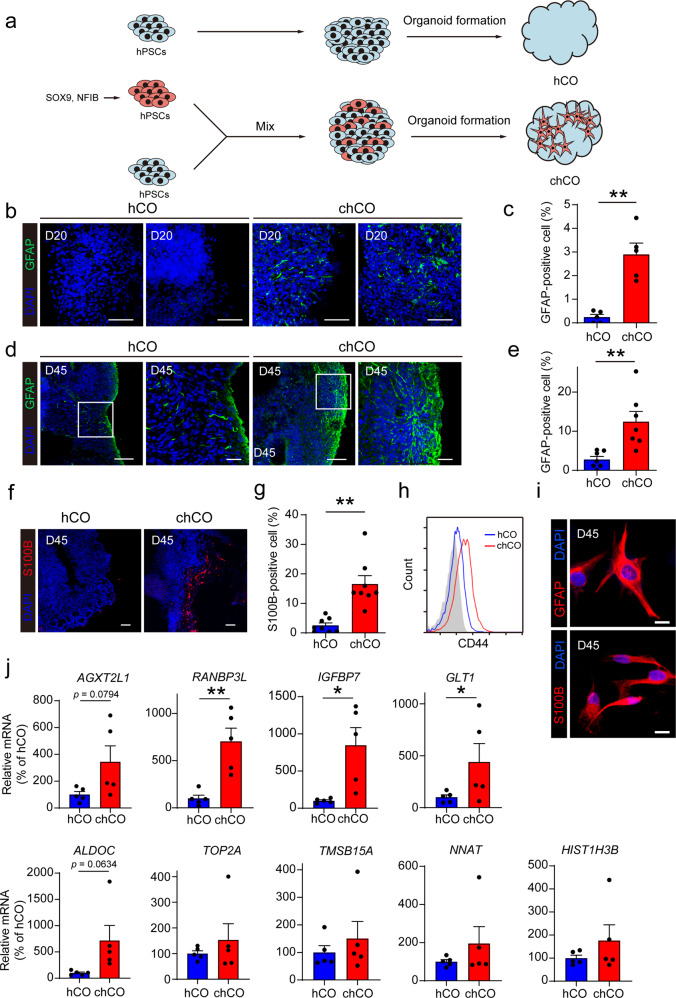
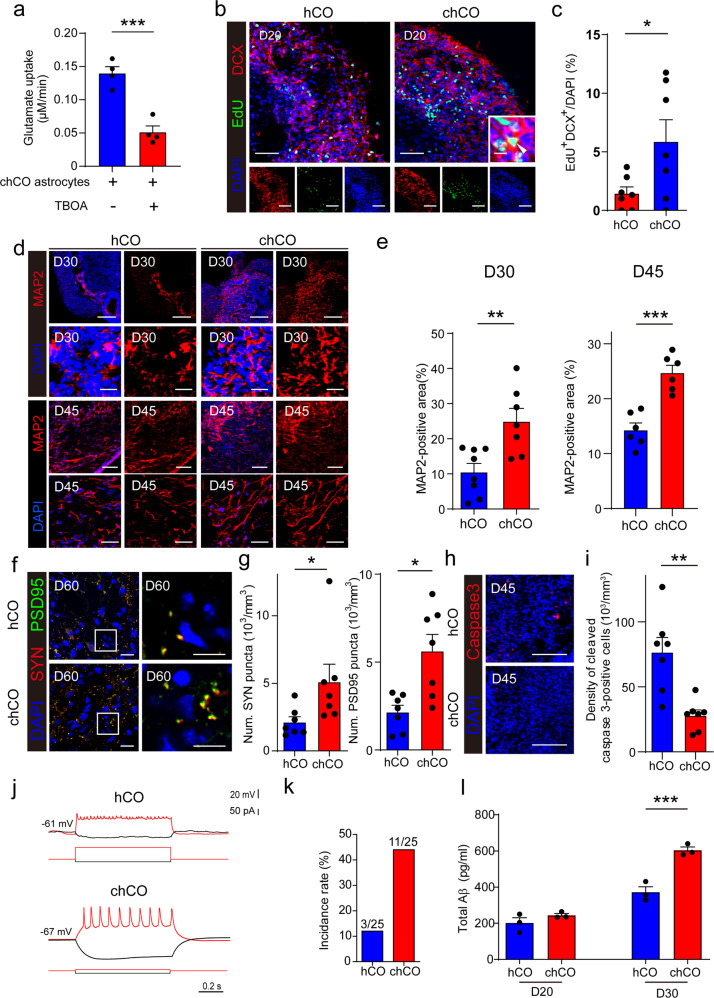
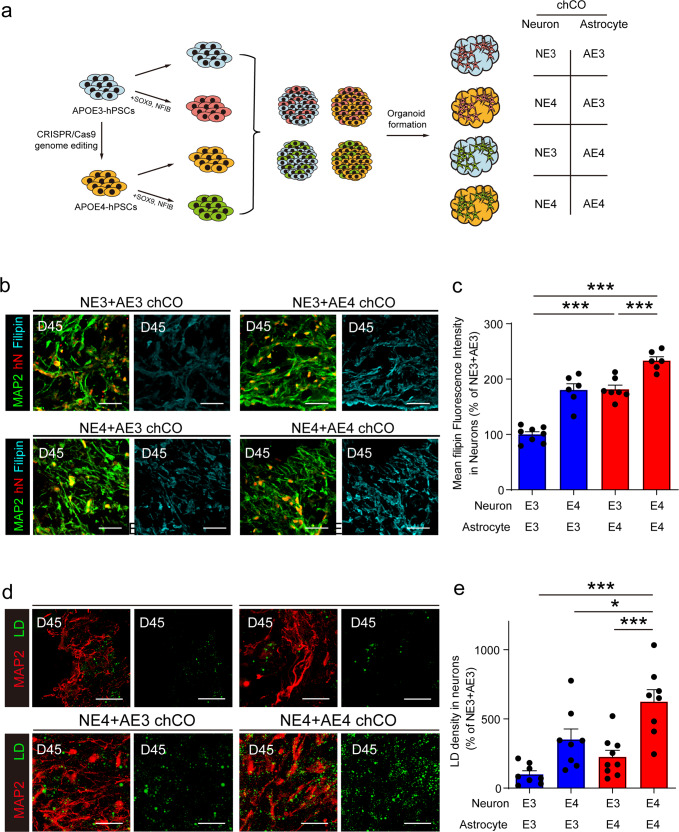
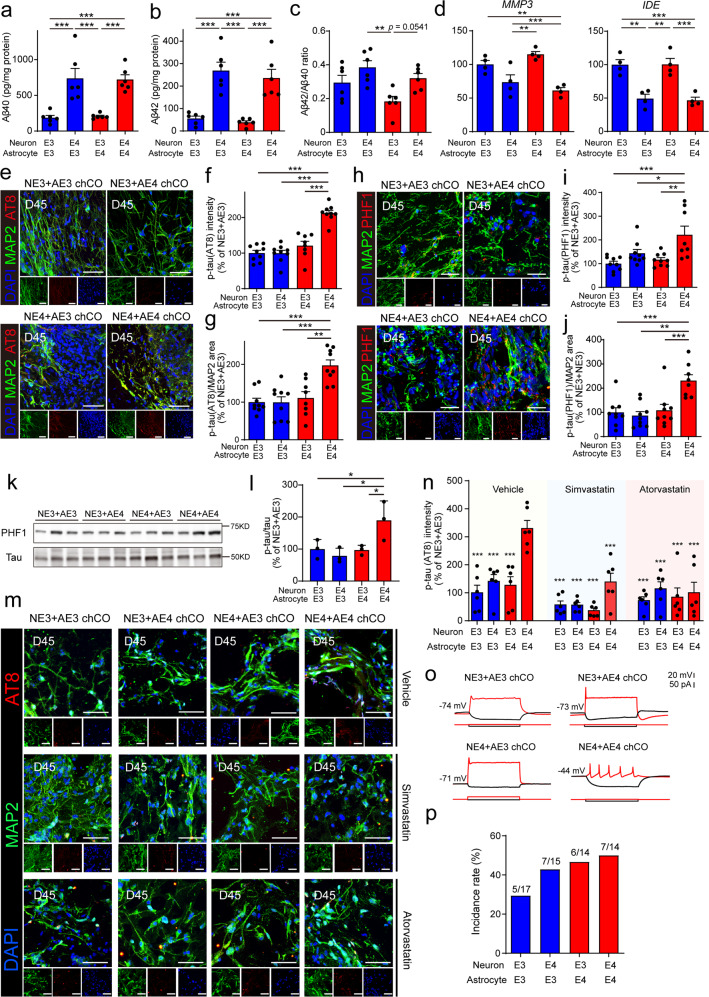
The apolipoprotein E4 ( APOE4 ) genotype is one of the strongest genetic risk factors for Alzheimer’s disease (AD), and is generally believed to cause widespread pathological alterations in various types of brain cells. Here, we developed a novel engineering method of creating the chimeric human cerebral organoids (chCOs) to assess the differential roles of APOE4 in neurons and astrocytes. First, the astrogenic factors NFIB and SOX9 were introduced into induced pluripotent stem cells (iPSCs) to accelerate the induction of astrocytes. Then the above induced iPSCs were mixed and cocultured with noninfected iPSCs under the standard culturing condition of cerebral organoids. As anticipated, the functional astrocytes were detected as early as 45 days, and it helped more neurons matured in chCOs in comparation of the control human cerebral organoids (hCOs). More interestingly, this method enabled us to generate chCOs containing neurons and astrocytes with different genotypes, namely APOE3 or APOE4 . Then, it was found in chCOs that astrocytic APOE4 already significantly promoted lipid droplet formation and cholesterol accumulation in neurons while both astrocytic and neuronal APOE4 contributed to the maximum effect. Most notably, we observed that the co-occurrence of astrocytic and neuronal APOE4 were required to elevate neuronal phosphorylated tau levels in chCOs while Aβ levels were increased in chCOs with neuronal APOE4 . Altogether, our results not only revealed the essence of both neuronal and astrocytic APOE4 for tau pathology, but also suggested chCOs as a valuable pathological model for AD research and drug discovery.
Overview
The claims and statistics of this paper haven’t been checked yet.
Free: it reads the open-access text and checks the first 5 claims that cite a source we can check. Create a free account to check every claim.
Integrity signals
Registry
Cites
Statistics
Figures
Verification
Claims the paper makes
The claims and statistics of this paper haven’t been checked yet.
Free: it reads the open-access text and checks the first 5 claims that cite a source we can check. Create a free account to check every claim.
Claims other papers make about this one
Each is checked against this paper’s own text: does it say what the citing paper says it does?
The cited source says what the claim attributes to it.
In the citing paper
“For instance, in chimeric human cerebral organoids (chCOs), astrocytes and neurons carrying the APOE4 genotype could jointly promote tau phosphorylation in neurons, closely linked to the role of APOE4 in increasing cholesterol levels and lipid droplet content, suggesting that APOE4 may affect tau phosphorylation in AD by influencing lipid metabolism.279”
From Recent advances in Alzheimer's disease: Mechanisms, clinical trials and new drug development strategies. (2024) · cites this paper as [279]
Self-check
Percentages, sums and reported differences re-computed from the paper’s own numbers.
The self-check needs the paper’s full text.
Citations
Cites
Corder, E. H., Saunders, A. M., Strittmatter, W. J., Schmechel, D. E., Gaskell, P. C., Small, G. W., Roses, A. D., Haines, J. L., & Pericak-Vance, M. A. (1993) · Science · doi:10.1126/science.8346443 · Cited by 9,429 · cited 1×
“Compared with the APOE3 homozygotes, people carrying two copies of APOE4 have a roughly 14fold increase in the risk of developing AD, while APOE2 allele is protective.(7) ApoE is an apolipoprotein, which play critical roles in cholesterol transport and lipid homeostasis.”
BackgroundNeurotoxic reactive astrocytes are induced by activated microglia
Liddelow, S. A., Guttenplan, K. A., Clarke, L. E., Bennett, F. C., Bohlen, C. J., Schirmer, L., Bennett, M. L., Münch, A. E., Chung, W.-S., Peterson, T. C., et al. (2017) · Nature · doi:10.1038/nature21029 · Cited by 7,971
The neuropathological diagnosis of Alzheimer's disease
DeTure, M. A., & Dickson, D. W. (2019) · Molecular Neurodegeneration · doi:10.1186/s13024-019-0333-5 · Cited by 3,329 · cited 5×
“%) of AD cases are late-onset sporadic AD (LO-SAD) and <5% are early-onset familial AD (EO-FAD).4 Accumulating evidences indicate that EO-FAD is associated with various mutations in genes linked to Aβ biogenesis, such as the amyloid precursor protein (APP) and the presenilins (PS1 and PS2), suggesting abnormal Aβ meta…”
BackgroundInfluentialBrain energy metabolism: focus on Astrocyte-neuron metabolic cooperation
Bélanger, M., Allaman, I., & Magistretti, P. J. (2011) · Cell Metabolism · doi:10.1016/j.cmet.2011.08.016 · Cited by 2,313
2021 Alzheimer's disease facts and figures
(2021) · Alzheimer's & Dementia · doi:10.1002/alz.12328 · Cited by 2,201
The role of apolipoprotein E in Alzheimer's disease
Kim, J., Basak, J. M., & Holtzman, D. M. (2009) · Neuron · doi:10.1016/j.neuron.2009.06.026 · Cited by 1,661 · cited 1×
“In the brain, ApoE is mainly synthesized and secreted by astrocytes, but is also expressed by other brain cell types including neurons.(10,11) Studies demonstrate lipid metabolic defects and mitochondrial dysfunction in APOE4 astrocytes, which has a positive correlation of AD pathogenesis.”
BackgroundFunctional cortical neurons and astrocytes from human pluripotent stem cells in 3D culture
Paşca, A. M., Sloan, S. A., Clarke, L. E., Tian, Y., Makinson, C. D., Huber, N., Kim, C. H., Park, J.-Y., O'Rourke, N. A., Nguyen, K. D., et al. (2015) · Nature Methods · doi:10.1038/nmeth.3415 · Cited by 1,609 · cited 1×
“Astrocytes are critically involved in the pathogenesis of AD, however their differentiation and maturation in hCOs is slow compared with neurons.(20,21) In the study, we developed a protocol to boost astrogliogenesis in part of chCOs by virus-mediated expression of two gliogenic transcription factors NFIB and SOX9.”
BackgroundAstroglia induce neurogenesis from adult neural stem cells
Song, H., Stevens, C. F., & Gage, F. H. (2002) · Nature · doi:10.1038/417039a · Cited by 1,452
ApoE4 markedly exacerbates tau-mediated neurodegeneration in a mouse model of tauopathy
Initiative, A. D. N., Shi, Y., Yamada, K., Liddelow, S. A., Smith, S. T., Zhao, L., Luo, W., Tsai, R. M., Spina, S., Grinberg, L. T., et al. (2017) · Nature · doi:10.1038/nature24016 · Cited by 1,220 · cited 1×
“Studies have reported that APOE4 worsens tau pathology in both animal and human cell models.(13,36) Selective removal of astrocytic APOE4 in the P301S tau/apoE4 mice reduces cortical and hippocampal phosphorylated tau levels, suggesting an important role of astrocytic APOE4 in tau pathology.”
BackgroundThe Intersection of Amyloid Beta and Tau at Synapses in Alzheimer’s Disease
Spires-Jones, T. L., & Hyman, B. T. (2014) · Neuron · doi:10.1016/j.neuron.2014.05.004 · Cited by 1,201 · cited 1×
“These pathogenic aggregates of Aβ and tau induce the destruction of synapses, thus cause memory and cognitive impairment during the early phase of AD pathogenesis.(3) The majority (>95%) of AD cases are late-onset sporadic AD (LO-SAD) and <5% are early-onset familial AD (EO-FAD).”
Background
Cited by
Zhang, J., Zhang, Y., Wang, J., Xia, Y., Zhang, J., & Chen, L. (2024) · Signal Transduction and Targeted Therapy · doi:10.1038/s41392-024-01911-3 · Cited by 1,138
“279 Litvinchuk et al. revealed a potential synergistic effect between APOE4 and tau pathology, wherein APOE4 may induce the abnormal accumulation of certain cholesterol esters in glial cells.”
BackgroundCell type‐specific roles of APOE4 in Alzheimer disease
Blumenfeld, J., Yip, O., Kim, M. J., & Huang, Y. (2024) · Nature Reviews Neuroscience · doi:10.1038/s41583-023-00776-9 · Cited by 202
“In a similar manner, in an organoid model containing hiPSC-derived neurons and astrocytes of various APOE genotype pairings, the presence of APOE4-producing human astrocytes elevated cholesterol levels and promoted lipid accumulation in human neurons 68 .”
Roles of ApoE4 on the Pathogenesis in Alzheimer’s Disease and the Potential Therapeutic Approaches
Sun, Y.-Y., Wang, Z., & Huang, H. (2023) · Cellular and Molecular Neurobiology · doi:10.1007/s10571-023-01365-1 · Cited by 114
“A study about chimeric human cerebral organoids (chCOs) also confirmed that ApoE4 astrocytes may accelerate the phosphorylation of tau in neurons, and neuron-astrocyte transport of p-tau may be impaired by neuronal ApoE4 (Huang et al. 2022).”
BackgroundLimitations of human brain organoids to study neurodegenerative diseases: a manual to survive
Urrestizala-Arenaza, N., Cerchio, S., Cavaliere, F., & Magliaro, C. (2024) · Frontiers in Cellular Neuroscience · doi:10.3389/fncel.2024.1419526 · Cited by 80
“AAV-mediated overexpression of A β or tau (Cerneckis et al., 2023), as well as the isogenic generation of APOE3 and APOE4, provides important information about the molecular mechanisms triggering neuronal death (Huang et al., 2022).”
BackgroundJi, Y., Chen, X., Wang, Z., Meek, C. J., McLean, J. L., Yang, Y., Yuan, C., Rochet, J., Liu, F., & Xu, R. (2025) · Molecular Psychiatry · doi:10.1038/s41380-025-03041-w · Cited by 83
“(1) Most research used simple organoids composed mainly of neurons with/without astrocytes [29 – 31 , 36].”
Dias, D., Portugal, C. C., Relvas, J. B., & Socodato, R. (2025) · Cells · doi:10.3390/cells14040243 · Cited by 78
Pushing the boundaries of brain organoids to study Alzheimer’s disease
Cerneckis, J., Bu, G., & Shi, Y. (2023) · Trends in Molecular Medicine · doi:10.1016/j.molmed.2023.05.007 · Cited by 62
Shamul, J. G., Wang, Z., Gong, H., Ou, W., White, A. M., Garcia, D. P. M., Gu, S., Clyne, A. M., Quiñones‐Hinojosa, A., & He, X. (2024) · Nature Biomedical Engineering · doi:10.1038/s41551-024-01250-2 · Cited by 46
Xu, L., Ding, H., Wu, S., Xiong, N., Hong, Y., Zhu, W., Chen, X., Han, X., Tao, M., Wang, Y., et al. (2024) · ACS Nano · doi:10.1021/acsnano.4c07844 · Cited by 48
Chen, X., Saiyin, H., Liu, Y., Wang, Y., Li, X., Ji, R., & Ma, L. (2021) · PLoS Biology · doi:10.1371/journal.pbio.3001868 · Cited by 41
“Similar to most chimeric organoids reported, the in vitro transplantation we raised is easy to perform [54,55].”
Modeling Alzheimer’s disease using human cell derived brain organoids and 3D models
Fernandes, S., Revanna, J. S., Pratt, J. M., Hayes, N., Marchetto, M. C., & Gage, F. H. (2024) · Frontiers in Neuroscience · doi:10.3389/fnins.2024.1434945 · Cited by 46
APOE4 reshapes the lipid droplet proteome and modulates microglial inflammatory responses
Friday, C. M., Stephens, I. O., Smith, C. T., Lee, S., Satish, D., Devanney, N. A., Cohen, S., Morganti, J. M., Gordon, S. M., & Johnson, L. A. (2025) · Neurobiology of Disease · doi:10.1016/j.nbd.2025.106983 · Cited by 33
Organoids as preclinical models of human disease: progress and applications
Chen, B., Du, C., Wang, M., Guo, J., & Liu, X. (2024) · Medical Review · doi:10.1515/mr-2023-0047 · Cited by 34
“Scientists have discovered that APOE4 astrocytes increase the formation of neuronal lipid droplets and cholesterol accumulation in chimeric organoids of astrocytes and neurons, promoting the onset of AD [113].”
BackgroundMicroglial dysfunction in Alzheimer's disease: Mechanisms, emerging therapies, and future directions
Azmal, M., Paul, J. K., Prima, F. S., Haque, A. N. M. S. N. B., Meem, M., & Ghosh, A. (2025) · Experimental Neurology · doi:10.1016/j.expneurol.2025.115374 · Cited by 36
The Breakthroughs and Caveats of Using Human Pluripotent Stem Cells in Modeling Alzheimer’s Disease
Bendtsen, K. M., & Hall, V. J. (2023) · Cells · doi:10.3390/cells12030420 · Cited by 33
Key roles of glial cells in the encephalopathy of prematurity
Steenwinckel, J. V., Bokobza, C., Laforge, M., Shearer, I. K., Miron, V. E., Rua, R., Matta, S. M., Hill‐Yardin, E. L., Fleiss, B., & Gressèns, P. (2023) · Glia · doi:10.1002/glia.24474 · Cited by 27
“The approach has already proven its value by providing deep insights into the mechanisms of basic brain development (Qian et al., 2020; Sabate-Soler et al., 2022) and disorders such as Parkinson's and Alzheimer's disease (Huang et al., 2022; Jarazo et al., 2022).”
BackgroundZhao, J., Ikezu, T. C., Lu, W., Macyczko, J. R., Li, Y., Lewis-Tuffin, L. J., Martens, Y. A., Ren, Y., Zhu, Y., Asmann, Y. W., et al. (2023) · Stem Cell Research & Therapy · doi:10.1186/s13287-023-03444-y · Cited by 25
“Using chimeric cerebral organoid system, Huang et al. further revealed the differential effects of neuronal and astrocytic APOE4 on lipid metabolism and AD pathologies, supporting the importance in defining apoE effects in different cell types [32].”
BackgroundAPOE4 impacts cortical neurodevelopment and alters network formation in human brain organoids
Meyer-Acosta, K. K., Díaz‐Guerra, E., Varma, P., Aruk, A., Mirsadeghi, S., Perez, A. M., Rafati, Y., Hosseini, A., Nieto‐Estévez, V., Giugliano, M., et al. (2025) · Stem Cell Reports · doi:10.1016/j.stemcr.2025.102537 · Cited by 28
Liu, C., Liu, J., Wang, Y.-Y., Xu, S.-F., & Yu, L.-M. (2026) · Molecular Neurobiology · doi:10.1007/s12035-025-05629-3 · Cited by 19
“Consist-ently, converting APOE4 to APOE3 in hiPSC-derived brain cells and cerebral organoids is sufficient to attenuate multiple AD-related pathologies [103, 160].”
Mancuso, S., Bhalerao, A., & Cucullo, L. (2024) · International Journal of Molecular Sciences · doi:10.3390/ijms252011000 · Cited by 19
“Brain organoids can be used to model the cellular interactions and functions of the NVU, including the formation and maintenance of the BBB and the interactions between neurons and glial cells [45,49].”
BackgroundMethodInfluentialEfficient Gene Expression in Human Stem Cell Derived-Cortical Organoids Using Adeno Associated Virus
Cho, A., Bright, F., Morey, N., Au, C. G., Ittner, L. M., & Ke, Y. D. (2022) · Cells · doi:10.3390/cells11203194 · Cited by 17
Astrocyte Lipid Droplet Dynamics Orchestrate Neurological Disorders and Therapeutic Horizons
Zhong, J., Peng, Y., Zhang, L., Xiao, B., & Zhang, M. (2025) · Small Science · doi:10.1002/smsc.202500152 · Cited by 18
Zhou, L., Yang, C., Liu, Z., Chen, L., Wang, P., Zhou, Y., Yuan, M., Zhu, L., Wang, X., & Zhu, L. (2023) · Journal of Ethnopharmacology · doi:10.1016/j.jep.2023.117569 · Cited by 18
Zhang, Z., Li, R., Zhou, Y., Huang, S., Hou, Y., & Pei, G. (2024) · Molecular Neurobiology · doi:10.1007/s12035-024-04557-y · Cited by 13
“The procedure for generating chimeric human cerebral organoids (chCOs) induced by nuclear factor I/B (NFIB) and SRY-box transcription factor 9 (SOX9) followed our previously reported method [22].”
InfluentialSelf-citationImmunosenescence and organoids: pathophysiology and therapeutic opportunities
Kamroo, A., Kakroudi, M. H., Sarmadian, A. J., Firouzabadi, A., Mousavi, S., Yazdanpanah, N., Saleki, K., & Rezaei, N. (2025) · Immunity & Ageing · doi:10.1186/s12979-025-00530-y · Cited by 13
“The complex organoid system with both neurons and astrocytes with different genetic backgrounds offers a rare chance to analyze the roles of different cell types in the pathophysiology of NDDs [166].”
Dang, R., Dalmia, M., Ma, Z., Jin, M., Aluru, K., Mirabella, V. R., Papetti, A. V., Cai, L., & Jiang, P. (2025) · Cell Regeneration · doi:10.1186/s13619-024-00219-5 · Cited by 13
Cerebral Malaria Model Applying Human Brain Organoids
Silva-Pedrosa, R., Campos, J., Fernandes, A. M., Silva, M., Calçada, C., Marote, A., Martinho, O., Veiga, M. I., Rodrigues, L. R., Salgado, A. J., et al. (2023) · Cells · doi:10.3390/cells12070984 · Cited by 12
Advances of therapeutic strategies for Alzheimer’s disease
Guo, X., Yue, R.-Z., Cui, Z., Wang, S., Jia, T., Li, W., Zhang, W., Shan, L., & Li, C. (2025) · Journal of Neurology · doi:10.1007/s00415-025-13456-8 · Cited by 10
The role of transcriptional and epigenetic modifications in astrogliogenesis
Ma, S., Wang, L., Zhang, J., Geng, L., & Yang, J. (2024) · PeerJ · doi:10.7717/peerj.18151 · Cited by 9
Myelin organoids for the study of Alzheimer's disease
Cerneckis, J., & Shi, Y. (2023) · Frontiers in Neuroscience · doi:10.3389/fnins.2023.1283742 · Cited by 9
“Because APOE is expressed in multiple brain cell types, cell autonomous and non-autonomous effects of ApoE could be assessed using chimeric myelinoids, where only a specific cell type expresses APOE4 (Figure 1C) (Huang et al., 2022b).”
BackgroundMedical embryology and regenerative medicine: research and applications in clinical practice
Soczyńska, J., Gawełczyk, W., Obrycka, P., Żołyniak, M., Muzyka, A., Majcherczyk, K., Papierkowska, J., & Woźniak, S. (2025) · Frontiers in Cell and Developmental Biology · doi:10.3389/fcell.2025.1619036 · Cited by 9
“Studies conducted on chimeric human cerebral organoids (chCOs) have shownthatthepresenceoftheapolipoproteinE4(APOE4)genotype correlates with increased cholesterol accumulation in neurons and elevated levels of phosphorylated tau protein (Huang et al., 2022).”
Safieh, M., Liraz, O., Ovadia, M., & Michaelson, D. M. (2024) · Journal of Alzheimer s Disease · doi:10.3233/jad-230514 · Cited by 10
“This differentiation is known to be important [69, 70], and differences in the effects of neuronal ApoE and astrocytic ApoE on various systems have been thoroughly studied [68–71].”
BackgroundNeuroglia in neurodegeneration: Alzheimer, Parkinson, and Huntington disease
Lim, D., Matute, C., Cavaliere, F., & Verkhratsky, A. (2025) · Handbook of Clinical Neurology · doi:10.1016/b978-0-443-19102-2.00012-0 · Cited by 8
A narrative review of organoids for investigating organ aging: opportunities and challenges
Sun, X., Sun, F., Zhang, Y., Qu, J. T., Zhang, W., & Liu, G. (2023) · Journal of Bio-X Research · doi:10.1097/jbr.0000000000000139 · Cited by 12
“in AD pathogenesis.[120] In order to delve into the mechanism of tau pathology in the whole-brain organoids of microtubule-associated protein tau (MAPT) mutations, mature brain organ-”
BackgroundCoronel, R., González-Sastre, R., Mateos-Martínez, P., Maeso, L., Llorente-Beneyto, E., Martín-Benito, S., Gagosian, V. S. C., Foti, L., González, M. D. C., López-Alonso, V., et al. (2025) · Neural Regeneration Research · doi:10.4103/nrr.nrr-d-24-01639 · Cited by 10
“Microglia dysfunction is also implicated in the pathology of several neurological disorders (Zhang et al., 2022).”
InfluentialFang, C., Wang, Q., Xiao, Q., Cai, X.-X., Du, R., Xue, L., Tian, X., & Xiong, L. (2025) · Neural Regeneration Research · doi:10.4103/nrr.nrr-d-24-01490 · Cited by 7
Bilginer-Kartal, R., & Yıldız, A. A. (2025) · Macromolecular Bioscience · doi:10.1002/mabi.202400658 · Cited by 8
Emerging concepts towards a translational framework in Alzheimer’s disease
Cozachenco, D., Zimmer, E. R., & Lourenco, M. V. (2023) · Neuroscience & Biobehavioral Reviews · doi:10.1016/j.neubiorev.2023.105246 · Cited by 8
Gong, H., Liu, Y., Xiaoluo, Q.-L., Gong, M.-F., Liu, Z., Wu, S., Chen, Z.-Y., Liu, T.-Y., Zhao, J., Wang, L. Y., et al. (2025) · Frontiers in Neuroscience · doi:10.3389/fnins.2025.1679858 · Cited by 6
Advances in Alzheimer’s disease: mechanistic insights and therapeutic targets
Jia, Y.-J., Ge, Y., Li, B., Yang, Y., Chen, H., Liu, J., Guo, J., Yu, J., Ye, K., Wang, J., et al. (2026) · Science China Life Sciences · doi:10.1007/s11427-025-2991-7 · Cited by 7
“…cell types: in astrocytes, it disrupts lipid metabolism, increases microglial reactivity, and accelerates A β /tau accumulation and BBB breakdown (Huang et al., 2022; Jackson et al., 2022); in microglia, it impairs A β /tau clearance while promoting neuroin-flammation and neurodegeneration (Liu…”
InfluentialThree-dimensional cell culture technologies in the study of Alzheimer’s disease: a narrative review
Chacón, P. E. A., Irineo‐Moreno, V., & Loera‐Valencia, R. (2025) · Advanced technology in neuroscience . · doi:10.4103/atn.atn-d-24-00016 · Cited by 8
Qian, L., Wang, G., Li, B., Su, H., & Qin, L. (2024) · PeerJ · doi:10.7717/peerj.16740 · Cited by 6
“Other research pointed out that the cholesterol dysmetabolism prompted by APOE4 might mediate Alzheimer’s disease-associated pathologies ( Huang et al., 2022 ; Jeong et al., 2019 ).”
BackgroundTapella, L., Dematteis, G., Genazzani, A. A., Paola, M. D., & Lim, D. (2022) · Neural Regeneration Research · doi:10.4103/1673-5374.363192 · Cited by 6
Liu, Y., Initiative, A. D. N., Wang, X.-J., Tan, L., Tan, C., & Xu, W. (2023) · Journal of Alzheimer s Disease · doi:10.3233/jad-230516 · Cited by 6
“First, APOE (cid:2) 4 can promote cholesterol accumulation in neurons and extracellular environment [14, 30], which could lead to enhanced volume of endosome and more production of A (cid”
Yi, R., Chen, S., Guan, M., Liao, C., Zhu, Y., Ip, J. P. K., Tao, Y., & Chen, Y. (2024) · Scientific Data · doi:10.1038/s41597-024-03823-x · Cited by 6
Lipid metabolism in Alzheimer’s disease
Zhang, J., & Sima, J. (2024) · Aging Research · doi:10.26599/agr.2025.9340037 · Cited by 4
Pasteris, M., Çakır, S., Bellizzi, A., & Sariyer, I. K. (2025) · Journal of Alzheimer s Disease · doi:10.1177/13872877251359633 · Cited by 4
“83 These studies found that APOE4 -expressing orga-noids exhibit increased lipid droplet formation and cholesterol accumulation, both of which are associated with tau pathology and A β deposition.”
Bosco, P., Akcan, U., Williams, D. J., Buchanan, H. M., Agalliu, D., & Sproul, A. A. (2024) · Current Protocols · doi:10.1002/cpz1.70049 · Cited by 4
“Some groups have utilized an organoid and mixed culture approach to derive astrocytes from hiPSCs (Dezonne et al., 2017; Hong et al., 2023; Huang et al., 2022; Sloan et al., 2017).”
Ma, Y., Xu, D., Huo, Z., Wang, X., Chen, Y., & Han, X. (2025) · Journal of Hazardous Materials · doi:10.1016/j.jhazmat.2025.140253 · Cited by 5
Advanced Cellular Models for Neurodegenerative Diseases and PFAS-Related Environmental Risks
Rotondo, D., Lagostena, L., Magnelli, V., & Dondero, F. (2025) · NeuroSci · doi:10.3390/neurosci6040125 · Cited by 3
“Supporting this, Huang et al. (2022) [36] used chimeric organoids mixing isogenic APOE ε 3 and ε 4 lines to show that astrocytic APOE4 drives lipid dysregulation while neuronal APOE4 increases A β , with both cell types required for robust tau pathology, findings that provide a mechanistic basis…”
Liu, J., Li, Q., Zhu, H., Li, A., Geng, B., Li, Z. A., & Tian, T. (2026) · Advanced Healthcare Materials · doi:10.1002/adhm.202503966 · Cited by 3
“The enriched genes in GO terms are consistent with published studies, indicating that AD pathology can cause synaptic degeneration [15], changes in neurotransmitter receptors [54], axon loss and defects [55].”
Gong, Y., Li, M., Liu, M., Wu, X., Li, Y., Qin, C., & Zhang, L. (2024) · Animal Models and Experimental Medicine · doi:10.1002/ame2.12446 · Cited by 4
“14 ApoE is the main apolipoprotein involved in cholesterol transport in both the peripheral and central nervous systems, primarily regulating changes in lipid metabolism.”
BackgroundBrain organoids and genome editing: A new era in understanding human brain development and disorders
Zhou, M., Cao, Y., Yue, K., Wu, W., Xie, Y., Hu, D., Zhao, J., Xu, F., Guo, J., Li, Z., et al. (2025) · Neural Regeneration Research · doi:10.4103/nrr.nrr-d-24-01546 · Cited by 3
“Researchers can also place brain organoids on multi-electrode arrays to measure electrical activity and track the emergence and maturation of various electrophysiological properties over long-term observations (Fair et al., 2020; Huang et al., 2022a; Ma et al., 2024).”
Generating Homogeneous Brain Organoids from Human iPSCs
Chen, X., & Shi, Y. (2024) · Methods in molecular biology · doi:10.1007/978-1-0716-3810-1_13 · Cited by 3
Advances in the Differentiation of hiPSCs into Cerebellar Neuronal Cells
Wang, Y., Liu, W., Jiao, Y., Yang, Y., Shan, D., Ji, X., Zhang, R., Zhan, Z., Tang, Y., Guo, D., et al. (2024) · Stem Cell Reviews and Reports · doi:10.1007/s12015-024-10763-x · Cited by 3
Wang, M., Niu, D., Zhang, Q., Tang, Y., Zhao, Y., & Chen, F. (2026) · International Journal of Biological Macromolecules · doi:10.1016/j.ijbiomac.2026.151352 · Cited by 2
Translating Alzheimer’s disease proteomics into drug discovery opportunities
Drummond, E., Werry, E. L., Kavanagh, T., Genoud, S., Cho, A., Chen, S., Du, J., Hibbs, D. E., & Kassiou, M. (2026) · Molecular Neurodegeneration Advances · doi:10.1186/s44477-026-00035-y · Cited by 2
“However, astrocytes appear late (after 50–70 days) and remain scarce in conventional organoids [157], which limits the analysis of astrocyte-driven sAD mechanisms [161, 162].”
The Role of Tau Protein on Alzheimer’s Disease
Su, Y. (2023) · Highlights in Science Engineering and Technology · doi:10.54097/hset.v36i.6141 · Cited by 2
Li, B., Initiative, A. D. N., Shi, K., Ren, C., Kong, M., & Ba, M. (2023) · Journal of Alzheimer s Disease · doi:10.3233/jad-230180 · Cited by 2
Maximizing the utility of brain organoid models and overcoming their perceived limitations
Wenzel, T. J., & Mousseau, D. D. (2024) · Elsevier eBooks · doi:10.1016/b978-0-323-95730-4.00009-3 · Cited by 2
Promising Prospects for Human Cerebral Organoids to Advance Alzheimer's Disease Research
López, V., Rosca, A., Liste, I., Mateos-Martínez, P., Coronel, R., González-Sastre, R., Martín-Benito, S., & López, V. (2023) · Progress in Neurobiology · doi:10.60124/j.pneuro.2023.20.05 · Cited by 1
Zhou, Q., Ma, L., Guo, B., Li, P., & Song, Y. (2025) · Aging and Disease · doi:10.14336/ad.2025.0758 · Cited by 3
“Chimeric hCO studies further reveal that co-expression of APOE4 in both astrocytes and neurons is required to elevate neuronal p-tau levels, highlighting the critical role of astrocytes in AD pathogenesis [51].”
In vitro 3D models of neuron-astrocyte interactions
Su, T., Li, Z., Yang, Y., Dai, Y., Li, Y., & Zhao, H. (2025) · Biochemistry and Biophysics Reports · doi:10.1016/j.bbrep.2025.102400 · Cited by 1
“A study conducted by Shichao Huang et al. [78] confirmed that astrocytes possess high glutamate uptake activity at 0.14 μ M/min, which is significant for ensuring CNS homeostasis of glutamatergic neurotransmitters concentration.”
InfluentialWolfram, A., Arnold, V., Wolfram-Schauerte, M., Moskalchuk, A., Caroline M. Trust, Vontz, M., Scheurenbrand, M., Sampath‐Kumar, V., Ahari, S. H., Romero‐Nieto, C., et al. (2026) · Advanced Healthcare Materials · doi:10.1002/adhm.202504889 · Cited by 2
“However, the absence of fully functional vasculature and immune complexity continues to limit the in vivo relevance of these systems [656].”
Maciel, E. M. A., Silva, N. C., Santos, L. G. P., & Ribeiro, F. M. (2026) · Journal of Neurochemistry · doi:10.1111/jnc.70416 · Cited by 3
Zhang, R., Dong, X., Pei, G., & Huang, S. (2026) · Neuroscience Bulletin · doi:10.1007/s12264-026-01615-4 · Cited by 1
“Although previous reports suggest that astrocytic tau contributes to AD tau pathology, it is also likely that they actively secrete soluble p-tau species such as p-tau181 and p-tau217 [13].”
Self-citationTargeting Various Pathogenic Pathways for the Development of Anti-alzheimer’s Drugs: An Update
Ambreen, S., Fatima, N., Umar, M., Shaququzzaman, M., Alam, M. M., & Ali, R. (2023) · Current Topics in Medicinal Chemistry · doi:10.2174/0115680266274924231002110733
Zhao, J., Ikezu, T. C., Lü, W., Macyczko, J. R., Li, Y., Lewis‐Tuffin, L. J., Martens, Y. A., Ren, Y., Zhu, Y., Asmann, Y. W., et al. (2023) · Figshare · doi:10.6084/m9.figshare.24002714
Human microglia from APOE4 and APOE3 patient iPSCs: energy and cholesterol metabolism
Revanna, J. S. (2024) · eScholarship (California Digital Library)
Debasrita, B. (2026) · Biochemistry · doi:10.5772/intechopen.1014630 · Cited by 1
Guruacharya, A., Härtung, T., dos Reis, R. S., Moreira, N. C. D. S., Attisano, L., Bolognin, S., Iqbal, K., & Rajbanshi, B. (2026) · Stem Cell Reports · doi:10.1016/j.stemcr.2026.103051
“Multi-hit organoid models combining APOE4 with additional AD-associated risk variants (R47H variant of TREM2, and PSEN1 variants) show synergistic pathological effects and better approximate the polygenic etiology of sporadic AD (Huang et al., 2022).”
Recent Advances in CRISPR/Cas Technologies for Biological Discovery, Therapeutics, and Diagnostics
Kim, M., Do, H. S., Jang, H. Y., Lee, K. E., & Lee, S. J. (2026) · Biomolecules · doi:10.3390/biom16091268 · Cited by 2
“In Alzheimer’s disease, pathogenic mutations in amyloid precursor protein ( APP ) promote amyloid-β (A β ) accumulation, whereas the apolipoprotein E ( APOE ) ε 4 allele is a major genetic risk factor that influences A β metabolism and other disease-associated pathways [82,83].”
Kjar, A., Kim, H., Spetz, M. R., Jarrett, Z., Fernandez, M., Wang, J., Russotti, M. L., Bodnya, C., Chavarría, D., Hohman, T. J., et al. (2026) · ACS Chemical Neuroscience · doi:10.1021/acschemneuro.6c00376
Burdman, G., Hanna, M., Yndart, A., Vashist, A., & Lakshmana, M. K. (2026) · Cells · doi:10.3390/cells15191768 · Cited by 1
“Also, isogenic conversion of APOE4 to APOE3 has been shown to reverse key amyloid, tau, synaptic and neurodegenerative phenotypes, and chimeric organoids that as‑ sign distinct neuronal and astrocytic APOE4 have been shown to contribute to tau pathol‑ ogy [82].”
From Amyloid Exposure to Genetic Causality: Converging hiPSC-Based Models of Alzheimer’s Disease
Colasuonno, F., Valenza, A., Rossin, F., & Moreno, S. (2026) · Cells · doi:10.3390/cells15191793
“…APOE genotypes, Huang et al. (2022) demonstrated that astrocytic APOE4 alone was sufficient to promote lipid droplet formation and cholesterol accumulation in neurons [101], whereas the combination of APOE4 expression in both astrocytes and neurons produced the strongest pathological effects.”
Advances in human brain organoids for Alzheimer's disease modeling
RUSLAN, W. M. N. W. M., Raduan, S. Z., & Razak, M. F. A. (2026) · AIMS neuroscience · doi:10.3934/neuroscience.2026027
Metadata
- Authors
- Huang, S., Zhang, Z., Cao, J., Yu, Y., & Pei, G.
- Affiliations
- Chinese Academy of Sciences (CN)
- Tongji University (CN)
- Corresponding author
- Huang, Shichao
- Pei, Gang
- Venue
- Signal Transduction and Targeted Therapy
- Published
- 2022-06-13
- Volume
- 7
- Issue
- 1
- Pages
- 176-176
- ISSN
- 2059-3635 (ISSN-L)
- PMC
- PMC9189105
- OpenAlex
- W4282592266
- Cited by
- 72
- References
- 42
- Citations by year
- 2026: 12 · 2025: 21 · 2024: 20 · 2023: 16 · 2022: 2
- FWCI
- 9.13
- Type
- journal article
- Language
- en
- Open access
- gold
- doi.org
- Licence
- cc-by
- creativecommons.org/licenses/by/4.0 (tdm)
- creativecommons.org/licenses/by/4.0 (vor)
- Locations
- Signal Transduction and Targeted Therapy (publishedVersion, cc-by)
- PubMed Central (publishedVersion, cc-by)
- PubMed (publishedVersion)
- DOAJ (DOAJ: Directory of Open Access Journals) (submittedVersion, cc-by-sa)
- Funders
- National Science Foundation (81901094)
- Chinese Academy of Sciences (2018YFA0108003, 81901094, XDA16010309)
- Topics
- Life Sciences › Neuroscience › Cellular and Molecular Neuroscience › Alzheimer's disease research and treatments
- Life Sciences › Biochemistry, Genetics and Molecular Biology › Molecular Biology › Pluripotent Stem Cells Research
- Life Sciences › Neuroscience › Neurology › Neuroinflammation and Neurodegeneration Mechanisms
- Keywords
- APOE ε4, Alzheimer's disease, tau pathology, astrocytes, neurons, induced pluripotent stem cells, NFIB, SOX9, lipid droplet formation, cholesterol accumulation, amyloid-beta
- MeSH terms
- Alzheimer Disease, Astrocytes, Humans, Neurons, Organoids, Apolipoprotein E4
About these checks
Registry, retraction, Cites and statistics results are computed, not judged, with one exception: a printed reference that no index lists is read once by a model before it counts as a citation error. Claims are extracted by a model and kept only when their quote appears verbatim in the text; each cited source is then checked, with a model’s help, for whether it says what the claim relies on. Those verdicts can be wrong — read the claim’s quote and the cited source before relying on one.
Statistics and arithmetic are recomputed, not judged.
Confidence bands are shown only for fields calibrated on our annotated test set. None is calibrated yet, so no band is shown.
What counts as a claim ›How we measure confidence ›How we check this ›
Are you an author, or do you see a problem with this page? Request a review
Data sources
Bibliographic data: Semantic Scholar, OpenAlex, Crossref.
Contains information from the Semantic Scholar Academic Graph Datasets, made available under the ODC Attribution License (ODC-BY 1.0).
Semantic Scholar’s data is described in: Kinney, R., et al. (2023). The Semantic Scholar Open Data Platform. arXiv:2301.10140.
