

Chimeric cerebral organoids reveal the essentials of neuronal and astrocytic APOE4 for Alzheimer’s tau pathology
Open accessThe DOI matches its Crossref record; 42 of the 42 references it cites were found in a registry or an index.
Abstract
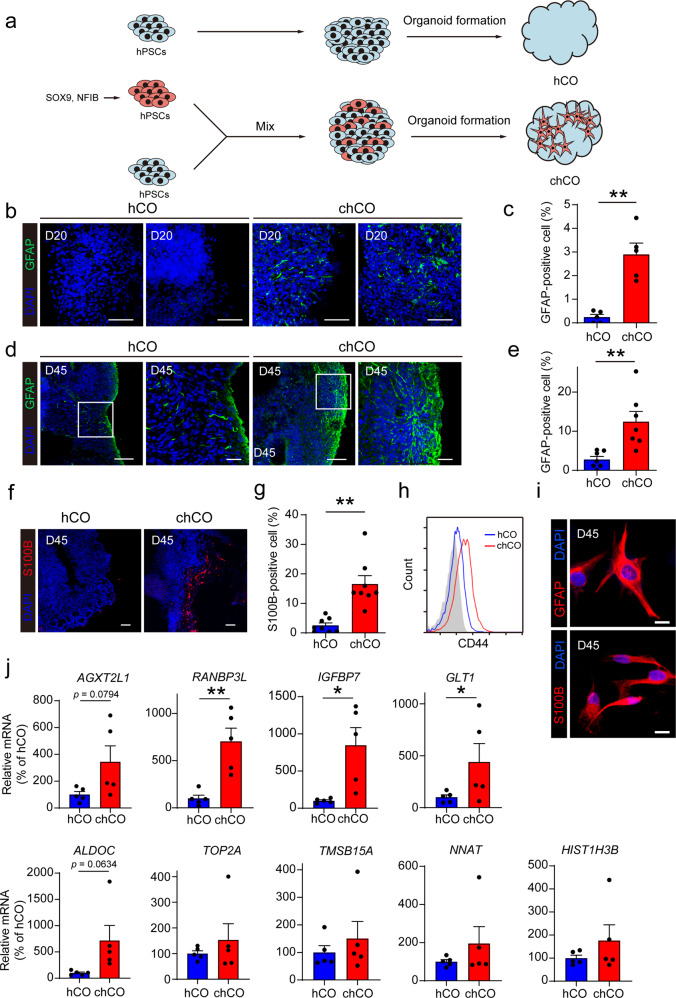
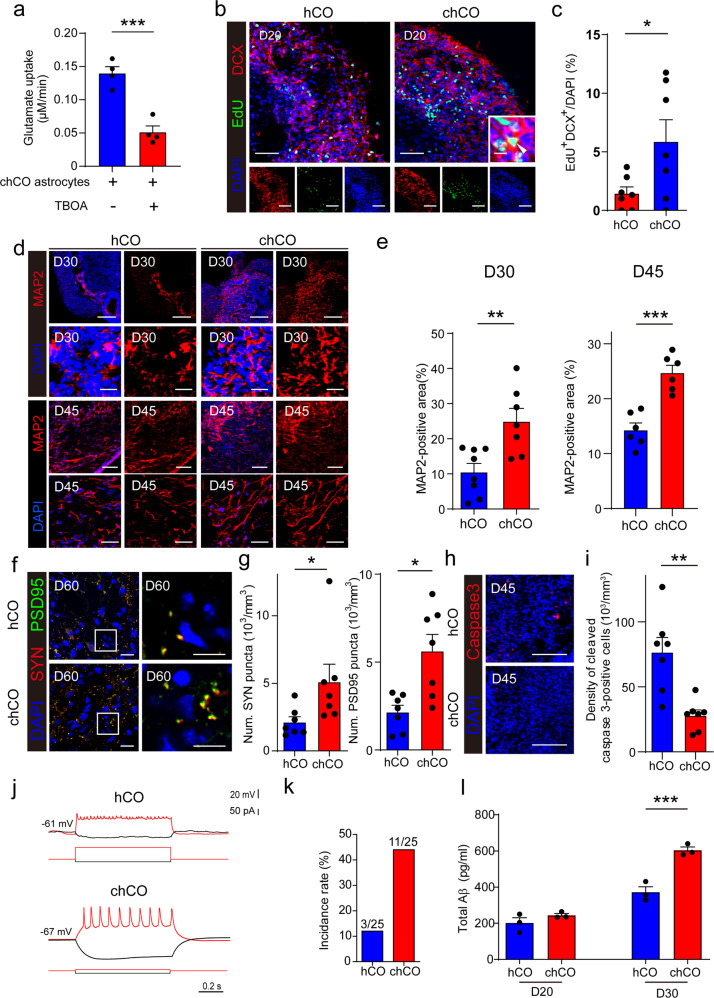
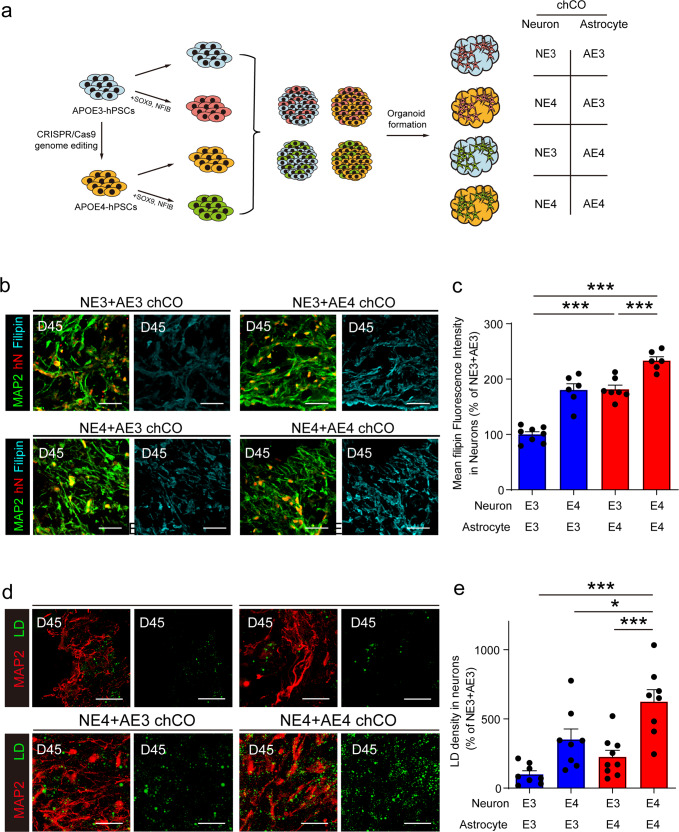
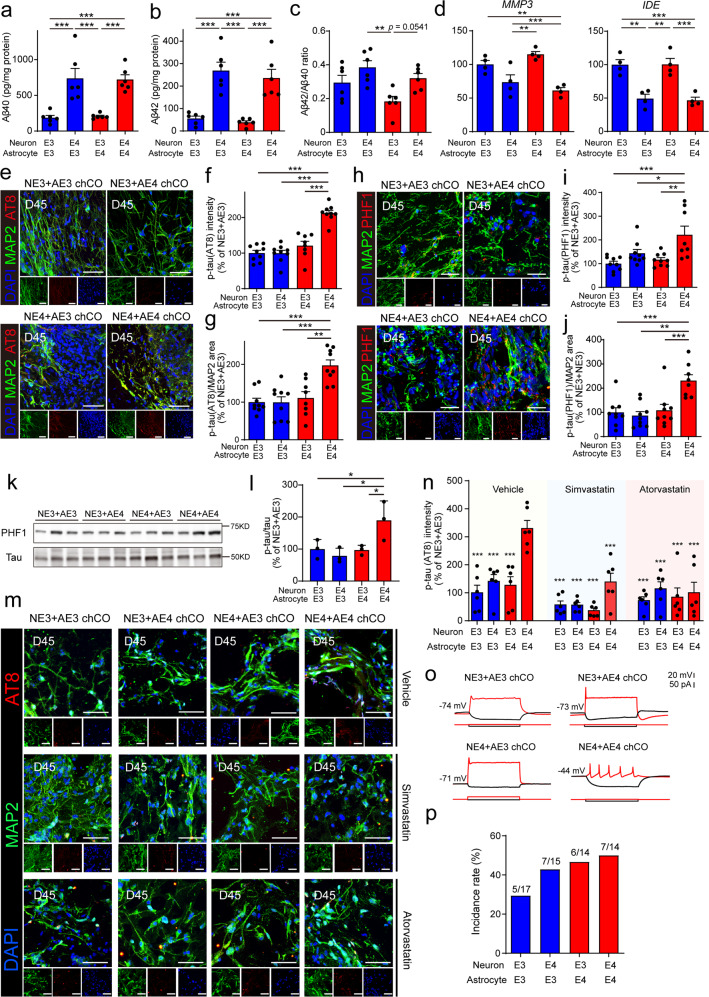
The apolipoprotein E4 ( APOE4 ) genotype is one of the strongest genetic risk factors for Alzheimer’s disease (AD), and is generally believed to cause widespread pathological alterations in various types of brain cells. Here, we developed a novel engineering method of creating the chimeric human cerebral organoids (chCOs) to assess the differential roles of APOE4 in neurons and astrocytes. First, the astrogenic factors NFIB and SOX9 were introduced into induced pluripotent stem cells (iPSCs) to accelerate the induction of astrocytes. Then the above induced iPSCs were mixed and cocultured with noninfected iPSCs under the standard culturing condition of cerebral organoids. As anticipated, the functional astrocytes were detected as early as 45 days, and it helped more neurons matured in chCOs in comparation of the control human cerebral organoids (hCOs). More interestingly, this method enabled us to generate chCOs containing neurons and astrocytes with different genotypes, namely APOE3 or APOE4 . Then, it was found in chCOs that astrocytic APOE4 already significantly promoted lipid droplet formation and cholesterol accumulation in neurons while both astrocytic and neuronal APOE4 contributed to the maximum effect. Most notably, we observed that the co-occurrence of astrocytic and neuronal APOE4 were required to elevate neuronal phosphorylated tau levels in chCOs while Aβ levels were increased in chCOs with neuronal APOE4 . Altogether, our results not only revealed the essence of both neuronal and astrocytic APOE4 for tau pathology, but also suggested chCOs as a valuable pathological model for AD research and drug discovery.
Overview
The claims and statistics of this paper haven’t been checked yet.
Free: it reads the open-access text and checks the first 5 claims that cite a source we can check. Create a free account to check every claim.
Integrity signals
Registry
Cites
Statistics
Figures
Verification
Claims the paper makes
The claims and statistics of this paper haven’t been checked yet.
Free: it reads the open-access text and checks the first 5 claims that cite a source we can check. Create a free account to check every claim.
Claims other papers make about this one
Each is checked against this paper’s own text: does it say what the citing paper says it does?
The cited source says what the claim attributes to it.
In the citing paper
“For instance, in chimeric human cerebral organoids (chCOs), astrocytes and neurons carrying the APOE4 genotype could jointly promote tau phosphorylation in neurons, closely linked to the role of APOE4 in increasing cholesterol levels and lipid droplet content, suggesting that APOE4 may affect tau phosphorylation in AD by influencing lipid metabolism.279”
From Recent advances in Alzheimer's disease: Mechanisms, clinical trials and new drug development strategies. (2024) · cites this paper as [279]
Self-check
Percentages, sums and reported differences re-computed from the paper’s own numbers.
The self-check needs the paper’s full text.
Citations
Cites
Corder, E. H., Saunders, A. M., Strittmatter, W. J., Schmechel, D. E., Gaskell, P. C., Small, G. W., Roses, A. D., Haines, J. L., & Pericak-Vance, M. A. (1993) · Science · doi:10.1126/science.8346443 · Cited by 9,429 · cited 1×
“Compared with the APOE3 homozygotes, people carrying two copies of APOE4 have a roughly 14fold increase in the risk of developing AD, while APOE2 allele is protective.(7) ApoE is an apolipoprotein, which play critical roles in cholesterol transport and lipid homeostasis.”
BackgroundNeurotoxic reactive astrocytes are induced by activated microglia
Liddelow, S. A., Guttenplan, K. A., Clarke, L. E., Bennett, F. C., Bohlen, C. J., Schirmer, L., Bennett, M. L., Münch, A. E., Chung, W.-S., Peterson, T. C., et al. (2017) · Nature · doi:10.1038/nature21029 · Cited by 7,971
The neuropathological diagnosis of Alzheimer's disease
DeTure, M. A., & Dickson, D. W. (2019) · Molecular Neurodegeneration · doi:10.1186/s13024-019-0333-5 · Cited by 3,329 · cited 5×
“%) of AD cases are late-onset sporadic AD (LO-SAD) and <5% are early-onset familial AD (EO-FAD).4 Accumulating evidences indicate that EO-FAD is associated with various mutations in genes linked to Aβ biogenesis, such as the amyloid precursor protein (APP) and the presenilins (PS1 and PS2), suggesting abnormal Aβ meta…”
BackgroundInfluentialBrain energy metabolism: focus on Astrocyte-neuron metabolic cooperation
Bélanger, M., Allaman, I., & Magistretti, P. J. (2011) · Cell Metabolism · doi:10.1016/j.cmet.2011.08.016 · Cited by 2,313
2021 Alzheimer's disease facts and figures
(2021) · Alzheimer's & Dementia · doi:10.1002/alz.12328 · Cited by 2,201
The role of apolipoprotein E in Alzheimer's disease
Kim, J., Basak, J. M., & Holtzman, D. M. (2009) · Neuron · doi:10.1016/j.neuron.2009.06.026 · Cited by 1,661 · cited 1×
“In the brain, ApoE is mainly synthesized and secreted by astrocytes, but is also expressed by other brain cell types including neurons.(10,11) Studies demonstrate lipid metabolic defects and mitochondrial dysfunction in APOE4 astrocytes, which has a positive correlation of AD pathogenesis.”
BackgroundFunctional cortical neurons and astrocytes from human pluripotent stem cells in 3D culture
Paşca, A. M., Sloan, S. A., Clarke, L. E., Tian, Y., Makinson, C. D., Huber, N., Kim, C. H., Park, J.-Y., O'Rourke, N. A., Nguyen, K. D., et al. (2015) · Nature Methods · doi:10.1038/nmeth.3415 · Cited by 1,609 · cited 1×
“Astrocytes are critically involved in the pathogenesis of AD, however their differentiation and maturation in hCOs is slow compared with neurons.(20,21) In the study, we developed a protocol to boost astrogliogenesis in part of chCOs by virus-mediated expression of two gliogenic transcription factors NFIB and SOX9.”
BackgroundAstroglia induce neurogenesis from adult neural stem cells
Song, H., Stevens, C. F., & Gage, F. H. (2002) · Nature · doi:10.1038/417039a · Cited by 1,452
ApoE4 markedly exacerbates tau-mediated neurodegeneration in a mouse model of tauopathy
Initiative, A. D. N., Shi, Y., Yamada, K., Liddelow, S. A., Smith, S. T., Zhao, L., Luo, W., Tsai, R. M., Spina, S., Grinberg, L. T., et al. (2017) · Nature · doi:10.1038/nature24016 · Cited by 1,220 · cited 1×
“Studies have reported that APOE4 worsens tau pathology in both animal and human cell models.(13,36) Selective removal of astrocytic APOE4 in the P301S tau/apoE4 mice reduces cortical and hippocampal phosphorylated tau levels, suggesting an important role of astrocytic APOE4 in tau pathology.”
BackgroundThe Intersection of Amyloid Beta and Tau at Synapses in Alzheimer’s Disease
Spires-Jones, T. L., & Hyman, B. T. (2014) · Neuron · doi:10.1016/j.neuron.2014.05.004 · Cited by 1,201 · cited 1×
“These pathogenic aggregates of Aβ and tau induce the destruction of synapses, thus cause memory and cognitive impairment during the early phase of AD pathogenesis.(3) The majority (>95%) of AD cases are late-onset sporadic AD (LO-SAD) and <5% are early-onset familial AD (EO-FAD).”
BackgroundLin, Y.-T., Seo, J., Gao, F., Feldman, H. M., Wen, H.-L., Penney, J., Cam, H. P., Gjoneska, E., Raja, W. K., Cheng, J., et al. (2018) · Neuron · doi:10.1016/j.neuron.2018.05.008 · Cited by 1,125
Engineering of human brain organoids with a functional vascular-like system
Cakir, B., Xiang, Y., Tanaka, Y., Kural, M. H., Parent, M., Kang, Y.-J., Chapeton, K., Patterson, B., Yuan, Y., He, C.-S., et al. (2019) · Nature Methods · doi:10.1038/s41592-019-0586-5 · Cited by 942
Astrocytes Control Synapse Formation, Function, and Elimination
Chung, W.-S., Allen, N. J., & Eroglu, C. (2015) · Cold Spring Harbor Perspectives in Biology · doi:10.1101/cshperspect.a020370 · Cited by 839 · cited 1×
“Astrocytes are known to play a critical role in the formation of neuronal networks.(23,30) Our data demonstrates accelerated generation of functional astrocytes as well as more immature and mature neurons in chCOs, suggesting that the increased number of astrocytes may promote the neuronal differentiation and maturati…”
BackgroundMicroglia innately develop within cerebral organoids
Ormel, P. R., Vieira de Sá, R., van Bodegraven, E. J., Karst, H., Harschnitz, O., Sneeboer, M. A. M., Johansen, L. E., van Dijk, R. E., Scheefhals, N., Berdenis van Berlekom, A., et al. (2018) · Nature Communications · doi:10.1038/s41467-018-06684-2 · Cited by 623 · cited 2×
“Ormel et al.(35) reported that microglia developed in cerebral organoids by in the absence of SMAD inhibition.”
BackgroundLian, H., Litvinchuk, A., Chiang, A. C.-A., Aithmitti, N., Jankowsky, J. L., & Zheng, H. (2016) · The Journal of Neuroscience · doi:10.1523/jneurosci.2117-15.2016 · Cited by 597
Sloan, S. A., Darmanis, S., Huber, N., Khan, T. A., Birey, F., Caneda, C., Reimer, R., Quake, S. R., Barres, B. A., & Paşca, S. P. (2017) · Neuron · doi:10.1016/j.neuron.2017.07.035 · Cited by 593 · cited 2×
“Astrocytes are critically involved in the pathogenesis of AD, however their differentiation and maturation in hCOs is slow compared with neurons.(20,21) In the study, we developed a protocol to boost astrogliogenesis in part of chCOs by virus-mediated expression of two gliogenic transcription factors NFIB and SOX9.”
BackgroundCentral Nervous System Lipoproteins: ApoE and Regulation of Cholesterol Metabolism
Mahley, R. W. (2016) · Arteriosclerosis, Thrombosis, and Vascular Biology · doi:10.1161/atvbaha.116.307023 · Cited by 516
Strittmatter, W. J., Saunders, A. M., Goedert, M., Weisgraber, K. H., Dong, L. M., Jakes, R., Huang, D. Y., Pericak-Vance, M., Schmechel, D., & Roses, A. D. (1994) · Proceedings of the National Academy of Sciences · doi:10.1073/pnas.91.23.11183 · Cited by 474
ApoE4 Impairs Neuron-Astrocyte Coupling of Fatty Acid Metabolism
Qi, G., Mi, Y., Shi, X., Gu, H., Brinton, R. D., & Yin, F. (2021) · Cell Reports · doi:10.1016/j.celrep.2020.108572 · Cited by 379 · cited 2×
“Purification of astrocytes and neurons from chCOs Astrocytes and neurons were purified from chCOs by immunopanning following a published protocol.(14) Briefly, 3–5 chCOs were chopped and digested with 30 U/ml papain.”
MethodResultZhao, J., Fu, Y., Yamazaki, Y., Ren, Y., Davis, M. D., Liu, C.-C., Lu, W., Wang, X., Chen, K., Cherukuri, Y., et al. (2020) · Nature Communications · doi:10.1038/s41467-020-19264-0 · Cited by 374 · cited 1×
“Similarly, APOE4 neurons also display multiple AD-linked molecular and cellular alterations, including increased levels of p-tau, diminished synaptic plasticity, and cholesterol dysregulation.(13,16) Although the role of APOE4 on different brain cell types has been studied separately, the overall effects of different…”
Backgroundvan der Kant, R., Langness, V. F., Herrera, C. M., Williams, D. A., Fong, L. K., Leestemaker, Y., Steenvoorden, E., Rynearson, K. D., Brouwers, J. F., Helms, J. B., et al. (2019) · Cell Stem Cell · doi:10.1016/j.stem.2018.12.013 · Cited by 350 · cited 9×
“It is reported that excess cholesterol is related to Alzheimer’s Aβ and tau pathologies.(27,28) Thus, we hypothesize that cholesterol may mediates the effect of APOE on tau pathology in chCOs.”
BackgroundResultInfluentialAPOE4 disrupts intracellular lipid homeostasis in human iPSC-derived glia
Sienski, G., Narayan, P., Bonner, J. M., Kory, N., Boland, S., Arczewska, A. A., Ralvenius, W. T., Akay, L., Lockshin, E., He, L., et al. (2021) · Science Translational Medicine · doi:10.1126/scitranslmed.aaz4564 · Cited by 336
Wang, C., Xiong, M., Gratuze, M., Bao, X., Shi, Y., Andhey, P. S., Manis, M., Schroeder, C., Yin, Z., Madore, C., et al. (2021) · Neuron · doi:10.1016/j.neuron.2021.03.024 · Cited by 334 · cited 3×
“Selective removal of astrocytic APOE4 in the P301S tau/apoE4 mice reduces cortical and hippocampal phosphorylated tau levels, suggesting an important role of astrocytic APOE4 in tau pathology.(15) Moreover, co-culturing P301S tau expressing-neurons with APOE4 astrocytes also significantly elevates neuronal tau phospho…”
BackgroundResultInfluentialMolecular Basis of Familial and Sporadic Alzheimer's Disease
Dorszewska, J., Prendecki, M., Oczkowska, A., Dezor, M., & Kozubski, W. (2016) · Current Alzheimer Research · doi:10.2174/1567205013666160314150501 · Cited by 329 · cited 2×
“Accumulating evidences indicate that EO-FAD is associated with various mutations in genes linked to Aβ biogenesis, such as the amyloid precursor protein (APP) and the presenilins (PS1 and PS2), suggesting abnormal Aβ metabolism in EO-FAD.(5) Compared with EO-FAD, the etiology of LO-SAD is likely to be more complicated…”
BackgroundAstrocytic interleukin-3 programs microglia and limits Alzheimer’s disease
McAlpine, C. S., Park, J., Griciuc, A., Kim, E., Choi, S. H., Iwamoto, Y., Kiss, M. G., Christie, K. A., Vinegoni, C., Poller, W. C., et al. (2021) · Nature · doi:10.1038/s41586-021-03734-6 · Cited by 322
APOE2: protective mechanism and therapeutic implications for Alzheimer’s disease
Li, Z., Shue, F., Zhao, N., Shinohara, M., & Bu, G. (2020) · Molecular Neurodegeneration · doi:10.1186/s13024-020-00413-4 · Cited by 306
Regulation of beta-amyloid production in neurons by astrocyte-derived cholesterol
Wang, H., Kulas, J. A., Wang, C., Holtzman, D. M., Ferris, H. A., & Hansen, S. B. (2021) · Proceedings of the National Academy of Sciences · doi:10.1073/pnas.2102191118 · Cited by 301 · cited 3×
“28 Wang et al.27 recently report that cholesterol is synthesized in astrocytes and transferred to neurons in apoE lipoprotein particles.”
BackgroundGenetics of familial and sporadic Alzheimer s disease
Piaceri, I. (2013) · Frontiers in Bioscience · doi:10.2741/e605 · Cited by 256 · cited 2×
“Among them, APOE is the highest ranked susceptibility gene for LO-SAD.6 APOE gene is strongly associated with the onset of Alzheimer’s disease.”
BackgroundAdult neurogenesis, glia, and the extracellular matrix
Cope, E. C., & Gould, E. (2019) · Cell Stem Cell · doi:10.1016/j.stem.2019.03.023 · Cited by 236
Rapid and efficient induction of functional astrocytes from human pluripotent stem cells
Canals, I., Ginisty, A., Quist, E., Timmerman, R., Fritze, J., Miskinyte, G., Monni, E., Hansen, M. G., Hidalgo, I., Bryder, D., et al. (2018) · Nature Methods · doi:10.1038/s41592-018-0103-2 · Cited by 215 · cited 1×
“The virus-mediated expression of gliogenic transcription factors NFIB and SOX9 has been applied for rapid and reproducible acquisition of astrocytes in twodimensional (2D) culture.(29) However, they are not good representation of the complicated in vivo environment.”
The Role of APOE and TREM2 in Alzheimer′s Disease—Current Understanding and Perspectives
Wolfe, C. M., Fitz, N. F., Nam, K. N., Lefterov, I., & Koldamova, R. (2018) · International Journal of Molecular Sciences · doi:10.3390/ijms20010081 · Cited by 187 · cited 1×
“In the brain, ApoE is mainly synthesized and secreted by astrocytes, but is also expressed by other brain cell types including neurons.(10,11) Studies demonstrate lipid metabolic defects and mitochondrial dysfunction in APOE4 astrocytes, which has a positive correlation of AD pathogenesis.”
BackgroundWu, L., Zhang, X., & Zhao, L. (2018) · The Journal of Neuroscience · doi:10.1523/jneurosci.2262-17.2018 · Cited by 185
Huang, Y.-W. A., Zhou, B., Nabet, A. M., Wernig, M., & Südhof, T. C. (2019) · The Journal of Neuroscience · doi:10.1523/jneurosci.2994-18.2019 · Cited by 152 · cited 1×
“Besides, APOE2 is reported to exert protective effects against AD, such as reducing APP transcription and Aβ secretion.(40,41) However, it is also associated with increased tau pathology, suggesting the intricate role of ApoE2 in regulating tau and Aβ.”
BackgroundAlzheimer's Disease Pathogenesis: Role of Aging
HARMAN, D. (2006) · Annals of the New York Academy of Sciences · doi:10.1196/annals.1354.065 · Cited by 142
APOE ε2 is associated with increased tau pathology in primary tauopathy
Zhao, N., Liu, C.-C., Van Ingelgom, A. J., Linares, C., Kurti, A., Knight, J. A., Heckman, M. G., Diehl, N. N., Shinohara, M., Martens, Y. A., et al. (2018) · Nature Communications · doi:10.1038/s41467-018-06783-0 · Cited by 139 · cited 1×
“However, it is also associated with increased tau pathology, suggesting the intricate role of ApoE2 in regulating tau and Aβ.(42) It will be very interesting to verify the effect of APOE2 neurons or astrocytes on AD-associated pathologies in chCOs.”
BackgroundCalero, O., Hortigüela, R., Bullido, M. J., & Calero, M. (2009) · Journal of Neuroscience Methods · doi:10.1016/j.jneumeth.2009.06.033 · Cited by 138 · cited 1×
“3c, d).(25,26) The identities of the neurons in chCOs were analyzed by by immunostaining with vGLUT1 (glutamatergic), GAD1 (GABAergic) and TH (dopaminergic).”
MethodApoprotein E and Reverse Cholesterol Transport
Getz, G. S., & Reardon, C. A. (2018) · International Journal of Molecular Sciences · doi:10.3390/ijms19113479 · Cited by 111 · cited 1×
“ApoE is an apolipoprotein, which play critical roles in cholesterol transport and lipid homeostasis.(8,9) In the brain, ApoE is mainly synthesized and secreted by astrocytes, but is also expressed by other brain cell types including neurons.”
BackgroundAstrocytes’ Contribution to Adult Neurogenesis in Physiology and Alzheimer’s Disease
Cassé, F., Richetin, K., & Toni, N. (2018) · Frontiers in Cellular Neuroscience · doi:10.3389/fncel.2018.00432 · Cited by 102
All Together Now: Modeling the Interaction of Neural With Non-neural Systems Using Organoid Models
Chukwurah, E., Osmundsen, A. M., Davis, S. W., & Lizarraga, S. B. (2019) · Frontiers in Neuroscience · doi:10.3389/fnins.2019.00582 · Cited by 52
Neuronal tau species transfer to astrocytes and induce their loss according to tau aggregation state
Maté de Gérando, A., d’Orange, M., Augustin, E., Joséphine, C., Aurégan, G., Gaudin-Guérif, M., Guillermier, M., Hérard, A.-S., Stimmer, L., Petit, F., et al. (2021) · Brain · doi:10.1093/brain/awab011 · Cited by 51 · cited 1×
“Notably, a recent study demonstrates that neuronal tau can be transported to astrocytes in vivo.(38) In addition, ApoE is observed to interact with tau in an alleledependent manner.”
BackgroundJablonski, A. M., Warren, L., Usenovic, M., Zhou, H., Sugam, J., Parmentier-Batteur, S., & Voleti, B. (2021) · Scientific Reports · doi:10.1038/s41598-021-82901-1 · Cited by 36 · cited 1×
“Moreover, co-culturing P301S tau expressing-neurons with APOE4 astrocytes also significantly elevates neuronal tau phosphorylation and cell death.(37) Consistently, although the neurons didn’t express pathological tau mutants, we were able to observe increased neuronal p-tau levels in chCOs containing both APOE4 neuro…”
BackgroundŞatır, T. M., Nazir, F. H., Vizlin‐Hodzic, D., Hardselius, E., Blennow, K., Wray, S., Zetterberg, H., Agholme, L., & Bergström, P. (2020) · Scientific Reports · doi:10.1038/s41598-020-57516-7 · Cited by 35 · cited 1×
“Since it was reported that accelerated neuronal maturation increased AD-associated Aβ secretion, we measured the level of secreted Aβ in chCO and hCO cultures by enzymelinked immunosorbent assay (ELISA).(24) In consistent with their results, we found that the Aβ level was higher in D30 organoid cultures compared with…”
Result
Cited by
Zhang, J., Zhang, Y., Wang, J., Xia, Y., Zhang, J., & Chen, L. (2024) · Signal Transduction and Targeted Therapy · doi:10.1038/s41392-024-01911-3 · Cited by 1,138
“279 Litvinchuk et al. revealed a potential synergistic effect between APOE4 and tau pathology, wherein APOE4 may induce the abnormal accumulation of certain cholesterol esters in glial cells.”
BackgroundCell type‐specific roles of APOE4 in Alzheimer disease
Blumenfeld, J., Yip, O., Kim, M. J., & Huang, Y. (2024) · Nature Reviews Neuroscience · doi:10.1038/s41583-023-00776-9 · Cited by 202
“In a similar manner, in an organoid model containing hiPSC-derived neurons and astrocytes of various APOE genotype pairings, the presence of APOE4-producing human astrocytes elevated cholesterol levels and promoted lipid accumulation in human neurons 68 .”
Roles of ApoE4 on the Pathogenesis in Alzheimer’s Disease and the Potential Therapeutic Approaches
Sun, Y.-Y., Wang, Z., & Huang, H. (2023) · Cellular and Molecular Neurobiology · doi:10.1007/s10571-023-01365-1 · Cited by 114
“A study about chimeric human cerebral organoids (chCOs) also confirmed that ApoE4 astrocytes may accelerate the phosphorylation of tau in neurons, and neuron-astrocyte transport of p-tau may be impaired by neuronal ApoE4 (Huang et al. 2022).”
BackgroundLimitations of human brain organoids to study neurodegenerative diseases: a manual to survive
Urrestizala-Arenaza, N., Cerchio, S., Cavaliere, F., & Magliaro, C. (2024) · Frontiers in Cellular Neuroscience · doi:10.3389/fncel.2024.1419526 · Cited by 80
“AAV-mediated overexpression of A β or tau (Cerneckis et al., 2023), as well as the isogenic generation of APOE3 and APOE4, provides important information about the molecular mechanisms triggering neuronal death (Huang et al., 2022).”
BackgroundJi, Y., Chen, X., Wang, Z., Meek, C. J., McLean, J. L., Yang, Y., Yuan, C., Rochet, J., Liu, F., & Xu, R. (2025) · Molecular Psychiatry · doi:10.1038/s41380-025-03041-w · Cited by 83
“(1) Most research used simple organoids composed mainly of neurons with/without astrocytes [29 – 31 , 36].”
Metadata
- Authors
- Huang, S., Zhang, Z., Cao, J., Yu, Y., & Pei, G.
- Affiliations
- Chinese Academy of Sciences (CN)
- Tongji University (CN)
- Corresponding author
- Huang, Shichao
- Pei, Gang
- Venue
- Signal Transduction and Targeted Therapy
- Published
- 2022-06-13
- Volume
- 7
- Issue
- 1
- Pages
- 176-176
- ISSN
- 2059-3635 (ISSN-L)
- PMC
- PMC9189105
- OpenAlex
- W4282592266
- Cited by
- 72
- References
- 42
- Citations by year
- 2026: 12 · 2025: 21 · 2024: 20 · 2023: 16 · 2022: 2
- FWCI
- 9.13
- Type
- journal article
- Language
- en
- Open access
- gold
- doi.org
- Licence
- cc-by
- creativecommons.org/licenses/by/4.0 (tdm)
- creativecommons.org/licenses/by/4.0 (vor)
- Locations
- Signal Transduction and Targeted Therapy (publishedVersion, cc-by)
- PubMed Central (publishedVersion, cc-by)
- PubMed (publishedVersion)
- DOAJ (DOAJ: Directory of Open Access Journals) (submittedVersion, cc-by-sa)
- Funders
- National Science Foundation (81901094)
- Chinese Academy of Sciences (2018YFA0108003, 81901094, XDA16010309)
- Topics
- Life Sciences › Neuroscience › Cellular and Molecular Neuroscience › Alzheimer's disease research and treatments
- Life Sciences › Biochemistry, Genetics and Molecular Biology › Molecular Biology › Pluripotent Stem Cells Research
- Life Sciences › Neuroscience › Neurology › Neuroinflammation and Neurodegeneration Mechanisms
- Keywords
- APOE ε4, Alzheimer's disease, tau pathology, astrocytes, neurons, induced pluripotent stem cells, NFIB, SOX9, lipid droplet formation, cholesterol accumulation, amyloid-beta
- MeSH terms
- Alzheimer Disease, Astrocytes, Humans, Neurons, Organoids, Apolipoprotein E4
About these checks
Registry, retraction, Cites and statistics results are computed, not judged, with one exception: a printed reference that no index lists is read once by a model before it counts as a citation error. Claims are extracted by a model and kept only when their quote appears verbatim in the text; each cited source is then checked, with a model’s help, for whether it says what the claim relies on. Those verdicts can be wrong — read the claim’s quote and the cited source before relying on one.
Statistics and arithmetic are recomputed, not judged.
Confidence bands are shown only for fields calibrated on our annotated test set. None is calibrated yet, so no band is shown.
What counts as a claim ›How we measure confidence ›How we check this ›
Are you an author, or do you see a problem with this page? Request a review
Data sources
Bibliographic data: Semantic Scholar, OpenAlex, Crossref.
Contains information from the Semantic Scholar Academic Graph Datasets, made available under the ODC Attribution License (ODC-BY 1.0).
Semantic Scholar’s data is described in: Kinney, R., et al. (2023). The Semantic Scholar Open Data Platform. arXiv:2301.10140.
