

The DOI matches its Crossref record; 537 of the 537 references it cites were found in a registry or an index.
Protein neddylation and its role in health and diseases
Open accessAbstract
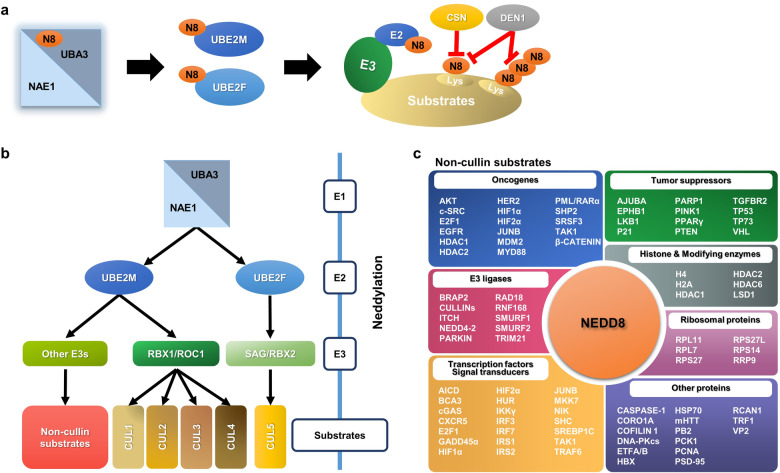
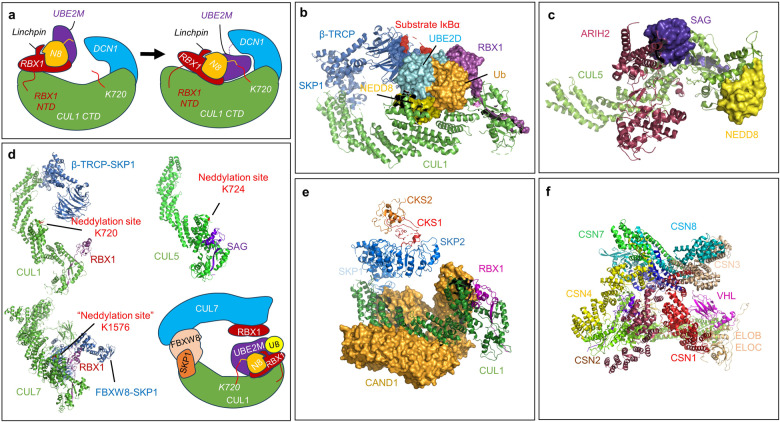
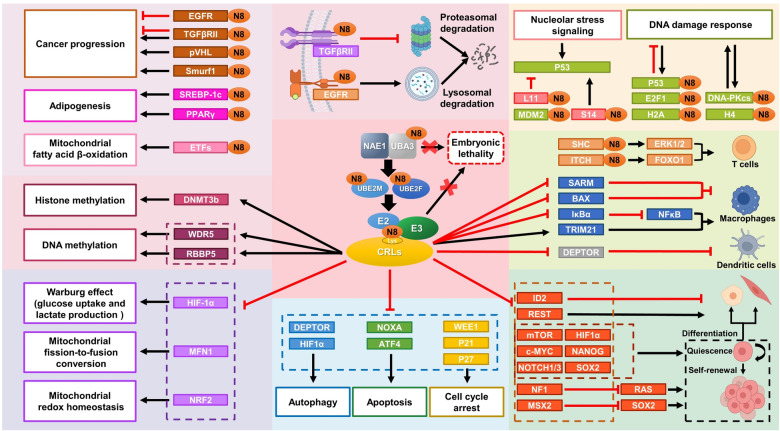
NEDD8 (Neural precursor cell expressed developmentally downregulated protein 8) is an ubiquitin-like protein that is covalently attached to a lysine residue of a protein substrate through a process known as neddylation, catalyzed by the enzyme cascade, namely NEDD8 activating enzyme (E1), NEDD8 conjugating enzyme (E2), and NEDD8 ligase (E3). The substrates of neddylation are categorized into cullins and non-cullin proteins. Neddylation of cullins activates CRLs (cullin RING ligases), the largest family of E3 ligases, whereas neddylation of non-cullin substrates alters their stability and activity, as well as subcellular localization. Significantly, the neddylation pathway and/or many neddylation substrates are abnormally activated or over-expressed in various human diseases, such as metabolic disorders, liver dysfunction, neurodegenerative disorders, and cancers, among others. Thus, targeting neddylation becomes an attractive strategy for the treatment of these diseases. In this review, we first provide a general introduction on the neddylation cascade, its biochemical process and regulation, and the crystal structures of neddylation enzymes in complex with cullin substrates; then discuss how neddylation governs various key biological processes via the modification of cullins and non-cullin substrates. We further review the literature data on dysregulated neddylation in several human diseases, particularly cancer, followed by an outline of current efforts in the discovery of small molecule inhibitors of neddylation as a promising therapeutic approach. Finally, few perspectives were proposed for extensive future investigations.
Overview
The claims and statistics of this paper haven’t been checked yet.
Run the check — free, no account needed. It reads the open-access text and checks the sources it cites.
Integrity signals
Registry
Cites
Statistics
Figures
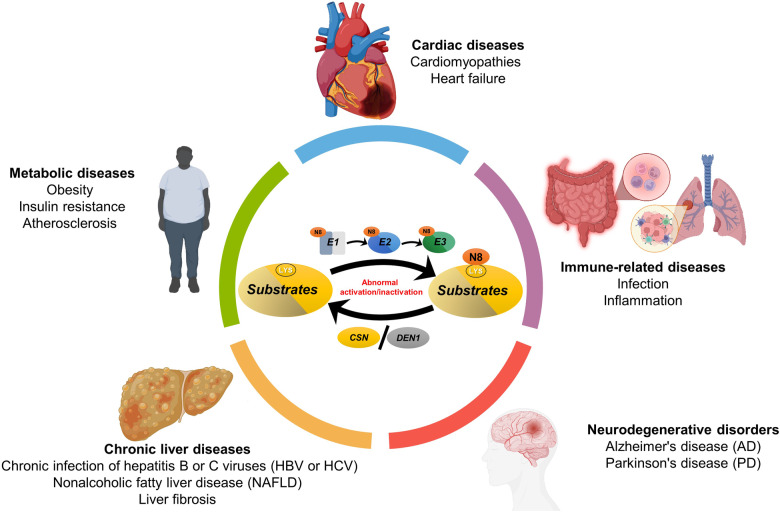
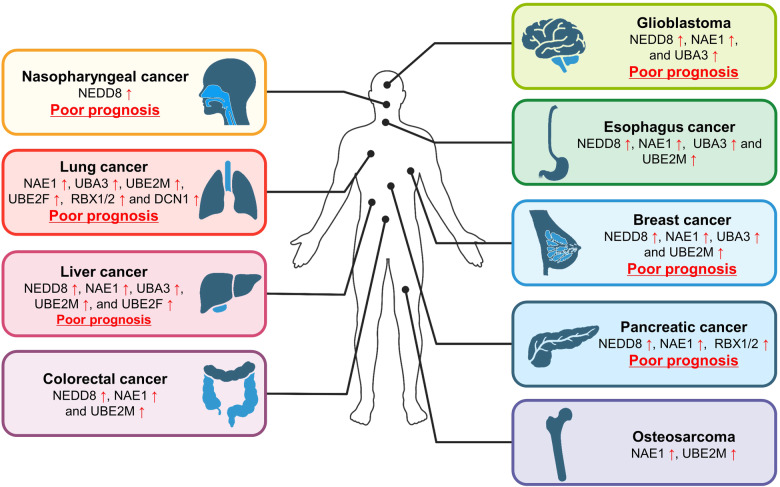
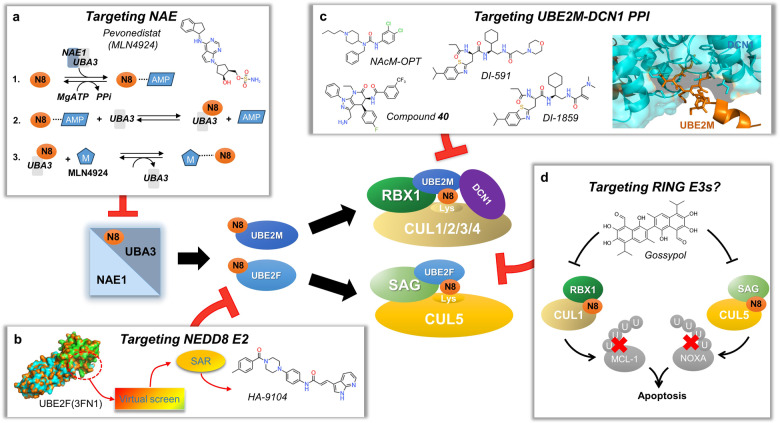
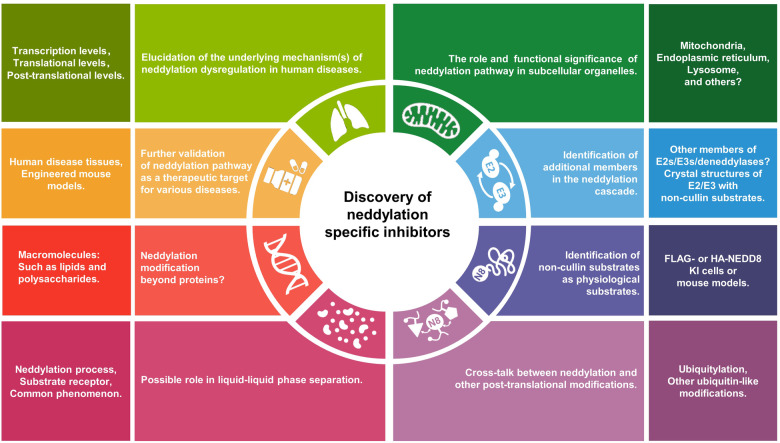
Verification
Claims the paper makes
The claims and statistics of this paper haven’t been checked yet.
Run the check — free, no account needed. It reads the open-access text and checks the sources it cites.
Claims other papers make about this one
Each is checked against this paper’s own text: does it say what the citing paper says it does?
The cited source says what the claim attributes to it.
In the citing paper
“DCUN1D5 is involved in the neddylation pathway that regulates protein homeostasis, 58 and S100A12 is a pro‐inflammatory mediator that modulates neuroinflammation. 59”
From Unraveling sex differences in Alzheimer's disease and related endophenotypes with brain proteomes (2025) · cites this paper as [58]
The cited source says what the claim attributes to it.
In the citing paper
“Moreover, TRIM46 and TOGARAM1 are proteins that play roles in microtubule functions, 55 , 56 and DCUN1D5 regulates the protein neddylation pathway that has been linked to AD. 58”
From Unraveling sex differences in Alzheimer's disease and related endophenotypes with brain proteomes (2025) · cites this paper as [58]
Self-check
Percentages, sums and reported differences re-computed from the paper’s own numbers.
The self-check needs the paper’s full text.
Citations
Cites
Dendritic cells and the control of immunity
Banchereau, J., & Steinman, R. M. (1998) · Nature · doi:10.1038/32588 · Cited by 14,496
Control of Regulatory T Cell Development by the Transcription Factor Foxp3
Hori, S., Nomura, T., & Sakaguchi, S. (2003) · Science · doi:10.1126/science.1079490 · Cited by 8,187
Cell Signaling by Receptor Tyrosine Kinases
Lemmon, M. A., & Schlessinger, J. (2010) · Cell · doi:10.1016/j.cell.2010.06.011 · Cited by 7,929
Comprehensive molecular characterization of gastric adenocarcinoma
The Cancer Genome Atlas Research Network (2014) · Nature · doi:10.1038/nature13480 · Cited by 6,498
Self-citationHeart Disease and Stroke Statistics—2022 Update: A Report From the American Heart Association
Tsao, C. W., Aday, A. W., Almarzooq, Z. I., Alonso, A., Beaton, A. Z., Bittencourt, M. S., Boehme, A. K., Buxton, A. E., Carson, A. P., Commodore-Mensah, Y., et al. (2022) · Circulation · doi:10.1161/cir.0000000000001052 · Cited by 5,987
Integrated genomic characterization of endometrial carcinoma
The Cancer Genome Atlas Research Network, & Levine, D. A. (2013) · Nature · doi:10.1038/nature12113 · Cited by 5,784
Neutrophil recruitment and function in health and inflammation
Kolaczkowska, E., & Kubes, P. (2013) · Nature Reviews Immunology · doi:10.1038/nri3399 · Cited by 5,472
Mitochondrial Reactive Oxygen Species (ROS) and ROS-Induced ROS Release
Zorov, D. B., Juhaszova, M., & Sollott, S. J. (2014) · Physiological Reviews · doi:10.1152/physrev.00026.2013 · Cited by 5,383
Mutations in the parkin gene cause autosomal recessive juvenile parkinsonism
Kitada, T., Asakawa, S., Hattori, N., Matsumine, H., Yamamura, Y., Minoshima, S., Yokochi, M., Mizuno, Y., & Shimizu, N. (1998) · Nature · doi:10.1038/33416 · Cited by 5,227
Targeting Hypoxia-Inducible Factors for the Treatment of Anemia in Chronic Kidney Disease Patients
Locatelli, F., Fishbane, S. N., Block, G. A., & Macdougall, I. C. (2017) · American Journal of Nephrology · doi:10.1159/000455166 · Cited by 4,836
Cited by
Sorted by citations
Items 101–170 of 170
Xiao, Q., Gao, Z., Allen, S., Garza, D., Morimoto, R. I., & Kelly, J. W. (2026) · bioRxiv (Cold Spring Harbor Laboratory) · doi:10.64898/2026.01.28.702105 · Cited by 1
Dammer, E. B., Afshar, S., Bian, S., Seyfried, N. T., Levey, A. I., Fortea, J., & Johnson, E. C. B. (2026) · medRxiv · doi:10.64898/2026.02.14.26346321 · Cited by 1
Lyu, L., Qin, X., Xiu, H., Qu, Y., Wang, Y., Yang, X., Dang, W., & Kebreab, E. (2025) · Theriogenology · doi:10.1016/j.theriogenology.2025.02.020
Highly activated neddylation pathway in lung cancer and chemical targeted intervention
Qin, X., Yu, Q., Li, X., Xiong, X., Liu, P., Han, X., & Sun, Y. (2025) · Scientia Sinica Chimica · doi:10.1360/ssc-2025-0015
Self-citationEffect of retained introns on the coding potential of RNA molecules in human leukemia cells
Huzava, K. V., Gavrichkov, A. A., Ilyushonak, I. M., Ramanouskaya, T. V., Likhavets, M. A., Skakun, V. V., Yatskou, M. M., & Grinev, V. V. (2025) · Proceedings of the National Academy of Sciences of Belarus Biological Series · doi:10.29235/1029-8940-2025-70-2-146-160
Zhang, C., Yao, Y., Qian, Q., Han, X., Lu, Y., Jiang, X., Cheng, H., Zhang, X. Z., Chi, Y., Ke, Y., et al. (2025) · Scientific Reports · doi:10.1038/s41598-025-04153-7
Niedra, H., Rogoza, O., Saksis, R., Pečulis, R., Halilova, A., Geriņa-Bērziņa, A., Vilisova, S., Senterjakova, N., Puķītis, A., Ruz‐Caracuel, I., et al. (2025) · PLoS ONE · doi:10.1371/journal.pone.0325672
Zanders, E. D. (2025) · Springer eBooks · doi:10.1007/978-3-031-93949-5_5
Pan, C., & Yu, X. (2025) · Drug Development Research · doi:10.1002/ddr.70126
Delgado, T. C., Lectez, B. L. P., Serrano‐Maciá, M., Lopitz‐Otsoa, F., Gracianteparaluceta, L. U., Martínez‐Arranz, I., Arizmendi, J. M., Aloria, K., Azkargorta, M., Elortza, F., et al. (2025) · npj gut and liver. · doi:10.1038/s44355-025-00032-0
Lomonosova, E., Loeb, M., Rodriguez, K., van Biljon, L. N., Brill, J. D., Schab, A. M., Minett, M., Barron, J., Bittner, M., Park, J., et al. (2025) · bioRxiv (Cold Spring Harbor Laboratory) · doi:10.1101/2025.08.04.668450
DCUN1D2 is insignificant for spermatogenesis and male fertility in mice
Feng, Y. (2025) · American Journal of Translational Research · doi:10.62347/clig5523
Parkin, a key player in Parkinson's disease pathogenesis: A review
Malhotra, V., Ansari, J., Khan, S., Khan, N. J., Shahid, M., Hassan, M. I., & Islam, A. (2025) · International Journal of Biological Macromolecules · doi:10.1016/j.ijbiomac.2025.147034
Disease-specific tau polymorphs define unique protein interaction networks across proteinopathiesPreprint
Puangmalai, N., Bhatt, N. N., Suthprasertporn, N., Miranda-Morales, E. G., Shchankin, N., Samples, M., Balci, A. E., Liew, J. Y., Montalbano, M., Zhao, Y., et al. (2025) · bioRxiv (Cold Spring Harbor Laboratory) · doi:10.1101/2025.09.09.675096
Self-citationPROTACs as New Tools to Study Platelet Function
Trory, J. S., May, C., & Hers, I. (2025) · Springer eBooks · doi:10.1007/978-3-031-96344-5_27
Chavez-Iglesias, E., Sucher, A., Thati, N., Trudeau, J., Yom, S. S., Sirota, M., Olshen, A. B., Cho, N. W., & Kober, K. M. (2025) · bioRxiv (Cold Spring Harbor Laboratory) · doi:10.1101/2025.11.09.687437
SUMOylation and NEDDylation in kidney diseases
Chen, Z., Li, D., Zhang, J., Wei, B.-Y., Zhao, H., Li, P., & Chen, D. (2025) · Experimental and Molecular Pathology · doi:10.1016/j.yexmp.2025.105010
Endogenous neddylation in B cells regulates immune responses in mice
Xin, J. I. N., Zhu, L., ZHANG, L., Tianhang, C. H. E. N., & Zhou, M. (2026) · Journal of Zhejiang University (Medical Sciences) · doi:10.3724/zdxbyxb-2025-0646
Huang, Y., Wang, Z., Wang, S., Liu, C., Chang, L., Geng, X. H., Du, P., Wang, Y., Fan, W., & Zhao, B. (2026) · Journal of Neuroimmunology · doi:10.1016/j.jneuroim.2026.578872
SAG/RBX2/ROC2/RNF7 dual E3 ligase: From target identification, validation to drug discovery
Yu, Q., Zhang, S., Li, Z., Liang, T., & Sun, Y. (2026) · Biochimica et Biophysica Acta (BBA) - Reviews on Cancer · doi:10.1016/j.bbcan.2026.189546
Self-citationZhou, C., He, Y., Yao, W.-X., Li, Y., & Li, B. (2026) · Cell Communication and Signaling · doi:10.1186/s12964-026-02754-x
Li, Y., Jiang, J., Song, Y., Yang, T., Xinghua, Y., Li, X., Luo, C., Shi, Y., Liu, S., Chu, C., et al. (2026) · Frontiers in Pharmacology · doi:10.3389/fphar.2026.1729145
Optimized AAVrh10 and Factor 9 vectors demonstrate improved phenotypic rescue in hemophilia B mice
Huda, S., Senthilkumar, M. B., Bihani, D., Sarangi, P., Kumar, G. N., Chandra, D., & Jayandharan, G. R. (2026) · Thrombosis Research · doi:10.1016/j.thromres.2026.109655
König, I., Oßwald, K., Schneider, L., Barth, H., & Papatheodorou, P. (2026) · Microbiology Spectrum · doi:10.1128/spectrum.03872-25
Xie, Q., & Yang, B. (2026) · Canadian Journal of Neurological Sciences / Journal Canadien des Sciences Neurologiques · doi:10.1017/cjn.2026.10587
Cul5: immune cell function and therapeutic potential
Tomishima, S. A., & Oliver, P. M. (2026) · Frontiers in Immunology · doi:10.3389/fimmu.2026.1808586
UBE2M-mediated EGFR neddylation drives keratinocyte proliferation in psoriasis
Lin, X., Wang, Q., Xu, L., Wang, Y., Fu, Y., Yan, Z., Huang, S., & Dang, N. (2026) · iScience · doi:10.1016/j.isci.2026.115784
Mao, Y., Papakyriacou, I., Lu, Y., & Alford, L. P. (2026) · Research Square · doi:10.21203/rs.3.rs-9399910/v1
The role of the RS1-NEDD4-YAP1 axis orchestrates epithelial-macrophage interplay in COPD
仲昭双, Cao, C., Jia, H., He, W., & Xia, S. (2026) · Respiratory Research · doi:10.1186/s12931-026-03735-x
Liu, Z., Zuo, C., Wu, C., Tian, H., Zhu, Z., Zhu, W., & Sun, L. (2026) · APOPTOSIS · doi:10.1007/s10495-026-02339-6
UBE2M deficiency in alveolar macrophages promotes emphysema through HIF-2α/MMP12 axis
Li, Z., Guo, D., Wang, Y., Chen, H., Li, N., Dong, L., Xu, X., Zhao, Y., Sun, Y., Ying, S., et al. (2026) · Chinese Medical Journal - Pulmonary and Critical Care Medicine · doi:10.1016/j.pccm.2026.05.004
Self-citationMolecular Functions of Ubiquitin-like Modifiers in Bacterial Infection
Tezuka, T., Yang, W. J. N., Kitahata, K., Nohara, A., Park, S. J., & Kim, M. (2026) · Cells · doi:10.3390/cells15121060
The unexplored evolutionary history of Nedd genes in metazoans
DeWildt, L. V., Hildenbrand, M. A., Manchester, C. D., Prawiradilaga, S. I., Ristoratore, F., & Coppola, U. (2026) · Frontiers in Ecology and Evolution · doi:10.3389/fevo.2026.1851122
Beyond Material Dominance: A Coevolutionary Approach to the “Real” IVIVC of PLGA Microspheres
Wang, S., Hua, Y., Yu, J., Dai, X., Ran, Y., Zhang, W., Zhai, Y., Li, Z., Zhuang, X., & Gao, J. (2026) · Advanced Functional Materials · doi:10.1002/adfm.76498
Self-citationTargeting OTUD7A-HINT1 deubiquitination activates mTOR signaling for CNS regeneration
Liu, Z.-G., Yong-quan, S., Zhou, L.-Y., Liu, Z.-Y., Zhao, L.-W., Zhou, F., Zhang, B., & Liu, C. (2026) · Cell Death and Disease · doi:10.1038/s41419-026-09005-4
Jiang, Q., Meng, D., Zhu, S., Tang, W., & Cui, S. (2026) · Frontiers in Endocrinology · doi:10.3389/fendo.2026.1818156
Jończyk, J., Czopek, A., Kvinta, U., Skok, A., & Zagórska, A. (2026) · Molecules · doi:10.3390/molecules31132303
Chen, Q., Zhuo, J., Zhong, C., Yang, H., Guan, X., Yang, H., Yin, Y., Yu, Q., Xiong, X., & Han, X. (2026) · RSC Medicinal Chemistry · doi:10.1039/d6md00393a
Self-citationJiang, X., Zhang, J., Zhou, L. Y., Li, Z., Ningcong, S., Xu, X., Zhang, J., Huang, Y., Zhang, X., Chen, E., et al. (2026) · Journal of Clinical Investigation · doi:10.1172/jci201769
Self-citationUbiquitin-specific protease 25: a new regulator for cardiovascular and cerebrovascular diseases
Shao, Y., Jiang, S., Zhai, L., & Sun, F. (2026) · Frontiers in Cell and Developmental Biology · doi:10.3389/fcell.2026.1802539
Xie, H., Xie, J., Dai, Z., Zhang, J., Wang, H., Yuan, P., Liu, Y., Zhang, W., Wang, S., Yang, H., et al. (2026) · Autophagy · doi:10.1080/15548627.2026.2705753
Shen, W., Chen, W. F., Sun, Y., Huang, M., Zhao, J., Gao, J., Xu, W., Xu, C., Zhao, L., & Li, M. (2026) · Biochemical Pharmacology · doi:10.1016/j.bcp.2026.118282
Self-citationDu, Y., Ning, D., Yu, J., Chen, Y., Li, J., Liu, C., Lin, C., Zhang, T., Liu, W., Qin, J., et al. (2026) · Experimental Cell Research · doi:10.1016/j.yexcr.2026.115141
Lee, J., Lee, M. Y., Kim, H. S., Park, J., Moon, G. H., Park, J. B., Kim, H.-J., Kim, S. J., & Chun, Y. (2026) · Experimental & Molecular Medicine · doi:10.1038/s12276-026-01784-2
Palmitoylation of TK1 exacerbates osteoarthritis by promoting JNK-mediated metabolic reprogramming
Zhang, Z., Zhang, C., Ju, Y., Zhou, Y., Guo, W., Xie, J., & Huang, Z. (2026) · Proceedings of the National Academy of Sciences · doi:10.1073/pnas.2602136123
Zheng, T., Li, Y., Huang, Y., He, L., Huang, X., Fan, C., Wen, J., Xu, J., Sun, P.-H., Chen, W., et al. (2026) · Journal of Medicinal Chemistry · doi:10.1021/acs.jmedchem.6c00361
The c-Cbl-mediated non-canonical TGFBR2 neddylation drives BRAF V600E melanoma metastasisPreprint
Lee, L. T., Zheng, J.-Q., Lu, H.-W., Lin, C.-H., Lin, Y.-H. K., Liao, Y., Wang, Y.-J., Chiu, H., & Lin, Y. (2026) · Research Square · doi:10.21203/rs.3.rs-10484027/v1
Zhang, Y., Xiong, N., Du, B., Song, Y., Ni, K., & Tang, Z. (2026) · Biochimica et Biophysica Acta (BBA) - Molecular Basis of Disease · doi:10.1016/j.bbadis.2026.168416
Disease-specific tau polymorphs are associated with unique protein networks across proteinopathies
Puangmalai, N., Bhatt, N. N., Suthprasertporn, N., Miranda-Morales, E. G., Shchankin, N., Samples, M., Balci, A. E., Liew, J. Y., Montalbano, M., Zhao, Y., et al. (2026) · The EMBO Journal · doi:10.1038/s44318-026-00897-8
Self-citationCheng, Z. A., Wittmann, C., & Kishore, R. (2026) · Acta Pharmacologica Sinica · doi:10.1038/s41401-026-01910-w
Xu, F., Zhao, S., Jiang, Y., Li, X., Wang, W., Zhou, Y., Wang, Y., Zhu, P., Shao, Y., Qiao, G., et al. (2026) · Cellular and Molecular Immunology · doi:10.1038/s41423-026-01464-1
URMylation Signaling Pathway in Cancer: Molecular Mechanisms and Therapeutic Opportunities
Wang, J., Yan, P., Jiang, W., Chen, L., Huang, D., Hou, T., Inuzuka, H., & Wei, W. (2026) · Current Issues in Molecular Biology · doi:10.3390/cimb48090869
E3 Ubiquitin Ligases in MASH ‐Associated Liver Fibrosis: Mechanisms and Therapeutic Opportunities
Oh, A., Jeong, Y., Jung, Y. H., Kim, Y. U., Gi, H., Kim, D. W., Choi, Y. D., Lee, S. B., & Kim, K. (2026) · Liver International · doi:10.1111/liv.70850
NAE1-Dependent Protein Neddylation Preserves Endothelial Identity and Vascular IntegrityPreprint
Zoni, R. N., Tanni, F. Y., Lee, C. M., Cheng, X., Zhu, J., Baki, V. B., Islam, M. S., Li, J., Su, H., & Sun, X. (2026) · bioRxiv (Cold Spring Harbor Laboratory) · doi:10.64898/2026.08.27.746884
A comprehensive review on the molecular basis and therapeutic potential of UBE2M in cancer
Zhao, B. (2026) · Bulletin du Cancer · doi:10.1016/j.bulcan.2026.07.013
Wang, S., Xu, J., & Ge, H. (2026) · Research Square · doi:10.21203/rs.3.rs-10736013/v1
Ranaldi, E. D. L. R. M. C., Johnson, N. H., Sawaya, A. P., Herrera, J. R., Kerr, N. A., Bramlett, H. M., Keane, R. W., Dietrich, W. D., & Vaccari, J. P. D. R. (2026) · Cells · doi:10.3390/cells15181658
Sun, X., Fan, J., Zheng, X., Xiong, Z., Gao, Y., Li, Y., Wu, R., Ling, Z., Bahabayi, A., & Liu, C. (2026) · Clinical Rheumatology · doi:10.1007/s10067-026-08418-y
Species-dependent activities of the PINK1–parkin axis
Huang, W., Chen, K., Wen, J., Zhang, T., Li, S., Li, X., & Yang, W. (2026) · Translational Neurodegeneration · doi:10.1186/s40035-026-00586-w
Yan, Y., Li, Z., & Xiao, T. (2026) · iScience · doi:10.1016/j.isci.2026.117606
Self-citationPeng, X., 向光明, & 孙耕耘 (2026) · Frontiers in Bioscience-Landmark · doi:10.31083/fbl52485
Interaction of genetic and environmental risk factors in the aetiology of keratoconus
Hadvina, R., & Liu, Y. (2026) · Open Biology · doi:10.1098/rsob.260068
Modeling human neurodegeneration with iPSCs: opportunities, limitations, and the challenge of aging
Wang, S., Elia, L., Liu, W., & Finkbeiner, S. M. (2026) · Journal of Clinical Investigation · doi:10.1172/jci209602
Piermartiri, T., da Matta, A. C. A., Pinto, J. V. K., Tasca, C. I., & Nedel, C. B. (2026) · Frontiers in Oncology · doi:10.3389/fonc.2026.1984427
Liu, Y., Liang, R., Zhou, Y., Chen, J., Yuan, Z., Wu, H., & Xu, C. S. (2026) · Experimental Cell Research · doi:10.1016/j.yexcr.2026.115196
Protein Lysine Lactylation in DNA Damage Response: Regulatory Mechanisms and Emerging Functions
裴新可, Zhang, J., Gao, Y., Pan, Z., Wang, Y., Wang, L., Wang, Z., Ding, G., Stauber, R. H., Ni, T., et al. (2026) · Biomolecules · doi:10.3390/biom16101528
BindingDB Entry 50023156: Discovery of New Azaindole Metallo-Deubiquitinase CSN5 Inhibitors.
BindingDB (2026) · UC San Diego · doi:10.7270/q2pz5fq5
Halilovic, M., Abdelsalam, M. A. M., Mieland, A. O., Neuroth, S., Ashry, R., Schwarting, M. E. S., Zabkiewicz, J., Lazenby, M., Alvares, C. L., Schmidt, M., et al. (2026) · Leukemia · doi:10.1038/s41375-026-03168-x
Neddylation is required for cerebellar development in mice
Wang, Y.-B., Yong, Y.-Y., Yu, X.-R., Xie, P.-X., Song, N., Zhao, X., Ding, Y., & Zhang, L. (2026) · Molecular Neurobiology · doi:10.1007/s12035-026-06288-8
Tian, X., Li, X., Liu, D., Min, Y., & Hu, Y. (2026) · Frontiers in Pharmacology · doi:10.3389/fphar.2026.1936781
Metadata
- Authors
- Zhang, S., Yu, Q., Li, Z., Zhao, Y., & Sun, Y.
- Affiliations
- Second Affiliated Hospital of Zhejiang University (CN)
- Chinese Academy of Sciences (CN)
- First Affiliated Hospital Zhejiang University (CN)
- Corresponding author
- Zhao, Yongchao
- Sun, Yi
- Venue
- Signal Transduction and Targeted Therapy
- Published
- 2024-04-05
- Volume
- 9
- Issue
- 1
- Pages
- 85-85
- ISSN
- 2059-3635 (ISSN-L)
- PMC
- PMC10995212
- OpenAlex
- W4393952844
- Cited by
- 171
- References
- 537
- Citations by year
- 2026: 78 · 2025: 74 · 2024: 19
- FWCI
- 6.99
- Type
- journal article
- Language
- en
- Open access
- gold
- doi.org
- Locations
- Signal Transduction and Targeted Therapy (publishedVersion, cc-by)
- PubMed Central (publishedVersion, cc-by)
- PubMed (publishedVersion)
- DOAJ (DOAJ: Directory of Open Access Journals) (submittedVersion, cc-by-sa)
- Funders
- National Natural Science Foundation of China (U22A20317, 82202838, 82102749, 92053117, 81972591)
- Natural Science Foundation of Zhejiang Province (LD22H300003, LZ22H160003)
- The National Key R&D Program of China
- Topics
- Life Sciences › Biochemistry, Genetics and Molecular Biology › Molecular Biology › Ubiquitin and proteasome pathways
- Life Sciences › Biochemistry, Genetics and Molecular Biology › Molecular Biology › Protein Degradation and Inhibitors
- Health Sciences › Medicine › Oncology › Cancer-related Molecular Pathways
- Keywords
- NEDD8, cullin neddylation, cullin-RING ligases, E3 ubiquitin ligase, neddylation inhibitor, cancer, metabolic disorders, neurodegenerative diseases, liver dysfunction, small molecule inhibitors
- MeSH terms
- Humans, Neoplasms, Protein Processing, Post-Translational, Ubiquitins, Ubiquitin-Protein Ligases, Cullin Proteins
About these checks
Registry, retraction, Cites and statistics results are computed, not judged, with one exception: a printed reference that no index lists is read once by a model before it counts as a citation error. Claims are extracted by a model and kept only when their quote appears verbatim in the text; each cited source is then checked, with a model’s help, for whether it says what the claim relies on. Those verdicts can be wrong — read the claim’s quote and the cited source before relying on one.
Statistics and arithmetic are recomputed, not judged.
Confidence bands are shown only for fields calibrated on our annotated test set. None is calibrated yet, so no band is shown.
What counts as a claim ›How we measure confidence ›How we check this ›
Are you an author, or do you see a problem with this page? Request a review
