

Drug repurposing for cancer therapy
Open accessThe DOI matches its Crossref record; 508 of the 513 references it cites were found in a registry or an index; 127 of the 249 sources its claims cite were checked for support.
Abstract
Comprehensive review of methods and candidate repurposed drugs for cancer therapy.
Overview
CoChat Summary
## TL;DR
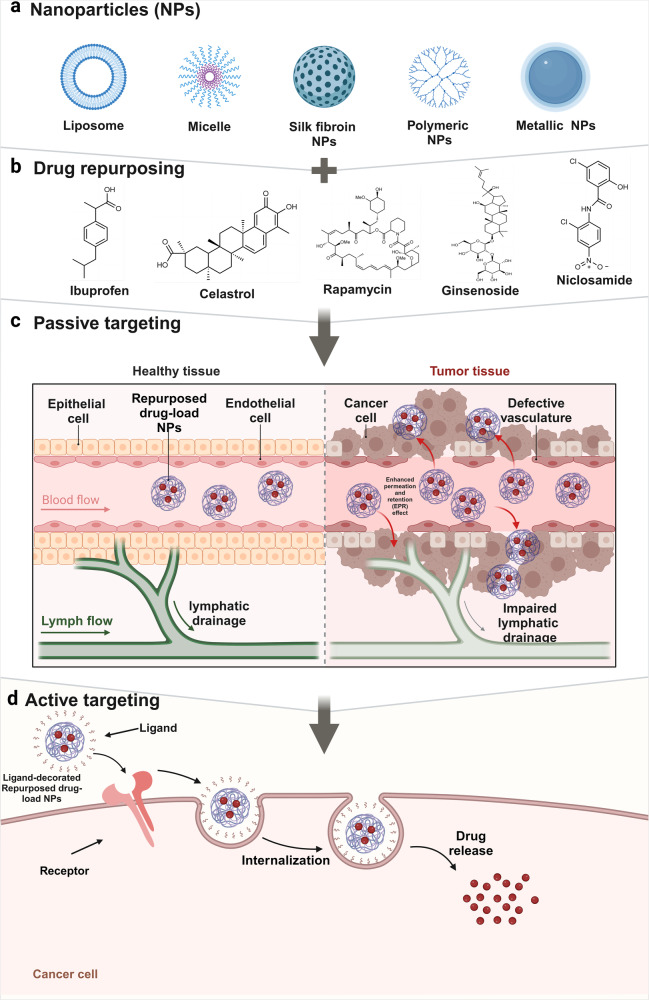
This is a narrative review of drug repurposing for cancer therapy, summarizing experimental and computational strategies, hallmark-targeting examples, tumor microenvironment targets, and nanomaterial-based delivery. It argues that repurposed drugs may speed development and reduce cost, but clinical translation remains limited by bioavailability, dosing, toxicity, and regulatory barriers.
## Key findings
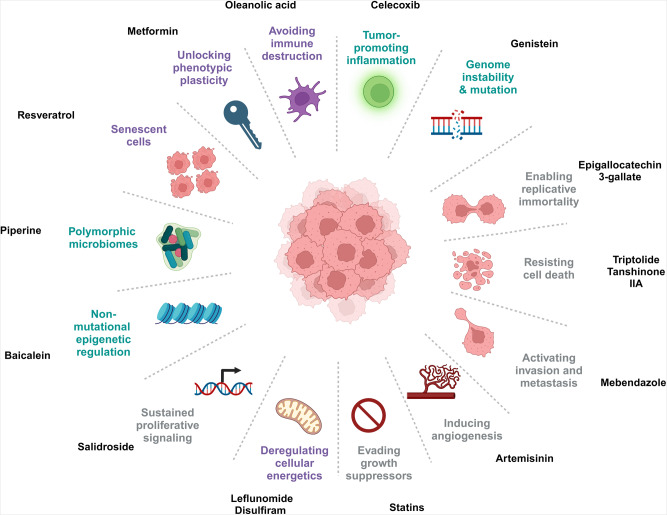
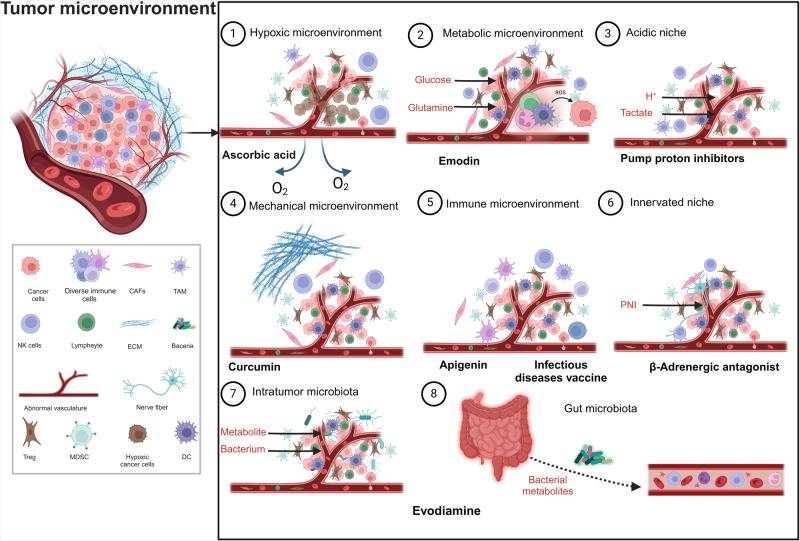
- The review organizes drug repurposing around the 14 hallmarks of cancer and the tumor microenvironment (TME), and notes that repurposed drugs may target multiple malignancy features and support combination therapy.
- It states that conventional drug development can take 10–15 years and cost $1–2 billion, whereas repurposing is faster and cheaper because existing drugs already have known safety, dosage, and toxicity profiles.
- The paper highlights several reported quantitative findings from prior studies, including a 45% risk reduction in thyroid cancer among metformin users in Eastern countries, and lower gynecological cancer occurrence with metformin: HR = 0.60 (95% CI: 0.49–0.74), endometrial cancer HR = 0.65 (95% CI: 0.50–0.85), and ovarian cancer HR = 0.47 (95% CI: 0.27–0.82).
- It also cites a phase I clinical trial of leflunomide in refractory multiple myeloma where disease stabilization occurred in 9 of 11 patients.
## Methods
- Design: Narrative review/systematic overview of published work on drug repurposing for cancer therapy, centered on hallmarks of cancer, TME-targeting therapy, and nanomaterial-based delivery.
- Data/sample: The text does not report a primary study sample; instead, it synthesizes examples from preclinical studies, epidemiological analyses, and clinical trials, and mentions use of databases and tables of repurposed-drug candidates.
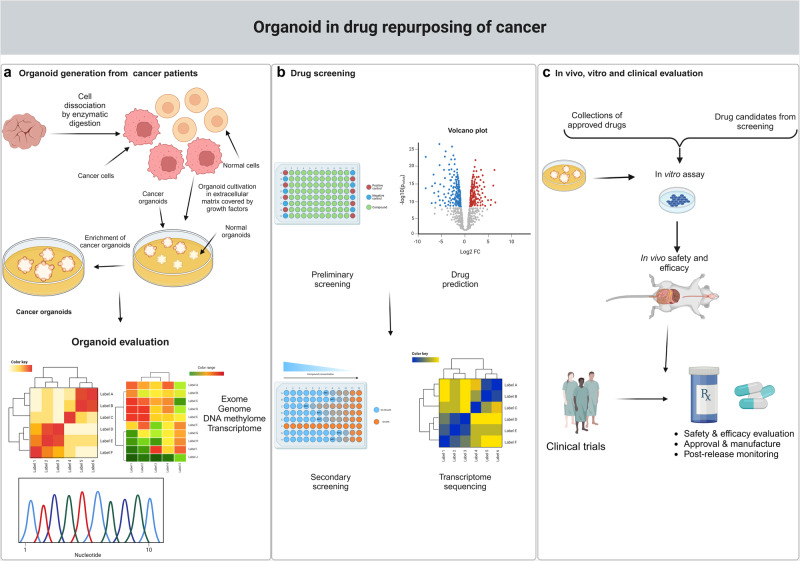
- Main analysis: The paper categorizes repurposing strategies into experimental approaches (including phenotypic screening and organoid/tumoroid models) and computational approaches (including molecular docking, network analysis, data mining, similarity analysis, machine learning, and transcriptional signature methods).
## Limitations
- The paper explicitly states that many repurposed drugs have not yet translated into clinical application, and that clinical trial evidence is limited for several TME-targeting candidates.
- It notes several practical barriers: bioavailability limits, instability, poor solubility, toxicity, dosing uncertainty, patent/IP issues, regulatory barriers, and limited funding for trials.
- The text also makes evident, but does not present as a formal limitation, that much of the evidence discussed is preclinical and often based on small or ongoing clinical studies rather than large randomized trials.
Model-written summary. Check it against the paper before relying on it.
Integrity signals
Registry
Cites
Statistics
Figures
Verification
Claims the paper makes
99 Valid · 15 Not valid · 82 Not checked · 27 Own results and interpretations
At least one cited source doesn’t support this claim or points to a different paper, and none confirmed it — see the verdicts below.
In the paper
“Furthermore, TPL has been shown to induce autophagy-mediated caspase-independent cell death in tumor cells.”
§ Drug repurposing for cancer therapy > Drug repurposing: candidates for the therapeutic targeting of hallmarks of cancer > Inducing cell death
What the sources say
- Disputedcites [91] Zhao F Triptolide induces protective autophagy through activation of the CaMKKβ-AMPK signaling pathway in prostate cancer cells Oncotarget 2016 7 5366 5382 10.18632/oncotarget.6783 26734992 PMC4868692 sourceExperimental — accuracy not yet measured
The Results section (‘Triptolide induces cytoprotective autophagy in PCa cells’; page not supplied) concludes that autophagy protects prostate cancer cells from triptolide-induced death: inhibiting autophagy increased both cell death and caspase-3 cleavage. This is contrary to the attributed claim that triptolide-induced autophagy mediates caspase-independent cell death. (LLM, conf=0.90)
Checked by a reasoning model — may be wrong.
plainstates a cause- Asserted: passes — The authors put it forward as true.
- Checkable: passes — It can be checked against evidence.
- Load-bearing: unclear — It is unclear whether the paper’s conclusions depend on it.
- Based: passes — The paper gives a reason why it holds.
- Disputed
At least one cited source doesn’t support this claim or points to a different paper, and none confirmed it — see the verdicts below.
In the paper
“Celecoxib has been shown to enhance the efficacy of BRAF/MEKi treatments in melanoma through suppression of the NF-κB pathway.”
§ Drug repurposing for cancer therapy > Drug repurposing: candidates for the therapeutic targeting of hallmarks of cancer > Targeting tumor-promoting inflammation
What the sources say
- Disputedcites [183] Vergani E miR-146a-5p impairs melanoma resistance to kinase inhibitors by targeting COX2 and regulating NFkB-mediated inflammatory mediators Cell Commun. Signal 2020 18 156 10.1186/s12964-020-00601-1 32967672 PMC7510138 sourceExperimental — accuracy not yet measured
The Results section (“Targeting COX2 restores melanoma sensitivity to BRAF/MEKi”; page unavailable) supports increased growth inhibition and cytotoxicity with celecoxib plus BRAF/MEKi in melanoma cells. But it reports noncanonical NF-κB activation, not suppression, and attributes the enhanced apoptotic effects to reduced PGE2 production. The Discussion likewise describes activation of NF-κB signaling cascades during celecoxib-induced cell death. (LLM, conf=0.88)
Checked by a reasoning model — may be wrong.
plainstates a cause- Asserted: passes — The authors put it forward as true.
- Checkable: passes — It can be checked against evidence.
- Load-bearing: passes — The paper’s conclusions depend on it.
- Based: passes — The paper gives a reason why it holds.
- Disputed
At least one cited source doesn’t support this claim or points to a different paper, and none confirmed it — see the verdicts below.
In the paper
“Dong and colleagues reported the nuanced relationship between EGCG and the WNT/β-catenin signaling pathway by demonstrating that overexpression of β-catenin could either augment or reduce the anticancer effects of EGCG.147”
§ Drug repurposing for cancer therapy > Drug repurposing: candidates for the therapeutic targeting of hallmarks of cancer > Interfering with replication
What the sources say
- Disputedcites [147] Dong C Epigallocatechin-3-gallate suppresses the growth of human osteosarcoma by inhibiting the Wnt/β-catenin signalling pathway Bioengineered 2022 13 8490 8502 10.1080/21655979.2022.2051805 35348430 PMC9161922 sourceExperimental — accuracy not yet measured
In “EGCG inhibits OS growth by regulating the Wnt/β-catenin pathway” (Figure 4c–f; page not supplied), the paper reports that β-catenin overexpression inhibited EGCG’s antitumour and pro-apoptotic effects. It was β-catenin knockdown, not overexpression, that strengthened those effects. (LLM, conf=0.91)
Checked by a reasoning model — may be wrong.
hedgedstates a cause- Asserted: passes — The authors put it forward as true.
- Checkable: passes — It can be checked against evidence.
- Load-bearing: unclear — It is unclear whether the paper’s conclusions depend on it.
- Based: passes — The paper gives a reason why it holds.
- Disputed
At least one cited source doesn’t support this claim or points to a different paper, and none confirmed it — see the verdicts below.
In the paper
“Another extensive meta-analysis ascertained a notably lower gynecological cancer occurrence in those undergoing metformin treatment compared to alternative therapies (gynecological cancer: HR = 0.60, 95% CI: 0.49–0.74; endometrial cancer: HR = 0.65, 95% CI: 0.50–0.85; ovarian cancer: HR = 0.47, 95% CI: 0.27–0.82).203”
§ Drug repurposing for cancer therapy > Drug repurposing: candidates for the therapeutic targeting of hallmarks of cancer > Locking phenotypic plasticity
What the sources say
- Disputedcites [203] Yao K Zheng H Li T Association between metformin use and the risk, prognosis of gynecologic cancer Front. Oncol. 2022 12 942380 10.3389/fonc.2022.942380 35898873 PMC9309370 sourceExperimental — accuracy not yet measured
The Discussion section on cancer risk (page not provided) reports no significant association between metformin use and the occurrence of gynecological, endometrial, or ovarian cancer in women with diabetes. The cited hazard ratios appear instead in the Discussion section on prognosis, where they describe overall survival among patients with cancer, not cancer occurrence. (LLM, conf=0.90)
Checked by a reasoning model — may be wrong.
plainstates an association- Asserted: passes — The authors put it forward as true.
- Checkable: passes — It can be checked against evidence.
- Load-bearing: passes — The paper’s conclusions depend on it.
- Based: passes — The paper gives a reason why it holds.
- Disputed
The cited sources support only part of this claim — read each source’s verdict below.
In the paper
“Notably, high-throughput screening using sophisticated models can identify compounds that mitigate disease symptoms without necessitating pre-existing knowledge about the drug-target interactions.29,30”
§ Drug repurposing for cancer therapy > Drug repurposing strategies
What the sources say
- Partly supportedcites [29] Huang H Zhang P Qu XA Sanseau P Yang L Systematic prediction of drug combinations based on clinical side-effects Sci. Rep. 2014 4 7160 10.1038/srep07160 25418113 PMC4241517 sourceExperimental — accuracy not yet measured
The Abstract (page unavailable) describes a computational model that uses clinical side effects to predict drug combinations, rather than requiring drug-target interaction data. But it does not show that the predicted compounds mitigate disease symptoms; the Discussion (page unavailable) says the predictions need experimental testing. The Abstract also distinguishes this approach from high-throughput screening, which it says is impractical for all possible combinations. (LLM, conf=0.86)
- Could not verifycites [30] Kuhn M Campillos M Letunic I Jensen LJ Bork P A side effect resource to capture phenotypic effects of drugs Mol. Syst. Biol. 2010 6 343 10.1038/msb.2009.98 20087340 PMC2824526 sourceExperimental — accuracy not yet measured
The Introduction (page unavailable) discusses databases of cellular phenotypes and the potential of large-scale computational methods; it does not describe screening sophisticated models to find compounds that relieve disease symptoms. Searches for high-throughput screening, symptom mitigation, and drug-target-independent screening found no passage addressing that claim. (LLM, conf=0.73)
plainstates a cause- Asserted: passes — The authors put it forward as true.
- Checkable: passes — It can be checked against evidence.
- Load-bearing: unclear — It is unclear whether the paper’s conclusions depend on it.
- Based: passes — The paper gives a reason why it holds.
- Partly supported
113 more claims · 51 with their cited sources checked
Create a free account to see all 223 claims and to verify the 25 references still open.
- It may state two separate claims as one. 87
- Probably not a substantial claim. 25
Self-check
Percentages, sums and reported differences re-computed from the paper’s own numbers.
Self-check results appear here once an independent check has confirmed them.
Cited works that were retracted
Works this paper cites that were later retracted, from the retraction notices publishers deposit. Major when the notice came out before this paper was published.
A note, not an issue: for example, a cited work that was retracted only after this paper was published, which its authors could not have known.
In the paper
“134 Ongoing clinical trials are currently examining the ef fi cacy of simvastatin against various cancers, including breast (NCT00807950, NCT05550415), gastric (NCT01099085, NCT03086291), colorectal (NCT01238094), and bladder (NCT02360618) cancer.”
Cited work 10.1038/cddis.2017.46 · retracted 2025-11-27 · notice 10.1038/s41419-025-08275-8 · this paper published 2024-04-19
Citations
Cites
1 retracted
Li, J., Liu, J., Liang, Z., He, F., Yang, L., Li, P., Jiang, Y., Wang, B., Zhou, C., Wang, Y., et al. (2017) · Cell Death & Disease · doi:10.1038/cddis.2017.46 · Cited by 43 · cited 1×
“134 Ongoing clinical trials are currently examining the ef fi cacy of simvastatin against various cancers, including breast (NCT00807950, NCT05550415), gastric (NCT01099085, NCT03086291), colorectal (NCT01238094), and bladder (NCT02360618) cancer.”
BackgroundRetractedHallmarks of Cancer: The Next Generation
Hanahan, D., & Weinberg, R. A. (2011) · Cell · doi:10.1016/j.cell.2011.02.013 · Cited by 66,590 · cited 3×
“…is activated in response to numerous DNA damage events including germline or somatic defects in DNA repair, 166 oncogene-induced replication stress, 69 fl awed mitotic chromosome segregation, 167 clashes between replication and transcription machinery 168 or even as a consequence of genotoxic…”
BackgroundInfluentialGene Ontology: tool for the unification of biology
Ashburner, M., Ball, C. A., Blake, J. A., Botstein, D., Butler, H., Cherry, J. M., Davis, A. P., Dolinski, K., Dwight, S. S., Eppig, J. T., et al. (2000) · Nature Genetics · doi:10.1038/75556 · Cited by 43,206
Hanahan, D., & Weinberg, R. A. (2000) · Cell · doi:10.1016/s0092-8674(00)81683-9 · Cited by 29,219
Tissue-based map of the human proteome
Uhlén, M., Fagerberg, L., Hallström, B. M., Lindskog, C., Oksvold, P., Mardinoglu, A., Sivertsson, Å., Kampf, C., Sjöstedt, E., Asplund, A., et al. (2015) · Science · doi:10.1126/science.1260419 · Cited by 15,286
STRING v10: protein–protein interaction networks, integrated over the tree of life
Szklarczyk, D., Franceschini, A., Wyder, S., Forslund, K., Heller, D., Huerta-Cepas, J., Simonovic, M., Roth, A., Santos, A., Tsafou, K. P., et al. (2015) · Nucleic Acids Research · doi:10.1093/nar/gku1003 · Cited by 10,436
The Human Genome Browser at UCSC
Kent, W. J., Sugnet, C. W., Furey, T. S., Roskin, K. M., Pringle, T. H., Zahler, A. M., & Haussler, A. D. (2002) · Genome Research · doi:10.1101/gr.229102 · Cited by 10,400
Hallmarks of Cancer: New Dimensions
Hanahan, D. (2022) · Cancer Discovery · doi:10.1158/2159-8290.cd-21-1059 · Cited by 9,887 · cited 2×
“Furthermore, standardization of speci fi c tumoroid culture conditions is essential for enhancing 67,68 Understanding these hallmarks is pivotal for developing effective strategies for cancer prevention, diagnosis, and treatment.”
BackgroundKEGG: new perspectives on genomes, pathways, diseases and drugs
Kanehisa, M., Furumichi, M., Tanabe, M., Sato, Y., & Morishima, K. (2017) · Nucleic Acids Research · doi:10.1093/nar/gkw1092 · Cited by 8,865
DrugBank 5.0: a major update to the DrugBank database for 2018
Wishart, D. S., Feunang, Y. D., Guo, A. C., Lo, E. J., Marcu, A., Grant, J. R., Sajed, T., Johnson, D., Li, C., Sayeeda, Z., et al. (2018) · Nucleic Acids Research · doi:10.1093/nar/gkx1037 · Cited by 8,404
Cited by
Glaviano, A., Lau, H., Carter, L. M., Lee, E. H. C., Lam, H. Y., Okina, E., Tan, D. J. J., Tan, W., Ang, H. L., Carbone, D., et al. (2025) · Journal of Hematology & Oncology · doi:10.1186/s13045-024-01634-6 · Cited by 184
Applications of Artificial Intelligence in Drug Repurposing
Wan, Z., Sun, X., Li, Y., Chu, T., Hao, X., Cao, Y., & Zhang, P. (2025) · Advanced Science · doi:10.1002/advs.202411325 · Cited by 129
A review of the current trends in computational approaches in drug design and metabolism
Ouma, R. B. O., Ngari, S. M., & Kibet, J. K. (2024) · Discover Public Health · doi:10.1186/s12982-024-00229-3 · Cited by 97
“Similarly, bufulfone and chlorambucil which were initially developed as alkylating agents based on toxic chemical warfare agent mustard gas, have been repurposed for treating leukemia [55].”
Artificial Intelligence in Head and Neck Cancer: Innovations, Applications, and Future Directions
Pham, T. D., Teh, M., Chatzopoulou, D., Holmes, S., & Coulthard, P. (2024) · Current Oncology · doi:10.3390/curroncol31090389 · Cited by 89
“For instance, drugs initially developed for other cancers or diseases may exhibit potential efficacy against HNC, offering a faster and more cost-effective route to developing new treatments [156,157].”
BackgroundAn Open Access Database of Licensed Cancer Drugs
Pantziarka, P., Capistrano, R., Potter, A. D., Vandeborne, L., & Bouche, G. (2021) · Frontiers in Pharmacology · doi:10.3389/fphar.2021.627574 · Cited by 70
Leveraging network pharmacology for drug discovery: Integrative approaches and emerging insights
Li, L., & Kar, S. (2025) · Medicine in Drug Discovery · doi:10.1016/j.medidd.2025.100220 · Cited by 91
Cheng, X., Peng, T., Chu, T., Yang, Y., Liu, J., Gao, Q., Cao, C., & Wei, J. (2025) · Journal of Hematology & Oncology · doi:10.1186/s13045-025-01722-1 · Cited by 84
Fang, X., Wang, Y., Chen, H., Yan, Z., Jin, S., Wu, Y., Shu, F., & Xiao, S. (2025) · MedComm · doi:10.1002/mco2.70381 · Cited by 99
Artificial Intelligence–Driven Computational Approaches in the Development of Anticancer Drugs
Garg, P. K., Singhal, G., Kulkarni, P., Horne, D. A., Salgia, R., & Singhal, S. S. (2024) · Cancers · doi:10.3390/cancers16223884 · Cited by 68
Khan, H. Y., Ansari, M. F., Tabassum, S., et al. (2024) · Drug Discovery Today · doi:10.1016/j.drudis.2024.104055 · Cited by 44
Targeting the RAS upstream and downstream signaling pathway for cancer treatment
Hossain, M. A. (2024) · European Journal of Pharmacology · doi:10.1016/j.ejphar.2024.176727 · Cited by 57
Fan, S., Wang, W., Che, W., Xu, Y., Jin, C., Dong, L., & Xia, Q. (2025) · Metabolites · doi:10.3390/metabo15030201 · Cited by 50
Aurora kinases signaling in cancer: from molecular perception to targeted therapies
Vats, P., Saini, C., Baweja, B., Srivastava, S. K., Kumar, A., Kushwah, A. S., & Nema, R. (2025) · Molecular Cancer · doi:10.1186/s12943-025-02353-3 · Cited by 60
Transition Metal Complex‐Loaded Nanosystems: Advances in Stimuli‐Responsive Cancer Therapies
Das, B. (2024) · Small · doi:10.1002/smll.202410338 · Cited by 40
Utilizing machine learning and molecular dynamics for enhanced drug delivery in nanoparticle systems
Jahandoost, A., Dashti, R., Houshmand, M., & Hosseini, S. A. (2024) · Scientific Reports · doi:10.1038/s41598-024-73268-0 · Cited by 51
He, M., Li, A., Gu, Y., Qingqing, C., Huanhuan, C., Xiaoyan, L., & Jiyong, L. (2024) · Journal of Nanobiotechnology · doi:10.1186/s12951-024-02835-4 · Cited by 54
Multi-omics based and AI-driven drug repositioning for epigenetic therapy in female malignancies
Salvati, A., Melone, V., Giordano, A., Lamberti, J., Palumbo, D., Palo, L., Rea, D., Memoli, D., Simonis, V., Alexandrova, E., et al. (2025) · Journal of Translational Medicine · doi:10.1186/s12967-025-06856-x · Cited by 46
Repurposing metabolic regulators: antidiabetic drugs as anticancer agents
Dhas, Y., Biswas, N., Divyalakshmi, M. R., Jones, L., & Ashili, S. (2024) · Molecular Biomedicine · doi:10.1186/s43556-024-00204-z · Cited by 47
“So there exists contradictory reports on the repurposed use of different drugs and it requires more pre-clinical and clinical studies [36].”
BackgroundInfluentialRole of circular RNAs in cancer therapy resistance
Liu, W., Niu, J., Huo, Y., Zhang, L., Han, L., Zhang, N., & Yang, M. (2025) · Molecular Cancer · doi:10.1186/s12943-025-02254-5 · Cited by 45
Azmal, M., Paul, J. K., Prima, F. S., Talukder, O. F., & Ghosh, A. (2024) · PLoS ONE · doi:10.1371/journal.pone.0310637 · Cited by 42
Chen, X., Shen, J., Jiang, X., Pan, M., Chang, S., Li, J., Wang, L., Miao, M., Feng, X., Zhang, L., et al. (2024) · Theranostics · doi:10.7150/thno.102318 · Cited by 38
Nanotechnology-mediated precision drug delivery strategies for breast cancer treatment
Maleki, H., Aiyelabegan, H. T., Javadi, P., Abdi, F., Mirzavi, F., Zarei‐Behjani, Z., Rizvanov, A. A., Takallu, S., Kumar, R., Barhaghtalab, R. H., et al. (2025) · Biomedicine & Pharmacotherapy · doi:10.1016/j.biopha.2025.118224 · Cited by 39
Histone deacetylase inhibitors for leukemia treatment: current status and future directions
Hosseini, M., Sanaat, Z., Akbarzadeh, M. A., Vaez-Gharamaleki, Y., & Akbarzadeh, M. (2024) · European journal of medical research · doi:10.1186/s40001-024-02108-8 · Cited by 30
“Due to the heterogenic spectrum of HDAC classes, the development of novel HDAC-targeting agents has been challenging, which has led to frequent endeavors to repurpose the currently available drugs [95, 96].”
BackgroundNeurobiology of cancer: Adrenergic signaling and drug repurposing
Dong, Z.-K., Wang, Y., Li, W., & Jin, W. (2024) · Pharmacology & Therapeutics · doi:10.1016/j.pharmthera.2024.108750 · Cited by 36
Self-citationAktepe, N., Baran, A., & Keskin, C. (2025) · International Journal of Agriculture Environment and Food Sciences · doi:10.31015/2025.2.29 · Cited by 28
Skaličková, M., Vanova, K. H., Uher, O., Fialová, J. L., Petrláková, K., Masařík, M., Kejík, Z., Martasek, P., Pacák, K., & Jakubek, M. (2025) · Frontiers in Immunology · doi:10.3389/fimmu.2024.1479483 · Cited by 29
“Existing knowledge of safety pro fi les, pharmacokinetics, and manufacturing processes can expedite the introduction of new treatments to the market (168).”
Design Strategies for Hyaluronic Acid-based Drug Delivery Systems in Cancer Immunotherapy
Rodella, G., Préat, V., Gallez, B., & Malfanti, A. (2025) · Journal of Controlled Release · doi:10.1016/j.jconrel.2025.113784 · Cited by 30
Extracellular Vesicle-Based Drug Delivery Systems in Cancer Therapy
Wu, J., Jin, Z., Fu, T., Yu, Q., Bian, X., Zhang, X., & Zhang, J. (2025) · International Journal of Molecular Sciences · doi:10.3390/ijms26104835 · Cited by 32
“Despite significant progress in clinical interventions, such as chemotherapy, radiotherapy, and targeted therapies, these approaches are frequently limited by severe adverse effects and drug resistance [3,4].”
From Genomics to AI: Revolutionizing Precision Medicine in Oncology
Calvino, G., Farro, J., Zampatti, S., Peconi, C., Megalizzi, D., Trastulli, G., Andreucci, S., Cascella, R., Strafella, C., Caltagirone, C., et al. (2025) · Applied Sciences · doi:10.3390/app15126578 · Cited by 34
Shah, S., Famta, P., Kumar, R., Vambhurkar, G. B., Pandey, G., Shinde, A., Prasad, S. B., Sharma, A., Sharma, A., Kanaujiya, S., et al. (2025) · BioNanoScience · doi:10.1007/s12668-025-01833-6 · Cited by 26
Wang, Y., Dong, Z.-K., & Jin, W. (2025) · Molecular Cancer · doi:10.1186/s12943-025-02396-6 · Cited by 34
Self-citationProdrugs in Oncology: Bioactivation and Impact on Therapeutic Efficacy and Toxicity
Kurian, R., & Wang, H. (2025) · International Journal of Molecular Sciences · doi:10.3390/ijms26030988 · Cited by 28
“However, they usually experience low efficacy issues.”
Rahgoshay, M., Atashi, A., Vaezi, M., Ajorloo, M., Amini‐Kafiabad, S., & Ahmadvand, M. (2025) · Cancer Nanotechnology · doi:10.1186/s12645-025-00334-1 · Cited by 29
“…solubility, short half-life, insufficient specificity, suboptimal pharmacokinetics, low bioavailability, and high toxicity, as many patients continue to experience treatment failure through disease recurrence and therapeutic resistance (Xia et al. 2024a; Yang et al. 2024a; Juthani et al. 2024).”
O’Logbon, J., Tarantola, L., Williams, N. R., Mehta, S., Ahmed, A., & Davies, E. (2025) · Journal of Cancer Research and Clinical Oncology · doi:10.1007/s00432-025-06262-2 · Cited by 30
Ytterbium Doping-Retooled Prussian Blue for Tumor Metabolism Interference Therapy
Yao, J., Xing, J., Yao, Y., Wu, X., Qiu, Y., Li, Z., Xiong, S., Peng, H., Yang, F., & Wu, A. (2024) · ACS Nano · doi:10.1021/acsnano.4c16547 · Cited by 18
Liu, J., Wu, G., Wu, D., Wu, L., Sun, C., Zhang, W., Du, Q., Lu, Q., Hu, W., Meng, H., et al. (2025) · Lab on a Chip · doi:10.1039/d4lc00902a · Cited by 20
Khemchandani, R., Pardhi, E. R., Goud, S., et al. (2024) · International Journal of Pharmaceutics · doi:10.1016/j.ijpharm.2024.125056 · Cited by 18
Organotin(IV) complexes: Emerging Frontiers in anticancer therapeutics and bioimaging applications
He, S., Alhumaydhi, F. A., Abdulmonem, W. A., Aljasir, M. A., & Ibrahim, M. (2025) · Coordination Chemistry Reviews · doi:10.1016/j.ccr.2025.216582 · Cited by 18
Dihydroorotate Dehydrogenase in Mitochondrial Ferroptosis and Cancer Therapy
Lee, J., & Roh, J. (2025) · Cells · doi:10.3390/cells14231889 · Cited by 30
“In-hibitors that block its catalytic activity may not fully disrupt its oncogenic protein–protein interactions, suggesting that dual-function inhibitors or combination regimens may be necessary for durable responses [50,91].”
Recent advanced lipid-based nanomedicines for overcoming cancer resistance
Dechbumroong, P., Hu, R., Keaswejjareansuk, W., Namdee, K., & Liang, X. (2024) · Cancer Drug Resistance · doi:10.20517/cdr.2024.19 · Cited by 34
The neuroimmune axis in breast cancer: from mechanistic insights to clinical applications
Wu, Y., Zhang, K., 夏新亚, Zhang, T., Jiang, N., Zhang, Y., Zheng, F., Jiang, Y., Xiang, X., Miao, H., et al. (2026) · BMC Medicine · doi:10.1186/s12916-026-04870-4 · Cited by 17
Liu, H., Guo, Y., Lv, J., Xu, J., Zhang, Q., Guan, G., Zhang, C., Lu, C., Gong, Q., Liang, C., et al. (2024) · Advanced Functional Materials · doi:10.1002/adfm.202412848 · Cited by 17
Pushpaveni, C., Hemavathi, S., Kurmi, S. P. C., Patra, B. R., Esther, V. A., Yadav, C. K., Biradar, M. S., & Thapa, S. (2025) · Bioinformatics and Biology Insights · doi:10.1177/11779322251365019 · Cited by 20
“9 In this context, terfenadine, an antihista-mine, and domperidone, a dopamine D2 receptor antagonist, have attracted attention for their potential anticancer properties.”
Munyayi, T. A., & Crous, A. (2025) · Cancers · doi:10.3390/cancers17020198 · Cited by 19
“Traditional methods, such as systemic chemotherapy, distribute therapeutic agents throughout the body, targeting both cancerous and healthy cells, often resulting in significant side effects due to the lack of specificity [5–7].”
In silico exploration of anti-prostate cancer compounds from differential expressed genes
Ajiboye, B. O., Fatoki, T. H., Akinola, O. G., Ajeigbe, K. O., Bamisaye, F. A., Domínguez-Martín, E. M., Rijo, P. M., & Oyinloye, B. E. (2024) · BMC Urology · doi:10.1186/s12894-024-01521-9 · Cited by 17
“…approaches include virtual screening and molecular docking, pharmacophore modeling, quantitative structure-activity relationship (QSAR) models, genomic and proteomic data integration, artificial intelligence, deep learning and machine learning in clinical trials, and drug repurposing [19, 20].”
BackgroundReprogramming neural‑tumor crosstalk: emerging therapeutic dimensions and targeting strategies
Liu, Q., Dong, Z.-K., Wang, Y., & Jin, W. (2025) · Military Medical Research · doi:10.1186/s40779-025-00661-9 · Cited by 52
“Finally, the pharmacokinetic profiles of existing drugs may not optimally suit new oncologic indications, necessitating thorough re-evaluation of dosing regimens and delivery methods [304].”
Self-citationPotential of lactylation as a therapeutic target in cancer treatment (Review)
Zhu, Z., Zheng, X., Zhao, P., Chen, C., Xu, G., & Ke, X. (2025) · Molecular Medicine Reports · doi:10.3892/mmr.2025.13456 · Cited by 19
Yang, Z., Zhou, Z., Meng, Q., Chen, Z., Yun, L., Jiang, J., He, Y., Dian, M., Zhang, R., Ge, H., et al. (2024) · Cancer Medicine · doi:10.1002/cam4.70271 · Cited by 18
“Drug repurposing, which involves identifying new applications for approved or clinically tested drugs, offers an efficient strategy that reduces development timelines and costs while leveraging the established safety profiles of existing medications [16, 17].”
BackgroundCao, X., Yi, Y., Ji, M., Liu, Y., Wang, D., & Zhu, H. (2025) · Frontiers in Medicine · doi:10.3389/fmed.2025.1633447 · Cited by 17
“…resection, radiotherapy, and chemotherapy, remain cornerstones of cancer management, their eÿcacy in advanced malignancies remains suboptimal (objective response rates 40% in metastatic disease) and frequently incurs severe toxicities (grade ≥ 3 adverse events in 45–60% of patients) (2–4).”
Heterogeneous Graph Contrastive Learning with Graph Diffusion for Drug Repositioning
Wang, G., Chen, H., Wang, H., Fu, Y., Shi, C., Cao, C., & Hu, X. (2025) · Journal of Chemical Information and Modeling · doi:10.1021/acs.jcim.5c00435 · Cited by 14
The Dual Role of Metformin: Repurposing an Antidiabetic Drug for Cancer Therapy
Barbosa, F., Cunha, A., Barbosa, J., Faria, J., & Queirós, O. (2025) · Applied Sciences · doi:10.3390/app152111576 · Cited by 13
Fawzy, M. P., Nafie, M. S., Nabih, N. W., Diab, M. K., Babker, A. M. A., Mohamed, H., Hassan, H. A. F. M., & Fahmy, S. A. (2026) · Artificial Intelligence in the Life Sciences · doi:10.1016/j.ailsci.2026.100168 · Cited by 17
Extracellular Vesicles in Cancer: Mechanistic Insights and Clinical Applications
Alhumaydhi, F., & Anwar, S. (2026) · Cancers · doi:10.3390/cancers18030537 · Cited by 17
“The development of safer, better targeted, and more efficacious treatment approaches is therefore essential for improving cancer patient outcomes [8,9].”
The shadow of cancer therapeutic resistance: Unveiling the role of S-palmitoylation
Yang, X., Xu, M., Deng, Z., & Xu, B. (2025) · Drug Resistance Updates · doi:10.1016/j.drup.2025.101264 · Cited by 14
Half‐Sandwich Organometallic Ir(III) and Ru(II) Compounds and their Interactions with Biomolecules
Kozieł, S., Wojtala, D. B., Szmitka, M., Lesiów, M. K., Ziółkowska, A., Sawka, J., Carpio, E. D., Crans, D. C., & Komarnicka, U. K. (2025) · ChemPlusChem · doi:10.1002/cplu.202400621 · Cited by 12
El‐Samad, L. M., Maklad, A. M., Elkady, A. I., & Hassan, M. A. (2024) · Biomedicine & Pharmacotherapy · doi:10.1016/j.biopha.2024.117730 · Cited by 12
Chen, F., & Chenb, L. (2025) · International Journal of Biological Macromolecules · doi:10.1016/j.ijbiomac.2025.142401 · Cited by 17
Seif, S. E., Wardakhan, W. W., Hassan, R. A., Abdou, A. M., & Mahmoud, Z. (2024) · Drug Development Research · doi:10.1002/ddr.70007 · Cited by 13
“It is a complicated multifactorial disease affecting various organs and systems (Drochioiu, 2023; Xia et al., 2024).”
Trybus, E., & Trybus, W. (2024) · Cancers · doi:10.3390/cancers16244253 · Cited by 16
Shadab, A., Haider, M. F., & Abohassan, M. (2026) · AAPS PharmSciTech · doi:10.1208/s12249-026-03425-3 · Cited by 17
Phenolate-based bioactive compounds: Design, delivery and biomedical applications
Mandal, M. K., Gan, W., & Domb, A. J. (2025) · Coordination Chemistry Reviews · doi:10.1016/j.ccr.2025.216941 · Cited by 15
Targeting ferroptosis: a promising avenue for ovarian cancer treatment
Wu, X., Liu, Q., Jiang, Z., Wang, G., Liao, L., Ye, X.-J., Xing, M., Sun, H., Liu, Q., & Liu, H. (2025) · Frontiers in Immunology · doi:10.3389/fimmu.2025.1578723 · Cited by 18
“A growing number of research have started to investigate the novel function of conventional medications in the treatment of cancer, particularly through the anti-tumor effects of ferroptosis, a novel mechanism of cell death (167, 168).”
Khelwatty, S. A., Puvanenthiran, S., Seddon, A. M., Bagwan, I., Essapen, S., & Modjtahedi, H. (2025) · Cancers · doi:10.3390/cancers17172810 · Cited by 15
“Combination therapies, combining multiple targeted agents or combining targeted therapies with immunotherapy, as well as drug repurposing and biosimilars, hold significant promise in enhancing treatment efficacy and circumventing drug resistance [225,230–234].”
Zhou, R., Zhou, J., Xiong, Y., Su, K., Liu, C., Cheng, B., & Wu, T. (2025) · Cellular and Molecular Life Sciences · doi:10.1007/s00018-025-05742-5 · Cited by 16
dECM-Supported Printing of Plasmonic Pillars for SERS Monitoring of Chemotherapy in 3D Tumor Models
Troncoso-Afonso, L., Vázquez‐Aristizabal, P., Vinnacombe‐Willson, G. A., Henríquez-Banegas, Y. M., González‐Callejo, P., Valera, P. S., Henriksen‐Lacey, M., García‐Astrain, C., & Liz‐Marzán, L. M. (2025) · ACS Sensors · doi:10.1021/acssensors.5c02344 · Cited by 14
Jiang, X., Nabil, W. N. N., Ze, Y., Dai, R., Xi, Z., & Xu, H. (2024) · Phytotherapy Research · doi:10.1002/ptr.8407 · Cited by 13
Pham, P., Nguyen, V. T. D., Cho, K. H., & Hy, T.-S. (2025) · Biology Methods and Protocols · doi:10.1093/biomethods/bpaf038 · Cited by 14
Deciphering molecular pathways in urological cancers: A gateway to precision therapeutics
Hushmandi, K., Farahani, N., Einollahi, B., Salimimoghadam, S., Alimohammadi, M., Liang, L., Liu, L., & Sethi, G. (2025) · Journal of Advanced Research · doi:10.1016/j.jare.2025.06.009 · Cited by 13
“Clinical trials for repurposed drugs often benefit from accelerated timelines as safety profiles are already established, allowing them to bypass early-phase safety testing [109].”
Cunningham, R., Jia, S., Purohit, K. P., Nosková, M., Maniak, M. K., Lin, Y., Hui, N. S., Graham, R. E., Rossi, A. G., Cholewa-Waclaw, J., et al. (2025) · Life Science Alliance · doi:10.26508/lsa.202503241 · Cited by 13
Carrier-Free Nanoprodrug Mediating Laser-Activable Chemotherapeutic Immunomodulation against Cancer
Gao, D., He, X., Jia, L., Zhang, X., Ren, L., Ren, X., Liu, X., Yun, R., Zeyu, H., Tian, Z., et al. (2025) · ACS Nano · doi:10.1021/acsnano.5c08856 · Cited by 11
AΙ-Driven Drug Repurposing: Applications and Challenges
Keramida, P., Syrigos, N. K., Kouvela, M., Poulakou, G., Charpidou, A. G., & Fiste, O. (2025) · Medicines · doi:10.3390/medicines12040028 · Cited by 15
“…urinary tract cancers are potential types of cancers for which simvastatin could be beneficial, so a number of clinical trials are being conducted [120]. b-SDTNBI (Balanced Substructure–Drug–Target Network-Based Inference) is another network-based algorithm, which has indicated the antitumor…”
Neurotoxicity of the antineoplastic drugs: “Doxorubicin” as an example
Fouad, G. I., & Rizk, M. Z. (2024) · Journal of Molecular Histology · doi:10.1007/s10735-024-10247-9 · Cited by 13
“…such as loading quercetin within lipid nanoparticles and chitosan nanoparticles, as demonstrated in a recent Phase II clinical trial that investigated the anti-cancer potential of both quercetin-loaded nanoparticles against oral squamous cell carcinoma cell lines (NCT05456022) (Xia et al. 2024).”
InfluentialDrug repurposing in cancer research: a bibliometric analysis
Ndidi, U. S., Ogra, I. O., Jonathan, E. U., & Iroha, O. K. (2025) · Discover Oncology · doi:10.1007/s12672-025-02895-4 · Cited by 9
“Hence, there is a need to develop novel treatment with high efficacy against tumors with minimal side effects [2].”
Shahrahmani, F., Badamchizadeh, S., Kaihani, F., Alavi-Moghadam, S., Keshtkari, S., Rezaei–Tavirani, M., Arjmand, R., Larijani, B. A., & Arjmand, B. (2024) · International Urology and Nephrology · doi:10.1007/s11255-024-04303-2 · Cited by 12
Mneimneh, A. T., Hayar, B., Hadeethi, S. A., Darwiche, N., & Mehanna, M. M. (2024) · International Journal of Biological Macromolecules · doi:10.1016/j.ijbiomac.2024.136437 · Cited by 10
Epithelial‑derived head and neck squamous tumourigenesis (Review)
Shirima, C. A., Bleoţu, C., Spandidos, D. A., El‐Naggar, A. K., Pîrcălăbioru, G. G., & Michalopoulos, I. (2024) · Oncology Reports · doi:10.3892/or.2024.8800 · Cited by 9
Biology of stem cell paradox: a double-edged sword-implications for cancer therapy
Mengistu, B. A., Demessie, Y., Kinde, M. Z., Getnet, K., Bitew, A. B., Berrie, K., Sendeku, W., Berihun, A. M., Abat, A. S., Mebratu, A. S., et al. (2025) · Cancer Cell International · doi:10.1186/s12935-025-03981-x · Cited by 13
Xue, C., Sun, F., Zhu, H. J., Shi, J., Wang, J., Sun, Q., Tong, M., Gu, X., Han, Q., & Shi, W. (2025) · Engineering · doi:10.1016/j.eng.2025.10.013 · Cited by 10
Alharthi, F. R., Althagafi, H. A. E., Jafri, I., Oyouni, A. A. A., Althaqafi, M. M., Hijab, L. Y. A. A., Al‐Hazmi, N. E., Elagib, S. M., & Naguib, D. M. (2024) · Plants · doi:10.3390/plants13152148 · Cited by 12
“These compounds may target disease pathways not addressed by existing pharmaceuticals, leading to breakthrough treatments [17,18].”
BackgroundLi, W., Xu, K., Lan, M., Gao, J., Dou, L., Yang, Y., Wang, Q., Yan, M., Li, S., Ma, Q., et al. (2024) · International Journal of Biological Sciences · doi:10.7150/ijbs.97418 · Cited by 11
Pu, Y., Xu, F., He, A., Li, R., Wang, X., Zhou, L., Sun, H., Zhang, Y., & Xia, Y. (2025) · British Journal of Cancer · doi:10.1038/s41416-025-02992-9 · Cited by 11
“Drug repositioning leverages existing safety pro fi les to accelerate anticancer discovery [52].”
Self-citationZhang, S., Zhang, R., Zheng, L., Liu, Y., Fan, Q., Liu, Y., Ning, X., Zhang, Y., Chen, Y., & Liu, H. (2025) · Molecular Diversity · doi:10.1007/s11030-025-11247-x · Cited by 10
FDA-approved kinase inhibitors in PROTAC design, development and synthesis
Kossakowski, K., Cherniienko, A., Zaprutko, L., & Pawełczyk, A. (2025) · Journal of Enzyme Inhibition and Medicinal Chemistry · doi:10.1080/14756366.2025.2542357 · Cited by 15
The roles of Cryptochrome-1: the circadian clock as a control point in cancer therapy
Liu, Y., Huang, Y., Luo, H., & Lin, X. (2025) · Journal of Translational Medicine · doi:10.1186/s12967-025-06702-0 · Cited by 10
“Additionally, repurposing existing drugs combined with vitamin supplementation (e.g., vitamin D as a prophylactic agent with immuno-modulatory effects) may synergize with CRY1-targeted therapies, offering a sustainable approach to enhance anti-cancer efficacy [257–259].”
Chang, L., Li, H., Wu, W., Liu, X., Yan, J., Chen, Z., Wu, H., & Song, S. (2025) · Journal of Translational Medicine · doi:10.1186/s12967-025-07591-z · Cited by 10
Pt(IV) Complexes as Anticancer Drugs and Their Relationship with Oxidative Stress
Iova, V., Ţincu, R. C., Scrobotă, I., & Tudosie, M. S. (2025) · Biomedicines · doi:10.3390/biomedicines13040981 · Cited by 11
Peripheral Nerves in Cancer: Regulatory Roles and Therapeutic Strategies
Fu, Y., Ge, Z., Cao, Q., Li, Z., Zhang, A., Zhu, H., & Teng, G. (2026) · MedComm · doi:10.1002/mco2.70594 · Cited by 10
“…signaling drives the progression of various cancer types, and some clinical evidence indicates a close association between β -blocker use and improved oncological outcomes [ 189, 190 ], indicating the significant potential of adrenergic receptor antagonists in the treatment of cancer patients.”
Gopukumar, S. T., Dwivedi, D., Gowri, K., Karpakavalli, M., Nair, C., Singh, D., & Das, U. (2025) · Medicine in Drug Discovery · doi:10.1016/j.medidd.2025.100237 · Cited by 11
Sarker, S., & Newland, B. (2025) · International Journal of Pharmaceutics · doi:10.1016/j.ijpharm.2025.125935 · Cited by 8
Repurposing serotonergic drugs for gastric cancer: induction of apoptosis in vitro
Abedini, F., Amjadi, O., & Ahangari, G. (2025) · Molecular Biology Reports · doi:10.1007/s11033-025-10474-7 · Cited by 7
Zhou, M., Han, R., Xu, W., Hao, X., Peng, Y., Tang, Y., Sun, P., Tang, T., Wu, J., & Xiang, D. (2025) · Biomaterials Research · doi:10.34133/bmr.0149 · Cited by 7
Brochado, A. C. B., de Moraes, J. A., de Oliveira, B. R., Lima, V. H. D. S., Mariano, E. D., Karande, S., Romasco, T., Leite, P. E. C., Mourão, C. F., & Alves, G. G. (2024) · Cancers · doi:10.3390/cancers16234003 · Cited by 8
El‐Dakroury, W. A., Zewail, M. B., Mansour, M. A., Mohammed, O. A., Doghish, A. S., Senbel, A. M., Sallam, A.-A. M., Gebril, M. I., Abouzid, K. A. M., Noshy, M., et al. (2025) · Journal of drug targeting · doi:10.1080/1061186x.2025.2530651 · Cited by 11
“…while often effective, are frequently limited by systemic toxicity, resistance mechanisms and insufficient selectivity for malignant cells [1]. therefore, the pursuit of novel anticancer agents has become increasingly urgent, driving interest in structurally diverse scaffolds capable of…”
Wang, Z., Zhang, F., Zhou, B., Sun, L., Liu, B., Liu, M., Wang, S., Xu, L., Liu, H., & Dong, B. (2025) · Biomaterials · doi:10.1016/j.biomaterials.2025.123398 · Cited by 8
Li, Z., Li, N., Noah, M. L. N., Shao, Q., & Zhan, X. (2024) · The EPMA Journal · doi:10.1007/s13167-024-00385-1 · Cited by 8
“Therefore, drug repositioning, that is, the identification of new indications from existing drugs, has attracted the attention of the international community [22–24].”
Engineering Complexity: Advances in 3D Breast Cancer Models for Precision Oncology
Jeong, W., & Lee, S. J. (2025) · Advanced Healthcare Materials · doi:10.1002/adhm.202503104 · Cited by 11
Flores-López, L. A., De la Mora-De la Mora, I., Malagón-Reyes, C. M., García-Torres, I., Martínez-Pérez, Y., López-Herrera, G., Hernández-Alcántara, G., León-Avila, G., López-Velázquez, G., Olaya-Vargas, A., et al. (2024) · Biomolecules · doi:10.3390/biom14101295 · Cited by 6
Sun, X., Huang, J., Fang, Y., Jin, Y., Wu, J., Wang, G., & Jia, J. (2024) · The FASEB Journal · doi:10.1096/fj.202401254r · Cited by 6
Shukla, S., Shukla, A. K., Ray, N., Upadhyay, A. M., Fahad, F. I., Dutta, S. D., Nagappan, A., & Mongre, R. K. (2025) · Onco · doi:10.3390/onco5020024 · Cited by 8
Advantages, Challenges, and Impact of Drug Repurposing for Cancer Treatment
Zafar, R., Safdar, I., Munir, A., Zahid, M. R., & Serfraz, S. (2025) · Pharmaceutical science. · doi:10.5772/intechopen.1008768 · Cited by 7
Metadata
- Authors
- Xia, Y., Sun, M., Huang, H., & Jin, W.-L.
- Affiliations
- Johns Hopkins University (US)
- Guiyang Medical University (CN)
- Corresponding author
- Huang, Hai
- Venue
- Signal Transduction and Targeted Therapy
- Published
- 2024-04-19
- Volume
- 9
- Issue
- 1
- Pages
- 92-92
- ISSN
- 2059-3635 (ISSN-L)
- PMC
- PMC11026526
- OpenAlex
- W4394934376
- Cited by
- 443
- References
- 513
- Citations by year
- 2026: 168 · 2025: 214 · 2024: 60
- FWCI
- 12.35
- Type
- journal article
- Language
- en
- Open access
- gold
- doi.org
- Licence
- cc-by
- creativecommons.org/licenses/by/4.0 (tdm)
- creativecommons.org/licenses/by/4.0 (vor)
- Locations
- Signal Transduction and Targeted Therapy (publishedVersion, cc-by)
- PubMed Central (publishedVersion, cc-by)
- PubMed (publishedVersion)
- DOAJ (DOAJ: Directory of Open Access Journals) (submittedVersion, cc-by-sa)
- Funders
- National Natural Science Foundation of China (82060442)
- Topics
- Life Sciences › Pharmacology, Toxicology and Pharmaceutics › Drug Discovery › Computational Drug Discovery Methods
- Life Sciences › Biochemistry, Genetics and Molecular Biology › Cancer Research › Cancer Mechanisms and Therapy
- Health Sciences › Medicine › Oncology › Cancer Cells and Metastasis
- Keywords
- drug repurposing, cancer therapy, cancer hallmarks, tumor microenvironment, drug resistance, combination therapy, nanotechnology, topical drug delivery, anticancer agents, clinical translation
- MeSH terms
- Combined Modality Therapy, Humans, Neoplasms, Drug Delivery Systems, Treatment Outcome, Drug Repositioning, Tumor Microenvironment
About these checks
Registry, retraction, Cites and statistics results are computed, not judged, with one exception: a printed reference that no index lists is read once by a model before it counts as a citation error. Claims are extracted by a model and kept only when their quote appears verbatim in the text; each cited source is then checked, with a model’s help, for whether it says what the claim relies on. Those verdicts can be wrong — read the claim’s quote and the cited source before relying on one.
The claim verdicts this report counts are experimental: their accuracy is not yet measured.
A language model drew the claims from the paper on 2026-10-10, under version 3 of the claim definition (model deepseek-v4.1-flash, prompt extract-v3).
A second model labelled each claim on 2026-10-10 (model jev-1.13-20260917, definition revision gold-guideline-v0.2).
Cited sources are checked with a language model’s help (gpt-6-sol).
Statistics and arithmetic are recomputed, not judged.
Confidence bands are shown only for fields calibrated on our annotated test set. None is calibrated yet, so no band is shown.
What counts as a claim ›How we measure confidence ›How we check this ›
Are you an author, or do you see a problem with this page? Request a review
Data sources
Bibliographic data: Semantic Scholar, OpenAlex, Crossref.
Contains information from the Semantic Scholar Academic Graph Datasets, made available under the ODC Attribution License (ODC-BY 1.0).
Semantic Scholar’s data is described in: Kinney, R., et al. (2023). The Semantic Scholar Open Data Platform. arXiv:2301.10140.
