

Microbial ecology of the newly discovered serpentinite-hosted Old City hydrothermal field (southwest Indian ridge)
Open accessThe DOI matches its Crossref record; 72 of the 73 references it cites were found in a registry or an index.
Abstract
Lost City (mid-Atlantic ridge) is a unique oceanic hydrothermal field where carbonate-brucite chimneys are colonized by a single phylotype of archaeal Methanosarcinales, as well as sulfur- and methane-metabolizing bacteria. So far, only one submarine analog of Lost City has been characterized, the Prony Bay hydrothermal field (New Caledonia), which nonetheless shows more microbiological similarities with ecosystems associated with continental ophiolites. This study presents the microbial ecology of the ‘Lost City’-type Old City hydrothermal field, recently discovered along the southwest Indian ridge. Five carbonate-brucite chimneys were sampled and subjected to mineralogical and geochemical analyses, microimaging, as well as 16S rRNA-encoding gene and metagenomic sequencing. Dominant taxa and metabolisms vary between chimneys, in conjunction with the predicted redox state, while potential formate- and CO-metabolizing microorganisms as well as sulfur-metabolizing bacteria are always abundant. We hypothesize that the variable environmental conditions resulting from the slow and diffuse hydrothermal fluid discharge that currently characterizes Old City could lead to different microbial populations between chimneys that utilize CO and formate differently as carbon or electron sources. Old City discovery and this first description of its microbial ecology opens up attractive perspectives for understanding environmental factors shaping communities and metabolisms in oceanic serpentinite-hosted ecosystems.
Overview
The claims and statistics of this paper haven’t been checked yet.
Free: it reads the open-access text and checks the first 5 claims that cite a source we can check. Create a free account to check every claim.
Integrity signals
Registry
Cites
Statistics
Figures
Verification
Claims the paper makes
The claims and statistics of this paper haven’t been checked yet.
Free: it reads the open-access text and checks the first 5 claims that cite a source we can check. Create a free account to check every claim.
Self-check
Percentages, sums and reported differences re-computed from the paper’s own numbers.
The self-check needs the paper’s full text.
Citations
Cites
Fast gapped-read alignment with Bowtie 2
Langmead, B., & Salzberg, S. L. (2012) · Nature Methods · doi:10.1038/nmeth.1923 · Cited by 56,400 · cited 3×
“abundance of the corresponding encoding genes obtained with Bowtie2 [32].”
BackgroundMethodInfluentialRobinson, M. D., McCarthy, D. J., & Smyth, G. K. (2010) · Bioinformatics · doi:10.1093/bioinformatics/btp616 · Cited by 41,364 · cited 1×
“implemented in the R package edgeR [34].”
Wickham, H. (2016) · Use R! · doi:10.1007/978-3-319-24277-4 · Cited by 33,115
The SILVA ribosomal RNA gene database project: improved data processing and web-based tools
Quast, C., Pruesse, E., Yilmaz, P., Gerken, J., Schweer, T., Yarza, P., Peplies, J., & Glöckner, F. O. (2012) · Nucleic Acids Research · doi:10.1093/nar/gks1219 · Cited by 33,055 · cited 3×
“de/ngs/) for taxonomic assignment of ASVs against the SILVA database release 132 [26].”
BackgroundMethodInfluentialvegan: Community Ecology Package
Oksanen, J., Simpson, G. L., Blanchet, F. G., Kindt, R., Legendre, P., Minchin, P. R., O'Hara, R. B., Solymos, P., Stevens, M. H. H., Szoecs, E., et al. (2001) · CRAN: Contributed Packages · doi:10.32614/cran.package.vegan · Cited by 22,615
Prokka: rapid prokaryotic genome annotation
Seemann, T. (2014) · Bioinformatics · doi:10.1093/bioinformatics/btu153 · Cited by 18,818
ggplot2: Elegant Graphics for Data Analysis
Wickham, H. (2009) · doi:10.1007/978-0-387-98141-3 · Cited by 14,447
Fast and sensitive protein alignment using DIAMOND
Buchfink, B., Xie, C., & Huson, D. H. (2015) · Nature Methods · doi:10.1038/nmeth.3176 · Cited by 14,201 · cited 1×
“against the non-redundant NCBI database using Diamond blastp tool [35] with an e value cutoff of 10.”
MethodProdigal: prokaryotic gene recognition and translation initiation site identification
Hyatt, D., Chen, G.-L., LoCascio, P. F., Land, M. L., Larimer, F. W., & Hauser, L. J. (2010) · BMC Bioinformatics · doi:10.1186/1471-2105-11-119 · Cited by 12,587
Li, D., Liu, C.-M., Luo, R., Sadakane, K., & Lam, T.-W. (2015) · Bioinformatics · doi:10.1093/bioinformatics/btv033 · Cited by 9,893 · cited 1×
“13 [31] with a minimum contig length of 1,000 bp and default parameters.”
BackgroundKanehisa, M., Sato, Y., & Morishima, K. (2016) · Journal of Molecular Biology · doi:10.1016/j.jmb.2015.11.006 · Cited by 4,055 · cited 3×
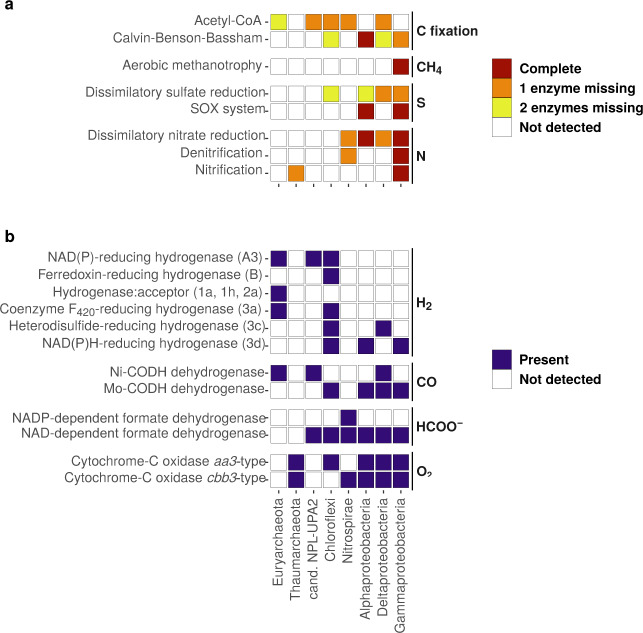
“Colored boxes highlight the presence and completion of metabolic pathways (a) or key genes coding for the enzyme indicated (b) as determined from KEGG module and orthology [41].”
BackgroundMethodLiao, Y., Smyth, G. K., & Shi, W. (2019) · Nucleic Acids Research · doi:10.1093/nar/gkz114 · Cited by 2,936
Differential abundance analysis for microbial marker-gene surveys
Paulson, J. N., Stine, O. C., Bravo, H. C., & Pop, M. (2013) · Nature Methods · doi:10.1038/nmeth.2658 · Cited by 2,428 · cited 1×
“normalized using scaling factors calculated by the metagenomeSeq package [29].”
MethodHuson, D. H., Beier, S., Flade, I., Górska, A., El-Hadidi, M., Mitra, S., Ruscheweyh, H.-J., & Tappu, R. (2016) · PLOS Computational Biology · doi:10.1371/journal.pcbi.1004957 · Cited by 1,761 · cited 2×
“The most confident taxonomic rank assigned to each aligned gene sequence was predicted with the lowest common ancestor (LCA) algorithm implemented in MEGAN6 [36].”
MethodA Serpentinite-Hosted Ecosystem: The Lost City Hydrothermal Field
Kelley, D. S., Karson, J. A., Früh-Green, G. L., Yoerger, D. R., Shank, T. M., Butterfield, D. A., Hayes, J. M., Schrenk, M. O., Olson, E. J., Proskurowski, G., et al. (2005) · Science · doi:10.1126/science.1102556 · Cited by 1,288
Using DECIPHER v2.0 to Analyze Big Biological Sequence Data in R
Wright, E. (2016) · The R Journal · doi:10.32614/rj-2016-025 · Cited by 1,016
Charlou, J. L., Donval, J. P., Fouquet, Y., Jean-Baptiste, P., & Holm, N. (2002) · Chemical Geology · doi:10.1016/s0009-2541(02)00134-1 · Cited by 906 · cited 1×
“Nevertheless, fluids sampled close to putative chimney fluid outlets reveal slightly higher pH values than ambient seawater near vents associated with ultramafic rocks [50] and hydrothermal fluids of the serpentinization-related Von Damm, Rainbow, or Logatchev hydrothermal fields [3]”
BackgroundAbiogenic Hydrocarbon Production at Lost City Hydrothermal Field
Proskurowski, G., Lilley, M. D., Seewald, J. S., Früh-Green, G. L., Olson, E. J., Lupton, J. E., Sylva, S. P., & Kelley, D. S. (2008) · Science · doi:10.1126/science.1151194 · Cited by 851
Buckel, W., & Thauer, R. K. (2013) · Biochimica et Biophysica Acta (BBA) - Bioenergetics · doi:10.1016/j.bbabio.2012.07.002 · Cited by 797 · cited 2×
“the nuoF gene coding for a subunit of the respiratory complex I and identified in this genome [65].”
BackgroundDECIPHER, a Search-Based Approach to Chimera Identification for 16S rRNA Sequences
Wright, E. S., Yilmaz, L. S., & Noguera, D. R. (2012) · Applied and Environmental Microbiology · doi:10.1128/aem.06516-11 · Cited by 717 · cited 1×
“Chimeras were identified in the representative ASV sequences with the FindChimeras algorithm implemented in the DECIPHER package for R [24, 25] and were then removed.”
MethodGreening, C., Biswas, A., Carere, C. R., Jackson, C. J., Taylor, M. C., Stott, M. B., Cook, G. M., & Morales, S. E. (2016) · The ISME Journal · doi:10.1038/ismej.2015.153 · Cited by 668 · cited 4×
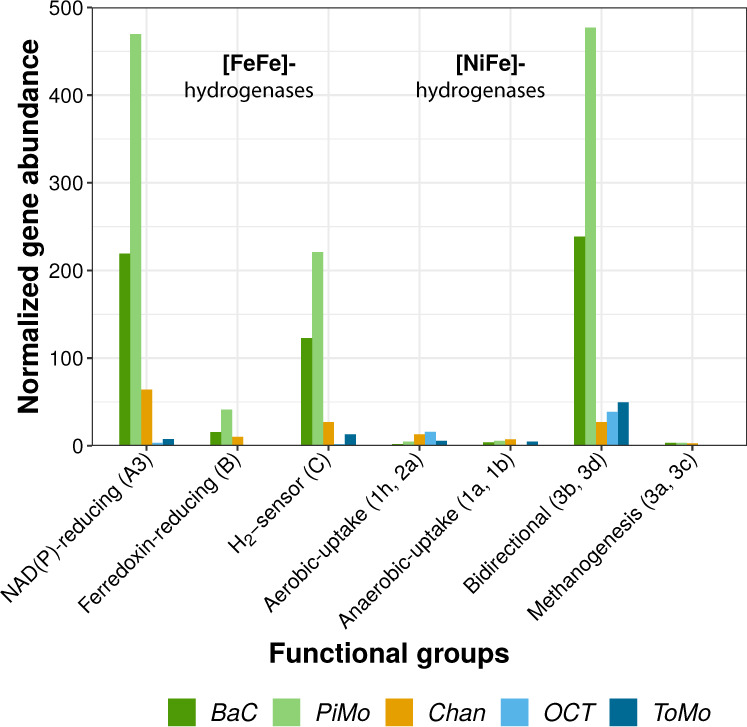
“[NiFe]-hydrogenases groups 3b and 3d have been proposed to serve as an electron valve to regulate intracellular oxidation state [43].”
BackgroundInfluentialEren, A. M., Morrison, H. G., Lescault, P. J., Reveillaud, J., Vineis, J. H., & Sogin, M. L. (2015) · The ISME Journal · doi:10.1038/ismej.2014.195 · Cited by 607 · cited 1×
“High-quality sequences from tag sequencing were clustered into amplicon sequence variants (ASVs) by applying the minimum entropy decomposition algorithm [23] with default parameters but the minimum abundance set to 25 to remove noising features, while conserving relative diversities in each sample.”
Method[FeFe]- and [NiFe]-hydrogenase diversity, mechanism, and maturation
Peters, J. W., Schut, G. J., Boyd, E. S., Mulder, D. W., Shepard, E. M., Broderick, J. B., King, P. W., & Adams, M. W. W. (2015) · Biochimica et Biophysica Acta (BBA) - Molecular Cell Research · doi:10.1016/j.bbamcr.2014.11.021 · Cited by 505 · cited 2×
“Under oxic conditions, they are associated with H2 uptake for energy production, in association with the respiratory complex I, or with biosynthesis, which requires NAD(P)H [67].”
BackgroundSerpentinization, carbon, and deep life
Schrenk, M. O., Brazelton, W. J., & Lang, S. Q. (2013) · Reviews in Mineralogy and Geochemistry · doi:10.2138/rmg.2013.75.18 · Cited by 470 · cited 4×
“They discharge through submarine hydrothermal vents or springs located in ophiolites where they provide energy and carbon sources for microbial life, while mixing with oxidized seawater or meteoric fluids [2, 3].”
BackgroundInfluentialModes of seafloor generation at a melt-poor ultraslow-spreading ridge
Cannat, M., Sauter, D., Mendel, V., Ruellan, E., Okino, K., Escartin, J., Combier, V., & Baala, M. (2006) · Geology · doi:10.1130/g22486.1 · Cited by 434 · cited 1×
“Oceanic serpentinite-hosted hydrothermal fields are found at (ultra)slow spreading ridges where mantle rocks are exhumed by tectonic processes and infiltrated by seawater [4, 5].”
BackgroundSelf-citationMcCollom, T. M., & Seewald, J. S. (2001) · Geochimica et Cosmochimica Acta · doi:10.1016/s0016-7037(01)00655-x · Cited by 434 · cited 1×
“organic synthesis promoted in such environments [59, 60].”
Brazelton, W. J., Schrenk, M. O., Kelley, D. S., & Baross, J. A. (2006) · Applied and Environmental Microbiology · doi:10.1128/aem.00574-06 · Cited by 409 · cited 1×
“seawater [10, 11], sulfate may also be enriched in hydrothermal fluids due to extensive subseafloor circulation of”
BackgroundKozlowski, J. A., Stieglmeier, M., Schleper, C., Klotz, M. G., & Stein, L. Y. (2016) · The ISME Journal · doi:10.1038/ismej.2016.2 · Cited by 389 · cited 2×
“suggesting a potential role of this lineage in nitrogen monoxide-dependent hydroxylamine oxidation [48], in”
BackgroundMethodThin crust, ultramafic exposures, and rugged faulting patterns at the Mid-Atlantic Ridge (22°–24°N)
Cannat, M., Mevel, C., Maia, M., Deplus, C., Durand, C., Gente, P., Agrinier, P., Belarouchi, A., Dubuisson, G., Humler, E., et al. (1995) · Geology · doi:10.1130/0091-7613(1995)023<0049:tcuear>2.3.co;2 · Cited by 384 · cited 1×
“Oceanic serpentinite-hosted hydrothermal fields are found at (ultra)slow spreading ridges where mantle rocks are exhumed by tectonic processes and infiltrated by seawater [4, 5].”
BackgroundSelf-citationContinuous exhumation of mantle-derived rocks at the Southwest Indian Ridge for 11 million years
Sauter, D., Cannat, M., Rouméjon, S., Andreani, M., Birot, D., Bronner, A., Brunelli, D., Carlut, J., Delacour, A., Guyader, V., et al. (2013) · Nature Geoscience · doi:10.1038/ngeo1771 · Cited by 296 · cited 1×
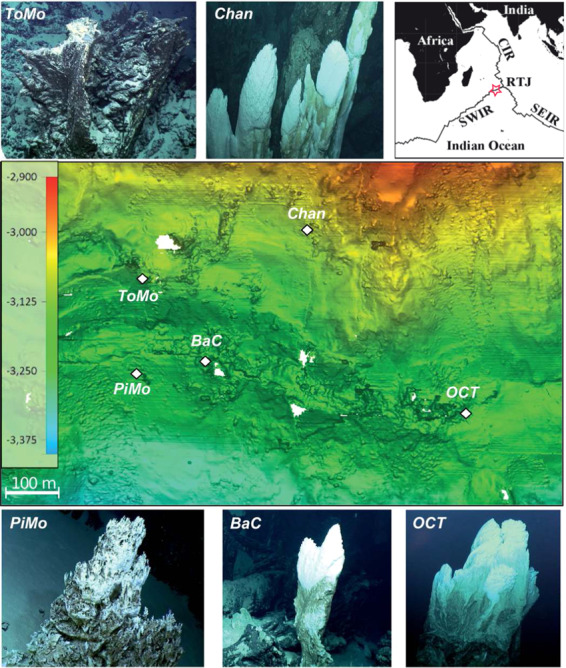
“The red star in the context map reproduced from [22] indicates the region of the SWIR investigated during the ROVSMOOTH cruise.”
BackgroundSelf-citationAlt, J. C., Schwarzenbach, E. M., Früh-Green, G. L., Shanks, W. C., Bernasconi, S. M., Garrido, C. J., Crispini, L., Gaggero, L., Padrón-Navarta, J. A., & Marchesi, C. (2013) · Lithos · doi:10.1016/j.lithos.2012.12.006 · Cited by 280 · cited 1×
“could lead to local oxidation of sulfides [70].”
BackgroundExperimental investigation of single carbon compounds under hydrothermal conditions
Seewald, J. S., Zolotov, M. Y., & McCollom, T. (2006) · Geochimica et Cosmochimica Acta · doi:10.1016/j.gca.2005.09.002 · Cited by 264 · cited 1×
“organic synthesis promoted in such environments [59, 60].”
Formation and evolution of carbonate chimneys at the Lost City Hydrothermal Field
Ludwig, K. A., Kelley, D. S., Butterfield, D. A., Nelson, B. K., & Früh-Green, G. (2006) · Geochimica et Cosmochimica Acta · doi:10.1016/j.gca.2006.04.016 · Cited by 261 · cited 1×
“[51] proposed that LCHF chimneys should initially”
Schrenk, M. O., Kelley, D. S., Bolton, S. A., & Baross, J. A. (2004) · Environmental Microbiology · doi:10.1111/j.1462-2920.2004.00650.x · Cited by 232 · cited 4×
“1), suggesting that these may be less active compared to the whitish, porous, and friable structures associated with recent hydrothermal deposits that characterize active chimneys [10, 16].”
BackgroundInfluentialAdam, P. S., Borrel, G., & Gribaldo, S. (2018) · Proceedings of the National Academy of Sciences · doi:10.1073/pnas.1716667115 · Cited by 226
Brazelton, W. J., Nelson, B., & Schrenk, M. O. (2012) · Frontiers in Microbiology · doi:10.3389/fmicb.2011.00268 · Cited by 210
de Beer, D., Sauter, E., Niemann, H., Kaul, N., Foucher, J.-P., Witte, U., Schlüter, M., & Boetius, A. (2006) · Limnology and Oceanography · doi:10.4319/lo.2006.51.3.1315 · Cited by 206 · cited 1×
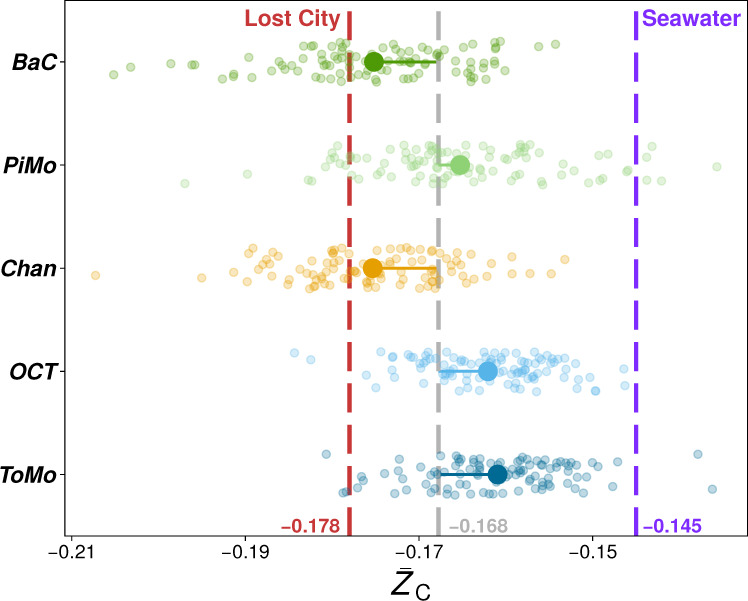
“As observed in sediments and other hydrothermal fields [53, 54], the diffuse fluid flow at OCHF can lead to highly heterogeneous geochemical conditions with mixed but variable influences of reducing hydrothermal fluids and oxygenated seawater intrusions, and thus to variable ZC values.”
BackgroundNie, L., Wu, G., & Zhang, W. (2006) · Biochemical and Biophysical Research Communications · doi:10.1016/j.bbrc.2005.11.055 · Cited by 191
Brazelton, W. J., Ludwig, K. A., Sogin, M. L., Andreishcheva, E. N., Kelley, D. S., Shen, C.-C., Edwards, R. L., & Baross, J. A. (2010) · Proceedings of the National Academy of Sciences · doi:10.1073/pnas.0905369107 · Cited by 190 · cited 3×
“seawater O2 have been proposed as colonizers of the external parts of less active chimneys [12].”
BackgroundNiche partitioning of diverse sulfur-oxidizing bacteria at hydrothermal vents.
Meier, D. V., Pjevac, P., Bach, W., Hourdez, S., Girguis, P. R., Vidoudez, C., Amann, R., & Meyerdierks, A. (2017) · The ISME Journal · doi:10.1038/ismej.2017.37 · Cited by 177 · cited 1×
“As observed in sediments and other hydrothermal fields [53, 54], the diffuse fluid flow at OCHF can lead to highly heterogeneous geochemical conditions with mixed but variable influences of reducing hydrothermal fluids and oxygenated seawater intrusions, and thus to variable ZC values.”
BackgroundSeyfried, W. E., Pester, N. J., Tutolo, B. M., & Ding, K. (2015) · Geochimica et Cosmochimica Acta · doi:10.1016/j.gca.2015.04.040 · Cited by 162 · cited 1×
“The emblematic Lost City hydrothermal field (LCHF, 30° N, mid-Atlantic ridge) is characterized by moderate temperature (up to 90–116 °C), metal- and CO2depleted, high pH (9–11) fluids that actively discharge through carbonate-brucite chimneys [6, 7].”
BackgroundGeological and geochemical controls on subsurface microbial life in the Samail ophiolite, Oman
Rempfert, K. R., Miller, H. M., Bompard, N., Nothaft, D., Matter, J. M., Kelemen, P., Fierer, N., & Templeton, A. S. (2017) · Frontiers in Microbiology · doi:10.3389/fmicb.2017.00056 · Cited by 157
Sheik, C. S., Reese, B. K., Twing, K. I., Sylvan, J. B., Grim, S. L., Schrenk, M. O., Sogin, M. L., & Colwell, F. S. (2018) · Frontiers in Microbiology · doi:10.3389/fmicb.2018.00840 · Cited by 157 · cited 1×
“As no DNA was amplified from procedural controls, we removed commonly identified contaminants [27] based on ASV taxonomic classification at the genus level (Supplementary Table S2).”
MethodSuzuki, S., Ishii, S., Wu, A., Cheung, A., Tenney, A., Wanger, G., Kuenen, J. G., & Nealson, K. H. (2013) · Proceedings of the National Academy of Sciences · doi:10.1073/pnas.1302426110 · Cited by 138 · cited 3×
“The authors thank Hilary Morrison, Aleksey Morozov, and Nicole Robichaud (Marine Biological Laboratory, Woods Hole Oceanographic Institution, MA, USA) for performing the DNA sequencing, as well as Sophie Nowak (Plateforme Rayons X, Université de Paris, France) and Pierre Burckel (IPGP, France) who performed the XRD an…”
BackgroundBurgdorf, T., van der Linden, E., Bernhard, M., Yin, Q. Y., Back, J. W., Hartog, A. F., Muijsers, A. O., de Koster, C. G., Albracht, S. P. J., & Friedrich, B. (2005) · Journal of Bacteriology · doi:10.1128/jb.187.9.3122-3132.2005 · Cited by 121 · cited 1×
“potential for fermentative formate oxidation as well as CO2 fixation with H2 oxidation [69].”
BackgroundLopez-Lazaro, C., Bachaud, P., Moretti, I., & Ferrando, N. (2019) · Bulletin de la Société Géologique de France · doi:10.1051/bsgf/2019008 · Cited by 120 · cited 1×
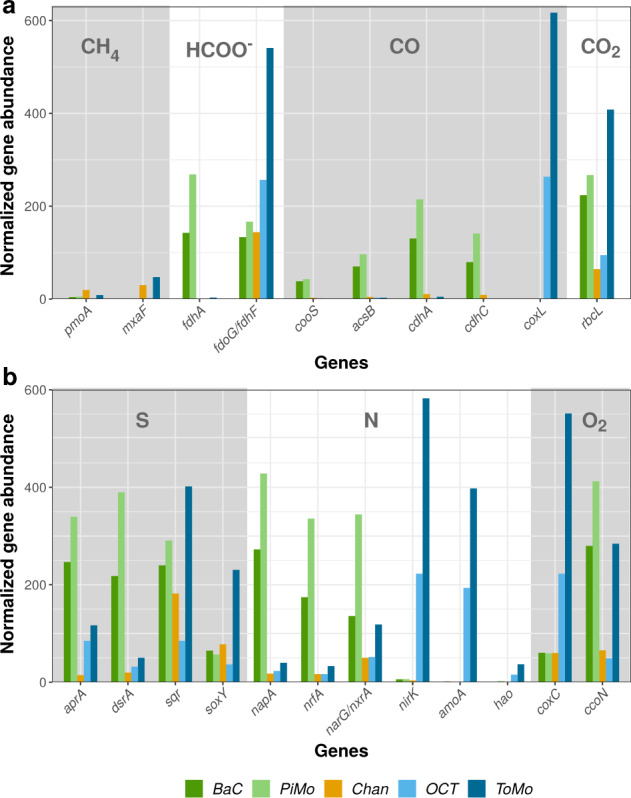
“As H2 solubility and mobility decreases with salinity and lower temperature [64], an increased influence of seawater intrusions, supported by the mineralogy of these chimneys, may lead to the depleted abundance in hydrogenases observed in OCT and ToMo (Fig.”
BackgroundMonnin, C., Chavagnac, V., Boulart, C., Ménez, B., Gérard, M., Gérard, E., Pisapia, C., Quéméneur, M., Erauso, G., Postec, A., et al. (2014) · Biogeosciences · doi:10.5194/bg-11-5687-2014 · Cited by 117
Self-citationTavormina, P. L., Hatzenpichler, R., McGlynn, S. E., Chadwick, G. L., Dawson, K. S., Connon, S. A., & Orphan, V. J. (2014) · INTERNATIONAL JOURNAL OF SYSTEMATIC AND EVOLUTIONARY MICROBIOLOGY · doi:10.1099/ijs.0.062927-0 · Cited by 109
Zhong, H., Lehtovirta‐Morley, L. E., Liu, J., Zheng, Y., Lin, H., Song, D., Todd, J. D., Tian, J., & Zhang, X. (2020) · Microbiome · doi:10.1186/s40168-020-00849-2 · Cited by 109
Universally Distributed Single-Copy Genes Indicate a Constant Rate of Horizontal Transfer
Creevey, C. J., Doerks, T., Fitzpatrick, D. A., Raes, J., & Bork, P. (2011) · PLoS ONE · doi:10.1371/journal.pone.0022099 · Cited by 98
Calculation of the relative metastabilities of proteins using the CHNOSZ software package
Dick, J. M. (2008) · Geochemical Transactions · doi:10.1186/1467-4866-9-10 · Cited by 96 · cited 4×
“Protein sequences were imported into R version 3.6.0 using the read.fasta function of the CHNOSZ package [45].”
InfluentialPhysiological Differentiation within a Single-Species Biofilm Fueled by Serpentinization
Brazelton, W. J., Mehta, M. P., Kelley, D. S., & Baross, J. A. (2011) · mBio · doi:10.1128/mbio.00127-11 · Cited by 92
Galambos, D., Anderson, R. E., Réveillaud, J., & Huber, J. A. (2019) · Environmental Microbiology · doi:10.1111/1462-2920.14806 · Cited by 88
Brazelton, W. J., Thornton, C. N., Hyer, A., Twing, K. I., Longino, A. A., Lang, S. Q., Lilley, M. D., Früh-Green, G. L., & Schrenk, M. O. (2017) · PeerJ · doi:10.7717/peerj.2945 · Cited by 87
Woycheese, K. M., Meyer-Dombard, D. R., Cardace, D., Argayosa, A. M., & Arcilla, C. A. (2015) · Frontiers in Microbiology · doi:10.3389/fmicb.2015.00044 · Cited by 82
Suzuki, S., Ishii, S., Hoshino, T., Rietze, A., Tenney, A., Morrill, P. L., Inagaki, F., Kuenen, J. G., & Nealson, K. H. (2017) · The ISME Journal · doi:10.1038/ismej.2017.111 · Cited by 78 · cited 1×
“The relative abundance of bacterial and archaeal lineages in metagenomes was evaluated based on the relative abundance of (1) all retrieved genes, (2) 12 or 40 single-copy genes shared between all lineages as suggested by [37, 38], and (3) reconstructed near full-length 16S rRNA-encoding genes.”
MethodPhysiological adaptations to serpentinization in the Samail Ophiolite, Oman
Fones, E. M., Colman, D. R., Kraus, E. A., Nothaft, D. B., Poudel, S., Rempfert, K. R., Spear, J. R., Templeton, A. S., & Boyd, E. S. (2019) · The ISME Journal · doi:10.1038/s41396-019-0391-2 · Cited by 76
Hydrothermal Energy Transfer and Organic Carbon Production at the Deep Seafloor
Bris, N. L., Yücel, M., Das, A., Sievert, S. M., LokaBharathi, P. A., & Girguis, P. R. (2019) · Frontiers in Marine Science · doi:10.3389/fmars.2018.00531 · Cited by 66 · cited 1×
“This diffuse flow made it impossible with the equipment available during the ROVSMOOTH cruise to sample endmember hydrothermal fluid properly without seawater influence [49].”
BackgroundPostec, A., Quéméneur, M., Bes, M., Mei, N., Benaïssa, F., Payri, C., Pelletier, B., Monnin, C., Guentas-Dombrowsky, L., Ollivier, B., et al. (2015) · Frontiers in Microbiology · doi:10.3389/fmicb.2015.00857 · Cited by 58 · cited 1×
“4), two sites characterized by strongly reducing conditions where these phylotypes are also abundant [13, 14, 19].”
BackgroundSelf-citationQuéméneur, M., Bes, M., Postec, A., Mei, N., Hamelin, J., Monnin, C., Chavagnac, V., Payri, C., Pelletier, B., Guentas‐Dombrowsky, L., et al. (2014) · Environmental Microbiology Reports · doi:10.1111/1758-2229.12184 · Cited by 56
Self-citationOkumura, T., Ohara, Y., Stern, R. J., Yamanaka, T., Onishi, Y., Watanabe, H., Chen, C., Bloomer, S. H., Pujana, I., Sakai, S., et al. (2016) · Geochemistry, Geophysics, Geosystems · doi:10.1002/2016gc006449 · Cited by 51 · cited 4×
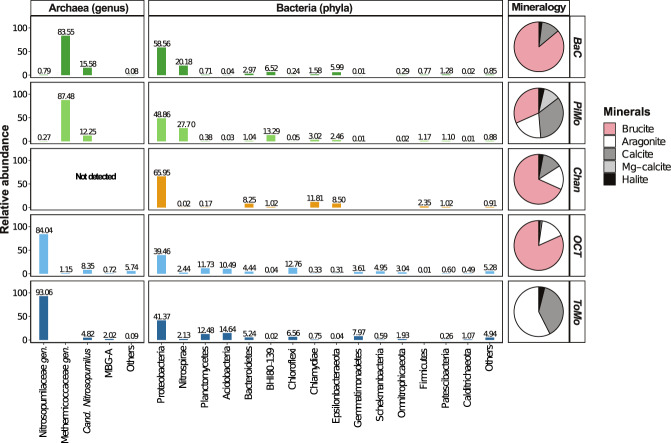
“Like LCHF, PBHF and the Mariana forearc Shinkai Seep [6, 8, 9, 16], most of the OCHF chimney samples are mainly composed of brucite with minor aragonite and/or calcite (Fig.”
BackgroundMethodInfluentialCarbon fixation and energy metabolisms of a subseafloor olivine biofilm
Smith, A. R., Kieft, B., Mueller, R., Fisk, M. R., Mason, O. U., Popa, R., & Colwell, F. S. (2019) · The ISME Journal · doi:10.1038/s41396-019-0385-0 · Cited by 48 · cited 1×
“dependent formate dehydrogenase in putative acetogens [61].”
Pisapia, C., Gérard, E., Gérard, M., Lecourt, L., Lang, S. Q., Pelletier, B., Payri, C. E., Monnin, C., Guentas, L., Postec, A., et al. (2017) · Frontiers in Microbiology · doi:10.3389/fmicb.2017.00057 · Cited by 46 · cited 7×
“S2c), as also reported in PBHF chimneys [16].”
BackgroundMethodResultInfluentialSelf-citationMorrill, P. L., Brazelton, W. J., Kohl, L., Rietze, A., Miles, S. M., Kavanagh, H., Schrenk, M. O., Ziegler, S. E., & Lang, S. Q. (2014) · Frontiers in Microbiology · doi:10.3389/fmicb.2014.00613 · Cited by 45
Boyd, E. S., Schut, G. J., Peters, J. W., & Adams, M. W. W. (2014) · Microbe Magazine · doi:10.1128/microbe.9.361.1 · Cited by 42 · cited 2×
“Since some genes coding for hydrogenases are absent from the KEGG database, we also searched for hydrogenases domains [42, 43] in our metagenomes (Supplementary methods).”
BackgroundSuzuki, S., Nealson, K. H., & Ishii, S. (2018) · Frontiers in Microbiology · doi:10.3389/fmicb.2018.03141 · Cited by 36 · cited 1×
“[66], it should be noted that hndD presents homologies with”
BackgroundMcGonigle, J. M., Lang, S. Q., & Brazelton, W. J. (2020) · Applied and Environmental Microbiology · doi:10.1128/aem.02583-19 · Cited by 35 · cited 1×
“Moreover, [NiFe]-hydrogenaseencoding genes were also detected in reconstructed genomes of LCHF Chloroflexi [68].”
Background18. Serpentinization, Carbon, and Deep Life
Schrenk, M. O., Brazelton, W. J., & Lang, S. Q. (2013) · De Gruyter eBooks · doi:10.1515/9781501508318-020 · Cited by 33
Frouin, E., Bes, M., Ollivier, B., Quéméneur, M., Postec, A., Debroas, D., Armougom, F., & Erauso, G. (2018) · Frontiers in Microbiology · doi:10.3389/fmicb.2018.00102 · Cited by 31 · cited 2×
“Despite differences in the composition of microbial communities retrieved at PBHF compared to LCHF, PBHF chimneys interestingly harbor Archaea related to LCMS and to another Methanosarcinales phylotype (The Cedars Methanosarcinales, TCMS) [15], identified in springs of The Cedars ophiolite (California, USA [19]).”
BackgroundVolatiles in submarine environments: Food for life
Kelley, D. S., Lilley, M. D., & Früh‐Green, G. L. (2004) · Geophysical monograph · doi:10.1029/144gm11 · Cited by 21 · cited 1×
“They discharge through submarine hydrothermal vents or springs located in ophiolites where they provide energy and carbon sources for microbial life, while mixing with oxidized seawater or meteoric fluids [2, 3].”
BackgroundChanges in Carbon Oxidation State of Metagenomes Along Geochemical Redox Gradients
Dick, J. M., Yu, M., Tan, J., & Lu, A. (2019) · Frontiers in Microbiology · doi:10.3389/fmicb.2019.00120 · Cited by 21 · cited 4×
“Recent studies have shown a strong correlation between the decrease in ZC values of predicted proteomes and increased alkaline and reducing conditions [44, 52].”
BackgroundInfluentialMcGonigle, J. M., Lang, S. Q., & Brazelton, W. J. (2019) · bioRxiv (Cold Spring Harbor Laboratory) · doi:10.1101/831230 · Cited by 6
Research works printed but not linked: 2
- Cannat M Agrinier P Martinez I Vitale Brovarone A Lecoeuvre A Corre M A forest of carbonate-brucite chimneys at the southwest Indian ridge: the ultramafic-hosted Old City hydrothermal field Goldschmidt Abstracts 2019 2019 463
- Lecoeuvre A Ménez B Lecourt L Gérard E Microbial ecology linked to serpentinization processes and related carbonation at the Old City hydrothermal field Goldschmidt Abstracts 2018 2018 1428
Cited by
Diversity of magmatism, hydrothermal processes and microbial interactions at mid-ocean ridges
Früh‐Green, G. L., Kelley, D. S., Lilley, M. D., Cannat, M., Chavagnac, V., & Baross, J. A. (2022) · Nature Reviews Earth & Environment · doi:10.1038/s43017-022-00364-y · Cited by 110
Self-citationAnaerobic thiosulfate oxidation by the Roseobacter group is prevalent in marine biofilms
Ding, W., Wang, S., Qin, P., Fan, S., Su, X., Cai, P., Lu, J., Cui, H., Wang, M., Shu, Y., et al. (2023) · Nature Communications · doi:10.1038/s41467-023-37759-4 · Cited by 88
Ruff, S. E., de Angelis, I. H., Mullis, M. M., Payet, J. P., Magnabosco, C., Lloyd, K. G., Sheik, C. S., Steen, A. D., Shipunova, A., Morozov, A., et al. (2024) · Science Advances · doi:10.1126/sciadv.adq0645 · Cited by 67
Schwander, L., Brabender, M., Mrnjavac, N., Wimmer, J. L. E., Preiner, M., & Martin, W. F. (2023) · Frontiers in Microbiology · doi:10.3389/fmicb.2023.1257597 · Cited by 65
German, C. R., Reeves, E. P., Türke, A., Diehl, A., Albers, E., Bach, W., Purser, A., Ramalho, S. P., Suman, S., Mertens, C., et al. (2022) · Nature Communications · doi:10.1038/s41467-022-34014-0 · Cited by 44
Metadata
- Authors
- Lecoeuvre, A., Ménez, B., Cannat, M., Chavagnac, V., & Gérard, E.
- Affiliations
- Centre National de la Recherche Scientifique (FR)
- Université de Paris, Institut de physique du globe de Paris, CNRS UMR 7154 , Paris, France
- Corresponding author
- Lecoeuvre, Aurélien
- Venue
- The ISME Journal
- Publisher
- Oxford University Press (OUP)
- Published
- 2020-11-02
- Volume
- 15
- Issue
- 3
- Pages
- 818-832
- ISSN
- 1751-7362 (ISSN-L)
- 1751-7370
- PMC
- PMC8027613
- OpenAlex
- W3095001187
- Cited by
- 62
- References
- 73
- Citations by year
- 2026: 7 · 2025: 10 · 2024: 17 · 2023: 12 · 2022: 12 · 2021: 3 · 2020: 1
- FWCI
- 3.72
- Type
- journal article
- Language
- en
- Open access
- hybrid
- doi.org
- Licence
- cc-by-nc
- creativecommons.org/licenses/by/4.0/ (vor, 1164 d)
- creativecommons.org/licenses/by/4.0 (tdm)
- creativecommons.org/licenses/by/4.0 (vor)
- Locations
- The ISME Journal (publishedVersion, cc-by-nc)
- PubMed Central (publishedVersion, cc-by)
- PubMed (publishedVersion)
- HAL (submittedVersion, cc-by)
- Institutional Archive of Ifremer (French Research Institute for Exploitation of the Sea) (submittedVersion, other-oa)
- Funders
- Alfred P. Sloan Foundation
- Institut Français de Bioinformatique (ANR-11-INBS-0013)
- Agence Nationale de la Recherche (ANR-14-CE01-0008, ANR18, ANR-11-INBS, ANR-11-INBS-0013, 12015908, ANR-18-IDEX-0001, ANR-10-LABX-0023)
- Centre National de la Recherche Scientifique
- Institut de Physique du Globe de Paris (12015908)
- Université de Paris (ANR-18- IDEX-0001, 18-IDEX-0001)
- Labex UnivEarthS (12015908, ANR‐18‐IDEX‐0001)
- CHIST-ERA
- Topics
- Physical Sciences › Environmental Science › Ecology › Microbial Community Ecology and Physiology
- Physical Sciences › Environmental Science › Environmental Chemistry › Methane Hydrates and Related Phenomena
- Physical Sciences › Earth and Planetary Sciences › Geochemistry and Petrology › Geochemistry and Elemental Analysis
- Keywords
- lost cities, microbial ecology, Methanosarcinales, formate metabolism, carbon monoxide metabolism, redox conditions, Southwest Indian Ridge, microbial community structure
- MeSH terms
- Archaea, Carbon, Phylogeny, RNA, Ribosomal, 16S, Ecosystem, Metagenome, Hydrothermal Vents
About these checks
Registry, retraction, Cites and statistics results are computed, not judged, with one exception: a printed reference that no index lists is read once by a model before it counts as a citation error. Claims are extracted by a model and kept only when their quote appears verbatim in the text; each cited source is then checked, with a model’s help, for whether it says what the claim relies on. Those verdicts can be wrong — read the claim’s quote and the cited source before relying on one.
Statistics and arithmetic are recomputed, not judged.
Confidence bands are shown only for fields calibrated on our annotated test set. None is calibrated yet, so no band is shown.
What counts as a claim ›How we measure confidence ›How we check this ›
Are you an author, or do you see a problem with this page? Request a review
Data sources
Bibliographic data: Semantic Scholar, OpenAlex, Crossref.
Contains information from the Semantic Scholar Academic Graph Datasets, made available under the ODC Attribution License (ODC-BY 1.0).
Semantic Scholar’s data is described in: Kinney, R., et al. (2023). The Semantic Scholar Open Data Platform. arXiv:2301.10140.
