

Psychosocial characteristics as potential predictors of suicide in adults: an overview of the evidence with new results from prospective cohort studies
Open accessThe DOI matches its Crossref record; 127 of the 127 references it cites were found in a registry or an index.
Abstract
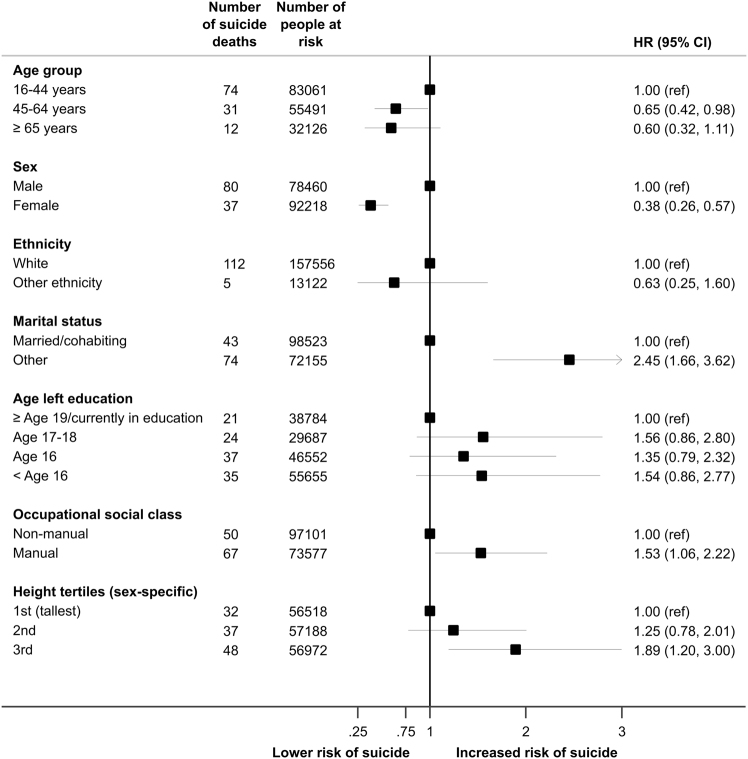
In this narrative overview of the evidence linking psychosocial factors with future suicide risk, we collected results from published reports of prospective studies with verified suicide events (mortality or, less commonly, hospitalisation) alongside analyses of new data. There is abundant evidence indicating that low socioeconomic position, irrespective of the economic status of the country in question, is associated with an increased risk of suicide, including the suggestion that the recent global economic recession has been responsible for an increase in suicide deaths and, by proxy, attempts. Social isolation, low scores on tests of intelligence, serious mental illness (both particularly strongly), chronic psychological distress, and lower physical stature (a marker of childhood exposures) were also consistently related to elevated suicide rates. Although there is some circumstantial evidence for psychosocial stress, personality disposition, and early-life characteristics such as bullying being risk indices for suicide, the general paucity of studies means it is not currently possible to draw clear conclusions about their role. Most suicide intervention strategies have traditionally not explored the modification of psychosocial factors, partly because evidence linking psychosocial factors with suicide risk is, as shown herein, largely in its infancy, or, where is does exist, for instance for intelligence and personality disposition, the characteristics in question do not appear to be easily malleable.
Overview
The claims and statistics of this paper haven’t been checked yet.
Free: it reads the open-access text and checks the first 5 claims that cite a source we can check. Create a free account to check every claim.
Integrity signals
Registry
Cites
Statistics
Figures
Verification
Claims the paper makes
The claims and statistics of this paper haven’t been checked yet.
Free: it reads the open-access text and checks the first 5 claims that cite a source we can check. Create a free account to check every claim.
Claims other papers make about this one
Each is checked against this paper’s own text: does it say what the citing paper says it does?
The source backs part of the claim, not all of it — or backs it for a different population, condition or comparison.
In the citing paper
“Important social and economic factors that are associated with suicide include relationship breakdown, low socioeconomic position, job loss, low income and debt. In addition, other social factors that are associated with suicide include poor social stability, stringent sociocultural norms, economic turmoil, socioeconomic position (having poor family connectedness, being single, having a low income”
From Suicide and suicide risk (2019) · cites this paper as [118]
Experimental — accuracy not yet measuredThe source backs part of the claim, not all of it — or backs it for a different population, condition or comparison.
In the citing paper
“Social isolation, for example resulting from anxiety, bereavement or social exclusion 107,118 , is also a strong contributor to suicide risk, whether isolation is measured objectively (such as living alone) or through perceived loneliness 123 .”
From Suicide and suicide risk (2019) · cites this paper as [118]
Experimental — accuracy not yet measuredThe source backs part of the claim, not all of it — or backs it for a different population, condition or comparison.
In the citing paper
“A meta-analysis of psychosocial factors found that difficulties in social and occupational functioning were strongly tied to increased levels of SI, social isolation, and low socioeconomic status and are directly associated with increased incidences of SI and completed suicides (Figure 1) [48].”
From Frontal Pole Neuromodulation for Impulsivity and Suicidality in Veterans With Mild Traumatic Brain Injury and Common Co-Occurring Mental Health Conditions: Protocol for a Pilot Randomized Controlled Trial (2024) · cites this paper as [48]
Experimental — accuracy not yet measured
Self-check
Percentages, sums and reported differences re-computed from the paper’s own numbers.
The self-check needs the paper’s full text.
Citations
Cites
Sudlow, C., Gallacher, J., Allen, N., Beral, V., Burton, P., Danesh, J., Downey, P., Elliott, P., Green, J., Landray, M., et al. (2015) · PLOS Medicine · doi:10.1371/journal.pmed.1001779 · Cited by 12,728
BERKMAN, L. F., & SYME, S. L. (1979) · American Journal of Epidemiology · doi:10.1093/oxfordjournals.aje.a112674 · Cited by 5,341
Intelligence: Knowns and unknowns.
Neisser, U., Boodoo, G., Bouchard, T. J., Boykin, A. W., Brody, N., Ceci, S. J., Halpern, D. F., Loehlin, J. C., Perloff, R., Sternberg, R. J., et al. (1996) · American Psychologist · doi:10.1037/0003-066x.51.2.77 · Cited by 2,913
Allemani, C., Weir, H. K., Carreira, H., Harewood, R., Spika, D., Wang, X.-S., Bannon, F., Ahn, J. V., Johnson, C. J., Bonaventure, A., et al. (2015) · The Lancet · doi:10.1016/s0140-6736(14)62038-9 · Cited by 2,614
Löwe, B., Wahl, I., Rose, M., Spitzer, C., Glaesmer, H., Wingenfeld, K., Schneider, A., & Brähler, E. (2010) · Journal of Affective Disorders · doi:10.1016/j.jad.2009.06.019 · Cited by 2,473
Risks of all-cause and suicide mortality in mental disorders: a meta-review
Chesney, E., Goodwin, G. M., & Fazel, S. (2014) · World Psychiatry · doi:10.1002/wps.20128 · Cited by 2,115
Excess mortality of mental disorder
Harris, C., & Barraclough, B. (1998) · British Journal of Psychiatry · doi:10.1192/bjp.173.1.11 · Cited by 1,881
Stuckler, D., Basu, S., Suhrcke, M., Coutts, A., & McKee, M. (2009) · The Lancet · doi:10.1016/s0140-6736(09)61124-7 · Cited by 1,486
Depression and the response of others.
Coyne, J. C. (1976) · Journal of Abnormal Psychology · doi:10.1037/0021-843x.85.2.186 · Cited by 1,464
Stress and cardiovascular disease
Steptoe, A., & Kivimäki, M. (2012) · Nature Reviews Cardiology · doi:10.1038/nrcardio.2012.45 · Cited by 1,321
Research works printed but not linked: 6
- WHO. Preventing Suicide: A Global Imperative 2014 Geneva World Health Organization
- Batty, G. D. et al. in Handbook of Psychosocial Epidemiology (eds Kivimaki, M., Batty, G.D., Kawachi, I. & Steptoe, A.) (Routledge, Oxford, 2018).
- Cavan RS Suicide 1928 Chicago University of Chicago Press
- Gunnell D The 2008 Global Financial Crisis: Effects on Mental Health and Suicide 2015 Bristol, Bristol University of Bristol
- WHO. Guns, Knives, and Pesticides: Reducing Access to Lethal Means 2009 Geneva WHO
- Gunnell, D. & Chang, S.-S. in The International Handbook of Suicide Prevention (eds O’Connor, R. C. & Pirkis, J.) (John Wiley & Sons, Ltd., Oxford, 2016).
Cited by
The integrated motivational–volitional model of suicidal behaviour
O'Connor, R. C., & Kirtley, O. J. (2018) · Philosophical Transactions of the Royal Society B: Biological Sciences · doi:10.1098/rstb.2017.0268 · Cited by 1,781
Turecki, G., Brent, D. A., Gunnell, D., O’Connor, R. C., Oquendo, M. A., Pirkis, J., & Stanley, B. H. (2019) · Nature Reviews Disease Primers · doi:10.1038/s41572-019-0121-0 · Cited by 1,074
Self-citationBatty, G. D., Gale, C. R., Kivimäki, M., Deary, I. J., & Bell, S. (2020) · BMJ · doi:10.1136/bmj.m131 · Cited by 635
Self-citationThompson, R., Hornigold, R., Page, L., & Waite, T. (2018) · Public Health · doi:10.1016/j.puhe.2018.06.008 · Cited by 515
“p u b l i c h e a l t h x x x ( 2 0 1 8 ) 1e2 1 18 with the generally elevated risk of suicide in men compared with women.(64) This finding may have implications for suicide prevention plans as temperature may be a risk factor to consider in these programmes.”
Fusar-Poli, P. (2019) · Frontiers in Psychiatry · doi:10.3389/fpsyt.2019.00355 · Cited by 218
O’Connor, R. C., & Portzky, G. (2018) · Frontiers in Psychology · doi:10.3389/fpsyg.2018.02139 · Cited by 143
Suicide in the Time of COVID-19: Review and Recommendations
Zalsman, G., Stanley, B., Szántó, K., Clarke, D. E., Carli, V., & Mehlum, L. I. (2020) · Archives of Suicide Research · doi:10.1080/13811118.2020.1830242 · Cited by 124
“Unemployment and economic hardship among populations as a whole correlate with rates of suicide and suicide attempt in those groups (Batty et al., 2018).”
BackgroundShi, L., Que, J.-Y., Lu, Z.-A., Gong, Y.-M., Liu, L., Wang, Y.-H., Ran, M.-S., Ravindran, N., Ravindran, A. V., Fazel, S., et al. (2021) · European Psychiatry · doi:10.1192/j.eurpsy.2021.5 · Cited by 95
“Numerous studies have proved the critical role of multiple life events, such as adverse early life experiences, unemployment, and social isolation, in suicidal behaviors [7].”
BackgroundFazel, S., Wolf, A., Larsson, H., Mallett, S., & Fanshawe, T. R. (2019) · Translational Psychiatry · doi:10.1038/s41398-019-0428-3 · Cited by 92
Biological bases of suicidal behaviours: a narrative review
Lengvenyte, A., Conejero, I., Courtet, P., & Olié, E. (2021) · European Journal of Neuroscience · doi:10.1111/ejn.14635 · Cited by 87
“…(Angelakis, Gillespie, & Panagioti, 2019; Orri et al., 2019), interpersonal trauma (Ásgeirsdóttir et al., 2018), low socioeconomic position (Batty et al., 2018), low social integration (Tsai, Lucas, Sania, Kim, & Kawachi, 2014) and suicidal contagion, for instance through media reporting…”
BackgroundWork related sexual harassment and risk of suicide and suicide attempts: prospective cohort study
Hanson, L. L. M., Nyberg, A., Mittendorfer‐Rutz, E., Bondestam, F., & Madsen, I. E. H. (2020) · BMJ · doi:10.1136/bmj.m2984 · Cited by 95
The impact of urbanization on mood disorders: an update of recent evidence
Hoare, E., Jacka, F. N., & Berk, M. (2019) · Current Opinion in Psychiatry · doi:10.1097/yco.0000000000000487 · Cited by 75
Hanson, L. L. M., Pentti, J., Nordentoft, M., Xu, T., Rugulies, R., Madsen, I. E. H., Conway, P. M., Westerlund, H., Vahtera, J., Ervasti, J. M., et al. (2023) · The Lancet Public Health · doi:10.1016/s2468-2667(23)00096-8 · Cited by 79
“27 A 2017 systematic review suggested an association between workplace bullying and suicidal ideation, 10 but that review identified only one study on workplace bullying and suicide attempts, which was a case-control investigation based on 69 participants, 28 and no studies on death by suicide.”
Self-citationZhuo, L.-B., Yao, W., Yan, Z., Giron, M. S. T., Pei, J.-J., & Wang, H. (2019) · Journal of Affective Disorders · doi:10.1016/j.jad.2019.09.007 · Cited by 57
Association Between Discrimination Stress and Suicidality in Preadolescent Children
Argabright, S. T., Visoki, E., Moore, T. M., Ryan, D. T., DiDomenico, G. E., Njoroge, W., Taylor, J. H., Gülöksüz, S., Gur, R. C., Gur, R. E., et al. (2021) · Journal of the American Academy of Child & Adolescent Psychiatry · doi:10.1016/j.jaac.2021.08.011 · Cited by 50
Biological Factors Underpinning Suicidal Behaviour: An Update
Chahla, M. N. A., Khalil, M. I. M., Comai, S., Brundin, L., Erhardt, S., & Guillemin, G. J. (2023) · Brain Sciences · doi:10.3390/brainsci13030505 · Cited by 301
Zalsman, G., Levy, Y., Sommerfeld, E., Segal, A., Assa, D., Dayan, L. B., Valevski, A., & Mann, J. J. (2021) · Journal of Psychiatric Research · doi:10.1016/j.jpsychires.2021.05.060 · Cited by 50
Hagedoorn, P., Groenewegen, P., Roberts, H., & Helbich, M. (2019) · Journal of Epidemiology & Community Health · doi:10.1136/jech-2019-212699 · Cited by 45
“subjects. Individual characteristics Besides sex and age, already controlled for in the matched case-control design [24], we adjusted for several individual characteristics related with suicide risk [16,25]. As life events shortly before deaths may have triggered suicide [26], we considered individual characteristics…”
MethodBatty, G. D., Kivimäki, M., & Frank, P. (2022) · The Lancet Public Health · doi:10.1016/s2468-2667(22)00081-0 · Cited by 47
“10 With the peak incidence of suicide occurring in early adulthood, 73 a substantial number of such cases would have been missed.”
BackgroundSelf-citationNie, J., O'Neil, A., Liao, B., Lu, C., Aune, D., & Wang, Y. (2021) · Journal of Affective Disorders · doi:10.1016/j.jad.2020.12.132 · Cited by 28
Systemic inflammation and suicide risk: cohort study of 419 527 Korean men and women
Batty, G. D., Jung, K. J., Lee, S., Back, J. H., & Jee, S. H. (2018) · Journal of Epidemiology and Community Health · doi:10.1136/jech-2017-210086 · Cited by 27
“With inflammation being related to depression as described, 11 and other mental health problems, as well as being implicated in the occurrence of suicide, 4 it is a possible mediating factor in the inflammation–suicide relation.”
BackgroundSelf-citationSidorchuk, A., Kuja‐Halkola, R., Runeson, B., Lichtenstein, P., Larsson, H., Rück, C., D'Onofrio, B. M., Mataix‐Cols, D., & de la Cruz, L. F. (2019) · Molecular Psychiatry · doi:10.1038/s41380-019-0417-1 · Cited by 29
Suicide Ideation and Attempts in Obsessivecompulsive Disorder
Breet, E., Kidd, M., McGregor, N. W., Stein, D. J., & Löchner, C. (2019) · Annals of Clinical Psychiatry · doi:10.1177/154733251903100311 · Cited by 25
“14 There is evidence indicating that low socioeconomic status also might be associated with increased risk of suicide 15 ; in OCD, specifically, the bulk of evidence on the association between the disorder and suicidal ideation or attempts is based on work from high-income countries.”
Jing, Z., Li, J., Fu, P., Wang, Y., Yuan, Y., Zhao, D., Hao, W., Yu, C., & Zhou, C. (2021) · BMC Psychiatry · doi:10.1186/s12888-021-03087-4 · Cited by 24
“Several previous studies also found that PD was one of the strongest influencing factors of suicidal related behaviors [52, 53].”
ResultPre-pandemic cognitive function and COVID-19 mortality: prospective cohort study
Batty, G. D., Deary, I. J., & Galé, C. R. (2021) · European Journal of Epidemiology · doi:10.1007/s10654-021-00743-7 · Cited by 22
Self-citationRiblet, N. B. V., Stevens, S. P., Shiner, B. R., Cornelius, S. L., Forehand, J. A., Scott, R. C., & Watts, B. V. (2020) · Military Medicine · doi:10.1093/milmed/usaa559 · Cited by 23
Batty, G. D., Galé, C. R., Tanji, F., Gunnell, D., Mika Kivimaki, B., Tsuji, I., & Jokela, M. M. (2018) · World Psychiatry · doi:10.1002/wps.20575 · Cited by 20
Self-citationGeneralisability of Results from UK Biobank: Comparison With a Pooling of 18 Cohort StudiesPreprint
Batty, G. D., Galé, C. R., Kivimäki, M., Deary, I. J., & Bell, S. (2019) · SSRN Electronic Journal · doi:10.1101/19004705 · Cited by 21
Self-citationA review and conceptual model of the association of Type D personality with suicide risk
Denollet, J., Trompetter, H. R., & Kupper, N. H. M. (2021) · Journal of Psychiatric Research · doi:10.1016/j.jpsychires.2021.03.056 · Cited by 27
“Social support has consistently been related to a lower risk of suicide (Batty et al., 2018b).”
BackgroundOrri, M., Ahun, M. N., Naicker, S. N., Besharati, S. N., & Richter, L. (2022) · PLoS Medicine · doi:10.1371/journal.pmed.1003946 · Cited by 26
Cobo, A., Porras-Segovia, A., Pérez-Rodríguez, M. M., Artés-Rodríguez, A., Barrigón, M. L., Courtet, P., & Baca-García, E. (2021) · BJPsych Open · doi:10.1192/bjo.2021.43 · Cited by 18
Suicide Risk and Living Alone With Depression or Anxiety
Moon, D. U., Kim, H., Jung, J., Han, K., & Jeon, H. J. (2025) · JAMA Network Open · doi:10.1001/jamanetworkopen.2025.1227 · Cited by 24
Clinicians’ Perspectives on Self-Harm in Pakistan: A Qualitative Study
Kiran, T., Chaudhry, N., Bee, P., Tofique, S., Farooque, S., Qureshi, A., Taylor, A. K., Husain, N., & Chew-Graham, C. A. (2021) · Frontiers in Psychiatry · doi:10.3389/fpsyt.2021.607549 · Cited by 24
Suicidal behaviour among the university students in the UK: A systematic review
Kabir, R., Syed, H. Z., Vinnakota, D., Okello, S. A., Isigi, S. S., Kareem, S. K. A., Parsa, A. D., & Arafat, S. M. Y. (2024) · Heliyon · doi:10.1016/j.heliyon.2024.e24069 · Cited by 36
“Since these categories are likely to be overrepresented in university populations, the lower rates may reflect the well-known decreased risk of suicide among those from wealthy families, those with greater levels of education, and those without significant mental illness [3].”
BackgroundSuicidal Thoughts and Behaviors in People on the Autism Spectrum
Reid, M., Delgado, D., Heinly, J. M., Kiernan, B., Shapiro, S. L., Morgan, L., Maddox, B. B., & Jager‐Hyman, S. (2024) · Current Psychiatry Reports · doi:10.1007/s11920-024-01533-0 · Cited by 28
“For example, higher IQ and higher education may buffer against STB in the general population [42, 43] but not in the autistic population (e.g [25, 36]).”
Suicide Deaths in University Students in a UK City Between 2010 and 2018 – Case Series
McLaughlin, J., & Gunnell, D. (2020) · Crisis · doi:10.1027/0227-5910/a000704 · Cited by 17
Self-citationHagedoorn, P., & Helbich, M. (2021) · Health & Place · doi:10.1016/j.healthplace.2021.102543 · Cited by 21
Prediction of suicide among 372,813 individuals under medical check-up
Cho, S., Geem, Z. W., & Na, K. (2020) · Journal of Psychiatric Research · doi:10.1016/j.jpsychires.2020.08.035 · Cited by 20
Kelly, L. M., Rash, C. J., Alessi, S. M., & Zajac, K. (2020) · Journal of Substance Abuse Treatment · doi:10.1016/j.jsat.2020.108145 · Cited by 22
“As disruptions in psychosocial functioning are robust risk factors for suicide (Batty et al., 2018), individuals with recent SI and past attempts may also be more susceptible to negative consequences of employment, social, financial, or physical problems related to alcohol and drug use.”
BackgroundKhurana, M., Shoham, N., Cooper, C., & Pitman, A. (2021) · BMJ Open · doi:10.1136/bmjopen-2020-043179 · Cited by 22
Psychosocial job stressors and risk of suicidal behavior – an observational study among Swedish men
Åberg, M., Staats, E., Robertson, J., Schiöler, L., Torén, K., LaMontagne, A. D., Söderberg, M., Wærn, M., & Nyberg, J. (2022) · Scandinavian Journal of Work Environment & Health · doi:10.5271/sjweh.4039 · Cited by 20
“Socioeconomic status early in life may affect both choice of occupation and risk of suicidal behavior (26, 27).”
BackgroundVandewalle, J., Deproost, E., Goossens, P. J. J., Verfaillie, J., Debyser, B., Beeckman, D., Hecke, A. V., & Verhaeghe, S. T. L. (2020) · Journal of Advanced Nursing · doi:10.1111/jan.14500 · Cited by 43
Association Between Discrimination Stress and Suicidality in Preadolescent Children
Argabright, S. T., Visoki, E., Moore, T. M., Ryan, D. T., DiDomenico, G. E., Njoroge, W., Taylor, J. H., Gülöksüz, S., Gur, R. C., Gur, R. E., et al. (2022) · FOCUS The Journal of Lifelong Learning in Psychiatry · doi:10.1176/appi.focus.22020005 · Cited by 24
Daneshmend, A., Stewart, J., Jarkas, D., Franklyn, S. I., Gabrys, R. L., Patterson, Z. R., Abizaid, A. B., Hellemans, K. G. C., & McQuaid, R. J. (2022) · International Journal of Environmental Research and Public Health · doi:10.3390/ijerph19159307 · Cited by 18
“Psychosocial risk factors, including elevated levels of stress, loneliness, and lack of social support; serious and/or current mental illness; family history of suicidality; and psychological traits, such as impulsiveness and experiences of trauma [3], predict suicidal thoughts and behaviors [4,5] and are currently co…”
BackgroundRisk and Causative Factors of Psychological Harm Among Construction Workers: A Systematic Review
Rahman, A., Leifels, K., & Osakwe, K. A. (2025) · Workplace Health & Safety · doi:10.1177/21650799241303529 · Cited by 23
Stressed, Lonely, and Overcommitted: Predictors of Lawyer Suicide Risk
Krill, P. R., Thomas, H. M., Kramer, M. R., Degeneffe, N., & Anker, J. J. (2023) · Healthcare · doi:10.3390/healthcare11040536 · Cited by 24
Tsegay, L., Tesfaye, G., & Ayano, G. (2020) · Psychiatric Quarterly · doi:10.1007/s11126-020-09790-x · Cited by 15
“This result is supported by a study carried out in China and other countries [16, 43, 44].”
ResultBatty, G. D., Frank, P., Kujala, U. M., Sarna, S. J., & Kaprio, J. A. (2023) · EClinicalMedicine · doi:10.1016/j.eclinm.2023.102026 · Cited by 16
Self-citationAntonazzo, I. C., Fornari, C., Maumus‐Robert, S., Cei, E., Paoletti, O., Ferrara, P., Conti, S., Cortesi, P. A., Mantovani, L. G., Gini, R., et al. (2022) · Journal of Personalized Medicine · doi:10.3390/jpm12020178 · Cited by 17
de Figueiredo, D. C. M. M., Sánchez‐Villegas, P., de Figueiredo, A. M., de Moraes, R. M., Daponte, A., Filho, R. S., & Vianna, R. P. D. T. (2022) · Revista Brasileira de Enfermagem · doi:10.1590/0034-7167-2021-0778 · Cited by 21
Psychiatric Emergencies and Suicide Attempts Before and During COVID-19 Lockdown in Spain
Irigoyen-Otiñano, M., Porras‐Segovia, A., Vega, D., Arenas‐Pijoan, L., BOTA, M. A., Torterolo, G., Sánchez-Cazalilla, M., Fuentes-Casany, D., Adrados-Pérez, M., & Puigdevall-Ruestes, M. (2023) · Crisis · doi:10.1027/0227-5910/a000896 · Cited by 12
Nyberg, J., Gustavsson, S., Åberg, M., Kuhn, H. G., & Wærn, M. (2019) · The British Journal of Psychiatry · doi:10.1192/bjp.2019.243 · Cited by 19
“13 A low stress resilience would increase the amount of excessive real or perceived psychosocial stress an individual is exposed to and has also been associated with an increased risk of receiving antidepressant and anxiolytic medication in men aged 50 – 58.”
Vazquez, V. S., Lima, V. B., de Mello, L. M., Duarte, D. C. B., de Oliveira, T. D. S., & Cruz, Á. A. (2021) · Journal of Thoracic Disease · doi:10.21037/jtd-20-3197 · Cited by 11
Pavarin, R. M., Sanchini, S., Tadonio, L., Domenicali, M., Caputo, F., & Pacetti, M. (2020) · Psychiatry Research · doi:10.1016/j.psychres.2020.113639 · Cited by 16
Suicidal ideation is common in autosomal dominant Alzheimer's disease at‐risk persons
Ng, K. P., Richard‐Devantoy, S., Bertrand, J., Jiang, L., Pascoal, T. A., Mathotaarachchi, S. S., Therriault, J., Yatawara, C., Kandiah, N., Greenwood, C. M. T., et al. (2019) · International Journal of Geriatric Psychiatry · doi:10.1002/gps.5215 · Cited by 11
Orri, M., Chadi, N., Ahun, M. N., Séguin, J. R., Tremblay, R. E., Boivin, M., Turecki, G., Geoffroy, M., & Côté, S. M. (2021) · Journal of Affective Disorders · doi:10.1016/j.jad.2021.02.047 · Cited by 14
Otsuka, T., Sugawara, Y., Matsuyama, S., & Tsuji, I. (2022) · Depression and Anxiety · doi:10.1002/da.23265 · Cited by 12
“Batty et al. (2018) indicated that healthcare professionals should pay attention to suicide risk at distress levels lower than current recommendations.”
Backgroundde Winter, R. F. P., Meijer, C. M., van den Bos, A. T., Kool-Goudzwaard, N., Enterman, J. H., Gemen, M., Nuij, C., Hazewinkel, M. C., Steentjes, D., van Son, G. E., et al. (2023) · BMC Psychiatry · doi:10.1186/s12888-023-05374-8 · Cited by 9
“This enhancement could signify the emergence of distinct cultural, economic, psychological, psychosocial, biological dysregulation, or underlying biological/genetic vulnerabilities [31–33].”
BackgroundOngeri, L., Theuri, C., Nyawira, M., Penninx, B. W. J. H., Tijdink, J. K., Kariuki, S. M., & Newton, C. R. J. C. (2023) · Comprehensive Psychiatry · doi:10.1016/j.comppsych.2023.152382 · Cited by 13
Animal Companionship and Risk of Suicide
Batty, G. D., & Bell, S. (2018) · Epidemiology · doi:10.1097/ede.0000000000000817 · Cited by 9
Self-citationValidation of the Hamilton Depression Rating Scale (HDRS) in the Tunisian dialect
Cheffi, N., Chakroun-Walha, O., Sellami, R., Ouali, R., Mnif, D., Guermazi, F., Issaoui, F., Lajmi, M., Benamar, B., Dammak, J., et al. (2021) · Public Health · doi:10.1016/j.puhe.2021.11.003 · Cited by 12
Childhood maltreatment increases the suicidal risk in Chinese schizophrenia patients
Cheng, P., Ju, P., Xia, Q., Chen, Y., Li, J., Gao, J., Zhang, L., Yan, F., Cheng, X., Pei, W., et al. (2022) · Frontiers in Psychiatry · doi:10.3389/fpsyt.2022.927540 · Cited by 9
Levis, M., Levy, J., Dufort, V., Russ, C. J., & Shiner, B. R. (2023) · Clinical Psychology & Psychotherapy · doi:10.1002/cpp.2842 · Cited by 12
Educational Approaches Using Simulation for Psychiatric Risk Assessment: a Scoping Review
Ghahari, D., Chaharlangi, D., Bonato, S., Sliekers, S., Sockalingam, S., Ali, A., & Benassi, P. (2023) · Academic Psychiatry · doi:10.1007/s40596-023-01836-z · Cited by 8
“Given the imperative of developing learning scenarios that encompass the diversity of the patient population and take into account psychosocial factors associated with psychiatric risk, it is important to address and incorporate this aspect into future planning [75].”
Changes in suicide in California from 2017 to 2021: a population-based study
Lund, J. J., Tomsich, E. A., Schleimer, J. P., & Pear, V. A. (2023) · Injury Epidemiology · doi:10.1186/s40621-023-00429-6 · Cited by 8
The role of emotional suppression and emotional beliefs in explaining the honor‐suicide link
Foster, S. D., Albright, A., & Bock, J. E. (2024) · Suicide and Life-Threatening Behavior · doi:10.1111/sltb.13079 · Cited by 8
Bliokas, V. V., Hains, A. R., Allan, J. A., Lago, L., & Sng, R. (2019) · BMC Public Health · doi:10.1186/s12889-019-7751-8 · Cited by 16
Death Ambivalence and Treatment Seeking: Suicidality in Opiate Addiction
Conroy, S. C., & Bjork, J. M. (2018) · Current Treatment Options in Psychiatry · doi:10.1007/s40501-018-0152-2 · Cited by 7
Intergenerational Social Mobility and Suicide Risk by Firearm and Other Means in US Males
Chapman, B. P., Peters, K. D., Kannan, V. D., Hutchison, M., Lapham, S., Caine, E. D., & Conner, K. R. (2022) · Journal of Psychiatric Research · doi:10.1016/j.jpsychires.2022.10.037 · Cited by 7
Comprehensive view of suicide: A neuro-immune-endocrine approach
Ponce-Regalado, M. D., Becerril‐Villanueva, E., Maldonado-García, J. L., Moreno-Lafont, M. C., Martínez-Ramírez, G., Jacinto-Gutiérrez, S., Arreola, R., Sánchez-Huerta, K., de Oca, A. C.-M., López-Martínez, K. M., et al. (2025) · World Journal of Psychiatry · doi:10.5498/wjp.v15.i2.98484 · Cited by 16
Huang, W., Hsu, C., Chang, C., Yang, A. C., Liao, S., Chang, S., & Wu, C. (2023) · Psychiatry and Clinical Neurosciences · doi:10.1111/pcn.13607 · Cited by 6
“17 However, there is a lack of research on the association between mental health services availability and suicide accounting for socioeconomic characteristics at both individual and area levels.”
BackgroundLee, D. S., & Park, K. (2025) · Healthcare · doi:10.3390/healthcare13131506 · Cited by 7
Rajeshkannan, S., Yenuganti, V. V., Solomon, M. A. T., Rajsri, T. R., & Janana Priya, G. (2022) · Indian Journal of Psychological Medicine · doi:10.1177/02537176221087124 · Cited by 6
Onyeka, I. N., O’Reilly, D., & Maguire, A. (2021) · SSM - Population Health · doi:10.1016/j.ssmph.2021.100749 · Cited by 6
Jean, S., Michel, A. A., & Benoit, N. M. (2018) · Insights in Biomedicine · doi:10.21767/2572-5610.10044 · Cited by 5
Jean, S., Azouline, M., & Ngassoum, B. M. (2018) · HEALTH SCIENCES AND DISEASE · Cited by 5
Understanding Suicide over the Life Course Using Data Science Tools within a Triangulation Framework
Johns, L., Zhong, C., & Mezuk, B. R. (2023) · Journal of Psychiatry and Brain Science · doi:10.20900/jpbs.20230003 · Cited by 11
Gemke, T. J., Zwerenz, R., Beutel, M. E., Michal, M., Wiltink, J., & Ernst, M. (2024) · Scientific Reports · doi:10.1038/s41598-024-66987-x · Cited by 7
Ridout, K. K., Alavi, M., Ridout, S. J., Koshy, M. T., Awsare, S. V., Harris, B., Vinson, D. R., Weisner, C. M., Sterling, S., & Iturralde, E. (2021) · The Lancet Regional Health - Americas · doi:10.1016/j.lana.2021.100078 · Cited by 5
“[5] Batty GD , Kivimaki M , Bell S , et al.”
BackgroundAnimal companionship and risk of suicide
Batty, G. D., & Bell, S. (2018) · UCL Discovery (University College London) · doi:10.17863/cam.20617 · Cited by 5
Self-citationLiberalizing reforms do not cause suicide: Causal estimation using matching, 1980–2019
Rutar, T., & Rutar, M. (2025) · Journal of Comparative Economics · doi:10.1016/j.jce.2025.01.003 · Cited by 6
Gao, Y., Yin, P., Kan, H., Chen, R., & Zhou, M. (2024) · Engineering · doi:10.1016/j.eng.2024.05.010 · Cited by 4
Krishnamoorthy, S., Ross, V. L., Mathieu, S. L., Armstrong, G., & Kõlves, K. (2024) · Psychological Services · doi:10.1037/ser0000887 · Cited by 4
Mohammad, W. (2023) · Sinergi International Journal of Psychology · doi:10.61194/psychology.v1i2.105 · Cited by 6
“Instances of suicide related to relationship breakups are not uncommon and are observed among various cases of suicide deaths (Batty et al., 2018).”
Rogers, E. S., Millner, U. C., Ludlow, L. H., Lord, E. M., & Russinova, Z. L. (2021) · Psychiatric Rehabilitation Journal · doi:10.1037/prj0000450 · Cited by 6
Suicide Cause and Method from 2009-2017 in Turkey
İnanç, B. B. (2021) · Iranian Journal of Public Health · doi:10.18502/ijph.v50i7.6628 · Cited by 4
“Developing countries form for about 73% of global suicides and Asia at the continental level accounts for about 60% of global suicides (6, 7).”
BackgroundTorino, G., Moltrasio, C., Callari, A., & Delvecchio, G. (2025) · Journal of Affective Disorders · doi:10.1016/j.jad.2025.04.052 · Cited by 4
Awaad, R. Y., Midani, M., Ali, T., Sifat, M. S., & Albatnuni, M. (2024) · Journal of Religion and Health · doi:10.1007/s10943-024-02032-5 · Cited by 5
Hagan, S. R., Crilly, J. L., & Ranse, J. (2024) · Prehospital and Disaster Medicine · doi:10.1017/s1049023x24000232 · Cited by 3
Bernanke, A., Hasley, R., Sabetfakhri, N., de Wit, H., Smith, B. M., Wang, L., Brenner, L. A., Hanlon, C., Philip, N. S., Ajilore, O., et al. (2024) · JMIR Research Protocols · doi:10.2196/58206 · Cited by 2
“A meta-analysis of psychosocial factors found that difficulties in social and occupational functioning were strongly tied to increased levels of SI, social isolation, and low socioeconomic status and are directly associated with increased incidences of SI and completed suicides (Figure 1) [48].”
Ferguson, C., & Brooks, N. (2025) · Psychiatry Psychology and Law · doi:10.1080/13218719.2025.2546321 · Cited by 2
“…for consideration include social isolation, previous suicide attempts, severe mental illness, drug use, present psychological distress and the loss of positive and protective factors within the person’s life (Batty et al., 2018; Beck et al., 1985; Patterson et al., 1983; Goldstein et al., 2008).”
Kaufman, M. J., & Fitzmaurice, G. M. (2021) · BMC Psychiatry · doi:10.1186/s12888-021-03159-5 · Cited by 4
Childhood cognitive ability and self-harm and suicide in later life
Iveson, M. H., Ball, E. L., Whalley, H. C., Deary, I. J., Cox, S. R., Batty, G. D., John, A. M., & McIntosh, A. M. (2023) · SSM - Population Health · doi:10.1016/j.ssmph.2023.101592 · Cited by 4
“A number of psychosocial risk factors have been identified for self-harm and suicide, including socioeconomic disadvantage, social isolation, chronic distress and psychiatric disorders (Batty et al., 2018), family size (Riordan et al., 2012) and family position (Grinde & Tambs, 2016).”
BackgroundSelf-citationZhou, Y., Lao, J., Cao, Y., Wang, Q., Wang, Q., & Tang, F. (2024) · Social Science & Medicine · doi:10.1016/j.socscimed.2024.117201 · Cited by 3
Vascular Homeostasis in Suicidal Behavior: From Molecular Mechanisms to Clinical Implications
Lengvenytė, A., & Courtet, P. (2025) · Biological Psychiatry · doi:10.1016/j.biopsych.2025.06.012 · Cited by 7
Covid-19 and suicide: lessons from the Blitz
Brewer, C. L. (2021) · The Lancet Psychiatry · doi:10.1016/s2215-0366(20)30567-8 · Cited by 2
Kapfhammer, H. (2022) · Springer eBooks · doi:10.1007/978-3-662-65873-4_1 · Cited by 1
Zeybek, V., Karabağ, G., & Yavuz, M. S. (2023) · Journal of Forensic and Legal Medicine · doi:10.1016/j.jflm.2023.102498 · Cited by 3
Civil Society Participation and Suicide Rates: A Cross-National Analysis
Hunter, L. Y. (2024) · Cross-Cultural Research · doi:10.1177/10693971241285064 · Cited by 3
“Researchers have discovered that many biological, psychological, clinical, and environmental factors are related to suicidality and suicide (Batty et al., 2018; Ding et al., 2017; Fu et al., 2002; McGirr et al., 2008; Turecki et al., 2019; Zhang, Xiao & Zhou 2010).”
Baharikhoob, P., Maslej, M. M., Wong, A. H. C., Mulsant, B. H., Blumberger, D. M., Courtney, D., Husain, M. I., Kurdyak, P. A., Kleinman, R. A., Torfason, A., et al. (2025) · BMJ Open · doi:10.1136/bmjopen-2024-087561 · Cited by 2
Metadata
- Authors
- Batty, G. D., Kivimäki, M., Bell, S., Gale, C. R., Shipley, M., Whitley, E., & Gunnell, D.
- Affiliations
- University College London (GB)
- University of Cambridge (GB)
- MRC/CSO Social and Public Health Sciences Unit (GB)
- University Hospitals Bristol NHS Foundation Trust (GB)
- Corresponding author
- Batty, G. David
- Venue
- Translational Psychiatry
- Published
- 2018-01-22
- Volume
- 8
- Issue
- 1
- Pages
- 22-22
- ISSN
- 2158-3188 (ISSN-L)
- PMC
- PMC5802587
- OpenAlex
- W2784756072
- Cited by
- 136
- References
- 127
- Citations by year
- 2026: 4 · 2025: 17 · 2024: 14 · 2023: 20 · 2022: 17 · 2021: 20 · 2020: 15 · 2019: 18 · 2018: 11
- FWCI
- 2.71
- Type
- journal article
- Language
- en
- Open access
- gold
- doi.org
- Licence
- cc-by
- creativecommons.org/licenses/by/4.0 (tdm)
- creativecommons.org/licenses/by/4.0 (vor)
- Locations
- Translational Psychiatry (publishedVersion, cc-by)
- PubMed Central (publishedVersion, cc-by)
- PubMed (publishedVersion)
- Bristol Research (University of Bristol) (publishedVersion, cc-by)
- ENLIGHTEN (Jurnal Bimbingan dan Konseling Islam) (acceptedVersion, cc-by-sa)
- ePrints Soton (University of Southampton) (acceptedVersion)
- DOAJ (DOAJ: Directory of Open Access Journals) (submittedVersion)
- UCL Discovery (University College London) (submittedVersion)
- Edinburgh Research Explorer (University of Edinburgh) (submittedVersion, cc-by)
- Apollo (University of Cambridge) (submittedVersion, cc-by)
- Apollo
- Funders
- National Institute for Health and Care Research (NF-SI-0512-10165, NF-SI-0508-10082, NF-SI-0513-10085, NF-SI-0512-10068)
- British Heart Foundation (RG/08/014/24067)
- Medical Research Council (MR/K013351/1, MR/L003120/1, MR/K026992/1, MC_PC_17228, MC_UU_12011/2, MC_UU_12011/1)
- Economic and Social Research Council (ES/J023299/1)
- Topics
- Social Sciences › Psychology › Clinical Psychology › Suicide and Self-Harm Studies
- Social Sciences › Sociology and Political Science › Homicide, Infanticide, and Child Abuse
- Health Sciences › Medicine › Psychiatry and Mental health › Mental Health Treatment and Access
- Keywords
- suicide risk, psychosocial factors, socioeconomic position, social isolation, intelligence, severe mental illness, psychological distress, height, childhood adversity, bullying, psychosocial stress, personality dispositions, economic recession, suicide prevention, prospective cohort
- MeSH terms
- Suicide Prevention, Adult, Age Factors, Mental Disorders, Humans, Prospective Studies, Risk Factors, Sex Factors, Social Isolation, Socioeconomic Factors, Stress, Psychological, Suicide, Global Health, Risk Assessment
About these checks
Registry, retraction, Cites and statistics results are computed, not judged, with one exception: a printed reference that no index lists is read once by a model before it counts as a citation error. Claims are extracted by a model and kept only when their quote appears verbatim in the text; each cited source is then checked, with a model’s help, for whether it says what the claim relies on. Those verdicts can be wrong — read the claim’s quote and the cited source before relying on one.
Statistics and arithmetic are recomputed, not judged.
Confidence bands are shown only for fields calibrated on our annotated test set. None is calibrated yet, so no band is shown.
What counts as a claim ›How we measure confidence ›How we check this ›
Are you an author, or do you see a problem with this page? Request a review
Data sources
Bibliographic data: Semantic Scholar, OpenAlex, Crossref.
Contains information from the Semantic Scholar Academic Graph Datasets, made available under the ODC Attribution License (ODC-BY 1.0).
Semantic Scholar’s data is described in: Kinney, R., et al. (2023). The Semantic Scholar Open Data Platform. arXiv:2301.10140.
