

Subthalamic theta activity: a novel human subcortical biomarker for obsessive compulsive disorder
Open accessThe DOI matches its Crossref record; 47 of the 47 references it cites were found in a registry or an index.
Abstract
Obsessive-compulsive disorder (OCD) is a common and serious psychiatric disorder. Although subthalamic nucleus deep brain stimulation (DBS) has been studied as a treatment for OCD patients the underlying mechanism of this treatment and the optimal method of stimulation are unknown. To study the neural basis of subthalamic nucleus DBS in OCD patients we used a novel, implantable DBS system with long-term local field potential sensing capability. We focus our analysis on two patients with OCD who experienced severe treatment-resistant symptoms and were implanted with subthalamic nucleus DBS systems. We studied them for a year at rest and during provocation of OCD symptoms (46 recording sessions) and compared them to four Parkinson’s disease (PD) patients implanted with subthalamic nucleus DBS systems (69 recording sessions). We show that the dorsal (motor) area of the subthalamic nucleus in OCD patients displays a beta (25–35 Hz) oscillatory activity similar to PD patients whereas the ventral (limbic-cognitive) area of the subthalamic nucleus displays distinct theta (6.5–8 Hz) oscillatory activity only in OCD patients. The subthalamic nucleus theta oscillatory activity decreases with provocation of OCD symptoms and is inversely correlated with symptoms severity over time. We conclude that beta oscillations at the dorsal subthalamic nucleus in OCD patients challenge their pathophysiologic association with movement disorders. Furthermore, theta oscillations at the ventral subthalamic nucleus in OCD patients suggest a new physiological target for OCD therapy as well as a promising input signal for future emotional-cognitive closed-loop DBS.
Overview
The claims and statistics of this paper haven’t been checked yet.
Free: it reads the open-access text and checks the first 5 claims that cite a source we can check. Create a free account to check every claim.
Integrity signals
Registry
Cites
Statistics
Figures
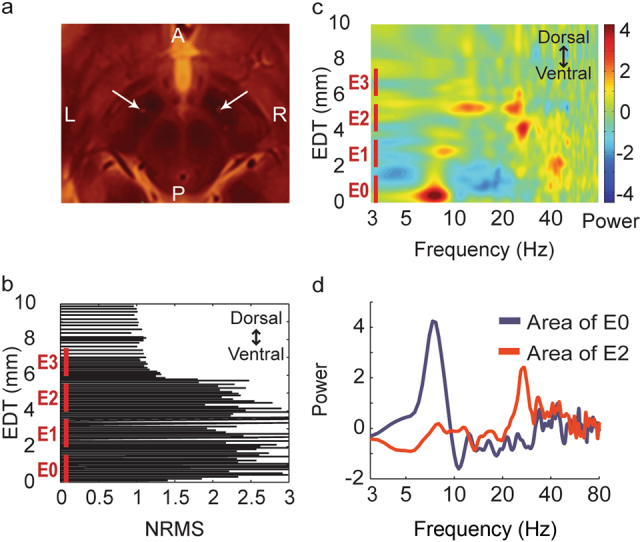
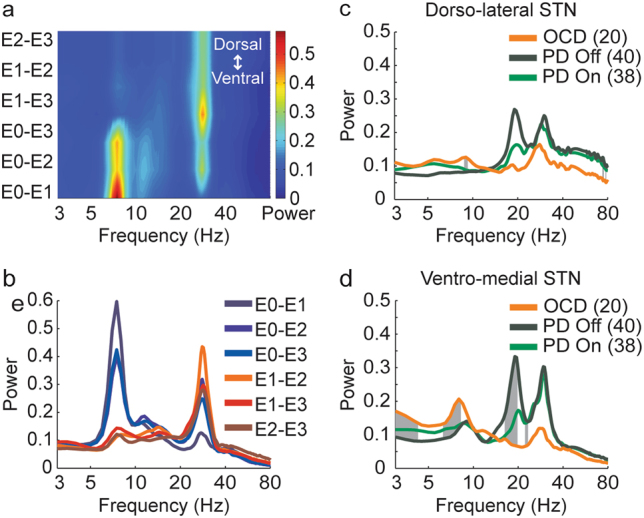
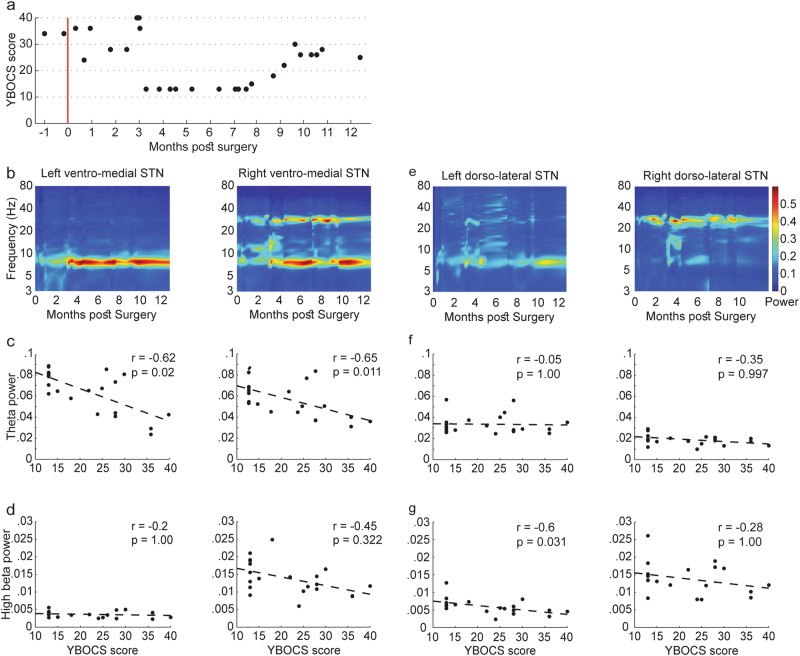
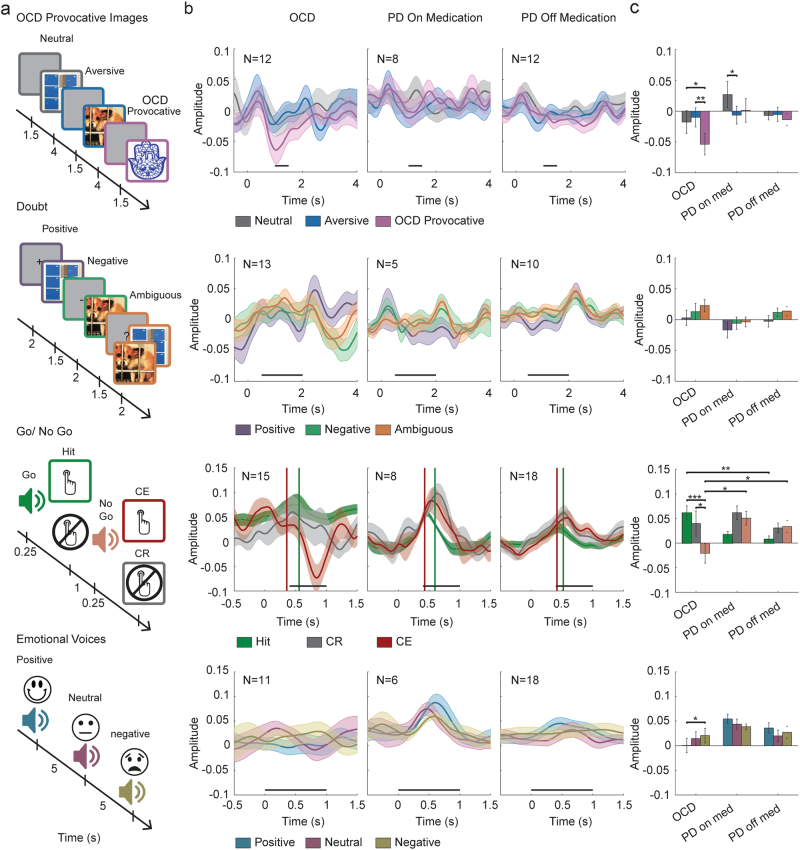
Verification
Claims the paper makes
The claims and statistics of this paper haven’t been checked yet.
Free: it reads the open-access text and checks the first 5 claims that cite a source we can check. Create a free account to check every claim.
Claims other papers make about this one
Each is checked against this paper’s own text: does it say what the citing paper says it does?
The source backs part of the claim, not all of it — or backs it for a different population, condition or comparison.
In the citing paper
“this study indicates that stimulation of the STN is an effective treatment approach for some individuals with OCD.”
From Toward a neurocircuit-based taxonomy to guide treatment of obsessive-compulsive disorder (2021) · cites this paper as [130]
Experimental — accuracy not yet measuredThe cited source says what the claim attributes to it.
In the citing paper
“Fluctuations in OCD symptom severity measured over 1-year post-DBS-activation were accompanied by and correlated with alterations in the level of theta oscillations; decreases in symptom severity co-occurred with increases in theta oscillations and vice versa [130].”
From Toward a neurocircuit-based taxonomy to guide treatment of obsessive-compulsive disorder (2021) · cites this paper as [130]
In the citing paper
“STN theta oscillations were found to be smaller during failed inhibition trials of a Go/Nogo task and during OCD-symptom provocation prior to DBS stimulation.”
From Toward a neurocircuit-based taxonomy to guide treatment of obsessive-compulsive disorder (2021) · cites this paper as [130]
Self-check
Percentages, sums and reported differences re-computed from the paper’s own numbers.
The self-check needs the paper’s full text.
Citations
Cites
A mechanism for cognitive dynamics: neuronal communication through neuronal coherence.
Fries, P. (2005) · Trends in Cognitive Sciences · doi:10.1016/j.tics.2005.08.011 · Cited by 4,284
Frequency Dependence of Signal Power and Spatial Reach of the Local Field Potential
Leski, S., Lindén, H., Tetzlaff, T., Pettersen, K. H., & Einevoll, G. T. (2013) · PubMed · doi:10.18154/rwth-conv-084442 · Cited by 3,639
Adaptive deep brain stimulation in advanced Parkinson disease.
Little, S., Pogosyan, A., Neal, S., Zavala, B., Zrinzo, L., Hariz, M., Foltynie, T., Limousin, P., Ashkan, K., FitzGerald, J., et al. (2013) · Annals of Neurology · doi:10.1002/ana.23951 · Cited by 1,374
Subthalamic nucleus stimulation in severe obsessive-compulsive disorder
Mallet, L., Polosan, M., Jaafari, N., Baup, N., Welter, M.-L., Fontaine, D., Montcel, S. T. D., Yelnik, J., Chéreau, I., Arbus, C., et al. (2008) · New England Journal of Medicine · doi:10.1056/nejmoa0708514 · Cited by 965
Kühn, A. A., Kupsch, A., Schneider, G., & Brown, P. (2006) · European Journal of Neuroscience · doi:10.1111/j.1460-9568.2006.04717.x · Cited by 892
Closed-Loop Deep Brain Stimulation Is Superior in Ameliorating Parkinsonism
Rosin, B., Slovik, M., Mitelman, R., Rivlin-Etzion, M., Haber, S. N., Israel, Z., Vaadia, E., & Bergman, H. (2011) · Neuron · doi:10.1016/j.neuron.2011.08.023 · Cited by 793
Self-citationDan-Glauser, E. S., & Scherer, K. R. (2011) · Behavior Research Methods · doi:10.3758/s13428-011-0064-1 · Cited by 736
Therapeutic deep brain stimulation reduces cortical phase-amplitude coupling in Parkinson's disease
de Hemptinne, C., Swann, N. C., Ostrem, J. L., Ryapolova-Webb, E. S., San Luciano, M., Galifianakis, N. B., & Starr, P. A. (2015) · Nature Neuroscience · doi:10.1038/nn.3997 · Cited by 623
Basal ganglia local field potential activity: Character and functional significance in the human
Brown, P., & Williams, D. (2005) · Clinical Neurophysiology · doi:10.1016/j.clinph.2005.05.009 · Cited by 526
Slow oscillatory activity and levodopa-induced dyskinesias in Parkinson's disease
Alonso-Frech, F. (2006) · Brain · doi:10.1093/brain/awl103 · Cited by 358
Rodriguez-Oroz, M. C., López-Azcárate, J., Garcia-Garcia, D., Alegre, M., Toledo, J., Valencia, M., Guridi, J., Artieda, J., & Obeso, J. A. (2011) · Brain · doi:10.1093/brain/awq301 · Cited by 223
Moran, A., Bergman, H., Israel, Z., & Bar-Gad, I. (2008) · Brain · doi:10.1093/brain/awn270 · Cited by 206
Self-citationAdaptive Deep Brain Stimulation for Movement Disorders: The Long Road to Clinical Therapy
Meidahl, A. C., Tinkhauser, G., Herz, D. M., Cagnan, H., Debarros, J., & Brown, P. (2017) · Movement Disorders · doi:10.1002/mds.27022 · Cited by 193
Neural Correlates of Decision Thresholds in the Human Subthalamic Nucleus
Herz, D. M., Zavala, B. A., Bogacz, R., & Brown, P. (2016) · Current Biology · doi:10.1016/j.cub.2016.01.051 · Cited by 165
A Role for the Subthalamic Nucleus in Response Inhibition during Conflict
Brittain, J.-S., Watkins, K. E., Joundi, R. A., Ray, N. J., Holland, P., Green, A. L., Aziz, T. Z., & Jenkinson, N. (2012) · The Journal of Neuroscience · doi:10.1523/jneurosci.2259-12.2012 · Cited by 162
Welter, M.-L., Burbaud, P., Fernandez-Vidal, S., Bardinet, E., Coste, J., Piallat, B., Borg, M., Besnard, S., Sauleau, P., Devaux, B., et al. (2011) · Translational Psychiatry · doi:10.1038/tp.2011.5 · Cited by 160
Deep Brain Stimulation in the Treatment of Obsessive-Compulsive Disorder
Blomstedt, P. C., Sjöberg, R. L., Hansson, M., Bodlund, O., & Hariz, M. I. (2012) · World Neurosurgery · doi:10.1016/j.wneu.2012.10.006 · Cited by 149
Deep Brain Stimulation for Obsessive-Compulsive Disorder: Subthalamic Nucleus Target
Chabardès, S., Polosan, M., Krack, P., Bastin, J., Krainik, A., David, O., Bougerol, T., & Benabid, A. L. (2012) · World Neurosurgery · doi:10.1016/j.wneu.2012.03.010 · Cited by 148
Activation of the subthalamic region during emotional processing in Parkinson disease
Kühn, A. A., Hariz, M. I., Silberstein, P., Tisch, S. H., Kupsch, A. R., Schneider, G., Limousin, P. D., Yarrow, K., & Brown, P. (2005) · Neurology · doi:10.1212/01.wnl.0000174438.78399.bc · Cited by 147
Bourne, S. K., Eckhardt, C. A., Sheth, S. A., & Eskandar, E. N. (2012) · Frontiers in Integrative Neuroscience · doi:10.3389/fnint.2012.00029 · Cited by 146
Neuronal Correlates of Obsessions in the Caudate Nucleus
Guehl, D., Benazzouz, A., Aouizerate, B., Cuny, E., Rotgé, J., Rougier, A., Tignol, J., Bioulac, B. H., & Burbaud, P. (2007) · Biological Psychiatry · doi:10.1016/j.biopsych.2007.06.023 · Cited by 134
Zavala, B., Brittain, J., Jenkinson, N., Ashkan, K., Foltynie, T., Limousin, P. D., Zrinzo, L. U., Green, A. L., Aziz, T. Z., Zaghloul, K. A., et al. (2013) · Journal of Neuroscience · doi:10.1523/jneurosci.1036-13.2013 · Cited by 130
Ahmari, S. E., & Dougherty, D. D. (2015) · Depression and Anxiety · doi:10.1002/da.22367 · Cited by 128
Le Jeune, F., Vérin, M., N'Diaye, K., Drapier, D., Leray, E., Du Montcel, S. T., Baup, N., Pelissolo, A., Polosan, M., Mallet, L., et al. (2010) · Biological Psychiatry · doi:10.1016/j.biopsych.2010.06.033 · Cited by 116
Neumann, W.-J., Huebl, J., Brücke, C., Gabriëls, L., Bajbouj, M., Merkl, A., Schneider, G.-H., Nuttin, B., Brown, P., & Kühn, A. A. (2014) · Molecular Psychiatry · doi:10.1038/mp.2014.2 · Cited by 115
Deep brain stimulation for treatment-refractory obsessive compulsive disorder: a systematic review
Kohl, S., Schönherr, D. M., Luigjes, J., Denys, D., Mueller, U. J., Lenartz, D., Visser-Vandewalle, V., & Kuhn, J. (2014) · BMC Psychiatry · doi:10.1186/s12888-014-0214-y · Cited by 110
Hamani (2014) · doi:10.1227/neu.0000000000000499 · Cited by 98
Inhibitory control and error monitoring by human subthalamic neurons
Bastin, J., Polosan, M., Benis, D., Goetz, L., Bhattacharjee, M., Piallat, B., Krainik, A., Bougerol, T., Chabardès, S., & David, O. (2014) · Translational Psychiatry · doi:10.1038/tp.2014.73 · Cited by 88
Zavala, B., Damera, S. R., Dong, J. W., Lungu, C., Brown, P., & Zaghloul, K. A. (2015) · Cerebral Cortex · doi:10.1093/cercor/bhv244 · Cited by 87
Conflict-dependent dynamic of subthalamic nucleus oscillations during moral decisions
Fumagalli, M., Giannicola, G., Rosa, M., Marceglia, S., Lucchiari, C., Mrakic-Sposta, S., Servello, D., Pacchetti, C., Porta, M., Sassi, M., et al. (2011) · Social Neuroscience · doi:10.1080/17470919.2010.515148 · Cited by 85
Brücke, C., Kupsch, A., Schneider, G. ‐., Hariz, M. I., Nuttin, B., Kopp, U., Kempf, F., Trottenberg, T., Doyle, L., Chen, C. C., et al. (2007) · European Journal of Neuroscience · doi:10.1111/j.1460-9568.2007.05683.x · Cited by 80
Asymmetric right/left encoding of emotions in the human subthalamic nucleus
Eitan, R., Shamir, R. R., Linetsky, E., Rosenbluh, O., Moshel, S., Ben-Hur, T., Bergman, H., & Israel, Z. (2013) · Frontiers in Systems Neuroscience · doi:10.3389/fnsys.2013.00069 · Cited by 73
Self-citationBurbaud, P., Clair, A.-H., Langbour, N., Fernandez-Vidal, S., Goillandeau, M., Michelet, T., Bardinet, E., Chéreau, I., Durif, F., Polosan, M., et al. (2013) · Brain · doi:10.1093/brain/aws306 · Cited by 70
Local vs. volume conductance activity of field potentials in the human subthalamic nucleus
Marmor, O., Valsky, D., Joshua, M., Bick, A. S., Arkadir, D., Tamir, I., Bergman, H., Israel, Z., & Eitan, R. (2017) · Journal of Neurophysiology · doi:10.1152/jn.00756.2016 · Cited by 66
Self-citationSubthalamic neuronal firing in obsessive‐compulsive disorder and Parkinson disease
Piallat, B., Polosan, M., Fraix, V., Goetz, L., David, O., Fenoy, A., Torres, N., Quesada, J., Seigneuret, E., Pollak, P., et al. (2011) · Annals of Neurology · doi:10.1002/ana.22222 · Cited by 65
Neuromodulation for obsessive-compulsive disorder
Lapidus, K. A. B., Stern, E. R., Berlin, H. A., & Goodman, W. K. (2014) · Neurotherapeutics · doi:10.1007/s13311-014-0287-9 · Cited by 63
Surgical Neuroanatomy and Programming in Deep Brain Stimulation for Obsessive Compulsive Disorder
Morishita, T., Fayad, S. M., Goodman, W. K., Foote, K. D., Chen, D., Peace, D. A., Rhoton, A. L., & Okun, M. S. (2013) · Neuromodulation Technology at the Neural Interface · doi:10.1111/ner.12141 · Cited by 55
Huebl, J., Spitzer, B., Brücke, C., Schönecker, T., Kupsch, A. R., Alesch, F., Schneider, G., & Kühn, A. A. (2014) · Cortex · doi:10.1016/j.cortex.2014.02.019 · Cited by 54
Bastin, J., Polosan, M., Piallat, B., Krack, P., Bougerol, T., Chabardès, S., & David, O. (2014) · Cortex · doi:10.1016/j.cortex.2013.12.007 · Cited by 50
Translational research in OCD: circuitry and mechanisms
Haber, S. N., & Heilbronner, S. R. (2013) · Neuropsychopharmacology · doi:10.1038/npp.2012.182 · Cited by 50
Mulders, A. E. P., Plantinga, B. R., Schruers, K. R. J., Duits, A., Janssen, M. L. F., Ackermans, L. P. C. M., Leentjens, A. F. G., Jahanshahi, A., & Temel, Y. (2016) · European Neuropsychopharmacology · doi:10.1016/j.euroneuro.2016.10.011 · Cited by 49
Simón, D., Kischkel, E., Spielberg, R., & Kathmann, N. (2012) · Psychiatry Research · doi:10.1016/j.psychres.2011.12.022 · Cited by 44
Oscillatory coupling of the subthalamic nucleus in obsessive compulsive disorder
Wojtecki, L., Hirschmann, J. V., Elben, S., Boschheidgen, M., Trenado, C., Vesper, J., & Schnitzler, A. (2017) · Brain · doi:10.1093/brain/awx164 · Cited by 29
Deep brain stimulation in obsessive–compulsive disorder
Lipsman, N., Giacobbe, P., & Lozano, A. M. (2013) · Handbook of clinical neurology · doi:10.1016/b978-0-444-53497-2.00019-x · Cited by 22
Ghahremani, A., Wessel, J. R., Udupa, K., Neagu, B., Zhuang, P., Saha, U., Kalia, S. K., Hodaie, M., Lozano, A. M., Aron, A. R., et al. (2017) · Brain and Language · doi:10.1016/j.bandl.2017.10.009 · Cited by 14
Reply: Oscillatory coupling of the subthalamic nucleus in obsessive compulsive disorder
Accolla, E. A., Horn, A., Ruiz, M. H., Neumann, W., & Kühn, A. A. (2017) · Brain · doi:10.1093/brain/awx165 · Cited by 11
Cited by
Emerging technologies for improved deep brain stimulation
Cagnan, H., Denison, T., McIntyre, C., & Brown, P. (2019) · Nature Biotechnology · doi:10.1038/s41587-019-0244-6 · Cited by 272
Toward a neurocircuit-based taxonomy to guide treatment of obsessive-compulsive disorder
Shephard, E., Stern, E. R., van den Heuvel, O. A., Costa, D. L. C., Batistuzzo, M. C., Godoy, P. B. G., Lopes, A. C., Brunoni, A. R., Hoexter, M. Q., Shavitt, R. G., et al. (2021) · Molecular Psychiatry · doi:10.1038/s41380-020-01007-8 · Cited by 250
“Fluctuations in OCD symptom severity measured over 1-year post-DBS-activation were accompanied by and correlated with alterations in the level of theta oscillations; decreases in symptom severity co-occurred with increases in theta oscillations and vice versa [130].”
BackgroundBiomarkers for closed-loop deep brain stimulation in Parkinson disease and beyond
Bouthour, W., Mégevand, P., Donoghue, J., Lüscher, C., Birbaumer, N., & Krack, P. (2019) · Nature Reviews Neurology · doi:10.1038/s41582-019-0166-4 · Cited by 230
Toward Electrophysiology-Based Intelligent Adaptive Deep Brain Stimulation for Movement Disorders
Neumann, W., Turner, R. S., Blankertz, B., Mitchell, T. M., Kühn, A. A., & Richardson, R. M. (2019) · Neurotherapeutics · doi:10.1007/s13311-018-00705-0 · Cited by 151
Zavala, B., Jang, A. I., Trotta, M., Lungu, C., Brown, P., & Zaghloul, K. A. (2018) · Brain · doi:10.1093/brain/awy266 · Cited by 136
Metadata
- Authors
- Rappel, P., Marmor, O., Bick, A. S., Arkadir, D., Linetsky, E., Castrioto, A., Tamir, I., Freedman, S. A., Mevorach, T., Gilad, M., Bergman, H., Israel, Z., & Eitan, R.
- Affiliations
- Hebrew University of Jerusalem (IL)
- Hadassah Medical Center (IL)
- Grenoble Institute of Neurosciences (FR)
- University of California, San Francisco (US)
- Bar-Ilan University (IL)
- Brigham and Women's Hospital (US)
- Corresponding author
- Eitan, Renana
- ORCID
- Venue
- Translational Psychiatry
- Published
- 2018-06-18
- Volume
- 8
- Issue
- 1
- Pages
- 118-118
- ISSN
- 2158-3188 (ISSN-L)
- PMC
- PMC6006433
- OpenAlex
- W2808305547
- Cited by
- 95
- References
- 47
- Citations by year
- 2026: 11 · 2025: 11 · 2024: 8 · 2023: 13 · 2022: 9 · 2021: 24 · 2020: 6 · 2019: 9 · 2018: 4
- FWCI
- 12.63
- Type
- journal article
- Language
- en
- Open access
- gold
- doi.org
- Licence
- cc-by
- creativecommons.org/licenses/by/4.0 (tdm)
- creativecommons.org/licenses/by/4.0 (vor)
- Locations
- Translational Psychiatry (publishedVersion, cc-by)
- Europe PMC (PubMed Central) (publishedVersion, other-oa)
- PubMed Central (publishedVersion, cc-by)
- PubMed (publishedVersion)
- Digital Access to Scholarship at Harvard (DASH) (Harvard University) (submittedVersion, cc-by)
- DOAJ (DOAJ: Directory of Open Access Journals) (submittedVersion)
- Funders
- Brain and Behavior Research Foundation (Young Investigator Grant)
- Israel Science Foundation (1129/12)
- United States - Israel Binational Science Foundation (2011410)
- Topics
- Social Sciences › Psychology › Clinical Psychology › Obsessive-Compulsive Spectrum Disorders
- Health Sciences › Medicine › Clinical Neurology › Deep Brain Stimulation and Movement Disorders
- Life Sciences › Neuroscience › Neurology › Transcranial Magnetic Stimulation Studies
- Keywords
- obsessive-compulsive disorder, subthalamic nucleus, theta oscillations, beta oscillations, deep brain stimulation, symptom provocation, symptom severity, Parkinson's disease, closed-loop stimulation, local field potentials
- MeSH terms
- Adult, Aged, Female, Humans, Male, Middle Aged, Neuropsychological Tests, Obsessive-Compulsive Disorder, Theta Rhythm, Treatment Outcome, Subthalamic Nucleus, Deep Brain Stimulation, Electrophysiological Phenomena
About these checks
Registry, retraction, Cites and statistics results are computed, not judged, with one exception: a printed reference that no index lists is read once by a model before it counts as a citation error. Claims are extracted by a model and kept only when their quote appears verbatim in the text; each cited source is then checked, with a model’s help, for whether it says what the claim relies on. Those verdicts can be wrong — read the claim’s quote and the cited source before relying on one.
Statistics and arithmetic are recomputed, not judged.
Confidence bands are shown only for fields calibrated on our annotated test set. None is calibrated yet, so no band is shown.
What counts as a claim ›How we measure confidence ›How we check this ›
Are you an author, or do you see a problem with this page? Request a review
Data sources
Bibliographic data: Semantic Scholar, OpenAlex, Crossref.
Contains information from the Semantic Scholar Academic Graph Datasets, made available under the ODC Attribution License (ODC-BY 1.0).
Semantic Scholar’s data is described in: Kinney, R., et al. (2023). The Semantic Scholar Open Data Platform. arXiv:2301.10140.
