

Subthalamic theta activity: a novel human subcortical biomarker for obsessive compulsive disorder
Open accessThe DOI matches its Crossref record; 47 of the 47 references it cites were found in a registry or an index.
Abstract
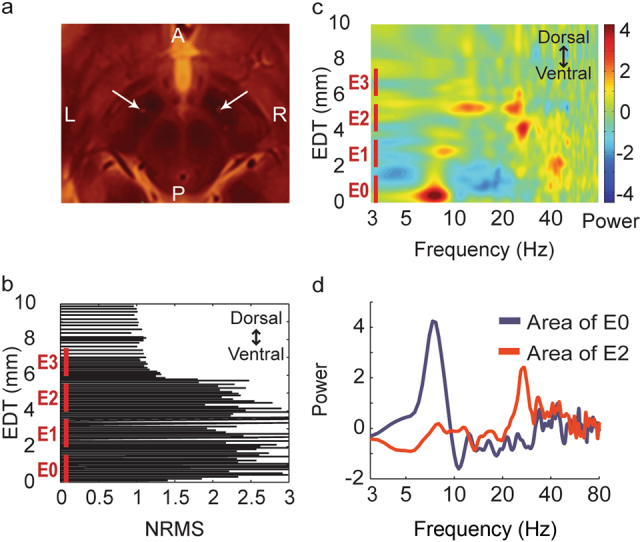
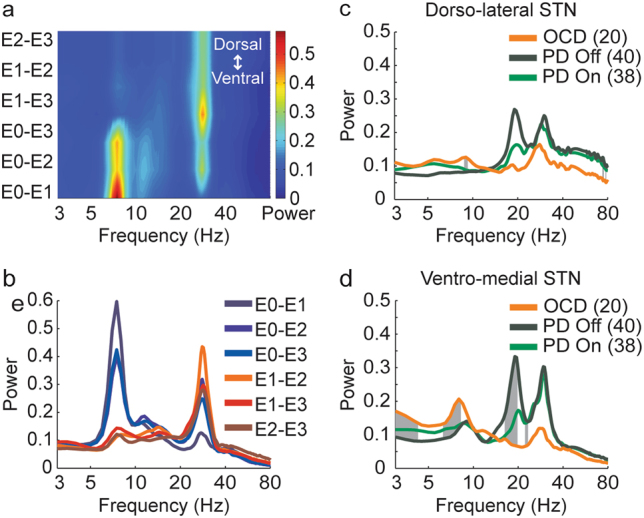
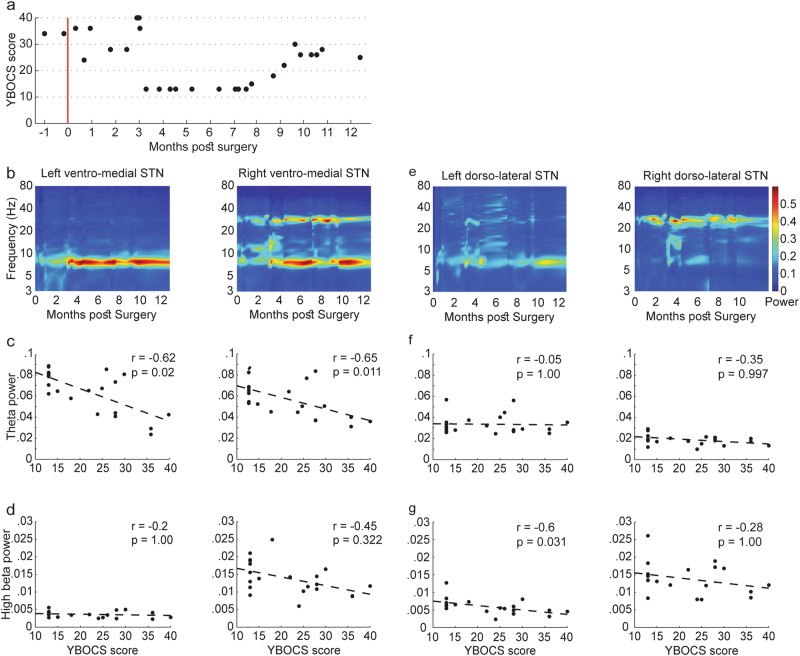
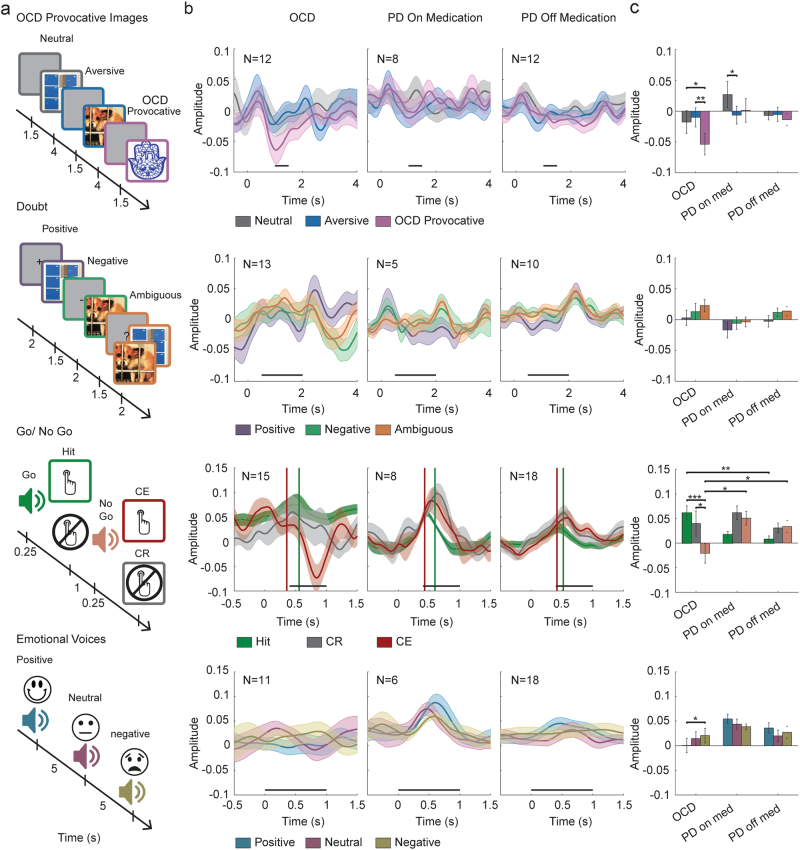
Obsessive-compulsive disorder (OCD) is a common and serious psychiatric disorder. Although subthalamic nucleus deep brain stimulation (DBS) has been studied as a treatment for OCD patients the underlying mechanism of this treatment and the optimal method of stimulation are unknown. To study the neural basis of subthalamic nucleus DBS in OCD patients we used a novel, implantable DBS system with long-term local field potential sensing capability. We focus our analysis on two patients with OCD who experienced severe treatment-resistant symptoms and were implanted with subthalamic nucleus DBS systems. We studied them for a year at rest and during provocation of OCD symptoms (46 recording sessions) and compared them to four Parkinson’s disease (PD) patients implanted with subthalamic nucleus DBS systems (69 recording sessions). We show that the dorsal (motor) area of the subthalamic nucleus in OCD patients displays a beta (25–35 Hz) oscillatory activity similar to PD patients whereas the ventral (limbic-cognitive) area of the subthalamic nucleus displays distinct theta (6.5–8 Hz) oscillatory activity only in OCD patients. The subthalamic nucleus theta oscillatory activity decreases with provocation of OCD symptoms and is inversely correlated with symptoms severity over time. We conclude that beta oscillations at the dorsal subthalamic nucleus in OCD patients challenge their pathophysiologic association with movement disorders. Furthermore, theta oscillations at the ventral subthalamic nucleus in OCD patients suggest a new physiological target for OCD therapy as well as a promising input signal for future emotional-cognitive closed-loop DBS.
Overview
The claims and statistics of this paper haven’t been checked yet.
Free: it reads the open-access text and checks the first 5 claims that cite a source we can check. Create a free account to check every claim.
Integrity signals
Registry
Cites
Statistics
Figures
Verification
Claims the paper makes
The claims and statistics of this paper haven’t been checked yet.
Free: it reads the open-access text and checks the first 5 claims that cite a source we can check. Create a free account to check every claim.
Claims other papers make about this one
Each is checked against this paper’s own text: does it say what the citing paper says it does?
The source backs part of the claim, not all of it — or backs it for a different population, condition or comparison.
In the citing paper
“this study indicates that stimulation of the STN is an effective treatment approach for some individuals with OCD.”
From Toward a neurocircuit-based taxonomy to guide treatment of obsessive-compulsive disorder (2021) · cites this paper as [130]
Experimental — accuracy not yet measuredThe cited source says what the claim attributes to it.
In the citing paper
“Fluctuations in OCD symptom severity measured over 1-year post-DBS-activation were accompanied by and correlated with alterations in the level of theta oscillations; decreases in symptom severity co-occurred with increases in theta oscillations and vice versa [130].”
From Toward a neurocircuit-based taxonomy to guide treatment of obsessive-compulsive disorder (2021) · cites this paper as [130]
In the citing paper
“STN theta oscillations were found to be smaller during failed inhibition trials of a Go/Nogo task and during OCD-symptom provocation prior to DBS stimulation.”
From Toward a neurocircuit-based taxonomy to guide treatment of obsessive-compulsive disorder (2021) · cites this paper as [130]
Self-check
Percentages, sums and reported differences re-computed from the paper’s own numbers.
The self-check needs the paper’s full text.
Citations
Cites
A mechanism for cognitive dynamics: neuronal communication through neuronal coherence.
Fries, P. (2005) · Trends in Cognitive Sciences · doi:10.1016/j.tics.2005.08.011 · Cited by 4,284
Frequency Dependence of Signal Power and Spatial Reach of the Local Field Potential
Leski, S., Lindén, H., Tetzlaff, T., Pettersen, K. H., & Einevoll, G. T. (2013) · PubMed · doi:10.18154/rwth-conv-084442 · Cited by 3,639
Adaptive deep brain stimulation in advanced Parkinson disease.
Little, S., Pogosyan, A., Neal, S., Zavala, B., Zrinzo, L., Hariz, M., Foltynie, T., Limousin, P., Ashkan, K., FitzGerald, J., et al. (2013) · Annals of Neurology · doi:10.1002/ana.23951 · Cited by 1,374
Subthalamic nucleus stimulation in severe obsessive-compulsive disorder
Mallet, L., Polosan, M., Jaafari, N., Baup, N., Welter, M.-L., Fontaine, D., Montcel, S. T. D., Yelnik, J., Chéreau, I., Arbus, C., et al. (2008) · New England Journal of Medicine · doi:10.1056/nejmoa0708514 · Cited by 965
Kühn, A. A., Kupsch, A., Schneider, G., & Brown, P. (2006) · European Journal of Neuroscience · doi:10.1111/j.1460-9568.2006.04717.x · Cited by 892
Closed-Loop Deep Brain Stimulation Is Superior in Ameliorating Parkinsonism
Rosin, B., Slovik, M., Mitelman, R., Rivlin-Etzion, M., Haber, S. N., Israel, Z., Vaadia, E., & Bergman, H. (2011) · Neuron · doi:10.1016/j.neuron.2011.08.023 · Cited by 793
Self-citationDan-Glauser, E. S., & Scherer, K. R. (2011) · Behavior Research Methods · doi:10.3758/s13428-011-0064-1 · Cited by 736
Therapeutic deep brain stimulation reduces cortical phase-amplitude coupling in Parkinson's disease
de Hemptinne, C., Swann, N. C., Ostrem, J. L., Ryapolova-Webb, E. S., San Luciano, M., Galifianakis, N. B., & Starr, P. A. (2015) · Nature Neuroscience · doi:10.1038/nn.3997 · Cited by 623
Basal ganglia local field potential activity: Character and functional significance in the human
Brown, P., & Williams, D. (2005) · Clinical Neurophysiology · doi:10.1016/j.clinph.2005.05.009 · Cited by 526
Slow oscillatory activity and levodopa-induced dyskinesias in Parkinson's disease
Alonso-Frech, F. (2006) · Brain · doi:10.1093/brain/awl103 · Cited by 358
Cited by
Emerging technologies for improved deep brain stimulation
Cagnan, H., Denison, T., McIntyre, C., & Brown, P. (2019) · Nature Biotechnology · doi:10.1038/s41587-019-0244-6 · Cited by 272
Toward a neurocircuit-based taxonomy to guide treatment of obsessive-compulsive disorder
Shephard, E., Stern, E. R., van den Heuvel, O. A., Costa, D. L. C., Batistuzzo, M. C., Godoy, P. B. G., Lopes, A. C., Brunoni, A. R., Hoexter, M. Q., Shavitt, R. G., et al. (2021) · Molecular Psychiatry · doi:10.1038/s41380-020-01007-8 · Cited by 250
“Fluctuations in OCD symptom severity measured over 1-year post-DBS-activation were accompanied by and correlated with alterations in the level of theta oscillations; decreases in symptom severity co-occurred with increases in theta oscillations and vice versa [130].”
BackgroundBiomarkers for closed-loop deep brain stimulation in Parkinson disease and beyond
Bouthour, W., Mégevand, P., Donoghue, J., Lüscher, C., Birbaumer, N., & Krack, P. (2019) · Nature Reviews Neurology · doi:10.1038/s41582-019-0166-4 · Cited by 230
Toward Electrophysiology-Based Intelligent Adaptive Deep Brain Stimulation for Movement Disorders
Neumann, W., Turner, R. S., Blankertz, B., Mitchell, T. M., Kühn, A. A., & Richardson, R. M. (2019) · Neurotherapeutics · doi:10.1007/s13311-018-00705-0 · Cited by 151
Zavala, B., Jang, A. I., Trotta, M., Lungu, C., Brown, P., & Zaghloul, K. A. (2018) · Brain · doi:10.1093/brain/awy266 · Cited by 136
Modulation of dopamine tone induces frequency shifts in cortico-basal ganglia beta oscillations
Iskhakova, L., Rappel, P., Deffains, M., Fonar, G., Marmor, O., Paz, R., Israel, Z. H., Eitan, R., & Bergman, H. (2021) · Nature Communications · doi:10.1038/s41467-021-27375-5 · Cited by 93
Self-citationLandscape and future directions of machine learning applications in closed-loop brain stimulation
Chandrabhatla, A. S., Pomeraniec, I. J., Horgan, T. M., Wat, E. K., & Ksendzovsky, A. (2023) · npj Digital Medicine · doi:10.1038/s41746-023-00779-x · Cited by 67
“SVR was trained using neural activity from the STN and was able to predict MES with an accuracy range of 0.14 – 0.88, depending on how much data was given to the model.”
InfluentialSubthalamic nucleus activity dynamics and limb movement prediction in Parkinson’s disease
Khawaldeh, S., Tinkhauser, G., Shah, S. A., Petermann, K., Debove, I., Nguyen, T. A. K., Nowacki, A., Lachenmayer, M. L., Schüpbach, M. W. M., Pollo, C., et al. (2019) · Brain · doi:10.1093/brain/awz417 · Cited by 64
“In contrast, LFP activities at higher frequencies in the beta band are more similar in amplitude in this region between the two conditions (Rappel et al., 2018).”
BackgroundNho, Y., Rolle, C. E., Topalovic, U., Shivacharan, R. S., Cunningham, T. N., Hiller, S., Batista, D., Feng, A. Y., Espil, F. M., Kratter, I. H., et al. (2023) · Neuron · doi:10.1016/j.neuron.2023.09.034 · Cited by 66
Subthalamic low-frequency oscillations predict vulnerability to cocaine addiction
Degoulet, M., Tiran‐Cappello, A., Combrisson, E., Baunez, C., & Pelloux, Y. (2021) · Proceedings of the National Academy of Sciences · doi:10.1073/pnas.2024121118 · Cited by 54
Perera, M. P. N., Mallawaarachchi, S., Bailey, N. W., Murphy, O. W., & Fitzgerald, P. B. (2023) · Journal of Psychiatric Research · doi:10.1016/j.jpsychires.2023.05.026 · Cited by 50
Perera, M. P. N., Mallawaarachchi, S., Bailey, N. W., Murphy, O. W., & Fitzgerald, P. B. (2022) · doi:10.1101/2022.10.03.510571 · Cited by 51
Brain–computer interfaces for neuropsychiatric disorders
Oganesian, L. L., & Shanechi, M. M. (2024) · Nature Reviews Bioengineering · doi:10.1038/s44222-024-00177-2 · Cited by 58
Tamir, I., Wang, D. D., Chen, W., Ostrem, J. L., Starr, P. A., & de Hemptinne, C. (2020) · Neurobiology of Disease · doi:10.1016/j.nbd.2020.105090 · Cited by 46
“, 2016), while lower frequency bands dominate the ventral portion of the nucleus (Eitan et al., 2013; Kolb et al., 2017; Rappel et al., 2018).”
BackgroundSelf-citationNeurocircuit models of obsessive-compulsive disorder: limitations and future directions for research
Shephard, E., Batistuzzo, M. C., Hoexter, M. Q., Stern, E. R., Zuccolo, P. F., Ogawa, C. Y., da Silva, R. D. M. F., Brunoni, A. R., Costa, D. L. D. C., Doretto, V. F., et al. (2022) · Brazilian Journal of Psychiatry · doi:10.1590/1516-4446-2020-1709 · Cited by 43
Pinckard-Dover, H. N., Ward, H. E., & Foote, K. D. (2021) · Frontiers in Surgery · doi:10.3389/fsurg.2021.642503 · Cited by 42
Parolari, L., Schneeberger, M., Heintz, N., & Friedman, J. M. (2021) · Molecular Psychiatry · doi:10.1038/s41380-021-01162-6 · Cited by 39
Physiologically informed neuromodulation
Wendt, K., Denison, T., Foster, G., Krinke, L., Thomson, A. C., Wilson, S., & Widge, A. S. (2021) · Journal of the Neurological Sciences · doi:10.1016/j.jns.2021.120121 · Cited by 37
Deep brain–machine interfaces: sensing and modulating the human deep brain
Sui, Y., Yu, H., Zhang, C., Chen, Y., Jiang, C., & Li, L. (2022) · National Science Review · doi:10.1093/nsr/nwac212 · Cited by 39
“Other oscillation features include increased theta band (4–8 Hz) power in STN, which is relevant to impulse control disorders [90].”
BackgroundDeep brain stimulation in obsessive-compulsive disorder: Results from meta-analysis
Cruz, S., Gutiérrez-Rojas, L., González-Domenech, P., Díaz-Atienza, F., Martínez-Ortega, J. M., & Jiménez‐Fernández, S. (2022) · Psychiatry Research · doi:10.1016/j.psychres.2022.114869 · Cited by 37
Yin, L., Han, F., Yu, Y., & Wang, Q. (2022) · Cognitive Neurodynamics · doi:10.1007/s11571-022-09858-3 · Cited by 30
“Compared to Parkinson’s patients, Rappel also reported enhanced theta activity in ventromedial STN in OCD patients, related to cognitive functions (Rappel et al. 2018).”
BackgroundPiña‐Fuentes, D., van Dijk, J. M. C., Drost, G., van Zijl, J. C., van Laar, T., Tijssen, M. A. J., & Beudel, M. (2019) · Clinical Neurophysiology · doi:10.1016/j.clinph.2019.02.015 · Cited by 28
Subthalamic Nucleus Stimulation–Induced Local Field Potential Changes in Dystonia
Wiest, C., Morgante, F., Torrecillos, F., Pogosyan, A. H., He, S., Baig, F., Bertaina, I., Hart, M. G., Edwards, M. J., Pereira, E. A. C., et al. (2022) · Movement Disorders · doi:10.1002/mds.29302 · Cited by 28
“1C), despite other studies showing beta activity in the STN of dystonic patients at rest(35) and subthalamic beta peaks in patients with obsessive compulsive disorder.(39) However, we observed larger beta power in STN compared to the thalamus.”
ResultMandali, A., Manssuer, L. R., Zhao, Y., Zhang, C., Wang, L., Ding, Q., Pan, Y., Li, D., Sun, B., & Voon, V. (2020) · Biological Psychiatry Cognitive Neuroscience and Neuroimaging · doi:10.1016/j.bpsc.2020.12.003 · Cited by 29
Deep Brain Stimulation Response Circuits in Obsessive-Compulsive Disorder
Horn, A., Li, N., Meyer, G. M., Gadot, R., Provenza, N. R., & Sheth, S. A. (2025) · Biological Psychiatry · doi:10.1016/j.biopsych.2025.03.008 · Cited by 30
The Hidden Life of the Basal Ganglia: At the Base of Brain and Mind
Bergman, H. (2021) · The MIT Press eBooks · doi:10.7551/mitpress/14075.001.0001 · Cited by 29
Self-citationOscillatory activity in the BNST/ALIC and the frontal cortex in OCD: acute effects of DBS
Schwabe, K., Alam, M., Saryyeva, A., Lütjens, G., Heissler, H. E., Winter, L., Heitland, I., Krauss, J. K., & Kahl, K. G. (2021) · Journal of Neural Transmission · doi:10.1007/s00702-020-02297-6 · Cited by 23
“When comparing oscillatory activity between patients with OCD and those with Parkinson (PD) from the STN, enhanced theta band activity was also noted in the ventro-medial STN in patients with OCD, but not with Parkinson (Rappel et al. 2018).”
BackgroundResultInfluentialBuot, A., Karachi, C., Lau, B., Belaïd, H., Fernández-Vidal, S., Welter, M., & Mallet, L. (2020) · Biological Psychiatry Cognitive Neuroscience and Neuroimaging · doi:10.1016/j.bpsc.2020.08.002 · Cited by 25
Shi, Y., Wang, M., Xiao, L., Gui, L., Zheng, W., Bai, L., Su, B., Li, B., Xu, Y., Pan, W. D., et al. (2023) · Frontiers in Cellular Neuroscience · doi:10.3389/fncel.2022.1057887 · Cited by 24
“, 2021), and studies in which DBS of the subthalamic nucleus (STN) was applied to treat OCD have shown that theta band activity is correlated with the severity of OCD symptoms (Rappel et al., 2018; Buot et al., 2021).”
BackgroundSpee, B. T. M., Sladky, R., Fingerhut, J., Laciny, A., Kraus, C., Carls‐Diamante, S., Brücke, C., Pelowski, M. J., & Treven, M. (2022) · Frontiers in Psychology · doi:10.3389/fpsyg.2022.930293 · Cited by 20
“Deep brain stimulation is efficacious in reducing OCD symptoms (Rappel et al., 2018; Li et al., 2021), but plays no role in ASC management (although see Sinha et al.”
BackgroundSand, D., Rappel, P., Marmor, O., Bick, A. S., Arkadir, D., Lu, B., Bergman, H., Israel, Z. H., & Eitan, R. (2021) · Journal of Neural Engineering · doi:10.1088/1741-2552/abfc1d · Cited by 19
Self-citationRicci, A., Rubino, E., Serra, G. P., & Wallén‐Mackenzie, Å. (2024) · Neuropharmacology · doi:10.1016/j.neuropharm.2024.110003 · Cited by 17
“Oscillations of the STN have also been correlated with compulsive behaviors and compulsive/impulsive related disorders in PD patients (Rodriguez-Oroz et al., 2011) and in OCD patients (Rappel et al., 2018).”
BackgroundBriones, B. A., Pitcher, M. N., Fleming, W., Libby, A., Diethorn, E. J., Haye, A. E., MacDowell, C. J., Zych, A. D., Waters, R. C., Buschman, T. J., et al. (2021) · Biological Psychiatry Global Open Science · doi:10.1016/j.bpsgos.2021.11.005 · Cited by 20
Xiong, B., Li, B., Wen, R., Gao, Y., Gong, F., Li, D., Xu, Y., Deng, H., Xiao, L., Yin, S., et al. (2023) · Journal of neurosurgery · doi:10.3171/2023.4.jns221824 · Cited by 15
From dawn till dusk: Time-adaptive bayesian optimization for neurostimulation
Fleming, J. E., Sanchis, I. P., Lemmens, O., Denison-Smith, A., West, T. O., Denison, T., & Cagnan, H. (2023) · PLoS Computational Biology · doi:10.1371/journal.pcbi.1011674 · Cited by 14
Neurobiological Mechanisms of Metacognitive Therapy – An Experimental Paradigm
Winter, L., Alam, M., Heissler, H. E., Saryyeva, A., Milakara, D., Jin, X., Heitland, I., Schwabe, K., Krauss, J. K., & Kahl, K. G. (2019) · Frontiers in Psychology · doi:10.3389/fpsyg.2019.00660 · Cited by 14
Chen, Y., Wu, H., Tu, P., Yeh, C., Liu, T.-C., Yeap, M.-C., Chao, Y., Chen, P., Lu, C., & Chen, C.-C. (2021) · Frontiers in Human Neuroscience · doi:10.3389/fnhum.2021.797314 · Cited by 15
Fridgeirsson, E. A., Bais, M. N., Eijsker, N., Thomas, R. M., Smit, D. J. A., Bergfeld, I. O., Schuurman, P. R., van den Munckhof, P., de Koning, P. P., Vulink, N. C. C., et al. (2023) · Journal of Neural Engineering · doi:10.1088/1741-2552/acbee1 · Cited by 14
“In contrast Miller et al [52] did perioperative symptom provocation in one patient while Rappel et al [15] collected both resting state and symptom provocation LFP data from two OCD patients and compared to four Parkinson’s disease.”
ResultXiong, B., Wen, R., Gao, Y., & Wang, W. (2021) · Biological Psychiatry · doi:10.1016/j.biopsych.2021.06.004 · Cited by 13
Pourahmad, R., Saleki, K., Esmaili, M., Abdollahi, A., Alijanizadeh, P., Zare, M., Banazadeh, M., & Ahmadi, M. (2023) · IBRO Neuroscience Reports · doi:10.1016/j.ibneur.2023.05.008 · Cited by 12
Connectomic DBS: An introduction
Horn, A., Al‐Fatly, B., Neumann, W., & Neudorfer, C. (2021) · Elsevier eBooks · doi:10.1016/b978-0-12-821861-7.00020-8 · Cited by 12
Sand, D., Arkadir, D., Snineh, M. A., Marmor, O., Israel, Z. H., Bergman, H., Hassin‐Baer, S., Israeli‐Korn, S., Peremen, Z., Geva, A. B., et al. (2021) · Frontiers in Systems Neuroscience · doi:10.3389/fnsys.2021.747681 · Cited by 11
“The surgical and recording techniques used in our study have been described elsewhere (Zaidel et al., 2009; Marmor et al., 2017; Rappel et al., 2018; Sand et al., 2021).”
BackgroundMethodSelf-citationIntracranial electrophysiological biomarkers of compulsivity in obsessive–compulsive disorder
Arbab, T., Bais, M. N., Figee, M., Bergfeld, I. O., Schuurman, P. R., van den Munckhof, P., Willuhn, I., & Denys, D. A. J. P. (2025) · Nature Mental Health · doi:10.1038/s44220-025-00457-9 · Cited by 11
Marmor, O., Rappel, P., Valsky, D., Bick, A. S., Arkadir, D., Linetsky, E., Peled, O., Tamir, I., Bergman, H., Israel, Z. H., et al. (2019) · Neurobiology of Disease · doi:10.1016/j.nbd.2019.104716 · Cited by 10
“, 2013), controlling obsessive compulsive behavior (Rappel et al., 2018) and error monitoring (Bastin et al.”
Self-citationClosed-loop systems for deep brain stimulation to treat neuropsychiatric disorders
Balachandar, A., Phokaewvarangkul, O., & Fasano, A. A. (2024) · Expert Review of Medical Devices · doi:10.1080/17434440.2024.2438309 · Cited by 10
“In the future, this may be another biomarker that could be used in aDBS for OCD [123].”
Zhang, W., Xiong, B., Wu, Y., Xiao, L., & Wang, W. (2023) · Frontiers in Psychiatry · doi:10.3389/fpsyt.2023.1080260 · Cited by 10
Lee, I., Kim, K. M., & Lim, M. H. (2023) · Brain Sciences · doi:10.3390/brainsci13101440 · Cited by 11
“Following the deep brain stimulation (DBS) intervention, there was a noticeable reduction in theta oscillations in the STN, which correlated with a decrease in the severity of OCD symptoms [37,38].”
BackgroundVieira, E. V., Arantes, P. R., Hamani, C., Iglésio, R., Duarte, K. P., Teixeira, M. J., Miguel, E. C., Lopes, A. C., & Godinho, F. L. F. (2021) · Frontiers in Psychiatry · doi:10.3389/fpsyt.2021.680484 · Cited by 11
Rewiring the OCD brain: Insights beyond cortico-striatal networks
Jijimon, F., Mehak, S. F., Mohammed, Z., Praharaj, S. K., & Gangadharan, G. (2025) · Neurobiology of Disease · doi:10.1016/j.nbd.2025.107216 · Cited by 8
Sanchez, A. M. A., Roberts, M. J., Temel, Y., & Janssen, M. L. F. (2024) · European Journal of Neuroscience · doi:10.1111/ejn.16579 · Cited by 9
“Another study showed how changes in the theta band are related to OCD symptom inhibition, whereby increased power was related to successful inhibition of the OCD symptoms, while decreased power was related to failure to inhibit them (Rappel et al., 2018).”
Asch, N., Rahamim, N., Morozov, A., Werner-Reiss, U., Israel, Z. H., Paz, R., & Bergman, H. (2025) · Nature Communications · doi:10.1038/s41467-025-60044-5 · Cited by 7
“Future research should investigate theta activity-speci fi c parameters as biomarkers, similar to adaptive DBS in Parkinson ’ s 72 and obsessive-compulsive disorder 73 .”
Self-citationKabotyanski, K. E., Provenza, N. R., & Sheth, S. A. (2025) · Biological Psychiatry · doi:10.1016/j.biopsych.2025.10.005 · Cited by 7
Belardinelli, P., Azodi-Avval, R., Ortiz, E., Naros, G., Grimm, F., Weiß, D., & Gharabaghi, A. (2019) · Journal of neurosurgery · doi:10.3171/2018.11.jns181684 · Cited by 7
Arumugham, S. S., Srinivas, D., Narayanaswamy, J. C., Jaisoorya, T. S., Kashyap, H., Domenech, P., Palfi, S., Mallet, L., Venkatasubramanian, G., & Reddy, Y. C. J. (2021) · BMJ Open · doi:10.1136/bmjopen-2020-047492 · Cited by 7
Ruan, H., Wang, Y., Li, Z., Tong, G., & Wang, Z. (2022) · Brain Sciences · doi:10.3390/brainsci12070936 · Cited by 7
Bočková, M., & Rektor, I. (2021) · Journal of Neural Transmission · doi:10.1007/s00702-021-02381-5 · Cited by 7
“Similar beta power increase as in PD was found also in the dorsal motor part of the STN in obsessive–compulsive disorder (OCD) patients, and therefore, the presence of beta hypersynchrony itself is not pathognomic only for PD (Rappel et al.”
BackgroundInfluentialLocal Field Potentials and ECoG
Wang, D. D., Chen, W., Starr, P. A., & de Hemptinne, C. (2020) · Springer eBooks · doi:10.1007/978-3-030-34906-6_9 · Cited by 6
Embracing Diversity: Sedative effects vary across drug chemistry and frequency domains
Guang, J., Erdman, H. B., Nizri, O. B.-Y., Firman, S., Werner-Reiss, U., Kapuller, V. M., Israel, Z. H., & Bergman, H. (2025) · Neuropharmacology · doi:10.1016/j.neuropharm.2025.110580 · Cited by 5
Self-citationDeep Brain Stimulation in Obsessive-Compulsive Disorder
Polosan, M., & Leentjens, A. F. G. (2020) · Springer eBooks · doi:10.1007/978-3-030-36346-8_17 · Cited by 5
Dominke, C., Graham-Schmidt, K., Gentsch, A., & Schütz‐Bosbach, S. (2021) · Biological Psychology · doi:10.1016/j.biopsycho.2021.108019 · Cited by 7
Yin, L., Yu, Y., & Wang, Q. (2026) · Nonlinear Dynamics · doi:10.1007/s11071-026-12613-6 · Cited by 5
“…with reduced indirect pathway activity, shift the circuit toward excessive thalamocortical excitation and impaired suppression of competing actions enhanced low-frequency power and abnormal synchronization within prefrontal-STN circuits [57, 58], as well as disrupted cross-frequency coupling [59].”
Bervoets, C., Heylen, H., Nuttin, B., & Laughlin, M. M. (2022) · Brain stimulation · doi:10.1016/j.brs.2022.06.009 · Cited by 4
Complex brain networks mediation of neuroticism and extraversion on obsessive-compulsive disorder
Huang, B., Cheng, J., Gao, J., Wang, Y., Wu, C., Ruan, H., Li, P., Han, H., & Wang, Z. (2025) · Journal of Affective Disorders · doi:10.1016/j.jad.2025.119795 · Cited by 5
Neurophysiological mechanisms of DBS from a connectomic perspective
Neumann, W. (2021) · Elsevier eBooks · doi:10.1016/b978-0-12-821861-7.00027-0 · Cited by 6
Revealing connectivity patterns of deep brain stimulation efficacy in Parkinson’s disease
Výtvarová, E., Lamoš, M., Hlinka, J., Goldemundová, S., Rektor, I., & Bočková, M. (2024) · Scientific Reports · doi:10.1038/s41598-024-80630-9 · Cited by 4
A genetic algorithm for self-supervised models of oscillatory neurodynamics
Nejat, H., Sherfey, J. S., & Bastos, A. M. (2026) · PLoS ONE · doi:10.1371/journal.pone.0354021 · Cited by 3
Local Field Aperiodic Spectral Power Modulated by Deep Brain Stimulation in Parkinson's Disease
Lamoš, M., Žáčková, A., Ulčák, D., Gurka, B., Brzuchanski, D., Šmahovská, L., & Bočková, M. (2026) · Movement Disorders · doi:10.1002/mds.70232 · Cited by 2
Zhang, W., Wu, X., Tang, C., Sang, W., Ye, Y., Gan, H., Chen, T., Yuan, T.-F., Zhai, R., Jiang, H., et al. (2026) · Neuroscience Bulletin · doi:10.1007/s12264-026-01673-8 · Cited by 2
Electrical deep neuromodulation in psychiatry
Polosan, M., & Figee, M. (2021) · International review of neurobiology · doi:10.1016/bs.irn.2021.06.007 · Cited by 2
Investigating cognitive neuroscience concepts using connectomic DBS
Irmen, F., Krack, P., & Kühn, A. A. (2021) · Elsevier eBooks · doi:10.1016/b978-0-12-821861-7.00013-0 · Cited by 2
Advances in deep brain stimulation for the treatment of post-traumatic stress disorder
Nestor, S. M., Giacobbe, P., Abrahão, A., Davidson, B., Rabin, J. S., Lipsman, N., & Hamani, C. (2023) · Expert Review of Medical Devices · doi:10.1080/17434440.2023.2280023 · Cited by 2
“In patients with obsessive-compulsive disorder (OCD), theta-band activity in the ventral subthalamic nucleus (STN) was found to be reduced during symptom provocation and inversely correlated with symptom severity [43].”
BackgroundDegoulet, M., Tiran‐Cappello, A., Baunez, C., & Pelloux, Y. (2018) · bioRxiv (Cold Spring Harbor Laboratory) · doi:10.1101/451203 · Cited by 2
Intervention Effect of rTMS on Neural Activities in Obsessive/Compulsive Disorder
Esfeh, M. A., Niyasar, A. R., Rostami, R., & Khosrowabadi, R. (2025) · Journal of Psychophysiology · doi:10.1027/0269-8803/a000342 · Cited by 1
Huang, B., Li, W., & Wang, Z. (2025) · Behavioural Brain Research · doi:10.1016/j.bbr.2025.115935 · Cited by 1
Deep brain stimulation-responsive subthalamo-cortical coupling in obsessive-compulsive disorder
Winkler, L., Werner, L. M., Butz, M., Hartmann, C. J., Schnitzler, A., & Hirschmann, J. (2025) · Brain stimulation · doi:10.1016/j.brs.2025.103008 · Cited by 2
Classic psychedelics in obsessive–compulsive disorder: a circuit-based framework
Ali, S. A. M., Carhart-Harris, R. L., & Sieg, K. G. (2026) · Nature Mental Health · doi:10.1038/s44220-026-00626-4 · Cited by 2
Appetitive Mapping of the Human Nucleus Accumbens
Parker, J. J., Rolle, C. E., Shivacharan, R. S., Barbosa, D. A. N., Feng, A. Y., Huang, Y., Kakusa, B. W., Prieto, T., Jaffe, R., Williams, N., et al. (2022) · Biological Psychiatry · doi:10.1016/j.biopsych.2022.09.016 · Cited by 1
The Physiologic Basis of Neuromodulation
Wilson, T. J., & Butala, A. (2024) · Advances in Psychiatry and Behavioral Health · doi:10.1016/j.ypsc.2024.05.001 · Cited by 1
Adaptive Deep Brain Stimulation for Parkinson’s Disease and Dystonia
Piña‐Fuentes, D. (2021) · University of Groningen research database (University of Groningen / Centre for Information Technology) · doi:10.33612/diss.168446465 · Cited by 1
A Multi-Symptom Circuit Architecture of Obsessive–Compulsive DisorderPreprint
Hollunder, B., Meyer, G. M., Li, N., Reinhardt, P., Sahin, I. A., Rajamani, N., Pijar, J., Nombela, C., Mosley, P. E., Acevedo, N., et al. (2025) · medRxiv · doi:10.64898/2025.12.14.25342121 · Cited by 3
“These symptom response tracts followed a topographic organization within the ALIC, with cortical peaks arranged along a dorsoventral axis and projecting from diverse prefrontal regions through the central ALIC toward striatum, STN, and brainstem.”
InfluentialMarmor, O., Rappel, P., Valsky, D., Bick, A. S., Arkadir, D., Linetzky, E., Peled, O., Tamir, I., Bergman, H., Israel, Z. H., et al. (2018) · bioRxiv (Cold Spring Harbor Laboratory) · doi:10.1101/392936
“STN electrophysiology may be influenced by the motor, emotional and cognitive symptoms of Parkinson’s disease (Cassidy et al., 2002, Levy et al., 2002, Kuhn et al., 2004, Priori et al., 2004, Eitan et al., 2013, Rappel et al., 2018).”
BackgroundSelf-citationResearch Progress of DBS in the Treatment of Mental Illness
赵, 聪. (2023) · Advances in Clinical Medicine · doi:10.12677/acm.2023.13102216
Ramirez-Pasos, U. E. (2019) · Online Publication Service of Würzburg University (Würzburg University) · doi:10.25972/opus-16985
Shah, S., Punukollu, A., Qazi, M. S., NAWAZ, H. S., Khan, I., Qaimkhani, W. R., Ibrar, H., Bukhari, S. K. A., Maryam, A., & Lucke-Wold, B. P. (2026) · Psychiatric Quarterly · doi:10.1007/s11126-026-10268-5
Mondragón-González, S. L. (2019) · theses.fr (ABES) · doi:10.70675/e78705daz18a9z4695zac41zadeb07ee7c37
Vielle, C. (2022) · theses.fr (ABES) · doi:10.70675/1d0b6118z0cadz4beeza6bdzd9557f045747 · Cited by 1
Çiftçi, E., & Erkmen, H. (2026) · Behavioural Brain Research · doi:10.1016/j.bbr.2026.116204
Study of the network involving the subthalamic nucleus in various measures of motivation in the rat
Williams, M. (2024) · theses.fr (ABES) · doi:10.70675/a3364afaze775z472fzaf27z193b7101e9ca
Lauro, P. M., Palmer, C. F., Nambiar, M. M., Muller, U., Qiu, L., Halpern, C. H., & Scangos, K. W. (2026) · Frontiers in Psychiatry · doi:10.3389/fpsyt.2026.1828620
“Local fi eld potential (LFP) recordings from ventral STN DBS during DBS surgeries revealed low-frequency theta oscillations (typically associated with cognitive control and decision making), the power of which inversely related with YBOCS severity (70 – 72).”
Wang, H., Saeed, S., Yan, N., & Wang, D. (2026) · Annals of Medicine · doi:10.1080/07853890.2026.2682576
“…may contribute to the underlying network dysfunction [67], and electrophysiological recordings revealing abnormal subthalamic theta activity as a potential biomarker for OCD [68], Whether EP neurons exhibit similarly altered firing patterns in OCD remains an important question for future research.”
Imtiaz, Z., Kopell, B. H., Olson, S., Sáez, I., Song, H. N., Mayberg, H. S., Choi, K. S., Waters, A. C., Figee, M., & Smith, A. H. (2026) · Neuromodulation Technology at the Neural Interface · doi:10.1016/j.neurom.2026.09.006 · Cited by 1
CLEAR-FORCE: A reservoir computing framework for closed-loop brain stimulationPreprint
Moreno-Gris, A., Godin, C., & Thivierge, J. (2026) · bioRxiv (Cold Spring Harbor Laboratory) · doi:10.64898/2026.10.05.756709
Seilheimer, R. L., Vardalakis, N., Choi, W. B., Qiu, L., Campos, G., Nho, Y., Chen, H., Shuvaev, S., Noecker, A. M., Chang, A., et al. (2026) · medRxiv · doi:10.64898/2026.10.19.26365556
Metadata
- Authors
- Rappel, P., Marmor, O., Bick, A. S., Arkadir, D., Linetsky, E., Castrioto, A., Tamir, I., Freedman, S. A., Mevorach, T., Gilad, M., Bergman, H., Israel, Z., & Eitan, R.
- Affiliations
- Hebrew University of Jerusalem (IL)
- Hadassah Medical Center (IL)
- Grenoble Institute of Neurosciences (FR)
- University of California, San Francisco (US)
- Bar-Ilan University (IL)
- Brigham and Women's Hospital (US)
- Corresponding author
- Eitan, Renana
- ORCID
- Venue
- Translational Psychiatry
- Published
- 2018-06-18
- Volume
- 8
- Issue
- 1
- Pages
- 118-118
- ISSN
- 2158-3188 (ISSN-L)
- PMC
- PMC6006433
- OpenAlex
- W2808305547
- Cited by
- 95
- References
- 47
- Citations by year
- 2026: 11 · 2025: 11 · 2024: 8 · 2023: 13 · 2022: 9 · 2021: 24 · 2020: 6 · 2019: 9 · 2018: 4
- FWCI
- 12.63
- Type
- journal article
- Language
- en
- Open access
- gold
- doi.org
- Licence
- cc-by
- creativecommons.org/licenses/by/4.0 (tdm)
- creativecommons.org/licenses/by/4.0 (vor)
- Locations
- Translational Psychiatry (publishedVersion, cc-by)
- Europe PMC (PubMed Central) (publishedVersion, other-oa)
- PubMed Central (publishedVersion, cc-by)
- PubMed (publishedVersion)
- Digital Access to Scholarship at Harvard (DASH) (Harvard University) (submittedVersion, cc-by)
- DOAJ (DOAJ: Directory of Open Access Journals) (submittedVersion)
- Funders
- Brain and Behavior Research Foundation (Young Investigator Grant)
- Israel Science Foundation (1129/12)
- United States - Israel Binational Science Foundation (2011410)
- Topics
- Social Sciences › Psychology › Clinical Psychology › Obsessive-Compulsive Spectrum Disorders
- Health Sciences › Medicine › Clinical Neurology › Deep Brain Stimulation and Movement Disorders
- Life Sciences › Neuroscience › Neurology › Transcranial Magnetic Stimulation Studies
- Keywords
- obsessive-compulsive disorder, subthalamic nucleus, theta oscillations, beta oscillations, deep brain stimulation, symptom provocation, symptom severity, Parkinson's disease, closed-loop stimulation, local field potentials
- MeSH terms
- Adult, Aged, Female, Humans, Male, Middle Aged, Neuropsychological Tests, Obsessive-Compulsive Disorder, Theta Rhythm, Treatment Outcome, Subthalamic Nucleus, Deep Brain Stimulation, Electrophysiological Phenomena
About these checks
Registry, retraction, Cites and statistics results are computed, not judged, with one exception: a printed reference that no index lists is read once by a model before it counts as a citation error. Claims are extracted by a model and kept only when their quote appears verbatim in the text; each cited source is then checked, with a model’s help, for whether it says what the claim relies on. Those verdicts can be wrong — read the claim’s quote and the cited source before relying on one.
Statistics and arithmetic are recomputed, not judged.
Confidence bands are shown only for fields calibrated on our annotated test set. None is calibrated yet, so no band is shown.
What counts as a claim ›How we measure confidence ›How we check this ›
Are you an author, or do you see a problem with this page? Request a review
Data sources
Bibliographic data: Semantic Scholar, OpenAlex, Crossref.
Contains information from the Semantic Scholar Academic Graph Datasets, made available under the ODC Attribution License (ODC-BY 1.0).
Semantic Scholar’s data is described in: Kinney, R., et al. (2023). The Semantic Scholar Open Data Platform. arXiv:2301.10140.
