

Intravenous immunoglobulin for the treatment of autoimmune encephalopathy in children with autism
Open accessThe DOI matches its Crossref record; 70 of the 70 references it cites were found in a registry or an index.
Abstract
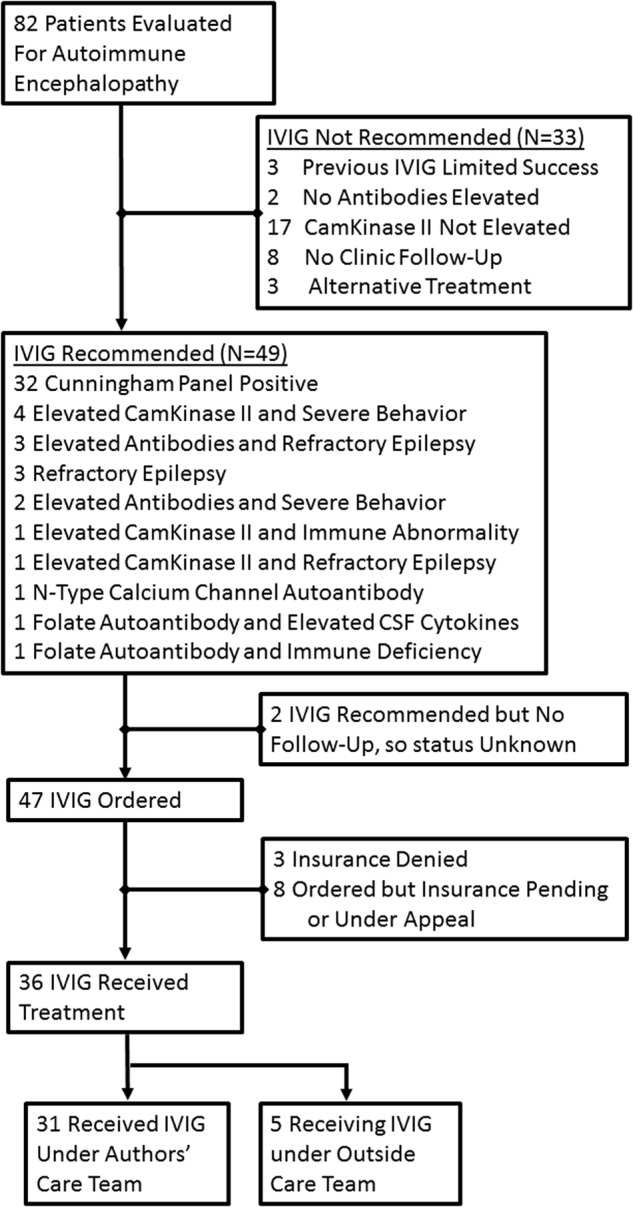
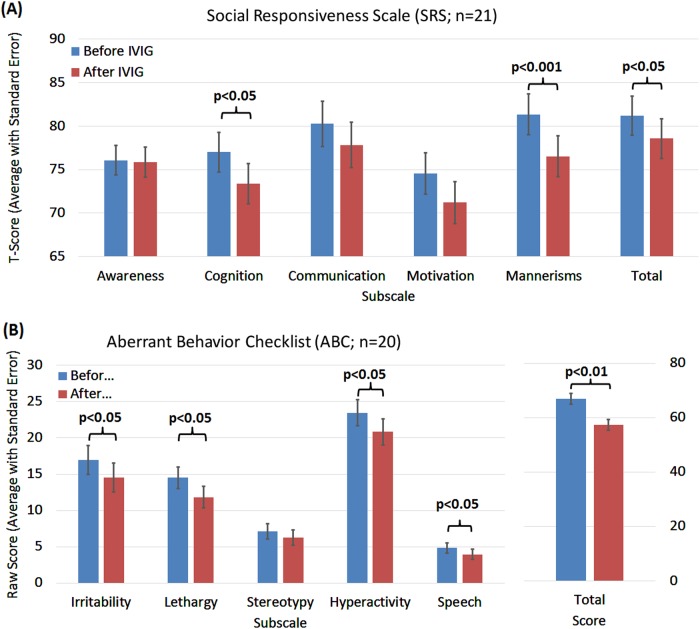
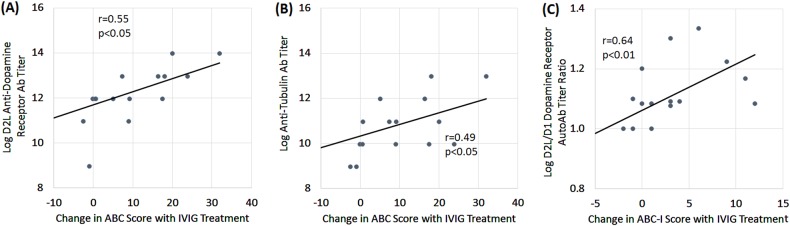
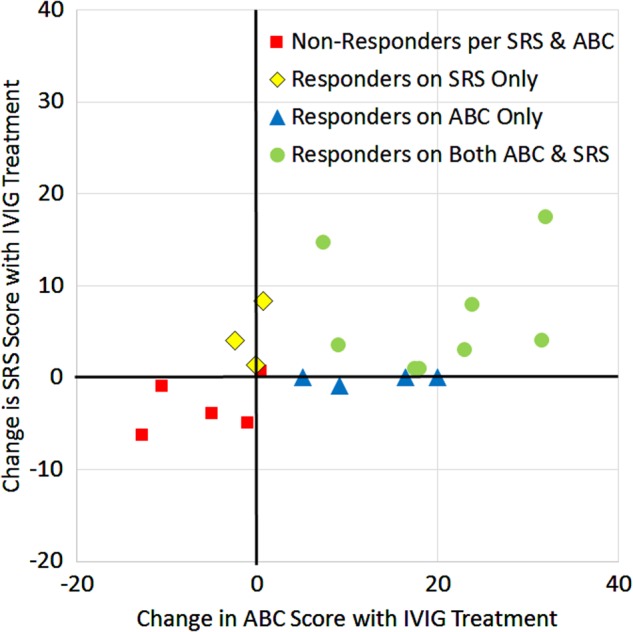
The identification of brain-targeted autoantibodies in children with autism spectrum disorder (ASD) raises the possibility of autoimmune encephalopathy (AIE). Intravenous immunoglobulin (IVIG) is effective for AIE and for some children with ASD. Here, we present the largest case series of children with ASD treated with IVIG. Through an ASD clinic, we screened 82 children for AIE, 80 of them with ASD. IVIG was recommended for 49 (60%) with 31 (38%) receiving the treatment under our care team. The majority of parents (90%) reported some improvement with 71% reporting improvements in two or more symptoms. In a subset of patients, Aberrant Behavior Checklist (ABC) and/or Social Responsiveness Scale (SRS) were completed before and during IVIG treatment. Statistically significant improvement occurred in the SRS and ABC. The antidopamine D2L receptor antibody, the anti-tubulin antibody and the ratio of the antidopamine D2L to D1 receptor antibodies were related to changes in the ABC. The Cunningham Panel predicted SRS, ABC, parent-based treatment responses with good accuracy. Adverse effects were common (62%) but mostly limited to the infusion period. Only two (6%) patients discontinued IVIG because of adverse effects. Overall, our open-label case series provides support for the possibility that some children with ASD may benefit from IVIG. Given that adverse effects are not uncommon, IVIG treatment needs to be considered cautiously. We identified immune biomarkers in select IVIG responders but larger cohorts are needed to study immune biomarkers in more detail. Our small open-label exploratory trial provides evidence supporting a neuroimmune subgroup in patients with ASD.
Overview
The claims and statistics of this paper haven’t been checked yet.
Free: it reads the open-access text and checks the first 5 claims that cite a source we can check. Create a free account to check every claim.
Integrity signals
Registry
Cites
Statistics
Figures
Verification
Claims the paper makes
The claims and statistics of this paper haven’t been checked yet.
Free: it reads the open-access text and checks the first 5 claims that cite a source we can check. Create a free account to check every claim.
Claims other papers make about this one
Each is checked against this paper’s own text: does it say what the citing paper says it does?
The source backs part of the claim, not all of it — or backs it for a different population, condition or comparison.
In the citing paper
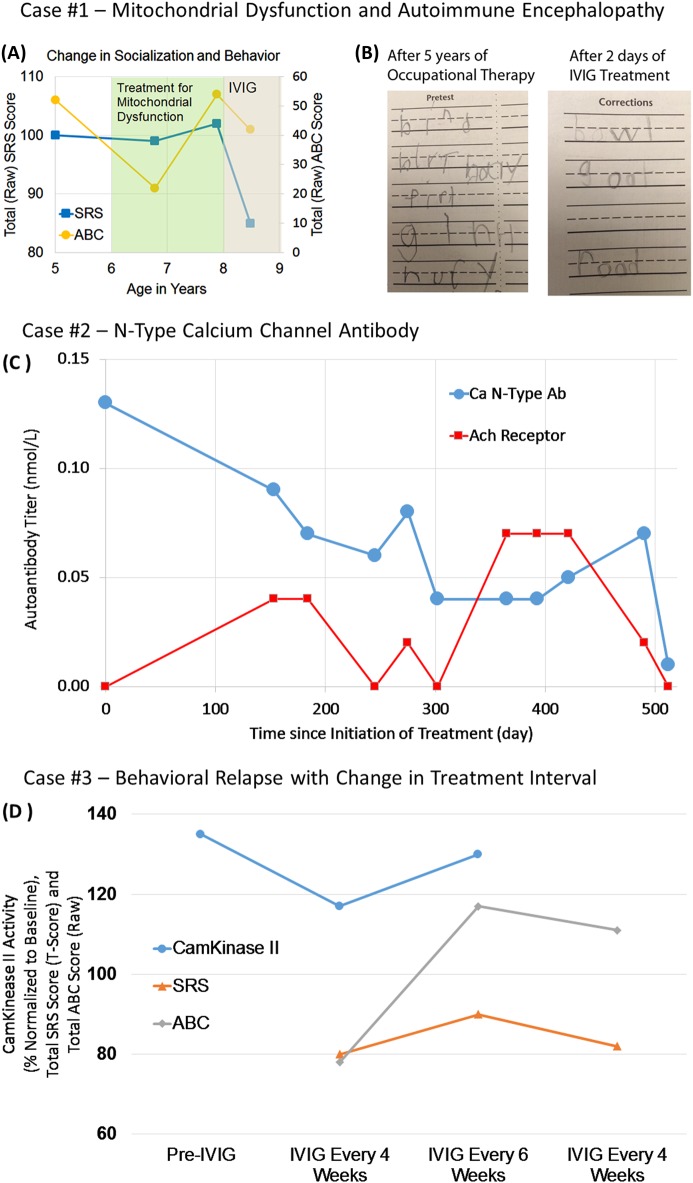
“Furthermore, these authors found a correlation between CaMKII reduction and clinical improvement with IVIG treatment administered every 4 weeks.”
From An updated review of pediatric autoimmune neuropsychiatric disorders associated with Streptococcus/pediatric acute-onset neuropsychiatric syndrome, also known as idiopathic autoimmune encephalitis: What the allergist should know (2023) · cites this paper as [31]
Experimental — accuracy not yet measuredThe cited source says what the claim attributes to it.
In the citing paper
“A subsequent study by Connery et al 31 reported a positive predictive response to IVIG treatment in patients with IAE, with overall accuracy between 81% and 88% and a sensitivity ranging between 90% and 100% and specificity between 67% and 75%.”
The cited source says what the claim attributes to it.
In the citing paper
“The CaMKII biomarker subsequently increased, which was associated with clinical deterioration of the patient's condition when IVIG was adjusted to every 6 weeks, suggesting this biomarker may be useful for monitoring dose adjustments for patients treated with IVIG.31”
Self-check
Percentages, sums and reported differences re-computed from the paper’s own numbers.
The self-check needs the paper’s full text.
Citations
Cites
Titulaer, M. J., McCracken, L., Gabilondo, I., Armangué, T., Glaser, C., Iizuka, T., Honig, L. S., Benseler, S. M., Kawachi, I., Martinez-Hernandez, E., et al. (2013) · The Lancet Neurology · doi:10.1016/s1474-4422(12)70310-1 · Cited by 3,165
Synaptic Vesicle Phosphoproteins and Regulation of Synaptic Function
Greengard, P., Valtorta, F., Czernik, A. J., & Benfenati, F. (1993) · Science · doi:10.1126/science.8430330 · Cited by 1,312
Constantino, J. N. (2013) · Encyclopedia of Autism Spectrum Disorders · doi:10.1007/978-1-4419-1698-3_296 · Cited by 908
Zablotsky, B., Black, L. I., Maenner, M. J., Schieve, L. A., & Blumberg, S. J. (2015) · PubMed · Cited by 696
Wild-type microglia arrest pathology in a mouse model of Rett syndrome
Derecki, N. C., Cronk, J. C., Lu, Z., Xu, E., Abbott, S. B. G., Guyenet, P. G., & Kipnis, J. (2012) · Nature · doi:10.1038/nature10907 · Cited by 607
Perlmutter, S. J., Leitman, S. F., Garvey, M. A., Hamburger, S., Feldman, E., Leonard, H. L., & Swedo, S. E. (1999) · The Lancet · doi:10.1016/s0140-6736(98)12297-3 · Cited by 556
Reichow, B., Barton, E. E., Boyd, B. A., & Hume, K. (2012) · Cochrane Database of Systematic Reviews · doi:10.1002/14651858.cd009260.pub2 · Cited by 543
Rossignol, D. A., & Frye, R. E. (2012) · Molecular Psychiatry · doi:10.1038/mp.2011.165 · Cited by 543
Self-citationCytokine aberrations in autism spectrum disorder: a systematic review and meta-analysis
Masi, A., Quintana, D. S., Glozier, N., Lloyd, A. R., Hickie, I. B., & Guastella, A. J. (2015) · Molecular Psychiatry · doi:10.1038/mp.2014.59 · Cited by 466
Mimicry and autoantibody-mediated neuronal cell signaling in Sydenham chorea
Kirvan, C. A., Swedo, S. E., Heuser, J. S., & Cunningham, M. W. (2003) · Nature Medicine · doi:10.1038/nm892 · Cited by 463
Self-citation
Cited by
Immunoneuropsychiatry — novel perspectives on brain disorders
Pape, K., Tamouza, R., Leboyer, M., & Zipp, F. (2019) · Nature Reviews Neurology · doi:10.1038/s41582-019-0174-4 · Cited by 458
Al-Beltagi, M. (2021) · World Journal of Clinical Pediatrics · doi:10.5409/wjcp.v10.i3.15 · Cited by 273
Emerging biomarkers in autism spectrum disorder: a systematic review
Frye, R. E., Vassall, S., Kaur, G., Lewis, C., Karim, M., & Rossignol, D. (2019) · Annals of Translational Medicine · doi:10.21037/atm.2019.11.53 · Cited by 206
“For patients with ASD and autoimmune encephalopathy, specific brain autoantibodies, particularly those to the D2L receptor and tubulin, predicted response to treatment with intravenous immunoglobulin in an open-label study (LOE 4) (163).”
BackgroundSelf-citationEndres, D., Pollak, T. A., Bechter, K., Denzel, D., Pitsch, K., Nickel, K., Runge, K., Pankratz, B., Klatzmann, D., Tamouza, R., et al. (2022) · Translational Psychiatry · doi:10.1038/s41398-021-01700-4 · Cited by 155
Modern Biomarkers for Autism Spectrum Disorder: Future Directions
Jensen, A., Lane, A. L., Werner, B. A., McLees, S. E., Fletcher, T. S., & Frye, R. E. (2022) · Molecular Diagnosis & Therapy · doi:10.1007/s40291-022-00600-7 · Cited by 130
“A medium-sized open-label, prospective, baseline-controlled cohort study found that the anti-dopamine D2L receptor and anti-tubulin autoantibodies predicted treatment response to intravenous immunoglobulin [110].”
BackgroundSelf-citationThe Dopamine Hypothesis of Autism Spectrum Disorder Revisited: Current Status and Future Prospects
Pavăl, D., & Micluția, I. (2021) · Developmental Neuroscience · doi:10.1159/000515751 · Cited by 84
A Personalized Multidisciplinary Approach to Evaluating and Treating Autism Spectrum Disorder
Frye, R. E. (2022) · Journal of Personalized Medicine · doi:10.3390/jpm12030464 · Cited by 83
Self-citationShimasaki, C., Frye, R. E., Trifiletti, R., Cooperstock, M., Kaplan, G., Melamed, I., Greenberg, R., Katz, A., Fier, E., Kem, D., et al. (2020) · Journal of Neuroimmunology · doi:10.1016/j.jneuroim.2019.577138 · Cited by 61
Self-citationNovel treatments for autism spectrum disorder based on genomics and systems biology
Baribeau, D. A., & Anagnostou, E. A. (2021) · Pharmacology & Therapeutics · doi:10.1016/j.pharmthera.2021.107939 · Cited by 56
Review of Clinical Studies Targeting Inflammatory Pathways for Individuals With Autism
Hafizi, S., Tabatabaei, D., & Lai, M. (2019) · Frontiers in Psychiatry · doi:10.3389/fpsyt.2019.00849 · Cited by 49
Pediatric Acute-Onset Neuropsychiatric Syndrome: Current Perspectives
Gagliano, A., Carta, A., Tanca, M. G., & Sotgiu, S. (2023) · Neuropsychiatric Disease and Treatment · doi:10.2147/ndt.s362202 · Cited by 49
“The “Cunningham panel”, was believed to measure the typical autoimmune profile in PANS/PANDAS patients(68,78,79) or to predict response to IVIG treatment in children with autism.(80) Under a pathogenic view, CaMKII activation may alter dopamine release, while anti-D1/D2R antibodies can internalize dopamine receptors.”
BackgroundIs Autism Inborn And Lifelong For Everyone?
Whiteley, P., Carr, K., & Shattock, P. (2019) · Neuropsychiatric Disease and Treatment · doi:10.2147/ndt.s221901 · Cited by 46
Leonardi, L., Perna, C., Bernabei, I., Fiore, M., Ma, M., Frankovich, J., Tarani, L., & Spalice, A. (2024) · Children · doi:10.3390/children11091043 · Cited by 47
“These studies further suggest that neuropsychiatric disorders manifesting with OCD may have overlapping immune mechanisms [98].”
BackgroundRossignol, D. A., & Frye, R. E. (2021) · Journal of Personalized Medicine · doi:10.3390/jpm11060488 · Cited by 42
“Connery et al. (2018) reported AEs, mostly during the infusion, with headaches in 39%, vomiting in 29%, worsening behaviors in 16%, anxiety in 13%, fever in 13%, nausea in 10%, fatigue in 10%, and rash in 5%; two (6”
BackgroundSelf-citationViruses and autism: A Bi-mutual cause and effect
Al‐Beltagi, M., Saeed, N. K., Elbeltagi, R. M., Bediwy, A. S., Aftab, S. A. S., & Alhawamdeh, R. (2023) · World Journal of Virology · doi:10.5501/wjv.v12.i3.172 · Cited by 36
Advances in the Treatment of Autism Spectrum Disorder: Current and Promising Strategies
Yenkoyan, K. B., Ounanian, Z., Mirumyan, M., Hayrapetyan, L., Zakaryan, N., Sahakyan, R., & Bjørklund, G. (2023) · Current Medicinal Chemistry · doi:10.2174/0109298673252910230920151332 · Cited by 33
Vreeland, A., Calaprice, D., Or‐Geva, N., Frye, R. E., Agalliu, D., Lachman, H. M., Pittenger, C., Pallanti, S., Williams, K., Ma, M., et al. (2023) · Developmental Neuroscience · doi:10.1159/000534261 · Cited by 32
“Like children with PANS/ PANDAS, children with ASD exhibit elevated CaMKII stimulatory activity [66], and titers of anti-D2R and anti-tubulin autoantibodies predict treatment response to intravenous immunoglobulin [66].”
BackgroundSelf-citationCerebrospinal Fluid Findings of 36 Adult Patients with Autism Spectrum Disorder
Runge, K., van Elst, L. T., Maier, S. J., Nickel, K., Denzel, D., Matysik, M., Kuzior, H., Robinson, T., Blank, T., Dersch, R. S., et al. (2020) · Brain Sciences · doi:10.3390/brainsci10060355 · Cited by 28
“Nevertheless, it has been reported at least in one patient with ASD with clinically relevant high anti‐ GAD65 antibodies and comorbid type I diabetes, that there was a relevant benefit from therapy with IVIGs [64].”
BackgroundInfluentialKarczewski, J., Zielińska, A., Staszewski, R., Eder, P., Dobrowolska, A., & Souto, E. B. (2022) · International Journal of Molecular Sciences · doi:10.3390/ijms23116145 · Cited by 26
Jiang, M., Kimber, J., Gupta, A. K., Kovoor, J. G., Stretton, B., Ravindran, J., Hissaria, P., Smith, W., & Bacchi, S. (2023) · International Archives of Allergy and Immunology · doi:10.1159/000529110 · Cited by 28
Sherman, H. T., Liu, K., Kwong, K. K., Chan, S., Li, A., & Kong, X. (2022) · BMC Psychiatry · doi:10.1186/s12888-022-04151-3 · Cited by 25
“From the previous Cunningham panel related studies indicated that D2L and tubulin correlated to ASD severity [5].”
BackgroundResultJyonouchi, H. (2024) · Frontiers in Psychiatry · doi:10.3389/fpsyt.2024.1333717 · Cited by 22
Inheritance of HLA-Cw7 Associated With Autism Spectrum Disorder (ASD)
Harville, T., Rhodes-Clark, B. S., Bennuri, S. C., Delhey, L. M., Slattery, J. M., Tippett, M., Wynne, R. A., Rose, S., Kahler, S. G., & Frye, R. E. (2019) · Frontiers in Psychiatry · doi:10.3389/fpsyt.2019.00612 · Cited by 21
“Other studies have demonstrated a reduction in immunoglobulin production (14) and a positive therapeutic response to intravenous immunoglobulin treatment (15).”
BackgroundSelf-citationTargeted Biomedical Treatment for Autism Spectrum Disorders
Pacheva, I. H., & Ivanov, I. S. (2019) · Current Pharmaceutical Design · doi:10.2174/1381612825666191205091312 · Cited by 18
“Antibody of Unknown Significance” (AUS): The Issue of Interpreting Antibody Test Results
Balint, B., Bhatia, K. P., & Dalmau, J. O. (2021) · Movement Disorders · doi:10.1002/mds.28597 · Cited by 17
“Similarly, laboratories may offer tests for dopamine 2 receptor–like antibodies or “basal ganglia antibodies” that are not useful in the diagnosis of autoimmune movement disorders.(24,25) Laboratories may also offer testing for IgM or IgA antibodies,(10) but existing evidence would caution against ascribing them a dia…”
BackgroundFrye, R. E., McCarty, P. J., Werner, B. A., Scheck, A. C., Collins, H., Adelman, S. J., Rossignol, D. A., & Quadros, E. V. (2024) · Journal of Personalized Medicine · doi:10.3390/jpm14010062 · Cited by 18
“Previous controlled studies have demonstrated that leucovorin can improve verbal communication and behavior [25,34] as well as core ASD symptoms [31], and a recent meta-analysis of 21 studies using leucovorin alone or in combination with other treatments has confirmed these findings [20].”
MethodResultSelf-citationPre-autism: What a paediatrician should know about early diagnosis of autism
Al‐Beltagi, M. (2023) · World Journal of Clinical Pediatrics · doi:10.5409/wjcp.v12.i5.273 · Cited by 14
“These antibodies can serve as a marker to predict patients who may respond better to intravenous immunoglobulin therapy[147].”
Frye, R. E., Lane, A. L., Worner, A., Werner, B. A., McCarty, P. J., Scheck, A. C., Collins, H. L., Adelman, S. J., Quadros, E. V., & Rossignol, D. A. (2022) · Journal of Personalized Medicine · doi:10.3390/jpm12122033 · Cited by 13
Self-citationExcessive Gadget Exposure and Children Speech Delay: The Case of Autism Spectrum Risk Factor
Putra, R. A., Ashadi, A., & Aziz, M. F. (2022) · Script Journal Journal of Linguistic and English Teaching · doi:10.24903/sj.v7i01.1077 · Cited by 17
“Ashwood & Van de Water (2004) emphasize that abnormalities in immunity can lead to an autism spectrum because there is evidence that autoantibodies tend to attack the nervous system of children with autism syndrome (Connery et al., 2018; Singh et al., 1997).”
BackgroundThe Cunningham Panel is an unreliable biological measure
Bejerot, S., & Hesselmark, E. (2019) · Translational Psychiatry · doi:10.1038/s41398-019-0413-x · Cited by 12
Endres, D., Rauer, S., Pschibul, A., Süß, P., Venhoff, N., Runge, K., Feige, B., Denzel, D., Nickel, K., Schweizer, T., et al. (2020) · Frontiers in Psychiatry · doi:10.3389/fpsyt.2020.00627 · Cited by 12
“Initial studies in children even showed that a small subgroup of children with autism displayed evidence of autoimmune encephalitis (23).”
BackgroundHardin, H., Shao, W., & Bernstein, J. A. (2023) · Annals of Allergy, Asthma & Immunology · doi:10.1016/j.anai.2023.08.022 · Cited by 10
Shi, A., Liu, D., Wu, H., Zhu, R., Deng, Y., Yao, L., Xiao, Y., Lorimer, G. H., Ghiladi, R. A., Xu, X., et al. (2024) · Biomedicine & Pharmacotherapy · doi:10.1016/j.biopha.2024.116191 · Cited by 10
Can Maternal Autoantibodies Play an Etiological Role in ASD Development?
Dudová, I., Horáčková, K., Hrdlička, M., & Balaštík, M. (2020) · Neuropsychiatric Disease and Treatment · doi:10.2147/ndt.s239504 · Cited by 10
Reliability of the Cunningham Panel
Frye, R. E., & Shimasaki, C. D. (2019) · Translational Psychiatry · doi:10.1038/s41398-019-0462-1 · Cited by 8
Self-citationCombination of Steroid and Flavonoid for the Treatment of Regressive Autism
Ekici, B. (2020) · Journal of Neurosciences in Rural Practice · doi:10.1055/s-0040-1701367 · Cited by 7
Accurate assessment of low-function autistic children based on EEG feature fusion
Kang, J., Jin, Y., Liang, G., & Li, X. (2021) · Journal of Clinical Neuroscience · doi:10.1016/j.jocn.2021.06.022 · Cited by 10
The Cunningham Panel: concerns remain
Bejerot, S., Klang, A., & Hesselmark, E. (2019) · Translational Psychiatry · doi:10.1038/s41398-019-0562-y · Cited by 7
Parkhouse, R. M. E., Sciutto, E., Hernández, M., Cortéz, M. M., Carpio, A., & Fleury, A. (2020) · Journal of Neuroimmunology · doi:10.1016/j.jneuroim.2020.577389 · Cited by 5
Emekli, A. S., Dörtkol, Ş. O., Savaş, M., Öz, F., İşçen, P., Topaloğlu, P., Tarhan, G., Soylu, S., Yılmaz, V., Küçükali, C. İ., et al. (2024) · Epilepsy & Behavior · doi:10.1016/j.yebeh.2024.110225 · Cited by 5
Chen, H., Li, M., Yao, P., Nie, Z., Xu, L., Zhang, Y., Xu, X., Shen, C., Huang, J., Liu, Y., et al. (2025) · BMC Psychiatry · doi:10.1186/s12888-025-07389-9 · Cited by 5
“Observed trends (e.g., Treg increase with ATEC reduction) are descriptive and require validation in larger trials. therapies such as intravenous immunoglobulin therapy [22] and stem cell therapy [23], none have shown substantial efficacy in alleviating core ASD symptoms.”
Aslan, C., Konuşkan, B., Şener, B., & Ünal, F. (2021) · The Turkish Journal of Pediatrics · doi:10.24953/turkjped.2021.05.006 · Cited by 4
“7 median 12 36 U=67** (min-max) (9-48) (12-70) Sentences <30 months 12 50 2 7.”
Dong, B., Chang, M., Liu, J., Li, K., Xiao, H., Wu, S., Feng, D., & Guo, B. (2025) · Molecular Psychiatry · doi:10.1038/s41380-025-03349-7 · Cited by 3
“For instance, children with ASD presenting features of autoimmune encephalopathy who were subjected to standard-dose IVIG (1-2 g kg ⁻ ¹) exhibited behavioral improvements in a subset of cases [14].”
Analytical Validation of an ELISA Assay for Maternal Autoantibody-Related Autism
McInerney, M., HURLEY, B. L., Barkow, J. C., Menning, K., Nicolace, J., Schauer, J. D., de Water, J. V., & Wassman, E. R. (2026) · Diagnostics · doi:10.3390/diagnostics16111665 · Cited by 3
Мальцев, Д. В. (2022) · INTERNATIONAL NEUROLOGICAL JOURNAL · doi:10.22141/2224-0713.17.8.2021.250818 · Cited by 3
Neurobiology of Autism Spectrum Disorder
Casanova, M. F., Constantino, J. N., Ecker, C., Frye, R. E., Martínez‐Cerdeño, V., Rossignol, D. A., & Scherer, S. W. (2024) · Springer eBooks · doi:10.1007/978-3-030-51366-5_32 · Cited by 4
Self-citationCiolino, A. E., Ferreira, M. L., & Loyacono, N. (2024) · Journal of Personalized Medicine · doi:10.3390/jpm14101031 · Cited by 3
“In particular, Dr. Frye et al. have published about CMPD from ASD [15–18], identifying them as such Those works related to Pediatric Autoimmune Neuropsychiatric Disorders Associated with Streptococcal infections (PANDAS) [19], Pediatric Infection-triggered Neuropsychiatric Disorder (PITAND) [20],…”
BackgroundPilli, D., Zou, A., Dawes, R., Lopez, J. A., Tea, F., Liyanage, G., Lee, F. X. Z., Merheb, V., Houston, S. D., Pillay, A., et al. (2020) · Clinical & Translational Immunology · doi:10.1002/cti2.1229 · Cited by 3
Panzer, K. V., Harmon, A. G., Lerebours, R. C., Sikich, L., Pullen, S. J., & Mater, H. V. (2023) · Journal of Autism and Developmental Disorders · doi:10.1007/s10803-023-06065-9 · Cited by 2
“This suggests that patients with NDD may have comparable responses to immunotherapy relative to their TD peers and would benefit from immunotherapy when AE is suspected (Connery et al., 2018).”
Zhao, Y., Yuan, B., Ma, W., Peng, B., Zhang, Y., & Yi, W. (2026) · Med · doi:10.1016/j.medj.2026.101034 · Cited by 2
Maternal autoantibodies and fetal neurodevelopment
de Water, J. V., & Wassman, E. R. (2026) · Elsevier eBooks · doi:10.1016/b978-0-443-21987-0.00005-5 · Cited by 2
The Utility of Biomarkers for Assessment and Intervention in Neurodevelopmental Disorders
Guldner, S., Ernst, J., Nees, F., & Holz, N. E. (2024) · Integrated science · doi:10.1007/978-3-031-76414-1_3 · Cited by 3
Frye, R. E. (2019) · Annals of Translational Medicine · doi:10.21037/atm.2019.05.55 · Cited by 2
Self-citationComparison of B Cell Variable Region Gene Segment Characteristics in Neuro-autoantibodies
Baky, H. A. E., Weinstock, N. I., Sial, G. Z. K., & Hicar, M. D. (2024) · ImmunoHorizons · doi:10.4049/immunohorizons.2400037 · Cited by 1
“Global targeting of VGCCs, also found in autism spectrum disorder (29), may be a nonspecific marker of brain inflammation as they are seen in a broad range of conditions (30).”
BackgroundElbeltagi, Y. M., Rasool, A. O. A. R. E., Elkashlan, A. M., & Al‐Beltagi, M. (2026) · World Journal of Clinical Pediatrics · doi:10.5409/wjcp.v15.i2.117274 · Cited by 1
Мальцев, Д. В. (2021) · INTERNATIONAL NEUROLOGICAL JOURNAL · doi:10.22141/2224-0713.17.5.2021.238518 · Cited by 3
Dichter, G. S., Grosser, K. F., Cummings, K. K., Bradley, C., Garcia, T. P., Tapia, A. L., Pretzel, R. E., Nadler, C. B., Moody, E. J., Barger, B. D., et al. (2025) · Journal of Autism and Developmental Disorders · doi:10.1007/s10803-025-07107-0 · Cited by 1
“…et al., 2015; Yang et al., 2018), gastrointestinal disorders (Bresnahan et al., 2015; Fulceri et al., 2016; Prosperi et al., 2019; Wasilewska & Klukowski, 2015), and immune disorders, including autoimmune disorders and allergies (Connery et al., 2018; Jyonouchi, 2010; Zimmerman et al., 2007).”
Wassman, E. R., Martin, M. M., Schauer, J. D., de Water, J. V., & Paul, M. S. (2026) · medRxiv · doi:10.64898/2026.10.23.26366366 · Cited by 1
Wassman, E. R., Martin, M. M., Schauer, J. D., de Water, J. V., & Paul, M. S. (2026) · medRxiv · doi:10.64898/2026.10.23.26366364 · Cited by 1
Can Immunotherapy Treat Autism
Geller, B. (2018) · Journal watch · doi:10.1056/nejm-jw.na47358
Autism Spectrum Disorder and Co-morbidities: A Closer Look at Pathogenesis and Clinical Implications
Kong, X. (2020) · American Journal of Biomedical Science & Research · doi:10.34297/ajbsr.2020.07.001168
“American Journal of Biomedical Science & Research 330 ASD [38,39] demonstrated intravenous immunoglobulin (IVIG) treatment has significant efficacy in ASD individuals [40] reported symptom improvement with Rituximab for pediatric autoimmune and inflammatory CNS disease.”
BackgroundNeurobiology of Autism Spectrum Disorder
Casanova, M. F., Constantino, J. N., Ecker, C., Frye, R. E., Martínez‐Cerdeño, V., Rossignol, D. A., & Scherer, S. W. (2023) · Springer eBooks · doi:10.1007/978-3-030-42825-9_32-1
Self-citationPhysical and Medical Conditions Associated with Autism
(2024) · Frontiers research topics · doi:10.3389/978-2-8325-5106-6
Fourie, P. R., & Armstrong, J. C. (2024) · Medical Research Archives · doi:10.18103/mra.v12i10.5984
Sherman, H. T., Liu, K., Kwong, K. K., Chan, S., Li, A. C., & Kong, X. (2022) · Figshare · doi:10.6084/m9.figshare.20452901
Zhang, Z. Y., Zhang, L., Zhu, G., Liang, Y., Pang, P., Yan, H., Cao, X., Wang, J., Shi, X., Hu, L., et al. (2026) · Neurology and Therapy · doi:10.1007/s40120-026-00914-2
“Previous studies have shown that when IVIG is used to treat ASD, the overall incidence of AEs is low, and most AEs are mild to moderate [18–20].”
Eremija, J., Daines, M., Rice, S. A., Madan, J. C., Swedo, S. E., Ghishan, F. K., & Kiela, P. R. (2026) · Frontiers in Behavioral Neuroscience · doi:10.3389/fnbeh.2026.1774848
Metadata
- Authors
- Connery, K., Tippett, M., Delhey, L. M., Rose, S., Slattery, J. C., Kahler, S. G., Hahn, J., Kruger, U., Cunningham, M. W., Shimasaki, C., & Frye, R. E.
- Affiliations
- University of Arkansas for Medical Sciences (US)
- Rensselaer Polytechnic Institute (US)
- University of Oklahoma Health Sciences Center (US)
- Oklahoma Department of Transportation (US)
- Barrow Neurological Institute (US)
- Corresponding author
- Frye, Richard E.
- Venue
- Translational Psychiatry
- Published
- 2018-08-10
- Volume
- 8
- Issue
- 1
- Pages
- 148-148
- ISSN
- 2158-3188 (ISSN-L)
- PMC
- PMC6086890
- OpenAlex
- W2885292966
- Cited by
- 64
- References
- 70
- Citations by year
- 2026: 6 · 2025: 3 · 2024: 9 · 2023: 9 · 2022: 10 · 2021: 8 · 2020: 7 · 2019: 11 · 2018: 1
- FWCI
- 4.58
- Type
- journal article
- Language
- en
- Open access
- gold
- doi.org
- Licence
- cc-by
- creativecommons.org/licenses/by/4.0 (tdm)
- creativecommons.org/licenses/by/4.0 (vor)
- Locations
- Translational Psychiatry (publishedVersion, cc-by)
- Europe PMC (PubMed Central) (publishedVersion, cc-by)
- PubMed Central (publishedVersion, cc-by)
- PubMed (publishedVersion)
- DOAJ (DOAJ: Directory of Open Access Journals) (submittedVersion)
- Funders
- Autism Research Institute
- Arkansas Biosciences Institute
- Children’s Hospital of Wisconsin Research Institute
- Topics
- Health Sciences › Medicine › Clinical Neurology › Autoimmune Neurological Disorders and Treatments
- Life Sciences › Neuroscience › Cognitive Neuroscience › Autism Spectrum Disorder Research
- Health Sciences › Medicine › Rheumatology › Systemic Lupus Erythematosus Research
- Keywords
- intravenous immunoglobulin, autoimmune encephalopathy, autism spectrum disorder, anti-tubulin antibodies, Aberrant Behavior Checklist, Social Responsiveness Scale, treatment response, immunological markers, adverse effects
- MeSH terms
- Autism Spectrum Disorder, Adolescent, Ambulatory Care Facilities, Arkansas, Child, Child, Preschool, Encephalitis, Female, Humans, Male, Case-Control Studies, Immunoglobulins, Intravenous, Receptors, Dopamine D1, Hashimoto Disease, Administration, Intravenous
About these checks
Registry, retraction, Cites and statistics results are computed, not judged, with one exception: a printed reference that no index lists is read once by a model before it counts as a citation error. Claims are extracted by a model and kept only when their quote appears verbatim in the text; each cited source is then checked, with a model’s help, for whether it says what the claim relies on. Those verdicts can be wrong — read the claim’s quote and the cited source before relying on one.
Statistics and arithmetic are recomputed, not judged.
Confidence bands are shown only for fields calibrated on our annotated test set. None is calibrated yet, so no band is shown.
What counts as a claim ›How we measure confidence ›How we check this ›
Are you an author, or do you see a problem with this page? Request a review
Data sources
Bibliographic data: Semantic Scholar, OpenAlex, Crossref.
Contains information from the Semantic Scholar Academic Graph Datasets, made available under the ODC Attribution License (ODC-BY 1.0).
Semantic Scholar’s data is described in: Kinney, R., et al. (2023). The Semantic Scholar Open Data Platform. arXiv:2301.10140.
