

Intravenous immunoglobulin for the treatment of autoimmune encephalopathy in children with autism
Open accessThe DOI matches its Crossref record; 70 of the 70 references it cites were found in a registry or an index.
Abstract
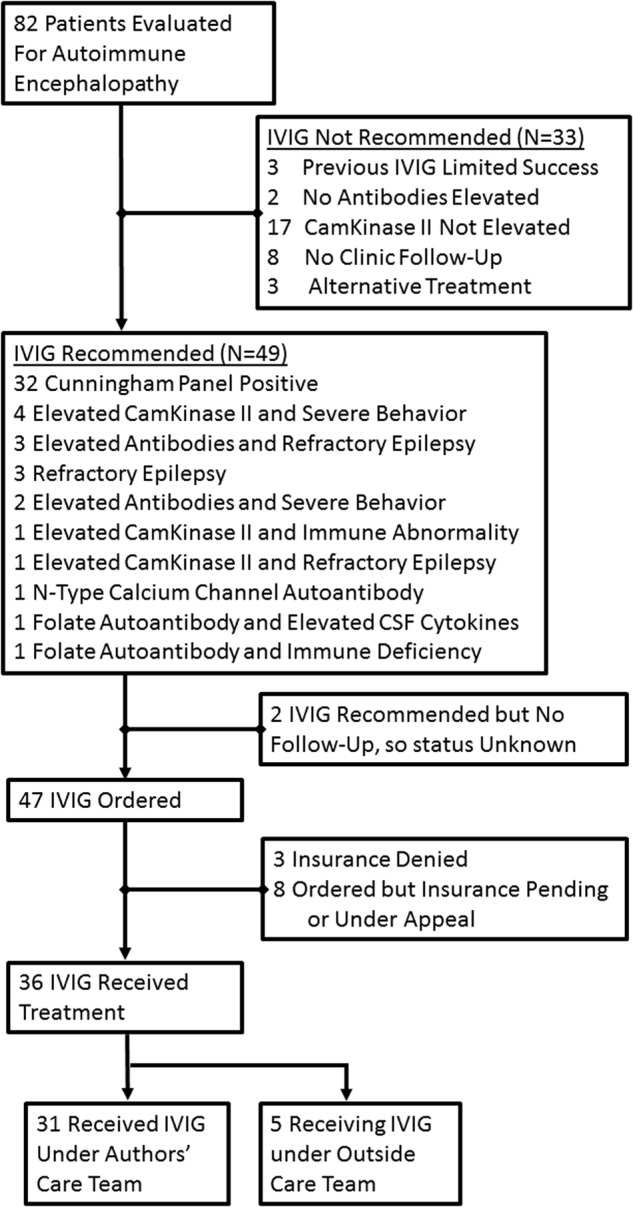
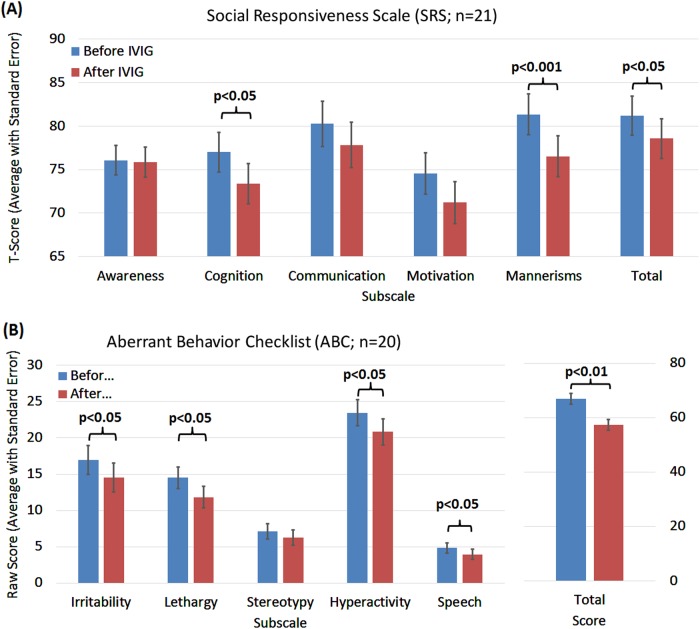
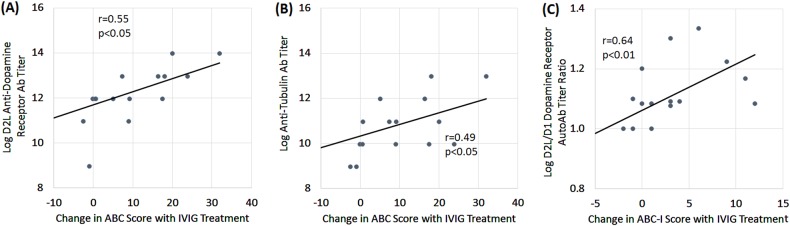
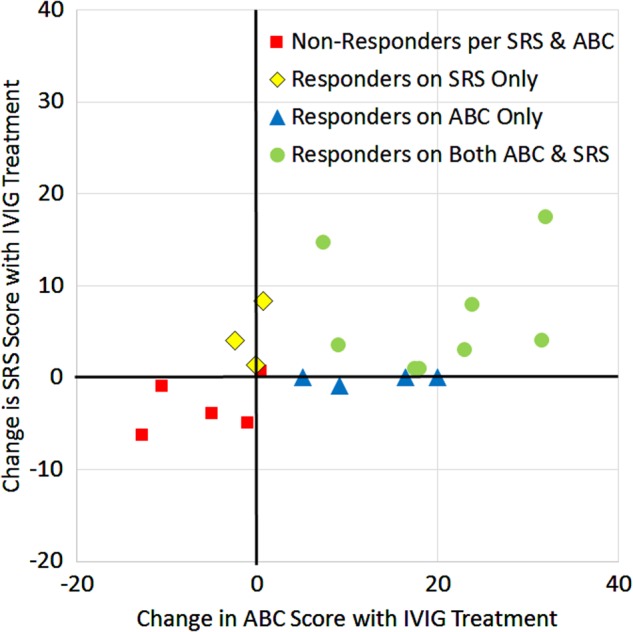
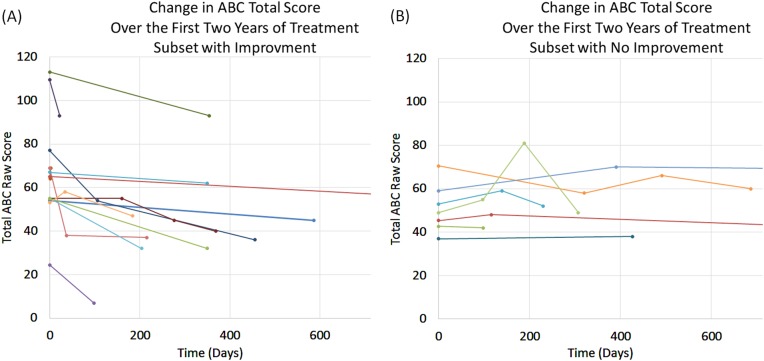
The identification of brain-targeted autoantibodies in children with autism spectrum disorder (ASD) raises the possibility of autoimmune encephalopathy (AIE). Intravenous immunoglobulin (IVIG) is effective for AIE and for some children with ASD. Here, we present the largest case series of children with ASD treated with IVIG. Through an ASD clinic, we screened 82 children for AIE, 80 of them with ASD. IVIG was recommended for 49 (60%) with 31 (38%) receiving the treatment under our care team. The majority of parents (90%) reported some improvement with 71% reporting improvements in two or more symptoms. In a subset of patients, Aberrant Behavior Checklist (ABC) and/or Social Responsiveness Scale (SRS) were completed before and during IVIG treatment. Statistically significant improvement occurred in the SRS and ABC. The antidopamine D2L receptor antibody, the anti-tubulin antibody and the ratio of the antidopamine D2L to D1 receptor antibodies were related to changes in the ABC. The Cunningham Panel predicted SRS, ABC, parent-based treatment responses with good accuracy. Adverse effects were common (62%) but mostly limited to the infusion period. Only two (6%) patients discontinued IVIG because of adverse effects. Overall, our open-label case series provides support for the possibility that some children with ASD may benefit from IVIG. Given that adverse effects are not uncommon, IVIG treatment needs to be considered cautiously. We identified immune biomarkers in select IVIG responders but larger cohorts are needed to study immune biomarkers in more detail. Our small open-label exploratory trial provides evidence supporting a neuroimmune subgroup in patients with ASD.
Overview
The claims and statistics of this paper haven’t been checked yet.
Free: it reads the open-access text and checks the first 5 claims that cite a source we can check. Create a free account to check every claim.
Integrity signals
Registry
Cites
Statistics
Figures
Verification
Claims the paper makes
The claims and statistics of this paper haven’t been checked yet.
Free: it reads the open-access text and checks the first 5 claims that cite a source we can check. Create a free account to check every claim.
Claims other papers make about this one
Each is checked against this paper’s own text: does it say what the citing paper says it does?
The source backs part of the claim, not all of it — or backs it for a different population, condition or comparison.
In the citing paper
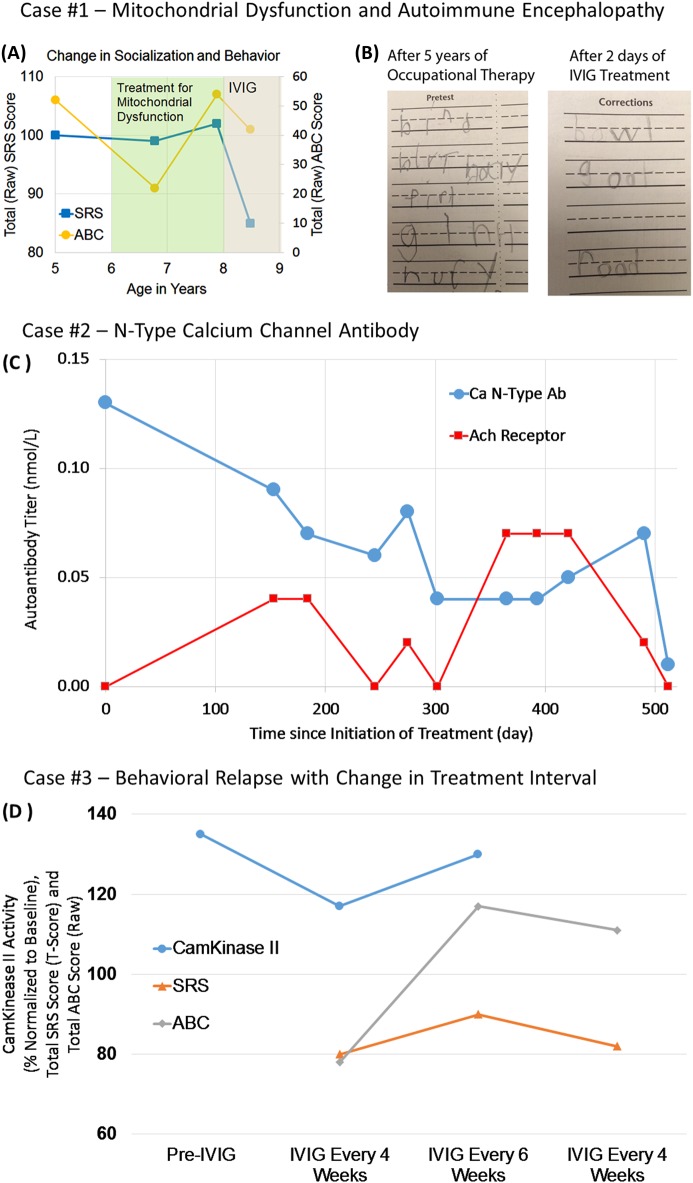
“Furthermore, these authors found a correlation between CaMKII reduction and clinical improvement with IVIG treatment administered every 4 weeks.”
From An updated review of pediatric autoimmune neuropsychiatric disorders associated with Streptococcus/pediatric acute-onset neuropsychiatric syndrome, also known as idiopathic autoimmune encephalitis: What the allergist should know (2023) · cites this paper as [31]
Experimental — accuracy not yet measuredThe cited source says what the claim attributes to it.
In the citing paper
“A subsequent study by Connery et al 31 reported a positive predictive response to IVIG treatment in patients with IAE, with overall accuracy between 81% and 88% and a sensitivity ranging between 90% and 100% and specificity between 67% and 75%.”
The cited source says what the claim attributes to it.
In the citing paper
“The CaMKII biomarker subsequently increased, which was associated with clinical deterioration of the patient's condition when IVIG was adjusted to every 6 weeks, suggesting this biomarker may be useful for monitoring dose adjustments for patients treated with IVIG.31”
Self-check
Percentages, sums and reported differences re-computed from the paper’s own numbers.
The self-check needs the paper’s full text.
Citations
Cites
Titulaer, M. J., McCracken, L., Gabilondo, I., Armangué, T., Glaser, C., Iizuka, T., Honig, L. S., Benseler, S. M., Kawachi, I., Martinez-Hernandez, E., et al. (2013) · The Lancet Neurology · doi:10.1016/s1474-4422(12)70310-1 · Cited by 3,165
Synaptic Vesicle Phosphoproteins and Regulation of Synaptic Function
Greengard, P., Valtorta, F., Czernik, A. J., & Benfenati, F. (1993) · Science · doi:10.1126/science.8430330 · Cited by 1,312
Constantino, J. N. (2013) · Encyclopedia of Autism Spectrum Disorders · doi:10.1007/978-1-4419-1698-3_296 · Cited by 908
Zablotsky, B., Black, L. I., Maenner, M. J., Schieve, L. A., & Blumberg, S. J. (2015) · PubMed · Cited by 696
Wild-type microglia arrest pathology in a mouse model of Rett syndrome
Derecki, N. C., Cronk, J. C., Lu, Z., Xu, E., Abbott, S. B. G., Guyenet, P. G., & Kipnis, J. (2012) · Nature · doi:10.1038/nature10907 · Cited by 607
Perlmutter, S. J., Leitman, S. F., Garvey, M. A., Hamburger, S., Feldman, E., Leonard, H. L., & Swedo, S. E. (1999) · The Lancet · doi:10.1016/s0140-6736(98)12297-3 · Cited by 556
Reichow, B., Barton, E. E., Boyd, B. A., & Hume, K. (2012) · Cochrane Database of Systematic Reviews · doi:10.1002/14651858.cd009260.pub2 · Cited by 543
Rossignol, D. A., & Frye, R. E. (2012) · Molecular Psychiatry · doi:10.1038/mp.2011.165 · Cited by 543
Self-citationCytokine aberrations in autism spectrum disorder: a systematic review and meta-analysis
Masi, A., Quintana, D. S., Glozier, N., Lloyd, A. R., Hickie, I. B., & Guastella, A. J. (2015) · Molecular Psychiatry · doi:10.1038/mp.2014.59 · Cited by 466
Mimicry and autoantibody-mediated neuronal cell signaling in Sydenham chorea
Kirvan, C. A., Swedo, S. E., Heuser, J. S., & Cunningham, M. W. (2003) · Nature Medicine · doi:10.1038/nm892 · Cited by 463
Self-citationRossignol, D. A., & Frye, R. E. (2014) · Frontiers in Physiology · doi:10.3389/fphys.2014.00150 · Cited by 369
Self-citationGlutamatergic Dysfunction in OCD
Chakrabarty, K., Bhattacharyya, S., Christopher, R., & Khanna, S. (2005) · Neuropsychopharmacology · doi:10.1038/sj.npp.1300733 · Cited by 344
Validity of the Aberrant Behavior Checklist in Children with Autism Spectrum Disorder
Kaat, A. J., Lecavalier, L., & Aman, M. G. (2014) · Journal of Autism and Developmental Disorders · doi:10.1007/s10803-013-1970-0 · Cited by 271
Hacohen, Y., Wright, S., Waters, P., Agrawal, S., Carr, L., Cross, H., De Sousa, C., DeVile, C., Fallon, P., Gupta, R., et al. (2013) · Journal of Neurology, Neurosurgery & Psychiatry · doi:10.1136/jnnp-2012-303807 · Cited by 269
Autism-specific maternal autoantibodies recognize critical proteins in developing brain
Braunschweig, D., Krakowiak, P., Duncanson, P., Boyce, R., Hansen, R. L., Ashwood, P., Hertz-Picciotto, I., Pessah, I. N., & Van de Water, J. (2013) · Translational Psychiatry · doi:10.1038/tp.2013.50 · Cited by 257
Cerebral folate receptor autoantibodies in autism spectrum disorder
Frye, R. E., Sequeira, J. M., Quadros, E. V., James, S. J., & Rossignol, D. A. (2013) · Molecular Psychiatry · doi:10.1038/mp.2011.175 · Cited by 255
Self-citationFrye, R. E., Slattery, J., Delhey, L., Furgerson, B., Strickland, T., Tippett, M., Sailey, A., Wynne, R., Rose, S., Melnyk, S., et al. (2018) · Molecular Psychiatry · doi:10.1038/mp.2016.168 · Cited by 217
Self-citationAntibody-mediated neuronal cell signaling in behavior and movement disorders
Kirvan, C. A., Swedo, S. E., Snider, L. A., & Cunningham, M. W. (2006) · Journal of Neuroimmunology · doi:10.1016/j.jneuroim.2006.06.017 · Cited by 201
Self-citationDe Novo Mutations in Protein Kinase Genes CAMK2A and CAMK2B Cause Intellectual Disability
Küry, S., van Woerden, G. M., Besnard, T., Proietti Onori, M., Latypova, X., Towne, M. C., Cho, M. T., Prescott, T. E., Ploeg, M. A., Sanders, S., et al. (2017) · The American Journal of Human Genetics · doi:10.1016/j.ajhg.2017.10.003 · Cited by 185
Alterations in GABAergic Biomarkers in the Autism Brain: Research Findings and Clinical Implications
Blatt, G. J., & Fatemi, S. H. (2011) · The Anatomical Record · doi:10.1002/ar.21252 · Cited by 180
Gupta, S., Aggarwal, S., & Heads, C. (1996) · Journal of Autism and Developmental Disorders · doi:10.1007/bf02172828 · Cited by 172
Limbic encephalitis in children and adolescents
Haberlandt, E., Bast, T., Ebner, A., Holthausen, H., Kluger, G., Kravljanac, R., Kroll-Seger, J., Kurlemann, G., Makowski, C., Rostasy, K., et al. (2011) · Archives of Disease in Childhood · doi:10.1136/adc.2010.183897 · Cited by 167
Labouesse, M. A., Dong, E., Grayson, D. R., Guidotti, A., & Meyer, U. (2015) · Epigenetics · doi:10.1080/15592294.2015.1114202 · Cited by 138
Autoantibodies to cerebellum in children with autism associate with behavior
Goines, P., Haapanen, L., Boyce, R., Duncanson, P., Braunschweig, D., Delwiche, L., Hansen, R., Hertz-Picciotto, I., Ashwood, P., & Van de Water, J. (2011) · Brain, Behavior, and Immunity · doi:10.1016/j.bbi.2010.11.017 · Cited by 134
Foley, K. A., Ossenkopp, K.-P., Kavaliers, M., & MacFabe, D. F. (2014) · PLoS ONE · doi:10.1371/journal.pone.0087072 · Cited by 130
Yip, J., Soghomonian, J. J., & Blatt, G. J. (2009) · Autism Research · doi:10.1002/aur.62 · Cited by 125
Murray, M. J., Mayes, S. D., & Smith, L. A. (2011) · Journal of Autism and Developmental Disorders · doi:10.1007/s10803-011-1178-0 · Cited by 108
Zalewski, N. L., Lennon, V. A., Lachance, D. H., Klein, C. J., Pittock, S. J., & McKeon, A. B. (2016) · Muscle & Nerve · doi:10.1002/mus.25027 · Cited by 108
Foley, K. A., MacFabe, D. F., Kavaliers, M., & Ossenkopp, K. (2014) · Behavioural Brain Research · doi:10.1016/j.bbr.2014.09.032 · Cited by 107
Dopamine Receptor Autoantibodies Correlate with Symptoms in Sydenham's Chorea
Ben-Pazi, H., Stoner, J. A., & Cunningham, M. W. (2013) · PLoS ONE · doi:10.1371/journal.pone.0073516 · Cited by 105
Self-citationNordahl, C. W., Braunschweig, D., Iosif, A.-M., Lee, A., Rogers, S., Ashwood, P., Amaral, D. G., & Van de Water, J. (2013) · Brain, Behavior, and Immunity · doi:10.1016/j.bbi.2013.01.084 · Cited by 95
Richetto, J., Calabrese, F., Meyer, U., & Riva, M. A. (2013) · Brain Behavior and Immunity · doi:10.1016/j.bbi.2013.07.006 · Cited by 95
Intravenous Immunoglobulin Treatment of Children With Autism
Plioplys, A. V. (1998) · Journal of Child Neurology · doi:10.1177/088307389801300207 · Cited by 93
Cox, C. J., Zuccolo, A. J., Edwards, E. V., Mascaro-Blanco, A., Alvarez, K., Stoner, J., Chang, K., & Cunningham, M. W. (2015) · Journal of Child and Adolescent Psychopharmacology · doi:10.1089/cap.2014.0048 · Cited by 93
Self-citationPiras, I. S., Haapanen, L., Napolioni, V., Sacco, R., Van de Water, J., & Persico, A. M. (2014) · Brain, Behavior, and Immunity · doi:10.1016/j.bbi.2013.12.020 · Cited by 88
Olexová, L., Štefánik, P., & Kršková, L. (2016) · Neuroscience Letters · doi:10.1016/j.neulet.2016.06.035 · Cited by 87
Mostafa, G. A., & AL-ayadhi, L. Y. (2011) · Journal of Neuroinflammation · doi:10.1186/1742-2094-8-39 · Cited by 85
Griffith, L. C., & Schulman, H. (1988) · Journal of Biological Chemistry · doi:10.1016/s0021-9258(19)76576-4 · Cited by 83
Brief Report: A Pilot Open Clinical Trial of Intravenous Immunoglobulin in Childhood Autism
DelGiudice-Asch, G., Simon, L., Schmeidler, J., Cunningham‐Rundles, C., & Hollander, E. (1999) · Journal of Autism and Developmental Disorders · doi:10.1023/a:1023096728131 · Cited by 81
Folate Metabolism Abnormalities in Autism: Potential Biomarkers
Frye, R. E., Slattery, J. C., & Quadros, E. V. (2017) · Biomarkers in Medicine · doi:10.2217/bmm-2017-0109 · Cited by 79
Self-citationLate onset autism and anti-NMDA-receptor encephalitis
Creten, C., van der Zwaan, S., Blankespoor, R. J., Maatkamp, A., Nicolai, J., van Os, J., & Schieveld, J. N. M. (2011) · The Lancet · doi:10.1016/s0140-6736(11)60548-5 · Cited by 77
Presence of GAD65 autoantibodies in the serum of children with autism or ADHD
Rout, U. K., Mungan, N. K., & Dhossche, D. M. (2012) · European Child & Adolescent Psychiatry · doi:10.1007/s00787-012-0245-1 · Cited by 71
Metabolic effects of sapropterin treatment in autism spectrum disorder: a preliminary study
Frye, R. E., DeLaTorre, R., Taylor, H. B., Slattery, J., Melnyk, S., Chowdhury, N., & James, S. J. (2013) · Translational Psychiatry · doi:10.1038/tp.2013.14 · Cited by 70
Self-citationSerum anti-nuclear antibodies as a marker of autoimmunity in egyptian autistic children
Mostafa, G. A., & Kitchener, N. (2009) · Pediatric Neurology · doi:10.1016/j.pediatrneurol.2008.10.017 · Cited by 69
A Case of Pediatric Autoimmune Neuropsychiatric Disorders Associated With Streptococcal Infections
Perlmutter, S., Garvey, M. A., Castellanos, F. X., Mittleman, B. B., Giedd, J. N., Rapoport, J. L., & Swedo, S. E. (1998) · American Journal of Psychiatry · doi:10.1176/ajp.155.11.1592 · Cited by 68
Frye, R. E., Delhey, L., Slattery, J., Tippett, M., Wynne, R., Rose, S., Kahler, S. G., Bennuri, S. C., Melnyk, S., Sequeira, J. M., et al. (2016) · Frontiers in Neuroscience · doi:10.3389/fnins.2016.00080 · Cited by 67
Self-citationLimbic encephalitis associated with anti‐GAD antibody and common variable immune deficiency
Akman, Ç. I., Patterson, M. C., Rubinstein, A., & Herzog, R. (2009) · Developmental Medicine & Child Neurology · doi:10.1111/j.1469-8749.2008.03217.x · Cited by 64
Mostafa, G. A., & Al-Ayadhi, L. Y. (2012) · European Journal of Paediatric Neurology · doi:10.1016/j.ejpn.2011.12.010 · Cited by 64
Frye, R. E., Wynne, R. A., Rose, S., Slattery, J. M., Delhey, L. M., Tippett, M., Kahler, S. G., Bennuri, S. C., Melnyk, S., Sequeira, J. M., et al. (2017) · Journal of Neuroendocrinology · doi:10.1111/jne.12461 · Cited by 57
Self-citationOlson, J., Olson, D. M., Sandborg, C. I., Alexander, S. R., & Buckingham, B. A. (2002) · PEDIATRICS · doi:10.1542/peds.109.3.e50 · Cited by 54
Gupta, S., Samra, D., & Agrawal, S. (2010) · Journal of Clinical Immunology · doi:10.1007/s10875-010-9402-9 · Cited by 48
Kovacevic, M., Grant, P., & Swedo, S. E. (2015) · Journal of Child and Adolescent Psychopharmacology · doi:10.1089/cap.2014.0067 · Cited by 47
Najjar, S., Pearlman, D. M., Devinsky, O., Najjar, A., Nadkarni, S. S., Butler, T., & Zagzag, D. (2013) · Cognitive and Behavioral Neurology · doi:10.1097/wnn.0b013e31828b6531 · Cited by 46
Delhey, L., Nur Kilinc, E., Yin, L., Slattery, J., Tippett, M., Rose, S., Bennuri, S., Kahler, S., Damle, S., Legido, A., et al. (2017) · Journal of Clinical Medicine · doi:10.3390/jcm6020018 · Cited by 46
Self-citationScott, O., Richer, L. P., Forbes, K., Sonnenberg, L. K., Currie, A., Eliyashevska, M., & Goez, H. (2013) · Journal of Child Neurology · doi:10.1177/0883073813501875 · Cited by 45
Increased Anti-Phospholipid Antibodies in Autism Spectrum Disorders
Careaga, M., Hansen, R. L., Hertz-Piccotto, I., Van de Water, J., & Ashwood, P. (2013) · Mediators of Inflammation · doi:10.1155/2013/935608 · Cited by 44
Voltage-gated Calcium Channels and Autism Spectrum Disorders
Breitenkamp, A. F., Matthes, J., & Herzig, S. (2015) · Current Molecular Pharmacology · doi:10.2174/1874467208666150507105235 · Cited by 42
N‐methyl‐ d ‐aspartate ( NMDA ) receptor antibodies encephalitis mimicking an autistic regression
Hacohen, Y., Wright, S. K., Gadian, J., Vincent, A. C., Lim, M. J., Wassmer, E., & Lin, J. (2016) · Developmental Medicine & Child Neurology · doi:10.1111/dmcn.13169 · Cited by 41
Chau, D. K.-F., Choi, A. Y.-T., Yang, W., Leung, W. N., & Chan, C. W. (2016) · Behavioural Brain Research · doi:10.1016/j.bbr.2016.09.003 · Cited by 40
Niederhofer, H., Staffen, W., & Mair, A. (2002) · Neuropsychopharmacology · doi:10.1038/sj.npp.1300130 · Cited by 27
Antiglutamic Acid Decarboxylase Antibodies in Children With Encephalitis and Status Epilepticus
Lin, J., Lin, K., Hsia, S., Wang, H.-S., Chou, I., & Lin, Y.-T. (2012) · Pediatric Neurology · doi:10.1016/j.pediatrneurol.2012.06.013 · Cited by 26
Improvement in children with autism treated with intravenous gamma globulin
Boris, M., Goldblatt, A., & Edelson, S. M. (2005) · Journal of Nutritional & Environmental Medicine · doi:10.1080/13590840600681827 · Cited by 24
Wei, R., Li, Q., Lam, S., Leung, J., Cheung, C., Zhang, X., Sham, P. C., Chua, S. E., & McAlonan, G. M. (2016) · Behavioural Brain Research · doi:10.1016/j.bbr.2016.08.006 · Cited by 21
Limbic Encephalitis in Taiwanese Children and Adolescence: A Single Center Study
Chou, I., Wang, H.-S., Lin, J., Kuo, C., Lin, K., Chou, M.-L., Hung, P., Hsieh, M., & Lin, Y.-T. (2013) · Pediatrics & Neonatology · doi:10.1016/j.pedneo.2013.01.016 · Cited by 19
Gréa, H., Scheid, I., Gaman, A., Rogemond, V., Gillet, S., Honnorat, J., Bolognani, F., Czech, C., Bouquet, C., Toledano, E., et al. (2017) · Dialogues in Clinical Neuroscience · doi:10.31887/dcns.2017.19.1/mleboyer · Cited by 17
Endothelial antibody levels in the sera of children with autism spectrum disorders
Bashir, S., & AL-Ayadhi, L. Y. (2015) · Journal of the Chinese Medical Association · doi:10.1016/j.jcma.2015.01.008 · Cited by 16
Sanefuji, M., Torisu, H., Kira, R., Yamashita, H., Ejima, K., Shigeto, H., Takada, Y., Yoshida, K., & Hara, T. (2012) · Brain and Development · doi:10.1016/j.braindev.2012.08.003 · Cited by 12
No evidence of antibodies against GAD65 and other specific antigens in children with autism
Kalra, S., Burbelo, P. D., Bayat, A., Ching, K. H., Thurm, A. E., Iadarola, M. J., & Swedo, S. E. (2015) · BBA Clinical · doi:10.1016/j.bbacli.2015.08.001 · Cited by 10
Peripheral Neuropathy Associated With Antiglutamic Acid Decarboxylase Antibodies
Saltık, S., Türkeş, M., Tüzün, E., Cakır, A., & Ulusoy, C. A. (2013) · Pediatric Neurology · doi:10.1016/j.pediatrneurol.2012.12.031 · Cited by 8
Voltage-Gated P/Q-Type Calcium Channel Antibodies Associated With Cerebellar Degeneration
Spiciarich, M. C., & Moshé, S. L. (2016) · Pediatric Neurology · doi:10.1016/j.pediatrneurol.2016.06.004 · Cited by 8
Cited by
Immunoneuropsychiatry — novel perspectives on brain disorders
Pape, K., Tamouza, R., Leboyer, M., & Zipp, F. (2019) · Nature Reviews Neurology · doi:10.1038/s41582-019-0174-4 · Cited by 458
Al-Beltagi, M. (2021) · World Journal of Clinical Pediatrics · doi:10.5409/wjcp.v10.i3.15 · Cited by 273
Emerging biomarkers in autism spectrum disorder: a systematic review
Frye, R. E., Vassall, S., Kaur, G., Lewis, C., Karim, M., & Rossignol, D. (2019) · Annals of Translational Medicine · doi:10.21037/atm.2019.11.53 · Cited by 206
“For patients with ASD and autoimmune encephalopathy, specific brain autoantibodies, particularly those to the D2L receptor and tubulin, predicted response to treatment with intravenous immunoglobulin in an open-label study (LOE 4) (163).”
BackgroundSelf-citationEndres, D., Pollak, T. A., Bechter, K., Denzel, D., Pitsch, K., Nickel, K., Runge, K., Pankratz, B., Klatzmann, D., Tamouza, R., et al. (2022) · Translational Psychiatry · doi:10.1038/s41398-021-01700-4 · Cited by 155
Modern Biomarkers for Autism Spectrum Disorder: Future Directions
Jensen, A., Lane, A. L., Werner, B. A., McLees, S. E., Fletcher, T. S., & Frye, R. E. (2022) · Molecular Diagnosis & Therapy · doi:10.1007/s40291-022-00600-7 · Cited by 130
“A medium-sized open-label, prospective, baseline-controlled cohort study found that the anti-dopamine D2L receptor and anti-tubulin autoantibodies predicted treatment response to intravenous immunoglobulin [110].”
BackgroundSelf-citation
Metadata
- Authors
- Connery, K., Tippett, M., Delhey, L. M., Rose, S., Slattery, J. C., Kahler, S. G., Hahn, J., Kruger, U., Cunningham, M. W., Shimasaki, C., & Frye, R. E.
- Affiliations
- University of Arkansas for Medical Sciences (US)
- Rensselaer Polytechnic Institute (US)
- University of Oklahoma Health Sciences Center (US)
- Oklahoma Department of Transportation (US)
- Barrow Neurological Institute (US)
- Corresponding author
- Frye, Richard E.
- Venue
- Translational Psychiatry
- Published
- 2018-08-10
- Volume
- 8
- Issue
- 1
- Pages
- 148-148
- ISSN
- 2158-3188 (ISSN-L)
- PMC
- PMC6086890
- OpenAlex
- W2885292966
- Cited by
- 64
- References
- 70
- Citations by year
- 2026: 6 · 2025: 3 · 2024: 9 · 2023: 9 · 2022: 10 · 2021: 8 · 2020: 7 · 2019: 11 · 2018: 1
- FWCI
- 4.58
- Type
- journal article
- Language
- en
- Open access
- gold
- doi.org
- Licence
- cc-by
- creativecommons.org/licenses/by/4.0 (tdm)
- creativecommons.org/licenses/by/4.0 (vor)
- Locations
- Translational Psychiatry (publishedVersion, cc-by)
- Europe PMC (PubMed Central) (publishedVersion, cc-by)
- PubMed Central (publishedVersion, cc-by)
- PubMed (publishedVersion)
- DOAJ (DOAJ: Directory of Open Access Journals) (submittedVersion)
- Funders
- Autism Research Institute
- Arkansas Biosciences Institute
- Children’s Hospital of Wisconsin Research Institute
- Topics
- Health Sciences › Medicine › Clinical Neurology › Autoimmune Neurological Disorders and Treatments
- Life Sciences › Neuroscience › Cognitive Neuroscience › Autism Spectrum Disorder Research
- Health Sciences › Medicine › Rheumatology › Systemic Lupus Erythematosus Research
- Keywords
- intravenous immunoglobulin, autoimmune encephalopathy, autism spectrum disorder, anti-tubulin antibodies, Aberrant Behavior Checklist, Social Responsiveness Scale, treatment response, immunological markers, adverse effects
- MeSH terms
- Autism Spectrum Disorder, Adolescent, Ambulatory Care Facilities, Arkansas, Child, Child, Preschool, Encephalitis, Female, Humans, Male, Case-Control Studies, Immunoglobulins, Intravenous, Receptors, Dopamine D1, Hashimoto Disease, Administration, Intravenous
About these checks
Registry, retraction, Cites and statistics results are computed, not judged, with one exception: a printed reference that no index lists is read once by a model before it counts as a citation error. Claims are extracted by a model and kept only when their quote appears verbatim in the text; each cited source is then checked, with a model’s help, for whether it says what the claim relies on. Those verdicts can be wrong — read the claim’s quote and the cited source before relying on one.
Statistics and arithmetic are recomputed, not judged.
Confidence bands are shown only for fields calibrated on our annotated test set. None is calibrated yet, so no band is shown.
What counts as a claim ›How we measure confidence ›How we check this ›
Are you an author, or do you see a problem with this page? Request a review
Data sources
Bibliographic data: Semantic Scholar, OpenAlex, Crossref.
Contains information from the Semantic Scholar Academic Graph Datasets, made available under the ODC Attribution License (ODC-BY 1.0).
Semantic Scholar’s data is described in: Kinney, R., et al. (2023). The Semantic Scholar Open Data Platform. arXiv:2301.10140.
