

Transgenerational transmission of hedonic behaviors and metabolic phenotypes induced by maternal overnutrition
Open accessThe DOI matches its Crossref record; 66 of the 66 references it cites were found in a registry or an index.
Abstract
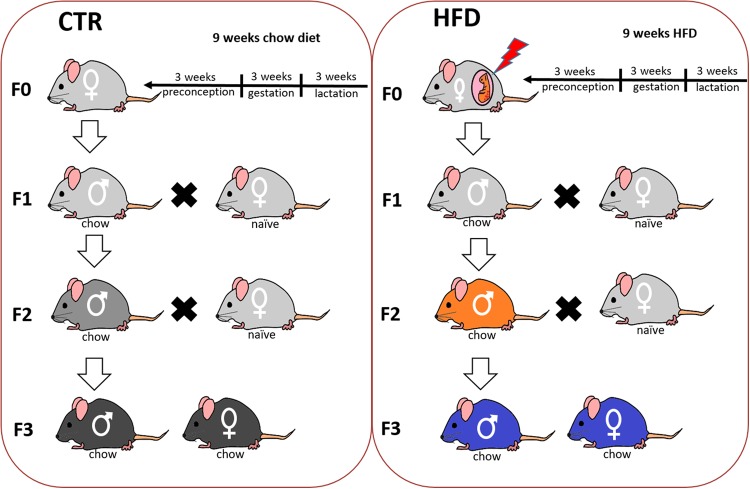
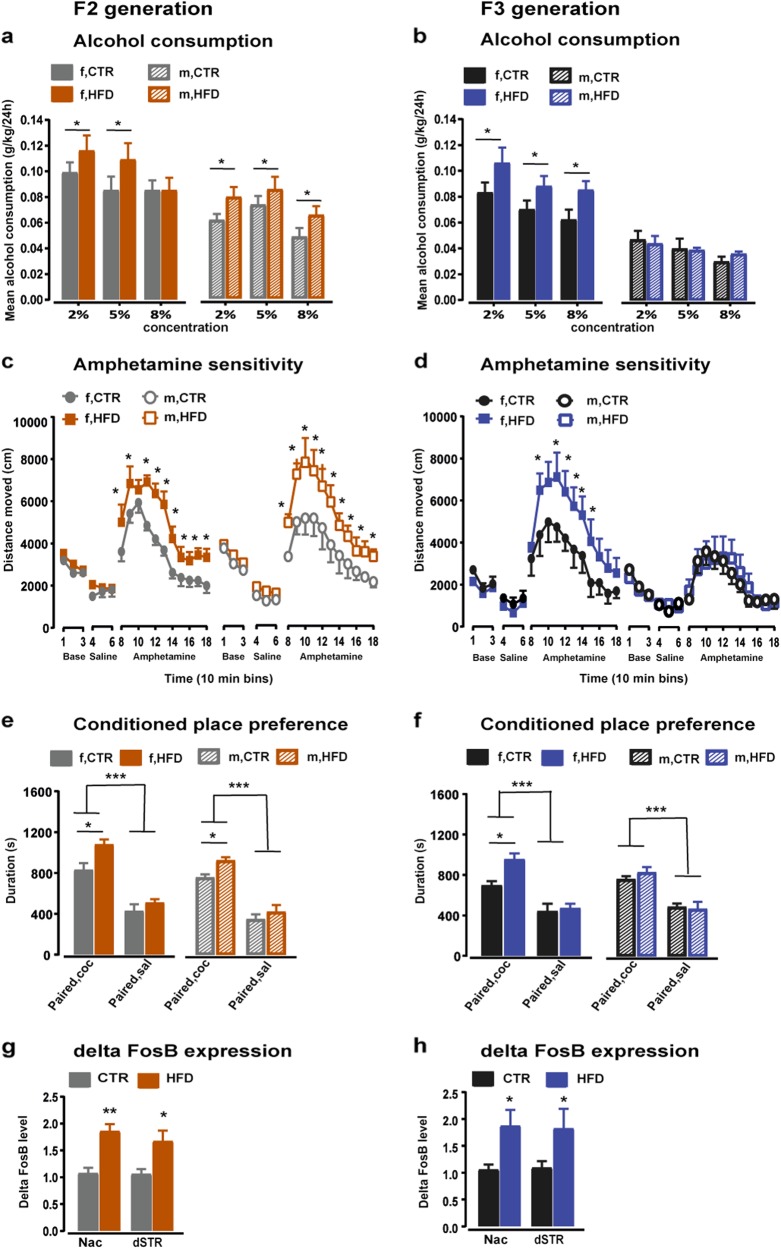
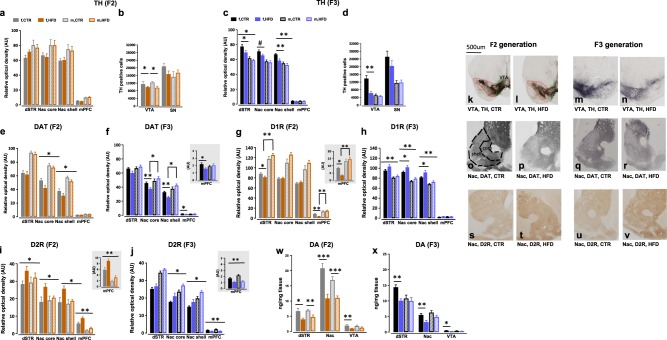
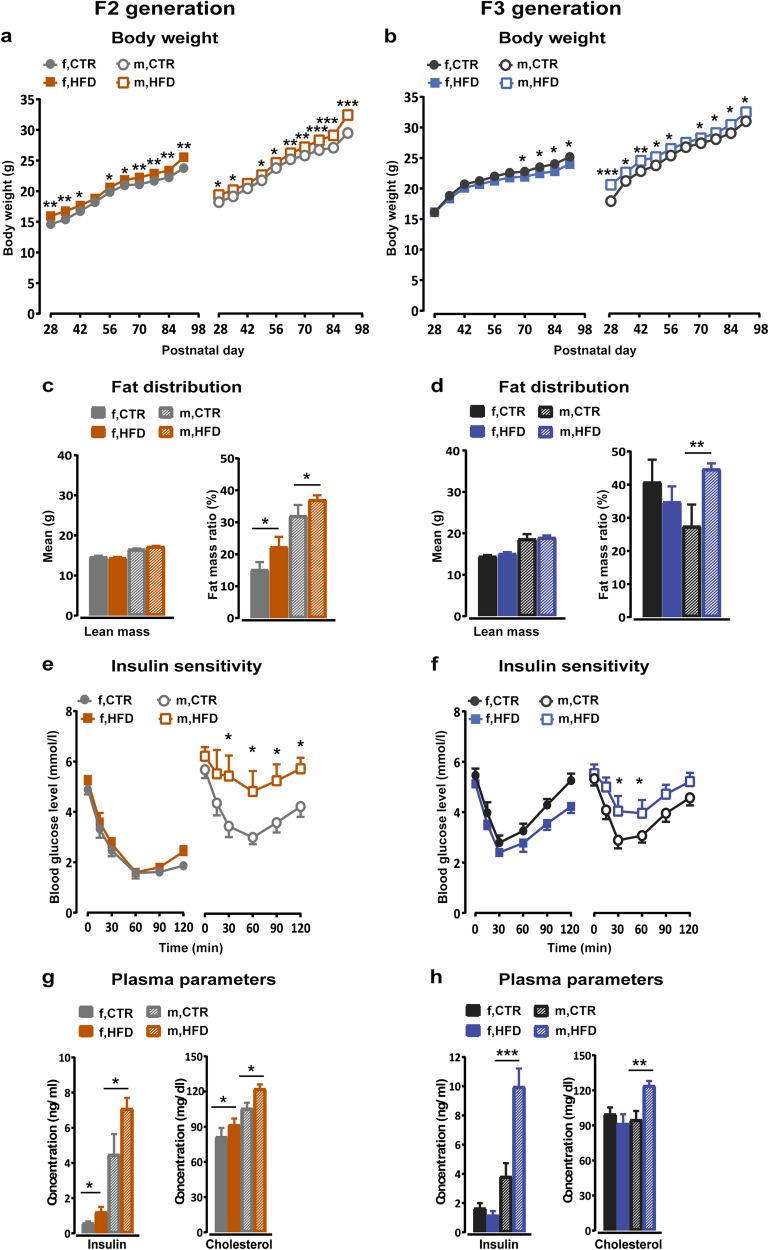
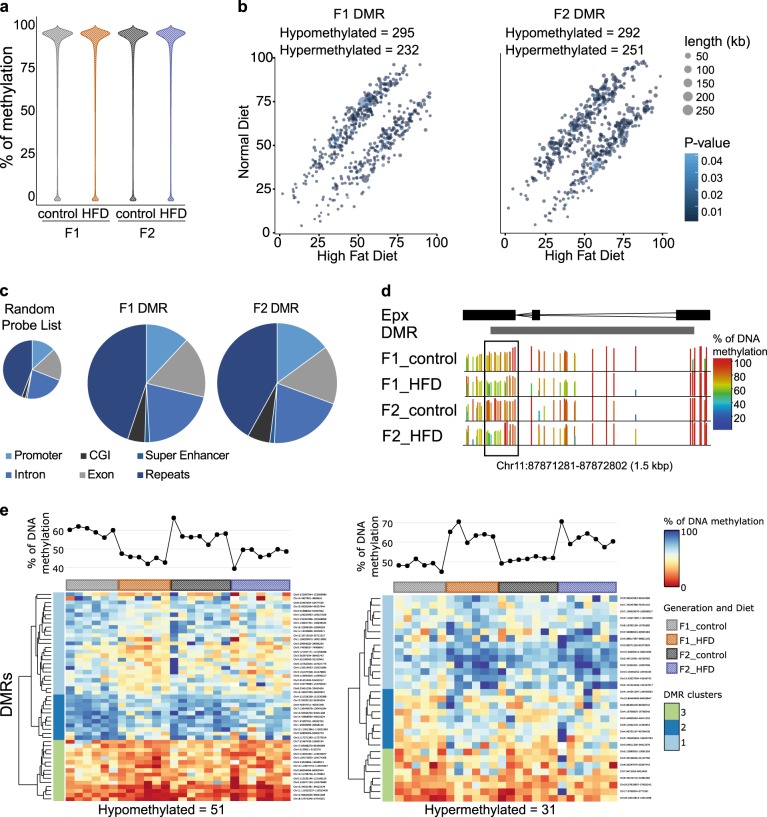
Maternal overnutrition has been associated with increased susceptibility to develop obesity and neurological disorders later in life. Most epidemiological as well as experimental studies have focused on the metabolic consequences across generations following an early developmental nutritional insult. Recently, it has been shown that maternal high-fat diet (HFD) affects third-generation female body mass via the paternal lineage. We showed here that the offspring born to HFD ancestors displayed addictive-like behaviors as well as obesity and insulin resistance up to the third generation in the absence of any further exposure to HFD. These findings, implicate that the male germ line is a major player in transferring phenotypic traits. These behavioral and physiological alterations were paralleled by reduced striatal dopamine levels and increased dopamine 2 receptor density. Interestingly, by the third generation a clear gender segregation emerged, where females showed addictive-like behaviors while male HFD offspring showed an obesogenic phenotype. However, methylome profiling of F1 and F2 sperm revealed no significant difference between the offspring groups, suggesting that the sperm methylome might not be the major carrier for the transmission of the phenotypes observed in our mouse model. Together, our study for the first time demonstrates that maternal HFD insult causes sustained alterations of the mesolimbic dopaminergic system suggestive of a predisposition to develop obesity and addictive-like behaviors across multiple generations.
Overview
The claims and statistics of this paper haven’t been checked yet.
Free: it reads the open-access text and checks the first 5 claims that cite a source we can check. Create a free account to check every claim.
Integrity signals
Registry
Cites
Statistics
Figures
Verification
Claims the paper makes
The claims and statistics of this paper haven’t been checked yet.
Free: it reads the open-access text and checks the first 5 claims that cite a source we can check. Create a free account to check every claim.
Claims other papers make about this one
Each is checked against this paper’s own text: does it say what the citing paper says it does?
In the citing paper
“However, a recent report in which a high-fat diet induced insulin resistance, obesity and addictive-like behaviours up to the third generation did not identify heritable changes in the DNA methylome 123 .”
From Advances in epigenetics link genetics to the environment and disease (2019) · cites this paper as [123]
Self-check
Percentages, sums and reported differences re-computed from the paper’s own numbers.
The self-check needs the paper’s full text.
Citations
Cites
Ng, M., Fleming, T., Robinson, M., Thomson, B., Graetz, N., Margono, C., Mullany, E. C., Biryukov, S., Abbafati, C., Abera, S. F., et al. (2014) · The Lancet · doi:10.1016/s0140-6736(14)60460-8 · Cited by 11,952
Epigenetic programming by maternal behavior
Weaver, I. C. G., Cervoni, N., Champagne, F. A., D'Alessio, A. C., Sharma, S., Seckl, J. R., Dymov, S., Szyf, M., & Meaney, M. J. (2004) · Nature Neuroscience · doi:10.1038/nn1276 · Cited by 6,177
Koob, G. F., & Volkow, N. D. (2010) · Neuropsychopharmacology · doi:10.1038/npp.2009.110 · Cited by 5,340
The origins of the developmental origins theory
Barker, D. J. P. (2007) · Journal of Internal Medicine · doi:10.1111/j.1365-2796.2007.01809.x · Cited by 2,955
Meaney, M. J. (2001) · Annual Review of Neuroscience · doi:10.1146/annurev.neuro.24.1.1161 · Cited by 2,708
Boney, C. M., Verma, A., Tucker, R., & Vohr, B. R. (2005) · Pediatrics · doi:10.1542/peds.2004-1808 · Cited by 2,303
Transgenerational epigenetic inheritance: myths and mechanisms
Heard, E., & Martienssen, R. A. (2014) · Cell · doi:10.1016/j.cell.2014.02.045 · Cited by 1,864
Implication of sperm RNAs in transgenerational inheritance of the effects of early trauma in mice
Gapp, K., Jawaid, A., Sarkies, P., Bohacek, J., Pelczar, P., Prados, J., Farinelli, L., Miska, E., & Mansuy, I. M. (2014) · Nature Neuroscience · doi:10.1038/nn.3695 · Cited by 1,306
Self-citationCarone, B. R., Fauquier, L., Habib, N., Shea, J. M., Hart, C. E., Li, R., Bock, C., Li, C., Gu, H., Zamore, P. D., et al. (2010) · Cell · doi:10.1016/j.cell.2010.12.008 · Cited by 1,159
Epigenetic transmission of the impact of early stress across generations
Franklin, T. B., Russig, H., Weiss, I. C., Gräff, J., Linder, N., Michalon, A., Vizi, S., & Mansuy, I. M. (2010) · Biological Psychiatry · doi:10.1016/j.biopsych.2010.05.036 · Cited by 1,125
Cited by
Advances in epigenetics link genetics to the environment and disease
Cavalli, G., & Heard, E. (2019) · Nature · doi:10.1038/s41586-019-1411-0 · Cited by 1,509
Sarker, G., Sun, W., Rosenkranz, D., Pelczar, P., Opitz, L., Efthymiou, V., Wolfrum, C., & Peleg-Raibstein, D. (2019) · Proceedings of the National Academy of Sciences · doi:10.1073/pnas.1820810116 · Cited by 159
“Similar pattern of sex-specific phenotypic inheritance has been noticed in several recent models of MHFD (7, 13, 50, 51), but the contribution of sex in different phenotypic outcomes remains elusive (50).”
BackgroundMethodInfluentialSelf-citationWestern Diet Consumption During Development: Setting the Stage for Neurocognitive Dysfunction
Tsan, L., Décarie-Spain, L., Noble, E. E., & Kanoski, S. E. (2021) · Frontiers in Neuroscience · doi:10.3389/fnins.2021.632312 · Cited by 104
Neurobiology of eating behavior, nutrition, and health
Stover, P. J., Field, M. S., Andermann, M. L., Bailey, R. L., Batterham, R. L., Cauffman, E. E., Frühbeck, G., Iversen, P. O., Starke-Reed, P. E., Sternson, S. M., et al. (2023) · Journal of Internal Medicine · doi:10.1111/joim.13699 · Cited by 96
“These effects of maternal diet on a hypodopamin-ergic mesolimbic reward system can be trans-generational [134], transmitted through epigenetic changes in sperm and oocytes [135].”
BackgroundMaternal high-fat diet during lactation reprograms the dopaminergic circuitry in mice
Lippert, R. N., Hess, S., Klemm, P., Burgeno, L. M., Jahans-Price, T., Walton, M. E., Kloppenburg, P., & Brüning, J. C. (2020) · Journal of Clinical Investigation · doi:10.1172/jci134412 · Cited by 87
Nutrition and its role in epigenetic inheritance of obesity and diabetes across generations
Kaspar, D., Hastreiter, S., Irmler, M., de Angelis, M. H., & Beckers, J. (2020) · Mammalian Genome · doi:10.1007/s00335-020-09839-z · Cited by 90
Gesù, C. M. D., Matz, L. M., Bolding, I. J., Fultz, R., Hoffman, K. L., Marino, A., Petrosino, J. F., & Buffington, S. A. (2022) · Cell Reports · doi:10.1016/j.celrep.2022.111461 · Cited by 79
Tobore, T. O. (2020) · Behavioural Brain Research · doi:10.1016/j.bbr.2020.112560 · Cited by 73
Perinatal exposure to maternal obesity: Lasting cardiometabolic impact on offspring
Kışlal, S., Shook, L. L., & Edlow, A. G. (2020) · Prenatal Diagnosis · doi:10.1002/pd.5784 · Cited by 68
Transgenerational modification of dopaminergic dysfunctions induced by maternal immune activation
Weber‐Stadlbauer, U., Richetto, J., Zwamborn, R. A. J., Slieker, R. C., & Meyer, U. (2020) · Neuropsychopharmacology · doi:10.1038/s41386-020-00855-w · Cited by 59
“Similar transgenerational effects have also been identified in animal models of maternal overnutrition [25], which is typically accompanied by obesityinduced inflammation [26].”
BackgroundMaternal overnutrition induces long-term cognitive deficits across several generations
Sarker, G., & Peleg-Raibstein, D. (2018) · Nutrients · doi:10.3390/nu11010007 · Cited by 52
Self-citationSmall Noncoding RNAs in Reproduction and Infertility
Zhu, Q., Kirby, J. A., Chu, C., & Gou, L. (2021) · Biomedicines · doi:10.3390/biomedicines9121884 · Cited by 41
Maternal obesity as a risk factor for developing diabetes in offspring: An epigenetic point of view
Lecoutre, S., Maqdasy, S., & Breton, C. (2021) · World Journal of Diabetes · doi:10.4239/wjd.v12.i4.366 · Cited by 37
Cong-Thi, D., Dieu, L. P., Thibaut, R., Paepen, M., Ho, H. H., Nguyen, F., & Hermans, T. (2021) · Water · doi:10.3390/w13131743 · Cited by 36
“These hypotheses cannot be resolved from ERT data only but require additional analysis, such as hydrochemistry and flow and transport modeling [68].”
BackgroundSun, W., von Meyenn, F., Peleg‐Raibstein, D., & Wolfrum, C. (2019) · Advanced Science · doi:10.1002/advs.201900275 · Cited by 37
Self-citationBoscardin, C., Manuella, F., & Mansuy, I. M. (2022) · Environmental Epigenetics · doi:10.1093/eep/dvac024 · Cited by 29
“Sex-specific inheritance of traits is a phenomenon that was previously observed in our model [33, 37, 40] and others [51, 52].”
ResulttRNA Biology in the Pathogenesis of Diabetes: Role of Genetic and Environmental Factors
Arroyo, M. N., Green, J. A., Cnop, M., & Igoillo‐Esteve, M. (2021) · International Journal of Molecular Sciences · doi:10.3390/ijms22020496 · Cited by 31
Cruz-Carrillo, G., Montalvo-Martínez, L., Cárdenas‐Tueme, M., Bernal‐Vega, S., Maldonado‐Ruiz, R., Reséndez‐Pérez, D., Rodríguez‐Ríos, D., Lund, G., Garza‐Ocañas, L., & Camacho‐Morales, A. (2020) · Frontiers in Neuroscience · doi:10.3389/fnins.2020.00452 · Cited by 29
Peleg‐Raibstein, D. (2021) · Frontiers in Neuroscience · doi:10.3389/fnins.2021.645569 · Cited by 26
Self-citationRossetti, M. F., Schumacher, R., Gastiazoro, M. P., Lazzarino, G. P., Andreoli, M. F., Stoker, C., Varayoud, J., & Ramos, J. G. (2019) · Neuroscience · doi:10.1016/j.neuroscience.2019.09.016 · Cited by 26
Poon, K. (2020) · Frontiers in Endocrinology · doi:10.3389/fendo.2020.591559 · Cited by 20
“Animal studies have revealed a transgenerational effect of HFD intake or obesity from both paternal and maternal sides prior to and during pregnancy on over-consummatory behavior in offspring (15, 16), with similar findings in humans from the 1958 British birth cohort study (17).”
ResultYin, X., Anwar, A., Wang, Y., Hu, H., Liang, G., & Zhang, C. (2021) · Frontiers of Medicine · doi:10.1007/s11684-021-0885-y · Cited by 18
Guillaumin, M. C. C., & Peleg‐Raibstein, D. (2023) · Nutrients · doi:10.3390/nu15051095 · Cited by 17
“The maternal high fat diet (MHFD) rodent model is a powerful tool to dissect the complex priming effect of high-fat diets (HFD) and to identify mechanisms which render individuals susceptible to addiction and eating disorders.”
BackgroundInfluentialSelf-citationSong, L., Yan, J., Wang, N., Wei, X., Luo, X. M., Meng, K., & Sun, B. (2019) · Biology of Reproduction · doi:10.1093/biolre/ioz213 · Cited by 16
“Maternal high-fat (HF) diet is associated with altered placental function and adverse maternal and fetal outcomes in different models [1, 9].”
BackgroundTransgenerational effects of obesogenic diets in rodents: A meta‐analysis
Anwer, H., Morris, M. J., Noble, D. W. A., Nakagawa, S., & Lagisz, M. (2022) · Obesity Reviews · doi:10.1111/obr.13342 · Cited by 14
Transgenerational inheritance and its modulation by environmental cues
Verdikt, R., Armstrong, A. A., & Allard, P. (2022) · Current topics in developmental biology/Current Topics in Developmental Biology · doi:10.1016/bs.ctdb.2022.10.002 · Cited by 15
Epigenetic Programming of Adipose Tissue in the Progeny of Obese Dams
Lecoutre, S., Kwok, K. H. M., Petrus, P., Lambert, M., & Breton, C. (2019) · Current Genomics · doi:10.2174/1389202920666191118092852 · Cited by 16
Liu, J., Liao, M., Huang, R., You, Y., Lin, X., Yang, H., Fan, L., Zhong, Y., Li, X., Li, J., et al. (2022) · Frontiers in Cell and Developmental Biology · doi:10.3389/fcell.2022.834346 · Cited by 17
A systematic scientometric review of paternal inheritance of acquired metabolic traits
Crisóstomo, L., Oliveira, P. F., & Alves, M. G. (2023) · BMC Biology · doi:10.1186/s12915-023-01744-6 · Cited by 10
“Curi-ously, this trend is also observed in similar studies involving consumable drugs [84, 100] but it is opposite in studies of self-administration of HFD [101].”
ResultThe (not so) Controversial Role of DNA Methylation in Epigenetic Inheritance Across Generations
Irmler, M., Kaspar, D., de Angelis, M. H., & Beckers, J. (2020) · Springer eBooks · doi:10.1007/978-3-030-35213-4_10 · Cited by 7
Montalvo-Martínez, L., Cruz-Carrillo, G., Maldonado‐Ruiz, R., Trujillo-Villarreal, L. A., Cárdenas‐Tueme, M., Viveros-Contreras, R., Ortíz-López, R., & Camacho‐Morales, A. (2022) · Neurochemical Research · doi:10.1007/s11064-022-03660-7 · Cited by 8
Obesity During Pregnancy and Deficits in Offspring Neurobehavioral Flexibility: The CONFINE Model
Krzeczkowski, J. E., Mortaji, N., & Lieshout, R. J. V. (2025) · Biological Psychiatry · doi:10.1016/j.biopsych.2025.06.032 · Cited by 7
Palm oil as part of a high-fat diet: advances and challenges, or possible risks of pathology?
Kurhaluk, N. (2024) · Nutrition Reviews · doi:10.1093/nutrit/nuae038 · Cited by 10
Murashov, A. K., Pak, E. S., Mar, J. S., O’Brien, K. M., Fisher‐Wellman, K. H., & Bhat, K. M. (2023) · The FASEB Journal · doi:10.1096/fj.202300239rr · Cited by 9
Trujillo-Villarreal, L. A., Cruz-Carrillo, G., Ángeles-Valdéz, D., Garza‐Villarreal, E. A., & Camacho‐Morales, A. (2024) · eNeuro · doi:10.1523/eneuro.0194-23.2023 · Cited by 5
“2 C It has previously been demonstrated that prenatal exposure to a high-energy diet (HED) establishes the transgenerational transmission of addiction-like behavior in the F2 and F3 progeny (Sarker et al., 2018; Montalvo-Martínez et al., 2022).”
BackgroundEpigenetic inheritance of metabolic signals
van Steenwyk, G., Jawaid, A., & Mansuy, I. M. (2019) · Elsevier eBooks · doi:10.1016/b978-0-12-816843-1.00011-4 · Cited by 4
Long-Term Implications of Developmental Programming and Obesity
Heindel, J. J. (2019) · Current topics in environmental health and preventive medicine · doi:10.1007/978-981-15-0520-1_9 · Cited by 3
Alves-Wagner, A. B., Jahan, F., Kusuyama, J., Nigro, P., Hirshman, M. F., & Goodyear, L. J. (2025) · Journal of sport and health science/Journal of Sport and Health Science · doi:10.1016/j.jshs.2025.101096 · Cited by 3
“Human famine studies 17,18 and preclinical studies using rodent models 28,29 suggest that maternal under-or over-nutrition during pregnancy can pass adverse metabolic phenotypes to the F2 generation.”
High-Fat Diet during Mouse Pregnancy Impairs Fetal Heart Development
Ge, K., Aierken, D., Deng, D., Jiang, Z., Feng, T., Meng, J., Zhang, H., Jinjun, C., & Liu, C. (2025) · International Heart Journal · doi:10.1536/ihj.24-245 · Cited by 1
The influence of maternal high-fat diet consumption on neurobehavioral development
Mitchell, A. J., Selby, M., & Sullivan, E. L. (2021) · Elsevier eBooks · doi:10.1016/b978-0-12-817986-4.00051-1 · Cited by 2
Advances in epigenetic techniques to study development and diseases
Dzobo, K. (2020) · Elsevier eBooks · doi:10.1016/b978-0-12-819414-0.00032-x
Murashov, A. K., Pak, E. S., Mar, J. S., Fisher‐Wellman, K. H., Bhat, K. M., & O’Brien, K. M. (2022) · Research Square · doi:10.21203/rs.3.rs-1972256/v1
Prenatal Contributions to the Development of Food Addiction
Camacho‐Morales, A. (2024) · Oxford University Press eBooks · doi:10.1093/oso/9780190671051.003.0025
Programming the Brain: How Maternal Overnutrition Shapes Cognitive Aging in Offspring
Kandasamey, P., & Peleg‐Raibstein, D. (2025) · Nutrients · doi:10.3390/nu17060988 · Cited by 1
Self-citationAdvances in epigenetic techniques to study development and diseases
Dzobo, K. (2025) · Elsevier eBooks · doi:10.1016/b978-0-443-26759-8.00019-9
Metadata
- Authors
- Sarker, G., Berrens, R., von Arx, J., Pelczar, P., Reik, W., Wolfrum, C., & Peleg-Raibstein, D.
- Affiliations
- ETH Zurich (CH)
- Babraham Institute (GB)
- Venue
- Translational Psychiatry
- Published
- 2018-10-12
- Volume
- 8
- Issue
- 1
- Pages
- 195-195
- ISSN
- 2158-3188 (ISSN-L)
- PMC
- PMC6185972
- OpenAlex
- W2891794985
- Cited by
- 45
- References
- 66
- Citations by year
- 2025: 5 · 2024: 3 · 2023: 4 · 2022: 6 · 2021: 9 · 2020: 9 · 2019: 8 · 2018: 1
- FWCI
- 7.45
- Type
- journal article
- Language
- en
- Open access
- gold
- doi.org
- Licence
- cc-by
- creativecommons.org/licenses/by/4.0 (tdm)
- creativecommons.org/licenses/by/4.0 (vor)
- Locations
- Translational Psychiatry (publishedVersion, cc-by)
- Europe PMC (PubMed Central) (publishedVersion, other-oa)
- PubMed Central (publishedVersion, cc-by)
- PubMed (publishedVersion)
- DOAJ (DOAJ: Directory of Open Access Journals) (submittedVersion)
- Apollo (University of Cambridge) (submittedVersion, cc-by)
- Repository for Publications and Research Data (ETH Zurich) (submittedVersion, cc-by)
- Apollo (cc-by)
- ETH Zürich Research Collection (cc-by)
- Funders
- National Science Foundation
- Schweizerischer Nationalfonds zur Förderung der Wissenschaftlichen Forschung
- Biotechnology and Biological Sciences Research Council (BBS/E/B/000C0424, BBS/E/B/0000H334, BBS/E/B/000C0423)
- Topics
- Health Sciences › Medicine › Pediatrics, Perinatology and Child Health › Birth, Development, and Health
- Life Sciences › Neuroscience › Endocrine and Autonomic Systems › Regulation of Appetite and Obesity
- Life Sciences › Biochemistry, Genetics and Molecular Biology › Molecular Biology › Epigenetics and DNA Methylation
- Keywords
- maternal overnutrition, high-fat diet, transgenerational epigenetic inheritance, male germline, obesity, insulin resistance, dopamine, dopamine D2 receptor, mesolimbic dopamine system, sperm DNA methylation, sex differences
- MeSH terms
- Animals, Body Weight, Disease Models, Animal, Female, Male, Mice, Inbred C57BL, Obesity, Pregnancy, Prenatal Exposure Delayed Effects, Behavior, Addictive, Metabolic Syndrome, Maternal Nutritional Physiological Phenomena, Overnutrition, Mice, Diet, High-Fat
About these checks
Registry, retraction, Cites and statistics results are computed, not judged, with one exception: a printed reference that no index lists is read once by a model before it counts as a citation error. Claims are extracted by a model and kept only when their quote appears verbatim in the text; each cited source is then checked, with a model’s help, for whether it says what the claim relies on. Those verdicts can be wrong — read the claim’s quote and the cited source before relying on one.
Statistics and arithmetic are recomputed, not judged.
Confidence bands are shown only for fields calibrated on our annotated test set. None is calibrated yet, so no band is shown.
What counts as a claim ›How we measure confidence ›How we check this ›
Are you an author, or do you see a problem with this page? Request a review
Data sources
Bibliographic data: Semantic Scholar, OpenAlex, Crossref.
Contains information from the Semantic Scholar Academic Graph Datasets, made available under the ODC Attribution License (ODC-BY 1.0).
Semantic Scholar’s data is described in: Kinney, R., et al. (2023). The Semantic Scholar Open Data Platform. arXiv:2301.10140.
