

Short-term antidepressant treatment has long-lasting effects, and reverses stress-induced decreases in bone features in rats
Open accessThe DOI matches its Crossref record; 46 of the 48 references it cites were found in a registry or an index.
Abstract
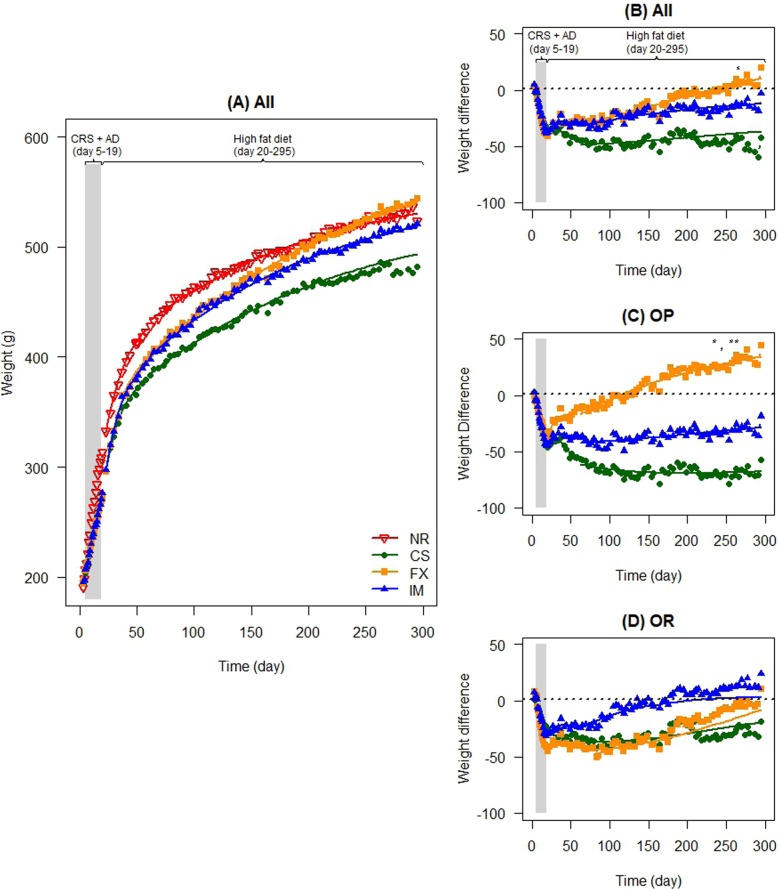
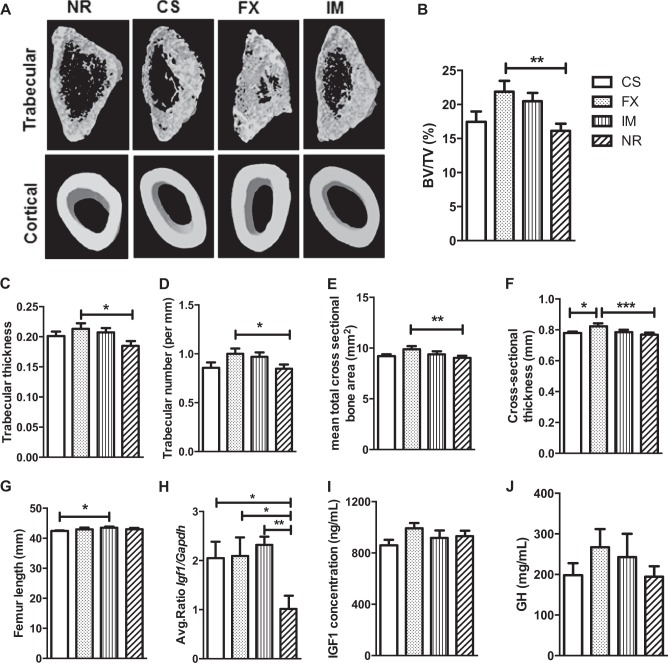
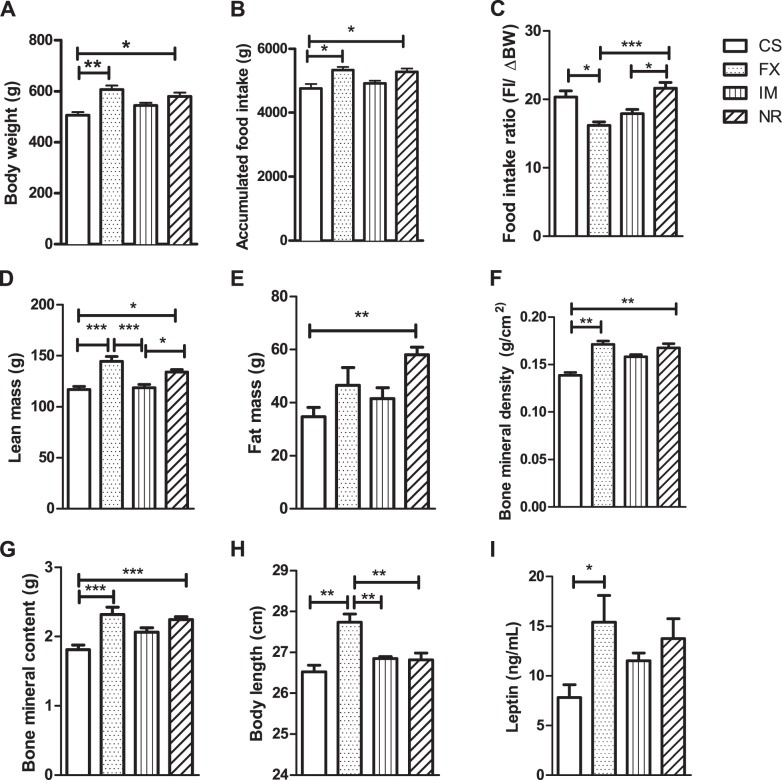
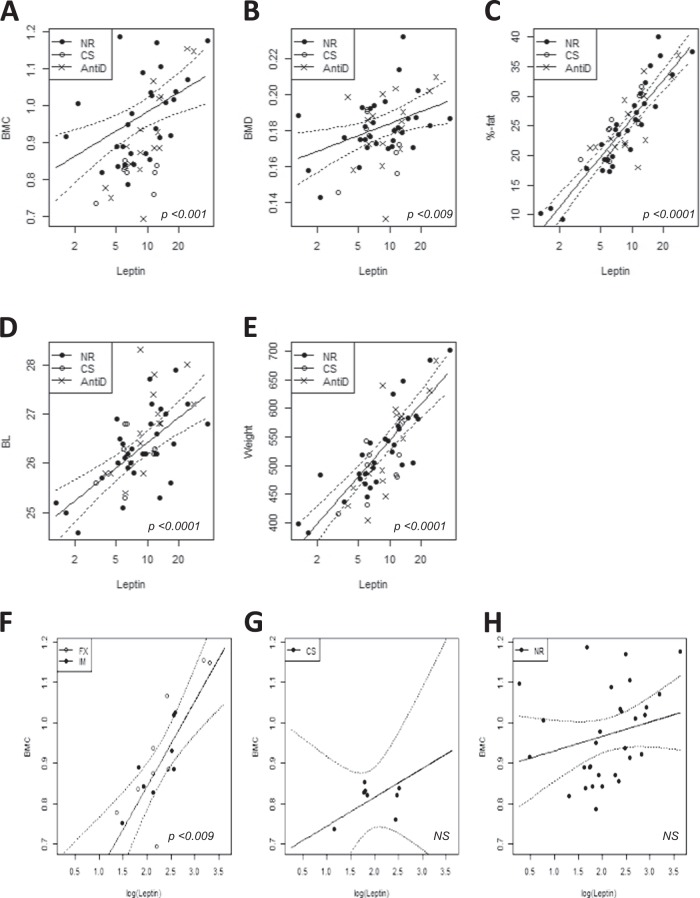
Antidepressants are among the most-prescribed class of drugs in the world and though weight gain is a common outcome of antidepressant treatment, that effect is not well understood. We employed an animal model comprised of 2 weeks of chronic restraint stress with antidepressant treatment, followed by diet-induced obesity. We showed that short-term antidepressant treatment had long-lasting effects, not only leading to weight gain, but also enhancing trabecular and cortical bone features in rats; therefore, weight gain in this model was different from that of the classic diet-induced obesity. Late in the post-restraint recovery period, antidepressant-treated animals were significantly heavier and had better bone features than saline-treated controls, when assessed in the distal femoral metaphysis. The propensity to gain weight might have influenced the rate of catch-up growth and bone allometry, as heavier animals treated with fluoxetine also had enhanced bone features when compared to non-stressed animals. Therefore, short-term antidepressant treatment ameliorated the long-term effects of stress on body growth and bone. Growth and bone structural features were associated with leptin levels, and the interaction between leptin levels and antidepressant was significant for bone mineral content, suggesting that short-term antidepressants in the context of long-term diet-induced obesity modified the role of leptin in bone formation. To our knowledge this is the first study reporting that short-term antidepressant treatment has long-lasting effects in restoring the effects of chronic stress in body weight and bone formation. Our findings may be relevant to the understanding and treatment of osteoporosis, a condition of increasing prevalence due to the aging population.
Overview
The claims and statistics of this paper haven’t been checked yet.
Free: it reads the open-access text and checks the first 5 claims that cite a source we can check. Create a free account to check every claim.
Integrity signals
Registry
Cites
Statistics
Figures
Verification
Claims the paper makes
The claims and statistics of this paper haven’t been checked yet.
Free: it reads the open-access text and checks the first 5 claims that cite a source we can check. Create a free account to check every claim.
Claims other papers make about this one
Each is checked against this paper’s own text: does it say what the citing paper says it does?
The source backs part of the claim, not all of it — or backs it for a different population, condition or comparison.
In the citing paper
“Even short-term use of antidepressants induces a range of brain and metabolic changes27”
From Successful use of tapering strips for hyperbolic reduction of antidepressant dose: a cohort study (2021) · cites this paper as [27]
Experimental — accuracy not yet measured
Self-check
Percentages, sums and reported differences re-computed from the paper’s own numbers.
The self-check needs the paper’s full text.
Citations
Cites
Hip fractures in the elderly: A world-wide projection
Cooper, C., Campion, G., & Melton, L. J. (1992) · Osteoporosis International · doi:10.1007/bf01623184 · Cited by 3,213
Leptin Inhibits Bone Formation through a Hypothalamic Relay
Ducy, P., Amling, M., Takeda, S., Priemel, M., Schilling, A. F., Beil, F. T., Shen, J., Vinson, C., Rueger, J. M., & Karsenty, G. (2000) · Cell · doi:10.1016/s0092-8674(00)81558-5 · Cited by 2,077
Stress induces atrophy of apical dendrites of hippocampal CA3 pyramidal neurons
Watanabe, Y., Gould, E., & McEwen, B. S. (1992) · Brain Research · doi:10.1016/0006-8993(92)91597-8 · Cited by 1,212
Do stress reactions cause abdominal obesity and comorbidities?
Björntorp, P. (2001) · Obesity Reviews · doi:10.1046/j.1467-789x.2001.00027.x · Cited by 1,138
Human growth hormone and human aging
CORPAS, E., HARMAN, S. M., & BLACKMAN, M. R. (1993) · Endocrine Reviews · doi:10.1210/edrv-14-1-20 · Cited by 911
Major depressive disorder: new clinical, neurobiological, and treatment perspectives
Kupfer, D. J., Frank, E., & Phillips, M. L. (2012) · The Lancet · doi:10.1016/s0140-6736(11)60602-8 · Cited by 894
Onyike, C. U. (2003) · American Journal of Epidemiology · doi:10.1093/aje/kwg275 · Cited by 827
Ten Putative Contributors to the Obesity Epidemic
McAllister, E. J., Dhurandhar, N. V., Keith, S. W., Aronne, L. J., Barger, J., Baskin, M., Benca, R. M., Biggio, J., Boggiano, M. M., Eisenmann, J. C., et al. (2009) · Critical Reviews in Food Science and Nutrition · doi:10.1080/10408390903372599 · Cited by 710
IRANMANESH, A., LIZARRALDE, G., & VELDHUIS, J. D. (1991) · The Journal of Clinical Endocrinology & Metabolism · doi:10.1210/jcem-73-5-1081 · Cited by 672
SSRI Antidepressant Medications: Adverse Effects and Tolerability
Ferguson, J. M. (2001) · The Primary Care Companion For CNS Disorders · doi:10.4088/pcc.v03n0105 · Cited by 669
Yadav, V. K., Oury, F., Suda, N., Liu, Z.-W., Gao, X.-B., Confavreux, C., Klemenhagen, K. C., Tanaka, K. F., Gingrich, J. A., Guo, X. E., et al. (2009) · Cell · doi:10.1016/j.cell.2009.06.051 · Cited by 661
Antidepressants and Body Weight: A Comprehensive Review and Meta-Analysis
Serretti, A., & Mandelli, L. (2010) · The Journal of Clinical Psychiatry · doi:10.4088/jcp.09r05346blu · Cited by 621
Leptin directly regulates bone cell function in vitro and reduces bone fragility in vivo
Cornish, J., Callon, K., Bava, U., Lin, C., Naot, D., Hill, B., Grey, A., Broom, N., Myers, D., Nicholson, G., et al. (2002) · Journal of Endocrinology · doi:10.1677/joe.0.1750405 · Cited by 472
Bone Mineral Density in Women with Depression
Michelson, D., Stratakis, C., Hill, L., Reynolds, J., Galliven, E., Chrousos, G., & Gold, P. (1996) · New England Journal of Medicine · doi:10.1056/nejm199610173351602 · Cited by 471
Trends in Fracture Incidence: A Population-Based Study Over 20 Years
Amin, S., Achenbach, S. J., Atkinson, E. J., Khosla, S., & Melton, L. J. (2014) · Journal of Bone and Mineral Research · doi:10.1002/jbmr.2072 · Cited by 400
Markowitz, S., Friedman, M. A., & Arent, S. M. (2008) · Clinical Psychology: Science and Practice · doi:10.1111/j.1468-2850.2008.00106.x · Cited by 339
A Longitudinal Evaluation of Adolescent Depression and Adult Obesity
Richardson, L. P., Davis, R., Poulton, R., McCauley, E., Moffitt, T. E., Caspi, A., & Connell, F. (2003) · Archives of Pediatrics & Adolescent Medicine · doi:10.1001/archpedi.157.8.739 · Cited by 317
Depression induces bone loss through stimulation of the sympathetic nervous system
Yirmiya, R., Goshen, I., Bajayo, A., Kreisel, T., Feldman, S., Tam, J., Trembovler, V., Csernus, V., Shohami, E., & Bab, I. (2006) · Proceedings of the National Academy of Sciences · doi:10.1073/pnas.0604234103 · Cited by 229
Signal transduction in vascular smooth muscle: diacylglycerol second messengers and PKC action
Lee, M. W., & Severson, D. L. (1994) · American Journal of Physiology-Cell Physiology · doi:10.1152/ajpcell.1994.267.3.c659 · Cited by 212
Goldstein, B. J., & Goodnick, P. J. (1998) · Journal of Psychopharmacology · doi:10.1177/0269881198012003041 · Cited by 171
Changes in Weight During a 1-Year Trial of Fluoxetine
Michelson, D., Amsterdam, J. D., Quitkin, F. M., Reimherr, F. W., Rosenbaum, J. F., Zajecka, J., Sundell, K. L., Kim, Y., & Beasley, C. M. (1999) · American Journal of Psychiatry · doi:10.1176/ajp.156.8.1170 · Cited by 167
Catch-up growth after glucocorticoid excess: a mechanism intrinsic to the growth plate
Baron, J., Klein, K. O., Colli, M. J., Yanovski, J. A., Novosad, J. A., Bacher, J. D., & Cutler, G. B. (1994) · Endocrinology · doi:10.1210/endo.135.4.7925098 · Cited by 154
Sussman, N., Ginsberg, D. L., & Bikoff, J. (2001) · PubMed · Cited by 138
Dissociation of the neuronal regulation of bone mass and energy metabolism by leptin in vivo
Shi, Y., Yadav, V. K., Suda, N., Liu, X. S., Guo, X. E., Myers, M. G., & Karsenty, G. (2008) · Proceedings of the National Academy of Sciences · doi:10.1073/pnas.0808701106 · Cited by 136
Montgomery, S. A., Reimitz, P. E., & Zivkov, M. (1998) · International Clinical Psychopharmacology · doi:10.1097/00004850-199803000-00002 · Cited by 122
Ortuño, M. J., Robinson, S. T., Subramanyam, P., Paone, R., Huang, Y.-Y., Guo, X. E., Colecraft, H. M., Mann, J. J., & Ducy, P. (2016) · Nature Medicine · doi:10.1038/nm.4166 · Cited by 109
Sussman, N., Ginsberg, D. L., & Bikoff, J. (2001) · The Journal of Clinical Psychiatry · doi:10.4088/jcp.v62n0407 · Cited by 107
Continuation Therapy with Amitriptyline in Depression
Coppen, A., Ghose, K., Montgomery, S., Rama Rao, V. A., Bailey, J., & Jorgensen, A. (1978) · British Journal of Psychiatry · doi:10.1192/bjp.133.1.28 · Cited by 103
Effects of Liver-Derived Insulin-Like Growth Factor I on Bone Metabolism in Mice
Sjögren, K., Sheng, M., Movérare, S., Liu, J.-L., Wallenius, K., Törnell, J., Isaksson, O., Jansson, J.-O., Mohan, S., & Ohlsson, C. (2002) · Journal of Bone and Mineral Research · doi:10.1359/jbmr.2002.17.11.1977 · Cited by 97
Direction of Weight Change in Recurrent Depression: Consistency Across Episodes
Stunkard, A. J. (1990) · Archives of General Psychiatry · doi:10.1001/archpsyc.1990.01810210065009 · Cited by 95
Kahl, K. G., Rudolf, S., Stoeckelhuber, B. M., Dibbelt, L., Gehl, H.-B., Markhof, K., Hohagen, F., & Schweiger, U. (2005) · American Journal of Psychiatry · doi:10.1176/appi.ajp.162.1.168 · Cited by 93
Mackay, F. J., Dunn, N. R., Wilton, L. V., Pearce, G. L., Freemantle, S. N., & Mann, R. D. (1997) · Pharmacoepidemiology and Drug Safety · doi:10.1002/(sici)1099-1557(199707)6:4<235::aid-pds293>3.0.co;2-3 · Cited by 84
Elis, S., Courtland, H., Wu, Y., Rosen, C. J., Sun, H. B., Jepsen, K. J., Majeska, R. J., & Yakar, S. (2010) · Journal of Bone and Mineral Research · doi:10.1002/jbmr.20 · Cited by 84
Bone mineral density in premenopausal women with major depressive disorder
Yazıcı, K. M., Akıncı, A., Sütçü, A., & Özçakar, L. (2003) · Psychiatry Research · doi:10.1016/s0165-1781(03)00017-9 · Cited by 84
Wu, Y., Sun, H., Yakar, S., & LeRoith, D. (2009) · Endocrinology · doi:10.1210/en.2009-0272 · Cited by 83
Dannon, P. N., Iancu, I., Lowengrub, K., Gonopolsky, Y., Musin, E., Grunhaus, L., & Kotler, M. (2007) · Clinical Neuropharmacology · doi:10.1097/wnf.0b013e318064579f · Cited by 59
Time course of adaptation to a high-fat diet in obesity-resistant and obesity-prone rats
Pagliassotti, M. J., Knobel, S. M., Shahrokhi, K. A., Manzo, A. M., & Hill, J. O. (1994) · American Journal of Physiology-Regulatory, Integrative and Comparative Physiology · doi:10.1152/ajpregu.1994.267.3.r659 · Cited by 55
Andersen, S. W., Clemow, D. B., & Corya, S. A. (2005) · The Journal of Clinical Psychiatry · doi:10.4088/jcp.v66n1118 · Cited by 48
Behavioral consequences of antidepressant treatment in rodents
File, S. E., & Tucker, J. C. (1986) · Neuroscience & Biobehavioral Reviews · doi:10.1016/0149-7634(86)90023-0 · Cited by 42
Three year naturalistic outcome study of panic disorder patients treated with paroxetine
Dannon, P. N., Iancu, I., Cohen, A., Lowengrub, K., Grunhaus, L., & Kotler, M. (2004) · BMC Psychiatry · doi:10.1186/1471-244x-4-16 · Cited by 38
Long-term body weight outcomes of antidepressant–environment interactions
Mastronardi, C. A., Paz-Filho, G., Valdez, E., Maestre-Mesa, J., Licinio, J., & Wong, M. (2010) · Molecular Psychiatry · doi:10.1038/mp.2010.122 · Cited by 37
Self-citation‘Why Getting Fat, Doc?’ Weight Gain and Psychotropic Medications
Malhi, G. S., Mitchell, P. B., & Caterson, I. (2001) · Australian & New Zealand Journal of Psychiatry · doi:10.1046/j.1440-1614.2001.00891.x · Cited by 33
Whitfield, J. F. (2001) · Expert Opinion on Investigational Drugs · doi:10.1517/13543784.10.9.1617 · Cited by 30
Peter, M. C. S. (2012) · General and Comparative Endocrinology · doi:10.1016/j.ygcen.2012.09.016 · Cited by 30
Byrne, S. P., Farrell, L. J., & Rapee, R. M. (2011) · Clinical Psychologist · doi:10.1111/j.1742-9552.2011.00005.x · Cited by 26
Brommage, R., Liu, J., Doree, D. D., Yu, W., Powell, D. R., & Yang, Q. (2015) · BoneKEy Reports · doi:10.1038/bonekey.2015.87 · Cited by 18
Bone and adipose tissue formation
Luther, J., & David, J. (2016) · Zeitschrift für Rheumatologie · doi:10.1007/s00393-016-0143-x · Cited by 2
Knochen- und Fettgewebebildung
Luther, J., & David, J. (2016) · Zeitschrift für Rheumatologie · doi:10.1007/s00393-016-0166-3 · Cited by 1
Research works printed but not linked: 2
- American Medical Association (AMA). Recognition of obesity as a disease. Contract No.: AMA Health Policy H-440.842 (2013). https://policysearch.ama-assn.org/policyfinder/detail/H-440.842?utrl=%2FAMADoc%2FHOD.xml-0-38-58.xml.
- NCHS. Health United States, 2016: With Chartbook on Long-term Trends in Health (National Center for Health Statistics, Centers for Disease Control and Prevention, U.S. D.H.H.S., Hyattsville, 2017) 28910066
Cited by
An update on the problem of osteoporosis in people with epilepsy taking antiepileptic drugs
Miziak, B., Chrościńska–Krawczyk, M., & Czuczwar, S. J. (2019) · Expert Opinion on Drug Safety · doi:10.1080/14740338.2019.1625887 · Cited by 55
Zhang, P., Zhang, N., Fang, S., He, J., Fan, L., Luo, X., Zhang, J., Xiong, Y., Luo, F., Wang, X., et al. (2020) · Journal of Affective Disorders · doi:10.1016/j.jad.2020.11.068 · Cited by 44
Successful use of tapering strips for hyperbolic reduction of antidepressant dose: a cohort study
Groot, P. C., & van Os, J. (2021) · Therapeutic Advances in Psychopharmacology · doi:10.1177/20451253211039327 · Cited by 38
Outcome of antidepressant drug discontinuation with taperingstrips after 1–5 years
Groot, P. C., & van Os, J. (2020) · Therapeutic Advances in Psychopharmacology · doi:10.1177/2045125320954609 · Cited by 35
Effects of Early Life Stress on Bone Homeostasis in Mice and Humans
Wuertz‐Kozak, K., Roszkowski, M., Cambria, E., Block, A., Kuhn, G. A., Abele, T., Hitzl, W., Drießlein, D., Müller, R., Rapp, M. A., et al. (2020) · International Journal of Molecular Sciences · doi:10.3390/ijms21186634 · Cited by 36
Metadata
- Authors
- Lee, S. H., Mastronardi, C. A., Li, R. W., Paz-Filho, G., Dutcher, E. G., Lewis, M. D., Vincent, A. D., Smith, P. N., Bornstein, S. R., Licinio, J., & Wong, M. L.
- Affiliations
- Australian National University (AU)
- South Australian Health and Medical Research Institute (AU)
- Flinders University (AU)
- Freemasons Foundation Centre for Men's Health (AU)
- University Hospital Carl Gustav Carus (DE)
- Corresponding author
- Licinio, J.
- Wong, M. L.
- ORCID
- Venue
- Translational Psychiatry
- Published
- 2019-01-16
- Volume
- 9
- Issue
- 1
- Pages
- 10-10
- ISSN
- 2158-3188 (ISSN-L)
- PMC
- PMC6341077
- OpenAlex
- W2909867320
- Cited by
- 12
- References
- 48
- Citations by year
- 2026: 1 · 2024: 1 · 2022: 1 · 2021: 4 · 2020: 4 · 2019: 1
- FWCI
- 2.65
- Type
- journal article
- Language
- en
- Open access
- gold
- doi.org
- Licence
- cc-by
- creativecommons.org/licenses/by/4.0 (tdm)
- creativecommons.org/licenses/by/4.0 (vor)
- Locations
- Translational Psychiatry (publishedVersion, cc-by)
- Europe PMC (PubMed Central) (publishedVersion, other-oa)
- PubMed Central (publishedVersion, cc-by)
- PubMed (publishedVersion)
- Zurich Open Repository and Archive (University of Zurich) (acceptedVersion, cc-by)
- ANU Open Research (Australian National University) (submittedVersion, cc-by)
- LA Referencia (Red Federada de Repositorios Institucionales de Publicaciones Científicas) (submittedVersion, other-oa)
- Adelaide Research & Scholarship (AR&S) (University of Adelaide) (submittedVersion, cc-by)
- DOAJ (DOAJ: Directory of Open Access Journals) (submittedVersion)
- Zurich Open Repository and Archive (University of Zurich) (submittedVersion, cc-by)
- Zurich Open Repository and Archive (University of Zurich)
- Funders
- South Australian Health and Medical Research Institute
- Australian National University
- Flinders University
- Medical Research Council
- National Health and Medical Research Council (1070935)
- Topics
- Health Sciences › Medicine › Orthopedics and Sports Medicine › Bone health and osteoporosis research
- Life Sciences › Biochemistry, Genetics and Molecular Biology › Molecular Biology › Bone Metabolism and Diseases
- Life Sciences › Neuroscience › Endocrine and Autonomic Systems › Regulation of Appetite and Obesity
- Keywords
- antidepressants, fluoxetine, chronic restraint stress, diet-induced obesity, weight gain, bone formation, trabecular bone, cortical bone, catch-up growth, leptin, bone mineral content, osteoporosis
- MeSH terms
- Animals, Antidepressive Agents, Behavior, Animal, Disease Models, Animal, Fluoxetine, Male, Obesity, Stress, Psychological, Weight Gain, Bone Density, Rats, Sprague-Dawley, Leptin, Rats
About these checks
Registry, retraction, Cites and statistics results are computed, not judged, with one exception: a printed reference that no index lists is read once by a model before it counts as a citation error. Claims are extracted by a model and kept only when their quote appears verbatim in the text; each cited source is then checked, with a model’s help, for whether it says what the claim relies on. Those verdicts can be wrong — read the claim’s quote and the cited source before relying on one.
Statistics and arithmetic are recomputed, not judged.
Confidence bands are shown only for fields calibrated on our annotated test set. None is calibrated yet, so no band is shown.
What counts as a claim ›How we measure confidence ›How we check this ›
Are you an author, or do you see a problem with this page? Request a review
Data sources
Bibliographic data: Semantic Scholar, OpenAlex, Crossref.
Contains information from the Semantic Scholar Academic Graph Datasets, made available under the ODC Attribution License (ODC-BY 1.0).
Semantic Scholar’s data is described in: Kinney, R., et al. (2023). The Semantic Scholar Open Data Platform. arXiv:2301.10140.
