

Delayed sleep timing and circadian rhythms in pregnancy and transdiagnostic symptoms associated with postpartum depression
Open accessThe DOI matches its Crossref record; 52 of the 52 references it cites were found in a registry or an index.
Abstract
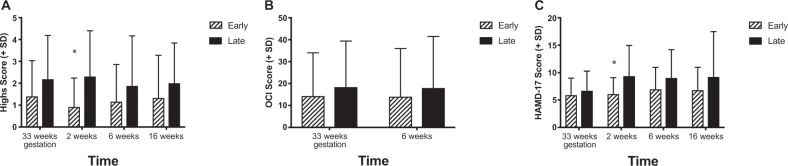
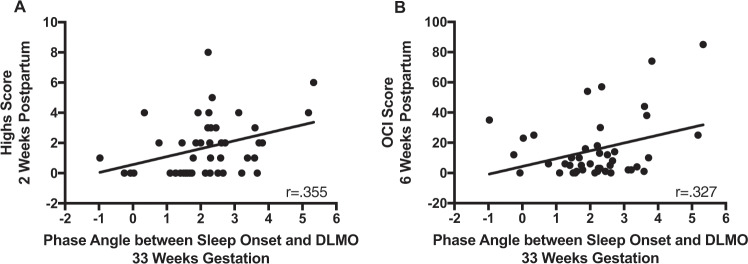
Later sleep timing, circadian preference, and circadian rhythm timing predict worse outcomes across multiple domains, including mood disorders, substance use, impulse control, and cognitive function. Disturbed sleep is common among pregnant and postpartum women. We examined whether sleep timing during third trimester of pregnancy predicted postpartum symptoms of mania, depression, and obsessive-compulsive disorder (OCD). Fifty-one women with a previous, but not active, episode of unipolar or bipolar depression had symptoms evaluated and sleep recorded with wrist actigraphy at 33 weeks of gestation and 2, 6, and 16 weeks postpartum. Circadian phase was measured in a subset of women using salivary dim light melatonin onset (DLMO). We divided the sample into “early sleep” and “late sleep” groups using average sleep onset time at 33 weeks of gestation, defined by the median-split time of 11:27 p.m. The “late sleep” group reported significantly more manic and depressive symptoms at postpartum week 2. Longer phase angle between DLMO and sleep onset at 33 weeks was associated with more manic symptoms at postpartum week 2 and more obsessive-compulsive symptoms at week 6. Delayed sleep timing in this sample of at-risk women was associated with more symptoms of mania, depression, and OCD in the postpartum period. Sleep timing may be a modifiable risk factor for postpartum depression.
Overview
The claims and statistics of this paper haven’t been checked yet.
Free: it reads the open-access text and checks the first 5 claims that cite a source we can check. Create a free account to check every claim.
Integrity signals
Registry
Cites
Statistics
Figures
Verification
Claims the paper makes
The claims and statistics of this paper haven’t been checked yet.
Free: it reads the open-access text and checks the first 5 claims that cite a source we can check. Create a free account to check every claim.
Claims other papers make about this one
Each is checked against this paper’s own text: does it say what the citing paper says it does?
The source backs part of the claim, not all of it — or backs it for a different population, condition or comparison.
In the citing paper
“In another study of postpartum mothers with preterm infants, wrist actigraphy demonstrated that higher levels of daytime activity correlated with decreased symptoms of postpartum depression, suggesting not only the importance of physical activity on its own, but also circadian activity rhythms, which are frequently disrupted in PMADs [39].”
From Technology-Based Approaches for Supporting Perinatal Mental Health (2022) · cites this paper as [39]
Experimental — accuracy not yet measured
Self-check
Percentages, sums and reported differences re-computed from the paper’s own numbers.
The self-check needs the paper’s full text.
Citations
Cites
Diagnostic and Statistical Manual of Mental Disorders
American Psychiatric Association (2013) · doi:10.1176/appi.books.9780890425596 · Cited by 116,369
Hamilton, M. (1960) · Journal of Neurology, Neurosurgery & Psychiatry · doi:10.1136/jnnp.23.1.56 · Cited by 32,817
A self-assessment questionnaire to determine morningness- eveningness in human circadian rhythms
Home, J. K. (1976) · Medical Entomology and Zoology · Cited by 4,783
(1976) · PubMed · Cited by 3,979
A Systematic Review Assessing Bidirectionality between Sleep Disturbances, Anxiety, and Depression
Alvaro, P. K., Roberts, R. M., & Harris, J. K. (2013) · Sleep · doi:10.5665/sleep.2810 · Cited by 1,573
Activity-Based Sleep-Wake Identification: An Empirical Test of Methodological Issues
Sadeh, A., Sharkey, M., & Carskadon, M. A. (1994) · Sleep · doi:10.1093/sleep/17.3.201 · Cited by 1,487
The sleep-deprived human brain
Krause, A. J., Simon, E. B., Mander, B. A., Greer, S. M., Saletin, J. M., Goldstein-Piekarski, A. N., & Walker, M. P. (2017) · Nature Reviews Neuroscience · doi:10.1038/nrn.2017.55 · Cited by 1,200
Wisner, K. L., Sit, D. K. Y., McShea, M. C., Rizzo, D. M., Zoretich, R. A., Hughes, C. L., Eng, H. F., Luther, J. F., Wisniewski, S. R., Costantino, M. L., et al. (2013) · JAMA Psychiatry · doi:10.1001/jamapsychiatry.2013.87 · Cited by 1,091
The validation of a new obsessive–compulsive disorder scale: The Obsessive–Compulsive Inventory
Foa, E. B., Kozak, M. J., Salkovskis, P. M., Coles, M. E., & Amir, N. (1998) · Psychological Assessment · doi:10.1037/1040-3590.10.3.206 · Cited by 719
Self-citationClark, L. A., Cuthbert, B., Lewis-Fernández, R., Narrow, W. E., & Reed, G. M. (2017) · Psychological Science in the Public Interest · doi:10.1177/1529100617727266 · Cited by 688
Research works printed but not linked: 1
- First, M., Spitzer, R., Gibbon, M. & Williams J. Structured Clinical Interview for DSM-IV-TR Axis 1 Disorders, Research Version, Patient Edition (SCID-I/P) (New York State Psychiatric Institute, New York, 2002).
Cited by
Baattaiah, B. A., Alharbi, M. D., Babteen, N. M., Al-Maqbool, H. M., Babgi, F. A., & Albatati, A. A. (2023) · BMC Psychology · doi:10.1186/s40359-023-01043-3 · Cited by 142
“In addition, a study investigating sleeping time during pregnancy has shown that less sleep was associated with a higher risk of depression [93].”
BackgroundMeta-Analyses of Genome-Wide Association Studies for Postpartum Depression
Guintivano, J., Byrne, E. M., Kiewa, J., Yao, S., Bauer, A. E., Åberg, K. A., Adams, M. J., Campbell, A., Campbell, M. L., Choi, K. W., et al. (2023) · American Journal of Psychiatry · doi:10.1176/appi.ajp.20230053 · Cited by 92
Perinatal Obsessive–Compulsive Disorder: Epidemiology, Phenomenology, Etiology, and Treatment
Hudepohl, N. S., MacLean, J. V., & Osborne, L. M. (2022) · Current Psychiatry Reports · doi:10.1007/s11920-022-01333-4 · Cited by 81
The prevalence of sleep loss and sleep disorders in young and old adults
Jha, V. M. (2022) · Aging Brain · doi:10.1016/j.nbas.2022.100057 · Cited by 77
“They reported that the late sleeping women had a higher prevalence of developing symptoms of mania, depression, and obsessive–compulsive disorder during the postpartum period [99].”
BackgroundRecent advances in sleep and depression
Mirchandaney, R., Asarnow, L. D., & Kaplan, K. A. (2023) · Current Opinion in Psychiatry · doi:10.1097/yco.0000000000000837 · Cited by 61
Sleep disorders during pregnancy and postpartum depression: A systematic review and meta‐analysis
Maghami, M., Shariatpanahi, S. P., Habibi, D., Heidari‐Beni, M., Badihian, N., Hosseini, M., & Kelishadi, R. (2021) · International Journal of Developmental Neuroscience · doi:10.1002/jdn.10118 · Cited by 71
Common sleep disorders in pregnancy: a review
Kember, A. J., Elangainesan, P., Ferraro, Z. M., Jones, C. A., & Hobson, S. R. (2023) · Frontiers in Medicine · doi:10.3389/fmed.2023.1235252 · Cited by 55
“(233) examined whether sleep timing during the third trimester of pregnancy could predict postpartum symptoms of mania, depression, and obsessive-compulsive disorder in a sample of 51 women with a previous, but inactive, episode of unipolar and bipolar depression.”
BackgroundYalçın, M., Mundorf, A., Thiel, F., Amatriain‐Fernández, S., Kalthoff, I. S., Beucke, J., Budde, H., Garthus‐Niegel, S., Peterburs, J., & Relógio, A. (2022) · Frontiers in Physiology · doi:10.3389/fphys.2022.873237 · Cited by 54
Circadian biology to advance therapeutics for mood disorders
Bhatnagar, A., Murray, G., & Ray, S. (2023) · Trends in Pharmacological Sciences · doi:10.1016/j.tips.2023.07.008 · Cited by 46
Circadian disruption, melatonin rhythm perturbations and their contributions to chaotic physiology
Reiter, R. J., Rosales‐Corral, S., & Sharma, R. (2020) · Advances in Medical Sciences · doi:10.1016/j.advms.2020.07.001 · Cited by 42
Sleep in Older Adults and Its Possible Relations With COVID-19
Pires, G. N., Ishikura, I. A., Xavier, S. D., Petrella, C., Piovezan, R. D., Xerfan, E. M. S., Andersen, M. L., & Tufik, S. (2021) · Frontiers in Aging Neuroscience · doi:10.3389/fnagi.2021.647875 · Cited by 41
“Melatonin has been discussed as a potential therapeutic agent for COVID-19 (Cardinali et al., 2020a,b; Miller and Cappuccio, 2020; Obeysekare et al., 2020; Ramlall et al., 2020), which would potentially benefit older adults due to their reduced melatonin secretion, as it has demonstrated antiapoptotic, antioxidative,…”
BackgroundLiu, Y., Wu, Z., Cheng, L., Zhang, X., & Yang, H. (2021) · Food & Function · doi:10.1039/d1fo01091c · Cited by 39
Circadian regulation of innate immunity in animals and humans and implications for human disease
Poole, J., & Kitchen, G. B. (2022) · Seminars in Immunopathology · doi:10.1007/s00281-022-00921-z · Cited by 36
Technology-Based Approaches for Supporting Perinatal Mental Health
Novick, A. M., Kwitowski, M., Dempsey, J., Cooke, D. L., & Dempsey, A. G. (2022) · Current Psychiatry Reports · doi:10.1007/s11920-022-01349-w · Cited by 35
“…at 4.2 billion per birth year cohort and approximately $32,000 per mother-parent dyad due to lost productivity costs, increased maternal health and obstetric-specific expenditures, and child expenditures related to preterm birth, developmental and behavioral challenges, and child injury [1].”
BackgroundInfluentialSobol, M., Błachnio, A., Meisner, M., Szyszkowska, J., & Jankowski, K. S. (2023) · Journal of Sleep Research · doi:10.1111/jsr.14116 · Cited by 34
“The large body of literature indicates numerous disturbances in this area (Christian et al., 2019; Obeysekare et al., 2020; Wang et al., 2018).”
InfluentialGordon, L. K., Mason, K. A., Mepham, E. R., & Sharkey, K. M. (2021) · Sleep Health · doi:10.1016/j.sleh.2021.01.004 · Cited by 33
Self-citationKimmel, M., Fransson, E., Cunningham, J. L., Bränn, E., Grewen, K., Boschiero, D., Chrousos, G. P., Meltzer-Brody, S. E., & Skalkidou, A. (2021) · Translational Psychiatry · doi:10.1038/s41398-021-01401-y · Cited by 28
Saraswat, N., Wal, P., Pal, R. S., Wal, A., Pal, Y., & Roohi, T. F. (2021) · The Open Biology Journal · doi:10.2174/1874196702109010017 · Cited by 28
Preventing recurrence of postpartum depression by regulating sleep
Sharma, V., Sharkey, K. M., Palagini, L., Mazmanian, D. S., & Thomson, M. (2023) · Expert Review of Neurotherapeutics · doi:10.1080/14737175.2023.2237194 · Cited by 23
“Literature is emerging on the relationship between disturbed sleep and the heterogeneous symptoms observed in peripartum psychopathology [15].”
BackgroundSelf-citationParry, B. L., Meliska, C. J., Sorenson, D. L., Martinez, L. F., López, A. M. V., Dawes, S. E., Elliott, J. A., & Hauger, R. L. (2022) · Journal of Affective Disorders · doi:10.1016/j.jad.2022.12.079 · Cited by 22
Influence of chronotype on the incidence and severity of perinatal depression in the “Life-ON” study
Garbazza, C., Hackethal, S., Migliore, E., D’Agostino, A., Serrati, C., Fanti, V., Riccardi, S., Baiardi, S., Cicolin, A., Borgwardt, S., et al. (2022) · Journal of Affective Disorders · doi:10.1016/j.jad.2022.08.064 · Cited by 19
“…in mood and behaviour than morning types (Merikanto et al., 2017), had a higher prevalence of insomnia and depression before and during pregnancy (Sampaio Facanha et al., 2021), and more symptoms of mania and obsessive-compulsive disorder in the postpartum period (Obeysekare et al., 2020).”
Verma, S., Pinnington, D. M., Manber, R., & Bei, B. (2023) · Journal of Sleep Research · doi:10.1111/jsr.14021 · Cited by 18
“…assessed sleep – wake timing and chronotype, with some studies treating chron-otype as a trait variable (Morales-Muñoz et al., 2019), whilst others have dichotomised women into ‘ early ’ or ‘ late ’ sleepers (Obeysekare et al., 2020), which does not allow for specific and continuous descriptions.”
BackgroundMethodChronodisruption: effects on reproduction, transgenerational health of offspring and epigenome
Satı, L. (2020) · Reproduction · doi:10.1530/rep-20-0298 · Cited by 17
“In addition, later sleep timing and circadian phase position during pregnancy is found to be associated with greater risk of increased psychiatric and psychologic symptoms across several cognitive, behavioral, and regulatory domains (Obeysekare et al. 2020).”
BackgroundObstructive sleep apnea in pregnant women
Dominguez, J. E., & Habib, A. S. (2022) · International Anesthesiology Clinics · doi:10.1097/aia.0000000000000360 · Cited by 16
“Sleep disruptions and poor sleep quality are common for many women during pregnancy and the postpartum period, and this may be associated with mood disorders such as postpartum depression.(71) Bublitz et al(46) recently reported that SDB in early pregnancy was associated with more symptoms of depression in late pregna…”
BackgroundMishra, A., Park, J., Шапиро, Я., Fischer‐Colbrie, T., Baird, D. D., Suharwardy, S. H., Zhang, S., Jukic, A. M. Z., & Curry, C. L. (2024) · AJOG Global Reports · doi:10.1016/j.xagr.2024.100388 · Cited by 15
Bublitz, M. H., Sharp, M., Freeburg, T., Sanapo, L., Nugent, N. R., Sharkey, K. M., & Bourjeily, G. R. (2021) · Diagnostics · doi:10.3390/diagnostics11050858 · Cited by 15
“Sleep quality worsens during pregnancy [1,2], and poor sleep in pregnancy is associated with adverse outcomes of pre-term birth [3], longer labor and delivery time [4,5], and postpartum depressive symptoms [1].”
BackgroundSelf-citationOstlund, B. D., Pérez‐Edgar, K. E., Shisler, S., Terrell, S., Godleski, S. A., Schuetze, P. A., & Eiden, R. D. (2021) · Development and Psychopathology · doi:10.1017/s0954579421001000 · Cited by 15
“Burgeoning evidence suggests that this approach may be particularly useful when considering risk subgroups identified based on vulnerabilities that cut across diagnostic categories (Blau, Orloff, & Hormes, 2020; Lin et al., 2019; Obeysekare et al., 2020; Ostlund et al., 2019).”
BackgroundTonon, A. C., Ramos-Lima, L. F., Kuhathasan, N., & Frey, B. N. (2024) · Current Psychiatry Reports · doi:10.1007/s11920-024-01527-y · Cited by 14
“…a delayed sleep timing and dim-light melatonin onset during pregnancy was associated with increased risk for psychiatric symptoms postpartum [108], and greater irregularity in activity rhythms as well as higher nighttime activity were associated with greater severity of depressive and…”
Hall, K. S., Patel, R., Evans, J., Greenwood, R., & Hicks, J. (2022) · Sleep Science and Practice · doi:10.1186/s41606-022-00081-x · Cited by 14
“(2020) have examined whether sleep timing during the third trimester of pregnancy predicted postpartum symptoms of mania, depression, and obsessive-compulsive disorder (OCD) (Obeysekare et al., 2020).”
BackgroundDifferences in sleep timing and related effects between African Americans and non-Hispanic Whites
Combs, D., Hsu, C., Bailey, O., Patel, S. I., Mashaqi, S., Estep, L. E., Provencio‐Dean, N., López, S., & Parthasarathy, S. (2020) · Journal of Clinical Sleep Medicine · doi:10.5664/jcsm.9060 · Cited by 14
“10 Because prior research has suggested that African Americans had a tendency toward an early chronotype compared with Whites, 1 – 4 we hypothesized that a delayed sleep phase in African Americans would be associated with an increased risk of depression compared with Whites.”
Wang, C., Hou, J., Li, A., & Kong, W. (2023) · International Journal of Women s Health · doi:10.2147/ijwh.s408347 · Cited by 13
Verma, S., Rajaratnam, S. M. W., Davey, M. J., Wiley, J. F., & Bei, B. (2021) · Frontiers in Global Women s Health · doi:10.3389/fgwh.2020.591677 · Cited by 13
“Specifically, block sizes of variable size (3, 6, 9) are used.”
MethodDynamic Associations Among Sleep, Emotion Dysregulation, and Desire to Live in a Perinatal Sample
Kaliush, P. R., Butner, J., Williams, P., Conradt, E. D., & Crowell, S. E. (2024) · Psychosomatic Medicine · doi:10.1097/psy.0000000000001297 · Cited by 13
“Daytime napping (72), pre-sleep arousal (73), and sleep timing and circadian rhythms (74) are just a few additional parameters that have demonstrated relations with peri-natal mental health outcomes and warrant further exploration.”
BackgroundPires, G. N., de Oliveira, T. B., de Mello, V. F. F., Bezerra, A. G., Leenaars, C. H. C., Ritskes-Hoitinga, M. J., Tufik, S., & Andersen, M. L. (2021) · Journal of Sleep Research · doi:10.1111/jsr.13333 · Cited by 10
“Cohort studies (Obeysekare et al., 2020; Park et al., 2013; Wu et al., 2014) and meta- analyses of observational studies (Badr & Zauszniewski, 2017; Emamian et al., 2019; GonzálezMesa et al., 2019; Zhao & Zhang, 2020) have associated sleep disturbances during pregnancy with postpartum depression.”
BackgroundHarrington, Y. A., Fortaner-Uyà, L., Paolini, M., Poletti, S., Lorenzi, C., Spadini, S., Melloni, E. M. T., Agnoletto, E., Zanardi, R., Colombo, C., et al. (2024) · Genes · doi:10.3390/genes15121517 · Cited by 9
“Specifically, a study linked sleep timing to the development of PPD symptoms where women with a later sleep phase had higher rates of depressive symptomatology [20].”
Circadian rhythm and sleep disruptions in relation to prenatal stress and depression symptoms
Sobol, M., Błachnio, A., Meisner, M., Wdowiak, A., Wdowiak, N., Gorbaniuk, O., & Jankowski, K. S. (2024) · Chronobiology International · doi:10.1080/07420528.2024.2303985 · Cited by 9
“Circadian rhythms are considered to be the basis of biobehavioral regulation that affects functioning, from sleep/wake cycles, hormone levels, blood pressure, and body temperature to appetite, cognition, and mood (Giglio et al. 2009; Obeysekare et al. 2020).”
BackgroundAssociation of morningness-eveningness with psychiatric symptoms among pregnant women
Ashi, K., Levey, E. J., Friedman, L. E., Sánchez, S. E., Williams, M. A., & Gelaye, B. (2022) · Chronobiology International · doi:10.1080/07420528.2022.2053703 · Cited by 8
“2017) and the post-partum period (Obeysekare et al. 2020), and this study assessed”
BackgroundExploring the Relationship Between Circadian Rhythm Shifts and Postpartum Depression
Yeom, J. W., & Lee, H. (2023) · Chronobiology in Medicine · doi:10.33069/cim.2023.0014 · Cited by 8
“Sleep timing may be a modifiable risk factor for PPD [25].”
BackgroundWang, Y., Wang, J., Chen, P., Zhang, J., Lin, Q., Izci‐Balserak, B., Li, Y., Bei, B., & Zhu, B. (2025) · BMC Psychiatry · doi:10.1186/s12888-025-07026-5 · Cited by 7
“However, another study of 51 women with a previous, but not active, episode of unipolar or bipolar depression, “late sleeper” (those with sleep onset time later than 11:27 pm) reported significantly higher depressive symptoms at 2-week postpartum, but not during late pregnancy [59].”
Associations between sleep and circadian rhythm disruption and perinatal anxiety
Cox, R. C. (2025) · npj Biological Timing and Sleep · doi:10.1038/s44323-025-00051-3 · Cited by 7
“…disorder found no association between sleep timing in pregnancy and postpartum OCD symptoms, but did fi nd that a longer phase angle in pregnancy (i.e., later sleep timing relative to circadian phase, measured by dim light melatonin onset) was associated with higher post-partum OCD symptoms 64 .”
Foss, S., Gustafsson, H., Berry, O. O., Hipwell, A. E., Werner, E. A., Peterson, B. S., & Monk, C. E. (2021) · Development and Psychopathology · doi:10.1017/s0954579420002163 · Cited by 7
“…demonstrating predictive associations from distress to poor sleep quality in adolescents (Johnson, Roth, & Breslau, 2006) and pregnant adults (Field et al., 2007; Obeysekare et al., 2020; Okun et al., 2011), and again provide novel evidence that this cascade is also present in pregnant adolescents.”
BackgroundLi, S., Wang, L., Wang, W., Hou, S., Xie, C., Zeng, M., Xian, J., Cai, Z., & Zhao, Y. (2022) · Sleep And Breathing · doi:10.1007/s11325-021-02553-3 · Cited by 6
Sleep: Evolutionary and Adaptive Changes in Birds and Mammals
Jha, V. M., & Jha, S. K. (2020) · Springer eBooks · doi:10.1007/978-981-15-7175-6_3 · Cited by 6
Yang, Q., Magnus, M. C., Kilpi, F., Santorelli, G., Soares, A. G., West, J., Magnus, P. M., Håberg, S. E., Tilling, K. M., Lawlor, D. A., et al. (2024) · BMC Pregnancy and Childbirth · doi:10.1186/s12884-024-07023-8 · Cited by 6
Cox, R. C., Aylward, B. S., Macarelli, I., & Okun, M. L. (2025) · Journal of Affective Disorders · doi:10.1016/j.jad.2025.119523 · Cited by 5
Remembering Postpartum Depression in Later Life: An Interpretative Phenomenological Analysis
Ladd, W. (2021) · The Qualitative Report · doi:10.46743/2160-3715/2021.4741 · Cited by 5
“Findings are further supported by research identifying clinical symptoms of PPD, including insomnia (Alvaro et al., 2013; Obeysekare et al., 2020; Sharma, 2003; Wisner et al., 2013), anxiety (Agrati et al., 2015; Ali et al., 2013; Fisher et al., 2016; Heron et al., 2004; Wenzel et al., 2005; Wisner…”
Nota, J. A., Taylor, I. H., Sharkey, K. M., & Coles, M. E. (2025) · Sleep Medicine · doi:10.1016/j.sleep.2025.01.009 · Cited by 4
Self-citationSobol, M., Błachnio, A., Calderan, M., Degasperi, G., Mioni, G., Hryhorchuk, I., Plucińska, E., Stasiniewicz, J., Kwapiński, J., Jankowski, K. S., et al. (2025) · Chronobiology International · doi:10.1080/07420528.2025.2490499 · Cited by 4
“…wakefulness after sleep onset, lower sleep efficiency (Park et al. 2013; Posmontier 2008), greater sleep fragmentation (Park et al. 2013), shorter total sleep time (Goyal et al. 2009), and later sleep onset time (Kudo et al. 2021; Obeysekare et al. 2020) were associated with postpartum depression.”
Manková, D., Švancarová, S., & Štenclová, E. (2024) · Current Psychology · doi:10.1007/s12144-024-05839-3 · Cited by 4
“They are also highly predisposed to postnatal depression (Obeysekare et al., 2020).”
Cruz, M. G. M. E., & Sweetman, A. (2021) · Sleep and Vigilance · doi:10.1007/s41782-021-00163-3 · Cited by 4
On the question of how the natural migration of copper in Lake Onega
Belkina, N., Vapirov, B. V., Efremenko, N., & Romanova, T. N. (2012) · Principles of the Ecology · doi:10.15393/j1.art.2012.483 · Cited by 4
Depresión posparto: revisión de los factores de riesgo
García, C. P. (2020) · Gredos (University of Salamanca) · Cited by 4
Mason, G. M., Cohen, Z. L., Obeysekare, J., Saletin, J., & Sharkey, K. M. (2024) · SLEEP Advances · doi:10.1093/sleepadvances/zpae068 · Cited by 3
“Furthermore, because the larger study was a prospective investigation of the development of post-partum depression [19], we enriched the sample for depression risk by including only those who met diagnostic criteria for a past depressive episode AND who were not depressed at study enrollment.”
InfluentialSelf-citationJafar, N. K. A., Tham, E. K. H., Fok, D., Chua, M. C., Teoh, O. H., Goh, D. Y. T., Shek, L. P., Yap, F. K. P., Tan, K. H., Gluckman, P. D., et al. (2026) · Nutrients · doi:10.3390/nu18030405 · Cited by 2
“Past evidence has separately reported associations between maternal chronotype and maternal mood [22–24], as well as between maternal mood and breastfeeding outcomes [7,11–14], thus implying that maternal mood may serve as an underlying mechanism through which maternal chronotype can influence…”
Kok, E. Y., Kaur, S., Shukri, N. H. M., Razak, N. A., & Takahashi, M. (2024) · Nutrition and Health · doi:10.1177/02601060241246354 · Cited by 2
“The MEQ had a great internal reliability with Cronbach ’ s alpha of 0.71 among pregnant women (Obeysekare et al., 2020).”
InfluentialMoretti, P., Menculini, G., & Gonfia, L. (2022) · IntechOpen eBooks · doi:10.5772/intechopen.100300 · Cited by 2
McCarthy, R., Reinl, E. L., Strutz, P., Zhao, P., Esparza, A., Sass, E. R., Schoening, M., Kaginele, P., Shi, N., Canal, M., et al. (2025) · SLEEP Advances · doi:10.1093/sleepadvances/zpaf064 · Cited by 1
“Melatonin disruption in pregnancy may also confer risk for worse postpartum mental health outcomes, as later sleep timing and a longer phase angle between melatonin onset and sleep timing in pregnancy predicts higher symptoms o f postpartum mood and anxiety disorders [77].”
Methodological limitations of a transdiagnostic study on postpartum depression
Tounkara, F., Sapkota, R. P., & Brunet, A. (2021) · Translational Psychiatry · doi:10.1038/s41398-021-01413-8 · Cited by 1
“Dear Editor, The paper “Delayed sleep timing and circadian rhythms in pregnancy and transdiagnostic symptoms associated with postpartum depression” by Obeysekare et al.(1) was both scholarly and interesting.”
BackgroundAlternative Treatments for Postpartum Depression
Thomson, M., & Sharma, V. (2023) · Current Treatment Options in Psychiatry · doi:10.1007/s40501-023-00295-5 · Cited by 1
“It is known that abnormalities in circadian rhythm increase the risk of postpartum mood symptoms [71].”
BackgroundResearch on Algorithm Combining Bayesian Network Model with Causal Reasoning
Li, L., Li, Y., Xu, J., & Zhang, Y. (2023) · International Conference on Computational Intelligence and Communication Networks (CICN) · doi:10.1109/cicn59264.2023.10402197 · Cited by 1
“This result is similar to the findings of several studies [17].”
ResultWomen’s Sleep and Circadian Rhythms From Puberty to Menopausal Transition
Izci‐Balserak, B., & Lee, K. A. (2025) · Oxford University Press eBooks · doi:10.1093/oxfordhb/9780197602751.013.29 · Cited by 1
Bernabé, B. P., Cunningham, J. L., Tussing-Humphreys, L. M., Carroll, I. M., Meltzer-Brody, S. E., Maki, P. M., Gilbert, J. A., & Kimmel, M. (2020) · medRxiv · doi:10.1101/2020.11.15.20232173 · Cited by 1
“Sleep disturbances in pregnancy are associated with the development of manic and depressed symptoms postpartum; therefore it is important that we identified an antenatal factor of restlessness and anhedonia related to sleep disruption, as it may be a precursor to manic and depressed symptoms postpartum.(25,26)”
BackgroundObsessive–Compulsive Disorders
Rosso, G., & Maina, G. (2022) · Springer eBooks · doi:10.1007/978-3-030-91832-3_5 · Cited by 1
Conclusion and Recommendations for Research
Sharma, V., Palagini, L., & Mazmanian, D. S. (2025) · Springer eBooks · doi:10.1007/978-3-031-95948-6_16 · Cited by 1
Obsessive-compulsive disorders and sleep
Winston, H. R., & Davis, R. (2022) · Elsevier eBooks · doi:10.1016/b978-0-12-822963-7.00107-9
The circadian rhythm and sleep disorders in pregnant women
Cazac-Stamati, D., Rotaru, L., Grosu, O., Odobescu, S., Lozovanu, S., Lupusor, A., & Stamati, I. (2022) · Bulletin of the Academy of Sciences of Moldova Medical Sciences · doi:10.52692/1857-0011.2022.3-74.02
Screening of Postpartum Depression and Its Correlates among Postpartum Women
Abdelmonem, A. S., Gaber, N. M., & Mahmoud, F. Z. (2024) · Egyptian Journal of Health Care · doi:10.21608/ejhc.2024.428820
Sleep Disruption in Bipolar Disorder During and After Pregnancy
Sharma, V., Wood, K. N., Cha, B., & Serdah, H. (2025) · Springer eBooks · doi:10.1007/978-3-031-95948-6_4
Bao, K., Bao, D., Li, X., Xie, R., Zhang, Y., Jiang, J., Li, Z., Huang, Z., Chen, L.-L., Gu, W., et al. (2025) · Annals of General Psychiatry · doi:10.1186/s12991-025-00613-6
“Many prior studies have involved small sample sizes or narrowly defined populations, such as adolescents or pregnant women, thereby limiting the generalizability of their findings to the broader adult population [12–14].”
Stagg, B. (2025) · cIRcle (University of British Columbia) · doi:10.14288/1.0447150
Brandão, D. J., Nassar, G. S. S., Matos, F. F. M., RIOS, A. R. V., MÁXIMO, B. D. B., & Mattos, L. B. (2026) · Brazilian Journal of Health Review · doi:10.34119/bjhrv9n1-104
The postpartum period and bipolar disorder: early identification, prevention, and management
Sharma, V. (2026) · Expert Review of Neurotherapeutics · doi:10.1080/14737175.2026.2653163
“Common psychiatric comorbidities in women with bipolar disorder include generalized anxiety disorder, OCD, and substance use disorder [56–58].”
Suetsugu, Y., Michikawa, T., Morokuma, S., Hamada, N., Kikuchi, K., Ikeda, S., Shimada, Y., Kato, K., Ochiai, M., Tsuji, M., et al. (2026) · BMC Pregnancy and Childbirth · doi:10.1186/s12884-026-09154-6
“During pregnancy, it has been reported that late bedtimes and irregular bedtimes are associated with postpartum depression [40, 41].”
Gu, H., Li, Y., Zhou, L., Bi, X., & Li, J. (2026) · Frontiers in Neurology · doi:10.3389/fneur.2026.1807822
Wearable sensors offer opportunities for phenotyping perinatal mood disorders: a narrative review
Carrioli, O., Bruce, L. K., Kriplani, S. M., Schaap, T., Stewart, C., & Smarr, B. L. (2026) · Reproduction · doi:10.1093/reprod/xaag115
Factors Influencing the Incidence of Postpartum Blues in Postpartum Mothers
Rosdianto, N. O., ., S., Utami, S., & Andeska, D. P. (2026) · Malaysian Journal of Medicine and Health Sciences · doi:10.47836/mjmhs.22.s9.28
ปัจจัยที่มีความสัมพันธ์กับคุณภาพการนอนหลับในสตรีที่เป็นเบาหวานขณะตั้งครรภ์
srithong, W., Deeluea, J., & Sansiriphun, N. (2025) · NU Journal of Nursing and Health Sciences
Gibson, C. R., Routh, B. N., & Fonken, L. K. (2026) · Hormones and Behavior · doi:10.1016/j.yhbeh.2026.106016
Arrieta‐Laurent, A., Cabrera, M., & da Silva, A. C. R. (2026) · Journal of Neuroendocrinology · doi:10.1111/jne.70312
Metadata
- Authors
- Obeysekare, J. L., Cohen, Z. L., Coles, M. E., Pearlstein, T. B., Monzon, C., Flynn, E. E., & Sharkey, K. M.
- Affiliations
- Brown University (US)
- University of North Carolina at Chapel Hill (US)
- Binghamton University (US)
- Corresponding author
- Sharkey, Katherine M.
- Venue
- Translational Psychiatry
- Published
- 2020-01-21
- Volume
- 10
- Issue
- 1
- Pages
- 14-14
- ISSN
- 2158-3188 (ISSN-L)
- PMC
- PMC7026062
- OpenAlex
- W3001990356
- Cited by
- 75
- References
- 52
- Citations by year
- 2026: 7 · 2025: 10 · 2024: 10 · 2023: 12 · 2022: 15 · 2021: 15 · 2020: 5
- FWCI
- 8.79
- Type
- journal article
- Language
- en
- Open access
- gold
- doi.org
- Licence
- cc-by
- creativecommons.org/licenses/by/4.0 (tdm)
- creativecommons.org/licenses/by/4.0 (vor)
- Locations
- Translational Psychiatry (publishedVersion, cc-by)
- PubMed Central (publishedVersion, cc-by)
- PubMed (publishedVersion)
- Funders
- U.S. Department of Health & Human Services | NIH | National Heart, Lung, and Blood Institute (T35HL094308)
- Topics
- Health Sciences › Medicine › Public Health, Environmental and Occupational Health › Maternal Mental Health During Pregnancy and Postpartum
- Life Sciences › Neuroscience › Endocrine and Autonomic Systems › Circadian rhythm and melatonin
- Social Sciences › Psychology › Experimental and Cognitive Psychology › Sleep and related disorders
- Keywords
- circadian rhythm, circadian preference, postpartum depression, pregnancy, third trimester, mania, obsessive-compulsive symptoms, dim light melatonin onset, sleep latency, transdiagnostic symptoms, bipolar depression, major depressive disorder, risk factors
- MeSH terms
- Circadian Rhythm, Female, Humans, Melatonin, Pregnancy, Sleep, Depression, Postpartum, Actigraphy
About these checks
Registry, retraction, Cites and statistics results are computed, not judged, with one exception: a printed reference that no index lists is read once by a model before it counts as a citation error. Claims are extracted by a model and kept only when their quote appears verbatim in the text; each cited source is then checked, with a model’s help, for whether it says what the claim relies on. Those verdicts can be wrong — read the claim’s quote and the cited source before relying on one.
Statistics and arithmetic are recomputed, not judged.
Confidence bands are shown only for fields calibrated on our annotated test set. None is calibrated yet, so no band is shown.
What counts as a claim ›How we measure confidence ›How we check this ›
Are you an author, or do you see a problem with this page? Request a review
Data sources
Bibliographic data: Semantic Scholar, OpenAlex, Crossref.
Contains information from the Semantic Scholar Academic Graph Datasets, made available under the ODC Attribution License (ODC-BY 1.0).
Semantic Scholar’s data is described in: Kinney, R., et al. (2023). The Semantic Scholar Open Data Platform. arXiv:2301.10140.
