

Dietary creatine intake and depression risk among U.S. adults
Open accessThe DOI matches its Crossref record; 83 of the 83 references it cites were found in a registry or an index.
Abstract
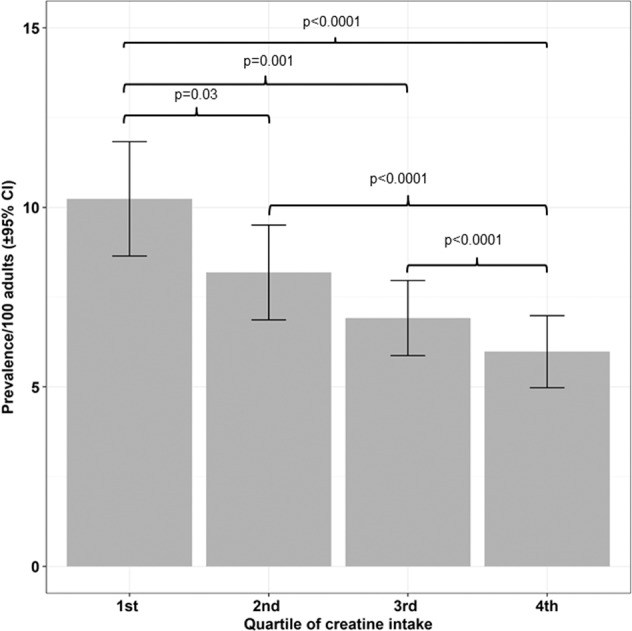
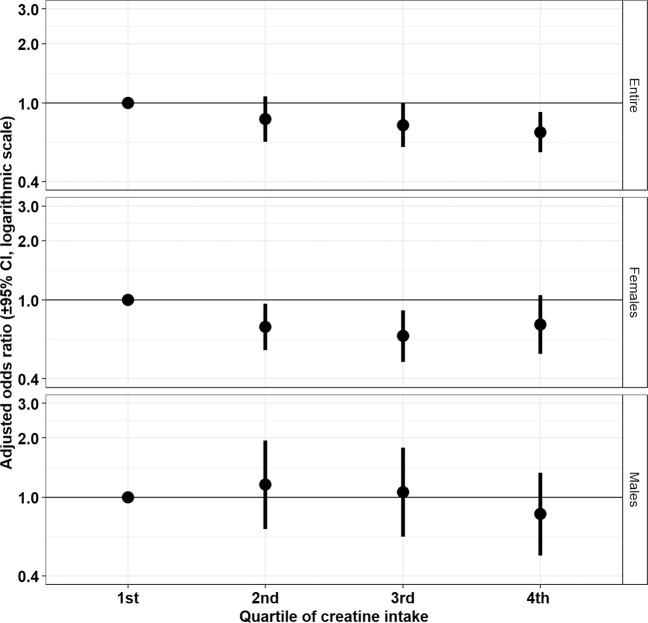
Creatine monohydrate is actively being researched for its antidepressant effects, yet little is known about the link between dietary creatine and depression risk. This study examines the association between dietary creatine and depression in U.S. adults, using data from the 2005 to 2012 National Health and Nutrition Examination Survey (NHANES). Patient health questionnaire, dietary creatine intake and covariates were obtained on 22,692 NHANES participants ≥20 years of age. Depression prevalence was calculated within quartiles of dietary creatine intake. Adjusted logistic regression models were formulated to determine the relationship between dietary creatine intake and depression risk. Additional covariates included income to poverty ratio, race/ethnicity, sex, age, education level, body mass index, healthcare access, smoking status, physical activity, and antidepressant/anxiolytic medication use. Models were further stratified by sex, age group, and antidepressant/anxiolytic medication use. Depression prevalence was 10.23/100 persons (95% CI: 8.64-11.83) among NHANES participants in the lowest quartile of dietary creatine intake compared with 5.98/100 persons (95% CI: 4.97-6.98) among participants in the highest quartile (p < 0.001). An inverse association was measured between dietary creatine and depression (adjusted odds ratio (AOR) = 0.68, 95% CI: 0.52-0.88). Dietary creatine's negative association with depression was strongest in females (AOR = 0.62, 95% CI: 0.40-0.98), participants aged 20-39 years (AOR = 0.52, 95% CI: 0.34-0.79) and participants not taking antidepressant/anxiolytic medication (AOR = 0.58, 95% CI: 0.43-0.77). Study results indicate a significant negative relationship between dietary creatine and depression in a nationally representative adult cohort. Further research is warranted to investigate the role creatine plays in depression, particularly among women and across the lifespan.
Overview
The claims and statistics of this paper haven’t been checked yet.
Free: it reads the open-access text and checks the first 5 claims that cite a source we can check. Create a free account to check every claim.
Integrity signals
Registry
Cites
Statistics
Figures
Verification
Claims the paper makes
The claims and statistics of this paper haven’t been checked yet.
Free: it reads the open-access text and checks the first 5 claims that cite a source we can check. Create a free account to check every claim.
Claims other papers make about this one
Each is checked against this paper’s own text: does it say what the citing paper says it does?
The source backs part of the claim, not all of it — or backs it for a different population, condition or comparison.
In the citing paper
“Lower amounts of daily exogenous creatine intake have also been associated with depression in young adult populations as Bakian et al. [70] observed a significantly higher prevalence of depression (10.2/100 persons) in the lowest quartile of dietary creatine intake compared to the highest quartile of creatine intake, which had a depression prevalence rate of 6.0/100 persons.”
From Creatine Supplementation in Children and Adolescents (2021) · cites this paper as [70]
Experimental — accuracy not yet measuredThe source backs part of the claim, not all of it — or backs it for a different population, condition or comparison.
In the citing paper
“This relationship appeared to be strongest in females and those in the 20–39 years of age category and therefore may also extend to adolescents.”
From Creatine Supplementation in Children and Adolescents (2021) · cites this paper as [70]
Experimental — accuracy not yet measuredIn the citing paper
“Dietary creatine intake is inversely proportional with depression occurrence; with a 31% greater incidence of depression in adults in the lowest quartile of creatine intake [90].”
From Creatine supplementation in women's health: a lifespan perspective (2021) · cites this paper as [90]
Self-check
Percentages, sums and reported differences re-computed from the paper’s own numbers.
The self-check needs the paper’s full text.
Citations
Cites
Spitzer, R. L. (1999) · JAMA · doi:10.1001/jama.282.18.1737 · Cited by 9,802
Kessler, R. C., Berglund, P., Demler, O., Jin, R., Koretz, D., Merikangas, K. R., Rush, A. J., Walters, E. E., & Wang, P. S. (2003) · JAMA · doi:10.1001/jama.289.23.3095 · Cited by 7,988
The PHQ-9: A New Depression Diagnostic and Severity Measure
Kroenke, K., & Spitzer, R. L. (2002) · Psychiatric Annals · doi:10.3928/0048-5713-20020901-06 · Cited by 5,898
Multiple imputation by chained equations: what is it and how does it work?
Azur, M. J., Stuart, E. A., Frangakis, C., & Leaf, P. J. (2011) · International Journal of Methods in Psychiatric Research · doi:10.1002/mpr.329 · Cited by 3,542
Creatine and Creatinine Metabolism
Wyss, M., & Kaddurah-Daouk, R. (2000) · Physiological Reviews · doi:10.1152/physrev.2000.80.3.1107 · Cited by 2,950
THE EFFECTS OF STRESSFUL LIFE EVENTS ON DEPRESSION
Kessler, R. C. (1997) · Annual Review of Psychology · doi:10.1146/annurev.psych.48.1.191 · Cited by 2,111
Wallimann, T., Wyss, M., Brdiczka, D., Nicolay, K., & Eppenberger, H. M. (1992) · Biochemical Journal · doi:10.1042/bj2810021 · Cited by 2,011
Kaufman, D. W., Kelly, J. P., Rosenberg, L., Anderson, T. E., & Mitchell, A. A. (2002) · JAMA · doi:10.1001/jama.287.3.337 · Cited by 1,845
Anderson, J. C. (1987) · Archives of General Psychiatry · doi:10.1001/archpsyc.1987.01800130081010 · Cited by 1,457
Katon, W. J. (2003) · Biological Psychiatry · doi:10.1016/s0006-3223(03)00273-7 · Cited by 1,223
Research works printed but not linked: 3
- World Health Organization. Depression And Other Common Mental Disorders: Global Health Estimates 2017 Geneva World Health Organization
- Bowman SA Friday JE Moshfegh A MyPyramid Equivalents Database, 2.0 for USDA Survey Foods, 2003-2004 [Online]. Food Surveys Research Group. 2008 2016 Beltsville, MD Beltsville Human Nutrition Research Center, Agricultural Research Service, U.S. Department of Agriculture
- Schwartz T Chen Q Duan N Studying Missing Data Patterns Using a SAS® Macro 2011 Las Vegas, NV SAS Global Forum
Cited by
Creatine in health and disease
Kreider, R. B., & Stout, J. R. (2021) · Nutrients · doi:10.3390/nu13020447 · Cited by 227
“[324] recently assessed the dietary patterns from the National Health and Nutrition Examination Survey (NHANES) database and found a significant negative relationship between dietary creatine intake and depression among adults in the United States.”
BackgroundMetabolic Basis of Creatine in Health and Disease: A Bioinformatics-Assisted Review
Bonilla, D. A., Kreider, R. B., Stout, J. R., Forero, D. A., Kerksick, C. M., Roberts, M. D., & Rawson, E. S. (2021) · Nutrients · doi:10.3390/nu13041238 · Cited by 223
Effects of creatine supplementation on brain function and health
Forbes, S. C., Cordingley, D. M., Cornish, S. M., Gualano, B., Roschel, H., Ostojic, S. M., Rawson, E. S., Roy, B. D., Prokopidis, K., Giannos, P., et al. (2022) · Nutrients · doi:10.3390/nu14050921 · Cited by 145
Liang, J., Huang, S., Jiang, N., Kakaer, A., Chen, Y., Liu, M., Pu, Y., Huang, S.-Y., Pu, X.-Y., Zhao, Y., et al. (2023) · JMIR Public Health and Surveillance · doi:10.2196/45776 · Cited by 166
“Nevertheless, empirical evidence for it is far from clear cut, and there exist limitations in prior related studies [9-14].”
BackgroundCreatine supplementation in women's health: a lifespan perspective
Smith-Ryan, A. E., Cabre, H. E., Eckerson, J. M., & Candow, D. G. (2021) · Nutrients · doi:10.3390/nu13030877 · Cited by 92
“Dietary creatine intake is inversely proportional with depression occurrence; with a 31% greater incidence of depression in adults in the lowest quartile of creatine intake [90].”
BackgroundPerspective: Creatine, a Conditionally Essential Nutrient: Building the Case
Ostojic, S. M., & Forbes, S. C. (2022) · Advances in Nutrition · doi:10.1093/advances/nmab111 · Cited by 73
Radford‐Smith, D. E., Probert, F., Burnet, P. W. J., & Anthony, D. C. (2022) · Proceedings of the National Academy of Sciences · doi:10.1073/pnas.2108581119 · Cited by 55
Creatine Supplementation in Children and Adolescents
Jagim, A. R., & Kerksick, C. M. (2021) · Nutrients · doi:10.3390/nu13020664 · Cited by 61
The Problem of Malnutrition Associated with Major Depressive Disorder from a Sex-Gender Perspective
Montero, C. G., Ortega, M. A., Álvarez-Mon, M. Á., Fraile‐Μartinez, O., Romero-Bazán, A., Lahera, G., Montes, J. M. G., Molina-Ruiz, R. M., Mora, F., Rodríguez–Jiménez, R., et al. (2022) · Nutrients · doi:10.3390/nu14051107 · Cited by 54
Dietary creatine and cognitive function in U.S. adults aged 60 years and over
Ostojic, S. M., Korovljev, D., & Stajer, V. (2021) · Aging Clinical and Experimental Research · doi:10.1007/s40520-021-01857-4 · Cited by 33
“88 g/kg) across all sources of meat-based protein, as previously described [10].”
Álvarez-Mon, M. Á., Ortega, M. A., Montero, C. G., Fraile‐Μartinez, O., Monserrat, J., Lahera, G., Mora, F., Rodríguez-Quiroga, A., Fernández-Rojo, S., Quintero, J., et al. (2021) · Pharmaceuticals · doi:10.3390/ph14080821 · Cited by 44
Nutraceuticals and COVID‐19: A mechanistic approach toward attenuating the disease complications
Paudel, K. R., Patel, V. K., Vishwas, S., Gupta, S., Sharma, S., Chan, Y., Jha, N. K., Shrestha, J., Imran, M., Panth, N., et al. (2022) · Journal of Food Biochemistry · doi:10.1111/jfbc.14445 · Cited by 32
Wu, W., Howard, D., Sibille, E. L., & French, L. (2021) · Translational Psychiatry · doi:10.1038/s41398-020-01127-3 · Cited by 33
Ciubuc-Batcu, M. T., Stapelberg, N. J. C., Headrick, J. P., & Renshaw, G. M. C. (2023) · Biochimica et Biophysica Acta (BBA) - Molecular Basis of Disease · doi:10.1016/j.bbadis.2023.166920 · Cited by 34
Kreider, R. B., Gonzalez, D. E., Hines, K., Gil, A., & Bonilla, D. A. (2025) · Journal of the International Society of Sports Nutrition · doi:10.1080/15502783.2025.2488937 · Cited by 29
“Low dietary creatine intake has been associated with a greater incidence of depression in adults [10] and cancer risk [11].”
Shen, X., Gu, X. F., Liu, Y.-Y., Yang, L., Zheng, M., & Jiang, L. (2023) · Frontiers in Nutrition · doi:10.3389/fnut.2023.1042522 · Cited by 33
“The PHQ consisted of nine depressive mood-related questions according to the Diagnostic and Statistical Manual, Fourth Edition, diagnostic criteria for major depressive disorder (41).”
MethodRelationship between depression, prefrontal creatine and grey matter volume
Faulkner, P., Paioni, S. L., Kozhuharova, P., Orlov, N., Lythgoe, D. J., Daniju, Y., Morgenroth, E., Barker, H., & Allen, P. (2021) · Journal of Psychopharmacology · doi:10.1177/02698811211050550 · Cited by 27
“Fifth, we did not attempt to assess dietary intake of creatine, which may be associated with the experiencing of depressive symptomatology (Bakian et al., 2020).”
BackgroundOstojic, S. M., Korovljev, D., & Stajer, V. (2021) · Food Science & Nutrition · doi:10.1002/fsn3.2543 · Cited by 22
Kanekar, S., Ettaro, R., Hoffman, M. D., Ombach, H. J., Brown, J., Lynch, C. J., Sheth, C. S., & Renshaw, P. F. (2021) · International Journal of Molecular Sciences · doi:10.3390/ijms22158195 · Cited by 30
Radford‐Smith, D. E., & Anthony, D. C. (2023) · Metabolites · doi:10.3390/metabo13030455 · Cited by 27
Sherpa, N. N., De Giorgi, R., Ostinelli, E. G., Choudhury, A., Dolma, T., & Dorjee, S. (2025) · European Neuropsychopharmacology · doi:10.1016/j.euroneuro.2024.10.004 · Cited by 22
“It is possible that creatine could express a direct antidepressant activity, as advised by some experimental data (Hellem et al., 2015), or a protective effect by reducing the risk of depression, as seen in a recent observational study (Bakian et al., 2020).”
ResultDavies, T. W., Watson, N., Pilkington, J. J., McClelland, T. J., Azzopardi, G., Pearse, R. M., Prowle, J., & Puthucheary, Z. (2024) · Journal of Parenteral and Enteral Nutrition · doi:10.1002/jpen.2607 · Cited by 18
van der Veen, Y., Post, A., Kremer, D., Koops, C. A., Marsman, E. M., Appeldoorn, T. Y. J., Touw, D. J., Westerhuis, R., Heiner-Fokkema, M. R., Franssen, C. F. M., et al. (2021) · Nutrients · doi:10.3390/nu13082709 · Cited by 24
“Importantly, creatine has also been shown to alleviate treatment-resistant depression, especially in women [74–76], and recent study results indicate a significant negative relationship between dietary creatine intake and depression in a nationally representative adult cohort in the USA, indicating that a low creatine…”
BackgroundDietary creatine intake in U.S. population: NHANES 2017–2018
Ostojić, S. M. (2021) · Nutrition · doi:10.1016/j.nut.2021.111207 · Cited by 20
Dietary creatine and kidney function in adult population: NHANES 2017–2018
Ostojić, S. M. (2021) · Food Science & Nutrition · doi:10.1002/fsn3.2200 · Cited by 14
Korovljev, D., Štajer, V., & Ostojić, S. M. (2021) · Nutrients · doi:10.3390/nu13031027 · Cited by 19
“across various meat-based foods and non-meat sources; the amount of creatine may differ within animal protein subgroups [11].”
BackgroundMethodKelley, D. P., Singleton, S. P., Venable, K. E., Sturm, G., Skovgaard, A., Francis, J., Neylan, T. C., Bradley, E., Woolley, J. D., Picard, M. A., et al. (2025) · Neuroscience & Biobehavioral Reviews · doi:10.1016/j.neubiorev.2025.106419 · Cited by 14
“…or movement therapies focused on improving the veracity of internal models that drive affective states, pharmacological or dietary supplements that increase energy availability (Bakian et al., 2020; Toniolo et al., 2018), or combinations of each of the aforementioned treatment strategies.”
Bonilla, D. A., Stout, J. R., Candow, D. G., Jiménez‐García, J. D., Gómez-Miranda, L. M., Ortiz-Ortiz, M., Forbes, S. C., Ostojić, S. M., Vargas-Molina, S., & Kreider, R. B. (2024) · Frontiers in Physiology · doi:10.3389/fphys.2024.1496544 · Cited by 20
Post, A., Groothof, D., Kremer, D., Knobbe, T. J., Abma, W., Koops, C. A., Tsikas, D., Wallimann, T., Dullaart, R. P. F., Franssen, C. F. M., et al. (2024) · Amino Acids · doi:10.1007/s00726-024-03401-w · Cited by 17
“…values for total grams of creatine consumed per day were computed using the average amount of creatine (0.20 g/kg for dairy-based foods and 3.88 g/kg for meat and fish) across all creatine-containing food sources, as described in (Bakian et al. 2020; Korovljev et al. 2021; Todorovic et al. 2022).”
BackgroundMethodInfluentialRojas, I. A. S., Cuchimba, J. A., Pineda, M. C., Argüello, Y. P., Kočí, J., Kreider, R. B., Petro, J. L., & Bonilla, D. A. (2023) · International Journal of Environmental Research and Public Health · doi:10.3390/ijerph20075298 · Cited by 24
Singh, B., Bakian, A. V., Newman, M., & Sundaresh, V. (2025) · Thyroid · doi:10.1089/thy.2024.0428 · Cited by 13
“11,22,23 Furthermore, the study also investigated the association between free thyroxine (fT4) levels and CRD, aiming to strengthen the current evidence and provide a scienti fi c basis for further investigation.”
Cruz, A. J. A. B., Brooks, S. J., Kleinkopf, K., Brush, C. J., Irwin, G. L., Schwartz, M. G., Candow, D. G., & Brown, A. F. (2024) · Nutrients · doi:10.3390/nu16162772 · Cited by 16
“The test results were recorded immediately after 5 min.”
MethodJuneja, K., Bhuchakra, H. P., Sadhukhan, S., Mehta, I., Niharika, A., Thareja, S., Nimmakayala, T., & Sahu, S. (2024) · Cureus · doi:10.7759/cureus.71638 · Cited by 30
Korovljev, D., Todorović, N., Štajer, V., & Ostojić, S. M. (2021) · Journal of the International Society of Sports Nutrition · doi:10.1186/s12970-021-00453-1 · Cited by 11
“The limitations of our study include the following: (a) the use of 24-h recall method to measure food consumption of NHANES participants; (b) implementing the identical amount of creatine across all creatinecontaining meat-based foods while the creatine content can vary greatly across animal protein subgroups [3]; (c)…”
BackgroundMethodJiang, J., Hu, Z. Y., Chen, J., Du, J., Wang, N., Zheng, B., Wu, J., & Xiao, C. (2025) · Frontiers in Nutrition · doi:10.3389/fnut.2024.1460057 · Cited by 14
Assessing Dietary Creatine Intake in Population Studies: Challenges and Opportunities
Ostojić, S. M. (2024) · Nutrition Reviews · doi:10.1093/nutrit/nuae155 · Cited by 13
Lan, Z., Yao, W., Xie, Y., Chen, W., Zhu, Y., Chen, J., Zhou, X., Huang, J., Wu, M., & Chen, J. (2024) · Molecular Nutrition & Food Research · doi:10.1002/mnfr.202300603 · Cited by 9
The major biogenic amine metabolites in mood disorders
Yang, H. J., Yuan, M., & Zhang, W. (2024) · Frontiers in Psychiatry · doi:10.3389/fpsyt.2024.1460631 · Cited by 8
Establishing Reference Intakes for Creatine in Infants Aged 0 to 12 Months
Ostojić, S. M. (2024) · Nutrition Reviews · doi:10.1093/nutrit/nuae124 · Cited by 9
Do Pregnant Women Consume Enough Creatine? Evidence from NHANES 2011–2018
Ostojić, S. M., Forbes, S. C., & Candow, D. G. (2021) · Annals of Nutrition and Metabolism · doi:10.1159/000520818 · Cited by 8
Dietary creatine and cancer risk in the U.S. population: NHANES 2017–2020
Ostojić, S. M., Grasaas, E., & Cvejić, J. (2023) · Journal of Functional Foods · doi:10.1016/j.jff.2023.105733 · Cited by 9
Zhao, D., Long, X., & Wang, J. (2024) · Journal of Affective Disorders · doi:10.1016/j.jad.2024.05.032 · Cited by 7
Creatine as a treatment for depression: A brain bioenergetics perspective
Fabiano, N., & Stubbs, B. (2025) · European Neuropsychopharmacology · doi:10.1016/j.euroneuro.2025.03.014 · Cited by 6
Dietary creatine is associated with lower serum neurofilament light chain levels
Ostojić, S. M., Grasaas, E., Baltic, S., & Cvejić, J. (2024) · Applied Physiology Nutrition and Metabolism · doi:10.1139/apnm-2024-0064 · Cited by 6
Associations of ethylene oxide exposure with depression in American adults
Wang, M., Liu, C., Liu, Q., & Bai, R. (2024) · Scientific Reports · doi:10.1038/s41598-024-64908-6 · Cited by 6
“Using this instrument, depressive symptoms can be assessed for the past two weeks 21 .”
BackgroundA importância da alimentação na hipertrofia
Abreu, V. G., Lopes, R. S. D. S., Lima, E. M., & Santos, J. S. (2021) · Research Society and Development · doi:10.33448/rsd-v10i14.22041 · Cited by 22
Dietary exposure to creatine-precursor amino acids in the general population
Nedeljkovic, D., & Ostojić, S. M. (2025) · Amino Acids · doi:10.1007/s00726-025-03460-7 · Cited by 6
“…suboptimal dietary creatine intake in the general population may be associated with adverse health outcomes, including a higher risk of depression (Bakian et al. 2020 ), impaired female reproductive health (Ostojic et al. 2024), increased incidence of cardiovascular and hepatic disorders, and…”
Creatine Supplementation: More Is Likely Better for Brain Bioenergetics, Health and Function
Fabiano, N., & Candow, D. (2025) · Journal of Psychiatry and Brain Science · doi:10.20900/jpbs.20250006 · Cited by 9
“At a population-level, a study of 22,692 U.S. adults found an inverse, stepwise association between dietary creatine intake and depression [33].”
Gonzalez, D. E., Forbes, S. C., Zapp, A., Jagim, A. R., Luedke, J. A., Dickerson, B. L., Root, A., Gil, A. C., Johnson, S. E., Coles, M. E., et al. (2024) · Nutrients · doi:10.3390/nu16193285 · Cited by 9
“There are data that also suggest that dietary creatine is associated with a reduced risk of cancer [225], reproductive issues [226], and depression [186], with no associations with kidney dysfunction [227,228].”
BackgroundFood Creatine and DXA-Derived Body Composition in Boys and Girls Aged 8 to 19 Years
Korovljev, D., Todorović, N., Štajer, V., & Ostojić, S. M. (2021) · Nutrition and Metabolic Insights · doi:10.1177/11786388211059368 · Cited by 6
Garcia, M. P., Longobardi, I., Saito, T., Miranda, M. S., Roschel, H., & Gualano, B. (2025) · Journal of the International Society of Sports Nutrition · doi:10.1080/15502783.2025.2591782 · Cited by 4
The role of brain creatine in behavioral health conditions
Han, E. S., Yancey, J. R., Yurgelun-Todd, D. A., Kondo, D. G., Boxer, D., & Renshaw, P. F. (2025) · Frontiers in Psychiatry · doi:10.3389/fpsyt.2025.1667639 · Cited by 6
Multilayer metabolomic integration reveals bioenergetic disruption in Long COVID
García‐Hidalgo, M. C., Mota‐Martorell, N., González, J., Benitez, I. D., Jové, M., Barbé, F., Amigó, N., Pamplona, R., de Gonzalo‐Calvo, D., & Torres, G. (2026) · Journal of Translational Medicine · doi:10.1186/s12967-026-07684-3 · Cited by 5
Bødker, R. L., & Marcussen, M. (2023) · Frontiers in Neurology · doi:10.3389/fneur.2023.1209548 · Cited by 4
“Additional evidence suggests that creatine supplementation can help with chronic fatigue (17), depression (29), and anxiety (17).”
BackgroundEffect of creatine supplementation on cognitive function and mood
Walczak, K., Krasnoborska, J., Samojedny, S., Superson, M., Szmyt, K., Szymańska, K., & Wilk-Trytko, K. (2024) · Journal of Education Health and Sport · doi:10.12775/jehs.2024.73.51712 · Cited by 9
“Additionally, creatine's neuroprotective properties, stemming from its ability to counteract oxidative stress and promote mitochondrial health, alongside its potential modulation of neurotransmitters like serotonin and dopamine, play vital roles in mood regulation (32).”
BackgroundAlmusma, A. S., Sharifi, A. Y., & Alshahrani, J. A. (2020) · Journal of Family Medicine and Primary Care · doi:10.4103/jfmpc.jfmpc_1321_20 · Cited by 5
The evolving role of creatine in public health: from food-based nutrient to supplement and beyond
Ostojić, S. M. (2025) · Public Health Nutrition · doi:10.1017/s1368980025101390 · Cited by 3
“It has been associated with higher risk of depression (14) , cognitive decline in the elderly (15) , cancer (16) , liver conditions (17) and all-cause mortality (18) .”
Integrative Interventions for Improving Outcomes in Depression: A Narrative Review
Halma, M. T. J., Plothe, C., & Marik, P. E. (2024) · Psychology International · doi:10.3390/psycholint6020033 · Cited by 2
Antioxidant Nutraceuticals as Novel Neuroprotective Agents
Katiyar, P., Ghosh, S., Saini, S., Ghosh, C., Agrawal, H., Sircar, D., & Roy, P. (2022) · Wiley eBooks · doi:10.1002/9781119746843.ch8 · Cited by 5
Sleep disorders accelerate biological aging through depressive symptoms: Evidence from NHANES
Zhang, Z., Xu, H., Cui, L., Meng, Y., & Wang, Y. (2025) · Journal of Health Psychology · doi:10.1177/13591053251346366 · Cited by 5
“The PHQ-9 is a reliable tool for screening depressive symptoms (Bakian et al., 2020; Xu et al., 2025).”
Setoyama, D., Kato, T. A., Kunisaki, Y., & Kang, D. (2025) · LabMed discovery. · doi:10.1016/j.lmd.2025.100092 · Cited by 4
Dietary creatine intake and mental health among the Korean population
Ostojić, S. M., Baltic, S., & Zanini, D. (2025) · Nutritional Neuroscience · doi:10.1080/1028415x.2025.2558118 · Cited by 3
“Lower consumption of creatine from dietary sources has been associated with a higher risk of depression among U.S. adults [8] and diminished cognitive function in U.S. adults aged 60 years and older [9].”
Li, J., Bosch, J. A., Rydin, A. O., Hourican, C., Koloi, A., Tassi, S. C., Mishra, P. P., Mishra, B. H., Kähönen, M. A. P., Lehtimäki, T. J., et al. (2025) · Psychological Medicine · doi:10.1017/s0033291725102109 · Cited by 3
Establishing Dietary Reference Intakes for Creatine in Adults
Ostojić, S. M. (2026) · Nutrition Reviews · doi:10.1093/nutrit/nuag009 · Cited by 2
Thyroid Dysfunction and the Risk of Clinically Relevant Depression: A Longitudinal Cohort Study
Singh, B., Kumar, R., Pazdernik, V. K., Stan, M. N., Sundaresh, V., & Frye, M. A. (2026) · Mayo Clinic Proceedings · doi:10.1016/j.mayocp.2026.02.014 · Cited by 2
Nutraceuticals for prevention and management of anxiety
Gupta, C. (2024) · Elsevier eBooks · doi:10.1016/b978-0-443-18951-7.00007-4 · Cited by 3
Rethinking creatine fortification: Addressing nutritional gaps through food enrichment
Ostojić, S. M. (2025) · Trends in Food Science & Technology · doi:10.1016/j.tifs.2025.104990 · Cited by 3
Ostojić, S. M. (2025) · Applied Physiology, Nutrition, and Metabolism · doi:10.1139/apnm-2025-0001 · Cited by 5
Dietary Creatine Intake and Serum Leptin Levels: A Population-Based Analysis
Ranisavljev, M., Nedeljkovic, D., Todorović, N., & Ostojić, S. M. (2025) · Current Nutrition & Food Science · doi:10.2174/0115734013395816250715145327 · Cited by 2
The variability of selenium and sulphur and the impact of creatinine in blood and urine of humans
Ellingsen, D. G., Weinbruch, S., Sällsten, G., Berlinger, B., & Barregård, L. (2025) · Journal of Trace Elements in Medicine and Biology · doi:10.1016/j.jtemb.2025.127700 · Cited by 1
Zhao, D., Long, X., & Wang, J. (2025) · Journal of Food Biochemistry · doi:10.1155/jfbc/7442661 · Cited by 1
Sal-Sarria, S., & Fernández-Blanco, A. (2026) · Behavioural Brain Research · doi:10.1016/j.bbr.2026.116340 · Cited by 1
Recursos ergogênicos nutricionais: estratégia de melhoria para o desempenho esportivo
Oliveira, C. S., Barros, J. P. O. C., Palmeira, M. V. N., de Souza, Â. M., & Mallet, A. C. T. (2022) · Revista Científica do UBM · doi:10.52397/rcubm.v24i47.1331 · Cited by 1
Supplementation for athletes – part 1 – creatine
Szewczyk, P. B., Osowski, M., Dorożyński, B., & Szura, E. (2023) · Farmacja Polska · doi:10.32383/farmpol/166058 · Cited by 1
Chun, J., Liu, Y., Kibler, G. L., Lee, H., Babakhani, K., Rhoades, N., Bivins, I., Ko, J., Dickerson, B., Gonzalez, D. E., et al. (2026) · Journal of the International Society of Sports Nutrition · doi:10.1080/15502783.2026.2716273
Suplementación con creatina y cerebro: una revisión narrativa que merece ser valorada
Vargas, J. J. N., & Espinoza, M. A. R. (2022) · Revista de Investigación de la Universidad Norbert Wiener · doi:10.37768/unw.rinv.11.01.r0002 · Cited by 2
Diet in the prevention and treatment of depression - systematic review
SZULC, I., SWACHA, W., Kozłowska, J., PACEK, K., Piekarska, M., Kasperski, R., Jedlina, K., RUSIN, K., BUDZIŁŁO, J., & Lewandowska, M. (2023) · Journal of Education Health and Sport · doi:10.12775/jehs.2023.14.01.008
Creatine and the plurality of its uses, with emphasis on its supplementation in sports
Minkner, M., Petryla, P., Ostafin, K., Edyko, K., Suwała, Z., Feja, K., Bieńkowski, B., Marchewka, U., Łuczak, E., & REKTOR, N. (2023) · Journal of Education Health and Sport · doi:10.12775/jehs.2023.46.01.007 · Cited by 1
Creatine in neuroprotection and neurotoxicity
Kanekar, S. (2024) · Elsevier eBooks · doi:10.1016/b978-0-443-23763-8.00058-0 · Cited by 2
From Gym to Medicine: Creatine Uses Beyond Athletic Performance
Sikora, M., Iskrzyński, D., Gugulski, H., & Suchy, W. (2024) · International Journal Of Pharmaceutical Research And Allied Sciences · doi:10.51847/rrrbombiya
“Consuming more than 0.7 grams of creatine per day reduces the risk of depressive disorders by as much as about 30% compared to consuming less than 0.26 grams [27].”
BackgroundInfluentialSuplemento da IV Jornada da SAMMG & XII Congresso SAMMG
(2024) · Revista Médica de Minas Gerais · doi:10.5935/2238-3182.2024v34s2
Domingues, W. J. R., de Souza, D. C., Nunhes, P. M., Simões, C. F., Marchini, K. B., Wolosker, N., Cucato, G. G., Ritti‐Dias, R. M., & Avelar, A. (2024) · journal of physical education · doi:10.4025/jphyseduc.v35i1.3536 · Cited by 1
Watson, A., & Bitterman, J. S. (2024) · Springer eBooks · doi:10.1007/978-3-031-72862-4_2
Creatine supplementation for brain metabolic stress: a narrative review
Candow, D. G., Moriarty, T. A., Wong, S., Fabiano, N., Forbes, S. C., & Kerksick, C. M. (2026) · Academia Neuroscience and Brain Research · doi:10.20935/acadneurosci8345
Impact of creatine supplementation on kidney health: a systematic review and meta-analysis
Almeida, A. D. S., da Silva, L. O. D., Takahasi, B. N. A., Terada, B. D., Gonçalves, F. G. A., Porto, B. C., Sardenberg, R. A. D. S., PASSEROTTI, C. C., Maia, R. S., Samaan, F., et al. (2026) · International Urology and Nephrology · doi:10.1007/s11255-026-05287-x · Cited by 3
Hippocampal magnetic resonance spectroscopy markers in late life anxiety – a preliminary report
Kolobaric, A., Sinrich, J. H., Schirda, C., Gujral, S., Butters, M. A., Karim, H. T., & Andreescu, C. (2026) · Psychiatry Research Neuroimaging · doi:10.1016/j.pscychresns.2026.112318
Creatine Uncovered: Expanding Its Role from Fitness Supplement to Therapeutic Agent
Gonzalez, M., & Ruiz, J. (2024) · Journal of Applied Pharmaceutical Technologies and Systems · doi:10.68159/i981004315
Chun, J., Babakhani, K., Gonzalez, D. E., Dickerson, B. L., Sowinski, R. J., Rasmussen, C. J., & Kreider, R. B. (2026) · Journal of the International Society of Sports Nutrition · doi:10.1080/15502783.2026.2711032 · Cited by 2
Przybylski, D., Pudzisz, P., Brożyna, S., Szamocka, K., Koszałka, A., Bogacki, W., Bińkowska-Chęć, K., & Frączek, K. (2026) · International Journal of Innovative Technologies in Social Science · doi:10.31435/ijitss.3(51).2026.6685
de Isla, J. C., Riscart-López, J., Sánchez-Gomar, I., Bández-Ruiz, M., Rosety-Rodríguez, I., Brenes-Martín, F., Bazan, N. G., Quiroz, E. N., Rosety, M. Á., & Geribaldi‐Doldán, N. (2026) · Nutrients · doi:10.3390/nu18213477
Metadata
- Authors
- Bakian, A. V., Huber, R. S., Scholl, L., Renshaw, P. F., & Kondo, D.
- Affiliations
- University of Utah (US)
- Corresponding author
- Bakian, Amanda V.
- Venue
- Translational Psychiatry
- Published
- 2020-02-03
- Volume
- 10
- Issue
- 1
- Pages
- 52-52
- ISSN
- 2158-3188 (ISSN-L)
- PMC
- PMC7026167
- OpenAlex
- W3003159546
- Cited by
- 90
- References
- 83
- Citations by year
- 2026: 11 · 2025: 19 · 2024: 22 · 2023: 11 · 2022: 7 · 2021: 19 · 2020: 1
- FWCI
- 5.69
- Type
- journal article
- Language
- en
- Open access
- gold
- doi.org
- Licence
- cc-by
- creativecommons.org/licenses/by/4.0 (tdm)
- creativecommons.org/licenses/by/4.0 (vor)
- Locations
- Translational Psychiatry (publishedVersion, cc-by)
- PubMed Central (publishedVersion, cc-by)
- PubMed (publishedVersion)
- Funders
- Utah Science Technology and Research
- U.S. Department of Health & Human Services | NIH | National Institute of Mental Health (R33MH096858)
- Topics
- Health Sciences › Medicine › Pharmacology (medical) › Treatment of Major Depression
- Health Sciences › Medicine › Public Health, Environmental and Occupational Health › Nutritional Studies and Diet
- Health Sciences › Medicine › Public Health, Environmental and Occupational Health › Nutrition and Health Studies
- Keywords
- dietary creatine, creatine monohydrate, depression risk, depression prevalence, antidepressant use, sex differences, age differences, dietary intake, NHANES
- MeSH terms
- Adult, Creatine, Cross-Sectional Studies, Depression, Diet, Female, Humans, Nutrition Surveys
About these checks
Registry, retraction, Cites and statistics results are computed, not judged, with one exception: a printed reference that no index lists is read once by a model before it counts as a citation error. Claims are extracted by a model and kept only when their quote appears verbatim in the text; each cited source is then checked, with a model’s help, for whether it says what the claim relies on. Those verdicts can be wrong — read the claim’s quote and the cited source before relying on one.
Statistics and arithmetic are recomputed, not judged.
Confidence bands are shown only for fields calibrated on our annotated test set. None is calibrated yet, so no band is shown.
What counts as a claim ›How we measure confidence ›How we check this ›
Are you an author, or do you see a problem with this page? Request a review
Data sources
Bibliographic data: Semantic Scholar, OpenAlex, Crossref.
Contains information from the Semantic Scholar Academic Graph Datasets, made available under the ODC Attribution License (ODC-BY 1.0).
Semantic Scholar’s data is described in: Kinney, R., et al. (2023). The Semantic Scholar Open Data Platform. arXiv:2301.10140.
