

Dietary creatine intake and depression risk among U.S. adults
Open accessThe DOI matches its Crossref record; 83 of the 83 references it cites were found in a registry or an index.
Abstract
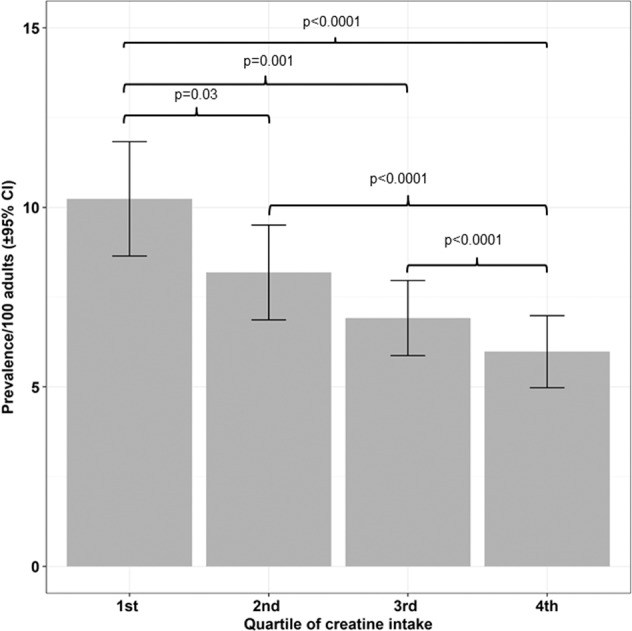
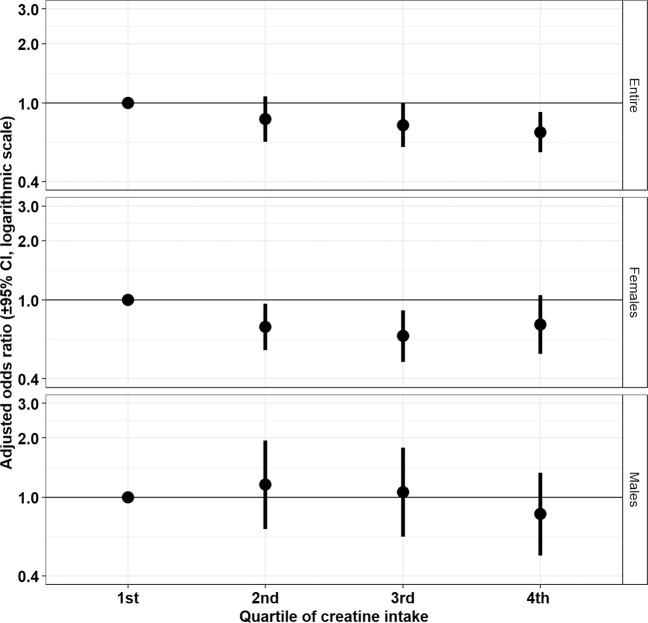
Creatine monohydrate is actively being researched for its antidepressant effects, yet little is known about the link between dietary creatine and depression risk. This study examines the association between dietary creatine and depression in U.S. adults, using data from the 2005 to 2012 National Health and Nutrition Examination Survey (NHANES). Patient health questionnaire, dietary creatine intake and covariates were obtained on 22,692 NHANES participants ≥20 years of age. Depression prevalence was calculated within quartiles of dietary creatine intake. Adjusted logistic regression models were formulated to determine the relationship between dietary creatine intake and depression risk. Additional covariates included income to poverty ratio, race/ethnicity, sex, age, education level, body mass index, healthcare access, smoking status, physical activity, and antidepressant/anxiolytic medication use. Models were further stratified by sex, age group, and antidepressant/anxiolytic medication use. Depression prevalence was 10.23/100 persons (95% CI: 8.64-11.83) among NHANES participants in the lowest quartile of dietary creatine intake compared with 5.98/100 persons (95% CI: 4.97-6.98) among participants in the highest quartile (p < 0.001). An inverse association was measured between dietary creatine and depression (adjusted odds ratio (AOR) = 0.68, 95% CI: 0.52-0.88). Dietary creatine's negative association with depression was strongest in females (AOR = 0.62, 95% CI: 0.40-0.98), participants aged 20-39 years (AOR = 0.52, 95% CI: 0.34-0.79) and participants not taking antidepressant/anxiolytic medication (AOR = 0.58, 95% CI: 0.43-0.77). Study results indicate a significant negative relationship between dietary creatine and depression in a nationally representative adult cohort. Further research is warranted to investigate the role creatine plays in depression, particularly among women and across the lifespan.
Overview
The claims and statistics of this paper haven’t been checked yet.
Free: it reads the open-access text and checks the first 5 claims that cite a source we can check. Create a free account to check every claim.
Integrity signals
Registry
Cites
Statistics
Figures
Verification
Claims the paper makes
The claims and statistics of this paper haven’t been checked yet.
Free: it reads the open-access text and checks the first 5 claims that cite a source we can check. Create a free account to check every claim.
Claims other papers make about this one
Each is checked against this paper’s own text: does it say what the citing paper says it does?
The source backs part of the claim, not all of it — or backs it for a different population, condition or comparison.
In the citing paper
“Lower amounts of daily exogenous creatine intake have also been associated with depression in young adult populations as Bakian et al. [70] observed a significantly higher prevalence of depression (10.2/100 persons) in the lowest quartile of dietary creatine intake compared to the highest quartile of creatine intake, which had a depression prevalence rate of 6.0/100 persons.”
From Creatine Supplementation in Children and Adolescents (2021) · cites this paper as [70]
Experimental — accuracy not yet measuredThe source backs part of the claim, not all of it — or backs it for a different population, condition or comparison.
In the citing paper
“This relationship appeared to be strongest in females and those in the 20–39 years of age category and therefore may also extend to adolescents.”
From Creatine Supplementation in Children and Adolescents (2021) · cites this paper as [70]
Experimental — accuracy not yet measuredIn the citing paper
“Dietary creatine intake is inversely proportional with depression occurrence; with a 31% greater incidence of depression in adults in the lowest quartile of creatine intake [90].”
From Creatine supplementation in women's health: a lifespan perspective (2021) · cites this paper as [90]
Self-check
Percentages, sums and reported differences re-computed from the paper’s own numbers.
The self-check needs the paper’s full text.
Citations
Cites
Spitzer, R. L. (1999) · JAMA · doi:10.1001/jama.282.18.1737 · Cited by 9,802
Kessler, R. C., Berglund, P., Demler, O., Jin, R., Koretz, D., Merikangas, K. R., Rush, A. J., Walters, E. E., & Wang, P. S. (2003) · JAMA · doi:10.1001/jama.289.23.3095 · Cited by 7,988
The PHQ-9: A New Depression Diagnostic and Severity Measure
Kroenke, K., & Spitzer, R. L. (2002) · Psychiatric Annals · doi:10.3928/0048-5713-20020901-06 · Cited by 5,898
Multiple imputation by chained equations: what is it and how does it work?
Azur, M. J., Stuart, E. A., Frangakis, C., & Leaf, P. J. (2011) · International Journal of Methods in Psychiatric Research · doi:10.1002/mpr.329 · Cited by 3,542
Creatine and Creatinine Metabolism
Wyss, M., & Kaddurah-Daouk, R. (2000) · Physiological Reviews · doi:10.1152/physrev.2000.80.3.1107 · Cited by 2,950
THE EFFECTS OF STRESSFUL LIFE EVENTS ON DEPRESSION
Kessler, R. C. (1997) · Annual Review of Psychology · doi:10.1146/annurev.psych.48.1.191 · Cited by 2,111
Wallimann, T., Wyss, M., Brdiczka, D., Nicolay, K., & Eppenberger, H. M. (1992) · Biochemical Journal · doi:10.1042/bj2810021 · Cited by 2,011
Kaufman, D. W., Kelly, J. P., Rosenberg, L., Anderson, T. E., & Mitchell, A. A. (2002) · JAMA · doi:10.1001/jama.287.3.337 · Cited by 1,845
Anderson, J. C. (1987) · Archives of General Psychiatry · doi:10.1001/archpsyc.1987.01800130081010 · Cited by 1,457
Katon, W. J. (2003) · Biological Psychiatry · doi:10.1016/s0006-3223(03)00273-7 · Cited by 1,223
Ahluwalia, N., Dwyer, J., Terry, A., Moshfegh, A., & Johnson, C. (2016) · Advances in Nutrition · doi:10.3945/an.115.009258 · Cited by 1,055
Estrogen Actions Throughout the Brain
McEwen, B. (2002) · Recent Progress in Hormone Research · doi:10.1210/rp.57.1.357 · Cited by 915
Kuehner, C. (2003) · Acta Psychiatrica Scandinavica · doi:10.1034/j.1600-0447.2003.00204.x · Cited by 839
Association of Western and Traditional Diets With Depression and Anxiety in Women
Jacka, F. N., Pasco, J. A., Mykletun, A., Williams, L. J., Hodge, A. M., O'Reilly, S. L., Nicholson, G. C., Kotowicz, M. A., & Berk, M. (2010) · American Journal of Psychiatry · doi:10.1176/appi.ajp.2009.09060881 · Cited by 802
Lai, J. S., Hiles, S., Bisquera, A., Hure, A. J., McEvoy, M., & Attia, J. (2014) · The American Journal of Clinical Nutrition · doi:10.3945/ajcn.113.069880 · Cited by 786 · cited 1×
“Total PHQ-9 scores range from 0 to 27 with the following threshold scores established for depression severity: mild (5), moderate (10), moderately severe (15), and severe (20).”
BackgroundNeurobiological similarities in depression and drug dependence: a self-medication hypothesis
Markou, A. (1998) · Neuropsychopharmacology · doi:10.1016/s0893-133x(97)00113-9 · Cited by 767
Nutritional medicine as mainstream in psychiatry
Sarris, J., Logan, A. C., Akbaraly, T. N., Amminger, G. P., Balanzá-Martínez, V., Freeman, M. P., Hibbeln, J., Matsuoka, Y., Mischoulon, D., Mizoue, T., et al. (2015) · The Lancet Psychiatry · doi:10.1016/s2215-0366(14)00051-0 · Cited by 592
Trends in meat consumption in the USA
Daniel, C. R., Cross, A. J., Koebnick, C., & Sinha, R. (2011) · Public Health Nutrition · doi:10.1017/s1368980010002077 · Cited by 504
Uher, R., Payne, J. L., Pavlova, B., & Perlis, R. H. (2014) · Depression and Anxiety · doi:10.1002/da.22217 · Cited by 456
Adjunctive Nutraceuticals for Depression: A Systematic Review and Meta-Analyses
Sarris, J., Murphy, J., Mischoulon, D., Papakostas, G. I., Fava, M., Berk, M., & Ng, C. H. (2016) · American Journal of Psychiatry · doi:10.1176/appi.ajp.2016.15091228 · Cited by 436
Stress and Depression: A Test of the Buffering Model of Social Support
Aneshensel, C. S. (1982) · Archives of General Psychiatry · doi:10.1001/archpsyc.1982.04290120028005 · Cited by 417
Archer, E., Hand, G. A., & Blair, S. N. (2013) · PLoS ONE · doi:10.1371/journal.pone.0076632 · Cited by 415
Strine, T. W., Mokdad, A. H., Balluz, L. S., Gonzalez, O., Crider, R. A., Berry, J. T., & Kroenke, K. (2008) · Psychiatric Services · doi:10.1176/appi.ps.59.12.1383 · Cited by 408
Creatine in humans with special reference to creatine supplementation
Balsom, P. D., Söderlund, K., & Ekblom, B. (1994) · Sports Medicine · doi:10.2165/00007256-199418040-00005 · Cited by 404
Estrogen, Menopause, and the Aging Brain: How Basic Neuroscience Can Inform Hormone Therapy in Women
Morrison, J. H., Brinton, R. D., Schmidt, P. J., & Gore, A. C. (2006) · The Journal of Neuroscience · doi:10.1523/jneurosci.3369-06.2006 · Cited by 386
Creatine: Endogenous Metabolite, Dietary, and Therapeutic Supplement
Brosnan, J. T., & Brosnan, M. E. (2007) · Annual Review of Nutrition · doi:10.1146/annurev.nutr.27.061406.093621 · Cited by 347
Creatine supplementation with specific view to exercise/sports performance: An update
Cooper, R., Naclerio, F., Allgrove, J., & Jimenez, A. (2012) · Journal of the International Society of Sports Nutrition · doi:10.1186/1550-2783-9-33 · Cited by 306
Depression and unemployment: Panel findings from the Epidemiologic Catchment Area study
Dooley, D., Catalano, R., & Wilson, G. (1994) · American Journal of Community Psychology · doi:10.1007/bf02521557 · Cited by 298
The metabolic burden of creatine synthesis
Brosnan, J. T., da Silva, R. P., & Brosnan, M. E. (2011) · Amino Acids · doi:10.1007/s00726-011-0853-y · Cited by 284
Is Low Dietary Intake of Omega-3 Fatty Acids Associated With Depression?
Hakkarainen, R., Partonen, T., Haukka, J., Virtamo, J., Albanes, D., & Lönnqvist, J. (2004) · American Journal of Psychiatry · doi:10.1176/appi.ajp.161.3.567 · Cited by 273
Skarupski, K. A., Tangney, C., Li, H., Ouyang, B., Evans, D. A., & Morris, M. C. (2010) · The American Journal of Clinical Nutrition · doi:10.3945/ajcn.2010.29413 · Cited by 225
Increase of total creatine in human brain after oral supplementation of creatine-monohydrate
Dechent, P., Pouwels, P. J. W., Wilken, B., Hanefeld, F., & Frahm, J. (1999) · American Journal of Physiology-Regulatory, Integrative and Comparative Physiology · doi:10.1152/ajpregu.1999.277.3.r698 · Cited by 221
Murakami, K., Mizoue, T., Sasaki, S., Ohta, M., Sato, M., Matsushita, Y., & Mishima, N. (2008) · Nutrition · doi:10.1016/j.nut.2007.10.013 · Cited by 220
Creatine supplementation in Parkinson disease: A placebo-controlled randomized pilot trial
Bender, A., Koch, W., Elstner, M., Schombacher, Y., Bender, J., Moeschl, M., Gekeler, F., Müller-Myhsok, B., Gasser, T., Tatsch, K., et al. (2006) · Neurology · doi:10.1212/01.wnl.0000238518.34389.12 · Cited by 204
Beezhold, B., Johnston, C. S., & Daigle, D. R. (2010) · Nutrition Journal · doi:10.1186/1475-2891-9-26 · Cited by 200
Pais, P., Salmon, C. P., Knize, M. G., & Felton, J. S. (1999) · Journal of Agricultural and Food Chemistry · doi:10.1021/jf980644e · Cited by 197
Considering the Value of Dietary Assessment Data in Informing Nutrition-Related Health Policy
Hébert, J. R., Hurley, T. G., Steck, S. E., Miller, D. R., Tabung, F. K., Peterson, K. E., Kushi, L. H., & Frongillo, E. A. (2014) · Advances in Nutrition · doi:10.3945/an.114.006189 · Cited by 178
Concentrations in beef and lamb of taurine, carnosine, coenzyme Q10, and creatine
Purchas, R. W., Rutherfurd, S. M., Pearce, P. D., Vather, R., & Wilkinson, B. H. P. (2004) · Meat Science · doi:10.1016/s0309-1740(03)00181-5 · Cited by 176
Creatine for treating muscle disorders
Kley, R. A., Tarnopolsky, M. A., & Vorgerd, M. (2013) · Cochrane Database of Systematic Reviews · doi:10.1002/14651858.cd004760.pub4 · Cited by 169
Vegetarian diets and depressive symptoms among men
Hibbeln, J. R., Northstone, K., Evans, J., & Golding, J. (2017) · Journal of Affective Disorders · doi:10.1016/j.jad.2017.07.051 · Cited by 145
Lyoo, I. K., Kong, S. W., Sung, S. M., Hirashima, F., Parow, A., Hennen, J., Cohen, B. M., & Renshaw, P. F. (2003) · Psychiatry Research: Neuroimaging · doi:10.1016/s0925-4927(03)00046-5 · Cited by 140
Self-citationBaines, S., Powers, J., & Brown, W. J. (2007) · Public Health Nutrition · doi:10.1017/s1368980007217938 · Cited by 140
Pazini, F. L., Cunha, M. P., Rosa, J. M., Colla, A. R. D. S., Lieberknecht, V., Oliveira‐Giacomelli, Á., & Rodrigues, A. L. S. (2015) · Molecular Neurobiology · doi:10.1007/s12035-015-9580-9 · Cited by 140
Vegetarian diet and mental disorders: results from a representative community survey
Michalak, J., Zhang, X., & Jacobi, F. (2012) · International Journal of Behavioral Nutrition and Physical Activity · doi:10.1186/1479-5868-9-67 · Cited by 135
Born to Be Criminal? What to Make of Early Biological Risk Factors for Criminal Behavior
Sterzer, P. (2010) · American Journal of Psychiatry · doi:10.1176/appi.ajp.2009.09111601 · Cited by 133
Creatine as a booster for human brain function. How might it work?
Rae, C. D., & Bröer, S. (2015) · Neurochemistry International · doi:10.1016/j.neuint.2015.08.010 · Cited by 123
Lyoo, I. K., Yoon, S., Kim, T.-S., Hwang, J., Kim, J. E., Won, W., Bae, S., & Renshaw, P. F. (2012) · American Journal of Psychiatry · doi:10.1176/appi.ajp.2012.12010009 · Cited by 123
Burkert, N. T., Muckenhuber, J., Großschädl, F., Rásky, É., & Freidl, W. (2014) · PLoS ONE · doi:10.1371/journal.pone.0088278 · Cited by 122
Creatine monohydrate in resistant depression: A preliminary study
Roitman, S., Green, T., Osher, Y., Karni, N., & Levine, J. (2007) · Bipolar Disorders · doi:10.1111/j.1399-5618.2007.00532.x · Cited by 118
Beezhold, B. L., & Johnston, C. S. (2012) · Nutrition Journal · doi:10.1186/1475-2891-11-9 · Cited by 114
Wang, Y., Lopez, J. M. S., Bolge, S. C., Zhu, V. J., & Stang, P. E. (2016) · BMC Psychiatry · doi:10.1186/s12888-016-0800-2 · Cited by 112
Multinuclear Magnetic Resonance Spectroscopy Studies of Brain Purines in Major Depression
Renshaw, P. F., Parow, A. M., Hirashima, F., Ke, Y., Moore, C. M., Frederick, B. D., Fava, M., Hennen, J., & Cohen, B. M. (2001) · American Journal of Psychiatry · doi:10.1176/appi.ajp.158.12.2048 · Cited by 101
Archer, E., Hand, G. A., & Blair, S. N. (2013) · PLoS ONE · doi:10.1371/annotation/c313df3a-52bd-4cbe-af14-6676480d1a43 · Cited by 97
Creatine for neuroprotection in neurodegenerative disease: end of story?
Bender, A., & Klopstock, T. (2016) · Amino Acids · doi:10.1007/s00726-015-2165-0 · Cited by 96
Allen, P. J., D'Anci, K. E., Kanarek, R. B., & Renshaw, P. F. (2010) · Neuropsychopharmacology · doi:10.1038/npp.2009.160 · Cited by 95
Soares, C. N. (2017) · Psychiatric Clinics of North America · doi:10.1016/j.psc.2017.01.007 · Cited by 90
Kondo, D. G., Sung, Y.-H., Hellem, T. L., Fiedler, K. K., Shi, X., Jeong, E.-K., & Renshaw, P. F. (2011) · Journal of Affective Disorders · doi:10.1016/j.jad.2011.07.010 · Cited by 86
Murakami, K., Miyake, Y., Sasaki, S., Tanaka, K., & Arakawa, M. (2010) · Psychosomatic Medicine · doi:10.1097/psy.0b013e3181f02f15 · Cited by 85
Kondo, D. G., Forrest, L. N., Shi, X., Sung, Y.-H., Hellem, T. L., Huber, R. S., & Renshaw, P. F. (2016) · Amino Acids · doi:10.1007/s00726-016-2194-3 · Cited by 79
Self-citationHeterocyclic amine content in commercial ready to eat meat products
Puangsombat, K., Gadgil, P., Houser, T. A., Hunt, M. C., & Smith, J. S. (2010) · Meat Science · doi:10.1016/j.meatsci.2010.12.025 · Cited by 74
Gibis, M., & Weiß, J. (2015) · Journal of Food Science · doi:10.1111/1750-3841.13090 · Cited by 73
Aa, C., Kd, A., REIMER, A., & Newburgh, L. H. (1951) · PubMed · Cited by 71
Tissue Type-Specific Bioenergetic Abnormalities in Adults with Major Depression
Harper, D. G., Jensen, J. E., Ravichandran, C. T., Perlis, R. H., Fava, M., Renshaw, P. F., & Iosifescu, D. V. (2016) · Neuropsychopharmacology · doi:10.1038/npp.2016.180 · Cited by 70
Hoffmire, C. A., Block, R., Thevenet-Morrison, K. N., & van Wijngaarden, E. (2012) · Prostaglandins Leukotrienes and Essential Fatty Acids · doi:10.1016/j.plefa.2012.03.003 · Cited by 67
Allen, P. J., D'Anci, K. E., Kanarek, R. B., & Renshaw, P. F. (2012) · Pharmacology Biochemistry and Behavior · doi:10.1016/j.pbb.2012.03.005 · Cited by 60
Richter, C. K., Bowen, K. J., Mozaffarian, D., Kris‐Etherton, P. M., & Skulas‐Ray, A. C. (2017) · Lipids · doi:10.1007/s11745-017-4297-3 · Cited by 60
Cunha, M. P., Pazini, F. L., Ludka, F. K., Rosa, J. M., Oliveira‐Giacomelli, Á., Budni, J., Ramos-Hryb, A. B., Lieberknecht, V., Bettio, L. E. B., Martin‐de‐Saavedra, M. D., et al. (2015) · Amino Acids · doi:10.1007/s00726-014-1910-0 · Cited by 50
Creatine as a Novel Treatment for Depression in Females Using Methamphetamine: A Pilot Study
Hellem, T. L., Sung, Y.-H., Shi, X.-F., Pett, M. A., Latendresse, G., Morgan, J., Huber, R. S., Kuykendall, D., Lundberg, K. J., & Renshaw, P. F. (2015) · Journal of Dual Diagnosis · doi:10.1080/15504263.2015.1100471 · Cited by 49
Self-citationCunha, M. P., Pazini, F. L., Oliveira‐Giacomelli, Á., Machado, D. G., & Rodrigues, A. L. S. (2013) · Brain Research Bulletin · doi:10.1016/j.brainresbull.2013.01.005 · Cited by 45
Creatinine, creatine and protein in cooked meat products
del Campo, G., Gallego, B., Berregi, I., & Casado, J. A. F. (1998) · Food Chemistry · doi:10.1016/s0308-8146(98)00034-x · Cited by 45
Antidepressant-like effect of creatine in mice involves dopaminergic activation
Cunha, M. P., Machado, D. G., Capra, J. C., Jacinto, J., Bettio, L. E., & Rodrigues, A. L. S. (2012) · Journal of Psychopharmacology · doi:10.1177/0269881112447989 · Cited by 42
The possible beneficial effects of creatine for the management of depression
Pazini, F. L., Cunha, M. P., & Rodrigues, A. L. S. (2019) · Progress in Neuro-Psychopharmacology and Biological Psychiatry · doi:10.1016/j.pnpbp.2018.08.029 · Cited by 40
Ellery, S. J., Walker, D. W., & Dickinson, H. (2016) · Amino Acids · doi:10.1007/s00726-016-2199-y · Cited by 39
Hjelmervik, H., Hausmann, M., Craven, A. R., Hirnstein, M., Hugdahl, K., & Specht, K. (2018) · NeuroImage · doi:10.1016/j.neuroimage.2018.01.043 · Cited by 35
Nemets, B., & Levine, J. (2013) · International Clinical Psychopharmacology · doi:10.1097/yic.0b013e32835ff20f · Cited by 31
Kious, B. M., Sabic, H., Sung, Y.-H., Kondo, D. G., & Renshaw, P. (2017) · Journal of Clinical Psychopharmacology · doi:10.1097/jcp.0000000000000754 · Cited by 27
Ahn, N.-R., Leem, Y. H., Kato, M., & Chang, H. (2016) · Physical Activity and Nutrition · doi:10.20463/jenb.2016.09.20.3.4 · Cited by 26
Allen, P. J., DeBold, J. F., Rios, M., & Kanarek, R. B. (2015) · Pharmacology Biochemistry and Behavior · doi:10.1016/j.pbb.2014.12.014 · Cited by 25
Effects of estrogens and androgens on mitochondria under normal and pathological conditions
Mohajeri, M., Martín-Jiménez, C., Barreto, G. E., & Sahebkar, A. (2019) · Progress in Neurobiology · doi:10.1016/j.pneurobio.2019.03.001 · Cited by 24
Hughes, R. B. (1960) · Journal of the Science of Food and Agriculture · doi:10.1002/jsfa.2740111204 · Cited by 20
Creatine blooms on the surface of prepacked fermented sausages
Kr�ckel, L., Jira, W., K�hne, D., & M�ller, W.-D. (2003) · European Food Research and Technology · doi:10.1007/s00217-003-0693-4 · Cited by 13
Marsh, N. L., Iwaoka, W. T., & Mower, H. F. (1990) · Mutation Research/Genetic Toxicology · doi:10.1016/0165-1218(90)90083-e · Cited by 8
Ojugo (1999) · doi:10.1002/(sici)1099-1492(199912)12:8
Research works printed but not linked: 3
- World Health Organization. Depression And Other Common Mental Disorders: Global Health Estimates 2017 Geneva World Health Organization
- Bowman SA Friday JE Moshfegh A MyPyramid Equivalents Database, 2.0 for USDA Survey Foods, 2003-2004 [Online]. Food Surveys Research Group. 2008 2016 Beltsville, MD Beltsville Human Nutrition Research Center, Agricultural Research Service, U.S. Department of Agriculture
- Schwartz T Chen Q Duan N Studying Missing Data Patterns Using a SAS® Macro 2011 Las Vegas, NV SAS Global Forum
Cited by
Creatine in health and disease
Kreider, R. B., & Stout, J. R. (2021) · Nutrients · doi:10.3390/nu13020447 · Cited by 227
“[324] recently assessed the dietary patterns from the National Health and Nutrition Examination Survey (NHANES) database and found a significant negative relationship between dietary creatine intake and depression among adults in the United States.”
BackgroundMetabolic Basis of Creatine in Health and Disease: A Bioinformatics-Assisted Review
Bonilla, D. A., Kreider, R. B., Stout, J. R., Forero, D. A., Kerksick, C. M., Roberts, M. D., & Rawson, E. S. (2021) · Nutrients · doi:10.3390/nu13041238 · Cited by 223
Effects of creatine supplementation on brain function and health
Forbes, S. C., Cordingley, D. M., Cornish, S. M., Gualano, B., Roschel, H., Ostojic, S. M., Rawson, E. S., Roy, B. D., Prokopidis, K., Giannos, P., et al. (2022) · Nutrients · doi:10.3390/nu14050921 · Cited by 145
Liang, J., Huang, S., Jiang, N., Kakaer, A., Chen, Y., Liu, M., Pu, Y., Huang, S.-Y., Pu, X.-Y., Zhao, Y., et al. (2023) · JMIR Public Health and Surveillance · doi:10.2196/45776 · Cited by 166
“Nevertheless, empirical evidence for it is far from clear cut, and there exist limitations in prior related studies [9-14].”
BackgroundCreatine supplementation in women's health: a lifespan perspective
Smith-Ryan, A. E., Cabre, H. E., Eckerson, J. M., & Candow, D. G. (2021) · Nutrients · doi:10.3390/nu13030877 · Cited by 92
“Dietary creatine intake is inversely proportional with depression occurrence; with a 31% greater incidence of depression in adults in the lowest quartile of creatine intake [90].”
Background
Metadata
- Authors
- Bakian, A. V., Huber, R. S., Scholl, L., Renshaw, P. F., & Kondo, D.
- Affiliations
- University of Utah (US)
- Corresponding author
- Bakian, Amanda V.
- Venue
- Translational Psychiatry
- Published
- 2020-02-03
- Volume
- 10
- Issue
- 1
- Pages
- 52-52
- ISSN
- 2158-3188 (ISSN-L)
- PMC
- PMC7026167
- OpenAlex
- W3003159546
- Cited by
- 90
- References
- 83
- Citations by year
- 2026: 11 · 2025: 19 · 2024: 22 · 2023: 11 · 2022: 7 · 2021: 19 · 2020: 1
- FWCI
- 5.69
- Type
- journal article
- Language
- en
- Open access
- gold
- doi.org
- Licence
- cc-by
- creativecommons.org/licenses/by/4.0 (tdm)
- creativecommons.org/licenses/by/4.0 (vor)
- Locations
- Translational Psychiatry (publishedVersion, cc-by)
- PubMed Central (publishedVersion, cc-by)
- PubMed (publishedVersion)
- Funders
- Utah Science Technology and Research
- U.S. Department of Health & Human Services | NIH | National Institute of Mental Health (R33MH096858)
- Topics
- Health Sciences › Medicine › Pharmacology (medical) › Treatment of Major Depression
- Health Sciences › Medicine › Public Health, Environmental and Occupational Health › Nutritional Studies and Diet
- Health Sciences › Medicine › Public Health, Environmental and Occupational Health › Nutrition and Health Studies
- Keywords
- dietary creatine, creatine monohydrate, depression risk, depression prevalence, antidepressant use, sex differences, age differences, dietary intake, NHANES
- MeSH terms
- Adult, Creatine, Cross-Sectional Studies, Depression, Diet, Female, Humans, Nutrition Surveys
About these checks
Registry, retraction, Cites and statistics results are computed, not judged, with one exception: a printed reference that no index lists is read once by a model before it counts as a citation error. Claims are extracted by a model and kept only when their quote appears verbatim in the text; each cited source is then checked, with a model’s help, for whether it says what the claim relies on. Those verdicts can be wrong — read the claim’s quote and the cited source before relying on one.
Statistics and arithmetic are recomputed, not judged.
Confidence bands are shown only for fields calibrated on our annotated test set. None is calibrated yet, so no band is shown.
What counts as a claim ›How we measure confidence ›How we check this ›
Are you an author, or do you see a problem with this page? Request a review
Data sources
Bibliographic data: Semantic Scholar, OpenAlex, Crossref.
Contains information from the Semantic Scholar Academic Graph Datasets, made available under the ODC Attribution License (ODC-BY 1.0).
Semantic Scholar’s data is described in: Kinney, R., et al. (2023). The Semantic Scholar Open Data Platform. arXiv:2301.10140.
