

A systematic review and meta-analysis of the association between maternal polycystic ovary syndrome and neuropsychiatric disorders in children
Open accessThe DOI matches its Crossref record; 52 of the 53 references it cites were found in a registry or an index.
Abstract
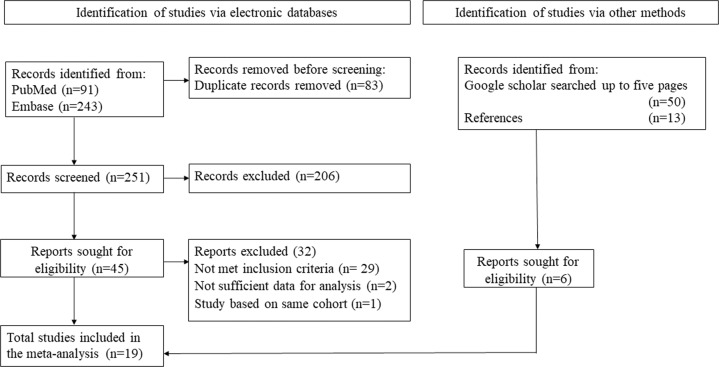
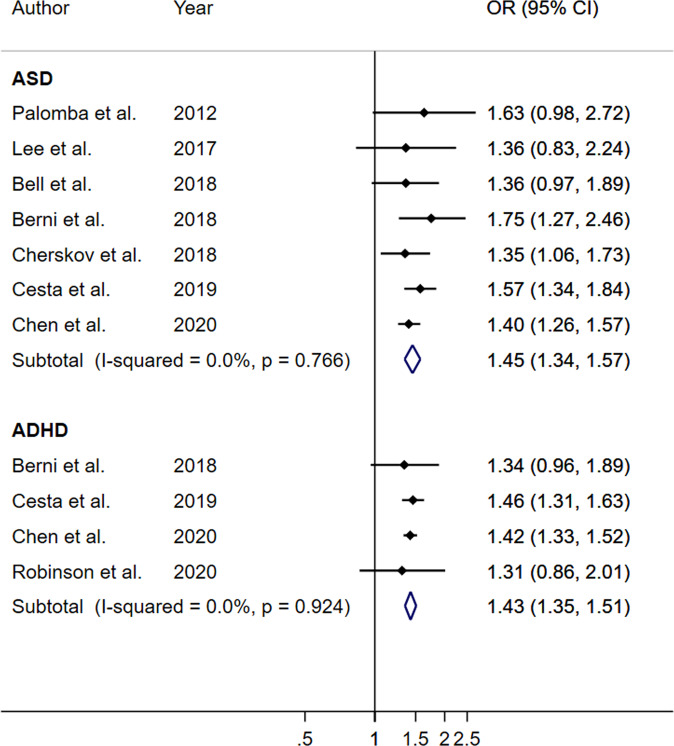
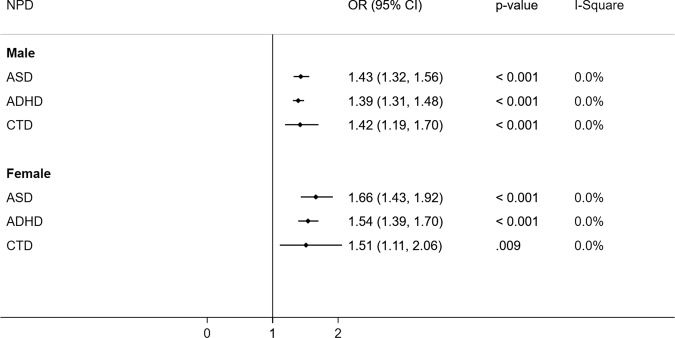
There is emerging evidence demonstrating an association between maternal polycystic ovary syndrome (PCOS) and autism spectrum disorder (ASD) in children, however, the cumulative effect of maternal PCOS on the development of ASD or other neuropsychiatry disorders (NPD) in children and separately for males and females has not been examined. We sought to systematically evaluate the influence of maternal PCOS on a wide range of NPD including ASD, attention deficit hyperactivity disorder (ADHD), chronic tic disorder (CDT), other behavior disorders, anxiety, depression, bipolar disorder, schizophrenia in children as well as in women of reproductive age only. We queried electronic databases including PubMed, EMBASE, and Google Scholar, until March 2021. We used DerSimonian and Laird (D-L) random effects method to compute pooled effect size in terms of odds ratio (OR). Nineteen studies (1667851 mothers, 2260622 children) were included in this study. Mothers with PCOS had an increased odds of children diagnosed with ASD (OR = 1.40,p < 0.001), ADHD (OR = 1.42,p < 0.001), CTD (OR = 1.44,p = 0.001), anxiety (OR = 1.33,p < 0.001), as well as other behavioral symptoms (OR = 1.45,p < 0.001) in the adjusted analysis. The association between maternal PCOS and ASD (OR: 1.43 vs. 1.66), ADHD (OR: 1.39 vs. 1.54), and CTD (OR: 1.42 vs. 1.51) was found to be significantly consistent between males and females, respectively. Our data do not suggest increased fetal testosterone exposure is associated with increased autistic traits in children. However, PCOS was significantly associated with increased odds of a wide range of NPD in women themselves. Maternal PCOS is a risk factor for various NPD with a similar extent in their children regardless of their underlying comorbidities. Managing PCOS is essential for women’s health as well as for their children’s health. More research is needed to determine the mechanisms and links between maternal PCOS and NPD in children.
Overview
The claims and statistics of this paper haven’t been checked yet.
Free: it reads the open-access text and checks the first 5 claims that cite a source we can check. Create a free account to check every claim.
Integrity signals
Registry
Cites
Statistics
Figures
Verification
Claims the paper makes
The claims and statistics of this paper haven’t been checked yet.
Free: it reads the open-access text and checks the first 5 claims that cite a source we can check. Create a free account to check every claim.
Claims other papers make about this one
Each is checked against this paper’s own text: does it say what the citing paper says it does?
In the citing paper
“However, there is no consistent association between in utero androgen exposure and autistic traits266,267.”
From Sex and gender in neurodevelopmental conditions (2023) · cites this paper as [266]
Self-check
Percentages, sums and reported differences re-computed from the paper’s own numbers.
The self-check needs the paper’s full text.
Citations
Cites
The PRISMA 2020 statement: An updated guideline for reporting systematic reviews
Page, M. J., McKenzie, J. E., Bossuyt, P. M., Boutron, I., Hoffmann, T. C., Mulrow, C. D., Shamseer, L., Tetzlaff, J. M., Akl, E. A., Brennan, S. E., et al. (2021) · BMJ · doi:10.1136/bmj.n71 · Cited by 108,283
Meta-analysis of Observational Studies in Epidemiology<SUBTITLE>A Proposal for Reporting</SUBTITLE>
Stroup, D. F. (2000) · JAMA · doi:10.1001/jama.283.15.2008 · Cited by 20,623
Borenstein, M., Hedges, L. V., Higgins, J. P. T., & Rothstein, H. R. (2009) · doi:10.1002/9780470743386 · Cited by 14,225
Borenstein, M., Hedges, L. V., Higgins, J. P. T., & Rothstein, H. R. (2021) · doi:10.1002/9781119558378 · Cited by 9,799
Merikangas, K. R., He, J.-P., Burstein, M., Swanson, S. A., Avenevoli, S., Cui, L., Benjet, C., Georgiades, K., & Swendsen, J. (2010) · Journal of the American Academy of Child & Adolescent Psychiatry · doi:10.1016/j.jaac.2010.05.017 · Cited by 6,278
Prevalence and Treatment of Mental Disorders Among US Children in the 2001–2004 NHANES
Merikangas, K. R., He, J.-P., Brody, D., Fisher, P. W., Bourdon, K., & Koretz, D. S. (2010) · Pediatrics · doi:10.1542/peds.2008-2598 · Cited by 1,172
Pervasive Developmental Disorders in Preschool Children: Confirmation of High Prevalence
Chakrabarti, S., & Fombonne, E. (2005) · American Journal of Psychiatry · doi:10.1176/appi.ajp.162.6.1133 · Cited by 791 · cited 1×
“Neurodevelopmental disorders such as ASD and ADHD are often observed 4-10 times higher in males than females in the general population [40, 41].”
BackgroundElevated fetal steroidogenic activity in autism
Baron-Cohen, S., Auyeung, B., Nørgaard-Pedersen, B., Hougaard, D. M., Abdallah, M. W., Melgaard, L., Cohen, A. S., Chakrabarti, B., Ruta, L., & Lombardo, M. V. (2015) · Molecular Psychiatry · doi:10.1038/mp.2014.48 · Cited by 471 · cited 3×
“However, one article [34] was excluded as this study was a sub-cohort of another included study [11] in this meta-analysis.”
BackgroundResultFetal testosterone and autistic traits
Auyeung, B., Baron‐Cohen, S., Ashwin, E., Knickmeyer, R., Taylor, K., & Hackett, G. (2009) · British Journal of Psychology · doi:10.1348/000712608x311731 · Cited by 462
Chapman, E., Baron-Cohen, S., Auyeung, B., Knickmeyer, R., Taylor, K., & Hackett, G. (2006) · Social Neuroscience · doi:10.1080/17470910600992239 · Cited by 389
Research works printed but not linked: 1
- MH Brain Gender: Oxford University Press, Inc; 2005.
Cited by
Stener-Victorin, E., Teede, H., Norman, R. J., Legro, R., Goodarzi, M. O., Dokras, A., Laven, J., Hoeger, K., & Piltonen, T. T. (2024) · Nature Reviews Disease Primers · doi:10.1038/s41572-024-00511-3 · Cited by 495
“PCOS suggests a unique PCOS-associated epigenetic signature 110 , predisposing them to reproductive, metabolic and neuropsychiatric disorders 97,106,109,111,112 .”
Sex and gender in neurodevelopmental conditions
Bölte, S., Neufeld, J., Marschik, P. B., Williams, Z. J., Gallagher, L., & Lai, M.-C. (2023) · Nature Reviews Neurology · doi:10.1038/s41582-023-00774-6 · Cited by 249
Epigenetic inheritance of PCOS by developmental programming and germline transmission
Stener‐Victorin, E., & Deng, Q. (2024) · Trends in Endocrinology and Metabolism · doi:10.1016/j.tem.2024.12.002 · Cited by 42
Kaplan, Z. B., Pearce, E. N., Lee, S. Y., Shin, H., & Schmidt, R. J. (2023) · Thyroid · doi:10.1089/thy.2023.0391 · Cited by 38
Dwivedi, A. K., Vishwakarma, D., Dubey, P., & Reddy, S. (2023) · European Journal of Endocrinology · doi:10.1093/ejendo/lvad067 · Cited by 29
Self-citationAnti-Müllerian Hormone and Polycystic Ovary Syndrome in Women and Its Male Equivalent
di Clemente, N., Racine, C., & Rey, R. A. (2022) · Biomedicines · doi:10.3390/biomedicines10102506 · Cited by 29
“As for women with PCOS, psychiatric disorders have also been reported [11].”
BackgroundFrom Pathophysiology to Treatment: The Role of Ferroptosis in PCOS
An, J., Zhou, Q., Guo, X., Xu, C., Jia, X., Cao, Z., & Lu, Q. (2025) · Frontiers in Bioscience-Landmark · doi:10.31083/fbl25586 · Cited by 20
Río, J. P. D., Tsompanidis, A., Gaspar, P. A., Maturana, A., Rojas, G., Dagnino‐Subiabre, A., Olea, A., Maliqueo, M. A., Echiburú, B., de Guevara, A. L., et al. (2025) · Frontiers in Neuroendocrinology · doi:10.1016/j.yfrne.2025.101188 · Cited by 15
Lunddorf, L. L. H., Arendt, L. H., Ernst, A., Brix, N., Knudsen, U. B., Olsen, J., & Ramlau‐Hansen, C. H. (2022) · Human Reproduction · doi:10.1093/humrep/deac197 · Cited by 17
Hu, R., Huang, Y., Liu, Z., Dong, H., Ma, W., Song, K., Xu, X., Wu, X. W., Geng, Y., Li, F., et al. (2024) · Reproductive BioMedicine Online · doi:10.1016/j.rbmo.2024.104296 · Cited by 17
Steroid hormone pathways, vitamin D and autism: a systematic review
Amestoy, A., Baudrillard, C., Briot, K., Pizano, A., Bouvard, M. P., & Lai, M. (2023) · Journal of Neural Transmission · doi:10.1007/s00702-022-02582-6 · Cited by 16
Hu, R., Geng, Y., Huang, Y., Liu, Z., Li, F., Dong, H., Ma, W., Song, K., Zhang, M., Zhang, Z., et al. (2023) · International Journal of Gynecology & Obstetrics · doi:10.1002/ijgo.14988 · Cited by 17
“26,44,77 Greater odds of psychiatric disorders in the offspring of women with PCOS verified the same points, 26,37,56 because the offspring will not sense the mental activities of their mothers.”
BackgroundPinna, G., & Bortolato, M. (2025) · Neuroscience & Biobehavioral Reviews · doi:10.1016/j.neubiorev.2025.106438 · Cited by 13
Zhang, Y., Lu, D., Guo, V. Y., Wang, Y., Qiu, S., Zhang, J., Zhang, Y., Chen, W., Wang, B., & Yang, W. (2023) · Frontiers in Public Health · doi:10.3389/fpubh.2022.1032315 · Cited by 15
Kosidou, K., Karlsson, H., Arver, S., Bhasin, S., Dalman, C., & Gardner, R. M. (2024) · Biological Psychiatry · doi:10.1016/j.biopsych.2024.02.1014 · Cited by 15
Qiao, D., Mu, C., Huan, C., Wen, D., Wang, Z., Zhang, B., Guo, F., Wang, C., Zhang, R., Wang, C., et al. (2024) · Progress in Neuro-Psychopharmacology and Biological Psychiatry · doi:10.1016/j.pnpbp.2024.111219 · Cited by 11
Assessing the impact of medically assisted reproduction on autism spectrum disorder risk
Zamstein, O., Wainstock, T., Gutvirtz, G., & Sheiner, E. (2024) · Journal of Assisted Reproduction and Genetics · doi:10.1007/s10815-024-03180-z · Cited by 12
“2 Cumulative incidence of autism spectrum disorder (ASD) diagnoses in offspring according to conception method (log-rank p -value = 0.136) linked to endometriosis and obesity, or from genetic variations in the sperm of oligospermic males [32, 36, 45].”
MethodInfluentialDarlas, M., Kalantaridou, S., & Valsamakis, G. (2025) · International Journal of Molecular Sciences · doi:10.3390/ijms26052199 · Cited by 9
“…hyperandrogenemia and progeny ASD, including all of the possible causes of hyperandrogenemia (PCOS, hyperaldosteronism, anterior pituitary hyperfunction, Cushing syndrome, and congenital adrenal hyperplasia) and conditions that could be caused by excess androgens, such as alopecia and hirsutism.”
Fox, R., Akinboro, S., Kędzia, A. W., & Niechciał, E. (2025) · Biomedicines · doi:10.3390/biomedicines13081965 · Cited by 8
Dwivedi, A. K. (2026) · PeerJ · doi:10.7717/peerj.20897 · Cited by 7
“In a meta-analysis evaluating the relationship between maternal PCOS and neuropsychiatric outcomes in offspring, we validated findings by conducting sensitivity analyses on restricted studies based on PCOS and autism spectrum disorder diagnoses and conversion effect sizes ( Dubey et al., 2021b ).”
Self-citationMaternal polycystic ovarian syndrome and offspring psychopathology and neurodevelopment
Kahn, L. G., Hipwell, A. E., Charifson, M., Ling, R., Cajachagua‐Torres, K. N., & Ghassabian, A. (2025) · Human Reproduction · doi:10.1093/humrep/deaf079 · Cited by 7
Rafiei, F., Ghaderi, H., & Amini‐khoei, H. (2026) · The World Journal of Biological Psychiatry · doi:10.1080/15622975.2026.2631519 · Cited by 4
“Several risk factors are associated with the development of ASD including multiple genetic and environmental factors, while the exact aetiology of ASD is poorly understood (Davis and Mire 2021; Dubey et al. 2021; Pereira et al. 2021).”
Ahmer, Z., Dar, M. S., Arif, M., Shah, M., Ain, N. U., Habiba, U., & Shahid, F. (2023) · Journal of the Pakistan Medical Association · doi:10.47391/jpma.8031 · Cited by 10
Cao, Q., Wang, R., Zhou, R., Huang, X., Li, Y., Zhu, H., Qiao, X., & Huang, W. (2024) · Psychoneuroendocrinology · doi:10.1016/j.psyneuen.2024.106984 · Cited by 4
Hu, X., Zhu, M., Zhou, Q., Li, Z., Luo, L., Liang, W., Chen, S., Pu, X., & Du, J. (2025) · Drug Design Development and Therapy · doi:10.2147/dddt.s574929 · Cited by 5
“55,56 Epigenetic modifications involving DNA methylation, transcriptional dysregulation, and altered gamete-derived small RNAs have been observed across human and animal studies, supporting a transgenerational contribution to PCOS etiology.”
Cao, Q., Liu, D., Zhu, H., Wang, Q., Tan, J., Huang, X., Li, Y., Wang, R., Zhou, R., & Huang, W. (2025) · Gynecological Endocrinology · doi:10.1080/09513590.2025.2530566 · Cited by 3
Motafeghi, F. S., Akbarzadeh, M., Talebi, S., Habibi, D., Fateh, S. T., Majd, H. A., Hedayati, M., Azizi, F., DANESHPOUR, M. S., & Tehrani, F. R. (2025) · Intern J Endocrinol Metab · doi:10.5812/ijem-159124 · Cited by 3
Nautiyal, H., Jaiswar, A., Roy, K. K., & Dwivedi, S. (2025) · Hormones and Behavior · doi:10.1016/j.yhbeh.2025.105859 · Cited by 3
Nautiyal, H., Roy, K. K., & Dwivedi, S. (2026) · ACS Chemical Neuroscience · doi:10.1021/acschemneuro.5c00574 · Cited by 4
A molecular cell atlas of endocrine signaling in human neural organoids
Matassa, G., Rigoli, M. T., Castaldi, D., Valenti, A., Lessi, M., Caporale, N., Stucchi, S., Muda, B., Nagni, R., Mainardi, L., et al. (2026) · Cell Press Blue · doi:10.1016/j.cpblue.2026.100077 · Cited by 7
Wen, J., Zhang, F., Cheng, G., Liu, C., & Zhang, Y. (2025) · The World Journal of Biological Psychiatry · doi:10.1080/15622975.2025.2555173 · Cited by 2
“Case-control studies further demonstrate a significantly higher prevalence of schizophrenia among women with PCOS relative to healthy controls (Cesta et al. 2016; Sari et al. 2020; Dubey et al. 2021).”
Hu, R., Huang, Y., Liu, Z., Dong, H., Ma, W., Song, K., Xu, X., Wu, X. W., Geng, Y., Li, F., et al. (2023) · Research Square · doi:10.21203/rs.3.rs-3060682/v1
Ferraz, L. C., Zamberlan, C., VASCONCELOS, J., Munhoz, O. L., & Ilha, S. (2023) · doi:10.22533/at.ed.9472315083
Complicações materno-fetais decorrentes da Síndrome do Ovário Policístico
Soares, C. B., Silva, A. F., Gobbo, L., Correa, L. M., Pereira, M. E. M., Oliveira, M. F. D., Maske, P. V., & Sousa, B. M. D. (2023) · Brazilian Journal of Health Review · doi:10.34119/bjhrv6n5-043 · Cited by 1
Cao, Q., Liu, D., Zhu, H., Wang, Q., Tan, J., Huang, X., Li, Y., Wang, R., Zhou, R., & Huang, W. (2023) · Research Square · doi:10.21203/rs.3.rs-3748838/v1
Pfeffer, C. A. (2022) · The Conversation · doi:10.64628/aai.qur9rntff
Genetic Background and Sex Modulate Androgen Responses in Human Brain Microphysiological SystemPreprint
Schenke, M., Laird, J., Rittenhouse, A., Kucheryavenko, V., Neuhaus, W., Chen, O., Sabunciyan, S., Maertens, A., & Smirnova, L. (2025) · bioRxiv (Cold Spring Harbor Laboratory) · doi:10.64898/2025.12.03.692130
“…and clinical studies (Auyeung et al., 2009; Baron-Cohen et al., 2015, 2020), and hyperandrogenic conditions (e.g. maternal polycystic ovary syndrome PCOS or Congenital Adrenal Hyperplasia (CAH)) have been associated with increased ASD risk in some studies (Dooley et al., 2022; Dubey et al., 2021).”
Furukawa, M., Wada‐Hiraike, O., Enomoto, Y., Tsuchimochi, S., Iriyama, T., Sasabuchi, Y., Yasunaga, H., Hirota, Y., & Osuga, Y. (2025) · BMC Pregnancy and Childbirth · doi:10.1186/s12884-025-08454-7
“…associated with ASD include advanced parental age, hypertension or abnormal glucose metabolism during pregnancy, preterm birth, low birth weight, comorbidities such as polycystic ovary syndrome (PCOS), and the use of certain medications during pregnancy [3, 8, 9, 10, 11, 12, 13, 14, 15, 16, 17].”
Tariq, H., Kamran, F., Ashraf, D. A., Khosa, W. M., Hassan, F. S., Khosa, M. M., Akhtar, M., & Tariq, A. (2026) · Research Square · doi:10.21203/rs.3.rs-8647682/v1
Cao, Q., Zhu, H., Zhou, R., & Huang, W. (2026) · Early Human Development · doi:10.1016/j.earlhumdev.2026.106506
Understanding and Managing Anxiety, Schizophrenia, Depression, and Bipolar Disorder in Children
Shafik, W. (2026) · IGI Global eBooks · doi:10.4018/979-8-3373-3084-6.ch004
Cao, Q. J., Du, S., Li, Z., Liu, X., Zhao, J., Yao, Z., Qiu, L., Qiao, C., Zhu, H., & Huang, W. (2026) · BMC Psychiatry · doi:10.1186/s12888-026-08047-4 · Cited by 1
“Additionally, we screened studies included in the previous systematic review by Dubey et al. (2021) to ensure comprehensive evidence coverage [38].”
Major mental disorders in offspring of mothers with polycystic ovary syndrome
Kung, F.-H., Tsou, H.-L., Lin, P.-C., Tsai, S., Chen, T., Hsu, T., Chen, M., & Liang, C. (2026) · Archives of Women s Mental Health · doi:10.1007/s00737-026-01758-3
“Supporting this hypothesis, a 2021 systematic review and meta-analysis confirmed that maternal PCOS is signifi - cantly associated with increased risks of both ASD (OR = 1.40, p < 0.001) and ADHD (OR = 1.42, p < 0.001) in offspring (Dubey et al. 2021).”
InfluentialShirasath, K. R., Awathale, S. N., & Goyal, S. N. (2026) · Journal of Psychiatric Research · doi:10.1016/j.jpsychires.2026.09.017
Keskin, İ. (2026) · IntechOpen eBooks · doi:10.5772/intechopen.1018274
Metadata
- Authors
- Dubey, P., Thakur, B., Rodriguez, S., Cox, J., Sanchez, S., Fonseca, A., Reddy, S., Clegg, D., & Dwivedi, A. K.
- Affiliations
- Texas Tech University Health Sciences Center (US)
- Corresponding author
- Dwivedi, Alok Kumar
- Venue
- Translational Psychiatry
- Published
- 2021-11-08
- Volume
- 11
- Issue
- 1
- Pages
- 569-569
- ISSN
- 2158-3188 (ISSN-L)
- PMC
- PMC8575994
- OpenAlex
- W3214103605
- Cited by
- 45
- References
- 53
- Citations by year
- 2026: 11 · 2025: 13 · 2024: 7 · 2023: 11 · 2022: 3
- FWCI
- 0.86
- Type
- journal article
- Language
- en
- Open access
- gold
- doi.org
- Licence
- cc-by
- creativecommons.org/licenses/by/4.0 (tdm)
- creativecommons.org/licenses/by/4.0 (vor)
- Locations
- Translational Psychiatry (publishedVersion, cc-by)
- PubMed Central (publishedVersion, cc-by)
- PubMed (publishedVersion)
- DOAJ (DOAJ: Directory of Open Access Journals) (submittedVersion, cc-by-sa)
- Topics
- Health Sciences › Medicine › Reproductive Medicine › Ovarian function and disorders
- Life Sciences › Neuroscience › Cognitive Neuroscience › Autism Spectrum Disorder Research
- Health Sciences › Medicine › Endocrinology, Diabetes and Metabolism › Sexual Differentiation and Disorders
- Keywords
- autism spectrum disorder, neuropsychiatric disorders, attention deficit hyperactivity disorder, chronic tic disorders, maternal anxiety, maternal depression, sex differences, child development, maternal mental health
- MeSH terms
- Autism Spectrum Disorder, Attention Deficit Disorder with Hyperactivity, Child, Female, Humans, Male, Mothers, Polycystic Ovary Syndrome, Tic Disorders
About these checks
Registry, retraction, Cites and statistics results are computed, not judged, with one exception: a printed reference that no index lists is read once by a model before it counts as a citation error. Claims are extracted by a model and kept only when their quote appears verbatim in the text; each cited source is then checked, with a model’s help, for whether it says what the claim relies on. Those verdicts can be wrong — read the claim’s quote and the cited source before relying on one.
Statistics and arithmetic are recomputed, not judged.
Confidence bands are shown only for fields calibrated on our annotated test set. None is calibrated yet, so no band is shown.
What counts as a claim ›How we measure confidence ›How we check this ›
Are you an author, or do you see a problem with this page? Request a review
Data sources
Bibliographic data: Semantic Scholar, OpenAlex, Crossref.
Contains information from the Semantic Scholar Academic Graph Datasets, made available under the ODC Attribution License (ODC-BY 1.0).
Semantic Scholar’s data is described in: Kinney, R., et al. (2023). The Semantic Scholar Open Data Platform. arXiv:2301.10140.
