

Evolving concepts in bone infection: redefining "biofilm", "acute vs. chronic osteomyelitis", "the immune proteome" and "local antibiotic therapy"
Open accessThe DOI matches its Crossref record; 275 of the 275 references it cites were found in a registry or an index.
Abstract
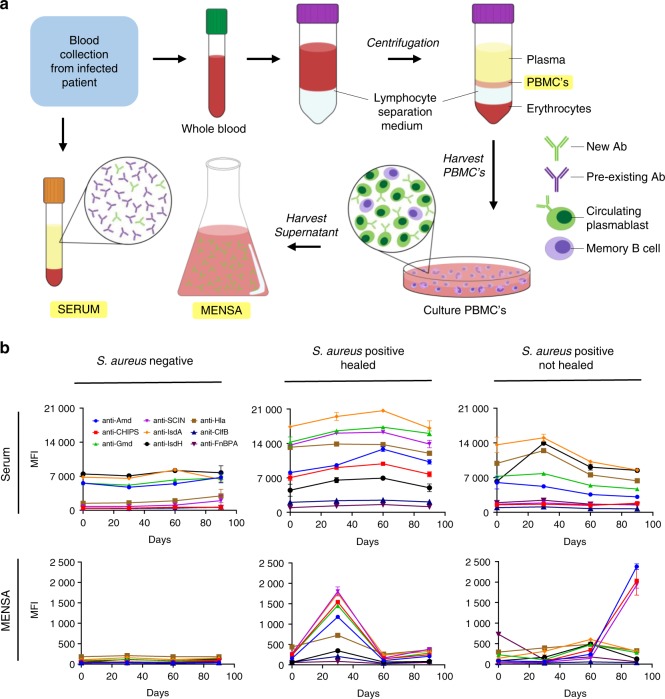
Osteomyelitis is a devastating disease caused by microbial infection of bone. While the frequency of infection following elective orthopedic surgery is low, rates of reinfection are disturbingly high.Staphylococcus aureus is responsible for the majority of chronic osteomyelitis cases and is often considered to be incurable due to bacterial persistence deep within bone. Unfortunately, there is no consensus on clinical classifications of osteomyelitis and the ensuing treatment algorithm. Given the high patient morbidity, mortality, and economic burden caused by osteomyelitis, it is important to elucidate mechanisms of bone infection to inform novel strategies for prevention and curative treatment. Recent discoveries in this field have identified three distinct reservoirs of bacterial biofilm including:Staphylococcal abscess communities in the local soft tissue and bone marrow, glycocalyx formation on implant hardware and necrotic tissue, and colonization of the osteocyte-lacuno canalicular network (OLCN) of cortical bone. In contrast,S. aureus intracellular persistence in bone cells has not been substantiated in vivo, which challenges this mode of chronic osteomyelitis. There have also been major advances in our understanding of the immune proteome against S. aureus, from clinical studies of serum antibodies and media enriched for newly synthesized antibodies (MENSA), which may provide new opportunities for osteomyelitis diagnosis, prognosis, and vaccine development. Finally, novel therapies such as antimicrobial implant coatings and antibiotic impregnated 3D-printed scaffolds represent promising strategies for preventing and managing this devastating disease. Here, we review these recent advances and highlight translational opportunities towards a cure.
Overview
The claims and statistics of this paper haven’t been checked yet.
Free: it reads the open-access text and checks the first 5 claims that cite a source we can check. Create a free account to check every claim.
Integrity signals
Registry
Cites
Statistics
Figures
Verification
Claims the paper makes
The claims and statistics of this paper haven’t been checked yet.
Free: it reads the open-access text and checks the first 5 claims that cite a source we can check. Create a free account to check every claim.
Claims other papers make about this one
Each is checked against this paper’s own text: does it say what the citing paper says it does?
The source backs part of the claim, not all of it — or backs it for a different population, condition or comparison.
In the citing paper
“Infected bone defects (IBDs) pose an arduous orthopedic healthcare challenge due to their complex pathophysiology: resilient biofilms and intracellular pathogens that evade conventional antibiotics, an immunosuppressive microenvironment that impairs bone regeneration, and large defects that are difficult to heal following surgical debridement [1,2].”
From Nanocatalytic magnesium osteoimplants with biodegradable self-adaptive interfaces for therapeutic repair of infected bone defects (2026) · cites this paper as [2]
Experimental — accuracy not yet measuredThe source backs part of the claim, not all of it — or backs it for a different population, condition or comparison.
In the citing paper
“Current treatments relying on debridement and antibiotics face limitations including antibiotic resistance and inability to eradicate biofilms or intracellular pathogens [2,3].”
From Nanocatalytic magnesium osteoimplants with biodegradable self-adaptive interfaces for therapeutic repair of infected bone defects (2026) · cites this paper as [2]
Experimental — accuracy not yet measuredThe source backs part of the claim, not all of it — or backs it for a different population, condition or comparison.
In the citing paper
“Moreover, existing implants lack targeted antimicrobial capability against biofilm-associated and intracellular pathogens [2,8].”
From Nanocatalytic magnesium osteoimplants with biodegradable self-adaptive interfaces for therapeutic repair of infected bone defects (2026) · cites this paper as [2]
Experimental — accuracy not yet measured
Self-check
Percentages, sums and reported differences re-computed from the paper’s own numbers.
The self-check needs the paper’s full text.
Citations
Cites
1 retracted
Genetic requirements for Staphylococcus aureus abscess formation and persistence in host tissues
Cheng, A. G., Kim, H. K., Burts, M. L., Krausz, T., Schneewind, O., & Missiakas, D. M. (2009) · The FASEB Journal · doi:10.1096/fj.09-135467 · Cited by 437 · cited 1×
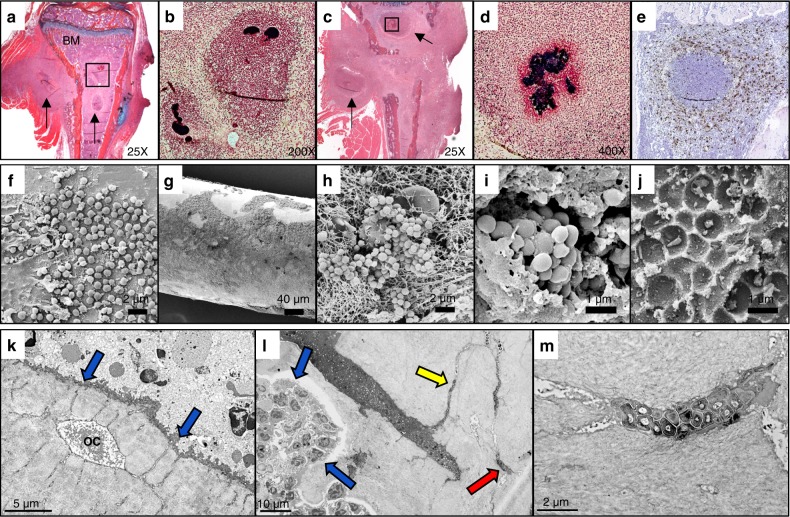
“As a result, abscesses rarely resolve without exogenous antimicrobial treatment.(64) Peri-prosthetic abscess formation begins with neutrophil recruitment to the site of an acute infection, stimulated by the local release of cytokines and chemokines by host cells.”
BackgroundRetractedBacterial Biofilms: A Common Cause of Persistent Infections
Costerton, J. W., Stewart, P. S., & Greenberg, E. P. (1999) · Science · doi:10.1126/science.284.5418.1318 · Cited by 12,167 · cited 1×
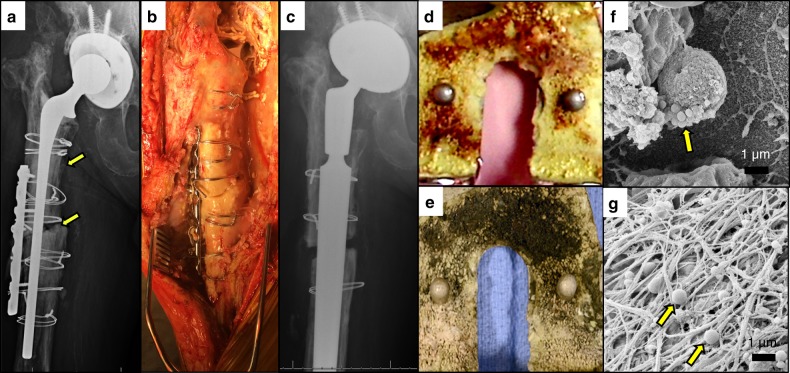
“aureus is its ability to form biofilm matrices embedded with phenotypically altered bacterial cells.(77) As an adaptive response to environmental stress, unicellular bacteria often form biofilms to survive in a protected, multi-cellular community that is resistant to host immune response and antibiotic therapy.”
BackgroundFlemming, H.-C., & Wingender, J. (2010) · Nature Reviews Microbiology · doi:10.1038/nrmicro2415 · Cited by 10,137 · cited 1×
“2h), which encase the bacterial cells to mediate adhesion, provide mechanical stability and retain essential nutrients and enzymes.(78) As the biofilm matures, it becomes a complex and heterogeneous structure containing protected pods of bacteria (Fig.”
BackgroundPattern Recognition Receptors and Inflammation
Takeuchi, O., & Akira, S. (2010) · Cell · doi:10.1016/j.cell.2010.01.022 · Cited by 8,895
Mizgerd, J. P., Kubo, H., Kutkoski, G. J., Bhagwan, S. D., Scharffetter-Kochanek, K., Beaudet, A. L., & Doerschuk, C. M. (1997) · The Journal of Experimental Medicine · doi:10.1084/jem.186.8.1357 · Cited by 7,306
Bacterial biofilms: from the Natural environment to infectious diseases
Hall-Stoodley, L., Costerton, J. W., & Stoodley, P. (2004) · Nature Reviews Microbiology · doi:10.1038/nrmicro821 · Cited by 7,143
Staphylococcus aureus Infections
Lowy, F. D. (1998) · New England Journal of Medicine · doi:10.1056/nejm199808203390806 · Cited by 6,005
Mechanisms of biofilm resistance to antimicrobial agents
Mah, T.-F. C., & O'Toole, G. A. (2001) · Trends in Microbiology · doi:10.1016/s0966-842x(00)01913-2 · Cited by 3,921 · cited 1×
“For these reasons, bacteria within biofilms become very resistant to antimicrobial treatment and can survive drug dosing up to 1 000 times greater than their planktonic phenotype.(87) In addition to conferring long-term bacterial survival, biofilms can cause immense damage to the surrounding host tissue.”
BackgroundZimmerli, W., Trampuz, A., & Ochsner, P. E. (2004) · New England Journal of Medicine · doi:10.1056/nejmra040181 · Cited by 3,116
Global, regional, and national causes of child mortality in 2008: a systematic analysis
Black, R. E., Cousens, S., Johnson, H. L., Lawn, J. E., Rudan, I., Bassani, D. G., Jha, P., Campbell, H., Walker, C. F., Cibulskis, R., et al. (2010) · The Lancet · doi:10.1016/s0140-6736(10)60549-1 · Cited by 3,058 · cited 1×
“Antibiotic resistance is estimated to causes 10 million deaths/year by the year 2050.(226,227) This suggests that significant attention should be directed to the development of novel antimicrobial classes to circumvent the constantly evolving bacterial resistance mechanisms.”
Background
Cited by
Beyond Risk: Bacterial Biofilms and Their Regulating Approaches
Muhammad, M. H., Idris, A. L., Fan, X., Guo, Y., Yu, Y., Jin, X., Qiu, J., Guan, X., & Huang, T. (2020) · Frontiers in Microbiology · doi:10.3389/fmicb.2020.00928 · Cited by 860
Godoy-Gallardo, M., Eckhard, U., Delgado, L. M., de Roo Puente, Y. J. D., Hoyos-Nogués, M., Gil, F. J., & Perez, R. A. (2021) · Bioactive Materials · doi:10.1016/j.bioactmat.2021.04.033 · Cited by 857
Skeletal infections: microbial pathogenesis, immunity and clinical management
Masters, E. A., Ricciardi, B. F., Bentley, K. L. D. M., Moriarty, T. F., Schwarz, E. M., & Muthukrishnan, G. (2022) · Nature Reviews Microbiology · doi:10.1038/s41579-022-00686-0 · Cited by 735
Self-citationWang, R., Shi, M., Xu, F., Qiu, Y., Zhang, P., Shen, K., Zhao, Q., Yu, J., & Zhang, Y. (2020) · Nature Communications · doi:10.1038/s41467-020-18267-1 · Cited by 441
Biofilms: Formation, drug resistance and alternatives to conventional approaches
Mirghani, R., Saba, T., Khaliq, H., Mitchell, J., Do, L., Chambi, L., Diaz, K., Kennedy, T., Alkassab, K., Huynh, T., et al. (2022) · AIMS Microbiology · doi:10.3934/microbiol.2022019 · Cited by 333
Metadata
- Authors
- Masters, E. A., Trombetta, R. P., de Mesy Bentley, K. L., Boyce, B. F., Gill, A. L., Gill, S. R., Nishitani, K., Ishikawa, M., Morita, Y., Ito, H., Bello-Irizarry, S. N., Ninomiya, M., Brodell, J. D., Lee, C. C., Hao, S. P., Oh, I., Xie, C., Awad, H. A., Daiss, J. L., Owen, J. R., Kates, S. L., Schwarz, E. M., & Muthukrishnan, G.
- Affiliations
- University of Rochester Medicine (US)
- Kyoto University (JP)
- Virginia Commonwealth University Medical Center (US)
- Corresponding author
- Schwarz, Edward M.
- ORCID
- Masters, Elysia A.
- Trombetta, Ryan P.
- Boyce, Brendan F
- Gill, Ann Lindley
- Gill, Steven R.
- Nishitani, Kohei
- Ishikawa, Masahiro
- Morita, Yugo
- Ito, Hiromu
- Ninomiya, Mark
- Brodell, James D.
- Lee, Charles C.
- Hao, Stephanie P.
- Oh, Irvin
- Xie, Chao
- Awad, Hani A.
- Daiss, John L.
- Owen, John R.
- Kates, Stephen L.
- Schwarz, Edward M.
- Muthukrishnan, Gowrishankar
- Venue
- Bone Research
- Published
- 2019-07-15
- Volume
- 7
- Issue
- 1
- Pages
- 20-20
- ISSN
- 2095-4700 (ISSN-L)
- 2095-6231
- PMC
- PMC6804538
- OpenAlex
- W2959071814
- Semantic Scholar
- e050fbf236fc8e3356c100a29eaca07668635d74
- Cited by
- 575
- References
- 273
- Citations by year
- 2026: 85 · 2025: 98 · 2024: 82 · 2023: 86 · 2022: 94 · 2021: 73 · 2020: 54 · 2019: 2
- FWCI
- 11.50
- Type
- journal article
- Language
- en
- Open access
- gold
- doi.org
- Licence
- cc-by
- creativecommons.org/licenses/by/4.0 (tdm)
- creativecommons.org/licenses/by/4.0 (vor)
- Locations
- Bone Research (publishedVersion, cc-by)
- Europe PMC (PubMed Central) (publishedVersion, cc-by)
- PubMed Central (publishedVersion, cc-by)
- PubMed (publishedVersion)
- Funders
- U.S. Department of Health & Human Services | NIH | National Institute of Arthritis and Musculoskeletal and Skin Diseases (P50 AR072000, P30 AR069655, R01 AR43510, R01 AG049994, P30 AR061307, T32 AR53459, R21 AR074571, R21 AR073321, R21 AR500710, P30 AR069655-01 Pilot, R01 AI119646)
- AO Foundation (Clinical Priority Program)
- Amedica Inc
- Bristol-Myers Squibb
- Astellas Pharma
- Asahi Kasei Pharma Corporation
- Bristol-Myers, Astellas and Asahi-Kasei
- Goldstein Award from the Department of Orthopaedics, University of Rochester, Rochester, NY
- Topics
- Health Sciences › Medicine › Surgery › Orthopedic Infections and Treatments
- Life Sciences › Biochemistry, Genetics and Molecular Biology › Molecular Biology › Bacterial biofilms and quorum sensing
- Health Sciences › Medicine › Infectious Diseases › Antimicrobial Resistance in Staphylococcus
- Keywords
- osteomyelitis, bone infection, bacterial biofilms, Staphylococcus aureus, chronic osteomyelitis, serum antibodies, implant-associated infection, vaccine development
About these checks
Registry, retraction, Cites and statistics results are computed, not judged, with one exception: a printed reference that no index lists is read once by a model before it counts as a citation error. Claims are extracted by a model and kept only when their quote appears verbatim in the text; each cited source is then checked, with a model’s help, for whether it says what the claim relies on. Those verdicts can be wrong — read the claim’s quote and the cited source before relying on one.
Statistics and arithmetic are recomputed, not judged.
Confidence bands are shown only for fields calibrated on our annotated test set. None is calibrated yet, so no band is shown.
What counts as a claim ›How we measure confidence ›How we check this ›
Are you an author, or do you see a problem with this page? Request a review
Data sources
Bibliographic data: Semantic Scholar, OpenAlex, Crossref.
Contains information from the Semantic Scholar Academic Graph Datasets, made available under the ODC Attribution License (ODC-BY 1.0).
Semantic Scholar’s data is described in: Kinney, R., et al. (2023). The Semantic Scholar Open Data Platform. arXiv:2301.10140.
