

A functional genetic screen defines the AKT-induced senescence signaling network
Open accessThe DOI matches its Crossref record; 75 of the 75 references it cites were found in a registry or an index.
Abstract
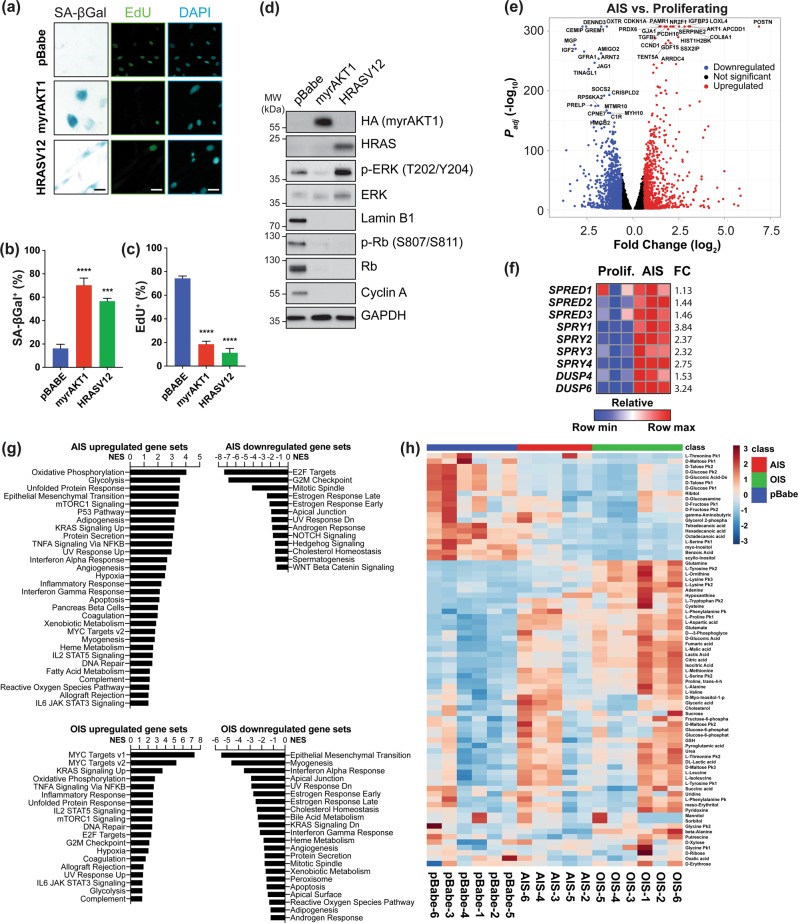
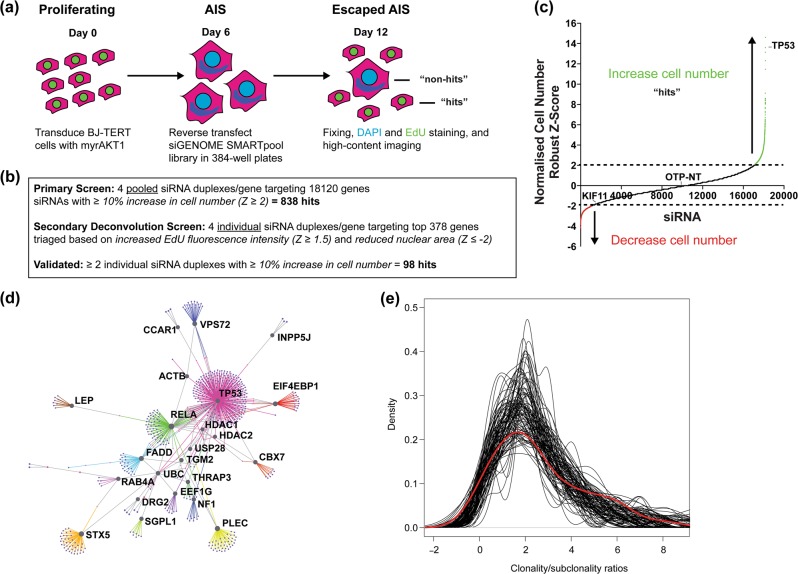
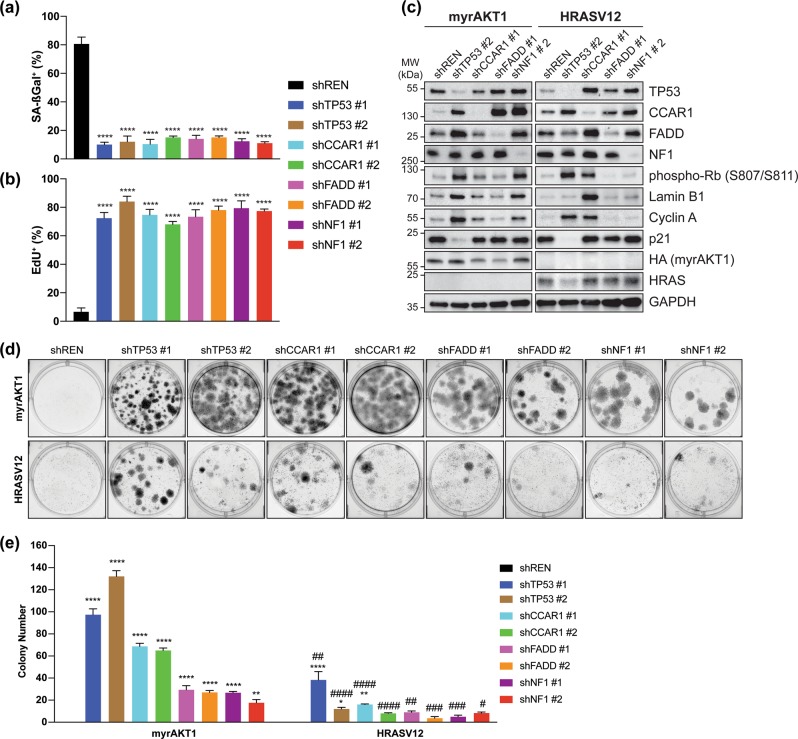
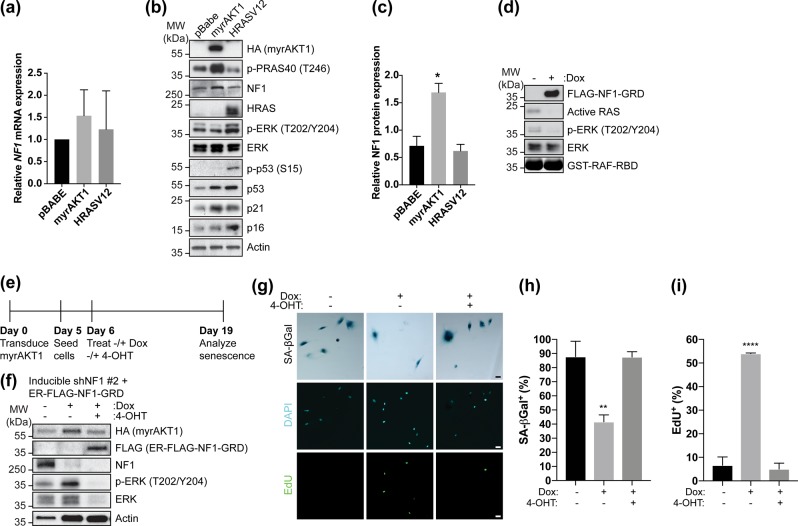
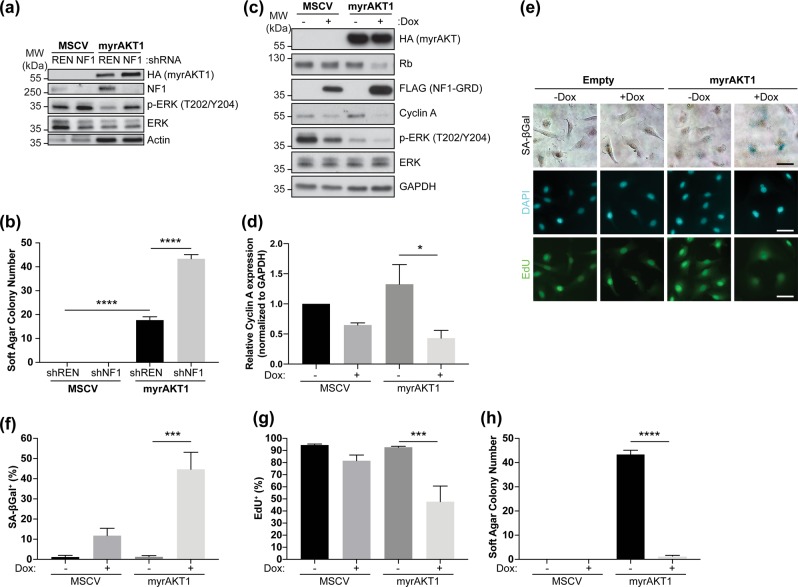
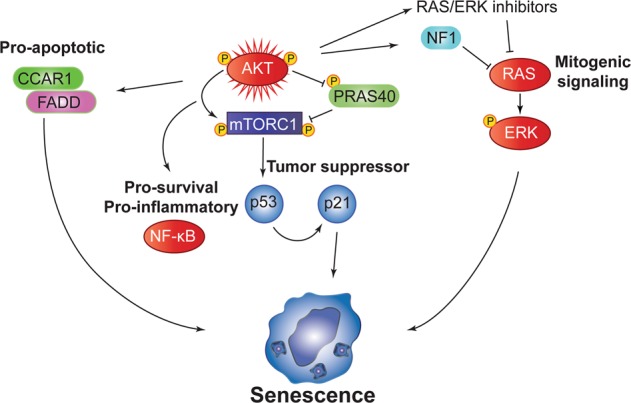
Exquisite regulation of PI3K/AKT/mTORC1 signaling is essential for homeostatic control of cell growth, proliferation, and survival. Aberrant activation of this signaling network is an early driver of many sporadic human cancers. Paradoxically, sustained hyperactivation of the PI3K/AKT/mTORC1 pathway in nontransformed cells results in cellular senescence, which is a tumor-suppressive mechanism that must be overcome to promote malignant transformation. While oncogene-induced senescence (OIS) driven by excessive RAS/ERK signaling has been well studied, little is known about the mechanisms underpinning the AKT-induced senescence (AIS) response. Here, we utilize a combination of transcriptome and metabolic profiling to identify key signatures required to maintain AIS. We also employ a whole protein-coding genome RNAi screen for AIS escape, validating a subset of novel mediators and demonstrating their preferential specificity for AIS as compared with OIS. As proof of concept of the potential to exploit the AIS network, we show that neurofibromin 1 (NF1) is upregulated during AIS and its ability to suppress RAS/ERK signaling facilitates AIS maintenance. Furthermore, depletion of NF1 enhances transformation of p53-mutant epithelial cells expressing activated AKT, while its overexpression blocks transformation by inducing a senescent-like phenotype. Together, our findings reveal novel mechanistic insights into the control of AIS and identify putative senescence regulators that can potentially be targeted, with implications for new therapeutic options to treat PI3K/AKT/mTORC1-driven cancers.
Overview
The claims and statistics of this paper haven’t been checked yet.
Free: it reads the open-access text and checks the first 5 claims that cite a source we can check. Create a free account to check every claim.
Integrity signals
Registry
Cites
Statistics
Figures
Verification
Claims the paper makes
The claims and statistics of this paper haven’t been checked yet.
Free: it reads the open-access text and checks the first 5 claims that cite a source we can check. Create a free account to check every claim.
Claims other papers make about this one
Each is checked against this paper’s own text: does it say what the citing paper says it does?
The cited source says what the claim attributes to it.
In the citing paper
“unlike oncogenic RAS or BRAF, activation of the PI3K–AKT pathway promotes p53-dependent senescence often in the absence of detectable hyperproliferation and strong DNA damage accumulation42,43, suggesting distinct underlying mechanisms”
From Cellular senescence in ageing: from mechanisms to therapeutic opportunities (2021) · cites this paper as [43]
Self-check
Percentages, sums and reported differences re-computed from the paper’s own numbers.
The self-check needs the paper’s full text.
Citations
Cites
Cerami, E., Gao, J., Dogrusoz, U., Gross, B. E., Sumer, S. O., Aksoy, B. A., Jacobsen, A., Byrne, C. J., Heuer, M. L., Larsson, E., et al. (2012) · Cancer Discovery · doi:10.1158/2159-8290.cd-12-0095 · Cited by 17,455
Differential expression analysis for sequence count data
Anders, S., & Huber, W. (2010) · Genome Biology · doi:10.1186/gb-2010-11-10-r106 · Cited by 15,581
GSVA: gene set variation analysis for microarray and RNA-Seq data
Hänzelmann, S., Castelo, R., & Guinney, J. (2013) · BMC Bioinformatics · doi:10.1186/1471-2105-14-7 · Cited by 15,440
Integrative Analysis of Complex Cancer Genomics and Clinical Profiles Using the cBioPortal
Gao, J., Aksoy, B. A., Dogrusoz, U., Dresdner, G., Gross, B., Sumer, S. O., Sun, Y., Jacobsen, A., Sinha, R., Larsson, E., et al. (2013) · Science Signaling · doi:10.1126/scisignal.2004088 · Cited by 15,160 · cited 2×
“We examined the TCGA dataset using cBioportal [39, 40] and selected patients only with RNASeq (v2) gene”
MethodThe Molecular Signatures Database Hallmark Gene Set Collection
Liberzon, A., Birger, C., Thorvaldsdóttir, H., Ghandi, M., Mesirov, J. P., & Tamayo, P. (2015) · Cell Systems · doi:10.1016/j.cels.2015.12.004 · Cited by 13,807
Mapping and quantifying mammalian transcriptomes by RNA-Seq
Mortazavi, A., Williams, B. A., McCue, K., Schaeffer, L., & Wold, B. (2008) · Nature Methods · doi:10.1038/nmeth.1226 · Cited by 13,696
TopHat: discovering splice junctions with RNA-Seq
Trapnell, C., Pachter, L., & Salzberg, S. L. (2009) · Bioinformatics · doi:10.1093/bioinformatics/btp120 · Cited by 11,617
Integrated genomic analyses of ovarian carcinoma
Perou, C. M. (2019) · Carolina Digital Repository (University of North Carolina at Chapel Hill) · doi:10.17615/hvp3-wg08 · Cited by 7,925
Oncogenic ras provokes premature cell senescence associated with accumulation of p53 and p16INK4a
Serrano, M., Lin, A. W., McCurrach, M. E., Beach, D., & Lowe, S. W. (1997) · Cell · doi:10.1016/s0092-8674(00)81902-9 · Cited by 5,218
Clonogenic assay of cells in vitro
Franken, N. A. P., Rodermond, H. M., Stap, J., Haveman, J., & van Bree, C. (2006) · Nature Protocols · doi:10.1038/nprot.2006.339 · Cited by 4,188
Systematic RNA interference reveals that oncogenic KRAS-driven cancers require TBK1
Barbie, D. A., Tamayo, P., Boehm, J. S., Kim, S. Y., Moody, S. E., Dunn, I. F., Schinzel, A. C., Sandy, P., Meylan, E., Scholl, C., et al. (2009) · Nature · doi:10.1038/nature08460 · Cited by 3,890
The Galaxy platform for accessible, reproducible and collaborative biomedical analyses: 2018 update
Afgan, E., Baker, D., Batut, B., van den Beek, M., Bouvier, D., Čech, M., Chilton, J., Clements, D., Coraor, N., Grüning, B. A., et al. (2018) · Nucleic Acids Research · doi:10.1093/nar/gky379 · Cited by 3,662
High Frequency of Mutations of the PIK3CA Gene in Human Cancers
Samuels, Y., Wang, Z., Bardelli, A., Silliman, N., Ptak, J., Szabo, S., Yan, H., Gazdar, A., Powell, S. M., Riggins, G. J., et al. (2004) · Science · doi:10.1126/science.1096502 · Cited by 3,437
Tracking the Evolution of Non–Small-Cell Lung Cancer
Jamal-Hanjani, M., Wilson, G. A., McGranahan, N., Birkbak, N. J., Watkins, T. B. K., Veeriah, S., Shafi, S., Johnson, D. H., Mitter, R., Rosenthal, R., et al. (2017) · New England Journal of Medicine · doi:10.1056/nejmoa1616288 · Cited by 2,349
Creation of human tumour cells with defined genetic elements
Hahn, W. C., Counter, C. M., Lundberg, A. S., Beijersbergen, R. L., Brooks, M. W., & Weinberg, R. A. (1999) · Nature · doi:10.1038/22780 · Cited by 2,345
Rb-mediated heterochromatin formation and silencing of E2F target genes during cellular senescence
Narita, M., Nuñez, S., Heard, E., Narita, M., Lin, A. W., Hearn, S. A., Spector, D. L., Hannon, G. J., & Lowe, S. W. (2003) · Cell · doi:10.1016/s0092-8674(03)00401-x · Cited by 2,278
The Galaxy platform for accessible, reproducible and collaborative biomedical analyses: 2016 update
Afgan, E., Baker, D., van den Beek, M., Blankenberg, D., Bouvier, D., Čech, M., Chilton, J., Clements, D., Coraor, N., Eberhard, C., et al. (2016) · Nucleic Acids Research · doi:10.1093/nar/gkw343 · Cited by 2,148
Oncogene-Induced Senescence Relayed by an Interleukin-Dependent Inflammatory Network
Kuilman, T., Michaloglou, C., Vredeveld, L. C. W., Douma, S., van Doorn, R., Desmet, C. J., Aarden, L. A., Mooi, W. J., & Peeper, D. S. (2008) · Cell · doi:10.1016/j.cell.2008.03.039 · Cited by 2,086
Crucial role of p53-dependent cellular senescence in suppression of Pten-deficient tumorigenesis
Chen, Z., Trotman, L. C., Shaffer, D., Lin, H.-K., Dotan, Z. A., Niki, M., Koutcher, J. A., Scher, H. I., Ludwig, T., Gerald, W., et al. (2005) · Nature · doi:10.1038/nature03918 · Cited by 1,993
PI3K pathway alterations in cancer: variations on a theme
Yuan, T. L., & Cantley, L. C. (2008) · Oncogene · doi:10.1038/onc.2008.245 · Cited by 1,845
Chemokine signaling via the CXCR2 receptor reinforces senescence
Acosta, J. C., O'Loghlen, A., Banito, A., Guijarro, M. V., Augert, A., Raguz, S., Fumagalli, M., Da Costa, M., Brown, C., Popov, N., et al. (2008) · Cell · doi:10.1016/j.cell.2008.03.038 · Cited by 1,801
PI3K and cancer: lessons, challenges and opportunities
Fruman, D. A., & Rommel, C. (2014) · Nature Reviews Drug Discovery · doi:10.1038/nrd4204 · Cited by 1,709
Debacq-Chainiaux, F., Erusalimsky, J. D., Campisi, J., & Toussaint, O. (2009) · Nature Protocols · doi:10.1038/nprot.2009.191 · Cited by 1,668
Whole–genome characterization of chemoresistant ovarian cancer
Patch, A.-M., Christie, E. L., Etemadmoghadam, D., Garsed, D. W., George, J., Fereday, S., Nones, K., Cowin, P., Alsop, K., Bailey, P. J., et al. (2015) · Nature · doi:10.1038/nature14410 · Cited by 1,569
Senescence in premalignant tumours
Collado, M., Gil, J., Efeyan, A., Guerra, C., Schuhmacher, A. J., Barradas, M., Benguría, A., Zaballos, A., Flores, J. M., Barbacid, M., et al. (2005) · Nature · doi:10.1038/436642a · Cited by 1,482
Reversal of human cellular senescence: roles of the p53 and p16 pathways
Beauséjour, C. M., Krtolica, A., Galimi, F., Narita, M., Lowe, S. W., Yaswen, P., & Campisi, J. (2003) · The EMBO Journal · doi:10.1093/emboj/cdg417 · Cited by 1,457
Baar, M. P., Brandt, R. M. C., Putavet, D. A., Klein, J. D. D., Derks, K. W. J., Bourgeois, B. R. M., Stryeck, S., Rijksen, Y., van Willigenburg, H., Feijtel, D. A., et al. (2017) · Cell · doi:10.1016/j.cell.2017.02.031 · Cited by 1,454
Cytoplasmic chromatin triggers inflammation in senescence and cancer
Dou, Z., Ghosh, K., Vizioli, M. G., Zhu, J., Sen, P., Wangensteen, K. J., Simithy, J., Lan, Y., Lin, Y., Zhou, Z., et al. (2017) · Nature · doi:10.1038/nature24050 · Cited by 1,335
A transforming mutation in the pleckstrin homology domain of AKT1 in cancer
Carpten, J. D., Faber, A. L., Horn, C., Donoho, G. P., Briggs, S. L., Robbins, C. M., Hostetter, G., Boguslawski, S., Moses, T. Y., Savage, S., et al. (2007) · Nature · doi:10.1038/nature05933 · Cited by 1,292
Oncogene-induced senescence as an initial barrier in lymphoma development
Braig, M., Lee, S., Loddenkemper, C., Rudolph, C., Peters, A. H. F. M., Schlegelberger, B., Stein, H., Dörken, B., Jenuwein, T., & Schmitt, C. A. (2005) · Nature · doi:10.1038/nature03841 · Cited by 1,220
Autophagy mediates the mitotic senescence transition
Young, A. R. J., Narita, M., Ferreira, M., Kirschner, K., Sadaie, M., Darot, J. F. J., Tavaré, S., Arakawa, S., Shimizu, S., Watt, F. M., et al. (2009) · Genes & Development · doi:10.1101/gad.519709 · Cited by 1,078
Chien, Y., Scuoppo, C., Wang, X., Fang, X., Balgley, B., Bolden, J. E., Premsrirut, P., Luo, W., Chicas, A., Lee, C. S., et al. (2011) · Genes & Development · doi:10.1101/gad.17276711 · Cited by 1,046
Lamin B1 loss is a senescence-associated biomarker
Freund, A., Laberge, R.-M., Demaria, M., & Campisi, J. (2012) · Molecular Biology of the Cell · doi:10.1091/mbc.e11-10-0884 · Cited by 1,046
The DNA damage response induces inflammation and senescence by inhibiting autophagy of GATA4.
Kang, C., Xu, Q., Martin, T. D., Li, M. Z., Demaria, M., Aron, L., Lu, T., Yankner, B. A., Campisi, J., & Elledge, S. J. (2015) · Science · doi:10.1126/science.aaa5612 · Cited by 982
Altered PTEN Expression as a Diagnostic Marker for the Earliest Endometrial Precancers
Mutter, G. L. (2000) · Journal of the National Cancer Institute · doi:10.1093/jnci/92.11.924 · Cited by 829
ColonyArea: An ImageJ Plugin to Automatically Quantify Colony Formation in Clonogenic Assays
Guzmán, C., Bagga, M., Kaur, A., Westermarck, J., & Abankwa, D. (2014) · PLoS ONE · doi:10.1371/journal.pone.0092444 · Cited by 717
Aberrant regulation of ras proteins in malignant tumour cells from type 1 neurofibromatosis patients
Basu, T. N., Gutmann, D. H., Fletcher, J. A., Glover, T. W., Collins, F. S., & Downward, J. (1992) · Nature · doi:10.1038/356713a0 · Cited by 668
A key role for mitochondrial gatekeeper pyruvate dehydrogenase in oncogene-induced senescence
Kaplon, J., Zheng, L., Meissl, K., Chaneton, B., Selivanov, V. A., Mackay, G., van der Burg, S. H., Verdegaal, E. M. E., Cascante, M., Shlomi, T., et al. (2013) · Nature · doi:10.1038/nature12154 · Cited by 633
The NF1 tumor suppressor critically regulates TSC2 and mTOR
Johannessen, C. M., Reczek, E. E., James, M. F., Brems, H., Legius, E., & Cichowski, K. (2005) · Proceedings of the National Academy of Sciences · doi:10.1073/pnas.0503224102 · Cited by 601
Serra, V, Scaltriti, M., Prudkin, L., Eichhorn, P. J. A., Ibrahim, Y. H., Chandarlapaty, S., Markman, B., Rodriguez, O., Guzman, M., Rodriguez, S., et al. (2011) · Oncogene · doi:10.1038/onc.2010.626 · Cited by 528
The Soft Agar Colony Formation Assay
Borowicz, S., Van Scoyk, M., Avasarala, S., Karuppusamy Rathinam, M. K., Tauler, J., Bikkavilli, R. K., & Winn, R. A. (2014) · Journal of Visualized Experiments · doi:10.3791/51998 · Cited by 509
Agger, K., Cloos, P. A. C., Rudkjær, L., Williams, K., Andersen, G., Christensen, J., & Helin, K. (2009) · Genes & Development · doi:10.1101/gad.510809 · Cited by 427
Toso, A., Revandkar, A., Di Mitri, D., Guccini, I., Proietti, M., Sarti, M., Pinton, S., Zhang, J., Kalathur, M., Civenni, G., et al. (2014) · Cell Reports · doi:10.1016/j.celrep.2014.08.044 · Cited by 418
Many roads lead to oncogene-induced senescence
Courtois-Cox, S., Jones, S. L., & Cichowski, K. (2008) · Oncogene · doi:10.1038/sj.onc.1210950 · Cited by 397
Alimonti, A., Nardella, C., Chen, Z., Clohessy, J. G., Carracedo, A., Trotman, L. C., Cheng, K., Varmeh, S., Kozma, S. C., Thomas, G., et al. (2010) · Journal of Clinical Investigation · doi:10.1172/jci40535 · Cited by 374
A Genome-Scale RNA Interference Screen Implicates NF1 Loss in Resistance to RAF Inhibition
Whittaker, S. R., Theurillat, J.-P., Van Allen, E., Wagle, N., Hsiao, J., Cowley, G. S., Schadendorf, D., Root, D. E., & Garraway, L. A. (2013) · Cancer Discovery · doi:10.1158/2159-8290.cd-12-0470 · Cited by 359
Landscape of Phosphatidylinositol-3-Kinase Pathway Alterations Across 19 784 Diverse Solid Tumors
Millis, S. Z., Ikeda, S., Reddy, S., Gatalica, Z., & Kurzrock, R. (2016) · JAMA Oncology · doi:10.1001/jamaoncol.2016.0891 · Cited by 315
Coppé, J.-P., Patil, C. K., Rodier, F., Sun, Y., Muñoz, D. P., Goldstein, J., Nelson, P. S., Desprez, P.-Y., & Campisi, J. (2008) · PLoS Biology · doi:10.1371/journal.pbio.0060301 · Cited by 302
Astle, M. V., Hannan, K. M., Ng, P. Y., Lee, R. S., George, A. J., Hsu, A. K., Haupt, Y., Hannan, R. D., & Pearson, R. B. (2012) · Oncogene · doi:10.1038/onc.2011.394 · Cited by 295
Self-citationZuber, J., McJunkin, K., Fellmann, C., Dow, L. E., Taylor, M. J., Hannon, G. J., & Lowe, S. W. (2011) · Nature Biotechnology · doi:10.1038/nbt.1720 · Cited by 267
Airway PI3K Pathway Activation Is an Early and Reversible Event in Lung Cancer Development
Gustafson, A. M., Soldi, R., Anderlind, C., Scholand, M. B., Qian, J., Zhang, X., Cooper, K., Walker, D., McWilliams, A., Liu, G., et al. (2010) · Science Translational Medicine · doi:10.1126/scitranslmed.3000251 · Cited by 267
Abrogation of BRAFV600E-induced senescence by PI3K pathway activation contributes to melanomagenesis
Vredeveld, L. C. W., Possik, P. A., Smit, M. A., Meissl, K., Michaloglou, C., Horlings, H. M., Ajouaou, A., Kortman, P. C., Dankort, D., McMahon, M., et al. (2012) · Genes & Development · doi:10.1101/gad.187252.112 · Cited by 262
Elucidating Distinct Roles for NF1 in Melanomagenesis
Maertens, O., Johnson, B., Hollstein, P., Frederick, D. T., Cooper, Z. A., Messiaen, L., Bronson, R. T., McMahon, M., Granter, S., Flaherty, K., et al. (2013) · Cancer Discovery · doi:10.1158/2159-8290.cd-12-0313 · Cited by 258
(2013) · Science Signaling · doi:10.1126/scisignal.6273er1 · Cited by 242
Posch, C., Moslehi, H., Feeney, L., Green, G. A., Ebaee, A., Feichtenschlager, V., Chong, K., Peng, L., Dimon, M. T., Phillips, T., et al. (2013) · Proceedings of the National Academy of Sciences · doi:10.1073/pnas.1216013110 · Cited by 234
The PI3K/Akt/mTOR pathway in ovarian cancer: therapeutic opportunities and challenges
Cheaib, B., Auguste, A., & Leary, A. (2015) · Chinese Journal of Cancer · doi:10.5732/cjc.014.10289 · Cited by 216
Karst, A. M., Jones, P. M., Vena, N., Ligon, A. H., Liu, J. F., Hirsch, M. S., Etemadmoghadam, D., Bowtell, D. D. L., & Drapkin, R. (2014) · Cancer Research · doi:10.1158/0008-5472.can-13-2247 · Cited by 208
Activation of nuclear factor-kappa B signalling promotes cellular senescence
Rovillain, E., Mansfield, L., Caetano, C., Alvarez-Fernandez, M., Caballero, O. L., Medema, R. H., Hummerich, H., & Jat, P. S. (2011) · Oncogene · doi:10.1038/onc.2010.611 · Cited by 197
Majumder, P. K., Grisanzio, C., O'Connell, F., Barry, M., Brito, J. M., Xu, Q., Guney, I., Berger, R., Herman, P., Bikoff, R., et al. (2008) · Cancer Cell · doi:10.1016/j.ccr.2008.06.002 · Cited by 178
Detecting repeated cancer evolution from multi-region tumor sequencing data
Caravagna, G., Giarratano, Y., Ramazzotti, D., Tomlinson, I., Graham, T. A., Sanguinetti, G., & Sottoriva, A. (2018) · Nature Methods · doi:10.1038/s41592-018-0108-x · Cited by 173
Rahrmann, E. P., Watson, A. L., Keng, V. W., Choi, K., Moriarity, B. S., Beckmann, D. A., Wolf, N. K., Sarver, A. L., Collins, M. H., Moertel, C. L., et al. (2013) · Nature Genetics · doi:10.1038/ng.2641 · Cited by 169
mTOR kinase leads to PTEN-loss-induced cellular senescence by phosphorylating p53
Jung, S. H., Hwang, H. J., Kang, D., Park, H. A., Lee, H. C., Jeong, D., Lee, K., Park, H. J., Ko, Y.-G., & Lee, J.-S. (2019) · Oncogene · doi:10.1038/s41388-018-0521-8 · Cited by 166
Weiss, B., Widemann, B. C., Wolters, P. L., Dombi, E., Vinks, A. A. T. M. M., Cantor, A. B., Perentesis, J. P., Schorry, E. K., Ullrich, N. J., Gutmann, D. H., et al. (2014) · Neuro-Oncology · doi:10.1093/neuonc/nou235 · Cited by 156
Oncogene-induced senescence results in marked metabolic and bioenergetic alterations
Quijano, C., Cao, L., Fergusson, M. M., Romero, H., Liu, J., Gutkind, S., Rovira, I. I., Mohney, R. P., Karoly, E. D., & Finkel, T. (2012) · Cell Cycle · doi:10.4161/cc.19800 · Cited by 155
Disruption of PH–kinase domain interactions leads to oncogenic activation of AKT in human cancers
Parikh, C., Janakiraman, V., Wu, W.-I., Foo, C. K., Kljavin, N. M., Chaudhuri, S., Stawiski, E., Lee, B., Lin, J., Li, H., et al. (2012) · Proceedings of the National Academy of Sciences · doi:10.1073/pnas.1204384109 · Cited by 144
Ooms, L. M., Binge, L. C., Davies, E. M., Rahman, P., Conway, J. R. W., Gurung, R., Ferguson, D. T., Papa, A., Fedele, C. G., Vieusseux, J. L., et al. (2015) · Cancer Cell · doi:10.1016/j.ccell.2015.07.003 · Cited by 142
PIK3CA Mutations in In situ and Invasive Breast Carcinomas
Miron, A., Varadi, M., Carrasco, D., Li, H., Luongo, L., Kim, H. J., Park, S. Y., Cho, E. Y., Lewis, G., Kehoe, S., et al. (2010) · Cancer Research · doi:10.1158/0008-5472.can-08-2660 · Cited by 132
Integrated genomic analyses of ovarian carcinoma
The Cancer Genome Atlas Research Network (2011) · Nature · doi:10.1038/nature10166 · Cited by 129
Sheppard, K. E., Cullinane, C. M., Hannan, K. M., Wall, M., Chan, J., Barber, F., Foo, J. H., Cameron, D. P., Neilsen, A., Ng, P. Y., et al. (2013) · European Journal of Cancer · doi:10.1016/j.ejca.2013.08.007 · Cited by 89
Self-citationTourneur, L., Mistou, S., Michiels, F.-M., Devauchelle‐Pensec, V., Rénia, L., Feunteun, J., & Chiocchia, G. (2003) · Oncogene · doi:10.1038/sj.onc.1206399 · Cited by 67
Therapeutic Targets for Malignant Peripheral nerve Sheath Tumors
Wu, L. M. N., & Lu, Q. R. (2019) · Future Neurology · doi:10.2217/fnl-2018-0026 · Cited by 44
Zhang, L., Levi, E., Majumder, P., Yu, Y., Aboukameel, A., Du, J., Xu, H., Mohammad, R. M., Hatfield, J. S., Wali, A., et al. (2007) · Molecular Cancer Therapeutics · doi:10.1158/1535-7163.mct-06-0653 · Cited by 30
Muthu, M., Somagoni, J., Cheriyan, V. T., Munie, S., Levi, E., Ashour, A. E., Yassin, A. E. B., Alafeefy, A. M., Sochacki, P., Polin, L., et al. (2015) · Journal of Biomedical Nanotechnology · doi:10.1166/jbn.2015.2099 · Cited by 21
Milutinovic, S., Kashyap, A. K., Yanagi, T., Wimer, C. D., Zhou, S., O’Neil, R. E., Kurtzman, A. L., Faynboym, A., Xu, L., Hannum, C. H., et al. (2015) · Molecular Cancer Therapeutics · doi:10.1158/1535-7163.mct-15-0400 · Cited by 15
Chan, K. T., Paavolainen, L., Hannan, K. M., George, A. J., Hannan, R. D., Simpson, K. J., Horváth, P., & Pearson, R. B. (2016) · Assay and Drug Development Technologies · doi:10.1089/adt.2016.739 · Cited by 11
Self-citation
Cited by
Cellular senescence in ageing: from mechanisms to therapeutic opportunities
Di Micco, R., Krizhanovsky, V., Baker, D., & d’Adda di Fagagna, F. (2021) · Nature Reviews Molecular Cell Biology · doi:10.1038/s41580-020-00314-w · Cited by 2,277
Aging Biomarker Consortium, Bao, H., Cao, J., Chen, M., Chen, M., Chen, W., Chen, X., Chen, Y., Chen, Y., Chen, Y., et al. (2023) · Science China Life Sciences · doi:10.1007/s11427-023-2305-0 · Cited by 376
Basu, A. (2022) · Pharmacology & Therapeutics · doi:10.1016/j.pharmthera.2021.107943 · Cited by 171
Single-cell senescence identification reveals senescence heterogeneity, trajectory, and modulators
Tao, W., Yu, Z., & Han, J.-D. J. (2024) · Cell Metabolism · doi:10.1016/j.cmet.2024.03.009 · Cited by 147
A common signature of cellular senescence; does it exist?
Sikora, E., Bielak-Żmijewska, A., & Mosieniak, G. (2021) · Ageing Research Reviews · doi:10.1016/j.arr.2021.101458 · Cited by 136
Metadata
- Authors
- Chan, K. T., Blake, S., Zhu, H., Kang, J., Trigos, A. S., Madhamshettiwar, P. B., Diesch, J., Paavolainen, L., Horvath, P., Hannan, R. D., George, A. J., Sanij, E., Hannan, K. M., Simpson, K. J., & Pearson, R. B.
- Affiliations
- The University of Melbourne (AU)
- Peter MacCallum Cancer Centre (AU)
- Josep Carreras Leukaemia Research Institute (ES)
- University of Helsinki (FI)
- Australian National University (AU)
- Corresponding author
- Pearson, Richard B.
- ORCID
- Venue
- Cell Death & Differentiation
- Published
- 2019-07-08
- Volume
- 27
- Issue
- 2
- Pages
- 725-741
- ISSN
- 1350-9047 (ISSN-L)
- 1476-5403
- PMC
- PMC7205866
- OpenAlex
- W2962497076
- Cited by
- 71
- References
- 75
- Citations by year
- 2026: 10 · 2025: 15 · 2024: 13 · 2023: 5 · 2022: 10 · 2021: 13 · 2020: 5
- FWCI
- 4.80
- Type
- journal article
- Language
- en
- Open access
- hybrid
- doi.org
- Licence
- cc-by
- creativecommons.org/licenses/by/4.0 (tdm)
- creativecommons.org/licenses/by/4.0 (vor)
- Locations
- Cell Death and Differentiation (publishedVersion, cc-by)
- PubMed Central (publishedVersion, cc-by)
- PubMed (publishedVersion)
- Repository of the Academy's Library (Library of the Hungarian Academy of Sciences) (acceptedVersion)
- ANU Open Research (Australian National University) (submittedVersion, cc-by)
- Dipòsit Digital de Documents de la UAB (Universitat Autònoma de Barcelona) (submittedVersion, cc-by)
- Työväentutkimus Vuosikirja (submittedVersion)
- LA Referencia (Red Federada de Repositorios Institucionales de Publicaciones Científicas) (submittedVersion, cc-by)
- Minerva Access (University of Melbourne) (submittedVersion)
- Minerva Access (University of Melbourne) (submittedVersion, cc-by)
- RECERCAT (Consorci de Serveis Universitaris de Catalunya) (submittedVersion, other-oa)
- Funders
- Cancer Council Victoria (APP1065118)
- Department of Health | National Health and Medical Research Council (APP1053792)
- Topics
- Life Sciences › Biochemistry, Genetics and Molecular Biology › Cell Biology › Telomeres, Telomerase, and Senescence
- Life Sciences › Biochemistry, Genetics and Molecular Biology › Molecular Biology › PI3K/AKT/mTOR signaling in cancer
- Life Sciences › Biochemistry, Genetics and Molecular Biology › Aging › Genetics, Aging, and Longevity in Model Organisms
- Keywords
- oncogene-induced senescence, PI3K/AKT/mTORC1 signaling, cellular senescence, RNAi screen, neurofibromin 1, Ras/ERK signaling, malignant transformation, TP53 mutation, senescence escape, cancer therapy targets
- MeSH terms
- Mechanistic Target of Rapamycin Complex 1, Cell Line, Humans, Signal Transduction, Cellular Senescence, Phosphatidylinositol 3-Kinases, RNA Interference, Proto-Oncogene Proteins c-akt
About these checks
Registry, retraction, Cites and statistics results are computed, not judged, with one exception: a printed reference that no index lists is read once by a model before it counts as a citation error. Claims are extracted by a model and kept only when their quote appears verbatim in the text; each cited source is then checked, with a model’s help, for whether it says what the claim relies on. Those verdicts can be wrong — read the claim’s quote and the cited source before relying on one.
Statistics and arithmetic are recomputed, not judged.
Confidence bands are shown only for fields calibrated on our annotated test set. None is calibrated yet, so no band is shown.
What counts as a claim ›How we measure confidence ›How we check this ›
Are you an author, or do you see a problem with this page? Request a review
Data sources
Bibliographic data: Semantic Scholar, OpenAlex, Crossref.
Contains information from the Semantic Scholar Academic Graph Datasets, made available under the ODC Attribution License (ODC-BY 1.0).
Semantic Scholar’s data is described in: Kinney, R., et al. (2023). The Semantic Scholar Open Data Platform. arXiv:2301.10140.
