

Molecular mechanisms of cell death in neurological diseases
Open accessThe DOI matches its Crossref record; 158 of the 158 references it cites were found in a registry or an index.
Abstract
Tightly orchestrated programmed cell death (PCD) signalling events occur during normal neuronal development in a spatially and temporally restricted manner to establish the neural architecture and shaping the CNS. Abnormalities in PCD signalling cascades, such as apoptosis, necroptosis, pyroptosis, ferroptosis, and cell death associated with autophagy as well as in unprogrammed necrosis can be observed in the pathogenesis of various neurological diseases. These cell deaths can be activated in response to various forms of cellular stress (exerted by intracellular or extracellular stimuli) and inflammatory processes. Aberrant activation of PCD pathways is a common feature in neurodegenerative diseases, such as amyotrophic lateral sclerosis (ALS), Alzheimer’s disease, Parkinson’s disease, and Huntington’s disease, resulting in unwanted loss of neuronal cells and function. Conversely, inactivation of PCD is thought to contribute to the development of brain cancers and to impact their response to therapy. For many neurodegenerative diseases and brain cancers current treatment strategies have only modest effect, engendering the need for investigations into the origins of these diseases. With many diseases of the brain displaying aberrations in PCD pathways, it appears that agents that can either inhibit or induce PCD may be critical components of future therapeutic strategies. The development of such therapies will have to be guided by preclinical studies in animal models that faithfully mimic the human disease. In this review, we briefly describe PCD and unprogrammed cell death processes and the roles they play in contributing to neurodegenerative diseases or tumorigenesis in the brain. We also discuss the interplay between distinct cell death signalling cascades and disease pathogenesis and describe pharmacological agents targeting key players in the cell death signalling pathways that have progressed through to clinical trials.
Overview
The claims and statistics of this paper haven’t been checked yet.
Free: it reads the open-access text and checks the first 5 claims that cite a source we can check. Create a free account to check every claim.
Integrity signals
Registry
Cites
Statistics
Figures
Verification
Claims the paper makes
The claims and statistics of this paper haven’t been checked yet.
Free: it reads the open-access text and checks the first 5 claims that cite a source we can check. Create a free account to check every claim.
Claims other papers make about this one
Each is checked against this paper’s own text: does it say what the citing paper says it does?
The source backs part of the claim, not all of it — or backs it for a different population, condition or comparison.
In the citing paper
“Recently, researchers have reported the pivotal role of pyroptosis, an inflammatory form of programmed cell death, in neuronal death (Moujalled et al., 2021).”
From Picroside II Alleviates the Progression of Alzheimer’s Disease via the NLRP3/Caspase-1/GSDMD Pathway (2025) · cites this paper as Moujalled et al., 2021
Experimental — accuracy not yet measured
Self-check
Percentages, sums and reported differences re-computed from the paper’s own numbers.
The self-check needs the paper’s full text.
Citations
Cites
Ferroptosis: An Iron-Dependent Form of Nonapoptotic Cell Death
Dixon, S. J., Lemberg, K. M., Lamprecht, M. R., Skouta, R., Zaitsev, E. M., Gleason, C. E., Patel, D. N., Bauer, A. J., Cantley, A. M., Yang, W. S., et al. (2012) · Cell · doi:10.1016/j.cell.2012.03.042 · Cited by 18,691 · cited 2×
“For instance, ferroptosis is morphologically and functionally distinct from ‘generic’ oxidative stress, such as hydrogen peroxideinduced necrosis [102].”
BackgroundApoptosis: A Basic Biological Phenomenon with Wideranging Implications in Tissue Kinetics
Kerr, J. F. R., Wyllie, A. H., & Currie, A. R. (1972) · British Journal of Cancer · doi:10.1038/bjc.1972.33 · Cited by 15,725
Regulation of Ferroptotic Cancer Cell Death by GPX4
Yang, W. S., SriRamaratnam, R., Welsch, M. E., Shimada, K., Skouta, R., Viswanathan, V. S., Cheah, J. H., Clemons, P. A., Shamji, A. F., Clish, C. B., et al. (2014) · Cell · doi:10.1016/j.cell.2013.12.010 · Cited by 7,713 · cited 1×
“[105] and ferroptosis suppressor protein 1 (formerly AIFM2) [106, 107] which use glutathione and ubiquinone, respectively, as reducing substrates, and tetrahydrobiopterin synthesised by GTP cyclohydrolase-1 [108].”
BackgroundCleavage of GSDMD by inflammatory caspases determines pyroptotic cell death
Shi, J., Zhao, Y., Wang, K., Shi, X., Wang, Y., Huang, H., Zhuang, Y., Cai, T., Wang, F., & Shao, F. (2015) · Nature · doi:10.1038/nature15514 · Cited by 6,659 · cited 1×
“Gasdermin D (GSDMD) is the critical executioner of pyroptosis [135].”
BackgroundMitochondrial Dysfunction and Oxidative Stress in Neurodegenerative Diseases
Lin, M. T., & Beal, M. F. (2006) · Nature · doi:10.1038/nature05292 · Cited by 6,455
ACSL4 dictates ferroptosis sensitivity by shaping cellular lipid composition
Doll, S., Proneth, B., Tyurina, Y. Y., Panzilius, E., Kobayashi, S., Ingold, I., Irmler, M., Beckers, J., Aichler, M., Walch, A., et al. (2017) · Nature Chemical Biology · doi:10.1038/nchembio.2239 · Cited by 4,293 · cited 1×
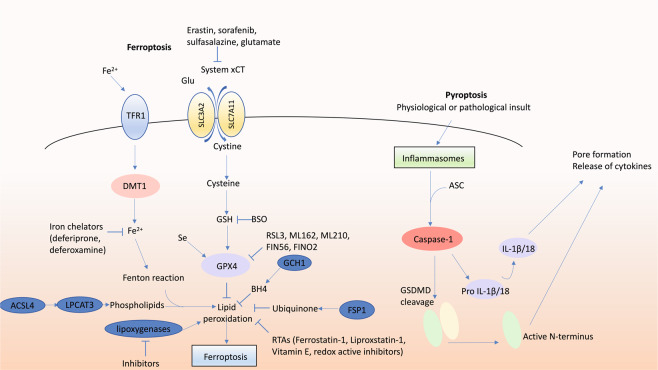
“Many molecular components of ferroptosis have been identified, including ACSL4 and LPCAT3 that generate the membrane lipids susceptible to peroxidation [103, 104], and the glutamate-cystine antiporter system xCT required to supply cysteine to the cell.”
BackgroundThe CoQ oxidoreductase FSP1 acts parallel to GPX4 to inhibit ferroptosis
Bersuker, K., Hendricks, J. M., Li, Z., Magtanong, L., Ford, B., Tang, P. H., Roberts, M. A., Tong, B., Maimone, T. J., Zoncu, R., et al. (2019) · Nature · doi:10.1038/s41586-019-1705-2 · Cited by 3,703 · cited 2×
“Critical to prevent lipid peroxidation are endogenous mechanisms including glutathione peroxidase 4 (GPX4; [105] and ferroptosis suppressor protein 1 (formerly AIFM2) [106, 107] which use glutathione and ubiquinone, respectively, as reducing substrates, and tetrahydrobiopterin synthesised by GTP cyclohydrolase-1 [108].”
BackgroundMechanisms underlying inflammation in neurodegeneration
Glass, C. K., Saijo, K., Winner, B., Marchetto, M. C., & Gage, F. H. (2010) · Cell · doi:10.1016/j.cell.2010.02.016 · Cited by 3,580
Classification of cell death: recommendations of the Nomenclature Committee on Cell Death 2009
Kroemer, G., Galluzzi, L., Vandenabeele, P., Abrams, J., Alnemri, E. S., Baehrecke, E. H., Blagosklonny, M. V., El-Deiry, W. S., Golstein, P., Green, D. R., et al. (2009) · Cell Death & Differentiation · doi:10.1038/cdd.2008.150 · Cited by 3,399
Neuropathological alterations in Alzheimer disease
Serrano-Pozo, A., Frosch, M. P., Masliah, E., & Hyman, B. T. (2011) · Cold Spring Harbor Perspectives in Medicine · doi:10.1101/cshperspect.a006189 · Cited by 3,345 · cited 1×
“Hallmark pathological features of AD include the accumulation of amyloidβ-containing neuritic plaques derived from aggregates produced by sequential cleavages of the amyloid precursor protein (APP), neurofibrillary tangles and dystrophic neurites containing hyperphosphorylated tau [38].”
Background
Research works printed but not linked: 1
- Rowe D Mathers S Smith G Windebank E Rogers M-L Noel K Modification of ALS disease progression in a phase 1 trial of CuATSM Amyotroph Lateral Scler Frontotemporal Degener 2018 19 280 81
Cited by
Items 301–400 of 832
Zheng, J., Chen, H., Zhang, H., Wu, Z., Ye, L., Ke, J., Li, F., Liu, N., Liu, Y., & Hong, M. (2025) · Journal of the American Chemical Society · doi:10.1021/jacs.5c14832 · Cited by 12
Li, X., Rui, J., Yang, Z., Shang-Guan, F., Shi, H., Wang, D., & Sun, J. (2024) · Current Cancer Drug Targets · doi:10.2174/0115680096271679231213060750 · Cited by 12
Zhang, W., Zhao, X., Bhuiyan, P., Liu, H., & Wei, H. (2024) · Journal of Anesthesia and Translational Medicine · doi:10.1016/j.jatmed.2024.04.002 · Cited by 12
“50”
Jin, Z., Lu, J., Xu, H., Zhang, Y., Zhang, S., Zhang, D., Hu, J. S., Shi, Z., Li, Z., & Wang, J. (2024) · Biomedicine & Pharmacotherapy · doi:10.1016/j.biopha.2024.117382 · Cited by 13
Zhang, F., Deng, Y., Wang, D., & Wang, S. (2022) · Scientific Reports · doi:10.1038/s41598-022-05599-9 · Cited by 12
Yang, P. H., Cheng, Y., Huang, X., Huang, B., Yi, L., He, H.-L., & Xie, Y. (2022) · Natural Product Research · doi:10.1080/14786419.2022.2096606 · Cited by 12
“…and pathological processes, such as the occurrence and development of neurodegenerative diseases, the immune activation of inflammatory diseases including pathogenic microorganism infection, ischemia-reperfusion injury, and the occurrence and metastasis of tumors (Moujalled et al. 2021).”
BackgroundSaadh, M. J., Faisal, A., Adil, M., Zabibah, R. S., Mamadaliev, A. M., Jawad, M. J., Alsaikhan, F., & Farhood, B. (2024) · Molecular Neurobiology · doi:10.1007/s12035-024-04111-w · Cited by 12
“Such activity might further stimulate autoxidation in the presence of dopamine byproducts, which generates additional ROS resulting in a lowered threshold for apoptotic cell death [55].”
How does autophagy impact neurological function?
Fleming, A., López, A., Rob, M., Ramakrishna, S., Park, S. J., Li, X., & Rubinsztein, D. C. (2025) · The Neuroscientist · doi:10.1177/10738584251324459 · Cited by 11
Klingl, Y. E., Petrauskas, A., Jaślan, D., & Grimm, C. M. (2025) · Physiological Reviews · doi:10.1152/physrev.00044.2024 · Cited by 11
Wang, H., Zhou, J., Lu, Y., Gao, H., Ning, E., Yang, X. H., Hao, Y., & Hu, D. (2025) · Molecular and Cellular Biochemistry · doi:10.1007/s11010-025-05279-y · Cited by 11
“Dysregulation of PCD can significantly affect the nervous and cardiovascular systems, leading to diseases such as amyotrophic lateral sclerosis and atherosclerosis [11, 12].”
A protective role of autophagy in fine airborne particulate matter-induced apoptosis in LN-229 cells
Yuan, J., Mo, L., Mo, Y., Zhang, Y., Zhang, Y., & Zhang, Q. (2022) · Toxicology · doi:10.1016/j.tox.2022.153271 · Cited by 11
Qu, Y., Liu, Y., & Zhang, H. (2023) · Clinical & Translational Oncology · doi:10.1007/s12094-023-03190-w · Cited by 11
Baghel, K., Niranjan, M. K., & Srivastava, R. (2023) · Photochemical & Photobiological Sciences · doi:10.1007/s43630-023-00442-0 · Cited by 11
“Neuronal apoptosis is a greatly conserved cellular mechanism playing a vital role in the regulation of the nervous system [24].”
BackgroundLi, F., Cai, T., Yu, L., Yu, G., Zhang, H., Geng, Y., Kuang, J., Wang, Y., Cai, Y., Xiao, J., et al. (2023) · Molecular Neurobiology · doi:10.1007/s12035-023-03503-8 · Cited by 11
“Overall, these findings suggest that FGF-18 effectively inhibits pyroptosis after SCI. PCD abnormalities, such as pyroptosis, cell death linked to autophagy, and unprogrammed necrosis, are detected in many neurological diseases [55].”
Huang, J., Yu, Y., Pang, D., Li, C., Wei, Q., Cheng, Y., Cui, Y., Ou, R., & Shang, H. (2023) · Molecular Neurobiology · doi:10.1007/s12035-023-03835-5 · Cited by 11
Ma, Z., Liu, T., Liu, L., Pei, Y., Wang, T., Wang, Z., Guan, Y., Zhang, X., Zhang, Y., & Chen, X. (2024) · Neurochemical Research · doi:10.1007/s11064-024-04207-8 · Cited by 11
The crosstalk between exosomal miRNA and ferroptosis: A narrative review
Nashtahosseini, Z., Nejatollahi, M., Fazilat, A., Fakoor, E. Z., Emamvirdizadeh, A., Bahadori, K., Hadian, N., & Valilo, M. (2025) · Biology of the Cell · doi:10.1111/boc.202400077 · Cited by 11
“…cell kills itself when intracellular stress increases, but the extrinsic pathway is triggered by several signals, such as the first apoptosis signal (Fas) and the tumor necrosis factor (TNF) pathway, which it receives from other cells (Hussar, 2022; Jan, 2019; Lossi, 2022; Moujalled et al., 2021).”
Wang, Z., Liu, J., Jiang, S., Zhuo, W., Xie, P., Dai, W., Mao, X., & Liu, Z. (2024) · CNS Neuroscience & Therapeutics · doi:10.1111/cns.14911 · Cited by 10
“1 This suggests that ferroptosis plays an important role in the occurrence of neurological diseases, 23,24 and inhibition of ferroptosis exerts neuroprotective or therapeutic effects.”
Xiao, X., & Gao, C. (2024) · PubMed Central · doi:10.2147/dddt.s470455 · Cited by 10
Therapeutic implications of necroptosis activation in Alzheimer´s disease
Carrazana, E., & Salvadores, N. (2024) · Alzheimer s Research & Therapy · doi:10.1186/s13195-024-01649-8 · Cited by 10
“More-over, several modifiable risk factors have been linked to Alzheimer's Research & Therapy [22–26].”
Regulatory mechanisms of m6A methylation in dilated cardiomyopathy
Zhang, H., Guo, H., Han, F., & Zheng, Y. (2025) · American Journal of Translational Research · doi:10.62347/aosk8903 · Cited by 10
Li, Z., Cao, M., Yin, Z., Li, X., Wang, Q., Dong, P., & Zhou, C. (2025) · PeerJ · doi:10.7717/peerj.19998 · Cited by 10
“Accumulating evidence suggests that programmed cell death (PCD) is a primary mechanism underlying this loss ( Moujalled, Strasser & Liddell, 2021 ).”
Suswidiantoro, V., Tang, K. S., Rahman, K., Ariestanti, D. M., James, R. J., Yan, C. C., Kato, M., & Saputri, F. C. (2026) · Frontiers in Pharmacology · doi:10.3389/fphar.2026.1766470 · Cited by 10
“Several studies indicated that natural products can modulate apoptotic cascades (Moujalled et al., 2021).”
Soliman, N. A., Ghafar, M. T. A., AbuoHashish, N. A., Ibrahim, M. A., Eid, A., El‐Gohary, R. M., Gheit, R. E. A. E., & Elshamy, A. M. (2022) · Neurochemical Research · doi:10.1007/s11064-022-03775-x · Cited by 10
“Apoptosis is a caspase-mediated process required for neural development and is controlled by members of the anti-and pro-apoptotic B-cell lymphoma-2 (BCL2) protein family [3].”
BackgroundEndophytic fungi: a potential source for drugs against central nervous system disorders
Pant, A., & Vasundhara, M. (2023) · Brazilian Journal of Microbiology · doi:10.1007/s42770-023-00997-1 · Cited by 10
“However, these defects cause neuronal cell death due to alterations in the physiological and biochemical processes in brain and peripheral nervous system [44] (Fig.”
BackgroundChen, M., & Wu, T. (2023) · The Science of The Total Environment · doi:10.1016/j.scitotenv.2023.168739 · Cited by 10
Emerging Relevance of Ghrelin in Programmed Cell Death and Its Application in Diseases
Zhang, X., Zeng, Z., Liu, Y., & Liu, D. (2023) · International Journal of Molecular Sciences · doi:10.3390/ijms242417254 · Cited by 10
“They can further boost the release of cytochrome c [23,24].”
BackgroundThe research landscape of ferroptosis in neurodegenerative disease: a bibliometric analysis
Liu, Y., Feng, D., Shui, L., Wang, Y., Li, Y., Liu, Y., & Tian, J. (2024) · Frontiers in Aging Neuroscience · doi:10.3389/fnagi.2024.1417989 · Cited by 10
“The dysregulated activation of programmed cell death pathways is a common feature in neurodegenerative conditions, resulting in the unwanted loss of neuronal cells and their functionality (Moujalled et al., 2021).”
BackgroundNon-Apoptotic Programmed Cell Death as Targets for Diabetic Retinal Neurodegeneration
Lin, Y., Ke, S., Ye, W., Xie, B., & Huang, Z. (2024) · Pharmaceuticals · doi:10.3390/ph17070837 · Cited by 11
“Notably, the activation of non-apoptotic PCD occurs in a programmed and modulable manner, which provides the possibility to control inflammation and intervene in diseases [20,21].”
BackgroundMa, X., Sun, Y., Li, C., Wang, M., Zang, Q., Zhang, X., Wang, F., Niu, Y., & Hua, J. (2024) · CNS Neuroscience & Therapeutics · doi:10.1111/cns.70064 · Cited by 10
Reagin, K. L., Lee, R., Williams, L. A., Cocciolone, L., & Funk, K. E. (2024) · Aging Cell · doi:10.1111/acel.14409 · Cited by 10
Molecular mechanisms of cytochrome P450-derived epoxy-fatty acids neuroprotection
Navarro‐Mabarak, C., & Morán, J. (2025) · Biochimica et Biophysica Acta (BBA) - Molecular and Cell Biology of Lipids · doi:10.1016/j.bbalip.2025.159663 · Cited by 10
Zhang, H., Yu, X., Yang, J., He, G., Zhang, X., Wu, X., Li, S., Zhou, Y., Cheng, X., Liu, X., et al. (2022) · Frontiers in Immunology · doi:10.3389/fimmu.2022.933779 · Cited by 10
“Pyroptosis, an inflammatory form of programmed cell death (8), relies strongly on the gasdermin protein family to form plasma”
BackgroundWang, S., Pan, L., Feng, Y., JIANG, M., Liu, Z., Ting, S. H. E. N., Ma, S., Libo, W. A. N. G., Guo, X., & Du, S. (2023) · Chinese Journal of Natural Medicines · doi:10.1016/s1875-5364(23)60397-8 · Cited by 10
Programmed cell death in the cognitive impairment of obstructive sleep apnea
Ou, Y., Wang, X., Zong, D., & Ouyang, R. (2025) · Cell & Bioscience · doi:10.1186/s13578-025-01418-6 · Cited by 9
“Abnormal activation of PCD signaling cascades can be observed in various neurological diseases in response to different stress and inflammatory stimuli, such as apoptosis, necroptosis, pyroptosis, ferroptosis, and cell death associated with autophagy [9, 10].”
Alzheimer’s disease: a jigsaw puzzle comprised of different types of programmed cell death pieces
Wang, Y., Mu, D., Li, Y., Liu, C., Feng, J., Lai, Y., & Lou, G. (2025) · Brain Research · doi:10.1016/j.brainres.2025.149861 · Cited by 9
Molecular Cell Biology of Apoptosis in Health and Disease
Ahmed, A. S., & Tait, S. W. G. (2025) · Advances in experimental medicine and biology · doi:10.1007/978-3-031-92785-0_1 · Cited by 9
Li, J., Wang, Y., Huang, Y., Li, N., Zhu, Y., Lin, S., Wang, L., Guo, W., Yan, L., Tian, C., et al. (2026) · Journal of Hazardous Materials · doi:10.1016/j.jhazmat.2026.141148 · Cited by 9
P53 independent pathogenic mechanisms contribute to BubR1 microcephaly
Sterling, N. A., Terry, B. K., McDonnell, J. M., & Kim, S. (2023) · Frontiers in Cell and Developmental Biology · doi:10.3389/fcell.2023.1282182 · Cited by 9
Fu, X., Wang, X., Lai, Y., Cai, C., Liao, Y., Dai, Z., Huilin, X., Fang, S., & Fang, J. (2023) · Molecules · doi:10.3390/molecules29010021 · Cited by 9
“The balance between Bax and Bcl-2 determines the fate of apoptosis [41,42].”
BackgroundPerrone, S., Carloni, S., Dell’Orto, V., Filonzi, L., Beretta, V., Petrolini, C., Lembo, C., Buonocore, G., Esposito, S., & Marzano, F. N. (2023) · Reviews in the Neurosciences · doi:10.1515/revneuro-2023-0126 · Cited by 9
Zhang, B., Wu, H., Zhang, J., Cong, C., & Zhang, L. (2024) · Molecular and Cellular Biochemistry · doi:10.1007/s11010-023-04909-7 · Cited by 9
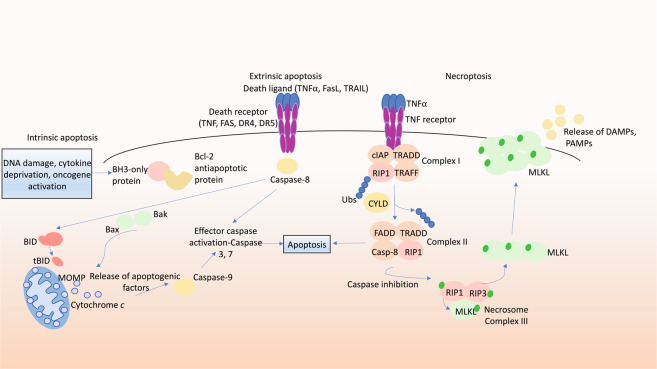
“The process of apoptosis is principally instigated through two divergent pathways, specifically, the extrinsic and intrinsic pathways [10].”
Nicotine restores olfactory function by activation of prok2R/Akt/FoxO3a axis in Parkinson’s disease
Guo, Q., Wang, Y., Yu, L., Guan, L., Ji, X., Li, X., Pang, G., Ren, Z., Ye, L., & Cheng, H. (2024) · Journal of Translational Medicine · doi:10.1186/s12967-024-05171-1 · Cited by 9
“Apoptosis is believed to play a major role in neuronal loss observed in PD. Studies have found increased levels of proteins and enzymes involved in apoptosis in the DA neurons of PD [55].”
BackgroundLi, W., Wan, P., Qiao, J., Liu, Y., Peng, Q., Zhang, Z., Shu, X., Xia, Y., & Sun, B. (2024) · Frontiers in Pharmacology · doi:10.3389/fphar.2024.1372110 · Cited by 9
“Common pathways including anti-apoptosis, anti-oxidant, and anti-in fl ammatory play crucial roles in the degeneration and loss of axons and neurons (Moujalled et al., 2021).”
BackgroundHighly selective and effective ferroptosis liposomal nanodrugs for synergistic antitumor therapy
Xin, H., Yuan, P., Wang, Y., Xiao, J., Tian, G., Fan, Y., Zhang, G., & Liu, L. (2024) · Chemical Engineering Journal · doi:10.1016/j.cej.2024.152480 · Cited by 9
Sudhakaran, G., Ramamurthy, K., Dhaareshwar, V. N., Rajagopal, R., Alfarhan, A., & Arockiaraj, J. (2024) · Toxicology Letters · doi:10.1016/j.toxlet.2024.10.008 · Cited by 9
Wang, J., Gu, D., Jin, K., Shen, H., & Qian, Y. (2025) · NeuroMolecular Medicine · doi:10.1007/s12017-025-08843-3 · Cited by 9
“These processes result in severe cellular damage, contribute to the development of long-term neurological deficits, and represent critical obstacles to recovery (Freire et al., 2023; Moujalled et al., 2021).”
A review of cell death pathways in hemorrhagic stroke
Rinald, J. H., & Troy, C. M. (2025) · Frontiers in Cell and Developmental Biology · doi:10.3389/fcell.2025.1570569 · Cited by 9
“These pathways have been well described previously (Qureshi et al., 2003; Green, 2000; Xu and Shi, 2007; Moujalled et al., 2021).”
Neuroprotective Agents with Therapeutic Potential for COVID-19
Zaa, C. A., Espitia, C., Reyes-Barrera, K. L., An, Z., & Velasco-Velázquez, M. A. (2023) · Biomolecules · doi:10.3390/biom13111585 · Cited by 9
Abe, N., Sasaki, M., & Nakajima, A. (2022) · Environmental Toxicology and Pharmacology · doi:10.1016/j.etap.2022.104056 · Cited by 9
Neurodegeneration in a regulatory context: The need for speed
Meerman, J. J., Wolterink, G., Hessel, E. V. S., de Jong, E., & Heusinkveld, H. J. (2022) · Current Opinion in Toxicology · doi:10.1016/j.cotox.2022.100383 · Cited by 9
Commentary on “PANoptosis-like cell death in ischemia/reperfusion injury of retinal neurons”
Arrázola, M. S., & Court, F. A. (2022) · Neural Regeneration Research · doi:10.4103/1673-5374.346543 · Cited by 9
“…considered as independent pathways part ic ipat ing in several d isorders, including nervous system diseases and degenerative conditions, such as Parkinson’s disease, Alzheimer’s disease, multiple sclerosis, neuroinflammation, and neuronal injury (Arrázola et al., 2019; Moujalled et al., 2021).”
BackgroundMarine Derived Strategies Against Neurodegeneration
Toulis, V., Marfany, G., & Mirra, S. (2025) · Marine Drugs · doi:10.3390/md23080315 · Cited by 8
“Neuronal death comes in different flavors and colors, through mechanisms including apoptosis, necrosis, necroptosis, ferroptosis, pyroptosis, and others [45].”
Roles of hypoxia inducible factors in viral infection: Are they a potential therapeutic target?
Jia, S., Pan, S., Gao, Z., Qiao, H., Zhao, Y. M., Chuai, X., & Li, J. (2025) · Virulence · doi:10.1080/21505594.2025.2546680 · Cited by 8
“Current classifications of PCD include apoptosis, pyroptosis, necrosis, ferroptosis, autophagic death, and necroptosis [31].”
Delehouzé, C., Mallais, M., Comte, A., Lucas, R., Baratte, B., Belal, S., Autret, A., Py, N. A., Steinschneider, R., Adoux, L., et al. (2025) · Cell Death Discovery · doi:10.1038/s41420-025-02852-8 · Cited by 8
“Indeed, numerous studies have provided evidence that complex diseases involve the activation of multiple cell death pathways [19].”
Li, Z., Wang, W., Cheng, P., Dong, Q., Chen, H., Fu, K., Fu, C., Pu, Y., & Liu, D. (2026) · Food Chemistry · doi:10.1016/j.foodchem.2026.148067 · Cited by 8
Yao, T. S., Xie, L., Xie, Y., Jiang, J., Deng, Q., Wang, J., Liu, L., & Wu, D. (2023) · Neuropeptides · doi:10.1016/j.npep.2023.102358 · Cited by 8
Brunette, S., Sharma, A., Bell, R. A. V., Puente, L. G., & Megeney, L. A. (2023) · Microbial Cell · doi:10.15698/mic2023.08.801 · Cited by 8
Insights into Dysregulated Neurological Biomarkers in Cancer
Duranti, E., & Villa, C. (2024) · Cancers · doi:10.3390/cancers16152680 · Cited by 8
“NDs target neurons and their complex networks, disrupting communication and leading to the gradual degradation of cognitive and motor functions [19,20].”
BackgroundTong, X., Zhao, X., Ma, Y., Li, H., Zhang, J., Zhang, Z., Hua, S., Li, B., Zhang, W., Zhang, Y., et al. (2024) · Animals · doi:10.3390/ani14223194 · Cited by 8
“…cell death (PCD) is a type of cell death that is actively and orderly controlled by genes, playing an essential role in normal tissue development and the elimination of aging or damaged cells [7], with common forms including apoptosis, pyroptosis, fer-roptosis, necroptosis, and autophagy [8–11].”
The Cardiomyocyte in Cirrhosis: Pathogenic Mechanisms Underlying Cirrhotic Cardiomyopathy
Ryu, D. G., Yu, F., Yoon, K. T., Liu, H., & Lee, S. S. (2024) · Reviews in Cardiovascular Medicine · doi:10.31083/j.rcm2512457 · Cited by 8
Sharma, P., Daksh, R., Khanna, S., Mudgal, J., Lewis, S. A., Arora, D. S., & Nampoothiri, M. (2025) · European Journal of Pharmacology · doi:10.1016/j.ejphar.2025.177422 · Cited by 8
Dilated cardiomyopathy: from genes and molecules to potential treatments
Wang, X., Lang, Z., Yan, Z., Xu, J., Zhang, J., Jiao, L., & Zhang, H. (2025) · Molecular and Cellular Biochemistry · doi:10.1007/s11010-025-05269-0 · Cited by 9
“This process predominantly operates through two pathways: the extrinsic pathway, often referred to as the death receptor-mediated pathway, and the intrinsic pathway, known as the mitochondria-mediated pathway [140].”
El‐Khalik, S. R. A., AbuoHashish, N. A., Nasif, E., Arakeep, H. M., El‐Anwar, N., Yousef, D. M., & Ayad, N. H. (2025) · Neurochemical Research · doi:10.1007/s11064-025-04438-3 · Cited by 8
Flavonoids and phenolic compounds: a promising avenue for neurodegenerative disease therapy
Şahin, T. Ö., Cemali, Ö., ÖZDEMİR, M. B., Ayten, Ş., & Ağagündüz, D. (2025) · TURKISH JOURNAL OF BIOLOGY · doi:10.55730/1300-0152.2767 · Cited by 8
Fu, J., Li, G., Luo, R., Lu, Z., & Wang, Y. (2022) · Frontiers in Endocrinology · doi:10.3389/fendo.2022.1003594 · Cited by 8
“Pyroptosis, an inflammatory form of programmed cell death (PCD), is a sequence of processes involving the inflammasome, caspase-1, and the gesdermin family (9).”
BackgroundRole of Oxidative Stress in Pathophysiological Progression of Schizophrenia
Bhatt, S., Upadhyay, T., Patil, C., Pai, K. S. R., Chellappan, D. K., & Dua, K. (2022) · Current Psychiatry Research and Reviews · doi:10.2174/2666082218666220822154558 · Cited by 8
Study on Computer Screening and Drug Properties of Herbs Intervening in Copper Death
Zhong, D., Lan, L., Cheng, H., Li, H., Yu-mei, L., Yumiao, L., Liu, D., Li, D.-X., & Deng, Y. (2023) · Computational and Mathematical Methods in Medicine · doi:10.1155/2023/3311834 · Cited by 8
“PCD includes apoptosis, pyroptosis, iron death, autophagy, and the newly discovered copper death [1, 2].”
BackgroundChen, B., Ouyang, X., Cheng, C., Chen, D., Su, J., Hu, Y., & Li, X. (2023) · RSC Advances · doi:10.1039/d3ra04057g · Cited by 8
Kim, D., Oh, E., Kim, H. R., Baek, S. M., Cho, J., Kim, E.-H., Choi, S., Bian, Y., Kim, W., & Bae, O. (2023) · Food and Chemical Toxicology · doi:10.1016/j.fct.2023.113985 · Cited by 8
Miyoshi, K., Hishinuma, E., Matsukawa, N., Shirasago, Y., Watanabe, M., Sato, T., Sato, Y., Kumondai, M., Kikuchi, M., Koshiba, S., et al. (2023) · International Journal of Molecular Sciences · doi:10.3390/ijms242115642 · Cited by 8
Apoptotic mechanism of propofol-induced developmental toxicity in zebrafish embryos
Ge, Y., Yuan, W., Jia, W., Guan, Z., Huang, T., Zhang, Y., Song, C., Xiao, Y., & Gao, J. (2023) · PLoS ONE · doi:10.1371/journal.pone.0286391 · Cited by 8
Wu, J., Zhou, Z., & Qian, H. (2025) · Stem Cell Research & Therapy · doi:10.1186/s13287-025-04852-y · Cited by 7
“Compared to other forms of cell death such as apoptosis, necroptosis, pyroptosis, and autophagy, ferroptosis is distinct in its molecular mechanisms, morphological features, and functional implications [19–21].”
Excitotoxicity in amyotrophic lateral sclerosis: a key pathogenic mechanism
Silva-Hucha, S., Hernández, R. G., Baena-López, D., de Sevilla, M. E. F., Paradas, C., & Morcuende, S. (2026) · Brain Communications · doi:10.1093/braincomms/fcag098 · Cited by 7
Lu, Y., Wei, G., Zhengle, Z., Xu, X., Huang, J., Zhou, J., Gu, X., Han, G., & Ding, Y. (2026) · Journal of Controlled Release · doi:10.1016/j.jconrel.2026.114946 · Cited by 7
FOXO family and neurodegenerative diseases: Mechanisms of action and therapeutic potential
Lv, Z., Liu, X., Zhou, Z., Huang, Q., Liu, H., Xu, Z., & Xu, P. (2026) · Redox Biology · doi:10.1016/j.redox.2026.104218 · Cited by 7
“6 [1,2].”
Khan, Z., & Ali, S. A. (2023) · Neurological Research · doi:10.1080/01616412.2023.2181919 · Cited by 7
Jin, M., Feng, L., Xiang, H., Sun, H., Han, Y., & Kwon, T. (2024) · Cell Communication and Signaling · doi:10.1186/s12964-024-01613-x · Cited by 7
“Neurodegenerative diseases, characterized by the progressive loss of neurons within the central nervous sys-tem, represent a significant medical challenge [1].”
BackgroundExploring the potential molecular intersection of stroke and major depression disorder
Zhao, Y., Sun, W., Fan, Q., Huang, Y., Ma, Y., Zhang, S., Gong, C., Wang, B., Zhang, W., Yang, Q., et al. (2024) · Biochemical and Biophysical Research Communications · doi:10.1016/j.bbrc.2024.150079 · Cited by 7
Chow, C. Y., & King, G. F. (2024) · Toxins · doi:10.3390/toxins16070307 · Cited by 7
Zhang, W., Yan, Y., Yi, C., Jiang, X., Guo, L., Huang, S., Xia, T., Huang, F., Jiao, Y., Li, H., et al. (2024) · International Immunopharmacology · doi:10.1016/j.intimp.2024.113146 · Cited by 7
Yang, C. G., Sun, Z.-P., Jiang, J., Cai, X.-L., Wang, Y., Wang, H., Che, C., Tu, E., Pan, A., Zhang, Y., et al. (2024) · Scientific Reports · doi:10.1038/s41598-024-77026-0 · Cited by 7
Live and let die: analyzing ultrastructural features in cell death
Perrotta, I. D. (2024) · Ultrastructural Pathology · doi:10.1080/01913123.2024.2428703 · Cited by 7
Liu, H., You, M., Yang, H. J., Wu, X. X., Zhang, S., Huang, S., Gao, H., & Xie, L. (2025) · Metabolic Brain Disease · doi:10.1007/s11011-025-01540-x · Cited by 7
Majid, H., Dahalia, M., Hussain, S., Saini, S., & Nidhi, N. (2025) · Diabetology International · doi:10.1007/s13340-025-00830-0 · Cited by 7
“Hyperphosphorylated tau further amplifies neurotoxicity through the formation of NFTs [161, 162].”
Zeng, W., Wang, Y., Liu, Y., Liu, X., & Qi, Z. (2025) · Molecules · doi:10.3390/molecules30153265 · Cited by 7
“In PD, the mitochondrial-mediated apoptosis pathway is considered a principal mechanism underlying the death of dopaminergic neurons, regulated by pro-apoptotic and anti-apoptotic members of the Bcl-2 protein family [6,7].”
Ferroptosis and aging: Inducing and catalyzing neurodegenerative diseases
Song, Q., Sun, S., Song, Y., Wang, Y., Yin, Y., Zhang, L., & Cui, Q. (2025) · Neural Regeneration Research · doi:10.4103/nrr.nrr-d-25-00710 · Cited by 7
“The abnormal activation of RCD in neural cells is a characteristic pathological change observed in these diseases (Moujalled et al., 2021).”
Amare, M., Westrick, N. M., Keller, N. P., & Kabbage, M. (2022) · Fungal Genetics and Biology · doi:10.1016/j.fgb.2022.103730 · Cited by 7
Kerrebijn, I., Wainberg, M., Zhukovsky, P., Chen, Y., Davie, M., Felsky, D., & Tripathy, S. J. (2023) · NeuroImage · doi:10.1016/j.neuroimage.2023.120177 · Cited by 8
“…cortex in AD, but inhibitory neuron abundance was associated with thicker cortex, despite the fact that di-5 rect cell counting ( Gorman, 2008 ; Moujalled et al., 2021 ) and bulk and single-nucleus gene expression ( Cain et al., 2020 ; Consens et al., 2022 ; Telpoukhovskaia et al., 2022)…”
Omega-3 fatty acid as a protectant in lead-induced neurotoxicity
Singh, P. K., Gupta, M. K., & Nath, R. (2023) · Elsevier eBooks · doi:10.1016/b978-0-323-90052-2.00002-0 · Cited by 7
Jia, T., Wang, H., Chi, W., Zhou, W., Guo, L., Dai, Y., Bian, K., Sun, Z., Ding, X., & Yu, Y. (2023) · International Journal of Pharmaceutics · doi:10.1016/j.ijpharm.2023.123727 · Cited by 7
Litwiniuk, A., Kalisz, M., Domańska, A., Chmielowska, M., Martyńska, L., Baranowska-Bik, A., & Bik, W. (2024) · Neurochemistry International · doi:10.1016/j.neuint.2024.105772 · Cited by 7
“The mitochondrial pathway of apoptosis is regulated by the pro-and anti-apoptotic members of the B cell lymphoma-2 (BCL-2) protein family (Moujalled et al., 2021).”
BackgroundInfluentialNeuromuscular Weakness in Intensive Care
Malaiyandi, D. P., & James, E. G. (2022) · Critical Care Clinics · doi:10.1016/j.ccc.2022.06.004 · Cited by 7
Editorial: Novel therapeutic target and drug discovery for neurological diseases, volume II
Zhao, K., Li, Z., Sun, T., Liu, Q., Cheng, Y., Barreto, G. E., Li, Z., & Liu, R. (2025) · Frontiers in Pharmacology · doi:10.3389/fphar.2025.1566950 · Cited by 7
Dan, Z., Shi, X., Shu, C., Zhu, R., Wang, Y., & Zhu, H. (2023) · Cellular Signalling · doi:10.1016/j.cellsig.2023.111001 · Cited by 6
Targeting selective autophagy in CNS disorders by small-molecule compounds
Zheng, Y., Zhou, Z., Liu, M., & Chen, Z. (2024) · Pharmacology & Therapeutics · doi:10.1016/j.pharmthera.2024.108729 · Cited by 6
Wang, L., Qin, Y., Song, J., Xu, J., Quan, W., Su, H., Zeng, H., Zhang, J., Li, J., & Chen, J. (2024) · Scientific Reports · doi:10.1038/s41598-024-80185-9 · Cited by 6
Feng, X., Li, X., & Zhang, X. (2024) · Holistic Integrative Oncology · doi:10.1007/s44178-024-00143-3 · Cited by 6
“PCD includes apoptosis, necrop-tosis, pyroptosis, ferroptosis, autophagy, necrosis, and immunogenic cell death (ICD) [5].”
Wang, Y., Zhang, Y., Liu, M., Liu, Y., Zeng, Y., Zhang, W., Wu, S., Hu, L., Ruan, X., Zheng, X., et al. (2025) · Scientific Reports · doi:10.1038/s41598-025-87059-8 · Cited by 6
The emerging role of cuproptosis in spinal cord injury
Xu, D., Hu, L., Zhou, J., Deng, X., Zhu, Y., & Liu, C. (2025) · Frontiers in Immunology · doi:10.3389/fimmu.2025.1595852 · Cited by 6
Metadata
- Authors
- Moujalled, D., Strasser, A., & Liddell, J. R.
- Affiliations
- The University of Melbourne (AU)
- Corresponding author
- Moujalled, Diane
- Strasser, Andreas
- Venue
- Cell Death & Differentiation
- Published
- 2021-06-07
- Volume
- 28
- Issue
- 7
- Pages
- 2029-2044
- ISSN
- 1350-9047 (ISSN-L)
- 1476-5403
- PMC
- PMC8257776
- OpenAlex
- W3171124897
- Cited by
- 749
- References
- 158
- Citations by year
- 2026: 113 · 2025: 186 · 2024: 217 · 2023: 128 · 2022: 92 · 2021: 13
- FWCI
- 11.83
- Type
- journal article
- Language
- en
- Open access
- hybrid
- doi.org
- Licence
- cc-by
- creativecommons.org/licenses/by/4.0 (tdm)
- creativecommons.org/licenses/by/4.0 (vor)
- Locations
- Cell Death and Differentiation (publishedVersion, cc-by)
- PubMed Central (publishedVersion, cc-by)
- PubMed (publishedVersion)
- Minerva Access (University of Melbourne) (submittedVersion, cc-by)
- Funders
- Wellcome Trust (101671)
- National Health and Medical Research Council (1020363)
- Topics
- Life Sciences › Biochemistry, Genetics and Molecular Biology › Molecular Biology › Cell death mechanisms and regulation
- Life Sciences › Biochemistry, Genetics and Molecular Biology › Cell Biology › Autophagy in Disease and Therapy
- Life Sciences › Neuroscience › Neurology › Neuroinflammation and Neurodegeneration Mechanisms
- Keywords
- programmed cell death, neuronal cell death, apoptosis, necroptosis, pyroptosis, ferroptosis, autophagic cell death, neurodegenerative diseases, brain tumorigenesis, amyotrophic lateral sclerosis, Alzheimer's disease, Parkinson's disease, Huntington's disease, cell death signaling, neuroinflammation, cell death inhibitors, therapeutic target
- MeSH terms
- Regulated Cell Death, Animals, Autophagy, Brain, Humans, Neurons, Signal Transduction, Neurodegenerative Diseases
About these checks
Registry, retraction, Cites and statistics results are computed, not judged, with one exception: a printed reference that no index lists is read once by a model before it counts as a citation error. Claims are extracted by a model and kept only when their quote appears verbatim in the text; each cited source is then checked, with a model’s help, for whether it says what the claim relies on. Those verdicts can be wrong — read the claim’s quote and the cited source before relying on one.
Statistics and arithmetic are recomputed, not judged.
Confidence bands are shown only for fields calibrated on our annotated test set. None is calibrated yet, so no band is shown.
What counts as a claim ›How we measure confidence ›How we check this ›
Are you an author, or do you see a problem with this page? Request a review
Data sources
Bibliographic data: Semantic Scholar, OpenAlex, Crossref.
Contains information from the Semantic Scholar Academic Graph Datasets, made available under the ODC Attribution License (ODC-BY 1.0).
Semantic Scholar’s data is described in: Kinney, R., et al. (2023). The Semantic Scholar Open Data Platform. arXiv:2301.10140.
