

Disease-associated KBTBD4 mutations in medulloblastoma elicit neomorphic ubiquitylation activity to promote CoREST degradation
Open accessThe DOI matches its Crossref record; 41 of the 41 references it cites were found in a registry or an index.
Abstract
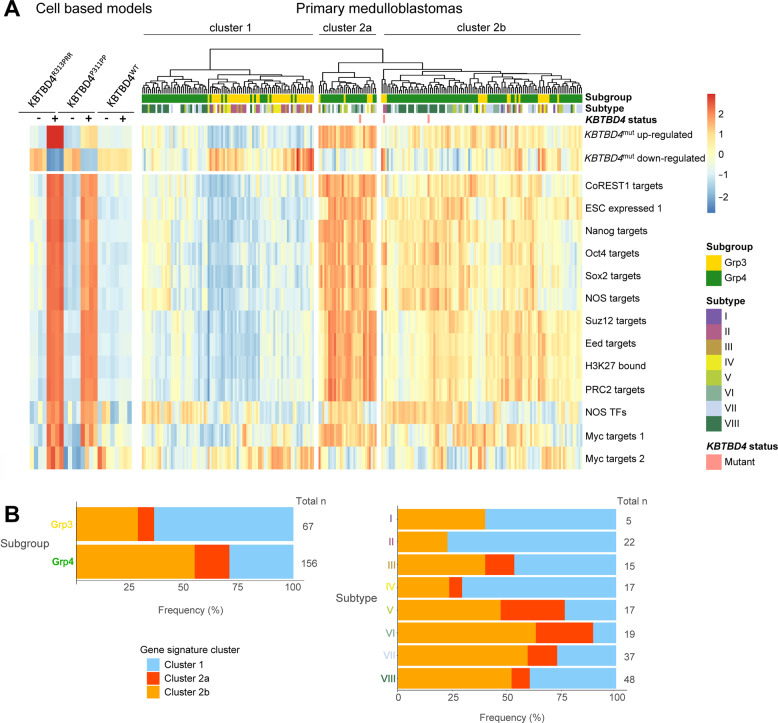
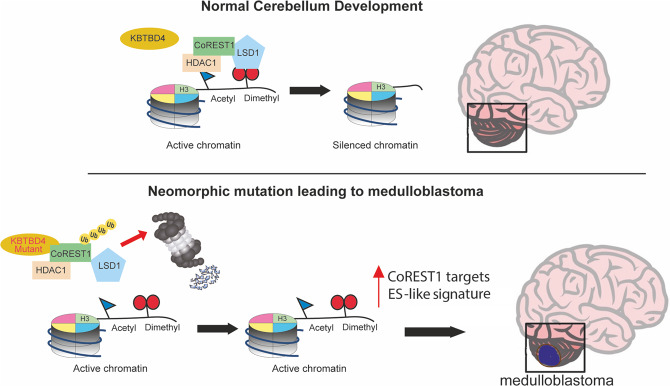
Medulloblastoma is the most common malignant brain tumour in children. Genomic studies have identified distinct disease subgroups: wnt/wingless (WNT), sonic hedgehog (SHH), and non-WNT/non-SHH, comprising group 3 and group 4. Alterations in WNT and SHH signalling form the pathogenetic basis for their subgroups, whereas those for non-WNT/non-SHH tumours remain largely elusive. Recent analyses have revealed recurrent in-frame insertions in the E3 ubiquitin ligase adaptor Kelch Repeat and BTB Domain Containing 4 (KBTBD4) in cases of group 3/4 medulloblastoma. Critically, group 3/4 tumours with KBTBD4 mutations typically lack other gene-specific alterations, such as MYC amplification, indicating KBTBD4 insertion mutations as the primary genetic driver. Delineating the role of KBTBD4 mutations thus offers significant opportunities to understand tumour pathogenesis and to exploit the underpinning mechanisms therapeutically. Here, we show a novel mechanism in cancer pathogenesis whereby indel mutations in KBTBD4 drive its recognition of neo-substrates for degradation. We observe that KBTBD4 mutants promote the recruitment and ubiquitylation of the REST Corepressor (CoREST), which forms a complex to modulate chromatin accessibility and transcriptional programmes. The degradation of CoREST promoted by KBTBD4 mutation diverts epigenetic programmes inducing significant alterations in transcription to promote increased stemness of cancer cells. Transcriptional analysis of >200 human group 3 and 4 medulloblastomas by RNA-seq, highlights the presence of CoREST and stem-like signatures in tumours with KBTBD4 mutations, which extend to a further sub-set of non-mutant tumours, suggesting CoREST alterations as a novel pathogenetic mechanism of wide relevance in groups 3 and 4. Our findings uncover KBTBD4 mutation as a novel driver of epigenetic reprogramming in non-WNT/non-SHH medulloblastoma, establish a novel mode of tumorigenesis through gain-of-function mutations in ubiquitin ligases (neo-substrate recruitment) and identify both mutant KBTBD4 and CoREST complexes as new druggable targets for improved tumour-specific therapies.
Overview
The claims and statistics of this paper haven’t been checked yet.
Free: it reads the open-access text and checks the first 5 claims that cite a source we can check. Create a free account to check every claim.
Integrity signals
Registry
Cites
Statistics
Figures
Verification
Claims the paper makes
The claims and statistics of this paper haven’t been checked yet.
Free: it reads the open-access text and checks the first 5 claims that cite a source we can check. Create a free account to check every claim.
Claims other papers make about this one
Each is checked against this paper’s own text: does it say what the citing paper says it does?
The source backs part of the claim, not all of it — or backs it for a different population, condition or comparison.
In the citing paper
“Subsequent ubiquitination and degradation of coREST upregulate stem cell factors (such as Sox-2, Oct-4, and Nanog), allowing for the maintenance of stemness and self-renewal capacity of medulloblastoma cells in culture (7).”
From The Medulloblastoma Meta-Analysis Portal Enables Integrative Exploration of Clinical and Genomic Data from Patients (2025) · cites this paper as [7]
Experimental — accuracy not yet measuredThe source backs part of the claim, not all of it — or backs it for a different population, condition or comparison.
In the citing paper
“The most prevalent mutation, an insertion at R313insPRR (7, 23–26), has been functionally characterized as enabling interaction with neosubstrates, such as small corepressor coREST.”
From The Medulloblastoma Meta-Analysis Portal Enables Integrative Exploration of Clinical and Genomic Data from Patients (2025) · cites this paper as [7]
Experimental — accuracy not yet measured
Self-check
Percentages, sums and reported differences re-computed from the paper’s own numbers.
The self-check needs the paper’s full text.
Citations
Cites
Moderated estimation of fold change and dispersion for RNA-seq data with DESeq2
Love, M. I., Huber, W., & Anders, S. (2014) · Genome Biology · doi:10.1186/s13059-014-0550-8 · Cited by 95,106 · cited 1×
“0R package was used for differential expression analysis [37].”
clusterProfiler: an R Package for Comparing Biological Themes Among Gene Clusters
Yu, G., Wang, L.-G., Han, Y., & He, Q.-Y. (2012) · OMICS: A Journal of Integrative Biology · doi:10.1089/omi.2011.0118 · Cited by 36,259
Enrichr: a comprehensive gene set enrichment analysis web server 2016 update
Kuleshov, M. V., Jones, M. R., Rouillard, A. D., Fernandez, N. F., Duan, Q., Wang, Z., Koplev, S., Jenkins, S. L., Jagodnik, K. M., Lachmann, A., et al. (2016) · Nucleic Acids Research · doi:10.1093/nar/gkw377 · Cited by 10,799
Enrichr: interactive and collaborative HTML5 gene list enrichment analysis tool
Chen, E. Y., Tan, C. M., Kou, Y., Duan, Q., Wang, Z., Meirelles, G. V., Clark, N. R., & Ma’ayan, A. (2013) · BMC Bioinformatics · doi:10.1186/1471-2105-14-128 · Cited by 7,814
Transcript-level expression analysis of RNA-seq experiments with HISAT, StringTie and Ballgown
Pertea, M., Kim, D., Pertea, G. M., Leek, J. T., & Salzberg, S. L. (2016) · Nature Protocols · doi:10.1038/nprot.2016.095 · Cited by 6,845 · cited 1×
“Differential expression analysis was calculated using Ballgown at transcript level [36].”
MethodHistone demethylation mediated by the nuclear amine oxidase homolog LSD1
Shi, Y., Lan, F., Matson, C., Mulligan, P., Whetstine, J. R., Cole, P. A., Casero, R. A., & Shi, Y. (2004) · Cell · doi:10.1016/j.cell.2004.12.012 · Cited by 4,051 · cited 2×
“CoREST1/2/3 form critical scaffolds for chromatin modifying complexes, which incorporate lysine-specific histone demethylase 1A (LSD1) and histone deacetylase 1/2 (HDAC1/2) for the demethylation and deacetylation of histones at H3K4 in vitro and in vivo [9, 10].”
BackgroundBen-Porath, I., Thomson, M. W., Carey, V. J., Ge, R., Bell, G. W., Regev, A., & Weinberg, R. A. (2008) · Nature Genetics · doi:10.1038/ng.127 · Cited by 2,523 · cited 1×
“Therefore, we hypothesised that CoREST degradation induced by KBTBD4 mutations could result in increased stemness of medulloblastoma cells, as described in other tumour types [20].”
BackgroundWard, P. S., Patel, J., Wise, D. R., Abdel-Wahab, O., Bennett, B. D., Coller, H. A., Cross, J. R., Fantin, V. R., Hedvat, C. V., Perl, A. E., et al. (2010) · Cancer Cell · doi:10.1016/j.ccr.2010.01.020 · Cited by 2,020
An inhibitor of NEDD8-activating enzyme as a new approach to treat cancer
Soucy, T. A., Smith, P. G., Milhollen, M. A., Berger, A. J., Gavin, J. M., Adhikari, S., Brownell, J. E., Burke, K. E., Cardin, D. P., Critchley, S., et al. (2009) · Nature · doi:10.1038/nature07884 · Cited by 1,990 · cited 1×
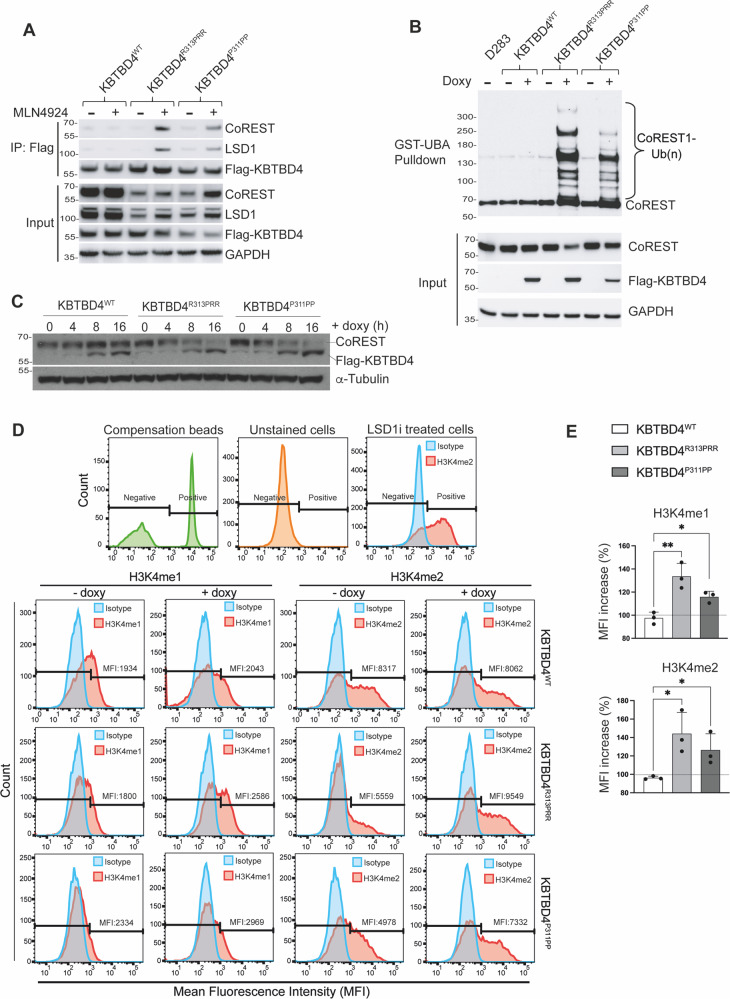
“Neddylation of Cullins is required for the activity of CRL complexes; MLN4924 therefore blocks all CRL activity in cells and stabilises CRL-bound substrates [15].”
BackgroundThe whole-genome landscape of medulloblastoma subtypes
Northcott, P. A., Buchhalter, I., Morrissy, A. S., Hovestadt, V., Weischenfeldt, J., Ehrenberger, T., Gröbner, S., Segura-Wang, M., Zichner, T., Rudneva, V. A., et al. (2017) · Nature · doi:10.1038/nature22973 · Cited by 1,112 · cited 3×
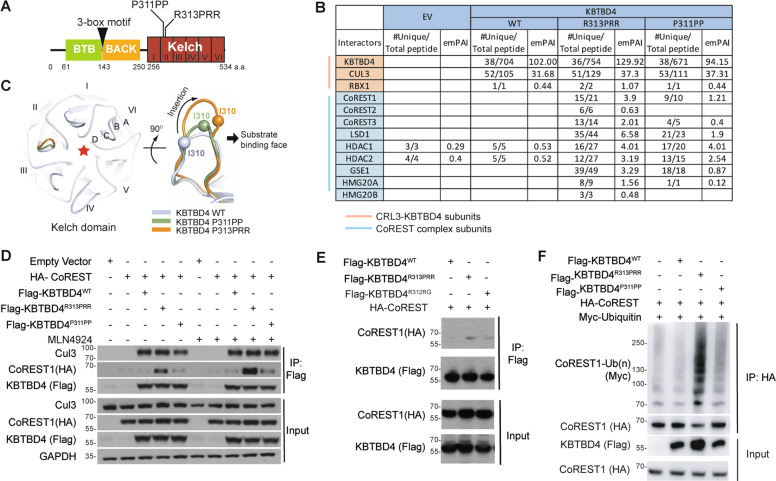
“1A) [5] from HEK293T cells and performed tryptic digestion and Liquid Chromatography/Tandem Mass Spectrometry (LC-MS/MS) to analyse their interacting partners.”
BackgroundMethodInfluentialAn essential role for CoREST in nucleosomal histone 3 lysine 4 demethylation
Lee, M. G., Wynder, C., Cooch, N., & Shiekhattar, R. (2005) · Nature · doi:10.1038/nature04021 · Cited by 802 · cited 2×
“CoREST1/2/3 form critical scaffolds for chromatin modifying complexes, which incorporate lysine-specific histone demethylase 1A (LSD1) and histone deacetylase 1/2 (HDAC1/2) for the demethylation and deacetylation of histones at H3K4 in vitro and in vivo [9, 10].”
BackgroundEnhancer hijacking activates GFI1 family oncogenes in medulloblastoma
Northcott, P. A., Lee, C., Zichner, T., Stütz, A. M., Erkek, S., Kawauchi, D., Shih, D. J. H., Hovestadt, V., Zapatka, M., Sturm, D., et al. (2014) · Nature · doi:10.1038/nature13379 · Cited by 642 · cited 1×
“It has been shown previously that Growth Factor Independent Protein 1 (GFI1) and GFI1B are transactivated by enhancers in group 4 medulloblastoma and form a complex with LSD1 and CoREST that promotes tumour growth [29].”
BackgroundEnhancer decommissioning by LSD1 during embryonic stem cell differentiation
Whyte, W. A., Bilodeau, S., Orlando, D. A., Hoke, H. A., Frampton, G. M., Foster, C. T., Cowley, S. M., & Young, R. A. (2012) · Nature · doi:10.1038/nature10805 · Cited by 602 · cited 1×
“This is in line with evidence showing that embryonic stem cells lacking LSD1 fail to fully differentiate [31].”
ResultPyrimidoindole derivatives are agonists of human hematopoietic stem cell self-renewal
Fares, I., Chagraoui, J., Gareau, Y., Gingras, S., Ruel, R., Mayotte, N., Csaszar, E., Knapp, D. J. H. F., Miller, P., Ngom, M., et al. (2014) · Science · doi:10.1126/science.1256337 · Cited by 565
Linking EMT programmes to normal and neoplastic epithelial stem cells
Lambert, A. W., & Weinberg, R. A. (2021) · Nature Reviews Cancer · doi:10.1038/s41568-021-00332-6 · Cited by 534 · cited 1×
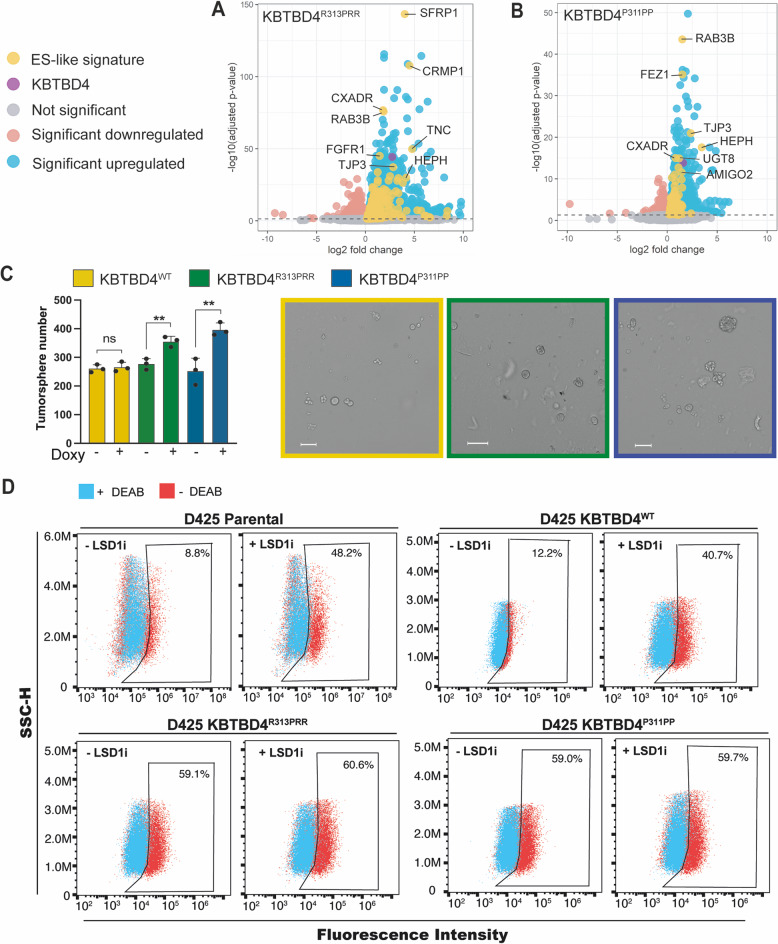
“In addition, Gene Set Enrichment Analysis (GSEA) showed that epithelial to mesenchymal transition (EMT), a fundamental pathway for vertebrate embryonic development and often linked to cell migration and metastatic potential of cancer cells [21], was significantly enriched in cell lines expressing either KBTBD4 mutant…”
BackgroundSchwalbe, E. C., Lindsey, J. C., Nakjang, S., Crosier, S., Smith, A. J., Hicks, D., Rafiee, G., Hill, R. M., Iliasova, A., Stone, T., et al. (2017) · The Lancet Oncology · doi:10.1016/s1470-2045(17)30243-7 · Cited by 516 · cited 1×
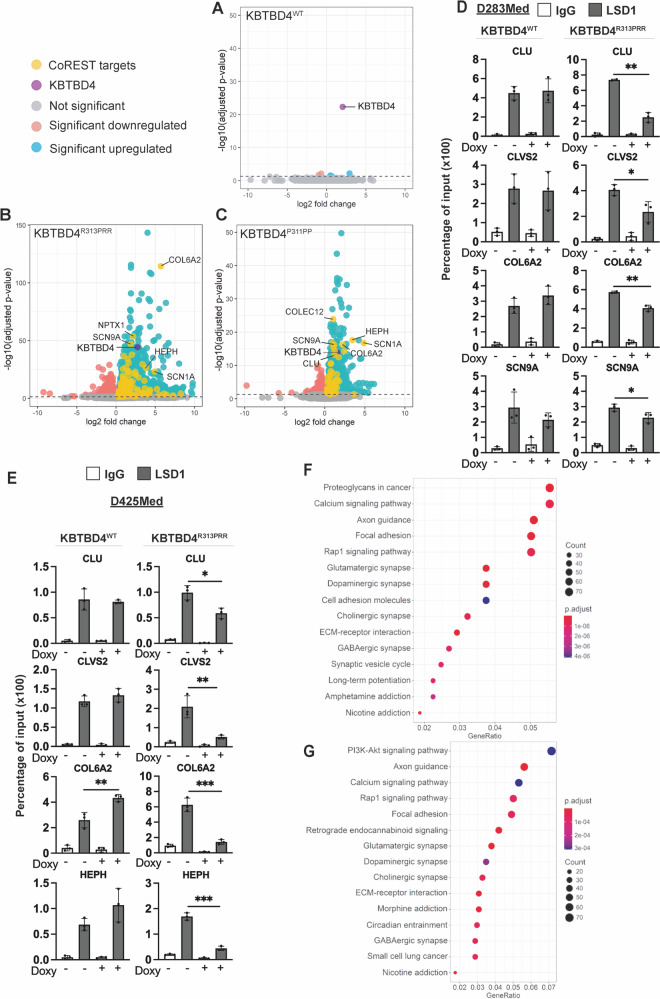
“We reasoned that the D283Med cell line represented a particularly suitable model to investigate the role of KBTBD4 mutations in medulloblastoma as, in terms of transcriptional identity, D283Med are close to the identified subtype II of a more recent medulloblastoma classification of group 3 and 4 subtypes [17].”
BackgroundSelf-citationD'Angiolella, V., Donato, V., Forrester, F. M., Jeong, Y.-T., Pellacani, C., Kudo, Y., Saraf, A., Florens, L., Washburn, M. P., & Pagano, M. (2012) · Cell · doi:10.1016/j.cell.2012.03.043 · Cited by 395
Self-citationAldehyde Dehydrogenases: Not Just Markers, but Functional Regulators of Stem Cells
Vassalli, G. (2019) · Stem Cells International · doi:10.1155/2019/3904645 · Cited by 300 · cited 1×
“Most importantly, we assessed the effect of KBTBD4, KBTBD4 and KBTBD4 expression on stemness using two well established assays for cancer stem cells, neurosphere formation ability and ALDH activity [22, 23].”
MethodStructural basis for Cul3 protein assembly with the BTB-Kelch family of E3 ubiquitin ligases
Canning, P., Cooper, C. D. O., Krojer, T., Murray, J. W., Pike, A. C. W., Chaikuad, A., Keates, T., Thangaratnarajah, C., Hojzan, V., Marsden, B. D., et al. (2013) · Journal of Biological Chemistry · doi:10.1074/jbc.m112.437996 · Cited by 284
Self-citationCullin-RING Ubiquitin Ligase Regulatory Circuits: A Quarter Century Beyond the F-Box Hypothesis
Harper, J. W., & Schulman, B. A. (2021) · Annual Review of Biochemistry · doi:10.1146/annurev-biochem-090120-013613 · Cited by 256 · cited 1×
“Myc-His-Ubiquitin plasmid was used as previously described [1, 2].”
MethodIn vitro models of medulloblastoma: Choosing the right tool for the job
Ivanov, D. P., Coyle, B., Walker, D. A., & Grabowska, A. M. (2016) · Journal of Biotechnology · doi:10.1016/j.jbiotec.2016.07.028 · Cited by 227 · cited 1×
“Medulloblastoma cell lines derived in the past 4 decades (n > 40), collectively show a surprising lack of genetic diversity and medulloblastoma cell lines containing mutant KBTBD4 have not been reported to date [16].”
BackgroundCohen, S., Roy, J., Lachance, S., Delisle, J.-S., Marinier, A., Busque, L., Roy, D.-C., Barabé, F., Ahmad, I., Bambace, N., et al. (2020) · The Lancet Haematology · doi:10.1016/s2352-3026(19)30202-9 · Cited by 206 · cited 1×
“Remarkably, the KBTBD4 mutations phenocopy the effects of the investigational drug UM171 [26], which is currently investigated in phase II clinical trials [27].”
BackgroundUbiquitin ligation to F-box protein targets by SCF–RBR E3–E3 super-assembly
Horn-Ghetko, D., Krist, D. T., Prabu, J. R., Baek, K., Mulder, M. P. C., Klügel, M., Scott, D. C., Ovaa, H., Kleiger, G., & Schulman, B. A. (2021) · Nature · doi:10.1038/s41586-021-03197-9 · Cited by 187 · cited 1×
“Myc-His-Ubiquitin plasmid was used as previously described [1, 2].”
MethodSkaar, J. R., D'Angiolella, V., Pagan, J. K., & Pagano, M. (2009) · Cell · doi:10.1016/j.cell.2009.05.040 · Cited by 168
Self-citationHrdinka, M., Fiil, B. K., Zucca, M., Leske, D., Bagola, K., Yabal, M., Elliott, P. R., Damgaard, R. B., Komander, D., Jost, P. J., et al. (2016) · Cell Reports · doi:10.1016/j.celrep.2016.02.062 · Cited by 148
Lsd1 as a therapeutic target in Gfi1-activated medulloblastoma
Lee, C., Rudneva, V. A., Erkek, S., Zapatka, M., Chau, L. Q., Tacheva-Grigorova, S. K., Garancher, A., Rusert, J. M., Aksoy, O., Lea, R., et al. (2019) · Nature Communications · doi:10.1038/s41467-018-08269-5 · Cited by 88 · cited 1×
“inhibitors [30], our findings show that inhibition of LSD1 increases stemness (Fig.”
BackgroundWilliamson, D., Schwalbe, E. C., Hicks, D., Aldinger, K. A., Lindsey, J. C., Crosier, S., Richardson, S., Goddard, J., Hill, R. M., Castle, J., et al. (2022) · Cell Reports · doi:10.1016/j.celrep.2022.111162 · Cited by 87
Self-citationSystematic characterization of mutations altering protein degradation in human cancers
Tokheim, C., Wang, X., Timms, R. T., Zhang, B., Mena, E. L., Wang, B., Chen, C., Ge, J., Chu, J., Zhang, W., et al. (2021) · Molecular Cell · doi:10.1016/j.molcel.2021.01.020 · Cited by 83 · cited 1×
“The change of substrate specificity in KBTBD4 raises the intriguing possibility that neomorphic mutations could be present in other E3 ligases, which would further expand the variety of degrons participating in cancer development that have been identified through deep learning algorithms [25].”
BackgroundMonaghan, C. E., Nechiporuk, T., Jeng, S., McWeeney, S. K., Wang, J., Rosenfeld, M. G., & Mandel, G. (2017) · Proceedings of the National Academy of Sciences · doi:10.1073/pnas.1620230114 · Cited by 82 · cited 2×
“In mice, genetic depletion of CoREST leads to the expansion of a progenitor stem cell population in the ventricular zone of the mouse brain with embryonic lethality [19].”
BackgroundSchumacher, F.-R., Sorrell, F. J., Alessi, D. R., Bullock, A. N., & Kurz, T. (2014) · Biochemical Journal · doi:10.1042/bj20140153 · Cited by 76
Self-citationIdentification of brain tumour initiating cells using the stem cell marker aldehyde dehydrogenase
Choi, S. A., Lee, J. Y., Phi, J. H., Wang, K., Park, C., Park, S., & Kim, S. (2013) · European Journal of Cancer · doi:10.1016/j.ejca.2013.09.004 · Cited by 75 · cited 2×
“Previous work showed that medulloblastoma initiating cells isolated based on ALDH activity had higher capacity for neurosphere formation, as well as higher expression of neural stem cell markers [24].”
BackgroundLee, J. C., Mazor, T., Lao, R., Wan, E., Diallo, A. B., Hill, N. S., Thangaraj, N., Wendelsdorf, K., Samuel, D., Kline, C. N., et al. (2019) · Acta Neuropathologica · doi:10.1007/s00401-019-01990-5 · Cited by 71
SCF (Fbxl17) ubiquitylation of Sufu regulates Hedgehog signaling and medulloblastoma development
Raducu, M., Fung, E., Serres, S., Infante, P., Barberis, A., Fischer, R., Bristow, C., Thézénas, M., Finta, C., Christianson, J. C., et al. (2016) · The EMBO Journal · doi:10.15252/embj.201593374 · Cited by 64
Self-citationClinical and mutational profiles of adult medulloblastoma groups
Wong, G. C.-H., Li, K. K., Wang, W., Liu, A. P. Y., Huang, Q. J., Chan, A. K., Poon, M. F., Chung, N. Y., Wong, Q. H., Chen, H., et al. (2020) · Acta Neuropathologica Communications · doi:10.1186/s40478-020-01066-6 · Cited by 64
More than a Corepressor: The Role of CoREST Proteins in Neurodevelopment
Maksour, S., Ooi, L., & Dottori, M. (2020) · eNeuro · doi:10.1523/eneuro.0337-19.2020 · Cited by 62 · cited 1×
“While CoREST was first described as a partner of the RE1-silencing transcription factor REST, it has since been shown to assemble independently [28], leading to changes in its DNA site preferences and repressor activity.”
BackgroundIoris, R. M., Galiè, M., Ramadori, G., Anderson, J. G., Charollais, A., Konstantinidou, G., Brénachot, X., Aras, E., Goga, A., Ceglia, N., et al. (2017) · Cell Reports · doi:10.1016/j.celrep.2017.01.065 · Cited by 60 · cited 2×
“Most importantly, we assessed the effect of KBTBD4, KBTBD4 and KBTBD4 expression on stemness using two well established assays for cancer stem cells, neurosphere formation ability and ALDH activity [22, 23].”
MethodSelf-citationMedulloblastoma Arises from the Persistence of a Rare and Transient Sox2+ Granule Neuron Precursor
Selvadurai, H. J., Luis, E., Desai, K., Lan, X., Vladoiu, M. C., Whitley, O., Galvin, C., Vanner, R. J., Lee, L., Whetstone, H., et al. (2020) · Cell Reports · doi:10.1016/j.celrep.2020.03.075 · Cited by 60
Choi, J., Lee, K., Ingvarsdottir, K., Bonasio, R., Saraf, A., Florens, L., Washburn, M. P., Tadros, S., Green, M. R., & Busino, L. (2018) · Nature Cell Biology · doi:10.1038/s41556-018-0084-5 · Cited by 50 · cited 2×
“0 [8] KEGG with Benjamini Hochberg (BH) corrected P value >0.”
BackgroundMethodSelf-citation-TrCP and Casein Kinase III Mediated Degradation of Cyclin F Controls Timely Mitotic Entry
Mavrommati, I., Faedda, R., Galasso, G., Li, J., Burdová, K., Fischer, R., Kessler, B. M., Carrero, Z. I., Guardavaccaro, D., Pagano, M., et al. (2018) · Cell Reports · doi:10.1016/j.celrep.2018.08.076 · Cited by 44
Self-citationStructural Basis for Recruitment of DAPK1 to the KLHL20 E3 Ligase
Chen, Z., Picaud, S., Filippakopoulos, P., D'Angiolella, V., & Bullock, A. N. (2019) · Structure · doi:10.1016/j.str.2019.06.005 · Cited by 37
Self-citationFBXL13 directs the proteolysis of CEP192 to regulate centrosome homeostasis and cell migration
Fung, E., Richter, C., Yang, H., Schäffer, I., Fischer, R., Kessler, B. M., Bassermann, F. C., & D’Angiolella, V. (2018) · EMBO Reports · doi:10.15252/embr.201744799 · Cited by 36
Self-citation
Cited by
Targeted protein degradation for cancer therapy
Hinterndorfer, M., Spiteri, V. A., Ciulli, A., & Winter, G. E. (2025) · Nature Reviews Cancer · doi:10.1038/s41568-025-00817-8 · Cited by 210
“For example, mutations in the CRL3 substrate-receptor KBTBD4 recurrently found in medulloblastoma enhance its interaction with the histone deacetylase HDAC1 subunit of the CoREST transcriptional repressor complex 19,20 .”
Degrons: defining the rules of protein degradation
Zhang, Z., Mena, E. L., Timms, R. T., Koren, I., & Elledge, S. J. (2025) · Nature Reviews Molecular Cell Biology · doi:10.1038/s41580-025-00870-z · Cited by 74
“87,115,189,190) and gain-of-function mutations in KBTBD4 that drive medulloblastoma by promoting degradation of a neosubstrate CoREST 191 .”
Converging mechanism of UM171 and KBTBD4 neomorphic cancer mutations
Xie, X., Zhang, O., Yeo, M. J. R., Lee, C., Tao, R., Harry, S. A., Payne, N. C., Nam, E., Paul, L., Li, Y., et al. (2025) · Nature · doi:10.1038/s41586-024-08533-3 · Cited by 50
“The most common mutations include P311delinsPP and R313delinsPRR (abbreviated as P and PR, hereafter), which promote the neomorphic degradation of the CoREST and LSD1 subunits of the LSD1–HDAC1/2–CoREST (LHC) complex 5 .”
InfluentialSelf-citationGoddard, J., Castle, J., Southworth, E., Fletcher, A., Crosier, S., Martín‐Guerrero, I., García-Ariza, M., Navajas, A., Masliah‐Planchon, J., Bourdeaut, F., et al. (2023) · Acta Neuropathologica · doi:10.1007/s00401-023-02566-0 · Cited by 27
“KBTBD4 mutations in the Kelch motif were assessed by Sanger sequencing [5, 23].”
MethodSelf-citationUnbiased interrogation of functional lysine residues in human proteome
Bao, Y., Pan, Q., Xu, P., Liu, Z., Zhang, Z., Liu, Y., Xu, Y., Yu, Y., Zhou, Z. L., & Wei, W. (2023) · Molecular Cell · doi:10.1016/j.molcel.2023.10.033 · Cited by 20
Metadata
- Authors
- Chen, Z., Ioris, R. M., Richardson, S., Van Ess, A. N., Vendrell, I., Kessler, B. M., Buffa, F. M., Busino, L., Clifford, S. C., Bullock, A. N., & D’Angiolella, V.
- Affiliations
- University of Oxford (GB)
- Cancer Research UK (GB)
- Newcastle University (GB)
- University of Pennsylvania (US)
- Corresponding author
- Ioris, Rafael M.
- Bullock, Alex N.
- D’Angiolella, Vincenzo
- ORCID
- Venue
- Cell Death & Differentiation
- Published
- 2022-04-04
- Volume
- 29
- Issue
- 10
- Pages
- 1955-1969
- ISSN
- 1350-9047 (ISSN-L)
- 1476-5403
- PMC
- PMC9525703
- OpenAlex
- W4225923919
- Cited by
- 41
- References
- 41
- Citations by year
- 2026: 8 · 2025: 18 · 2024: 8 · 2023: 5 · 2022: 2
- FWCI
- 5.13
- Type
- journal article
- Language
- en
- Open access
- hybrid
- doi.org
- Licence
- cc-by
- creativecommons.org/licenses/by/4.0 (tdm)
- creativecommons.org/licenses/by/4.0 (vor)
- Locations
- Cell Death and Differentiation (publishedVersion, cc-by)
- PubMed Central (publishedVersion, cc-by)
- PubMed (publishedVersion)
- Archivio istituzionale della Ricerca - Bocconi (submittedVersion, cc-by)
- Edinburgh Research Explorer (University of Edinburgh) (submittedVersion, cc-by)
- Newcastle University ePrints (Newcastle Univesity) (cc-by)
- Funders
- China Scholarship Council
- Schweizerischer Nationalfonds zur Förderung der Wissenschaftlichen Forschung (P2GEP3_188295)
- Wellcome Trust (097813/Z/11/Z, 106169/ZZ14/Z)
- Cancer Research UK (DRCNPG-May21\100002)
- Innovative Medicines Initiative (875510)
- RCUK | Medical Research Council (MC_UU_00001/7)
- Topics
- Health Sciences › Medicine › Oncology › Glioma Diagnosis and Treatment
- Life Sciences › Biochemistry, Genetics and Molecular Biology › Molecular Biology › Chromatin Remodeling and Cancer
- Life Sciences › Biochemistry, Genetics and Molecular Biology › Molecular Biology › Ubiquitin and proteasome pathways
- Keywords
- medulloblastoma, CoREST, E3 ubiquitin ligase, in-frame insertion, protein degradation, epigenetic reprogramming, cancer stemness, transcriptional programs, chromatin accessibility, carcinogenesis, druggable targets
- MeSH terms
- Carrier Proteins, Cerebellar Neoplasms, Child, Chromatin, Humans, Medulloblastoma, Mutation, Ubiquitins, Ubiquitin-Protein Ligases, Hedgehog Proteins, Ubiquitination, Co-Repressor Proteins
About these checks
Registry, retraction, Cites and statistics results are computed, not judged, with one exception: a printed reference that no index lists is read once by a model before it counts as a citation error. Claims are extracted by a model and kept only when their quote appears verbatim in the text; each cited source is then checked, with a model’s help, for whether it says what the claim relies on. Those verdicts can be wrong — read the claim’s quote and the cited source before relying on one.
Statistics and arithmetic are recomputed, not judged.
Confidence bands are shown only for fields calibrated on our annotated test set. None is calibrated yet, so no band is shown.
What counts as a claim ›How we measure confidence ›How we check this ›
Are you an author, or do you see a problem with this page? Request a review
Data sources
Bibliographic data: Semantic Scholar, OpenAlex, Crossref.
Contains information from the Semantic Scholar Academic Graph Datasets, made available under the ODC Attribution License (ODC-BY 1.0).
Semantic Scholar’s data is described in: Kinney, R., et al. (2023). The Semantic Scholar Open Data Platform. arXiv:2301.10140.
