

Mapping epigenetic modifications by sequencing technologies
Open accessThe DOI matches its Crossref record; 170 of the 170 references it cites were found in a registry or an index.
Abstract
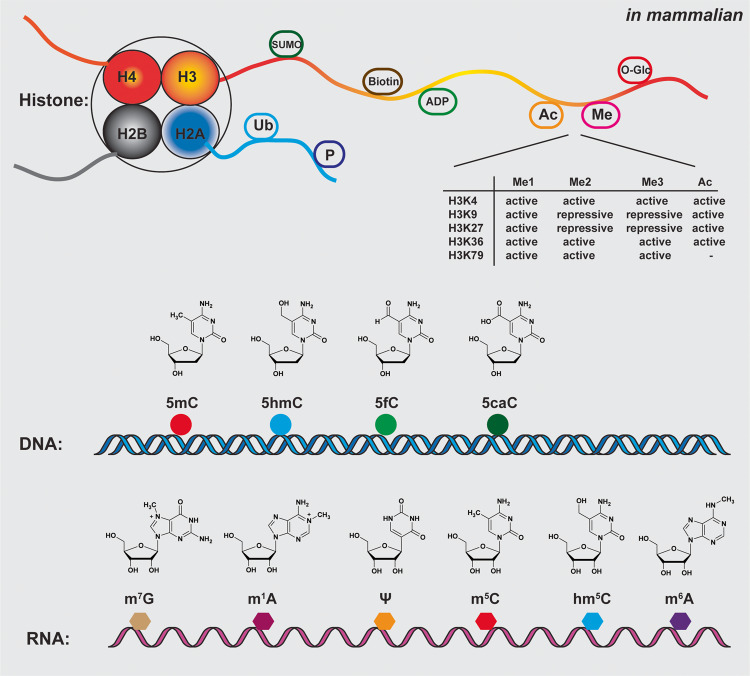
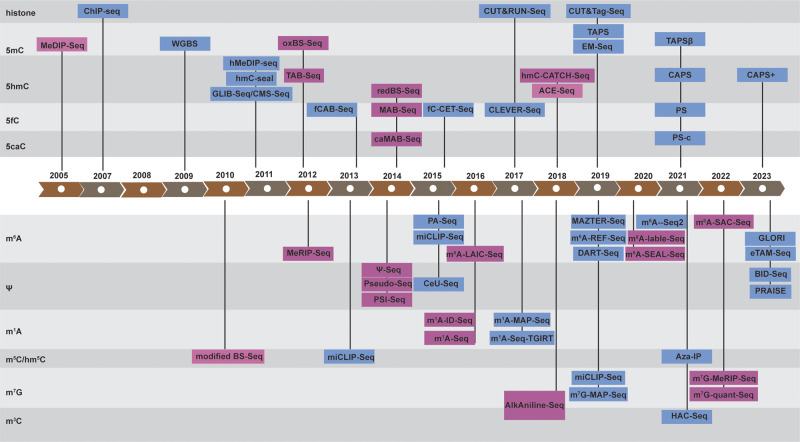
The “epigenetics” concept was first described in 1942. Thus far, chemical modifications on histones, DNA, and RNA have emerged as three important building blocks of epigenetic modifications. Many epigenetic modifications have been intensively studied and found to be involved in most essential biological processes as well as human diseases, including cancer. Precisely and quantitatively mapping over 100 [1], 17 [2], and 160 [3] different known types of epigenetic modifications in histone, DNA, and RNA is the key to understanding the role of epigenetic modifications in gene regulation in diverse biological processes. With the rapid development of sequencing technologies, scientists are able to detect specific epigenetic modifications with various quantitative, high-resolution, whole-genome/transcriptome approaches. Here, we summarize recent advances in epigenetic modification sequencing technologies, focusing on major histone, DNA, and RNA modifications in mammalian cells.
Overview
The claims and statistics of this paper haven’t been checked yet.
Free: it reads the open-access text and checks the first 5 claims that cite a source we can check. Create a free account to check every claim.
Integrity signals
Registry
Cites
Statistics
Figures
Verification
Claims the paper makes
The claims and statistics of this paper haven’t been checked yet.
Free: it reads the open-access text and checks the first 5 claims that cite a source we can check. Create a free account to check every claim.
Claims other papers make about this one
Each is checked against this paper’s own text: does it say what the citing paper says it does?
The source backs part of the claim, not all of it — or backs it for a different population, condition or comparison.
In the citing paper
“Sequencing-based approaches remain the gold standard for DNA methylation profiling, evolving from reduced representation bisulfite sequencing (RRBS) to enzymatic methyl-seq and newer TET-assisted methods (13, 14).”
From Epigenetic changes associated with multi-generational trauma: characterization, mechanisms, and therapeutics (2026) · cites this paper as [13]
Experimental — accuracy not yet measured
Self-check
Percentages, sums and reported differences re-computed from the paper’s own numbers.
The self-check needs the paper’s full text.
Citations
Cites
Chromatin modifications and their function
Kouzarides, T. (2007) · Cell · doi:10.1016/j.cell.2007.02.005 · Cited by 10,883
Shrestha, S., & Offer, S. M. (2016) · Medical Epigenetics · doi:10.1159/000444713 · Cited by 8,914
DNA methylation patterns and epigenetic memory
Bird, A. (2002) · Genes & Development · doi:10.1101/gad.947102 · Cited by 7,124
High-Resolution Profiling of Histone Methylations in the Human Genome
Barski, A., Cuddapah, S., Cui, K., Roh, T.-Y., Schones, D. E., Wang, Z., Wei, G., Chepelev, I., & Zhao, K. (2007) · Cell · doi:10.1016/j.cell.2007.05.009 · Cited by 6,845
Conversion of 5-Methylcytosine to 5-Hydroxymethylcytosine in Mammalian DNA by MLL Partner TET1
Tahiliani, M., Koh, K. P., Shen, Y., Pastor, W. A., Bandukwala, H., Brudno, Y., Agarwal, S., Iyer, L. M., Liu, D. R., Aravind, L., et al. (2009) · Science · doi:10.1126/science.1170116 · Cited by 5,836
Genomic and Epigenomic Landscapes of Adult De Novo Acute Myeloid Leukemia
The Cancer Genome Atlas Research Network (2013) · New England Journal of Medicine · doi:10.1056/nejmoa1301689 · Cited by 5,078
DNA methylation and its basic function
Moore, L. D., Le, T., & Fan, G. (2013) · Neuropsychopharmacology · doi:10.1038/npp.2012.112 · Cited by 4,906
Topology of the human and mouse m6A RNA methylomes revealed by m6A-seq
Dominissini, D., Moshitch-Moshkovitz, S., Schwartz, S., Salmon-Divon, M., Ungar, L., Osenberg, S., Cesarkas, K., Jacob-Hirsch, J., Amariglio, N., Kupiec, M., et al. (2012) · Nature · doi:10.1038/nature11112 · Cited by 4,884
Human DNA methylomes at base resolution show widespread epigenomic differences
Lister, R., Pelizzola, M., Dowen, R. H., Hawkins, R. D., Hon, G., Tonti-Filippini, J., Nery, J. R., Lee, L., Ye, Z., Ngo, Q.-M., et al. (2009) · Nature · doi:10.1038/nature08514 · Cited by 4,673
Comprehensive Analysis of mRNA Methylation Reveals Enrichment in 3′ UTRs and near Stop Codons
Meyer, K. D., Saletore, Y., Zumbo, P., Elemento, O., Mason, C. E., & Jaffrey, S. R. (2012) · Cell · doi:10.1016/j.cell.2012.05.003 · Cited by 4,223
Cited by
Liu, X., Peng, T., Xu, M., Lin, S., Hu, B., Chu, T., Liu, B., Xu, Y., Ding, W., Li, L., et al. (2024) · Journal of Hematology & Oncology · doi:10.1186/s13045-024-01596-9 · Cited by 202
“Epigenetic modifications, such as histone acetylation, methylation, phosphorylation, ubiquitination, and DNA methylation, play crucial roles in regulating chromatin structure and DNA accessibility [62, 63].”
BackgroundGupta, M., Dwivedi, V., Kumar, S., Patel, A., Niazi, P., & Yadav, V. K. (2024) · Plant Signaling & Behavior · doi:10.1080/15592324.2024.2365576 · Cited by 128
“184,188,189 Biochar, which is generated from organic waste, can be mixed with soil to reduce Pb toxicity by adsorbing it onto its surface and increasing soil pH. Investigations have shown that with the utilization of phosphorus fertilizers, the toxicity of Pb was reduced for the plants as phosphorus forms an insoluble…”
BackgroundInfluentialMultiomics Research: Principles and Challenges in Integrated Analysis
Luo, Y., Zhao, C., & Chen, F. (2024) · BioDesign Research · doi:10.34133/bdr.0059 · Cited by 123
“Additionally, PacBio Revio sequencers can directly detect epigenetic modifications such as DNA methylation [ 3 ].”
Current Bioinformatics Tools in Precision Oncology
Wolde, T., Bhardwaj, V., & Pandey, V. (2025) · MedComm · doi:10.1002/mco2.70243 · Cited by 78
Zhou, S., Abdihamid, O., Tan, F., Zhou, H., Liu, H., Li, Z., Xiao, S., & Li, B. (2024) · Cell Communication and Signaling · doi:10.1186/s12964-023-01411-x · Cited by 66
“It refers to a stable heritable change in biological phenotype or gene expression without a change in nucleotide sequence [88, 89].”
BackgroundNatural, modified and conjugated carbohydrates in nucleic acids
Dhara, D., Mulard, L. A., & Hollenstein, M. (2025) · Chemical Society Reviews · doi:10.1039/d4cs00799a · Cited by 53
Mitochondria: the epigenetic regulators of ovarian aging and longevity
Mani, S., Srivastava, V., Shandilya, C., Kaushik, A., & Singh, K. K. (2024) · Frontiers in Endocrinology · doi:10.3389/fendo.2024.1424826 · Cited by 49
Martinović, L. S., Mladenić, T., Lovrić, D., Ostojić, S., & Pavlić, S. D. (2024) · Epigenomes · doi:10.3390/epigenomes8030034 · Cited by 48
“Requires high-quality RNA and involves complex data analysis [80] All these diagnostic approaches have drawbacks.”
BackgroundRNA modifications in the tumor microenvironment: insights into the cancer-immunity cycle and beyond
Ding, Y.-P., Liu, C., & Yu, K. (2025) · Experimental Hematology and Oncology · doi:10.1186/s40164-025-00648-1 · Cited by 39
“Numerous methodologies for RNA modification detection exist, and have been reviewed previously for comprehensive discussions and in-depth understanding [30–32].”
The N6-methyladenosine Epitranscriptomic Landscape of Lung Adenocarcinoma
Wang, S., Zeng, Y., Zhu, L., Zhang, M., Zhou, L., Yang, W., Luo, W., Wang, L., Liu, Y., Zhu, H., et al. (2024) · Cancer Discovery · doi:10.1158/2159-8290.cd-23-1212 · Cited by 34
“55), has yet to be tested in patient tumors with limited RNA material.”
Investigating the origins of the mutational signatures in cancer
Boysen, G., Alexandrov, L. B., Rahbari, R., Nookaew, I., Ussery, D. W., Chao, M., Hu, C., & Cooke, M. S. (2025) · Nucleic Acids Research · doi:10.1093/nar/gkae1303 · Cited by 36
Deciphering Depression: Epigenetic Mechanisms and Treatment Strategies
Aljabali, A. A. A., Alkaraki, A. K., Gammoh, O., Tambuwala, M. M., Mishra, V. K., Mishra, Y., Hassan, S. S., & El‐Tanani, M. (2024) · Biology · doi:10.3390/biology13080638 · Cited by 33
Wang, P., Ju, C., Zhao, M., Jiang, B., & He, C. (2025) · Nature Chemistry · doi:10.1038/s41557-025-01801-3 · Cited by 25
“https://doi.org/10.1038/s41557-025-01801-3 Reactions with m 6 A and N 4 -methylcytidine (m 4 C) were shown to stop at the nitrosylated intermediate stage, with no detection of deaminated inosine or uracil products (Fig.”
InfluentialSystems biology of dry eye: Unraveling molecular mechanisms through multi-omics integration
Zhang, Z., Liu, C., Zhao, L., & Yao, J. (2024) · The Ocular Surface · doi:10.1016/j.jtos.2024.12.010 · Cited by 26
Deciphering the dual roles of PHD finger proteins from oncogenic drivers to tumor suppressors
Fan, T., Jiang, L., Zhou, X., Chi, H., & Zeng, X. (2024) · Frontiers in Cell and Developmental Biology · doi:10.3389/fcell.2024.1403396 · Cited by 22
Current Research in Drug-Free Cancer Therapies
Andavar, A., Bhagavathi, V. R., Cousin, J., Parekh, N., Razavi, Z. S., & Tan, B. (2025) · Bioengineering · doi:10.3390/bioengineering12040341 · Cited by 22
“Clinical trials, however, have been very limited [115] (Table 6).”
Comprehensive comparison of the third-generation sequencing tools for bacterial 6mA profiling
Lu, B., Guo, Z., Liu, X., Ni, Y., Xu, L., Huang, J., Li, T., Feng, T., Li, R., & Deng, X. (2025) · Nature Communications · doi:10.1038/s41467-025-59187-2 · Cited by 18
Can long-read sequencing tackle the barriers, which the next-generation could not? A review
Szakállas, N., Barták, B. K., Valcz, G., Nagy, Z. B., Takács, I., & Molnar, B. A. (2024) · Pathology & Oncology Research · doi:10.3389/pore.2024.1611676 · Cited by 27
Cao, S., Sawettalake, N., & Shen, L. (2024) · GigaScience · doi:10.1093/gigascience/giae043 · Cited by 14
“…genomes, hindering the pr ogr ess of lettuce genomes, functional genomics, and epigenomics r esearc h. Genome evolution could be profoundly influenced by epigenetic modifications that play essential roles in numerous cellular and biological processes and occur in DNA, histones, and RNA [ 12 , 13 ].”
Alagarswamy, K., Shi, W., Boini, A., Messaoudi, N., Grasso, V., Cattabiani, T., Turner, B. C., Croner, R. S., Kahlert, U. D., & Gumbs, A. A. (2024) · BioMedInformatics · doi:10.3390/biomedinformatics4030096 · Cited by 21
Towards next-generation DNA encryption via an expanded genetic system
Huang, X., Hou, Z., Qiang, W., Wang, H., Wang, X., Chen, X., Hu, X., Dai, J., Li, L., & Zhao, G. (2024) · National Science Review · doi:10.1093/nsr/nwae469 · Cited by 16
“Furthermore, in addition to the NaM-TPT3 pair, there are additional UBPs and several other modified nucleotides [56 –58 ], such as hachimoji DNA, 5-methylcytosine (5mC), N 4 -methylcytosine (4mC) 5-formyluracil (5f U), 5-hydroxymethylcytosine (5hmC), 5-formylcytosine (5fC), 5-carboxylcytosine…”
Self-citationYang, H., Sun, W., Li, J., & Zhang, X. (2025) · Annals of General Psychiatry · doi:10.1186/s12991-025-00557-x · Cited by 24
“…factors, such as environmental exposures, developmental processes and gene-environment interactions influence gene expression without altering gene sequences via a variety of primary processes that include DNA methylation, histone modification and non-coding RNA (ncRNA) expression [18, 19].”
Ramírez, L. M. N., Mehaffy, C., & Dobos, K. M. (2025) · Frontiers in Immunology · doi:10.3389/fimmu.2024.1467016 · Cited by 15
The hidden threat: Unveiling the rise of antifungal drug resistance
Chaudhary, R., & Thakur, Z. (2025) · Microbial Pathogenesis · doi:10.1016/j.micpath.2025.108068 · Cited by 12
Meskini, M., Zamani, M. S., Amanzadeh, A., Bouzari, S., Karimipoor, M., Fuso, A., Fateh, A., & Siadat, S. D. (2024) · Cytokine · doi:10.1016/j.cyto.2024.156693 · Cited by 11
Rong, J., Leng, X., Jiang, K. P., Tan, J., & Dong, M. (2025) · Reproductive Biology and Endocrinology · doi:10.1186/s12958-025-01454-4 · Cited by 24
“These metabolic abnormalities not only interfere with the proliferation, differentiation, and maturation of spermatogonia but also further affect sperm quality and quantity through epigenetic modifications, oxidative stress, and apoptosis [37, 101, 160, 238].”
InfluentialSexy ways: approaches to studying plant sex chromosomes
Hobza, R., Bačovský, V., Čegan, R., Horáková, L., Hubinský, M., Janíček, T., Janoušek, B., Jedlička, P., Kružlicová, J., Kubát, Z., et al. (2024) · Journal of Experimental Botany · doi:10.1093/jxb/erae173 · Cited by 11
Immune Memory: A New Frontier in Treating Recurrent Inflammatory Skin Diseases
Yin, H., Chen, J., & Li, C. (2025) · Clinical Reviews in Allergy & Immunology · doi:10.1007/s12016-025-09039-0 · Cited by 12
Unlocking the regulatory code of RNA: launching the Human RNome Project
Adams, M. D., Boileau, E., Bujnicki, J. M., Cheung, V. G., Conticello, S. G., Dedon, P. C., Dieterich, C., Gallo, A., Göke, J., Helm, M., et al. (2025) · Genome biology · doi:10.1186/s13059-025-03824-y · Cited by 9
“Workarounds to map modifications rely on changing the RNA or cDNA product on a molecular level (“molecular input”) and include reverse tran-scriptase-based error profiling, chemical or enzymatic derivatization, and modification-specific immunoprecipitation [43, 44].”
Interplay between genetics and epigenetics in lung fibrosis
Valand, A., Rajasekar, P., Wain, L. V., & Clifford, R. L. (2025) · The International Journal of Biochemistry & Cell Biology · doi:10.1016/j.biocel.2025.106739 · Cited by 11
Epigenetic Regulation in the Pathogenesis of Periodontitis
Dommisch, H., Schäefer, A. S., Kuzmanova, D., & Michaud, D. S. (2025) · Journal of Periodontal Research · doi:10.1111/jre.70036 · Cited by 10
Fan, X., Zhang, Y., Guo, R., Yue, K., Smagghe, G. J., Lu, Y., & Wang, L. (2024) · Cellular & Molecular Biology Letters · doi:10.1186/s11658-024-00564-y · Cited by 7
“The primary hurdle is the perfection of RNA sequencing technology that is sensitive to modifications [54].”
BackgroundMethodEpigenetic contribution to cancer
Quan, S., & Huang, H. (2024) · International review of cytology · doi:10.1016/bs.ircmb.2024.05.003 · Cited by 10
Zikopoulos, A., Moustakli, E., Potiris, A., Louis, K., Arkoulis, I., Vogiatzoglou, A. L., Tzeli, M., Kathopoulis, N., Christopoulos, P., Thomakos, N., et al. (2026) · Journal of Clinical Medicine · doi:10.3390/jcm15020686 · Cited by 7
“AI methods have additionally been employed in epigenetic profiling, encompassing DNA methylation and histone-modification patterns together with analyses of sequence variation [51,52].”
Elucidating neuroepigenetic mechanisms to inform targeted therapeutics for brain disorders
Weekley, B. H., Ahmed, N. I., & Maze, I. S. (2025) · iScience · doi:10.1016/j.isci.2025.112092 · Cited by 7
Next generation sequencing and beyond: a review of genomic sequencing methods
Hajieghrari, B., & Nejati-Jahromi, S. (2025) · Functional & Integrative Genomics · doi:10.1007/s10142-025-01724-9 · Cited by 9
Nguyen, P. K., Bui, X. L., & Le, N. Q. K. (2025) · Springer handbooks · doi:10.1007/978-3-031-81728-1_37 · Cited by 7
The histone-modified landscape: Core mechanisms of osimertinib resistance in EGFR-mutant lung cancer
Yang, J., Zhang, M., Gao, C., Yao, X., Sun, C., & Zhuang, J. (2026) · Cancer Letters · doi:10.1016/j.canlet.2026.218321 · Cited by 7
Adamyan, L. V., Avetisyan, J. S., Kuznetsova, M. V., Trofimov, D. Y., Pivazyan, L. G., Mailova, K. S., & Osipova, A. A. (2025) · Russian Journal of Human Reproduction · doi:10.17116/repro2025310316 · Cited by 5
Selingo, J. D., King, J. R., Pio, B. A., Neel, A. J., Lam, Y., Paton, R. S., Maddess, M. L., & McNally, A. (2026) · Journal of the American Chemical Society · doi:10.1021/jacs.5c20464 · Cited by 4
The role of histone methylation in fibrosis and its therapeutic potential
Tao, Z., Zhang, H., Zuo, P., & Hua, L. (2026) · Journal of Translational Medicine · doi:10.1186/s12967-026-07960-2 · Cited by 7
“These histone marks are critical in regulating chromatin structure and gene expression, and their aberrant patterns have been linked to fibrotic processes in various tissues [143, 144].”
Munns, S., Brown, A. D. H., & Buckberry, S. (2025) · Frontiers in Molecular Biosciences · doi:10.3389/fmolb.2025.1502640 · Cited by 6
Bioinformatics Strategies in Breast Cancer Research
Veneziano, M., Savini, I., Cortellesi, E., Gasperi, V., Gambacurta, A., & Catani, M. V. (2025) · Biomolecules · doi:10.3390/biom15101409 · Cited by 4
“The first one commonly utilizes chromatin immunoprecipitation followed by sequencing (ChIP-seq) for mapping histone modifications [24], methyl-seq and bisulfite-seq (these techniques enzymatically or chemically convert unmethylated cytosines into uracil, later read as thymidine) for DNA methylation…”
Olichwier, A. J., Bruzgo-Grzybko, M., Kalita, I. S., Bielicka, N., Chabielska, E., & Gromotowicz‐Poplawska, A. (2025) · Cells · doi:10.3390/cells14231885 · Cited by 3
“KDM is involved in transcriptional regulation and DNA repair and, in cancer, exerts positive effects on cancer proliferation and chemoresistance [33,126,127].”
Stephenson, A. P., Sumabat, J., Kawabe, H., Lakshmanan, S., Kim, H. J., Li, Y., Marchand, J. A., & Nivala, J. (2025) · Nucleic Acids Research · doi:10.1093/nar/gkaf1389 · Cited by 3
“Nanopore sequencing provides a more flexible platform for reading non-standard nucleotides due to its ability to directly sequence single molecules without amplification or labeling [ 9–11 ].”
Tang, M., Zhu, H., Li, S., & Qiao, L. (2026) · Diabetology & Metabolic Syndrome · doi:10.1186/s13098-026-02129-9 · Cited by 4
Ghiasi, N. M., Güloglu, T., Mustafa, H., Fırtına, C., Koliogeorgi, K., Kanellopoulos, K., Mao, H., Nadig, R., Sadrosadati, M., Park, J., et al. (2026) · IEEE International Symposium on High-Performance Computer Architecture (HPCA) · doi:10.1109/hpca68181.2026.11408512 · Cited by 10
Chen, X., Cheng, J., Kong, L., Shu, X., Xu, H., Inoue, M., Fernández-Berrocal, M. S., Døskeland, D. S., Bjørås, M., Sivakumar, S., et al. (2025) · Genome biology · doi:10.1186/s13059-025-03708-1 · Cited by 2
Self-citationLi, Z., Lv, D.-X., Niu, L., Wan, Y., & Li, J. (2025) · Pathology - Research and Practice · doi:10.1016/j.prp.2025.156231 · Cited by 4
Wang, Z., Chen, F., He, B., Wang, F., Cha, J., Song, Y., Meng, W., Zou, W., Fu, Y., Sun, S., et al. (2025) · Advanced Science · doi:10.1002/advs.202507843 · Cited by 4
Rapid whole genome sequencing in newborn screening for metabolic diseases
Zheng, J., & Yang, X. (2025) · Frontiers in Pediatrics · doi:10.3389/fped.2025.1686738 · Cited by 2
Mi, Q.-R., Wu, C.-Q., Lv, C.-G., Zhao, K.-E., Liu, Z.-F., Xu, P., & Li, L. (2026) · Acta Pharmacologica Sinica · doi:10.1038/s41401-025-01726-0 · Cited by 2
Tariq, A., Naz, I., Arshad, F., Chinnappan, R., Mir, T. A., Khan, M. I., & Yaqinuddin, A. (2026) · Biosensors · doi:10.3390/bios16040188 · Cited by 2
Functional epigenetic dynamics and transcriptional heterogeneity: Recent advances
van Loosen, Q. C., van Saparoea, A. C. H. V. D. B., Cossins, B. C., & Verschure, P. J. (2026) · Current Opinion in Biomedical Engineering · doi:10.1016/j.cobme.2026.100664 · Cited by 3
Cellular senescence as a systems-level driver of cardiovascular ageing
Wang, M.-M., Liu, T., Xu, C.-Q., Zhong, Y.-L., Liang, Z.-Q., Li, J., Cao, Y., & Chen, J. (2026) · Ageing Research Reviews · doi:10.1016/j.arr.2026.103175 · Cited by 4
Kumari, V., Tiwari, H., Singh, S., Kailashiya, V., Hoai, N. T., Sachan, S., Kumar, B., Kumar, R., Kumar, R., Verma, N. K., et al. (2026) · Medicinal Research Reviews · doi:10.1002/med.70078 · Cited by 4
Connecting the dots: Epigenetic regulation of extrachromosomal and inherited DNA amplifications
Azadegan, C., Santoro, J., & Whetstine, J. R. (2025) · Journal of Biological Chemistry · doi:10.1016/j.jbc.2025.108454 · Cited by 4
GIMMEcpg: Global Imputation of Mean CpG MEthylation in Real-timePreprint
Moghul, I., Chai, N., Pontikos, N., Hardcastle, A. J., Herrero, J., & Beck, S. (2025) · bioRxiv (Cold Spring Harbor Laboratory) · doi:10.1101/2025.03.17.643746 · Cited by 2
Kac, E., Qi, Q., & Ryznar, R. (2026) · Frontiers in Psychiatry · doi:10.3389/fpsyt.2026.1769422 · Cited by 1
Chemical decoding strategies for detecting RNA modifications, dynamics and structures
Shu, X., & Li, W. (2025) · Chemical Communications · doi:10.1039/d5cc02984h · Cited by 3
Self-citationDeveloping chemical reprogramming strategies of non-hepatocytes for liver regeneration
Ge, D., Yang, W., Ren, H., & Wang, J. (2025) · Journal of Advanced Research · doi:10.1016/j.jare.2025.08.018 · Cited by 3
H3NGST: a fully automated, web-based platform for end-to-end ChIP-seq analysis
Heo, H. H., & Um, S. (2025) · BMC Bioinformatics · doi:10.1186/s12859-025-06247-5 · Cited by 1
Wyns, A., Hendrix, J., Campenhout, J. V., Buntinx, Y., Xiong, H.-Y., Bruyne, E. D., Godderis, L., Nijs, J., Rice, D. A., Chiang, D. L. C., et al. (2026) · International Journal of Molecular Sciences · doi:10.3390/ijms27020826 · Cited by 2
“Only recently have more DNA-sparing methods, such as Enzymatic Methyl-sequencing (EM-seq) and TET-assisted pyridine borane sequencing (TAPSß), become available [48].”
Epigenetic reprogramming of hepatic antigen presenting cells in chronic liver disease
Ángel‐Gomis, E., Juanola, O., Caparrós, E., & Francés, R. (2026) · Frontiers in Immunology · doi:10.3389/fimmu.2026.1783588 · Cited by 1
Regulatory Landscapes of Bacterial DNA Methylation: Mechanism, Dynamics, and Detection
Lamba, J. K., Kaur, T., Jha, R., Kadamb, R., & Garg, R. (2026) · DNA · doi:10.3390/dna6020022 · Cited by 2
“Illumina-based sequencing is a gold standard technique for indirect detection of 5-methylcytosine (5mC) in the DNA [17].”
Computational advances in epigenetic regulation databases and prediction tools
Yang, L., Yang, M., Li, X., Zhou, X., Wang, Z., Zhou, K., Xie, L., Chen, F., Chen, G., & Liu, S. (2026) · Biotechnology Advances · doi:10.1016/j.biotechadv.2026.108975 · Cited by 1
Spatial biology in cancer epigenetics
Crespo-García, E., & Esteller, M. (2026) · Molecular Oncology · doi:10.1002/1878-0261.70310 · Cited by 3
Memory of maternal temperatures: DNA methylation alterations across generations
Cao, D., & Jaeger‐Braet, J. D. (2024) · PLANT PHYSIOLOGY · doi:10.1093/plphys/kiae651 · Cited by 1
“In addition, with more diverse maternal environments and plant species investigated, in combination with the use of the recent advances in epigenetic technologies (Chen et al. 2023), the epigenetic secret of how plants adapt to the changing world might be unraveled soon.”
Novel oral adjuvant to enhance cytotoxic memory like NK cell responses in HIV vaccine platform
Alles, M., Gunasena, M. G. B., Isckarus, C., Silva, I. D., Sarah Board, Mulhern, W., Collins, P. L., Demberg, T., & Liyanage, N. P. M. (2025) · npj Vaccines · doi:10.1038/s41541-024-01053-1 · Cited by 1
Emerging roles of RNA modifications in the rice blast fungus
Kou, Y., Naqvi, N. I., & Zeng, T. (2025) · Trends in Microbiology · doi:10.1016/j.tim.2025.04.002 · Cited by 2
Pmt1-dependent and state-restricted DNA methylation in fission yeastPreprint
Miled, S. (2025) · bioRxiv (Cold Spring Harbor Laboratory) · doi:10.1101/2025.09.01.672383 · Cited by 1
Genome-wide classification of tumor-derived reads from bulk long-read sequencingPreprint
Baker, T. M., Matulionis, N., Andrasz, C. L., Gerke, D. S., Garcia-Dutton, N., Atkinson, D., Chiotti, K., Wu, S., Lulla, S., Oh, J., et al. (2026) · bioRxiv (Cold Spring Harbor Laboratory) · doi:10.64898/2026.03.03.709085 · Cited by 2
“1”
Personalized epigenetics of DNA methylation in cancer
Adamopoulos, P. G., Tsiakanikas, P., & Scorilas, A. (2024) · Elsevier eBooks · doi:10.1016/b978-0-443-23802-4.00028-4
The Epigenetic Impact of the Human Microbiota on Host Cells
Stein, R. A., Cui, R., Faussete, K. C., & Riber, L. (2024) · Springer eBooks · doi:10.1007/978-981-97-3790-1_5
DMF-ChIP-seq for Highly Sensitive and Integrated Epigenomic Profiling of Low-Input Cells
Li, M., Xing, N., Lin, F., Liang, S., Huang, Y., Song, J. T., Xu, X. J., & Yang, C. J. (2024) · ACS Applied Materials & Interfaces · doi:10.1021/acsami.4c11280 · Cited by 1
Kumar, S., & Esashi, F. (2024) · bioRxiv (Cold Spring Harbor Laboratory) · doi:10.1101/2024.11.12.623194
Methods to Detect Epigenetic Changes
Shukla, V., & Tyagi, A. (2025) · Springer eBooks · doi:10.1007/978-981-96-3985-4_9
Epigenetic Mechanism and Therapeutic Approaches in Huntington’s Disease
Luo, K. (2025) · Highlights in Science Engineering and Technology · doi:10.54097/xxa1ws81
Giacoman-Lozano, M., Meléndez-Ramírez, C., López-Ornelas, A., Moral‐Morales, A. D., Rebollar‐Vega, R., Soto‐Reyes, E., Velasco, I., & Durán, R. C. (2025) · bioRxiv (Cold Spring Harbor Laboratory) · doi:10.1101/2025.08.14.670306
Integrating multiomics data for personalized TNBC management
Bhamre, U. G., Kothawade, H., Bhandari, D. D., Amrutkar, S. V., & Shinkar, D. M. (2025) · Elsevier eBooks · doi:10.1016/b978-0-443-33565-5.00002-5
AlBayati, M. M., Alquraishi, M., Alqurashi, N., AlFatlawi, M., & Ghani, J. (2025) · Journal of Health and Biology · doi:10.71428/jhb.2025.0206
Rafic, T., Alarawi, M. S., Alkhnbashi, O. S., Al-Thukair, A. A., Okeyode, A. H., Karthikeyan, G., & Nzila, A. M. (2025) · PLoS ONE · doi:10.1371/journal.pone.0334420
“…our strain is expected to have a relatively higher GC content as an extremophile, SRST often does not permit to accurately characterize DNA and RNA with extreme GC content, repetitive homologous sequences, or epigenetic modifications, making SRST a poor choice of sequencing technology [24,25].”
“Zero-distance” photocrosslinking: a paradigm shift in probing DNA-protein dynamics
Guo, F., Fan, S., Ouyang, X., Li, L., & Li, L. (2025) · MedScience · doi:10.1007/s11684-025-1188-5 · Cited by 1
Fishnet simplifies and accelerates signal-to-sequence alignment in Nanopore sequencingPreprint
Dietrich, V., Lehmann, L., Pastore, S., Mündnich, S., Walz, L., Helm, M., Friedland, K., & Gerber, S. (2026) · Research Square · doi:10.21203/rs.3.rs-8345719/v1
Begley, T. J., & Belfort, M. (2026) · The Conversation · doi:10.64628/aai.nqwjkagea
Integrated Omics Approaches to Accelerate New Strategies for Crop Improvement
Zaman, Q. U., Shen, S., & Luo, J. (2026) · Sustainability Sciences in Asia and Africa · doi:10.1007/978-981-95-5109-5_10
Technical challenges and innovations in moving HMMs forward
Yu, K., & Bian, G. (2026) · Elsevier eBooks · doi:10.1016/b978-0-443-31402-5.00003-7
Jing, S., Xing, T., Liu, S., Zhang, M., He, M., Li, C.-C., & Luo, X. (2026) · Analytical Chemistry · doi:10.1021/acs.analchem.6c01770
Next-generation sequencing (NGS) techniques in improvement of medicinal plants
Gumasta, R., & Garg, A. (2026) · Elsevier eBooks · doi:10.1016/b978-0-443-34129-8.00020-1
Shaping breast cancer progression in obesity: Insights from advanced models and omics tools
Emma, R., Sergi, V., Scordamaglia, D., Scollo, P., Clarke, R. B., Malaguarnera, R., & Francesco, E. M. D. (2026) · Biochimica et Biophysica Acta (BBA) - Reviews on Cancer · doi:10.1016/j.bbcan.2026.189625
Innovative advances and clinical applications of cell-free DNA methylation detection technologies
Zh, Z., Zhu, L., Ren, Y., Zhou, J. H., Dai, Y., Ren, W., & Gou, X. (2026) · Talanta · doi:10.1016/j.talanta.2026.130280 · Cited by 1
Deep learning as a bridge between sequencing-derived biological data and functional interpretation
Hong, H., Liu, L., Liao, W., Zhao, J., Liu, Y., He, X., Li, J., He, R., Jin, Y., Sha, L., et al. (2026) · Discover Artificial Intelligence · doi:10.1007/s44163-026-01739-6
“Modern sequencing platforms now capture a wide array of molecular features with unprecedented resolution, ranging from genome-wide chromatin profiles and DNA modifications [2] to single-cell transcriptomes and proteomes [3].”
Liu, S. X., Maxim, Z. L., Walls, C., Kilpatrick, C., Faulk, C. D., Georgieff, M., & Tran, P. V. (2026) · bioRxiv (Cold Spring Harbor Laboratory) · doi:10.64898/2026.07.22.740094
Moral‐Morales, A. D., Díaz-Dionisio, E. D., & Medina‐Franco, J. L. (2026) · Expert Opinion on Drug Discovery · doi:10.1080/17460441.2026.2727574
“…(ChIP-seq), assays for transposase-accessible chromatin (ATAC-seq), methylated DNA Immunoprecipitation (MeDIP-seq) and bisulfite sequencing, among other genomic technologies which together provide a comprehensive view of the epigenome and its interplay with the transcriptome and genome [61].”
Khan, S., Said, R., Eskiw, C. H., Thuot, F., Guay, B., Papagerakis, P., & Papagerakis, S. M. (2026) · Clinical Epigenetics · doi:10.1186/s13148-026-02189-8
“…addresses several cancer-relevant questions: (1) which transcription factors bind promoters/enhancers of genes driving tumor growth (2) whether overexpression aligns with active histone marks (3) whether regulatory circuitry is rewired by comparing tumor vs normal chromatin occupancy patterns [73].”
Molecular hijacking: ESKAPE pathogens and their epigenetics manipulation of host cell
Brahma, U., Baddi, H. M., Pranavi, U., Amruthanjali, T., Singothu, S., Usha, S., & Bhandari, V. (2026) · The Microbe · doi:10.1016/j.microb.2026.100773
Treating neurological diseases through epigenetic inhibition: A neuroepigenetic therapy hypothesis
Reddy, D. S., Franklin, L., Golub, V. M., Desai, H., & Ramakrishnan, S. (2026) · Journal of Pharmacology and Experimental Therapeutics · doi:10.1016/j.jpet.2026.105019 · Cited by 2
The Epigenetic Aging–Cancer Continuum: Biomarkers, Metabolism, and Therapy
Papaneophytou, C. P., Pieri, M., Maria-Eleni, M., Charidemou, E., & Andreou, E. P. (2026) · Genes · doi:10.3390/genes17091130
“Conventional bisulfite and short-read sequencing remain widely used for DNA-methylation profiling but have limitations in repetitive and structurally complex genomic regions and can introduce DNA loss, reduced sequence complexity, and mapping bias during chemical conversion [264].”
Metadata
- Authors
- Chen, X., Xu, H., Shu, X., & Song, C.-X.
- Affiliations
- University of Oxford (GB)
- Corresponding author
- Song, Chun-Xiao
- Venue
- Cell Death & Differentiation
- Published
- 2023-09-01
- Volume
- 32
- Issue
- 1
- Pages
- 56-65
- ISSN
- 1350-9047 (ISSN-L)
- 1476-5403
- PMC
- PMC11742697
- OpenAlex
- W4386348917
- Cited by
- 105
- References
- 168
- Citations by year
- 2026: 39 · 2025: 43 · 2024: 23
- FWCI
- 2.77
- Type
- journal article
- Language
- en
- Open access
- hybrid
- doi.org
- Licence
- cc-by
- creativecommons.org/licenses/by/4.0 (tdm)
- creativecommons.org/licenses/by/4.0 (vor)
- Locations
- Cell Death and Differentiation (publishedVersion, cc-by)
- PubMed Central (publishedVersion, cc-by)
- PubMed (publishedVersion)
- Funders
- Ludwig Institute for Cancer Research
- DH | National Institute for Health Research
- China Scholarship Council
- Topics
- Life Sciences › Biochemistry, Genetics and Molecular Biology › Molecular Biology › Epigenetics and DNA Methylation
- Life Sciences › Biochemistry, Genetics and Molecular Biology › Molecular Biology › Genomics and Chromatin Dynamics
- Life Sciences › Biochemistry, Genetics and Molecular Biology › Molecular Biology › Genomics and Phylogenetic Studies
- Keywords
- epigenetic modifications, histone modifications, DNA methylation, RNA modification, sequencing technologies, gene expression regulation, cancer epigenetics, mammalian cells
- MeSH terms
- Animals, DNA, Histones, Humans, RNA, DNA Methylation, Epigenesis, Genetic, High-Throughput Nucleotide Sequencing
About these checks
Registry, retraction, Cites and statistics results are computed, not judged, with one exception: a printed reference that no index lists is read once by a model before it counts as a citation error. Claims are extracted by a model and kept only when their quote appears verbatim in the text; each cited source is then checked, with a model’s help, for whether it says what the claim relies on. Those verdicts can be wrong — read the claim’s quote and the cited source before relying on one.
Statistics and arithmetic are recomputed, not judged.
Confidence bands are shown only for fields calibrated on our annotated test set. None is calibrated yet, so no band is shown.
What counts as a claim ›How we measure confidence ›How we check this ›
Are you an author, or do you see a problem with this page? Request a review
Data sources
Bibliographic data: Semantic Scholar, OpenAlex, Crossref.
Contains information from the Semantic Scholar Academic Graph Datasets, made available under the ODC Attribution License (ODC-BY 1.0).
Semantic Scholar’s data is described in: Kinney, R., et al. (2023). The Semantic Scholar Open Data Platform. arXiv:2301.10140.
