

PIK3CA mutations confer resistance to first-line chemotherapy in colorectal cancer
Open accessThe DOI matches its Crossref record; 55 of the 55 references it cites were found in a registry or an index.
Abstract
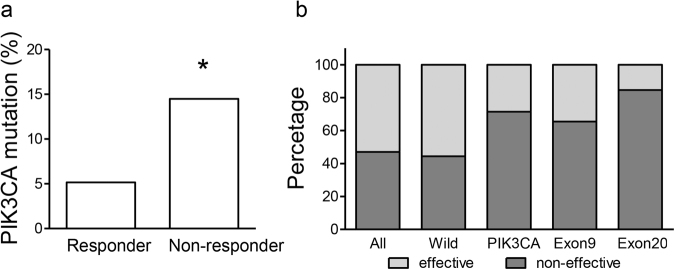
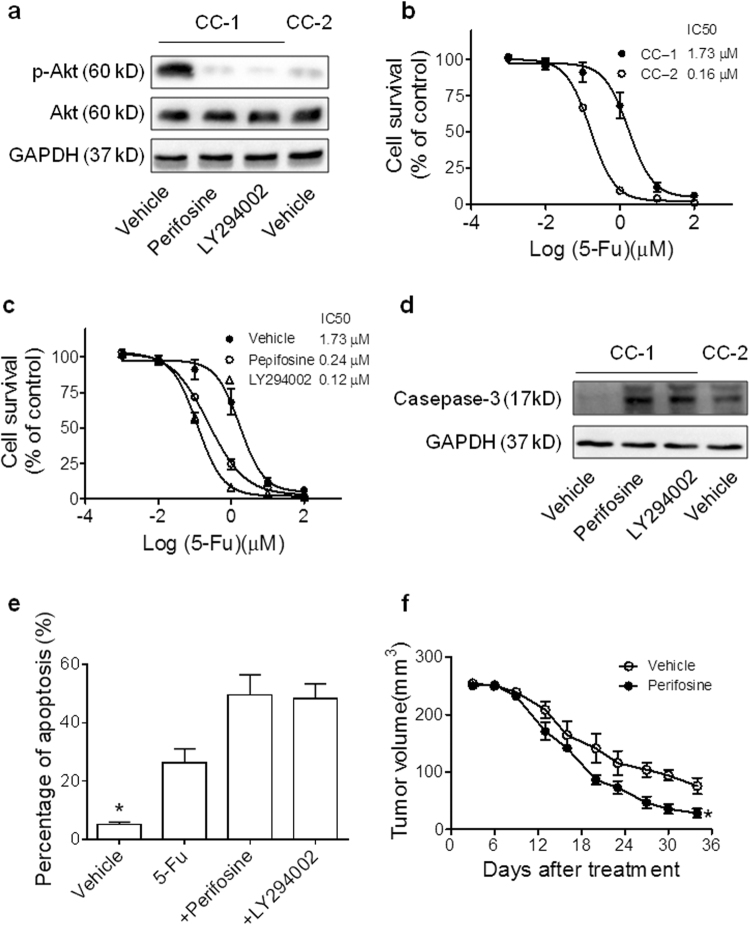
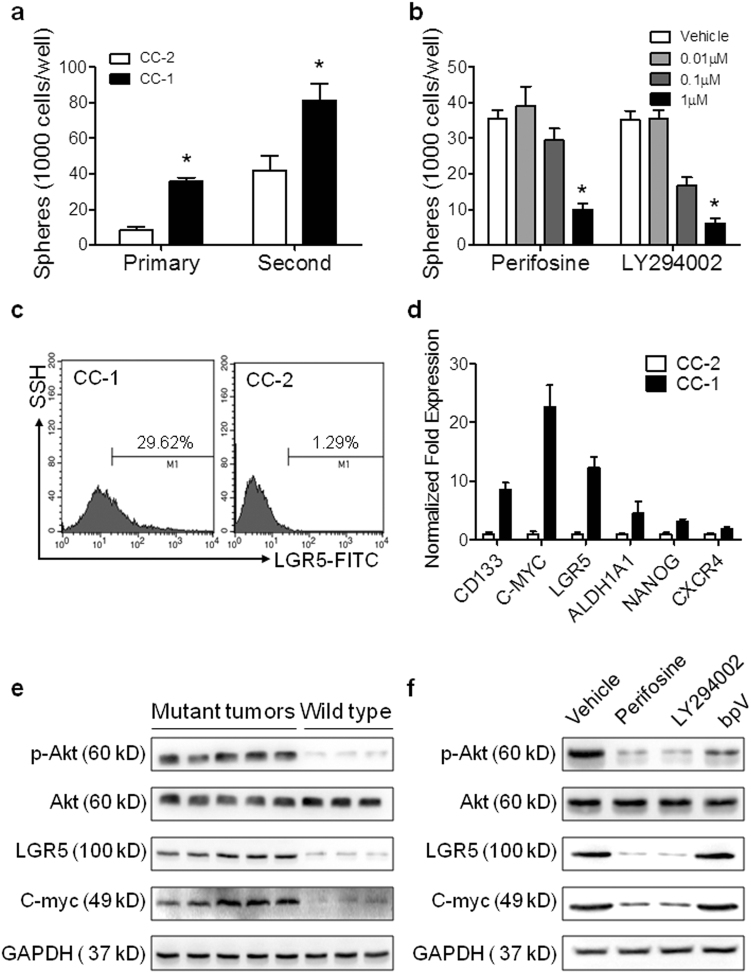
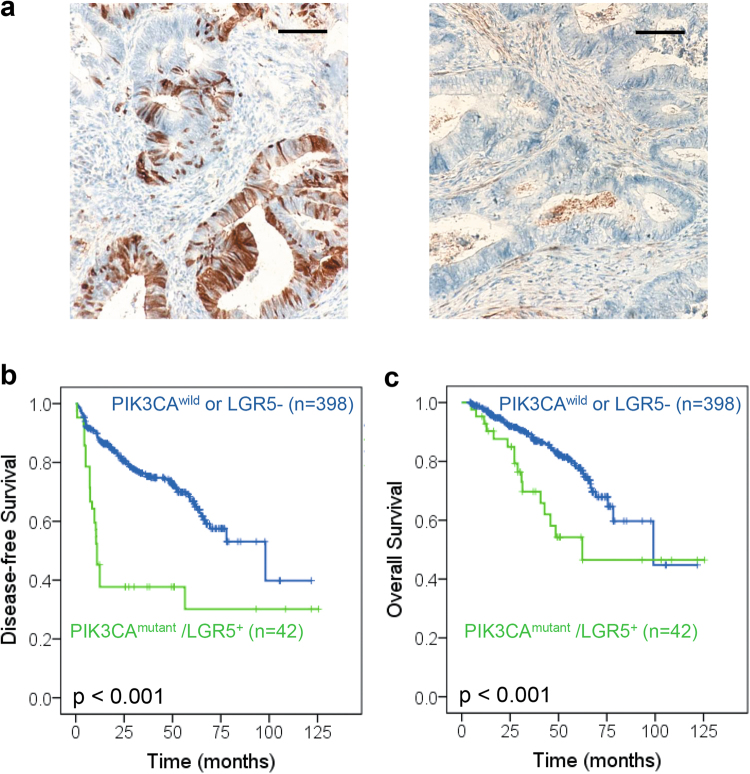
Chemotherapy represents an important treatment option for colorectal cancer (CRC), but only half of the patients benefit from these regimens. We explored the potential predicting value and mechanism of PIK3CA mutation in CRC chemotherapy. CRC specimens from 440 patients were retrospectively collected and examined with a fluorescence PCR-based method. The correlation of first-line chemotherapy response and PIK3CA mutation was evaluated according to follow-up and medical records. The underlying mechanism of PIK3CA mutation in chemotherapy resistance was assessed with CRC tumors and primary cells. The mutation frequency of the PIK3CA gene in CRC patients was 9.55%, which was correlated with late TNM staging and lower histological grade. The CRC patients with PIK3A mutation showed worse response to first-line chemotherapy than those without PIK3CA mutation. PIK3A mutation tumor cells showed poor sensitivity to first-line chemotherapy in vitro and in vivo. PIK3CA mutation induced PI3K/Akt signaling activation to increase LGR5 + CRC stem cells survival and proliferation, from which lead to chemotherapy resistance. Furthermore, PIK3CA mutation /LGR5 + expression was an independent detrimental factor for CRC patients. Our findings indicated that PIK3CA mutation induced PI3K/Akt activation contributed to CRC stem cells survival and proliferation, from which cells further resistance to chemotherapy. PIK3CA mutation /LGR5 + expression was a potential biomarker for monitoring chemotherapy resistance in CRC.
Overview
The claims and statistics of this paper haven’t been checked yet.
Free: it reads the open-access text and checks the first 5 claims that cite a source we can check. Create a free account to check every claim.
Integrity signals
Registry
Cites
Statistics
Figures
Verification
Claims the paper makes
The claims and statistics of this paper haven’t been checked yet.
Free: it reads the open-access text and checks the first 5 claims that cite a source we can check. Create a free account to check every claim.
Claims other papers make about this one
Each is checked against this paper’s own text: does it say what the citing paper says it does?
In the citing paper
“Mutations in the PI3K/AKT/mTOR pathway are common in mCRC [102], contribute to malignant transformation [103], and are implicated in resistance to front-line therapy [104].”
From Recent Advances in Therapeutic Strategies to Improve Colorectal Cancer Treatment (2024) · cites this paper as [104]
Self-check
Percentages, sums and reported differences re-computed from the paper’s own numbers.
The self-check needs the paper’s full text.
Citations
Cites
1 retracted
Function of miR-152 as a Tumor Suppressor in Human Breast Cancer by Targeting PIK3CA
Ge, S., Wang, D., Kong, Q., Gao, W., & Sun, J. (2017) · Oncology Research Featuring Preclinical and Clinical Cancer Therapeutics · doi:10.3727/096504017x14878536973557 · Cited by 56
RetractedSiegel, R. L., Miller, K. D., & Jemal, A. (2016) · CA: A Cancer Journal for Clinicians · doi:10.3322/caac.21332 · Cited by 16,003
AKT/PKB signaling: navigating downstream
Manning, B. D., & Cantley, L. C. (2007) · Cell · doi:10.1016/j.cell.2007.06.009 · Cited by 6,115
High Frequency of Mutations of the PIK3CA Gene in Human Cancers
Samuels, Y., Wang, Z., Bardelli, A., Silliman, N., Ptak, J., Szabo, S., Yan, H., Gazdar, A., Powell, S. M., Riggins, G. J., et al. (2004) · Science · doi:10.1126/science.1096502 · Cited by 3,437
The evolution of phosphatidylinositol 3-kinases as regulators of growth and metabolism
Engelman, J. A., Luo, J., & Cantley, L. C. (2006) · Nature Reviews Genetics · doi:10.1038/nrg1879 · Cited by 3,330
Mutant PIK3CA promotes cell growth and invasion of human cancer cells.
Samuels, Y., Diaz, L. A., Schmidt-Kittler, O., Cummins, J. M., DeLong, L., Cheong, I., Rago, C., Huso, D. L., Lengauer, C., Kinzler, K. W., et al. (2005) · Cancer Cell · doi:10.1016/j.ccr.2005.05.014 · Cited by 915
The therapeutic promise of the cancer stem cell concept
Frank, N. Y., Schatton, T., & Frank, M. H. (2010) · Journal of Clinical Investigation · doi:10.1172/jci41004 · Cited by 636
Breast Cancer–Associated PIK3CA Mutations Are Oncogenic in Mammary Epithelial Cells
Isakoff, S. J., Engelman, J. A., Irie, H. Y., Luo, J., Brachmann, S. M., Pearline, R. V., Cantley, L. C., & Brugge, J. S. (2005) · Cancer Research · doi:10.1158/0008-5472.can-05-2612 · Cited by 509
Hideshima, T., Catley, L., Yasui, H., Ishitsuka, K., Raje, N., Mitsiades, C., Podar, K., Munshi, N. C., Chauhan, D., Richardson, P. G., et al. (2006) · Blood · doi:10.1182/blood-2005-08-3434 · Cited by 422
Perrone, F., Lampis, A., Orsenigo, M., Di Bartolomeo, M., Gevorgyan, A., Losa, M., Frattini, M., Riva, C., Andreola, S., Bajetta, E., et al. (2009) · Annals of Oncology · doi:10.1093/annonc/mdn541 · Cited by 410
An integrin β3-KRAS-RalB complex drives tumour stemness and resistance to EGFR inhibition
Seguin, L., Kato, S., Franovic, A., Camargo, M. F., Lesperance, J., Elliott, K. C., Yebra, M., Mielgo, A., Lowy, A. M., Husain, H., et al. (2014) · Nature Cell Biology · doi:10.1038/ncb2953 · Cited by 374
Sepulveda, A. R., Hamilton, S. R., Allegra, C. J., Grody, W., Cushman-Vokoun, A. M., Funkhouser, W. K., Kopetz, S. E., Lieu, C., Lindor, N. M., Minsky, B. D., et al. (2017) · Journal of Clinical Oncology · doi:10.1200/jco.2016.71.9807 · Cited by 360
Barault, L., Veyrie, N., Jooste, V., Lecorre, D., Chapusot, C., Ferraz, J., Lièvre, A., Cortet, M., Bouvier, A., Rat, P., et al. (2008) · International Journal of Cancer · doi:10.1002/ijc.23388 · Cited by 331
Souglakos, J., Philips, J., Wang, R., Marwah, S., Silver, M., Tzardi, M., Silver, J., Ogino, S., Hooshmand, S., Kwak, E., et al. (2009) · British Journal of Cancer · doi:10.1038/sj.bjc.6605164 · Cited by 310
Prognostic Role of PIK3CA Mutation in Colorectal Cancer: Cohort Study and Literature Review
Liao, X., Morikawa, T., Lochhead, P., Imamura, Y., Kuchiba, A., Yamauchi, M., Nosho, K., Qian, Z. R., Nishihara, R., Meyerhardt, J. A., et al. (2012) · Clinical Cancer Research · doi:10.1158/1078-0432.ccr-11-2410 · Cited by 258
PIK3CA mutations in human solid tumors: Role in sensitivity to various therapeutic approaches
Ligresti, G., Militello, L., Steelman, L. S., Cavallaro, A., Basile, F., Nicoletti, F., Stivala, F., McCubrey, J. A., & Libra, M. (2009) · Cell Cycle · doi:10.4161/cc.8.9.8255 · Cited by 214
Metastatic Consequences of Immune Escape from NK Cell Cytotoxicity by Human Breast Cancer Stem Cells
Wang, B., Wang, Q., Wang, Z., Jiang, J., Yu, S.-C., Ping, Y.-F., Yang, J., Xu, S.-L., Ye, X.-Z., Xu, C., et al. (2014) · Cancer Research · doi:10.1158/0008-5472.can-13-2563 · Cited by 198
Self-citationChristensen, E., Birkenkamp-Demtröder, K., Nordentoft, I., Høyer, S., van der Keur, K., van Kessel, K., Zwarthoff, E., Agerbæk, M., Ørntoft, T. F., Jensen, J. B., et al. (2017) · European Urology · doi:10.1016/j.eururo.2016.12.016 · Cited by 196
Kinugasa, Y., Matsui, T., & Takakura, N. (2014) · Stem Cells · doi:10.1002/stem.1556 · Cited by 175
Kobayashi, S., Yamada‐Okabe, H., Suzuki, M., Natori, O., Kato, A., Matsubara, K., Jau Chen, Y., Yamazaki, M., Funahashi, S., Yoshida, K., et al. (2012) · STEM CELLS · doi:10.1002/stem.1257 · Cited by 175
Prognostic role of tumor PIK3CA mutation in colorectal cancer: a systematic review and meta-analysis
Mei, Z., Duan, C., Li, C. B., Cui, L., & Ogino, S. (2016) · Annals of Oncology · doi:10.1093/annonc/mdw264 · Cited by 166
Roper, J., Richardson, M. P., Wang, W. V., Richard, L. G., Chen, W., Coffee, E. M., Sinnamon, M. J., Lee, L., Chen, P., Bronson, R. T., et al. (2011) · PLoS ONE · doi:10.1371/journal.pone.0025132 · Cited by 150
Velho, S., Moutinho, C., Cirnes, L., Albuquerque, C., Hamelin, R., Schmitt, F., Carneiro, F., Oliveira, C., & Seruca, R. (2008) · BMC Cancer · doi:10.1186/1471-2407-8-255 · Cited by 142
Day, F. L., Jorissen, R. N., Lipton, L., Mouradov, D., Sakthianandeswaren, A., Christie, M., Li, S., Tsui, C., Tie, J., Desai, J., et al. (2013) · Clinical Cancer Research · doi:10.1158/1078-0432.ccr-12-3614 · Cited by 124
Pharmacogenetics research on chemotherapy resistance in colorectal cancer over the last 20 years
Panczyk, M. (2014) · World Journal of Gastroenterology · doi:10.3748/wjg.v20.i29.9775 · Cited by 122
PI3K Inhibitors: Understanding Toxicity Mechanisms and Management.
Greenwell, I. B., Ip, A., & Cohen, J. B. (2017) · PubMed · Cited by 119
Marques, R. P., Duarte, G. S., Sterrantino, C., Pais, H. L., Quintela, A., Martins, A. P., & Costa, J. N. (2017) · Critical Reviews in Oncology/Hematology · doi:10.1016/j.critrevonc.2017.08.006 · Cited by 91
Ma, C. X., Suman, V. J., Goetz, M. P., Northfelt, D., Burkard, M. E., Ademuyiwa, F. O., Naughton, M., Margenthaler, J. A., Aft, R., Gray, R. J., et al. (2017) · Clinical Cancer Research · doi:10.1158/1078-0432.ccr-17-1260 · Cited by 84
Estilo, C. L., O‐charoenrat, P., Ngai, I. M., Patel, S. G., Reddy, P. G., Dao, S., Shaha, A. R., Kraus, D. H., Boyle, J. O., Wong, R. J., et al. (2003) · PubMed · Cited by 80
MED12 methylation by CARM1 sensitizes human breast cancer cells to chemotherapy drugs
Wang, L., Zeng, H., Wang, Q., Zhao, Z., Boyer, T., Bian, X., & Xu, W. (2015) · Science Advances · doi:10.1126/sciadv.1500463 · Cited by 80
Self-citationXu, J.-M., Wang, Y., Wang, Y.-L., Wang, Y., Liu, T., Ni, M., Li, M.-S., Lin, L., Ge, F.-J., Gong, C., et al. (2017) · Clinical Cancer Research · doi:10.1158/1078-0432.ccr-16-2738 · Cited by 76
Mao, C., Zhou, J., Yang, Z., Huang, Y., Wu, X., Shen, H., Tang, J., & Chen, Q. (2012) · PLoS ONE · doi:10.1371/journal.pone.0036653 · Cited by 75
MiR-142-5p Suppresses Tumorigenesis by Targeting PIK3CA in Non-Small Cell Lung Cancer
Wang, Z., Liu, Z., Fang, X., & Yang, H. K. (2017) · Cellular Physiology and Biochemistry · doi:10.1159/000484459 · Cited by 75
Paleari, L., Puntoni, M., Clavarezza, M., DeCensi, M., Cuzick, J. M., & DeCensi, A. (2015) · Clinical Oncology · doi:10.1016/j.clon.2015.11.008 · Cited by 72
Lgr5 promotes cancer stemness and confers chemoresistance through ABCB1 in colorectal cancer
Liu, Y., Hsu, H., Tseng, K.-C., Chen, H., & Chen, S. (2013) · Biomedicine & Pharmacotherapy · doi:10.1016/j.biopha.2013.08.001 · Cited by 70
Self-citationGray, R. T., Cantwell, M. M., Coleman, H. G., Loughrey, M. B., Bankhead, P., McQuaid, S., O'Neill, R. F., Arthur, K., Bingham, V., McGready, C., et al. (2017) · Clinical and Translational Gastroenterology · doi:10.1038/ctg.2017.18 · Cited by 64
Chen, J., Guo, F., Shi, X., Zhang, L., Zhang, A., Jin, H., & He, Y. (2014) · BMC Cancer · doi:10.1186/1471-2407-14-802 · Cited by 63
LGR5 is required for the maintenance of spheroid-derived colon cancer stem cells
Chen, X. '., Wei, B., Han, X., Zheng, Z., Huang, J., Liu, J., Huang, Y. L., & Wei, H. (2014) · International Journal of Molecular Medicine · doi:10.3892/ijmm.2014.1752 · Cited by 55
Lutz, M. P., Zalcberg, J. R., Ducreux, M. P., Aust, D. E., Bruno, M. J., Büchler, M. W., Delpéro, J., Gloor, B., Glynne‐Jones, R., Hartwig, W., et al. (2017) · European Journal of Cancer · doi:10.1016/j.ejca.2017.03.022 · Cited by 51
Wu, S., Gan, Y., Wang, X., Liu, J., Li, M., & Tang, Y. (2013) · Journal of Cancer Research and Clinical Oncology · doi:10.1007/s00432-013-1400-x · Cited by 50
Clinical Implications of Intestinal Stem Cell Markers in Colorectal Cancer
Espersen, M. L. M., Olsen, J., Linnemann, D., Høgdall, E. V. S., & Troelsen, J. T. (2014) · Clinical Colorectal Cancer · doi:10.1016/j.clcc.2014.12.004 · Cited by 45
Significance of mTOR Signaling and Its Inhibitor Against Cancer Stem-Like Cells in Colorectal Cancer
Cai, Z., Ke, J., He, X., Yuan, R., Chen, Y., Wu, X., Wang, L., Wang, J., Lan, P., & Wu, X. (2013) · Annals of Surgical Oncology · doi:10.1245/s10434-013-3146-8 · Cited by 45
Self-citationFang, D. D., Zhang, C. C., Gu, Y., Jani, J. P., Cao, J., Tsaparikos, K., Yuan, J., Thiel, M., Jackson-Fisher, A., Zong, Q., et al. (2013) · PLoS ONE · doi:10.1371/journal.pone.0067258 · Cited by 44
Martinelli, E., Sforza, V., Cardone, C., Capasso, A., Nappi, A. G., Martini, G., Napolitano, S., Rachiglio, A. M., Normanno, N., Cappabianca, S., et al. (2017) · ESMO Open · doi:10.1136/esmoopen-2017-000177 · Cited by 38
Mjøs, S., Werner, H. M. J., Birkeland, E., Holst, F., Berg, A., Halle, M. K., Tangen, I. L., Kusonmano, K., Mauland, K. K., Oyan, A. M., et al. (2017) · Scientific Reports · doi:10.1038/s41598-017-10717-z · Cited by 38
Selective AKT Inhibition by MK-2206 Represses Colorectal Cancer-Initiating Stem Cells
Malkomes, P. T. Z., Lunger, I., Luetticke, A., Oppermann, E., Haetscher, N., Serve, H. L., Holzer, K., Bechstein, W. O., & Rieger, M. A. (2016) · Annals of Surgical Oncology · doi:10.1245/s10434-016-5218-z · Cited by 33
Kim, H.-J., Lee, S. Y., Kim, C. Y., Kim, Y. H., Ju, W., & Kim, S. C. (2016) · Oncotarget · doi:10.18632/oncotarget.14245 · Cited by 33
Kim, J., Lee, E., Park, K., Park, W., Jung, H. H., Ahn, J. S., Im, Y., & Park, Y. H. (2017) · Oncotarget · doi:10.18632/oncotarget.15881 · Cited by 33
Asati, V., Bharti, S. K., Mahapatra, D. K., Asati, V., & Budhwani, A. K. (2016) · Current Pharmaceutical Design · doi:10.2174/1381612822666160614000053 · Cited by 29
PIK3CA mutation and colorectal cancer precision medicine
Hamada, T., Nowak, J. A., & Ogino, S. (2017) · Oncotarget · doi:10.18632/oncotarget.15724 · Cited by 29
Zhou, Y., Wang, C., Zhu, H., Lin, Y., Pan, B., Zhang, X., Huang, X., Xu, Q., Xu, Y., & Sun, Q. (2016) · PLoS ONE · doi:10.1371/journal.pone.0158143 · Cited by 26
Chiu, J. W. Y., Krzyzanowska, M. K., Serra, S., Knox, J. J., Dhani, N. C., MacKay, H. J., Hedley, D. W., Moore, M. J., Liu, G., Burkes, R. L., et al. (2017) · Clinical Colorectal Cancer · doi:10.1016/j.clcc.2017.10.010 · Cited by 25
High ERα36 Expression Level and Membrane Location Predict Poor Prognosis in Renal Cell Carcinoma
Wang, Q., Zhang, W., Yang, J., Liu, Y., Yan, Z., Guo, Z., Li, Y., & Bian, X. (2015) · Medicine · doi:10.1097/md.0000000000001048 · Cited by 20
Self-citationKarlsson, T., Krakstad, C., Tangen, I. L., Høivik, E. A., Pollock, P. M., Salvesen, H. B., & Lewis, A. E. (2016) · Oncotarget · doi:10.18632/oncotarget.13989 · Cited by 20
BpV (phen) induces apoptosis of RINm5F cells by modulation of MAPKs and MKP-1
Rumora, L., Barišić, K., Maysinger, D., & Grubišić, T. Ž. (2003) · Biochemical and Biophysical Research Communications · doi:10.1016/s0006-291x(02)02952-2 · Cited by 13
Cited by
RAS-targeted therapies: is the undruggable drugged?
Moore, A. R., Rosenberg, S. C., McCormick, F., & Malek, S. (2020) · Nature Reviews Drug Discovery · doi:10.1038/s41573-020-0068-6 · Cited by 1,103
Stefani, C., Miricescu, D., Stanescu-Spinu, I.-I., Nica, R. I., Greabu, M., Totan, A. R., & Jinga, M. (2021) · International Journal of Molecular Sciences · doi:10.3390/ijms221910260 · Cited by 402
Prognostic and Predictive Molecular Biomarkers for Colorectal Cancer: Updates and Challenges
Koncina, E., Haan, S., Rauh, S., & Letellier, E. (2020) · Cancers · doi:10.3390/cancers12020319 · Cited by 259
“However, several reports suggest that PI3KCA mutations, especially in exon 20, are linked to clinical resistance of anti-EGFR therapies [40,110] and to first-line chemotherapy [111].”
BackgroundPI3K/Akt/mTOR Signaling Pathway as a Target for Colorectal Cancer Treatment
Leiphrakpam, P., & Are, C. (2024) · International Journal of Molecular Sciences · doi:10.3390/ijms25063178 · Cited by 193
“The PIK3CA gene mutation has been shown to increase CRC cell survival and proliferation, leading to chemotherapy resistance and a poor prognosis [28].”
BackgroundZhao, Y., Feng, X., Chen, Y., Selfridge, J. E., Gorityala, S., Du, Z., Wang, J. M., Hao, Y., Cioffi, G., Conlon, R. A., et al. (2020) · Cancer Research · doi:10.1158/0008-5472.can-20-0600 · Cited by 129
“clinical benefit of PIK3CA-mutant patients with colorectal cancer is unlikely to be due to differential response to 5-FU between PIK3CA mutant and WT patients (44, 45).”
Background
Metadata
- Authors
- Wang, Q., Shi, Y.-L., Zhou, K., Wang, L.-L., Yan, Z.-X., Liu, Y.-L., Xu, L.-L., Zhao, S.-W., Chu, H.-L., Shi, T.-T., Ma, Q.-H., & Bi, J.
- Affiliations
- General Hospital of Jinan Military Command (CN)
- Army Medical University (CN)
- Corresponding author
- Bi, Jingwang
- Venue
- Cell Death & Disease
- Published
- 2018-07-03
- Volume
- 9
- Issue
- 7
- Pages
- 739-739
- ISSN
- 2041-4889 (ISSN-L)
- PMC
- PMC6030128
- OpenAlex
- W2810475801
- Cited by
- 147
- References
- 55
- Citations by year
- 2026: 14 · 2025: 20 · 2024: 21 · 2023: 16 · 2022: 16 · 2021: 26 · 2020: 21 · 2019: 13
- FWCI
- 5.64
- Type
- journal article
- Language
- en
- Open access
- gold
- doi.org
- Licence
- cc-by
- creativecommons.org/licenses/by/4.0 (tdm)
- creativecommons.org/licenses/by/4.0 (vor)
- Locations
- Cell Death and Disease (publishedVersion, cc-by)
- Europe PMC (PubMed Central) (publishedVersion, other-oa)
- PubMed Central (publishedVersion, cc-by)
- PubMed (publishedVersion)
- DOAJ (DOAJ: Directory of Open Access Journals) (submittedVersion)
- Funders
- National Natural Science Foundation of China (81502283)
- Topics
- Health Sciences › Medicine › Oncology › Colorectal Cancer Treatments and Studies
- Life Sciences › Biochemistry, Genetics and Molecular Biology › Molecular Biology › PI3K/AKT/mTOR signaling in cancer
- Health Sciences › Medicine › Pathology and Forensic Medicine › Genetic factors in colorectal cancer
- Keywords
- PIK3CA mutation, colorectal cancer, chemoresistance, first-line chemotherapy, PI3K/Akt signaling, Lgr5, colorectal cancer stem cells, predictive biomarkers, tumor stage, histological grade
- MeSH terms
- Adult, Aged, Aged, 80 and over, Cell Survival, Chromones, Female, Fluorouracil, Humans, Male, Middle Aged, Morpholines, Mutation, Phosphorylcholine, Retrospective Studies, Colorectal Neoplasms, Multivariate Analysis, Receptors, G-Protein-Coupled, HCT116 Cells, Class I Phosphatidylinositol 3-Kinases
About these checks
Registry, retraction, Cites and statistics results are computed, not judged, with one exception: a printed reference that no index lists is read once by a model before it counts as a citation error. Claims are extracted by a model and kept only when their quote appears verbatim in the text; each cited source is then checked, with a model’s help, for whether it says what the claim relies on. Those verdicts can be wrong — read the claim’s quote and the cited source before relying on one.
Statistics and arithmetic are recomputed, not judged.
Confidence bands are shown only for fields calibrated on our annotated test set. None is calibrated yet, so no band is shown.
What counts as a claim ›How we measure confidence ›How we check this ›
Are you an author, or do you see a problem with this page? Request a review
Data sources
Bibliographic data: Semantic Scholar, OpenAlex, Crossref.
Contains information from the Semantic Scholar Academic Graph Datasets, made available under the ODC Attribution License (ODC-BY 1.0).
Semantic Scholar’s data is described in: Kinney, R., et al. (2023). The Semantic Scholar Open Data Platform. arXiv:2301.10140.
