

Potent effect of the MDM2 inhibitor AMG232 on suppression of glioblastoma stem cells
Open accessThe DOI matches its Crossref record; 52 of the 52 references it cites were found in a registry or an index.
Abstract
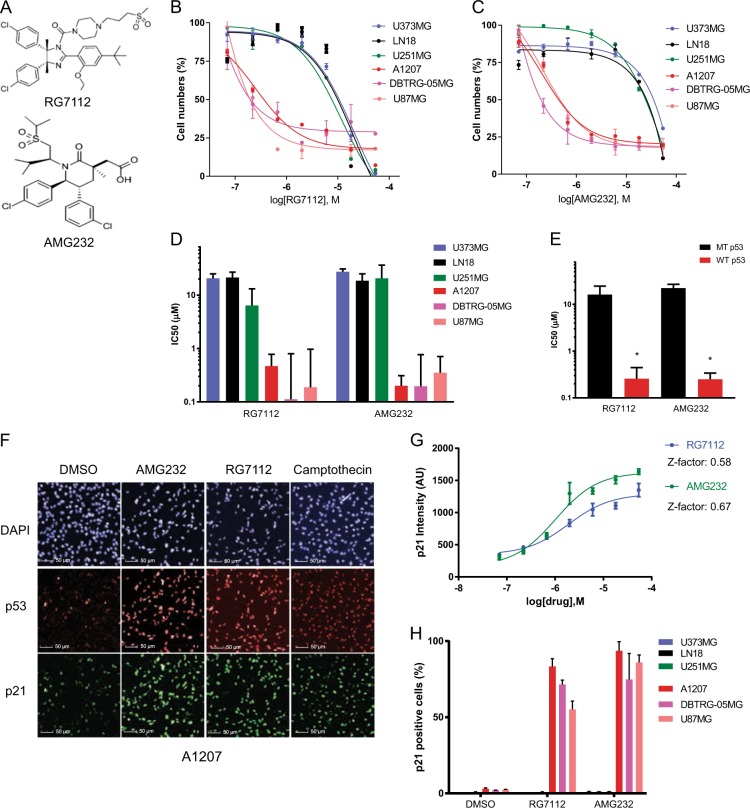
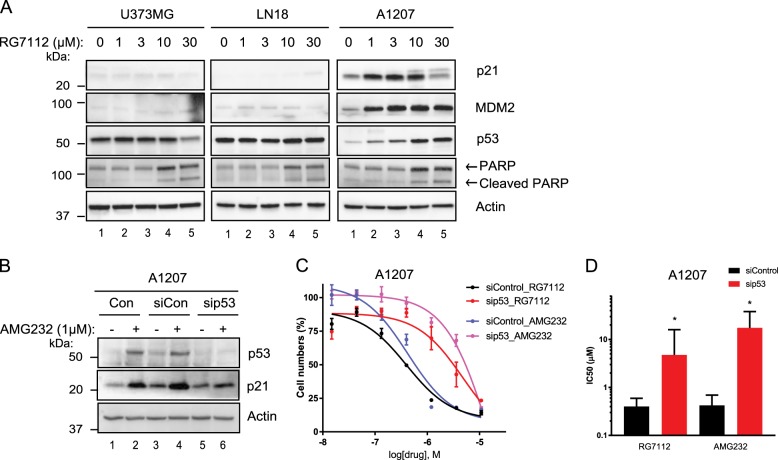
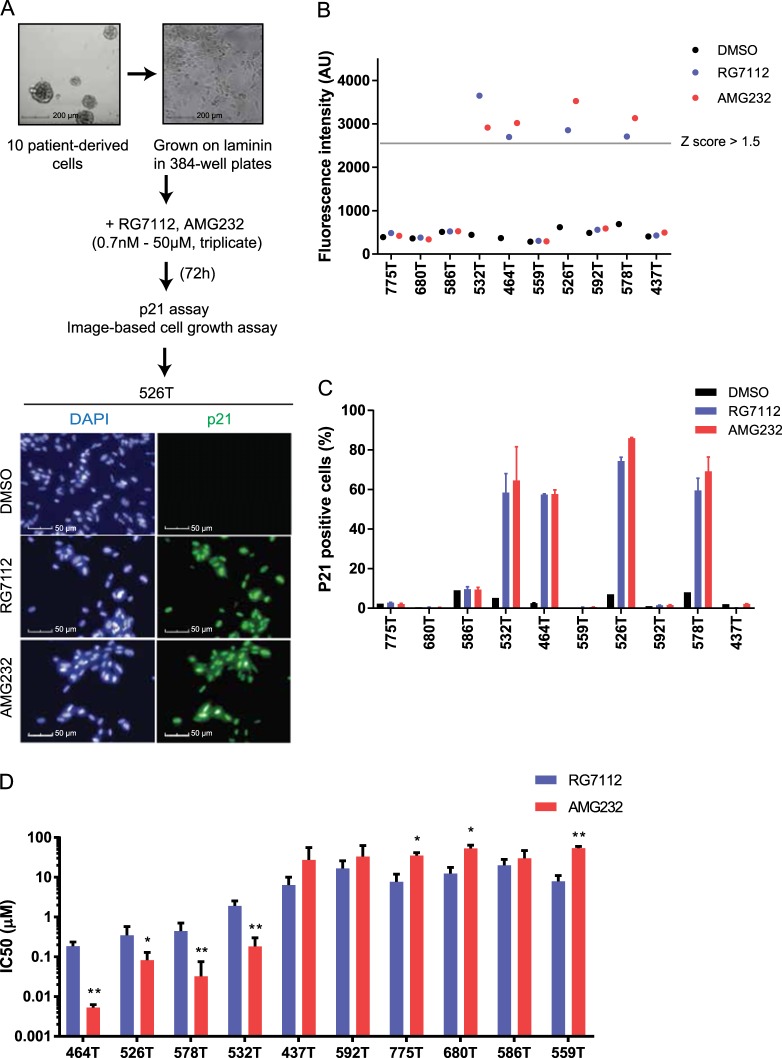
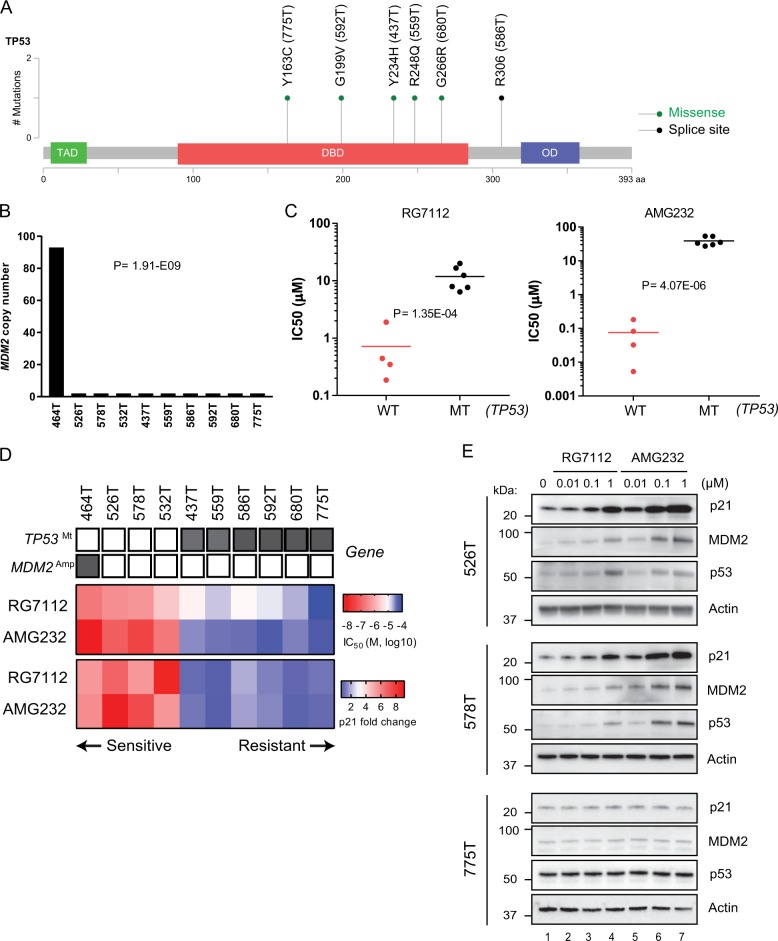
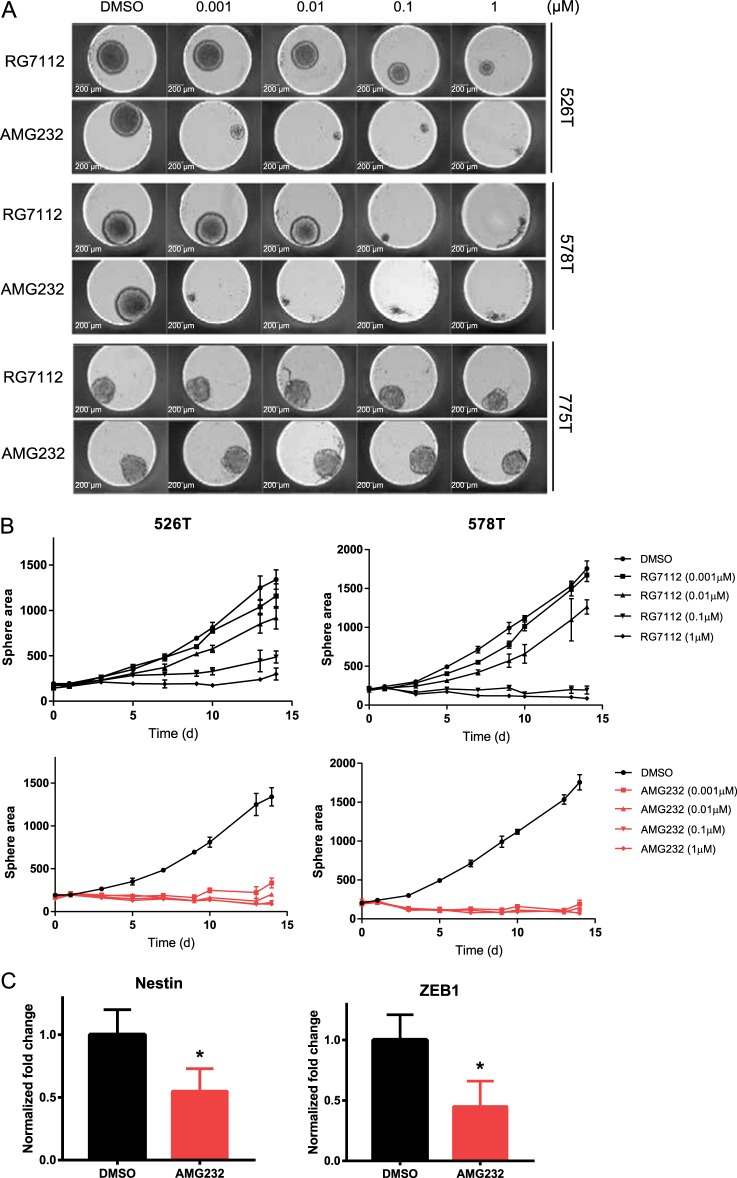
Testing new ways to identify untapped opportunities for glioblastoma therapies remains highly significant. Amplification and overexpression of MDM2 gene is frequent in glioblastoma and disrupting the MDM2−p53 interaction is a promising strategy to treat the cancer. RG7112 is the first-in class inhibitor and recently discovered AMG232 is the most potent MDM2 inhibitor known to date. Here, we compared the effects of these two clinical MDM2 inhibitors in six glioblastoma cell lines and ten patient-derived glioblastoma stem cells. Targeted sequencing of the TP53, MDM2 genes and whole transcriptome analysis were conducted to verify genetic status associated with sensitivity and resistance to the drugs. Although TP53 wild-type glioblastoma cell lines are similarly sensitive to AMG232 and RG7112, we found that four TP53 wild-type out of ten patient-derived glioblastoma cells are much more sensitive to AMG232 than RG7112 (average IC 50 of 76 nM vs. 720 nM). Among these, 464T stem cells containing MDM2 gene amplification were most sensitive to AMG232 with IC 50 of 5.3 nM. Moreover, AMG232 exhibited higher selectivity against p53 wild-type cells over p53 mutant stem cells compared to RG7112 (average selectivity of 512-fold vs. 16.5-fold). Importantly, we also found that AMG232 is highly efficacious in three-dimensional (3D) tumor spheroids growth and effectively inhibits the stemness-related factors, Nestin and ZEB1. Our data provide new evidence that glioblastoma stem cells have high susceptibility to AMG232 suggesting the potential clinical implications of MDM2 inhibition for glioblastoma treatment. These will facilitate additional preclinical and clinical studies evaluating MDM2 inhibitors in glioblastoma and direct further efforts towards developing better MDM2-targeted therapeutics.
Overview
The claims and statistics of this paper haven’t been checked yet.
Free: it reads the open-access text and checks the first 5 claims that cite a source we can check. Create a free account to check every claim.
Integrity signals
Registry
Cites
Statistics
Figures
Verification
Claims the paper makes
The claims and statistics of this paper haven’t been checked yet.
Free: it reads the open-access text and checks the first 5 claims that cite a source we can check. Create a free account to check every claim.
Claims other papers make about this one
Each is checked against this paper’s own text: does it say what the citing paper says it does?
The source backs part of the claim, not all of it — or backs it for a different population, condition or comparison.
In the citing paper
“the target concentration was based on in vitro studies, and interpretation of the measured drug levels is challenging given limited preclinical data in GBM (11).”
From Preclinical Modeling of Navtemadlin Pharmacokinetics, Pharmacodynamics, and Efficacy in IDH–Wild-type Glioblastoma (2025) · cites this paper as [11]
Experimental — accuracy not yet measuredThe cited source says what the claim attributes to it.
In the citing paper
“Multiple MDM2 inhibitors have significant efficacy in GBM preclinical models (7, 8, 10, 11) and have entered early-phase clinical trials in GBM.”
From Preclinical Modeling of Navtemadlin Pharmacokinetics, Pharmacodynamics, and Efficacy in IDH–Wild-type Glioblastoma (2025) · cites this paper as [11]
The cited source says what the claim attributes to it.
In the citing paper
“brigimadlin (10), and navtemadlin (11), and the latter three drugs have reached early-phase clinical trials in GBM (reviewed in ref. 2).”
From Preclinical Modeling of Navtemadlin Pharmacokinetics, Pharmacodynamics, and Efficacy in IDH–Wild-type Glioblastoma (2025) · cites this paper as [11]
The cited source says what the claim attributes to it.
In the citing paper
“AMG232 exhibited relative selectivity to wt-p53 stem cells was very efficacious in inhibiting three-dimensional tumor spheroids growth and stemness-related factors [116].”
From The p53 Pathway in Glioblastoma (2018) · cites this paper as [116]
In the citing paper
“glioblastoma stem cells were highly sensitive to AMG232 [62].”
From Targeting p53–MDM2 interaction by small-molecule inhibitors: learning from MDM2 inhibitors in clinical trials (2022) · cites this paper as [62]
3 more claims about this paper
Create a free account to see every claim other papers make about this one.
Self-check
Percentages, sums and reported differences re-computed from the paper’s own numbers.
The self-check needs the paper’s full text.
Citations
Cites
Fast and accurate short read alignment with Burrows-Wheeler transform
Li, H., & Durbin, R. (2009) · Bioinformatics · doi:10.1093/bioinformatics/btp324 · Cited by 58,607
The Genome Analysis Toolkit: A MapReduce framework for analyzing next-generation DNA sequencing data
McKenna, A., Hanna, M., Banks, E., Sivachenko, A., Cibulskis, K., Kernytsky, A., Garimella, K., Altshuler, D., Gabriel, S., Daly, M., et al. (2010) · Genome Research · doi:10.1101/gr.107524.110 · Cited by 27,895
A framework for variation discovery and genotyping using next-generation DNA sequencing data
DePristo, M. A., Banks, E., Poplin, R., Garimella, K. V., Maguire, J. R., Hartl, C., Philippakis, A. A., del Angel, G., Rivas, M. A., Hanna, M., et al. (2011) · Nature Genetics · doi:10.1038/ng.806 · Cited by 11,456
The Cancer Cell Line Encyclopedia enables predictive modelling of anticancer drug sensitivity
Barretina, J., Caponigro, G., Stransky, N., Venkatesan, K., Margolin, A. A., Kim, S., Wilson, C. J., Lehár, J., Kryukov, G. V., Sonkin, D., et al. (2012) · Nature · doi:10.1038/nature11003 · Cited by 7,950
Sensitive detection of somatic point mutations in impure and heterogeneous cancer samples
Cibulskis, K., Lawrence, M. S., Carter, S. L., Sivachenko, A., Jaffe, D., Sougnez, C., Gabriel, S., Meyerson, M., Lander, E. S., & Getz, G. (2013) · Nature Biotechnology · doi:10.1038/nbt.2514 · Cited by 4,981
In Vivo Activation of the p53 Pathway by Small-Molecule Antagonists of MDM2
Vassilev, L. T., Vu, B. T., Graves, B., Carvajal, D., Podlaski, F., Filipovic, Z., Kong, N., Kammlott, U., Lukacs, C., Klein, C., et al. (2004) · Science · doi:10.1126/science.1092472 · Cited by 4,661
DEGseq: an R package for identifying differentially expressed genes from RNA-seq data
Wang, L., Feng, Z., Wang, X., Wang, X., & Zhang, X. (2010) · Bioinformatics · doi:10.1093/bioinformatics/btp612 · Cited by 4,553
Lacroix, M., Abi-Said, D., Fourney, D. R., Gokaslan, Z. L., Shi, W., DeMonte, F., Lang, F. F., McCutcheon, I. E., Hassenbusch, S. J., Holland, E., et al. (2001) · Journal of Neurosurgery · doi:10.3171/jns.2001.95.2.0190 · Cited by 3,091
Systematic identification of genomic markers of drug sensitivity in cancer cells
Garnett, M. J., Edelman, E. J., Heidorn, S. J., Greenman, C. D., Dastur, A., Lau, K. W., Greninger, P., Thompson, I. R., Luo, X., Soares, J., et al. (2012) · Nature · doi:10.1038/nature11005 · Cited by 2,456
Lee, J., Kotliarova, S., Kotliarov, Y., Li, A., Su, Q., Donin, N. M., Pastorino, S., Purow, B. W., Christopher, N., Zhang, W., et al. (2006) · Cancer Cell · doi:10.1016/j.ccr.2006.03.030 · Cited by 2,311
Research works printed but not linked: 1
- Bray, M. A., & Carpenter, A. Imaging platform, B.I.o.M.I.T. & Harvard advanced assay development guidelines for image-based high content screening and analysis. In Assay Guidance Manual (eds. Sittampalam, G. S. et al.) (Eli Lilly & Company and the National Center for Advancing Translational Sciences, Bethesda, MD, 2004). 23469374
Cited by
Targeting p53 pathways: mechanisms, structures, and advances in therapy
Wang, H., Guo, M., Wei, H., & Chen, Y. (2023) · Signal Transduction and Targeted Therapy · doi:10.1038/s41392-023-01347-1 · Cited by 1,016
“In tumor cells with high MDM2 expression, AMG232 enhances p53 activity and inhibits tumor growth.(351) AMG232, in combination with Targeting p53 pathways: mechanisms, structures, and advances in therapy Wang et al.”
BackgroundCancer stem cells (CSCs) in cancer progression and therapy
Najafi, M., Farhood, B., & Mortezaee, K. (2019) · Journal of Cellular Physiology · doi:10.1002/jcp.27740 · Cited by 573
The p53 Pathway in Glioblastoma
Zhang, Y., Dube, C., Gibert, M., Cruickshanks, N., Wang, B., Coughlan, M., Yang, Y., Setiady, I., Deveau, C., Saoud, K., et al. (2018) · Cancers · doi:10.3390/cancers10090297 · Cited by 440
Glioblastoma Therapy: Past, Present and Future
Obrador, E., Moreno-Murciano, P., Oriol-Caballo, M., López-Blanch, R., Pineda, B., Gutiérrez-Arroyo, J., Loras, A., Gonzalez-Bonet, L., Martinez-Cadenas, C., Estrela, J., et al. (2024) · International Journal of Molecular Sciences · doi:10.3390/ijms25052529 · Cited by 271
Zhu, H., Gao, H., Ji, Y., Zhou, Q., Du, Z., Tian, L., Jiang, Y., Yao, K., & Zhou, Z. (2022) · Journal of Hematology & Oncology · doi:10.1186/s13045-022-01314-3 · Cited by 223
“In addition, the combined application of AMG232 and anti-PD-1 antibodies can enhance the killing effect of T cells on tumor cells and had the potential to overcome the drug resistance of immunotherapy [63].”
BackgroundInfluentialMDM2 Inhibitors for Cancer Therapy: The Past, Present, and Future
Wang, W., Albadari, N. G., Du, Y., Fowler, J. F., Sang, H. T., Xian, W., McKeon, F., Li, W., Zhou, J., & Zhang, R. (2024) · Pharmacological Reviews · doi:10.1124/pharmrev.123.001026 · Cited by 173
ZEB1: A Critical Regulator of Cell Plasticity, DNA Damage Response, and Therapy Resistance
Drápela, S., Bouchal, J., Jolly, M. K., Culig, Z., & Souček, K. (2020) · Frontiers in Molecular Biosciences · doi:10.3389/fmolb.2020.00036 · Cited by 165
“Importantly, two independent studies with MDM2 inhibitors, which both reactivated p53 and downregulated ZEB1, also documented decreased stemness features and glioblastoma aggressiveness (Giacomelli et al., 2017; Her et al., 2018).”
BackgroundGlioblastoma: Current Status, Emerging Targets, and Recent Advances
Thakur, A., Faujdar, C., Sharma, R., Sharma, S., Malik, B., Nepali, K., & Liou, J. (2022) · Journal of Medicinal Chemistry · doi:10.1021/acs.jmedchem.1c01946 · Cited by 137
The role of E3 ubiquitin ligases in the development and progression of glioblastoma
Humphreys, L. M., Smith, P., Chen, Z., Fouad, S., & D’Angiolella, V. (2021) · Cell Death and Differentiation · doi:10.1038/s41418-020-00696-6 · Cited by 94
Mitochondria’s Role in the Maintenance of Cancer Stem Cells in Glioblastoma
Iranmanesh, Y., Jiang, B., Favour, O. C., Dou, Z., Wu, J., Li, J., & Sun, C. (2021) · Frontiers in Oncology · doi:10.3389/fonc.2021.582694 · Cited by 74
Advanced Strategies for Therapeutic Targeting of Wild-Type and Mutant p53 in Cancer
Zhang, S., Carlsen, L., Hernandez Borrero, L., Seyhan, A. A., Tian, X., & El-Deiry, W. S. (2022) · Biomolecules · doi:10.3390/biom12040548 · Cited by 70
PPM1D mutations are oncogenic drivers of de novo diffuse midline glioma formation
Khadka, P., Reitman, Z. J., Lu, S. D., Buchan, G. B. J., Gionet, G. L., Dubois, F. P. B., Carvalho, D. M., Shih, J., Zhang, S., Greenwald, N. F., et al. (2022) · Nature Communications · doi:10.1038/s41467-022-28198-8 · Cited by 66
Recent advances on the intervention sites targeting USP7-MDM2-p53 in cancer therapy
Harakandi, C., Nininahazwe, L., Xu, H., Liu, B., He, C., Zheng, Y., & Zhang, H. (2021) · Bioorganic Chemistry · doi:10.1016/j.bioorg.2021.105273 · Cited by 60
Shattuck-Brandt, R. L., Chen, S., Murray, E., Johnson, C. A., Crandall, H., O’Neal, J. F., Al-Rohil, R. N., Nebhan, C. A., Bharti, V., Dahlman, K. B., et al. (2020) · Clinical Cancer Research · doi:10.1158/1078-0432.ccr-19-1895 · Cited by 50
Targeting post-translational modification of transcription factors as cancer therapy
Qian, M., Yan, F., Yuan, T., Yang, B., He, Q., & Zhu, H. (2020) · Drug Discovery Today · doi:10.1016/j.drudis.2020.06.005 · Cited by 47
Wang, Y., Liu, X., Huang, W., Liang, J., & Chen, Y. (2022) · Pharmacology & Therapeutics · doi:10.1016/j.pharmthera.2022.108303 · Cited by 46
p53 regulated senescence mechanism and role of its modulators in age-related disorders
Pawge, G., & Khatik, G. L. (2021) · Biochemical Pharmacology · doi:10.1016/j.bcp.2021.114651 · Cited by 45
A balancing act: using small molecules for therapeutic intervention of the p53 pathway in cancer
Miller, J. J., Gaiddon, C., & Storr, T. (2020) · Chemical Society Reviews · doi:10.1039/d0cs00163e · Cited by 42
Metabolic Roles of HIF1, c-Myc, and p53 in Glioma Cells
Trejo‐Solís, C., Castillo‐Rodríguez, R. A., Serrano-García, N., Silva‐Adaya, D., Vargas-Cruz, S., Chávez-Cortéz, E. G., Gallardo‐Pérez, J. C., Zavala-Vega, S., Cruz-Salgado, A., & Magaña-Maldonado, R. (2024) · Metabolites · doi:10.3390/metabo14050249 · Cited by 43
MDM2/X inhibitors as radiosensitizers for glioblastoma targeted therapy
Miles, X., Vandevoorde, C., Hunter, A., & Bolcaen, J. (2021) · Frontiers in Oncology · doi:10.3389/fonc.2021.703442 · Cited by 40
“mutant p53 cell lines showed resistance (26)”
BackgroundAngom, R. S., Mondal, S. K., Wang, F., Madamsetty, V. S., Wang, E., Dutta, S. K., Gulani, Y., Sarabia-Estrada, R., Sarkaria, J. N., Quiñones‐Hinojosa, A., et al. (2020) · Oncogene · doi:10.1038/s41388-020-01462-1 · Cited by 40
p53 and Myofibroblast Apoptosis in Organ Fibrosis
McElhinney, K., Irnaten, M., & O'Brien, C. J. (2023) · International Journal of Molecular Sciences · doi:10.3390/ijms24076737 · Cited by 39
Targeting the Ubiquitin System in Glioblastoma
Scholz, N., Kurian, K. M., Siebzehnrübl, F. A., & Licchesi, J. D. F. (2020) · Frontiers in Oncology · doi:10.3389/fonc.2020.574011 · Cited by 38
Lee, G., Oh, J.-W., Her, N.-G., & Jeong, W. (2021) · Medical Image Analysis · doi:10.1016/j.media.2021.101995 · Cited by 37
Self-citationMenyhárt, O., Fekete, J. T., & Győrffy, B. (2021) · Carcinogenesis · doi:10.1093/carcin/bgab024 · Cited by 36
Zhang, P., Brinton, L. T., Gharghabi, M., Sher, S., Williams, K., Cannon, M. J., Walker, J. S., Canfield, D., Beaver, L. P., Cempre, C. B., et al. (2022) · Science Advances · doi:10.1126/sciadv.abp9005 · Cited by 31
MDM2 inhibition in the treatment of glioblastoma: From concept to clinical investigation
Pellot Ortiz, K. I., Rechberger, J. S., Nonnenbroich, L. F., Daniels, D. J., & Sarkaria, J. N. (2023) · Biomedicines · doi:10.3390/biomedicines11071879 · Cited by 30
“The same study also demonstrated that navtemadlin sensitivity was 35-fold higher in MDM2-amplified stem cells, indicating that the cellular context may influence navtemadlin effectiveness [72].”
Backgroundp53: from understanding its structure to advances in therapeutic targeting
Wang, W., Liu, X., Liu, H., Abolhassani, H., Yan, H., Zhang, H., & Wang, X. (2026) · Signal Transduction and Targeted Therapy · doi:10.1038/s41392-025-02549-5 · Cited by 30
Garczyk, S., Ortiz‐Brüchle, N., Schneider, U., Lurje, I., Guricová, K., Gaisa, N. T., Lorsy, E., Lindemann-Docter, K., Heidenreich, A., & Knüchel, R. (2019) · American Journal Of Pathology · doi:10.1016/j.ajpath.2019.10.004 · Cited by 28
Ahmadi, S. E., Rahimian, E., Rahimi, S., Zarandi, B., Bahraini, M., Soleymani, M., Safdari, S. M., Shabannezhad, A., Jaafari, N., & Safa, M. (2024) · Biomarker Research · doi:10.1186/s40364-024-00676-9 · Cited by 26
Clavero, A. L., Boqvist, P. L., Ingelshed, K., Bosdotter, C., Sedimbi, S. K., Jiang, L., Wermeling, F., Vojtěšek, B., Lane, D. P., & Kannan, P. (2023) · Scientific Reports · doi:10.1038/s41598-023-31484-0 · Cited by 22
The Potential of Targeting P53 and HSP90 Overcoming Acquired MAPKi-Resistant Melanoma
Hsieh, C., & Shen, C. (2019) · Current Treatment Options in Oncology · doi:10.1007/s11864-019-0622-9 · Cited by 21
Hinokiflavone Inhibits MDM2 Activity by Targeting the MDM2-MDMX RING Domain
Ilic, V. K., Egorova, O., Tsang, E., Gatto, M., Wen, Y., Zhao, Y., & Sheng, Y. (2022) · Biomolecules · doi:10.3390/biom12050643 · Cited by 21
Garrido-Jiménez, S., Barrera-López, J. F., Díaz-Chamorro, S., Mateos-Quirós, C. M., Rodriguez‐Blanco, I., Márquez-Pérez, F. L., Lorenzo, M. J., Centeno, F., Román, Á., & Carvajal-González, J. M. (2021) · The FASEB Journal · doi:10.1096/fj.202100638r · Cited by 20
Rendo, V., Lee, E. Q., Bossi, C., Khuu, N., Rudek, M. A., Pal, S., Azazmeh, N., Rashid, R., Lin, J.-R., Cusick, M., et al. (2025) · Science Translational Medicine · doi:10.1126/scitranslmed.adn6274 · Cited by 19
“Decreased expression of GBM stemness markers has been observed in patient-derived in vitro cell line spheroids treated with navtemadlin ( 10 ).”
Novel Anti-Cancer Stem Cell Compounds: A Comprehensive Review
Guo, S., Zheng, S., Liu, M., & Wang, G. (2024) · Pharmaceutics · doi:10.3390/pharmaceutics16081024 · Cited by 18
An update patent review of MDM2–p53 interaction inhibitors (2019–2023)
Twarda‐Clapa, A. (2024) · Expert Opinion on Therapeutic Patents · doi:10.1080/13543776.2024.2419836 · Cited by 17
Key genes altered in glioblastoma based on bioinformatics (Review)
Ghafari, M. A., Jaafari, N. E., Mouallem, M., Maassarani, T., El‐Sibai, M., & Abi‐Habib, R. J. (2025) · Oncology Letters · doi:10.3892/ol.2025.14989 · Cited by 17
Sani, S., Pallaoro, N., Messé, M., Bernhard, C., Étienne-Selloum, N., Kessler, H., Marinelli, L., Entz‐Werlé, N., Foppolo, S., Martin, S., et al. (2022) · Cancers · doi:10.3390/cancers14020369 · Cited by 17
A Novel Small Molecule p53 Stabilizer for Brain Cell Differentiation
Amaral, J. D., Silva, D., Rodrigues, C. M. P., Solá, S., & Santos, M. M. M. (2019) · Frontiers in Chemistry · doi:10.3389/fchem.2019.00015 · Cited by 17
Sharma, S., & Kumar, P. (2023) · ACS Omega · doi:10.1021/acsomega.2c07904 · Cited by 15
Exploring Ubiquitin-specific proteases as therapeutic targets in Glioblastoma
Samuel, V. P., Moglad, E. H. O., Afzal, M., Kazmi, I. A., Alzarea, S. I., Ali, H., Almujri, S. S., Abida, A., Imran, M., Gupta, G., et al. (2024) · Pathology - Research and Practice · doi:10.1016/j.prp.2024.155443 · Cited by 15
Ghotaslou, A., Samii, A., Boustani, H., Ghalesardi, O. K., & Shahidi, M. (2022) · Reports of Biochemistry and Molecular Biology · doi:10.52547/rbmb.11.1.111 · Cited by 15
Advances in drug development for targeted therapies for glioblastoma
Ge, Y., Wang, Y., Chen, J., Zheng, W., Liu, C., Chen, S., Wang, L., Luo, J., & Li, Z. (2020) · Medicinal Research Reviews · doi:10.1002/med.21676 · Cited by 14
MDM2 induces EMT via the B‑Raf signaling pathway through 14‑3‑3
Ou, M., Xu, X., Chen, Y., Li, L., Zhang, L., Liao, Y., Sun, W., Quach, C., Feng, J., & Tang, L. (2021) · Oncology Reports · doi:10.3892/or.2021.8071 · Cited by 12
The Potential Role of Histone Modifications in Glioblastoma Therapy: Review Article
Azab, M. A. (2023) · Journal of Molecular Pathology · doi:10.3390/jmp4040018 · Cited by 9
Oh, J.-W., Oh, Y. J., Han, S., Her, N.-G., & Nam, D. (2021) · Cancers · doi:10.3390/cancers13030372 · Cited by 9
Self-citationThe MDM2–p53 Axis Represents a Therapeutic Vulnerability Unique to Glioma Stem Cells
Nakagawa-Saito, Y., Mitobe, Y., Togashi, K., Suzuki, S., Sugai, A., Takenouchi, S., Nakamura, K., Sonoda, Y., Kitanaka, C., & Okada, M. (2024) · International Journal of Molecular Sciences · doi:10.3390/ijms25073948 · Cited by 7
AMG232 inhibits angiogenesis in glioma through the p53–RBM4–VEGFR2 pathway
Xiao, Y., Li, M., Ma, T., Ning, H., & Liu, L. (2023) · Journal of Cell Science · doi:10.1242/jcs.260270 · Cited by 7
Panovska, D., Nazari, P., Cole, B., Creemers, P.-J., Derweduwe, M., Solie, L., Gassen, S. V., Claeys, A., Verbeke, T., Cohen, E. F., et al. (2023) · Cellular and Molecular Life Sciences · doi:10.1007/s00018-023-04772-1 · Cited by 7
Recent insight into the role of RING-finger E3 ligases in glioma
Cao, Y., Zhou, H., Chen, X., Li, Y., Hu, J., Zhou, G., & Wang, L. (2021) · Biochemical Society Transactions · doi:10.1042/bst20201060 · Cited by 7
Cellular Senescence in Diffuse Gliomas: From Physiopathology to Possible Treatments
Ordóñez-Rubiano, E. G., Cómbita, A. L., Baldoncini, M., Payán‐Gómez, C., Gómez-Amarillo, D. F., Hakim, F., Camargo, J., Zorro-Sepúlveda, V., Luzzi, S., Zorro, Ó., et al. (2024) · World Neurosurgery · doi:10.1016/j.wneu.2024.08.060 · Cited by 6
Antineoplastic 4-piperidone-1-phosphonothioates with potential multi-targeted inhibitory properties
Bekheit, M. S., Panda, S. S., Kariuki, B. M., Fayad, W., Soliman, A. A. F., Farag, H., & Girgis, A. S. (2025) · Scientific Reports · doi:10.1038/s41598-025-25796-6 · Cited by 4
Panda, S. S., Fayad, W., Soliman, A. A. F., Chagas, P. S., Naeini, S. E., Morsy, M. A., Ferguson, F. A., Gupta, K. B., Verbeck, G. F., Baban, B., et al. (2025) · Bioorganic & Medicinal Chemistry · doi:10.1016/j.bmc.2025.118370 · Cited by 3
Regulation of endoplasmic reticulum–mitochondria transfer and its importance in GBM
Zhao, J., Tian, L., Jing, Y., Yang, H., Ma, X., & Liu, M. (2025) · International Journal of Cancer · doi:10.1002/ijc.70173 · Cited by 3
Verma, S., & Pandey, A. K. (2021) · Network Modeling Analysis in Health Informatics and Bioinformatics · doi:10.1007/s13721-021-00286-7 · Cited by 3
Vaubel, R. A., Zhang, W., Oh, J.-H., Mladek, A. C., Pasa, T. I., Gantchev, J. K., Waller, K. L., Baquer, G., Stopka, S. A., Regan, M. S., et al. (2025) · Clinical Cancer Research · doi:10.1158/1078-0432.ccr-25-0244 · Cited by 2
Self-citationTherapeutic approaches to overcome temozolomide resistance in glioblastoma
Gergues, M., Savanur, V. H., Prado, D., Eljarrah, A., Liu, J. K., Jaloudi, M., & Rameshwar, P. (2021) · Elsevier eBooks · doi:10.1016/b978-0-12-821567-8.00012-9 · Cited by 2
Sarıkaya, N. K., & Akkoyunlu, D. S. (2023) · Acta Medica Nicomedia · Cited by 1
Alipour, A. H., Najafi, H., Kafi, Z. Z., Hashemi, S. M. A., Sarvari, J., & Langeroudi, A. G. (2024) · Iranian Journal of Medical Microbiology · doi:10.30699/ijmm.18.1.16 · Cited by 1
Arrigoni, F., Ferrari, A., Prpić, H., Markevičiūtė, E., Muzi, A., Roscilli, G., Gazzola, S., & Piarulli, U. (2026) · ACS Medicinal Chemistry Letters · doi:10.1021/acsmedchemlett.5c00669 · Cited by 1
Investigational new drugs against glioblastoma
Kamson, D. O., Khela, H. S., & Laterra, J. (2021) · Elsevier eBooks · doi:10.1016/b978-0-12-821567-8.00002-6 · Cited by 1
Evaluation of the antiangiogenic effect of AMG232 in multiple myeloma coculture systems
Pooraskari, Z., Ghazani, H. B., Piri, R., Habibi, S., & Shahidi, M. (2025) · Medical Oncology · doi:10.1007/s12032-025-02659-8 · Cited by 1
Vaubel, R. A., Zhang, W., Karbhari, N., Oh, J.-H., Waller, K. L., Mladek, A., Jain, S., Burgenske, D. M., Decker, P. A., Kosel, M. L., et al. (2026) · Neuro-Oncology Advances · doi:10.1093/noajnl/vdaf259
Self-citationTargeting the Ubiquitin Proteasome System in Pulmonary Fibrosis
Thorley, A. J., Krautwald, S., & Rowlands, D. J. (2020) · Royal Society of Chemistry eBooks · doi:10.1039/9781788015783-00165
Lee, G. (2021) · Scholarworks@UNIST (Ulsan National Institute of Science and Technology)
Stefaniak, J. (2019) · Oxford University Research Archive (ORA) (University of Oxford) · doi:10.5287/ora-yjok5yaep
Glioblastoma resistance to temozolomide : implication of α5β1 integrin and p53 signalling pathways
Sani, S. (2020) · theses.fr (ABES) · doi:10.70675/9566c585z0508z455bz9064z6bb61435b210
Oncogenic activity of growth hormone receptor in glioblastoma and its therapeutic perspectives
Vilchis, I. S. (2023) · theses.fr (ABES) · doi:10.70675/872b3fa4z3fdcz4883zb842zcd6fd06cf454
Hétérogénéité et plasticité de l’intégrine α5 dans les cellules souches de glioblastome
Messé, M. (2023) · theses.fr (ABES) · doi:10.70675/5bee424dz19e3z4870zb9b1z927eaa272304
The p53/Mdm2 Pathway in Hepatocellular Carcinoma: From Molecular Pathogenesis to Targeted Therapies
Kirkness, K., & Mann, D. A. (2026) · Livers · doi:10.3390/livers6030039
El‐Deiry, W. S., Ikeda, S., Magidi, S., Bresson, C., Abdel‐Razeq, H., Joshua, A., Hernando‐Calvo, A., Oberoi, A., Hu, Z., Meißner, T., et al. (2026) · Oncotarget · doi:10.18632/oncotarget.28920
BindingDB Entry 50016954: Glioblastoma: Current Status, Emerging Targets, and Recent Advances.
BindingDB (2023) · UC San Diego · doi:10.7270/q2d79gfs
Metadata
- Authors
- Her, N.-G., Oh, J.-W., Oh, Y. J., Han, S., Cho, H. J., Lee, Y., Ryu, G. H., & Nam, D.-H.
- Affiliations
- Samsung Medical Center (KR)
- Sungkyunkwan University (KR)
- Corresponding author
- Ryu, Gyu Ha
- Nam, Do-Hyun
- Venue
- Cell Death & Disease
- Published
- 2018-07-18
- Volume
- 9
- Issue
- 8
- Pages
- 792-792
- ISSN
- 2041-4889 (ISSN-L)
- PMC
- PMC6052082
- OpenAlex
- W2884639737
- Cited by
- 68
- References
- 52
- Citations by year
- 2026: 2 · 2025: 8 · 2024: 11 · 2023: 10 · 2022: 9 · 2021: 14 · 2020: 9 · 2019: 3 · 2018: 2
- FWCI
- 2.63
- Type
- journal article
- Language
- en
- Open access
- gold
- doi.org
- Licence
- cc-by
- creativecommons.org/licenses/by/4.0 (tdm)
- creativecommons.org/licenses/by/4.0 (vor)
- Locations
- Cell Death and Disease (publishedVersion, cc-by)
- Europe PMC (PubMed Central) (publishedVersion, cc-by)
- PubMed Central (publishedVersion, cc-by)
- PubMed (publishedVersion)
- DOAJ (DOAJ: Directory of Open Access Journals) (submittedVersion)
- Funders
- National Research Foundation (NRF-2015M3A9A7029740)
- Ministry of Science, ICT and Future Planning (2015M3A9A7029740, NRF-2015M3A9A7029740)
- Korea Health Industry Development Institute (HI14C3418)
- Topics
- Health Sciences › Medicine › Oncology › Cancer-related Molecular Pathways
- Health Sciences › Medicine › Oncology › Glioma Diagnosis and Treatment
- Life Sciences › Biochemistry, Genetics and Molecular Biology › Cancer Research › Cancer Mechanisms and Therapy
- Keywords
- RG7112, MDM2 inhibitors, glioblastoma stem cells, p53-MDM2 interaction, MDM2 amplification, wild-type p53, drug sensitivity, drug selectivity, tumor spheroids, nestin, ZEB1
- MeSH terms
- Zinc Finger E-box-Binding Homeobox 1, Acetates, Enzyme Inhibitors, Glioblastoma, Humans, Mutation, Piperidones, Tumor Suppressor Protein p53, Apoptosis, Cell Line, Tumor, Imidazolines, Proto-Oncogene Proteins c-mdm2, Nestin
About these checks
Registry, retraction, Cites and statistics results are computed, not judged, with one exception: a printed reference that no index lists is read once by a model before it counts as a citation error. Claims are extracted by a model and kept only when their quote appears verbatim in the text; each cited source is then checked, with a model’s help, for whether it says what the claim relies on. Those verdicts can be wrong — read the claim’s quote and the cited source before relying on one.
Statistics and arithmetic are recomputed, not judged.
Confidence bands are shown only for fields calibrated on our annotated test set. None is calibrated yet, so no band is shown.
What counts as a claim ›How we measure confidence ›How we check this ›
Are you an author, or do you see a problem with this page? Request a review
Data sources
Bibliographic data: Semantic Scholar, OpenAlex, Crossref.
Contains information from the Semantic Scholar Academic Graph Datasets, made available under the ODC Attribution License (ODC-BY 1.0).
Semantic Scholar’s data is described in: Kinney, R., et al. (2023). The Semantic Scholar Open Data Platform. arXiv:2301.10140.
