

Potent effect of the MDM2 inhibitor AMG232 on suppression of glioblastoma stem cells
Open accessThe DOI matches its Crossref record; 52 of the 52 references it cites were found in a registry or an index.
Abstract
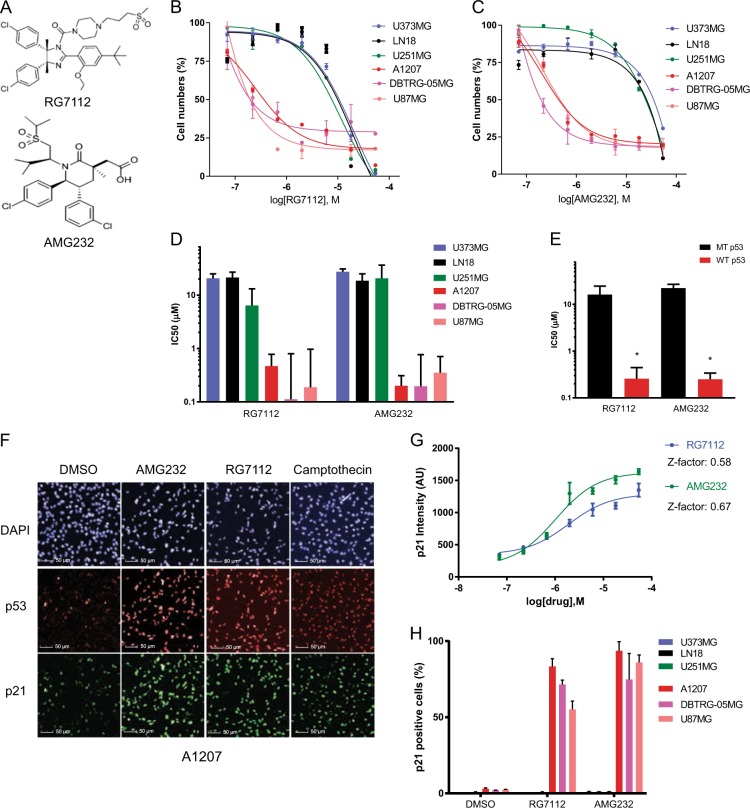
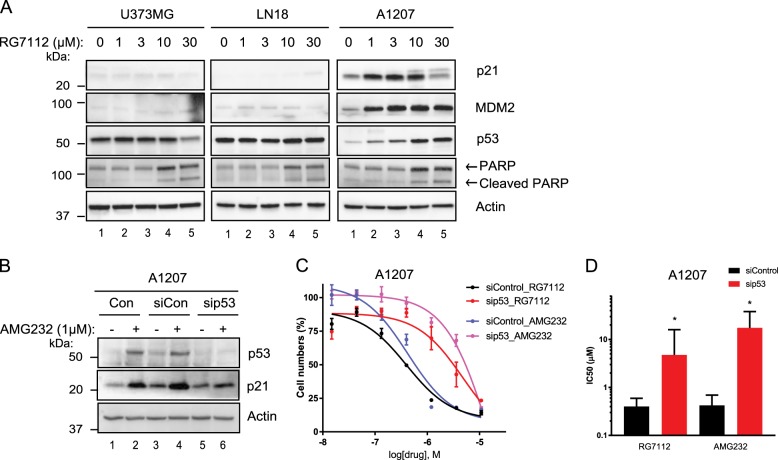
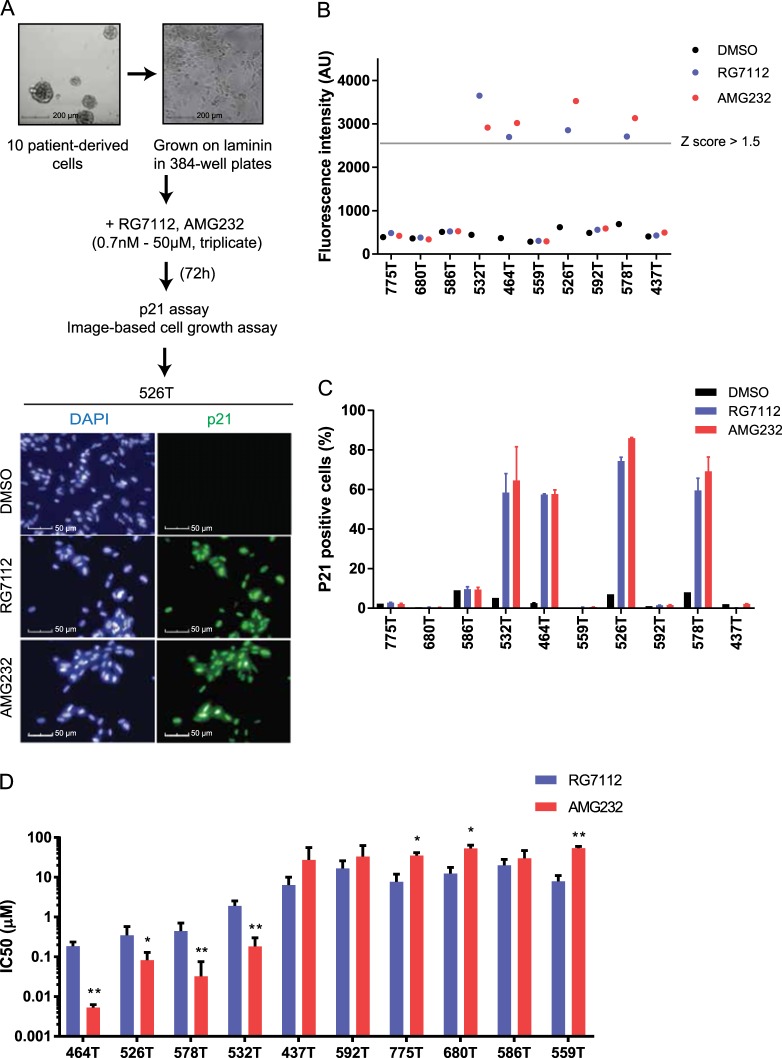
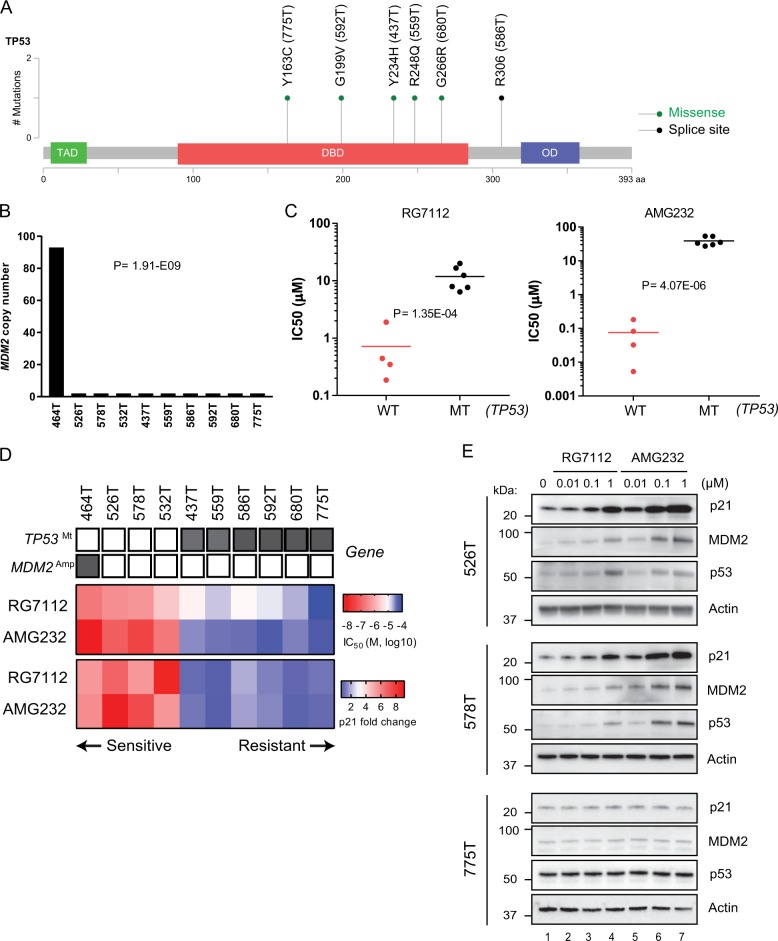
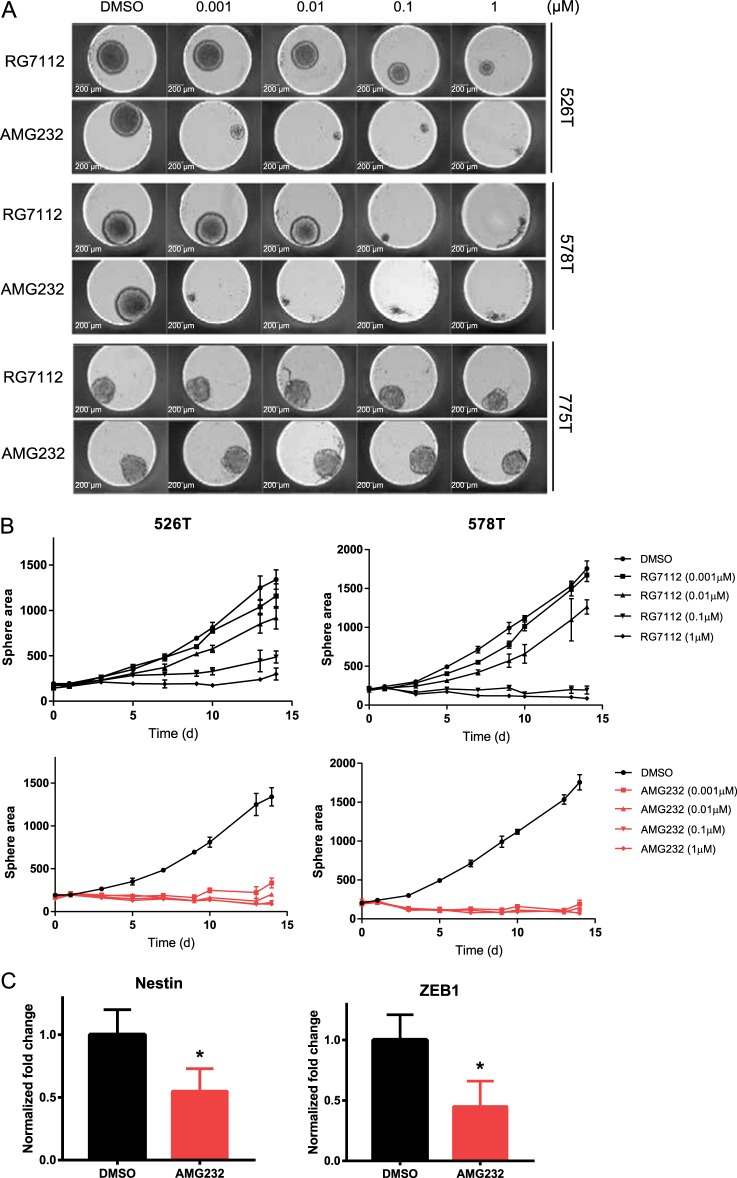
Testing new ways to identify untapped opportunities for glioblastoma therapies remains highly significant. Amplification and overexpression of MDM2 gene is frequent in glioblastoma and disrupting the MDM2−p53 interaction is a promising strategy to treat the cancer. RG7112 is the first-in class inhibitor and recently discovered AMG232 is the most potent MDM2 inhibitor known to date. Here, we compared the effects of these two clinical MDM2 inhibitors in six glioblastoma cell lines and ten patient-derived glioblastoma stem cells. Targeted sequencing of the TP53, MDM2 genes and whole transcriptome analysis were conducted to verify genetic status associated with sensitivity and resistance to the drugs. Although TP53 wild-type glioblastoma cell lines are similarly sensitive to AMG232 and RG7112, we found that four TP53 wild-type out of ten patient-derived glioblastoma cells are much more sensitive to AMG232 than RG7112 (average IC 50 of 76 nM vs. 720 nM). Among these, 464T stem cells containing MDM2 gene amplification were most sensitive to AMG232 with IC 50 of 5.3 nM. Moreover, AMG232 exhibited higher selectivity against p53 wild-type cells over p53 mutant stem cells compared to RG7112 (average selectivity of 512-fold vs. 16.5-fold). Importantly, we also found that AMG232 is highly efficacious in three-dimensional (3D) tumor spheroids growth and effectively inhibits the stemness-related factors, Nestin and ZEB1. Our data provide new evidence that glioblastoma stem cells have high susceptibility to AMG232 suggesting the potential clinical implications of MDM2 inhibition for glioblastoma treatment. These will facilitate additional preclinical and clinical studies evaluating MDM2 inhibitors in glioblastoma and direct further efforts towards developing better MDM2-targeted therapeutics.
Overview
The claims and statistics of this paper haven’t been checked yet.
Free: it reads the open-access text and checks the first 5 claims that cite a source we can check. Create a free account to check every claim.
Integrity signals
Registry
Cites
Statistics
Figures
Verification
Claims the paper makes
The claims and statistics of this paper haven’t been checked yet.
Free: it reads the open-access text and checks the first 5 claims that cite a source we can check. Create a free account to check every claim.
Claims other papers make about this one
Each is checked against this paper’s own text: does it say what the citing paper says it does?
The source backs part of the claim, not all of it — or backs it for a different population, condition or comparison.
In the citing paper
“the target concentration was based on in vitro studies, and interpretation of the measured drug levels is challenging given limited preclinical data in GBM (11).”
From Preclinical Modeling of Navtemadlin Pharmacokinetics, Pharmacodynamics, and Efficacy in IDH–Wild-type Glioblastoma (2025) · cites this paper as [11]
Experimental — accuracy not yet measuredThe cited source says what the claim attributes to it.
In the citing paper
“Multiple MDM2 inhibitors have significant efficacy in GBM preclinical models (7, 8, 10, 11) and have entered early-phase clinical trials in GBM.”
From Preclinical Modeling of Navtemadlin Pharmacokinetics, Pharmacodynamics, and Efficacy in IDH–Wild-type Glioblastoma (2025) · cites this paper as [11]
The cited source says what the claim attributes to it.
In the citing paper
“brigimadlin (10), and navtemadlin (11), and the latter three drugs have reached early-phase clinical trials in GBM (reviewed in ref. 2).”
From Preclinical Modeling of Navtemadlin Pharmacokinetics, Pharmacodynamics, and Efficacy in IDH–Wild-type Glioblastoma (2025) · cites this paper as [11]
The cited source says what the claim attributes to it.
In the citing paper
“AMG232 exhibited relative selectivity to wt-p53 stem cells was very efficacious in inhibiting three-dimensional tumor spheroids growth and stemness-related factors [116].”
From The p53 Pathway in Glioblastoma (2018) · cites this paper as [116]
In the citing paper
“glioblastoma stem cells were highly sensitive to AMG232 [62].”
From Targeting p53–MDM2 interaction by small-molecule inhibitors: learning from MDM2 inhibitors in clinical trials (2022) · cites this paper as [62]
3 more claims about this paper
Create a free account to see every claim other papers make about this one.
Self-check
Percentages, sums and reported differences re-computed from the paper’s own numbers.
The self-check needs the paper’s full text.
Citations
Cites
Fast and accurate short read alignment with Burrows-Wheeler transform
Li, H., & Durbin, R. (2009) · Bioinformatics · doi:10.1093/bioinformatics/btp324 · Cited by 58,607
The Genome Analysis Toolkit: A MapReduce framework for analyzing next-generation DNA sequencing data
McKenna, A., Hanna, M., Banks, E., Sivachenko, A., Cibulskis, K., Kernytsky, A., Garimella, K., Altshuler, D., Gabriel, S., Daly, M., et al. (2010) · Genome Research · doi:10.1101/gr.107524.110 · Cited by 27,895
A framework for variation discovery and genotyping using next-generation DNA sequencing data
DePristo, M. A., Banks, E., Poplin, R., Garimella, K. V., Maguire, J. R., Hartl, C., Philippakis, A. A., del Angel, G., Rivas, M. A., Hanna, M., et al. (2011) · Nature Genetics · doi:10.1038/ng.806 · Cited by 11,456
The Cancer Cell Line Encyclopedia enables predictive modelling of anticancer drug sensitivity
Barretina, J., Caponigro, G., Stransky, N., Venkatesan, K., Margolin, A. A., Kim, S., Wilson, C. J., Lehár, J., Kryukov, G. V., Sonkin, D., et al. (2012) · Nature · doi:10.1038/nature11003 · Cited by 7,950
Sensitive detection of somatic point mutations in impure and heterogeneous cancer samples
Cibulskis, K., Lawrence, M. S., Carter, S. L., Sivachenko, A., Jaffe, D., Sougnez, C., Gabriel, S., Meyerson, M., Lander, E. S., & Getz, G. (2013) · Nature Biotechnology · doi:10.1038/nbt.2514 · Cited by 4,981
In Vivo Activation of the p53 Pathway by Small-Molecule Antagonists of MDM2
Vassilev, L. T., Vu, B. T., Graves, B., Carvajal, D., Podlaski, F., Filipovic, Z., Kong, N., Kammlott, U., Lukacs, C., Klein, C., et al. (2004) · Science · doi:10.1126/science.1092472 · Cited by 4,661
DEGseq: an R package for identifying differentially expressed genes from RNA-seq data
Wang, L., Feng, Z., Wang, X., Wang, X., & Zhang, X. (2010) · Bioinformatics · doi:10.1093/bioinformatics/btp612 · Cited by 4,553
Lacroix, M., Abi-Said, D., Fourney, D. R., Gokaslan, Z. L., Shi, W., DeMonte, F., Lang, F. F., McCutcheon, I. E., Hassenbusch, S. J., Holland, E., et al. (2001) · Journal of Neurosurgery · doi:10.3171/jns.2001.95.2.0190 · Cited by 3,091
Systematic identification of genomic markers of drug sensitivity in cancer cells
Garnett, M. J., Edelman, E. J., Heidorn, S. J., Greenman, C. D., Dastur, A., Lau, K. W., Greninger, P., Thompson, I. R., Luo, X., Soares, J., et al. (2012) · Nature · doi:10.1038/nature11005 · Cited by 2,456
Lee, J., Kotliarova, S., Kotliarov, Y., Li, A., Su, Q., Donin, N. M., Pastorino, S., Purow, B. W., Christopher, N., Zhang, W., et al. (2006) · Cancer Cell · doi:10.1016/j.ccr.2006.03.030 · Cited by 2,311
TP53 mutations in human cancers: origins, consequences, and clinical use.
Olivier, M., Hollstein, M., & Hainaut, P. (2010) · Cold Spring Harbor Perspectives in Biology · doi:10.1101/cshperspect.a001008 · Cited by 2,199
Fast and SNP-tolerant detection of complex variants and splicing in short reads
Wu, T. D., & Nacu, S. (2010) · Bioinformatics · doi:10.1093/bioinformatics/btq057 · Cited by 1,894
Deriving the consequences of genomic variants with the Ensembl API and SNP Effect Predictor
McLaren, W., Pritchard, B., Rios, D., Chen, Y., Flicek, P., & Cunningham, F. (2010) · Bioinformatics · doi:10.1093/bioinformatics/btq330 · Cited by 1,586
Cancer stem cells in glioblastoma
Lathia, J. D., Mack, S. C., Mulkearns-Hubert, E. E., Valentim, C. L. L., & Rich, J. N. (2015) · Genes & Development · doi:10.1101/gad.261982.115 · Cited by 1,520
Moll, U. M., & Petrenko, O. (2003) · PubMed · Cited by 1,140
Pollard, S. M., Yoshikawa, K., Clarke, I. D., Danovi, D., Stricker, S., Russell, R., Bayani, J., Head, R., Lee, M., Bernstein, M., et al. (2009) · Cell Stem Cell · doi:10.1016/j.stem.2009.03.014 · Cited by 1,025
Drugging the p53 pathway: understanding the route to clinical efficacy
Khoo, K. H., Verma, C. S., & Lane, D. P. (2014) · Nature Reviews Drug Discovery · doi:10.1038/nrd4236 · Cited by 719
Reifenberger, G., Liu, L., Ichimura, K., Schmidt, E., & Collins, V. P. (1993) · PubMed · Cited by 632
Discovery of RG7388, a Potent and Selective p53–MDM2 Inhibitor in Clinical Development
Ding, Q., Zhang, Z., Liu, J.-J., Jiang, N., Zhang, J., Ross, T. M., Chu, X.-J., Bartkovitz, D., Podlaski, F., Janson, C., et al. (2013) · Journal of Medicinal Chemistry · doi:10.1021/jm400487c · Cited by 595
p53 regulates epithelial–mesenchymal transition through microRNAs targeting ZEB1 and ZEB2
Kim, T., Veronese, A., Pichiorri, F., Lee, T. J., Jeon, Y.-J., Volinia, S., Pineau, P., Marchio, A., Palatini, J., Suh, S.-S., et al. (2011) · Journal of Experimental Medicine · doi:10.1084/jem.20110235 · Cited by 514
Zhao, Y., Aguilar, A., Bernard, D., & Wang, S. (2015) · Journal of Medicinal Chemistry · doi:10.1021/jm501092z · Cited by 462
Brady, C. A., & Attardi, L. D. (2010) · Journal of Cell Science · doi:10.1242/jcs.064501 · Cited by 403
Microscopy-Based High-Content Screening
Boutros, M., Heigwer, F., & Laufer, C. (2015) · Cell · doi:10.1016/j.cell.2015.11.007 · Cited by 396
Discovery of RG7112: a small-molecule MDM2 inhibitor in clinical development
Vu, B., Wovkulich, P., Pizzolato, G., Lovey, A., Ding, Q., Jiang, N., Liu, J.-J., Zhao, C., Glenn, K., Wen, Y., et al. (2013) · ACS Medicinal Chemistry Letters · doi:10.1021/ml4000657 · Cited by 395
The ZEB1 pathway links glioblastoma initiation, invasion and chemoresistance
Siebzehnrubl, F. A., Silver, D. J., Tugertimur, B., Deleyrolle, L. P., Siebzehnrubl, D., Sarkisian, M. R., Devers, K. G., Yachnis, A. T., Kupper, M. D., Neal, D., et al. (2013) · EMBO Molecular Medicine · doi:10.1002/emmm.201302827 · Cited by 381
Analysis of the p53 gene and its expression in human glioblastoma cells.
Meir, E. G. V., Kikuchi, T., Tada, M., Li, H., Diserens, A., Wojcik, B. E., Huang, H., Friedmann, T., de Tribolet, N., & Cavenee, W. K. (1994) · PubMed · Cited by 365
Wang, S., Sun, W., Zhao, Y., McEachern, D., Meaux, I., Barrière, C., Stuckey, J. A., Meagher, J. L., Bai, L., Liu, L., et al. (2014) · Cancer Research · doi:10.1158/0008-5472.can-14-0799 · Cited by 328
Targeting the MDM2–p53 Protein–Protein Interaction for New Cancer Therapy: Progress and Challenges
Wang, S., Zhao, Y., Aguilar, A., Bernard, D., & Yang, C.-Y. (2017) · Cold Spring Harbor Perspectives in Medicine · doi:10.1101/cshperspect.a026245 · Cited by 300
Nonsurgical Treatment of Recurrent Glioblastoma
Gallego, O. (2015) · Current Oncology · doi:10.3747/co.22.2436 · Cited by 296
Sun, D., Li, Z., Rew, Y., Gribble, M., Bartberger, M. D., Beck, H. P., Canon, J., Chen, A., Chen, X., Chow, D., et al. (2014) · Journal of Medicinal Chemistry · doi:10.1021/jm401753e · Cited by 290
Cancer Stem Cell Hierarchy in Glioblastoma Multiforme
Bradshaw, A., Wickremsekera, A., Tan, S. T., Peng, L., Davis, P. F., & Itinteang, T. (2016) · Frontiers in Surgery · doi:10.3389/fsurg.2016.00021 · Cited by 258
Advances and challenges in the treatment of glioblastoma: a clinician's perspective.
Mrugała, M. M. (2013) · PubMed · Cited by 250
The Role of MDM2 Amplification and Overexpression in Tumorigenesis
Oliner, J. D., Saiki, A. Y., & Caenepeel, S. (2016) · Cold Spring Harbor Perspectives in Medicine · doi:10.1101/cshperspect.a026336 · Cited by 246
Glioblastoma Multiforme Therapy and Mechanisms of Resistance
Ramirez, Y., Weatherbee, J., Wheelhouse, R., & Ross, A. (2013) · Pharmaceuticals · doi:10.3390/ph6121475 · Cited by 236
p53-Dependent Nestin Regulation Links Tumor Suppression to Cellular Plasticity in Liver Cancer
Tschaharganeh, D. F., Xue, W., Calvisi, D. F., Evert, M., Michurina, T. V., Dow, L. E., Banito, A., Katz, S. F., Kastenhuber, E. R., Weissmueller, S., et al. (2014) · Cell · doi:10.1016/j.cell.2014.05.051 · Cited by 227
Deciphering p53 signaling in tumor suppression
Mello, S. S., & Attardi, L. D. (2018) · Current Opinion in Cell Biology · doi:10.1016/j.ceb.2017.11.005 · Cited by 206
Holzer, P., Masuya, K., Furet, P., Kallen, J., Valat-Stachyra, T., Ferretti, S., Berghausen, J., Bouisset-Leonard, M., Buschmann, N., Pissot-Soldermann, C., et al. (2015) · Journal of Medicinal Chemistry · doi:10.1021/acs.jmedchem.5b00810 · Cited by 203
Regulating the p53 system through ubiquitination
Yang, Y., Li, C.-C. H., & Weissman, A. M. (2004) · Oncogene · doi:10.1038/sj.onc.1207411 · Cited by 179
Canon, J., Osgood, T., Olson, S. H., Saiki, A. Y., Robertson, R., Yu, D., Eksterowicz, J., Ye, Q., Jin, L., Chen, A., et al. (2015) · Molecular Cancer Therapeutics · doi:10.1158/1535-7163.mct-14-0710 · Cited by 152
Boeva, V., Popova, T. V., Liénard, M., Toffoli, S., Kamal, M. T., Tourneau, C. L., Gentien, D., Servant, N., Gestraud, P., Frio, T. R., et al. (2014) · Bioinformatics · doi:10.1093/bioinformatics/btu436 · Cited by 141
Verreault, M., Schmitt, C., Goldwirt, L., Pelton, K., Haidar, S., Levasseur, C., Guehennec, J., Knoff, D., Labussière, M., Marie, Y., et al. (2016) · Clinical Cancer Research · doi:10.1158/1078-0432.ccr-15-1015 · Cited by 114
Concurrent therapy to enhance radiotherapeutic outcomes in glioblastoma.
Khosla, D. (2016) · PubMed · doi:10.3978/j.issn.2305-5839.2016.01.25 · Cited by 96
Phenotype-driven precision oncology as a guide for clinical decisions one patient at a time
Chia, S., Low, J.-L., Zhang, X., Kwang, X.-L., Chong, F.-T., Sharma, A., Bertrand, D., Toh, S. Y., Leong, H.-S., Thangavelu, M. T., et al. (2017) · Nature Communications · doi:10.1038/s41467-017-00451-5 · Cited by 91
Repurposing antipsychotics as glioblastoma therapeutics: Potentials and challenges
Lee, J., Nam, D., & Lee, J. (2016) · Oncology Letters · doi:10.3892/ol.2016.4074 · Cited by 69
Self-citationKruse, C. A., Mitchell, D. H., Kleinschmidt-DeMasters, B. K., Franklin, W. A., Morse, H. G., Spector, E. B., & Lillehei, K. O. (1992) · In Vitro Cellular & Developmental Biology - Animal · doi:10.1007/bf02631035 · Cited by 65
Barone, T. A., Burkhart, C. A., Safina, A. F., Haderski, G. J., Gurova, K. V., Purmal, A. A., Gudkov, A. V., & Plunkett, R. J. (2016) · Neuro-Oncology · doi:10.1093/neuonc/now141 · Cited by 65
DNA Damage and Cell Killing by Camptothecin and Its Derivative in Human Leukemia HL‐60 Cells
Yoshida, A., Ueda, T., Wano, Y., & Nakamura, T. (1993) · Japanese Journal of Cancer Research · doi:10.1111/j.1349-7006.1993.tb00177.x · Cited by 58
Small-Molecule MDM2-p53 Inhibitors: Recent Advances
Zhang, B., Golding, B. T., & Hardcastle, I. R. (2015) · Future Medicinal Chemistry · doi:10.4155/fmc.15.13 · Cited by 58
Ravandi, F., Gojo, I., Patnaik, M. M., Minden, M. D., Kantarjian, H., Johnson-Levonas, A. O., Fancourt, C., Lam, R., Jones, M. B., Knox, C. D., et al. (2016) · Leukemia Research · doi:10.1016/j.leukres.2016.07.004 · Cited by 57
Her, N.-G., Toth, J. I., Ma, C.-T., Yang, W., Motamedchaboki, K., Sergienko, E. A., & Petroski, M. D. (2016) · Cell chemical biology · doi:10.1016/j.chembiol.2016.03.012 · Cited by 49
Self-citationLive-single-cell phenotypic cancer biomarkers-future role in precision oncology?
Sant, G. R., Knopf, K., & Albala, D. M. (2017) · npj Precision Oncology · doi:10.1038/s41698-017-0025-y · Cited by 38
Magnetic resonance imaging-guided stratified selection of patients for nano-therapy
Zheng, Z., & Liang, G. (2016) · Annals of Translational Medicine · doi:10.21037/atm.2016.10.07 · Cited by 13
Research works printed but not linked: 1
- Bray, M. A., & Carpenter, A. Imaging platform, B.I.o.M.I.T. & Harvard advanced assay development guidelines for image-based high content screening and analysis. In Assay Guidance Manual (eds. Sittampalam, G. S. et al.) (Eli Lilly & Company and the National Center for Advancing Translational Sciences, Bethesda, MD, 2004). 23469374
Cited by
Targeting p53 pathways: mechanisms, structures, and advances in therapy
Wang, H., Guo, M., Wei, H., & Chen, Y. (2023) · Signal Transduction and Targeted Therapy · doi:10.1038/s41392-023-01347-1 · Cited by 1,016
“In tumor cells with high MDM2 expression, AMG232 enhances p53 activity and inhibits tumor growth.(351) AMG232, in combination with Targeting p53 pathways: mechanisms, structures, and advances in therapy Wang et al.”
BackgroundCancer stem cells (CSCs) in cancer progression and therapy
Najafi, M., Farhood, B., & Mortezaee, K. (2019) · Journal of Cellular Physiology · doi:10.1002/jcp.27740 · Cited by 573
The p53 Pathway in Glioblastoma
Zhang, Y., Dube, C., Gibert, M., Cruickshanks, N., Wang, B., Coughlan, M., Yang, Y., Setiady, I., Deveau, C., Saoud, K., et al. (2018) · Cancers · doi:10.3390/cancers10090297 · Cited by 440
Glioblastoma Therapy: Past, Present and Future
Obrador, E., Moreno-Murciano, P., Oriol-Caballo, M., López-Blanch, R., Pineda, B., Gutiérrez-Arroyo, J., Loras, A., Gonzalez-Bonet, L., Martinez-Cadenas, C., Estrela, J., et al. (2024) · International Journal of Molecular Sciences · doi:10.3390/ijms25052529 · Cited by 271
Zhu, H., Gao, H., Ji, Y., Zhou, Q., Du, Z., Tian, L., Jiang, Y., Yao, K., & Zhou, Z. (2022) · Journal of Hematology & Oncology · doi:10.1186/s13045-022-01314-3 · Cited by 223
“In addition, the combined application of AMG232 and anti-PD-1 antibodies can enhance the killing effect of T cells on tumor cells and had the potential to overcome the drug resistance of immunotherapy [63].”
BackgroundInfluential
Metadata
- Authors
- Her, N.-G., Oh, J.-W., Oh, Y. J., Han, S., Cho, H. J., Lee, Y., Ryu, G. H., & Nam, D.-H.
- Affiliations
- Samsung Medical Center (KR)
- Sungkyunkwan University (KR)
- Corresponding author
- Ryu, Gyu Ha
- Nam, Do-Hyun
- Venue
- Cell Death & Disease
- Published
- 2018-07-18
- Volume
- 9
- Issue
- 8
- Pages
- 792-792
- ISSN
- 2041-4889 (ISSN-L)
- PMC
- PMC6052082
- OpenAlex
- W2884639737
- Cited by
- 68
- References
- 52
- Citations by year
- 2026: 2 · 2025: 8 · 2024: 11 · 2023: 10 · 2022: 9 · 2021: 14 · 2020: 9 · 2019: 3 · 2018: 2
- FWCI
- 2.63
- Type
- journal article
- Language
- en
- Open access
- gold
- doi.org
- Licence
- cc-by
- creativecommons.org/licenses/by/4.0 (tdm)
- creativecommons.org/licenses/by/4.0 (vor)
- Locations
- Cell Death and Disease (publishedVersion, cc-by)
- Europe PMC (PubMed Central) (publishedVersion, cc-by)
- PubMed Central (publishedVersion, cc-by)
- PubMed (publishedVersion)
- DOAJ (DOAJ: Directory of Open Access Journals) (submittedVersion)
- Funders
- National Research Foundation (NRF-2015M3A9A7029740)
- Ministry of Science, ICT and Future Planning (2015M3A9A7029740, NRF-2015M3A9A7029740)
- Korea Health Industry Development Institute (HI14C3418)
- Topics
- Health Sciences › Medicine › Oncology › Cancer-related Molecular Pathways
- Health Sciences › Medicine › Oncology › Glioma Diagnosis and Treatment
- Life Sciences › Biochemistry, Genetics and Molecular Biology › Cancer Research › Cancer Mechanisms and Therapy
- Keywords
- RG7112, MDM2 inhibitors, glioblastoma stem cells, p53-MDM2 interaction, MDM2 amplification, wild-type p53, drug sensitivity, drug selectivity, tumor spheroids, nestin, ZEB1
- MeSH terms
- Zinc Finger E-box-Binding Homeobox 1, Acetates, Enzyme Inhibitors, Glioblastoma, Humans, Mutation, Piperidones, Tumor Suppressor Protein p53, Apoptosis, Cell Line, Tumor, Imidazolines, Proto-Oncogene Proteins c-mdm2, Nestin
About these checks
Registry, retraction, Cites and statistics results are computed, not judged, with one exception: a printed reference that no index lists is read once by a model before it counts as a citation error. Claims are extracted by a model and kept only when their quote appears verbatim in the text; each cited source is then checked, with a model’s help, for whether it says what the claim relies on. Those verdicts can be wrong — read the claim’s quote and the cited source before relying on one.
Statistics and arithmetic are recomputed, not judged.
Confidence bands are shown only for fields calibrated on our annotated test set. None is calibrated yet, so no band is shown.
What counts as a claim ›How we measure confidence ›How we check this ›
Are you an author, or do you see a problem with this page? Request a review
Data sources
Bibliographic data: Semantic Scholar, OpenAlex, Crossref.
Contains information from the Semantic Scholar Academic Graph Datasets, made available under the ODC Attribution License (ODC-BY 1.0).
Semantic Scholar’s data is described in: Kinney, R., et al. (2023). The Semantic Scholar Open Data Platform. arXiv:2301.10140.
