

Neuroprotection of retinal ganglion cells by a novel gene therapy construct that achieves sustained enhancement of brain-derived neurotrophic factor/tropomyosin-related kinase receptor-B signaling
Open accessThe DOI matches its Crossref record; 59 of the 59 references it cites were found in a registry or an index.
Abstract
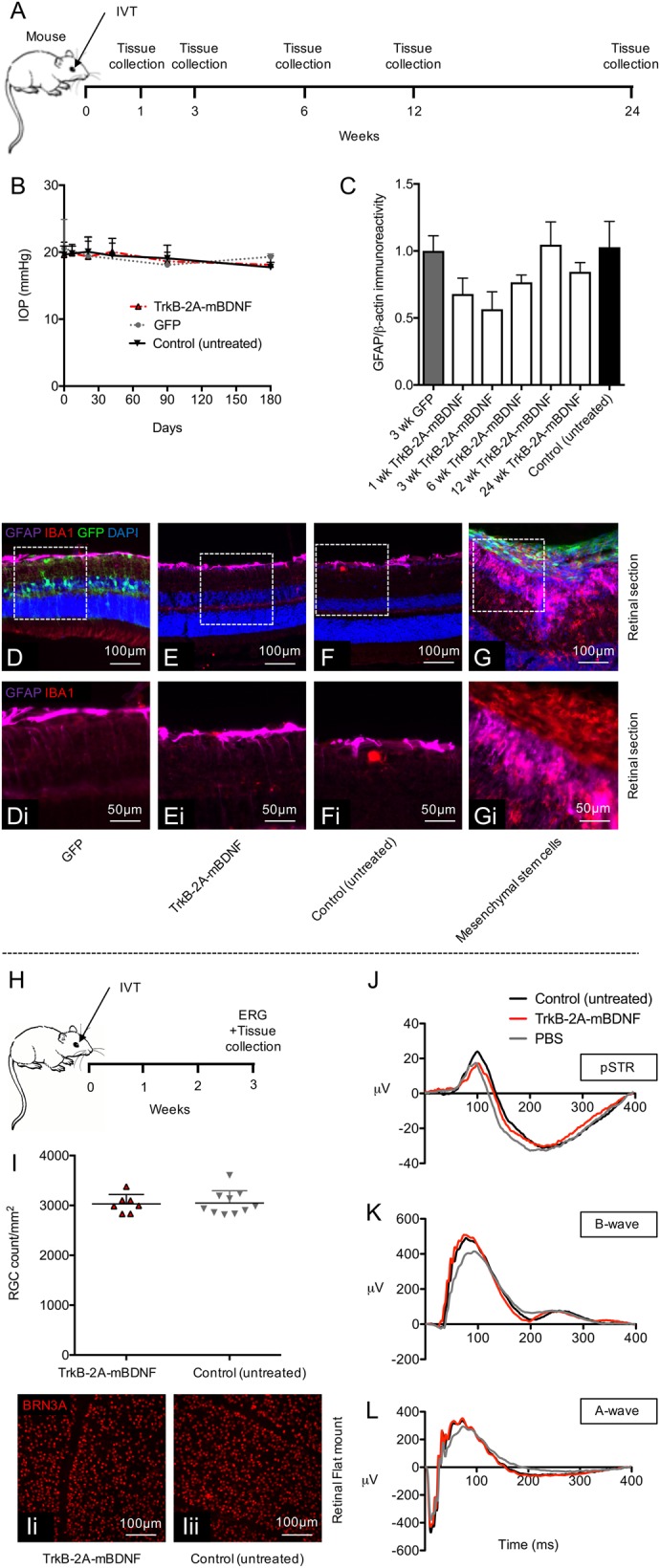
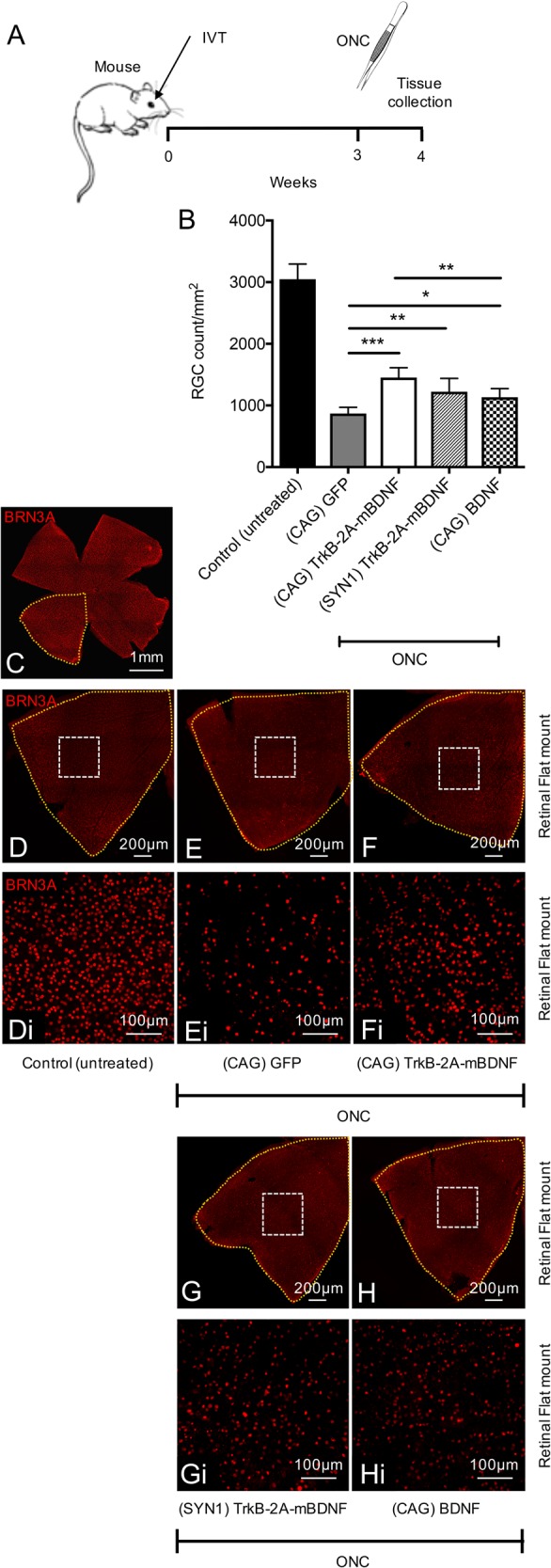
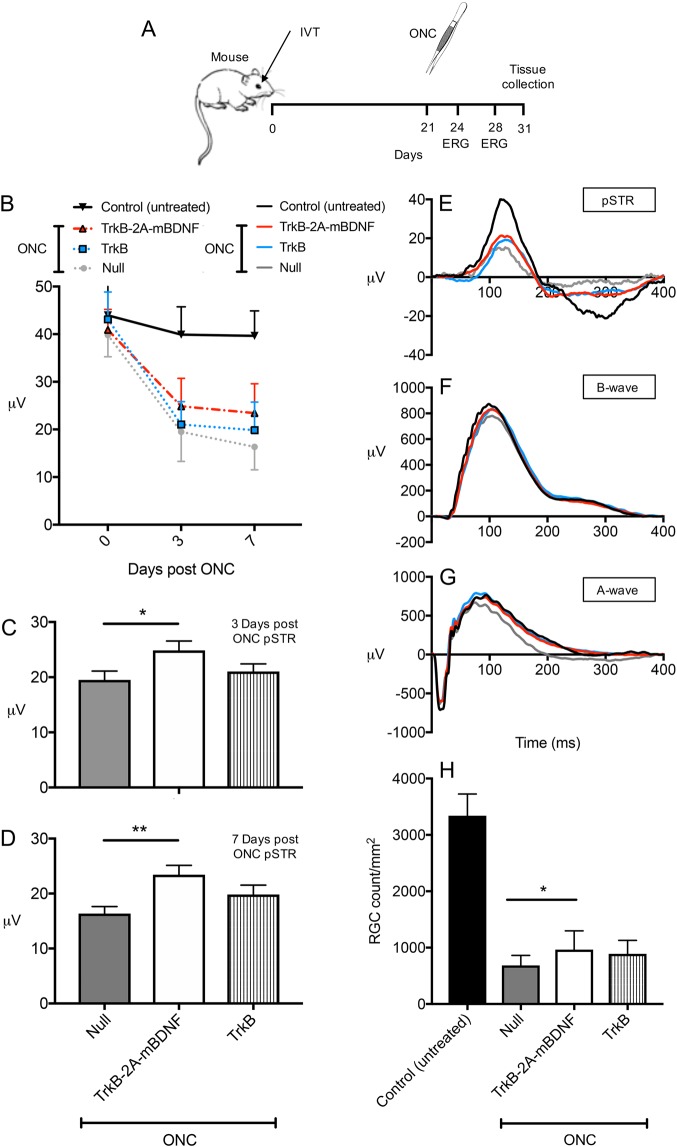
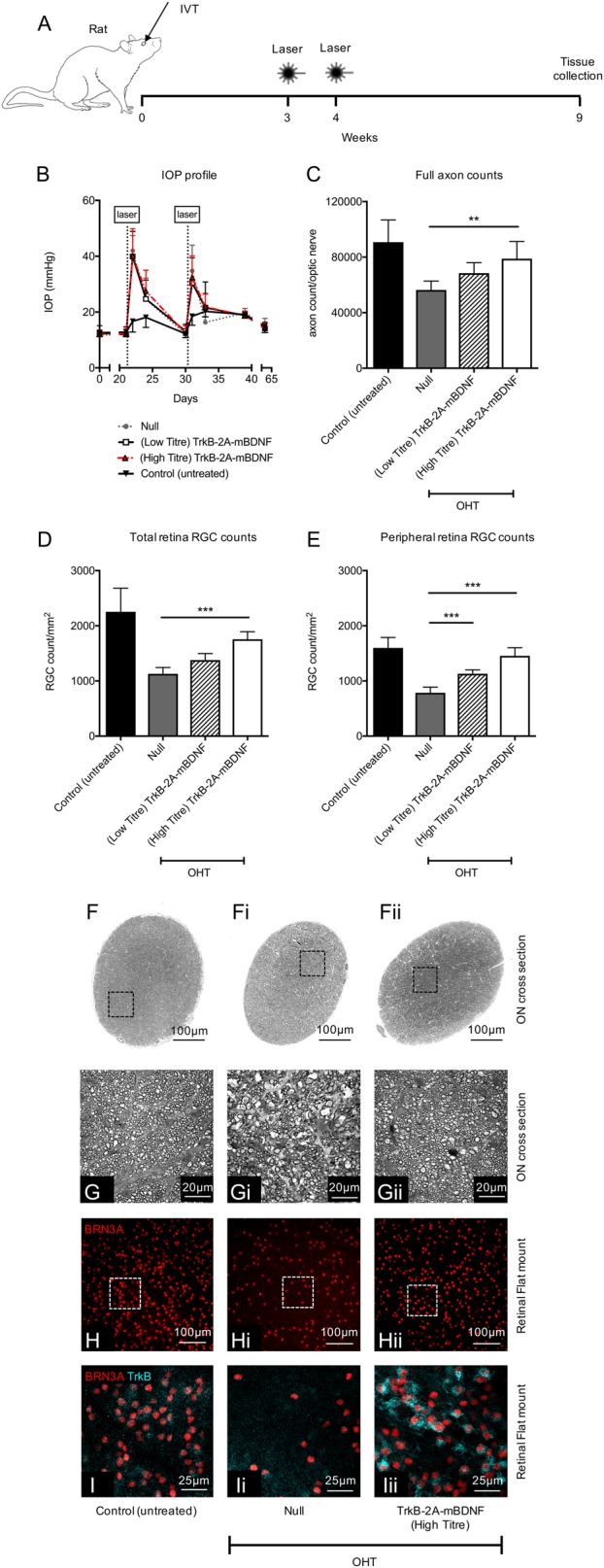
Previous studies have demonstrated that intravitreal delivery of brain-derived neurotrophic factor (BDNF) by injection of recombinant protein or by gene therapy can alleviate retinal ganglion cell (RGC) loss after optic nerve injury. BDNF gene therapy can improve RGC survival in experimental models of glaucoma, the leading cause of irreversible blindness worldwide. However, the therapeutic efficacy of BDNF supplementation alone is time limited at least in part due to BDNF receptor downregulation. Tropomyosin-related receptor kinase-B (TrkB) downregulation has been reported in many neurological diseases including glaucoma, potentially limiting the effect of sustained or repeated BDNF delivery. Here, we characterize a novel adeno-associated virus (AAV) gene therapy (AAV2 TrkB-2A-mBDNF) that not only increases BDNF production but also improves long-term neuroprotective signaling by increasing expression of the BDNF receptor (TrkB) within the inner retina. This approach leads to significant and sustained elevation of survival signaling pathways ERK and AKT within RGCs over 6 months and avoids the receptor downregulation which we observe with treatment with AAV2 BDNF alone. We validate the neuroprotective efficacy of AAV2 TrkB-2A-mBDNF in a mouse model of optic nerve injury, where it outperforms conventional AAV2 BDNF or AAV2 TrkB therapy, before showing powerful proof of concept neuroprotection of RGCs and axons in a rat model of chronic intraocular pressure (IOP) elevation. We also show that there are no adverse effects of the vector on retinal structure or function as assessed by histology and electroretinography in young or aged animals. Further studies are underway to explore the potential of this vector as a candidate for progression into clinical studies to protect RGCs in patients with glaucoma and progressive visual loss despite conventional IOP-lowering treatment.
Overview
The claims and statistics of this paper haven’t been checked yet.
Free: it reads the open-access text and checks the first 5 claims that cite a source we can check. Create a free account to check every claim.
Integrity signals
Registry
Cites
Statistics
Figures
Verification
Claims the paper makes
The claims and statistics of this paper haven’t been checked yet.
Free: it reads the open-access text and checks the first 5 claims that cite a source we can check. Create a free account to check every claim.
Claims other papers make about this one
Each is checked against this paper’s own text: does it say what the citing paper says it does?
In the citing paper
“Neuroprotective factors that support the survival of retinal cells, such as glial cell-derived neurotrophic factor (GDNF), ciliary neurotrophic factor (CNTF), brain-derived neurotrophic factor (BDNF), basic fibroblast growth factor, and pigment epithelium-derived factor (PEDF) have shown promise in mouse models of retinal degeneration.67,103–105”
From Gene Therapy for Retinal Degenerative Diseases: Progress, Challenges, and Future Directions (2023) · cites this paper as [105]
In the citing paper
“Supporting the promise of this method, AAV delivery of BDNF and its receptor105 or CNTF106 promoted survival and function of retinal ganglion cells in models of optic nerve crush or retinal ganglion cell degeneration in a model for experimental glaucoma, respectively.”
From Gene Therapy for Retinal Degenerative Diseases: Progress, Challenges, and Future Directions (2023) · cites this paper as [105]
Self-check
Percentages, sums and reported differences re-computed from the paper’s own numbers.
The self-check needs the paper’s full text.
Citations
Cites
Domingos da Silveira da Luz, A. C., Pereira Dias, G., do Nascimento Bevilaqua, M. C., Cocks, G., Gardino, P. F., Thuret, S., & Nardi, A. E. (2013) · Neuropsychobiology · doi:10.1159/000353269 · Cited by 3,995
Trk Receptors: Roles in Neuronal Signal Transduction
Huang, E. J., & Reichardt, L. F. (2003) · Annual Review of Biochemistry · doi:10.1146/annurev.biochem.72.121801.161629 · Cited by 2,537
Regulation of Cell Survival by Secreted Proneurotrophins
Lee, R., Kermani, P., Teng, K. K., & Hempstead, B. L. (2001) · Science · doi:10.1126/science.1065057 · Cited by 1,670
Jonas, J. B., Aung, T., Bourne, R. R., Bron, A. M., Ritch, R., & Panda-Jonas, S. (2017) · The Lancet · doi:10.1016/s0140-6736(17)31469-1 · Cited by 1,322
ProBDNF Induces Neuronal Apoptosis via Activation of a Receptor Complex of p75NTRand Sortilin
Teng, H. K., Teng, K. K., Lee, R., Wright, S., Tevar, S., Almeida, R. D., Kermani, P., Torkin, R., Chen, Z.-Y., Lee, F. S., et al. (2005) · The Journal of Neuroscience · doi:10.1523/jneurosci.5123-04.2005 · Cited by 1,013
The molecular basis of retinal ganglion cell death in glaucoma
Almasieh, M., Wilson, A. M., Morquette, B., Cueva Vargas, J. L., & Di Polo, A. (2012) · Progress in Retinal and Eye Research · doi:10.1016/j.preteyeres.2011.11.002 · Cited by 971
Postsynaptic BDNF‐TrkB signaling in synapse maturation, plasticity, and disease
Yoshii, A., & Constantine‐Paton, M. (2010) · Developmental Neurobiology · doi:10.1002/dneu.20765 · Cited by 744
Mansour-Robaey, S., Clarke, D. B., Wang, Y. C., Bray, G. M., & Aguayo, A. J. (1994) · Proceedings of the National Academy of Sciences · doi:10.1073/pnas.91.5.1632 · Cited by 731
Burgess, A., Vigneron, S., Brioudes, E., Labbé, J.-C., Lorca, T., & Castro, A. (2010) · Proceedings of the National Academy of Sciences · doi:10.1073/pnas.0914191107 · Cited by 680
Latanoprost for open-angle glaucoma (UKGTS): a randomised, multicentre, placebo-controlled trial
Garway-Heath, D. F., Crabb, D. P., Bunce, C., Lascaratos, G., Amalfitano, F., Anand, N., Azuara-Blanco, A., Bourne, R. R., Broadway, D. C., Cunliffe, I. A., et al. (2015) · The Lancet · doi:10.1016/s0140-6736(14)62111-5 · Cited by 660
Self-citation
Cited by
Items 101–175 of 175
Osborne, A., Khatib, T. Z., Whitehead, M., Mensah, T., Yazdouni, S., Nieuwenhuis, B., Ali, Z., Ching, J., Watt, R., Kishi, N., et al. (2025) · Molecular Neurodegeneration Advances · doi:10.1186/s44477-025-00003-y · Cited by 7
“Mice were subjected to unilateral ONC as previously detailed [17, 20, 21].”
InfluentialSelf-citationModeling the Mechanical Parameters of Glaucoma
Vroemen, P., Gorgels, T. G. M. F., Webers, C. A. B., & de Boer, J. (2019) · Tissue Engineering Part B Reviews · doi:10.1089/ten.teb.2019.0044 · Cited by 7
“98 These are great opportunities for the future.”
Guo, R., Zhang, Y. J., Geng, Y., Chen, P., Fu, T., Xia, Y., Zhang, R., Zhu, Y., Jin, J., Jin, N., et al. (2023) · Frontiers in Neuroanatomy · doi:10.3389/fnana.2022.1057929 · Cited by 6
Reduced Plasma BDNF Levels in Normal Tension Glaucoma Compared to Open Angle Glaucoma
Sato, K., Takada, N., Fujioka, A., Himori, N., Yokoyama, Y., Tsuda, S., Omodaka, K., Kirihara, T., Ishikawa, M., Kunikata, H., et al. (2023) · Journal of Glaucoma · doi:10.1097/ijg.0000000000002257 · Cited by 7
Genes as drugs for glaucoma: latest advances
Borrás, T., Stepankoff, M., & Danias, J. (2023) · Current Opinion in Ophthalmology · doi:10.1097/icu.0000000000001025 · Cited by 7
Harper, M. M., Boese, E. A., Kardon, R. H., Ledolter, J., & Kuehn, M. H. (2020) · Current Eye Research · doi:10.1080/02713683.2020.1822417 · Cited by 6
“It has recently been demonstrated that increasing TrkB expression using gene therapy in a rodent model of chronic IOP elevation results in sustained elevation of pro-survival signaling pathways, suggesting that increasing the amount of TrkB protein will result in improved retinal function.(27) Our findings suggest tha…”
BackgroundKumari, N., Barman, S., & Ganesan, S. K. (2025) · Molecular Neurobiology · doi:10.1007/s12035-025-05546-5 · Cited by 9
“Studies have shown that manipulating Müller-derived neurotrophins can protect RGCs in injury models [141, 142].”
Sharif, N. A. (2023) · Molecular Aspects of Medicine · doi:10.1016/j.mam.2023.101218 · Cited by 9
Soucy, J. R., Oswald, J., Kriukov, E., Phay, M., Masland, J., Pernstich, C., & Baranov, P. Y. (2025) · Translational Vision Science & Technology · doi:10.1167/tvst.14.9.27 · Cited by 4
Emerging strategies targeting genes and cells in glaucoma
Roy, S. (2024) · Vision Research · doi:10.1016/j.visres.2024.108533 · Cited by 6
Emerging Gene Therapy Technologies for Retinal Ganglion Cell Neuroprotection
Camacho, D. K., Go, C. C., Chaqour, B., Shindler, K. S., & Ross, A. G. (2023) · Journal of Neuro-Ophthalmology · doi:10.1097/wno.0000000000001955 · Cited by 5
Intravitreal Injection of AAV for the Transduction of Mouse Retinal Ganglion Cells
Nieuwenhuis, B., & Osborne, A. (2023) · Methods in molecular biology · doi:10.1007/978-1-0716-3409-7_17 · Cited by 7
Self-citationEffects of tACS-Like Electrical Stimulation on On-Center Retinal Ganglion Cells: Part I
Amthor, F. R., & Strang, C. E. (2021) · Eye and Brain · doi:10.2147/eb.s312402 · Cited by 4
The Neuroprotective Effect of Activation of Sigma-1 Receptor on Neural Injury by Optic Nerve Crush
Chen, Y., Yang, X., & Mao, J. (2023) · Investigative Ophthalmology & Visual Science · doi:10.1167/iovs.64.12.9 · Cited by 4
Shen, Y., Zhang, Z., Wang, G., Huang, C., Quan, Y., Zhang, S., Wu, J., Sun, J., & Sun, X. (2023) · Advanced Therapeutics · doi:10.1002/adtp.202200303 · Cited by 3
Narsineni, L., Hakim, A. M., Guido, B., & Földvári, M. (2024) · Precision Nanomedicine · doi:10.33218/001c.94464 · Cited by 3
Gene and cell-based therapies for retinal and optic nerve disease
Esposito, E. P., Han, I. C., & Johnson, T. V. (2024) · Handbook of clinical neurology · doi:10.1016/b978-0-323-90120-8.00016-2 · Cited by 5
Trockene AMD – zelluläre und gentherapeutische Behandlungsansätze
Johnen, S., & Koutsonas, A. (2019) · Klinische Monatsblätter für Augenheilkunde · doi:10.1055/a-0898-4030 · Cited by 4
“Der Faktor BDNF ist das am häufigsten vorkommende Neurotrophin im zentralen Nervensystem und seine protektive Wirkung auf retinale Ganglienzellen konnte in verschiedenen Schädigungsmodellen nachgewiesen werden [50, 51].”
BackgroundAbbasi, M., Gupta, V., Chitranshi, N., Moustardas, P., Ranjbaran, R., & Graham, S. L. (2023) · Aging and Disease · doi:10.14336/ad.2023.1012 · Cited by 4
“Most recently, gene therapy approaches [49], and stem cell transplantation therapy [50], have been attempted.”
BackgroundLessons From The Glaucoma Foundation Think Tank 2023: A Patient-Centric Approach to Glaucoma
Harris, A., Vercellin, A. C. V., Weinreb, R. N., Khawaja, A. P., MacGregor, S., & Pasquale, L. R. (2023) · Journal of Glaucoma · doi:10.1097/ijg.0000000000002353 · Cited by 3
Zloh, M., Kutílek, P., Hejda, J., Fišerová, I., Kubovčiak, J., Murakami, M., & Štofková, A. (2024) · Life Sciences · doi:10.1016/j.lfs.2024.122996 · Cited by 5
Intravitreal AAV2 gene delivery to feline retinal ganglion cells
Oikawa, K., Eaton, J. S., Kiland, J. A., Torné, O., Mathu, V., Nickells, R. W., & McLellan, G. J. (2024) · Vision Research · doi:10.1016/j.visres.2024.108519 · Cited by 3
“While there have been no successful clinical trials of gene-based neuroprotective treatments reported for glaucoma in humans (Starr & Chen, 2023), gene augmentation therapies via intravitreal AAV2 injection in rodent glaucoma models have shown neuroprotective effects by targeting BCLX L (Donahue et al., 2021), CaMKII…”
Bench-to-Bedside Research in Ophthalmology
Gupta, A. (2022) · Springer eBooks · doi:10.1007/978-981-16-8845-4_5 · Cited by 5
The controversial role of nutraceuticals vs. drugs in proliferative retinopathies
Rusciano, D., & Bagnoli, P. (2026) · Frontiers in Neuroscience · doi:10.3389/fnins.2025.1727089 · Cited by 4
Synaptic control of retinal ganglion cell survival and axon regeneration
Qiu, Y., Zhang, Q., Tang, J., Cheng, Y., Wang, Y., Wang, Z., Liu, X., Zhang, B., Liu, L., Yu, S., et al. (2026) · Molecular Neurodegeneration · doi:10.1186/s13024-026-00929-1 · Cited by 4
“Conversely, overexpression of BDNF or TrkB enhances RGC survival following ONI [151].”
Autophagy in ocular diseases: from mechanisms to therapeutic potential
Zhao, Q., Lin, Y., Han, Z., Tian, Y., Yang, Y., Gou, Q., Ju, Y., Xu, D., & Wei, L. (2026) · Frontiers in Cell and Developmental Biology · doi:10.3389/fcell.2026.1727005 · Cited by 2
“This approach aims to enable the continuous secretion of anti-VEGF antibodies or other therapeutic proteins, with the expectation of goal achieving a long-lasting therapeutic effect from a single injection (Osborne et al., 2018).”
Potential neuroprotective biomolecules in ophthalmology
Afarid, M., & Sanie‐Jahromi, F. (2020) · International Ophthalmology · doi:10.1007/s10792-020-01634-8 · Cited by 2
The Challenges and Therapeutic Prospects in Eye Disease
Tsai, C.-C. (2023) · MDPI eBooks · doi:10.3390/books978-3-0365-8402-7 · Cited by 1
rAAV-compatible human mini promoters enhance transgene expression in rat retinal ganglion cells
Araújo, V. G., Dias, M. S., Hauswirth, W. W., Linden, R., & Petrs‐Silva, H. (2023) · Experimental Eye Research · doi:10.1016/j.exer.2023.109758 · Cited by 1
Wang, L., Su, F., Huang, H., Jiang, Q., Kong, H., & Pei, Z. (2025) · Tissue and Cell · doi:10.1016/j.tice.2025.102788 · Cited by 1
Visualizing sphingomyelin in the retina
Warden, C., Raymond, D., Sanchez, A., Seidel, M., & Risner, M. L. (2025) · Experimental Eye Research · doi:10.1016/j.exer.2025.110446 · Cited by 1
Zhou, Y., Feng, Y., Li, M., Xi, Y., Zhao, Y., & Chen, X. (2025) · Neuropharmacology · doi:10.1016/j.neuropharm.2025.110697 · Cited by 1
Shi, M., Qi, S., Qi, F., & Wang, C. (2026) · Frontiers in Cell and Developmental Biology · doi:10.3389/fcell.2026.1733870 · Cited by 1
“These agents mitigate damage by promoting nerve cell growth, repair, RGC survival, and axon regeneration (Andrew et al., 2018).”
Rowe, L. W., Becerra, S. P., MacLaren, R. E., Avery, R. L., Wykoff, C. C., Ho, A. C., Regillo, C. D., Eliott, D., Osborne, A., Binley, K., et al. (2026) · Genes · doi:10.3390/genes17040392 · Cited by 2
“Gene therapy approaches, such as AAV-mediated BDNF/TrkB delivery, have achieved sustained neuroprotection and long-term signaling enhancement in preclinical models, with no adverse effects on retinal structure or function [71,72].”
Self-citationModalities of vision restoration in optic neuropathies and retinal disease
Rubin, B. R., Lavinsky, F., Cain, R., Kuriyan, A. E., Wollstein, G., Zambrano, R., & Schuman, J. S. (2026) · Progress in Retinal and Eye Research · doi:10.1016/j.preteyeres.2026.101474 · Cited by 1
Melecchi, A., Canovai, A., Marsico, L. D., Amato, R., Monte, M. D., Filippi, L., Bagnoli, P., & Cammalleri, M. (2026) · Frontiers in Neuroscience · doi:10.3389/fnins.2026.1891523 · Cited by 1
“In the glaucoma model, for instance, replacing BDNF levels has been shown to slow RGC degeneration (Feng et al., 2016; Osborne et al., 2018).”
Innovations and revolutions in reducing retinal ganglion cell loss in glaucoma
Kelada, M., Hill, D., Yap, T. E., Manzar, H., & Cordeiro, M. F. (2020) · Expert Review of Ophthalmology · doi:10.1080/17469899.2021.1835470 · Cited by 3
Current Status of the Pharmacological Treatment of Glaucoma and Its Prospects
Shimazawa, M., & Hara, H. (2020) · YAKUGAKU ZASSHI · doi:10.1248/yakushi.20-00177-5 · Cited by 1
Gene Therapy, Diet and Drug Approaches to Treating Inherited Retinal Disease
Simunovic, M. P., Mack, H. G., Ayton, L. N., & Hassall, M. (2021) · Elsevier eBooks · doi:10.1016/b978-0-12-820472-6.00154-7 · Cited by 3
Gene therapy for ocular hypertension and glaucoma treatment
Sharif, N. A. (2022) · Elsevier eBooks · doi:10.1016/b978-0-12-819291-7.00014-9 · Cited by 1
Gene Regulation by Nuclear Calcium and Its Antagonism by NMDAR/TRPM4 Signaling
Pruunsild, P., Bengtson, C. P., Yan, J., Bading, H., & Hagenston, A. M. (2024) · Springer eBooks · doi:10.1007/978-3-031-68550-7_4 · Cited by 1
Variations in Intraocular Pressure Among Athletes Across Different Sports Disciplines
Menna, F., Luca, L. D., Lupo, S., Meduri, A., & Vingolo, E. M. (2025) · Journal of Clinical Medicine · doi:10.3390/jcm14093211 · Cited by 2
“Sustained isometric effort, common in weightlifting, has been shown to raise IOP in concert with systemic blood pressure [25–27].”
Hassall, M., & Simunovic, M. P. (2020) · Springer eBooks · doi:10.1007/978-981-15-7644-7_35 · Cited by 1
Testing the eligibility of glaucoma patients for potential gene therapy among a clinic population
Gruzei, C., Zhang, J., & Bourne, R. (2022) · International Ophthalmology · doi:10.1007/s10792-021-02044-0 · Cited by 1
“Hence, for cases progressing rapidly despite standard treatment, gene therapy with neuroprotective substances could be beneficial to reduce the risk to lose vision and potentially provide a personalized therapeutic approach [17, 18].”
BackgroundEssone, J. F. N., Aki, T. M., Belmalih, M., Nkiéma, R., Ndouo, L. B. E., Anyunzoghe, E., Ekegue, N., & Abessolo, F. O. (2020) · World Journal of Neuroscience · doi:10.4236/wjns.2020.101007
“It is characterized by a gradual loss of axonal fibers of the optic nerve, resulting from death of retinal ganglion cells (RGC) [6] [7] [8].”
BackgroundTesting the Eligibility of Glaucoma Patients for Potential Gene Therapy Among a Clinic PopulationPreprint
Bourne, R., Gruzei, C., & Zhang, J. (2021) · Research Square · doi:10.21203/rs.3.rs-348828/v1
Sinnasamy, M., Ariga, M., Praveena, C. A. C., & Rajendrababu, S. R. (2022) · Springer eBooks · doi:10.1007/978-981-16-4247-0_7
Kimbrel, E. A., & Lanza, R. (2020) · Elsevier eBooks · doi:10.1016/b978-0-12-818422-6.00064-2
Advanced Therapy and Clinical Trials to Treat Patients with Optic Nerve Diseases
Srivastava, G. K., López‐Paniagua, M., & Millas, S. C. (2022) · Neurotoxicity Research · doi:10.1007/s12640-022-00593-5
“There are two feasible approaches to tackle this issue: either provide exogenous supply of neurotrophins or apply gene therapy for endogenous production of neurotrophins (Osborne et al. 2018).”
BackgroundMesenchymal stem cells therapy for retinal diseases
Taher, E. E., & Abdelhamid, A. M. (2023) · Elsevier eBooks · doi:10.1016/b978-0-323-99987-8.00010-2
Neuroprotection and glaucoma: current knowledge and future perspectives
Rolle, T. (2024) · Minerva Ophthalmology · doi:10.23736/s2785-1265.23.01882-7
Gene Therapy for Neurodegeneration in Glaucoma
Karl, J. J., & Tseng, H. C. (2024) · Essentials in ophthalmology/Essentials ophthalmology · doi:10.1007/978-981-99-4436-1_21
Gene Expression and Editing in Mammalian Retinal Ganglion Cells
Tran, N. M., Xu, X., Qi, L. S., & Hu, Y. (2024) · Essentials in ophthalmology/Essentials ophthalmology · doi:10.1007/978-981-99-4436-1_19 · Cited by 1
Eye Disease Genetics and Therapeutics
Sharif, N. A., Choudry, N. B., Chaudhry, S. D., & Abraham, A. (2024) · Essentials in ophthalmology/Essentials ophthalmology · doi:10.1007/978-981-99-4436-1_15 · Cited by 2
Problems and prospects for restoration of the optic nerve
Revishchin, A. V., Pavlova, G. V., & Shkarubo, A. N. (2024) · Журнал высшей нервной деятельности им И П Павлова · doi:10.31857/s0044467724010044
Problems and Prospects for Restoration of the Optic Nerve
Revishchin, A. V., Pavlova, G. V., & Shkarubo, A. N. (2024) · Neuroscience and Behavioral Physiology · doi:10.1007/s11055-024-01679-7
“An adeno-associated virus (AAV)-based gene therapy construct (AAV), AAV 2 TrkB-2A-mBDNF , which increases the expression not only of BDNF but also its receptor TrkB, which avoids the receptor downregulation seen in treatment with AAV2 BDNF alone [Osborne et al., 2018].”
Durrani, M. U., Usman, A., Noureen, F., Munim, A., Abbas, S., Ahmed, Z. U. A. B., & Khaliq, M. H. (2024) · Pakistan Journal of Health Sciences · doi:10.54393/pjhs.v5i10.2267
Balatskaya, N. V., Fadeev, D. V., Зуева, М. В., Neroeva, N. V., Brilliantova, A. G., & Timofeev, Y. S. (2025) · Molekulyarnaya Meditsina (Molecular medicine) · doi:10.29296/24999490-2025-03-09
Optic nerve regeneration requires the intracellular domain of LIFRa/CD118Preprint
Jiang, Q., Wang, C., Ren, Y., Duan, P., tian, K., Duan, X., Cai, B., Xu, C., Li, J., Benowitz, L. I., et al. (2025) · bioRxiv (Cold Spring Harbor Laboratory) · doi:10.1101/2025.10.14.682231
“Brain-derived neurotrophic factor (BDNF) antagonizes Zymosan-induced optic nerve regeneration(47), although virally-mediated expression of BDNF and its receptor, TrkB, enhances RGC survival(48) as reported by our lab and others.”
Clerck, K. D., Coster, E. D., Paoletti, L., Smedt, S. C. D., Remaut, K., & Peynshaert, K. (2025) · Drug Delivery and Translational Research · doi:10.1007/s13346-025-01987-6 · Cited by 7
“For retinal approaches, the use of mRNA-LNPs could be a milestone for newly emerging therapeutic strategies such as cell reprogramming [5–7], neuroprotection [8, 9] and gene editing [10].”
Zhao, Z., Fang, Y., Xu, G., Xiong, J., Mo, X., & Fan, J. (2025) · Drug Discoveries & Therapeutics · doi:10.5582/ddt.2025.01101
Yazdouni, S., Osborne, A., & Martin, K. R. G. (2026) · Cureus · doi:10.7759/cureus.100594 · Cited by 1
“The left eye of animals was lasered using an established model to elevate IOP over 40 days [17].”
InfluentialSelf-citationGene therapy in ophthalmology: new prospects
Kharisova, C. B., Kitaeva, K. V., Solovyeva, V. V., Ахметшин, Р. Ф., & Rizvanov, A. A. (2026) · Kazan medical journal · doi:10.17816/kmj677044
Léger-Charnay, E. (2019) · theses.fr (ABES) · doi:10.70675/72ca31b1zc2d8z41dbz9f66zcbe3f38a8b4a
“Les travaux de Osborne et al (2018) semblent encore plus prometteurs.”
BackgroundProof of principle of therapies for dominant optic atrophy type1
Gurram, V. (2020) · theses.fr (ABES) · doi:10.70675/8e22a535zaa4az436bz9cf4z11d1971241f5
Role of BDNF in form-deprivation myopia progression in guinea pigs
Xie, R.-Y., Wang, Q., Liu, H., luo, R., Liu, C., Li, S., Chai, Y., & Xiong, F. (2026) · Frontiers in Immunology · doi:10.3389/fimmu.2026.1733238
“In glaucoma models, BDNF delays or prevents the degeneration of RGCs, although its neuroprotective effects are time-limited (33).”
Shi, J., & Zhang, L. (2026) · International Ophthalmology · doi:10.1007/s10792-026-04120-9
“Gene therapies, such as adeno-associated virus (AAV)-mediated delivery, have shown that overexpression of neurotrophic factor receptors can protect RGCs in both acute and chronic glaucoma models [10, 11].”
Targeting Sensory Neuropathies Through Neurotrophin-Based Approaches
Hizam, V. M., Stefania, D. P., Pisani, A., Boccella, S., Laura, B., Grassi, C., Paciello, F., & Fetoni, A. R. (2026) · Cellular and Molecular Neurobiology · doi:10.1007/s10571-026-01756-0 · Cited by 1
“…therapy approaches using adeno-associated viral vectors (AAV), such as AAV2–BDNF or AAV2– TrkB–2 A–mBDNF, enhance the efficacy and duration of neurotrophic support by counteracting TrkB downregulation and maintaining sustained signalling in the inner retina (Osborne et al., 2018; Xu et al., 2023).”
Farrokhi, M. R., & Hosseini, K. (2026) · Cell Biochemistry and Function · doi:10.1002/cbf.70270
“Using intravitreal injection of the AAV2 TrkB‐2A‐mBDNF vector (1 × 10 10 vp/eye) into mice, Osborne et al. found that increased BDNF expression led to increased expression of AKT and ERK within retinal ganglion cells for 6 months [156].”
Cheng, Z., Wu, L., Qu, Y., Zhang, C., Ye, Z., Li, Z., & Chen, X. (2026) · American Journal Of Pathology · doi:10.1016/j.ajpath.2026.07.003
Xiao, F., Ouyang, R., Huo, Y., Wang, X., Tan, S., Miao, W., Li, Y., Pu, Y., Lei, J., Peng, L., et al. (2026) · International Journal of Pharmaceutics · doi:10.1016/j.ijpharm.2026.127406
Mroczkowska, S., Smewing, L., & Gherghel, D. (2026) · Pharmaceuticals · doi:10.3390/ph19101598
“AAV constructs designed to enhance both TrkB and mature BDNF signalling have therefore been developed as an alternative strategy [77].”
Retinitis Pigmentosa: A Review of Its Pathogenesis and Emerging Molecular and Cellular Therapies
Tuli, N., Baeshen, M., Echbicheb, M., Kulbay, M., Ayalon, A., Ali, S. K., & Qian, C. X. (2026) · Vision · doi:10.3390/vision10040083
“More recently, sustained delivery via gene therapy methods, primarily AAV-mediated BDNF/TrkB delivery, has shown promise in preventing RGC degeneration in glaucoma mouse models [184,185].”
Ocular Gene Therapy in China: Technological Framework, Clinical Translation, and Future Perspectives
Zhang, D., He, Z., Lu, F., & Yang, Y. (2026) · Human Gene Therapy · doi:10.1177/10430342261495300
Kitamura, Y., Namekata, K., 郭, 暁., Youichi, S., Honda, S., Nishijima, E., Noro, T., Harada, C., & Harada, T. (2026) · Investigative Ophthalmology & Visual Science · doi:10.1167/iovs.67.12.75
Metadata
- Authors
- Osborne, A., Khatib, T. Z., Songra, L., Barber, A. C., Hall, K., Kong, G. Y. X., Widdowson, P. S., & Martin, K. R.
- Affiliations
- University of Cambridge (GB)
- The University of Melbourne (AU)
- Wellcome/MRC Cambridge Stem Cell Institute (GB)
- Corresponding author
- Martin, Keith R.
- Venue
- Cell Death & Disease
- Published
- 2018-09-26
- Volume
- 9
- Issue
- 10
- Pages
- 1007-1007
- ISSN
- 2041-4889 (ISSN-L)
- PMC
- PMC6158290
- OpenAlex
- W2894232396
- Cited by
- 175
- References
- 59
- Citations by year
- 2026: 19 · 2025: 20 · 2024: 23 · 2023: 29 · 2022: 26 · 2021: 25 · 2020: 20 · 2019: 13
- FWCI
- 14.58
- Type
- journal article
- Language
- en
- Open access
- gold
- doi.org
- Licence
- cc-by
- creativecommons.org/licenses/by/4.0 (tdm)
- creativecommons.org/licenses/by/4.0 (vor)
- Locations
- Cell Death and Disease (publishedVersion, cc-by)
- Europe PMC (PubMed Central) (publishedVersion, other-oa)
- PubMed Central (publishedVersion, cc-by)
- PubMed (publishedVersion)
- DOAJ (DOAJ: Directory of Open Access Journals) (submittedVersion)
- Minerva Access (University of Melbourne) (submittedVersion, cc-by)
- Apollo (University of Cambridge) (submittedVersion, cc-by)
- Apollo (cc-by)
- Funders
- the Wellcome Trust (Pathfinder Award), the Midven Rainbow Seed Fund, Quethera Ltd, University of Cambridge Enterprise, the HB Allen Charitable Trust and the Cambridge Eye Trust
- Topics
- Health Sciences › Medicine › Ophthalmology › Glaucoma and retinal disorders
- Life Sciences › Biochemistry, Genetics and Molecular Biology › Genetics › Virus-based gene therapy research
- Health Sciences › Medicine › Ophthalmology › Retinal Development and Disorders
- Keywords
- retinal ganglion cells, neuroprotection, glaucoma, brain-derived neurotrophic factor, TrkB receptor, adeno-associated virus gene therapy, AAV2, optic nerve injury, ERK signaling, Akt signaling, receptor down-regulation, inner retina, axon survival
- MeSH terms
- Neuroprotection, Dependovirus, Animals, Axons, Disease Models, Animal, Glaucoma, Humans, Intraocular Pressure, Male, Membrane Glycoproteins, Mice, Inbred C57BL, Retina, Retinal Ganglion Cells, Genetic Therapy, Signal Transduction, Down-Regulation, Rats, Sprague-Dawley, Brain-Derived Neurotrophic Factor, Optic Nerve Injuries, Receptor, trkB, Mice, Rats, HEK293 Cells
About these checks
Registry, retraction, Cites and statistics results are computed, not judged, with one exception: a printed reference that no index lists is read once by a model before it counts as a citation error. Claims are extracted by a model and kept only when their quote appears verbatim in the text; each cited source is then checked, with a model’s help, for whether it says what the claim relies on. Those verdicts can be wrong — read the claim’s quote and the cited source before relying on one.
Statistics and arithmetic are recomputed, not judged.
Confidence bands are shown only for fields calibrated on our annotated test set. None is calibrated yet, so no band is shown.
What counts as a claim ›How we measure confidence ›How we check this ›
Are you an author, or do you see a problem with this page? Request a review
Data sources
Bibliographic data: Semantic Scholar, OpenAlex, Crossref.
Contains information from the Semantic Scholar Academic Graph Datasets, made available under the ODC Attribution License (ODC-BY 1.0).
Semantic Scholar’s data is described in: Kinney, R., et al. (2023). The Semantic Scholar Open Data Platform. arXiv:2301.10140.
