

Neuroprotection of retinal ganglion cells by a novel gene therapy construct that achieves sustained enhancement of brain-derived neurotrophic factor/tropomyosin-related kinase receptor-B signaling
Open accessThe DOI matches its Crossref record; 59 of the 59 references it cites were found in a registry or an index.
Abstract
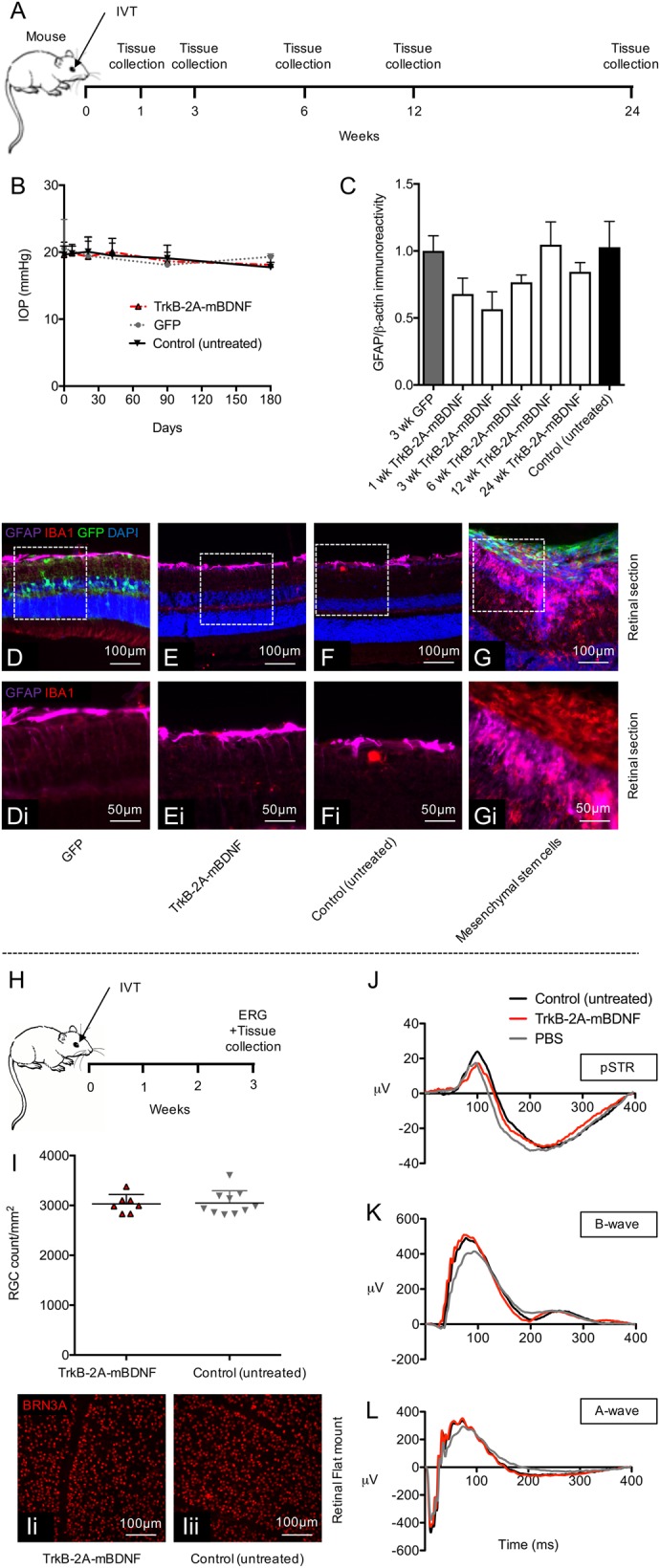
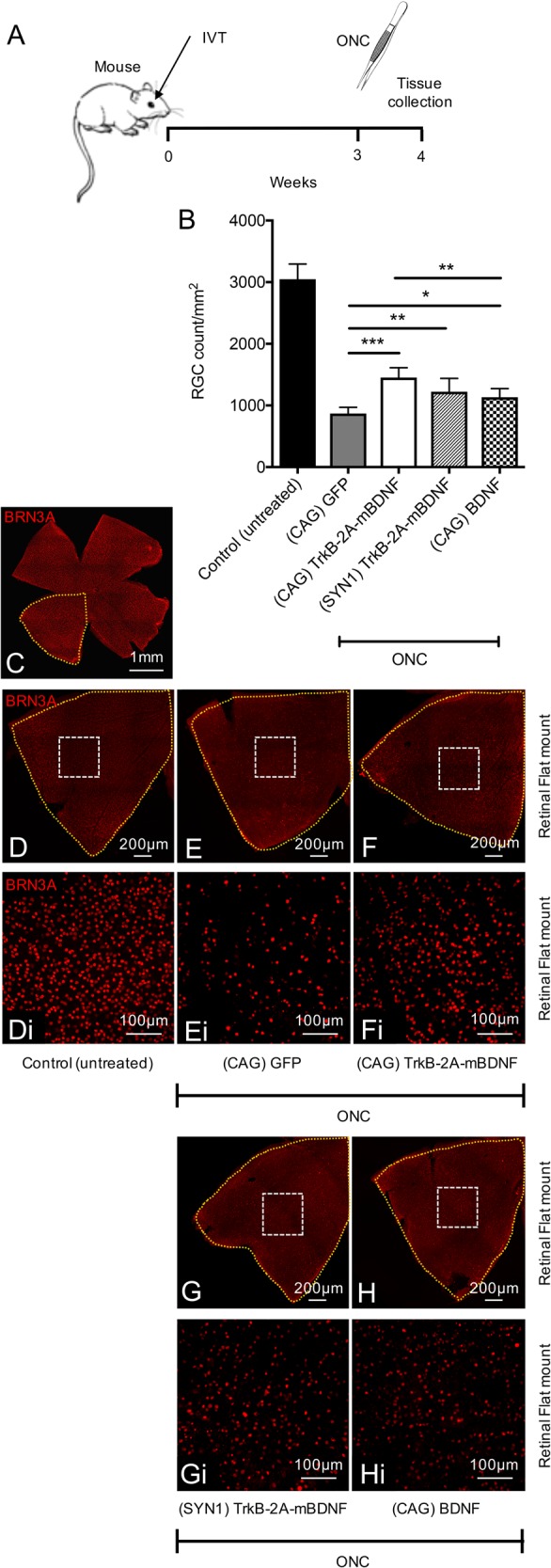
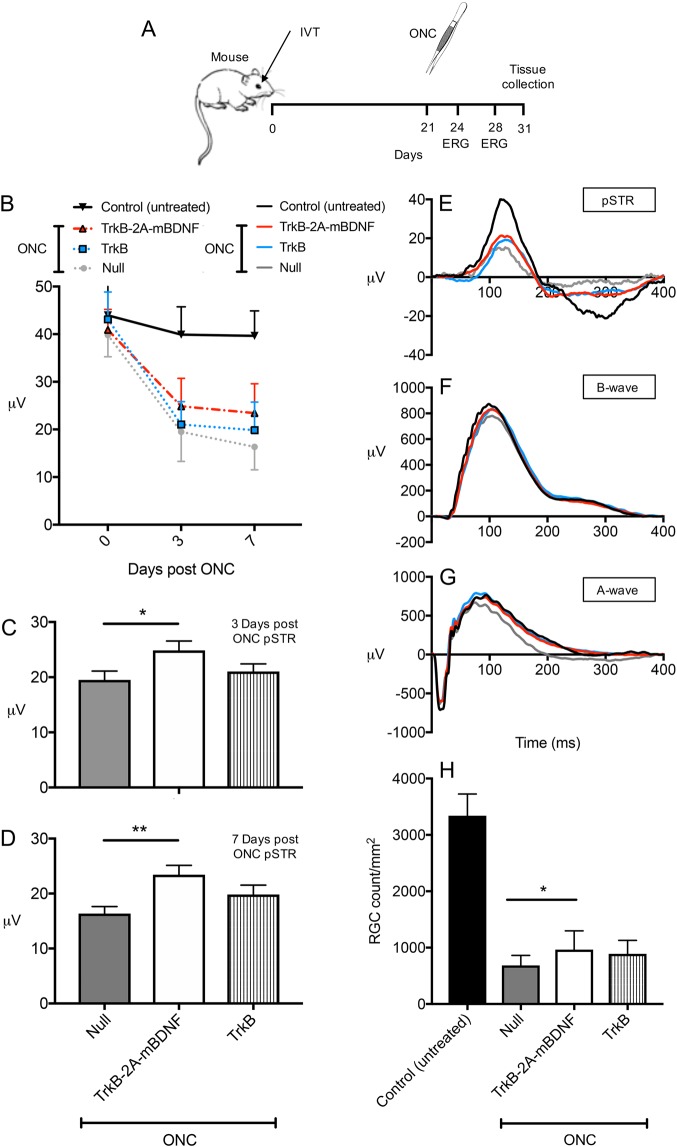
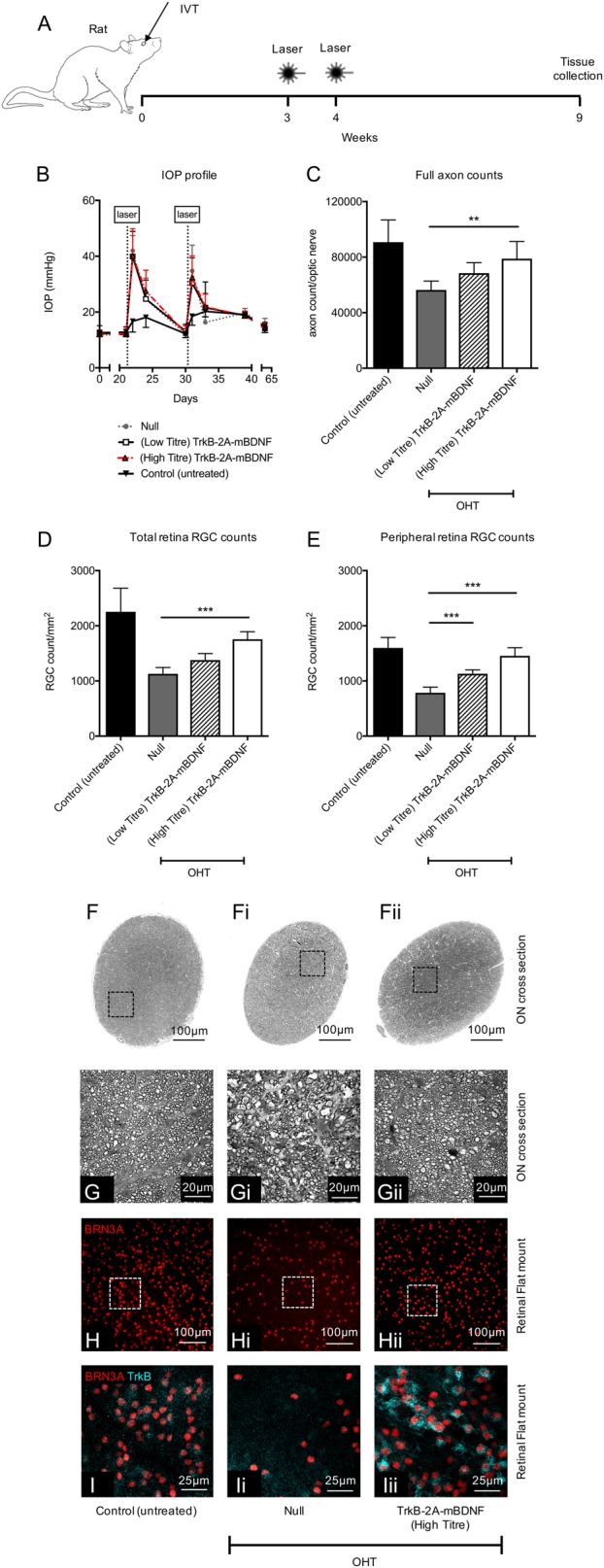
Previous studies have demonstrated that intravitreal delivery of brain-derived neurotrophic factor (BDNF) by injection of recombinant protein or by gene therapy can alleviate retinal ganglion cell (RGC) loss after optic nerve injury. BDNF gene therapy can improve RGC survival in experimental models of glaucoma, the leading cause of irreversible blindness worldwide. However, the therapeutic efficacy of BDNF supplementation alone is time limited at least in part due to BDNF receptor downregulation. Tropomyosin-related receptor kinase-B (TrkB) downregulation has been reported in many neurological diseases including glaucoma, potentially limiting the effect of sustained or repeated BDNF delivery. Here, we characterize a novel adeno-associated virus (AAV) gene therapy (AAV2 TrkB-2A-mBDNF) that not only increases BDNF production but also improves long-term neuroprotective signaling by increasing expression of the BDNF receptor (TrkB) within the inner retina. This approach leads to significant and sustained elevation of survival signaling pathways ERK and AKT within RGCs over 6 months and avoids the receptor downregulation which we observe with treatment with AAV2 BDNF alone. We validate the neuroprotective efficacy of AAV2 TrkB-2A-mBDNF in a mouse model of optic nerve injury, where it outperforms conventional AAV2 BDNF or AAV2 TrkB therapy, before showing powerful proof of concept neuroprotection of RGCs and axons in a rat model of chronic intraocular pressure (IOP) elevation. We also show that there are no adverse effects of the vector on retinal structure or function as assessed by histology and electroretinography in young or aged animals. Further studies are underway to explore the potential of this vector as a candidate for progression into clinical studies to protect RGCs in patients with glaucoma and progressive visual loss despite conventional IOP-lowering treatment.
Overview
The claims and statistics of this paper haven’t been checked yet.
Free: it reads the open-access text and checks the first 5 claims that cite a source we can check. Create a free account to check every claim.
Integrity signals
Registry
Cites
Statistics
Figures
Verification
Claims the paper makes
The claims and statistics of this paper haven’t been checked yet.
Free: it reads the open-access text and checks the first 5 claims that cite a source we can check. Create a free account to check every claim.
Claims other papers make about this one
Each is checked against this paper’s own text: does it say what the citing paper says it does?
In the citing paper
“Neuroprotective factors that support the survival of retinal cells, such as glial cell-derived neurotrophic factor (GDNF), ciliary neurotrophic factor (CNTF), brain-derived neurotrophic factor (BDNF), basic fibroblast growth factor, and pigment epithelium-derived factor (PEDF) have shown promise in mouse models of retinal degeneration.67,103–105”
From Gene Therapy for Retinal Degenerative Diseases: Progress, Challenges, and Future Directions (2023) · cites this paper as [105]
In the citing paper
“Supporting the promise of this method, AAV delivery of BDNF and its receptor105 or CNTF106 promoted survival and function of retinal ganglion cells in models of optic nerve crush or retinal ganglion cell degeneration in a model for experimental glaucoma, respectively.”
From Gene Therapy for Retinal Degenerative Diseases: Progress, Challenges, and Future Directions (2023) · cites this paper as [105]
Self-check
Percentages, sums and reported differences re-computed from the paper’s own numbers.
The self-check needs the paper’s full text.
Citations
Cites
Domingos da Silveira da Luz, A. C., Pereira Dias, G., do Nascimento Bevilaqua, M. C., Cocks, G., Gardino, P. F., Thuret, S., & Nardi, A. E. (2013) · Neuropsychobiology · doi:10.1159/000353269 · Cited by 3,995
Trk Receptors: Roles in Neuronal Signal Transduction
Huang, E. J., & Reichardt, L. F. (2003) · Annual Review of Biochemistry · doi:10.1146/annurev.biochem.72.121801.161629 · Cited by 2,537
Regulation of Cell Survival by Secreted Proneurotrophins
Lee, R., Kermani, P., Teng, K. K., & Hempstead, B. L. (2001) · Science · doi:10.1126/science.1065057 · Cited by 1,670
Jonas, J. B., Aung, T., Bourne, R. R., Bron, A. M., Ritch, R., & Panda-Jonas, S. (2017) · The Lancet · doi:10.1016/s0140-6736(17)31469-1 · Cited by 1,322
ProBDNF Induces Neuronal Apoptosis via Activation of a Receptor Complex of p75NTRand Sortilin
Teng, H. K., Teng, K. K., Lee, R., Wright, S., Tevar, S., Almeida, R. D., Kermani, P., Torkin, R., Chen, Z.-Y., Lee, F. S., et al. (2005) · The Journal of Neuroscience · doi:10.1523/jneurosci.5123-04.2005 · Cited by 1,013
The molecular basis of retinal ganglion cell death in glaucoma
Almasieh, M., Wilson, A. M., Morquette, B., Cueva Vargas, J. L., & Di Polo, A. (2012) · Progress in Retinal and Eye Research · doi:10.1016/j.preteyeres.2011.11.002 · Cited by 971
Postsynaptic BDNF‐TrkB signaling in synapse maturation, plasticity, and disease
Yoshii, A., & Constantine‐Paton, M. (2010) · Developmental Neurobiology · doi:10.1002/dneu.20765 · Cited by 744
Mansour-Robaey, S., Clarke, D. B., Wang, Y. C., Bray, G. M., & Aguayo, A. J. (1994) · Proceedings of the National Academy of Sciences · doi:10.1073/pnas.91.5.1632 · Cited by 731
Burgess, A., Vigneron, S., Brioudes, E., Labbé, J.-C., Lorca, T., & Castro, A. (2010) · Proceedings of the National Academy of Sciences · doi:10.1073/pnas.0914191107 · Cited by 680
Latanoprost for open-angle glaucoma (UKGTS): a randomised, multicentre, placebo-controlled trial
Garway-Heath, D. F., Crabb, D. P., Bunce, C., Lascaratos, G., Amalfitano, F., Anand, N., Azuara-Blanco, A., Bourne, R. R., Broadway, D. C., Cunliffe, I. A., et al. (2015) · The Lancet · doi:10.1016/s0140-6736(14)62111-5 · Cited by 660
Self-citationObstructed axonal transport of BDNF and its receptor TrkB in experimental glaucoma.
Pease, M. E., McKinnon, S. J., Quigley, H. A., Kerrigan, L. A., & Zack, D. J. (2000) · PubMed · Cited by 588
Quigley, H. A., McKinnon, S. J., Zack, D. J., Pease, M. E., Kerrigan, L. A., Kerrigan, D., & Mitchell, R. S. (2000) · PubMed · Cited by 569
Mey, J., & Thanos, S. (1993) · Brain Research · doi:10.1016/0006-8993(93)90695-j · Cited by 547
Ip, N. Y., Stitt, T. N., Tapley, P., Klein, R., Glass, D. J., Fandl, J., Greene, L. A., Barbacid, M., & Yancopoulos, G. D. (1993) · Neuron · doi:10.1016/0896-6273(93)90306-c · Cited by 518
Di Polo, A., Aigner, L. J., Dunn, R. J., Bray, G. M., & Aguayo, A. J. (1998) · Proceedings of the National Academy of Sciences · doi:10.1073/pnas.95.7.3978 · Cited by 430
Translimbal laser photocoagulation to the trabecular meshwork as a model of glaucoma in rats.
Levkovitch-Verbin, H., Quigley, H. A., Martin, K. R. G., Valenta, D. F., Baumrind, L. A., & Pease, M. E. (2002) · PubMed · Cited by 365
Self-citationMartin, K. R. G., Quigley, H. A., Zack, D. J., Levkovitch-Verbin, H., Kielczewski, J., Valenta, D., Baumrind, L., Pease, M. E., Klein, R. L., & Hauswirth, W. W. (2003) · Investigative Opthalmology & Visual Science · doi:10.1167/iovs.02-1332 · Cited by 362
Self-citationResults of the European Glaucoma Prevention Study
(2005) · Ophthalmology · doi:10.1016/j.ophtha.2004.11.030 · Cited by 323
Quigley, H. A., & Anderson, D. R. (1976) · PubMed · Cited by 315
Leaver, S. G., Cui, Q., Plant, G. W., Arulpragasam, A., Hisheh, S., Verhaagen, J., & Harvey, A. R. (2006) · Gene Therapy · doi:10.1038/sj.gt.3302791 · Cited by 271
TrkB Gene Transfer Protects Retinal Ganglion Cells from Axotomy-Induced Death In Vivo
Cheng, L., Sapieha, P., Kittlerová, P., Hauswirth, W. W., & Di Polo, A. (2002) · The Journal of Neuroscience · doi:10.1523/jneurosci.22-10-03977.2002 · Cited by 254
Rates of visual field progression in clinical glaucoma care
Heijl, A., Buchholz, P., Norrgren, G., & Bengtsson, B. (2013) · Acta Ophthalmologica · doi:10.1111/j.1755-3768.2012.02492.x · Cited by 224
Neuroprotection, Growth Factors and BDNF-TrkB Signalling in Retinal Degeneration
Kimura, A., Namekata, K., Guo, X., Harada, C., & Harada, T. (2016) · International Journal of Molecular Sciences · doi:10.3390/ijms17091584 · Cited by 211
BDNF enhances retinal ganglion cell survival in cats with optic nerve damage.
Chen, H., & Weber, A. J. (2001) · PubMed · Cited by 205
Frank, L., Ventimiglia, R., Anderson, K., Lindsay, R. M., & Rudge, J. S. (1996) · European Journal of Neuroscience · doi:10.1111/j.1460-9568.1996.tb01290.x · Cited by 199
Reverter, G. P., Agudo‐Barriuso, M., Sobrado‐Calvo, P., Salinas‐Navarro, M., Villegas‐Pérez, M. P., & Vidal‐Sanz, M. (2009) · Experimental Eye Research · doi:10.1016/j.exer.2009.02.015 · Cited by 167
Down-regulation of the Neurotrophin Receptor TrkB following Ligand Binding
Sommerfeld, M. T., Schweigreiter, R., Barde, Y.-A., & Hoppe, E. (2000) · Journal of Biological Chemistry · doi:10.1074/jbc.275.12.8982 · Cited by 161
Gupta, V., You, Y., Li, J., Gupta, V. B., Golzan, M., Klistorner, A. I., van den Buuse, M., & Graham, S. L. (2014) · Biochimica et Biophysica Acta (BBA) - Molecular Basis of Disease · doi:10.1016/j.bbadis.2014.05.026 · Cited by 158
European Glaucoma Prevention Study: Author reply
Miglior, S., Pfeiffer, N., Zeyen, T. G., Cunha-Vaz, J. G., Torri, V., & Adamsons, I. A. (2005) · Ophthalmology · doi:10.1016/j.ophtha.2005.06.020 · Cited by 153
Reduced expression of the TrkB receptor in Huntington's disease mouse models and in human brain
Ginés, S., Bosch, M., Marco, S., Gavaldà, N., Díaz‐Hernández, M., Lucas, J. J., Canals, J. M., & Alberch, J. (2006) · European Journal of Neuroscience · doi:10.1111/j.1460-9568.2006.04590.x · Cited by 140
Knüsel, B., Gao, H., Okazaki, T., Yoshida, T., Mori, N., Hefti, F. F., & Kaplan, D. R. (1997) · Neuroscience · doi:10.1016/s0306-4522(96)00616-1 · Cited by 136
Rescue of Retinal Function by BDNF in a Mouse Model of Glaucoma
Domenici, L., Origlia, N., Falsini, B., Cerri, E., Barloscio, D., Fabiani, C., Sansò, M., & Giovannini, L. (2014) · PLoS ONE · doi:10.1371/journal.pone.0115579 · Cited by 118
Bai, Y., Dergham, P., Nedev, H., Xu, J., Galan, A., Rivera, J. C., ZhiHua, S., Mehta, H. M., Woo, S. B., Sarunic, M. V., et al. (2010) · Journal of Biological Chemistry · doi:10.1074/jbc.m110.147801 · Cited by 115
Long-Term Trends in Glaucoma-Related Blindness in Olmsted County, Minnesota
Malihi, M., Filho, E. R. M., Hodge, D. O., & Sit, A. J. (2013) · Ophthalmology · doi:10.1016/j.ophtha.2013.09.003 · Cited by 113
Inhibition of p75NTR in glia potentiates TrkA-mediated survival of injured retinal ganglion cells
Lebrun-Julien, F., Morquette, B., Douillette, A., Saragovi, H. U., & Polo, A. D. (2008) · Molecular and Cellular Neuroscience · doi:10.1016/j.mcn.2008.12.005 · Cited by 107
Glia- and neuron-specific functions of TrkB signalling during retinal degeneration and regeneration
Harada, C., Guo, X., Namekata, K., Kimura, A., Nakamura, K., Tanaka, K., Parada, L. F., & Harada, T. (2011) · Nature Communications · doi:10.1038/ncomms1190 · Cited by 101
Srinivasan, B., Roque, C. H., Hempstead, B. L., Al-Ubaidi, M. R., & Roque, R. S. (2004) · Journal of Biological Chemistry · doi:10.1074/jbc.m402872200 · Cited by 98
Trabeculectomy Can Improve Long-Term Visual Function in Glaucoma
Caprioli, J., de Leon, J. M. S., Azarbod, P., Chen, A., Morales, E., Nouri‐Mahdavi, K., Coleman, A. L., Yu, F., & Afifi, A. A. (2015) · Ophthalmology · doi:10.1016/j.ophtha.2015.09.027 · Cited by 94
Tassoni, A., Gutteridge, A., Barber, A. C., Osborne, A., & Martin, K. R. G. (2015) · Stem Cells · doi:10.1002/stem.2095 · Cited by 91
Self-citationClarke, D. B., Bray, G. M., & Aguayo, A. J. (1998) · Vision Research · doi:10.1016/s0042-6989(97)00341-6 · Cited by 86
Functional Changes in the Retina during and after Acute Intraocular Pressure Elevation in Mice
Kong, Y. X., Crowston, J. G., Vingrys, A. J., Trounce, I. A., & Bui, B. V. (2009) · Investigative Opthalmology & Visual Science · doi:10.1167/iovs.09-3814 · Cited by 80
Kraemer, B. R., Snow, J. P., Vollbrecht, P. J., Pathak, A., Valentine, W. M., Deutch, A. Y., & Carter, B. D. (2014) · Journal of Biological Chemistry · doi:10.1074/jbc.m114.563403 · Cited by 77
Neurotrophic Effect of a Novel TrkB Agonist on Retinal Ganglion Cells
Hu, Y., Cho, S., & Goldberg, J. L. (2010) · Investigative Opthalmology & Visual Science · doi:10.1167/iovs.09-4450 · Cited by 75
Oddone, F., Roberti, G., Micera, A., Busanello, A., Bonini, S., Quaranta, L., Agnifili, L., & Manni, G. (2017) · PLoS ONE · doi:10.1371/journal.pone.0168565 · Cited by 74
Iwabe, S., Moreno-Méndoza, N., Trigo‐Tavera, F. J., Crowder, C., & García‐Sánchez, G. A. (2007) · Veterinary Ophthalmology · doi:10.1111/j.1463-5224.2007.00504.x · Cited by 72
Brain-derived neurotrophic factor in patients with normal-tension glaucoma
Ghaffariyeh, A., Honarpisheh, N., Shakiba, Y., Puyan, S., Chamacham, T., Zahedi, F., & Zarrineghbal, M. (2009) · Optometry · doi:10.1016/j.optm.2008.09.014 · Cited by 72
Ren, R., Li, Y., Liu, Z., Liu, K., & He, S. (2012) · Investigative Opthalmology & Visual Science · doi:10.1167/iovs.11-8484 · Cited by 60
BDNF protects retinal neurons from hyperglycemia through the TrkB/ERK/MAPK pathway
LIU, Y., TAO, L., FU, X., ZHAO, Y., & XU, X. (2013) · Molecular Medicine Reports · doi:10.3892/mmr.2013.1433 · Cited by 60
Marina, N., Bull, N. D., & Martin, K. R. G. (2010) · Nature Protocols · doi:10.1038/nprot.2010.128 · Cited by 56
Self-citationTackling Glaucoma from within the Brain: An Unfortunate Interplay of BDNF and TrkB
Dekeyster, E., Geeraerts, E., Buyens, T., Van den Haute, C., Baekelandt, V., De Groef, L., Salinas-Navarro, M., & Moons, L. (2015) · PLOS ONE · doi:10.1371/journal.pone.0142067 · Cited by 49
Osborne, A., Wang, A. X. Z., Tassoni, A., Widdowson, P. S., & Martin, K. R. (2018) · Human Gene Therapy · doi:10.1089/hum.2017.069 · Cited by 43
Self-citationInteractions between Brain-derived Neurotrophic Factor and the TRKB Receptor
Haniu, M., Montestruque, S., Bures, E. J., Talvenheimo, J., Toso, R., Lewis-Sandy, S., Welcher, A. A., & Rohde, M. F. (1997) · Journal of Biological Chemistry · doi:10.1074/jbc.272.40.25296 · Cited by 40
TrkB Signaling in Retinal Glia Stimulates Neuroprotection after Optic Nerve Injury
Harada, C., Azuchi, Y., Noro, T., Guo, X., Kimura, A. K., Namekata, K., & Harada, T. (2015) · American Journal Of Pathology · doi:10.1016/j.ajpath.2015.08.005 · Cited by 36
Tyrosine triple mutated AAV2-BDNF gene therapy in a rat model of transient IOP elevation.
Igarashi, T., Miyake, K., Kobayashi, M., Kameya, S., Fujimoto, C., Nakamoto, K., Takahashi, H., Igarashi, T., Miyake, N., Iijima, O., et al. (2016) · PubMed Central · Cited by 35
Lambert, W. S., Carlson, B. J., Formichella, C. R., Sappington, R. M., Ahlem, C., & Calkins, D. J. (2017) · Frontiers in Neuroscience · doi:10.3389/fnins.2017.00045 · Cited by 31
Spalding, K. L., Cui, Q., & Harvey, A. R. (2005) · Neuroscience · doi:10.1016/j.neuroscience.2004.11.027 · Cited by 22
Uzel, M. M., Elgin, U., Boral, B., Çiçek, M., Şen, E. M., Şener, B., & Yılmazbaş, P. (2018) · Graefe s Archive for Clinical and Experimental Ophthalmology · doi:10.1007/s00417-018-3923-y · Cited by 16
Correction: Blindness and Glaucoma: A Multicenter Data Review from 7 Academic Eye Clinics
Rossetti, L. M., Digiuni, M., Montesano, G., Centofanti, M., Fea, A. M., Iester, M., Frezzotti, P., Figus, M., Ferreras, A., Oddone, F., et al. (2016) · PLoS ONE · doi:10.1371/journal.pone.0151010 · Cited by 4
Possible TULP1 Protein Interactions
Xi, Q., West, K. A., Crabb, J. W., & Hagstrom, S. A. (2003) · Investigative Ophthalmology & Visual Science · Cited by 1
Cited by
Gene Therapy for Retinal Degenerative Diseases: Progress, Challenges, and Future Directions
Drag, S., Dotiwala, F., & Upadhyay, A. K. (2023) · Investigative Opthalmology & Visual Science · doi:10.1167/iovs.64.7.39 · Cited by 145
Extraocular, periocular, and intraocular routes for sustained drug delivery for glaucoma
Kompella, U. B., Hartman, R. R., & Patil, M. A. (2021) · Progress in Retinal and Eye Research · doi:10.1016/j.preteyeres.2020.100901 · Cited by 125
Current Medical Therapy and Future Trends in the Management of Glaucoma Treatment
Cvenkel, B., & Kolko, M. (2020) · Journal of Ophthalmology · doi:10.1155/2020/6138132 · Cited by 127
“*e neuroprotective efficacy was confirmed in an experimental animal model of glaucoma and optic nerve injury and was present over 6 months without vector-related adverse effects [133].”
Fudalej, E., Justyniarska, M., Kasarełło, K., Dziedziak, J., Szaflik, J. P., & Cudnoch‐Jędrzejewska, A. (2021) · Ophthalmic Research · doi:10.1159/000514441 · Cited by 135
Neuroprotection in glaucoma: Mechanisms beyond intraocular pressure lowering
Tribble, J. R., Hui, F., Quintero, H., Hajji, S. E., Bell, K. C., Polo, A. D., & Williams, P. A. (2023) · Molecular Aspects of Medicine · doi:10.1016/j.mam.2023.101193 · Cited by 138
Metadata
- Authors
- Osborne, A., Khatib, T. Z., Songra, L., Barber, A. C., Hall, K., Kong, G. Y. X., Widdowson, P. S., & Martin, K. R.
- Affiliations
- University of Cambridge (GB)
- The University of Melbourne (AU)
- Wellcome/MRC Cambridge Stem Cell Institute (GB)
- Corresponding author
- Martin, Keith R.
- Venue
- Cell Death & Disease
- Published
- 2018-09-26
- Volume
- 9
- Issue
- 10
- Pages
- 1007-1007
- ISSN
- 2041-4889 (ISSN-L)
- PMC
- PMC6158290
- OpenAlex
- W2894232396
- Cited by
- 175
- References
- 59
- Citations by year
- 2026: 19 · 2025: 20 · 2024: 23 · 2023: 29 · 2022: 26 · 2021: 25 · 2020: 20 · 2019: 13
- FWCI
- 14.58
- Type
- journal article
- Language
- en
- Open access
- gold
- doi.org
- Licence
- cc-by
- creativecommons.org/licenses/by/4.0 (tdm)
- creativecommons.org/licenses/by/4.0 (vor)
- Locations
- Cell Death and Disease (publishedVersion, cc-by)
- Europe PMC (PubMed Central) (publishedVersion, other-oa)
- PubMed Central (publishedVersion, cc-by)
- PubMed (publishedVersion)
- DOAJ (DOAJ: Directory of Open Access Journals) (submittedVersion)
- Minerva Access (University of Melbourne) (submittedVersion, cc-by)
- Apollo (University of Cambridge) (submittedVersion, cc-by)
- Apollo (cc-by)
- Funders
- the Wellcome Trust (Pathfinder Award), the Midven Rainbow Seed Fund, Quethera Ltd, University of Cambridge Enterprise, the HB Allen Charitable Trust and the Cambridge Eye Trust
- Topics
- Health Sciences › Medicine › Ophthalmology › Glaucoma and retinal disorders
- Life Sciences › Biochemistry, Genetics and Molecular Biology › Genetics › Virus-based gene therapy research
- Health Sciences › Medicine › Ophthalmology › Retinal Development and Disorders
- Keywords
- retinal ganglion cells, neuroprotection, glaucoma, brain-derived neurotrophic factor, TrkB receptor, adeno-associated virus gene therapy, AAV2, optic nerve injury, ERK signaling, Akt signaling, receptor down-regulation, inner retina, axon survival
- MeSH terms
- Neuroprotection, Dependovirus, Animals, Axons, Disease Models, Animal, Glaucoma, Humans, Intraocular Pressure, Male, Membrane Glycoproteins, Mice, Inbred C57BL, Retina, Retinal Ganglion Cells, Genetic Therapy, Signal Transduction, Down-Regulation, Rats, Sprague-Dawley, Brain-Derived Neurotrophic Factor, Optic Nerve Injuries, Receptor, trkB, Mice, Rats, HEK293 Cells
About these checks
Registry, retraction, Cites and statistics results are computed, not judged, with one exception: a printed reference that no index lists is read once by a model before it counts as a citation error. Claims are extracted by a model and kept only when their quote appears verbatim in the text; each cited source is then checked, with a model’s help, for whether it says what the claim relies on. Those verdicts can be wrong — read the claim’s quote and the cited source before relying on one.
Statistics and arithmetic are recomputed, not judged.
Confidence bands are shown only for fields calibrated on our annotated test set. None is calibrated yet, so no band is shown.
What counts as a claim ›How we measure confidence ›How we check this ›
Are you an author, or do you see a problem with this page? Request a review
Data sources
Bibliographic data: Semantic Scholar, OpenAlex, Crossref.
Contains information from the Semantic Scholar Academic Graph Datasets, made available under the ODC Attribution License (ODC-BY 1.0).
Semantic Scholar’s data is described in: Kinney, R., et al. (2023). The Semantic Scholar Open Data Platform. arXiv:2301.10140.
