

The DOI matches its Crossref record; 45 of the 46 references it cites were found in a registry or an index.
Chronic stress promotes gastric cancer progression and metastasis: an essential role for ADRB2
Open accessAbstract
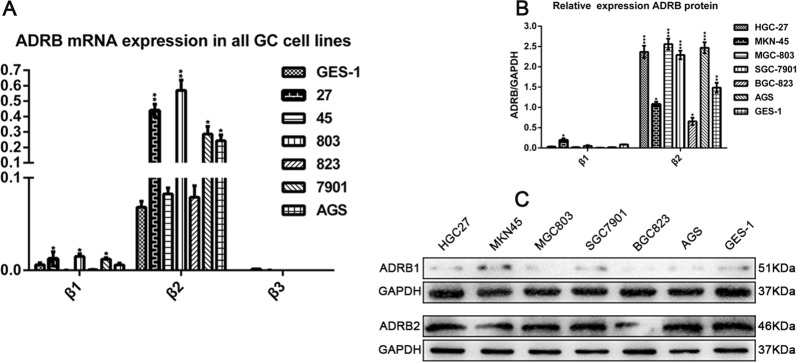
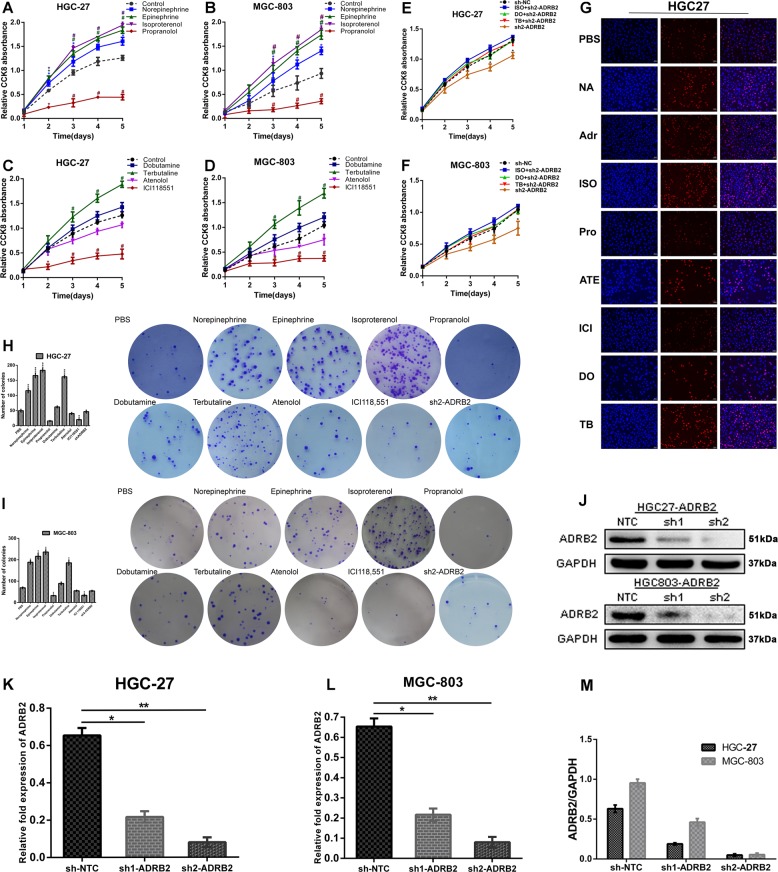
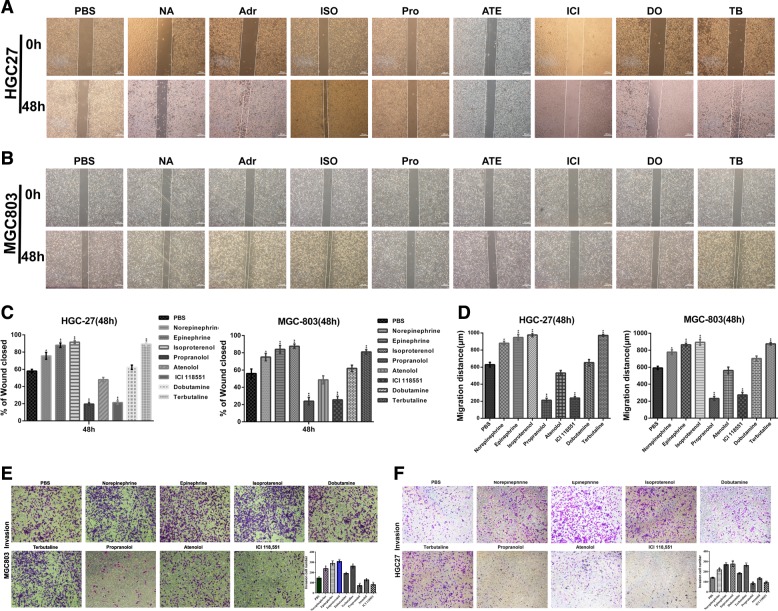
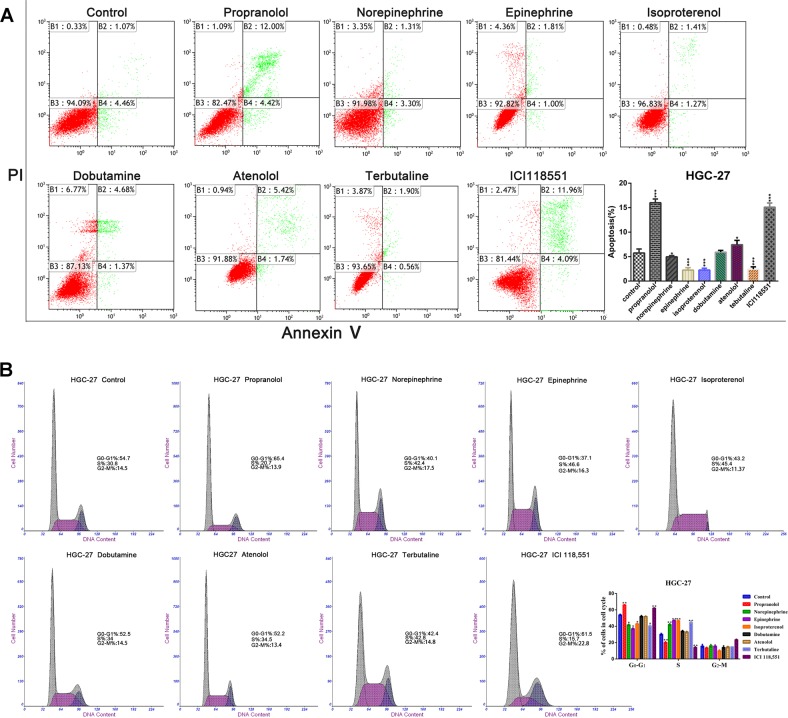
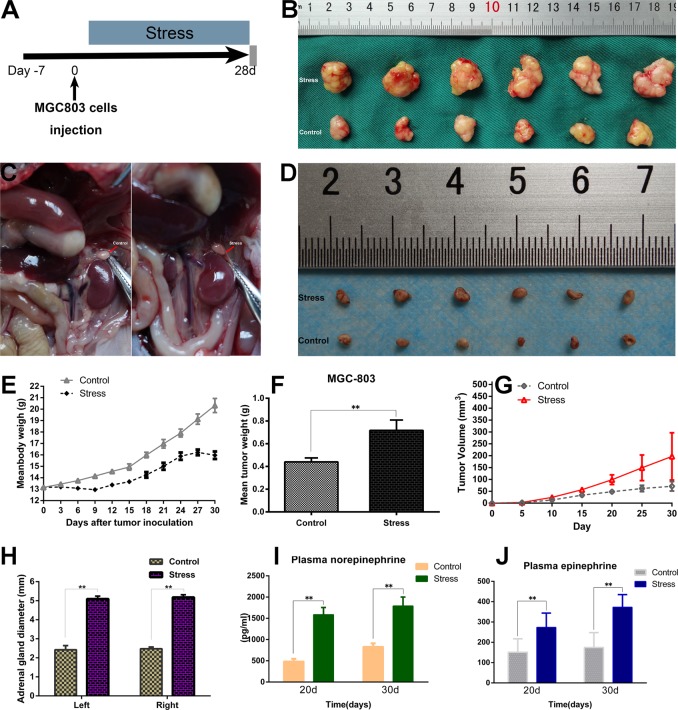
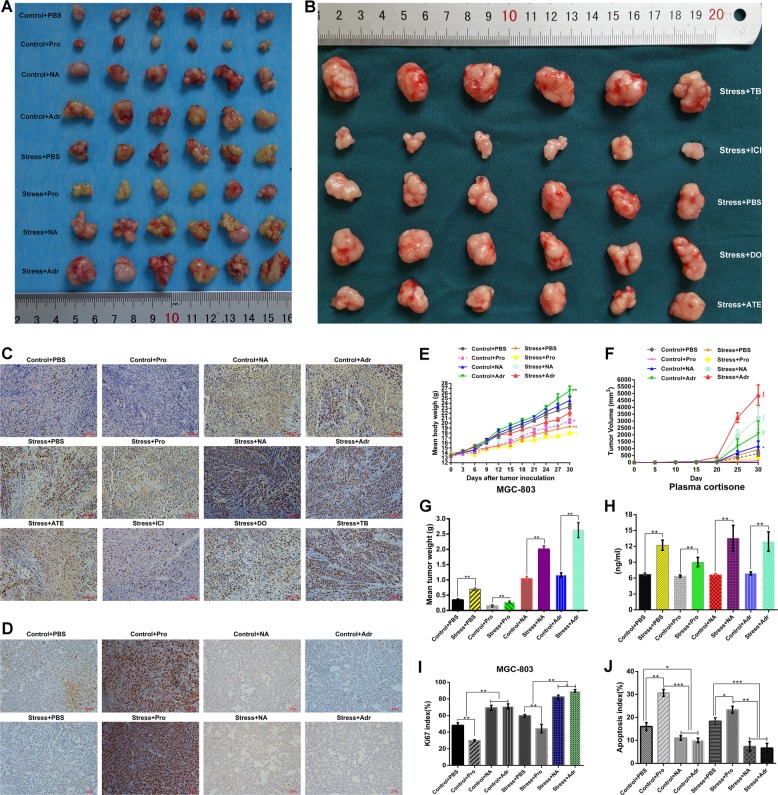
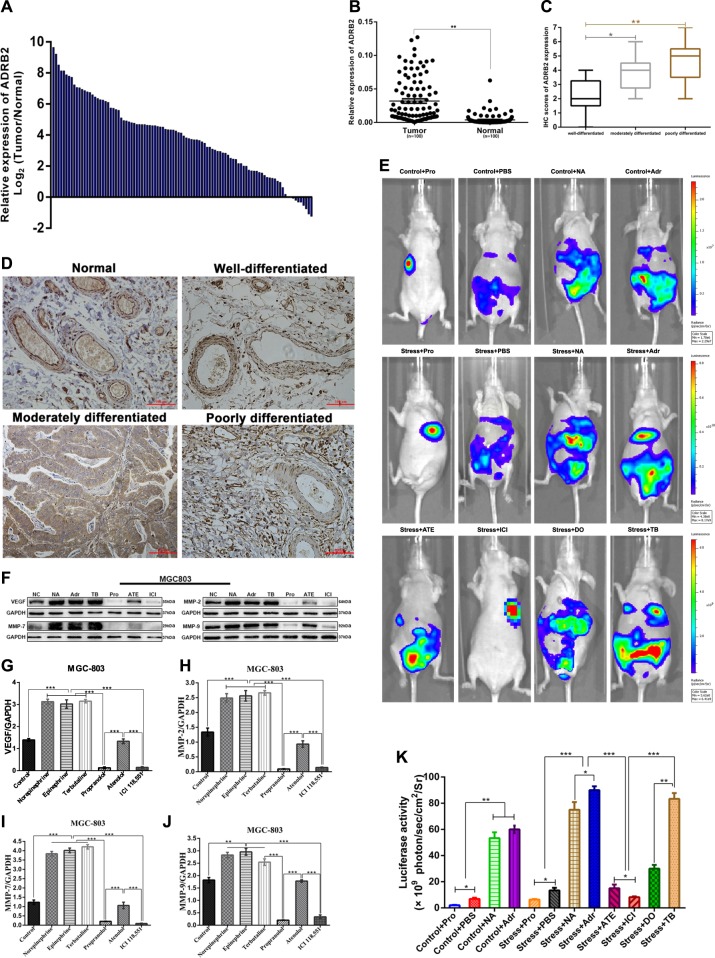
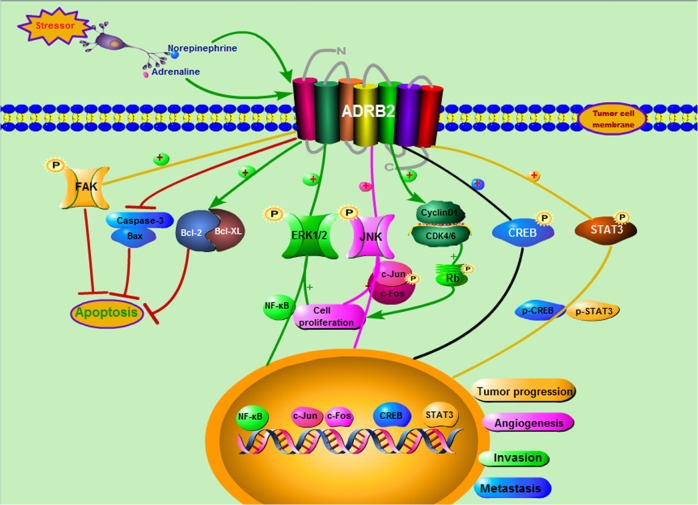
An increasing number of studies indicate that adrenergic signalling plays a fundamental role in chronic stress-induced tumour progression and metastasis. However, its function in gastric cancer (GC) and its potential mechanisms remain unknown. The expression levels of β-adrenergic receptor (ADRB) in GC cell lines were examined by using real-time polymerase chain reaction (RT-PCR) and western blotting. The effects of β2 adrenergic receptor (ADRB2) activation and blockade were investigated in vitro in GC cells by using proliferation, migration, invasion, cell cycle and apoptosis assays. Chronic restraint stress (CRS) increased the plasma levels of catecholamines and cortisol and also induced progression and metastasis of GC in vivo. Furthermore, immunohistochemical staining and a TUNEL assay were employed to observe the regulation of cell viability in vivo. The expression levels of ADRB2 in 100 human GC samples were measured by RT-PCR and immunohistochemistry. The stress hormones epinephrine and norepinephrine significantly accelerated GC cell proliferation, invasion and viability in culture, as well as tumour growth in vivo. These effects were reversed by the ADRB antagonists propranolol and ICI118,551 (an ADRB2-specific antagonist). Moreover, the selective ADRB1 antagonist atenolol had almost no effect on tumour cell proliferation and invasion in vitro and in vivo. ADRB2 antagonists suppressed proliferation, invasion and metastasis by inhibiting the ERK1/2-JNK-MAPK pathway and transcription factors, such as NF-κB, AP-1, CREB and STAT3. Analysis of xenograft models using GC cells revealed that ADRB2 antagonists significantly inhibited tumour growth and metastasis, and chronic stress antagonized these inhibitory effects. In addition, chronic stress increased the expression of VEGF, MMP-2, MMP-7 and MMP-9 in transplanted tumour tissue, and catecholamine hormones enhanced the expression of metastasis-related proteins. The expression of ADRB2 was upregulated in tumour tissues and positively correlated with tumour size, histological grade, lymph node metastasis and clinical stage in human GC samples. Stress hormone-induced activation of the ADRB2 signalling pathway plays a crucial role in GC progression and metastasis. These findings indicate that ADRB2 signalling regulates GC progression and suggest β2 blockade as a novel strategy to complement existing therapies for GC.
Overview
The claims and statistics of this paper haven’t been checked yet.
Run the check — free, no account needed. It reads the open-access text and checks the sources it cites.
Integrity signals
Registry
Cites
Statistics
Figures
Verification
Claims the paper makes
The claims and statistics of this paper haven’t been checked yet.
Run the check — free, no account needed. It reads the open-access text and checks the sources it cites.
Claims other papers make about this one
Each is checked against this paper’s own text: does it say what the citing paper says it does?
The source backs part of the claim, not all of it — or backs it for a different population, condition or comparison.
In the citing paper
“For example, β-adrenergic signaling has been implicated in promoting EMT and increasing the metastatic potential in cancer cells via the VEGF/MMP and STAT3/ERK/MAPK pathways.321”
From Drug repurposing for cancer therapy (2024) · cites this paper as [321]
Experimental — accuracy not yet measuredThe cited source says what the claim attributes to it.
In the citing paper
“ADRB2 antagonists such as propranolol and ICI118,551 suppressed gastric cancer progression by inhibiting the ERK1/2-JNK-MAPK pathway and transcription factors, such as NF-κB, AP-1, and STAT3 (14).”
From Chronic Stress Promotes Cancer Development (2020) · cites this paper as [14]
Self-check
Percentages, sums and reported differences re-computed from the paper’s own numbers.
The self-check needs the paper’s full text.
Citations
Cites
Cell-cycle checkpoints and cancer
Kastan, M. B., & Bartek, J. (2004) · Nature · doi:10.1038/nature03097 · Cited by 2,836
Stress, depression, the immune system, and cancer
Reiche, E. M. V., Nunes, S. O. V., & Morimoto, H. K. (2004) · The Lancet Oncology · doi:10.1016/s1470-2045(04)01597-9 · Cited by 1,364
Chronic stress promotes tumor growth and angiogenesis in a mouse model of ovarian carcinoma
Thaker, P. H., Han, L. Y., Kamat, A. A., Arevalo, J. M., Takahashi, R., Lu, C., Jennings, N. B., Armaiz-Pena, G., Bankson, J. A., Ravoori, M., et al. (2006) · Nature Medicine · doi:10.1038/nm1447 · Cited by 1,320
Autonomic nerve development contributes to prostate cancer progression
Magnon, C., Hall, S. J., Lin, J., Xue, X., Gerber, L., Freedland, S. J., & Frenette, P. S. (2013) · Science · doi:10.1126/science.1236361 · Cited by 1,287
The influence of bio-behavioural factors on tumour biology: pathways and mechanisms
Antoni, M. H., Lutgendorf, S. K., Cole, S. W., Dhabhar, F. S., Sephton, S. E., McDonald, P. G., Stefanek, M., & Sood, A. K. (2006) · Nature Reviews Cancer · doi:10.1038/nrc1820 · Cited by 981
The sympathetic nervous system induces a metastatic switch in primary breast cancer
Sloan, E. K., Priceman, S. J., Cox, B. F., Yu, S., Pimentel, M. A., Tangkanangnukul, V., Arevalo, J. M. G., Morizono, K., Karanikolas, B. D. W., Wu, L., et al. (2010) · Cancer Research · doi:10.1158/0008-5472.can-10-0522 · Cited by 930
Molecular Pathways: Beta-Adrenergic Signaling in Cancer
Cole, S. W., & Sood, A. K. (2011) · Clinical Cancer Research · doi:10.1158/1078-0432.ccr-11-0641 · Cited by 713
Denervation suppresses gastric tumorigenesis
Zhao, C., Hayakawa, Y., Kodama, Y., Muthupalani, S., Westphalen, C. B., Andersen, G. T., Flatberg, A., Johannessen, H., Friedman, R. A., Renz, B. W., et al. (2014) · Science Translational Medicine · doi:10.1126/scitranslmed.3009569 · Cited by 687
β2 Adrenergic-Neurotrophin Feedforward Loop Promotes Pancreatic Cancer
Renz, B. W., Takahashi, R., Tanaka, T., Macchini, M., Hayakawa, Y., Dantes, Z., Maurer, H. C., Chen, X., Jiang, Z., Westphalen, C. B., et al. (2018) · Cancer Cell · doi:10.1016/j.ccell.2017.11.007 · Cited by 543
Zhang, M., He, Y., Sun, X., Li, Q. Y., Wang, W., Zhao, A., & Di, W. J. (2014) · Journal of Ovarian Research · doi:10.1186/1757-2215-7-19 · Cited by 530
Yang, E. V., Sood, A. K., Chen, M., Li, Y., Eubank, T. D., Marsh, C. B., Jewell, S., Flavahan, N. A., Morrison, C., Yeh, P.-E., et al. (2006) · Cancer Research · doi:10.1158/0008-5472.can-06-2496 · Cited by 407
Is cancer triggered by altered signalling of nicotinic acetylcholine receptors?
Schuller, H. M. (2009) · Nature reviews. Cancer · doi:10.1038/nrc2590 · Cited by 362
Pavlov, V. A., & Tracey, K. J. (2015) · Immunologic Research · doi:10.1007/s12026-015-8718-1 · Cited by 254
Monoamine oxidase A mediates prostate tumorigenesis and cancer metastasis
Wu, J. B., Shao, C., Li, X., Li, Q., Hu, P., Shi, C., Li, Y., Chen, Y., Yin, F., Liao, C., et al. (2014) · Journal of Clinical Investigation · doi:10.1172/jci70982 · Cited by 238
Lemeshow, S. A., Sørensen, H. T., Phillips, G. S., Yang, E. V., Antonsen, S., Riis, A. H., Lesinski, G. B., Jackson, R., & Glaser, R. (2011) · Cancer Epidemiology Biomarkers & Prevention · doi:10.1158/1055-9965.epi-11-0249 · Cited by 208
Zhang, D., Ma, Q.-Y., Hu, H., & Zhang, M. (2010) · Cancer Biology & Therapy · doi:10.4161/cbt.10.1.11944 · Cited by 196
Qin, J., Jin, F., Li, N., Guan, H., Lan, L., Ni, H., & Wang, Y. (2015) · BMB Reports · doi:10.5483/bmbrep.2015.48.5.008 · Cited by 157
Role of nervous system in cancer aetiopathogenesis
Ondičová, K., & Mravec, B. (2010) · The Lancet Oncology · doi:10.1016/s1470-2045(09)70337-7 · Cited by 116
Sympathetic Signaling Reactivates Quiescent Disseminated Prostate Cancer Cells in the Bone Marrow
Decker, A. M., Jung, Y., Cackowski, F. C., Yumoto, K., Wang, J., & Taichman, R. S. (2017) · Molecular Cancer Research · doi:10.1158/1541-7786.mcr-17-0132 · Cited by 86
Sorski, L., Melamed, R., Matzner, P., Lavon, H., Shaashua, L., Rosenne, E., & Ben-Eliyahu, S. (2016) · Brain, Behavior, and Immunity · doi:10.1016/j.bbi.2016.05.017 · Cited by 85
Nkontchou, G., Aout, M., Mahmoudi, A., Roulot, D., Bourcier, V., Grando-Lemaire, V., Ganne-Carrie, N., Trinchet, J.-C., Vicaut, E., & Beaugrand, M. (2012) · Cancer Prevention Research · doi:10.1158/1940-6207.capr-11-0450 · Cited by 79
Wang, L., Zhi, X., Zhang, Q., Wei, S., Li, Z., Zhou, J., Jiang, J., Zhu, Y., Yang, L., Xu, H., et al. (2015) · Tumor Biology · doi:10.1007/s13277-015-4011-0 · Cited by 60
Self-citationFeng, F., Yang, J., Tong, L., Yuan, S., Tian, Y., Hong, L., Wang, W., & Zhang, H. (2011) · Cell Biology International · doi:10.1042/cbi20100229 · Cited by 58
Zhang, Z., Xiao-sha, F., Chen, H., Duan, Z., Wang, L., Yang, D., Liu, P.-X., Zhang, Q., Jin, Y., Sun, Z., et al. (2016) · BMC Gastroenterology · doi:10.1186/s12876-016-0474-8 · Cited by 57
Autonomic nerve development contributes to prostate cancer progression
Bauman, J., & McVary, K. T. (2013) · Asian Journal of Andrology · doi:10.1038/aja.2013.113 · Cited by 52
Nerve fibers in tumors of the human urinary bladder
Seifert, P., Benedic, M., & Effert, P. J. (2001) · Archiv für Pathologische Anatomie und Physiologie und für Klinische Medicin · doi:10.1007/s004280100496 · Cited by 50
Cui, S.-Y., Huang, J., Chen, Y., Song, H., Feng, B. C., Huang, G., Wang, R., Chen, L., & De, W. (2013) · Molecular Cancer Research · doi:10.1158/1541-7786.mcr-13-0019-t · Cited by 48
Repasky, E. A., Eng, J. W. ‐., & Hylander, B. L. (2015) · The Cancer Journal · doi:10.1097/ppo.0000000000000107 · Cited by 46
Zhou, Y., Wang, Y., Wen, J., Zhao, H., Dong, X., Zhang, Z., Wang, S., & Shen, L. (2016) · Oncotarget · doi:10.18632/oncotarget.7664 · Cited by 45
Chronic psychological stress and its impact on the development of aggressive breast cancer
Cormanique, T. F., Ferreto, L. E. D., Rech, C. A., Rech, D., Herrera, A. C. D. S. D. A., & Panis, C. (2015) · Einstein (São Paulo) · doi:10.1590/s1679-45082015ao3344 · Cited by 35
Krajnak, K. (2014) · Environmental Health Insights · doi:10.4137/ehi.s15263 · Cited by 29
Prognostic significance of β2-adrenergic receptor expression in non-small cell lung cancer.
Yazawa, T., Kaira, K., Shimizu, K., Shimizu, A., Mori, K. P., Nagashima, T., Ohtaki, Y., Oyama, T., Mogi, A., & Kuwano, H. (2016) · PubMed Central · Cited by 29
Role of the Autonomic Nervous System in the Tumor Micro-Environment and its Therapeutic Potential
Xu, Z., Shioda, S., Jinushi, M., Kawakami, Y., Ohtaki, H., Lim, H. C., Wang, S., Zhao, X., Liu, Y., Zhou, D., et al. (2016) · Current Pharmaceutical Design · doi:10.2174/1381612822666161025152942 · Cited by 28
Self-citationChen, P., Huang, B., Shieh, T., Wang, Y., Chen, Y.-K., Wu, J., Huang, J.-H., Chen, C.-C., & Lee, K. (2014) · The Scientific World JOURNAL · doi:10.1155/2014/183548 · Cited by 22
Prostate cancer progression attributed to autonomic nerve development
Fernandez, E. V., Price, D. K., & Figg, W. D. (2013) · Cancer Biology & Therapy · doi:10.4161/cbt.26339 · Cited by 21
Psychoneuroimmunology and Cancer: Incidence, Progression, and Quality of Life
Fagundes, C. P., Lindgren, M. E., & Kiecolt‐Glaser, J. K. (2012) · Springer eBooks · doi:10.1007/978-1-4614-4866-2_1 · Cited by 8
[Cell cycle checkpoints and cancer].
Nakanishi, M. (2009) · PubMed · Cited by 8
Seton-Rogers, S. E. (2013) · Nature reviews. Cancer · doi:10.1038/nrc3583 · Cited by 5
Catecholamine Neurotransmitters: An Angiogenic Switch in the Tumor Microenvironment
Basu, S., & Dasgupta, P. (2013) · Springer eBooks · doi:10.1007/978-94-007-6467-5_7 · Cited by 3
STEINER'S 'LOST' MANUSCRIPT OF 1826
Emch, A. (1902) · Science · doi:10.1126/science.15.383.713 · Cited by 2
McCarthy, N. J. (2013) · Nature reviews. Cancer · doi:10.1038/nrc3584 · Cited by 1
Mirzoian, S. A., & Tl, V. (1977) · PubMed · Cited by 1
Autonomic nerve development contributes to prostate cancer progression
John, J. K., Bauman, Kevin, K., & Mcvary (2013) · Asian Journal of Andrology · Cited by 1
Abstract 507: Autonomic intratumoral neo-nerves drive prostate cancer development and metastasis
Magnon, C., Hall, S. J., & Frenette, P. S. (2011) · Cancer Research · doi:10.1158/1538-7445.am2011-507 · Cited by 1
Abstract 5079: Parasympathetic signaling suppresses pancreatic cancer development
Renz, B. W., Macchini, M., Hayakawa, Y., Westphalen, C. B., Churchill, M., Kar, S., Chen, X., Nagar, K. K., Tailor, Y. H., Worthley, D. L., et al. (2015) · Cancer Research · doi:10.1158/1538-7445.am2015-5079 · Cited by 1
Research works printed but not linked: 1
- Guo, Y. et al. Role of the autonomic nervous system in the tumor micro-environment and its therapeutic potential. Curr. Pharm. Des. 23, 1687–1692 (2017). · DOI
Cited by
Sorted by citations
Drug repurposing for cancer therapy
Xia, Y., Sun, M., Huang, H., & Jin, W.-L. (2024) · Signal Transduction and Targeted Therapy · doi:10.1038/s41392-024-01808-1 · Cited by 443
“321 Furthermore, Sloan et al. found that both stress-induced and pharmacological β -adrenergic stimulation promoted macrophage migration into tumor tissue in a mouse model of breast cancer.”
BackgroundChronic Stress Promotes Cancer Development
Dai, S., Mo, Y., Wang, Y., Xiang, B., Liao, Q., Zhou, M., Li, X., Li, Y., Xiong, W., Li, G., et al. (2020) · Frontiers in Oncology · doi:10.3389/fonc.2020.01492 · Cited by 405
Cancer progression and the invisible phase of metastatic colonization
Klein, C. A. (2020) · Nature reviews. Cancer · doi:10.1038/s41568-020-00300-6 · Cited by 387
Stress and cancer: mechanisms, significance and future directions
Eckerling, A., Ricon-Becker, I., Sorski, L., Sandbank, E., & Ben-Eliyahu, S. (2021) · Nature Reviews Cancer · doi:10.1038/s41568-021-00395-5 · Cited by 348
Tumor innervation: peripheral nerves take control of the tumor microenvironment
Gysler, S. M., & Drapkin, R. (2021) · Journal of Clinical Investigation · doi:10.1172/jci147276 · Cited by 230
Metadata
- Authors
- Zhang, X., Zhang, Y., He, Z., Yin, K., Li, B., Zhang, L., & Xu, Z.
- Affiliations
- Affiliated Hospital of Xuzhou Medical College (CN)
- Nanjing University of Chinese Medicine (CN)
- Jiangsu Province Hospital (CN)
- Affiliated Hospital of Jiangsu University (CN)
- Corresponding author
- Xu, Zekuan
- Venue
- Cell Death & Disease
- Published
- 2019-10-17
- Volume
- 10
- Issue
- 11
- Pages
- 788-788
- ISSN
- 2041-4889 (ISSN-L)
- PMC
- PMC6797812
- OpenAlex
- W2981115917
- Cited by
- 261
- References
- 46
- Citations by year
- 2026: 43 · 2025: 48 · 2024: 32 · 2023: 34 · 2022: 55 · 2021: 32 · 2020: 16
- FWCI
- 20.51
- Type
- journal article
- Language
- en
- Open access
- gold
- doi.org
- Locations
- Cell Death and Disease (publishedVersion, cc-by)
- PubMed Central (publishedVersion, cc-by)
- PubMed (publishedVersion)
- DOAJ (DOAJ: Directory of Open Access Journals) (submittedVersion)
- Funders
- National Natural Science Foundation of China (JX10231801, 81272712, 81572362, 20181119, BRA2015474, 81602080, 81272712, 81572362)
- Government of Jiangsu Province (333 Project)
- Priority Academic Program Development of Jiangsu Higher Education Institutions (PAPD, JX10231801, JX 10231801, 81572362, BRA2015474)
- Topics
- Life Sciences › Biochemistry, Genetics and Molecular Biology › Cancer Research › Cancer, Stress, Anesthesia, and Immune Response
- Life Sciences › Biochemistry, Genetics and Molecular Biology › Molecular Biology › Receptor Mechanisms and Signaling
- Health Sciences › Medicine › Oncology › Gastric Cancer Management and Outcomes
- Keywords
- chronic stress, gastric cancer, ADRB2, beta2-adrenergic receptor, adrenergic signaling, tumor progression, metastasis, chronic restraint stress, catecholamines, cortisol, propranolol, atenolol, NF-κB, STAT3, vascular endothelial growth factor, matrix metalloproteinases, cell proliferation, cell invasion
- MeSH terms
- Animals, Cell Movement, Female, Humans, Male, Mice, Inbred BALB C, Mice, Nude, Neoplasm Metastasis, RNA, Messenger, Stomach Neoplasms, Stress, Physiological, Signal Transduction, NF-kappa B, Receptors, Adrenergic, beta-2, Disease Progression, MAP Kinase Signaling System, Cell Proliferation, STAT3 Transcription Factor, Mice, Heterografts
About these checks
Registry, retraction, Cites and statistics results are computed, not judged, with one exception: a printed reference that no index lists is read once by a model before it counts as a citation error. Claims are extracted by a model and kept only when their quote appears verbatim in the text; each cited source is then checked, with a model’s help, for whether it says what the claim relies on. Those verdicts can be wrong — read the claim’s quote and the cited source before relying on one.
Statistics and arithmetic are recomputed, not judged.
Confidence bands are shown only for fields calibrated on our annotated test set. None is calibrated yet, so no band is shown.
What counts as a claim ›How we measure confidence ›How we check this ›
Are you an author, or do you see a problem with this page? Request a review
