

Exosomes derived from mesenchymal stem cells repair a Parkinson’s disease model by inducing autophagy
Open accessThe DOI matches its Crossref record; 68 of the 68 references it cites were found in a registry or an index.
Abstract
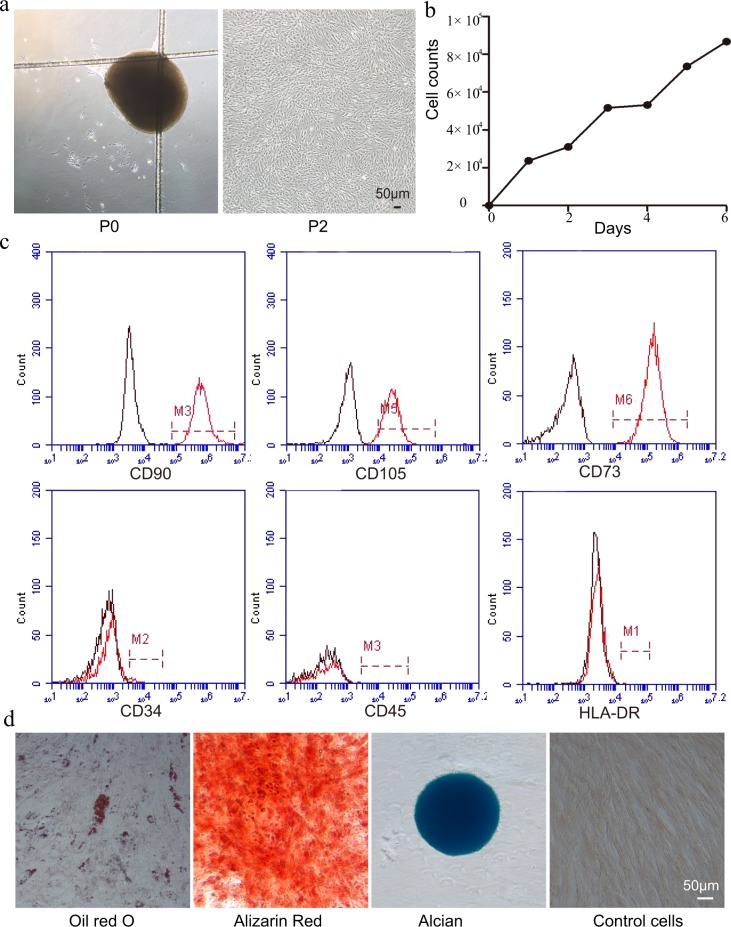
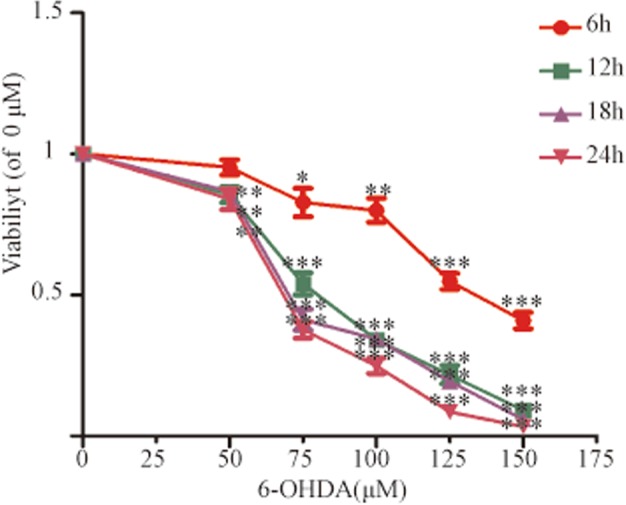
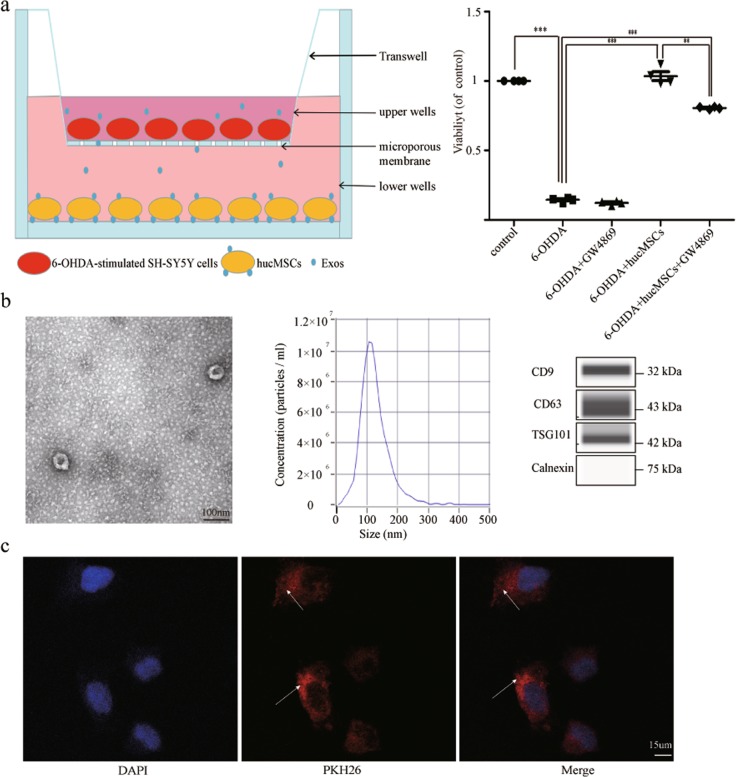
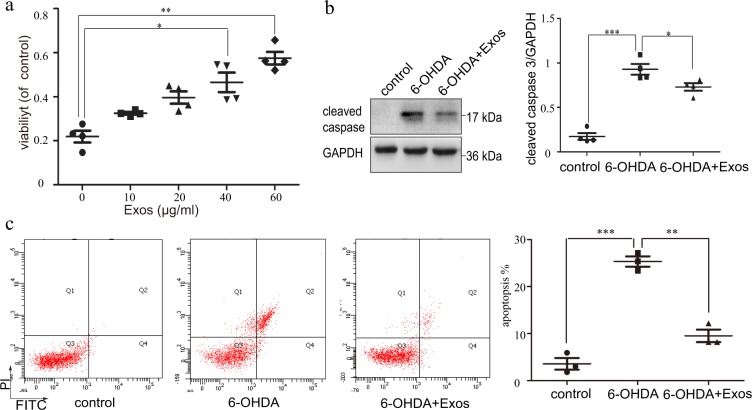
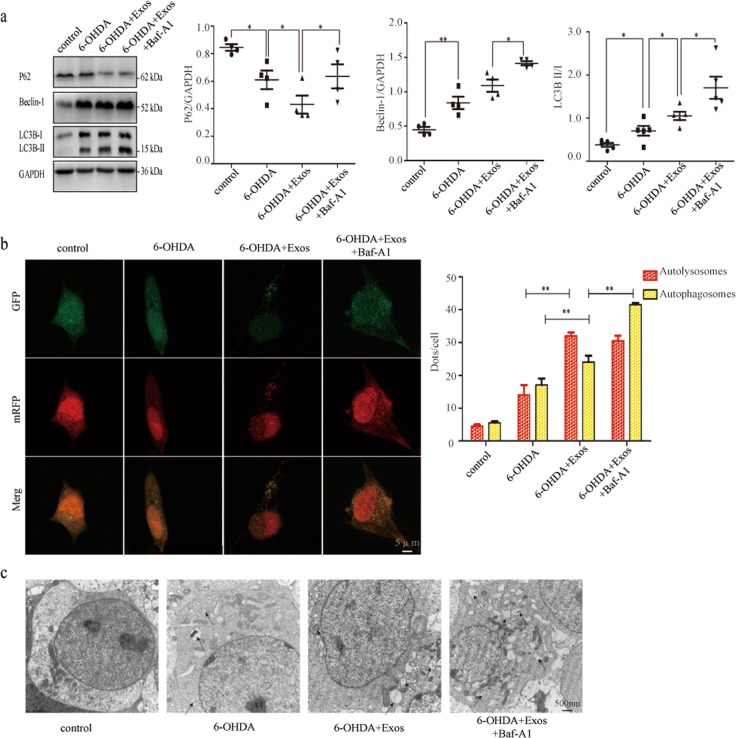
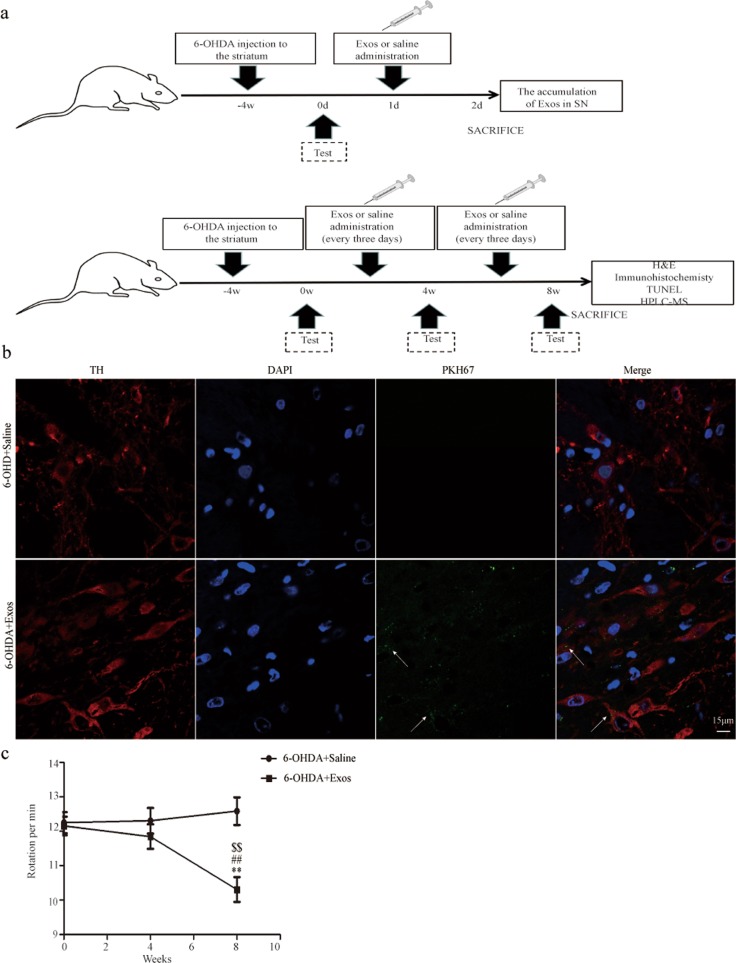
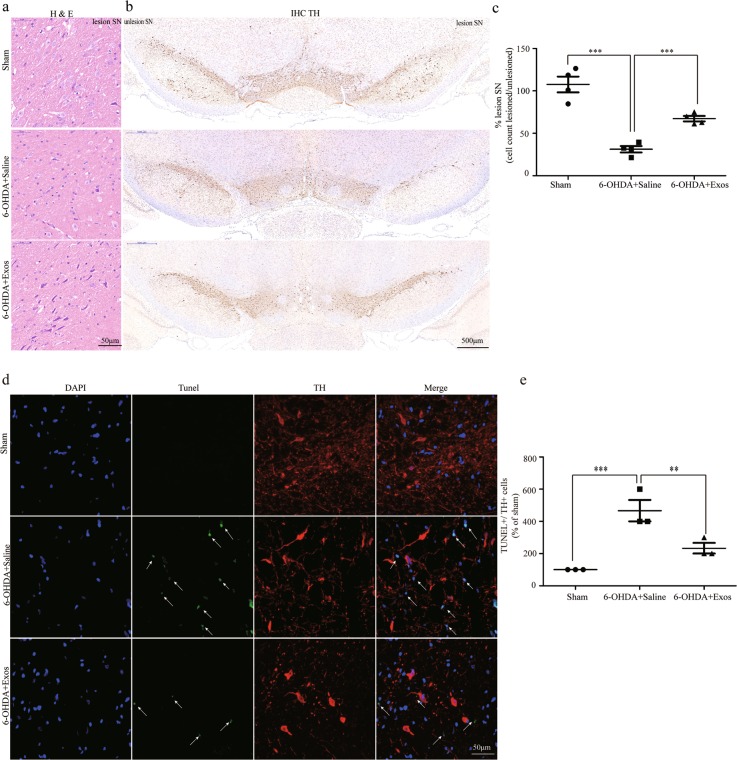
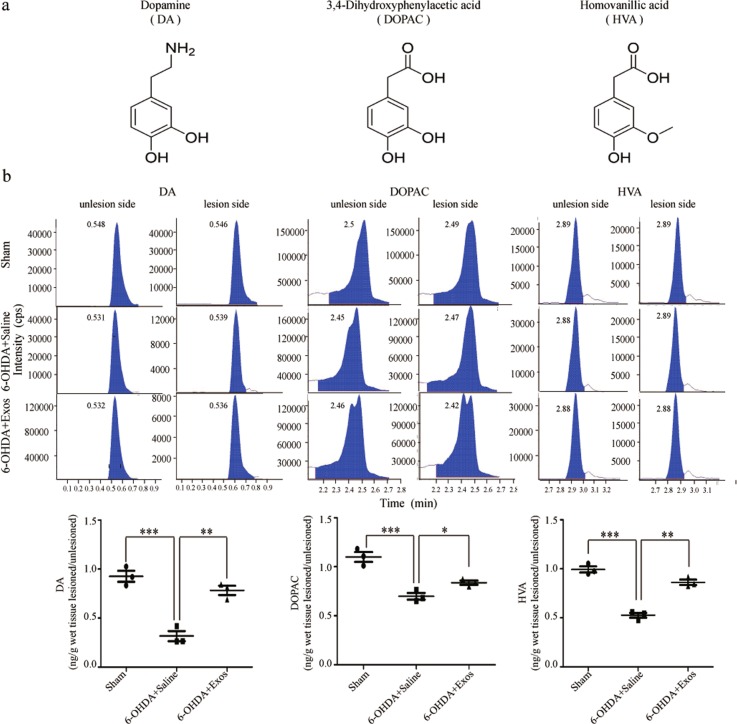
Parkinson’s disease (PD) is a progressively debilitating neurodegenerative condition that leads to motor and cognitive dysfunction. At present, clinical treatment can only improve symptoms, but cannot effectively protect dopaminergic neurons. Several reports have demonstrated that human umbilical cord mesenchymal stem cells (hucMSCs) afford neuroprotection, while their application is limited because of their uncontrollable differentiation and other reasons. Stem cells communicate with cells through secreted exosomes (Exos), the present study aimed to explore whether Exos secreted by hucMSCs could function instead of hucMSCs. hucMSCs were successfully isolated and characterized, and shown to contribute to 6-hydroxydopamine (6-OHDA)-stimulated SH-SY5Y cell proliferation; hucMSC-derived Exos were also involved in this process. The Exos were purified and identified, and then labeled with PKH 26, it was found that the Exos could be efficiently taken up by SH-SY5Y cells after 12 h of incubation. Pretreatment with Exos promoted 6-OHDA-stimulated SH-SY5Y cells to proliferate and inhibited apoptosis by inducing autophagy. Furthermore, Exos reached the substantia nigra through the blood–brain barrier (BBB) in vivo, relieved apomorphine-induced asymmetric rotation, reduced substantia nigra dopaminergic neuron loss and apoptosis, and upregulated the level of dopamine in the striatum. These results demonstrate that hucMSCs-Exos have a treatment capability for PD and can traverse the BBB, indicating their potential for the effective treatment of PD.
Overview
The claims and statistics of this paper haven’t been checked yet.
Free: it reads the open-access text and checks the first 5 claims that cite a source we can check. Create a free account to check every claim.
Integrity signals
Registry
Cites
Statistics
Figures
Verification
Claims the paper makes
The claims and statistics of this paper haven’t been checked yet.
Free: it reads the open-access text and checks the first 5 claims that cite a source we can check. Create a free account to check every claim.
Claims other papers make about this one
Each is checked against this paper’s own text: does it say what the citing paper says it does?
The cited source says what the claim attributes to it.
In the citing paper
“In the Parkinson’s disease rat model, isolated sEVs were injected into the tail vein. These sEVs, which were derived from hucMSCs, successfully pierced the BBB. As a result, the loss of dopaminergic neurons in the substantia nigra decreased significantly, whereas dopamine levels in the striatum increased. Moreover, the PD model rats exhibited improved behavioral function following sEVs injection”
From Extracellular vesicles as nanotheranostic platforms for targeted neurological disorder interventions (2024) · cites this paper as [256]
The cited source says what the claim attributes to it.
In the citing paper
“Importantly, it has been shown that human umbilical cord (hUC)-MSC-derived EVs pass the blood–brain barrier (BBB) and reach the midbrain substantia nigra.”
From Mesenchymal stem cell secretome for regenerative medicine: Where do we stand? (2025) · cites this paper as [238]
The cited source says what the claim attributes to it.
In the citing paper
“Once there, they were able to reduce dopaminergic neuron loss and improve behavioral deficits in the apomorphine-induced asymmetric rotation test in Parkinsońs disease rat models, suggesting the role of these EVs on dopaminergic neurons of the substantia nigra [238].”
From Mesenchymal stem cell secretome for regenerative medicine: Where do we stand? (2025) · cites this paper as [238]
In the citing paper
“The study results revealed a reduction of 6-OHDA-induced neuroinflammation in Parkinson’s disease [133].”
From Exosome for mRNA delivery: Strategies and therapeutic applications (2024) · cites this paper as [133]
Self-check
Percentages, sums and reported differences re-computed from the paper’s own numbers.
The self-check needs the paper’s full text.
Citations
Cites
Shedding light on the cell biology of extracellular vesicles
van Niel, G., D'Angelo, G., & Raposo, G. (2018) · Nature Reviews Molecular Cell Biology · doi:10.1038/nrm.2017.125 · Cited by 8,369
Membrane vesicles as conveyors of immune responses
Théry, C., Ostrowski, M., & Segura, E. (2009) · Nature Reviews Immunology · doi:10.1038/nri2567 · Cited by 3,882
Eaten alive: a history of macroautophagy
Yang, Z., & Klionsky, D. J. (2010) · Nature Cell Biology · doi:10.1038/ncb0910-814 · Cited by 2,095
Autophagy: from phenomenology to molecular understanding in less than a decade
Klionsky, D. J. (2007) · Nature Reviews Molecular Cell Biology · doi:10.1038/nrm2245 · Cited by 1,934
Phinney, D. G., & Prockop, D. J. (2007) · Stem Cells · doi:10.1634/stemcells.2007-0637 · Cited by 1,908
Kim, J.-H., Auerbach, J. M., Rodríguez-Gómez, J. A., Velasco, I., Gavin, D., Lumelsky, N., Lee, S.-H., Nguyen, J., Sánchez-Pernaute, R., Bankiewicz, K., et al. (2002) · Nature · doi:10.1038/nature00900 · Cited by 1,607
Alzheimer's Disease and Parkinson's Disease
Nussbaum, R. L., & Ellis, C. E. (2003) · New England Journal of Medicine · doi:10.1056/nejm2003ra020003 · Cited by 1,351
Yamamoto, A., Tagawa, Y., Yoshimori, T., Moriyama, Y., Masaki, R., & Tashiro, Y. (1998) · Cell Structure and Function · doi:10.1247/csf.23.33 · Cited by 1,312
Autophagy and Neurodegeneration: Pathogenic Mechanisms and Therapeutic Opportunities
Menzies, F. M., Fleming, A., Caricasole, A., Bento, C. F., Andrews, S. P., Ashkenazi, A., Füllgrabe, J., Jackson, A., Jimenez Sanchez, M., Karabiyik, C., et al. (2017) · Neuron · doi:10.1016/j.neuron.2017.01.022 · Cited by 1,134
The Parkinson Pandemic—A Call to Action
Dorsey, E. R., & Bloem, B. R. (2018) · JAMA Neurology · doi:10.1001/jamaneurol.2017.3299 · Cited by 1,091
Cited by
Items 101–200 of 327
Extracellular vesicles as nanotheranostic platforms for targeted neurological disorder interventions
Choi, H. K., Chen, M., Goldston, L. L., & Lee, K.-B. (2024) · Nano Convergence · doi:10.1186/s40580-024-00426-5 · Cited by 26
Vaz, M., Martins, T. S., & Henriques, A. G. (2022) · Journal of Neurochemistry · doi:10.1111/jnc.15697 · Cited by 27
The Double-Edged Role of Extracellular Vesicles in the Hallmarks of Aging
Romero-García, N., Huete-Acevedo, J., Mas‐Bargues, C., Sanz‐Ros, J., Dromant, M., & Borrás, C. (2023) · Biomolecules · doi:10.3390/biom13010165 · Cited by 28
Living Cells and Cell-Derived Vesicles: A Trojan Horse Technique for Brain Delivery
Ou, A., Wang, Y., Zhang, J., & Huang, Y. (2023) · Pharmaceutics · doi:10.3390/pharmaceutics15041257 · Cited by 26
Human Umbilical Cord Mesenchymal Stem Cell-Derived Exosomes Rescue Testicular Aging
Luo, P., Chen, X., Gao, F., Xiang, A. P., Deng, C., Xia, K., & Gao, Y. (2024) · Biomedicines · doi:10.3390/biomedicines12010098 · Cited by 30
“Moreover, their therapeutic versatility extends to neuroprotection, as evidenced by their ability to protect dopaminergic neurons, thereby enhancing dopamine concentration in the striatum and offering potential interventions for Parkinson’s disease [23].”
Intercellular communication is crucial in the regulation of healthy aging via exosomes
Sun, H., Xia, T., Ma, S., Lv, T., & Li, Y. (2025) · Pharmacological Research · doi:10.1016/j.phrs.2025.107591 · Cited by 27
Brianna, B., Ling, A. P. K., & Wong, Y. P. (2022) · Stem Cell Investigation · doi:10.21037/sci-2022-021 · Cited by 30
“The study revealed that the paracrine activity of UC-MSCs had not only prevented oxidative stress-induced cell death but also improved motor function and degenerated striatum in the rats.”
BackgroundInfluentialAdvances in lncRNAs from stem cell-derived exosome for the treatment of cardiovascular diseases
Ma, J., Lei, P., Chen, H., Wang, L., Fang, Y., Yan, X., Yang, Q., Peng, B., Jin, L., & Sun, D. (2022) · Frontiers in Pharmacology · doi:10.3389/fphar.2022.986683 · Cited by 24
Self-citationJahanbani, Y., Beiranvand, T., Mamaghani, P. Y., Maleki, L. A., & Yousefi, M. (2023) · Journal of Reproductive Immunology · doi:10.1016/j.jri.2023.103833 · Cited by 26
Zhou, A., Jou, E., Lu, V., Zhang, J., Chabra, S., Abishek, J., Wong, E., Zeng, X., & Guo, B. (2023) · Tissue Engineering and Regenerative Medicine · doi:10.1007/s13770-023-00557-6 · Cited by 25
Li, P., Zhang, F., Huang, C.-Y., Zhang, C., Yang, Z., Zhang, Y., & Cai, S. (2024) · Journal of Neuroimmune Pharmacology · doi:10.1007/s11481-024-10154-6 · Cited by 24
“However, exosomes (Exo) derived from hUCMSCs, ranging between 30 and 150 nm, have demonstrated an enhanced capacity to penetrate the BBB, and are not limited by the transplantation risks or paracrine effects of stem cells (Sun et al. 2018; Chen et al. 2020).”
HERV-W Env Induces Neuron Pyroptosis via the NLRP3–CASP1–GSDMD Pathway in Recent-Onset Schizophrenia
Jia, C., Zhang, M., Wu, X., Zhang, X., Lv, Z., Zhao, K., Zhang, J., Su, Y., & Zhu, F. (2025) · International Journal of Molecular Sciences · doi:10.3390/ijms26020520 · Cited by 26
“…schizophrenia because SH-SY5Y cells are widely used as models for neurodegenerative diseases such as Alzheimer’s disease [40], Parkinson’s disease [41], multiple sclerosis [42] and schizophrenia [43], SH-SY5Y cells exhibit features similar to immature neurons, including the presence of dopamine,…”
Regulation of autophagy by microRNAs in human breast cancer
Chong, Z. X., Yeap, S. K., & Ho, W. Y. (2021) · Journal of Biomedical Science · doi:10.1186/s12929-021-00715-9 · Cited by 24
“Autophagy-related non-communicable diseases can be further divided into cancerous or non-cancerous diseases like cardiovascular disease [22], neurodegenerative disease [23, 24] and skin disease [25].”
BackgroundZhang, A., Li, Q., & Chen, Z. (2024) · International Journal of Molecular Sciences · doi:10.3390/ijms26010225 · Cited by 26
“Similarly, it has been reported that EVs from HUCM-SCs mitigated neuronal damage and upregulated the level of dopamine for PD treatment via upregulation of special AT-rich sequence-binding protein-1 (SATB 1) and activation of Wnt/ β -catenin pathway to modulate autophagy [68,69].”
CD38‐NADase is a new major contributor to Duchenne muscular dystrophic phenotype
de Zélicourt, A., Fayssoil, A., Dakouane‐Giudicelli, M., de Jesus, I., Karoui, A., Zarrouki, F., Lefebvre, F., Mansart, A., Launay, J., Piquereau, J., et al. (2022) · EMBO Molecular Medicine · doi:10.15252/emmm.202012860 · Cited by 26
Secretome as a Tool to Treat Neurological Conditions: Are We Ready?
da Silva, A. V., Serrenho, I., Araújo, B. S. G. D. S. P., Carvalho, A. M., & Baltazar, G. (2023) · International Journal of Molecular Sciences · doi:10.3390/ijms242216544 · Cited by 25
Akyüz, E., Aslan, F. Ş., Gokce, E., Ilmaz, O., Topcu, F., & Kakac, S. (2024) · European Journal of Neuroscience · doi:10.1111/ejn.16541 · Cited by 26
“Exosomes derived from hucMSCs was observed to stimulate autophagy and provide repair in PD model (Chen et al., 2020) that showed a potential to be used to treat PD by crossing the BBB.”
Volarevic, A., Harrell, C. R., Arsenijević, A., Djonov, V., & Volarević, V. (2025) · Cells · doi:10.3390/cells14080600 · Cited by 23
“Histological examinations demonstrated marked improvements in brain tissue from these animals, including the presence of healthy multipolar neurons with nucleoli and basophilic granular cytoplasm [31].”
InfluentialWei Min, N. I., Zhou, J., Ling, Y., Lu, X., Niu, D., Zeng, Y., Qiu, Y., Si, Y., Wang, J., Zhang, W., et al. (2022) · Brain Research · doi:10.1016/j.brainres.2022.147978 · Cited by 23
Vilaça-Faria, H., Marote, A., Lages, I., Ribeiro, C., Mendes-Pinheiro, B., Domingues, A. V., Campos, J., Lanceros-Méndez, S., Salgado, A. J., & Teixeira, F. G. (2021) · Biochimie · doi:10.1016/j.biochi.2021.06.008 · Cited by 22
Regulation of in vivo fate of exosomes for therapeutic applications: New frontier in nanomedicines
Park, J. H. (2022) · Journal of Controlled Release · doi:10.1016/j.jconrel.2022.05.058 · Cited by 21
Chen, W. S., Lin, T., Kuo, C., Hsieh, D. J., Kuo, W., Liao, S.-C., Kao, H., Ju, D., Lin, Y., & Huang, C. (2023) · Aging · doi:10.18632/aging.204526 · Cited by 21
Jalali, M. S., Sarkaki, A., Farbood, Y., Azandeh, S., Mansouri, E., Dehcheshmeh, M. G., & Saki, G. (2020) · Journal of Chemical Neuroanatomy · doi:10.1016/j.jchemneu.2020.101865 · Cited by 21
Exosomes as Neurological Nanosized Machines
Pishavar, E., Trentini, M., Zanotti, F., Camponogara, F., Tiengo, E., Zanolla, I., Bonora, M., & Zavan, B. (2022) · ACS Nanoscience Au · doi:10.1021/acsnanoscienceau.1c00062 · Cited by 22
Jin, S., Lv, Z., Kang, L., Wang, J., Tan, C., Shen, L., Wang, L., & Liu, J. (2022) · Asian Journal of Pharmaceutical Sciences · doi:10.1016/j.ajps.2022.10.002 · Cited by 23
“[41] Chen HX , Liang FC , Gu P , Xu BL , Xu HJ , Wang WT , et al.”
BackgroundThe role of exosomes in central nervous system tissue regeneration and repair
Wang, J., & Yang, L. (2023) · Biomedical Materials · doi:10.1088/1748-605x/ace39c · Cited by 21
Dong, X., He, Y., An, J., He, L., Zheng, Y., Wang, X., Wang, J., Chen, S., & Zhang, Y. (2023) · Autophagy · doi:10.1080/15548627.2023.2234228 · Cited by 22
Liu, R., Wu, S., Liu, W., Wang, L., Dong, M., & Niu, W. (2023) · Frontiers in Bioengineering and Biotechnology · doi:10.3389/fbioe.2023.1249860 · Cited by 20
“HucMSCs-derived sEVs have exhibited potential in repairing Parkinson’s disease by crossing the blood-brain barrier (BBB), reducing apoptosis, and preventing the loss of substantia nigra dopaminergic neuron (Chen et al., 2020).”
BackgroundTam, S., Wear, D., Morrone, C. D., & Yu, W. H. (2024) · Journal of Neurochemistry · doi:10.1111/jnc.16108 · Cited by 21
Gaggi, G., Credico, A. D., Izzicupo, P., Iannetti, G., Baldassarre, A. D., & Ghinassi, B. (2021) · Biomedicines · doi:10.3390/biomedicines9070754 · Cited by 22
Zhang, L., Li, C., Huang, R., Teng, H., Zhang, Y., Zhou, M., Liu, X., Fan, B., Luo, H., He, A., et al. (2022) · Frontiers in Aging Neuroscience · doi:10.3389/fnagi.2022.926485 · Cited by 18
“Moreover, sEV-based treatments reduce neurovascular injury and stimulate neurogenesis in various animal models of neurological diseases and injury including stroke, traumatic brain injury, Alzheimer’s disease, and Parkinson’s disease (Zhang and Chopp, 2016; Chen et al., 2020).”
BackgroundGeng, X., Zou, Y., Li, J., Li, S., Qi, R., Zhong, L., & Yu, H. (2023) · Neuroscience Letters · doi:10.1016/j.neulet.2023.137437 · Cited by 18
“Rats with >7 turns/min were considered to be successful models([16]).”
MethodRajizadeh, M. A., Motamedy, S., Mir, Y., Akhgarandouz, F., Nematollahi, M. H., & Nezhadi, A. (2023) · Journal of Drug Delivery Science and Technology · doi:10.1016/j.jddst.2023.105011 · Cited by 22
Tang, X., He, Y., Liu, J., Xu, J., & Peng, Q. (2024) · Colloids and Surfaces B Biointerfaces · doi:10.1016/j.colsurfb.2024.113938 · Cited by 17
Ashique, S., Kumar, N., Mishra, N., Muthu, S., Rajendran, R. L., Chandrasekaran, B., Obeng, B. F., Hong, C. M., Krishnan, A., Ahn, B., et al. (2024) · Pathology - Research and Practice · doi:10.1016/j.prp.2024.155451 · Cited by 18
Shen, H., Chen, J., Liu, M., Zhao, M., Hu, D., Xie, F., Jin, Q., Xiao, D., Peng, Z., Qin, T., et al. (2025) · Frontiers in Immunology · doi:10.3389/fimmu.2025.1496304 · Cited by 24
Deng, Z., Chen, H., Chen, J., Du, Z., Zhou, W., & Yuan, Z. (2025) · Biochimica et Biophysica Acta (BBA) - Molecular Basis of Disease · doi:10.1016/j.bbadis.2025.167960 · Cited by 17
Self-citationSalivary Exosomes in Health and Disease: Future Prospects in the Eye
Liu, A., Hefley, B. S., Escandon, P., Nicholas, S. E., & Karamichos, D. (2023) · International Journal of Molecular Sciences · doi:10.3390/ijms24076363 · Cited by 16
“The neuroprotective effects of exosomes in PDs have also been reported [110,187,188].”
BackgroundApplication of mesenchymal stem cells for neurodegenerative diseases therapy discovery
Trinh, Q. D., Nhu, H., & Pham, D. T. (2024) · Regenerative Therapy · doi:10.1016/j.reth.2024.09.014 · Cited by 19
Zhang, W., Uyemura, R., Zhong, K., Guo, R., & Zhong, L. (2023) · Aging and Disease · doi:10.14336/ad.2023.1206 · Cited by 17
“EVs are widely used in preclinical studies owing to their multifaceted advantages and multiple modification methods; however, they still face great challenges in the process of product standardization and clinical promotion [129-132].”
BackgroundLee, G. B., Park, S., Jung, U. J., & Kim, S. R. (2024) · Biomedicines · doi:10.3390/biomedicines12112507 · Cited by 15
Neuroprotective effect of NSCs-derived extracellular vesicles in Parkinson’s disease models
Díaz-Reyes, M., Gatti, S., Delgado‐Ocaña, S., Ortega, H. H., & Banchio, C. (2025) · Scientific Reports · doi:10.1038/s41598-025-87238-7 · Cited by 19
“Similarly, using co-cultured human umbilical MSCs with 6-OHDA-treated SH-SY5Y cells, it was found that cell viability increased, due to a decrease in apoptosis-related proteins and apoptotic rates 15 .”
Retroviral infection of human neurospheres and use of stem Cell EVs to repair cellular damage
Branscome, H., Khatkar, P., Sharif, S. A., Yin, D., Jacob, S., Cowen, M., Kim, Y., Erickson, J. W., Brantner, C. A., El‐Hage, N., et al. (2022) · Scientific Reports · doi:10.1038/s41598-022-05848-x · Cited by 15
Zhu, Y., Luo, M., Bai, X., Lou, Y., Nie, P., Jiang, S., Li, J., Li, B., & Luo, P. (2022) · Molecular and Cellular Biochemistry · doi:10.1007/s11010-022-04421-4 · Cited by 16
Hu, Z., Jiang, Z., Meng, S., Liu, R., & Yang, K. (2023) · Stem Cell Reviews and Reports · doi:10.1007/s12015-023-10521-5 · Cited by 15
Updates on brain regions and neuronal circuits of movement disorders in Parkinson’s disease
Wang, J., Wang, X., Li, H., Shi, L., Song, N., & Xie, J. (2023) · Ageing Research Reviews · doi:10.1016/j.arr.2023.102097 · Cited by 15
Chen, J., Chen, J., Li, Q., Hu, M., Zhong, X., Yu, L., Zhang, X., Huang, H., Liu, J., Huang, Z., et al. (2024) · In Vitro Cellular & Developmental Biology - Animal · doi:10.1007/s11626-024-00984-2 · Cited by 15
“2019; Chen et al .”
Gheytanchi, E., Zanjani, L. S., Ghods, R., Abolhasani, M., Shahin, M., Vafaei, S., Naseri, M., Fattahi, F., & Madjd, Z. (2021) · Journal of Cancer Research and Clinical Oncology · doi:10.1007/s00432-021-03561-2 · Cited by 14
Hydrogels for brain repair: application to Parkinson’s disease
Campo-Montoya, R. D., Luquín, M. R., Puerta, E., Garbayo, E., & Blanco‐Prieto, M. J. (2022) · Expert Opinion on Drug Delivery · doi:10.1080/17425247.2022.2136161 · Cited by 15
Therapeutic potential of extracellular vesicles in neurodegenerative disorders
Roudi, S., Rädler, J., & Andaloussi, S. E. (2023) · Handbook of clinical neurology · doi:10.1016/b978-0-323-85555-6.00017-5 · Cited by 15
Comprehensive data for studying serum exosome microRNA transcriptome in Parkinson’s disease patients
Yu, Z.-F., Saiki, S., Shiina, K., Iseki, T., Sasazawa, Y., Ishikawa, K., Nishikawa, N., Sako, W., Oyama, G., Hatano, T., et al. (2024) · Scientific Data · doi:10.1038/s41597-024-03909-6 · Cited by 15
Mesenchymal Stem Cell-Derived Extracellular Vesicles for Regenerative Applications and Radiotherapy
Wang, N., Ma, F., Song, H., He, N., Zhang, H., Li, J., Liu, Q., & Xu, C. (2025) · Cell Transplantation · doi:10.1177/09636897241311019 · Cited by 18
“Intravenously or intraperitoneally injected EVs can cross the BBB and reach the substantia nigra and striatum, and then play a role in PD treatment 138 .”
Issa, E. H. B., Alghazo, E. M., Gharaibeh, R., Momani, N. B., Taha, D. Z., Jaradat, R. J., Alzu’bi, A., Almahasneh, F. A., Abu‐El‐Rub, E., & Al‐Zoubi, R. M. (2025) · Journal of Neuropathology & Experimental Neurology · doi:10.1093/jnen/nlaf021 · Cited by 13
Dabrowska, S., Turano, E., Scambi, I., Virla, F., Nodari, A., Pezzini, F., Galiè, M., Bonetti, B., & Mariotti, R. (2024) · International Journal of Molecular Sciences · doi:10.3390/ijms25115707 · Cited by 12
“In fact, the neuroprotective effect of EVs derived from mesenchymal stem cells has been extensively reported in the literature in several models of neurodegeneration [31–35].”
BackgroundChen, L., Gui, X., Tian, W.-D., Kan, H., Huang, J.-Z., & Ji, F. (2024) · World Journal of Psychiatry · doi:10.5498/wjp.v14.i8.1254 · Cited by 13
Almasi, F., Abbasloo, F., Soltani, N., Dehbozorgi, M., Fard, A. M., Kiani, A., Ghasemzadeh, N., Mesgari, H., Hosseingholi, E. Z., Payandeh, Z., et al. (2025) · Molecular Neurobiology · doi:10.1007/s12035-025-04788-7 · Cited by 13
Wen, Y., Han, Z., Wang, B., Feng, C., Ding, X., Li, Y., Lv, Y., Wang, X., & Gao, L. (2025) · Cellular and Molecular Neurobiology · doi:10.1007/s10571-025-01575-9 · Cited by 12
“To evaluate the effect of 4-PBA on MPP + -induced SH-SY5Y cell apoptosis, Flow cytometry was used to analyze the apoptosis rate with a FITC-Annexin V apoptosis detection kit, according to the manufacturer’s protocol (Chen et al. 2020).”
InfluentialYu, M., Ma, H., Lai, X., Wu, J., Shen, M., & Yan, J. (2025) · Frontiers in Aging Neuroscience · doi:10.3389/fnagi.2025.1592578 · Cited by 12
Inflammatory gut as a pathologic and therapeutic target in Parkinson’s disease
Lee, J.-Y., Wang, Z.-J., Moscatello, A., Kingsbury, C., Cozene, B., Farooq, J., Saft, M., Sadanandan, N., Gonzales‐Portillo, B., Zhang, H., et al. (2022) · Cell Death Discovery · doi:10.1038/s41420-022-01175-2 · Cited by 12
“Stem cell therapy exerts neuroprotection in multiple models of PD, such as MPTP [20–26], 6-OHDA [27], and α-synuclein [28].”
BackgroundWang, L., Wu, Y., Yao, R.-Q., Li, Y., Wei, Y.-R., Cao, Y., Zhang, Z., Wu, M., Zhu, H., Yao, Y., et al. (2023) · Nano Today · doi:10.1016/j.nantod.2023.101865 · Cited by 12
Hu, X., Ma, Y., Peng, J., Wang, Z., Liang, Y. L., & Xia, Y. (2025) · BioScience Trends · doi:10.5582/bst.2025.01065 · Cited by 13
Namini, M. S., Beheshtizadeh, N., Ebrahimi‐Barough, S., & Ai, J. (2025) · Journal of Translational Medicine · doi:10.1186/s12967-024-06048-z · Cited by 11
Ali, I., Adil, M., Imran, M., Qureshi, S. A., Qureshi, S., Hasan, N., & Ahmad, F. J. (2025) · Drug Delivery and Translational Research · doi:10.1007/s13346-025-01799-8 · Cited by 13
“They found that small extracellular vesicles (sEVs) from umbilical cord-derived MSCs could prevent apoptosis in dopaminergic neurons by promoting autophagy, suggesting possible therapeutic benefits for PD [248].”
Blood-brain barrier repair: potential and challenges of stem cells and exosomes in stroke treatment
Fu, X., Li, J., Yang, S., Jing, J., Zheng, Q., Zhang, T., & Xu, Z. F. (2025) · Frontiers in Cellular Neuroscience · doi:10.3389/fncel.2025.1536028 · Cited by 12
Zhang, R., Xu, Z., Xu, S., Li, R., & Qian, H. (2025) · International Journal of Nanomedicine · doi:10.2147/ijn.s550390 · Cited by 12
Choudhary, A., Rosh, I., Hussein, Y., Netser, S., Shemen, A., Suliman, T., Rike, W. A., Simchi, L., Shklyar, B., Abu-Akel, A. M., et al. (2026) · Cell Death and Disease · doi:10.1038/s41419-026-08474-x · Cited by 13
Ravichandiran, V., Kesharwani, A., Anupriya, Bhaskaran, M., Parihar, V. K., Bakhshi, S., Velayutham, R., & Kumarasamy, M. (2024) · Precision medicine and engineering. · doi:10.1016/j.preme.2024.100010 · Cited by 11
Zhang, X., Zhou, Y., Ye, Y., Wu, R., Li, W., Chen, Y., & Wang, S. (2022) · Archives of Biochemistry and Biophysics · doi:10.1016/j.abb.2022.109155 · Cited by 11
Yu, X., Fang, Y., Zhang, J., Li, W., Zhang, Y., Cui, Q., Liu, X., Jiang, Y., Liu, Q., Xu, C., et al. (2025) · Stem Cell Research & Therapy · doi:10.1186/s13287-025-04626-6 · Cited by 10
“While autophagy serves protective functions, excessive activation may disrupt normal cellular processes, compromise neuronal function, and contribute to disease progression [48].”
Liu, X.-Q. N., & Sheng, R. N. (2025) · Journal of Integrative Neuroscience · doi:10.31083/jin47443 · Cited by 11
Virla, F., Turano, E., Scambi, I., Schiaffino, L., Boido, M., & Mariotti, R. (2024) · Stem Cell Research & Therapy · doi:10.1186/s13287-024-03693-5 · Cited by 10
“Indeed, MSCs-derived EVs promote immunomodulation and anti-inflammatory signalling [35, 36], inhibit apoptosis [37] and promote neural plasticity and neurogenesis [38, 39].”
BackgroundSequestration of Inflammation in Parkinson’s Disease via Stem Cell Therapy
Gordon, J., Lockard, G., Monsour, M., Alayli, A., Choudhary, H., & Borlongan, C. V. (2022) · International Journal of Molecular Sciences · doi:10.3390/ijms231710138 · Cited by 11
“In rats, hucMSC treatment shows a similar prevention of DA neuron loss and recovered DA levels [66].”
BackgroundEmerging Role of Mesenchymal Stromal Cell and Exosome Therapies in Treating Cognitive Impairment
Tew, V. K., Barathan, M., Nordin, F., Law, J. X., & Ng, M. H. (2025) · Pharmaceutics · doi:10.3390/pharmaceutics17030284 · Cited by 9
“These exosomes induce autophagy, inhibit apoptosis, and promote cell proliferation, offering multifaceted benefits in PD therapy [148,149].”
InfluentialKumar, M., Ray, S., & Sil, S. (2025) · Extracellular Vesicles and Circulating Nucleic Acids · doi:10.20517/evcna.2025.65 · Cited by 9
Zhang, A., Qiao, D., Jia, Z., Zhang, Z., Yan, D., Nan, C., Liu, L., & Shi, Y. (2025) · Stem Cell Research & Therapy · doi:10.1186/s13287-025-04691-x · Cited by 10
“Notably, hUCMSC-exos exhibit therapeutic potential in diverse neurological disorders [15].”
Microbiota‐gut‐brain axis multi‐organ chip construction and applications in drug evaluation
Tang, Y., Chen, H., Zhao, Z., Kang, X., Wang, W., Dai, K., Guo, Y., Liang, A., Luo, A., & Hao, Z. (2025) · iMetaOmics. · doi:10.1002/imo2.70065 · Cited by 11
“In Parkinson's disease models, it has been demonstrated that barrier integrity directly impacts the ability of mesenchymal stem cell exosomes to repair nigral dopaminergic neurons [99].”
Self-citationMesenchymal Stem Cell-Based Therapies Applied in Neurological Diseases: A Systematic Review
Trabulo, A., Sousa, P., Alvites, R., & Maurício, A. C. (2026) · Biomedicines · doi:10.3390/biomedicines14020475 · Cited by 10
“Across toxin-induced models, MSCs from different sources—including BM-MSCs, UC-MSCs, Amniotic-MSCs and Gingival-MSC—improved motor function [71,72,75,77,79,82], restored dopamine levels and reduced oxidative stress [71,77], and limited neuronal and glial death.”
The Biology, Pathological Roles of Exosomes and Their Clinical Application in Parkinson’s Disease
Huang, J., Yuan, X., Chen, L., Hu, B., Wang, H., & Huang, W. (2023) · Neuroscience · doi:10.1016/j.neuroscience.2023.09.001 · Cited by 9
“Exosomes, which have the biological characteristics of nanostructures, are widely distributed in the body, are involved in intercellular communication, and are expected to have the most promising research value in PD (Chen et al., 2020).”
BackgroundExosomes: Friends or Foes in Microbial Infections?
Teymouri, S., Pourhajibagher, M., & Bahador, A. (2024) · Infectious Disorders - Drug Targets · doi:10.2174/0118715265264388231128045954 · Cited by 9
Age-Related Neurodegenerative Diseases: A Stem Cell’s Perspective
Calvo, B., Schembri-Wismayer, P., & Alonso, M. B. D. (2025) · Cells · doi:10.3390/cells14050347 · Cited by 10
Chen, H., Xu, H., Zhang, W., Luo, Z.-Y., Zhang, Z., Shi, H.-H., Dong, Y.-C., Xie, Z., Ben, Y., & An, S. (2024) · Current Stem Cell Research & Therapy · doi:10.2174/011574888x301827240613063513 · Cited by 8
Self-citationAfzal, M., Hameed, H., Paiva‐Santos, A. C., Saleem, M., Hameed, A., & Ahmad, S. M. (2024) · European Journal of Pharmacology · doi:10.1016/j.ejphar.2024.177199 · Cited by 9
Marzookian, K., Aliakbari, F., Hourfar, H., Sabouni, F., Otzen, D. E., & Morshedi, D. (2025) · International Journal of Biological Macromolecules · doi:10.1016/j.ijbiomac.2025.140387 · Cited by 9
Pu, Y., Wu, Q., Zhang, Q., Huang, T., Wen, J., Wei, L., Hashimoto, K., & Liu, Y. (2023) · Psychopharmacology · doi:10.1007/s00213-023-06348-0 · Cited by 9
Therapeutic potential of extracellular vesicles in Parkinson’s disease
Teixeira, M. R., Alievi, A. L., da Costa, V. R., Pinto, J. R. D., & Araldi, R. P. (2023) · Exploration of neuroscience · doi:10.37349/en.2023.00016 · Cited by 9
“Natural EV-cargo SHEDs In vitro [74] Natural EV-cargo SHEDs In vivo [75] Natural EV-cargo hUC-MSCs In vitro and in vivo [71] Natural EV-cargo but rich in miRNA-106b hUC-MSCs In vitro and in vivo [70] Natural EV-cargo but rich in Wnt5 BM-MSCs and BM-MSC-derived DA neuron In vivo [77] Natural EV-cargo BM-MSCs In vivo [7…”
BackgroundInfluentialFormulating and Characterizing an Exosome-based Dopamine Carrier System
Yavuz, B., Darıcı, H., Yildiz, A. P. Z., Abamor, E. Ş., Topuzoğulları, M., Bağırova, M., Allahverdiyev, A., & Karaöz, E. (2022) · Journal of Visualized Experiments · doi:10.3791/63624 · Cited by 8
Tan, Y., Cai, J., & Wang, Z. (2022) · Regenerative Biomaterials · doi:10.1093/rb/rbac090 · Cited by 8
D’Arrigo, C., Labbate, S., & Galante, D. (2025) · Stem Cells International · doi:10.1155/sci/2616653 · Cited by 9
“PD and HD. Exosomes derived from hUC-MSCs protected dopaminergic neurons in PD [40].”
Nanocarriers of Fertility: Mesenchymal Stem Cell‐Derived Exosomes in Male Reproductive Repair
Mahrooghi, D., Abdi, M., Soleimanzadeh, F., Abdi, S., Ojaroodi, A. F., & Karimzadeh, H. (2025) · Cell Biology International · doi:10.1002/cbin.70114 · Cited by 8
“Furthermore, their medicinal versatility includes neuroprotection, demonstrated by their capacity to preserve dopaminergic neurons, which increases dopamine levels in the striatum and presents potential treatment options for Parkinson's disease (Chen et al. 2020).”
Rasouli, A., Roshangar, L., Hosseini, M., Pourmohammadfazel, A., & Nikzad, S. (2024) · Neuroscience · doi:10.1016/j.neuroscience.2024.06.031 · Cited by 7
Ye, G., Wang, P., Xie, Z., Cao, Q., Li, J., Guan, Z., Wang, S., Li, M., Liu, W., Cen, S., et al. (2021) · Stem Cell Reports · doi:10.1016/j.stemcr.2021.03.005 · Cited by 7
“MSCs were isolated as described previously (Chen et al., 2020; Mahmoudifar and Doran, 2015; Xie et al., 2016).”
Zhang, R., Li, C., Du, R., Yuan, Y., Zhao, B., Zhang, Y., & Wang, C. (2021) · Biocell · doi:10.32604/biocell.2022.017248 · Cited by 7
Secretome as neuropathology-targeted intervention of Parkinson’s disease
Ardianto, C., Shen, R. K., Barus, J., Sasmita, P. K., Turana, Y., Lilis, L., & Sidharta, V. M. (2022) · Regenerative Therapy · doi:10.1016/j.reth.2022.08.003 · Cited by 7
“the secretome induces autophagy, thus providing cytoprotective effects after PD induction by 6-OHDA [43].”
BackgroundExosomes: A Cellular Communication Medium That Has Multiple Effects On Brain Diseases
Fang, X., Zhou, D., Wang, X., Ma, Y., Zhong, G., Jing, S., Huang, S., & Wang, Q. (2024) · Molecular Neurobiology · doi:10.1007/s12035-024-03957-4 · Cited by 8
“Exosomes derived from MSCs repaired a PD model by inducing autophagy [257].”
The role of autophagy in brain health and disease: Insights into exosome and autophagy interactions
Wang, H., Lv, C., Feng, L., Guo, J., Zhao, S., & Jiang, P. (2024) · Heliyon · doi:10.1016/j.heliyon.2024.e38959 · Cited by 8
Ibrahim, H. A. M., Hussein, A. M., Gabr, M., El‐Saeed, R. A., Ammar, O. A.-A., Mosa, A. A. H., & Abdel-Aziz, A.-A. F. (2023) · Reports of Biochemistry and Molecular Biology · doi:10.61186/rbmb.12.1.13 · Cited by 7
Golubovskaya, V., Bukrinsky, M., & Grizzi, F. (2020) · Vaccines · doi:10.3390/vaccines8030421 · Cited by 7
“A potential protective role of exosomes has bee also reported in progressively debilitating neurodegenerative conditi ns that lead to m tor and cognitive dysfunction, such as Parkins n disease [8].”
BackgroundStem cell-free therapy for healthy brain aging: Mechanisms, challenges, and prospects
Joshi, J. M., Verma, S. S., Seetharam, R. N., & Singh, A. K. (2025) · Biomedicine & Pharmacotherapy · doi:10.1016/j.biopha.2025.118676 · Cited by 6
Zhang, L., Ge, Y., Wu, J., Wang, M., Huang, N., & Luo, Y. (2025) · Cellular and Molecular Neurobiology · doi:10.1007/s10571-025-01624-3 · Cited by 7
“…in a PD model by decreasing mtROS production and inhibiting the activation of NLRP3 inflammatory vesicles, thereby reducing the release of proinflammatory cytokines and ameliorating behavioural abnormalities in a PD cell model through the upregulation of striatal dopamine levels (Chen et al. 2020).”
Holghoomi, R., Rahdar, A., Kadkhoda, J., Mohammadzadeh, V., Shirzad, M., Salehi, B., Ebrahimi, M.-S., & Pandey, S. (2026) · Nano LIFE · doi:10.1142/s179398442630013x · Cited by 6
Metadata
- Authors
- Chen, H.-X., Liang, F.-C., Gu, P., Xu, B.-L., Xu, H.-J., Wang, W.-T., Hou, J.-Y., Xie, D.-X., Chai, X.-Q., & An, S.-J.
- Affiliations
- Hebei Medical University (CN)
- Hebei University of Chinese Medicine (CN)
- Second Hospital of Hebei Medical University (CN)
- Corresponding author
- Chai, Xi-Qing
- Venue
- Cell Death & Disease
- Published
- 2020-04-27
- Volume
- 11
- Issue
- 4
- Pages
- 288-288
- ISSN
- 2041-4889 (ISSN-L)
- PMC
- PMC7184757
- OpenAlex
- W3018217038
- Semantic Scholar
- 4e2160083af5f5f72f76ad6d7b358d49d5617217
- Cited by
- 319
- References
- 68
- Citations by year
- 2026: 42 · 2025: 58 · 2024: 66 · 2023: 59 · 2022: 53 · 2021: 33 · 2020: 8
- FWCI
- 12.41
- Type
- journal article
- Language
- en
- Open access
- gold
- doi.org
- Licence
- cc-by
- creativecommons.org/licenses/by/4.0 (tdm)
- creativecommons.org/licenses/by/4.0 (vor)
- Locations
- Cell Death and Disease (publishedVersion, cc-by)
- PubMed Central (publishedVersion, cc-by)
- PubMed (publishedVersion)
- Funders
- Natural Science Foundation of Hebei Province (18967728D)
- National Natural Science Foundation of China (81873230)
- Topics
- Life Sciences › Biochemistry, Genetics and Molecular Biology › Molecular Biology › Extracellular vesicles in disease
- Health Sciences › Medicine › Clinical Neurology › Parkinson's Disease Mechanisms and Treatments
- Life Sciences › Biochemistry, Genetics and Molecular Biology › Cell Biology › Mesenchymal stem cell research
- Keywords
- Parkinson's disease, exosomes, mesenchymal stem cells, human umbilical cord mesenchymal stem cells, autophagy, dopaminergic neuroprotection, 6-hydroxydopamine, SH-SY5Y cells, substantia nigra, blood-brain barrier, neuroprotection, apoptosis, dopamine
- MeSH terms
- Animals, Autophagy, Blood-Brain Barrier, Cell Differentiation, Humans, Parkinson Disease, Mice, Exosomes, Mesenchymal Stem Cells
About these checks
Registry, retraction, Cites and statistics results are computed, not judged, with one exception: a printed reference that no index lists is read once by a model before it counts as a citation error. Claims are extracted by a model and kept only when their quote appears verbatim in the text; each cited source is then checked, with a model’s help, for whether it says what the claim relies on. Those verdicts can be wrong — read the claim’s quote and the cited source before relying on one.
Statistics and arithmetic are recomputed, not judged.
Confidence bands are shown only for fields calibrated on our annotated test set. None is calibrated yet, so no band is shown.
What counts as a claim ›How we measure confidence ›How we check this ›
Are you an author, or do you see a problem with this page? Request a review
Data sources
Bibliographic data: Semantic Scholar, OpenAlex, Crossref.
Contains information from the Semantic Scholar Academic Graph Datasets, made available under the ODC Attribution License (ODC-BY 1.0).
Semantic Scholar’s data is described in: Kinney, R., et al. (2023). The Semantic Scholar Open Data Platform. arXiv:2301.10140.
