

Exosomes derived from mesenchymal stem cells repair a Parkinson’s disease model by inducing autophagy
Open accessThe DOI matches its Crossref record; 68 of the 68 references it cites were found in a registry or an index.
Abstract
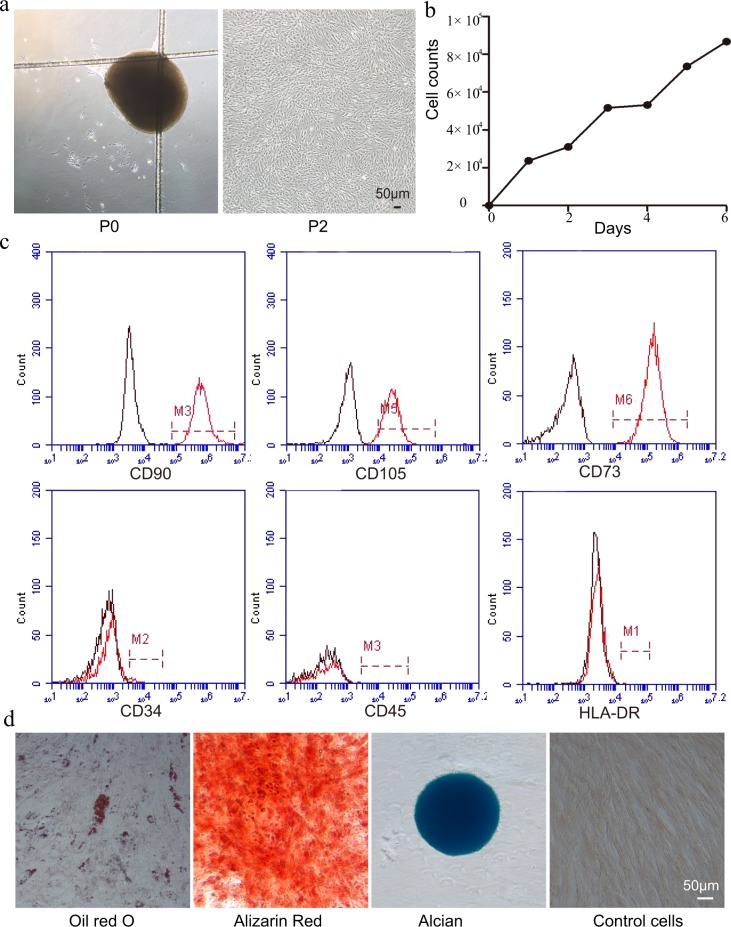
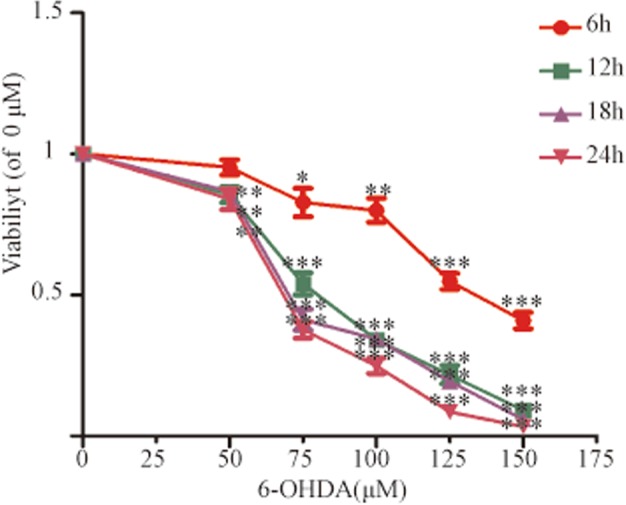
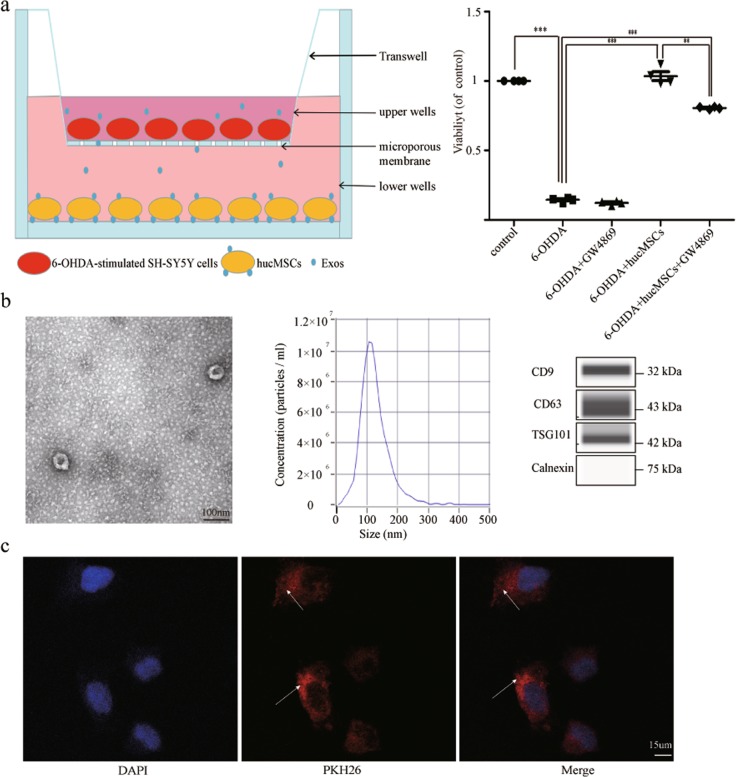
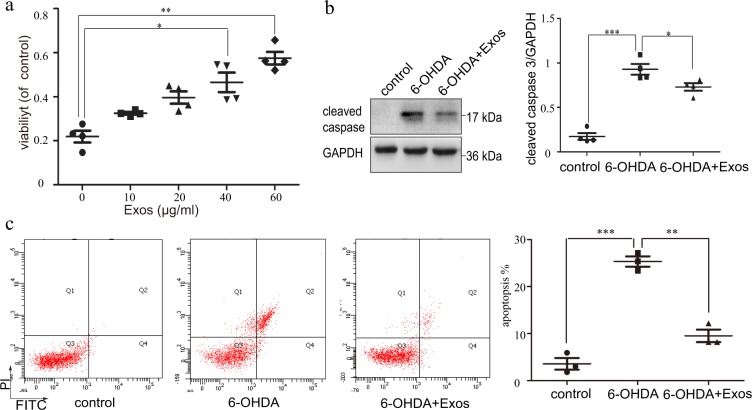
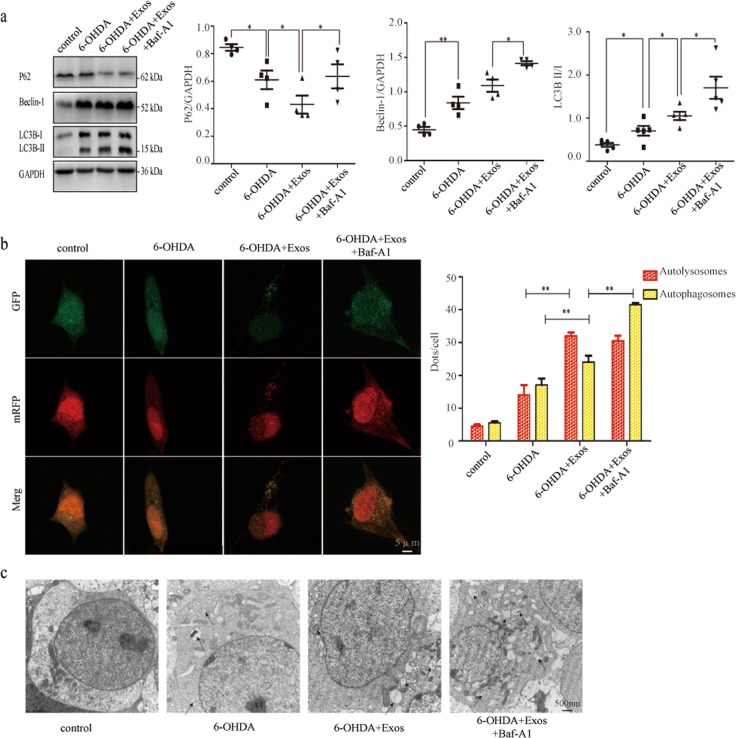
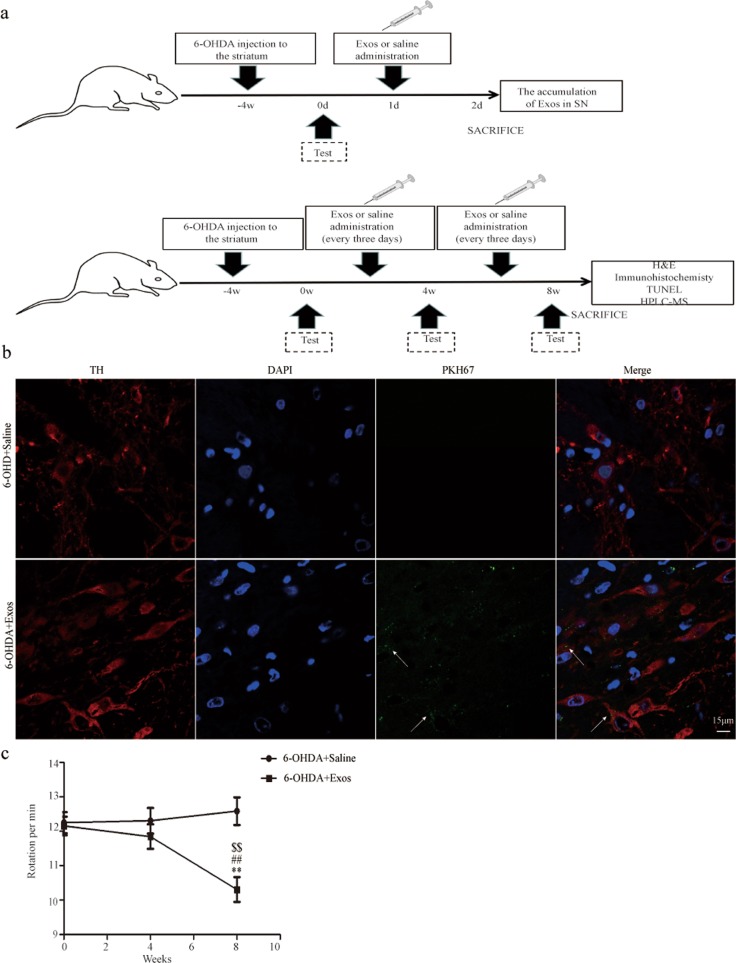
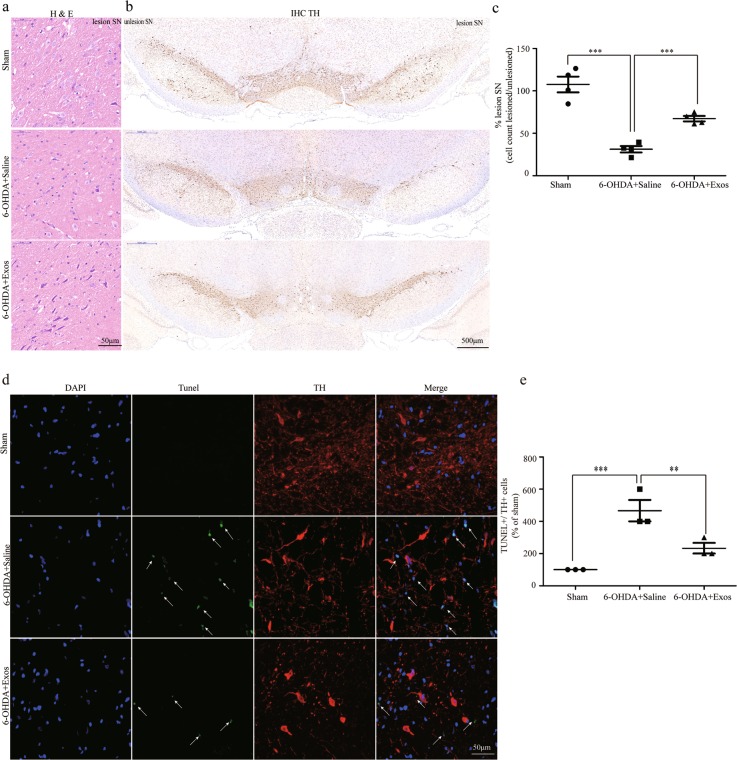
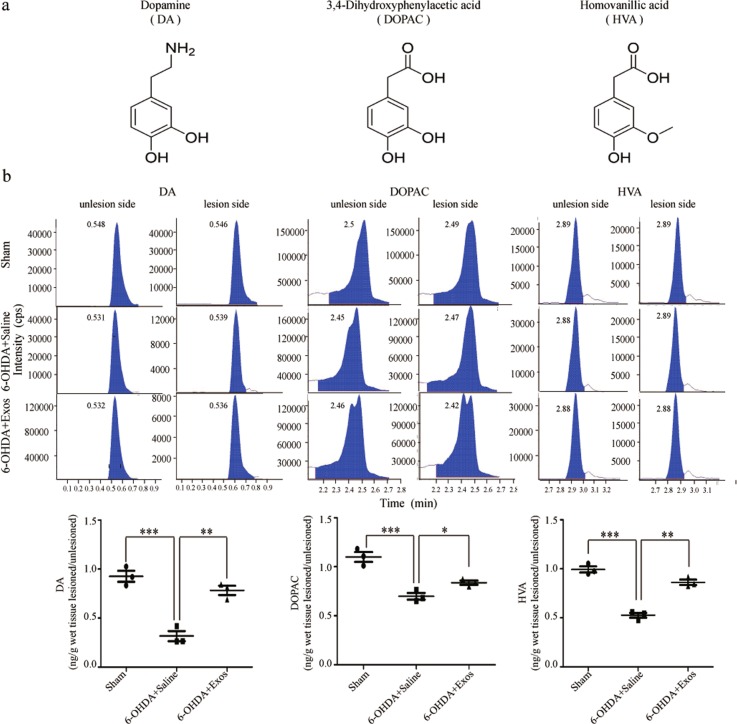
Parkinson’s disease (PD) is a progressively debilitating neurodegenerative condition that leads to motor and cognitive dysfunction. At present, clinical treatment can only improve symptoms, but cannot effectively protect dopaminergic neurons. Several reports have demonstrated that human umbilical cord mesenchymal stem cells (hucMSCs) afford neuroprotection, while their application is limited because of their uncontrollable differentiation and other reasons. Stem cells communicate with cells through secreted exosomes (Exos), the present study aimed to explore whether Exos secreted by hucMSCs could function instead of hucMSCs. hucMSCs were successfully isolated and characterized, and shown to contribute to 6-hydroxydopamine (6-OHDA)-stimulated SH-SY5Y cell proliferation; hucMSC-derived Exos were also involved in this process. The Exos were purified and identified, and then labeled with PKH 26, it was found that the Exos could be efficiently taken up by SH-SY5Y cells after 12 h of incubation. Pretreatment with Exos promoted 6-OHDA-stimulated SH-SY5Y cells to proliferate and inhibited apoptosis by inducing autophagy. Furthermore, Exos reached the substantia nigra through the blood–brain barrier (BBB) in vivo, relieved apomorphine-induced asymmetric rotation, reduced substantia nigra dopaminergic neuron loss and apoptosis, and upregulated the level of dopamine in the striatum. These results demonstrate that hucMSCs-Exos have a treatment capability for PD and can traverse the BBB, indicating their potential for the effective treatment of PD.
Overview
The claims and statistics of this paper haven’t been checked yet.
Free: it reads the open-access text and checks the first 5 claims that cite a source we can check. Create a free account to check every claim.
Integrity signals
Registry
Cites
Statistics
Figures
Verification
Claims the paper makes
The claims and statistics of this paper haven’t been checked yet.
Free: it reads the open-access text and checks the first 5 claims that cite a source we can check. Create a free account to check every claim.
Claims other papers make about this one
Each is checked against this paper’s own text: does it say what the citing paper says it does?
The cited source says what the claim attributes to it.
In the citing paper
“In the Parkinson’s disease rat model, isolated sEVs were injected into the tail vein. These sEVs, which were derived from hucMSCs, successfully pierced the BBB. As a result, the loss of dopaminergic neurons in the substantia nigra decreased significantly, whereas dopamine levels in the striatum increased. Moreover, the PD model rats exhibited improved behavioral function following sEVs injection”
From Extracellular vesicles as nanotheranostic platforms for targeted neurological disorder interventions (2024) · cites this paper as [256]
The cited source says what the claim attributes to it.
In the citing paper
“Importantly, it has been shown that human umbilical cord (hUC)-MSC-derived EVs pass the blood–brain barrier (BBB) and reach the midbrain substantia nigra.”
From Mesenchymal stem cell secretome for regenerative medicine: Where do we stand? (2025) · cites this paper as [238]
The cited source says what the claim attributes to it.
In the citing paper
“Once there, they were able to reduce dopaminergic neuron loss and improve behavioral deficits in the apomorphine-induced asymmetric rotation test in Parkinsońs disease rat models, suggesting the role of these EVs on dopaminergic neurons of the substantia nigra [238].”
From Mesenchymal stem cell secretome for regenerative medicine: Where do we stand? (2025) · cites this paper as [238]
In the citing paper
“The study results revealed a reduction of 6-OHDA-induced neuroinflammation in Parkinson’s disease [133].”
From Exosome for mRNA delivery: Strategies and therapeutic applications (2024) · cites this paper as [133]
Self-check
Percentages, sums and reported differences re-computed from the paper’s own numbers.
The self-check needs the paper’s full text.
Citations
Cites
Shedding light on the cell biology of extracellular vesicles
van Niel, G., D'Angelo, G., & Raposo, G. (2018) · Nature Reviews Molecular Cell Biology · doi:10.1038/nrm.2017.125 · Cited by 8,369
Membrane vesicles as conveyors of immune responses
Théry, C., Ostrowski, M., & Segura, E. (2009) · Nature Reviews Immunology · doi:10.1038/nri2567 · Cited by 3,882
Eaten alive: a history of macroautophagy
Yang, Z., & Klionsky, D. J. (2010) · Nature Cell Biology · doi:10.1038/ncb0910-814 · Cited by 2,095
Autophagy: from phenomenology to molecular understanding in less than a decade
Klionsky, D. J. (2007) · Nature Reviews Molecular Cell Biology · doi:10.1038/nrm2245 · Cited by 1,934
Phinney, D. G., & Prockop, D. J. (2007) · Stem Cells · doi:10.1634/stemcells.2007-0637 · Cited by 1,908
Kim, J.-H., Auerbach, J. M., Rodríguez-Gómez, J. A., Velasco, I., Gavin, D., Lumelsky, N., Lee, S.-H., Nguyen, J., Sánchez-Pernaute, R., Bankiewicz, K., et al. (2002) · Nature · doi:10.1038/nature00900 · Cited by 1,607
Alzheimer's Disease and Parkinson's Disease
Nussbaum, R. L., & Ellis, C. E. (2003) · New England Journal of Medicine · doi:10.1056/nejm2003ra020003 · Cited by 1,351
Yamamoto, A., Tagawa, Y., Yoshimori, T., Moriyama, Y., Masaki, R., & Tashiro, Y. (1998) · Cell Structure and Function · doi:10.1247/csf.23.33 · Cited by 1,312
Autophagy and Neurodegeneration: Pathogenic Mechanisms and Therapeutic Opportunities
Menzies, F. M., Fleming, A., Caricasole, A., Bento, C. F., Andrews, S. P., Ashkenazi, A., Füllgrabe, J., Jackson, A., Jimenez Sanchez, M., Karabiyik, C., et al. (2017) · Neuron · doi:10.1016/j.neuron.2017.01.022 · Cited by 1,134
The Parkinson Pandemic—A Call to Action
Dorsey, E. R., & Bloem, B. R. (2018) · JAMA Neurology · doi:10.1001/jamaneurol.2017.3299 · Cited by 1,091
Cited by
Items 201–300 of 327
Kawiková, I., Špička, V., Lai, J. C. K., Askenase, P. W., Li, W., Kejík, Z., Jakubek, M., Valeš, K., & Španiel, F. (2025) · Frontiers in Immunology · doi:10.3389/fimmu.2025.1454306 · Cited by 7
Liu, J., Jia, G., Zhou, Y., Zhang, J., Wang, Y., & Cai, Y. (2025) · Cell Biology and Toxicology · doi:10.1007/s10565-025-10126-3 · Cited by 6
Functional Roles of Mesenchymal Stem Cell-derived Exosomes in Ischemic Stroke Treatment
Farzaneh, M., & Khoshnam, S. E. (2022) · Current Stem Cell Research & Therapy · doi:10.2174/1574888x18666221222123818 · Cited by 6
Stem Cell Therapy for the Treatment of Parkinson's Disease: What Promise Does it Hold?
Nasrolahi, A., Shabani, Z., Sadigh‐Eteghad, S., Salehi‐Pourmehr, H., & Mahmoudi, J. (2023) · Current Stem Cell Research & Therapy · doi:10.2174/1574888x18666230222144116 · Cited by 8
Hernando, S., Igartúa, M., Santos‐Vizcaíno, E., & Hernández, R. M. (2023) · Cytotherapy · doi:10.1016/j.jcyt.2023.04.001 · Cited by 6
“These data are in line with the effect of EVs derived from human umbilical cord-MSC (hUC-MSC) [22], where the intravenous administration of hUC-MSC-EVs to a 6-OHDA animal model of the disease improved motor performance increasing brain dopamine levels.”
ResultWang, Y., Li, M., Yang, T., Xie, Y., Wang, F., Hu, J., & Shi, M. (2024) · BMJ Open · doi:10.1136/bmjopen-2024-084237 · Cited by 6
Human Umbilical Cord-Mesenchymal Stem Cells Promote Extracellular Matrix Remodeling in Microglia
Lombardo, M. T., Gabrielli, M., Julien‐Marsollier, F., Faivre, V., Charpentier, T. L., Bokobza, C., D’Aliberti, D., Pelizzi, N., Halimi, C., Spinelli, S., et al. (2024) · Cells · doi:10.3390/cells13191665 · Cited by 6
Zhang, X., Chen, X., Wang, A., Wang, L., He, C., Shi, Z., Zhang, S., Fu, Q., Xu, W., Li, W., et al. (2023) · Journal of Ethnopharmacology · doi:10.1016/j.jep.2023.116903 · Cited by 6
Liang, A., Zhang, L., Peng, J., Li, Y., Zhou, Y., Yang, C., Wang, J., Yan, Y., Mei, H., Zhu, J., et al. (2025) · Aging Cell · doi:10.1111/acel.70259 · Cited by 5
Campo-Montoya, R. D., Piera, X. M. I., Romero-Murillo, S., Santamaría, E., Garbayo, E., & Blanco‐Prieto, M. J. (2025) · European Journal of Pharmaceutical Sciences · doi:10.1016/j.ejps.2025.107368 · Cited by 7
Varderidou‐Minasian, S., Jakobs, C. E., Pasteuning-Vuhman, S., Gal, L., Timmers, A., Altelaar, M. A. F., Lorenowicz, M. J., & Pasterkamp, R. J. (2026) · Neural Regeneration Research · doi:10.4103/nrr.nrr-d-25-01790 · Cited by 5
Intraparenchymal stem cell transplantation for spinal cord injury: a review of clinical trials
Abraham, M. E., Song, F., Glasser, A., Lieberman, G., Martin, J. R., & Ciacci, J. D. (2026) · Regenerative Medicine · doi:10.1080/17460751.2026.2631270 · Cited by 5
“SCI can lead to substantial deficits, including upper extremity weakness and sensory loss based on neurological level of injury as well as various degrees of autonomic, cardiovascular, and respiratory disruption [6–9].”
Abdel-Gawad, D. R. I., Khalıl, F., Shehata, O., Ibrahim, M. A., El‐Samannoudy, S. I., Mahdi, E. A., & Shaban, N. S. (2024) · Toxicology Research · doi:10.1093/toxres/tfae159 · Cited by 5
Chen, Z., Wu, S., Sheng, S., Wang, S., Qian, Y., Wang, X., Lu, F., Han, Q., Chen, X., Su, J., et al. (2024) · Composites Part B Engineering · doi:10.1016/j.compositesb.2024.111944 · Cited by 6
Exosomes in stroke management: A promising paradigm shift in stroke therapy
Wang, B., Chen, P., Li, W., & Chen, Z. (2024) · Neural Regeneration Research · doi:10.4103/nrr.nrr-d-24-00665 · Cited by 6
“In summary, current investigations are exploring the role of exosomes in enhancing PCD within neuronal networks.”
InfluentialChen, X.-X., Sai, Y., Cui, W., Hu, X., Liu, J., Cao, X., & Wu, S. (2025) · Advances in Clinical and Experimental Medicine · doi:10.17219/acem/192773 · Cited by 5
Zarrin, P., Ashkezari, M. D., & Seifati, S. M. (2021) · Journal of Molecular Neuroscience · doi:10.1007/s12031-021-01853-3 · Cited by 5
Askenase, P. W. (2022) · Frontiers in Nanotechnology · doi:10.3389/fnano.2022.987117 · Cited by 5
“treatment of various neurodegenerative diseases with nasal sEVs, that has succeeded in diminishing pathologies in animal models of Parkinson’s disease (Laso-Garcia et al., 2018; Clark et al., 2019; Narbute et al., 2019; Chen et al., 2020; Jafarinia et al., 2020; Zhu et al., 2021), amyotrophic lateral sclerosis (ALS) (…”
BackgroundExtracellular Vesicles and Cellular Ageing
Romero-García, N., Mas‐Bargues, C., Huete-Acevedo, J., & Borrás, C. (2023) · Sub-cellular biochemistry/Subcellular biochemistry · doi:10.1007/978-3-031-21410-3_11 · Cited by 6
Feng, N., Huang, X., & Jia, Y. (2025) · Experimental Neurology · doi:10.1016/j.expneurol.2025.115250 · Cited by 5
Balic, N., Perković, M. N., Milos, T., Vuić, B., Kodzoman, M. K., Štrac, D. Š., & Erjavec, G. N. (2025) · Progress in Neuro-Psychopharmacology and Biological Psychiatry · doi:10.1016/j.pnpbp.2025.111393 · Cited by 5
Progress of Exosomes in Cancer Immunotherapy
Wang, Y., Wang, J., Li, H., Deng, S., & Li, Y. (2025) · Cell Biochemistry and Function · doi:10.1002/cbf.70140 · Cited by 4
“In the treatment of Parkinson's disease, human umbilical cord ‐ derived mesenchymal stem cell ‐ derived exosomes have successfully crossed the blood ‐ brain barrier to deliver drugs, effectively improving disease status [109].”
Isaković, J., Athanassiadis, A., & Khubeis, M. (2025) · Journal of Molecular Medicine · doi:10.1007/s00109-025-02613-1 · Cited by 6
“Aside from pluripotent iPSCs and ESCs, other research is looking into the effects of MSC-derived secretome [88] and exosomes [97], as well as investigating BM-MSCs ability to be reprogrammed into induced neuronal stem cells (iNSCs) [98].”
Zhang, F., Xing, L., Chu, W., Wang, Q., Sun, H., Liu, Y., An, G., & Liang, X. (2026) · International Journal of Nanomedicine · doi:10.2147/ijn.s622474 · Cited by 8
“116 PDEVs offer low immunogenicity, oral/nasal deliverability, and inherent neuroactive components.”
Goyal, S., Seth, B., & Chaturvedi, R. K. (2021) · Current Pharmaceutical Design · doi:10.2174/1381612827666211115154450 · Cited by 5
Pan, Z., Shao, M., Zhao, C., Yang, X., Li, H., Cui, G., Liang, X., Yu, C., Ye, Q., Cheng, G., et al. (2024) · European Journal of Pharmaceutical Sciences · doi:10.1016/j.ejps.2024.106696 · Cited by 4
“Consequently, Akt can suppress GSK-3 β function by phosphorylating it, as well as by boosting glycogen synthase activity, thereby stimulating the absorption of glucose by cells, and the production of glycogen, as well as lowering blood sugar concentrations (Xu et al., 2020).”
InfluentialKajitani, G. S., Xavier, G., Villena-Rueda, B. E., Karia, B. T. R., & Santoro, M. L. (2024) · Current topics in membranes · doi:10.1016/bs.ctm.2024.06.002 · Cited by 4
Intracellular and intercellular crosstalk between exosomes and autophagy
Li, Q., Chen, S., Yin, Y., Han, M., Shi, H., Gong, Y. L., Duan, X., Wang, Y., Guo, Q., Duan, Y., et al. (2025) · The Innovation Life · doi:10.59717/j.xinn-life.2025.100132 · Cited by 4
Xu, J., Lei, H., Yang, C., Qiu, Y., & Wu, X. L. (2025) · Journal of Neuroimmune Pharmacology · doi:10.1007/s11481-025-10209-2 · Cited by 4
“For hucMSCs-EV treatment, 200 µg of EV was dissolved in saline and administered by tail vein injection once every 3 days for 8 weeks, start - ing on the first day of MPTP treatment (Chen et al. 2020 ).”
Shen, D., Wan, J., Zhang, X., Sui, J., Zhan, L., Zheng, Y., Ni, Y., & Zhang, Q. (2025) · Cell Death Discovery · doi:10.1038/s41420-025-02759-4 · Cited by 4
Wu, Q., Wu, Z., & Lu, Z. (2022) · Medicine · doi:10.1097/md.0000000000031638 · Cited by 4
“[10] MSCs have been used in the treatment of various diseases, such as premature ovarian failure, Parkinson’s disease, nervous system damage and amyotrophic lateral sclerosis.[11,12] MSCs therapy could be applied for OA treatment and have shown encouraging results.”
BackgroundTherapeutic Effects of Mesenchymal Stem Cells on Cognitive Deficits
Harrell, C. R., Volarevic, A., & Volarević, V. (2022) · Springer eBooks · doi:10.1007/978-981-19-2655-6_15 · Cited by 4
Yavuz, B., Yildiz, A. P. Z., Abamor, E. Ş., Darıcı, H., & Allahverdiyev, A. (2023) · Regenerative Engineering and Translational Medicine · doi:10.1007/s40883-023-00322-0 · Cited by 6
Extracellular Vesicles: The Invisible Heroes and Villains of COVID‐19 Central Neuropathology
Chang, H., Chen, E., Hu, Y., Wu, L., Deng, L., Ye, S., Mao, X., Zhu, T., Liu, J., & Chen, C. (2023) · Advanced Science · doi:10.1002/advs.202305554 · Cited by 4
Update on the Clinical Applications of Mesenchymal Stem Cells
Al-Anazi, K. A. (2023) · Journal of Stem Cell Therapy and Transplantation · doi:10.29328/journal.jsctt.1001034 · Cited by 5
Wang, X., Wang, Y., Xu, Y., Zhang, S.-R., Zhang, Y., Peng, L., Wu, N., & Ye, J. (2025) · World Journal of Stem Cells · doi:10.4252/wjsc.v17.i4.102421 · Cited by 5
Pulczinski, J. C., Mccormick, M., Sun, Y., Watfa, M., Cheng, R. Y. S., & Tang, W. (2022) · Wiley eBooks · doi:10.1002/9781119807704.ch9 · Cited by 4
Therapeutic correlation of NOX4 and diabetes-mediated neurodegeneration
Tiwari, C., Khan, H., Grewal, A. K., & Singh, T. G. (2023) · Obesity Medicine · doi:10.1016/j.obmed.2023.100515 · Cited by 4
Ni, Y., Hayat, M. A., Si, Y., Guo, T., Zhang, J., Hong, Y., Cao, Y., He, S., Weng, Z., Li, F., et al. (2025) · Neurochemical Research · doi:10.1007/s11064-025-04422-x · Cited by 3
Orthobiologics and Peptide Therapy for Central Nervous System Repair in Neurodegenerative Conditions
de Oliveira, C. A. A., Oliveira, B. S., de Oliveira, A. S., Loduca, R. D. D. S., Massella, C. R., & Santos, G. S. (2025) · Cells · doi:10.3390/cells14231853 · Cited by 4
“In PD models, vesicle-based interventions have shown protection of dopaminergic neurons and improved motor outcomes [16–18].”
Abdulsahib, W. K., Mustafa, W. W., Jyothi, S. R., Nayak, P. P., Janney, J. B., Singh, G., Sinha, A., & Akhavan‐Sigari, R. (2025) · Molecular Neurobiology · doi:10.1007/s12035-025-05362-x · Cited by 4
Zou, C., Yang, Z., Zou, Y., Xiao, H., Deng, Y., Bai, J., Fang, L., & Wang, Z. (2026) · Stem Cells Translational Medicine · doi:10.1093/stcltm/szaf081 · Cited by 3
Si, Y., Hayat, M. A., Ni, Y., Zhang, J., Guo, T., Cao, Y., Hong, Y., Zuo, H., Sun, X., Li, Z., et al. (2026) · Mitochondrion · doi:10.1016/j.mito.2026.102111 · Cited by 3
Yin, X., Wang, C., Lin, W., Huang, S., & Chen, T. (2026) · International Journal of Nanomedicine · doi:10.2147/ijn.s570452 · Cited by 3
Aksoy, A., Usta, D. D., & Yar, A. S. (2026) · Pharmaceuticals · doi:10.3390/ph19050773 · Cited by 3
“Higher concentrations (75–100 µ M) resulted in pronounced cytotoxicity, further supporting previous findings in similar in vitro PD models [22,23].”
Ma, W., Wang, Y., Li, J., Geng, Y., Wen, X., Wang, H., Li, Y., Qiao, L., Liu, Y., Zhang, S., et al. (2026) · Genes & Diseases · doi:10.1016/j.gendis.2026.102359 · Cited by 3
Potentials of autophagy enhancing natural products in the treatment of Parkinson disease
Olubodun-Obadun, T. G., Ishola, I. O., & Adeyemi, O. O. (2021) · Drug Metabolism and Personalized Therapy · doi:10.1515/dmdi-2021-0128 · Cited by 3
Mesenchymal stem cells for lysosomal storage and polyglutamine disorders: Possible shared mechanisms
Miranda, C. O. (2021) · European Journal of Clinical Investigation · doi:10.1111/eci.13707 · Cited by 4
Endometrium Derived Stem Cells as Potential Candidates in Nervous System Repair
Yan, Y., Wang, X., & Zhu, G. (2022) · Annals of Biomedical Engineering · doi:10.1007/s10439-022-02909-0 · Cited by 3
Wang, H., Narayanan, J., Thamaraikani, T., Viktor, P., Mohany, M., Al-Rejaie, S. S., Alammar, H. K., Anad, E., Alhili, F., Hussein, S. F., et al. (2024) · Life Sciences · doi:10.1016/j.lfs.2024.122449 · Cited by 3
RetractedZhang, Z., Zhao, W. G., Gu, P., Zhou, Y., Wu, R., Zhou, L., Cui, Q., Chen, H., Zhang, L., Zhang, K., et al. (2022) · Research Square · doi:10.21203/rs.3.rs-1663711/v1 · Cited by 3
Self-citationQiu, H., Zhang, M., Li, M., Chen, C., Wang, H., & Yue, X. (2025) · International Journal of Molecular Sciences · doi:10.3390/ijms26062644 · Cited by 2
Dual Role of Exosomes in Parkinson's Disease: Adenine Exerts a Beneficial Effect
Chen, L., Shao, Y., Geng, J., Liu, H., Liu, Q., Cheng, Y., & Sun, T. (2025) · CNS Neuroscience & Therapeutics · doi:10.1111/cns.70331 · Cited by 2
“Strong evidence indicates that the benefits of exosome therapy may be related to the contents of exosomes [45, 46].”
Shalaby, A. M., Soliman, N., Elshamy, A. M., Alnasser, S. M., Alorini, M., Alsaykhan, H., Jaber, F. A., Alabiad, M. A., Younes, A. M., Elshaer, M. M. A., et al. (2025) · Microscopy and Microanalysis · doi:10.1093/mam/ozaf062 · Cited by 3
Mesenchymal stem cells and the central nervous system: historical perspectives and future directions
Mazurek, C. Y., Kaniuk, J. K., & Ahuja, C. S. (2026) · Frontiers in Molecular Neuroscience · doi:10.3389/fnmol.2026.1742864 · Cited by 3
“Clinical trials using bio-scaolds have reported some success, especially in SCI (Zhao et al., 2017; Chen W. et al., 2020), but larger phase 3 studies are needed to fully characterize their eects in humans.”
Advances in Parkinson's disease management using umbilical cord-derived mesenchymal stem cells
Mante, N., Undale, V., Sanap, A. P., Bhonde, R. R., Kheur, S. M., Tambe, P., & Kharat, A. H. (2026) · Journal of Neuroimmunology · doi:10.1016/j.jneuroim.2026.578911 · Cited by 2
Pociūtė, A., Tunaitis, V., Zebrauskas, A., Piļipenko, V., Jansone, B., Narbute, K., Pultar, M., Hackl, M., & Pivoriūnas, A. (2026) · Stem Cells Translational Medicine · doi:10.1093/stcltm/szag024 · Cited by 2
Feng, L., Sharma, A., Wang, Z., Muresanu, D. F., Tian, Z. R., Lafuente, J. V., Buzoianu, A. D., Nozari, A., Wiklund, L., & Sharma, H. S. (2023) · Advances in neurobiology · doi:10.1007/978-3-031-32997-5_3 · Cited by 2
Khan, J., & Tatlı, I. İ. (2023) · Springer eBooks · doi:10.1007/978-981-99-3848-3_8 · Cited by 3
Al‐Redouan, A., Salaj, M., Kubová, H., & Druga, R. (2024) · International Journal of Developmental Neuroscience · doi:10.1002/jdn.10331 · Cited by 2
“This developmental process in which the striatum divides into dorsal and ventral districts is regulated by Nolz-1 and Dlx1/2 genes (Ben-Ari et al., 2006; Chen et al., 2020).”
BackgroundEXOSOMES AS MEDIATORS OF NEUROINFLAMMATION IN PARKINSON'S DISEASE: A REVIEW
Sheikh, M., Saiyyad, A., & Jirvankar, P. (2025) · International Journal of Applied Pharmaceutics · doi:10.22159/ijap.2025v17i3.53756 · Cited by 2
“The effectiveness of hucMSC-derived exosomes is 70% [105], that of SHED-derived exosomes and DPSC-derived exosomes is 80% [106], that of stem cell therapy is 60% [107], and that of genetically modified macrophage-derived exosomes is the highest, at 85% [108].”
Introduction and Basic Concepts in Stem Cell Research and Therapy: The Facts and the Hype
Essawy, M., Shouman, S., Magdy, S., Abdelfattah‐Hassan, A., & El‐Badri, N. (2020) · Learning materials in biosciences · doi:10.1007/978-3-030-55359-3_1 · Cited by 2
Fluid biomarkers for Alzheimer's disease in Down syndrome: Current status and novel trends
Iulita, M. F., Granholm, A., Carmona‐Iragui, M., Hamlett, E. D., Fortea, J., & Ledreux, A. (2021) · Elsevier eBooks · doi:10.1016/b978-0-12-818845-3.00010-4 · Cited by 3
Characteristics of Umbilical-Cord Blood and Its Use in Clinical Practice
Goncharov, A. G., Yurova, K. A., Shupletsova, V. V., Газатова, Н. Д., Melashchenko, O. B., & Litvinova, L. S. (2022) · Cell and Tissue Biology · doi:10.1134/s1990519x22010047 · Cited by 3
Samir, M., Ibrahim, N., Medhat, E., El‐Din, S. S., Abdel-Rahman, M. M., & Ahmed, A. H. (2022) · Egyptian Academic Journal of Biological Sciences. C, Physiology and Molecular Biology/Egyptian Academic Journal of Biological Sciences. C, Physiology and Molecular Biology · doi:10.21608/eajbsc.2022.266863 · Cited by 2
Extracellular vesicles for remote brain repair
Momma, S. (2021) · Current Opinion in Genetics & Development · doi:10.1016/j.gde.2021.06.001 · Cited by 1
Umbilical Cord-Derived Cells: Applications in Neurological Disorders
Vasques, J. F., Chimeli-Ormonde, L., Gubert, F., Méndez‐Otero, R., & Pimentel‐Coelho, P. M. (2023) · Elsevier eBooks · doi:10.1016/b978-0-443-15717-2.00003-2 · Cited by 1
Liu, G., & Liu, Y. (2025) · Cytotechnology · doi:10.1007/s10616-025-00752-4 · Cited by 1
“Therefore, there is a pressing need for therapeutic strategies to delay or prevent AMD progression. hUCMSC-EXs has been reported to ameliorate several diseases by maintaining homeostasis and mediating biological processes (Chen et al. 2020; Sun et al. 2018).”
Recent advances on the role of exosomes in neurodegenerative diseases
Bu, C.-T., Zhu, X., Zhang, Q., & Wenya, S. H. A. O. (2025) · Chinese Journal of Chromatography · doi:10.3724/sp.j.1123.2024.10035 · Cited by 2
Cao, Y., Meng, X., Xu, X., Xia, C., Yang, C., Cui, X., He, Q., & Song, G. (2025) · Journal of Medicinal Chemistry · doi:10.1021/acs.jmedchem.5c01828 · Cited by 1
Gore, M., Banerjee, S., Hmingthansanga, V., Ehan, I., Malayandi, R., & Natesan, S. (2025) · Journal of Dispersion Science and Technology · doi:10.1080/01932691.2025.2602744 · Cited by 1
Chen, K., Hao, W., Ji, Y., Xu, B., Lu, L., Zhang, R., Lu, Y., Chen, K., Wang, F., Hu, X., et al. (2026) · Parkinsonism & Related Disorders · doi:10.1016/j.parkreldis.2026.108218 · Cited by 1
Self-citationExosomes: Roles and Therapeutic Potential in Pain
Wen, Y., Zhang, R., Wang, J., Ma, Z., Dong, C., Li, R., & Zhang, J. (2026) · Biomedicines · doi:10.3390/biomedicines14020414 · Cited by 2
“Exosomes possess significant therapeutic potential in various inflammatory diseases, including OA, RA, IBD, and chronic pain, owing to their capacity to transport biological macromolecules like miRNAs and proteins [35–37].”
Kostennikov, A., Kabdesh, I. M., & Mukhamedshina, Y. O. (2026) · Sci · doi:10.3390/sci8020046 · Cited by 1
“…MSC-EVs every 3 days for 8 weeks and demonstrated a reduction in apomorphine-induced rotations (up to week 8), decreased apoptosis, increased neuronal survival, and elevated striatal dopamine levels, linking these effects to autophagy induction (increased LC3B-II/I and Beclin-1, reduced p62) [92].”
InfluentialMetabolomics-guided Mechanisms of Mesenchymal Stromal Cell and Exosome Therapies in Chronic Diseases
Mahmod, A. I., Govindaraju, K., Lokanathan, Y., Akmarina, N., Said, B. M., & Ibrahim, B. (2026) · Stem Cell Reviews and Reports · doi:10.1007/s12015-026-11085-w · Cited by 1
Cui, L., Ono, F., Ichinose, T., Goto, M., & Ishihama, K. (2026) · Journal of Extracellular Biology · doi:10.1002/jex2.70125 · Cited by 1
Cell-based regenerative interventions in Parkinson's disease: Overcoming pharmacological limitations
Padilla, A. L., Lanciego, J. L., Vila, M., de Castro, F., Pozo, D., de Fonseca, F. R., Serrano, A., Sáez‐Valero, J., Núñez, L., Villalobos, C., et al. (2026) · Acta Pharmaceutica Sinica B · doi:10.1016/j.apsb.2026.03.031 · Cited by 1
Liu, L. (2026) · Nanomedicine Nanotechnology Biology and Medicine · doi:10.1016/j.nano.2026.102922 · Cited by 1
Therapeutic Mechanisms of Stem Cell–Derived Exosomes for Neurological Disorders: An Overview
Lin, C., Qi, L., Gao, X., Hu, L., Qian, B., Deng, Y., Zhou, C., Wang, C., Liu, G., Ding, Q., et al. (2026) · Molecular Neurobiology · doi:10.1007/s12035-026-05877-x · Cited by 1
Lan, J., Li, W., Ding, M., Qi, J., & Wang, Y. (2026) · Clinical Neurology and Neurosurgery · doi:10.1016/j.clineuro.2026.109469 · Cited by 1
Dynamic Tuning of MSC-Based Scaffolds for Neurological Protection After Brain or CNS Injury
SLEVIN, M. A., Krupiński, J., Napoli, M. D., & Tero-Vescan, A. (2026) · Life · doi:10.3390/life16071157 · Cited by 1
Ghosh, S. B., Banerjee, R., Almohaimeed, H. M., Almars, A. I., ALMatrafi, T. A., Saleh, F. M., Mohammedsaleh, Z. M., Ealla, K. K. R., Kumer, A., & Dhara, B. (2026) · Journal of Cellular and Molecular Medicine · doi:10.1111/jcmm.71297 · Cited by 1
Stem Cell Secretome for Aging Therapy: Potential Benefits and Key Challenges
Chen, M., & Xing, L. (2026) · Current Stem Cell Research & Therapy · doi:10.2174/011574888x436321251206110646 · Cited by 1
Animal and Cell Models in Alzheimer’s and Parkinson’s Disease: Current Innovations Reviewed
Rejitha, C., & Babu, L. (2026) · Current Aging Science · doi:10.2174/0118746098403535251203121022 · Cited by 1
Therapeutic Effects of Mesenchymal Stem Cells on Cognitive Deficits
Harrell, C. R., Volarevic, A., & Volarević, V. (2022) · Springer eBooks · doi:10.1007/978-981-16-6016-0_15-1 · Cited by 1
Zhang, Z., Kong, J., & An, S. (2023) · IntechOpen eBooks · doi:10.5772/intechopen.1001990
Self-citationMesenchymal Stem Cell-Derived Exosomes and Their Therapeutic Potential on Parkinson’s DiseasePreprint
Arbabha, D. (2023) · doi:10.47611/harp.302
de Freitas, S. (2023) · Digital Library of Theses and Dissertations (Universidade de São Paulo) · doi:10.11606/d.9.2023.tde-10112023-175735
Research Progress of Exosomes in Parkinson's Disease
Wenying, X. (2023) · Academic Journal of Medicine & Health Sciences · doi:10.25236/ajmhs.2023.041215
Rungruang, P., Sansri, V., & Sroyraya, M. (2024) · Neuroscience Research Notes · doi:10.31117/neuroscirn.v7i1.271
“These findings show that hucMSCs-Exos have PD treatment capability and can cross the BBB, highlighting their potential for effective PD treatment (Chen et al., 2020).”
BackgroundCeyhan, M. Ş., Ömeroğlu, S., & Yığman, Z. (2024) · Gazi Medical Journal · doi:10.12996/gmj.2023.4019
Lian, X., Chen, Z., Wu, S., Qian, Y., Wu, Y., Wang, X., Lu, F., & Xu, J. (2024) · Research Square · doi:10.21203/rs.3.rs-3511224/v1
Mishra, R., & Bowman, A. B. (2024) · Advances in neurotoxicology · doi:10.1016/bs.ant.2024.07.001
Applications of Nanotechnology in Degenerative Disorders of the Brain
Lopes, D. H. J., Sisi, F. Y., Mehrabian, A., Davoudkhani, M., Noroozıan, M., Khawaja, A. M., & Heiss, J. D. (2024) · Springer eBooks · doi:10.1007/978-3-030-80662-0_30 · Cited by 1
Preclinical evidence of extracellular vesicles for therapeutic and diagnostic applications
Banu, S. A., Sharun, K., Muthu, S., PAWDE, A. M., Dhama, K., & AMARPAL, A. (2025) · Elsevier eBooks · doi:10.1016/b978-0-443-23891-8.00009-3
Yan, W., Meng, X., & Li, X. (2025) · Journal of Aging and Rehabilitation · doi:10.1097/jagr.0000000000000024
Plant-Derived Edible Nanoparticles and miRNAs
Tiriya, M., Kumar, A. M., & Kumar, V. (2025) · Sustainability Sciences in Asia and Africa · doi:10.1007/978-981-96-7756-6_1
Hua, T., Yang, M., Song, H., Kong, E., Deng, M., Li, Y., Li, J., Liu, Z., Fu, H., Wang, Y., et al. (2022) · Figshare · doi:10.6084/m9.figshare.20315912
Virla, F., Turano, E., Scambi, I., Schiaffino, L., Boido, M., & Mariotti, R. (2024) · Figshare · doi:10.6084/m9.figshare.26700361
Virla, F., Turano, E., Scambi, I., Schiaffino, L., Boido, M., & Mariotti, R. (2024) · Figshare · doi:10.6084/m9.figshare.25522656
Metadata
- Authors
- Chen, H.-X., Liang, F.-C., Gu, P., Xu, B.-L., Xu, H.-J., Wang, W.-T., Hou, J.-Y., Xie, D.-X., Chai, X.-Q., & An, S.-J.
- Affiliations
- Hebei Medical University (CN)
- Hebei University of Chinese Medicine (CN)
- Second Hospital of Hebei Medical University (CN)
- Corresponding author
- Chai, Xi-Qing
- Venue
- Cell Death & Disease
- Published
- 2020-04-27
- Volume
- 11
- Issue
- 4
- Pages
- 288-288
- ISSN
- 2041-4889 (ISSN-L)
- PMC
- PMC7184757
- OpenAlex
- W3018217038
- Semantic Scholar
- 4e2160083af5f5f72f76ad6d7b358d49d5617217
- Cited by
- 319
- References
- 68
- Citations by year
- 2026: 42 · 2025: 58 · 2024: 66 · 2023: 59 · 2022: 53 · 2021: 33 · 2020: 8
- FWCI
- 12.41
- Type
- journal article
- Language
- en
- Open access
- gold
- doi.org
- Licence
- cc-by
- creativecommons.org/licenses/by/4.0 (tdm)
- creativecommons.org/licenses/by/4.0 (vor)
- Locations
- Cell Death and Disease (publishedVersion, cc-by)
- PubMed Central (publishedVersion, cc-by)
- PubMed (publishedVersion)
- Funders
- Natural Science Foundation of Hebei Province (18967728D)
- National Natural Science Foundation of China (81873230)
- Topics
- Life Sciences › Biochemistry, Genetics and Molecular Biology › Molecular Biology › Extracellular vesicles in disease
- Health Sciences › Medicine › Clinical Neurology › Parkinson's Disease Mechanisms and Treatments
- Life Sciences › Biochemistry, Genetics and Molecular Biology › Cell Biology › Mesenchymal stem cell research
- Keywords
- Parkinson's disease, exosomes, mesenchymal stem cells, human umbilical cord mesenchymal stem cells, autophagy, dopaminergic neuroprotection, 6-hydroxydopamine, SH-SY5Y cells, substantia nigra, blood-brain barrier, neuroprotection, apoptosis, dopamine
- MeSH terms
- Animals, Autophagy, Blood-Brain Barrier, Cell Differentiation, Humans, Parkinson Disease, Mice, Exosomes, Mesenchymal Stem Cells
About these checks
Registry, retraction, Cites and statistics results are computed, not judged, with one exception: a printed reference that no index lists is read once by a model before it counts as a citation error. Claims are extracted by a model and kept only when their quote appears verbatim in the text; each cited source is then checked, with a model’s help, for whether it says what the claim relies on. Those verdicts can be wrong — read the claim’s quote and the cited source before relying on one.
Statistics and arithmetic are recomputed, not judged.
Confidence bands are shown only for fields calibrated on our annotated test set. None is calibrated yet, so no band is shown.
What counts as a claim ›How we measure confidence ›How we check this ›
Are you an author, or do you see a problem with this page? Request a review
Data sources
Bibliographic data: Semantic Scholar, OpenAlex, Crossref.
Contains information from the Semantic Scholar Academic Graph Datasets, made available under the ODC Attribution License (ODC-BY 1.0).
Semantic Scholar’s data is described in: Kinney, R., et al. (2023). The Semantic Scholar Open Data Platform. arXiv:2301.10140.
