

Strategies and prospects of effective neural circuits reconstruction after spinal cord injury
Open accessThe DOI matches its Crossref record; 151 of the 151 references it cites were found in a registry or an index.
Abstract
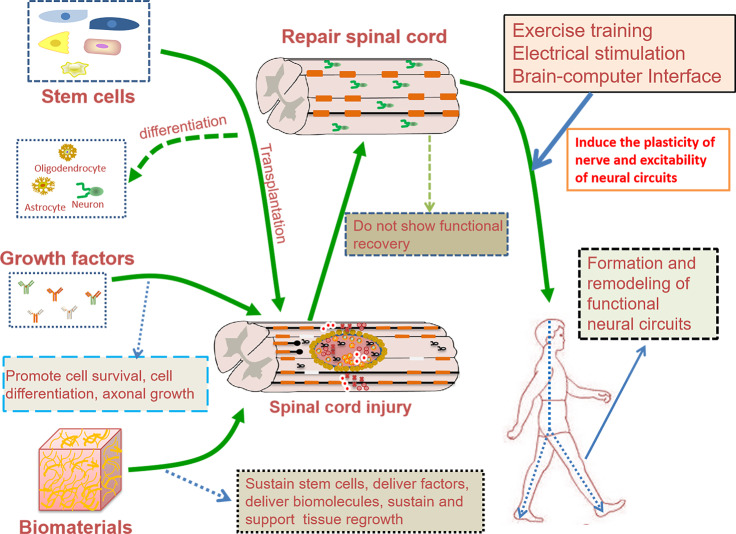
Due to the disconnection of surviving neural elements after spinal cord injury (SCI), such patients had to suffer irreversible loss of motor or sensory function, and thereafter enormous economic and emotional burdens were brought to society and family. Despite many strategies being dealing with SCI, there is still no effective regenerative therapy. To date, significant progress has been made in studies of SCI repair strategies, including gene regulation of neural regeneration, cell or cell-derived exosomes and growth factors transplantation, repair of biomaterials, and neural signal stimulation. The pathophysiology of SCI is complex and multifaceted, and its mechanisms and processes are incompletely understood. Thus, combinatorial therapies have been demonstrated to be more effective, and lead to better neural circuits reconstruction and functional recovery. Combinations of biomaterials, stem cells, growth factors, drugs, and exosomes have been widely developed. However, simply achieving axon regeneration will not spontaneously lead to meaningful functional recovery. Therefore, the formation and remodeling of functional neural circuits also depend on rehabilitation exercises, such as exercise training, electrical stimulation (ES) and Brain–Computer Interfaces (BCIs). In this review, we summarize the recent progress in biological and engineering strategies for reconstructing neural circuits and promoting functional recovery after SCI, and emphasize current challenges and future directions.
Overview
The claims and statistics of this paper haven’t been checked yet.
Free: it reads the open-access text and checks the first 5 claims that cite a source we can check. Create a free account to check every claim.
Integrity signals
Registry
Cites
Statistics
Figures
Verification
Claims the paper makes
The claims and statistics of this paper haven’t been checked yet.
Free: it reads the open-access text and checks the first 5 claims that cite a source we can check. Create a free account to check every claim.
Claims other papers make about this one
Each is checked against this paper’s own text: does it say what the citing paper says it does?
The cited source says what the claim attributes to it.
In the citing paper
“A growing number of studies suggest EVs derived from various cell lines, such as NSCs and MSC are neuroprotective, angiogenic, and immunomodulatory.”
From Extracellular vesicles as nanotheranostic platforms for targeted neurological disorder interventions (2024) · cites this paper as [294]
Self-check
Percentages, sums and reported differences re-computed from the paper’s own numbers.
The self-check needs the paper’s full text.
Citations
Cites
Takahashi, K., & Yamanaka, S. (2006) · Cell · doi:10.1016/j.cell.2006.07.024 · Cited by 26,673
Induced Pluripotent Stem Cell Lines Derived from Human Somatic Cells
Yu, J., Vodyanik, M. A., Smuga-Otto, K., Antosiewicz-Bourget, J., Frane, J. L., Tian, S., Nie, J., Jonsdottir, G. A., Ruotti, V., Stewart, R., et al. (2007) · Science · doi:10.1126/science.1151526 · Cited by 10,310
Shedding light on the cell biology of extracellular vesicles
van Niel, G., D'Angelo, G., & Raposo, G. (2018) · Nature Reviews Molecular Cell Biology · doi:10.1038/nrm.2017.125 · Cited by 8,369
Feigin, V. L., Nichols, E., Alam, T., Bannick, M. S., Beghi, E., Blake, N., Culpepper, W. J., Dorsey, E. R., Elbaz, A., Ellenbogen, R. G., et al. (2019) · The Lancet Neurology · doi:10.1016/s1474-4422(18)30499-x · Cited by 5,644
Advances in engineering hydrogels
Zhang, Y. S., & Khademhosseini, A. (2017) · Science · doi:10.1126/science.aaf3627 · Cited by 2,908
Reach and grasp by people with tetraplegia using a neurally controlled robotic arm
Hochberg, L. R., Bacher, D., Jarosiewicz, B., Masse, N. Y., Simeral, J. D., Vogel, J., Haddadin, S., Liu, J., Cash, S. S., van der Smagt, P., et al. (2012) · Nature · doi:10.1038/nature11076 · Cited by 2,719
James, S. L., Theadom, A., Ellenbogen, R. G., Bannick, M. S., Montjoy-Venning, W., Lucchesi, L. R., Abbasi, N., Abdulkader, R., Abraha, H. N., Adsuar, J. C., et al. (2019) · The Lancet Neurology · doi:10.1016/s1474-4422(18)30415-0 · Cited by 2,001
Designing Cell-Compatible Hydrogels for Biomedical Applications
Seliktar, D. (2012) · Science · doi:10.1126/science.1214804 · Cited by 1,923
Astrocyte scar formation aids central nervous system axon regeneration
Anderson, M. A., Burda, J. E., Ren, Y., Ao, Y., O’Shea, T. M., Kawaguchi, R., Coppola, G., Khakh, B. S., Deming, T. J., & Sofroniew, M. V. (2016) · Nature · doi:10.1038/nature17623 · Cited by 1,851
Immunoregulatory mechanisms of mesenchymal stem and stromal cells in inflammatory diseases
Shi, Y., Wang, Y., Li, Q., Liu, K., Hou, J., Shao, C., & Wang, Y. (2018) · Nature Reviews Nephrology · doi:10.1038/s41581-018-0023-5 · Cited by 1,223
Cited by
Items 101–129 of 129
Advances in cervical spinal cord injury rehabilitation
Draganich, C., Hendrick, S., Ripic, J., Parmenter, D., Shuff, R., & Jones, M. W. (2024) · Seminars in Spine Surgery · doi:10.1016/j.semss.2024.101103 · Cited by 1
Merighi, F., Vincentiis, S. D., Onorati, M., & Raffa, V. (2024) · Journal of Visualized Experiments · doi:10.3791/66704 · Cited by 2
A Review of Treatment Approaches for Spinal Cord Injury Improvement
Jafarimanesh, M. A., Ai, J., Shojae, S., Khonakdar, H. A., Emamieh, G. D., & Shirian, S. (2023) · The Neuroscience Journal of Shefaye Khatam · doi:10.61186/shefa.12.1.111 · Cited by 1
Dominguez, A. L., González‐Mayorga, A., López‐Dolado, E., & Serrano, M. C. (2021) · Springer eBooks · doi:10.1007/978-3-030-81400-7_1 · Cited by 2
Sun, X., Huang, L., Fu, C., Li, L., Wang, L., Pei, G., Wang, Y., Zhang, Q., Cheng, H., He, C., et al. (2021) · Research Square · doi:10.21203/rs.3.rs-880133/v1
Trophic factors in patients with spinal cord injury
Quintanar, J. L., Díaz-Galindo, C., Calderón-Vallejo, D., & Jaramillo-González, F. (2022) · Elsevier eBooks · doi:10.1016/b978-0-12-822498-4.00037-3 · Cited by 1
Merighi, F., Vincentiis, S. D., Onorati, M., & Raffa, V. (2024) · doi:10.3791/66704-v
A Study on the Role of miR-126 in the Repair Process after Spinal Cord Injury
Suo, Y., & Wang, C. (2024) · Current Stem Cell Research & Therapy · doi:10.2174/011574888x289224240723042538
Self-citationNeural Tissue Regeneration Based on Stimuli‐Responsive Materials
Pinho, T. S., Sampaio‐Marques, B., Ribeiro, C., da Cunha, C. B., Lanceros-Méndez, S., & Salgado, A. J. (2024) · doi:10.1002/9783527838882.ch8
Tutova, O. N., Kabdesh, I. M., Mukhamedshina, Y. O., & Chelyshev, Y. A. (2024) · Российский физиологический журнал им И М Сеченова · doi:10.31857/s0869813924090073
Bai, C., She, C., Shan, H., Chai, J.-L., Xu, C., Marshall, J. J., Cao, C., & Zhou, X. (2024) · SSRN Electronic Journal · doi:10.2139/ssrn.5055101
Ranaiy, M. S., Zadeh, D. R., Abasi, M., Ghazvini, H., Shafizad, M., Tamijani, S. M. S., & Rafaiee, R. (2025) · Medical Hypotheses · doi:10.1016/j.mehy.2025.111608
Xiao-hui, S., Ruqi, P., & Yueying, C. (2025) · Kontakt · doi:10.32725/kont.2025.032
González-Cely, A. X., Dantas, A. F. O. D. A., Santo, C. C. D. E., Delisle-Rodríguez, D., & Bastos-Filho, T. (2025) · World Congress on Medical Physics and Biomedical Engineering, September 7 - 12, 2009, Munich, Germany · doi:10.1007/978-3-031-93646-3_7
Daraeinejad, Z., Dolatyar, B., Shabani, I., & Seyedjafari, E. (2025) · Synthetic Metals · doi:10.1016/j.synthmet.2025.118001
Li, T., Zhao, Z.-H., Tang, H., Chen, Z., Lu, Z., Yang, X.-L., Zhao, L.-L., Li, Y., Dang, M., Chen, Z., et al. (2025) · Cellular and Molecular Neurobiology · doi:10.1007/s10571-025-01647-w · Cited by 1
“Thus, all strategies for treating SCI, including the biomimetic therapy, are aimed at structural reconstruction or functional replacement of the damaged neural circuits(Nomura et al. 2006; Courtine & Sofroniew et al., 2019, Yang et al. 2020).”
Kim, W. K., Son, Y. S., Lim, J., Kim, W. H., & Kang, B.-J. (2023) · Figshare · doi:10.6084/m9.figshare.24264710
Zeng, H., Cheng, L., Lu, D.-Z., Fan, S., Wang, K.-X., Xu, L.-L., Cai, B., 周谋望, & Wang, J.-W. (2024) · Figshare · doi:10.6084/m9.figshare.24223899
Self-citationGonzález-Cely, A. X., Silva, L. V., da Costa, L. J., Dantas, A. F. O. D. A., Santo, C. C. D. E., Bastos-Filho, T., & Delisle-Rodríguez, D. (2025) · Conference proceedings/Conference proceedings - IEEE International Conference on Systems, Man, and Cybernetics · doi:10.1109/smc58881.2025.11342841
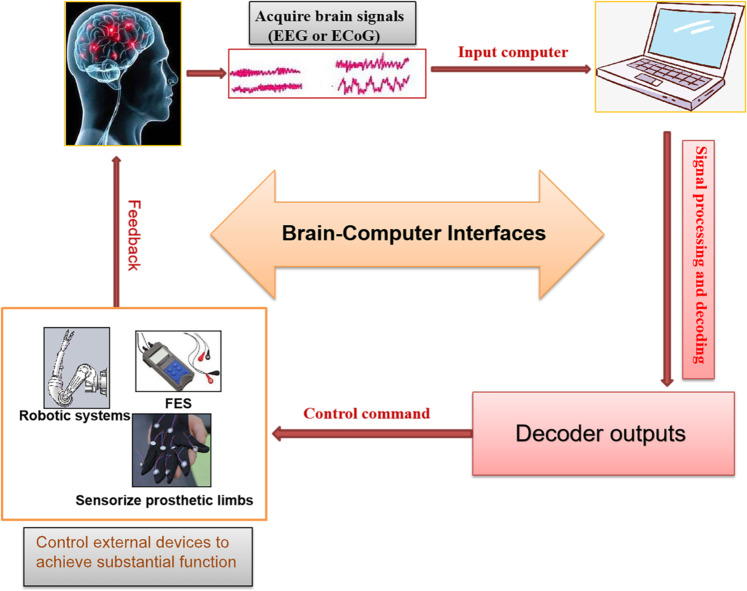
“Recent advancements in rehabilitation have integrated complex systems, such as robotic device controllers, and feedback (visual, auditory or kinesthetic) into Brain–Computer Interfaces (BCIs), achieving enhanced outcomes in motor recovery [1].”
InfluentialMonnot, P. (2021) · theses.fr (ABES) · doi:10.70675/a6bce474z5b87z49b6zb8aaze442beb48be0
Priming neuronal regeneration: early adaptive mechanisms in zebrafish CNS injury
Babiloni-Chust, I., Poggi, L., Denti, M. A., & Pedroni, A. (2026) · Frontiers in Molecular Neuroscience · doi:10.3389/fnmol.2026.1807396 · Cited by 1
The role of microglial Tim-3 in neuroinflammation and functional recovery after spinal cord injury
Ji, R., Fu, Y., Jiao, F., Zhang, M., Tian, C., Han, X., Yan, L., Kou, H., Wang, J., Liu, H., et al. (2026) · Frontiers in Neurology · doi:10.3389/fneur.2026.1828458
Self-citationGao, M., Zhang, D., Liu, M., Wang, Y., & Ke, Y. (2026) · Inflammation · doi:10.1007/s10753-026-02564-w
“In contrast, M2 macrophages actively participate in anti-inflammatory responses and tissue repair, expressing CD206 and Arg-1, and secreting anti-inflammatory mediators like IL-10 and TGF-β, effectively clearing cellular debris while promoting axonal regeneration and functional recovery [12 ].”
Lu, X., Zhou, D., Shi, J., Heng, J., Yan, D., & Meng, D. (2026) · Journal of Pain · doi:10.1016/j.jpain.2026.106401 · Cited by 1
Militskova, A., Mukhametova, E., Biktimirov, A., Andrianov, V. V., Yakovleva, E., Silantyeva, D. I., & Lavrov, I. A. (2026) · Journal of Clinical Medicine · doi:10.3390/jcm15176663
ID3-directed sonogenetics to enhance osteogenesis and bone defect healing
Liu, H., Xu, Y., Wang, X., Liu, M., Wang, J., Na, S., Wang, X., Wang, S., & Hu, L. (2026) · International Journal of Oral Science · doi:10.1038/s41368-026-00456-1
Self-citationBypass Injury with Memristive Intelligence: A Hardware-First Approach to Neural Repair
Matveeva, M., Mishchenko, M. A., Fedulina, A., Bolshakov, D. I., Bordanov, I., Владимирович, К. Л., Taran, D., Shchanikov, S., Mikhaylov, A. N., & Kazantsev, V. (2026) · BioNanoScience · doi:10.1007/s12668-026-02873-2
Nikiforova, E. V., Vetlugina, А., Konovalova, S. P., Sysoev, Y. I., & Евгеньевич, М. П. (2026) · Cells · doi:10.3390/cells15181667
Metadata
- Authors
- Yang, B., Zhang, F., Cheng, F., Ying, L., Wang, C., Shi, K., Wang, J., Xia, K., Gong, Z., Huang, X., Yu, C., Li, F., Liang, C., & Chen, Q.
- Affiliations
- Second Affiliated Hospital of Zhejiang University (CN)
- Corresponding author
- Li, Fangcai
- Liang, Chengzhen
- Chen, Qixin
- ORCID
- Venue
- Cell Death & Disease
- Published
- 2020-06-08
- Volume
- 11
- Issue
- 6
- Pages
- 439-439
- ISSN
- 2041-4889 (ISSN-L)
- PMC
- PMC7280216
- OpenAlex
- W3034164062
- Cited by
- 128
- References
- 151
- Citations by year
- 2026: 10 · 2025: 24 · 2024: 25 · 2023: 21 · 2022: 20 · 2021: 19 · 2020: 6
- FWCI
- 2.53
- Type
- journal article
- Language
- en
- Open access
- gold
- doi.org
- Licence
- cc-by
- creativecommons.org/licenses/by/4.0 (tdm)
- creativecommons.org/licenses/by/4.0 (vor)
- Locations
- Cell Death and Disease (publishedVersion, cc-by)
- PubMed Central (publishedVersion, cc-by)
- PubMed (publishedVersion)
- Funders
- National Natural Science Foundation of China (2020385155, 81472504, Y201941476, 81572177, 81972096, 81401822, NO. 81401822)
- Science and Technology Department of Zhejiang Province (81401822, 81572177)
- Medical Science and Technology Project of Zhejiang Province (2020385155, 81972096, Y201941476)
- Science and Technology Program of Zhejiang Province
- Topics
- Health Sciences › Medicine › Clinical Neurology › Spinal Cord Injury Research
- Life Sciences › Neuroscience › Cellular and Molecular Neuroscience › Nerve injury and regeneration
- Health Sciences › Medicine › Rehabilitation › Stroke Rehabilitation and Recovery
- Keywords
- spinal cord injury, neural circuit reconstruction, functional recovery, axon regeneration, nerve regeneration, cell transplantation, exosomes, growth factors, biomaterials, stem cells, electrical stimulation, brain-computer interface, rehabilitation exercises, combination therapy
- MeSH terms
- Humans, Nerve Regeneration, Spinal Cord Injuries, Stem Cell Transplantation
About these checks
Registry, retraction, Cites and statistics results are computed, not judged, with one exception: a printed reference that no index lists is read once by a model before it counts as a citation error. Claims are extracted by a model and kept only when their quote appears verbatim in the text; each cited source is then checked, with a model’s help, for whether it says what the claim relies on. Those verdicts can be wrong — read the claim’s quote and the cited source before relying on one.
Statistics and arithmetic are recomputed, not judged.
Confidence bands are shown only for fields calibrated on our annotated test set. None is calibrated yet, so no band is shown.
What counts as a claim ›How we measure confidence ›How we check this ›
Are you an author, or do you see a problem with this page? Request a review
Data sources
Bibliographic data: Semantic Scholar, OpenAlex, Crossref.
Contains information from the Semantic Scholar Academic Graph Datasets, made available under the ODC Attribution License (ODC-BY 1.0).
Semantic Scholar’s data is described in: Kinney, R., et al. (2023). The Semantic Scholar Open Data Platform. arXiv:2301.10140.
