

The crosstalk between HIFs and mitochondrial dysfunctions in cancer development
Open accessThe DOI matches its Crossref record; 130 of the 130 references it cites were found in a registry or an index.
Abstract
Mitochondria are essential cellular organelles that are involved in regulating cellular energy, metabolism, survival, and proliferation. To some extent, cancer is a genetic and metabolic disease that is closely associated with mitochondrial dysfunction. Hypoxia-inducible factors (HIFs), which are major molecules that respond to hypoxia, play important roles in cancer development by participating in multiple processes, such as metabolism, proliferation, and angiogenesis. The Warburg phenomenon reflects a pseudo-hypoxic state that activates HIF-1α. In addition, a product of the Warburg effect, lactate, also induces HIF-1α. However, Warburg proposed that aerobic glycolysis occurs due to a defect in mitochondria. Moreover, both HIFs and mitochondrial dysfunction can lead to complex reprogramming of energy metabolism, including reduced mitochondrial oxidative metabolism, increased glucose uptake, and enhanced anaerobic glycolysis. Thus, there may be a connection between HIFs and mitochondrial dysfunction. In this review, we systematically discuss the crosstalk between HIFs and mitochondrial dysfunctions in cancer development. Above all, the stability and activity of HIFs are closely influenced by mitochondrial dysfunction related to tricarboxylic acid cycle, electron transport chain components, mitochondrial respiration, and mitochondrial-related proteins. Furthermore, activation of HIFs can lead to mitochondrial dysfunction by affecting multiple mitochondrial functions, including mitochondrial oxidative capacity, biogenesis, apoptosis, fission, and autophagy. In general, the regulation of tumorigenesis and development by HIFs and mitochondrial dysfunction are part of an extensive and cooperative network.
Overview
The claims and statistics of this paper haven’t been checked yet.
Free: it reads the open-access text and checks the first 5 claims that cite a source we can check. Create a free account to check every claim.
Integrity signals
Registry
Cites
Statistics
Figures
Verification
Claims the paper makes
The claims and statistics of this paper haven’t been checked yet.
Free: it reads the open-access text and checks the first 5 claims that cite a source we can check. Create a free account to check every claim.
Claims other papers make about this one
Each is checked against this paper’s own text: does it say what the citing paper says it does?
The source backs part of the claim, not all of it — or backs it for a different population, condition or comparison.
In the citing paper
“In this regard, HIF-1α activation induces expression of less active ETC complex 1 and IV subunits, thus decelerating electron transfer through the ETC, whereas both HIF-1α and HIF-2α drive transcriptional programs that suppress genes involved in mitochondrial biogenesis such as PGC1β and PINK1 [42–44].”
From The HIF Axes in Cancer - Angiogenesis, Metabolism and Immune-Modulation (2025) · cites this paper as [44]
Experimental — accuracy not yet measured
Self-check
Percentages, sums and reported differences re-computed from the paper’s own numbers.
The self-check needs the paper’s full text.
Citations
Cites
3 retracted
Cao, L., Wang, M., Dong, Y., Xu, B., Chen, J., Ding, Y., Qiu, S., Li, L., Karamfilova Zaharieva, E., Zhou, X., et al. (2020) · Cell Death & Disease · doi:10.1038/s41419-020-2336-0 · Cited by 317
RetractedSamanta, D., Park, Y., Andrabi, S. A., Shelton, L. M., Gilkes, D. M., & Semenza, G. L. (2016) · Cancer Research · doi:10.1158/0008-5472.can-16-0530 · Cited by 238
RetractedLi, X., Lee, Y., Kang, Y., Dai, B., Perez, M. V. R., Pratt, M. F., Koay, E. J., Kim, M. P., Brekken, R. A., & Fleming, J. B. (2018) · Cell Death and Differentiation · doi:10.1038/s41418-018-0207-3 · Cited by 54
RetractedWarburg, O. (1956) · Science · doi:10.1126/science.123.3191.309 · Cited by 13,425
Mitochondrial TCA cycle metabolites control physiology and disease
Martínez-Reyes, I., & Chandel, N. S. (2020) · Nature Communications · doi:10.1038/s41467-019-13668-3 · Cited by 2,813
Role of hypoxia in cancer therapy by regulating the tumor microenvironment
Jing, X., Yang, F., Shao, C., Wei, K., Xie, M., Shen, H., & Shu, Y. (2019) · Molecular Cancer · doi:10.1186/s12943-019-1089-9 · Cited by 2,054
Therapeutic targeting of hypoxia and hypoxia-inducible factors in cancer
Wigerup, C., Påhlman, S., & Bexell, D. (2016) · Pharmacology & Therapeutics · doi:10.1016/j.pharmthera.2016.04.009 · Cited by 687
Lee, K.-M., Giltnane, J. M., Balko, J. M., Schwarz, L. J., Guerrero-Zotano, A. L., Hutchinson, K. E., Nixon, M. J., Estrada, M. V., Sánchez, V., Sanders, M. E., et al. (2017) · Cell Metabolism · doi:10.1016/j.cmet.2017.09.009 · Cited by 650
Cancer metabolism and the Warburg effect: the role of HIF-1 and PI3K
Courtnay, R., Ngo, D. C., Malik, N., Ververis, K., Tortorella, S. M., & Karagiannis, T. C. (2015) · Molecular Biology Reports · doi:10.1007/s11033-015-3858-x · Cited by 567
Serine Catabolism Regulates Mitochondrial Redox Control during Hypoxia
Ye, J., Fan, J., Venneti, S., Wan, Y.-W., Pawel, B. R., Zhang, J., Finley, L. W. S., Lu, C., Lindsten, T., Cross, J. R., et al. (2014) · Cancer Discovery · doi:10.1158/2159-8290.cd-14-0250 · Cited by 452
Self-citation
Cited by
Items 101–152 of 152
Akkuş, E., & Lyakhovich, A. (2025) · Redox Experimental Medicine · doi:10.1530/rem-25-0003 · Cited by 4
Han, S., Li, J., Jiang, F. Y., & Shi, Q. (2025) · Discover Oncology · doi:10.1007/s12672-025-02327-3 · Cited by 5
“Under hypoxic conditions, hypoxia-inducible factor 1-alpha (HIF-1α) promotes the upregulation of glycolytic enzymes and alters mitochondrial function [36].”
Paixão, L. P., Júnior, J. X. D. N., Santo, M. E. S. F. D. E., Filho, R. I., Leandro, J. G. B., Mundim, D. M., Branco, J. R., Santos, L. E., Ferreira, S. T., Pizzatti, L., et al. (2025) · Molecular and Cellular Endocrinology · doi:10.1016/j.mce.2025.112692 · Cited by 4
Zapata-Pavas, L. E., Serrano‐Maciá, M., Rodrigo, M. Á. M., Barrenechea-Barrenechea, J. A., Peña-Sanfélix, P., Río-Álvarez, Á. D., Gil‐Pitarch, C., Rejano-Gordillo, C. M., Goikoetxea‐Usandizaga, N., González‐Recio, I., et al. (2025) · Hepatology · doi:10.1097/hep.0000000000001614 · Cited by 2
Cold atmospheric plasma is a promising strategy for treating diabetic retinopathy
Dai, X., Cui, W., & Xi, M. (2025) · Journal of Translational Medicine · doi:10.1186/s12967-025-06962-w · Cited by 2
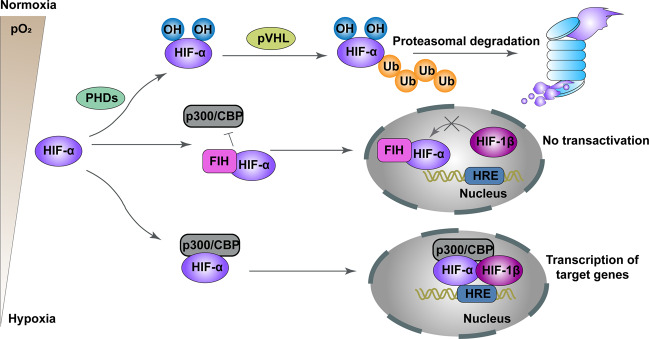
“Hypoxia inhibits PHD activity, preventing HIF-α from degradation and allowing it to dimerize with HIF-β for nucleus translocation, hypoxia-responsive elements (HREs) binding, and activation of hypoxia-sensitive genes including VEGF [60, 61] (Fig.”
Patra, S., Praharaj, P. P., Jena, M., & Zorzano, A. (2026) · Cancer Letters · doi:10.1016/j.canlet.2026.218428 · Cited by 2
Liu, M., Jiao, J., Zhang, H., Chang, Z., Wang, N., Guan, X., Yan, R., Huang, Q., Xi, Q., Li, X., et al. (2026) · Frontiers in Pharmacology · doi:10.3389/fphar.2026.1704729 · Cited by 2
Self-citationROS-HIF1α-driven glycolytic reprogramming sustains ATP production in Huntington's disease
Wu, C.-W., Chang, C., Hwang, D. W., Chen, Y.-W., Lee, Y. H., Siew, J. J., Chen, H.-M., & Chern, Y. (2026) · Neurobiology of Disease · doi:10.1016/j.nbd.2026.107459 · Cited by 2
Gao, F., Teng, F., Wan, Y., Zhang, Q., & Huang, J. (2025) · Discover Oncology · doi:10.1007/s12672-025-03216-5 · Cited by 3
“The altered function of mitochondria is a hallmark of cancer and plays a pivotal role in cell proliferation and death [9, 10].”
Wali, Z., Neha, Shamsi, A., Syed, T., & Anwar, S. (2025) · Pharmaceuticals · doi:10.3390/ph18081194 · Cited by 4
“As the powerhouse of the cell, mitochondria regulate energy production, biosynthesis, and redox balance; dysfunctional mitochondria contribute to tumorigenesis via metabolic reprogramming and adaptation to hypoxia (Figure 5) [186].”
A Brief Review of the Role of Macrophage Hypoxia in SiO 2 ‐Induced Pulmonary Fibrosis
Fu, Y., Liu, Y., Hu, H., Zhang, Z., & Gong, W. (2025) · Journal of Applied Toxicology · doi:10.1002/jat.4906 · Cited by 2
Sinberger, L. A., Keren-Khadmy, N., Goldberg, A., Peretz‐Yablonski, T., Sonnenblick, A., & Salmon‐Divon, M. (2025) · Cancers · doi:10.3390/cancers17182942 · Cited by 1
“These changes have been shown to drive epithelial-to-mesenchymal transition (EMT) [63–67].”
Ma, R., Wang, C., Qin, W., Li, Y., Zhang, M., Liang, Y., Wang, L., Wang, S., Xie, G., & Niu, Q. (2026) · Toxics · doi:10.3390/toxics14020128 · Cited by 1
“As a core energy metabolism regulator, HIF-1 α modulates cellular oxidative phosphorylation via glycolytic enzyme activity and mitochondrial function regulation [23]; additionally, elevated intracellular ROS levels markedly upregulate HIF-1 α expression [24].”
Ma, R., Wang, C., Qin, W., Yan, C., Zhang, M., Li, Y., Liang, Y., Zhang, J., & Niu, Q. (2026) · Ecotoxicology and Environmental Safety · doi:10.1016/j.ecoenv.2026.120301 · Cited by 2
Self-citationWen, Q., Liu, C., Li, C., & Yuan, X. (2026) · Gene · doi:10.1016/j.gene.2026.150260 · Cited by 1
Mitochondrial Energy Metabolism in Cancer, Immunoregulation and Antitumour Response
Patrício, J. S., Mendes, C., & Gameiro, P. A. (2026) · Advances in experimental medicine and biology · doi:10.1007/978-3-032-12166-0_17 · Cited by 1
Mack, N., MAZZIO, E. A., Badisa, R. B., & Soliman, K. F. A. (2021) · Cancer Genomics & Proteomics · doi:10.21873/cgp.20267 · Cited by 3
Nasution, L. S., Aulia, A., Jusman, S. W. A., & Sadikin, M. (2022) · eJournal Kedokteran Indonesia · doi:10.23886/ejki.9.48.197-202
“genes stimulate cell survival, metabolism, and angiogenesis in adaptation to low oxygen.9 Anaerobic glycolysis is one of the metabolic adaptations of cells made possible by the activation of HIFs.10 Anaerobic glycolysis allows the creation of energy without oxygen, therefore it is crucial in a hypoxic condition.”
BackgroundLi, H., Tang, J., Li, Y., Liu, X., Yu, G., Zheng, F., Guo, Z., Zhang, Y., Shao, W., & Wu, S. (2022) · SSRN Electronic Journal · doi:10.2139/ssrn.4189360
Features of regulation of hepcidin and ferroportin in cancer patients (literary review)
Blindar, V. N., Зубрихина, Г. Н., Давыдова, Т. В., & Dobrovolskaya, M. M. (2023) · Russian Journal of Biotherapy · doi:10.17650/1726-9784-2023-22-3-10-18
Inflamação sistêmica desencadeada pela sepse e seu impacto sobre o sistema nervoso
Santos-Júnior, N. N. (2023) · Editora Científica Digital eBooks · doi:10.37885/978-65-5360-471-1 · Cited by 1
Estudo da via da glutaminolise em astrocitomas e mecanismo de ação do gene Glsiso2 (GAC)
Franco, Y. E. M. (2023) · Digital Library of Theses and Dissertations (Universidade de São Paulo) · doi:10.11606/t.5.2023.tde-04122023-125900
Chen, H., Wang, Z., Shi, J., & Peng, J. (2024) · Research Square · doi:10.21203/rs.3.rs-4176718/v1
Araújo, Y. B. (2024) · Digital Library of Theses and Dissertations (Universidade de São Paulo) · doi:10.11606/t.85.2024.tde-24052024-085226
Research Progress of Regulatory T Cell-Mediated Immune Escape in Cancer
尹, 少. (2024) · Advances in Clinical Medicine · doi:10.12677/acm.2024.1461847
Gazdíková, K., & Deglovič, J. (2024) · Advances in biochemistry in health and disease · doi:10.1007/978-3-031-75741-9_9
Implication of Succinate Dehydrogenase in Cancer
Viswalingam, V., & Kumar, D. (2025) · Springer eBooks · doi:10.1007/978-981-96-6831-1_7
Epstein-Barr Virus Selects for Stem Cell Lineages in Breast Cancer and Normal TissuesPreprint
Friedenson, B. (2025) · medRxiv · doi:10.1101/2025.08.25.25334378
Mitochondria mitophagy and autophagy
Yavari, B., & Aziz, S. G. (2025) · Elsevier eBooks · doi:10.1016/b978-0-443-24836-8.00001-8
Han, Y., & Xie, Q. M. (2025) · Research Square · doi:10.21203/rs.3.rs-7148489/v1
Ren, Z., Wang, Y., Cheng, C., Zhang, Y., Liu, Y., Wei, Y., Liu, Z., Zhang, J., Shi, Z., Yu, J., et al. (2025) · Free Radical Biology and Medicine · doi:10.1016/j.freeradbiomed.2025.11.050 · Cited by 2
Self-citationSun, X., Zhang, J., Wu, S., & Liu, C. (2025) · Archives of Physiology and Biochemistry · doi:10.1080/13813455.2025.2600338
Self-citationXu, H.-W., Chang, S.-J., Wang, S., LIU, X., & Wang, S. (2026) · Cell Proliferation · doi:10.1111/cpr.70162
“However, this represents a failed compensatory response that cannot reverse the dominant pro-angiogenic signals mediated by HIF-1α [27].”
Deciphering the causal nexus of mitochondrial biology with breast cancer
Liu, D., Xu, H., Yan, Y., Wang, B., & Yan, W. (2026) · Discover Oncology · doi:10.1007/s12672-026-04500-8
“Alterations in mitochondrial function, including changes in morphology, are one of the significant hallmarks of cancer [8].”
Mitochondria and radioresistance
Fadavi, P., & Taghizadeh‐Hesary, F. (2026) · Elsevier eBooks · doi:10.1016/b978-0-443-40535-8.00007-7
Mitochondria and tumor microenvironment
Taghizadeh‐Hesary, F., & Bitarafan, F. (2026) · Elsevier eBooks · doi:10.1016/b978-0-443-40535-8.00017-x
Effects of environmental pollutants on SH-SY5Y in vitro neurodevelopmental model
Lopez-Suarez, L. (2022) · theses.fr (ABES) · doi:10.70675/1e791dd5z5848z4ee2zb26ez089a2f5c505e
Ruan, D., Que, Y., Hu, J., Xu, M., Nie, Y., He, H., Zhao, H., & Yang, Y. (2026) · Journal of Ethnopharmacology · doi:10.1016/j.jep.2026.121778
Chen, T., Xu, R., Shi, X., Yang, D., Du, Y., Song, Y., Lv, Y., & Chen, Y. (2026) · Scientific Reports · doi:10.1038/s41598-026-51753-y
“This dysfunction includes increased glycolysis, decreased phosphorylation inhibition, and a more aggressive phenotype in AGS GC cell lines 41 .”
Li, Y., Zhou, J., Wang, J., Yan, K., Guan, Y., Wang, M., Xiang, J., Liu, Y., Yu, H., Jia, S., et al. (2026) · Journal of Virology · doi:10.1128/jvi.00320-26
Majumder, J., & Sarkar, S. (2026) · Elsevier eBooks · doi:10.1016/b978-0-443-40471-9.00012-4
Du, B.-B., Qian, Z., Zhu, C.-Z., & Guan, Q. (2026) · World Journal of Gastroenterology · doi:10.3748/wjg.119277
Chen, L., Hu, S., Tang, X., Wang, Y., Zou, Y., Luo, F., & Wan, H. (2026) · Frontiers in Cell and Developmental Biology · doi:10.3389/fcell.2026.1740661
HIFs: The central drivers of tumors and their role as molecular switches in targeted therapy?
Peng, Y., Che, Y., Zhao, Y., Wang, Z., Pei, Z., Hu, Y., Yin, Y., Pan, X., Hu, X., Wei, M., et al. (2026) · Acta Pharmaceutica Sinica B · doi:10.1016/j.apsb.2026.06.040
Lee, D. C., Duraj, T., Chinopoulos, C., & Seyfried, T. N. (2026) · Journal of Bioenergetics and Biomembranes · doi:10.1007/s10863-026-10117-x
“Regardless, the authors concluded that SCS is widely distributed across the tree of life (Zhang et al., 2021).”
Lactate and lysine lactylation: Emerging drivers shaping tumor immune evasion
Fan, S., Lu, S., Peng, Z., Mao, G., Wu, Z., Song, T., Cai, M., Gao, Y., Li, X. B., Li, C., et al. (2026) · International Immunopharmacology · doi:10.1016/j.intimp.2026.117130
Mitochondrial transfer: a new perspective on tumor-microenvironment crosstalk driving metastasis
Duan, Y., Li, A., Hu, X., Xiong, Z., Shi, J., & Wang, K. (2026) · Frontiers in Immunology · doi:10.3389/fimmu.2026.1922061
“Traditionally, CAFs were thought to rely primarily on glycolysis for metabolism, providing energy support to cancer cells by secreting metabolites such as lactate and pyruvate (57 – 59).”
Fang, W., Wang, Y., Yang, Z., Zheng, H., Wu, Y., Chen, R., Wang, R., Tang, H., Tang, M., & Ye, X. (2026) · Frontiers in Immunology · doi:10.3389/fimmu.2026.1785073
“In parallel, mitochondrial dysfunction compromises energy production and increases oxidative stress, which may initiate oncogenic pathways (56).”
Jung, B., Lee, J., Kang, Y., Jang, Y. S., Kim, K. H., Youn, U. J., Park, H. H., Son, B., & Lee, S. (2026) · ACS Omega · doi:10.1021/acsomega.6c03912 · Cited by 1
Rustum, Y. M. (2026) · International Journal of Molecular Sciences · doi:10.3390/ijms27177858
Bai, Y., & Chen, W. (2026) · Frontiers in Physiology · doi:10.3389/fphys.2026.1931732 · Cited by 1
Metadata
- Authors
- Bao, X., Zhang, J., Huang, G., Yan, J., Xu, C., Dou, Z., Sun, C., & Zhang, H.
- Affiliations
- Chinese Academy of Sciences (CN)
- Corresponding author
- Sun, Chao
- Zhang, Hong
- Venue
- Cell Death & Disease
- Published
- 2021-02-26
- Volume
- 12
- Issue
- 2
- Pages
- 215-215
- ISSN
- 2041-4889 (ISSN-L)
- PMC
- PMC7910460
- OpenAlex
- W3132095850
- Semantic Scholar
- 6b7b94fa3641410e4b06c644e3df57d94a026991
- Cited by
- 152
- References
- 130
- Citations by year
- 2026: 31 · 2025: 38 · 2024: 32 · 2023: 25 · 2022: 21 · 2021: 4
- FWCI
- 2.47
- Type
- journal article
- Language
- en
- Open access
- gold
- doi.org
- Licence
- cc-by
- creativecommons.org/licenses/by/4.0 (tdm)
- creativecommons.org/licenses/by/4.0 (vor)
- Locations
- Cell Death and Disease (publishedVersion, cc-by)
- PubMed Central (publishedVersion, cc-by)
- PubMed (publishedVersion)
- DOAJ (DOAJ: Directory of Open Access Journals) (submittedVersion, cc-by-sa)
- Funders
- National Natural Science Foundation of China (2018YFE0205100, U1632270, 11775280, 2020414)
- Chinese Academy of Sciences (U1632270)
- University of Chinese Academy of Sciences
- Youth Innovation Promotion Association (2020414)
- Topics
- Life Sciences › Biochemistry, Genetics and Molecular Biology › Cancer Research › Cancer, Hypoxia, and Metabolism
- Life Sciences › Biochemistry, Genetics and Molecular Biology › Molecular Biology › Metabolism, Diabetes, and Cancer
- Life Sciences › Biochemistry, Genetics and Molecular Biology › Molecular Biology › Mitochondrial Function and Pathology
- Keywords
- hypoxia-inducible factor, HIF-1α, mitochondrial dysfunction, cancer metabolism, Warburg effect, aerobic glycolysis, tumor hypoxia, TCA cycle, electron transport chain, mitochondrial respiration, mitochondrial biogenesis, mitochondrial fission, mitophagy, apoptosis, carcinogenesis, lactate
- MeSH terms
- Tumor Hypoxia, Endothelial PAS Domain-Containing Protein 1, Animals, Energy Metabolism, Humans, Mitochondria, Neoplasms, Neovascularization, Pathologic, Repressor Proteins, Signal Transduction, Cell Death, Cell Proliferation, Apoptosis Regulatory Proteins, Aryl Hydrocarbon Receptor Nuclear Translocator, Basic Helix-Loop-Helix Proteins, Hypoxia-Inducible Factor 1, Hypoxia-Inducible Factor 1, alpha Subunit, Epithelial-Mesenchymal Transition, Tumor Microenvironment
About these checks
Registry, retraction, Cites and statistics results are computed, not judged, with one exception: a printed reference that no index lists is read once by a model before it counts as a citation error. Claims are extracted by a model and kept only when their quote appears verbatim in the text; each cited source is then checked, with a model’s help, for whether it says what the claim relies on. Those verdicts can be wrong — read the claim’s quote and the cited source before relying on one.
Statistics and arithmetic are recomputed, not judged.
Confidence bands are shown only for fields calibrated on our annotated test set. None is calibrated yet, so no band is shown.
What counts as a claim ›How we measure confidence ›How we check this ›
Are you an author, or do you see a problem with this page? Request a review
Data sources
Bibliographic data: Semantic Scholar, OpenAlex, Crossref.
Contains information from the Semantic Scholar Academic Graph Datasets, made available under the ODC Attribution License (ODC-BY 1.0).
Semantic Scholar’s data is described in: Kinney, R., et al. (2023). The Semantic Scholar Open Data Platform. arXiv:2301.10140.
