

The crosstalk between HIFs and mitochondrial dysfunctions in cancer development
Open accessThe DOI matches its Crossref record; 130 of the 130 references it cites were found in a registry or an index.
Abstract
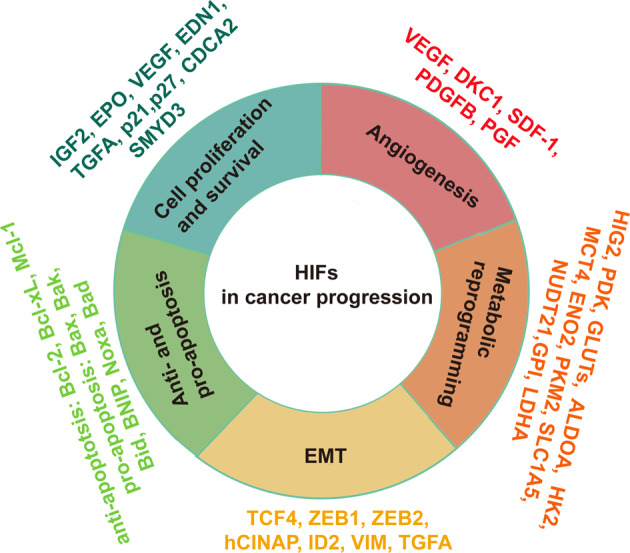
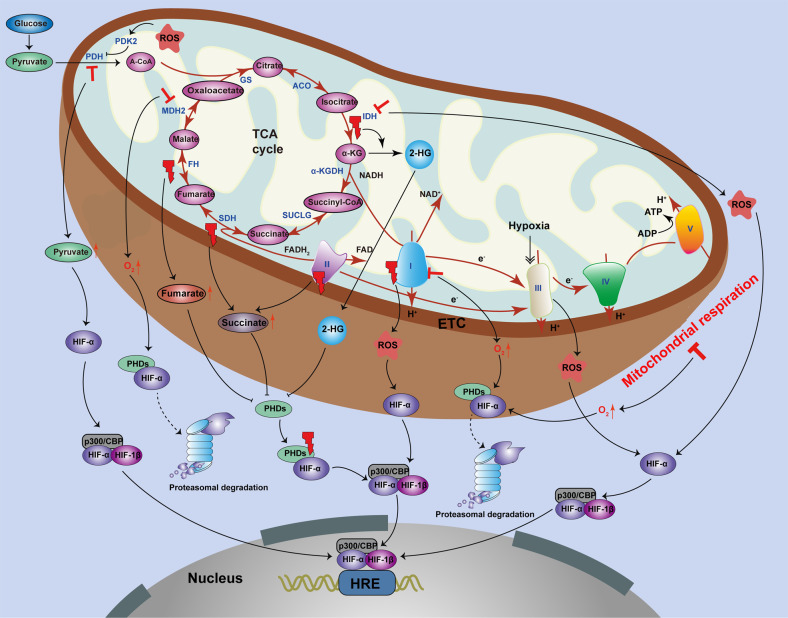
Mitochondria are essential cellular organelles that are involved in regulating cellular energy, metabolism, survival, and proliferation. To some extent, cancer is a genetic and metabolic disease that is closely associated with mitochondrial dysfunction. Hypoxia-inducible factors (HIFs), which are major molecules that respond to hypoxia, play important roles in cancer development by participating in multiple processes, such as metabolism, proliferation, and angiogenesis. The Warburg phenomenon reflects a pseudo-hypoxic state that activates HIF-1α. In addition, a product of the Warburg effect, lactate, also induces HIF-1α. However, Warburg proposed that aerobic glycolysis occurs due to a defect in mitochondria. Moreover, both HIFs and mitochondrial dysfunction can lead to complex reprogramming of energy metabolism, including reduced mitochondrial oxidative metabolism, increased glucose uptake, and enhanced anaerobic glycolysis. Thus, there may be a connection between HIFs and mitochondrial dysfunction. In this review, we systematically discuss the crosstalk between HIFs and mitochondrial dysfunctions in cancer development. Above all, the stability and activity of HIFs are closely influenced by mitochondrial dysfunction related to tricarboxylic acid cycle, electron transport chain components, mitochondrial respiration, and mitochondrial-related proteins. Furthermore, activation of HIFs can lead to mitochondrial dysfunction by affecting multiple mitochondrial functions, including mitochondrial oxidative capacity, biogenesis, apoptosis, fission, and autophagy. In general, the regulation of tumorigenesis and development by HIFs and mitochondrial dysfunction are part of an extensive and cooperative network.
Overview
The claims and statistics of this paper haven’t been checked yet.
Free: it reads the open-access text and checks the first 5 claims that cite a source we can check. Create a free account to check every claim.
Integrity signals
Registry
Cites
Statistics
Figures
Verification
Claims the paper makes
The claims and statistics of this paper haven’t been checked yet.
Free: it reads the open-access text and checks the first 5 claims that cite a source we can check. Create a free account to check every claim.
Claims other papers make about this one
Each is checked against this paper’s own text: does it say what the citing paper says it does?
The source backs part of the claim, not all of it — or backs it for a different population, condition or comparison.
In the citing paper
“In this regard, HIF-1α activation induces expression of less active ETC complex 1 and IV subunits, thus decelerating electron transfer through the ETC, whereas both HIF-1α and HIF-2α drive transcriptional programs that suppress genes involved in mitochondrial biogenesis such as PGC1β and PINK1 [42–44].”
From The HIF Axes in Cancer - Angiogenesis, Metabolism and Immune-Modulation (2025) · cites this paper as [44]
Experimental — accuracy not yet measured
Self-check
Percentages, sums and reported differences re-computed from the paper’s own numbers.
The self-check needs the paper’s full text.
Citations
Cites
3 retracted
Cao, L., Wang, M., Dong, Y., Xu, B., Chen, J., Ding, Y., Qiu, S., Li, L., Karamfilova Zaharieva, E., Zhou, X., et al. (2020) · Cell Death & Disease · doi:10.1038/s41419-020-2336-0 · Cited by 317
RetractedSamanta, D., Park, Y., Andrabi, S. A., Shelton, L. M., Gilkes, D. M., & Semenza, G. L. (2016) · Cancer Research · doi:10.1158/0008-5472.can-16-0530 · Cited by 238
RetractedLi, X., Lee, Y., Kang, Y., Dai, B., Perez, M. V. R., Pratt, M. F., Koay, E. J., Kim, M. P., Brekken, R. A., & Fleming, J. B. (2018) · Cell Death and Differentiation · doi:10.1038/s41418-018-0207-3 · Cited by 54
RetractedWarburg, O. (1956) · Science · doi:10.1126/science.123.3191.309 · Cited by 13,425
Mitochondrial TCA cycle metabolites control physiology and disease
Martínez-Reyes, I., & Chandel, N. S. (2020) · Nature Communications · doi:10.1038/s41467-019-13668-3 · Cited by 2,813
Role of hypoxia in cancer therapy by regulating the tumor microenvironment
Jing, X., Yang, F., Shao, C., Wei, K., Xie, M., Shen, H., & Shu, Y. (2019) · Molecular Cancer · doi:10.1186/s12943-019-1089-9 · Cited by 2,054
Therapeutic targeting of hypoxia and hypoxia-inducible factors in cancer
Wigerup, C., Påhlman, S., & Bexell, D. (2016) · Pharmacology & Therapeutics · doi:10.1016/j.pharmthera.2016.04.009 · Cited by 687
Lee, K.-M., Giltnane, J. M., Balko, J. M., Schwarz, L. J., Guerrero-Zotano, A. L., Hutchinson, K. E., Nixon, M. J., Estrada, M. V., Sánchez, V., Sanders, M. E., et al. (2017) · Cell Metabolism · doi:10.1016/j.cmet.2017.09.009 · Cited by 650
Cancer metabolism and the Warburg effect: the role of HIF-1 and PI3K
Courtnay, R., Ngo, D. C., Malik, N., Ververis, K., Tortorella, S. M., & Karagiannis, T. C. (2015) · Molecular Biology Reports · doi:10.1007/s11033-015-3858-x · Cited by 567
Serine Catabolism Regulates Mitochondrial Redox Control during Hypoxia
Ye, J., Fan, J., Venneti, S., Wan, Y.-W., Pawel, B. R., Zhang, J., Finley, L. W. S., Lu, C., Lindsten, T., Cross, J. R., et al. (2014) · Cancer Discovery · doi:10.1158/2159-8290.cd-14-0250 · Cited by 452
Self-citationYoo, H. C., Park, S. J., Nam, M., Kang, J., Kim, K., Yeo, J. H., Kim, J.-K., Heo, Y., Lee, H. S., Lee, M. Y., et al. (2020) · Cell Metabolism · doi:10.1016/j.cmet.2019.11.020 · Cited by 449
Mitophagy: An Emerging Role in Aging and Age-Associated Diseases
Chen, G., Kroemer, G., & Kepp, O. (2020) · Frontiers in Cell and Developmental Biology · doi:10.3389/fcell.2020.00200 · Cited by 359
The enhancement of glycolysis regulates pancreatic cancer metastasis
Yang, J., Ren, B., Yang, G., Wang, H., Chen, G., You, L., Zhang, T., & Zhao, Y. (2020) · Cellular and Molecular Life Sciences · doi:10.1007/s00018-019-03278-z · Cited by 347
Structural integration in hypoxia-inducible factors
Wu, D., Potluri, N., Lu, J., Kim, Y., & Rastinejad, F. (2015) · Nature · doi:10.1038/nature14883 · Cited by 346
O-GlcNAcylation of PGK1 coordinates glycolysis and TCA cycle to promote tumor growth
Nie, H., Ju, H., Fan, J., Shi, X., Cheng, Y., Cang, X., Zheng, Z., Duan, X., & Yi, W. (2020) · Nature Communications · doi:10.1038/s41467-019-13601-8 · Cited by 346
HIF Inhibitors: Status of Current Clinical Development
Fallah, J., & Rini, B. I. (2019) · Current Oncology Reports · doi:10.1007/s11912-019-0752-z · Cited by 308
Fumarate and Succinate Regulate Expression of Hypoxia-inducible Genes via TET Enzymes
Laukka, T., Mariani, C. J., Ihantola, T., Cao, J. Z., Hokkanen, J., Kaelin, W. G., Godley, L. A., & Koivunen, P. (2016) · Journal of Biological Chemistry · doi:10.1074/jbc.m115.688762 · Cited by 307
Becker, L. M., O’Connell, J. T., Vo, A. P., Cain, M. P., Tampe, D., Bizarro, L., Sugimoto, H., McGow, A. K., Asara, J. M., Lovisa, S., et al. (2020) · Cell Reports · doi:10.1016/j.celrep.2020.107701 · Cited by 291
Jia, D., Park, J., Jung, K., Levine, H., & Kaipparettu, B. (2018) · Cells · doi:10.3390/cells7030021 · Cited by 270
L-2-Hydroxyglutarate production arises from noncanonical enzyme function at acidic pH
Intlekofer, A. M., Wang, B., Liu, H., Shah, H., Carmona-Fontaine, C., Rustenburg, A. S., Salah, S., Gunner, M. R., Chodera, J. D., Cross, J. R., et al. (2017) · Nature Chemical Biology · doi:10.1038/nchembio.2307 · Cited by 268
Mitochondrial DNA Integrity: Role in Health and Disease
Sharma, P., & Sampath, H. (2019) · Cells · doi:10.3390/cells8020100 · Cited by 267
Emerging roles of aerobic glycolysis in breast cancer
Wu, Z., Wu, J., Zhao, Q., Fu, S., & Jin, J. (2020) · Clinical and Translational Oncology · doi:10.1007/s12094-019-02187-8 · Cited by 255
Lactate promotes glutamine uptake and metabolism in oxidative cancer cells
Pérez-Escuredo, J., Dadhich, R. K., Dhup, S., Cacace, A., Van Hée, V. F., De Saedeleer, C. J., Sboarina, M., Rodriguez, F., Fontenille, M.-J., Brisson, L., et al. (2016) · Cell Cycle · doi:10.1080/15384101.2015.1120930 · Cited by 231
Cardamonin inhibits breast cancer growth by repressing HIF-1α-dependent metabolic reprogramming
Jin, J., Qiu, S., Wang, P., Liang, X., Huang, F., Wu, H., Zhang, B., Zhang, W., Tian, X., Xu, R., et al. (2019) · Journal of Experimental & Clinical Cancer Research · doi:10.1186/s13046-019-1351-4 · Cited by 225
Hypoxia/pseudohypoxia‐mediated activation of hypoxia‐inducible factor‐1α in cancer
Hayashi, Y., Yokota, A., Harada, H., & Huang, G. (2019) · Cancer Science · doi:10.1111/cas.13990 · Cited by 216
Self-citationSun, C., Liu, X., Wang, B., Wang, Z., Liu, Y., Di, C., Si, J., Li, H., Wu, Q., Xu, D., et al. (2019) · Theranostics · doi:10.7150/thno.33100 · Cited by 214
Self-citationIn vivo imaging of mitochondrial membrane potential in non-small-cell lung cancer
Momcilovic, M., Jones, A., Bailey, S. T., Waldmann, C. M., Li, R., Lee, J. T., Abdelhady, G., Gomez, A., Holloway, T., Schmid, E., et al. (2019) · Nature · doi:10.1038/s41586-019-1715-0 · Cited by 214
Chen, K., Lu, P., Beeraka, N. M., Sukocheva, O. A., Madhunapantula, S. V., Liu, J., Sinelnikov, M. Y., Nikolenko, V. N., Bulygin, K. V., Mikhaleva, L. M., et al. (2022) · Seminars in Cancer Biology · doi:10.1016/j.semcancer.2020.09.012 · Cited by 193
Self-citationKung-Chun Chiu, D., Pui-Wah Tse, A., Law, C.-T., Ming-Jing Xu, I., Lee, D., Chen, M., Kit-Ho Lai, R., Wai-Hin Yuen, V., Wing-Sum Cheu, J., Wai-Hung Ho, D., et al. (2019) · Cell Death & Disease · doi:10.1038/s41419-019-2155-3 · Cited by 192
Han, Y., Kim, B., Cho, U., Park, I. S., Kim, S. I., Dhanasekaran, D. N., Tsang, B. K., & Song, Y. S. (2019) · Oncogene · doi:10.1038/s41388-019-0949-5 · Cited by 187
Hypoxia Inducible Factor Pathway and Physiological Adaptation: A Cell Survival Pathway?
Kumar, H., & Choi, D.-K. (2015) · Mediators of Inflammation · doi:10.1155/2015/584758 · Cited by 180
Metabolic Heterogeneity of Cancer Cells: An Interplay between HIF-1, GLUTs, and AMPK
Moldogazieva, N. T., Mokhosoev, I. M., & Terentiev, A. A. (2020) · Cancers · doi:10.3390/cancers12040862 · Cited by 177
Sharma, A., Liaw, K., Sharma, R., Zhang, Z., Kannan, S., & Kannan, R. M. (2018) · Theranostics · doi:10.7150/thno.29039 · Cited by 164
Gao, T., Zhang, X., Zhao, J., Zhou, F., Wang, Y., Zhao, Z., Xing, J., Chen, B., Li, J., & Liu, S. (2019) · Cancer Letters · doi:10.1016/j.canlet.2019.10.029 · Cited by 164
Apoptotic Cell Death Under Hypoxia
Sendoel, A., & Hengartner, M. O. (2014) · Physiology · doi:10.1152/physiol.00016.2013 · Cited by 157
UHRF1 promotes aerobic glycolysis and proliferation via suppression of SIRT4 in pancreatic cancer
Hu, Q., Qin, Y., Ji, S., Xu, W., Liu, W., Sun, Q., Zhang, Z., Liu, M., Ni, Q., Yu, X., et al. (2019) · Cancer Letters · doi:10.1016/j.canlet.2019.03.024 · Cited by 154
Inhibition of intracellular lipolysis promotes human cancer cell adaptation to hypoxia
Zhang, X., Saarinen, A. M., Hitosugi, T., Wang, Z., Wang, L., Ho, T. H., & Liu, J. (2017) · eLife · doi:10.7554/elife.31132 · Cited by 150
Chowdhury, A. R., Zielonka, J., Kalyanaraman, B., Hartley, R. C., Murphy, M. P., & Avadhani, N. G. (2020) · Redox Biology · doi:10.1016/j.redox.2020.101606 · Cited by 141
Barbosa, A. M., & Martel, F. (2020) · Cancers · doi:10.3390/cancers12010154 · Cited by 135
Tseng, C.-W., Kuo, W.-H., Chan, S.-H., Chan, H.-L., Chang, K.-J., & Wang, L.-H. (2018) · Cancer Research · doi:10.1158/0008-5472.can-17-2906 · Cited by 131
Du, Y., Wei, N., Ma, R., Jiang, S., & Song, D. (2020) · Cell Death and Disease · doi:10.1038/s41419-020-02952-6 · Cited by 130
Mitochondrial dysfunction in cancer: Potential roles of ATF5 and the mitochondrial UPR
Deng, P., & Haynes, C. M. (2017) · Seminars in Cancer Biology · doi:10.1016/j.semcancer.2017.05.002 · Cited by 129
Desideri, E., Vegliante, R., & Ciriolo, M. R. (2014) · Cancer Letters · doi:10.1016/j.canlet.2014.02.023 · Cited by 126
Cheng, Y., & Ji, Y. (2019) · Journal of Controlled Release · doi:10.1016/j.jconrel.2019.12.011 · Cited by 123
A novel LncRNA HITT forms a regulatory loop with HIF-1α to modulate angiogenesis and tumor growth
Wang, X., Li, L., Zhao, K., Lin, Q., Li, H., Xue, X., Ge, W., He, H., Liu, D., Xie, H., et al. (2019) · Cell Death and Differentiation · doi:10.1038/s41418-019-0449-8 · Cited by 122
Hypoxia‑inducible factors in hepatocellular carcinoma (Review)
Guo, Y., Xiao, Z., Liu, Y., Gao, Y., Zhu, Q., Hu, L., Huang, D., & Xu, Q. (2019) · Oncology Reports · doi:10.3892/or.2019.7397 · Cited by 120
Alternative Splicing in Angiogenesis
Bowler, E., & Oltean, S. (2019) · International Journal of Molecular Sciences · doi:10.3390/ijms20092067 · Cited by 118
Hou, P., Shi, P.-C., Jiang, T., Yin, H., Chu, S., Shi, M., Bai, J., & Song, J. H. (2019) · British Journal of Cancer · doi:10.1038/s41416-019-0695-z · Cited by 110
Impairment of HIF-1α-mediated metabolic adaption by NRF2-silencing in breast cancer cells
Lee, S., Hallis, S. P., Jung, K.-A., Ryu, D., & Kwak, M.-K. (2019) · Redox Biology · doi:10.1016/j.redox.2019.101210 · Cited by 104
Zhang, P., Liu, X., Li, M., Ma, Y., Sun, H., Tian, X., Wang, Y., Liu, M., Fu, L.-S., Wang, Y., et al. (2019) · Biochemical Pharmacology · doi:10.1016/j.bcp.2019.113771 · Cited by 103
Regulators of glucose uptake in thyroid cancer cell lines
Heydarzadeh, S., Moshtaghie, A. A., Daneshpoor, M. S., & Hedayati, M. (2020) · Cell Communication and Signaling · doi:10.1186/s12964-020-00586-x · Cited by 102
The role of HIF-1α in chemo-/radioresistant tumors
Xia, Y., Jiang, L., & Zhong, T. (2018) · OncoTargets and Therapy · doi:10.2147/ott.s158206 · Cited by 98
Baumeister, J., Chatain, N., Hubrich, A., Maié, T., Costa, I. G., Denecke, B., Han, L., Küstermann, C., Sontag, S., Seré, K., et al. (2019) · Leukemia · doi:10.1038/s41375-019-0629-z · Cited by 97
Yuan, P., Yang, T., Mu, J., Zhao, J., Yang, Y., Yan, Z., Hou, Y., Chen, C., Xing, J., Zhang, H., et al. (2019) · Cancer Letters · doi:10.1016/j.canlet.2019.11.024 · Cited by 94
Self-citationPLAGL2‐EGFR‐HIF‐1/2α Signaling Loop Promotes HCC Progression and Erlotinib Insensitivity
Hu, W., Zheng, S., Guo, H., Dai, B., Ni, J., Shi, Y., Bian, H., Li, L., Shen, Y., Wu, M., et al. (2021) · Hepatology · doi:10.1002/hep.31293 · Cited by 93
NDUFA4L2 Fine-tunes Oxidative Stress in Hepatocellular Carcinoma
Lai, R. K.-H., Xu, I. M.-J., Chiu, D. K.-C., Tse, A. P.-W., Wei, L. L., Law, C.-T., Lee, D., Wong, C.-M., Wong, M. P., Ng, I. O.-L., et al. (2016) · Clinical Cancer Research · doi:10.1158/1078-0432.ccr-15-1987 · Cited by 91
Cell-Autonomous Metabolic Reprogramming in Hypoxia
Schito, L., & Rey, S. (2017) · Trends in Cell Biology · doi:10.1016/j.tcb.2017.10.006 · Cited by 90
Oh, E., Kim, C. W., Kim, H. G., Lee, J., & Park, H. J. (2017) · Theranostics · doi:10.7150/thno.20861 · Cited by 87
Wang, M., Yan, J., Cao, X., Hua, P., & Li, Z. (2019) · Biochemical Pharmacology · doi:10.1016/j.bcp.2019.113775 · Cited by 87
Self-citationBiological and Clinical Relevance of microRNAs in Mitochondrial Diseases/Dysfunctions
Sekar, D., Johnson, J., Biruntha, M., Lakhmanan, G., Gurunathan, D., & Ross, K. (2019) · DNA and Cell Biology · doi:10.1089/dna.2019.5013 · Cited by 86
Ban, H. S., Xu, X., Jang, K., Kim, I., Kim, B., Lee, K., & Won, M. (2016) · PLoS ONE · doi:10.1371/journal.pone.0162568 · Cited by 84
Kinnaird, A. S., Dromparis, P., Saleme, B., Gurtu, V., Watson, K., Paulin, R., Zervopoulos, S. D., Stenson, T. H., Sutendra, G., Pink, D., et al. (2016) · European Urology · doi:10.1016/j.eururo.2015.09.014 · Cited by 82
WU, H., HUANG, S., CHEN, Z., LIU, W., ZHOU, X., & ZHANG, D. (2015) · Molecular Medicine Reports · doi:10.3892/mmr.2015.4255 · Cited by 79
Phenolic compound ellagic acid inhibits mitochondrial respiration and tumor growth in lung cancer
Duan, J., Li, Y., Gao, H., Yang, D., He, X., Fang, Y., & Zhou, G. (2020) · Food & Function · doi:10.1039/d0fo01177k · Cited by 79
Liao, C., Lin, T., Li, P., Geary, L., Chen, K., Vaikari, V. P., Wu, B. J., Lin, C., Gross, M. E., & Shih, J. C. (2018) · Oncogene · doi:10.1038/s41388-018-0325-x · Cited by 77
Kurelac, I., Iommarini, L., Vatrinet, R., Amato, L. B., De Luise, M., Leone, G., Girolimetti, G., Umesh Ganesh, N., Bridgeman, V. L., Ombrato, L., et al. (2019) · Nature Communications · doi:10.1038/s41467-019-08839-1 · Cited by 76
Hypoxia-Inducible Factors as an Alternative Source of Treatment Strategy for Cancer
Akanji, M. A., Rotimi, D., & Adeyemi, O. S. (2019) · Oxidative Medicine and Cellular Longevity · doi:10.1155/2019/8547846 · Cited by 76
The prospect of precision therapy for renal cell carcinoma
Ciccarese, C., Brunelli, M., Montironi, R., Fiorentino, M., Iacovelli, R., Heng, D. Y. C., Tortora, G., & Massari, F. (2016) · Cancer Treatment Reviews · doi:10.1016/j.ctrv.2016.07.003 · Cited by 73
Valle-Mendiola, A., & Soto-Cruz, I. (2020) · Cancers · doi:10.3390/cancers12010124 · Cited by 72
Paredes, F., Sheldon, K., Lassègue, B., Williams, H. C., Faidley, E. A., Benavides, G. A., Torres, G., Sanhueza-Olivares, F., Yeligar, S. M., Griendling, K. K., et al. (2018) · Proceedings of the National Academy of Sciences · doi:10.1073/pnas.1720693115 · Cited by 71
Lee, S. Y., Ju, M. K., Jeon, H. M., Lee, Y. J., Kim, C. H., Park, H. G., Han, S. I., & Kang, H. S. (2018) · Oxidative Medicine and Cellular Longevity · doi:10.1155/2018/1027453 · Cited by 71
Pan, L., Zhou, L., Yin, W., Bai, J. Q. A., & Liu, R. (2018) · International Journal of Oncology · doi:10.3892/ijo.2018.4380 · Cited by 70
Tricarboxylic acid cycle metabolites in the control of macrophage activation and effector phenotypes
Noe, J. T., & Mitchell, R. A. (2019) · Journal of Leukocyte Biology · doi:10.1002/jlb.3ru1218-496r · Cited by 70
The role of mitochondria in angiogenesis
Reichard, A., & Asosingh, K. (2018) · Molecular Biology Reports · doi:10.1007/s11033-018-4488-x · Cited by 69
Inhibition of HSP90 overcomes resistance to chemotherapy and radiotherapy in pancreatic cancer
Nagaraju, G. P., Zakka, K. M., Landry, J. C., Shaib, W. L., Lesinski, G. B., & El‐Rayes, B. F. (2019) · International Journal of Cancer · doi:10.1002/ijc.32227 · Cited by 68
Dasgupta, A., Wu, D., Tian, L., Xiong, P. Y., Dunham‐Snary, K. J., Chen, K., Alizadeh, E., Motamed, M., Potus, F., Hindmarch, C. C. T., et al. (2020) · Comprehensive physiology · doi:10.1002/cphy.c190027 · Cited by 67
Yang, X., Yin, H., Zhang, Y., Li, X., Tong, H., Zeng, Y., Wang, Q., & He, W. (2018) · International Journal of Oncology · doi:10.3892/ijo.2018.4376 · Cited by 64
Rodríguez, M. E., Catrinacio, C., Ropolo, A., Rivarola, V. A., & Vaccaro, M. I. (2017) · Photochemical & Photobiological Sciences · doi:10.1039/c7pp00161d · Cited by 63
Long-Noncoding RNA (lncRNA) in the Regulation of Hypoxia-Inducible Factor (HIF) in Cancer
Barth, D. A., Prinz, F., Teppan, J., Jonas, K., Klec, C., & Pichler, M. (2020) · Non-Coding RNA · doi:10.3390/ncrna6030027 · Cited by 61
Naik, R., Ban, H. S., Jang, K., Kim, I., Xu, X., Harmalkar, D. S., Shin, S.-A., Kim, M., Kim, B., Park, J., et al. (2017) · Journal of Medicinal Chemistry · doi:10.1021/acs.jmedchem.7b01231 · Cited by 60
Multifaceted Roles of Mitochondrial Components and Metabolites in Metabolic Diseases and Cancer
Nakhle, J., Rodriguez, A., & Vignais, M. (2020) · International Journal of Molecular Sciences · doi:10.3390/ijms21124405 · Cited by 59
Hif1a inactivation rescues photoreceptor degeneration induced by a chronic hypoxia-like stress
Barben, M., Ail, D., Storti, F., Klee, K., Schori, C., Samardzija, M., Michalakis, S., Biel, M., Meneau, I., Blaser, F., et al. (2018) · Cell Death and Differentiation · doi:10.1038/s41418-018-0094-7 · Cited by 58
Protein Kinase CK2 in Cancer Energetics
Silva-Pavez, E., & Tapia, J. C. (2020) · Frontiers in Oncology · doi:10.3389/fonc.2020.00893 · Cited by 58
Huang, M., Yang, L., Peng, X., Wei, S., Fan, Q., Yang, S., Li, X., Li, B., Jin, H., Wu, B., et al. (2020) · Journal of Experimental & Clinical Cancer Research · doi:10.1186/s13046-020-01698-5 · Cited by 58
HIF-1a regulates hypoxia-induced autophagy via translocation of ANKRD37 in colon cancer
Deng, M., Zhang, W., Yuan, L., Tan, J., & Chen, Z. (2020) · Experimental Cell Research · doi:10.1016/j.yexcr.2020.112175 · Cited by 56
Li, N., & Zhan, X. (2019) · Frontiers in Endocrinology · doi:10.3389/fendo.2019.00690 · Cited by 55
Zhe, N., Chen, S., Zhou, Z., Liu, P., Lin, X., Yu, M., Cheng, B., Zhang, Y., & Wang, J. (2016) · Cancer Biology & Therapy · doi:10.1080/15384047.2016.1177679 · Cited by 50
Wang, J. Y., Wang, Z., Li, M. Y., Zhang, Z., Mi, C., Zuo, H. X., Xing, Y., Wu, Y.-L., Lian, L.-H., Xu, G. H., et al. (2018) · Chemico-Biological Interactions · doi:10.1016/j.cbi.2018.09.014 · Cited by 50
Small molecules targeting HIF-1α pathway for cancer therapy in recent years.
Tang, W., & Zhao, G. (2020) · Bioorganic & Medicinal Chemistry · doi:10.1016/j.bmc.2019.115235 · Cited by 50
Djeungoue‐Petga, M., Lurette, O., Jean, S., Hamel-Côté, G., Martín-Jiménez, R., Bou, M., Cannich, A., Roy, P., & Hébert-Chatelain, É. (2019) · Cell Death and Disease · doi:10.1038/s41419-019-2134-8 · Cited by 48
Mitoepigenetics and Its Emerging Roles in Cancer
Dong, Z., Pu, L., & Cui, H. (2020) · Frontiers in Cell and Developmental Biology · doi:10.3389/fcell.2020.00004 · Cited by 48
Hypoxia, hypoxia-inducible gene 2 (HIG2)/HILPDA, and intracellular lipolysis in cancer
Povero, D., Johnson, S. M., & Liu, J. (2020) · Cancer Letters · doi:10.1016/j.canlet.2020.06.013 · Cited by 48
Liu, C., Liu, L., Wang, K., Li, X., Ge, L., Ma, R., Fan, Y., Li, L., Liu, Z., Qiu, M. R., et al. (2020) · Oncogene · doi:10.1038/s41388-020-1291-7 · Cited by 46
The role of mitochondrial-related nuclear genes in age-related common disease
Li, H., Slone, J. D., & Huang, T. (2020) · Mitochondrion · doi:10.1016/j.mito.2020.04.012 · Cited by 46
Zhang, Y., Cheng, Y., Zhang, Z., Bai, Z.-Y., Jin, H., Guo, X., Huang, X., Li, M., Wang, M., Shu, X., et al. (2020) · Frontiers in Oncology · doi:10.3389/fonc.2020.00725 · Cited by 44
AG311, a small molecule inhibitor of complex I and hypoxia-induced HIF-1α stabilization
Bastian, A., Matsuzaki, S., Humphries, K. M., Pharaoh, G. A., Doshi, A., Zaware, N., Gangjee, A., & Ihnat, M. A. (2017) · Cancer Letters · doi:10.1016/j.canlet.2016.11.040 · Cited by 42
Yao, J., Man, S., Dong, H., Li, Y., Ma, L., & Gao, W. (2018) · The Journal of Steroid Biochemistry and Molecular Biology · doi:10.1016/j.jsbmb.2018.06.010 · Cited by 41
Lu, J., Chen, H., He, F., You, Y., Feng, Z., Chen, W., Xu, L., & Zhao, L. (2020) · Clinical and Experimental Pharmacology and Physiology · doi:10.1111/1440-1681.13321 · Cited by 39
Downregulation of mitochondrial UQCRB inhibits cancer stem cell-like properties in glioblastoma
Jung, N., Kwon, H. J., & Jung, H. Y. (2017) · International Journal of Oncology · doi:10.3892/ijo.2017.4191 · Cited by 38
VEGFC acts as a double-edged sword in renal cell carcinoma aggressiveness
Ndiaye, P. D., Dufies, M., Giuliano, S., Douguet, L., Grépin, R., Durivault, J., Lenormand, P., Glisse, N., Mintcheva, J., Vouret‐Craviari, V., et al. (2019) · Theranostics · doi:10.7150/thno.27794 · Cited by 38
Deregulated Mitochondrial DNA in Diseases
Nguyen, N. N. Y., Kim, S. S., & Jo, Y. H. (2020) · DNA and Cell Biology · doi:10.1089/dna.2019.5220 · Cited by 38
Chen, Z., Zhao, L., Zhao, F., Yang, G., & Wang, J. (2018) · Oncology Letters · doi:10.3892/ol.2018.8190 · Cited by 36
Zhao, X., & Yu, C.-Z. (2018) · Chemico-Biological Interactions · doi:10.1016/j.cbi.2018.05.011 · Cited by 36
IDH2 reprograms mitochondrial dynamics in cancer through a HIF‐1α‐regulated pseudohypoxic state
Wang, Y., Agarwal, E., Bertolini, I., Ghosh, J. C., Seo, J. H., & Altieri, D. C. (2019) · The FASEB Journal · doi:10.1096/fj.201901366r · Cited by 35
Aberrant mitochondrial function in ageing and cancer
Whitehall, J. C., & Greaves, L. C. (2019) · Biogerontology · doi:10.1007/s10522-019-09853-y · Cited by 35
Expression and epigenetic regulatory mechanism of BNIP3 in clear cell renal cell carcinoma
Shao, Y., Liu, Z., Liu, J., Wang, H., Huang, L., Lin, T., Liu, J., Wei, Q., Zeng, H., He, G., et al. (2018) · International Journal of Oncology · doi:10.3892/ijo.2018.4603 · Cited by 34
Jiang, L., Shi, S., Shi, Q., Zhang, H., Xia, Y., & Zhong, T. (2018) · Oncology Research Featuring Preclinical and Clinical Cancer Therapeutics · doi:10.3727/096504018x15152056890500 · Cited by 33
Self-citationTargeting HIF-1α signaling pathway for gastric cancer treatment
Li, H., Jia, Y., & Wang, Y. (2019) · Die Pharmazie · doi:10.31083/2019.8674 · Cited by 33
Sharkia, R. A., Wierenga, K. J., Kessel, A., Azem, A., Bertini, E., Carrozzo, R., Torraco, A., Goffrini, P., Berti, C. C., McCormick, M. E., et al. (2019) · Journal of Inherited Metabolic Disease · doi:10.1002/jimd.12022 · Cited by 32
Cao, M., You, A., Cui, W., Zhang, S., Guo, Z., Chen, L., Zhu, X., Zhang, W., Zhu, X., Guo, H., et al. (2020) · The FASEB Journal · doi:10.1096/fj.202000082r · Cited by 32
Qi, Y., Liu, X. J., Saadat, S., Tian, X., Han, Y., Fong, G.-H., Pandolfi, P. P., Lee, L. Y., & Li, S. (2014) · Cell Death and Differentiation · doi:10.1038/cdd.2014.185 · Cited by 31
IDH mutations associated impact on related cancer epidemiology and subsequent effect toward HIF-1α
Semukunzi, H., Roy, D., Li, H., Khan, G. J., Lyu, X., Yuan, S., & Lin, S. (2017) · Biomedicine & Pharmacotherapy · doi:10.1016/j.biopha.2017.02.083 · Cited by 31
VHL-Mediated Regulation of CHCHD4 and Mitochondrial Function
Briston, T., Stephen, J. M., Thomas, L. W., Esposito, C., Chung, Y.-L., Syafruddin, S. E., Turmaine, M., Maddalena, L. A., Greef, B., Szabadkai, G., et al. (2018) · Frontiers in Oncology · doi:10.3389/fonc.2018.00388 · Cited by 31
Pheochromocytoma: Gasping for Air
Jochmanová, I., Zhuang, Z., & Pacák, K. (2015) · Hormones and Cancer · doi:10.1007/s12672-015-0231-4 · Cited by 30
Enigmas of IDH mutations in hematology/oncology
Heuser, M., Cruz, M. M. A., Goparaju, R., & Chaturvedi, A. (2015) · Experimental Hematology · doi:10.1016/j.exphem.2015.05.005 · Cited by 30
Jain, C. V., Jessmon, P., Barrak, C. T., Bolnick, A. D., Kilburn, B. A., Hertz, M., & Armant, D. R. (2017) · Cell Death and Differentiation · doi:10.1038/cdd.2017.104 · Cited by 26
The roles and signaling pathways of prolyl-4-hydroxylase 2 in the tumor microenvironment
Li, A., Zhang, Y., Wang, Z., Dong, H., Fu, N., & Han, X. (2019) · Chemico-Biological Interactions · doi:10.1016/j.cbi.2019.02.019 · Cited by 26
García-Aguilar, A., Martínez‐Reyes, I., & Cuezva, J. M. (2019) · Journal of Proteome Research · doi:10.1021/acs.jproteome.9b00239 · Cited by 25
Metformin as an Adjuvant to Photodynamic Therapy in Resistant Basal Cell Carcinoma Cells
Mascaraque, M., Delgado‐Wicke, P., Nuevo‐Tapioles, C., Gracia‐Cazaña, T., Lachén, E. A., González, S., Cuezva, J. M., Gilaberte, Y., & Juarranz, Á. (2020) · Cancers · doi:10.3390/cancers12030668 · Cited by 22
Proteomics Analysis to Assess the Role of Mitochondria in BRCA1-Mediated Breast Tumorigenesis
Concolino, A., Olivo, E., Tammè, L., Fiumara, C. V., Angelis, M. T. D., Quaresima, B., Agosti, V., Costanzo, F. S., Cuda, G., & Scumaci, D. (2018) · Proteomes · doi:10.3390/proteomes6020016 · Cited by 20
Ježek, J., Plecitá‐Hlavatá, L., & Ježek, P. (2018) · Frontiers in Endocrinology · doi:10.3389/fendo.2018.00637 · Cited by 20
Wang, D., Qin, Q., Jiang, Q.-J., & Wang, D. (2016) · Journal of X-Ray Science and Technology · doi:10.3233/xst-160571 · Cited by 19
Li, M., Li, G., Yu, B., Luo, Y., & Li, Q. (2019) · Shock · doi:10.1097/shk.0000000000001347 · Cited by 19
Nakada, C., Hijiya, N., Tsukamoto, Y., Yano, S., Kai, T., Uchida, T., Kimoto, M., Takahashi, M., Daa, T., Matsuura, K., et al. (2020) · The Journal of Pathology · doi:10.1002/path.5394 · Cited by 19
NUDT21 suppresses the growth of small cell lung cancer by modulating GLS1 splicing
Gao, C., Xu, Q., Xiao, F., Wang, H., Wu, C.-T., & Wang, L. (2020) · Biochemical and Biophysical Research Communications · doi:10.1016/j.bbrc.2020.03.089 · Cited by 19
The Warburg Effect on Cancer Cells Survival: The Role of Sugar Starvation in Cancer Therapy
Zam, W., Ahmed, I., & Yousef, H. (2020) · Current Clinical Pharmacology · doi:10.2174/1574884715666200413121756 · Cited by 19
Pahima, H. T., Reina, S., Tadmor, N., Dadon-Klein, D., Shteinfer‐Kuzmine, A., Mazure, N. M., Pinto, V. D., & Shoshan‐Barmatz, V. (2018) · Oncotarget · doi:10.18632/oncotarget.24377 · Cited by 18
Zhang, Y., Jiang, L., Qin, N., Cao, M., Liang, X., & Wang, R. (2020) · Biochemistry and Cell Biology · doi:10.1139/bcb-2020-0090 · Cited by 17
Mitochondrial complex II regulates a distinct oxygen sensing mechanism in monocytes
Sharma, S., Wang, J., Gomez, E. C., Taggart, R. T., & Baysal, B. E. (2017) · Human Molecular Genetics · doi:10.1093/hmg/ddx041 · Cited by 16
Analysis of apoptosis related genes in nurses exposed to anti-neoplastic drugs
Ramezani, M., Jaktaji, R. P., Shirazi, F. H., Ardakani, M. T., Salimi, A., & Pourahmad, J. (2019) · BMC Pharmacology and Toxicology · doi:10.1186/s40360-019-0372-0 · Cited by 14
Cited by
Hypoxia signaling in human health and diseases: implications and prospects for therapeutics
Luo, Z., Tian, M., Yang, G., Tan, Q., Chen, Y., Li, G., Zhang, Q., Li, Y., Wan, P., & Wu, J. (2022) · Signal Transduction and Targeted Therapy · doi:10.1038/s41392-022-01080-1 · Cited by 499
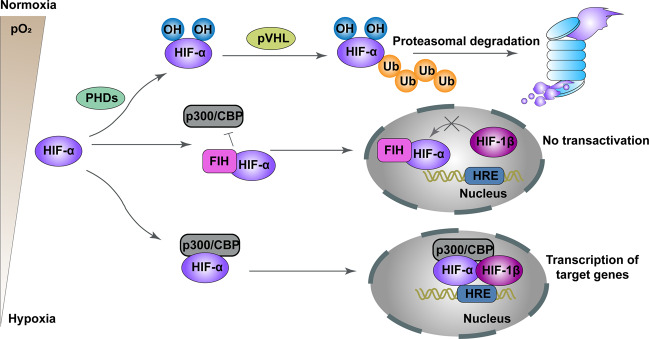
“Subsequently, the HIF-α subunit interacts with HIF-1β to form a transcriptional complex dimerization, then entering the nucleus and combining with hypoxia-responsive elements (HREs), inducing the expression of numerous downstream genes.(31,32) Notably, HIF-3α exerts an opposite role in the induction of hypoxia-related…”
BackgroundXu, X., Peng, Q., Jiang, X., Tan, S., Yang, Y., Yang, W., Han, Y., Chen, Y., Oyang, L., Lin, J., et al. (2023) · Experimental & Molecular Medicine · doi:10.1038/s12276-023-01020-1 · Cited by 276
Sangineto, M., Ciarnelli, M., Cassano, T., Radesco, A., Moola, A., Bukke, V. N., Romano, A., Villani, R., Kanwal, H., Capitanio, N., et al. (2023) · Redox Biology · doi:10.1016/j.redox.2023.102846 · Cited by 142
Li, Y., Sundquist, K., Zhang, N., Wang, X., Sundquist, J., & Memon, A. A. (2023) · EBioMedicine · doi:10.1016/j.ebiom.2022.104432 · Cited by 137
Cellular and Molecular Players in the Tumor Microenvironment of Renal Cell Carcinoma
Lasorsa, F. M., Rutigliano, M., Milella, M., Ferro, M., Pandolfo, S. D., Crocetto, F., Tătaru, O. S., Autorino, R., Battaglia, M., Ditonno, P., et al. (2023) · Journal of Clinical Medicine · doi:10.3390/jcm12123888 · Cited by 137
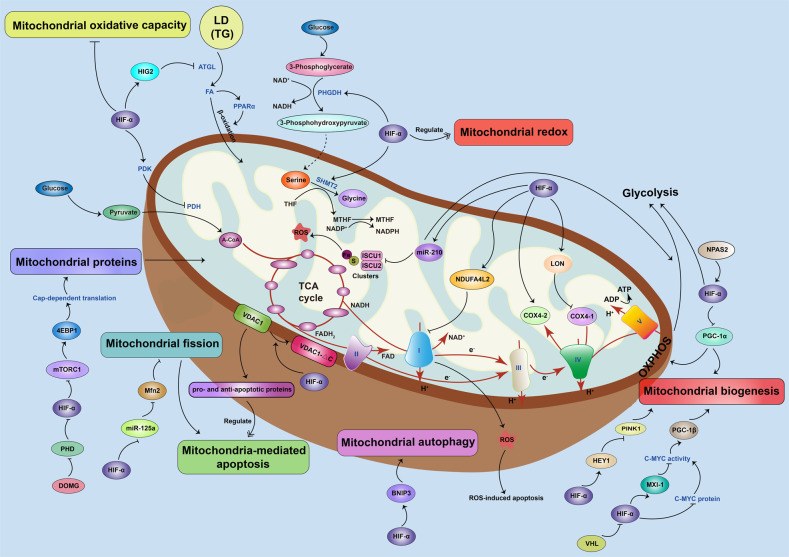
“Additionally, HIF1α delays ETC via NDUFA4L2, COX4-2, Complex I, and Complex IV [96].”
Background
Metadata
- Authors
- Bao, X., Zhang, J., Huang, G., Yan, J., Xu, C., Dou, Z., Sun, C., & Zhang, H.
- Affiliations
- Chinese Academy of Sciences (CN)
- Corresponding author
- Sun, Chao
- Zhang, Hong
- Venue
- Cell Death & Disease
- Published
- 2021-02-26
- Volume
- 12
- Issue
- 2
- Pages
- 215-215
- ISSN
- 2041-4889 (ISSN-L)
- PMC
- PMC7910460
- OpenAlex
- W3132095850
- Cited by
- 152
- References
- 130
- Citations by year
- 2026: 31 · 2025: 38 · 2024: 32 · 2023: 25 · 2022: 21 · 2021: 4
- FWCI
- 2.47
- Type
- journal article
- Language
- en
- Open access
- gold
- doi.org
- Licence
- cc-by
- creativecommons.org/licenses/by/4.0 (tdm)
- creativecommons.org/licenses/by/4.0 (vor)
- Locations
- Cell Death and Disease (publishedVersion, cc-by)
- PubMed Central (publishedVersion, cc-by)
- PubMed (publishedVersion)
- DOAJ (DOAJ: Directory of Open Access Journals) (submittedVersion, cc-by-sa)
- Funders
- National Natural Science Foundation of China (2018YFE0205100, U1632270, 11775280, 2020414)
- Chinese Academy of Sciences (U1632270)
- University of Chinese Academy of Sciences
- Youth Innovation Promotion Association (2020414)
- Topics
- Life Sciences › Biochemistry, Genetics and Molecular Biology › Cancer Research › Cancer, Hypoxia, and Metabolism
- Life Sciences › Biochemistry, Genetics and Molecular Biology › Molecular Biology › Metabolism, Diabetes, and Cancer
- Life Sciences › Biochemistry, Genetics and Molecular Biology › Molecular Biology › Mitochondrial Function and Pathology
- Keywords
- hypoxia-inducible factor, HIF-1α, mitochondrial dysfunction, cancer metabolism, Warburg effect, aerobic glycolysis, tumor hypoxia, TCA cycle, electron transport chain, mitochondrial respiration, mitochondrial biogenesis, mitochondrial fission, mitophagy, apoptosis, carcinogenesis, lactate
- MeSH terms
- Tumor Hypoxia, Endothelial PAS Domain-Containing Protein 1, Animals, Energy Metabolism, Humans, Mitochondria, Neoplasms, Neovascularization, Pathologic, Repressor Proteins, Signal Transduction, Cell Death, Cell Proliferation, Apoptosis Regulatory Proteins, Aryl Hydrocarbon Receptor Nuclear Translocator, Basic Helix-Loop-Helix Proteins, Hypoxia-Inducible Factor 1, Hypoxia-Inducible Factor 1, alpha Subunit, Epithelial-Mesenchymal Transition, Tumor Microenvironment
About these checks
Registry, retraction, Cites and statistics results are computed, not judged, with one exception: a printed reference that no index lists is read once by a model before it counts as a citation error. Claims are extracted by a model and kept only when their quote appears verbatim in the text; each cited source is then checked, with a model’s help, for whether it says what the claim relies on. Those verdicts can be wrong — read the claim’s quote and the cited source before relying on one.
Statistics and arithmetic are recomputed, not judged.
Confidence bands are shown only for fields calibrated on our annotated test set. None is calibrated yet, so no band is shown.
What counts as a claim ›How we measure confidence ›How we check this ›
Are you an author, or do you see a problem with this page? Request a review
Data sources
Bibliographic data: Semantic Scholar, OpenAlex, Crossref.
Contains information from the Semantic Scholar Academic Graph Datasets, made available under the ODC Attribution License (ODC-BY 1.0).
Semantic Scholar’s data is described in: Kinney, R., et al. (2023). The Semantic Scholar Open Data Platform. arXiv:2301.10140.
