

Cetuximab promotes RSL3-induced ferroptosis by suppressing the Nrf2/HO-1 signalling pathway in KRAS mutant colorectal cancer
Open accessThe DOI matches its Crossref record; 52 of the 52 references it cites were found in a registry or an index.
Abstract
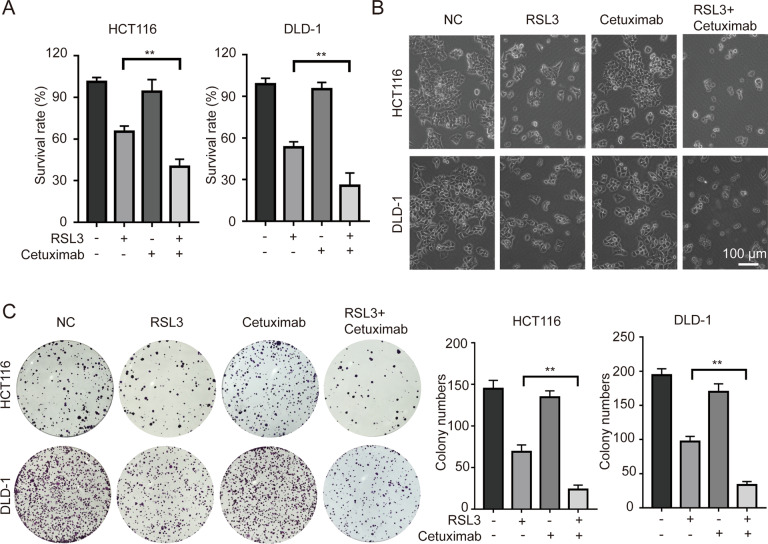
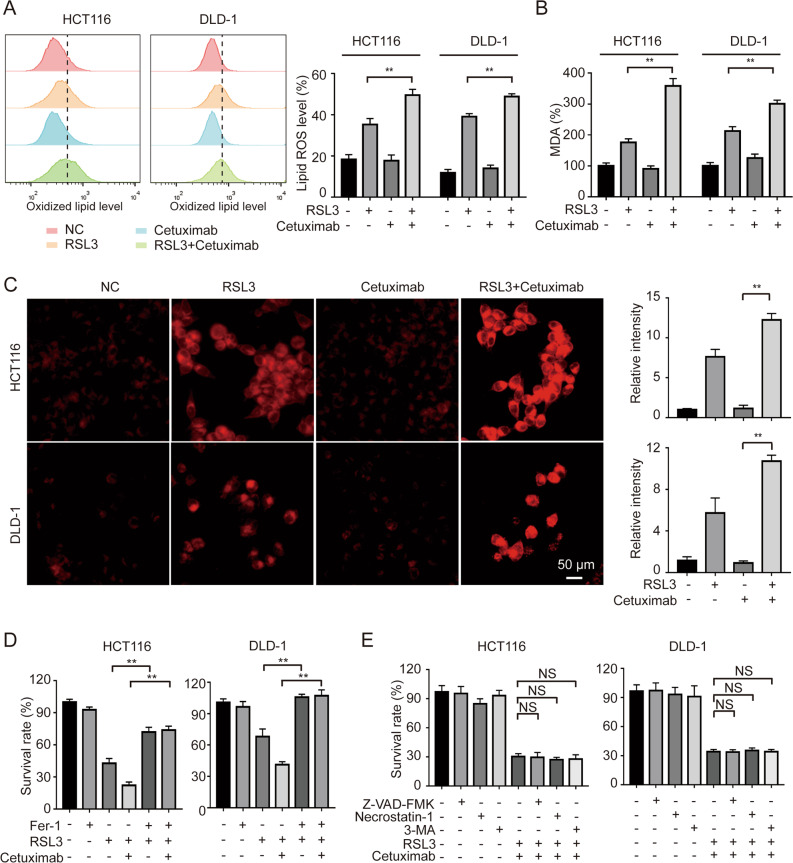
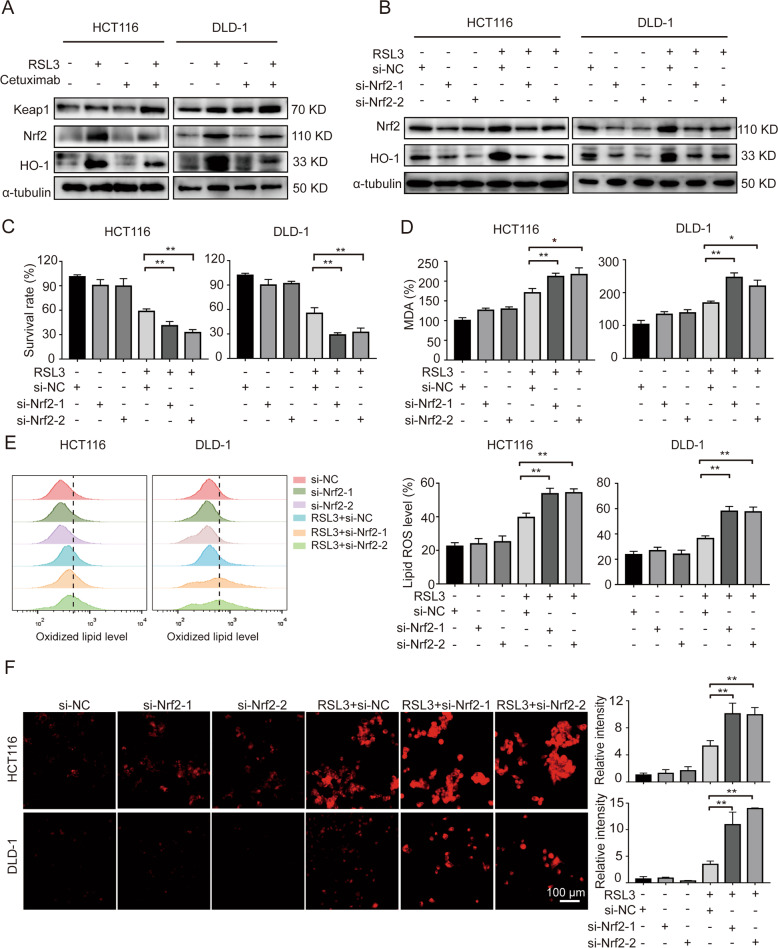
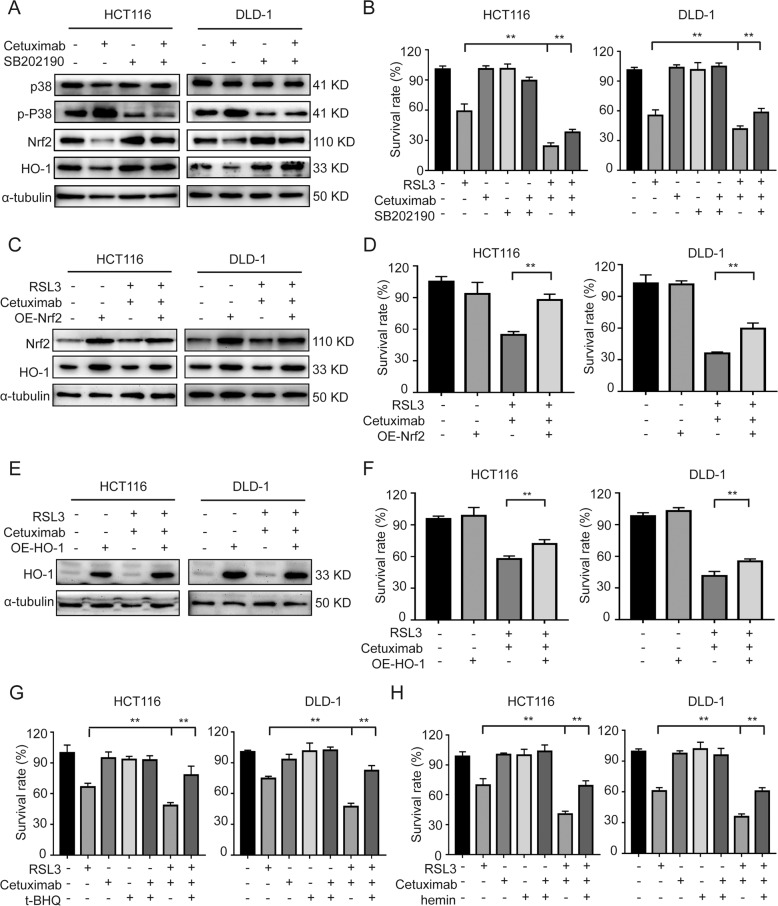
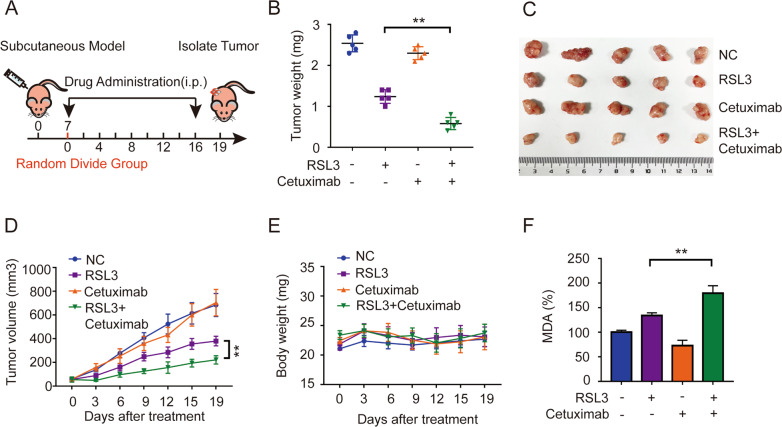
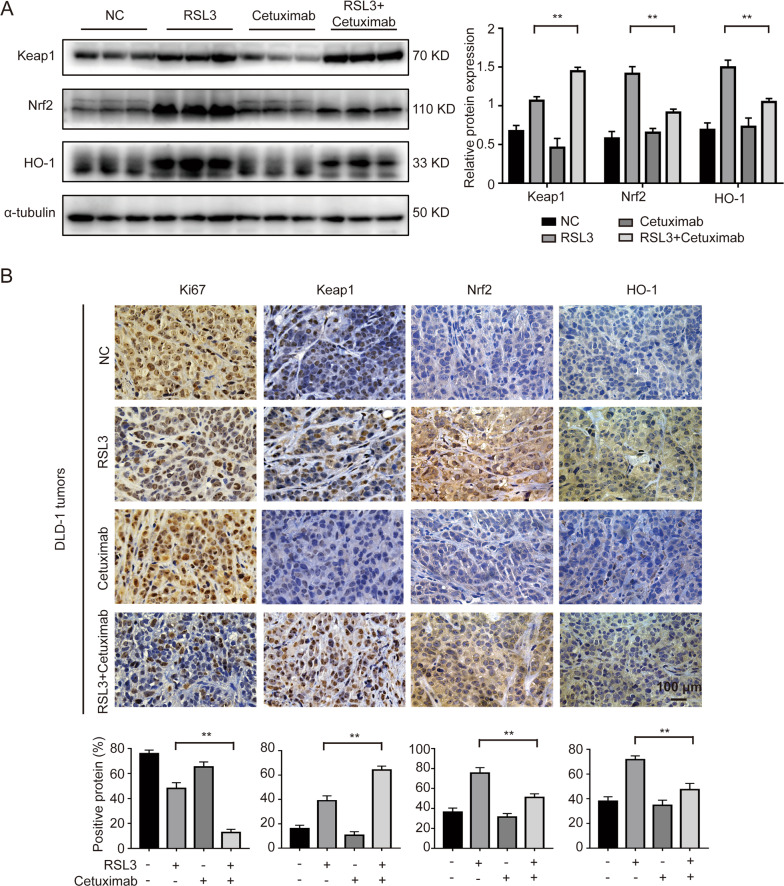
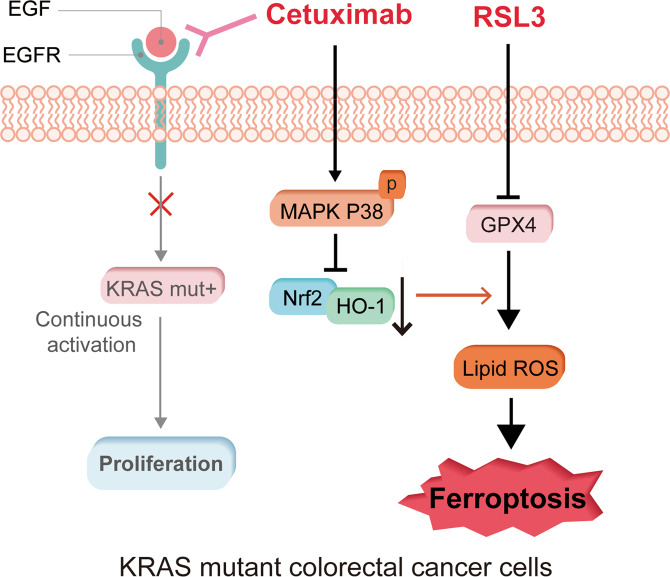
Cetuximab is approved for the treatment of metastatic colorectal cancer (mCRC) with RAS wild-type. Nevertheless, the prognosis remains poor and the effectiveness of cetuximab is limited in KRAS mutant mCRC. Recently, emerging evidence has shown that ferroptosis, a newly discovered form of nonapoptotic cell death, is closely related to KRAS mutant cells. Here, we further investigated whether cetuximab-mediated regulation of p38/Nrf2/HO-1 promotes RSL3-induced ferroptosis and plays a pivotal role in overcoming drug resistance in KRAS mutant colorectal cancer (CRC). In our research, we used two KRAS mutant CRC cell lines, HCT116 and DLD-1, as models of intrinsic resistance to cetuximab. The viability of cells treated with the combination of RSL3 and cetuximab was assessed by the CCK-8 and colony formation assays. The effective of cetuximab to promote RSL3-induced ferroptosis was investigated by evaluating lipid reactive oxygen species accumulation and the expression of the malondialdehyde and the intracellular iron assay. Cetuximab therapy contributed to regulating the p38/Nrf2/HO-1 axis, as determined by western blotting and transfection with small interfering RNAs. Cetuximab promoted RSL3-induced ferroptosis by inhibiting the Nrf2/HO-1 in KRAS mutant CRC cells, and this was further demonstrated in a xenograft nude mouse model. Our work reveals that cetuximab enhances the cytotoxic effect of RSL3 on KRAS mutant CRC cells and that cetuximab enhances RSL3-induced ferroptosis by inhibiting the Nrf2/HO-1 axis through the activation of p38 MAPK.
Overview
The claims and statistics of this paper haven’t been checked yet.
Free: it reads the open-access text and checks the first 5 claims that cite a source we can check. Create a free account to check every claim.
Integrity signals
Registry
Cites
Statistics
Figures
Verification
Claims the paper makes
The claims and statistics of this paper haven’t been checked yet.
Free: it reads the open-access text and checks the first 5 claims that cite a source we can check. Create a free account to check every claim.
Claims other papers make about this one
Each is checked against this paper’s own text: does it say what the citing paper says it does?
In the citing paper
“In KRAS mutant CRC cell lines and mouse CRC models, cetuximab promotes RSL3-induced ferroptosis by activating P38 MAPK to inhibit Nrf2/HO-1 signaling pathway [287].”
From Drug Resistance in Colorectal Cancer: From Mechanism to Clinic (2022) · cites this paper as [287]
Self-check
Percentages, sums and reported differences re-computed from the paper’s own numbers.
The self-check needs the paper’s full text.
Citations
Cites
Siegel, R. L., Miller, K. D., & Jemal, A. (2020) · CA: A Cancer Journal for Clinicians · doi:10.3322/caac.21590 · Cited by 20,444
Ferroptosis: An Iron-Dependent Form of Nonapoptotic Cell Death
Dixon, S. J., Lemberg, K. M., Lamprecht, M. R., Skouta, R., Zaitsev, E. M., Gleason, C. E., Patel, D. N., Bauer, A. J., Cantley, A. M., Yang, W. S., et al. (2012) · Cell · doi:10.1016/j.cell.2012.03.042 · Cited by 18,691 · cited 3×
“Ferroptosis is characterized by irondependent accumulation [9].”
InfluentialCancer statistics for the year 2020: An overview
Ferlay, J., Colombet, M., Soerjomataram, I., Parkin, D. M., Piñeros, M., Znaor, A., & Bray, F. (2021) · International Journal of Cancer · doi:10.1002/ijc.33588 · Cited by 5,689 · cited 1×
“INTRODUCTION Colorectal cancer (CRC) is the third most deadly cancer in the world [1, 2].”
BackgroundWild-Type KRAS Is Required for Panitumumab Efficacy in Patients With Metastatic Colorectal Cancer
Amado, R. G., Wolf, M., Peeters, M., Van Cutsem, E., Siena, S., Freeman, D. J., Juan, T., Sikorski, R., Suggs, S., Radinsky, R., et al. (2008) · Journal of Clinical Oncology · doi:10.1200/jco.2007.14.7116 · Cited by 3,207 · cited 1×
“Treatment with cetuximab is ineffective in CRC patients with KRAS mutations [6, 7].”
BackgroundBroadening horizons: the role of ferroptosis in cancer
Chen, X., Kang, R., Kroemer, G., & Tang, D. (2021) · Nature Reviews Clinical Oncology · doi:10.1038/s41571-020-00462-0 · Cited by 2,897 · cited 1×
“RAS-selective lethal 3 (RSL3), a small molecule, can kill RAS mutant cancer cells [10] and activate irondependent, nonapoptotic cell death of RAS mutant cancer cells [11].”
BackgroundNRF2 plays a critical role in mitigating lipid peroxidation and ferroptosis
Dodson, M., Castro-Portuguez, R., & Zhang, D. D. (2019) · Redox Biology · doi:10.1016/j.redox.2019.101107 · Cited by 2,435 · cited 1×
“Nuclear factor erythroid 2-related factor 2 (Nrf2), a dominant regulator of antioxidant transcription factors, prevents lipid peroxidation [13] and ferroptosis by increasing the transcription of multiple cytoprotective enzymes, such as haem oxygenase-1 (HO-1) [14].”
BackgroundYang, W. S., & Stockwell, B. R. (2008) · Chemistry & Biology · doi:10.1016/j.chembiol.2008.02.010 · Cited by 1,876 · cited 1×
“RAS-selective lethal 3 (RSL3), a small molecule, can kill RAS mutant cancer cells [10] and activate irondependent, nonapoptotic cell death of RAS mutant cancer cells [11].”
BackgroundFerroptosis is a type of autophagy-dependent cell death
Zhou, B., Liu, J., Kang, R., Klionsky, D. J., Kroemer, G., & Tang, D. (2020) · Seminars in Cancer Biology · doi:10.1016/j.semcancer.2019.03.002 · Cited by 1,061 · cited 1×
“Cetuximab enhances RSL3-induced ferroptosis in KRAS mutant CRC cells RSL3 is a potent ferroptosis activator [20].”
BackgroundThe development of the concept of ferroptosis
Hirschhorn, T., & Stockwell, B. R. (2019) · Free Radical Biology and Medicine · doi:10.1016/j.freeradbiomed.2018.09.043 · Cited by 1,052 · cited 1×
“Ferroptosis is a newly discovered form of nonapoptotic cell death that is triggered via iron-dependent lipid peroxidation [8].”
BackgroundMetallothionein‐1G facilitates sorafenib resistance through inhibition of ferroptosis
Sun, X., Niu, X., Chen, R., He, W., Chen, D., Kang, R., & Tang, D. (2016) · Hepatology · doi:10.1002/hep.28574 · Cited by 703 · cited 1×
“Upregulation of MT-1G expression protects hepatocellular carcinoma cells from the effect of sorafenib and promotes cancer progression by inhibiting ferroptosis [36].”
Background
Cited by
Items 101–200 of 301
Huang, M., Wu, Y., Wei, X., Cheng, L., Fu, L., Yan, H., Wei, W., Li, B., Ru, H., Mo, X., et al. (2025) · Cell Death and Disease · doi:10.1038/s41419-025-07541-z · Cited by 24
Insights on Ferroptosis and Colorectal Cancer: Progress and Updates
Hu, B.-L., Yin, Y., Li, S., & Guo, X. (2022) · Molecules · doi:10.3390/molecules28010243 · Cited by 20
Sinha, B. K., Bortner, C. D., Jarmusch, A. K., Tokar, E. J., Murphy, C., Wu, X., Winter, H., & Cannon, R. E. (2023) · Cells · doi:10.3390/cells12121626 · Cited by 21
“RSL3 can kill RAS mutant cancer cells and activate the iron-dependent, nonapoptotic cell death of RAS mutant cancer cells [43].”
BackgroundNethi, S. K., Li, X., Bhatnagar, S., & Prabha, S. (2023) · Pharmaceutics · doi:10.3390/pharmaceutics15061742 · Cited by 22
“Since Cmab has therapeutic efficacy as a single agent [52,53], we included Cmab alone as a control.”
BackgroundLi, X., Zhang, X., Qi, Y., Jin, W., Wen, Z., Zhao, Y., Li, X., Yao, X. S., Shen, Z., Zhang, F., et al. (2025) · Journal of Controlled Release · doi:10.1016/j.jconrel.2025.113874 · Cited by 23
Yan, W.-Y., Cai, J., Wang, J.-N., Gong, Y.-S., & Ding, X.-B. (2022) · Neoplasma · doi:10.4149/neo_2022_211103n1568 · Cited by 23
Peiminine triggers ferroptosis to inhibit breast cancer growth through triggering Nrf2 signaling
Yi, N., Wang, L., Jiang, Z., Xu, G., Li, L., Zhang, Y., & Tan, Y. (2024) · Tissue and Cell · doi:10.1016/j.tice.2024.102323 · Cited by 22
Dying to survive: harnessing inflammatory cell death for better immunotherapy
Cheng, L., Wang, Y., & Zhang, Y. (2025) · Trends in cancer · doi:10.1016/j.trecan.2025.01.012 · Cited by 19
Targeting Ferroptosis in Colorectal Cancer
Liang, X., You, Z., Chen, X., & Li, J. (2022) · Metabolites · doi:10.3390/metabo12080745 · Cited by 24
“Nrf2/HO-1 Cetuximab promotes RSL3-induced ferroptosis by suppressing the Nrf2/HO-1 signaling pathway in KRAS mutant colorectal cancer [76].”
BackgroundThe Role of Programmed Necrosis in Colorectal Cancer
Yu, Y., Gámez‐Belmonte, R., Patankar, J. V., Liebing, E., & Becker, C. (2022) · Cancers · doi:10.3390/cancers14174295 · Cited by 23
“RSL3-targeted GPX4 inactivation is a classical method to induce ferroptosis and it has been shown to decrease CRC development in a xenograft mouse model [62].”
MethodPeng, W., Ouyang, Y., Wang, S., Hou, J., Zhu, Z., Yang, Y., Zhou, R., & Pi, R. (2022) · Frontiers in Cellular Neuroscience · doi:10.3389/fncel.2022.774297 · Cited by 20
Role of ferroptosis in colorectal cancer
Song, Y., Yan, X., Wang, Y., Wang, Z., Mao, X., Ye, L., & Li, S.-W. (2023) · World Journal of Gastrointestinal Oncology · doi:10.4251/wjgo.v15.i2.225 · Cited by 23
Self-citationEffects of Natural Products on Enzymes Involved in Ferroptosis: Regulation and Implications
Zuo, H., Huang, H., Lin, Y.-C.-D., Liu, K., Lin, T., Wang, Y., & Huang, H. (2023) · Molecules · doi:10.3390/molecules28237929 · Cited by 19
Chen, K., Yu, Y., Wang, Y., Zhu, Y., Qin, C., Xu, J., Zou, X., Tao, T., Yang, L., & Jiang, Y. (2024) · Drug Design Development and Therapy · doi:10.2147/dddt.s441350 · Cited by 21
“30 Wang et al discovered that Madecassoside can prevent LPS-induced acute liver failure in mice by inhibiting the p38/NF-κB pathway and activating the NRF2/HO-1 pathway to augment intracellular antioxidant levels.”
BackgroundResearch progress on ferroptosis in colorectal cancer
Li, Y., Bi, Y., Li, W., Piao, Y., Piao, J., Wang, T., & Ren, X. (2024) · Frontiers in Immunology · doi:10.3389/fimmu.2024.1462505 · Cited by 22
Ferroptosis: the balance between death and survival in colorectal cancer
Fan, S., Zhou, L., Zhang, W., Wang, D., & Tang, D. (2024) · International Journal of Biological Sciences · doi:10.7150/ijbs.96828 · Cited by 19
“This finding is expected to contribute to the development of attractive therapeutic strategies for patients with KRAS-mutated CRC: cetuximab combined with ferroptosis inducers [62].”
BackgroundInfluentialBhattacharya, S. (2023) · Critical Reviews in Oncology/Hematology · doi:10.1016/j.critrevonc.2023.103916 · Cited by 18
Hypoxia induced lipid droplet accumulation promotes resistance to ferroptosis in prostate cancer
Chauhan, S. S., Vizzerra, A. D., Liou, H., Flores, C. E., Snider, A. J., Snider, J. M., & Warfel, N. A. (2025) · Oncotarget · doi:10.18632/oncotarget.28750 · Cited by 21
PELI1 and EGFR cooperate to promote breast cancer metastasis
Qi, J., Xu, G., Wu, X., Lu, C., Shen, Y., & Zhao, B. (2023) · Oncogenesis · doi:10.1038/s41389-023-00457-3 · Cited by 19
Nrf2/HO-1 Alleviates Disulfiram/Copper-Induced Ferroptosis in Oral Squamous Cell Carcinoma
Zhao, Y., & Zhu, S. (2023) · Biochemical Genetics · doi:10.1007/s10528-023-10405-w · Cited by 17
“Strong evidence suggests that HO-1 is an important protein in ferroptosis, and numerous medicines block ferroptosis by preventing the activation of Nrf2/HO-1 signaling (Jing et al. 2022; Wei et al. 2021; Yang et al. 2021).”
Acetyl zingerone ameliorates osteoarthritis by inhibiting chondrocyte programmed cell death
Chen, X., Chen, J., Miao, C., Yin, G., Zhang, Z., Sun, R., & Ni, S. (2023) · Molecular Medicine Reports · doi:10.3892/mmr.2023.13089 · Cited by 17
“Previous studies have also reported that heme oxygenase‑1 (HO‑1), a classic downstream antioxi‑ dant protein of Nrf2, is widely involved in ferroptosis (29,30).”
Tumor suppressor Par-4 activates autophagy-dependent ferroptosis
Subburayan, K., Thayyullathil, F., Pallichankandy, S., Cheratta, A. R., Alakkal, A., Sultana, M., Drou, N., Arshad, M., Palanikumar, L., Magzoub, M. M., et al. (2024) · Communications Biology · doi:10.1038/s42003-024-06430-z · Cited by 21
“Several reports suggest that RSL3 or its structurally modi fi ed analog, administered intraperitoneally (i.p), was used in vivo for xenograft models 52 – 56 .”
InfluentialLiu, M., Gao, S., Wang, Y., Yang, X., Fang, H., & Hou, X. (2024) · Journal of Medicinal Chemistry · doi:10.1021/acs.jmedchem.4c00729 · Cited by 18
Zhou, Y., Tao, Q., Luo, C., Chen, J., Chen, G., & Sun, J. (2025) · Cancer Science · doi:10.1111/cas.70057 · Cited by 20
“Although some other scholars have also been trying to explain the mechanisms from various perspectives, such as ferroptosis or different non-coding RNAs [31, 32], there is no effective treatment to specifically treat CRC expressing KRAS or BRAF mutations [25, 33].”
Covalent inhibition of ACSL4 alleviates ferroptosis-induced acute liver injury
Linghu, M., Luo, X., Zhou, X., Liu, D., Huang, Q. W., Ru, Y., Luo, Y., Ma, Y., & Huang, Y. (2025) · Cell chemical biology · doi:10.1016/j.chembiol.2025.06.004 · Cited by 20
Epigenetic Mechanisms Governing Nrf2 Expression and Its Role in Ferroptosis
Li, L., Liu, X., Si, Z., & Wang, X. (2025) · Biomedicines · doi:10.3390/biomedicines13081913 · Cited by 21
“The antioxidant genes HO-1 and GPX4 , transcriptionally activated by Nrf2, effectively reduce lipid per-oxidation, though this protective axis is counteracted by cetuximab treatment [120].”
The role of the ferroptosis pathway in the regulation of polysaccharides for human health: A review
Niu, X., Yao, Y., Li, Y., Li, C., Pan, X., & Han, L. (2023) · International Journal of Biological Macromolecules · doi:10.1016/j.ijbiomac.2023.123349 · Cited by 17
Interaction mechanisms between autophagy and ferroptosis: Potential role in colorectal cancer
Zeng, X.-Y., Qiu, X., Wu, J., Liang, S.-M., Huang, J.-A., & Liu, S. (2023) · World Journal of Gastrointestinal Oncology · doi:10.4251/wjgo.v15.i7.1135 · Cited by 18
Mei, L., Long, J., Wu, S., Mei, M., Mei, D., & Qiu, H. (2024) · Anti-Cancer Drugs · doi:10.1097/cad.0000000000001573 · Cited by 19
“…participated in the anti-PD-1 immunotherapy of NSCLC. NRF2 can affect the content of bound iron by regulating the synthesis and metabolism of heme in cells, and can also maintain the balance of intracellular iron homeostasis by enhancing intracellular iron storage and reducing iron deposition [41].”
BackgroundLiu, L., Yang, C., Zhu, L., Wang, Y., Zheng, F., Liang, L., Cao, P., Liu, J., Han, X., & Zhang, J. (2024) · Cell Death and Disease · doi:10.1038/s41419-024-06866-5 · Cited by 18
“RSL3 is a known ferroptosis inducer that directly inhibits GPX4, constituting a novel therapeutic approach for various cancers [16, 23, 24].”
NRF2 as a ferroptosis gatekeeper in colorectal cancer: implications for therapy
El‐Sehrawy, A. A. M. A., Al-dulaimi, A. A., Alkhathami, A. G., RenukaJyothi, S., Panigrahi, R., Pargaien, A. V., Singh, U., Husseini, A., & Alnajar, M. J. (2025) · Naunyn-Schmiedeberg s Archives of Pharmacology · doi:10.1007/s00210-025-04324-3 · Cited by 19
“FOXA2 regulates NRF2/GPX4‑regulated ferroptosis Growing evidence has connected the transcription factor FOXA2, and SLC7 A11 that thereby enhances sensitivity to ferroptotic death.”
InfluentialZhang, Y., Du, J., Cui, X., Ling, Y., & Tang, C. (2025) · Cell Death Discovery · doi:10.1038/s41420-025-02652-0 · Cited by 20
Ferroptosis: Reviewing CRC with the Third Eye
Liu, X., Tuerxun, H., Li, Y., Li, Y., He, Y., & Zhao, Y. (2022) · Journal of Inflammation Research · doi:10.2147/jir.s389290 · Cited by 16
PDK1 regulates the progression of esophageal squamous cell carcinoma through metabolic reprogramming
Ma, Y., Zhang, X., Han, X., Hao, Z., Ji, R., Li, J., Guo, W., Zhang, Y.-T. Y., Guan, F., & Ma, S. (2023) · Molecular Carcinogenesis · doi:10.1002/mc.23531 · Cited by 15
“found that inhibiting Keap1/Nrf2 signaling could promote apoptosis of colorectal cancer cells.(45) Our results showed that DCA combined with DDP could significantly inhibit Keap1/Nrf2 signaling pathway, thus inducing oxidative damage in ESCC cells.”
BackgroundThe application of nanoparticles based on ferroptosis in cancer therapy
Li, Y., Wei, C., Yan, J., Li, F., Chen, B., Sun, Y., Luo, K., He, B., & Liang, Y. (2024) · Journal of Materials Chemistry B · doi:10.1039/d3tb02308g · Cited by 16
Exploring beyond Common Cell Death Pathways in Oral Cancer: A Systematic Review
da Rocha, L. D. O. S., de Morais, É. F., de Oliveira, L. Q. R., Barbosa, A. V., Lambert, D., Rocha, C. A. G., & Coletta, R. D. (2024) · Biology · doi:10.3390/biology13020103 · Cited by 14
“However, the study does not suggest through which mechanism this chemical synergy occurs, despite this effect being described in other studies [131,132].”
ResultZhang, Y., Wang, X., Li, X., Xiong, X., Xue, R., Zang, L., Wang, Z., & Wang, L. (2024) · Annals of Hematology · doi:10.1007/s00277-024-05728-6 · Cited by 15
“Cetuximab promotes RSL3-induced ferroptosis by inhibiting the Nrf2/HO-1 signaling pathway in KRAS-mutant colorectal cancer and is associated with overcoming drug resistance [41].”
Zhang, L., Yang, L., & Du, K. (2024) · Journal of Cellular and Molecular Medicine · doi:10.1111/jcmm.18209 · Cited by 17
Iglesias-Matesanz, P., Lacalle-González, C., Lopez-Blazquez, C., Otieno, M. O., García‐Foncillas, J., & Martínez‐Useros, J. (2024) · Antioxidants · doi:10.3390/antiox13111405 · Cited by 21
“In the work by Yang J. et al., BALB/c nude mice were treated with RSL3, Cetuximab, or a combination of both, and all mice survived across all study arms with no serious reported toxicity [74].”
Lipid Metabolic Alterations in KRAS Mutant Tumors: Unmasking New Vulnerabilities for Cancer Therapy
Saliakoura, M., & Konstantinidou, G. (2023) · International Journal of Molecular Sciences · doi:10.3390/ijms24021793 · Cited by 15
Ferroptosis Inducers Kill Mesenchymal Stem Cells Affected by Neuroblastoma
Li, X., Wang, Q., Xu, C., Zhang, L., Zhou, J., Lv, J., Xu, M., & Jiang, D. (2023) · Cancers · doi:10.3390/cancers15041301 · Cited by 15
Natural products target programmed cell death signaling mechanisms to treat colorectal cancer
Zheng, Y., Feng, N., Li, C., & Li, Z. (2025) · Frontiers in Pharmacology · doi:10.3389/fphar.2025.1565332 · Cited by 14
ErbB/HER family in cancer immunology: therapeutic advances and mechanisms
Yin, L., Zhang, H., Shang, Y., Wu, S., & Jin, T. (2025) · Drug Discovery Today · doi:10.1016/j.drudis.2025.104436 · Cited by 15
Bioinorganic Modulators of Ferroptosis: A Review of Recent Findings
Bartos, A., & Sikora, J. (2023) · International Journal of Molecular Sciences · doi:10.3390/ijms24043634 · Cited by 14
“Both inorganic forms of selenium–selenite and selenate proved efficient at rendering resistance in the N27 immortalized neuronal cell line against erastin-induced ferroptosis with IC50 values of 38 and 925 nM, respectively, and against RSL3-induced ferroptosis with IC50 values of 15 and 489 nM, respectively [97].”
BackgroundInfluentialZhang, N., Zhang, J., Cui, W., Wu, D., Zhang, J., Wei, B., Qu, L., & Xu, X. (2023) · Fitoterapia · doi:10.1016/j.fitote.2023.105522 · Cited by 15
Iron-Dependent Cell Death: A New Treatment Approach against Pancreatic Ductal Adenocarcinoma
Lopez-Blazquez, C., Lacalle-González, C., Sanz-Criado, L., Otieno, M. O., García‐Foncillas, J., & Martínez‐Useros, J. (2023) · International Journal of Molecular Sciences · doi:10.3390/ijms241914979 · Cited by 16
Translational research of new developments in targeted therapy of colorectal cancer
Yang, L., Atakhanova, N. E., Arellano, M. T. C., Mohamed, M. Y., Hani, T., Fahdil, A. A., Castillo-Acobo, R. Y., Juyal, A., Hussein, A. K., Amin, A. H., et al. (2023) · Pathology - Research and Practice · doi:10.1016/j.prp.2023.154888 · Cited by 16
Sun, H., Lu, S., Qu, G., Li, J., & Song, B. (2023) · Autoimmunity · doi:10.1080/08916934.2023.2290357 · Cited by 15
“Studies have shown that activation of Nrf2/HO-1 pathway may also protect cells from ferroptosis in many human diseases, such as colorectal cancer [16] and acute lung injury (ALI) [17].”
BackgroundLi, Q., Huang, D., Liao, W., Su, X., Li, J., Zhang, J., Fang, M., & Liu, Y. (2024) · Journal of Biochemical and Molecular Toxicology · doi:10.1002/jbt.23648 · Cited by 16
Zhou, L., Zhong, Y., Li, C., Zhou, Y., Liu, X., Li, L., Zou, Z., Zhong, Z., & Ye, J. (2024) · Inflammation · doi:10.1007/s10753-024-01994-8 · Cited by 14
“MAPK14 has been reported to participate in the progression of diabetic bone loss, colorectal cancer, and hepatocellular carcinoma via ferroptosis [55–57].”
Icariin‑curcumol promotes ferroptosis in prostate cancer cells through Nrf2/HO‑1 signaling
Sheng, W., Li, B., Sun, T., Zhu, C., Li, Y., & Xu, W. (2024) · Experimental and Therapeutic Medicine · doi:10.3892/etm.2024.12519 · Cited by 14
“On the other hand, some studies have found that inhibiting the Nrf2/HO‑1 pathway may increase the sensitivity of PCa cells to chemotherapy drugs (44,45).”
BackgroundResearch Progress on Ferroptosis and Nanotechnology-Based Treatment in Triple-Negative Breast Cancer
Zhang, J., Zhang, S., Liu, M., Yang, Z., & Huang, R. (2024) · Breast Cancer Targets and Therapy · doi:10.2147/bctt.s475199 · Cited by 16
“52,53 Inhibiting the activation of antioxidant pathways such as Nrf2/HO-1 leads to the accumulation of intracellular iron and induces ferroptosis.”
BackgroundJin, Y., Tan, M., Yin, Y., Chen, L., Zhao, Y., Zhang, J., Jiang, T., Li, H., & He, M. (2024) · Phytotherapy Research · doi:10.1002/ptr.8315 · Cited by 15
“…et al., 2012); cetuximab amplifies RSL3-induced ferroptosis in liver cancer cells by activating the p38 MAPK pathway to inhibit the Nrf2/HO-1 axis (Yang et al., 2021); and L -carnitine protects heart function by activating p38 MAPK/Nrf2 signaling in hearts exposed to irradiation (Fan et al.,…”
Yu, L., Luo, Y., Ding, X., Tang, M., Gao, H., Zhang, R., Chen, M., Liu, Y., Chen, Q., Ouyang, Y., et al. (2023) · Frontiers in Oncology · doi:10.3389/fonc.2023.1146617 · Cited by 14
Advances in the study of regulators of ferroptosis in head and neck squamous cell carcinoma (Review)
Yang, M., Guo, R., Chen, X., Song, G., & Zhang, F. (2023) · International Journal of Molecular Medicine · doi:10.3892/ijmm.2023.5248 · Cited by 13
“Indeed, in other types of cancer, such as colorectal (69), lung (70), stomach (71) and ovarian cancers (72), NRF2 also functions as an oncogenic transcription factor, and cancer cells frequently exhibit the overexpression of NRF2, which plays a key role in counteracting environmental or…”
Wei, G., Wang, Y., Yang, P., Peng, S., Duan, S., Hu, X., Yuan, L., & Bao, G. (2023) · Gene · doi:10.1016/j.gene.2023.147468 · Cited by 12
Silencing LCN2 enhances RSL3-induced ferroptosis in T cell acute lymphoblastic leukemia
Tian, C., Zheng, M., Lan, X., Lili, L., Ye, Z., & Li, C. (2023) · Gene · doi:10.1016/j.gene.2023.147597 · Cited by 13
β2-AR inhibition enhances EGFR antibody efficacy hampering the oxidative stress response machinery
Vecchio, V. D., Mele, L. L., Panda, S. K., Sanchez-Pajares, I. R., Mosca, L., Tirino, V., Barbieri, M., Bruzzese, F., Luciano, A., Marino, F. Z., et al. (2023) · Cell Death and Disease · doi:10.1038/s41419-023-06129-9 · Cited by 12
“In colon cancer patients treated with CTX has been observed an enhanced RSL3 ferroptosis by inhibiting the Nrf-2/HO-1 signaling [38].”
Zuo, X., Lin, H., Song, Z., Yu, B., & Zhao, C. (2024) · Archives of Biochemistry and Biophysics · doi:10.1016/j.abb.2024.110051 · Cited by 16
Guo, S., Zhang, D., Dong, Y.-Y., Shu, Y., Wu, X., Ni, Y., Zhao, R., & Ma, W. (2024) · Free Radical Biology and Medicine · doi:10.1016/j.freeradbiomed.2024.08.008 · Cited by 15
Li, Z., & Xing, J. (2024) · Biomedicine & Pharmacotherapy · doi:10.1016/j.biopha.2024.117513 · Cited by 19
Ge, T., Li, H., Xiang, P., Yang, D., Zhou, J., & Zhang, Y. (2025) · European journal of medical research · doi:10.1186/s40001-025-02842-7 · Cited by 20
Li, M., Ni, Q., & Yu, S. (2023) · Genes & Genomics · doi:10.1007/s13258-023-01474-7 · Cited by 13
“Recently, the mechanisms by which CRC regulates fer-roptosis have been successively reported (Gao et al. 2021; Han et al. 2022; Liu et al. 2022b; Wang et al. 2022; Wei et al. 2021; Yang et al. 2021 ).”
Xin, W., Gong, S., Chen, Y., Yao, M., Qin, S., Chen, J., Zhang, A.-H., Yu, W., Zhou, S., Zhang, B., et al. (2024) · Advanced Healthcare Materials · doi:10.1002/adhm.202400441 · Cited by 16
Tan, L., She, H., Wang, Y., Du, Y., Zhang, J., Du, Y., Wu, Y., Chen, W., Huang, B., Long, D., et al. (2024) · International Journal of Nanomedicine · doi:10.2147/ijn.s463121 · Cited by 11
“Jang et al 30 found that mitochondria were involved in the onset of ferroptosis, since mitochondrial fragmentation and lipid peroxidation occurred shortly after ferroptosis-related stimuli, leading to inhibition of oxidative phosphorylation and electron transport chain (ETC) complexes, and therefore exacerbating RSL3-…”
BackgroundTherapeutic efficacy of ferroptosis in the treatment of colorectal cancer (Review)
Guo, Z., Zhuang, H., & Shi, X. (2024) · Oncology Letters · doi:10.3892/ol.2024.14697 · Cited by 15
“In 2021, Yang et al (66) reported that cetuximab inhibits the progression of KRAS‑mutant CRC through the promotion of RSL3‑induced ferroptosis via inhibi‑ tion of the Nrf2/heme oxygenase 1 (HO‑1) signaling pathway.”
BackgroundFerroptosis in Cancer: A new perspective on T cells
Lai, Y., Huang, C., Wu, J., Yang, K., & Yang, L. (2024) · International Immunopharmacology · doi:10.1016/j.intimp.2024.113539 · Cited by 14
Tariq, H. K., Liang, Z., Rabiu, L., Ibrahim, A., Abdalsalam, N. M. F., Li, R., Yang, Q., Wan, X., & Yan, D. (2025) · Cells · doi:10.3390/cells14020108 · Cited by 16
Zhang, Z., Wu, Y., Liu, Y., Zhang, J., Zhang, Y., Dai, Y., & Liu, C. (2025) · Bioactive Materials · doi:10.1016/j.bioactmat.2025.06.052 · Cited by 28
“[344]”
The new era of lung cancer therapy: Combining immunotherapy with ferroptosis
Li, Y., Tuerxun, H., Zhao, Y., Liu, X., Li, X., Wen, S., & Zhao, Y. (2024) · Critical Reviews in Oncology/Hematology · doi:10.1016/j.critrevonc.2024.104359 · Cited by 17
Zeng, J., Weng, Y., Lai, T., Chen, L., Li, Y., Huang, Q., Zhong, S., Wan, S., & Luo, L. (2023) · Naunyn-Schmiedeberg s Archives of Pharmacology · doi:10.1007/s00210-023-02854-2 · Cited by 14
“HO-1, GPX4, and SLC7A11 contribute to the maintenance of the oxidative stress response, which is regulated by Nrf2 (Koppula et al. 2021; Yang et al. 2021).”
Durojaye, O. A., Ejaz, U., Uzoeto, H. O., Fadahunsi, A. A., Opabunmi, A. O., Ekpo, D. E., Sedzro, D. M., & Idris, M. O. (2023) · Amino Acids · doi:10.1007/s00726-023-03304-2 · Cited by 11
“By attaching to the EGFR on tumor cells, cetuximab (a chimeric human-murine IgG1 mAb) blocks the downstream intracellular signaling cascades (Yang et al. 2021).”
Kuang, Y., Yang, K., Meng, L., Mao, Y., Xu, F., & Liu, H. (2023) · Scientific Reports · doi:10.1038/s41598-023-43198-4 · Cited by 16
Zhang, C., Wang, Q., Li, K., Fu, M., Gao, K., & Lv, C. (2024) · Journal of Inflammation Research · doi:10.2147/jir.s461348 · Cited by 13
“6–8 However, there is no clear information about the mechanism of action of Rosuvastatin in MP-induced IDD.”
BackgroundZou, J., Shi, X., Wu, Z., Zuo, S., Tang, X., Zhou, H., & Huang, Y. (2024) · Translational Oncology · doi:10.1016/j.tranon.2024.102235 · Cited by 14
“Also, the therapeutic efficacy of cetuximab in patients with KRAS mutations remains limited [14], therefore, there is an urgent need to investigate new strategies for targeting metastatic CRC in patients with KRAS G12D mutations.”
Natural bioactive molecules and chemotherapeutics synergism for enhanced cancer therapy
Hashemi, M., Heshmatzad, K., Shahsavan, G., Tavakolpour, V., Esfahani, S. K., Karimi, P., Beikzadeh, N., Mashhadikhan, S., Nasirzade, S., Farahani, A. V., et al. (2026) · Nutrition & Metabolism · doi:10.1186/s12986-026-01094-4 · Cited by 14
Ho, H., Chen, P.-J., Chuang, Y., Lo, Y., Lin, C., Hsieh, M., & Chen, M. (2022) · International Journal of Molecular Sciences · doi:10.3390/ijms23116103 · Cited by 9
“revealed that cetuximab, an approved chemotherapeutic agent for metastatic colorectal cancer, promoted RSL3-induced ferroptosis by suppressing the p38/Nrf2/HO-1 signaling pathway [47].”
BackgroundTCFL5 knockdown sensitizes DLBCL to doxorubicin treatment via regulation of GPX4
Lü, X., Zhang, Q., & Xie, Y. (2023) · Cellular Signalling · doi:10.1016/j.cellsig.2023.110831 · Cited by 9
Guan, X., Guan, X., & Zhu, J.-R. (2023) · Journal of Chemotherapy · doi:10.1080/1120009x.2023.2177808 · Cited by 9
“Cetuximab has limited efficacy in KRAS-mutated mCRC. Cetuximab enhances the cytotoxic effect of RSL3 on KRAS-mutated CRC cells, and inhibits the NRF2/HO-1 axis by activating p38 MAPK to enhance RSL3-induced ferroptosis [88].”
BackgroundDong, H., Ma, Y., Cui, M.-M., Qiu, Z.-H., He, M., & Zhang, B. (2024) · Molecular Medicine Reports · doi:10.3892/mmr.2024.13252 · Cited by 8
“However, the most commonly used class II ferroptosis inducer is RSL3, predominantly since RSL3 is an inducer that can either indirectly or directly induce the occurrence of ferroptosis (130).”
BackgroundActivation of Ferroptosis and NF-κB/NLRP3/MAPK Pathways in Methylmercury-Induced Hepatotoxicity
Xie, Y., Yu, H., Ye, Y., et al. (2024) · Toxicology and Industrial Health · doi:10.1177/07482337241307067 · Cited by 8
“Moreover, previous studies have indicated that the p38-Nrf2-HO-1 axis regulates ferroptosis (Li et al., 2023; Yang et al., 2021).”
IFNβ drives ferroptosis through elevating TRIM22 and promotes the cytotoxicity of RSL3
Dong, H., Zhu, L., Sun, J., Chen, Q., Liu, P., Zhang, W., Zeng, H., Lin, R., Yu, Z., & Lü, J. (2025) · Frontiers in Immunology · doi:10.3389/fimmu.2025.1535554 · Cited by 10
Liu, L., Shen, Z., Jia, N., Chen, Q., Chen, C., Luo, Y., Dai, X., Zhao, S., Pei, C., Huang, D., et al. (2025) · Ecotoxicology and Environmental Safety · doi:10.1016/j.ecoenv.2025.118613 · Cited by 10
Tatode, A., Chaudhary, A. A., Qutub, M., Trivedi, R., Umekar, M., Ali, M. A. M., & Premchandani, T. (2025) · Oncology Reviews · doi:10.3389/or.2025.1671235 · Cited by 10
Hu, S., Wang, Y., Tian, G., & Qiu, Z. (2026) · OncoTargets and Therapy · doi:10.2147/ott.s569536 · Cited by 10
“44,45 Despite these new findings, the spatiotemporal regulation of SLC7A11 in CRC ferroptosis requires further investigation, particularly in relation to the influence of the TME.”
Hacking the Lipidome: New Ferroptosis Strategies in Cancer Therapy
Варинський, Б. О., & Schick, J. (2024) · Biomedicines · doi:10.3390/biomedicines12030541 · Cited by 9
PPP2CA Inhibition Promotes Ferroptosis Sensitivity Through AMPK/SCD1 Pathway in Colorectal Cancer
Liang, X., Zhang, H., Shang, W., Wang, M., Li, J., Zhao, Y., & Fang, C. (2024) · Digestive Diseases and Sciences · doi:10.1007/s10620-024-08416-7 · Cited by 11
“A number of studies have shown that inducing ferroptosis in CRC cells can inhibit their proliferation and reduce their resistance to chemotherapeutic drugs, thus achieving a better anti-tumor effect for patients [22–25].”
Nrf2 in human cancers: biological significance and therapeutic potential
Tian, Y. (2024) · American Journal of Cancer Research · doi:10.62347/lzvo6743 · Cited by 15
Zeng, X., Gong, G., Ganesan, K., Wen, Y., Liu, Q., Zhuo, J., Wu, J., & Chen, J. (2023) · Journal of Traditional and Complementary Medicine · doi:10.1016/j.jtcme.2023.09.002 · Cited by 9
“58 KRAS activation promotes lipid synthesis and storage by increasing the expression of key lipogenic enzymes such as FAS and ACC.”
BackgroundA new pathway for ferroptosis regulation: The PRMTs
Zhang, B., Li, L., Wang, N., Zhu, Z., Wang, M., Tan, W. P., Liu, J., & Zhou, S. (2024) · International Journal of Biological Macromolecules · doi:10.1016/j.ijbiomac.2024.138143 · Cited by 8
Wang, Z., Liu, S., Shi, J., Chen, C., Li, S., Yu, S., Liu, S., Yang, K., Zhang, W., Gao, X., et al. (2025) · BMC Cardiovascular Disorders · doi:10.1186/s12872-025-04890-7 · Cited by 8
“The kirsten rat sarcoma viral oncogene homolog mutant colorectal cancer cell lines were undergoing similar levels of RSL3-induced oxidative stress [19].”
Akbarzadeh-Khiavi, M., Farzi-Khajeh, H., Somi, M. H., Safary, A., Barar, J., Ansari, R. A., & Omidi, Y. (2022) · Colloids and Surfaces A Physicochemical and Engineering Aspects · doi:10.1016/j.colsurfa.2022.129890 · Cited by 10
Wang, C. Y., Li, M., Li, S., Wei, X., Dong, N., Liu, S., Yuan, Z., Li, B., Pierro, A., Tang, X., et al. (2024) · Cell Proliferation · doi:10.1111/cpr.13618 · Cited by 6
Xue, L., Luo, K., Hou, K., Huo, W., Ruan, P., Xue, Y., Yao, X., Meng, C., Xia, D., Tang, Y., et al. (2024) · ACS Applied Materials & Interfaces · doi:10.1021/acsami.4c11979 · Cited by 6
Hydroxytyrosol induced ferroptosis through Nrf2 signaling pathway in colorectal cancer cells
Li, W., Li, Y., Lin, F., Guo, H. M., Zhou, H., Li, H., Su, H., & Wang, T. (2025) · Scientific Reports · doi:10.1038/s41598-025-04415-4 · Cited by 10
“Numerous findings highlight the involvement of ferroptosis is inextricably linked to the homeostatic imbalance of oxidative stress, with the Nrf2 signalling pathway pivotal in its regulation 10,25,26 .”
Jenke, R., Heinrich, T., Lordick, F., & Aigner, A. M. (2025) · Cell Death Discovery · doi:10.1038/s41420-025-02707-2 · Cited by 11
“Erastin, RSL3, and TX1-85-1, Ferrostatin-1, and α -Tocopherol phosphate were purchased from Medchemexpress.”
Noorkhajavi, G., Banakholdi, A., Torabi, A., Zoghi, A., Iranijam, E., & Safarzadeh, E. (2025) · Cancer Cell International · doi:10.1186/s12935-025-04039-8 · Cited by 9
“The Nrf2 / HO-1 pathway’s inhibition by cetuximab will likely lead to increased ferroptosis, which could benefit these patients [70].”
Ferroptosis: A new horizon in cancer therapy
Shang, D., Zheng, L., Chen, J., Tan, T., Yao, M., Wu, H., Wu, H., Cao, C., & Xu, C. S. (2025) · Chinese Medical Journal · doi:10.1097/cm9.0000000000003915 · Cited by 8
Inhibition of miR-9-3p facilitates ferroptosis by activating SAT1/p53 pathway in lung adenocarcinoma
Wu, A., Zhang, A., Wang, T., Chen, J., & Shi, J. (2024) · Translational Lung Cancer Research · doi:10.21037/tlcr-24-762 · Cited by 10
“This iron-dependent process is characterized by elevated reactive oxygen species (ROS) and extensive lipid peroxidation within cells (12), resulting in alterations in mitochondrial function and morphology, as well as an increase in mitochondrial membrane density (13).”
Lu, D., Yuan, L., Wang, Z., Xu, D., Meng, F., Jia, S., Li, Y., Li, W., & Nan, Y. (2025) · Free Radical Research · doi:10.1080/10715762.2025.2515202 · Cited by 9
“Jiawen Yang [56] found that cetuximab combined with Rsl3 significantly improved the therapeutic effect on Kirsten rat sarcoma viral oncogene homolog (KRas) mutant colorectal cancer.”
Metadata
- Authors
- Yang, J., Mo, J., Dai, J., Ye, C., Cen, W., Zheng, X., Jiang, L., & Ye, L.
- Affiliations
- First Affiliated Hospital of Wenzhou Medical University (CN)
- Corresponding author
- Jiang, Lei
- Ye, Lechi
- Venue
- Cell Death & Disease
- Published
- 2021-11-13
- Volume
- 12
- Issue
- 11
- Pages
- 1079-1079
- ISSN
- 2041-4889 (ISSN-L)
- PMC
- PMC8590697
- OpenAlex
- W3212627135
- Semantic Scholar
- 896f76432716dd2a36727055f94f68e2243c1a69
- Cited by
- 300
- References
- 52
- Citations by year
- 2026: 42 · 2025: 65 · 2024: 79 · 2023: 79 · 2022: 35
- FWCI
- 31.70
- Type
- journal article
- Language
- en
- Open access
- gold
- doi.org
- Licence
- cc-by
- creativecommons.org/licenses/by/4.0 (tdm)
- creativecommons.org/licenses/by/4.0 (vor)
- Locations
- Cell Death and Disease (publishedVersion, cc-by)
- PubMed Central (publishedVersion, cc-by)
- PubMed (publishedVersion)
- DOAJ (DOAJ: Directory of Open Access Journals) (submittedVersion, cc-by-sa)
- Funders
- National Natural Science Foundation of China (81572291)
- Natural Science Foundation of Zhejiang Province (LY19H160022)
- Topics
- Life Sciences › Biochemistry, Genetics and Molecular Biology › Cancer Research › Ferroptosis and cancer prognosis
- Health Sciences › Medicine › Oncology › Colorectal Cancer Treatments and Studies
- Life Sciences › Biochemistry, Genetics and Molecular Biology › Molecular Biology › Cell death mechanisms and regulation
- Keywords
- cetuximab, ferroptosis, RSL3, p38 MAPK, KRAS mutation, colorectal cancer, drug resistance, combination therapy, lipid reactive oxygen species, intracellular iron, HCT116 cells, DLD-1 cells
- MeSH terms
- Cetuximab, Antineoplastic Agents, Immunological, Ferroptosis, Animals, Carbolines, Humans, Mice, Nude, Transfection, Colorectal Neoplasms, Signal Transduction, Proto-Oncogene Proteins p21(ras), Xenograft Model Antitumor Assays, Cell Line, Tumor, NF-E2-Related Factor 2, Mice
About these checks
Registry, retraction, Cites and statistics results are computed, not judged, with one exception: a printed reference that no index lists is read once by a model before it counts as a citation error. Claims are extracted by a model and kept only when their quote appears verbatim in the text; each cited source is then checked, with a model’s help, for whether it says what the claim relies on. Those verdicts can be wrong — read the claim’s quote and the cited source before relying on one.
Statistics and arithmetic are recomputed, not judged.
Confidence bands are shown only for fields calibrated on our annotated test set. None is calibrated yet, so no band is shown.
What counts as a claim ›How we measure confidence ›How we check this ›
Are you an author, or do you see a problem with this page? Request a review
Data sources
Bibliographic data: Semantic Scholar, OpenAlex, Crossref.
Contains information from the Semantic Scholar Academic Graph Datasets, made available under the ODC Attribution License (ODC-BY 1.0).
Semantic Scholar’s data is described in: Kinney, R., et al. (2023). The Semantic Scholar Open Data Platform. arXiv:2301.10140.
