

Cetuximab promotes RSL3-induced ferroptosis by suppressing the Nrf2/HO-1 signalling pathway in KRAS mutant colorectal cancer
Open accessThe DOI matches its Crossref record; 52 of the 52 references it cites were found in a registry or an index.
Abstract
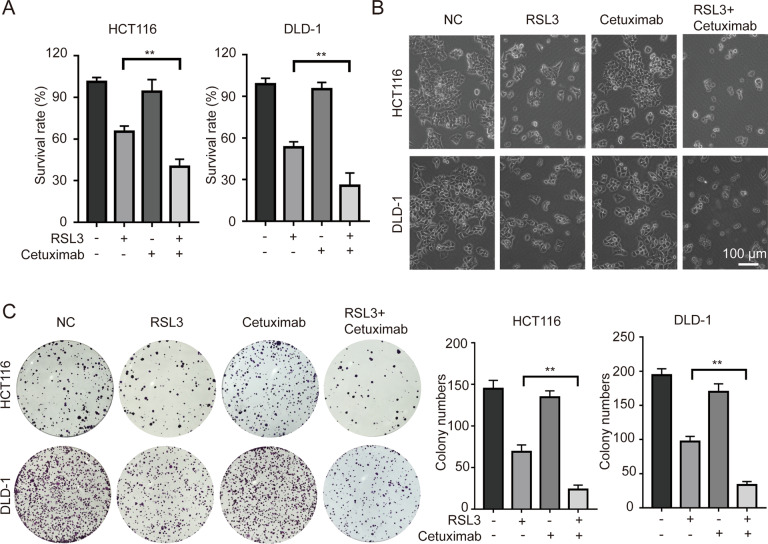
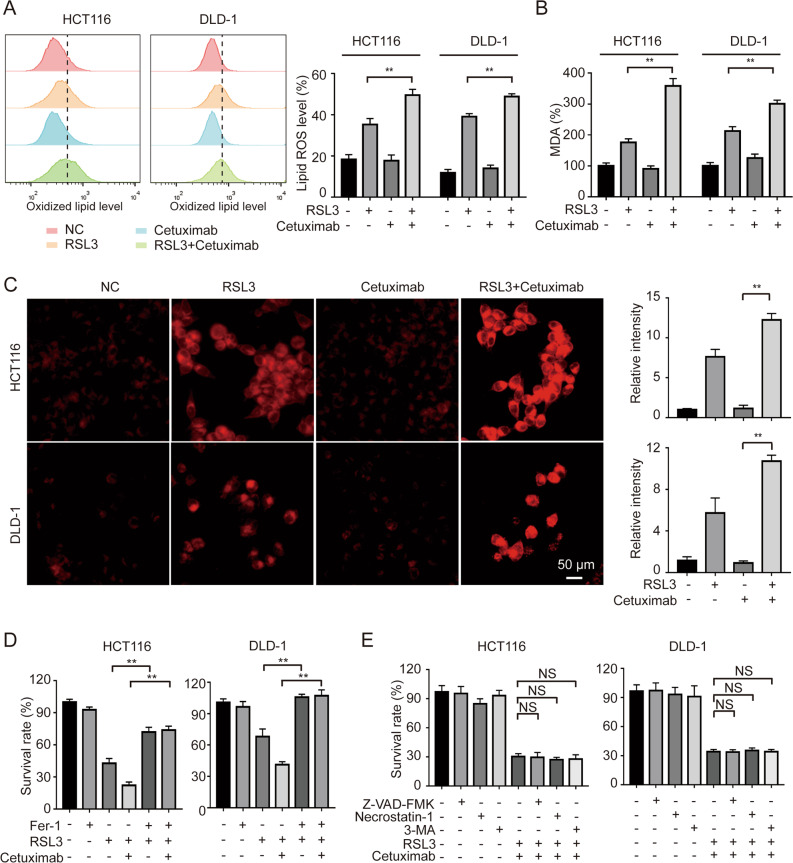
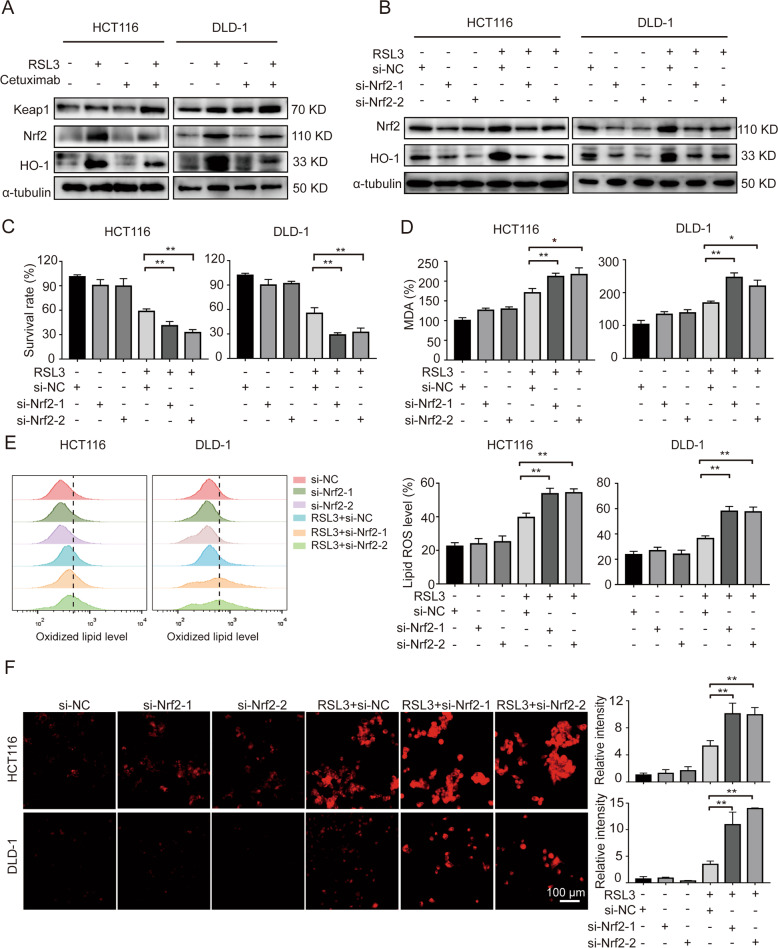
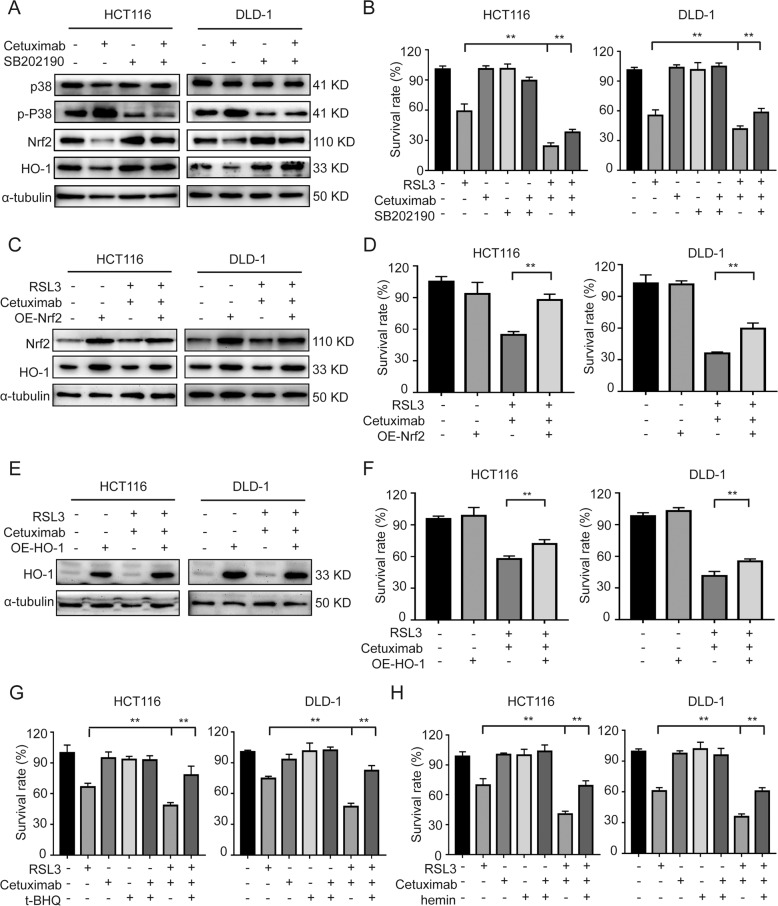
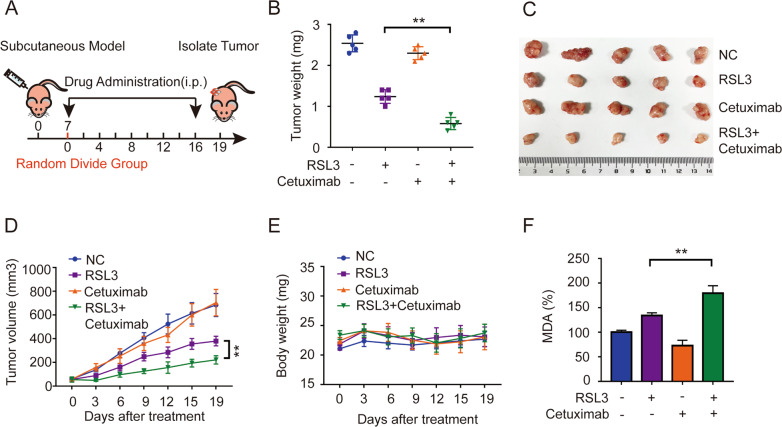
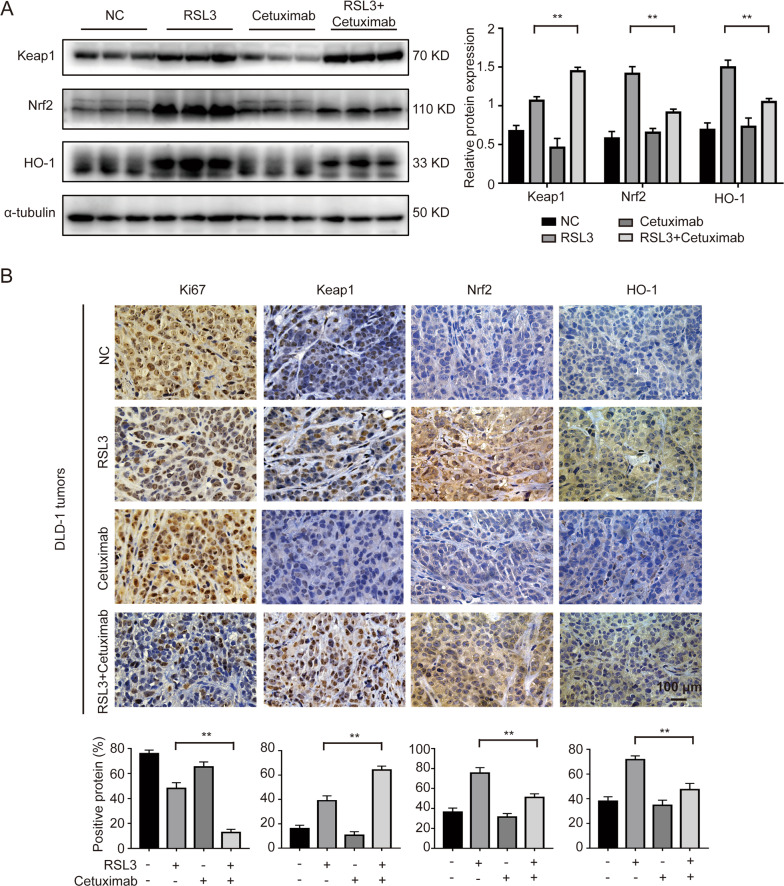
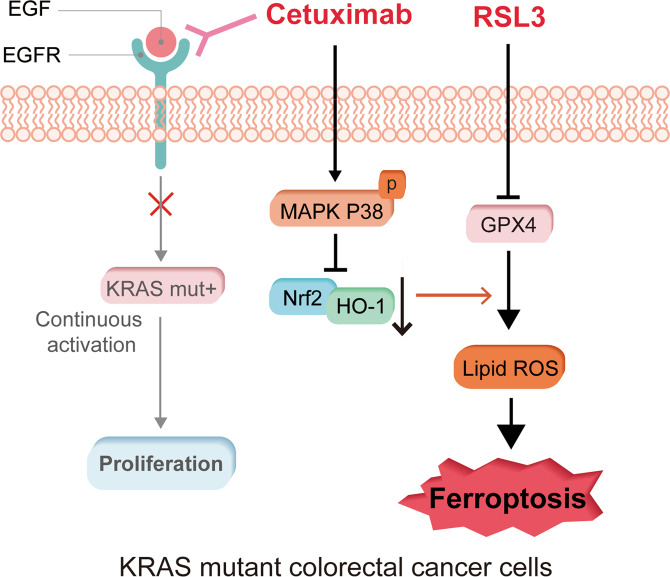
Cetuximab is approved for the treatment of metastatic colorectal cancer (mCRC) with RAS wild-type. Nevertheless, the prognosis remains poor and the effectiveness of cetuximab is limited in KRAS mutant mCRC. Recently, emerging evidence has shown that ferroptosis, a newly discovered form of nonapoptotic cell death, is closely related to KRAS mutant cells. Here, we further investigated whether cetuximab-mediated regulation of p38/Nrf2/HO-1 promotes RSL3-induced ferroptosis and plays a pivotal role in overcoming drug resistance in KRAS mutant colorectal cancer (CRC). In our research, we used two KRAS mutant CRC cell lines, HCT116 and DLD-1, as models of intrinsic resistance to cetuximab. The viability of cells treated with the combination of RSL3 and cetuximab was assessed by the CCK-8 and colony formation assays. The effective of cetuximab to promote RSL3-induced ferroptosis was investigated by evaluating lipid reactive oxygen species accumulation and the expression of the malondialdehyde and the intracellular iron assay. Cetuximab therapy contributed to regulating the p38/Nrf2/HO-1 axis, as determined by western blotting and transfection with small interfering RNAs. Cetuximab promoted RSL3-induced ferroptosis by inhibiting the Nrf2/HO-1 in KRAS mutant CRC cells, and this was further demonstrated in a xenograft nude mouse model. Our work reveals that cetuximab enhances the cytotoxic effect of RSL3 on KRAS mutant CRC cells and that cetuximab enhances RSL3-induced ferroptosis by inhibiting the Nrf2/HO-1 axis through the activation of p38 MAPK.
Overview
The claims and statistics of this paper haven’t been checked yet.
Free: it reads the open-access text and checks the first 5 claims that cite a source we can check. Create a free account to check every claim.
Integrity signals
Registry
Cites
Statistics
Figures
Verification
Claims the paper makes
The claims and statistics of this paper haven’t been checked yet.
Free: it reads the open-access text and checks the first 5 claims that cite a source we can check. Create a free account to check every claim.
Claims other papers make about this one
Each is checked against this paper’s own text: does it say what the citing paper says it does?
In the citing paper
“In KRAS mutant CRC cell lines and mouse CRC models, cetuximab promotes RSL3-induced ferroptosis by activating P38 MAPK to inhibit Nrf2/HO-1 signaling pathway [287].”
From Drug Resistance in Colorectal Cancer: From Mechanism to Clinic (2022) · cites this paper as [287]
Self-check
Percentages, sums and reported differences re-computed from the paper’s own numbers.
The self-check needs the paper’s full text.
Citations
Cites
Siegel, R. L., Miller, K. D., & Jemal, A. (2020) · CA: A Cancer Journal for Clinicians · doi:10.3322/caac.21590 · Cited by 20,444
Ferroptosis: An Iron-Dependent Form of Nonapoptotic Cell Death
Dixon, S. J., Lemberg, K. M., Lamprecht, M. R., Skouta, R., Zaitsev, E. M., Gleason, C. E., Patel, D. N., Bauer, A. J., Cantley, A. M., Yang, W. S., et al. (2012) · Cell · doi:10.1016/j.cell.2012.03.042 · Cited by 18,691 · cited 3×
“Ferroptosis is characterized by irondependent accumulation [9].”
InfluentialCancer statistics for the year 2020: An overview
Ferlay, J., Colombet, M., Soerjomataram, I., Parkin, D. M., Piñeros, M., Znaor, A., & Bray, F. (2021) · International Journal of Cancer · doi:10.1002/ijc.33588 · Cited by 5,689 · cited 1×
“INTRODUCTION Colorectal cancer (CRC) is the third most deadly cancer in the world [1, 2].”
BackgroundWild-Type KRAS Is Required for Panitumumab Efficacy in Patients With Metastatic Colorectal Cancer
Amado, R. G., Wolf, M., Peeters, M., Van Cutsem, E., Siena, S., Freeman, D. J., Juan, T., Sikorski, R., Suggs, S., Radinsky, R., et al. (2008) · Journal of Clinical Oncology · doi:10.1200/jco.2007.14.7116 · Cited by 3,207 · cited 1×
“Treatment with cetuximab is ineffective in CRC patients with KRAS mutations [6, 7].”
BackgroundBroadening horizons: the role of ferroptosis in cancer
Chen, X., Kang, R., Kroemer, G., & Tang, D. (2021) · Nature Reviews Clinical Oncology · doi:10.1038/s41571-020-00462-0 · Cited by 2,897 · cited 1×
“RAS-selective lethal 3 (RSL3), a small molecule, can kill RAS mutant cancer cells [10] and activate irondependent, nonapoptotic cell death of RAS mutant cancer cells [11].”
BackgroundNRF2 plays a critical role in mitigating lipid peroxidation and ferroptosis
Dodson, M., Castro-Portuguez, R., & Zhang, D. D. (2019) · Redox Biology · doi:10.1016/j.redox.2019.101107 · Cited by 2,435 · cited 1×
“Nuclear factor erythroid 2-related factor 2 (Nrf2), a dominant regulator of antioxidant transcription factors, prevents lipid peroxidation [13] and ferroptosis by increasing the transcription of multiple cytoprotective enzymes, such as haem oxygenase-1 (HO-1) [14].”
BackgroundYang, W. S., & Stockwell, B. R. (2008) · Chemistry & Biology · doi:10.1016/j.chembiol.2008.02.010 · Cited by 1,876 · cited 1×
“RAS-selective lethal 3 (RSL3), a small molecule, can kill RAS mutant cancer cells [10] and activate irondependent, nonapoptotic cell death of RAS mutant cancer cells [11].”
BackgroundFerroptosis is a type of autophagy-dependent cell death
Zhou, B., Liu, J., Kang, R., Klionsky, D. J., Kroemer, G., & Tang, D. (2020) · Seminars in Cancer Biology · doi:10.1016/j.semcancer.2019.03.002 · Cited by 1,061 · cited 1×
“Cetuximab enhances RSL3-induced ferroptosis in KRAS mutant CRC cells RSL3 is a potent ferroptosis activator [20].”
BackgroundThe development of the concept of ferroptosis
Hirschhorn, T., & Stockwell, B. R. (2019) · Free Radical Biology and Medicine · doi:10.1016/j.freeradbiomed.2018.09.043 · Cited by 1,052 · cited 1×
“Ferroptosis is a newly discovered form of nonapoptotic cell death that is triggered via iron-dependent lipid peroxidation [8].”
BackgroundMetallothionein‐1G facilitates sorafenib resistance through inhibition of ferroptosis
Sun, X., Niu, X., Chen, R., He, W., Chen, D., Kang, R., & Tang, D. (2016) · Hepatology · doi:10.1002/hep.28574 · Cited by 703 · cited 1×
“Upregulation of MT-1G expression protects hepatocellular carcinoma cells from the effect of sorafenib and promotes cancer progression by inhibiting ferroptosis [36].”
Background
Cited by
Items 201–300 of 301
The role of NRF2 in human cancers: Pre-clinical insights paving the way for clinical trials
Pei, Y., Yin, J., Liu, J., Liu, D., Wu, Q., Cai, X., Han, M., Tian, Y., Yang, L., & Liu, S. (2025) · Journal of Pharmaceutical Analysis · doi:10.1016/j.jpha.2025.101358 · Cited by 8
“In Kirsten rat sarcoma viral oncogene homolog (KRAS) mutant CRC, cetuximab-induced downregulation of the NRF2/HO-1 axis may lead to fer-roptosis [104].”
Zhang, X., Zhou, W., Wu, C., Jiang, J., Guo, Q., Feng, L., Cheng, X., & Zhang, X. (2024) · Scientific Reports · doi:10.1038/s41598-024-59676-2 · Cited by 7
“Besides, cetuximab has been reported to enhance RSL3-induced ferroptosis by inhibiting the Nrf2/HO-1 axis 26 .”
BackgroundWang, C., You, Z., Zhou, G., Dong, J., Tong, S., & Sun, G. (2025) · BMC Gastroenterology · doi:10.1186/s12876-025-03649-w · Cited by 8
“Besides, Cetuximab retards the Nrf2/HO-1 pathway to accelerate RSL3-evoked ferroptosis in CRC progression [28].”
Advances in the Development of Ferroptosis‐Inducing Agents for Cancer Treatment
Zhang, L., Li, Y., Qian, Y., Xie, R., Peng, W., & Zhou, W. (2025) · Archiv der Pharmazie · doi:10.1002/ardp.202500010 · Cited by 8
Yi-ran, Z., Zhang, L., Li, F., He, J., Xuan, J.-F., Chen, C., Gong, C., & Pan, Y.-L. (2022) · Journal of Oncology · doi:10.1155/2022/8394816 · Cited by 7
Tseng, H.-J., Kuo, L.-M., Tsai, Y., et al. (2023) · RSC Advances · doi:10.1039/d3ra01589k · Cited by 5
Xie, X., Pang, Q.-H., & Luo, L. (2024) · World Journal of Clinical Oncology · doi:10.5306/wjco.v15.i3.375 · Cited by 5
Li, H. (2024) · American Journal of Translational Research · doi:10.62347/haeu6139 · Cited by 5
Chen, L., Wang, H., Qi, H., Wang, L., Qian, Y., Huang, X., Gao, J. P., Wei, M., & Li, Z. (2025) · Coordination Chemistry Reviews · doi:10.1016/j.ccr.2025.217150 · Cited by 10
Zhu, H., Wu, X., Tan, Y. L., Shi, L., Bai, W., & Li, X. (2025) · Journal of Nanobiotechnology · doi:10.1186/s12951-025-03741-z · Cited by 8
Han, J., Jia, Z., Fan, X., Zhao, X., Cheng, L.-Y., Xia, Y.-X., Ji, X., & Zang, W. (2025) · World Journal of Gastroenterology · doi:10.3748/wjg.v31.i41.111174 · Cited by 5
Organelle-specific regulation of ferroptosis
Zhang, Y., Liu, M., Li, M., Wu, Y., Xie, M., Liu, X., Lu, H., Zhai, X., & Yang, Y. (2026) · Biology Direct · doi:10.1186/s13062-025-00717-9 · Cited by 6
Ding, Z., Zheng, M., Mou, B., Li, Y., Qin, B., Qiu, L., Yang, X., & Ren, Y. (2026) · Life Sciences · doi:10.1016/j.lfs.2026.124200 · Cited by 6
Ferroptosis in cancer: integrating multi-omics, AI-driven biomarkers, and translational challenges
Taki, A. G., Shareef, A., Arora, V., Oweis, R. J., Jyothi, S. R., Singh, U., Sahoo, S., Chauhan, A. S., Alimova, F., Sameer, H. N., et al. (2026) · Clinica Chimica Acta · doi:10.1016/j.cca.2026.121131 · Cited by 7
IL6ST: A Novel Therapeutic Target for Managing and Treating Colorectal Cancer Via Ferroptosis
Zhao, K., He, B., Xue, K., Cao, B., Ren, K., Jin, Y., Rong, S., Wei, L.-Z., & Wei, H. (2024) · The Turkish Journal of Gastroenterology · doi:10.5152/tjg.2024.23353 · Cited by 6
Influence of Mesalazine on Ferroptosis-Related Gene Expression in In Vitro Colorectal Cancer Culture
Słoka, J., Strzałka‐Mrozik, B., Kubica, S., Nowak, I., & Kruszniewska‐Rajs, C. (2025) · Biomedicines · doi:10.3390/biomedicines13010219 · Cited by 4
“Moreover, cetuximab was found to enhance RSL3-induced ferroptosis in colorectal cancer cells by inhibiting the p38/NRF2/HMOX1 signaling pathway [75].”
Callahan, R. C., Curry, J., Bhagavatula, G., Staley, A. W., Schaefer, R. E. M., Minhajuddin, F., Zhou, L., Neuhart, R. M., Atif, S. M., Orlicky, D. J., et al. (2025) · JCI Insight · doi:10.1172/jci.insight.181032 · Cited by 5
Dai, L., Ye, Y., Mugaanyi, J., Hu, Z., Huang, J. L., & Lu, C. (2024) · Aging · doi:10.18632/aging.205867 · Cited by 4
“These drugs are primarily used for treating other diseases such as cancer [59], autoimmune diseases [60], and transplant rejection [61].”
BackgroundDuan, L., Cao, L., Liu, J., Wang, Z., Liang, J., Feng, W., Liu, Y., Feng, F., Zhang, J., & Zheng, J. (2025) · Current Medicinal Chemistry · doi:10.2174/0109298673377428250131112647 · Cited by 7
Cuvelier, G., Vermonden, P., Debisschop, P., Martin, M., Derouane, F., Liebisch, G., Ecker, J., Höring, M., Berlière, M., Bockstal, M. V., et al. (2025) · International Journal of Molecular Sciences · doi:10.3390/ijms26073375 · Cited by 5
“It covalently binds to the selenocysteine residue on the active site of GPX4, blocking its detoxifying function [27,28].”
Ferroptosis and cancer: interlinkages and potential applications
Hu, X., & Jiang, J. (2023) · Clinical and translational reports · doi:10.58832/ctr.2023.7.6.2 · Cited by 4
Unlocking ferroptosis: A novel link between triple-negative breast cancer and immune regulation
Montero, L., Cruz‐Gregorio, A., Cruz, E. Y. H., Sciutto, E., Fragoso, G., & Pedraza‐Chaverrí, J. (2026) · Archives of Biochemistry and Biophysics · doi:10.1016/j.abb.2026.110760 · Cited by 3
Zhong, Z., Wang, S., Ren, Q., Jiao, X., Xu, L., Dong, X., Li, N., Guan, H., Chu, R., Yuan, M., et al. (2026) · Redox Biology · doi:10.1016/j.redox.2026.104101 · Cited by 4
“NRF2 and p38 are known to engage in bidirectional crosstalk [57,58], and in our system, partial NRF2 inhibition leaves residual anti-inflammatory activity that may reflect incomplete blockade rather than a distinct NRF2-independent mechanism.”
Advances in targeted protein degradation for cancer immunotherapy
Sun, Y., Li, M., Zou, Y., & Shi, B. (2026) · Cell Biomaterials · doi:10.1016/j.celbio.2026.100403 · Cited by 3
Chen, J., Yuan, X., Zhang, T., & Zhang, E. (2026) · European journal of medical research · doi:10.1186/s40001-026-04365-1 · Cited by 3
“In addition, RSL3 also affects iron metabolism pathways, increasing the intracellular availability of iron, which promotes lipid peroxidation reactions [78].”
Zhou, Y., Zhao, X., Lu, N., Cao, P., Leng, W.-B., Zhu, Q., Gou, H., Zhang, J., Li, X., & Qiu, M. (2024) · International Immunopharmacology · doi:10.1016/j.intimp.2024.111887 · Cited by 4
Wu, X., & Wu, J. (2024) · Cancer Chemotherapy and Pharmacology · doi:10.1007/s00280-024-04654-8 · Cited by 3
“The second type, including RSL3, acts directly on GPX4 to inhibit its activity [27, 28].”
BackgroundWang, D., Yuan, F., Deng, X., et al. (2024) · Angewandte Chemie · doi:10.1002/ange.202410649 · Cited by 3
Zhou, C., Wu, M. Y., Liu, G., & Zhou, L. (2023) · Open Life Sciences · doi:10.1515/biol-2022-0678 · Cited by 3
“Erastin (an inducer of ferroptosis, Selleck, 10 μM), RSL3 (an inducer of ferroptosis, Selleck, 0.1 μM), Ferrostatin-1 (Fer-1; a ferroptosis inhibitor, Selleck, 1μM), and Liproxstatin-1 (Lip-1; a ferroptosis inhibitor, Selleck, 200 nM) were used to modulate ferroptosis of HK-2 cells [8,10–12].”
BackgroundInfluentialDu, J., Li, B., Zhu, C., Han, J., & Tong, X. (2022) · PubMed Central · doi:10.12122/j.issn.1673-4254.2022.03.13 · Cited by 3
17,20-Epoxysteroids from octocoral Isis hippuris (Linnaeus, 1758)
Huang, Y.-Q., Chen, P., Yang, S., et al. (2022) · Tetrahedron Letters · doi:10.1016/j.tetlet.2022.154142 · Cited by 3
Predicting prognosis and immunotherapy response of ferroptosis-related genes in colorectal cancer
Wei, H., Ren, K., Jin, Y., Wen, Y., Cao, B., Gan, Y., Shi, Y., Wu, Z., & Chen, L. (2025) · European journal of medical research · doi:10.1186/s40001-025-02779-x · Cited by 2
“For example, cetuximab, an approved treat-ment for metastatic CRC that targets EGFR, promotes ferroptosis by regulating the p38/Nrf2/HO-1 axis in KRAS-mutant CRC cell lines [5].”
Gu, M., Du, L. Z., & Mao, C. (2025) · Journal of the Renin-Angiotensin-Aldosterone System · doi:10.1177/14703203251356435 · Cited by 6
“35 Hence, we assumed that overexpression of DUSP1 might inhibit the renal fi brosis in IgAN disease through suppressing the p38 MAPK/Nrf2-related ferroptosis.”
He, J. N., Gao, Y., Sun, Z. S., Li, Y., Wang, J., Zhang, L., & Liu, S. (2025) · Frontiers in Immunology · doi:10.3389/fimmu.2025.1686071 · Cited by 2
S-palmitoylation in ferroptosis: molecular mechanisms, modulators, and interplay with autophagy
Wang, L., Wang, C., & He, H. (2026) · APOPTOSIS · doi:10.1007/s10495-025-02227-5 · Cited by 3
“KRAS can modulate ferroptosis through Nrf2 and SLC7A11/GPX4 pathway [ 23, 24], and NRAS can modulate ferroptosis through the regulation of TfR1-mediated iron uptake [25].”
Zhang, J., Zhang, M., Wu, X., Jing, H., Li, P., Wang, W., Guo, X., Zhao, Z., Zhu, S., & Yi-jia (2026) · Drug Design Development and Therapy · doi:10.2147/dddt.s574116 · Cited by 2
“13,14 18 Given that CTX exerts its antitumor activity by blocking EGFR, these findings raise the possibility that butyrate may modulate response to CTX.”
InfluentialAstragaloside IV is a potential natural neuroprotective agent for stroke: a review
Zhang, Q., Qin, W.-X., Li, X., Zhang, Y.-B., Li, M., Xu, J., & Mao, Z. (2026) · Frontiers in Pharmacology · doi:10.3389/fphar.2025.1718700 · Cited by 4
Guo, J., Liu, Y., Huang, Y., Liu, X., & Hu, Y. (2026) · APOPTOSIS · doi:10.1007/s10495-026-02257-7 · Cited by 3
Targeting cell death: a promising approach for colorectal cancer therapy
Xiao, C., Oyang, L., Jiang, X., Li, S., & Peng, Q. (2026) · Cancer Cell International · doi:10.1186/s12935-026-04261-y · Cited by 3
Shang, Y., Yang, Q., Zhang, R., Xu, W., EL-Aty, A. M. A., Gao, Y., & Wang, T. (2026) · Lipids in Health and Disease · doi:10.1186/s12944-026-02956-9 · Cited by 2
“RSL3-induced ferroptosis can be enhanced by the use of cetuximab, an epidermal growth factor receptor (EGFR) inhibitor, for CRC treatment in the clinic [272].”
24-Dehydrohippuristanol, a cytotoxic spiroketal steroid from Isis hippuris
Huang, Y.-Q., Illias, A. M., Chen, P., et al. (2023) · Tetrahedron Letters · doi:10.1016/j.tetlet.2023.154540 · Cited by 2
Lu, W., Liu, L., Xiang, K., Ren, K., Huang, Y., Cheng, M., Li, X., Xu, F., & Xu, X. (2024) · Acta Biochimica et Biophysica Sinica · doi:10.3724/abbs.2024069 · Cited by 2
“CET is a therapeutic mAb for head and neck squamous cell carcinoma (HNSCC) [40] and metastatic colorectal cancer (mCRC) treatment [41].”
BackgroundGe, X., Xu, J., He, J., Wang, J., & Qian, Y. (2025) · Frontiers in Immunology · doi:10.3389/fimmu.2025.1561210 · Cited by 3
Guo, Y., Lou, T.-X., Liu, Y., Li, X.-Y., Liu, X.-Y., & Huang, Y. (2025) · Journal of Cardiovascular Pharmacology and Therapeutics · doi:10.1177/10742484251369610 · Cited by 2
“47 It has previously been re-ported that ANXA1 has a bidirectional effect on the activation of the MAPK pathway.”
Wang, N., Shi, B., Man, X.-H., Wu, W., & Cao, J. (2024) · PubMed Central · doi:10.12122/j.issn.1673-4254.2024.05.10 · Cited by 3
Liu, H., Li, Y., Qiu, J., Zhang, J., Lai, H., & Zhang, X. (2025) · Canadian Journal of Urology · doi:10.32604/cju.2025.066523 · Cited by 1
Kang, D., Li, J., Xu, J., Li, Y., Song, W., & Zhang, Z. (2025) · Clinics and Research in Hepatology and Gastroenterology · doi:10.1016/j.clinre.2025.102690 · Cited by 4
An overview of KRAS-targeting therapies for colorectal cancer in phase I and II development
Chamseddine, S., Azmi, A. S., & Saif, M. W. (2025) · Expert Opinion on Investigational Drugs · doi:10.1080/13543784.2025.2611395 · Cited by 2
“Preclinical models demonstrate that KRAS inhibition induces rapid EGFR phosphorylation, restoring ERK activity; this can be prevented with anti-EGFR antibodies [75,76].”
Jiang, H., Zhu, X., Pan, W., Xu, W., Tao, H., Jia, Y., Xun, Y., Liu, Z., Liu, J., Zhang, Z., et al. (2026) · Advanced Functional Materials · doi:10.1002/adfm.202523181 · Cited by 4
“RSL3 can directly bind to and inhibit the activity of GPX4, preventing the timely clearance of intracellular lipid peroxides, resulting in the accumulation of lipid peroxidation and ultimately inducing ferroptosis [49, 50].”
Liu, Y., & Li, Y. (2026) · Frontiers in Pharmacology · doi:10.3389/fphar.2026.1694895 · Cited by 2
Caspase-3/7 deficiency results in enhanced intestinal inflammation and reduced tumorigenesis
Xie, W., Wyckaert, L., Vadi, M., Verstraeten, B., Divert, T., Haerinck, J., Rycke, R. M. D., Baeke, F., Lamkanfi, M., Berx, G., et al. (2026) · Science Advances · doi:10.1126/sciadv.adz5906 · Cited by 2
“Given the potential tumor-suppressive role of ferroptosis induction in CRC ( 57 , 58 ), we examined whether Gpx4 deficiency in IECs would negatively affect AOM/DSS-induced CRC development.”
Gong, G., Yin, T., Zhang, Z., Ganesan, K., & Zheng, Y. (2026) · Pharmaceuticals · doi:10.3390/ph19040607 · Cited by 1
“Conversely, in some tumor contexts, Nrf2 and HO-1 may be downregulated, reflecting the complex, context-dependent nature of this pathway [42–45].”
Zhao, A., Chen, B., Lin, C., et al. (2026) · Renal Failure · doi:10.1080/0886022x.2026.2653928 · Cited by 1
Li, Q. Z., Li, Z., Lin, Y., Xu, Q., Lu, X., Zhou, J., Yi, J., Chen, J., & Yang, C. C.-K. (2026) · World Journal of Surgical Oncology · doi:10.1186/s12957-026-04362-y · Cited by 1
“Some previous studies indicated that inhibiting the Nrf2/HO-1 pathway contributed to promoting the ferroptosis of colorectal cancer [22, 23].”
Research Progress on Ferroptosis-Inducing Compounds in Tumor Cells
Zhang, R., Xu, M., Li, M., Xu, M., Han, X., & Hu, Q. (2026) · Die Pharmazie · doi:10.31083/pharmazie51559 · Cited by 1
Li, X. B., Huang, C., Zhang, S., Mao, J., Feng, Q., Zhao, L., & Jiang, L. (2026) · Archives of Oral Biology · doi:10.1016/j.archoralbio.2026.106679 · Cited by 1
Self-citationShamia, A. Y. M., Abd-Alhafez, A.-A., Alqalshy, E. M., & Zouair, M. G. A. (2022) · International Journal of Health Sciences · doi:10.53730/ijhs.v6ns5.9395 · Cited by 2
“(52, 56) Yang et al (2021)(56) results indicated that cetuximab decreased the activation of Nrf2/HO-1, which could in turn increased RSL3-induced lipid ROS and MDA levels.”
BackgroundLacalle-González, C., Lopez-Blazquez, C., Hidalgo-León, M. Á., Otieno, M. O., Sanz-Criado, L., Fernández‐Aceñero, M. J., Ortega, L. M., García‐Foncillas, J., & Martínez‐Useros, J. (2025) · bioRxiv (Cold Spring Harbor Laboratory) · doi:10.1101/2025.09.12.675778 · Cited by 1
“Inhibiting GPX4 represents a potential therapeutic strategy to eliminate PDAC cancer cells by disrupting the cellular antioxidant defense; thus, preclinical studies employing GPX4 inhibitors are urgently needed (34) .”
AMPD2 as a novel regulator of ferroptosisPreprint
Chen, H., Chi, X., Jin, H., Zhang, Y., Zhang, Z., Zhang, L., & Shao, S. (2022) · Research Square · doi:10.21203/rs.3.rs-1534934/v1
Xu, Z., Chen, Y., Yu, Y., Yu, T., Wang, Y., Chen, T., Zhu, L., & Shu, Y. (2022) · Research Square · doi:10.21203/rs.3.rs-2265866/v1
The NRF2-anti-ferroptosis Axis in Health and Disease
Dodson, M. B., Shakya, A., Chen, J., Chen, W.-T., McKee, N. W., & Zhang, D. D. (2023) · Springer eBooks · doi:10.1007/978-3-031-39171-2_10
Zhang, J., Qin, Y., Zhang, J., Qiao, J., Zhang, Z., Liu, Y., Dang, M., Liu, C., & Zhang, X. (2023) · SSRN Electronic Journal · doi:10.2139/ssrn.4670022
Liu, X., Zhong, S., Qiu, K., Chen, X., Wu, W., Zheng, J., Liu, Y., Wu, H., Fan, S., Nie, D., et al. (2023) · Figshare · doi:10.6084/m9.figshare.22914686
Liu, X., Zhong, S., Qiu, K., Chen, X., Wu, W., Zheng, J., Liu, Y., Wu, H., Fan, S., Nie, D., et al. (2023) · Figshare · doi:10.6084/m9.figshare.22914683
Liu, X., Zhong, S., Qiu, K., Chen, X., Wu, W., Zheng, J., Liu, Y., Wu, H., Fan, S., Nie, D., et al. (2023) · Figshare · doi:10.6084/m9.figshare.22914680
Guo, S., Zhang, D., Dong, Y.-Y., Wu, X., Wu, X., Ni, Y., Zhao, R., & Ma, W. (2024) · SSRN Electronic Journal · doi:10.2139/ssrn.4850821
Progress in research of ferroptosis in gastrointestinal tumors
Chi, Z.-C. (2024) · World Chinese Journal of Digestology · doi:10.11569/wcjd.v32.i10.699
Gene Editing in ErbB/HER Family-Mediated Cancer Immunology
Yin, L. (2025) · Genetics. · doi:10.5772/intechopen.1008441
Ferroptosis: a potential target for non-surgical treatment of laryngeal cancer
Luo, Y., He, Y., Xu, S., Chen, Y., Qin, F., & Hu, W. (2025) · European Archives of Oto-Rhino-Laryngology · doi:10.1007/s00405-025-09279-y · Cited by 1
Ding, Z., Zheng, M., Li, Y., Mou, B., Qin, B., Qiu, L., Yang, X., & Ren, Y. (2025) · Research Square · doi:10.21203/rs.3.rs-6007918/v1
Targeting Ferroptosis in Tuberous Sclerosis Cell Line Models
Tahsin, T. (2025) · Cronfa (Swansea University) · doi:10.23889/suthesis.69835
Unveiling the Hidden Power of Ferroptosis: A Promising Strategy for Treating Colorectal Cancer
Li, Y., Cheng, J., Li, M., Miao, J., Yang, J., Zhang, L., Yang, C., & Zhang, H. (2025) · Journal of Biomedical Science and Engineering · doi:10.4236/jbise.2025.188025 · Cited by 1
Self-citationTan, C., & Luo, Y. (2025) · Microorganisms · doi:10.3390/microorganisms13112560 · Cited by 1
“The ferroptosis inducer RSL3 can induce intracellular iron accumulation [121].”
Sah, H., & Sandhya, S. (2025) · Next research. · doi:10.1016/j.nexres.2025.101148
Liu, X., Zhong, S., Qiu, K., Chen, X., Wu, W., Zheng, J., Liu, Y., Wu, H., Fan, S., Nie, D., et al. (2023) · Figshare · doi:10.6084/m9.figshare.22914674
Liu, X., Zhong, S., Qiu, K., Chen, X., Wu, W., Zheng, J., Liu, Y., Wu, H., Fan, S., Nie, D., et al. (2023) · Figshare · doi:10.6084/m9.figshare.22914692
Xiao, Q., Lan, Z., Zhang, S., Ren, H., Wang, S., Wang, P., Feng, L., Li, D., Wang, C., Bai, X., et al. (2023) · Figshare · doi:10.6084/m9.figshare.24597740
Guo, F., Ling, G., Qiu, J., Li, J., Gan, Y., Yu, Y., Tang, J., Mo, L., & Piao, H. Z. (2024) · Figshare · doi:10.6084/m9.figshare.25464894
Mu, Y., Fan, Y., He, L., Hu, N., Xue, H., 关新刚, & Zheng, Z. (2023) · Figshare · doi:10.6084/m9.figshare.24550022
Hou, H., Zhang, L., & Duan, H. (2025) · Journal of Environmental Pathology Toxicology and Oncology · doi:10.1615/jenvironpatholtoxicoloncol.2025058410
Zhang, L. Z., Liu, Y., Liu, R., Wang, W., & Li, R. (2025) · Scientific Reports · doi:10.1038/s41598-025-33774-1
Ma, C., Chen, R., Wang, H., Qiu, K., Xia, Q., Yang, S., Wang, J., Cheng, Z., Cui, W., Lu, J., et al. (2026) · Frontiers in Pharmacology · doi:10.3389/fphar.2026.1724983 · Cited by 1
Sensitization Strategies for Drug Therapy in KRAS-Mutant Colorectal Cancer
孟, 秋. (2026) · Advances in Clinical Medicine · doi:10.12677/acm.2026.162386
Yan, H., Shen, X., Chen, C., Yao, Y., Feng, J., Quackenbush, J. F., Khan, S. A., Ma, S., & Johnson, C. H. (2025) · SSRN Electronic Journal · doi:10.2139/ssrn.5383883
High-density microfluidic Chip (HD-μChip) for multiplex detection in miniaturized immunoassays
He, Y., Wang, M., Luo, Z., Ma, X., Jiang, M., Chen, Y., Qin, J., Gu, Y., Li, X., Shi, Y., et al. (2026) · Chemical Engineering Journal · doi:10.1016/j.cej.2026.174787
Xu, S., Zhao, Y., Yao, J., Chen, H., Lyu, J., Ding, Y., Zeng, H., Chen, H., Hu, C., & Zhao, C. (2026) · International Immunopharmacology · doi:10.1016/j.intimp.2026.116495 · Cited by 2
Wang, Y., Jia, N., Shen, Z., Zhao, S., Pei, C., Huang, D., & Wang, Z. (2026) · Journal of Inflammation Research · doi:10.2147/jir.s577574
Zhang, T., Xiao, S., Xia, Y., Chen, K., Liu, H., Zhang, P., & Luo, L. (2026) · Drug Design Development and Therapy · doi:10.2147/dddt.s581236 · Cited by 1
Dai, P., Zheng, B., Pan, X., et al. (2026) · Journal of Ethnopharmacology · doi:10.1016/j.jep.2026.121839
Yu, Y., Ma, B., Liu, Y., Wang, Z., Chen, J., Li, X., Sun, S., & Bao, S. (2026) · Genes & Diseases · doi:10.1016/j.gendis.2026.102228
“104”
Crosstalk of metabolic cell death pathways in colorectal cancer: implications for precision therapy
Li, Y., & Li, C. (2026) · APOPTOSIS · doi:10.1007/s10495-026-02378-z · Cited by 1
CFHR5 promotes colorectal cancer by upregulating COX4I2 to inhibit ferroptosis
Dong, L., Gao, Y., Hu, J., & Wang, F. (2026) · Annals of Medicine and Surgery · doi:10.1097/ms9.0000000000004897
“…that KRAS and p53 play key roles in the occurrence and progression of CRC. Yang et al found that cetuximab alone could not effectively induce ferroptosis in KRAS mutant cell lines; however, when combined with RSL3, a ferroptosis inducer, it enhanced the cytotoxic effect of cetuximab [10] .”
Shi, L., Juan, W., Liu, H., Ge, C., Zhu, W., Chi, F., Ling, T. K., Hu, Z., Zhang, D., Liu, Q. L., et al. (2026) · Redox Biology · doi:10.1016/j.redox.2026.104290
“The oxidative-lipid stress interface coordinates activation of p38 MAPK, demonstrating predominant activity in phosphorylating EMT-governing transcription factors such as Nrf2 and HIF-α , which regulate ferroptosis by Heme oxygenase-1 (HO-1) [18,19].”
Mechanistic insights into TXNDC17-mediated ferroptosis suppression in glioblastoma progression
Jing, Z., Wang, Q., Li, C., et al. (2026) · Biology Direct · doi:10.1186/s13062-026-00898-x
“…studies have shown that cetuximab enhances RSL3-induced ferroptosis in KRAS-mutant colorectal cancer by inhibiting the Nrf2/HO-1 signaling pathway [53], while aspirin augments RSL3-induced ferroptosis in PI3K CA-mutant colorectal cancer by suppressing mTOR/ SREBP-1/SCD1-mediated lipogenesis [54].”
The m6A Reader IGF2BP2 Suppresses Ferroptosis in Nasopharyngeal Carcinoma by Stabilizing NRF2 mRNA
Xu, X. J. (2026) · Biochemical Genetics · doi:10.1007/s10528-026-11430-1
Yang, B., Pi, J., & Bian, X. (2026) · European Journal of Cell Biology · doi:10.1016/j.ejcb.2026.151558
CHTOP regulates the NRF2/HO-1 axis to modulate chemoresistance in colorectal cancer
Li, J., Li, X., Zhao, C., Wu, P., Hu, W., Zhao, X., Ma, Y., Dong, Z., Yuan, H., Chen, S., et al. (2026) · Redox Biology · doi:10.1016/j.redox.2026.104353
“Notably, HO-1 is widely recognized for its cytoprotective functions, and its upregulation is frequently associated with chemoresistance in cancer cells, whereas HO-1 downregulation has been linked to increased drug sensitivity [31,32].”
Yu, H., Wang, Y., Fang, Y., Yuan, W., Zhou, Z., Zhang, X., Lin, J., & Li, Y. (2026) · Biochemical Pharmacology · doi:10.1016/j.bcp.2026.118448
宗小亚, Zu, W.-B., & Tang, D. (2026) · Critical Reviews in Oncology/Hematology · doi:10.1016/j.critrevonc.2026.105600
Chen, X., Wei, Z., Gu, M., Liu, P., Yang, Y., & 任凱蒂 (2026) · Genes & Diseases · doi:10.1016/j.gendis.2026.102469
Metadata
- Authors
- Yang, J., Mo, J., Dai, J., Ye, C., Cen, W., Zheng, X., Jiang, L., & Ye, L.
- Affiliations
- First Affiliated Hospital of Wenzhou Medical University (CN)
- Corresponding author
- Jiang, Lei
- Ye, Lechi
- Venue
- Cell Death & Disease
- Published
- 2021-11-13
- Volume
- 12
- Issue
- 11
- Pages
- 1079-1079
- ISSN
- 2041-4889 (ISSN-L)
- PMC
- PMC8590697
- OpenAlex
- W3212627135
- Semantic Scholar
- 896f76432716dd2a36727055f94f68e2243c1a69
- Cited by
- 300
- References
- 52
- Citations by year
- 2026: 42 · 2025: 65 · 2024: 79 · 2023: 79 · 2022: 35
- FWCI
- 31.70
- Type
- journal article
- Language
- en
- Open access
- gold
- doi.org
- Licence
- cc-by
- creativecommons.org/licenses/by/4.0 (tdm)
- creativecommons.org/licenses/by/4.0 (vor)
- Locations
- Cell Death and Disease (publishedVersion, cc-by)
- PubMed Central (publishedVersion, cc-by)
- PubMed (publishedVersion)
- DOAJ (DOAJ: Directory of Open Access Journals) (submittedVersion, cc-by-sa)
- Funders
- National Natural Science Foundation of China (81572291)
- Natural Science Foundation of Zhejiang Province (LY19H160022)
- Topics
- Life Sciences › Biochemistry, Genetics and Molecular Biology › Cancer Research › Ferroptosis and cancer prognosis
- Health Sciences › Medicine › Oncology › Colorectal Cancer Treatments and Studies
- Life Sciences › Biochemistry, Genetics and Molecular Biology › Molecular Biology › Cell death mechanisms and regulation
- Keywords
- cetuximab, ferroptosis, RSL3, p38 MAPK, KRAS mutation, colorectal cancer, drug resistance, combination therapy, lipid reactive oxygen species, intracellular iron, HCT116 cells, DLD-1 cells
- MeSH terms
- Cetuximab, Antineoplastic Agents, Immunological, Ferroptosis, Animals, Carbolines, Humans, Mice, Nude, Transfection, Colorectal Neoplasms, Signal Transduction, Proto-Oncogene Proteins p21(ras), Xenograft Model Antitumor Assays, Cell Line, Tumor, NF-E2-Related Factor 2, Mice
About these checks
Registry, retraction, Cites and statistics results are computed, not judged, with one exception: a printed reference that no index lists is read once by a model before it counts as a citation error. Claims are extracted by a model and kept only when their quote appears verbatim in the text; each cited source is then checked, with a model’s help, for whether it says what the claim relies on. Those verdicts can be wrong — read the claim’s quote and the cited source before relying on one.
Statistics and arithmetic are recomputed, not judged.
Confidence bands are shown only for fields calibrated on our annotated test set. None is calibrated yet, so no band is shown.
What counts as a claim ›How we measure confidence ›How we check this ›
Are you an author, or do you see a problem with this page? Request a review
Data sources
Bibliographic data: Semantic Scholar, OpenAlex, Crossref.
Contains information from the Semantic Scholar Academic Graph Datasets, made available under the ODC Attribution License (ODC-BY 1.0).
Semantic Scholar’s data is described in: Kinney, R., et al. (2023). The Semantic Scholar Open Data Platform. arXiv:2301.10140.
