

Cetuximab promotes RSL3-induced ferroptosis by suppressing the Nrf2/HO-1 signalling pathway in KRAS mutant colorectal cancer
Open accessThe DOI matches its Crossref record; 52 of the 52 references it cites were found in a registry or an index.
Abstract
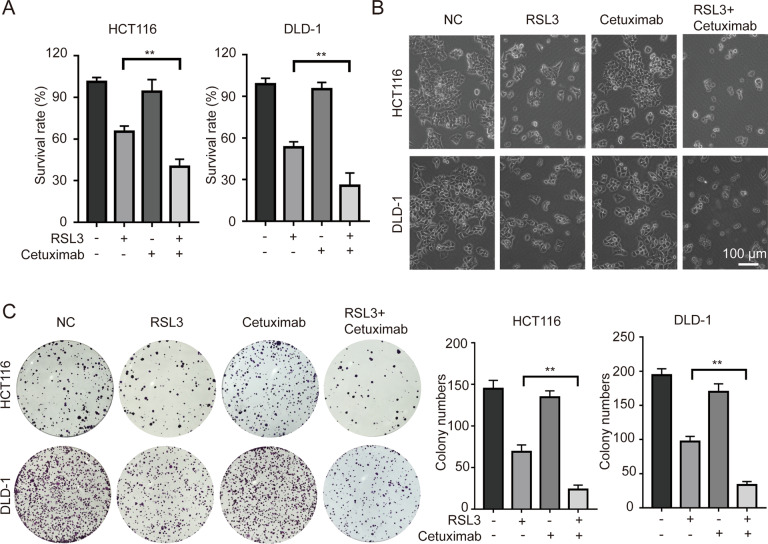
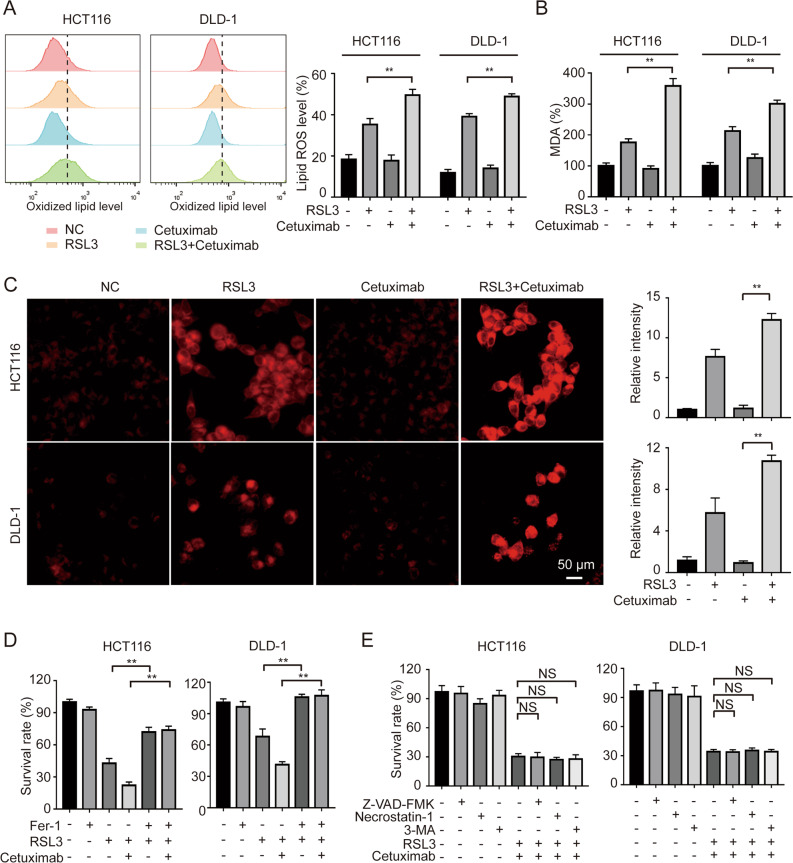
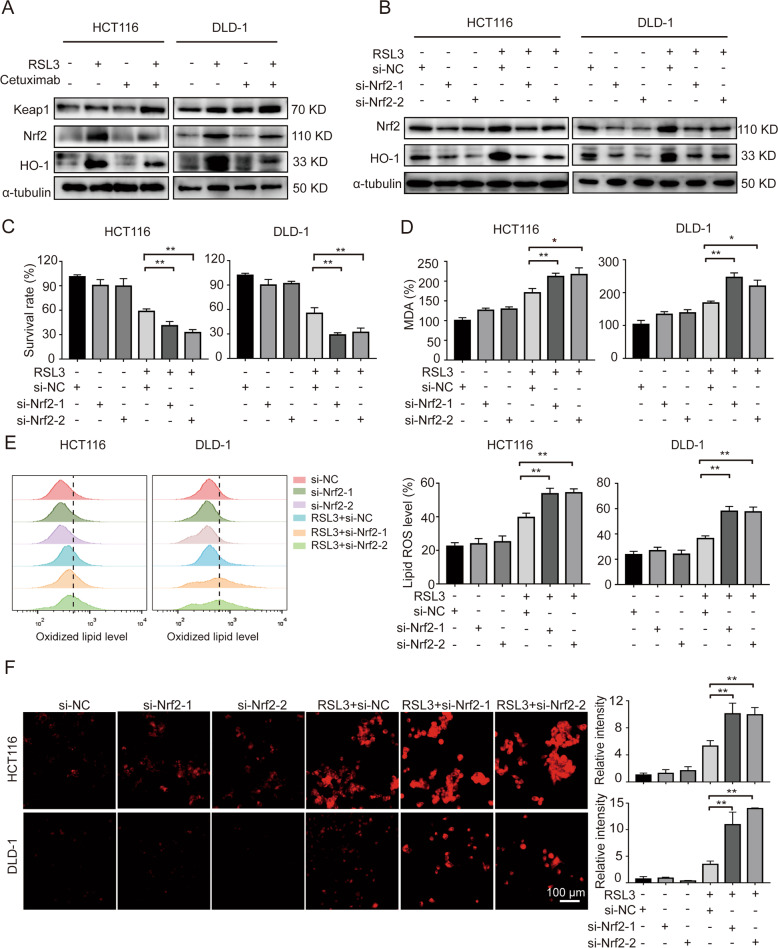
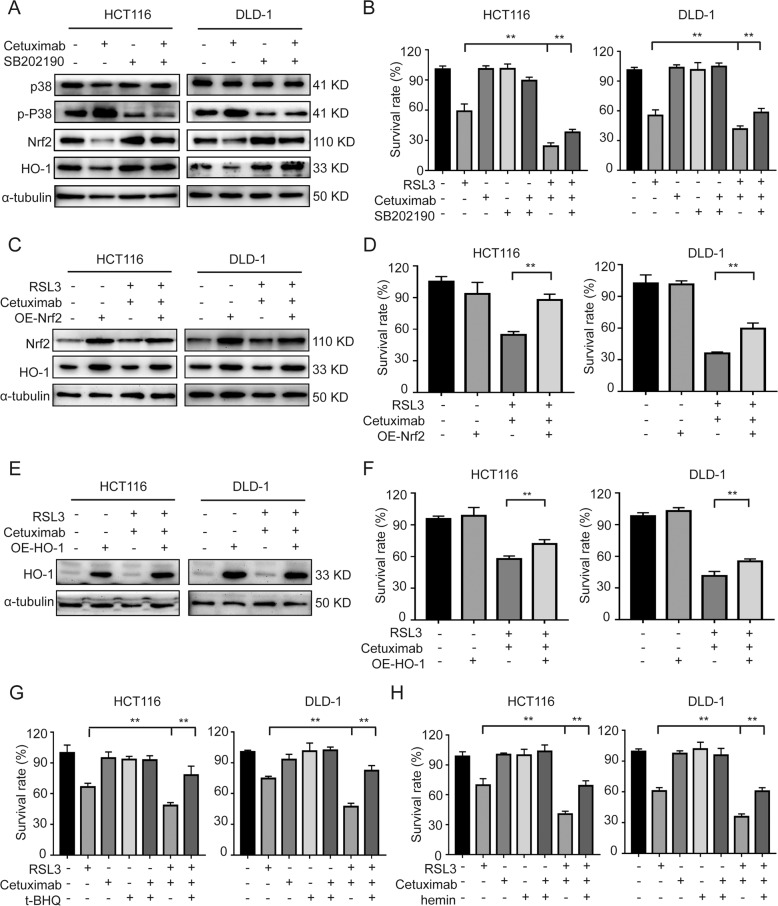
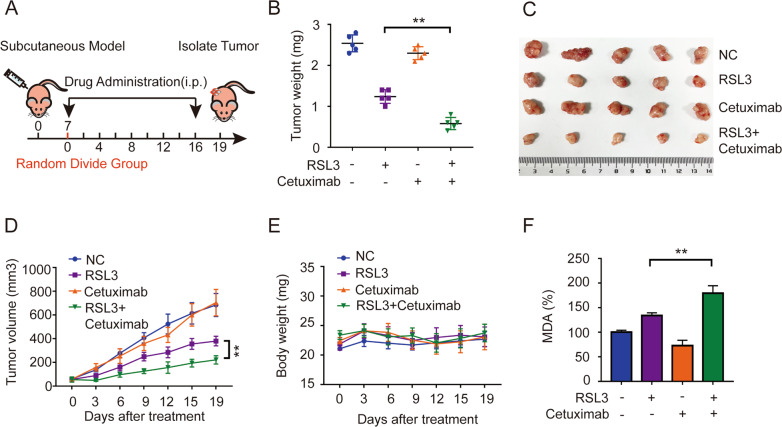
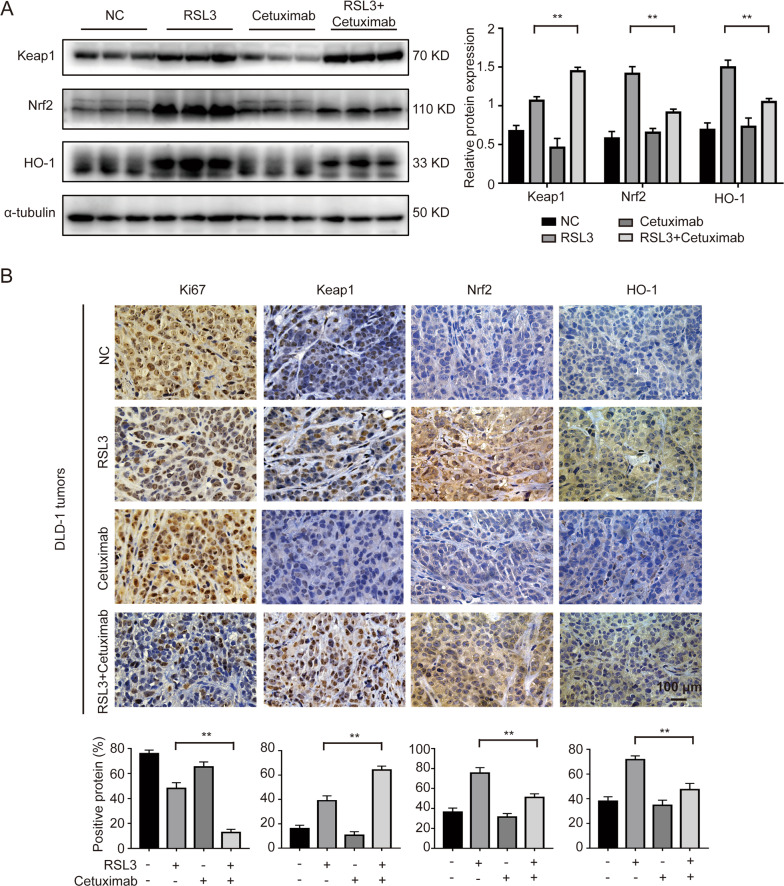
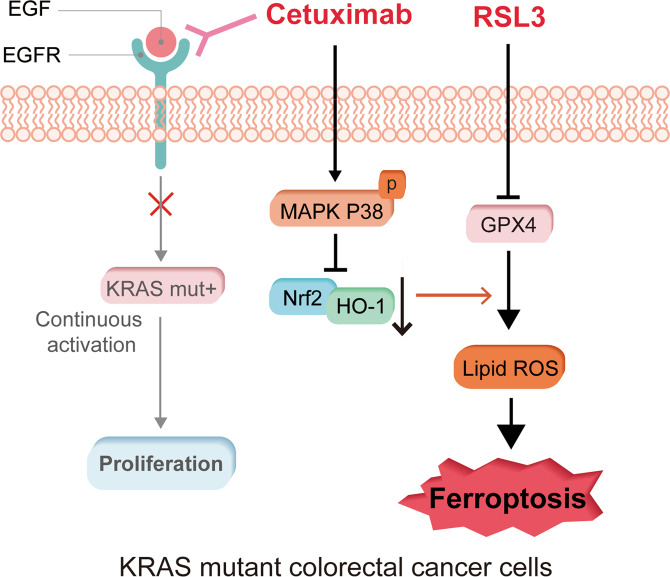
Cetuximab is approved for the treatment of metastatic colorectal cancer (mCRC) with RAS wild-type. Nevertheless, the prognosis remains poor and the effectiveness of cetuximab is limited in KRAS mutant mCRC. Recently, emerging evidence has shown that ferroptosis, a newly discovered form of nonapoptotic cell death, is closely related to KRAS mutant cells. Here, we further investigated whether cetuximab-mediated regulation of p38/Nrf2/HO-1 promotes RSL3-induced ferroptosis and plays a pivotal role in overcoming drug resistance in KRAS mutant colorectal cancer (CRC). In our research, we used two KRAS mutant CRC cell lines, HCT116 and DLD-1, as models of intrinsic resistance to cetuximab. The viability of cells treated with the combination of RSL3 and cetuximab was assessed by the CCK-8 and colony formation assays. The effective of cetuximab to promote RSL3-induced ferroptosis was investigated by evaluating lipid reactive oxygen species accumulation and the expression of the malondialdehyde and the intracellular iron assay. Cetuximab therapy contributed to regulating the p38/Nrf2/HO-1 axis, as determined by western blotting and transfection with small interfering RNAs. Cetuximab promoted RSL3-induced ferroptosis by inhibiting the Nrf2/HO-1 in KRAS mutant CRC cells, and this was further demonstrated in a xenograft nude mouse model. Our work reveals that cetuximab enhances the cytotoxic effect of RSL3 on KRAS mutant CRC cells and that cetuximab enhances RSL3-induced ferroptosis by inhibiting the Nrf2/HO-1 axis through the activation of p38 MAPK.
Overview
The claims and statistics of this paper haven’t been checked yet.
Free: it reads the open-access text and checks the first 5 claims that cite a source we can check. Create a free account to check every claim.
Integrity signals
Registry
Cites
Statistics
Figures
Verification
Claims the paper makes
The claims and statistics of this paper haven’t been checked yet.
Free: it reads the open-access text and checks the first 5 claims that cite a source we can check. Create a free account to check every claim.
Claims other papers make about this one
Each is checked against this paper’s own text: does it say what the citing paper says it does?
In the citing paper
“In KRAS mutant CRC cell lines and mouse CRC models, cetuximab promotes RSL3-induced ferroptosis by activating P38 MAPK to inhibit Nrf2/HO-1 signaling pathway [287].”
From Drug Resistance in Colorectal Cancer: From Mechanism to Clinic (2022) · cites this paper as [287]
Self-check
Percentages, sums and reported differences re-computed from the paper’s own numbers.
The self-check needs the paper’s full text.
Citations
Cites
Siegel, R. L., Miller, K. D., & Jemal, A. (2020) · CA: A Cancer Journal for Clinicians · doi:10.3322/caac.21590 · Cited by 20,444
Ferroptosis: An Iron-Dependent Form of Nonapoptotic Cell Death
Dixon, S. J., Lemberg, K. M., Lamprecht, M. R., Skouta, R., Zaitsev, E. M., Gleason, C. E., Patel, D. N., Bauer, A. J., Cantley, A. M., Yang, W. S., et al. (2012) · Cell · doi:10.1016/j.cell.2012.03.042 · Cited by 18,691 · cited 3×
“Ferroptosis is characterized by irondependent accumulation [9].”
InfluentialCancer statistics for the year 2020: An overview
Ferlay, J., Colombet, M., Soerjomataram, I., Parkin, D. M., Piñeros, M., Znaor, A., & Bray, F. (2021) · International Journal of Cancer · doi:10.1002/ijc.33588 · Cited by 5,689 · cited 1×
“INTRODUCTION Colorectal cancer (CRC) is the third most deadly cancer in the world [1, 2].”
BackgroundWild-Type KRAS Is Required for Panitumumab Efficacy in Patients With Metastatic Colorectal Cancer
Amado, R. G., Wolf, M., Peeters, M., Van Cutsem, E., Siena, S., Freeman, D. J., Juan, T., Sikorski, R., Suggs, S., Radinsky, R., et al. (2008) · Journal of Clinical Oncology · doi:10.1200/jco.2007.14.7116 · Cited by 3,207 · cited 1×
“Treatment with cetuximab is ineffective in CRC patients with KRAS mutations [6, 7].”
BackgroundBroadening horizons: the role of ferroptosis in cancer
Chen, X., Kang, R., Kroemer, G., & Tang, D. (2021) · Nature Reviews Clinical Oncology · doi:10.1038/s41571-020-00462-0 · Cited by 2,897 · cited 1×
“RAS-selective lethal 3 (RSL3), a small molecule, can kill RAS mutant cancer cells [10] and activate irondependent, nonapoptotic cell death of RAS mutant cancer cells [11].”
BackgroundNRF2 plays a critical role in mitigating lipid peroxidation and ferroptosis
Dodson, M., Castro-Portuguez, R., & Zhang, D. D. (2019) · Redox Biology · doi:10.1016/j.redox.2019.101107 · Cited by 2,435 · cited 1×
“Nuclear factor erythroid 2-related factor 2 (Nrf2), a dominant regulator of antioxidant transcription factors, prevents lipid peroxidation [13] and ferroptosis by increasing the transcription of multiple cytoprotective enzymes, such as haem oxygenase-1 (HO-1) [14].”
BackgroundYang, W. S., & Stockwell, B. R. (2008) · Chemistry & Biology · doi:10.1016/j.chembiol.2008.02.010 · Cited by 1,876 · cited 1×
“RAS-selective lethal 3 (RSL3), a small molecule, can kill RAS mutant cancer cells [10] and activate irondependent, nonapoptotic cell death of RAS mutant cancer cells [11].”
BackgroundFerroptosis is a type of autophagy-dependent cell death
Zhou, B., Liu, J., Kang, R., Klionsky, D. J., Kroemer, G., & Tang, D. (2020) · Seminars in Cancer Biology · doi:10.1016/j.semcancer.2019.03.002 · Cited by 1,061 · cited 1×
“Cetuximab enhances RSL3-induced ferroptosis in KRAS mutant CRC cells RSL3 is a potent ferroptosis activator [20].”
BackgroundThe development of the concept of ferroptosis
Hirschhorn, T., & Stockwell, B. R. (2019) · Free Radical Biology and Medicine · doi:10.1016/j.freeradbiomed.2018.09.043 · Cited by 1,052 · cited 1×
“Ferroptosis is a newly discovered form of nonapoptotic cell death that is triggered via iron-dependent lipid peroxidation [8].”
BackgroundMetallothionein‐1G facilitates sorafenib resistance through inhibition of ferroptosis
Sun, X., Niu, X., Chen, R., He, W., Chen, D., Kang, R., & Tang, D. (2016) · Hepatology · doi:10.1002/hep.28574 · Cited by 703 · cited 1×
“Upregulation of MT-1G expression protects hepatocellular carcinoma cells from the effect of sorafenib and promotes cancer progression by inhibiting ferroptosis [36].”
Background
Cited by
Hypoxia, oxidative stress, and the interplay of HIFs and NRF2 signaling in cancer
Bae, T., Hallis, S. P., & Kwak, M.-K. (2024) · Experimental & Molecular Medicine · doi:10.1038/s12276-024-01180-8 · Cited by 354
“Similarly, cetuximab treatment facilitates RSL3-induced ferroptosis through the inhibition of NRF2/HO-1 signaling in KRAS -mutant colorectal cancer cells 180 .”
BackgroundChen, H., Qi, Q., Wu, N., Wang, Y., Feng, Q., Jin, R., & Jiang, L. (2022) · Redox Biology · doi:10.1016/j.redox.2022.102426 · Cited by 163
Self-citationDrug Resistance in Colorectal Cancer: From Mechanism to Clinic
Wang, Q., Shen, X., Chen, G., & Du, J. (2022) · Cancers · doi:10.3390/cancers14122928 · Cited by 160
Role of ferroptosis on tumor progression and immunotherapy
Gong, D., Chen, M., Wang, Y., Shi, J., & Hou, Y. (2022) · Cell Death Discovery · doi:10.1038/s41420-022-01218-8 · Cited by 176
Chen, W., Zhang, Y., Wang, Z., Tan, M., Lin, J., Qian, X., Li, H., & Jiang, T. (2023) · Frontiers in Pharmacology · doi:10.3389/fphar.2023.1078205 · Cited by 146
“Cetuximab enhances RSL3induced ferroptosis by inhibiting the Nrf2/HO-1 axis through the activation of p38 MAPK (Yang et al., 2021).”
BackgroundFerrer, M., Mourikis, N., Davidson, E. E., Kleeman, S. O., Zaccaria, M., Habel, J., Rubino, R., Gao, Q., Flint, T. R., Young, L., et al. (2023) · Cell Metabolism · doi:10.1016/j.cmet.2023.05.008 · Cited by 128
Ferroptosis in colorectal cancer: a future target?
Yan, H. Y., Talty, R., Aladelokun, O. B., Bosenberg, M., & Johnson, C. H. (2023) · British Journal of Cancer · doi:10.1038/s41416-023-02149-6 · Cited by 122
Targeting the EGFR signaling pathway in cancer therapy: What’s new in 2023?
Halder, S., Basu, S., Lall, S. P., Ganti, A. K., Batra, S. K., & Seshacharyulu, P. (2023) · Expert Opinion on Therapeutic Targets · doi:10.1080/14728222.2023.2218613 · Cited by 133
Ferroptosis and Its Role in Chronic Diseases
Hu, W., Liang, K., Zhu, H., Zhao, C., Hu, H., & Yin, S. (2022) · Cells · doi:10.3390/cells11132040 · Cited by 98
“Cetuximab increases the ferroptosis of KRAS mutant CRC, induced by RSL3, by inhibiting the Nrf2/HO-1 signaling pathway [50].”
BackgroundThe regulation and function of Nrf2 signaling in ferroptosis-activated cancer therapy
Jiang, X., Yu, M., Wang, W.-K., Zhu, L., Wang, X., Jin, H.-C., & Feng, L. (2024) · Acta Pharmacologica Sinica · doi:10.1038/s41401-024-01336-2 · Cited by 108
“P38 MAPK inactivates GSK-3 β via direct phosphorylation at Ser389, which in turn interferes with the ubiquitination-dependent proteasomal degradation of Nrf2 [92 – 94].”
Targeting ferroptosis: Paving new roads for drug design and discovery
Gu, Y., Li, Y., Wang, J., Zhang, L., Zhang, J., & Wang, Y. (2022) · European Journal of Medicinal Chemistry · doi:10.1016/j.ejmech.2022.115015 · Cited by 89
Zhu, X., & Li, S. (2023) · Advanced Science · doi:10.1002/advs.202300824 · Cited by 97
Zhang, B., Brahma, R. K., Zhu, L., Feng, J., Hu, S., Qian, L., Du, S., Yao, S. Q., & Ge, J. (2023) · Journal of the American Chemical Society · doi:10.1021/jacs.3c08886 · Cited by 90
Wang, S., Wang, Y., Li, Q., Li, X., & Feng, X. (2022) · Environmental Toxicology · doi:10.1002/tox.23509 · Cited by 87
“For example, cetuximab promoted RSL3-induced ferroptosis by regulating the Nrf2/ HO-1 signaling pathway in KRAS mutant colorectal cancer.(26) Metallothionein-1G has been reported as a negative regulator of ferroptosis, leading to sorafenib resistance in hepatocellular carcinoma.”
BackgroundWang, Y., Feng, J., Zhao, L., Zhao, M., Wei, X., Geng, Y., Yuan, H., Hou, C., Zhang, H., Wang, G., et al. (2023) · Acta Pharmacologica Sinica · doi:10.1038/s41401-023-01062-1 · Cited by 91
Ferroptosis: an important player in the inflammatory response in diabetic nephropathy
Li, J., Li, L., Zhang, Z., Chen, P., Shu, H., Yang, C., Chu, Y., & Liu, J. (2023) · Frontiers in Immunology · doi:10.3389/fimmu.2023.1294317 · Cited by 85
“Yang et al. demonstrated that cetuximab, which is approved for treating RAS wild-type metastatic colorectal cancer (mCRC), enhances the cytotoxic effect of RSL3 on KRAS-mutant CRC cells. p38 MAPK activation potentiates RSL3-induced ferroptosis by inhibiting the Nrf2/HO-1 axis (201).”
BackgroundWu, J., Li, Y., He, Q., & Yang, X. (2023) · Molecules · doi:10.3390/molecules28031022 · Cited by 96
“However, the feasibility of this pathway is controversial, and some studies have shown that the addition of inhibitors of Nrf2-associated pathway proteins during chemotherapeutic drug treatment can instead effectively promote the therapeutic effects of chemotherapeutic drugs [38,39], with results inconsistent with the…”
ResultLee, J., & Roh, J. (2023) · Biochimica et Biophysica Acta (BBA) - Molecular Basis of Disease · doi:10.1016/j.bbadis.2023.166788 · Cited by 81
Targeting Ferroptosis Pathway to Combat Therapy Resistance and Metastasis of Cancer
Liu, X., Zhang, Y., Wu, X., Xu, F., Ma, H., Wu, M., & Xia, Y. (2022) · Frontiers in Pharmacology · doi:10.3389/fphar.2022.909821 · Cited by 91
Huang, Y., Yang, W., Yang, L., Wang, T., Li, C., Yu, J., Zhang, P., Yin, Y., Li, R., & Tao, K. (2023) · Scientific Reports · doi:10.1038/s41598-023-41490-x · Cited by 85
Therapeutic Antibodies in Medicine
Sharma, P., Joshi, R. V., Pritchard, R., Xu, K., & Eicher, M. A. (2023) · Molecules · doi:10.3390/molecules28186438 · Cited by 90
“Oncologic Cetuximab Erbitux EGFR Chimeric IgG1 Colorectal cancer [372] 2004 2004”
BackgroundMiao, Q., Deng, W.-Q., Lyu, W.-Y., Sun, Z.-T., Fan, S.-R., Qi, M., Qiu, S., Zhu, Y.-R., Lin, J.-P., Chen, M.-F., et al. (2023) · Free Radical Biology and Medicine · doi:10.1016/j.freeradbiomed.2023.05.008 · Cited by 80
Kim, J. W., Kim, M.-J., Han, T.-H., Lee, J.-Y., Kim, S., Kim, H., Oh, K., Kim, W. K., Han, B., Bae, K., et al. (2023) · Cell Death and Disease · doi:10.1038/s41419-023-06070-x · Cited by 84
Crosstalk between metabolism and cell death in tumorigenesis
Yang, S., Hu, C., Chen, X., Tang, Y., Li, J., Yang, H., Yang, Y., Ying, B., Xiao, X., Li, S., et al. (2024) · Molecular Cancer · doi:10.1186/s12943-024-01977-1 · Cited by 77
Liu, X., Yan, C., Chang, C., Meng, F., Shen, W., Wang, S., & Zhang, Y. (2023) · Advanced Science · doi:10.1002/advs.202304521 · Cited by 83
Ferroptosis as a therapeutic target for inflammation-related intestinal diseases
Zhang, X., Ma, Y., Lv, G., & Wang, H. (2023) · Frontiers in Pharmacology · doi:10.3389/fphar.2023.1095366 · Cited by 76
“In addition, cetuximab, a monoclonal antibody targeting the epidermal growth factor receptor, suppresses NRF2/HO-1 signaling pathway, thereby promoting CRC ferroptotic cell death (Figure 4) (Yang et al., 2021).”
BackgroundFerroptosis: Promising approach for cancer and cancer immunotherapy
Zheng, S., & Guan, X. (2023) · Cancer Letters · doi:10.1016/j.canlet.2023.216152 · Cited by 76
Sun, J., Wang, Y., Du, Y., Zhang, W., Liu, Z., Bai, J., Cui, G., & Du, Z. (2023) · International Journal of Molecular Medicine · doi:10.3892/ijmm.2023.5264 · Cited by 70
“Previous studies have suggested that the regulation of HO‐1 is mediated via MAPKs, including the ERK, JNK and p38 MAPK pathways (62,63).”
BackgroundMechanism of Action and Therapeutic Implications of Nrf2/HO-1 in Inflammatory Bowel Disease
Yuan, L., Wang, Y., Li, N., Yang, X., Sun, X., Tian, H., & Zhang, Y. (2024) · Antioxidants · doi:10.3390/antiox13081012 · Cited by 94
“The prevailing view is that Nrf2/HO-1 is involved in the mechanism of the TJ ′ s protection by promoting the regulation of intestinal epithelial cell autophagy mainly by preventing apoptosis and ferroptosis [71,72].”
BackgroundTargeting NRF2 uncovered an intrinsic susceptibility of acute myeloid leukemia cells to ferroptosis
Liu, X., Zhong, S., Qiu, K., Chen, X., Wu, W., Zheng, J., Liu, Y., Wu, H., Fan, S., Nie, D., et al. (2023) · Experimental Hematology and Oncology · doi:10.1186/s40164-023-00411-4 · Cited by 69
Biological effects and mechanisms of fisetin in cancer: a promising anti-cancer agent
Zhou, C., Huang, Y., Nie, S., Zhou, S., Gao, X., & Chen, G. (2023) · European journal of medical research · doi:10.1186/s40001-023-01271-8 · Cited by 75
“The activation of the Nrf2/HO-1 pathway plays a significant role in tumor progression and contributes to various aspects of cancer, including cell growth, oxidative stress, angiogenesis, metastasis, chemoresistance, and poor prognosis [95–97].”
BackgroundWang, J., Li, J., Liu, J., Chan, K.-Y., Lee, J. H. S., Lin, K. N., Wang, C. C., & Lau, T. (2024) · Cancers · doi:10.3390/cancers16030512 · Cited by 81
“In a prior study, we observed that cetuximab, an approved treatment for metastatic CRC with KRAS, enhanced RSL3-induced ferroptosis by suppressing the NRF2/HO-1 pathway in KRAS-mutant CRC [131].”
BackgroundWang, D., Yin, K., Zhang, Y., Lu, H., Hou, L., Zhao, H., & Xing, M. (2022) · Comparative Biochemistry and Physiology Part C Toxicology & Pharmacology · doi:10.1016/j.cbpc.2022.109526 · Cited by 66
Relationship between miRNA and ferroptosis in tumors
Dai, S., Li, F., Long, H., Zhou, Z.-W., Luo, H., Xu, S., & Gao, L. (2022) · Frontiers in Pharmacology · doi:10.3389/fphar.2022.977062 · Cited by 60
Han, L., Li, L., & Wu, G. (2022) · Molecular and Cellular Probes · doi:10.1016/j.mcp.2022.101821 · Cited by 59
Iron metabolism in colorectal cancer: a balancing act
Estêvão, D., da Cruz-Ribeiro, M., Cardoso, A. P., Costa, Â. M., Oliveira, M. J., Duarte, T. L., & Cruz, T. (2023) · Cellular Oncology · doi:10.1007/s13402-023-00828-3 · Cited by 60
“Thus, promoting ferroptosis is a currently explored strategy that may represent promising therapeutic approaches against CRC [157, 158].”
BackgroundJin, X., Jin, W., Tong, L., Zhao, J., Zhang, L., & Lin, N. (2024) · Acta Pharmaceutica Sinica B · doi:10.1016/j.apsb.2024.04.020 · Cited by 64
“Moreover, cetuximab, a classic FDA-approved anticancer agent for metastatic CRC, has been reported to suppress the NRF2/HO-1 axis to increase RSL3-induced ROS production and ferroptosis in KRAS mutant CRC cells 210 .”
Feng, S., Zhou, Y., Huang, H., Lin, Y., Zeng, Y., Han, S., Huang, K., Liu, Q., Zhu, W., Yuan, Z., et al. (2022) · Frontiers in Genetics · doi:10.3389/fgene.2022.865073 · Cited by 52
New insights into crosstalk between Nrf2 pathway and ferroptosis in lung disease
Chen, Y., Jiang, Z., & Li, X. (2024) · Cell Death and Disease · doi:10.1038/s41419-024-07224-1 · Cited by 66
Zhang, Q., Gong, H.-B., Jiang, M.-Y., Jin, F., Wang, G., Yan, C., Luo, X., Sun, W., Ouyang, S., Wu, Y., et al. (2025) · Nature Communications · doi:10.1038/s41467-025-55929-4 · Cited by 67
Qiao, C., Wang, H., Guan, Q., Wei, M., & Li, Z. (2022) · Asian Journal of Pharmaceutical Sciences · doi:10.1016/j.ajps.2022.09.002 · Cited by 57
“Cetuximab HCT116/DLD1/LOVO/SW480 cells; xenograft nude mouse model Cetuximab promotes RSL3-induced ferroptosis by inhibiting the Nrf2/HO-1 Induction [18]”
BackgroundMethodInfluentialChen, W., Yang, W., Zhang, C., Liu, T., Zhu, J., Wang, H., Li, T., Jin, A., Ding, L., Xian, J., et al. (2022) · Oxidative Medicine and Cellular Longevity · doi:10.1155/2022/6986445 · Cited by 53
“Recently, some studies have found that the p38 MAPK signaling pathway could promote ferroptosis in endometrial stromal cells [7], osteoblasts [8], and cancer cells [9, 10].”
Huang, Q., Li, J., Ma, M., Lv, M., Hu, R., Sun, J., Zhong, X., Sun, X., Feng, W., Ma, W., et al. (2023) · International Journal of Oncology · doi:10.3892/ijo.2023.5490 · Cited by 49
“For example, β ‑elemene or cetuximab enhances the cytotoxic effects of RSL3 in KRAS‑mutant colorectal cancer cells by improving RSL3‑induced ferroptosis (27,28).”
Ferroptosis and immunosenescence in colorectal cancer
Wang, Y., Cao, X., Yang, C., Fan, J., Zhang, X., Wu, X., Guo, W., Sun, S., Liu, M., Zhang, L., et al. (2024) · Seminars in Cancer Biology · doi:10.1016/j.semcancer.2024.10.003 · Cited by 52
Ferroptosis in gastrointestinal cancer: from mechanisms to implications
Zhang, R., Kang, R., & Tang, D. (2023) · Cancer Letters · doi:10.1016/j.canlet.2023.216147 · Cited by 51
Vishwa, R., BharathwajChetty, B., Girisa, S., Aswani, B. S., Alqahtani, M. S., Abbas, M. A. E., Hegde, M., & Kunnumakkara, A. B. (2024) · Cancer and Metastasis Reviews · doi:10.1007/s10555-024-10170-1 · Cited by 53
Harnessing ferroptosis to transform glioblastoma therapy and surmount treatment resistance
Singh, S., Mohapatra, I., Barik, D., Zheng, H., Kim, S., Sharma, M., Chen, C. C., & Singh, G. (2025) · Cell Death Discovery · doi:10.1038/s41420-025-02744-x · Cited by 55
“EGFR inhibitors such as ge fi tinib, erlotinib, and cetuximab have been shown to induce ferroptosis [88 – 90], underscoring their potential as ferroptosis-sensitizing agents.”
Li, W., Fu, H., Fang, L., Chai, H., Ding, B., & Qian, S. (2023) · Archives of Biochemistry and Biophysics · doi:10.1016/j.abb.2023.109622 · Cited by 51
Gharib, E., & Robichaud, G. A. (2024) · International Journal of Molecular Sciences · doi:10.3390/ijms25179463 · Cited by 65
Cheng, X., Zhao, F., Ke, B., Chen, D., & Liu, F. (2023) · Cancers · doi:10.3390/cancers15215209 · Cited by 44
“…for ferroptosis offers innovative strategies for sensitizing cancer cells to ferroptosis-inducing agents, with a focus on KRAS-mutant CRC. Combining cetuximab with RSL3 enhances ferroptosis in KRAS-mutant CRC cells, providing a strategy to overcome drug resistance in this specific subgroup [120].”
BackgroundErythropoietin inhibits ferroptosis and ameliorates neurological function after spinal cord injury
Kang, Y., Zhu, R., Li, S., Qin, K.-P., Tang, H. T., Shan, W., & Yin, Z. (2022) · Neural Regeneration Research · doi:10.4103/1673-5374.353496 · Cited by 45
“…into five groups (n = 5/group): sham (T10 laminectomy with 0.5 mL normal saline), vehicle (SCI with 0.5 mL normaL saline), EPO (SCI with 5000 IU/kg EPO), EPO + RSL3 (SCI with 5000 IU/kg EPO and 5 mg/kg RSL3), and Fer-1 (SCI with 1 mg/kg Fer-1) groups (Yang et al., 2021; Zhou et al., 2021).”
MethodInfluentialReactive Oxygen Species and Ferroptosis at the Nexus of Inflammation and Colon Cancer
Huang, W., Aabed, N., & Shah, Y. M. (2023) · Antioxidants and Redox Signaling · doi:10.1089/ars.2023.0246 · Cited by 47
Understanding the Novel Approach of Nanoferroptosis for Cancer Therapy
Sheikh, A., Kesharwani, P., Almalki, W. H., Almujri, S. S., Dai, L., Chen, Z., Sahebkar, A., & Gao, F. (2024) · Nano-Micro Letters · doi:10.1007/s40820-024-01399-0 · Cited by 55
The potential roles of HIF-1α in epithelial-mesenchymal transition and ferroptosis in tumor cells
Shen, Z., Yu, N. H., Zhang, Y., Jia, M., Sun, Y., Li, Y., & Zhao, L. (2024) · Cellular Signalling · doi:10.1016/j.cellsig.2024.111345 · Cited by 46
Emerging role of ferroptosis in glioblastoma: Therapeutic opportunities and challenges
Zhuo, S., He, G., Chen, T., Li, X., Liang, Y., Wu, W., Weng, L., Feng, J., Gao, Z., & Yang, K. (2022) · Frontiers in Molecular Biosciences · doi:10.3389/fmolb.2022.974156 · Cited by 51
The Therapeutic Landscape for KRAS-Mutated Colorectal Cancers
Tria, S. M., Burge, M. E., & Whitehall, V. L. J. (2023) · Cancers · doi:10.3390/cancers15082375 · Cited by 38
“RASselective lethal 3 (RSL3) was also found to induce ferroptosis in KRAS-mutant cells, which is also enhanced by Cetuximab to increase killing [95].”
BackgroundMetformin improves nonalcoholic fatty liver disease in db/db mice by inhibiting ferroptosis
Zhang, T., Wang, M.-Y., Wang, G., Lv, Q.-Y., Huang, Y.-Q., Zhang, Y., Wang, W., Zhang, Y., Bai, Y., & Guo, L. (2024) · European Journal of Pharmacology · doi:10.1016/j.ejphar.2024.176341 · Cited by 41
Wang, Y., Zhao, S., Jia, N., Shen, Z., Huang, D., Wang, X., Wu, Y., Pei, C., Shi, S., He, Y., et al. (2022) · Phytotherapy Research · doi:10.1002/ptr.7606 · Cited by 38
Wang, T., Gong, M., Cao, Y., Zhao, C., Lu, Y., Zhou, Y., Yao, S., Chen, J., Zhao, C. L., & Ju, R. (2022) · Cell Death Discovery · doi:10.1038/s41420-022-01013-5 · Cited by 45
Ferroptosis and EMT resistance in cancer: a comprehensive review of the interplay
Zhang, H., Chen, N., Ding, C., Zhang, H., Liu, D., & Liu, S. (2024) · Frontiers in Oncology · doi:10.3389/fonc.2024.1344290 · Cited by 56
Ferroptosis: Biology and Role in Gastrointestinal Disease
Escuder‐Rodríguez, J.-J., Liang, D., Jiang, X., & Sinicrope, F. A. (2024) · Gastroenterology · doi:10.1053/j.gastro.2024.01.051 · Cited by 46
Bhat, A. A., Moglad, E. H. O., Goyal, A., Afzal, M., Thapa, R., Almalki, W. H., Kazmi, I. A., Alzarea, S. I., Ali, H., Gaur, A., et al. (2024) · Life Sciences · doi:10.1016/j.lfs.2024.123056 · Cited by 39
Ferroptosis in cancer: metabolism, mechanisms and therapeutic prospects
Wu, Y., Li, H., Yue, K., Jing, C., & Duan, Y. (2025) · Molecular Cancer · doi:10.1186/s12943-025-02520-6 · Cited by 54
“In colorectal cancer, RAS mutations significantly impair the antitumor efficacy of the anti-EGFR monoclonal antibody cetuximab; the combination with ferrop-tosis inducers enhances the sensitivity of KRAS-mutant colorectal cancer cells to cetuximab by inhibiting the NRF2/HO-1 and GSH-GPX4 axes [114].”
Counteraction of Myocardial Ferritin Heavy Chain Deficiency by Heme Oxygenase-1
Machado, S. E., Spangler, D., Stacks, D. A., Darley-Usmar, V. M., Benavides, G. A., Xie, M., Balla, J., & Zarjou, A. (2022) · International Journal of Molecular Sciences · doi:10.3390/ijms23158300 · Cited by 34
Blocking EREG/GPX4 Sensitizes Head and Neck Cancer to Cetuximab through Ferroptosis Induction
Jehl, A., Conrad, O., Burgy, M., Foppolo, S., Vauchelles, R., Ronzani, C., Étienne-Selloum, N., Chenard, M., Danic, A., Dourlhes, T., et al. (2023) · Cells · doi:10.3390/cells12050733 · Cited by 39
“Macrophages-derived EREG induces EGFR-TKI resistance in NSCLC, and CAF-derived EREG promotes OSCC invasion and metastasis through the induction of EMT.”
InfluentialErastin induces ferroptosis in cervical cancer cells via Nrf2/HO-1 signaling pathway
Wei, X., Huang, Q., Huang, J., Yu, L., & Chen, J. (2023) · International Journal of Immunopathology and Pharmacology · doi:10.1177/03946320231219348 · Cited by 35
“38 Additionally, cetuximab promoted ferroptosis in colorectal cancer with KRAS mutation via the RSL-3-mediated p38/Nrf2/HO-1 pathway, 39 while tagitinin C triggers ferroptosis in colorectal cancer cells via the Perk/Nrf2/HO-1 signaling.”
BackgroundThe Role of Nrf2 in the Regulation of Mitochondrial Function and Ferroptosis in Pancreatic Cancer
Baiskhanova, D. M., & Schäfer, H. (2024) · Antioxidants · doi:10.3390/antiox13060696 · Cited by 44
Zheng, Q., Wang, D., Lin, R., & Xu, W. (2024) · Neural Regeneration Research · doi:10.4103/nrr.nrr-d-24-00112 · Cited by 41
“Cetuximab can induce RAS-selective lethal 3-mediated ferroptosis by inhibiting the Nrf2/HO-1 pathway via p38 activation (Yang et al., 2021).”
Yang, T., Zhang, S., Nie, K., Cheng, C., Peng, X., Huo, J., & Zhang, Y. (2025) · Drug Resistance Updates · doi:10.1016/j.drup.2025.101274 · Cited by 59
PM2.5-induced ferroptosis by Nrf2/Hmox1 signaling pathway led to inflammation in microglia
Wei, H., Chen, C., Di, F., Sun, C., Wang, X., Sun, M., Liu, N. Q., Zhang, M., Li, M., Zhang, J., et al. (2024) · Environmental Pollution · doi:10.1016/j.envpol.2024.124130 · Cited by 35
The Dual Role of NRF2 in Colorectal Cancer: Targeting NRF2 as a Potential Therapeutic Approach
Hu, M., Yuan, L., & Zhu, J. (2024) · Journal of Inflammation Research · doi:10.2147/jir.s479794 · Cited by 38
“98 Studies have shown that, 99 the expression of transferrin increased and the expression of GPX4 decreased in CRC cells treated with RSL3 (ferroptosis inducer).”
BackgroundB7H3 increases ferroptosis resistance by inhibiting cholesterol metabolism in colorectal cancer
Jin, H., Zhu, M., Zhang, D., Liu, X., Guo, Y., Xia, L., Chen, Y., Chen, Y., Xu, R., Liu, C., et al. (2023) · Cancer Science · doi:10.1111/cas.15944 · Cited by 30
Xiao, Q., Lan, Z., Zhang, S., Ren, H., Wang, S., Wang, P., Feng, L., Li, D., Wang, C., Bai, X., et al. (2023) · Biology Direct · doi:10.1186/s13062-023-00421-6 · Cited by 34
“Mechanistically, ferroptosis is regulated by kinds of oncogenes or tumor suppressor genes, such as Kras, PTEN, AKT, and TP53 [22–26].”
BackgroundRu, Y., Luo, Y., Liu, D., Huang, Q. W., Zhou, X., Linghu, M., Luo, X., Lv, Z., Wu, Y., Zhang, H., et al. (2024) · International Immunopharmacology · doi:10.1016/j.intimp.2024.112318 · Cited by 33
Ferroptosis and immunotherapy: Breaking barriers in cancer treatment resistance
Ebrahimnezhad, M., Valizadeh, A., & Yousefi, B. (2025) · Critical Reviews in Oncology/Hematology · doi:10.1016/j.critrevonc.2025.104907 · Cited by 34
Wang, Y., Tan, L., Zhang, W., Yi, Y., Li, C., Li, H., Cai, K., Hu, Y., Luo, Z. Y., & Liu, M. (2023) · Advanced Functional Materials · doi:10.1002/adfm.202310416 · Cited by 32
Gong, G., Ganesan, K., Liu, Y., Huang, Y., Luo, Y., Wang, X., Zhang, Z., & Zheng, Y. (2023) · Journal of Ethnopharmacology · doi:10.1016/j.jep.2023.117655 · Cited by 31
Liu, G., Deng, B., Huo, L., Fan, X. L., Bai, H., Zhao, Y., Xu, L., Gao, F., & Mu, X. (2024) · European Journal of Pharmacology · doi:10.1016/j.ejphar.2024.176710 · Cited by 30
Ferroptosis-related signaling pathways in cancer drug resistance
Yang, Y., Yu, S., Liu, W., Zhuo, Y., Qu, C., & Zeng, Y. (2025) · Cancer Drug Resistance · doi:10.20517/cdr.2024.151 · Cited by 36
Guo, Y., Chen, T., Liang, X., Gou, S., Xiong, J., Cui, J., & Peng, T. (2022) · Cells · doi:10.3390/cells11233893 · Cited by 30
“demonstrated that cetuximab was able to promote RSL3 induced ferroptosis by inhibiting the Nrf2/HO-1 signaling pathway in KRAS mutant colorectal cancer [23].”
BackgroundThe role of ferroptosis in colorectal cancer and its potential synergy with immunotherapy
Xia, W., Lv, Y., Zou, Y., Kang, Z., Li, Z., Tian, J., Zhou, H., Su, W., & Zhong, J. (2025) · Frontiers in Immunology · doi:10.3389/fimmu.2024.1526749 · Cited by 33
Cuadrado, A., Cazalla, E., Bach, A., Bathish, B., Naidu, S. D., DeNicola, G. M., Dinkova-Kostova, A. T., Fernández-Ginés, R., Grochot-Przeczek, A., Hayes, J. D., et al. (2025) · Redox Biology · doi:10.1016/j.redox.2025.103569 · Cited by 28
“Cetuximab enhances the efficacy of the ferroptosis inducer RSL3 by inhibiting the NRF2/HO-1 axis [503].”
Protective effects of metformin on pancreatic β-cell ferroptosis in type 2 diabetes in vivo
Sun, Y., Bai, Y.-P., Wang, D., Xing, Y., Zhang, T., Wang, W., Zhou, S.-M., Cheng, J., Chang, W., Kong, X., et al. (2023) · Biomedicine & Pharmacotherapy · doi:10.1016/j.biopha.2023.115835 · Cited by 28
Mu, Y., Fan, Y., He, L., Hu, N., Han, X., Guan, X., Xie, Z., & Zheng, Z. (2023) · Cancer Nanotechnology · doi:10.1186/s12645-023-00234-2 · Cited by 33
“Therefore, the nanovesi-cles can disrupt the inhibitory signal pathway (such as PD-L1/PD-1 axis) and revive the exhausted immune cells for immunotherapy (Zhang et al. 2018; Yang et al. 2021; Wang et al. 2021).”
BackgroundRecent progress of ferroptosis in cancers and drug discovery
Wang, X., Ren, X., Lin, X., Li, Q., Zhang, Y., Deng, J., Chen, B., Ru, G., Luo, Y., & Lin, N. (2024) · Asian Journal of Pharmaceutical Sciences · doi:10.1016/j.ajps.2024.100939 · Cited by 43
“Furthermore, cetuximab enhanced RSL3-induced ferroptosis by inhibiting the p38/NRF2/HMOX1 signaling pathway [ 89 ].”
BackgroundBai, X., Duan, T., Shao, J., Zhang, Y., Xing, G., Wang, J., Liu, X., Wang, M., He, Y., Wang, H., et al. (2025) · Oncogene · doi:10.1038/s41388-025-03337-9 · Cited by 31
“Collectively, these fi ndings demonstrated that CBX3 upregulated the NRF2/ GPX2 signaling pathway, eventually contributing to chemoresistance and ferroptosis suppression in CRC.”
Realgar‑induced KRAS mutation lung cancer cell death via KRAS/Raf/MAPK mediates ferroptosis
Liu, X., Hai, Y., Dong, J., Xu, L., Hou, W., Su, J., Ren, W., & Liu, D. (2022) · International Journal of Oncology · doi:10.3892/ijo.2022.5447 · Cited by 30
“In addition, Yang et al (70) demonstrated that in KRAS mutant colorectal cancer cells, cetuximab increased Ras‑selective lethal (RSL3)‑induced ferroptosis via the activation of p38 MAPK.”
Wang, C., Cheng, T., Lu, Q., Li, W., Liu, B., Yue, L., Du, M., Sheng, W., Lu, Z., Yang, J., et al. (2022) · Pharmacological Research · doi:10.1016/j.phrs.2022.106624 · Cited by 26
Self-citationGuo, F., Ling, G., Qiu, J., Li, J., Gan, Y., Yu, Y., Tang, J., Mo, L., & Piao, H. (2024) · Chinese Medicine · doi:10.1186/s13020-024-00920-2 · Cited by 27
“The combination of Cetuximab and RSL activates P38 phosphorylation to inhibit the Nrf2-HO-1 axis-induced ferroptosis, thereby enhancing resistance [60].”
BackgroundShi, Y., Hong, R., Fan, Z., Huan, R., Gao, Y., Ma, M., Liu, T., & Pan, C. (2025) · Toxicology · doi:10.1016/j.tox.2025.154067 · Cited by 27
Gao, Q., Mao, Y., Shu, X., Liu, D., Lv, Y., Liu, X., & Wu, W. (2025) · Redox Biology · doi:10.1016/j.redox.2025.103931 · Cited by 31
“However, excessive HO-1 activity, particularly under conditions of iron dysregulation, can exacerbate ferroptosis by increasing intracellular free iron levels [103,104].”
Ferroptosis open a new door for colorectal cancer treatment
Liang, H., He, X., Tong, Y., Bai, N., Pu, Y., Han, K., & Wang, Y. (2023) · Frontiers in Oncology · doi:10.3389/fonc.2023.1059520 · Cited by 28
Peng, S., Chen, G., Yu, K. N., Feng, Y., Zhao, L., Yang, M., Cao, W., Almahi, W. A., Sun, M., Xu, Y., et al. (2024) · Cell Communication and Signaling · doi:10.1186/s12964-023-01382-z · Cited by 25
“For example, combining cetuximab with RSL3 induced ferroptosis via suppressing the Nrf2/HO-1 signaling pathway in KRAS mutant colorectal cancer cells [41].”
BackgroundFerroptosis is an effective strategy for cancer therapy
Khan, A., Huo, Y., Guo, Y., Shi, J., & Hou, Y. (2024) · Medical Oncology · doi:10.1007/s12032-024-02317-5 · Cited by 25
“Cetuximab enhances lipid peroxidation, which subsequently increases RSL3-induced ferroptosis [127].”
Wang, D., Yuan, F., Deng, X., et al. (2024) · Angewandte Chemie International Edition · doi:10.1002/anie.202410649 · Cited by 22
He, Z., Zheng, D., Li, F., Chen, L., Wu, C., Zeng, Z., & Yu, C. (2024) · Drug Resistance Updates · doi:10.1016/j.drup.2024.101171 · Cited by 29
Li, R., Wu, Y., Li, Y., Wen, S., Wang, A., Zhu, Y., Hu, X., Xia, Y., Ouyang, L., & Wang, G. (2023) · European Journal of Medicinal Chemistry · doi:10.1016/j.ejmech.2023.116040 · Cited by 29
Wang, G., Wang, J., Zhu, Z., Xu, X.-N., Shi, F., & Fu, X.-L. (2023) · Science Progress · doi:10.1177/00368504221147173 · Cited by 24
“Agent of ferroptosis protected against cetuximab and RSL3-induced cell death, which suggested that ferroptosis led to cell death in the presence of cetuximab.(74) Hopefully, this result will facilitate the development of effective therapeutic options for patients with mutant K-ras CRC.”
Li, T., Du, Y., Yao, H., Zhao, B., Wang, Z., Chen, R., Ji, Y., & Du, M. (2024) · Biochemical Pharmacology · doi:10.1016/j.bcp.2024.116202 · Cited by 22
Jiang, H., Zeng, Y., Jiang, X., Xu, X., Zhao, L., Yuan, X., Xu, J., Zhao, M., Wu, F., & Li, G. (2024) · Biochimica et Biophysica Acta (BBA) - Molecular Basis of Disease · doi:10.1016/j.bbadis.2024.167210 · Cited by 21
Metadata
- Authors
- Yang, J., Mo, J., Dai, J., Ye, C., Cen, W., Zheng, X., Jiang, L., & Ye, L.
- Affiliations
- First Affiliated Hospital of Wenzhou Medical University (CN)
- Corresponding author
- Jiang, Lei
- Ye, Lechi
- Venue
- Cell Death & Disease
- Published
- 2021-11-13
- Volume
- 12
- Issue
- 11
- Pages
- 1079-1079
- ISSN
- 2041-4889 (ISSN-L)
- PMC
- PMC8590697
- OpenAlex
- W3212627135
- Semantic Scholar
- 896f76432716dd2a36727055f94f68e2243c1a69
- Cited by
- 300
- References
- 52
- Citations by year
- 2026: 42 · 2025: 65 · 2024: 79 · 2023: 79 · 2022: 35
- FWCI
- 31.70
- Type
- journal article
- Language
- en
- Open access
- gold
- doi.org
- Licence
- cc-by
- creativecommons.org/licenses/by/4.0 (tdm)
- creativecommons.org/licenses/by/4.0 (vor)
- Locations
- Cell Death and Disease (publishedVersion, cc-by)
- PubMed Central (publishedVersion, cc-by)
- PubMed (publishedVersion)
- DOAJ (DOAJ: Directory of Open Access Journals) (submittedVersion, cc-by-sa)
- Funders
- National Natural Science Foundation of China (81572291)
- Natural Science Foundation of Zhejiang Province (LY19H160022)
- Topics
- Life Sciences › Biochemistry, Genetics and Molecular Biology › Cancer Research › Ferroptosis and cancer prognosis
- Health Sciences › Medicine › Oncology › Colorectal Cancer Treatments and Studies
- Life Sciences › Biochemistry, Genetics and Molecular Biology › Molecular Biology › Cell death mechanisms and regulation
- Keywords
- cetuximab, ferroptosis, RSL3, p38 MAPK, KRAS mutation, colorectal cancer, drug resistance, combination therapy, lipid reactive oxygen species, intracellular iron, HCT116 cells, DLD-1 cells
- MeSH terms
- Cetuximab, Antineoplastic Agents, Immunological, Ferroptosis, Animals, Carbolines, Humans, Mice, Nude, Transfection, Colorectal Neoplasms, Signal Transduction, Proto-Oncogene Proteins p21(ras), Xenograft Model Antitumor Assays, Cell Line, Tumor, NF-E2-Related Factor 2, Mice
About these checks
Registry, retraction, Cites and statistics results are computed, not judged, with one exception: a printed reference that no index lists is read once by a model before it counts as a citation error. Claims are extracted by a model and kept only when their quote appears verbatim in the text; each cited source is then checked, with a model’s help, for whether it says what the claim relies on. Those verdicts can be wrong — read the claim’s quote and the cited source before relying on one.
Statistics and arithmetic are recomputed, not judged.
Confidence bands are shown only for fields calibrated on our annotated test set. None is calibrated yet, so no band is shown.
What counts as a claim ›How we measure confidence ›How we check this ›
Are you an author, or do you see a problem with this page? Request a review
Data sources
Bibliographic data: Semantic Scholar, OpenAlex, Crossref.
Contains information from the Semantic Scholar Academic Graph Datasets, made available under the ODC Attribution License (ODC-BY 1.0).
Semantic Scholar’s data is described in: Kinney, R., et al. (2023). The Semantic Scholar Open Data Platform. arXiv:2301.10140.
