

Tunnelling nanotubes between neuronal and microglial cells allow bi-directional transfer of α-Synuclein and mitochondria
Open accessThe DOI matches its Crossref record; 52 of the 52 references it cites were found in a registry or an index.
Abstract
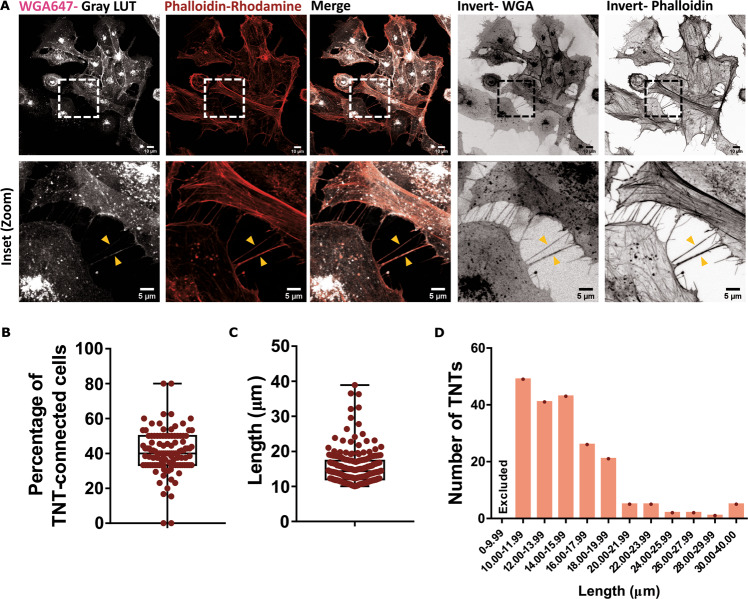
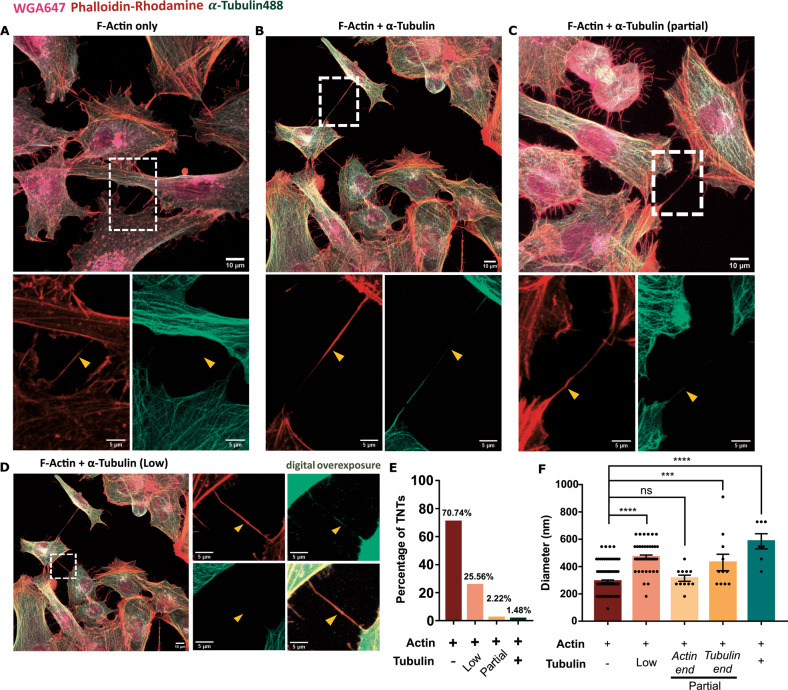
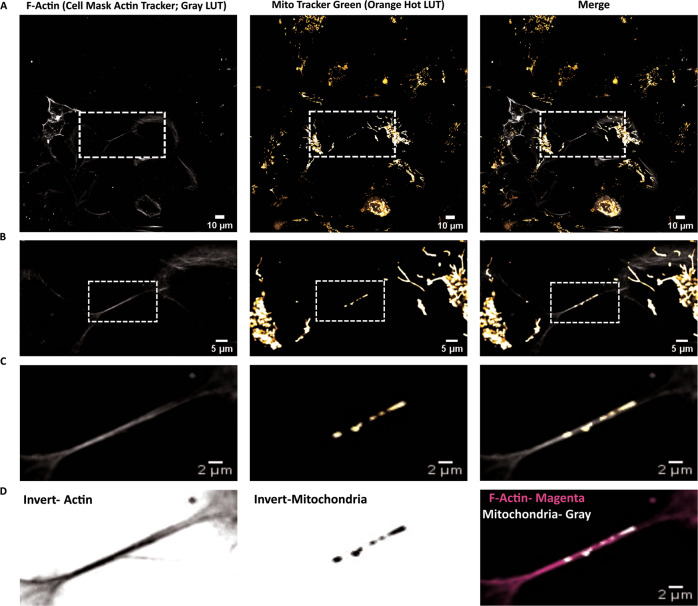
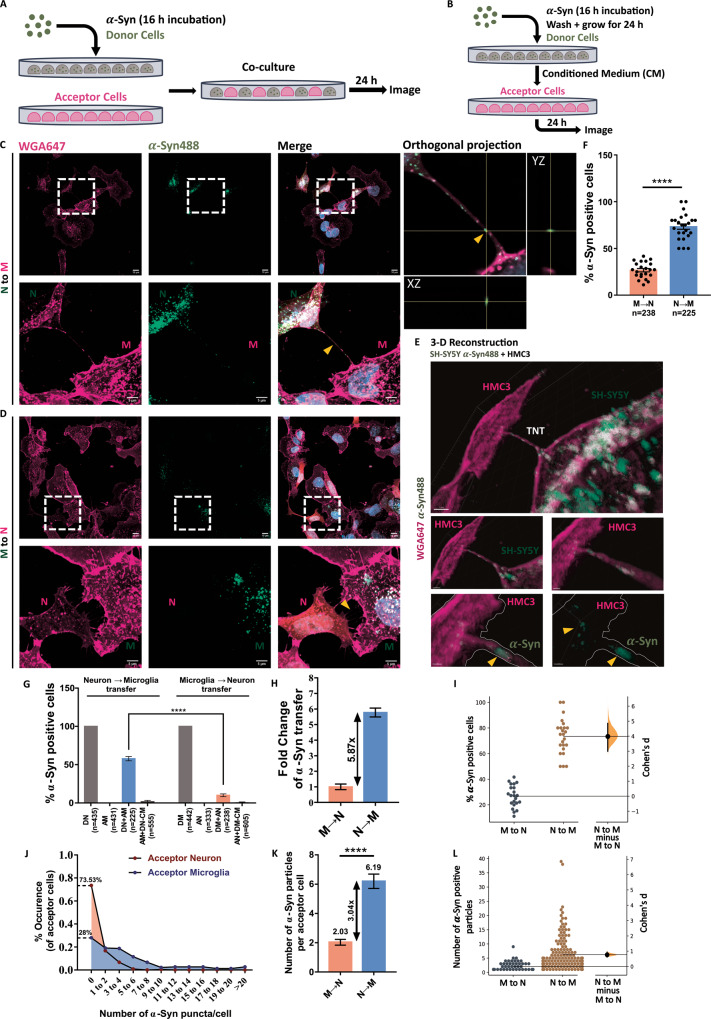
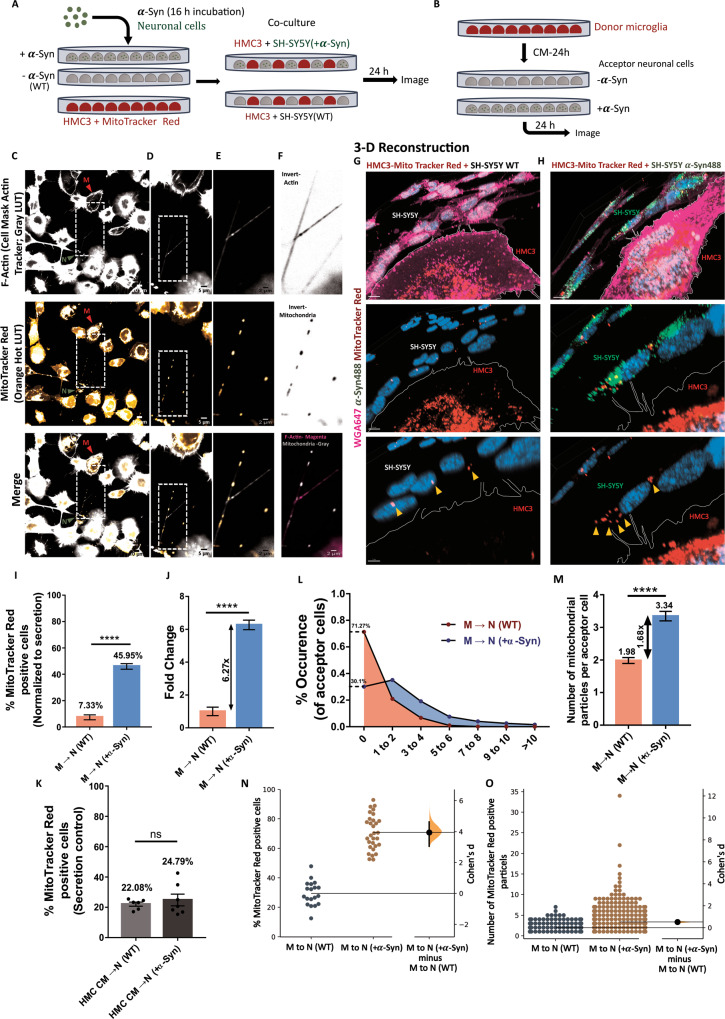
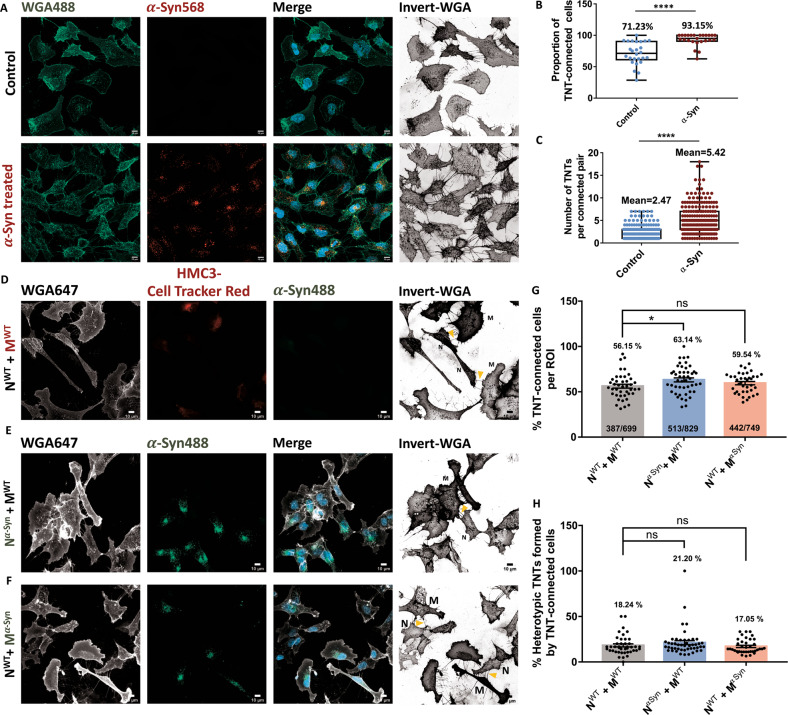
Tunnelling Nanotubes (TNTs) facilitate contact-mediated intercellular communication over long distances. Material transfer via TNTs can range from ions and intracellular organelles to protein aggregates and pathogens. Prion-like toxic protein aggregates accumulating in several neurodegenerative pathologies, such as Alzheimer’s, Parkinson’s, and Huntington’s diseases, have been shown to spread via TNTs not only between neurons, but also between neurons-astrocytes, and neurons-pericytes, indicating the importance of TNTs in mediating neuron–glia interactions. TNT-like structures were also reported between microglia, however, their roles in neuron-microglia interaction remain elusive. In this work, we quantitatively characterise microglial TNTs and their cytoskeletal composition, and demonstrate that TNTs form between human neuronal and microglial cells. We show that α-Synuclein (α-Syn) aggregates increase the global TNT-mediated connectivity between cells, along with the number of TNT connections per cell pair. Homotypic TNTs formed between microglial cells, and heterotypic TNTs between neuronal and microglial cells are furthermore shown to be functional, allowing movement of both α-Syn and mitochondria. Quantitative analysis shows that α-Syn aggregates are transferred predominantly from neuronal to microglial cells, possibly as a mechanism to relieve the burden of accumulated aggregates. By contrast, microglia transfer mitochondria preferably to α-Syn burdened neuronal cells over the healthy ones, likely as a potential rescue mechanism. Besides describing novel TNT-mediated communication between neuronal and microglial cells, this work allows us to better understand the cellular mechanisms of spreading neurodegenerative diseases, shedding light on the role of microglia.
Overview
The claims and statistics of this paper haven’t been checked yet.
Free: it reads the open-access text and checks the first 5 claims that cite a source we can check. Create a free account to check every claim.
Integrity signals
Registry
Cites
Statistics
Figures
Verification
Claims the paper makes
The claims and statistics of this paper haven’t been checked yet.
Free: it reads the open-access text and checks the first 5 claims that cite a source we can check. Create a free account to check every claim.
Claims other papers make about this one
Each is checked against this paper’s own text: does it say what the citing paper says it does?
The source backs part of the claim, not all of it — or backs it for a different population, condition or comparison.
In the citing paper
“In PD, a primary cell can get overloaded with α-syn and then use TNTs to dispose of the excess protein, which then gets spread to other cells [118].”
From The Impact of Neurotoxin Proteins Trafficked by Primary Cilia and Extracellular Vesicles in Neurodegenerative Diseases (2025) · cites this paper as [118]
Experimental — accuracy not yet measured
Self-check
Percentages, sums and reported differences re-computed from the paper’s own numbers.
The self-check needs the paper’s full text.
Citations
Cites
Neuropathological stageing of Alzheimer-related changes.
Braak, H., & Braak, E. (1991) · Acta Neuropathologica · doi:10.1007/bf00308809 · Cited by 16,123 · cited 1×
“In later stages, the pathology spreads and α -Syn deposition has been observed in different other regions of the brain, implicating the propagative nature of these aggregates in a “ prion-like ” mechanism [7 – 9].”
Protein aggregation and neurodegenerative disease
Ross, C. A., & Poirier, M. A. (2004) · Nature Medicine · doi:10.1038/nm1066 · Cited by 3,454
Nanotubular Highways for Intercellular Organelle Transport
Rustom, A., Saffrich, R., Markovic, I., Walther, P., & Gerdes, H.-H. (2004) · Science · doi:10.1126/science.1093133 · Cited by 2,038
Li, J.-Y., Englund, E., Holton, J. L., Soulet, D., Hagell, P., Lees, A. J., Lashley, T., Quinn, N. P., Rehncrona, S., Björklund, A., et al. (2008) · Nature Medicine · doi:10.1038/nm1746 · Cited by 1,845 · cited 1×
“In later stages, the pathology spreads and α -Syn deposition has been observed in different other regions of the brain, implicating the propagative nature of these aggregates in a “ prion-like ” mechanism [7 – 9].”
Moving beyond P values: data analysis with estimation graphics
Ho, J., Tumkaya, T., Aryal, S., Choi, H., & Claridge-Chang, A. (2019) · Nature Methods · doi:10.1038/s41592-019-0470-3 · Cited by 1,758 · cited 1×
“To determine the effect sizes and calculate Cohen ’ s d, Bland-Altmann plots were plotted with the estimation statistics online tool (www.estimationstats.com; [37]).”
Lewy body–like pathology in long-term embryonic nigral transplants in Parkinson's disease
Kordower, J. H., Chu, Y., Hauser, R. A., Freeman, T. B., & Olanow, C. W. (2008) · Nature Medicine · doi:10.1038/nm1747 · Cited by 1,722
Microglia in neurodegeneration
Hickman, S., Izzy, S., Sen, P., Morsett, L., & El Khoury, J. (2018) · Nature Neuroscience · doi:10.1038/s41593-018-0242-x · Cited by 1,710
Inflammation in Neurodegenerative Disease—A Double-Edged Sword
Wyss-Coray, T., & Mucke, L. (2002) · Neuron · doi:10.1016/s0896-6273(02)00794-8 · Cited by 1,235
Autophagy and Neurodegeneration: Pathogenic Mechanisms and Therapeutic Opportunities
Menzies, F. M., Fleming, A., Caricasole, A., Bento, C. F., Andrews, S. P., Ashkenazi, A., Füllgrabe, J., Jackson, A., Jimenez Sanchez, M., Karabiyik, C., et al. (2017) · Neuron · doi:10.1016/j.neuron.2017.01.022 · Cited by 1,134
Neuroinflammation Induces Neurodegeneration.
Kempuraj, D., Thangavel, R., Natteru, P., Selvakumar, G. P., Saeed, D., Zahoor, H., Zaheer, S., Iyer, S. S., & Zaheer, A. (2016) · PubMed · Cited by 891
Cited by
Items 101–200 of 203
Organelle Dysfunction and TNT-Mediated Aggregate Spreading in Neurodegeneration
Thomas, V., & Zurzolo, C. (2026) · Physiology · doi:10.1152/physiol.00048.2025 · Cited by 3
Self-citationTunneling nanotubes: a new dimension of intercellular communication and recent progress
Dong, X., Xuan, Y., Wang, M., Chang, S., Hu, X., & Han, Z. (2026) · Cell Communication and Signaling · doi:10.1186/s12964-026-02980-3 · Cited by 3
“More recently, TNTs between neuronal and microglial cells were shown to allow bidirectional transfer of α-synuclein and mitochondria, indicating that glial–neuronal TNT networks may participate in both aggregate handling and organelle exchange [88].”
The Mitochondrial Transplantation: A New Frontier in Plastic Surgery
Li, H., & Mu, D. (2024) · Journal of Craniofacial Surgery · doi:10.1097/scs.0000000000010706 · Cited by 3
“47,48 Extracellular Vesicles (EVs) Extracellular vesicles (EVs) represent a diverse group of small, membranous particles expelled by cells into the surrounding milieu.”
Role of non-neuronal cells in neurorepair: a focus on proteinopathy and neurodegeneration
Rodríguez-Carreiro, S., Nogales, M. D. C., Jiménez-Galán, D., Carmona-Lorenzo, S., Caro-Martín, A., Navarro, E., & Esteras, N. (2024) · Regenerative medicine reports . · doi:10.4103/regenmed.regenmed-d-24-00005 · Cited by 4
Chen, J., & Zhang, Q. (2025) · Biochemical and Biophysical Research Communications · doi:10.1016/j.bbrc.2025.152157 · Cited by 3
Resnik, N., Levallet, G., Errede, M., Re, F., & Virgintino, D. (2024) · Frontiers in Cell and Developmental Biology · doi:10.3389/fcell.2024.1461453 · Cited by 3
The Silent Saboteur: How Mitochondria Shape the Long-Term Fate of the Injured BrainPreprint
Kansakar, S. B. S., Sterben, S. P., Anamala, C. C., Thielen, M. D., & Liaudanskaya, V. (2025) · bioRxiv (Cold Spring Harbor Laboratory) · doi:10.1101/2025.03.19.644244 · Cited by 4
Danna, R., Kondle, S., Amar, O., Mabourakh, M., Chen, G., Fadol, W. B., & Mohieldin, A. M. (2025) · Biology · doi:10.3390/biology14121787 · Cited by 2
“A recent article introduced TNTs as potential contributors to the pathogenesis of AD [118].”
Tunneling Nanotubes: The Cables for Viral Spread and Beyond
Kapoor, D., Sharma, P. K., Saini, A., Azhar, E., Elste, J., Kohlmeir, E. K., Shukla, D., & Tiwari, V. (2024) · Results and problems in cell differentiation · doi:10.1007/978-3-031-62036-2_16 · Cited by 2
Microglial Regulation of Neural Networks in Neuropsychiatric Disorders
Cao, Z.-L., Zhu, L., Wang, H., & Zhu, L. (2025) · The Neuroscientist · doi:10.1177/10738584251316558 · Cited by 2
Kramer, J., Rohwer, E., Sethu, P., Xie, M., Lee, T. C., Darley-Usmar, V. M., & Zhang, J. (2025) · Acta Pharmaceutica Sinica B · doi:10.1016/j.apsb.2025.11.030 · Cited by 3
“Therapeutically, modulating TNT cargo specificity or formation conceivably can enhance beneficial mitochondrial transfer while limiting pathogenic protein propagation 83 — 85 .”
Franck, L., Valek, L., Hahnefeld, L., Trautmann, S., Angioni, C., Weyer, M.-P., Thomas, D., Gurke, R., Wittig, I., Geißlinger, G., et al. (2025) · Acta Pharmacologica Sinica · doi:10.1038/s41401-025-01690-9 · Cited by 2
“…α Syn oligomerization in acidic environments in vitro [111]. α Syn uses several means of cell-to-cell prion-like spreading [7, 112, 113] including transsynaptic transfer from neuron to neuron, travelling through tunnelling nanotubes [114 – 116], or spreading via extracellular vesicles [117, 118].”
Dagar, S., Fernandez, A., Ramírez-Jarquín, U. N., López-Huerta, V. G., Mirza, E., Mohapatra, C., Zúñiga, I. H., Urban, N. T., Crynen, G. C., Tsaprailis, G., et al. (2026) · Science Advances · doi:10.1126/sciadv.aea1226 · Cited by 2
Snapshot on Cell-to-Cell Communication Nanotubes: From Bacteria to Humans
Moro, L. (2026) · Biology · doi:10.3390/biology15060513 · Cited by 4
Merlo, S., Lipari, C. L. R., Patti, A., & Sortino, M. A. (2026) · Phytotherapy Research · doi:10.1002/ptr.70317 · Cited by 2
Mitochondria transfer in neurological disorders: the key role of neuroglia
Jiao, J., Chen, H., Verkhratsky, A., Su, Y., & Yi, C. (2026) · Molecular Neurodegeneration · doi:10.1186/s13024-026-00953-1 · Cited by 4
“Microglia, on the other hand, employ TNTs not only for mitochondria donation but also for receiving neurotoxic aggregates such as misfolded α-synuclein and hyperphosphorylated tau protein from neurones for degradation, which can reduce neuronal stress and slow disease progression [13, 34].”
Abdelaziz, A. M., Shokr, M. M., Fathy, M. K., & Fawzy, M. N. (2026) · Journal of Molecular Neuroscience · doi:10.1007/s12031-026-02531-y · Cited by 4
“Instead, the optimal strategy is selective enhancement of unidirectional, cargo-sorted transfer, a concept requiring deeper mechanistic understanding of how astrocytes preferentially load healthy mitochondria into TNTs while excluding toxic aggregates (Chakraborty et al. 2023 ; Wei et al. 2024 ).”
Restoring the powerhouse: mitochondrial transplantation in regenerative medicine and cancer therapy
Tran, N., Liu, H. F., Cho, D., Shie, M., & Hu, S. (2026) · Nanoscale · doi:10.1039/d6nr00488a · Cited by 4
Gong, M., Lan, J. X., & Miao, J. (2026) · Frontiers in Aging Neuroscience · doi:10.3389/fnagi.2026.1908574 · Cited by 3
“It includes soluble mediators, receptor–ligand interactions, extracellular vesicles, direct membrane contacts, and the coordinated interpretation of neuronal and vascular signals (Rostami et al., 2021; Chakraborty et al., 2023).”
Meredith, E. K., Aguilera, B., McGurk, F., Zong, P., Yue, L., Ghosh, M., & Shapiro, L. H. (2024) · bioRxiv (Cold Spring Harbor Laboratory) · doi:10.1101/2024.05.10.593402 · Cited by 2
Tunneling Nanotubes in Myeloid Cells: Perspectives for Health and Infectious Diseases
Rey-Barroso, J., Dufrançais, O., & Vérollet, C. (2024) · Results and problems in cell differentiation · doi:10.1007/978-3-031-62036-2_17 · Cited by 1
Les tunneling nanotubes: Une modalité de communication inter-cellulaire cruciale mais méconnue
Rakotobé, M., & Zurzolo, C. (2024) · médecine/sciences · doi:10.1051/medsci/2024152 · Cited by 1
Self-citationPowering Up the Brain: Intercellular Mitochondrial Quality Control and Its Implication in Stroke
Zhou, X., Wu, S., Huang, T., Li, Y., Yang, J., Gu, Z., & Zhang, X. (2025) · Current Neuropharmacology · doi:10.2174/011570159x388351250620065716 · Cited by 1
“However, recent studies have highlighted potential risks associated with enhanced intercellular mitochondria transport, as the exchange of viruses and prion aggregates via TNTs may facilitate the spread of pathogens between cell's nanotubular connections [74, 75].”
Drosophila melanogaster as a Model System for Human Glioblastoma
Corrales, T. D. L. R., & Casas‐Tintó, S. (2025) · Advances in experimental medicine and biology · doi:10.1007/978-3-031-97035-1_11 · Cited by 1
Brain rewired: Redox control of brain cell crosstalk via nanotubes and vesicles
Zheng, F., Jiang, S., Lin, X., Chang, X., Wang, W., Tang, J., Li, Y., Liao, S., Zhu, A., Shao, W., et al. (2025) · Free Radical Biology and Medicine · doi:10.1016/j.freeradbiomed.2025.09.037 · Cited by 1
CCT4 promotes tunneling nanotube formation
Enomoto, M., Asada, A., Saito, T., & Ando, K. (2025) · FEBS Letters · doi:10.1002/1873-3468.70190 · Cited by 1
Interpericyte tunnelling nanotube loss in very early diabetic retinal disease
Hein, M., Qambari, H., Yu, P. K., Mehnert, A., Yu, D., & Balaratnasingam, C. (2025) · Diabetologia · doi:10.1007/s00125-025-06602-4 · Cited by 1
Zhao, J., Wang, J., & Guo, X. (2025) · Neural Regeneration Research · doi:10.4103/nrr.nrr-d-25-00924 · Cited by 1
“In PD, microglia can contribute to the death of many neurons by promoting inflammatory responses (Chakraborty et al., 2023).”
Targeting innovative therapeutic approaches to the hallmarks of aging to combat Alzheimer’s disease
Izrael, M., & Frenkel, O. M. (2025) · Neural Regeneration Research · doi:10.4103/nrr.nrr-d-25-00966 · Cited by 1
Mukherjee, K., & Bhattacharyya, S. N. (2026) · Frontiers in Immunology · doi:10.3389/fimmu.2026.1708031 · Cited by 1
Yue, J., Jones, B., Tran, K. H., Deen, M. C., Holicek, V., Cheng, W. H., Michalik, M. J., Power, S. C., Wellington, C. L., Watson, N. V., et al. (2026) · Journal of Parkinson s Disease · doi:10.1177/1877718x251410291 · Cited by 1
From Space Dust to Protocells: Micrometeorites in Early Cellular Evolution
Gözen, İ. (2026) · Astrobiology · doi:10.1177/15311074261434670 · Cited by 1
“…and Dommersnes, 2020) and are employed for exchange of small molecules, vesicles, proteins, organelles, viral genomes and pathogens between prokaryotic or eukaryotic cells (Pana-siuk et al., 2018; Kolba et al., 2019; Peralta et al., 2013; Chakraborty et al., 2023; Angulo-Cánovas et al., 2024).”
Emerging Roles of Adenosine Metabolism in Astrocytes During Brain Injury
Zhu, S., Zhong, S., Lin, X. P., Zhao, C., & Li, Y. (2026) · CNS Neuroscience & Therapeutics · doi:10.1002/cns.70889 · Cited by 1
“Further studies have shown that α-Synuclein (α-Syn) aggregates increase the global TV-mediated connectivity between astrocytes and neuronal cells [72].”
Zhang, Y.-F., Zhao, D., Wei, J., Liang, X., Wang, L., Wang, J., Li-bin, J., Chen, J.-Y., Zhang, Y., & Liu, Y. (2026) · Translational Stroke Research · doi:10.1007/s12975-026-01446-5 · Cited by 2
“However, TNTs also mediate the transport of misfolded proteins such as α-synuclein [ 37], potentially driving the transcellular propagation of pathological aggregates in Parkinson’s disease [38].”
Park, S. H., Lee, S. H., Kim, E., Tror, S., Yeansonn, S., & Shin, K. (2026) · Journal of Oleo Science · doi:10.5650/jos.ess26071 · Cited by 1
Local autophagy impairment triggers brain-wide presynaptic remodeling and resilience
Toppe, D., Huang, S., Lützkendorf, J., Jiang, P., Suárez-Grimalt, R., Neumann, A., Zhao, Z., Lőrincz, P., Scheunemann, L., Juhász, G., et al. (2026) · The EMBO Journal · doi:10.1038/s44318-026-00847-4 · Cited by 3
“Such spreading mechanisms have been described in mammalian systems, where protein aggregates and autophagic intermediates transfer between neurons or glia (Chakraborty et al, 2023; Fussi et al, 2018; Guo and Lee, 2014; Miranda et al, 2018; Palumbos et al, 2025).”
Fu, J., Zhu, C., & Fan, Z. (2026) · Frontiers in Neuroscience · doi:10.3389/fnins.2026.1885103 · Cited by 1
“The cellular microenvironment further modulates α -Syn propagation, because astrocytes and microglia can internalize, degrade, transfer, or inflammatory amplify extracellular α -Syn species (Figure 1; Chakraborty et al., 2023; Wang et al., 2023; Xia et al., 2019; Zhang et al., 2024b).”
Tunneling nanotubes and cytonemes in cancer and development
Yamada, K. M., Walma, D. A. C., & Endo, W. (2026) · The Journal of Cell Biology · doi:10.1083/jcb.202601085 · Cited by 2
Tunneling nanotubes in the nervous system: The fourth pillar of brain connectivity
Budinger, D., & Heneka, M. T. (2026) · Neuron · doi:10.1016/j.neuron.2026.07.010 · Cited by 2
Mitochondrial quality control as a unifying regulatory platform in inflammatory bone diseases
Dong, Z., Liu, C., Li, Y., Yang, T., Xiang, T., Wang, J., Chen, L., & Kou, X. (2026) · The Innovation Medicine · doi:10.59717/j.xinn-med.2026.100255 · Cited by 1
Nath, S., Pountney, D. L., & Neužil, J. (2023) · Frontiers in Molecular Neuroscience · doi:10.3389/fnmol.2023.1240959 · Cited by 1
“Moreover, one study demonstrated that neuronal cells transfer toxic materials to microglia, whereas microglia can transfer healthy mitochondria to rescue neurons and to ameliorate neurodegeneration (Chakraborty et al., 2023).”
BackgroundSchneider, R. T., Rowe, M. R., Dawson, R. S., Komrsková, K., Neužil, J., Berridge, M. V., Herst, P. M., & McConnell, M. J. (2025) · bioRxiv (Cold Spring Harbor Laboratory) · doi:10.1101/2025.02.03.635611 · Cited by 1
Microglia extract neuronal proteolytic organelles via skoupocytosisPreprint
Pepper, R., Griswold, J. M., Middleton-Davis, F., Syed, S., Imoto, Y., Tran, L., Park, E., Xu, Y. K. T., Bergles, D. E., Buchanan, J., et al. (2026) · bioRxiv (Cold Spring Harbor Laboratory) · doi:10.64898/2026.07.22.740182 · Cited by 1
“Recently, microglia have been shown to form tunneling nanotubes during neurodegeneration that facilitate the transfer of mitochondria and pathological protein aggregates such as α -synuclein 62–64 .”
Zhang, Q., Wasserman, T. A. W., Kandel, S. A., & Vaccaro, P. H. (1992) · The Knowledge Bank (The Ohio State University)
Biopiezoelectromagnetic and mechanical effect
Andreucci, C. A., Fonseca, E. M. M., & Jorge, R. N. (2024) · Proceedings of the Institution of Mechanical Engineers Part L Journal of Materials Design and Applications · doi:10.1177/14644207241241406 · Cited by 2
“27 The momentum of extracellular matrix and other fl uids through these micro-tubules, which actively or passively communicate the internal media of these structures, promotes, or inhibits BPEM effect, which are supported by electrons, protons, molecules, macromolecules, cells, organs, systems and…”
Proteomic landscape of tunneling nanotubes reveals CD9 and CD81 tetraspanins as key regulatorsPreprint
Manzano, R. N., Chaze, T., Rubinstein, E., Pénard, E., Matondo, M., Zurzolo, C., & Brou, C. (2024) · eLife · doi:10.7554/elife.99172.1 · Cited by 2
Self-citationManzano, R. N., Chaze, T., Rubinstein, E., Pénard, E., Matondo, M., Zurzolo, C., & Brou, C. (2024) · eLife · doi:10.7554/elife.99172.1.sa4
Self-citationA charged tail on anti-α-Synuclein antibodies does not enhance their affinity to α-Synuclein fibrils
Petersen, I., Godec, A., Ranjbarian, F., Hofer, A., Mirabello, C., & Hultqvist, G. (2024) · PLoS ONE · doi:10.1371/journal.pone.0308521
Advancements in Pathways and Therapeutic Potential of Mitochondrial Transfer/Transplantation
吴, 翔. (2025) · Journal of Clinical Personalized Medicine · doi:10.12677/jcpm.2025.42233
Mu, L., Tao, H., Wang, Y., Sun, Q., Huang, T., Pan, Y.-L., Song, J., Han, F., Zhu, H., Xue, C., et al. (2025) · Research Square · doi:10.21203/rs.3.rs-6363439/v1
(2025) · Glia · doi:10.1002/glia.70039
HUNK inhibits cargo uptake and lysosomal traffic in the caveolar pathway
Cui, X., Jiang, S., & Gao, S. (2025) · Chinese Science Bulletin (Chinese Version) · doi:10.1360/csb-2025-5095
Extracellular mitochondria: dual roles in neurodegeneration and neuroprotection
Ferro, T., Tejero, A., & Duarte, F. V. (2025) · Elsevier eBooks · doi:10.1016/b978-0-443-29283-5.00005-4
Cellular mechanisms of mitochondrial transfer and metabolic and immune signaling
Guedes, B., Melo-Marques, I., Cardoso, S. M., & Esteves, A. R. (2025) · Elsevier eBooks · doi:10.1016/b978-0-443-29283-5.00002-9
From autophagy to mitophagy: Quality control mechanisms in skeletal muscle
Antuña, E., Menéndez-Coto, N., Fernández-Guisasola, P., & Coto‐Montes, A. M. (2025) · International review of cytology · doi:10.1016/bs.ircmb.2025.11.006 · Cited by 1
Mechanisms and prospects of multifunctional organelles in intercellular communication
Yin, K., Zhang, Z., Zhao, F., Qian, N., He, H., & Zheng, B. (2026) · Nano Research · doi:10.26599/nr.2026.94908422
Banerjee, S., Elmeligy, A., Awanis, G., Cicovacki, N., Scalcione, J., McColl, J. T., Lézé, B., Bidula, S. M., Gavrilović, J., Warren, D. T., et al. (2026) · bioRxiv (Cold Spring Harbor Laboratory) · doi:10.64898/2026.01.23.701283
Mitochondria transfer-driven chemical sensing: FRET platforms for dynamic disease diagnostics
Zhang, W., You, J., Liu, H., Liu, C., Li, J., Zhang, Y., Huachen, Z., Hu, P., Li, D., & Huang, C. Z. (2026) · TrAC Trends in Analytical Chemistry · doi:10.1016/j.trac.2026.118839
Tunneling nanotubes enable intercellular transfer in zebrafish embryos
Korenkova, O. M. (2023) · theses.fr (ABES) · doi:10.70675/f61dcaaezca11z42d4za0f6z0a95c8f63b10
Picard, F. (2024) · theses.fr (ABES) · doi:10.70675/4a7f60caz630dz45d7z869fzc4b0454fc792
路, 兆. (2026) · Traditional Chinese Medicine · doi:10.12677/tcm.2026.154233
Wang, J., Wang, C., Yuan, X., Yan, J., Huang, H., Li, F., You, Y., & Qi, Z. (2026) · Molecular Neurobiology · doi:10.1007/s12035-026-05887-9
Limitations of Stem Cell Therapy for Parkinson’s Disease
Li, Z., Peng, S., Jia, O. Y., & Liu, R. (2026) · Cells · doi:10.3390/cells15090839
“…mechanisms—exosome-mediated intercellular transport [101,102], bidirectional transfer via tunnelling nanotubes between neurons and glial cells [103,104], and receptor-mediated uptake involving specific α -syn fibril receptors [105]—thereby providing plausible routes by which host pathology may be…”
Endothelial energy failure as a therapeutic target in elderly strokes
Nasoohi, S., Ebrahimi, F., Brown, C. M., & Huber, J. D. (2026) · Journal of Cerebral Blood Flow & Metabolism · doi:10.1177/0271678x261437917
“67,68 Therefore, when adequately supplied by the BBB endothelium, NVU cells may exchange energy substrates and act as a metabolic reservoir during ischemic energy crises.”
Exosomes in Amyloid Propagation—Roles in Neurodegeneration
Mishra, R., & Upadhyay, A. (2026) · Molecular Neurobiology · doi:10.1007/s12035-026-05913-w
Zhang, Q., Qian, X., Peng, T., Hou, X., Ma, Z.-Y., Huang, J., Hu, L., & Luo, W. (2026) · Brain and Behavior · doi:10.1002/brb3.71489
“…are known to spread via multiple mechanisms, including prion-like transmission (Beach et al. 2014 ; Irwin et al. 2013 ; Song and Li 2025 ), tunneling nanotube-mediated transport (Chakraborty et al. 2023 ; Duan et al. 2023 ), and exosome-mediated transfer (Xia et al. 2019 ; Guo et al. 2020 ).”
Qiang, J., Jin, R., Sha, T., Zheng, F., Zhou, Y., Hu, Y., Zhang, S., Yang, Z., Nie, M., Luo, H., et al. (2026) · Cell Proliferation · doi:10.1111/cpr.70226
Sun, Y., & Zhao, H. (2026) · Cellular and Molecular Bioengineering · doi:10.1007/s12195-026-00908-y
Glycolysis: The Bridge Between Cellular Interaction and Alzheimer’s Disease
Lei, Q., He, Y., & Fang, B. (2026) · Biomolecules · doi:10.3390/biom16060796
“Second, they can carry healthy mitochondria from microglia back to neurons, protecting the neurons [15,94].”
Li, Y., & Zhuang, P. (2026) · Journal of Integrative Neuroscience · doi:10.31083/jin45956
Propagation of α-synuclein pathology: models, mechanisms and future goals
Zolin, A., Weber, S. A., Xie, Y. X., & Burré, J. (2026) · Molecular Neurodegeneration Advances · doi:10.1186/s44477-026-00038-9
“Other studies have found that TNTs mediate αSyn aggregate transmission between SH-SY5Y cells and primary human brain pericytes [147], between human astrocytes [129], between microglia [148], and bidirectional transfer between neurons and microglia in co-cultures [149].”
Du, X., & Deng, Y. (2026) · Journal of Visualized Experiments · doi:10.3791/71670
Liu, R., Yang, Y., Wang, Z., Hu, Z., Yang, L., Guo, R., & Wang, H. (2026) · International Immunopharmacology · doi:10.1016/j.intimp.2026.117027
Glial control of extracellular α-synuclein propagation in LRRK2 Parkinson’s disease
Datta, I., & Sahu, D. D. (2026) · Advances in immunology · doi:10.1016/bs.ai.2026.04.005
Resnik, N., Levallet, G., Errede, M., Re, F., & Virgintino, D. (2026) · Repository of the University of Ljubljana (University of Ljubljana)
Nanotubular networks in the aging brain: from neuroprotection to neurodegeneration
Jategaonkar, M. S., Miller, N. H., Zur, S., Geula, C., Penzes, P., & Zaccard, C. R. (2026) · Frontiers in Human Neuroscience · doi:10.3389/fnhum.2026.1864090
“Supporting in vitro evidence further shows that TNTs between neuron-and microglia-like cell lines can mediate bidirectional transfer of α -synuclein and mitochondria (Chakraborty et al., 2023).”
Miller, W. B., Baluška, F., Slijepčević, P., & Reber, A. S. (2026) · Springer eBooks · doi:10.1007/978-3-032-23779-8_5
Dhar, I., Gupta, S., Mishra, R., & Dadhich, A. (2026) · International Journal of Biological Macromolecules · doi:10.1016/j.ijbiomac.2026.153320
New Insights into Neurodegenerative Diseases: Intercellular Transmission
Xiu-lan, J., Zhao, T.-H., Guo, W., Xue, J., & Yin, D. (2026) · ACS Chemical Neuroscience · doi:10.1021/acschemneuro.5c00991
Glucosylceramides trigger the shedding of alpha-synuclein laden ectosomes
Tegeder, I. (2026) · Extracellular Vesicles and Circulating Nucleic Acids · doi:10.20517/evcna.2026.51
Nanotubes enable intercellular communication in early-branching eukaryotes
Suma, H. R., Kay, R. R., Eswarappa, S. M., & Stallforth, P. (2026) · PNAS Nexus · doi:10.1093/pnasnexus/pgag238
Emergence of tunneling nanotube-like intervesicular connectionsPreprint
Park, S. H., Lee, S. H., Kim, C. H., Yin, C., Xue, K., Tian, L., & Shin, K. (2026) · bioRxiv (Cold Spring Harbor Laboratory) · doi:10.64898/2026.08.10.743838
“These submicrometer membrane tubes can span tens of micrometers between distant cells and have been implicated in organelle transfer ( 3 , 4 ), signal propagation ( 5 , 6 ), and the intercellular spread of pathogens such as viruses ( 7 ), oncogenic cargo ( 8 ), and prions ( 9 ).”
Cho, H., Sayana, R., Koladiya, A., Colella, P., Cho, S., Jahng, J. W. S., Vasquez, J. J., Basurto, J. A., Wu, J. C., & Gomez‐Ospina, N. (2026) · Nature Communications · doi:10.1038/s41467-026-76775-y
“Similarly, IMT has been demonstrated between neurons and microglia and under oxygen or glucose deprivation in CNS cells, mitigating cellular damage 108 – 112 .”
Frozen in Place: Proximity Labeling Maps Glial Interactomes Across Cell States
Baltar, J., Abati, R., Florido, L., & Holt, M. G. (2026) · Glia · doi:10.1002/glia.70216
脳ペリサイトによるα-Synucleinクリアランスを基盤とした新規パーキンソン病治療法構築に関する研究
横谷, み. (2025) · Institutional Repositories DataBase (IRDB)
Ma, M., Tian, J., Wang, Z., Zhang, Z., Zhang, Y., & Hai, B. (2026) · Free Radical Biology and Medicine · doi:10.1016/j.freeradbiomed.2026.09.003
The effect of TNF-α on the formation of tunneling nanotubes in cancer and normal urothelial cells
Boštjančič, A. (2026) · Repository of the University of Ljubljana (University of Ljubljana)
Microglial modulation in general anesthesia: molecular mechanisms and pharmacological implications
Yuan, X., Liu, T., Xue, Y., Guo, X., Wu, Z., & Li, Z. (2026) · Journal of genetics and genomics/Journal of Genetics and Genomics · doi:10.1016/j.jgg.2026.09.001
Parkinson’s disease—Crucial advances and on-going challenges
Söderbom, G. (2026) · International review of neurobiology · doi:10.1016/bs.irn.2026.08.019
Liu, Y., Li, M., Liu, W., Guo, J., & Yin, J. (2026) · Frontiers in Cellular Neuroscience · doi:10.3389/fncel.2026.1949981
Wei, X., Liu, F., Yao, J., Feng, P., Xue, F., & Shi, Z. (2026) · Molecular Neurobiology · doi:10.1007/s12035-026-06224-w
Abdelaziz, A. M., Fawzy, M. N., & Shokr, M. M. (2026) · Molecular Neurobiology · doi:10.1007/s12035-026-06177-0
“This coordinated rescue operates via tunneling nanotubes (TNTs), actin-based cytoplasmic bridges that deliver mitochondrial packets via molecular motors, and extracellular vesicles, alongside gap junction channels (notably Cx43) that exchange ions and small metabolites [198–202].”
Xiao, Y., Liao, Y., Liu, Y., Peng, G., Ma, Y., Zeng, Q., Sun, K., Sethi, G., Tang, R., Huang, H., et al. (2026) · Burns & Trauma · doi:10.1093/burnst/tkag074
Augmenting intercellular mitochondrial transfer for tissue repair and rejuvenation
Soukar, J., Jones, K., Garza, N. M., Salas, V. D., Roy, S., Gohil, V. M., & Gaharwar, A. K. (2026) · Science Advances · doi:10.1126/sciadv.aeg5364
Metadata
- Authors
- Chakraborty, R., Nonaka, T., Hasegawa, M., & Zurzolo, C.
- Affiliations
- Centre National de la Recherche Scientifique (FR)
- Tokyo Metropolitan Institute of Medical Science (JP)
- Corresponding author
- Zurzolo, Chiara
- Venue
- Cell Death & Disease
- Published
- 2023-05-18
- Volume
- 14
- Issue
- 5
- Pages
- 329-329
- ISSN
- 2041-4889 (ISSN-L)
- PMC
- PMC10195781
- OpenAlex
- W4377094874
- Semantic Scholar
- 834227a817e2228a500d280a7ad508c6402cfd0e
- Cited by
- 190
- References
- 51
- Citations by year
- 2026: 64 · 2025: 59 · 2024: 58 · 2023: 7
- FWCI
- 19.38
- Type
- journal article
- Language
- en
- Open access
- gold
- doi.org
- Licence
- cc-by
- creativecommons.org/licenses/by/4.0 (tdm)
- creativecommons.org/licenses/by/4.0 (vor)
- Locations
- Cell Death and Disease (publishedVersion, cc-by)
- PubMed Central (publishedVersion, cc-by)
- PubMed (publishedVersion)
- HAL (submittedVersion, cc-by)
- DOAJ (DOAJ: Directory of Open Access Journals) (submittedVersion, cc-by-sa)
- Funders
- Agence Nationale de la Recherche (ANR-20-CE13-0032-01)
- Fondation pour la Recherche Médicale (FRM - EQU202103012630)
- Association France Parkinson (Soutien de l’Association France Parkinson 2021)
- Don Explore AD
- Pasteur-Paris University International Doctoral Program
- Topics
- Life Sciences › Neuroscience › Neurology › Neuroinflammation and Neurodegeneration Mechanisms
- Life Sciences › Biochemistry, Genetics and Molecular Biology › Molecular Biology › Extracellular vesicles in disease
- Health Sciences › Medicine › Clinical Neurology › Parkinson's Disease Mechanisms and Treatments
- Keywords
- tunneling nanotubes, microglia, neurons, alpha-synuclein, mitochondrial transfer, intercellular communication, microglia-neuron interaction, Parkinson's disease
- MeSH terms
- Cell Communication, Humans, Mitochondria, Neurons, Microglia, Cell Membrane Structures, Nanotubes, alpha-Synuclein, Protein Aggregates
About these checks
Registry, retraction, Cites and statistics results are computed, not judged, with one exception: a printed reference that no index lists is read once by a model before it counts as a citation error. Claims are extracted by a model and kept only when their quote appears verbatim in the text; each cited source is then checked, with a model’s help, for whether it says what the claim relies on. Those verdicts can be wrong — read the claim’s quote and the cited source before relying on one.
Statistics and arithmetic are recomputed, not judged.
Confidence bands are shown only for fields calibrated on our annotated test set. None is calibrated yet, so no band is shown.
What counts as a claim ›How we measure confidence ›How we check this ›
Are you an author, or do you see a problem with this page? Request a review
Data sources
Bibliographic data: Semantic Scholar, OpenAlex, Crossref.
Contains information from the Semantic Scholar Academic Graph Datasets, made available under the ODC Attribution License (ODC-BY 1.0).
Semantic Scholar’s data is described in: Kinney, R., et al. (2023). The Semantic Scholar Open Data Platform. arXiv:2301.10140.
