

Osteocalcin ameliorates cognitive dysfunctions in a mouse model of Alzheimer’s Disease by reducing amyloid β burden and upregulating glycolysis in neuroglia
Open accessThe DOI matches its Crossref record; 62 of the 62 references it cites were found in a registry or an index.
Abstract
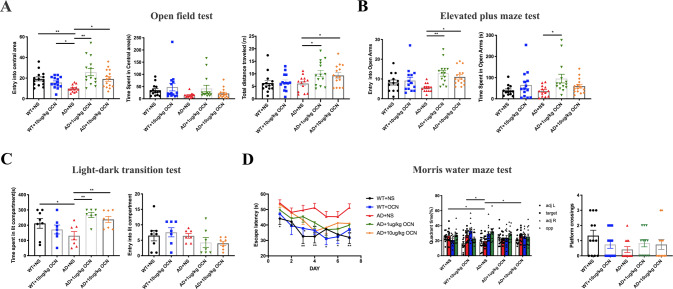
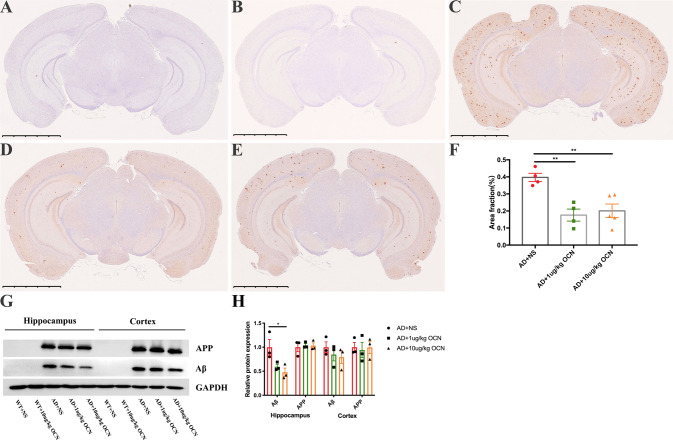
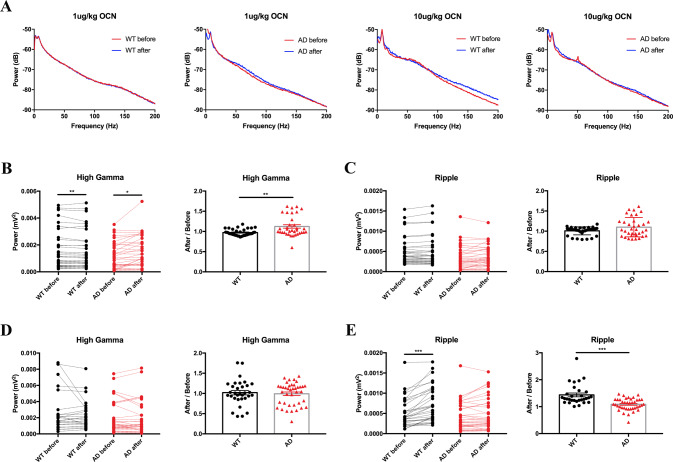
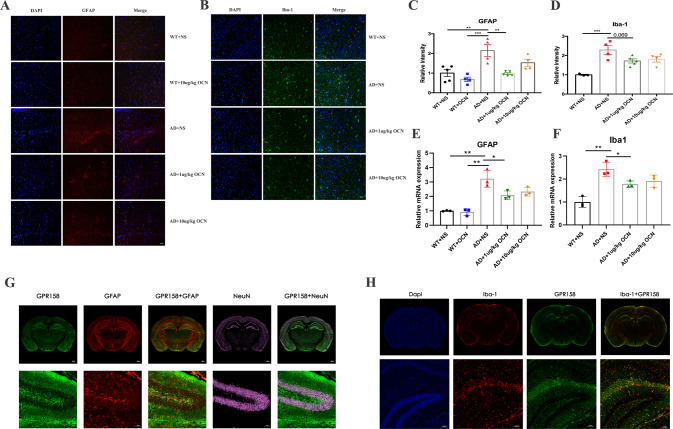
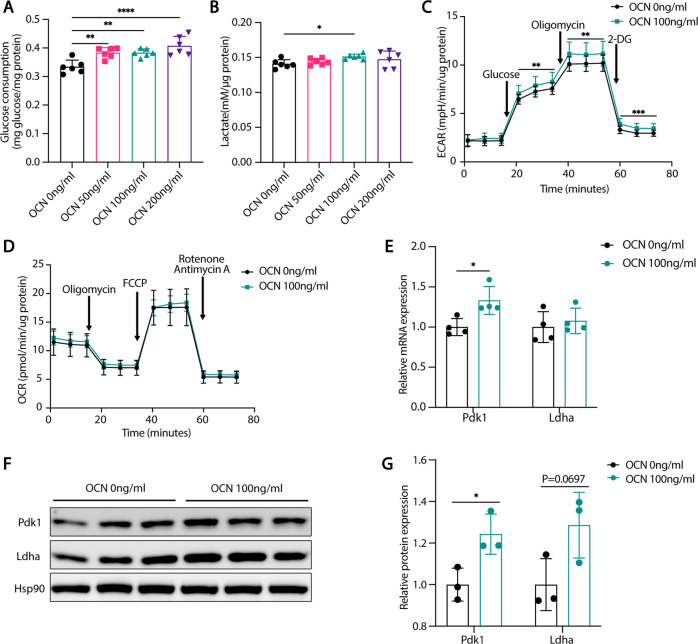
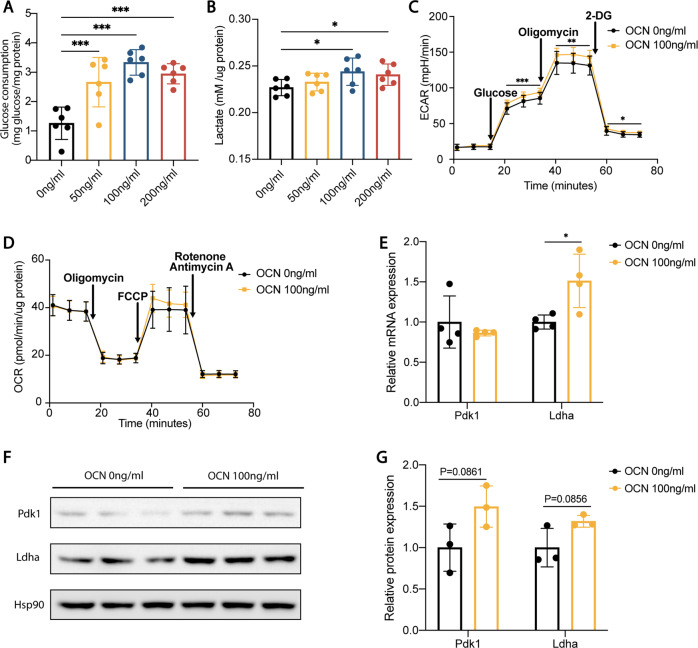
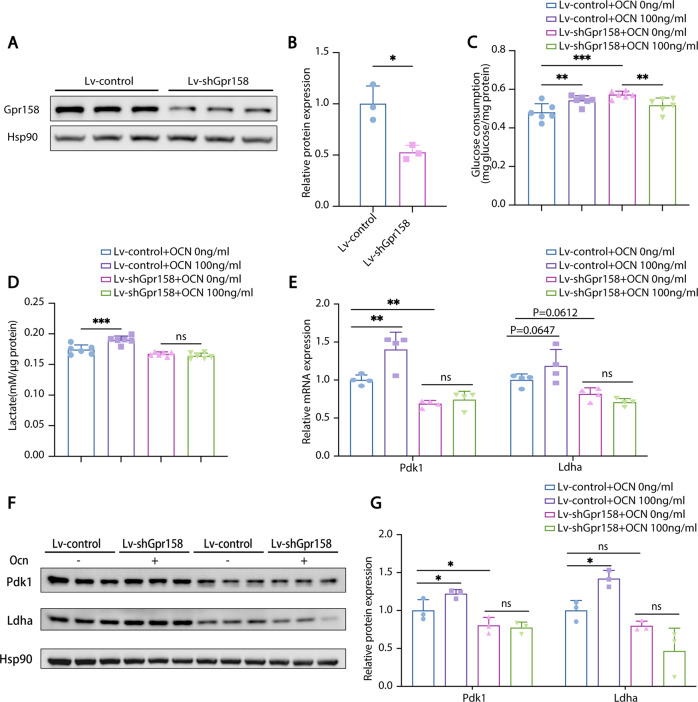
Alzheimer’s disease (AD) is the most common neurodegenerative disease characterized by the accumulation of amyloid β peptides (Aβ) and impaired glucose metabolism in the brain. Osteocalcin (OCN), an osteoblast-derived protein, has been shown to modulate brain functions but whether it has any effect on AD is undetermined. In this study, daily intraperitoneal injection of OCN for 4 weeks ameliorated the anxiety-like behaviors and cognitive dysfunctions in the APP/PS1 transgenic AD mice model, as shown in the increased entries into the central area in open field test, the increased time and entries into open arms in elevated plus maze test, the increased time spent in the light chamber in light-dark transition test, as well as the reduced escape latency and the increased preference for target quadrant in Morris water maze test. Aβ burden in the hippocampus and cortex of AD mice was ameliorated by OCN. Besides, OCN improved the neural network function of the brain, mainly in the enhanced power of high gamma band in the medial prefrontal cortex of AD mice. The proliferation of astrocytes in the hippocampus in AD mice was also inhibited by OCN as demonstrated by immunofluorescence. Furthermore, OCN enhanced glycolysis in astrocytes and microglia, as evidenced by elevated glucose consumption, lactate production, and increased extracellular acidification rate. Such an effect was abolished when the receptor of OCN – Gpr158 was knockdown in astrocytes. Our study revealed OCN as a novel therapeutic factor for AD potentially through reducing Aβ burden and upregulation of glycolysis in neuroglia.
Overview
The claims and statistics of this paper haven’t been checked yet.
Free: it reads the open-access text and checks the first 5 claims that cite a source we can check. Create a free account to check every claim.
Integrity signals
Registry
Cites
Statistics
Figures
Verification
Claims the paper makes
The claims and statistics of this paper haven’t been checked yet.
Free: it reads the open-access text and checks the first 5 claims that cite a source we can check. Create a free account to check every claim.
Claims other papers make about this one
Each is checked against this paper’s own text: does it say what the citing paper says it does?
The check wasn’t confident either way, so it gives no verdict — never disputed.
In the citing paper
“These observations are further supported by genetic evidence showing that mice with partial deficiencies in both OCN and GPR158 (Ocn+/−Gpr158+/−) exhibit age-related cognitive impairment, whereas mice with a partial deficiency in either Ocn (Ocn+/−) or Gpr158 (Gpr158+/−) alone do not display such cognitive deficits37–39.”
From MT1-MMP inhibition rejuvenates ageing brain and rescues cognitive deficits in obesity (2025) · cites this paper as [39]
Experimental — accuracy not yet measuredIn the citing paper
“For example, OCN decreases the Aβ load, increases glycolysis in microglia and astrocytes,302 and ameliorates motor deficits and dopaminergic neuronal loss in PD mice.303”
From Antiageing strategy for neurodegenerative diseases: from mechanisms to clinical advances (2025) · cites this paper as [302]
Self-check
Percentages, sums and reported differences re-computed from the paper’s own numbers.
The self-check needs the paper’s full text.
Citations
Cites
The Amyloid Hypothesis of Alzheimer’s Disease: Progress and Problems on the Road to Therapeutics
Hardy, J., & Selkoe, D. J. (2002) · Science · doi:10.1126/science.1072994 · Cited by 13,864
The origin of extracellular fields and currents — EEG, ECoG, LFP and spikes
Buzsáki, G., Anastassiou, C. A., & Koch, C. (2012) · Nature Reviews Neuroscience · doi:10.1038/nrn3241 · Cited by 4,225 · cited 2×
“Particular oscillation frequencies have been found to be associated with behavioral function and neural connectivity [17].”
BackgroundThe open field as a paradigm to measure the effects of drugs on anxiety-like behaviors: a review
Prut, L., & Belzung, C. (2003) · European Journal of Pharmacology · doi:10.1016/s0014-2999(03)01272-x · Cited by 3,175 · cited 1×
“It is also a popular procedure in animal phycology, which indicates anxiety with the activity in the central area of the open field [51].”
BackgroundScheltens, P., Blennow, K., Breteler, M. M. B., de Strooper, B., Frisoni, G. B., Salloway, S., & Van der Flier, W. M. (2016) · The Lancet · doi:10.1016/s0140-6736(15)01124-1 · Cited by 3,125
Spatial localization does not require the presence of local cues
Morris, R. G. M. (1981) · Learning and Motivation · doi:10.1016/0023-9690(81)90020-5 · Cited by 2,699
The use of a plus-maze to measure anxiety in the mouse
Lister, R. (1987) · Psychopharmacology · doi:10.1007/bf00177912 · Cited by 2,609 · cited 1×
“It takes advantage of the innate aversion of rodents to open fields [56].”
BackgroundEndocrine regulation of energy metabolism by the skeleton
Lee, N. K., Sowa, H., Hinoi, E., Ferron, M., Ahn, J. D., Confavreux, C., Dacquin, R., Mee, P. J., McKee, M. D., Jung, D. Y., et al. (2007) · Cell · doi:10.1016/j.cell.2007.05.047 · Cited by 2,554
Brain energy metabolism: focus on Astrocyte-neuron metabolic cooperation
Bélanger, M., Allaman, I., & Magistretti, P. J. (2011) · Cell Metabolism · doi:10.1016/j.cmet.2011.08.016 · Cited by 2,313 · cited 2×
“It is understandable because neurons predominantly undergo oxidative phosphorylation using astrocytes-derived lactate to produce pyruvate which is further catabolized through OXPHOS to generate ATP [4, 44, 49].”
BackgroundOxidative stress, dysfunctional glucose metabolism and Alzheimer disease
Butterfield, D. A., & Halliwell, B. (2019) · Nature Reviews Neuroscience · doi:10.1038/s41583-019-0132-6 · Cited by 1,954 · cited 1×
“Subsequent studies suggest that AD is a central metabolic disorder characterized by an early and progressive cerebral glucose dysregulation [42].”
BackgroundMasters, C. L., Bateman, R., Blennow, K., Rowe, C. C., Sperling, R. A., & Cummings, J. L. (2015) · Nature Reviews Disease Primers · doi:10.1038/nrdp.2015.56 · Cited by 1,853
Cited by
Antiageing strategy for neurodegenerative diseases: from mechanisms to clinical advances
Jiang, Q., Liu, J., Huang, S., Wang, X.-Y., Chen, X., Liu, G.-H., Ye, K., Song, W., Masters, C. L., Wang, J., et al. (2025) · Signal Transduction and Targeted Therapy · doi:10.1038/s41392-025-02145-7 · Cited by 165
“301 For example, OCN decreases the A β load, increases glycolysis in microglia and astrocytes, 302 and ameliorates motor de fi cits and dopaminergic neuronal loss in PD mice.”
Self-citationJaberi, S., & Fahnestock, M. L. (2023) · Biomolecules · doi:10.3390/biom13111577 · Cited by 84
Research progress in Alzheimer's disease and bone-brain axis
Zhang, F., & Zhang, W. (2024) · Ageing Research Reviews · doi:10.1016/j.arr.2024.102341 · Cited by 67
Crosstalk between bone and brain in Alzheimer's disease: Mechanisms, applications, and perspectives
Liu, Z., Liu, M., Xiong, Y., Wang, Y., & Bu, X. (2024) · Alzheimer's & Dementia · doi:10.1002/alz.13864 · Cited by 39
“180 However, a pre-viousstudydemonstratedthatGPR158ismainlyexpressedinneurons and is largely absent in glia.”
Wang, H., Liu, S., Sun, Y., Chen, C., Hu, Z., Li, Q., Long, J., Yan, Q., Liang, J., Lin, Y., et al. (2024) · Ageing Research Reviews · doi:10.1016/j.arr.2024.102472 · Cited by 42
Self-citationOptical biosensors for diagnosing neurodegenerative diseases
Mac, K. D., & Su, J. (2025) · npj Biosensing · doi:10.1038/s44328-025-00040-3 · Cited by 44
“OPN and OCN play critical roles in PD pathology:OPNisassociatedwithneuroin fl ammation,akeyprocessinPD, while OCN has been shown to cross the blood-brain barrier and in fl uence brain function 100 .”
Osteoporosis and Alzheimer´s disease (or Alzheimer´s disease and Osteoporosis)
Wanionok, N. E., Morel, G. R., & Fernández, J. M. (2024) · Ageing Research Reviews · doi:10.1016/j.arr.2024.102408 · Cited by 32
Gulej, R., Patai, R., Ungvari, A., Kállai, A., Tarantini, S., Yabluchanskiy, A., Huffman, D. M., Conboy, M. J., Conboy, I. M., Kivimäki, M., et al. (2025) · GeroScience · doi:10.1007/s11357-025-01657-y · Cited by 32
Metabolic reprogramming of astrocytes: Emerging roles of lactate
Liu, Z., Guo, Y., Zhang, Y., Gao, Y., & Ning, B. (2024) · Neural Regeneration Research · doi:10.4103/nrr.nrr-d-24-00776 · Cited by 23
Osteocalcin and GPR158: linking bone and brain function
Li, J., Lou, S., & Bian, X. (2025) · Frontiers in Cell and Developmental Biology · doi:10.3389/fcell.2025.1564751 · Cited by 23
Wu, Y., Yang, L., Jiang, W., Zhang, X., & Yao, Z. (2024) · Neural Regeneration Research · doi:10.4103/nrr.nrr-d-24-00190 · Cited by 23
Guo, X., Yang, Y., Zhou, R., Tian, G., Shan, C., Liu, J., & Li, R. (2024) · Translational Psychiatry · doi:10.1038/s41398-024-02924-w · Cited by 19
“For instance, our recent research using a transgenic mouse model of AD demonstrated that OCN improved memory impairment of AD mice by promoting glycolysis in neuroglia [12].”
BackgroundSelf-citationRoles of osteocalcin in the central nervous system
Qi, X., He, X., Peng, Y., He, X., Yang, Q. X., Jiao, K., & Liu, H. (2024) · CNS Neuroscience & Therapeutics · doi:10.1111/cns.70016 · Cited by 17
“28 Notably, osteocalcin does not improve glycolysis in neurons but rather in astrocytes and microglia.”
BackgroundBrain–Bone Axis in Physiological and Pathological Conditions
Massaccesi, L., Romanelli, M. M. C., & Galliera, E. (2025) · International Journal of Molecular Sciences · doi:10.3390/ijms26199822 · Cited by 14
“Their findings revealed that OC can alleviate cognitive impairment in AD mouse models by reducing the amyloid β burden and enhancing glycolysis in neuroglia [209].”
Gao, S., Li, N., Qi, L., Li, X., Zhang, J., Zhang, Z., Xu, Z., Liang, S., Zhu, W., & Liu, W. (2025) · Cytokine & Growth Factor Reviews · doi:10.1016/j.cytogfr.2025.09.001 · Cited by 16
Wang, X., Wen, Q., Li, Y., Zhu, H., Zhang, F., Li, S., Lin, Z., & Li, J. (2025) · Frontiers in Neurology · doi:10.3389/fneur.2025.1527302 · Cited by 12
Self-citationChen, H., Mao, J., Wang, M., Zhang, Q., Zheng, R., Zhang, Z., Lv, Q., Liu, Q., Wu, Y., & Ma, X. (2025) · CNS Neuroscience & Therapeutics · doi:10.1111/cns.70530 · Cited by 13
“This ultimately aids in spatial learning and memory, improves cognitive function, and alleviates anxiety, depressive behaviors, and age-related memory loss [13, 39].”
The potential link between the development of Alzheimer’s disease and osteoporosis
Nasme, F., Behera, J., Tyagi, P., Debnath, N., Falcone, J. C., & Tyagi, N. (2025) · Biogerontology · doi:10.1007/s10522-024-10181-z · Cited by 15
Bu, X., Liu, Z., Xin, J., Huang, M., Bai, Y., Zhou, J., Bao, Y., Li, J., Liu, Z., Zeng, G., et al. (2025) · MedComm · doi:10.1002/mco2.70255 · Cited by 12
“A recent study also demonstrated that exogenous OCN administration reduced brain A β burden and cognitive decline in amyloid precursor protein (APP)/PS1 mice [27].”
GPR37 and its neuroprotective mechanisms: bridging osteocalcin signaling and brain function
Bian, X., Wang, Y. M., Zhang, W., Ye, C., & Li, J. (2024) · Frontiers in Cell and Developmental Biology · doi:10.3389/fcell.2024.1510666 · Cited by 12
Bidirectional Interaction Between the Brain and Bone in Traumatic Brain Injury
Zhang, W., Zou, J., & Zhang, L. (2025) · Advanced Science · doi:10.1002/advs.202503149 · Cited by 9
Vijayan, V., Siddique, I. A., Gupta, S., Chopra, E. M., Raj, N., Surolia, A., & Gupta, S. (2025) · Experimental Neurology · doi:10.1016/j.expneurol.2025.115322 · Cited by 6
Bone-brain crosstalk: emerging roles of osteocalcin in central nervous system disorders
Chen, H., Zhang, Z., Yi, W., Wang, N., Dong, X., Xing, Y., Liu, Q., Wu, Y., & Ma, X. (2025) · Neuroscience · doi:10.1016/j.neuroscience.2025.12.028 · Cited by 6
Zhang, T., Li, X., Kuang, D.-D., Pan, L., Li, Q.-M., Luo, J., & Zha, X. (2025) · International Journal of Biological Macromolecules · doi:10.1016/j.ijbiomac.2025.139706 · Cited by 8
Ateş, Ş., Ülger, H., Uçar, S., Okan, A., Ocak, M., Güvenilir, E., Şükranlı, Z. Y., Kaymak, E., Doğanyiğit, Z., Taheri, S., et al. (2025) · Biomolecules · doi:10.3390/biom15040543 · Cited by 7
Bi, T., Feng, R., Ren, W., Hang, T., Zhao, T., & Zhan, L. (2024) · Journal of Ethnopharmacology · doi:10.1016/j.jep.2024.118808 · Cited by 6
MT1-MMP inhibition rejuvenates ageing brain and rescues cognitive deficits in obesity
Asthana, P., Li, L., Lu, L., Wu, J., Zhang, S., Li, N., Wong, S. K. K., Gurung, S., Zhang, Y., Lin, Y., et al. (2025) · Cell Discovery · doi:10.1038/s41421-025-00825-w · Cited by 4
Guo, X., Shi, W., Lu, J., Tang, P., & Li, R. (2025) · Alzheimer s & Dementia Translational Research & Clinical Interventions · doi:10.1002/trc2.70044 · Cited by 6
de Menezes, E. G. M., Bowler, S. A., Shikuma, C. M., Ndhlovu, L. C., & Norris, P. J. (2024) · Frontiers in Neurology · doi:10.3389/fneur.2024.1383227 · Cited by 5
Bone-Derived Factors: Regulating Brain and Treating Alzheimer’s Disease
Guan, Q., Cao, Y., Zou, J., & Zhang, L. (2025) · Biology · doi:10.3390/biology14091112 · Cited by 9
“…AD pathology through multiple mechanisms: OCN reduces A β deposition in the hippocampus and cortex of AD model mice; enhances high γ -band activity in the medial prefrontal cortex; promotes glycolysis in astrocytes and microglia; and inhibits astrocyte proliferation in the hippocampal region [138].”
Zhang, Y., Wu, Y., Zhang, X., Guo, S., He, J., Hu, N., Huang, Y., Kong, Y., Li, Q., Sui, A., et al. (2025) · British Journal of Pharmacology · doi:10.1111/bph.70124 · Cited by 2
“These tests were selected to provide a comprehensive assessment of the cognitive functions affected by AD, allowing us to evaluate the efficacy of SVHRSP in improving the cognitive deficits observed in the APP/PS1 mice model (Oakley et al., 2006; Shan et al., 2023; Zhang, Qian, et al., 2018).”
Self-citationChang, H., Leem, Y., Park, J., Park, J.-E., Yang, S. J., & Kim, H.-S. (2025) · Neurochemical Research · doi:10.1007/s11064-025-04504-w · Cited by 5
Chen, H., Mao, J., Wang, M., Zhang, Q., Zheng, R., Wu, Y., Ma, X., & Liu, Q. (2025) · Comprehensive Psychoneuroendocrinology · doi:10.1016/j.cpnec.2025.100317 · Cited by 2
“Based on previous researches [8,10], we determined an OCN administration concentration of 3 μ g/kg. OCN was dissolved in normal saline and administered via intraperitoneal injection at the specified dosage once daily for a duration of three weeks.”
Alzheimer's Disease Risk Factor APOE4 Exerts Dimorphic Effects on Female Bone
Schurman, C. A., Kaur, G., Kaya, S., Bons, J., Aguirre, C. G., Liu, Q., King, C. D., Wilson, K. A., Baker, H., Hady, M., et al. (2026) · Advanced Science · doi:10.1002/advs.202523511 · Cited by 3
Li, X., Zhang, X., Wang, T., Li, H., Li, Y., Liu, J., & Bai, Y. (2025) · Frontiers in Medicine · doi:10.3389/fmed.2025.1677685 · Cited by 4
Self-citationWu, Z., Lv, F., Shao, S., Chen, Y., Weng, N., & Xia, Y. (2026) · Journal of Ethnopharmacology · doi:10.1016/j.jep.2026.121355 · Cited by 3
Mechanosensitive Piezo1/Osteocalcin/Irisin Axis Protects Against Disuse‐Induced Muscle Atrophy
Wang, Z., Jiang, X., Sun, X., Chen, H., Jin, J., & Shi, X. (2026) · Advanced Science · doi:10.1002/advs.75355 · Cited by 3
“OCN functions through receptors Gprc6a [ 9, 11 ], Gpr37 [ 29 ], and Gpr158 [ 36 ], of which Gprc6a is the receptor in skeletal muscle [ 9, 11 ].”
Ding, Y., Yang, Y., Sun, L., Liu, J., & Tao, B. (2025) · LabMed discovery. · doi:10.1016/j.lmd.2025.100074 · Cited by 1
Self-citationPan, Z.-C., Yang, Y., Chen, X., Jiang, T., Song, J., Sheng, C.-X., Wang, Y.-Z., Xu, M., Deng, Y., Yu, G., et al. (2025) · Frontiers in Endocrinology · doi:10.3389/fendo.2025.1652769 · Cited by 1
Self-citationXu, G., Cheng, Z., Zhou, Y., Guo, L., Zhu, H., & Zuojia, S. (2026) · Frontiers in Immunology · doi:10.3389/fimmu.2026.1866071 · Cited by 1
“Furthermore, OCN administration in transgenic mouse models of Alzheimer ’ s disease (AD) has been linked to reduced amyloid-b burden and ameliorated memory de fi cits (41, 42).”
Bowman, L. C., Burns, C. J., Elliott, V. E., Manicka, S., Schaffer, J., Connell, R. R., Thomas, P. K., Okulicz, C. J., Smith, J., Mraz, A. L., et al. (2026) · npj Microgravity · doi:10.1038/s41526-026-00628-7 · Cited by 1
Zou, Y., Ou, Y., Zhao, H., Chen, G., Chen, Z., Li, Y., & Jiang, J. (2026) · Biomedicine & Pharmacotherapy · doi:10.1016/j.biopha.2026.119841 · Cited by 2
Self-citationAnalysis of Factors Influencing Amyloid-beta Deposition in the Context of Alzheimer's Disease
Cheng, Z. (2024) · Theoretical and Natural Science · doi:10.54254/2753-8818/2024.18847
Singh, S., Kaur, A., Banerjee, S., Sharma, T., & Singh, T. (2026) · Metabolic Brain Disease · doi:10.1007/s11011-026-01804-0
“…depletion of global levels of O -GlcNAc is linked to an increased phos - pho -tau burden in post -mortem AD brain samples, thus highlighting a potentially protective role of O -GlcNAcyla - tion (evidence obtained in animal models (A) and human post -mortem relationships (H) (Shan et al. 2023 ).”
A novel PGK1 activator improves Alzheimer’s disease by regulating glycolysis
Li, M., Qiu, N., Niu, W., Qian, C., Zhang, Y., Yang, W., Ding, F., Wang, H., Xu, X., Xia, J., et al. (2026) · Alzheimer s Research & Therapy · doi:10.1186/s13195-026-02029-0
Osteocalcina y neuroregeneración glial: un nuevo paradigma en el eje hueso-cerebro
Díaz-Vallejo, J. A., González-Correa, C. H., Ruiz, J. P. G., Valencia, T. S., & Talavera, M. F. P. (2026) · Journal of Applied Cognitive Neuroscience · doi:10.17981/jacn.7.1.2026.7099
Mao, Y., Sui, Z., Zhang, M., & M, Y. (2026) · Frontiers in Aging Neuroscience · doi:10.3389/fnagi.2026.1799025 · Cited by 2
“A growing body of evidence indicates that cognitive decline and osteoporosis are frequently correlated and comorbid in terms of Mao et al. 10.3389/fnagi.2026.1799025 both epidemiology and pathogenic mechanisms (Kostev et al., 2018; Kwon et al., 2021; Loskutova et al., 2019; Zhang et al., 2023).”
InfluentialThe role of ucOCN in aerobic exercise induced amelioration of autism spectrum disorder phenotypes
Shi, Y., Zhu, T., Wang, S., Sun, Y., Liu, Y., Chen, S., Qiao, W., zhou, D., Wang, Z., Fan, L., et al. (2026) · iScience · doi:10.1016/j.isci.2026.116541 · Cited by 1
“47 Reduced circulating ucOCN levels are also strongly associated with heightened anxiety and impaired spatial learning in animal models.”
Wang, J., Cao, X., & Wan, M. (2026) · Journal of Clinical Investigation · doi:10.1172/jci207273 · Cited by 1
“In accord with those results, experimental restoration of OCN reverses age-related cognitive decline in animal models (142, 153, 154).”
Mechanizmy molekularne rozwoju demencji
Grajewska, P., & Maciak, S. (2025) · Kosmos · doi:10.12775/kosmos.2025.027
Cognitive Deficits in Female GPR158 Knockout Mice Revealed by Automated Home‐Cage Testing
Blount, A. P., Darira, S. V., Palmieri, E., & Sutton, L. P. (2026) · Genes Brain & Behavior · doi:10.1111/gbb.70066
Yu, M., Wu, Y., Wang, A., Wang, M., Chen, Y., Ren, H., Zhang, Y., Liu, Y., Wang, S., & Fan, X. (2026) · Frontiers in Immunology · doi:10.3389/fimmu.2026.1874465
Ji, D., Zhao, J., Huang, X., Liu, X., Yang, Q., Li, X., Yan, L., Gao, D., & Xiao, Y. (2026) · Frontiers in Pharmacology · doi:10.3389/fphar.2026.1936198
“…four-point scale: 0 = no nest; 1 = flat nest (paper torn but not formed); 2 = simple nest (paper shredded and loosely gathered); 3 = intermediate nest (shredded paper formed into a cup shape); 4 = complete nest (shredded paper formed into a well-defined, high-walled cup shape) (Shan et al., 2023).”
Changjian, W., Furui, W., Yanyu, F., Yü, Y., & Wei, J. (2026) · Experimental Neurology · doi:10.1016/j.expneurol.2026.116058
Pickering, M., Morel, V., Pereira, B., Pickering, G. P., Chapurlat, R. D., Tournadre, A., Chassain, C., & Sontheimer, A. (2026) · Postgraduate Medicine · doi:10.1080/00325481.2026.2739000
Osteoporosis and Alzheimer’s Disease: The Role of Sclerostin
Gagiano, L., Chen, Z., Blakeney, W. G., Jones, C. W., Mastaglia, F., 郑铭豪, & Yuan, J. (2026) · Current Osteoporosis Reports · doi:10.1007/s11914-026-00993-y
Metadata
- Authors
- Shan, C., Zhang, D., Ma, D.-N., Hou, Y.-F., Zhuang, Q.-Q., Gong, Y.-L., Sun, L.-H., Zhao, H.-Y., Tao, B., Yang, Y.-Y., Li, S.-T., & Liu, J.-M.
- Affiliations
- Shanghai Jiao Tong University (CN)
- Corresponding author
- Yang, Yu-ying
- Li, Sheng-tian
- Venue
- Cell Death Discovery
- Published
- 2023-02-06
- Volume
- 9
- Issue
- 1
- Pages
- 46-46
- ISSN
- 2058-7716 (ISSN-L)
- PMC
- PMC9902399
- OpenAlex
- W4319298595
- Semantic Scholar
- ee1c41ef8ec49079d5c2e56c30bb5eeac94b9da5
- Cited by
- 53
- References
- 61
- Citations by year
- 2026: 14 · 2025: 25 · 2024: 13 · 2023: 1
- FWCI
- 9.36
- Type
- journal article
- Language
- en
- Open access
- gold
- doi.org
- Licence
- cc-by
- creativecommons.org/licenses/by/4.0 (tdm)
- creativecommons.org/licenses/by/4.0 (vor)
- Locations
- Cell Death Discovery (publishedVersion, cc-by)
- PubMed Central (publishedVersion, cc-by)
- PubMed (publishedVersion)
- DOAJ (DOAJ: Directory of Open Access Journals) (submittedVersion, cc-by-sa)
- Funders
- National Natural Science Foundation of China (No.81871064)
- Shanghai Science and Technology Development Foundation (13dz2260500)
- Natural Science Foundation of Shanghai (21ZR1430400)
- Shanghai Municipal Education Commission (2019-01-07-00-02-E00037)
- Topics
- Life Sciences › Neuroscience › Cellular and Molecular Neuroscience › Alzheimer's disease research and treatments
- Life Sciences › Neuroscience › Neurology › Neuroinflammation and Neurodegeneration Mechanisms
- Health Sciences › Medicine › Psychiatry and Mental health › Dementia and Cognitive Impairment Research
- Keywords
- osteocalcin, Alzheimer's disease, amyloid-beta, cognitive impairment, anxiety-like behavior, APP/PS1 mice, astrocytes, microglia, glycolysis, glucose metabolism, GPR158, hippocampus, medial prefrontal cortex, high gamma band, lactic acid production, extracellular acidification rate, glial cells
About these checks
Registry, retraction, Cites and statistics results are computed, not judged, with one exception: a printed reference that no index lists is read once by a model before it counts as a citation error. Claims are extracted by a model and kept only when their quote appears verbatim in the text; each cited source is then checked, with a model’s help, for whether it says what the claim relies on. Those verdicts can be wrong — read the claim’s quote and the cited source before relying on one.
Statistics and arithmetic are recomputed, not judged.
Confidence bands are shown only for fields calibrated on our annotated test set. None is calibrated yet, so no band is shown.
What counts as a claim ›How we measure confidence ›How we check this ›
Are you an author, or do you see a problem with this page? Request a review
Data sources
Bibliographic data: Semantic Scholar, OpenAlex, Crossref.
Contains information from the Semantic Scholar Academic Graph Datasets, made available under the ODC Attribution License (ODC-BY 1.0).
Semantic Scholar’s data is described in: Kinney, R., et al. (2023). The Semantic Scholar Open Data Platform. arXiv:2301.10140.
