

Osteocalcin ameliorates cognitive dysfunctions in a mouse model of Alzheimer’s Disease by reducing amyloid β burden and upregulating glycolysis in neuroglia
Open accessThe DOI matches its Crossref record; 62 of the 62 references it cites were found in a registry or an index.
Abstract
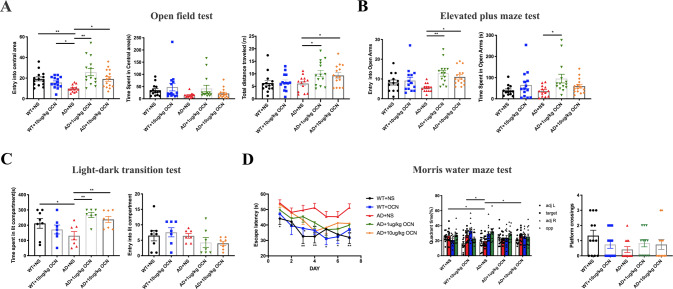
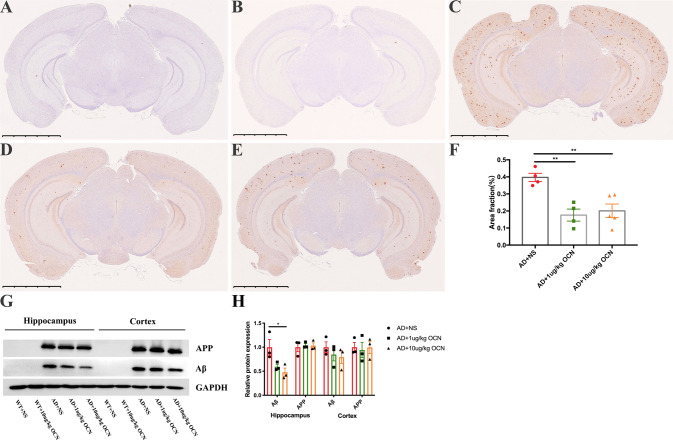
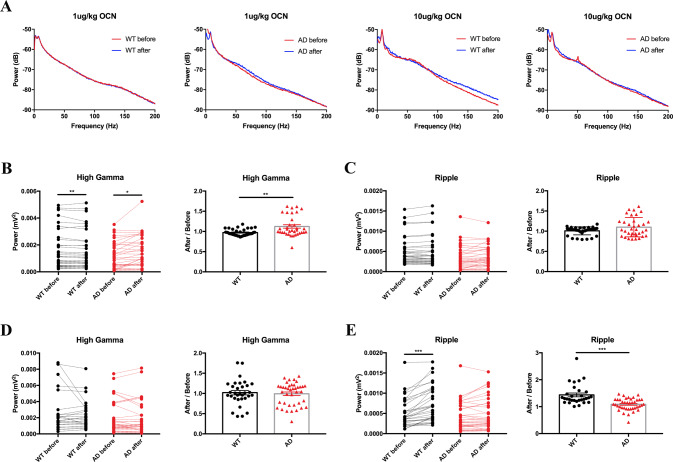
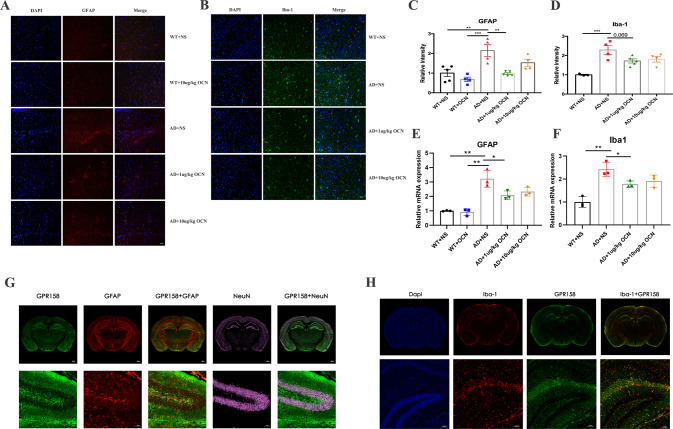
Alzheimer’s disease (AD) is the most common neurodegenerative disease characterized by the accumulation of amyloid β peptides (Aβ) and impaired glucose metabolism in the brain. Osteocalcin (OCN), an osteoblast-derived protein, has been shown to modulate brain functions but whether it has any effect on AD is undetermined. In this study, daily intraperitoneal injection of OCN for 4 weeks ameliorated the anxiety-like behaviors and cognitive dysfunctions in the APP/PS1 transgenic AD mice model, as shown in the increased entries into the central area in open field test, the increased time and entries into open arms in elevated plus maze test, the increased time spent in the light chamber in light-dark transition test, as well as the reduced escape latency and the increased preference for target quadrant in Morris water maze test. Aβ burden in the hippocampus and cortex of AD mice was ameliorated by OCN. Besides, OCN improved the neural network function of the brain, mainly in the enhanced power of high gamma band in the medial prefrontal cortex of AD mice. The proliferation of astrocytes in the hippocampus in AD mice was also inhibited by OCN as demonstrated by immunofluorescence. Furthermore, OCN enhanced glycolysis in astrocytes and microglia, as evidenced by elevated glucose consumption, lactate production, and increased extracellular acidification rate. Such an effect was abolished when the receptor of OCN – Gpr158 was knockdown in astrocytes. Our study revealed OCN as a novel therapeutic factor for AD potentially through reducing Aβ burden and upregulation of glycolysis in neuroglia.
Overview
The claims and statistics of this paper haven’t been checked yet.
Free: it reads the open-access text and checks the first 5 claims that cite a source we can check. Create a free account to check every claim.
Integrity signals
Registry
Cites
Statistics
Figures
Verification
Claims the paper makes
The claims and statistics of this paper haven’t been checked yet.
Free: it reads the open-access text and checks the first 5 claims that cite a source we can check. Create a free account to check every claim.
Claims other papers make about this one
Each is checked against this paper’s own text: does it say what the citing paper says it does?
The check wasn’t confident either way, so it gives no verdict — never disputed.
In the citing paper
“These observations are further supported by genetic evidence showing that mice with partial deficiencies in both OCN and GPR158 (Ocn+/−Gpr158+/−) exhibit age-related cognitive impairment, whereas mice with a partial deficiency in either Ocn (Ocn+/−) or Gpr158 (Gpr158+/−) alone do not display such cognitive deficits37–39.”
From MT1-MMP inhibition rejuvenates ageing brain and rescues cognitive deficits in obesity (2025) · cites this paper as [39]
Experimental — accuracy not yet measuredIn the citing paper
“For example, OCN decreases the Aβ load, increases glycolysis in microglia and astrocytes,302 and ameliorates motor deficits and dopaminergic neuronal loss in PD mice.303”
From Antiageing strategy for neurodegenerative diseases: from mechanisms to clinical advances (2025) · cites this paper as [302]
Self-check
Percentages, sums and reported differences re-computed from the paper’s own numbers.
The self-check needs the paper’s full text.
Citations
Cites
The Amyloid Hypothesis of Alzheimer’s Disease: Progress and Problems on the Road to Therapeutics
Hardy, J., & Selkoe, D. J. (2002) · Science · doi:10.1126/science.1072994 · Cited by 13,864
The origin of extracellular fields and currents — EEG, ECoG, LFP and spikes
Buzsáki, G., Anastassiou, C. A., & Koch, C. (2012) · Nature Reviews Neuroscience · doi:10.1038/nrn3241 · Cited by 4,225 · cited 2×
“Particular oscillation frequencies have been found to be associated with behavioral function and neural connectivity [17].”
BackgroundThe open field as a paradigm to measure the effects of drugs on anxiety-like behaviors: a review
Prut, L., & Belzung, C. (2003) · European Journal of Pharmacology · doi:10.1016/s0014-2999(03)01272-x · Cited by 3,175 · cited 1×
“It is also a popular procedure in animal phycology, which indicates anxiety with the activity in the central area of the open field [51].”
BackgroundScheltens, P., Blennow, K., Breteler, M. M. B., de Strooper, B., Frisoni, G. B., Salloway, S., & Van der Flier, W. M. (2016) · The Lancet · doi:10.1016/s0140-6736(15)01124-1 · Cited by 3,125
Spatial localization does not require the presence of local cues
Morris, R. G. M. (1981) · Learning and Motivation · doi:10.1016/0023-9690(81)90020-5 · Cited by 2,699
The use of a plus-maze to measure anxiety in the mouse
Lister, R. (1987) · Psychopharmacology · doi:10.1007/bf00177912 · Cited by 2,609 · cited 1×
“It takes advantage of the innate aversion of rodents to open fields [56].”
BackgroundEndocrine regulation of energy metabolism by the skeleton
Lee, N. K., Sowa, H., Hinoi, E., Ferron, M., Ahn, J. D., Confavreux, C., Dacquin, R., Mee, P. J., McKee, M. D., Jung, D. Y., et al. (2007) · Cell · doi:10.1016/j.cell.2007.05.047 · Cited by 2,554
Brain energy metabolism: focus on Astrocyte-neuron metabolic cooperation
Bélanger, M., Allaman, I., & Magistretti, P. J. (2011) · Cell Metabolism · doi:10.1016/j.cmet.2011.08.016 · Cited by 2,313 · cited 2×
“It is understandable because neurons predominantly undergo oxidative phosphorylation using astrocytes-derived lactate to produce pyruvate which is further catabolized through OXPHOS to generate ATP [4, 44, 49].”
BackgroundOxidative stress, dysfunctional glucose metabolism and Alzheimer disease
Butterfield, D. A., & Halliwell, B. (2019) · Nature Reviews Neuroscience · doi:10.1038/s41583-019-0132-6 · Cited by 1,954 · cited 1×
“Subsequent studies suggest that AD is a central metabolic disorder characterized by an early and progressive cerebral glucose dysregulation [42].”
BackgroundMasters, C. L., Bateman, R., Blennow, K., Rowe, C. C., Sperling, R. A., & Cummings, J. L. (2015) · Nature Reviews Disease Primers · doi:10.1038/nrdp.2015.56 · Cited by 1,853
Ferron, M., Hinoi, E., Karsenty, G., & Ducy, P. (2008) · Proceedings of the National Academy of Sciences · doi:10.1073/pnas.0711119105 · Cited by 900
A Breakdown in Metabolic Reprogramming Causes Microglia Dysfunction in Alzheimer's Disease
Baik, S. H., Kang, S., Lee, W., Choi, H., Chung, S., Kim, J.-I., & Mook-Jung, I. (2019) · Cell Metabolism · doi:10.1016/j.cmet.2019.06.005 · Cited by 843 · cited 3×
“Boosting glycolytic metabolism with interferon-γ reduced Aβ plaques, neuronal losses, and cognitive impairment in an AD mouse model [26].”
BackgroundResultInfluentialCognitive functions of gamma-band activity: memory match and utilization
Herrmann, C. S., Munk, M. H. J., & Engel, A. K. (2004) · Trends in Cognitive Sciences · doi:10.1016/j.tics.2004.06.006 · Cited by 761
Carola, V., D'Olimpio, F., Brunamonti, E., Mangia, F., & Renzi, P. (2002) · Behavioural Brain Research · doi:10.1016/s0166-4328(01)00452-1 · Cited by 735 · cited 1×
“EPMT is also routinely used to study the anxiety-related behaviors of mice [55].”
BackgroundLactate dehydrogenase A: A key player in carcinogenesis and potential target in cancer therapy
Feng, Y., Xiong, Y., Qiao, T., Li, X., Jia, L., & Han, Y. (2018) · Cancer Medicine · doi:10.1002/cam4.1820 · Cited by 705 · cited 1×
“Pdk1 is a key enzyme increasing glycolytic flux and Ldha is the key enzyme in lactate production [24, 25].”
BackgroundImpaired hippocampal–prefrontal synchrony in a genetic mouse model of schizophrenia
Sigurdsson, T., Stark, K. L., Karayiorgou, M., Gogos, J. A., & Gordon, J. A. (2010) · Nature · doi:10.1038/nature08855 · Cited by 702 · cited 1×
“Implantation of the electrode was described as previously [60, 61].”
BackgroundSpangenberg, E. E., Lee, R. J., Najafi, A. R., Rice, R. A., Elmore, M. R. P., Blurton-Jones, M., West, B. L., & Green, K. N. (2016) · Brain · doi:10.1093/brain/aww016 · Cited by 695
Morris Water Maze Test for Learning and Memory Deficits in Alzheimer's Disease Model Mice
Bromley-Brits, K., Deng, Y., & Song, W. (2011) · Journal of Visualized Experiments · doi:10.3791/2920 · Cited by 583 · cited 2×
“Times each mouse passed through the previous platform position and the percent of time spent in each quadrant were recorded automatically by the software [59].”
BackgroundMethodThe road to restoring neural circuits for the treatment of Alzheimer's disease
Canter, R. G., Penney, J., & Tsai, L.-H. (2016) · Nature · doi:10.1038/nature20412 · Cited by 565 · cited 1×
“INTRODUCTION Alzheimer’s disease (AD) is the most common neurodegenerative disease which causes a progressive decline of cognition, and for which there is no cure [1].”
BackgroundEvidence for brain glucose dysregulation in Alzheimer's disease
An, Y., Varma, V. R., Varma, S., Casanova, R., Dammer, E., Pletnikova, O., Chia, C. W., Egan, J. M., Ferrucci, L., Troncoso, J., et al. (2018) · Alzheimer's & Dementia · doi:10.1016/j.jalz.2017.09.011 · Cited by 507 · cited 2×
“Alteration of brain aerobic glycolysis is often observed early in the course of AD [5, 6].”
BackgroundMaternal and Offspring Pools of Osteocalcin Influence Brain Development and Functions
Oury, F., Khrimian, L., Denny, C. A., Gardin, A., Chamouni, A., Goeden, N., Huang, Y.-Y., Lee, H., Srinivas, P., Gao, X.-B., et al. (2013) · Cell · doi:10.1016/j.cell.2013.08.042 · Cited by 484 · cited 1×
“Moreover, maternal OCN can cross the placenta to regulate the development of fetal hippocampus and maintain postnatal neurogenesis [15].”
BackgroundAstrocytes in physiological aging and Alzheimer’s disease
Rodríguez-Arellano, J. J., Parpura, V., Zorec, R., & Verkhratsky, A. (2016) · Neuroscience · doi:10.1016/j.neuroscience.2015.01.007 · Cited by 439 · cited 8×
“Further studies identified that G-protein-coupled receptor 158 (Gpr158) is the receptor in CNS that OCN binds and combats age-related hippocampal-dependent cognitive impairments [16].”
BackgroundInfluentialOsteocalcin Signaling in Myofibers Is Necessary and Sufficient for Optimum Adaptation to Exercise
Mera, P., Laue, K., Ferron, M., Confavreux, C., Wei, J., Galán-Díez, M., Lacampagne, A., Mitchell, S. J., Mattison, J. A., Chen, Y., et al. (2016) · Cell Metabolism · doi:10.1016/j.cmet.2016.05.004 · Cited by 426
Neuronal-glial glucose oxidation and glutamatergic-GABAergic function.
Hyder, F., Patel, A. B., Gjedde, A., Rothman, D. L., Behar, K. L., & Shulman, R. G. (2006) · Journal of Cerebral Blood Flow & Metabolism · doi:10.1038/sj.jcbfm.9600263 · Cited by 408 · cited 3×
“It is understandable because neurons predominantly undergo oxidative phosphorylation using astrocytes-derived lactate to produce pyruvate which is further catabolized through OXPHOS to generate ATP [4, 44, 49].”
BackgroundThe paraventricular thalamus is a critical thalamic area for wakefulness
Ren, S., Wang, Y., Yue, F., Cheng, X., Dang, R., Qiao, Q., Sun, X., Li, X., Jiang, Q., Yao, J., et al. (2018) · Science · doi:10.1126/science.aat2512 · Cited by 362 · cited 1×
“Implantation of the electrode was described as previously [60, 61].”
BackgroundGpr158 mediates osteocalcin’s regulation of cognition
Khrimian, L., Obri, A., Ramos-Brossier, M., Rousseaud, A., Moriceau, S., Nicot, A.-S., Mera, P., Kosmidis, S., Karnavas, T., Saudou, F., et al. (2017) · Journal of Experimental Medicine · doi:10.1084/jem.20171320 · Cited by 308
Glycolysis gatekeeper PDK1 reprograms breast cancer stem cells under hypoxia
Peng, F., Wang, J.-H., Fan, W.-J., Meng, Y.-T., Li, M.-M., Li, T.-T., Cui, B., Wang, H.-F., Zhao, Y., An, F., et al. (2018) · Oncogene · doi:10.1038/onc.2017.368 · Cited by 303 · cited 1×
“It is well established that Pdk1 enhances glycolysis and lactate production in many cells types [47, 48].”
BackgroundOsteocalcin regulates murine and human fertility through a pancreas-bone-testis axis
Oury, F., Ferron, M., Huizhen, W., Confavreux, C., Xu, L., Lacombe, J., Srinivas, P., Chamouni, A., Lugani, F., Lejeune, H., et al. (2013) · Journal of Clinical Investigation · doi:10.1172/jci65952 · Cited by 280
Pyruvate dehydrogenase kinase as a novel therapeutic target in oncology
Sutendra, G., & Michelakis, E. D. (2013) · Frontiers in Oncology · doi:10.3389/fonc.2013.00038 · Cited by 262 · cited 1×
“Pdk1 is a key enzyme increasing glycolytic flux and Ldha is the key enzyme in lactate production [24, 25].”
BackgroundKulesskaya, N., & Voikar, V. (2014) · Physiology & Behavior · doi:10.1016/j.physbeh.2014.05.006 · Cited by 236 · cited 1×
“LDTT exploits the approach-avoidance conflict of mice between the aversion to bright fields and the noveltyinduced exploratory behaviors [57].”
BackgroundHou, Y.-F., Shan, C., Zhuang, S.-Y., Zhuang, Q.-Q., Ghosh, A., Zhu, K.-C., Kong, X.-K., Wang, S.-M., Gong, Y.-L., Yang, Y.-Y., et al. (2021) · Microbiome · doi:10.1186/s40168-020-00988-6 · Cited by 231
Self-citationAmyloid-β assessed by florbetapir F 18 PET and 18-month cognitive decline: A multicenter study
Doraiswamy, P. M., Sperling, R. A., Coleman, R. E., Johnson, K. A., Reiman, E. M., Davis, M. D., Grundman, M., Sabbagh, M. N., Sadowsky, C. H., Fleisher, A. S., et al. (2012) · Neurology · doi:10.1212/wnl.0b013e3182661f74 · Cited by 226 · cited 1×
“Accumulation of Aβ in the brain putatively leads to neurodegeneration with cognitive impairments and increases the likelihood of progression from mild cognitive impairment to dementia [30, 31].”
BackgroundOsteocalcin in the brain: from embryonic development to age-related decline in cognition
Obri, A., Khrimian, L., Karsenty, G., & Oury, F. (2018) · Nature Reviews Endocrinology · doi:10.1038/nrendo.2017.181 · Cited by 215 · cited 1×
“Bone is emerging as a multi-faceted endocrine organ by secreting several osteokines including OCN [28, 29].”
BackgroundGlucose metabolic crosstalk and regulation in brain function and diseases
Zhang, S., Lachance, B. B., Mattson, M. P., & Jia, X. (2021) · Progress in Neurobiology · doi:10.1016/j.pneurobio.2021.102089 · Cited by 203
Zheng, J., Xie, Y., Ren, L., Qi, L., Wu, L., Pan, X., Zhou, J., Chen, Z., & Liu, L. (2021) · Molecular Metabolism · doi:10.1016/j.molmet.2021.101180 · Cited by 183 · cited 3×
“revealed that glucagon-like peptide-1 (GLP-1) improve cognition of AD mice through upregulating glycolysis of astrocytes [8].”
BackgroundTemporal interference stimulation targets deep brain regions by modulating neural oscillations
Esmaeilpour, Z., Kronberg, G., Reato, D., Parra, L. C., & Bikson, M. (2020) · Brain stimulation · doi:10.1016/j.brs.2020.11.007 · Cited by 182 · cited 1×
“Neural oscillations of particular frequency are critical mechanisms enabling dynamic coupling of corresponding brain regions and coordinated activity during normal brain functioning [35, 36].”
BackgroundMAGISTRETTI, P. J., & PELLERIN, L. (1996) · Annals of the New York Academy of Sciences · doi:10.1111/j.1749-6632.1996.tb34449.x · Cited by 159
Glycolytic Metabolism, Brain Resilience, and Alzheimer’s Disease
Zhang, X., Alshakhshir, N., & Zhao, L. (2021) · Frontiers in Neuroscience · doi:10.3389/fnins.2021.662242 · Cited by 134 · cited 1×
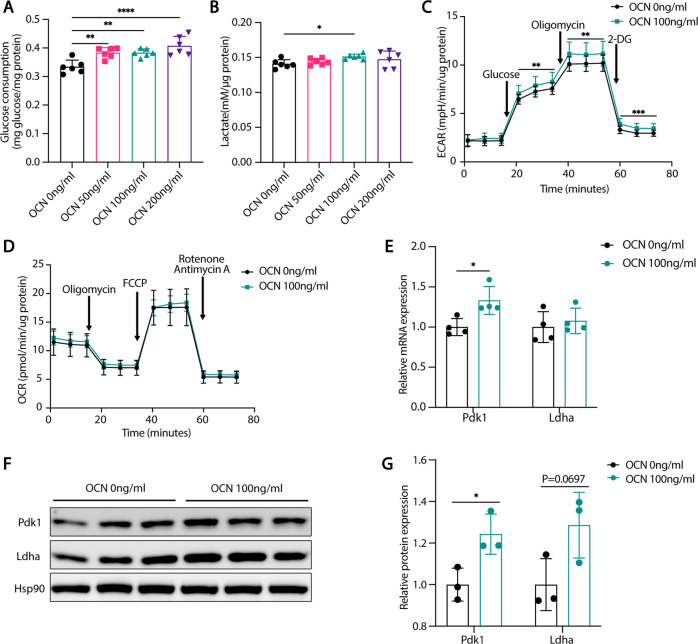
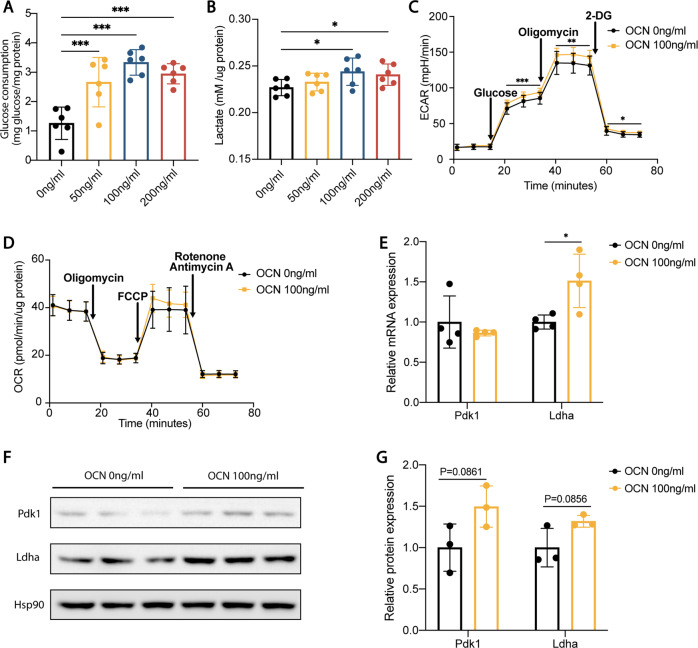
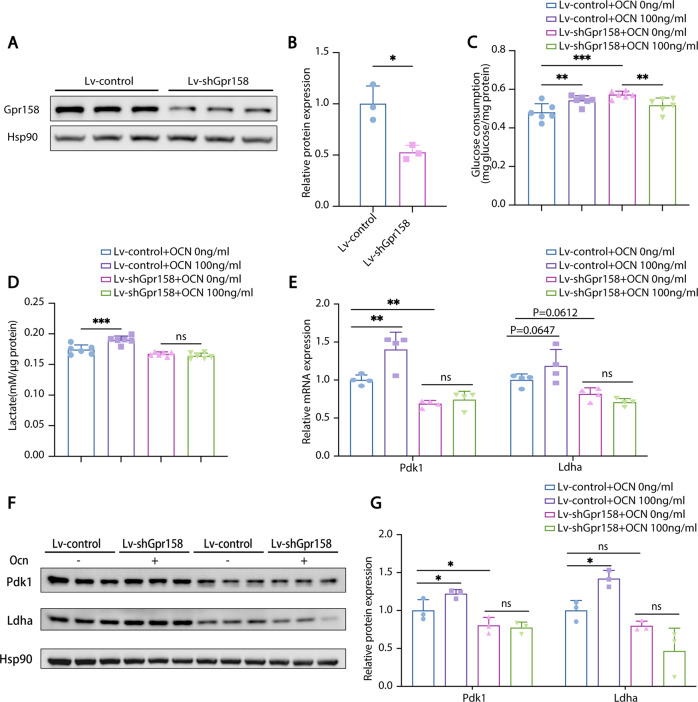
“OCN-enhanced glycolysis in astrocytes and microglia Metabolic dysregulation is one of the major pathological changes in AD [8, 22].”
BackgroundZhao, Y., Zeng, C., Li, X., Yang, T., Kuang, X., & Du, J. (2020) · Aging Cell · doi:10.1111/acel.13239 · Cited by 133 · cited 1×
“7% of the Aβ burden in the hippocampus and cortex of AD mice, which is in line with other studies that 40–60% reduction of Aβ could exhibit a cognition improvement in AD mice [32, 33].”
ResultThakker, D. R., Weatherspoon, M. R., Harrison, J., Keene, T. E., Lane, D. S., Kaemmerer, W. F., Stewart, G. R., & Shafer, L. L. (2009) · Proceedings of the National Academy of Sciences · doi:10.1073/pnas.0813404106 · Cited by 124
Brain aerobic glycolysis functions and Alzheimer’s disease
Vlassenko, A. G., & Raichle, M. E. (2015) · Clinical and Translational Imaging · doi:10.1007/s40336-014-0094-7 · Cited by 94 · cited 1×
“Especially, changes in aerobic glycolysis prevail in the early phase of AD [43] and compared to neurons, glias in CNS are more relied on aerobic glycolysis [44].”
BackgroundBak, L. K., & Walls, A. B. (2018) · The Journal of Physiology · doi:10.1113/jp274945 · Cited by 93 · cited 1×
“Alteration of brain aerobic glycolysis is often observed early in the course of AD [5, 6].”
BackgroundBioenergetic Mechanisms in Astrocytes May Contribute to Amyloid Plaque Deposition and Toxicity
Fu, W., Shi, D., Westaway, D., & Jhamandas, J. H. (2015) · Journal of Biological Chemistry · doi:10.1074/jbc.m114.618157 · Cited by 91 · cited 1×
“In cultures of human fetal astrocytes, inhibition of main enzymatic regulator of glycolysis results in increased accumulation of Aβ within and around astrocytes and greater vulnerability of these cells to Aβ toxicity [7].”
BackgroundThe induction of HIF‐1 reduces astrocyte activation by amyloid beta peptide
Schubert, D., Soucek, T., & Blouw, B. (2009) · European Journal of Neuroscience · doi:10.1111/j.1460-9568.2009.06712.x · Cited by 89 · cited 2×
“On the other hand, accumulated Aβ, in turn, impairs glycolysis which leads to a vicious cycle finally results in neuronal damage [23].”
BackgroundFast gamma rhythms in the hippocampus promote encoding of novel object-place pairings
Zheng, C., Bieri, K. W., Hwaun, E., & Colgin, L. L. (2016) · eNeuro · doi:10.1523/eneuro.0001-16.2016 · Cited by 79 · cited 1×
“Increased high gamma rhythms in the hippocampus promote encoding of novel objectplace pairings in rats [40].”
BackgroundHe, Z., Yang, Y., Xing, Z., Zuo, Z., Wang, R., Gu, H., Qi, F., & Yao, Z. (2020) · Cell Death & Disease · doi:10.1038/s41419-020-2644-4 · Cited by 76 · cited 1×
“7% of the Aβ burden in the hippocampus and cortex of AD mice, which is in line with other studies that 40–60% reduction of Aβ could exhibit a cognition improvement in AD mice [32, 33].”
ResultSelf-citationKosmidis, S., Polyzos, A., Harvey, L., Youssef, M., Denny, C. A., Dranovsky, A., & Kandel, E. R. (2018) · Cell Reports · doi:10.1016/j.celrep.2018.09.077 · Cited by 74
Yang, Y., Zhou, Y., Xu, J.-Z., Sun, L., Tao, B., Wang, W., Wang, J., Zhao, H., & Liu, J. (2020) · Journal of Bone and Mineral Research · doi:10.1002/jbmr.4321 · Cited by 69
Self-citationAlzheimer's disease alters oligodendrocytic glycolytic and ketolytic gene expression
Saito, E. R., Miller, J. B., Harari, O., Cruchaga, C., Mihindukulasuriya, K. A., Kauwe, J. S. K., & Bikman, B. T. (2021) · Alzheimer's & Dementia · doi:10.1002/alz.12310 · Cited by 59 · cited 1×
“Studies utilizing (18)F-deoxyglucose positron emission tomography ((18)FDG-PET) demonstrate that there is a decrease of glucose uptake in cerebral regions vulnerable to AD pathology [41].”
MethodGamma oscillations modulate working memory recall precision
Thompson, L., Khuc, J., Saccani, M. S., Zokaei, N., & Cappelletti, M. (2021) · Experimental Brain Research · doi:10.1007/s00221-021-06051-6 · Cited by 52
Lu, C. B., Jefferys, J. G. R., Toescu, E. C., & Vreugdenhil, M. (2010) · Neurobiology of Learning and Memory · doi:10.1016/j.nlm.2010.11.008 · Cited by 48
Guo, X.-Z., Shan, C., Hou, Y.-F., Zhu, G., Tao, B., Sun, L.-H., Zhao, H.-Y., Ning, G., Li, S.-T., & Liu, J.-M. (2018) · Frontiers in Molecular Neuroscience · doi:10.3389/fnmol.2018.00343 · Cited by 48
Self-citationOsteocalcin‑GPRC6A: An update of its clinical and biological multi‑organic interactions (Review)
Díaz-Franco, M. C., de León, R. F.-D., & Villafán-Bernal, J. R. (2018) · Molecular Medicine Reports · doi:10.3892/mmr.2018.9627 · Cited by 48 · cited 1×
“Bone is emerging as a multi-faceted endocrine organ by secreting several osteokines including OCN [28, 29].”
BackgroundFlores, J., Fillion, M.-L., & LeBlanc, A. C. (2022) · Cell Death and Disease · doi:10.1038/s41419-022-05290-x · Cited by 46 · cited 1×
“OFT was performed as previously described [52, 53].”
Role of astrocytic glycolytic metabolism in Alzheimer’s disease pathogenesis
Fu, W., & Jhamandas, J. H. (2014) · Biogerontology · doi:10.1007/s10522-014-9525-0 · Cited by 39 · cited 1×
“Disruption of astrocyte metabolic homeostasis impairs astrocyte-neuron metabolic coupling, impairs Aβ clearance and leads to neurodegeneration over time [46].”
BackgroundUnravelling the glial response in the pathogenesis of Alzheimer's disease
Alibhai, J. D., Diack, A. B., & Manson, J. C. (2018) · The FASEB Journal · doi:10.1096/fj.201801360r · Cited by 32
Song, C., Orlandi, C., Sutton, L. P., & Martemyanov, K. A. (2019) · Journal of Biological Chemistry · doi:10.1074/jbc.ra119.007533 · Cited by 30 · cited 1×
“Indeed, studies have found that the Gpr158 form a complex with regulator of G protein signaling 7 (RGS7) to regulate controlling stress-induced changes in neuronal excitability [50].”
BackgroundOsteocalcin regulates murine and human fertility through a pancreas-bone-testis axis
Oury, F., Ferron, M., Huizhen, W., Confavreux, C. B., Xu, L., Lacombe, J., Srinivas, P., Chamouni, A., Lugani, F., Lejeune, H., et al. (2015) · Journal of Clinical Investigation · doi:10.1172/jci81812 · Cited by 29
Broadening the role of osteocalcin in the hypothalamic-pituitary-gonadal axis
Shan, C., Yue, J., & Liu, W. (2021) · Journal of Endocrinology · doi:10.1530/joe-20-0203 · Cited by 25 · cited 1×
“Osteocalcin (OCN), a polypeptide secreted exclusively by osteoblasts, exerts multiple endocrine functions through its metabolically active undercarboxylated form (ucOCN) [9].”
BackgroundSelf-citationAn, Y., Liu, S., Wang, W., Dong, H., Zhao, W., Ke, J., & Zhao, D. (2020) · Journal of Diabetes · doi:10.1111/1753-0407.13089 · Cited by 21 · cited 1×
“The close interaction between bone and other organ, including CNS is a research hotspot in recent years [27].”
BackgroundLennol, M. P., Canelles, S., Guerra-Cantera, S., Argente, J., García‐Segura, L. M., CEBALLOS, M. L. D., Chowen, J. A., & Frago, L. M. (2021) · Mechanisms of Ageing and Development · doi:10.1016/j.mad.2021.111462 · Cited by 20 · cited 1×
“During the development of AD, various cerebral lesions including Aβ exposure can cause reactive astrocytes to proliferate [45].”
Background[Neural Oscillations and Network Diseases of the Human Brain].
Tobimatsu, S. (2020) · PubMed · doi:10.11477/mf.1416201671 · Cited by 1 · cited 1×
“Neural oscillations of particular frequency are critical mechanisms enabling dynamic coupling of corresponding brain regions and coordinated activity during normal brain functioning [35, 36].”
Background
Cited by
Antiageing strategy for neurodegenerative diseases: from mechanisms to clinical advances
Jiang, Q., Liu, J., Huang, S., Wang, X.-Y., Chen, X., Liu, G.-H., Ye, K., Song, W., Masters, C. L., Wang, J., et al. (2025) · Signal Transduction and Targeted Therapy · doi:10.1038/s41392-025-02145-7 · Cited by 165
“301 For example, OCN decreases the A β load, increases glycolysis in microglia and astrocytes, 302 and ameliorates motor de fi cits and dopaminergic neuronal loss in PD mice.”
Self-citationJaberi, S., & Fahnestock, M. L. (2023) · Biomolecules · doi:10.3390/biom13111577 · Cited by 84
Research progress in Alzheimer's disease and bone-brain axis
Zhang, F., & Zhang, W. (2024) · Ageing Research Reviews · doi:10.1016/j.arr.2024.102341 · Cited by 67
Crosstalk between bone and brain in Alzheimer's disease: Mechanisms, applications, and perspectives
Liu, Z., Liu, M., Xiong, Y., Wang, Y., & Bu, X. (2024) · Alzheimer's & Dementia · doi:10.1002/alz.13864 · Cited by 39
“180 However, a pre-viousstudydemonstratedthatGPR158ismainlyexpressedinneurons and is largely absent in glia.”
Wang, H., Liu, S., Sun, Y., Chen, C., Hu, Z., Li, Q., Long, J., Yan, Q., Liang, J., Lin, Y., et al. (2024) · Ageing Research Reviews · doi:10.1016/j.arr.2024.102472 · Cited by 42
Self-citation
Metadata
- Authors
- Shan, C., Zhang, D., Ma, D.-N., Hou, Y.-F., Zhuang, Q.-Q., Gong, Y.-L., Sun, L.-H., Zhao, H.-Y., Tao, B., Yang, Y.-Y., Li, S.-T., & Liu, J.-M.
- Affiliations
- Shanghai Jiao Tong University (CN)
- Corresponding author
- Yang, Yu-ying
- Li, Sheng-tian
- Venue
- Cell Death Discovery
- Published
- 2023-02-06
- Volume
- 9
- Issue
- 1
- Pages
- 46-46
- ISSN
- 2058-7716 (ISSN-L)
- PMC
- PMC9902399
- OpenAlex
- W4319298595
- Semantic Scholar
- ee1c41ef8ec49079d5c2e56c30bb5eeac94b9da5
- Cited by
- 53
- References
- 61
- Citations by year
- 2026: 14 · 2025: 25 · 2024: 13 · 2023: 1
- FWCI
- 9.36
- Type
- journal article
- Language
- en
- Open access
- gold
- doi.org
- Licence
- cc-by
- creativecommons.org/licenses/by/4.0 (tdm)
- creativecommons.org/licenses/by/4.0 (vor)
- Locations
- Cell Death Discovery (publishedVersion, cc-by)
- PubMed Central (publishedVersion, cc-by)
- PubMed (publishedVersion)
- DOAJ (DOAJ: Directory of Open Access Journals) (submittedVersion, cc-by-sa)
- Funders
- National Natural Science Foundation of China (No.81871064)
- Shanghai Science and Technology Development Foundation (13dz2260500)
- Natural Science Foundation of Shanghai (21ZR1430400)
- Shanghai Municipal Education Commission (2019-01-07-00-02-E00037)
- Topics
- Life Sciences › Neuroscience › Cellular and Molecular Neuroscience › Alzheimer's disease research and treatments
- Life Sciences › Neuroscience › Neurology › Neuroinflammation and Neurodegeneration Mechanisms
- Health Sciences › Medicine › Psychiatry and Mental health › Dementia and Cognitive Impairment Research
- Keywords
- osteocalcin, Alzheimer's disease, amyloid-beta, cognitive impairment, anxiety-like behavior, APP/PS1 mice, astrocytes, microglia, glycolysis, glucose metabolism, GPR158, hippocampus, medial prefrontal cortex, high gamma band, lactic acid production, extracellular acidification rate, glial cells
About these checks
Registry, retraction, Cites and statistics results are computed, not judged, with one exception: a printed reference that no index lists is read once by a model before it counts as a citation error. Claims are extracted by a model and kept only when their quote appears verbatim in the text; each cited source is then checked, with a model’s help, for whether it says what the claim relies on. Those verdicts can be wrong — read the claim’s quote and the cited source before relying on one.
Statistics and arithmetic are recomputed, not judged.
Confidence bands are shown only for fields calibrated on our annotated test set. None is calibrated yet, so no band is shown.
What counts as a claim ›How we measure confidence ›How we check this ›
Are you an author, or do you see a problem with this page? Request a review
Data sources
Bibliographic data: Semantic Scholar, OpenAlex, Crossref.
Contains information from the Semantic Scholar Academic Graph Datasets, made available under the ODC Attribution License (ODC-BY 1.0).
Semantic Scholar’s data is described in: Kinney, R., et al. (2023). The Semantic Scholar Open Data Platform. arXiv:2301.10140.
