

HIF-1 inactivation empowers HIF-2 to drive hypoxia adaptation in aggressive forms of medulloblastoma
Open accessPublished version of a preprint
The DOI matches its Crossref record; 49 of the 49 references it cites were found in a registry or an index.
Abstract
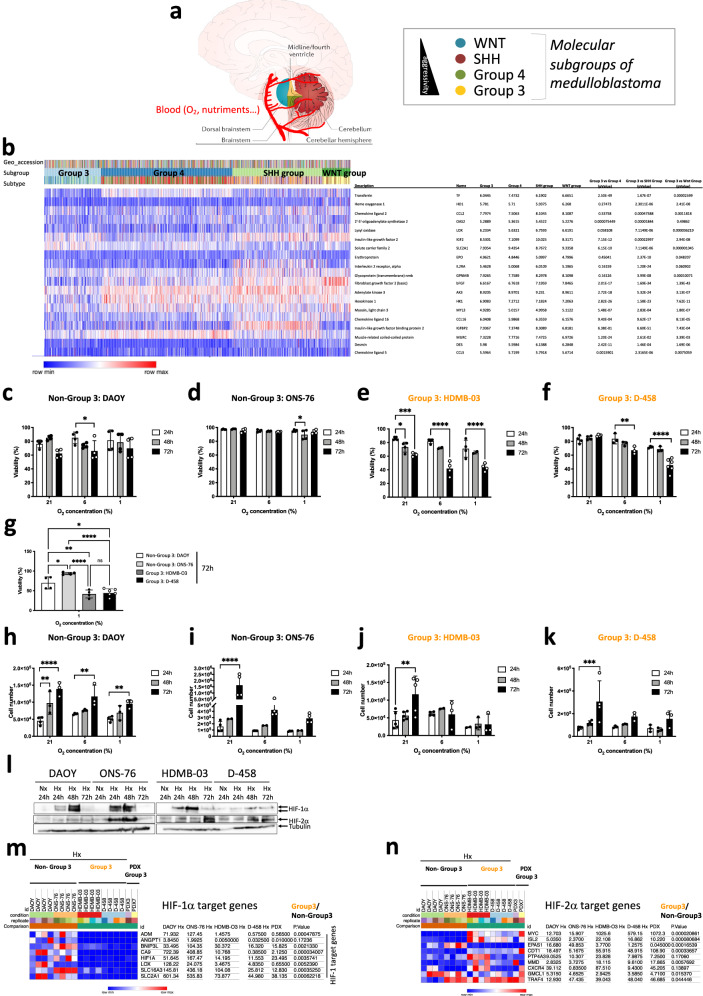
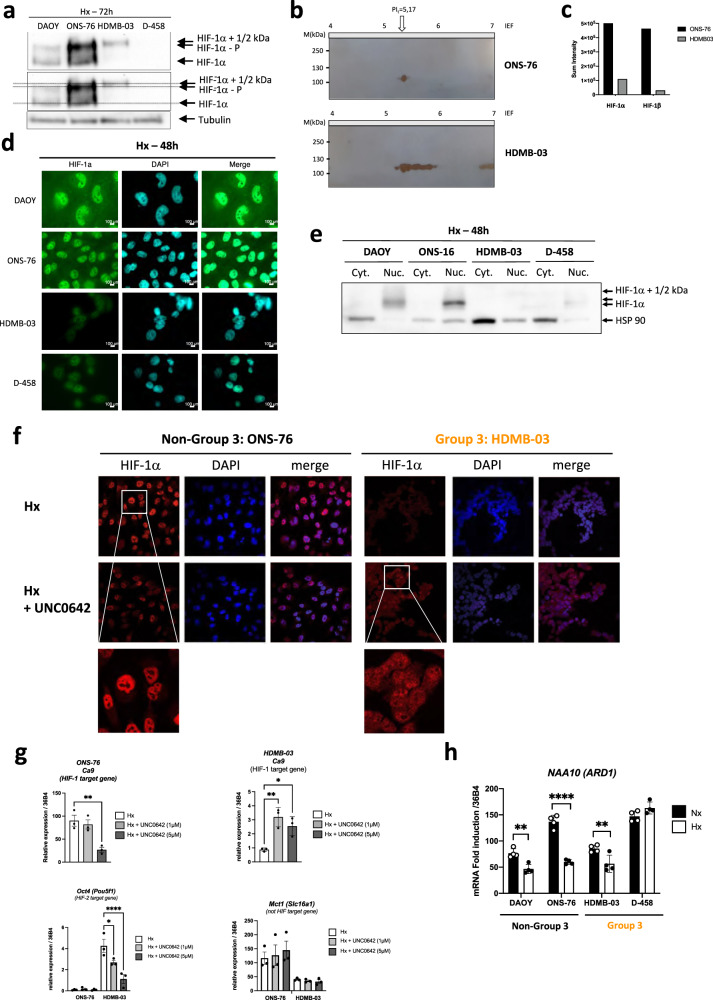
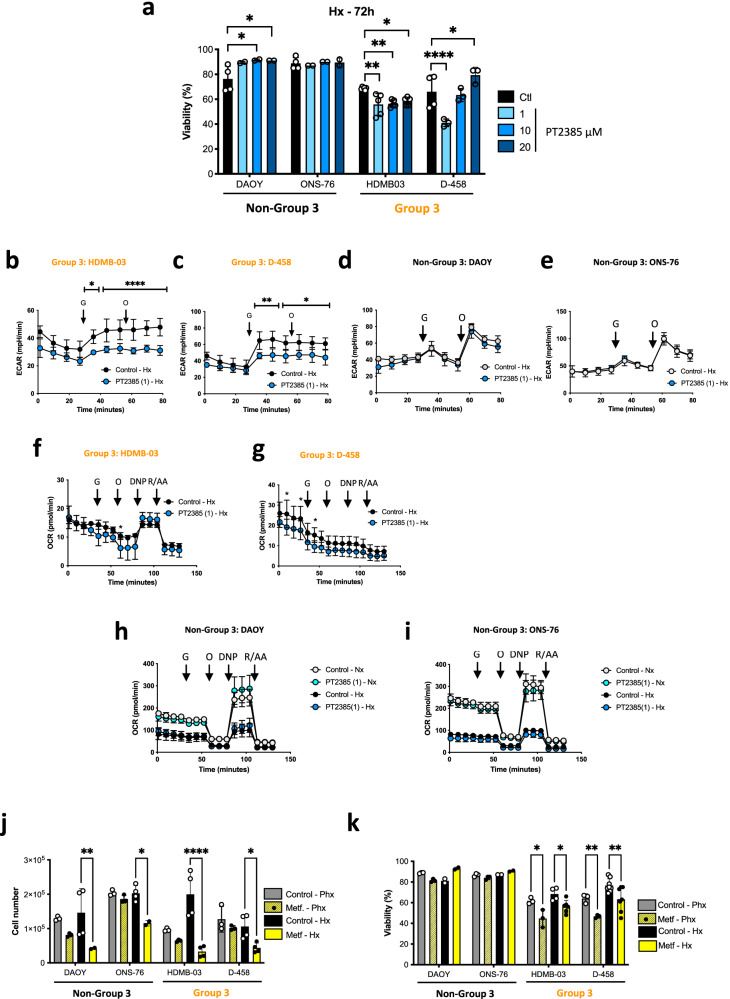
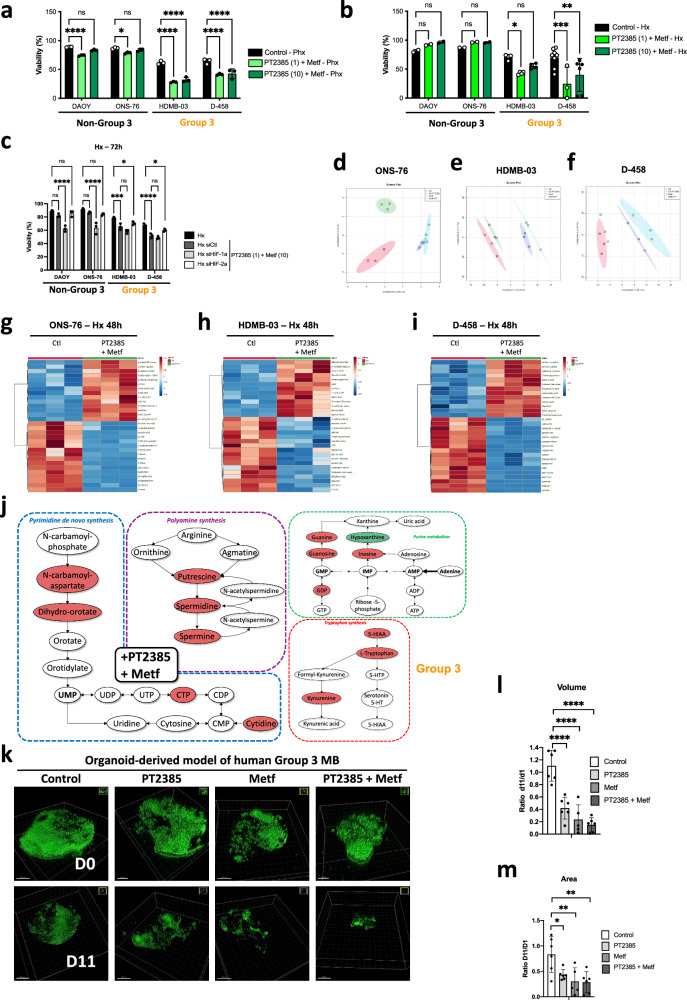
Medulloblastoma (MB) is the most prevalent brain cancer in children. Four subgroups of MB have been identified; of these, Group 3 is the most metastatic. Its genetics and biology remain less clear than the other groups, and it has a poor prognosis and few effective treatments available. Tumor hypoxia and the resulting metabolism are known to be important in the growth and survival of tumors but, to date, have been only minimally explored in MB. Here we show that Group 3 MB tumors do not depend on the canonical transcription factor hypoxia-inducible factor-1α (HIF-1α) to mount an adaptive response to hypoxia. We discovered that HIF-1α is rendered inactive either through post-translational methylation, preventing its nuclear localization specifically in Group 3 MB, or by a low expression that prevents modulation of HIF-target genes. Strikingly, we found that HIF-2 takes over the role of HIF-1 in the nucleus and promotes the activation of hypoxia-dependent anabolic pathways. The exclusion of HIF-1 from the nucleus in Group 3 MB cells enhances the reliance on HIF-2’s transcriptional role, making it a viable target for potential anticancer strategies. By combining pharmacological inhibition of HIF-2α with the use of metformin, a mitochondrial complex I inhibitor to block respiration, we effectively induced Group 3 MB cell death, surpassing the effectiveness observed in Non-Group 3 MB cells. Overall, the unique dependence of MB cells, but not normal cells, on HIF-2-mediated anabolic metabolism presents an appealing therapeutic opportunity for treating Group 3 MB patients with minimal toxicity.
Overview
The claims and statistics of this paper haven’t been checked yet.
Free: it reads the open-access text and checks the first 5 claims that cite a source we can check. Create a free account to check every claim.
Integrity signals
Registry
Cites
Statistics
Figures
Verification
Claims the paper makes
The claims and statistics of this paper haven’t been checked yet.
Free: it reads the open-access text and checks the first 5 claims that cite a source we can check. Create a free account to check every claim.
Claims other papers make about this one
Each is checked against this paper’s own text: does it say what the citing paper says it does?
The cited source says what the claim attributes to it.
In the citing paper
“However, in certain contexts, such as in renal cancer or medulloblastoma where HIF-1α is lost or inactivated, HIF-2α acquires the dominant role in regulating the hypoxia response, suggesting a measure of redundancy between the two isoforms [5, 6].”
From The HIF Axes in Cancer - Angiogenesis, Metabolism and Immune-Modulation (2025) · cites this paper as [5]
Self-check
Percentages, sums and reported differences re-computed from the paper’s own numbers.
The self-check needs the paper’s full text.
Citations
Cites
Targeting HIF-1 for cancer therapy
Semenza, G. L. (2003) · Nature Reviews Cancer · doi:10.1038/nrc1187 · Cited by 6,717 · cited 1×
“Several classes of HIF inhibitors have been investigated, including small molecules, peptides, and biologics [27 – 29].”
Targeting Hypoxia-Inducible Factors for the Treatment of Anemia in Chronic Kidney Disease Patients
Locatelli, F., Fishbane, S., Block, G. A., & Macdougall, I. C. (2017) · American Journal of Nephrology · doi:10.1159/000455166 · Cited by 4,813
Molecular subgroups of medulloblastoma: the current consensus
Taylor, M. D., Northcott, P. A., Korshunov, A., Remke, M., Cho, Y.-J., Clifford, S. C., Eberhart, C. G., Parsons, D. W., Rutkowski, S., Gajjar, A., et al. (2012) · Acta Neuropathologica · doi:10.1007/s00401-011-0922-z · Cited by 1,936 · cited 2×
“Each subgroup is characterized by speci fi c genetic alterations, gene expression patterns, and signaling pathway dysregulations, which in fl uence tumor development, progression, and response to therapy [2 – 5].”
HIF1α and HIF2α: sibling rivalry in hypoxic tumour growth and progression
Keith, B., Johnson, R. S., & Simon, M. C. (2012) · Nature Reviews Cancer · doi:10.1038/nrc3183 · Cited by 1,693
Hypoxia signalling in cancer and approaches to enforce tumour regression
Pouysségur, J., Dayan, F., & Mazure, N. M. (2006) · Nature · doi:10.1038/nature04871 · Cited by 1,676 · cited 3×
“Tumor hypoxia, a condition characterized by insuf fi cient oxygen supply within the tumor microenvironment, is a hallmark feature of solid tumors [6, 7].”
Self-citationHypoxia-inducible factors regulate tumorigenic capacity of glioma stem cells
Li, Z., Bao, S., Wu, Q., Wang, H., Eyler, C., Sathornsumetee, S., Shi, Q., Cao, Y., Lathia, J., McLendon, R. E., et al. (2009) · Cancer Cell · doi:10.1016/j.ccr.2009.03.018 · Cited by 1,354 · cited 1×
“The best characterized are clear cell renal cell carcinoma [23], neuroblastoma [24], and glioma [25].”
Intertumoral Heterogeneity within Medulloblastoma Subgroups
Cavalli, F. M. G., Remke, M., Rampasek, L., Peacock, J., Shih, D. J. H., Luu, B., Garzia, L., Torchia, J., Nor, C., Morrissy, A. S., et al. (2017) · Cancer Cell · doi:10.1016/j.ccell.2017.05.005 · Cited by 1,219
The whole-genome landscape of medulloblastoma subtypes
Northcott, P. A., Buchhalter, I., Morrissy, A. S., Hovestadt, V., Weischenfeldt, J., Ehrenberger, T., Gröbner, S., Segura-Wang, M., Zichner, T., Rudneva, V. A., et al. (2017) · Nature · doi:10.1038/nature22973 · Cited by 1,112 · cited 2×
“Each subgroup is characterized by speci fi c genetic alterations, gene expression patterns, and signaling pathway dysregulations, which in fl uence tumor development, progression, and response to therapy [2 – 5].”
The hypoxic tumour microenvironment
Petrova, V., Annicchiarico-Petruzzelli, M., Melino, G., & Amelio, I. (2018) · Oncogenesis · doi:10.1038/s41389-017-0011-9 · Cited by 1,019 · cited 2×
“are sensitive to oxygen variations and do not express HIF-1 target genes Medulloblastomas (MBs), like most solid cancers, are subject to continual oxygen variations and have had to develop numerous responses to survive the hypoxic microenvironment [6, 26].”
The role of oxygen availability in embryonic development and stem cell function
Simon, M. C., & Keith, B. (2008) · Nature Reviews Molecular Cell Biology · doi:10.1038/nrm2354 · Cited by 967 · cited 1×
“Since hypoxia occurs as early as the embryonic state [44], we can propose that HIF-2 may be the primary origin of oncogenic evolution of Group 3 MB.”
Covello, K. L., Kehler, J., Yu, H., Gordan, J. D., Arsham, A. M., Hu, C.-J., Labosky, P. A., Simon, M. C., & Keith, B. (2006) · Genes & Development · doi:10.1101/gad.1399906 · Cited by 821 · cited 1×
“However, HIF-2 is a formidable player in maintaining stem cells in an undifferentiated state via genes like Oct4 , Sox and Nanog [42, 43].”
Richard, D. E., Berra, E., Gothié, E., Roux, D., & Pouysségur, J. (1999) · Journal of Biological Chemistry · doi:10.1074/jbc.274.46.32631 · Cited by 790 · cited 2×
“Rabbit polyclonal anti-HIF-1 α antibody (antiserum 2087) was produced and characterized in our laboratory [47].”
Holmquist-Mengelbier, L., Fredlund, E., Löfstedt, T., Noguera, R., Navarro, S., Nilsson, H., Pietras, A., Vallon-Christersson, J., Borg, Å., Gradin, K., et al. (2006) · Cancer Cell · doi:10.1016/j.ccr.2006.08.026 · Cited by 735 · cited 1×
“The best characterized are clear cell renal cell carcinoma [23], neuroblastoma [24], and glioma [25].”
The von Hippel–Lindau tumour suppressor protein: O2 sensing and cancer
Kaelin Jr, W. G. (2008) · Nature Reviews Cancer · doi:10.1038/nrc2502 · Cited by 726 · cited 1×
“The best characterized are clear cell renal cell carcinoma [23], neuroblastoma [24], and glioma [25].”
Belzutifan for Renal Cell Carcinoma in von Hippel–Lindau Disease
Jonasch, E., Donskov, F., Iliopoulos, O., Rathmell, W. K., Narayan, V. K., Maughan, B. L., Oudard, S., Else, T., Maranchie, J. K., Welsh, S. J., et al. (2021) · New England Journal of Medicine · doi:10.1056/nejmoa2103425 · Cited by 714 · cited 1×
“However, two compounds, PT2385 and PT2399 (belzutifan), have been characterized as potent and selective small-molecule inhibitors of HIF-2 α and have shown promising results in a phase III trial [30].”
Medulloblastomics: the end of the beginning
Northcott, P. A., Jones, D. T. W., Kool, M., Robinson, G. W., Gilbertson, R. J., Cho, Y.-J., Pomeroy, S. L., Korshunov, A., Lichter, P., Taylor, M. D., et al. (2012) · Nature Reviews Cancer · doi:10.1038/nrc3410 · Cited by 663
Northcott, P. A., Robinson, G. W., Kratz, C. P., Mabbott, D. J., Pomeroy, S. L., Clifford, S. C., Rutkowski, S., Ellison, D. W., Malkin, D., Taylor, M. D., et al. (2019) · Nature Reviews Disease Primers · doi:10.1038/s41572-019-0063-6 · Cited by 649
Packer, R. J., Goldwein, J., Nicholson, H. S., Vezina, L. G., Allen, J. C., Ris, M. D., Muraszko, K., Rorke, L. B., Wara, W. M., Cohen, B. H., et al. (1999) · Journal of Clinical Oncology · doi:10.1200/jco.1999.17.7.2127 · Cited by 617 · cited 1×
“Medulloblastoma (MB) is a highly malignant brain tumor predominantly affecting children and, to a lesser extent, adults [1].”
(2000) · PubMed · Cited by 614
(2001) · PubMed · Cited by 605
Passing the baton: the HIF switch
Koh, M. Y., & Powis, G. (2012) · Trends in Biochemical Sciences · doi:10.1016/j.tibs.2012.06.004 · Cited by 589 · cited 1×
“The activity of HIF-1 α , rather antitumorigenic in this speci fi c cancer, is strongly decreased due to chromosomal deletions [38] or HAF activity [39] leaving HIF-2 to fully exert its pro-tumor activity.”
Hypoxia, Hypoxia-inducible Transcription Factors, and Renal Cancer
Schödel, J., Grampp, S., Maher, E. R., Moch, H., Ratcliffe, P. J., Russo, P., & Mole, D. R. (2016) · European Urology · doi:10.1016/j.eururo.2015.08.007 · Cited by 405 · cited 1×
“The activity of HIF-1 α , rather antitumorigenic in this speci fi c cancer, is strongly decreased due to chromosomal deletions [38] or HAF activity [39] leaving HIF-2 to fully exert its pro-tumor activity.”
MARXSEN, J. H., STENGEL, P., DOEGE, K., HEIKKINEN, P., JOKILEHTO, T., WAGNER, T., JELKMANN, W., JAAKKOLA, P., & METZEN, E. (2004) · Biochemical Journal · doi:10.1042/bj20040620 · Cited by 386 · cited 1×
“Autoregulation in hypoxia occurs through increased expression of the genes phd2 and phd3 , but not phd1 since these genes are themselves HIF-targets [36].”
Rapid, reliable, and reproducible molecular sub-grouping of clinical medulloblastoma samples
Northcott, P. A., Shih, D. J. H., Remke, M., Cho, Y.-J., Kool, M., Hawkins, C., Eberhart, C. G., Dubuc, A., Guettouche, T., Cardentey, Y., et al. (2012) · Acta Neuropathologica · doi:10.1007/s00401-011-0899-7 · Cited by 382
An Animal Model of MYC-Driven Medulloblastoma
Pei, Y., Moore, C. E., Wang, J., Tewari, A. K., Eroshkin, A., Cho, Y.-J., Witt, H., Korshunov, A., Read, T.-A., Sun, J. L., et al. (2012) · Cancer Cell · doi:10.1016/j.ccr.2011.12.021 · Cited by 320 · cited 2×
“Group 3 MB has been characterized by high expression of the MYC oncogene that enables rapid and aggressive tumor development [40].”
HIF Inhibitors: Status of Current Clinical Development
Fallah, J., & Rini, B. I. (2019) · Current Oncology Reports · doi:10.1007/s11912-019-0752-z · Cited by 308
(2002) · PubMed · Cited by 296
Dayan, F., Roux, D., Brahimi-Horn, M. C., Pouyssegur, J., & Mazure, N. M. (2006) · Cancer Research · doi:10.1158/0008-5472.can-05-4564 · Cited by 294 · cited 1×
“The 21-nucleotide RNAs were chemically synthesized (Eurogentec, Seraing, Belgium) and previously described [46].”
Self-citationPharmacologic Targeting of Hypoxia-Inducible Factors
Semenza, G. L. (2019) · Annual Review of Pharmacology and Toxicology · doi:10.1146/annurev-pharmtox-010818-021637 · Cited by 288 · cited 1×
“Several classes of HIF inhibitors have been investigated, including small molecules, peptides, and biologics [27 – 29].”
HIF1A Overexpression Is Associated with Poor Prognosis in a Cohort of 731 Colorectal Cancers
Baba, Y., Nosho, K., Shima, K., Irahara, N., Chan, A. T., Meyerhardt, J. A., Chung, D. C., Giovannucci, E. L., Fuchs, C. S., & Ogino, S. (2010) · The American Journal of Pathology · doi:10.2353/ajpath.2010.090972 · Cited by 285 · cited 1×
“While the list of cancers associated with poor prognosis involving HIF-1 (hepatocellular carcinoma [10], breast [11, 12], cervical [13], colorectal [14], gastric [15], oropharyngeal [16], ovarian [17] and pancreatic [18] cancer) or HIF-1/HIF-2 (head and neck squamous carcinoma [19], colorectal [20,…”
Generali, D., Berruti, A., Brizzi, M. P., Campo, L., Bonardi, S., Wigfield, S., Bersiga, A., Allevi, G., Milani, M., Aguggini, S., et al. (2006) · Clinical Cancer Research · doi:10.1158/1078-0432.ccr-05-2690 · Cited by 250
HIF-1: master and commander of the hypoxic world
Mazure, N. M., Brahimi-Horn, M. C., Berta, M., Benizri, E. I., Bilton, R. L., Dayan, F., Ginouvès, A., Berra, E., & Pouysségur, J. (2004) · Biochemical Pharmacology · doi:10.1016/j.bcp.2004.04.022 · Cited by 183 · cited 1×
“Central to the cellular response to hypoxia are the hypoxia-inducible factors, HIF-1 and HIF-2, which act as master regulators of the hypoxic response [8].”
Self-citationModeling medulloblastoma in vivo and with human cerebellar organoids
Ballabio, C., Anderle, M., Gianesello, M., Lago, C., Miele, E., Cardano, M., Aiello, G., Piazza, S., Caron, D., Gianno, F., et al. (2020) · Nature Communications · doi:10.1038/s41467-019-13989-3 · Cited by 175 · cited 1×
“Blocking HIF-2 pathway in combination with Metf induces apoptosis of Group 3 tumor organoids Finally, we sought to validate the drug responses identi fi ed in 2D on an organoid-derived model of human Group 3 MB in which cancer cells are GFP/Venus positive [37].”
Self-citationBao, L., Chen, Y., Lai, H.-T., Wu, S.-Y., Wang, J. E., Hatanpaa, K. J., Raisanen, J. M., Fontenot, M., Lega, B., Chiang, C.-M., et al. (2018) · Nucleic Acids Research · doi:10.1093/nar/gky449 · Cited by 126 · cited 1×
“It has been shown in vitro and in vivo that HIF-1 α can be methylated by G9a/GLP in glioblastoma [35] (Suppl.”
Lysine methylation of transcription factors in cancer
Han, D. H., Huang, M., Wang, T., Li, Z., Chen, Y., Liu, C., Lei, Z., & Chu, X. (2019) · Cell Death and Disease · doi:10.1038/s41419-019-1524-2 · Cited by 99 · cited 1×
“Methylation is a post-translational process that results in a 1 – 2 kDa increase in apparent molecular mass. Methylation can then lead to changes in intracellular distribution, generate protein instability and alter protein-protein interactions [34].”
Das, B., Pal, B., Bhuyan, R., Li, H., Sarma, A., Gayan, S., Talukdar, J., Sandhya, S., Bhuyan, S., Gogoi, G., et al. (2019) · Cancer Research · doi:10.1158/0008-5472.can-18-2847 · Cited by 92 · cited 1×
“Moreover, MYC has been shown to regulate the HIF-2 α expression [41].”
HIF-1α in colorectal carcinoma: review of the literature.
Ιωάννου, Μ., Paraskeva, E., Baxevanidou, K., Simos, G., Papamichali, R., Papacharalambous, C., Σαμαρά, Μ., & Koukoulis, G. Κ. (2015) · PubMed · Cited by 89
Daponte, A., Ioannou, M., Mylonis, I., Simos, G., Minas, M., Messinis, I. E., & Koukoulis, G. (2008) · BMC Cancer · doi:10.1186/1471-2407-8-335 · Cited by 82 · cited 1×
“…involving HIF-1 (hepatocellular carcinoma [10], breast [11, 12], cervical [13], colorectal [14], gastric [15], oropharyngeal [16], ovarian [17] and pancreatic [18] cancer) or HIF-1/HIF-2 (head and neck squamous carcinoma [19], colorectal [20, 21], and lung [22] cancer) is extensive the…”
Lim, J.-H., Park, J., Kim, M.-S., Park, S.-K., Johnson, R. S., & Chun, Y. (2006) · Molecular Pharmacology · doi:10.1124/mol.106.028076 · Cited by 75
Ye, L., Zhang, Q., Bai, X., Prasoon, P., Hu, Q., & Liang, T. (2014) · Pancreatology · doi:10.1016/j.pan.2014.06.008 · Cited by 74
Garancher, A., Lin, C. Y., Morabito, M., Richer, W., Rocques, N., Larcher, M., Bihannic, L., Smith, K., Miquel, C., Leboucher, S., et al. (2018) · Cancer Cell · doi:10.1016/j.ccell.2018.02.006 · Cited by 73 · cited 1×
“Patient-derived xenografts MB patient-derived xenograft (PDX) models were developed from primary tumor samples of previously untreated patients, implanted into the neck fat pad of Nude mice [45].”
Self-citationJögi, A., Ehinger, A., Hartman, L., & Alkner, S. (2019) · PLOS ONE · doi:10.1371/journal.pone.0226150 · Cited by 70
Petruzzelli, R., Christensen, D. R., Parry, K. L., Sanchez-Elsner, T., & Houghton, F. D. (2014) · PLoS ONE · doi:10.1371/journal.pone.0108309 · Cited by 65
Wnt activation as a therapeutic strategy in medulloblastoma
Manoranjan, B., Venugopal, C., Bakhshinyan, D., Adile, A., Richards, L. M., Kameda-Smith, M. M., Whitley, O., Dvorkin‐Gheva, A., Subapanditha, M., Savage, N. J., et al. (2020) · Nature Communications · doi:10.1038/s41467-020-17953-4 · Cited by 57 · cited 1×
“The RNA-Seq data discussed in B. Manoranjan ’ s publication [48] have been deposited in NCBI ’ s Gene Expression Omnibus and are accessible through GEO Series accession number GSE131473.”
HIF in Gastric Cancer: Regulation and Therapeutic Target
Li, M., Guan, L., Yang, X., Yin, W., Lv, G., & Wang, S. (2022) · Molecules · doi:10.3390/molecules27154893 · Cited by 36 · cited 1×
“…of cancers associated with poor prognosis involving HIF-1 (hepatocellular carcinoma [10], breast [11, 12], cervical [13], colorectal [14], gastric [15], oropharyngeal [16], ovarian [17] and pancreatic [18] cancer) or HIF-1/HIF-2 (head and neck squamous carcinoma [19], colorectal [20, 21], and…”
Luan, Y., Gao, C., Miao, Y., Li, Y., Wang, Z., & Qiu, X. (2013) · Pathology - Research and Practice · doi:10.1016/j.prp.2012.10.017 · Cited by 31
Han, S., Huang, T., Li, W., Liu, S., Yang, W., Shi, Q., Li, H., Ren, J., & Hou, F. (2018) · Cellular Physiology and Biochemistry · doi:10.1159/000491806 · Cited by 30 · cited 1×
“…[14], gastric [15], oropharyngeal [16], ovarian [17] and pancreatic [18] cancer) or HIF-1/HIF-2 (head and neck squamous carcinoma [19], colorectal [20, 21], and lung [22] cancer) is extensive the array of cancers with poor prognostic implications primarily linked to HIF-2 alone is comparatively…”
Deng, F., Chen, D., Wei, X., Lu, S., Luo, X., He, J., Liu, J., Meng, T., Yang, A., & Chen, H. (2020) · Aging · doi:10.18632/aging.102820 · Cited by 30
WNT: an unexpected tumor suppressor in medulloblastoma
Manoranjan, B., Adile, A., Venugopal, C., & Singh, S. K. (2020) · Molecular & Cellular Oncology · doi:10.1080/23723556.2020.1834903 · Cited by 5 · cited 1×
“…to have higher expression in Group 3 MB. Similarly, single cell meta data analysis (https://singlecell.broadinstitute.org/) by Manoranjan et al. [32] using primary patient-derived MB brain tumor-initiating cell (BTIC) lines showed low expression of Ca9 , Lox, SLC16A3, ADM and Angpt1 in Group 3…”
Research works printed but not linked: 1
- Brahimi-Horn M, Laferrière J, Mazure N & Pouysségur, J. Tumor angiogenesis. In: Marmé D & Fusenig N, editors. Springer; 2007. pp. 171–94.
Cited by
The HIF Axes in Cancer - Angiogenesis, Metabolism and Immune-Modulation
Acuña-Pilarte, K., & Koh, M. Y. (2025) · Trends in Biochemical Sciences · doi:10.1016/j.tibs.2025.06.005 · Cited by 64
Bellazzo, A., Montico, B., Guerrieri, R., Colizzi, F., Steffan, A., Polesel, J., & Fratta, E. (2025) · Cell Communication and Signaling · doi:10.1186/s12964-025-02173-4 · Cited by 17
“Specifically, HIF-1α is detected ubiquitously, whereas HIF-2α exhibits a more tissue-specific expression pattern [16].”
Multifunctional Copper Ion‐Mediated Carrier‐Free Scutellarin Hydrogel for Diabetic Wound Healing
Xia, F., Tu, Q., Liu, Y., Zhang, J., Fan, M., Zhong, L., Fu, Y., Guo, P., Pang, H., Meng, Y., et al. (2026) · Advanced Healthcare Materials · doi:10.1002/adhm.202503562 · Cited by 14
The role of hypoxia-inducible factor-1α on colon cancer progression and metastasis
Saadh, M. J., Ahmed, M. H., Albadr, R. J., Sanghvi, G. V., Roopashree, R., Kashyap, A., Sabarivani, A., Rizaev, J. A., Taher, W. M., Alwan, M., et al. (2025) · International Journal of Clinical Oncology · doi:10.1007/s10147-025-02906-y · Cited by 7
Silina, M. V., Dzhalilova, D. S., & Makarova, O. V. (2025) · Moscow University Biological Sciences Bulletin · doi:10.3103/s0096392525600681 · Cited by 4
“It is noted that, when HIF-1 α is knocked out in cells and animals, HIF-2 α emerges as the primary cellular response to hypoxia regulator, promotes tumor progression, and increases the immunosuppressive response of cells [117, 118].”
Metadata
- Authors
- Contenti, J., Guo, Y., Larcher, M., Mirabal-Ortega, L., Rouleau, M., Irondelle, M., Tiroille, V., Mazzu, A., Duranton-Tanneur, V., Pedeutour, F., Ben-Sahra, I., Lago, C., Leva, G., Tiberi, L., Robert, G., Pouponnot, C., Bost, F., & Mazure, N. M.
- Affiliations
- Inserm (FR)
- Centre National de la Recherche Scientifique (FR)
- University of Trento (IT)
- Corresponding author
- Contenti, J.
- Mazure, N. M.
- ORCID
- Venue
- Cell Death Discovery
- Published
- 2024-07-24
- Volume
- 10
- Issue
- 1
- Pages
- 338-338
- ISSN
- 2058-7716 (ISSN-L)
- PMC
- PMC11269614
- OpenAlex
- W4400934698
- Cited by
- 6
- References
- 49
- Citations by year
- 2026: 2 · 2025: 4
- FWCI
- 1.20
- Type
- journal article
- Language
- en
- Open access
- gold
- doi.org
- Licence
- cc-by
- creativecommons.org/licenses/by/4.0 (tdm)
- creativecommons.org/licenses/by/4.0 (vor)
- Locations
- Cell Death Discovery (publishedVersion, cc-by)
- bioRxiv (Cold Spring Harbor Laboratory) (acceptedVersion)
- PubMed Central (publishedVersion, cc-by)
- PubMed (publishedVersion)
- HAL (submittedVersion, other-oa)
- PubMed Central (submittedVersion)
- HAL (submittedVersion)
- HAL (submittedVersion, cc-by)
- DOAJ (DOAJ: Directory of Open Access Journals) (submittedVersion, cc-by-sa)
- Funders
- Northwestern University
- Infrastructures en Biologie Santé et Agronomie
- Institut National de la Santé et de la Recherche Médicale (U1065)
- Fondation ARC pour la Recherche sur le Cancer
- Ligue Contre le Cancer
- China Scholarship Council
- Centre National de la Recherche Scientifique
- Associazione Italiana per la Ricerca sul Cancro
- National Institutes of Health
- Robert H. Lurie Comprehensive Cancer Center
- National Cancer Institute (R00CA194192)
- Topics
- Life Sciences › Biochemistry, Genetics and Molecular Biology › Cancer Research › Cancer, Hypoxia, and Metabolism
- Health Sciences › Medicine › Oncology › Glioma Diagnosis and Treatment
- Life Sciences › Biochemistry, Genetics and Molecular Biology › Cancer Research › Cancer, Lipids, and Metabolism
- Keywords
- medulloblastoma, Group 3 medulloblastoma, hypoxia, HIF-1α, HIF-2α, nuclear localization, anabolic metabolism, metformin, mitochondrial complex I inhibition, HIF-2α inhibition, pediatric brain tumors, therapeutic target
About these checks
Registry, retraction, Cites and statistics results are computed, not judged, with one exception: a printed reference that no index lists is read once by a model before it counts as a citation error. Claims are extracted by a model and kept only when their quote appears verbatim in the text; each cited source is then checked, with a model’s help, for whether it says what the claim relies on. Those verdicts can be wrong — read the claim’s quote and the cited source before relying on one.
Statistics and arithmetic are recomputed, not judged.
Confidence bands are shown only for fields calibrated on our annotated test set. None is calibrated yet, so no band is shown.
What counts as a claim ›How we measure confidence ›How we check this ›
Are you an author, or do you see a problem with this page? Request a review
Data sources
Bibliographic data: Semantic Scholar, OpenAlex, Crossref.
Contains information from the Semantic Scholar Academic Graph Datasets, made available under the ODC Attribution License (ODC-BY 1.0).
Semantic Scholar’s data is described in: Kinney, R., et al. (2023). The Semantic Scholar Open Data Platform. arXiv:2301.10140.
