

Single-cell multiomics analysis reveals regulatory programs in clear cell renal cell carcinoma
Open accessThe DOI matches its Crossref record; 102 of the 102 references it cites were found in a registry or an index.
Abstract
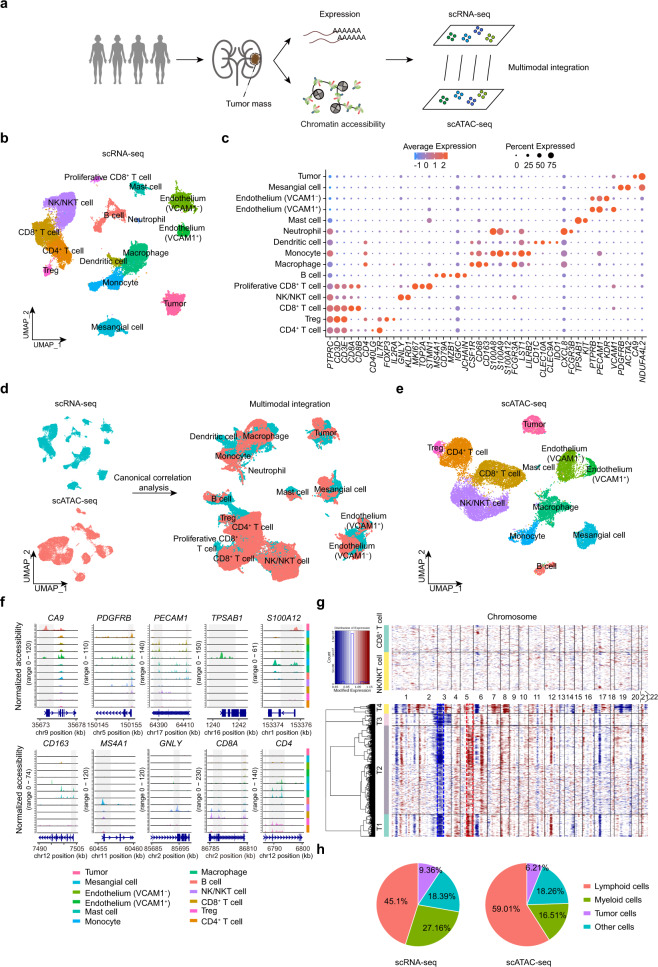
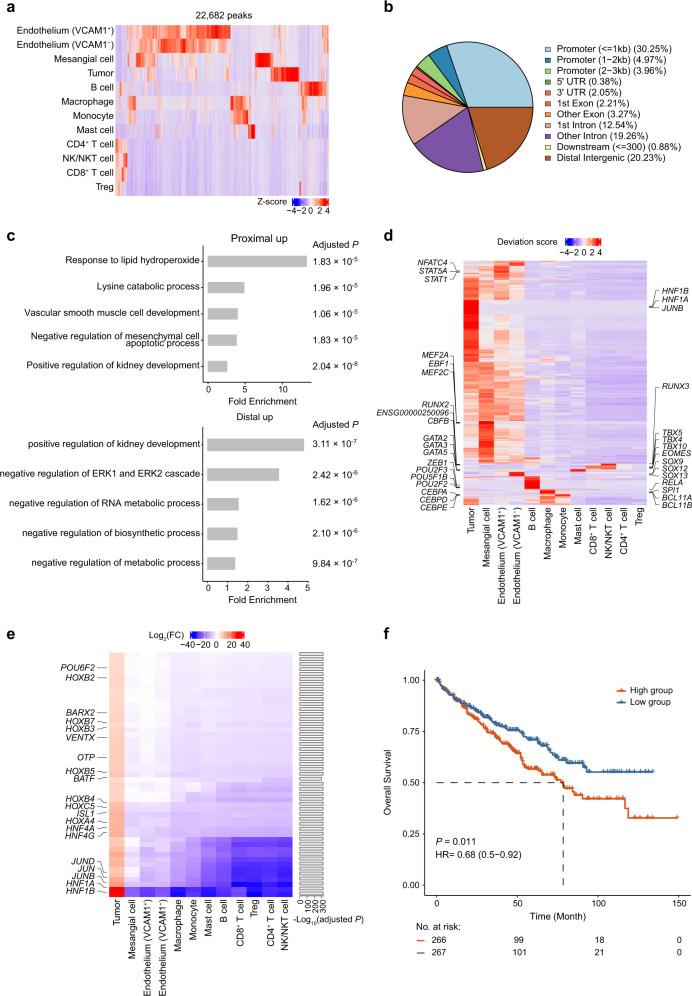
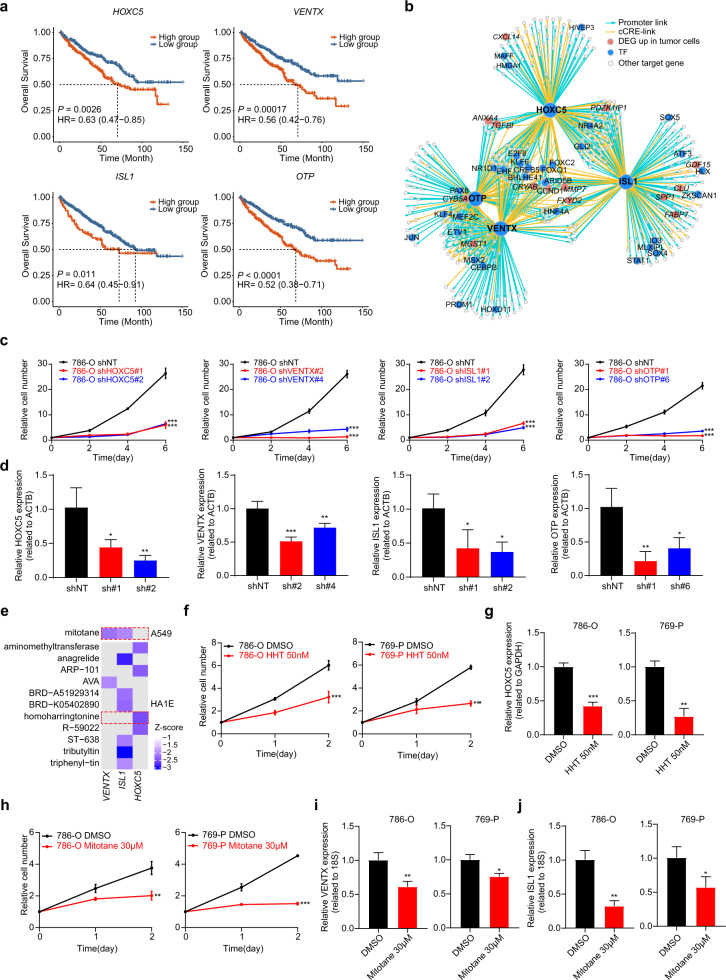
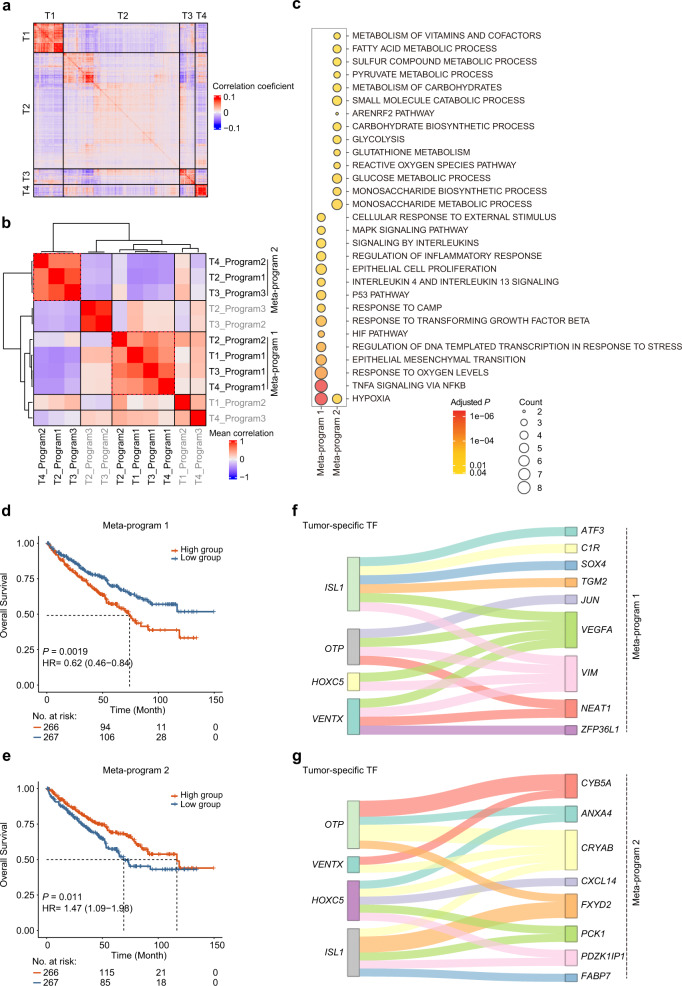
The clear cell renal cell carcinoma (ccRCC) microenvironment consists of many different cell types and structural components that play critical roles in cancer progression and drug resistance, but the cellular architecture and underlying gene regulatory features of ccRCC have not been fully characterized. Here, we applied single-cell RNA sequencing (scRNA-seq) and single-cell assay for transposase-accessible chromatin sequencing (scATAC-seq) to generate transcriptional and epigenomic landscapes of ccRCC. We identified tumor cell-specific regulatory programs mediated by four key transcription factors (TFs) (HOXC5, VENTX, ISL1, and OTP), and these TFs have prognostic significance in The Cancer Genome Atlas (TCGA) database. Targeting these TFs via short hairpin RNAs (shRNAs) or small molecule inhibitors decreased tumor cell proliferation. We next performed an integrative analysis of chromatin accessibility and gene expression for CD8+ T cells and macrophages to reveal the different regulatory elements in their subgroups. Furthermore, we delineated the intercellular communications mediated by ligand–receptor interactions within the tumor microenvironment. Taken together, our multiomics approach further clarifies the cellular heterogeneity of ccRCC and identifies potential therapeutic targets.
Overview
The claims and statistics of this paper haven’t been checked yet.
Free: it reads the open-access text and checks the first 5 claims that cite a source we can check. Create a free account to check every claim.
Integrity signals
Registry
Cites
Statistics
Figures
Verification
Claims the paper makes
The claims and statistics of this paper haven’t been checked yet.
Free: it reads the open-access text and checks the first 5 claims that cite a source we can check. Create a free account to check every claim.
Claims other papers make about this one
Each is checked against this paper’s own text: does it say what the citing paper says it does?
The cited source says what the claim attributes to it.
In the citing paper
“Currently, the integration of scRNA-seq and scATAC-seq has been applied to explore the regulation of human developmental hematopoiesis [114], as well as to find potential therapeutic targets for clear cell renal cell carcinoma [115].”
From Single-cell sequencing to multi-omics: technologies and applications (2024) · cites this paper as [115]
Self-check
Percentages, sums and reported differences re-computed from the paper’s own numbers.
The self-check needs the paper’s full text.
Citations
Cites
Subramanian, A., Tamayo, P., Mootha, V. K., Mukherjee, S., Ebert, B. L., Gillette, M. A., Paulovich, A., Pomeroy, S. L., Golub, T. R., Lander, E. S., et al. (2005) · Proceedings of the National Academy of Sciences · doi:10.1073/pnas.0506580102 · Cited by 53,625
clusterProfiler: an R Package for Comparing Biological Themes Among Gene Clusters
Yu, G., Wang, L.-G., Han, Y., & He, Q.-Y. (2012) · OMICS: A Journal of Integrative Biology · doi:10.1089/omi.2011.0118 · Cited by 36,259
Model-based Analysis of ChIP-Seq (MACS)
Zhang, Y., Liu, T., Meyer, C. A., Eeckhoute, J., Johnson, D. S., Bernstein, B. E., Nusbaum, C., Myers, R. M., Brown, M., Li, W., et al. (2008) · Genome Biology · doi:10.1186/gb-2008-9-9-r137 · Cited by 18,386
Integrated analysis of multimodal single-cell data
Hao, Y., Hao, S., Andersen-Nissen, E., Mauck, W. M., Zheng, S., Butler, A., Lee, M. J., Wilk, A. J., Darby, C., Zagar, M., et al. (2020) · doi:10.1101/2020.10.12.335331 · Cited by 15,508
Fast, sensitive and accurate integration of single-cell data with Harmony
Korsunsky, I., Millard, N., Fan, J., Slowikowski, K., Zhang, F., Wei, K., Baglaenko, Y., Brenner, M., Loh, P.-R., & Raychaudhuri, S. (2019) · Nature Methods · doi:10.1038/s41592-019-0619-0 · Cited by 10,488
McGinnis, C. S., Murrow, L. M., & Gartner, Z. J. (2019) · Cell Systems · doi:10.1016/j.cels.2019.03.003 · Cited by 4,521
GREAT improves functional interpretation of cis-regulatory regions
McLean, C. Y., Bristor, D., Hiller, M., Clarke, S. L., Schaar, B. T., Lowe, C. B., Wenger, A. M., & Bejerano, G. (2010) · Nature Biotechnology · doi:10.1038/nbt.1630 · Cited by 4,502
ChIPseeker: an R/Bioconductor package for ChIP peak annotation, comparison and visualization
Yu, G., Wang, L.-G., & He, Q.-Y. (2015) · Bioinformatics · doi:10.1093/bioinformatics/btv145 · Cited by 4,362
Leys, C., Ley, C., Klein, O., Bernard, P., & Licata, L. (2013) · Journal of Experimental Social Psychology · doi:10.1016/j.jesp.2013.03.013 · Cited by 4,147
mRNA-Seq whole-transcriptome analysis of a single cell
Tang, F., Barbacioru, C., Wang, Y., Nordman, E., Lee, C., Xu, N., Wang, X., Bodeau, J., Tuch, B. B., Siddiqui, A., et al. (2009) · Nature Methods · doi:10.1038/nmeth.1315 · Cited by 3,969
Self-citation
Cited by
Epigenetic regulation during cancer transitions across 11 tumour types
Terekhanova, N. V., Karpova, A., Liang, W.-W., Strzalkowski, A., Chen, S., Li, Y., Southard-Smith, A. N., Iglesia, M. D., Wendl, M. C., Jayasinghe, R. G., et al. (2023) · Nature · doi:10.1038/s41586-023-06682-5 · Cited by 207
Single-cell sequencing to multi-omics: technologies and applications
Wu, X., Yang, X., Dai, Y., Zhao, Z., Zhu, J., Guo, H., & Yang, R. (2024) · Biomarker Research · doi:10.1186/s40364-024-00643-4 · Cited by 222
“Currently, the integration of scRNA-seq and scATAC-seq has been applied to explore the regulation of human developmental hemato-poiesis [114], as well as to find potential therapeutic targets for clear cell renal cell carcinoma [115].”
MethodData analysis guidelines for single-cell RNA-seq in biomedical studies and clinical applications
Su, M., Pan, T., Chen, Q.-Z., Zhou, W., Gong, Y., Xu, G., Yan, H.-Y., Li, S., Shi, Q.-Z., Zhang, Y., et al. (2022) · Military Medical Research · doi:10.1186/s40779-022-00434-8 · Cited by 144
“The datasets generated by these technologies may help biomedical researchers to discover disease-specific regulatory programs, possibly in the subset of certain cell types [289].”
BackgroundSingle-cell sequencing technology applied to epigenetics for the study of tumor heterogeneity
Hu, Y., Shen, F., Yang, X., Han, T., Long, Z., Wen, J., Huang, J., Shen, J., & Guo, Q. (2023) · Clinical Epigenetics · doi:10.1186/s13148-023-01574-x · Cited by 108
“…one study, by performing scRNA-seq and scATAC-seq on ccRCC primary tumor tissues, investigators identified key regulatory molecules in the tumor microenvironment that mediate tumor progression and manipulate immune cell function, and further experimentally validated their role in tumor growth [66].”
MethodSelf-citationNovel tumor-associated macrophage populations and subpopulations by single cell RNA sequencing
Wang, J., Zhu, N., Su, L., Gao, Y., & Yang, R. (2024) · Frontiers in Immunology · doi:10.3389/fimmu.2023.1264774 · Cited by 112
The role of macrophages in fibrosis of chronic kidney disease
Li, G., Yang, H., Zhang, D., Zhang, Y., Liu, B., Wang, Y.-X., Zhou, H., Xu, Z.-X., & Wang, Y. (2024) · Biomedicine & Pharmacotherapy · doi:10.1016/j.biopha.2024.117079 · Cited by 84
Self-citationŽvirblytė, J., Nainys, J., Juzėnas, S., Goda, K., Kubiliūtė, R., Dasevičius, D., Kinčius, M., Ulys, A., Jarmalaitė, S., & Mažutis, L. (2024) · Communications Biology · doi:10.1038/s42003-024-06478-x · Cited by 64
“Thesingle-celltranscriptomicstudieshaveprovidedvaluableinsightsabout theoriginofccRCC 14,15 , malignancy programs of the tumor 16 , immune cell population phenotypical changes during tumorigenesis 21 and immunotherapy treatment 18,22 among other.”
InfluentialLiang, A., Kong, Y., Chen, Z. H., Qiu, Y., Wu, Y., Zhu, X. M., & Li, Z. (2023) · Biochemistry and Biophysics Reports · doi:10.1016/j.bbrep.2023.101589 · Cited by 73
“Xie et al. [74] employed single-cell multi-omics techniques to analyze data and elucidate the transcriptome and epigenomic profiles of RCC.”
BackgroundWei, C., Sun, W., Shen, K., Zhong, J., Liu, W., Gao, Z., Xu, Y., Wang, L., Hu, T., Ren, M., et al. (2023) · Nature Communications · doi:10.1038/s41467-023-43980-y · Cited by 49
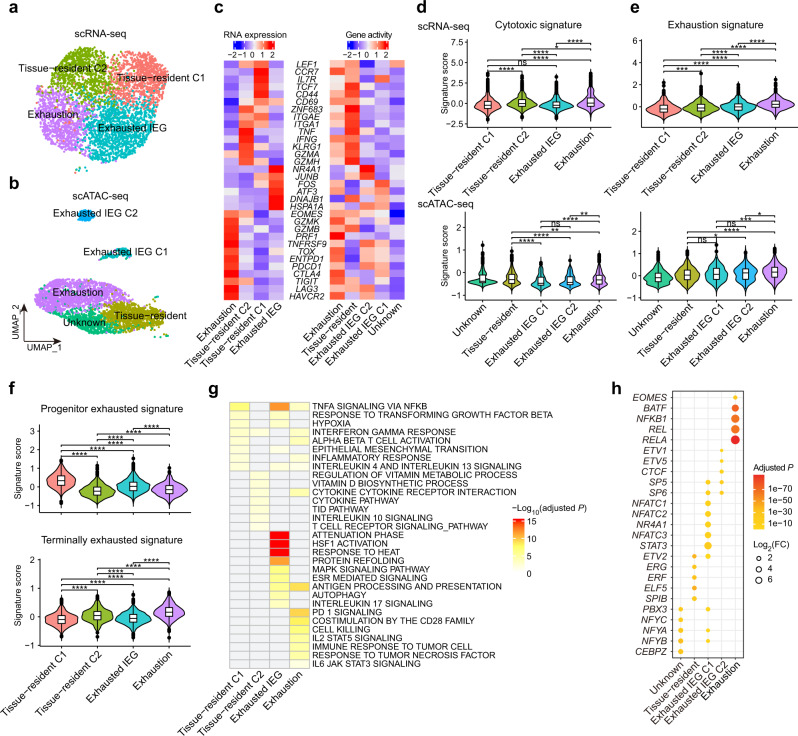
“Using published signatures of cytotoxicity and exhaustion 33,34 , we observed that CXCL13 + CD8 + T and FGFBP2 + NKT cells had the highest exhaustion and cytotoxicity scores, respectively (Fig.”
Li, H., Chen, J., Li, Z., Chen, M., Ou, Z., Mo, M., Wang, R., Tong, S., Liu, P., Cai, Z., et al. (2023) · Advanced Science · doi:10.1002/advs.202300110 · Cited by 49
Enhancer reprogramming: critical roles in cancer and promising therapeutic strategies
Yang, J., Zhou, F., Luo, X., Fang, Y., Wang, X., Liu, X., Xiao, R., Jiang, D., Tang, Y., Yang, G., et al. (2025) · Cell Death Discovery · doi:10.1038/s41420-025-02366-3 · Cited by 63
“Single-cell ATAC and CUT&Tag studies have revealed substantial variation in enhancer accessibility and epigenetic modi fi cations across different clones, directly impacting the expression of key genes and functional differentiation of tumors [68, 280, 342, 343].”
Yang, G., Cheng, J., Xu, J., Shen, C., Lu, X., He, C., Huang, J., Cheng, J., Cheng, J., & Wang, H. (2024) · Journal of Translational Medicine · doi:10.1186/s12967-024-04848-x · Cited by 62
“Past investigations have unveiled the presence of intra-tumor heterogeneity in ccRCC, encompassing the manifestation of hypoxia, stress, and EMT-associated patterns [24, 44, 45].”
BackgroundChen, L.-X., Zeng, S.-J., Liu, X.-D., Tang, H.-B., Wang, J.-W., & Jiang, Q. (2023) · Journal of Translational Medicine · doi:10.1186/s12967-022-03858-x · Cited by 44
“cohort [13] and another dataset from Long cohort [14] including 4 samples from 4 ccRCC patients, all the patients were VHL mutated in Long cohort.”
MethodZhang, D., Zhang, X., Liu, Z., Han, T., Zhao, K., Xu, X., Zhang, X., Ren, X., & Qin, C. (2023) · Frontiers in Oncology · doi:10.3389/fonc.2023.1207068 · Cited by 37
“However, due to the asymptomatic nature of early stage ccRCC, there is a significant challenge in identifying effective predictors for early diagnosis and prognosis (15).”
BackgroundEpiAgent: foundation model for single-cell epigenomics
Chen, X., Li, K., Cui, X., Wang, Z., Jiang, Q., Lin, J., Li, Z., Gao, Z., Lv, H., & Jiang, R. (2025) · Nature Methods · doi:10.1038/s41592-025-02822-z · Cited by 46
Shi, N., Chen, S., Wang, D., Wu, T., Zhang, N., Chen, M., & Ding, X. (2024) · Scientific Reports · doi:10.1038/s41598-024-69183-z · Cited by 33
Massenet-Regad, L., Poirot, J., Jackson, M., Hoffmann, C., Amblard, E., Onodi, F., Bouhidel, F. A., Djouadou, M., Ouzaïd, I., Xylinas, E. N., et al. (2023) · iScience · doi:10.1016/j.isci.2023.108367 · Cited by 21
Atlas-guided discovery of transcription factors for T cell programming
Chung, H. K., Liu, C., Battu, A., Jambor, A. N., Pratt, B. M., Xie, F., Riesenberg, B., Casillas, E., Sun, M., Landoni, E., et al. (2026) · Nature · doi:10.1038/s41586-025-09989-7 · Cited by 27
“…we mapped mouse TEX term -associated and T RM -associated TF genes onto a curated human pan-cancer CD8 + T cell atlas encompassing six tumour types 48–55 (glioblastoma (GBM), head and neck squamous cell carcinoma (HNSCC), basal cell carcinoma c , d , Quantification of PD1 + SLAMF6 − TIM3 +…”
Self-citationJeong, Y., Ronen, J., Kopp, W., Lutsik, P., & Akalin, A. (2024) · BMC Bioinformatics · doi:10.1186/s12859-024-05880-w · Cited by 24
“Seurat, one of the broadly used multiomics analysis R tool-kits, contributed to revealing renal cell carcinoma regulatory programmes, as well as new cellular states in type I diabetes via single-cell multiomics analyses [12, 13].”
MethodLv, M., Liu, B., Duan, Y., Lin, J., Li, D., Li, Y., Yu, J., Liao, J., Zhang, J., & Duan, Y. (2024) · ACS Nano · doi:10.1021/acsnano.4c08055 · Cited by 19
Self-citationXi, Y., Zhao, Z., Zhou, Y., Yin, C., Li, Y., Xu, X., Jin, W., Lin, C., Zhao, K., Kuang, J., et al. (2026) · Cell Reports Medicine · doi:10.1016/j.xcrm.2025.102529 · Cited by 12
The implications for urological malignancies of non-coding RNAs in the the tumor microenvironment
Wang, S., Qi, X., Liu, D., Xie, D., Jiang, B., Wang, J., Wang, X., & Wu, G. (2023) · Computational and Structural Biotechnology Journal · doi:10.1016/j.csbj.2023.12.016 · Cited by 13
“…has been observed in patients resistant to ICB [111] scRNA-seq and scATAC-seq Tumor cell-specific regulatory programs were identified, mediated by key transcription factors (TFs): HOXC5, VENTX, ISL1, and OTP [112] scRNA-seq and scATAC-seq Identification of specific long non-coding RNAs, RP11-661C8.”
BackgroundDissecting intratumor heterogeneity in HCC: new research strategies and clinical implications
Behrens, S., & Wang, X. W. (2022) · Carcinogenesis · doi:10.1093/carcin/bgac099 · Cited by 13
Ye, R., Ma, S., Chen, Y., Shan, J., Tan, L., Su, L., Tong, Y., Zhao, Z., Chen, H., Fu, M., et al. (2023) · JHEP Reports · doi:10.1016/j.jhepr.2023.100908 · Cited by 18
Self-citationWang, Y., Chen, X., Tang, N., Guo, M., & Ai, D. (2024) · International Journal of Molecular Sciences · doi:10.3390/ijms25074134 · Cited by 12
“However, there have been several studies applying scRNA-seq analysis to generate transcriptional landscapes of ccRCC and identify tumor-specific regulating key TFs [80,81].”
BackgroundSelf-citationMa, J., Huang, Y., Chen, J., Li, Y., Yao, R., Li, X., Liang, Q., Chen, X., Peng, C., Liu, K., et al. (2025) · Nature Communications · doi:10.1038/s41467-025-64447-2 · Cited by 17
“To validate the consistency of the pericyte-fi broblast transition across datasets, we independently performed trajectory inference on multiple scRNA-seq datasets, including our discovery and validation dataset, as well as those from Yu et al. 25 , and Long et al. 50 .”
InfluentialSelf-citationFu, Y., Li, M., Wu, S., Wang, J., & Wang, S. (2026) · Cell Death and Disease · doi:10.1038/s41419-026-08685-2 · Cited by 15
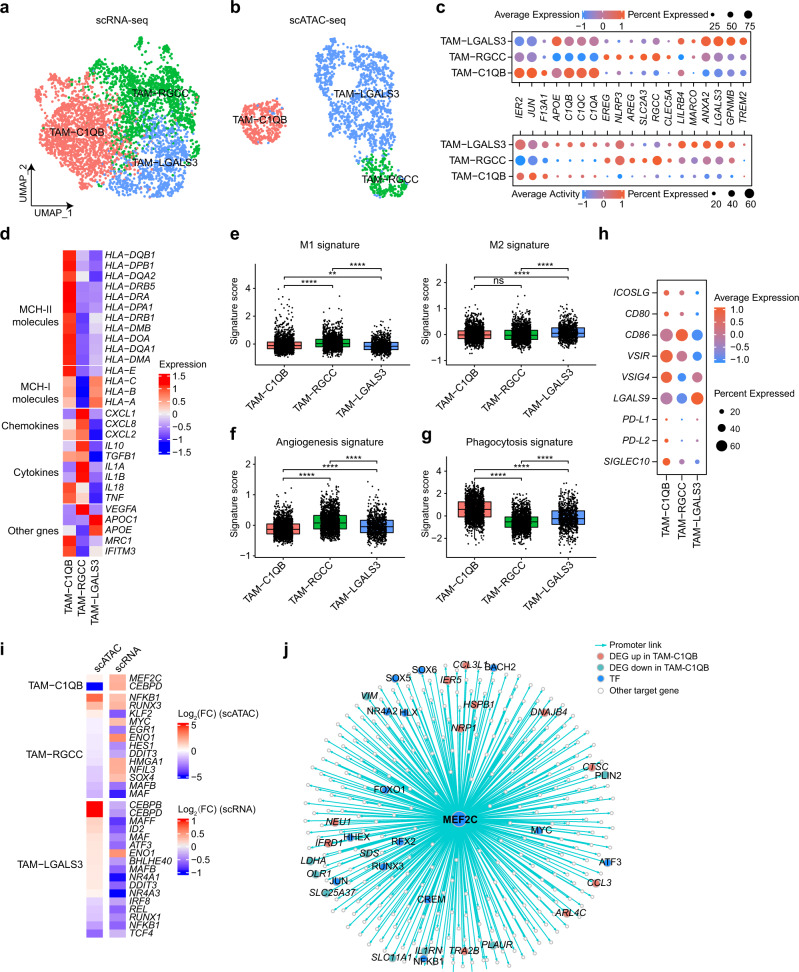
“…⁺ TAMs in CRC and renal-cell carcinoma adopt an immunosuppressive, phagocytosis-competent phenotype, enriched for M2-like and engulfment programs, positioned near exhausted T cells, and expressing high levels of PD-L1 and MERTK [96, 109, 114, 115], although the majority of data remain correlative.”
Dai, Y., Li, H., Fan, S., Wang, K., Cui, Z., Zhao, X., Sun, X., Lin, M., Li, J., Gao, Y., et al. (2025) · Cell Death and Disease · doi:10.1038/s41419-025-07412-7 · Cited by 12
“Since early-stage ccRCC often presents with few noticeable clinical symptoms, and in several cases, metastasis is already present at the time of diagnosis, which contributes to a poor prognosis with the 5-year survival rate is only 10% [6 – 8].”
Alchahin, A. M., Τσέα, Ι., & Baryawno, N. (2023) · Cancers · doi:10.3390/cancers15194734 · Cited by 12
“These subsets were associated with immune cell infiltration, angiogenesis, and therapy response, highlighting their functional specialization and impact on the ccRCC TME [14,17,41].”
BackgroundZhang, J., Zhang, X., Su, J., Zhang, J., Liu, S., Li, H., Liu, M., & Sun, D. (2023) · Frontiers in Cell and Developmental Biology · doi:10.3389/fcell.2023.1203650 · Cited by 7
“HOXC5, specifically enriched in tumor cells, has been significantly associated with poor prognosis in clear cell renal cell carcinoma (ccRCC) (Long et al., 2022).”
BackgroundLi, Z., Zhang, S., Mao, G., Xu, Y., Kang, Y., Zheng, L., Long, D., Chen, W., Gu, M., Zhang, Z., et al. (2023) · International Immunopharmacology · doi:10.1016/j.intimp.2023.111109 · Cited by 8
Feng, B., Guo, H., Ning, Y., Zhao, Y., Wang, X., & Cui, R. (2025) · Discover Oncology · doi:10.1007/s12672-025-02283-y · Cited by 12
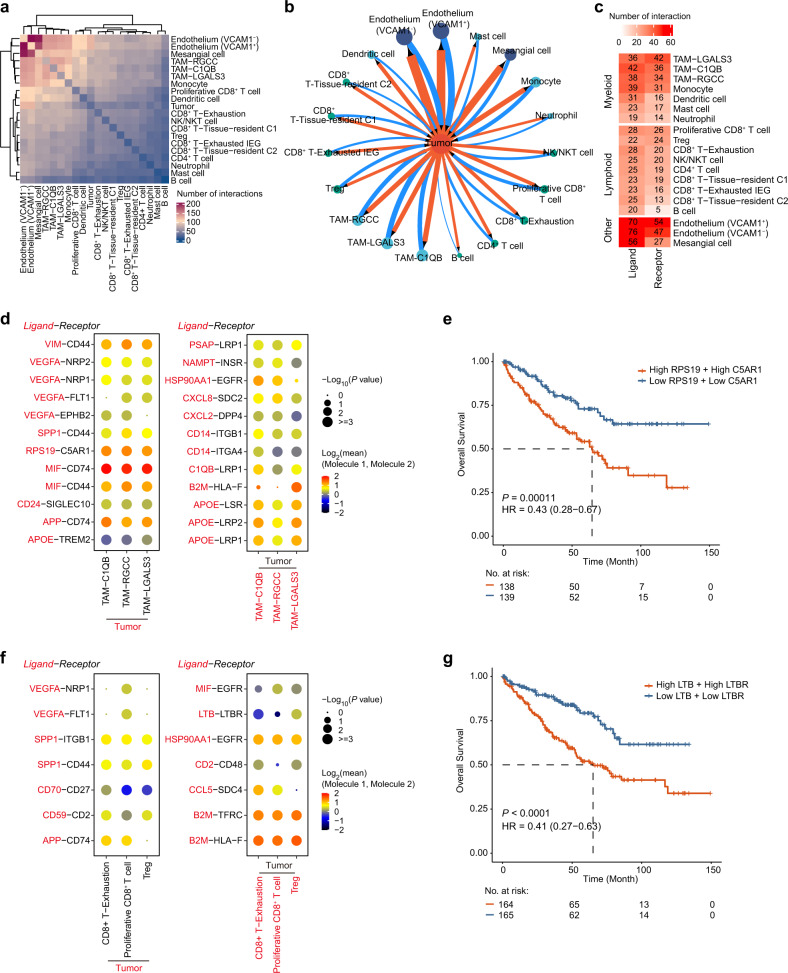
“The cross-talk between various immune cells (especially macrophages and T cells) and tumor cells plays vital roles in tumor immune escape, and it has become an area of intense research in cancer immunological [55].”
Li, B., Jiang, Y.-Y., Li, X., Yu, M., Meng, Q., Wang, D., Zang, J.-M., & Xu, F. (2025) · BMC Complementary Medicine and Therapies · doi:10.1186/s12906-025-05020-8 · Cited by 7
“Among these, M2-TAMs are pivotal contributors to tumor progression, immune evasion, and therapeutic resistance by fostering an immunosuppressive milieu [30].”
Zhang, H., Liu, Y., Liu, W., Lin, A., Fang, Y., Qu, L., Zhang, X., Luo, P., Wang, L., & Jiang, A. (2025) · Biomarker Research · doi:10.1186/s40364-025-00811-0 · Cited by 10
Zhou, P., Hu, H., Lu, Y., Xiao, J., Wang, Y., Xun, Y., Xu, J., Liu, C., Wang, S., & Hu, J. (2022) · Molecular Therapy — Oncolytics · doi:10.1016/j.omto.2022.10.005 · Cited by 7
“3 lossMUT group (Figure 4H), which was reported to be associated with anti-PD-1 resistance by carrying an unfavorable PTEN mutation.(23,24) We did not observe a differential distribution of PTEN mutations in the stem/progenitor subgroups.”
BackgroundSelf-citationYang, L., Meng, Q., Hong, F., Zhao, M., & Gao, X. (2023) · Cancer Letters · doi:10.1016/j.canlet.2023.216319 · Cited by 6
Zhou, Q., Sun, Q., Shen, Q., Li, X., & Qian, J. (2024) · Heliyon · doi:10.1016/j.heliyon.2024.e25571 · Cited by 7
“These subtypes demonstrated their distinctiveness in survival analysis, principal component analysis, and multiple clustering heatmaps, aligning with recent research outcomes [40].”
MethodTang, X., Zhang, Q., Shen, Z., Xiao, J., Li, M., Meng, X., Wang, C., Zhang, G., Liu, A., & Yin, Y. (2025) · Cell Death and Disease · doi:10.1038/s41419-025-08060-7 · Cited by 7
Wu, P., Ge, J., Hou, X., Qu, H., Ouyang, J., Wang, D., Tong, T., Meng, Y., Yan, Q., Shi, L., et al. (2026) · Cancer Letters · doi:10.1016/j.canlet.2026.218459 · Cited by 6
Unveiling the hidden AP-1: revealing the crucial role of AP-1 in ccRCC at single-cell resolution
Zheng, J., Liu, F., & Su, C. (2023) · Molecular Cancer · doi:10.1186/s12943-023-01913-9 · Cited by 5
“By utilizing established molecular markers, we classified these cells into 14 distinct sub-groups (Figure S1A) [9, 11].”
MethodXiong, B., Liu, W., Liu, Y., Chen, T., Lin, A., Song, J., Qu, L., Luo, P., Jiang, A., & Wang, L. (2024) · Biomedicines · doi:10.3390/biomedicines12102171 · Cited by 6
“However, these techniques overlook intra-tumoral molecular heterogeneity, leading to patients with similar clinical indicators to experience largely varied prognoses [10,11].”
BackgroundAjadee, A., Mahmud, S., Hossain, M. B., Ahmmed, R., Ali, M. A., Reza, M. S., Sarker, S. K., & Mollah, M. N. H. (2024) · PLoS ONE · doi:10.1371/journal.pone.0310843 · Cited by 9
Camp, S. Y., He, M. X., Cuoco, M. S., Saad, E., Pimenta, E. M., Meli, K., Bakouny, Z., Labaki, C., Titchen, B. M., Kang, Y. J., et al. (2024) · bioRxiv (Cold Spring Harbor Laboratory) · doi:10.1101/2024.11.15.623837 · Cited by 5
Yavuz, B. G., Khanmammadova, N., Majeed, Z., Ali, M., Hasanov, M., Bilen, M. A., Singer, E. A., & Hasanov, E. (2025) · Trends in cancer · doi:10.1016/j.trecan.2025.11.001 · Cited by 7
Zheng, J., Lu, W., Wang, C., Chen, S., Zhang, Q., & Su, C. (2024) · Aging · doi:10.18632/aging.205974 · Cited by 5
Wang, N., Xu, Z., Zhang, L., Lu, Y., Wang, Y., Yan, L., Cao, H., Wang, L., & Shao, F. (2025) · Frontiers in Immunology · doi:10.3389/fimmu.2025.1615601 · Cited by 6
Self-citationZhang, C., Song, Y., Cui, X., Wang, Y., Liu, J., & Shen, Z. (2025) · Scientific Reports · doi:10.1038/s41598-025-06051-4 · Cited by 5
Self-citationENO1 promotes cancer metastasis via stimulating metabolism reprogramming in osteosarcoma
Huang, P., He, S., Qi, Z., Nijiati, Y., Wang, J., Lin, Z., Ma, Y., Dong, R., Chen, G., & Ning, B. (2025) · British Journal of Cancer · doi:10.1038/s41416-025-03182-3 · Cited by 7
“Single-cell RNA-sequencing (scRNA-seq) technology has its advantage and can make up the de fi ciencies of traditional transcriptomic [6 – 8].”
Shen, J., Wang, X., Li, F., Zhu, J., Gao, Y., Chen, K., Huang, Y., Zhang, L., Luo, Y., Jiang, B., et al. (2025) · Sensors and Actuators B Chemical · doi:10.1016/j.snb.2025.138756 · Cited by 4
Camp, S. Y., He, M. X., Cuoco, M. S., Garza, A., Xirenayi, S., Bakouny, Z., Saad, E., Masri, J. E., Pimenta, E. M., Meli, K., et al. (2026) · Science Advances · doi:10.1126/sciadv.adv5457 · Cited by 11
“( 22 ) cohort were compiled from both the supplementary materials and additional information was provided by the study authors.”
InfluentialChoi, J. M., Park, C., & Chae, H. (2024) · PeerJ · doi:10.7717/peerj.17006 · Cited by 4
SifiNet: a robust and accurate method to identify feature gene sets and annotate cells
Gao, Q., Ji, Z., Wang, L., Owzar, K., Li, Q.-J., Chan, C. C. W., & Xie, J. (2024) · Nucleic Acids Research · doi:10.1093/nar/gkae307 · Cited by 4
Yang, C., Jin, Y., & Yin, Y. (2024) · Life Medicine · doi:10.1093/lifemedi/lnae015 · Cited by 5
A Single‐Cell Transcriptome Profiling of Triptolide‐Induced Nephrotoxicity in Mice
Wu, J., Guo, J., Xia, S., Chen, J., Cao, M., Xie, L., Yang, C., Qiu, F., & Wang, J. (2024) · Advanced Biology · doi:10.1002/adbi.202400120 · Cited by 5
Tang, Z., Qian, Y., Wang, N., Chen, Y., Huang, H., Zhang, J., Luo, H., Lu, Z., Li, Z., He, Z., et al. (2024) · International Journal of Medical Sciences · doi:10.7150/ijms.98334 · Cited by 6
Huang, C., Wang, G., Yuan, Y., Zou, Y., Tang, X., Guo, H., Song, H., Gao, W., Wang, A., Yu, Y., et al. (2025) · European Urology · doi:10.1016/j.eururo.2025.09.4148 · Cited by 11
Wang, Y.-X., Wang, Y., Liu, B., Gao, X., Li, Y., Li, F., & Zhou, H. (2023) · Frontiers in Genetics · doi:10.3389/fgene.2023.1207233 · Cited by 8
“By conducting multi-omics analysis of primary tumor tissues from ccRCC, key transcriptional molecules that mediate tumor development and manipulate immune cell function can be identified, facilitating the exploration of upstream regulatory targets (Young et al., 2018; Muto et al., 2021; Long et al., 2022).”
BackgroundMethodSelf-citationZhu, M., Li, Y., Wang, Y., Lin, P., Mi, J., & Zhong, W. (2023) · European journal of medical research · doi:10.1186/s40001-023-01221-4 · Cited by 5
Self-citationFeng, Y., Wang, W., Jiang, S., Liu, Y., Wang, Y., Zhan, X., Zhu, H., & Du, G. (2024) · Frontiers in Pharmacology · doi:10.3389/fphar.2024.1343819 · Cited by 4
“Frontiers in Pharmacology frontiersin.org 10 and molecular mechanisms to guide biomarker discovery and intervention clinically is now a major challenge (Long et al., 2022).”
BackgroundSelf-citationPal, M., Selvaraju, S., & Khan, R. (2023) · Frontiers in Oncology · doi:10.3389/fonc.2023.1168975 · Cited by 4
“Indeed, molecular alteration during cancer progression is not limited to only the mutational changes of the genome but also changes in epigenomes, transcriptomes, proteomes, metabolomes, and microbiomes levels (1, 2).”
BackgroundEnhancer Reprogramming Reveals the Tumorigenic Role of PTPRZ1 in Lung Squamous Cell Carcinoma
Ning, Y., Wang, J., Zhang, Y., Li, H., Jiang, Z., Su, X., Xiao, Y., Wu, X., Wei, B., Ying, J., et al. (2025) · Advanced Science · doi:10.1002/advs.202509344 · Cited by 6
The ZNF737-CXCL10 axis drives immune exclusion and resistance to anti-PD-1 therapy in bladder cancer
Gao, X., Liu, J., Deng, D., Xiao, J., Liu, Y., Yan, L., Yang, W., Dai, Z., Wen, X., Zu, X., et al. (2026) · International Immunopharmacology · doi:10.1016/j.intimp.2026.116443 · Cited by 3
Targeted DNA damage repair: old mechanisms and new opportunities in clear cell renal cell carcinoma
Lv, J., Gong, P., Jia, G., & Li, W. (2024) · Genome Instability & Disease · doi:10.1007/s42764-024-00138-4 · Cited by 2
Popova, L. V., Garfinkle, E. A. R., Chopyk, D. M., Navarro, J. B., Rivaldi, A., Shu, Y., Lomonosova, E. E., Phay, J. E., Miller, B. S., Sattuwar, S., et al. (2024) · bioRxiv (Cold Spring Harbor Laboratory) · doi:10.1101/2024.09.30.615695 · Cited by 3
Mu, X., Pan, L., Wang, X., Liu, C., Yu, L., Cai, Y., & He, Z. (2025) · Frontiers in Immunology · doi:10.3389/fimmu.2025.1529569 · Cited by 3
Guan, G., Wang, X., Li, X., Wang, Q., Li, X., Sun, X., Liu, L., Lu, Y., Liu, B., Li, X., et al. (2025) · Molecular and Cellular Probes · doi:10.1016/j.mcp.2025.102041 · Cited by 2
Jiang, R., Lu, Z., Li, F., Zhu, Y., Yang, M., Zhang, S., Wu, P., Gong, C., Fei, Y., Sang, Y., et al. (2025) · Cell Discovery · doi:10.1038/s41421-025-00842-9 · Cited by 5
“To explore whether ecNR2E1 regulates downstream target genes and forms a novel regulatory network similar to ecMYC, we employed a published method to identify NR2E1 target genes and candidate cis -regulatory elements (cCREs) 36 .”
Hu, J., & Mo, Z. (2022) · Mathematical Biosciences & Engineering · doi:10.3934/mbe.2023100 · Cited by 3
Shi, J., Zhang, Y., Xu, L., & Wang, F. (2024) · Frontiers in Genetics · doi:10.3389/fgene.2024.1467682 · Cited by 4
“…S5) and T cells (e.g. Cytotoxic, Exhaustion, Terminally exhaustion, Proliferation, TCR signaling pathway, Type II interferon response; Supplementary Table S6) were collected from previous studies (Rooney et al., 2015; Long et al., 2022; Li et al., 2020; Jiang et al., 2021; Zhang Y. et al., 2022).”
MethodYu, J., Zhao, B., & Yu, Y. (2024) · Genetics Research · doi:10.1155/2024/3468209 · Cited by 6
“A signature gene set of T cells was obtained from the previous article [28], and the AUCell R package was used to calculate the cytotoxic score of each T cell [29].”
MethodSelf-citationAnalysis of Genotype and Expression of FTO and ALKBH5 in a MENA-Region Renal Cell Carcinoma Cohort
Alhammadi, M. A., İlçe, B. Y., Bhamidimarri, P. M., Bouzid, A., Ali, N., Alhamidi, R. S., Hamad, A. M., Mahfood, M., Tlili, A., Talaat, I. M., et al. (2025) · Cancers · doi:10.3390/cancers17091395 · Cited by 2
A network medicine framework for multi-modal data integration in therapeutic target discovery
Baltušytė, G., Toleman, I., Jones, J. O., Welsh, S. J., Stewart, G. D., Mitchell, T. J., Saeb‐Parsy, K., & Han, N. (2026) · Communications Chemistry · doi:10.1038/s42004-026-02049-9 · Cited by 1
“To address this, we applied non-negative matrix factorisation (NMF) to the TF activity pro fi les of tumour cells for each patient individually 21,36 .”
Wang, C.-Y., Li, Y., Li, H., Wang, J., Liu, W., Su, J., Cui, R., Yang, S., Yao, Z., Li, Q., et al. (2025) · Aggregate · doi:10.1002/agt2.70151 · Cited by 1
“Clear cell renal cell carcinoma (ccRCC) is the most common subtype of renal cancer [1, 2], accounting for over 80% of all cases and characterized by high heterogeneity and invasiveness [3].”
Lü, Z., Kong, F., Sun, J., Ge, J., Wu, J., & Wang, K. (2025) · Hereditas · doi:10.1186/s41065-025-00563-9 · Cited by 3
“ScRNA-seq has provided a powerful tool to uncover the transcriptional and functional diversity of individual tumor cells, revealing distinct cellular states that contribute to tumor progression, metastasis, and resistance to treatment [16].”
Explore & actuate: the future of personalized medicine in oncology through emerging technologies
Babu, E., & Sen, S. (2024) · Current Opinion in Oncology · doi:10.1097/cco.0000000000001016 · Cited by 1
Meng, Y., Zhang, C., Fu, T., He, J., Wu, J., & Zhan, Y. (2024) · Environmental Toxicology · doi:10.1002/tox.24190 · Cited by 1
RetractedGuan, L., & Wu, Y. (2025) · Toxicology Research · doi:10.1093/toxres/tfaf078 · Cited by 1
pyGNMF: A Python library for implementation of generalised non-negative matrix factorisation method
Lekinwala, N. L., & Bhushan, M. (2022) · SoftwareX · doi:10.1016/j.softx.2022.101257 · Cited by 1
Yin, X., Wang, Y., Wang, K., Zhu, G., Zhang, Z., Zhao, K., Zhang, S., & Shi, B. (2023) · Research Square · doi:10.21203/rs.3.rs-3165804/v1 · Cited by 1
Self-citationJeong, K., Ha, H., Xing, J., Choi, J., & Kim, K. (2025) · Research Square · doi:10.21203/rs.3.rs-6574738/v1 · Cited by 1
Zhang, Z., Li, Z., Zhang, S., Xu, Y., Mao, G., Kang, Y., Zheng, L., Long, D., Chen, W., Gu, M., et al. (2023) · Research Square · doi:10.21203/rs.3.rs-2734014/v1
Chen, L.-X., Zeng, S.-J., Liu, X.-D., Tang, H.-B., Wang, J.-W., & Jiang, Q. (2023) · Figshare · doi:10.6084/m9.figshare.22608803
Chen, L.-X., Zeng, S.-J., Liu, X.-D., Tang, H.-B., Wang, J.-W., & Jiang, Q. (2023) · Figshare · doi:10.6084/m9.figshare.22608812
Chen, L.-X., Zeng, S.-J., Liu, X.-D., Tang, H.-B., Wang, J.-W., & Jiang, Q. (2023) · Figshare · doi:10.6084/m9.figshare.22608800
Chen, L.-X., Zeng, S.-J., Liu, X.-D., Tang, H.-B., Wang, J.-W., & Jiang, Q. (2023) · Figshare · doi:10.6084/m9.figshare.22608809
Chen, L.-X., Zeng, S.-J., Liu, X.-D., Tang, H.-B., Wang, J.-W., & Jiang, Q. (2023) · Figshare · doi:10.6084/m9.figshare.22608797
Chen, L.-X., Zeng, S.-J., Liu, X.-D., Tang, H.-B., Wang, J.-W., & Jiang, Q. (2023) · Figshare · doi:10.6084/m9.figshare.22608815
Chen, L.-X., Zeng, S.-J., Liu, X.-D., Tang, H.-B., Wang, J.-W., & Jiang, Q. (2023) · Figshare · doi:10.6084/m9.figshare.22608806
Zhang, Q., Liu, X., Liu, W., Lu, Y., Kun, C., Duan, Q., Peng, D., Xu, Z. Y., Zhang, J., Bai, Z., et al. (2025) · Research Square · doi:10.21203/rs.3.rs-7537412/v1
Li, Y., Li, L., Zheng, H., Zhong, L., Li, W., Ding, L., Zhang, M., He, Z., & Luo, X. (2025) · Journal of Ovarian Research · doi:10.1186/s13048-025-01811-2 · Cited by 2
“By identifying coordinated gene modules that orchestrate cellular functions and responses to pathological conditions, metaprogram analysis can uncover master regulators driving disease progression [17].”
Wang, H., Lu, M., Huang, L., Zou, X., Liu, H., Gao, Y., Song, X., Li, M., Zhou, Y., Guo, Z., et al. (2025) · Cell Reports · doi:10.1016/j.celrep.2025.116551
Self-citationZheng, J., Liu, F., & Su, C. (2024) · Figshare · doi:10.6084/m9.figshare.24873175
Chen, L.-X., Zeng, S.-J., Liu, X.-D., Tang, H.-B., Wang, J., & Jiang, Q. (2023) · Figshare · doi:10.6084/m9.figshare.22608818
Yang, G., Cheng, J., Xu, J., Shen, C., Lu, X., He, C., Huang, J., He, M., Cheng, J., & Wang, H. (2024) · Figshare · doi:10.6084/m9.figshare.26686419
Zheng, J., Liu, F., & Su, C. (2024) · Figshare · doi:10.6084/m9.figshare.26656249
Zheng, J., Liu, F., & Su, C. (2024) · Figshare · doi:10.6084/m9.figshare.26656246
Zhu, M., Li, Y., Wang, Y., Lin, P., Mi, J., & Zhong, W. (2024) · Figshare · doi:10.6084/m9.figshare.26605903
Self-citationZhu, M., Li, Y., Wang, Y., Lin, P., Mi, J., & Zhong, W. (2024) · Figshare · doi:10.6084/m9.figshare.26605888
Self-citationYang, G., Cheng, J., Xu, J., Shen, C., Lu, X., He, C., Huang, J., He, M., Cheng, J., & Wang, H. (2024) · Figshare · doi:10.6084/m9.figshare.26686422
Yang, G., Cheng, J., Xu, J., Shen, C., Lu, X., He, C., Huang, J., He, M., Cheng, J., & Wang, H. (2024) · Figshare · doi:10.6084/m9.figshare.26686428
Metadata
- Authors
- Long, Z., Sun, C., Tang, M., Wang, Y., Ma, J., Yu, J., Wei, J., Ma, J., Wang, B., Xie, Q., & Wen, J.
- Affiliations
- Westlake University (CN)
- Second Affiliated Hospital of Zhejiang University (CN)
- University of California San Diego (US)
- Peking University (CN)
- Corresponding author
- Wang, Bohan
- Xie, Qi
- Wen, Jiaming
- ORCID
- Venue
- Cell Discovery
- Published
- 2022-07-19
- Volume
- 8
- Issue
- 1
- Pages
- 68-68
- ISSN
- 2056-5968 (ISSN-L)
- PMC
- PMC9296597
- OpenAlex
- W4285795954
- Cited by
- 109
- References
- 102
- Citations by year
- 2026: 18 · 2025: 27 · 2024: 36 · 2023: 23 · 2022: 5
- FWCI
- 18.07
- Type
- journal article
- Language
- en
- Open access
- gold
- doi.org
- Licence
- cc-by
- creativecommons.org/licenses/by/4.0 (tdm)
- creativecommons.org/licenses/by/4.0 (vor)
- Locations
- Cell Discovery (publishedVersion, cc-by)
- PubMed Central (publishedVersion, cc-by)
- PubMed (publishedVersion)
- DOAJ (DOAJ: Directory of Open Access Journals) (submittedVersion, cc-by-sa)
- Zenodo (CERN European Organization for Nuclear Research) (submittedVersion, cc-by)
- Funders
- National Natural Science Foundation of China (82073268, 81970601, 81871153)
- Westlake Education Foundation
- Topics
- Health Sciences › Medicine › Oncology › Renal cell carcinoma treatment
- Life Sciences › Biochemistry, Genetics and Molecular Biology › Molecular Biology › Single-cell and spatial transcriptomics
- Life Sciences › Biochemistry, Genetics and Molecular Biology › Molecular Biology › Chromatin Remodeling and Cancer
- Keywords
- clear cell renal cell carcinoma, tumor microenvironment, transcription factors, chromatin accessibility, epigenomics, Isl1, OTP, CD8+ T cells, tumor-associated macrophages, intercellular communication, ligand-receptor interactions, tumor cell proliferation, cellular heterogeneity, therapeutic target
About these checks
Registry, retraction, Cites and statistics results are computed, not judged, with one exception: a printed reference that no index lists is read once by a model before it counts as a citation error. Claims are extracted by a model and kept only when their quote appears verbatim in the text; each cited source is then checked, with a model’s help, for whether it says what the claim relies on. Those verdicts can be wrong — read the claim’s quote and the cited source before relying on one.
Statistics and arithmetic are recomputed, not judged.
Confidence bands are shown only for fields calibrated on our annotated test set. None is calibrated yet, so no band is shown.
What counts as a claim ›How we measure confidence ›How we check this ›
Are you an author, or do you see a problem with this page? Request a review
Data sources
Bibliographic data: Semantic Scholar, OpenAlex, Crossref.
Contains information from the Semantic Scholar Academic Graph Datasets, made available under the ODC Attribution License (ODC-BY 1.0).
Semantic Scholar’s data is described in: Kinney, R., et al. (2023). The Semantic Scholar Open Data Platform. arXiv:2301.10140.
