

Single-cell multiomics analysis reveals regulatory programs in clear cell renal cell carcinoma
Open accessThe DOI matches its Crossref record; 102 of the 102 references it cites were found in a registry or an index.
Abstract
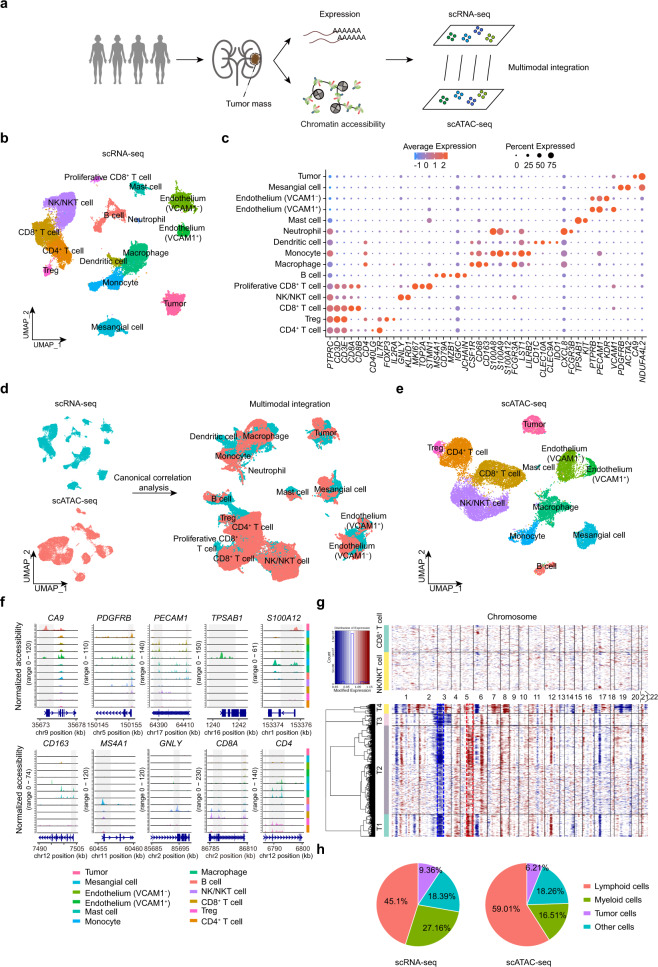
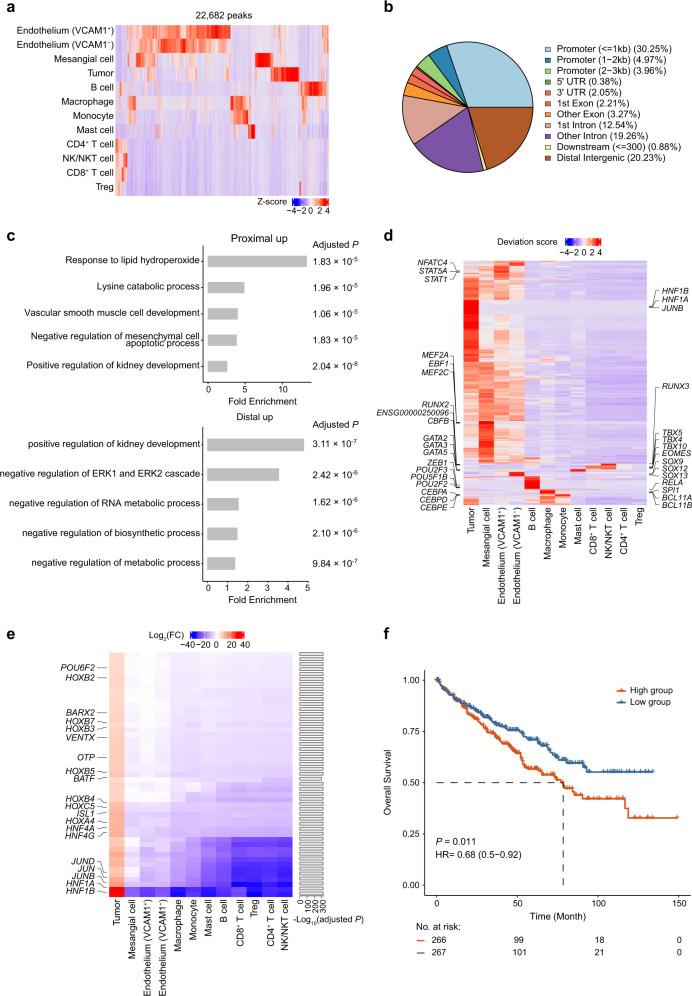
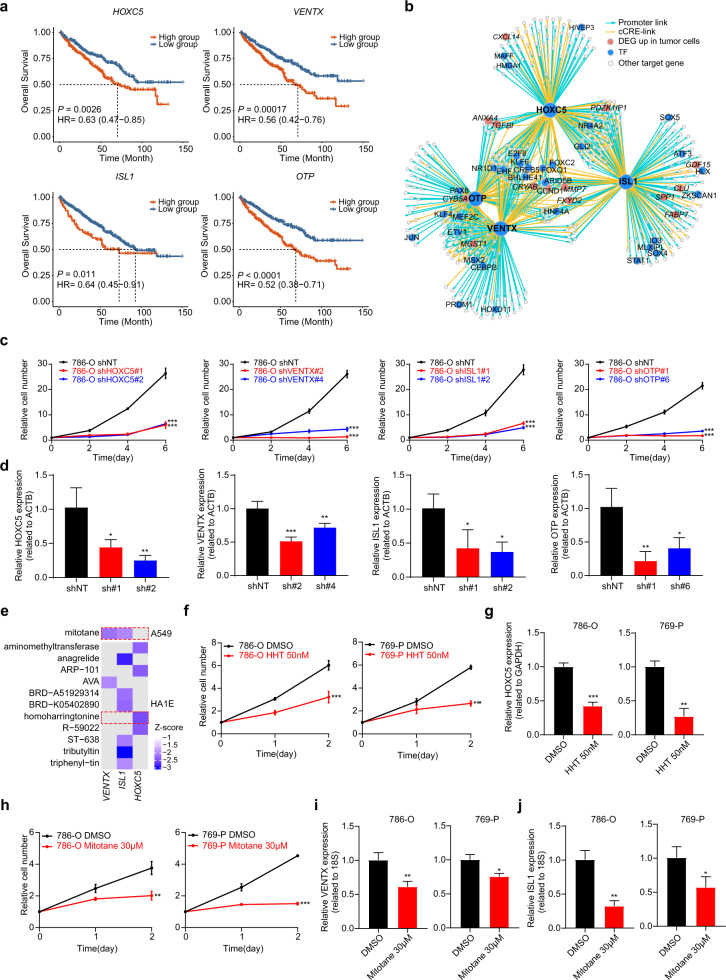
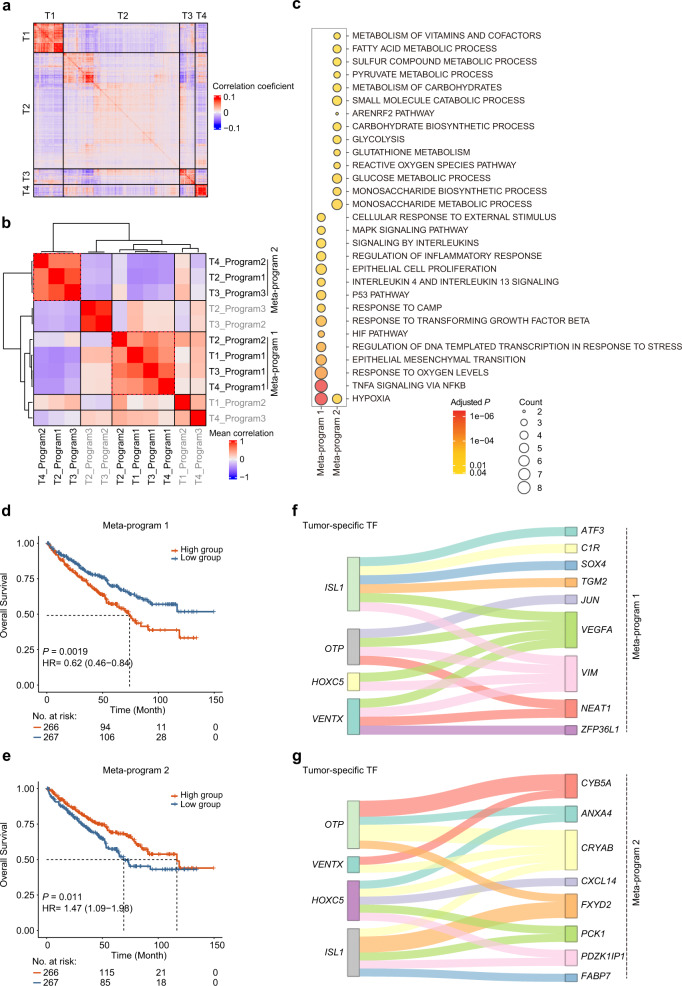
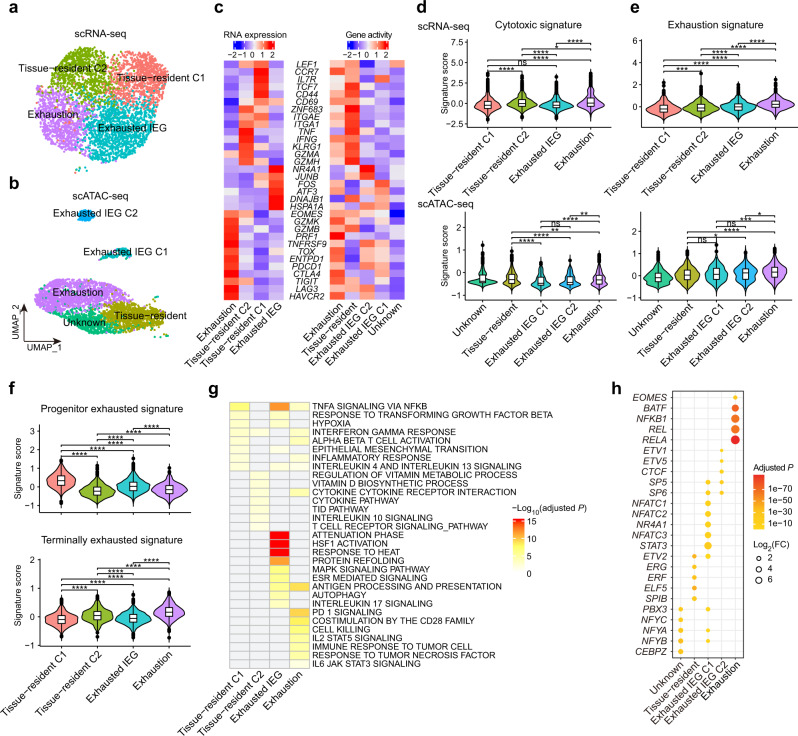
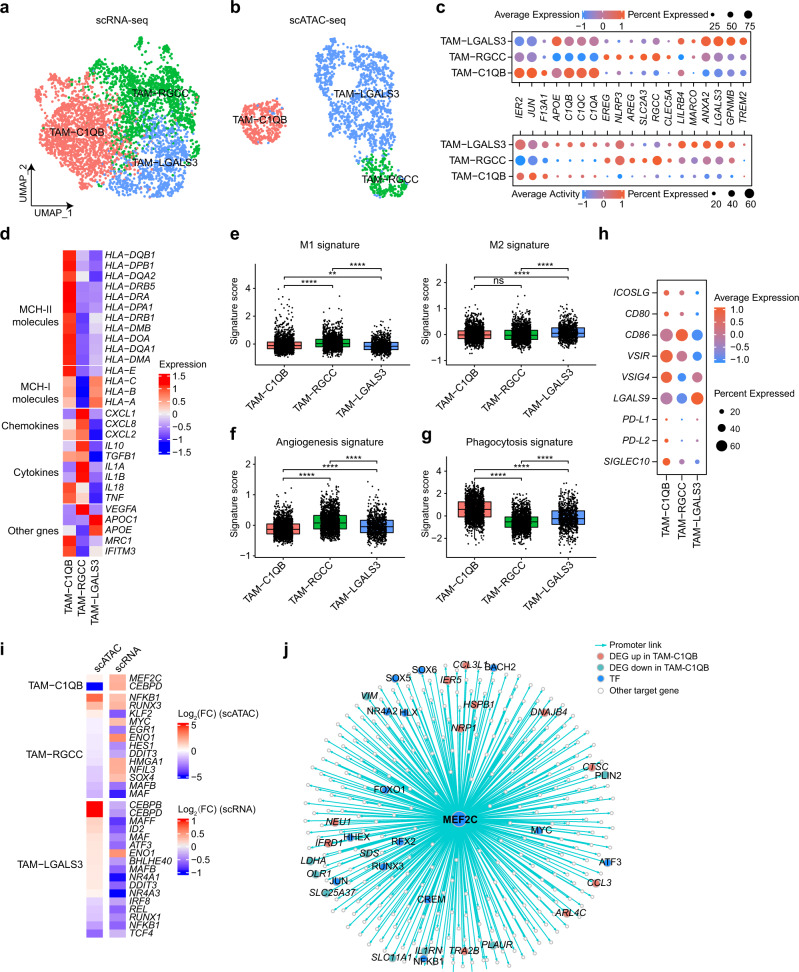
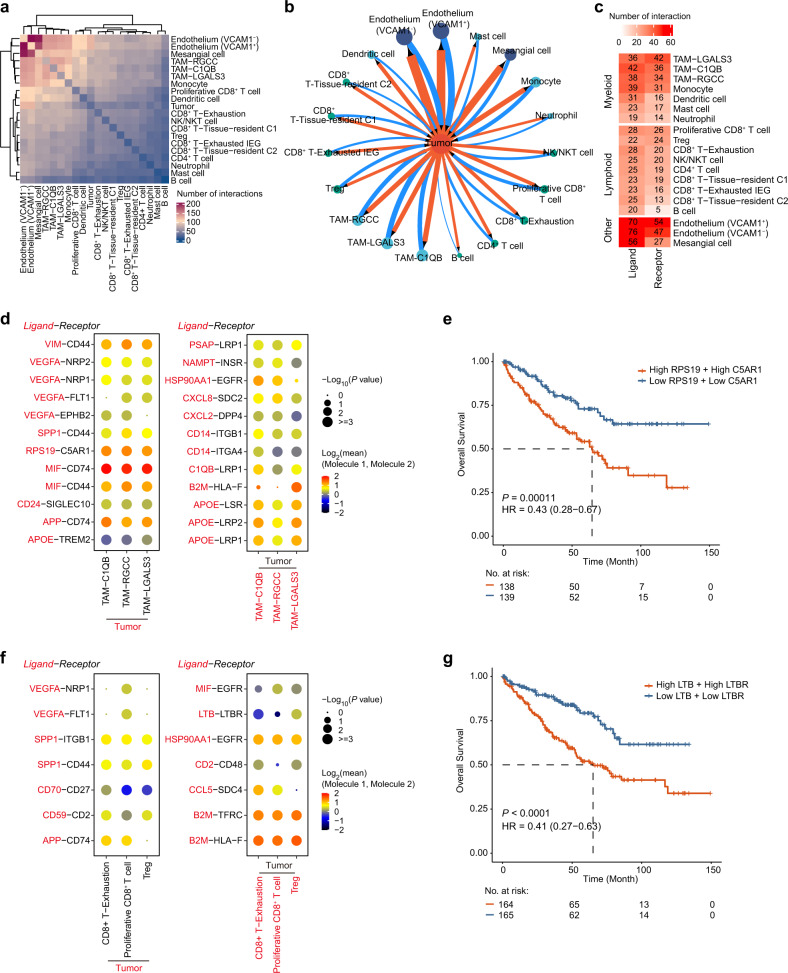
The clear cell renal cell carcinoma (ccRCC) microenvironment consists of many different cell types and structural components that play critical roles in cancer progression and drug resistance, but the cellular architecture and underlying gene regulatory features of ccRCC have not been fully characterized. Here, we applied single-cell RNA sequencing (scRNA-seq) and single-cell assay for transposase-accessible chromatin sequencing (scATAC-seq) to generate transcriptional and epigenomic landscapes of ccRCC. We identified tumor cell-specific regulatory programs mediated by four key transcription factors (TFs) (HOXC5, VENTX, ISL1, and OTP), and these TFs have prognostic significance in The Cancer Genome Atlas (TCGA) database. Targeting these TFs via short hairpin RNAs (shRNAs) or small molecule inhibitors decreased tumor cell proliferation. We next performed an integrative analysis of chromatin accessibility and gene expression for CD8+ T cells and macrophages to reveal the different regulatory elements in their subgroups. Furthermore, we delineated the intercellular communications mediated by ligand–receptor interactions within the tumor microenvironment. Taken together, our multiomics approach further clarifies the cellular heterogeneity of ccRCC and identifies potential therapeutic targets.
Overview
The claims and statistics of this paper haven’t been checked yet.
Free: it reads the open-access text and checks the first 5 claims that cite a source we can check. Create a free account to check every claim.
Integrity signals
Registry
Cites
Statistics
Figures
Verification
Claims the paper makes
The claims and statistics of this paper haven’t been checked yet.
Free: it reads the open-access text and checks the first 5 claims that cite a source we can check. Create a free account to check every claim.
Claims other papers make about this one
Each is checked against this paper’s own text: does it say what the citing paper says it does?
The cited source says what the claim attributes to it.
In the citing paper
“Currently, the integration of scRNA-seq and scATAC-seq has been applied to explore the regulation of human developmental hematopoiesis [114], as well as to find potential therapeutic targets for clear cell renal cell carcinoma [115].”
From Single-cell sequencing to multi-omics: technologies and applications (2024) · cites this paper as [115]
Self-check
Percentages, sums and reported differences re-computed from the paper’s own numbers.
The self-check needs the paper’s full text.
Citations
Cites
Subramanian, A., Tamayo, P., Mootha, V. K., Mukherjee, S., Ebert, B. L., Gillette, M. A., Paulovich, A., Pomeroy, S. L., Golub, T. R., Lander, E. S., et al. (2005) · Proceedings of the National Academy of Sciences · doi:10.1073/pnas.0506580102 · Cited by 53,625
clusterProfiler: an R Package for Comparing Biological Themes Among Gene Clusters
Yu, G., Wang, L.-G., Han, Y., & He, Q.-Y. (2012) · OMICS: A Journal of Integrative Biology · doi:10.1089/omi.2011.0118 · Cited by 36,259
Model-based Analysis of ChIP-Seq (MACS)
Zhang, Y., Liu, T., Meyer, C. A., Eeckhoute, J., Johnson, D. S., Bernstein, B. E., Nusbaum, C., Myers, R. M., Brown, M., Li, W., et al. (2008) · Genome Biology · doi:10.1186/gb-2008-9-9-r137 · Cited by 18,386
Integrated analysis of multimodal single-cell data
Hao, Y., Hao, S., Andersen-Nissen, E., Mauck, W. M., Zheng, S., Butler, A., Lee, M. J., Wilk, A. J., Darby, C., Zagar, M., et al. (2020) · doi:10.1101/2020.10.12.335331 · Cited by 15,508
Fast, sensitive and accurate integration of single-cell data with Harmony
Korsunsky, I., Millard, N., Fan, J., Slowikowski, K., Zhang, F., Wei, K., Baglaenko, Y., Brenner, M., Loh, P.-R., & Raychaudhuri, S. (2019) · Nature Methods · doi:10.1038/s41592-019-0619-0 · Cited by 10,488
McGinnis, C. S., Murrow, L. M., & Gartner, Z. J. (2019) · Cell Systems · doi:10.1016/j.cels.2019.03.003 · Cited by 4,521
GREAT improves functional interpretation of cis-regulatory regions
McLean, C. Y., Bristor, D., Hiller, M., Clarke, S. L., Schaar, B. T., Lowe, C. B., Wenger, A. M., & Bejerano, G. (2010) · Nature Biotechnology · doi:10.1038/nbt.1630 · Cited by 4,502
ChIPseeker: an R/Bioconductor package for ChIP peak annotation, comparison and visualization
Yu, G., Wang, L.-G., & He, Q.-Y. (2015) · Bioinformatics · doi:10.1093/bioinformatics/btv145 · Cited by 4,362
Leys, C., Ley, C., Klein, O., Bernard, P., & Licata, L. (2013) · Journal of Experimental Social Psychology · doi:10.1016/j.jesp.2013.03.013 · Cited by 4,147
mRNA-Seq whole-transcriptome analysis of a single cell
Tang, F., Barbacioru, C., Wang, Y., Nordman, E., Lee, C., Xu, N., Wang, X., Bodeau, J., Tuch, B. B., Siddiqui, A., et al. (2009) · Nature Methods · doi:10.1038/nmeth.1315 · Cited by 3,969
Self-citation
Cited by
Items 101–130 of 130
Zhu, M., Li, Y., Wang, Y., Lin, P., Mi, J., & Zhong, W. (2024) · Figshare · doi:10.6084/m9.figshare.26605891
Self-citationYang, G., Cheng, J., Xu, J., Shen, C., Lu, X., He, C., Huang, J., He, M., Cheng, J., & Wang, H. (2024) · Figshare · doi:10.6084/m9.figshare.26686413
Yang, G., Cheng, J., Xu, J., Shen, C., Lu, X., He, C., Huang, J., He, M., Cheng, J., & Wang, H. (2024) · Figshare · doi:10.6084/m9.figshare.26686443
Zhu, M., Li, Y., Wang, Y., Lin, P., Mi, J., & Zhong, W. (2024) · Figshare · doi:10.6084/m9.figshare.26605912
Self-citationZhu, M., Li, Y., Wang, Y., Lin, P., Mi, J., & Zhong, W. (2024) · Figshare · doi:10.6084/m9.figshare.26605909
Self-citationYang, G., Cheng, J., Xu, J., Shen, C., Lu, X., He, C., Huang, J., He, M., Cheng, J., & Wang, H. (2024) · Figshare · doi:10.6084/m9.figshare.26686416
Yang, G., Cheng, J., Xu, J., Shen, C., Lu, X., He, C., Huang, J., He, M., Cheng, J., & Wang, H. (2024) · Figshare · doi:10.6084/m9.figshare.26686434
Zheng, J., Liu, F., & Su, C. (2023) · Figshare · doi:10.6084/m9.figshare.24873025
Yang, G., Cheng, J., Xu, J., Shen, C., Lu, X., He, C., Huang, J., He, M., Cheng, J., & Wang, H. (2024) · Figshare · doi:10.6084/m9.figshare.26686440
Yang, G., Cheng, J., Xu, J., Shen, C., Lu, X., He, C., Huang, J., He, M., Cheng, J., & Wang, H. (2024) · Figshare · doi:10.6084/m9.figshare.26686431
Zhu, M., Li, Y., Wang, Y., Lin, P., Mi, J., & Zhong, W. (2024) · Figshare · doi:10.6084/m9.figshare.26605894
Self-citationYang, G., Cheng, J., Xu, J., Shen, C., Lu, X., He, C., Huang, J., He, M., Cheng, J., & Wang, H. (2024) · Figshare · doi:10.6084/m9.figshare.26686437
Jeong, Y., Ronen, J., Kopp, W., Lutsik, P., & Akalin, A. (2024) · Figshare · doi:10.6084/m9.figshare.26758300
Zhu, M., Li, Y., Wang, Y., Lin, P., Mi, J., & Zhong, W. (2024) · Figshare · doi:10.6084/m9.figshare.26605897
Self-citationZhu, M., Li, Y., Wang, Y., Lin, P., Mi, J., & Zhong, W. (2024) · Figshare · doi:10.6084/m9.figshare.26605906
Self-citationYang, G., Cheng, J., Xu, J., Shen, C., Lu, X., He, C., Huang, J., He, M., Cheng, J., & Wang, H. (2024) · Figshare · doi:10.6084/m9.figshare.26686425
Zhu, M., Li, Y., Wang, Y., Lin, P., Mi, J., & Zhong, W. (2024) · Figshare · doi:10.6084/m9.figshare.26605900
Self-citationJeong, K., Ha, H. H., Xing, J., Choi, J., & Kim, K. (2026) · Mobile DNA · doi:10.1186/s13100-026-00395-y · Cited by 1
“The clear cell renal cell carcinoma (ccRCC) analysis incorporated two independent cohorts [20, 21]: a discovery set comprising 54,966 cells from 19 samples (GSE207493; pre-processed fragment files, CellRanger-ATAC v1.”
Zhang, Y., Zhao, F., Yuan, D., Huang, Y., Jiang, T., Zhang, T., Wu, H., Zhang, Y. H., Zhao, A., Zhu, Z., et al. (2026) · Cancer Pathogenesis and Therapy · doi:10.1016/j.cpt.2026.02.003
“38 Concurrently, HIV may modulate critical metabolites, such as succinate, thereby enhancing the stemness of CD8 + T cells and their antitumor capabilities 39 while indirectly influencing antitumor immune responses.”
Systems analysis of intercellular communication in the tumor microenvironment
Massenet-Regad, L. (2023) · theses.fr (ABES) · doi:10.70675/909b8153z00efz42f7za922z6b476829dbf2
Zhou, X., Zhang, K., Wang, Z., Yang, L., Zhang, Y., & Xue, Z. (2026) · Discover Oncology · doi:10.1007/s12672-026-04612-1
Yu, Y., Zhai, J., Liu, S., Wang, Y., & Ding, G. (2026) · Cell Biology International · doi:10.1002/cbin.70159
“Its application in tumors, including KIRC, has been very extensive, supporting researchers gradually deepening their understanding of the cell of origin, tumor microenvironment, and immunotherapy response of KIRC (Long et al. 2022; Zhang et al. 2021; Au et al. 2021).”
Self-citationKim, E. C., Park, J. S., Song, S., Han, S.-E., Lee, M. E., Kim, J., Hwang, B., & Ham, W. S. (2026) · International Journal of Surgery · doi:10.1097/js9.0000000000005359
Circadian misalignment underlies immune escape in breast cancerPreprint
Liang, C., Liu, Z., Xu, X., Xu, Z., Zhang, Q., Zhang, T., Mangan, R. J., Xiu, B., Wu, G., Akhshi, T. K., et al. (2026) · bioRxiv (Cold Spring Harbor Laboratory) · doi:10.64898/2026.05.26.726543
Ma, C., & Zhao, Q. (2026) · Research Square · doi:10.21203/rs.3.rs-9894257/v1
Pan, Y., Zhou, Y., Deng, J., Liu, F., & Lei, G. (2026) · iMetaMed · doi:10.1002/imm3.70056 · Cited by 1
Temuri, U. H. (2026) · Oncology Reviews · doi:10.3389/or.2026.1953850
“Interactions involving TAMs, Tregs, and proliferating or exhausted CD8 + T-cell populations were also identified using CellPhoneDB (140).”
InfluentialDong, W., Jia, Y., Wang, R., Yu, M., Bai, Y., Pang, W., & Wang, R. (2026) · Brain Research · doi:10.1016/j.brainres.2026.150570
Yin, Y., Wang, J., Li, D., & Qiu, D. (2026) · Frontiers in Oncology · doi:10.3389/fonc.2026.1952158
Metadata
- Authors
- Long, Z., Sun, C., Tang, M., Wang, Y., Ma, J., Yu, J., Wei, J., Ma, J., Wang, B., Xie, Q., & Wen, J.
- Affiliations
- Westlake University (CN)
- Second Affiliated Hospital of Zhejiang University (CN)
- University of California San Diego (US)
- Peking University (CN)
- Corresponding author
- Wang, Bohan
- Xie, Qi
- Wen, Jiaming
- ORCID
- Venue
- Cell Discovery
- Published
- 2022-07-19
- Volume
- 8
- Issue
- 1
- Pages
- 68-68
- ISSN
- 2056-5968 (ISSN-L)
- PMC
- PMC9296597
- OpenAlex
- W4285795954
- Cited by
- 109
- References
- 102
- Citations by year
- 2026: 18 · 2025: 27 · 2024: 36 · 2023: 23 · 2022: 5
- FWCI
- 18.07
- Type
- journal article
- Language
- en
- Open access
- gold
- doi.org
- Licence
- cc-by
- creativecommons.org/licenses/by/4.0 (tdm)
- creativecommons.org/licenses/by/4.0 (vor)
- Locations
- Cell Discovery (publishedVersion, cc-by)
- PubMed Central (publishedVersion, cc-by)
- PubMed (publishedVersion)
- DOAJ (DOAJ: Directory of Open Access Journals) (submittedVersion, cc-by-sa)
- Zenodo (CERN European Organization for Nuclear Research) (submittedVersion, cc-by)
- Funders
- National Natural Science Foundation of China (82073268, 81970601, 81871153)
- Westlake Education Foundation
- Topics
- Health Sciences › Medicine › Oncology › Renal cell carcinoma treatment
- Life Sciences › Biochemistry, Genetics and Molecular Biology › Molecular Biology › Single-cell and spatial transcriptomics
- Life Sciences › Biochemistry, Genetics and Molecular Biology › Molecular Biology › Chromatin Remodeling and Cancer
- Keywords
- clear cell renal cell carcinoma, tumor microenvironment, transcription factors, chromatin accessibility, epigenomics, Isl1, OTP, CD8+ T cells, tumor-associated macrophages, intercellular communication, ligand-receptor interactions, tumor cell proliferation, cellular heterogeneity, therapeutic target
About these checks
Registry, retraction, Cites and statistics results are computed, not judged, with one exception: a printed reference that no index lists is read once by a model before it counts as a citation error. Claims are extracted by a model and kept only when their quote appears verbatim in the text; each cited source is then checked, with a model’s help, for whether it says what the claim relies on. Those verdicts can be wrong — read the claim’s quote and the cited source before relying on one.
Statistics and arithmetic are recomputed, not judged.
Confidence bands are shown only for fields calibrated on our annotated test set. None is calibrated yet, so no band is shown.
What counts as a claim ›How we measure confidence ›How we check this ›
Are you an author, or do you see a problem with this page? Request a review
Data sources
Bibliographic data: Semantic Scholar, OpenAlex, Crossref.
Contains information from the Semantic Scholar Academic Graph Datasets, made available under the ODC Attribution License (ODC-BY 1.0).
Semantic Scholar’s data is described in: Kinney, R., et al. (2023). The Semantic Scholar Open Data Platform. arXiv:2301.10140.
